

What if someone told you they held the one key to unlocking your favorite NBA team's maximum potential during the 2015-16 season?
Well, you'd think they were crazy, and rightly so.
Too much goes into every franchise's regular season for its promise to be diluted down to one solitary factor. But there is a pecking order of things that need to unfold for every squad's campaign to be looked upon favorably, and we're here, on the right side of opening night (finally!) to divine the most important of all the must-happen determinants.
These master keys are not meant to highlight shortcomings that demand improvement or guarantee a postseason appearance, though that could certainly be the case. They can be anything that will play a role in shaping season outcomes.
It could be as simple as getting healthy. It could be a change to the way a team plays. It could be the impact of one player or coach—any one thing a team needs or must do in order for 2015-16 to go down as a success.
Atlanta Hawks: Replacing DeMarre Carroll
1 of 30
Losing DeMarre Carroll shouldn't cripple the Atlanta Hawks' ability to contend for one of the Eastern Conference's top two playoff seeds. They remain a talented bunch, with enough understated star power, depth and roster versatility to excel on both ends of the floor.
But Carroll was their resident jack-of-all-trades. He scored off the catch, attacked off pump-fakes, served as a tertiary playmaker and smothered the opposition's most talented swingman.
It's there, on the defensive side, where the Hawks will miss him most. Carroll can basically defend every position up to power forward, and he's an expert at chasing shooters off the three-point line. Opponents converted just 30.8 percent of the treys he defended last season.
No one player on the Hawks roster offers the same kind of upside. Coach Mike Budenholzer will instead be looking to a platoon of perimeter weapons to take up Carroll's mantle.
If Atlanta's regular-season opener, a loss to the Detroit Pistons, was any indication, Kent Bazemore and Thabo Sefolosha will soak up a majority of the minutes Carroll left behind. But as the season wears on, Tim Hardaway Jr. and Justin Holiday should also get a chance to partake in the Hawks' committee of replacements.
Boston Celtics: Breaking Up the Logjam Band
2 of 30
Writing this feels weird. But that doesn't make it any less true.
Consolidating assets is the only way for the Boston Celtics to take that next step. They're a fringe playoff contender right now, with no discernible on-court identity or obvious star power.
Splitting frontcourt minutes between Jonas Jerebko, Amir Johnson, David Lee, Kelly Olynyk, Jared Sullinger and Tyler Zeller won't help the Celtics climb the Eastern Conference ladder. It's intriguing in the short term, when mediocre surpluses are viewed more fondly, but it promotes long-term instability, dissuading head coach Brad Stevens from hammering out an invariable rotation.
It's self-sabotage is what it is.
The Celtics haven't hoarded assets over the last two years—they could also have as many as eight first-round picks, including their own, between now and 2018—just to tread water. With so much mid-end talent, it's now their responsibility to break into discussions for any star player(s) who may become available ahead of February's deadline.
Brooklyn Nets: Finding an on-Court Identity
3 of 30
Lionel Hollins-coached teams are typically lauded for their defensive tenacity.
Any squad that calls Joe Johnson and Brook Lopez its two best players should be known for their offense.
But the Brooklyn Nets are a special breed of boring faceless.
Last season's team, despite earning a playoff nod, had no appreciable identity. The Nets ranked 18th in offensive efficiency and 24th in defensive efficiency. Not only were they a net minus overall as well, but they posted a lower point differential than the Detroit Pistons and Miami Heat, two conference foes that didn't earn a postseason berth.
Poring over their preseason performance doesn't offer enough evidence to suggest they're headed in a distinct direction. The Nets defense was statistically sound, allowing just 98.1 points per 100 possessions. But they don't have the players to be even an average points-preventing unit, let alone one that's better than last year's league-leading Golden State Warriors, who posted a defensive rating of 98.2.
The outlook doesn't get any better on the offensive end. Johnson, Lopez and Jarrett Jack can all score the rock, but there isn't a true starting point guard on the roster (sorry, Jack), while the Nets' preseason offensive rating makes their 2014-15 numbers look like gold.

Charlotte Hornets: Covering Up MKG's Absence
4 of 30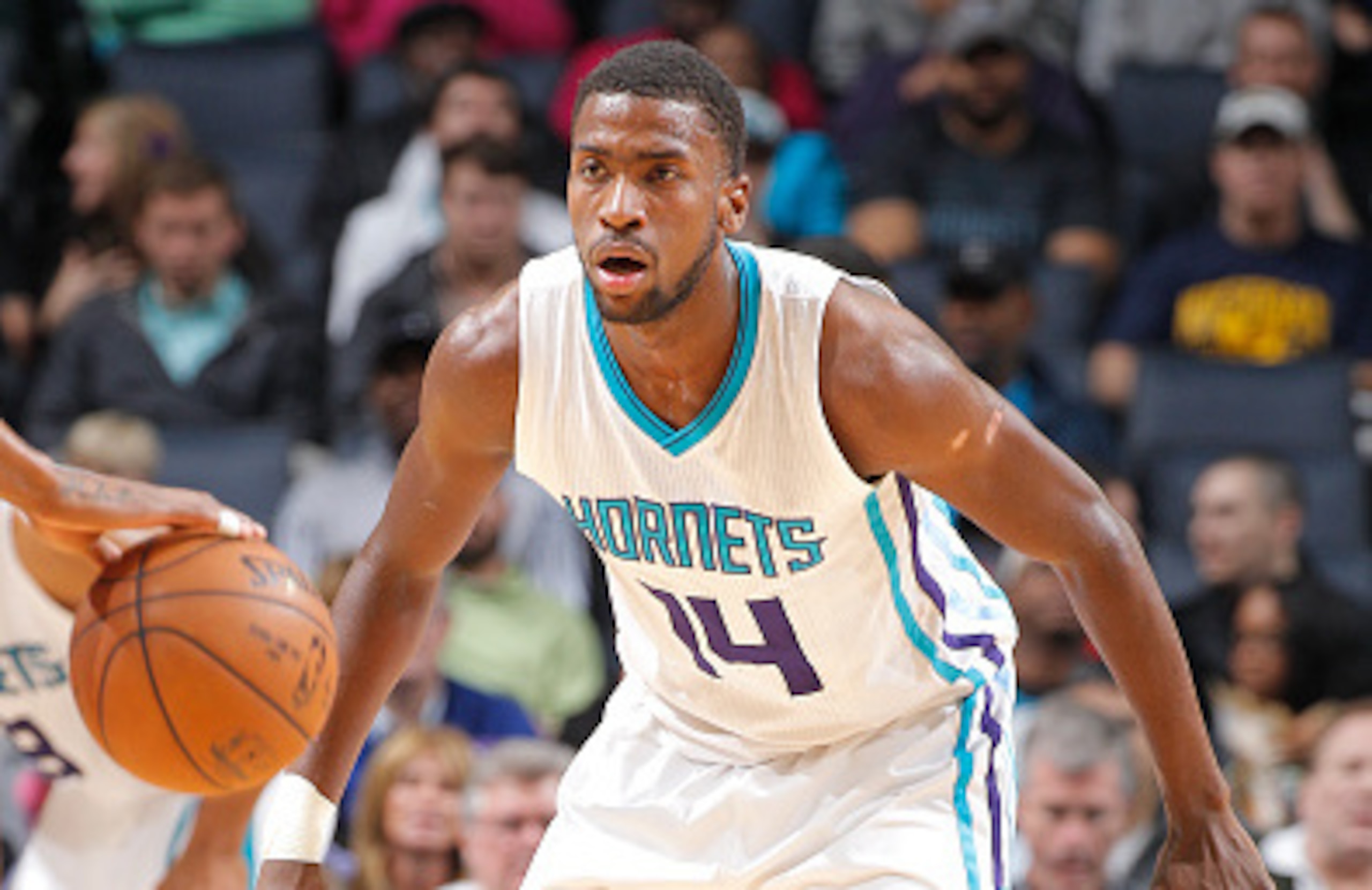
Accounting for Michael Kidd-Gilchrist's absence isn't going to be easy for the Charlotte Hornets. It might even be impossible.
Kidd-Gilchrist is the heart and soul of their defense, the same one that has ranked among the 10 best in each of the last two seasons. But Yahoo Sports' Adrian Wojnarowski revealed that the timetable for his recovery from shoulder surgery will span six months, basically guaranteeing he misses all of 2015-16.
That's damning for all the obvious reasons.
Along with Nicolas Batum, Kidd-Gilchrist was supposed to headline one of the most impenetrable perimeter pairings in basketball. Charlotte also went from the statistical equivalent of a playoff team to a bottom-four-type farce whenever he stepped off the floor last season.
Remaining in the East's playoff conversation will be more about the offense than the defense. The Hornets don't have anyone who can match Kidd-Gilchrist's defensive importance, not even in Batum.
What they do have is an offense that is finally ready to launch 20-plus three-pointers per game. And they now employ enough above-average shooters (Batum, Jeremy Lin, Brian Roberts, Frank Kaminsky, etc.) to ensure that volume can be floated with respectable efficiency for an entire 82-contest schedule.
Chicago Bulls: Preserving Egos
5 of 30
More than the Chicago Bulls must fight to remain among the league's 10 best defensive teams while running head coach Fred Hoiberg's faster-paced offense, they need to channel their inner 2014-15 Warriors.
Andre Iguodala, a career starter, embraced his role as sixth man for Golden State. David Lee, then the Warriors' highest paid player, spent most of the season chained to the bench. Andrew Bogut logged less than three minutes through the latter three games of the NBA Finals.
Not once did you read rumors about resulting dissatisfaction (though Golden State did ship Lee to Boston over the offseason). The Warriors bought into what head coach Steve Kerr was selling, and they moved on.
Something similar has to happen in Chicago as Hoiberg ushers in a new brand of basketball.
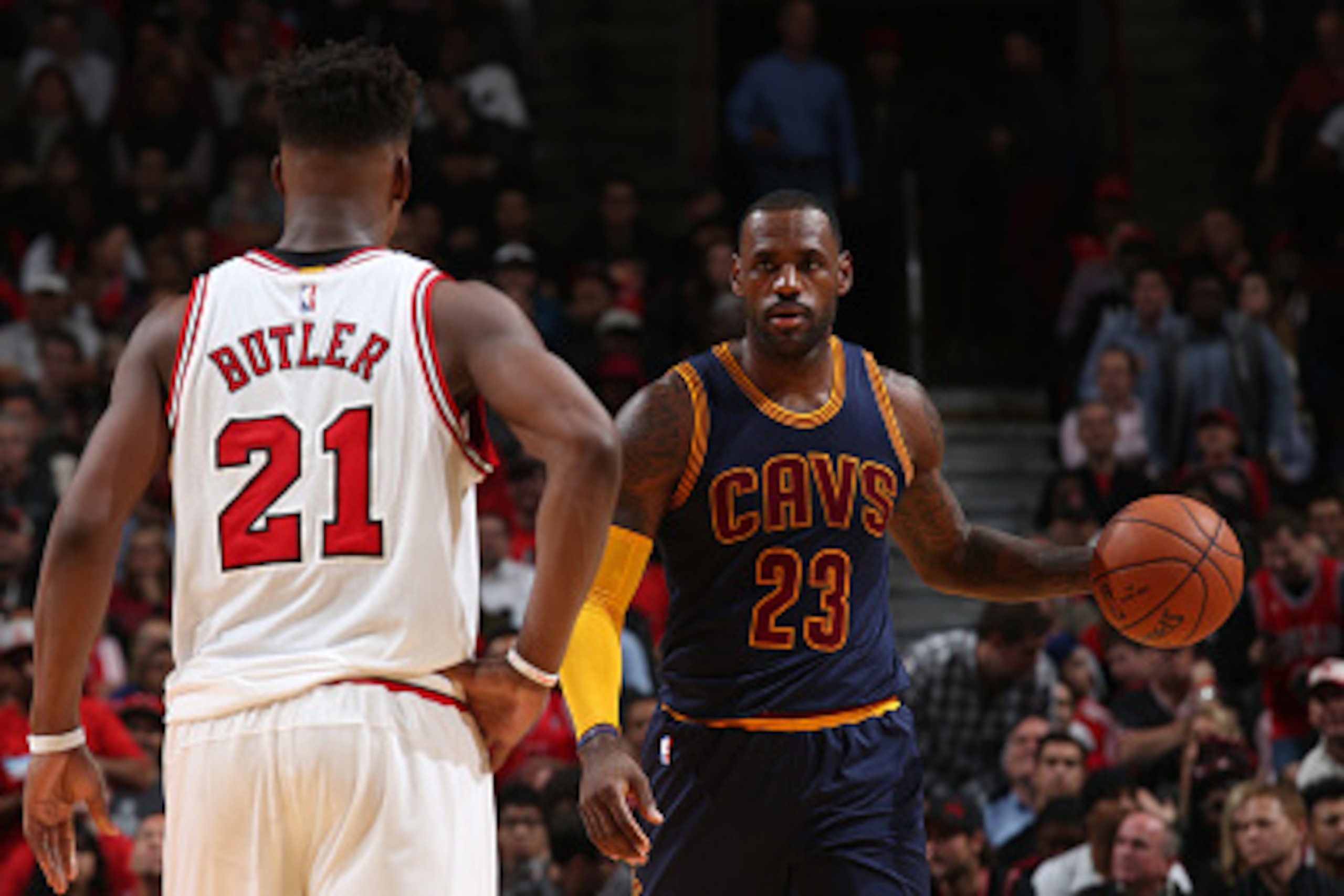
Derrick Rose must accept Jimmy Butler's status as the face of the franchise. Joakim Noah cannot suddenly lament his absence from the starting lineup. Pau Gasol cannot get bent out of shape if, despite starting, he doesn't always finish games.
This is not to suggest that the Bulls are a closed-door disaster or that they're one loss away from complete implosion. To the contrary, Noah remains in "good spirits" as the team's new second-string center, according to K.C. Johnson of the Chicago Tribune.
These feelings, these positive vibes, just need to last. Hoiberg and the Bulls are still in the feeling-out stages of their marriage, and the former is clearly going to experiment, sometimes at the expense of those not used to being collateral damage.
Cleveland Cavaliers: Buying into Blatt's Offense...for Real
6 of 30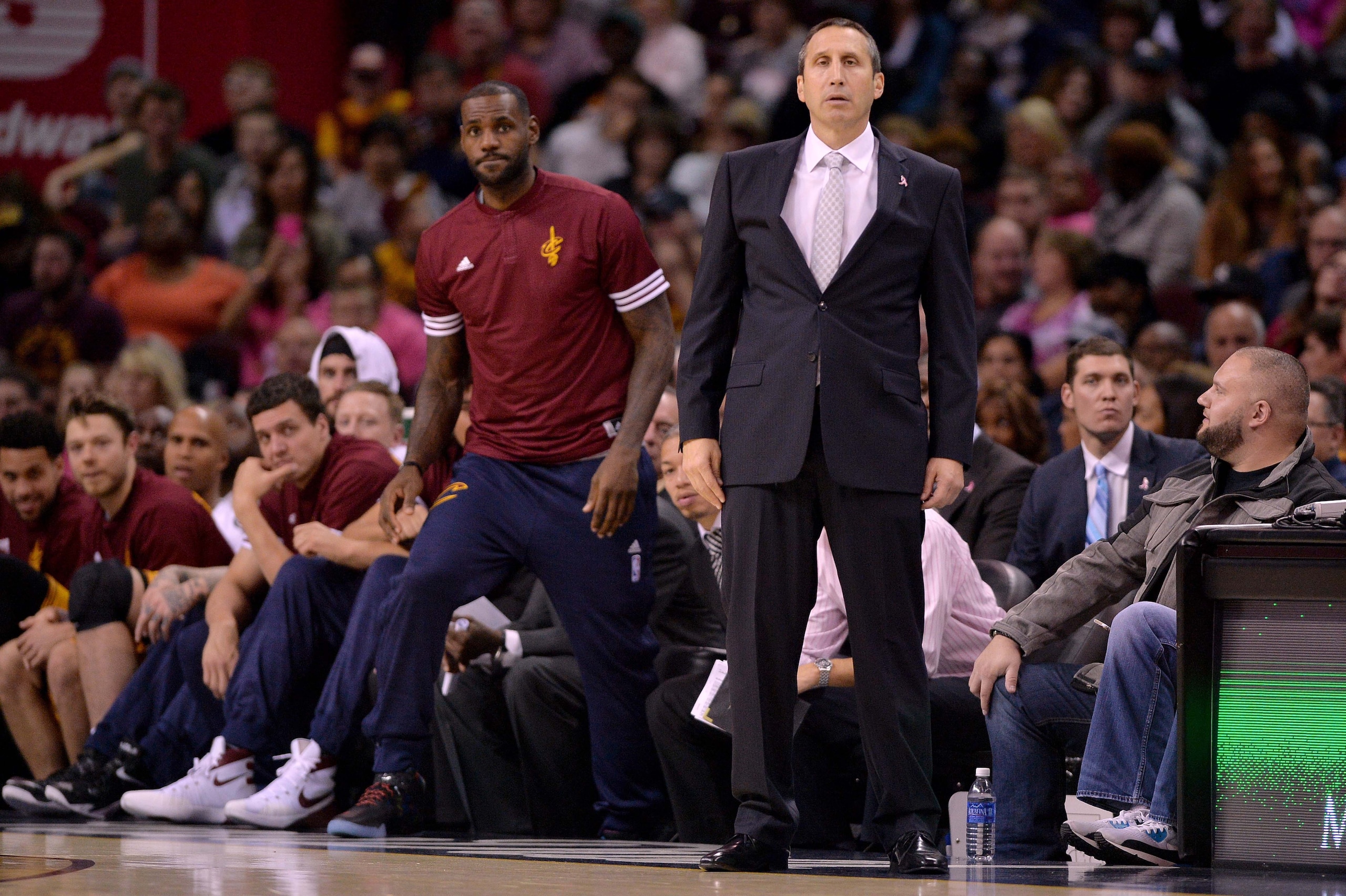
Most of last season saw LeBron James commandeer the Cleveland Cavaliers' offense. His usage rate rose above 32 for the first time since initially leaving Cleveland, and he routinely, if ubiquitously, overruled head coach David Blatt's offensive impulses, according to ESPN.com's Dave McMenamin and Brian Windhorst.
Not surprisingly, the Cavaliers offense bore little resemblance to the positionless, passing-packed system Blatt was supposed to install. They ranked first in isolation frequency, and Kevin Love was relegated to stand-in-the-corner-and-look-pretty duty to accommodate James' heightened ball domination.
There's nothing wrong with this model on some levels. The Cavaliers still deployed a top-five offense by season's end, and their playoff stagnancy, specifically during the NBA Finals, had more to do with an uptick of injures than anything else.
At the same time, it would behoove James to displace himself from the ball more this season and let Blatt's movement-heavy offense run its course. Kyrie Irving (when healthy) and Love won't be pigeonholed to catch-and-shoot minions, while James will reap the benefits of elevated efficiency and better all-around production.
Taking a step back allows him to play the part of a spot-up assassin with some semblance of frequency—a role for which he is suited. He put in 38.3 percent of his standstill triples last season and a whopping 47.9 percent in 2013-14, his last go-round with the Miami Heat.
Working off the ball more will, if nothing else, make Cleveland's attack more dynamic and less predictable. And that's never a bad thing—especially when it's the Cavaliers offense that peaked to the point of anemia during the NBA Finals.
Dallas Mavericks: Rick Carlisle
7 of 30
You might say the most pivotal key to the Dallas Mavericks' season is the state of Dirk Nowitzki's time machine. You might say it's the health and performance of Chandler Parsons and Wesley Matthews.
You might say it's Dallas' ability to piece together a pro-ready center rotation using contractual leftovers. You might say it's Deron Williams' production within a pick-and-roll-packed, drive-and-kick-stuffed offense.
You might say it's the likelihood, or lack thereof, that the Mavericks get something, anything from their second unit.
All of those are pressing points that will inevitably define how Dallas' season plays out. But it's head coach Rick Carlisle who is once again tasked with trotting out a competitive team using spare parts, aging vets and injury-pone talent.
This is normally the part where we pen the Mavericks' obituary. But Carlisle is a special breed of genius. His offense is simple enough to understand yet powerful in its use of screens, ball movement and shot selection. He's a big reason why Dallas has only ranked in the bottom half of offensive efficiency once (2011-12) since his arrival seven years ago.
If anyone can turn the Mavericks' assortment of also-rans, geriatrics and maybes into a contender for one of the West's bottom two playoff spots, it's him.
Denver Nuggets: Running Like the Wind
8 of 30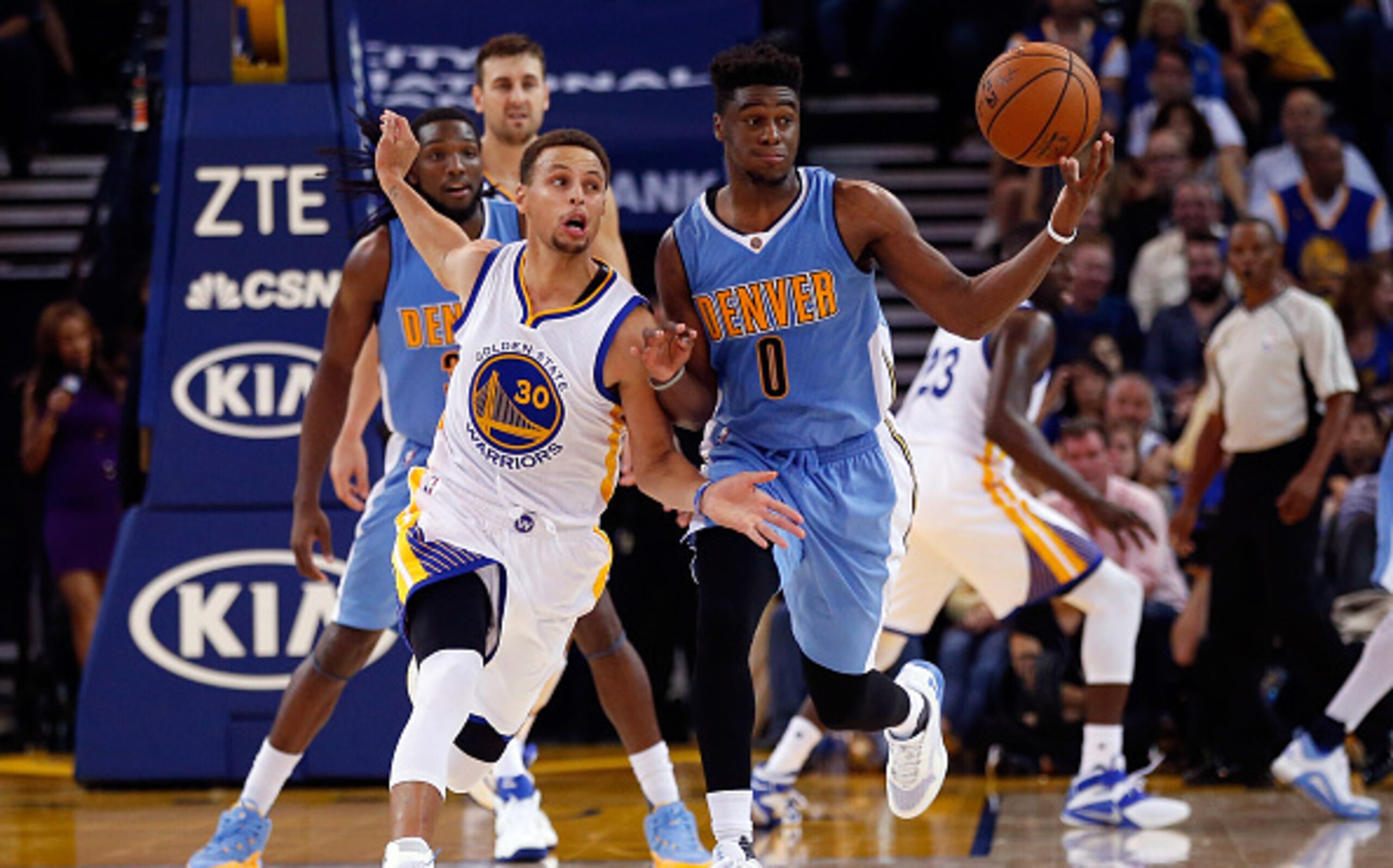
Superior speed is a prerequisite for any Denver Nuggets offense. At least, given the altitude at which the team plays half of its games, it should be.
Former head coach George Karl used breakneck offensive sets to guide his collection of non-stars to 57 wins in 2012-13. His successor, Brian Shaw, failed to get his troops off and running on a consistent basis and was shown the door. Last season's interim head coach, Melvin Hunt, brought pace back to Denver and saw Danilo Gallinari explode.
New head coach Mike Malone needs to follow in the footsteps of Karl and Hunt. He's more known for his half-court handy work, but the Nuggets drafted a transition point guard for the ages in Emmanuel Mudiay and, now more so than ever, have little reason to slow down.
Good thing they're not. The Nuggets averaged nearly 101.4 possessions per 48 minutes during the preseason, nearly three more than they used in 2014-15, when they finished fourth in pace.
Exhibition games do, admittedly, play home to inflated agility. More than half of the league's teams averaged north of 100 possessions per 48 minutes in the preseason; only the Warriors hit that benchmark during the regular season.
Nonetheless, the Nuggets' preseason pace is at least a solid indicator of how they plan to play. And, as of now, they plan to play in a way suited to Mudiay's skill set and the team's offensive potential.
Detroit Pistons: The Starting Five
9 of 30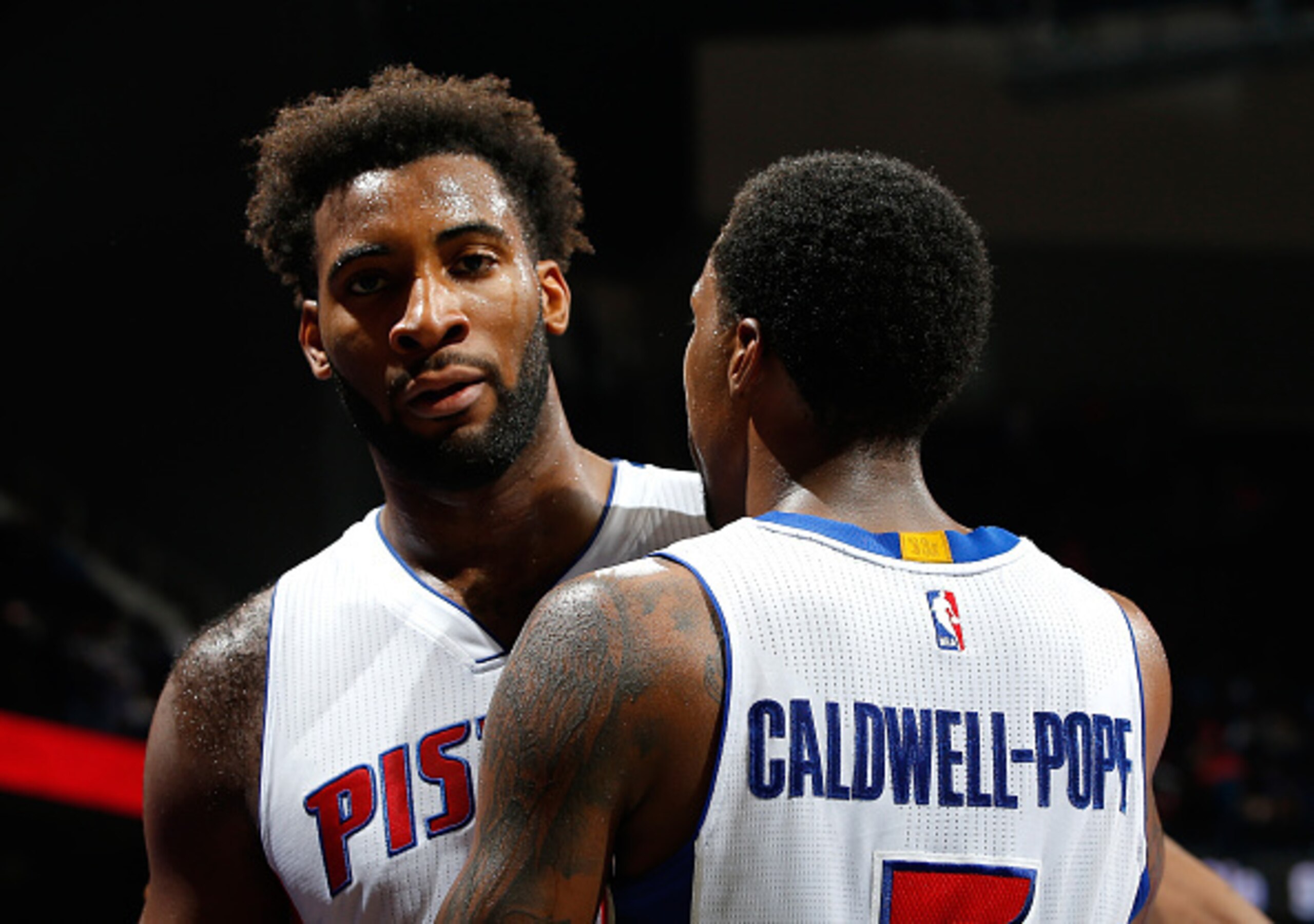
Starting lineups are an imperative part of every team's success, but the Detroit Pistons will turn to theirs more than most as they look to end a six-year playoff drought.
Some of that dependence is the culmination of an unproven, albeit deeply intriguing, second unit. The only guarantee Detroit has on its bench is that Stanley Johnson will outhustle everyone, even if that diligence doesn't yield Rookie of the Year stat lines.
For the most part, though, the Pistons' starting lineup was just crafted in the image of the late-2000s Orlando Magic.
Coach and president Stan Van Gundy threw out Andre Drummond, Ersan Ilyasova, Reggie Jackson, Marcus Morris and Kentavious-Caldwell Pope in Detroit's season opener against the Hawks. Through 23 minutes of action—nearly half the game—that combination outscored Atlanta by an average of 52.6 points per 100 possessions.
Completely unsustainable? For sure. But that five-man grouping provides the right amount of spacing, pick-and-roll savvy and explosion, boasting enough firepower to offset Drummond's still-clumsy, bordering-on-hopeless post game.
Any chance the Pistons have at becoming a mainstay in the playoff discussion will come on the backs of their inaugural five.
Golden State Warriors: Never, Ever Changing
10 of 30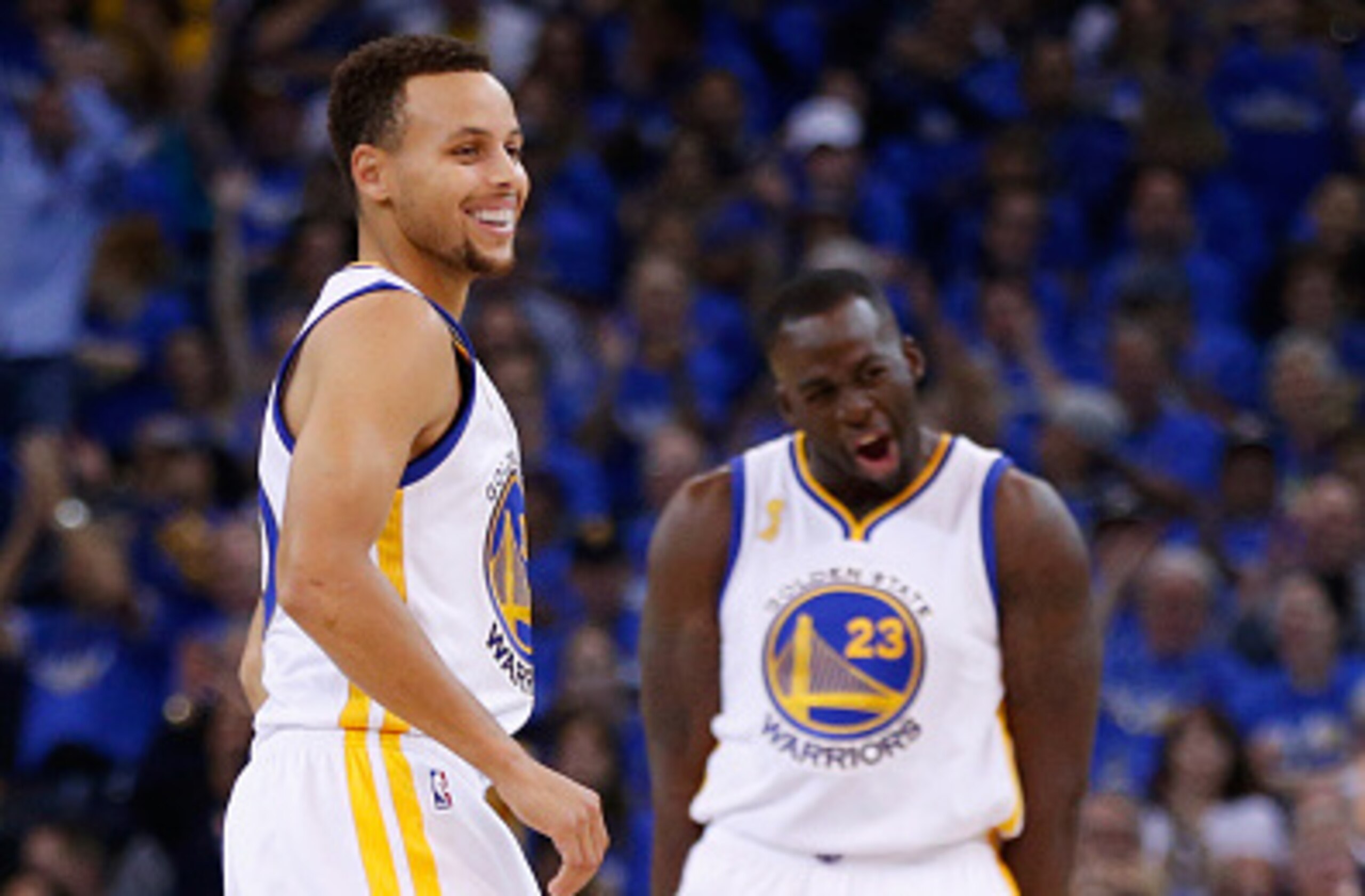
Dear Warriors,
Never, ever change. Like, ever.
James Harden can claim that he was last season's real MVP all he wants. Kyrie Irving can blather on about health being the sole reason Cleveland fell in the NBA Finals until the end of time or until J.R. Smith deletes his Instagram—whichever comes first.
Las Vegas can, per Odds Shark, continue underestimating your chance of repeating as champions. It doesn't matter. All that matters is you tune out the noise and keep doing your collective thang.
Let Stephen Curry be Stephen Curry—the same Stephen Curry who kicked off his season with a 40-point, six-rebound, seven-assist explosion against the New Orleans Pelicans, an opening-night line that's been matched by only one player since 1985: Michael Jordan.
Don't stop Draymond Green from smirking uncontrollably after every made shot. Allow Klay Thompson to retain his Curry-green light. Run like defenses haven't given up chasing you. Defend like teams haven't already conceded they can't score against you.
To hell with positions. They're overrated and, at this point, approaching extinction. Celebrate every win like it's Game 7. Let all your spunk hang out.
Just don't change.
Signed,
Everyone.
Houston Rockets: The Harden-Lawson Connection
11 of 30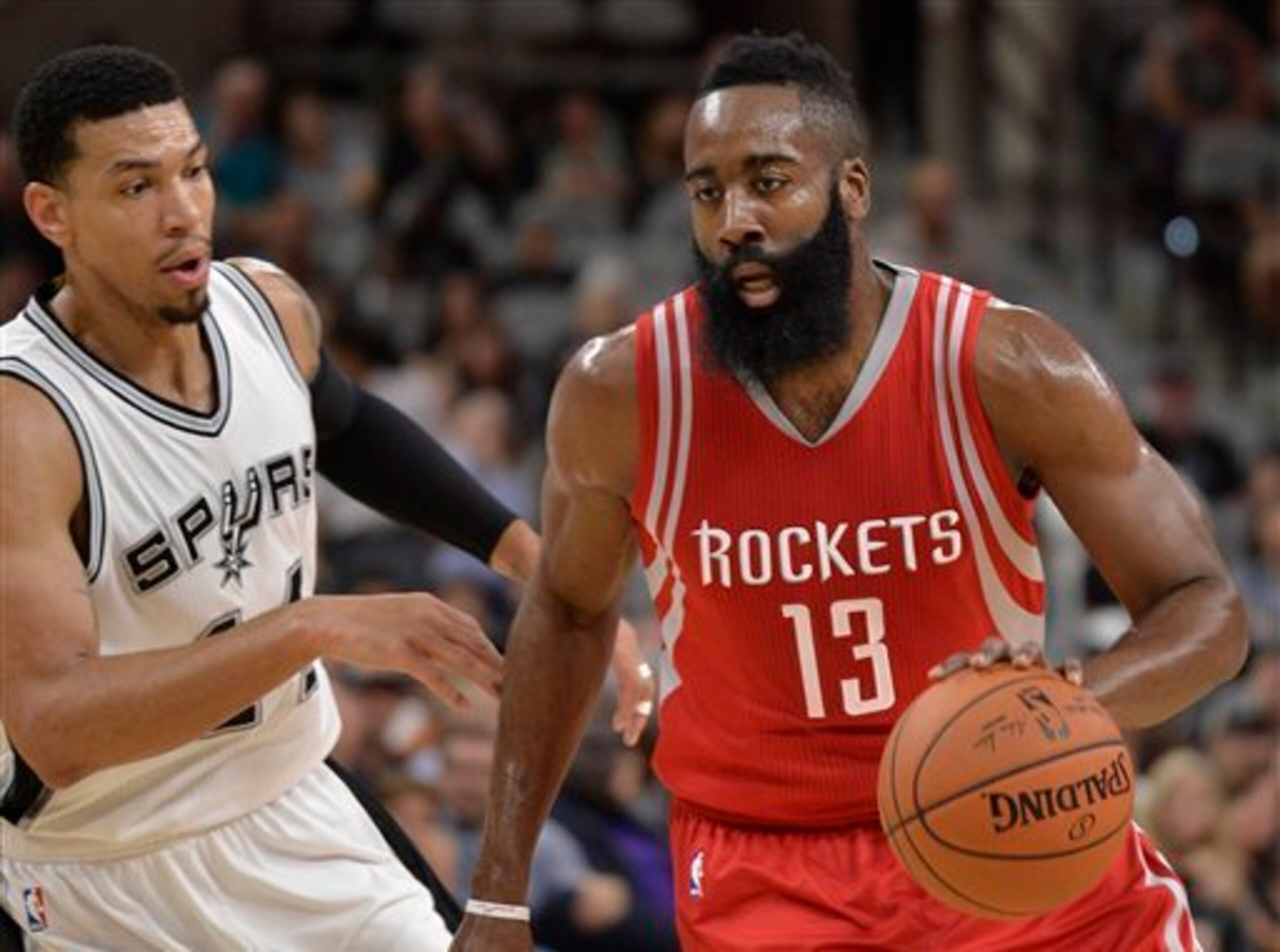
Offensive inconsistency dogged the Houston Rockets all of last season. They ranked a very pedestrian 12th in points scored per 100 possessions and failed to find a secondary playmaker behind Harden.
Ty Lawson is being pegged as the answer to that conundrum. He ranked fourth in assist percentage for 2014-15, and while neither he nor Harden is particularly used to playing off the ball, there is hope that they can not only coexist but thrive alongside one another.
As Ian Levy wrote for the Sporting News:
"We know that assisted shot attempts tend to be higher value. Last season, Harden took 21.5 percent of all the Rockets' shot attempts and, according to the shooting breakdowns at Nylon Calculus , 70 percent of those were self-created. Stylistically, he is comfortable bombing away from the outside or attacking the basket, and, although he can create openings for his teammates, calling his own numbers is often the best option.
Harden could stay extreme in those three characteristics, slightly reduce his time on the ball and be a perfect complement to Lawson.
"
Nearly 15 percent of Harden's total shot attempts came as spot-up threes last season, of which he buried 40.1 percent. The experience with playing off the ball is there, and to Lawson's credit, he spent the preseason jacking up triples with career-high frequency (4.5 per 36 minutes).
Should these two continue adapting to one another throughout the season, with Harden swapping out some ball domination for catch-and-shoot duty, there is no limit to how high the Rockets can rise.
Indiana Pacers: Paul George's Return to Form
12 of 30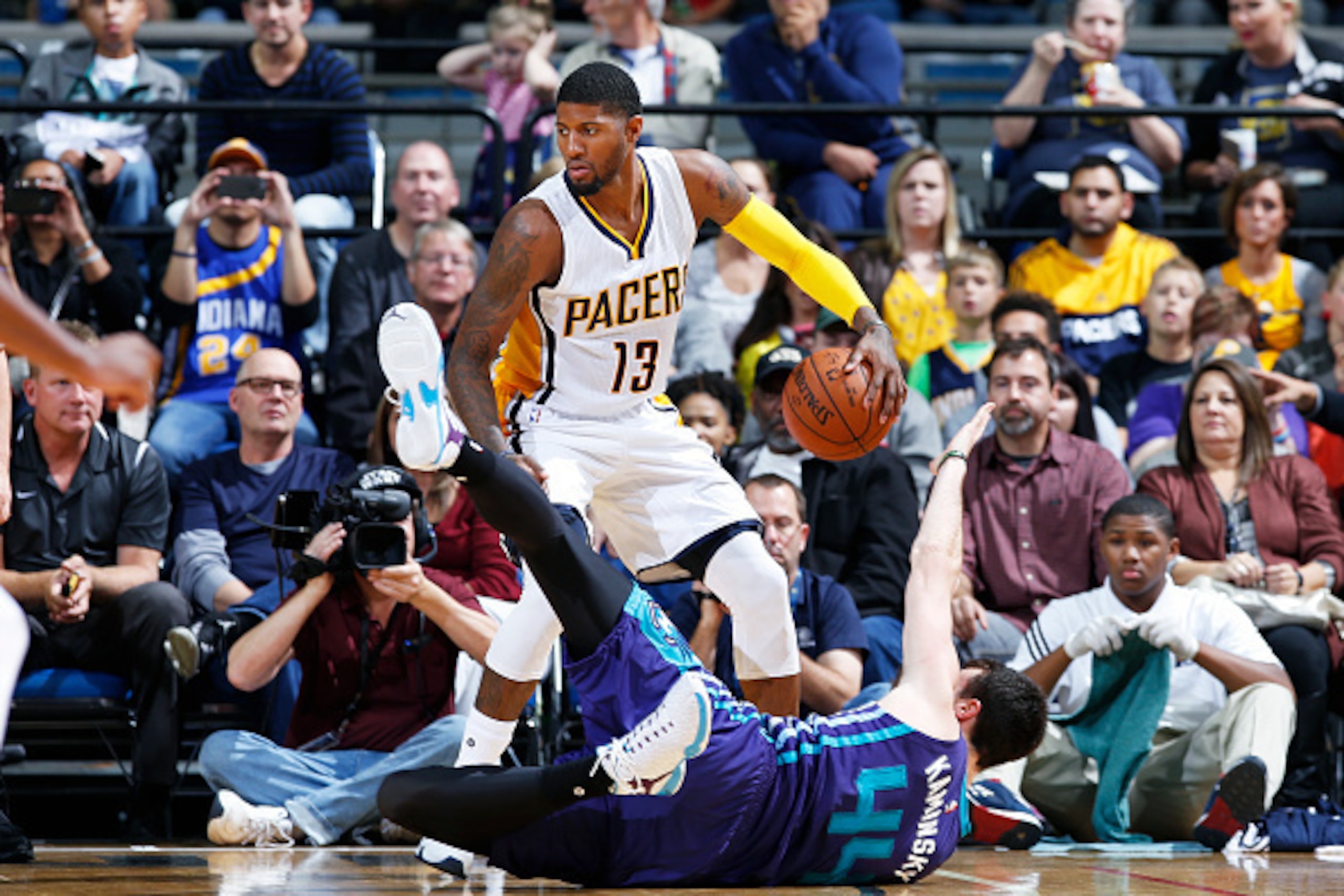
Um, duh.
A lot is being made of Paul George's return to the Indiana Pacers' everyday rotation following a 2014-15 campaign in which his recovery from a broken leg limited him to six appearances. He's re-entering the fold amid a stylistic shift, serving as the focal point of an offense that's running faster and using him primarily at power forward.
With Roy Hibbert and David West gone, so too is the Pacers' defensive calling card. They have enough talent above the elbows in George Hill and George to make life difficult on opposing offenses, but a frontcourt quartet of Lavoy Allen, Jordan Hill, Ian Mahinmi and Myles Turners has limited defensive appeal.
Mahinmi is an adequate replacement for Hibbert in that he seldom loses sight of the rim. Turner has the makings of a stretch 5 who swallows shots at the iron, but his rookie learning curve will be real on both ends of the floor. Hill hasn't played defense in two years, while Allen is most effective when situated beside a premier shot-swatter and left to alter layup attempts and chase rebounds.
Throw in the additions of Chase Budinger and Monta Ellis, and the Pacers have placed a visible emphasis on scoring more, exponentially increasing the importance of George being George.
Fortunately for them, George obliterated the competition during limited action at power forward in 2013-14, his last healthy season, according to 82games.com. He also closed out the preseason averaging 18.7 points on 43.2 percent shooting, including a 39 percent clip from deep, while logging just under 25 minutes per game.
Los Angeles Clippers: Getting More out of Small Forward
13 of 30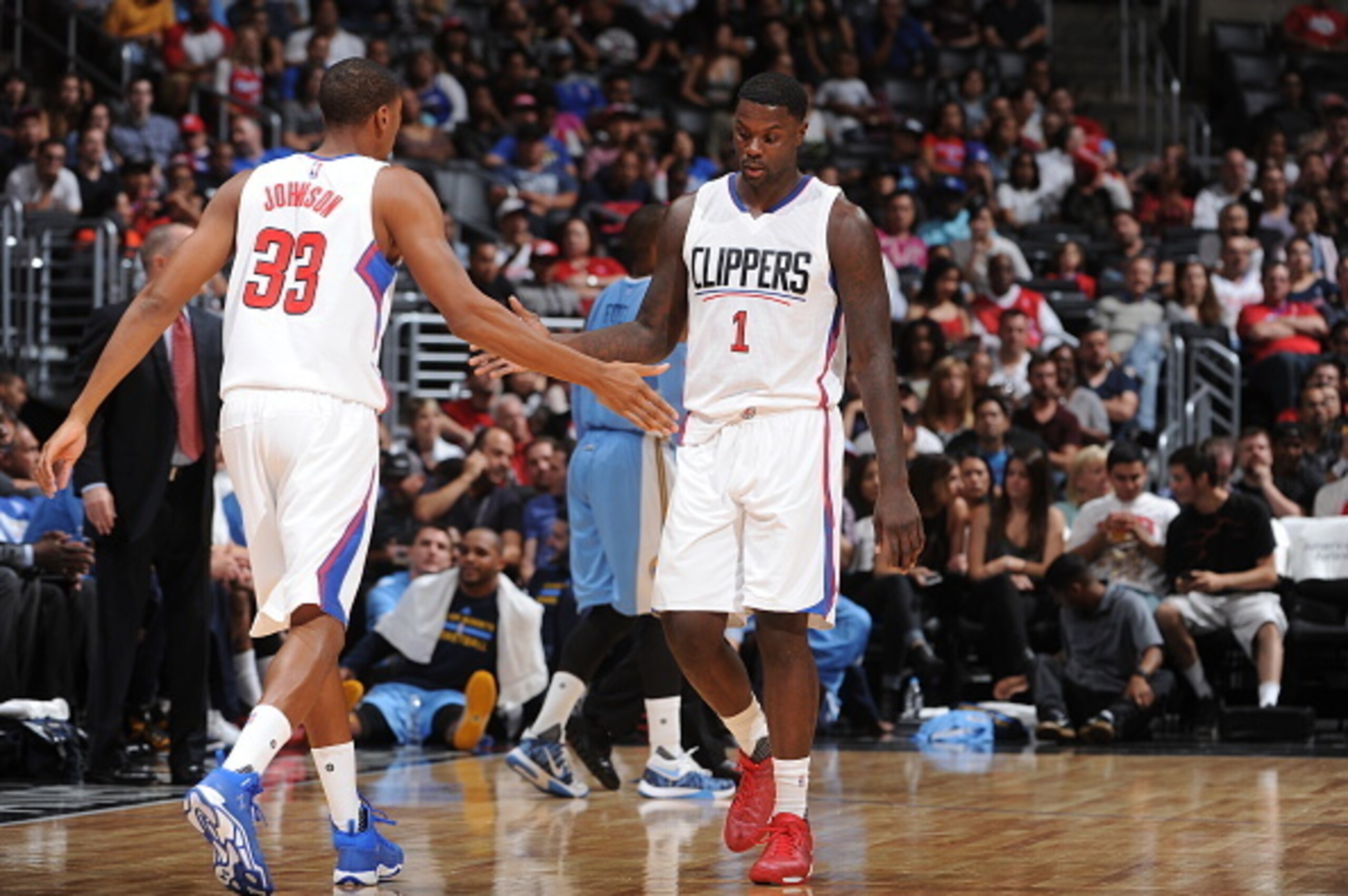
Small forward was, both statistically and on paper, the Los Angeles Clippers' worst position in 2014-15.
Each of the other player slots posted a positive player efficiency rating differential, per 82games.com. But the small forward spot, manned mostly by Matt Barnes and Hedo Turkoglu, gave up 4.7 PER points to the opposition.
Clippers coach and president Doc Rivers went to great lengths over the offseason trying to remedy this issue, and the returns, by any standard, were spectacular. Wesley Johnson, Paul Pierce and Lance Stephenson provide the team with noticeably more depth at the 3, to the extent that the small forward rotation should be a strength.
Even so, Rivers still hasn't ironed out a permanent pecking order. Johnson started more preseason games (three) than either Pierce or Stephenson, but per the Los Angeles Times' Melissa Rohlin, it's Stephenson who will now begin games at the 3.
Not that who starts matters or anything. As Rivers said, per Rohlin: “Again, I think you guys are more focused on who starts than me. To me, it’s not a big deal. It’s who finishes.”
Pierce, an NBA champion with almost 10 years of experience playing for Rivers, seems like the clear choice to finish games. But again, the distribution of minutes isn't that important.
Set up for success at every other position, the Clippers need only for Johnson, Pierce and Stephenson to be a collective upgrade over the incompetent small forward carousel they had last season.
Los Angeles Lakers: Progression of the Young Guns
14 of 30
Kobe Bryant is not the most important member of the Los Angeles Lakers. He could declare an irreversible intent to retire after his next game, and he still wouldn't be the team's top priority.
Jordan Clarkson. Julius Randle. D'Angelo Russell. Those are the Lakers' primary concerns. Their development and progression transcends everything and everyone else, even Bryant.
Especially Bryant.
And that's why it's frightening to know that, at least publicly, Lakers coach Byron Scott has vacillated on his plans for someone such as Russell, per the Los Angeles Daily News' Mark Medina. There should be no decision, no hesitation.
Russell should start every game. Same goes for Clarkson and Randle. The Lakers aren't winning a championship this year, and to see any of these three cede touches and status to Bryant, Lou Williams and Nick Young, as they did during the preseason, would be inexplicable.
To that end, the Lakers' key to this season is their immediate commitment to next season, and the season after that, and the one after that, not an era speeding toward its end.
Memphis Grizzlies: Keeping Jeff Green Away from Small Forward
15 of 30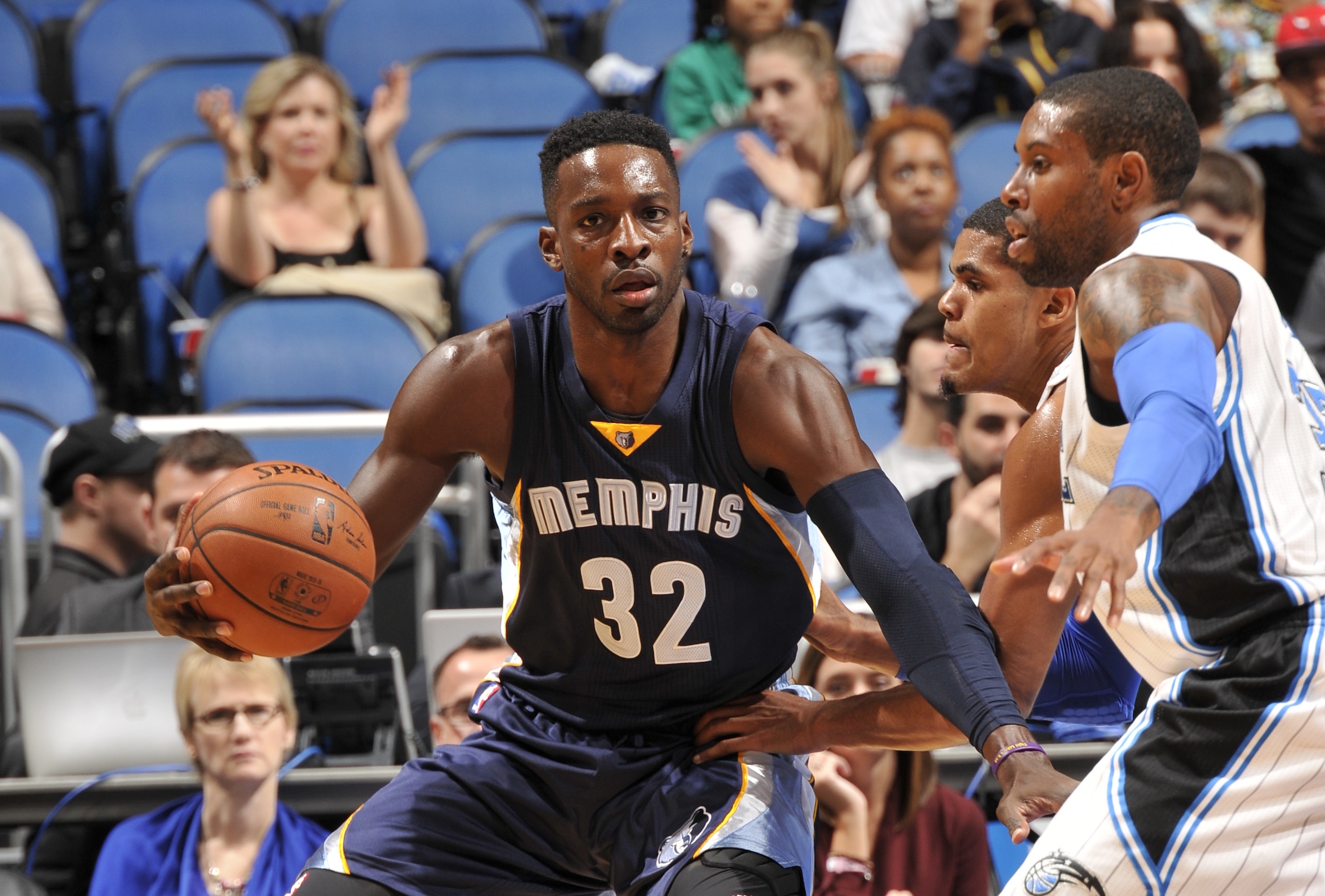
Jeff Green started six of the Memphis Grizzlies' seven preseason matchups at small forward. Last season, following a trade from the Celtics, he spent 78 percent of his minutes at the 3.
Now seems like a good time for a related public service announcement: Green is not a small forward.
Look, the Grizzlies aren't about to join the floor-spacing festivities that have invaded the NBA. We get it. They doubled down on their traditional model over the offseason by signing Brandan Wright rather than tracking down a stretch 4.
But antiquated offensive tenets do not give them license to play Green at the 3. He is a below-average shooter and fairs even worse off the ball. He put in just 32.6 percent of his spot-up looks last season, and Memphis' four other starters (Mike Conley, Marc Gasol, Courtney Lee, Zach Randolph) were a net minus when sharing the floor with him.
Sticking Green at small forward is something head coach Dave Joerger can get away with in super-small doses. But overall, the Grizzlies haven't been good with him at the 3, while Green himself is statistically much better at the 4, per 82games.com.
And for the sake of its spacing-challenged offense, Memphis must finally take the hint.
Miami Heat: Honing the Starting Five
16 of 30
Much like the Pistons, the Heat will live and die with the success or failure of their starting five. The difference: Detroit's starters have turned a corner together, while Miami's opening five—well, they're still stuck in place.
"We just got to play together more and figure it out together," Dwyane Wade said, per Bleacher Report's Zach Buckley. "It's just going to take a little time. You can't fast-track it as much as you want to. ... We're behind the 8-ball from a lot of teams."
Indeed, the Heat's lineup of Chris Bosh, Luol Deng, Goran Dragic, Wade and Hassan Whiteside didn't see a single second of action together last season. The combination of Deng, Dragic, Wade and Whiteside did get in 300-plus minutes of work but finished as a menacing minus and general defensive letdown.
Bankable progress wasn't found at the other end of the preseason, either. Wade registered the best net rating of any starter—a not-so-cool minus-11.2.
Successfully blending this many individuals together does, of course, take time, something coach Erik Spoelstra will be quick to admit. But preaching patience won't change how much of the Heat's place in the East is tied to the performance of a starting five that, as of now, isn't ready to carry the burden of a contender.
Minnesota Timberwolves: Abandoning the Veterans
17 of 30
The Minnesota Timberwolves have reinforced their commitment to rebuilding and playing their youngsters at every turn. But the roster is stocked with enough established vets to pose some disingenuous temptations.
Kevin Garnett is in Minnesota to teach, and that's fine. At 39, even as a starter, he doesn't pose much of a threat to stealing minutes from Nemanja Bjelica, Gorgui Dieng and Karl-Anthony Towns.
Kevin Martin, Andre Miller, Nikola Pekovic and Tayshaun Prince are different stories.
Will a 32-year-old Martin get more burn than Zach LaVine and Shabazz Muhammad? Could Miller eat into Tyus Jones' and Ricky Rubio's minutes at point guard? Might head coach Sam Mitchell force the issue with Pekovic, attempting to drum up his trade market at the expense of Bjelica's, Dieng's and Town's minutes totals?
Everything the Timberwolves have done since dealing away Love suggests there won't be an issue. But it still bears mentioning that now is the time for them to tinker, to experiment—to let Andrew Wiggins lay some All-Star roots, to milk the spacing of a Bjelica-Towns frontcourt and to diminish the roles of those who don't figure into the future.
Milwaukee Bucks: Offensive Spacing
18 of 30
Deploying another top-five defense would assuredly put the Milwaukee Bucks back inside the East's playoff bracket. But if they ever wish to be recognized as a contender, they'll need to start scoring like a modern-day offense.
Adding Greg Monroe to the fold does butch up their attack quite a bit. His nimble footwork is second to none, and he will collapse defenses to the benefit of the Bucks' orbiting shooters.
Except Milwaukee isn't brimming with shooters.
Khris Middleton torched twine on 40.7 percent of his deep balls last season, and the Bucks drained 36.3 percent of their long-range missiles as a team, the seventh-best mark in the league. But they were also 26th in three-point attempts.
Plus: Four of their five most accurate outside flamethrowers are now playing for another team.
Jerryd Bayless, Chris Copeland, O.J. Mayo and Greivis Vasquez can all get hot from beyond the arc in a hurry, but it's going to take more than them for the Bucks to avoid constantly overcrowding the paint. Jabari Parker will need to prove his worth as a shooter upon returning from his ACL injury, and Milwaukee must hope Giannis Antetokounmpo's 3-of-7 showing from distance during the preseason is a glimpse of the shooter he's set to become.
New Orleans Pelicans: Getting Healthy
19 of 30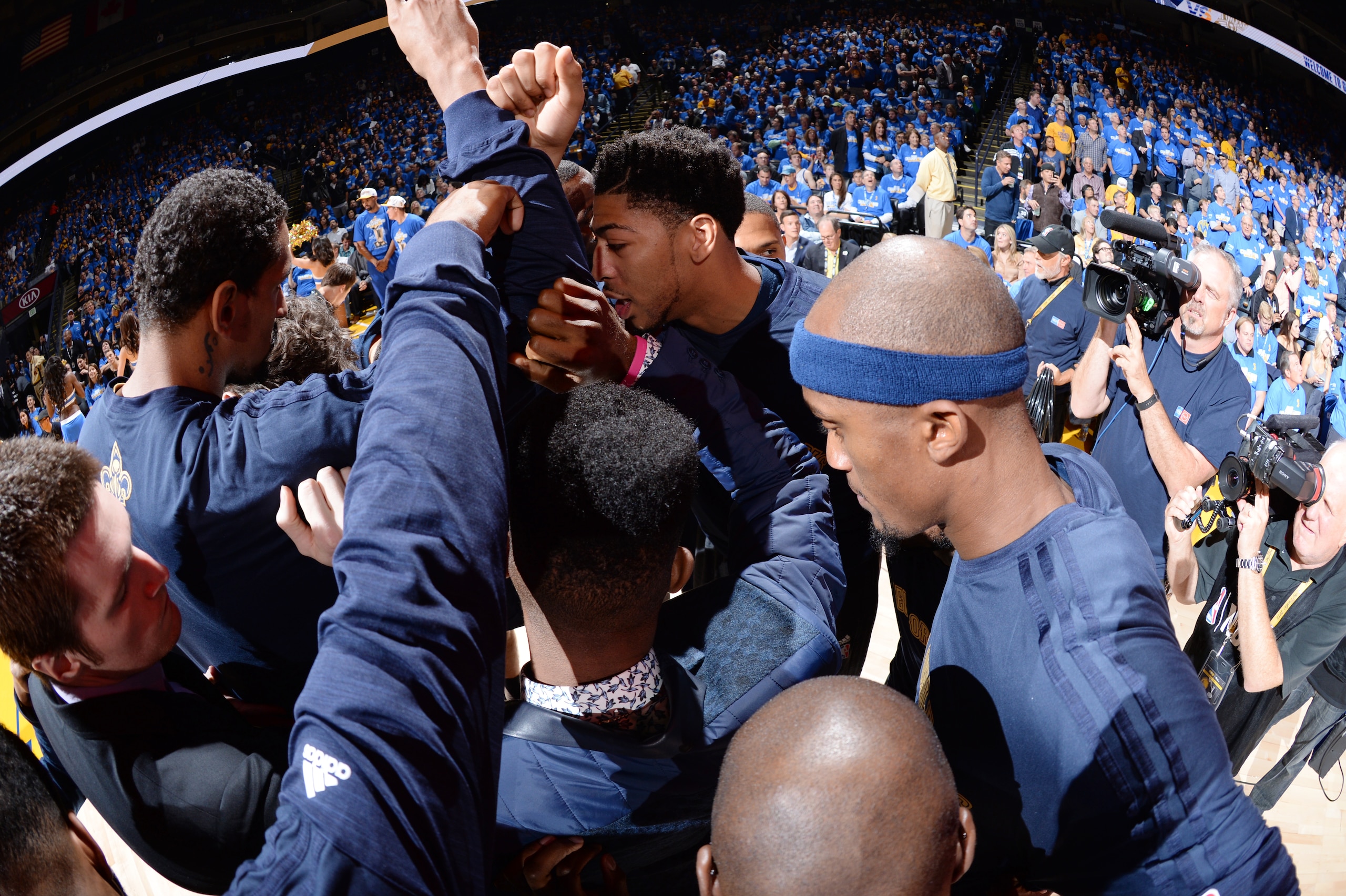
We will now devote the next six years of our lives to listing the Pelicans players who failed to appear in the season opener due to injury:
- Omer Asik (calf)
- Luke Babbitt (hamstring)
- Norris Cole (ankle)
- Tyreke Evans (knee)
- Quincy Pondexter (knee)
Jrue Holiday can technically be added to that list as well. The Pelicans are monitoring his minutes as he continues to work his way back from a stress reaction in his right ankle, a precautionary measure that includes sitting him on one side of any back-to-backs, according to the Times-Picayune's John Reid.
Armed with very few healthy bodies, the Pelicans began 2015-16 by starting Dante Cunningham, Eric Gordon, Kendrick Perkins and Nate Robinson alongside Anthony Davis. The result: a 111-95 shellacking at the hands of the reigning champion Warriors.
Maybe this is karma paying back the Pelicans for rushing their rebuild around Davis. They didn't need to acquire and invest tens of millions of dollars in Asik, Evans and Holiday over the last few seasons. They could have sat tight, watched Davis obliterate the box score and tried to hit on some top draft picks.
That the Pelicans aren't being killed for their expensive coalition of ragtag and injury-prone assets speaks to Davis' preternatural abilities. So long as he's healthy, they have a chance to do something special.
Yet if they don't eventually get healthy, and stay healthy, not even he can save them from another first-round exit or, worse, a return to the lottery they've tried like hell to avoid.
New York Knicks: Defending Like They Mean It
20 of 30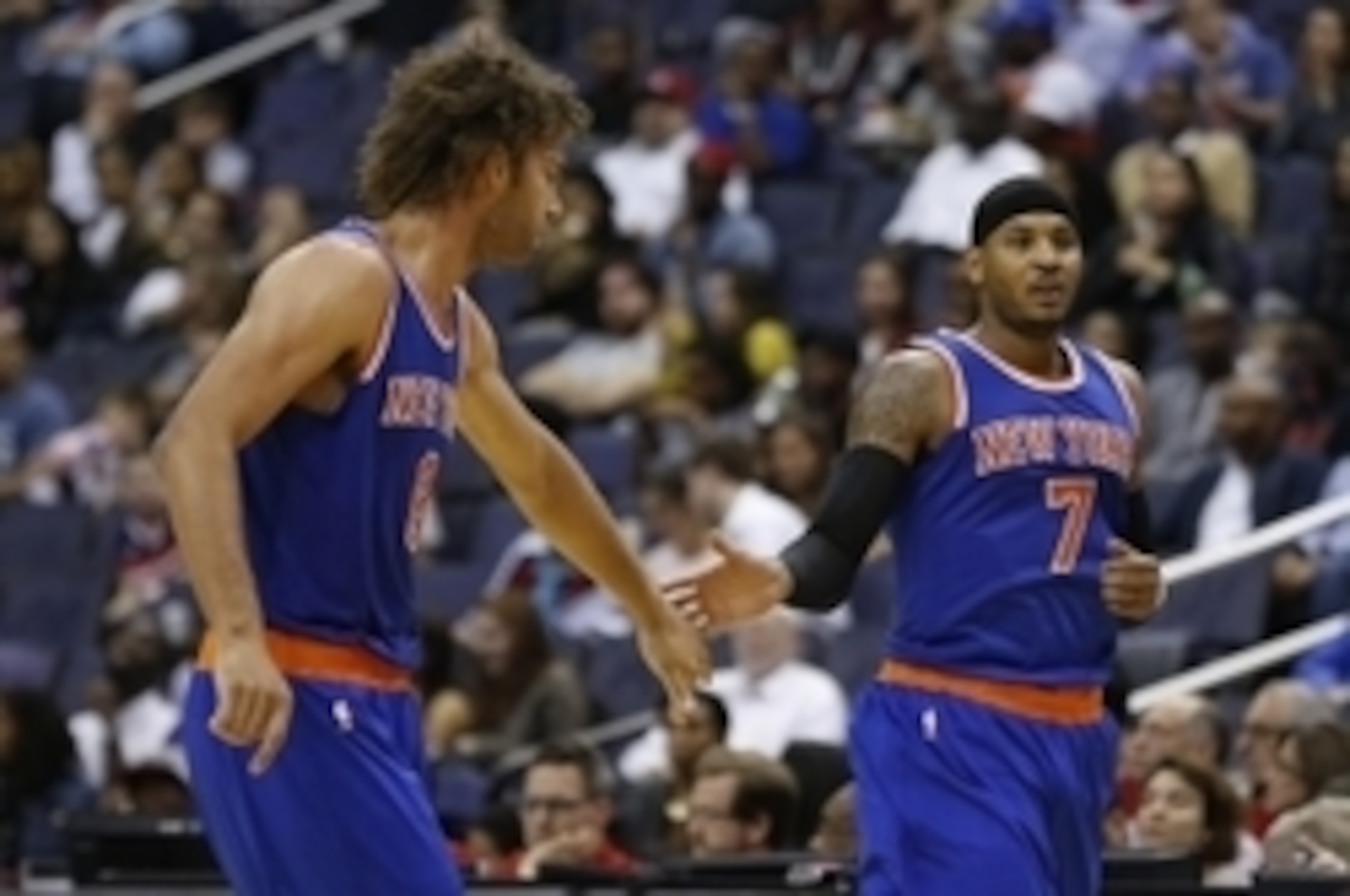
Triangle whatchamacallit?
Although the New York Knicks' portrayal of the triangle offense dominated discussion for over a year, there's a new headline-grabber in town: their defense.
Yes, their defense. The Knicks, who ranked 28th in defensive efficiency last season, seem poised to shatter initial expectations by pestering opposing offenses into contested shots and turnovers.
After seven preseason games, they finished fourth in defensive efficiency, allowing just 92.1 points per 100 possessions. That level of stinginess is entirely unsustainable over the course of an 82-game schedule; the Warriors defended better than anyone else last season and still let up 98.2 points per 100 possessions.
Seven exhibition tilts isn't a large enough sample size to declare new world order, either. The Knicks defense could end up being a momentary mirage by December.
Here's the thing: Even if they regress by 10 points per 100 possessions, the Knicks would still have a chance at maintaining a top-10 defense. That wouldn't just put them in line to comfortably eclipse last year's 17-win lemon; it would thrust them onto the Eastern Conference's playoff radar.
Oklahoma City Thunder: A Healthy Big Three
21 of 30
This is what a broken record reads like.
There's no use overcomplicating the Oklahoma City Thunder's situation. New head coach Billy Donovan's bag of tricks stretches deeper than that of the departed Scott Brooks, and the Thunder must figure out how to incorporate the ball-dominant stylings of Enes Kanter and Dion Waiters into their offense. But the key to their season is simple, regardless of who's wielding the clipboard and which players don't really fit.
The Thunder need Kevin Durant, Serge Ibaka and Russell Westbrook to be healthy.
Each of Oklahoma City's last three title pushes came up short after injury bugs latched themselves onto one or more of the Big Three. Westbrook's torn meniscus paved the way for a first-round exit in 2013; Ibaka's calf injury didn't prevent the team from appearing in the Western Conference Finals, but it sure as anything didn't help them against the eventual champion San Antonio Spurs; and Durant's three foot surgeries, along with Ibaka's knee injury, killed the Thunder's 2015 postseason run before it could ever start.
Remove any one of those pitfalls from the track record, and this trio may have already won a title. Even last season, amid various injuries, Oklahoma City outscored opponents by 11.4 points per 100 possessions when Durant, Ibaka and Westbrook shared the floor—a net rating identical to that of the Warriors.
In the event all three remain healthy, the Thunder will have been given the only key they need to once again unlock their championship mettle.
Orlando Magic: Elfrid Payton's and Victor Oladipo's Jumpers
22 of 30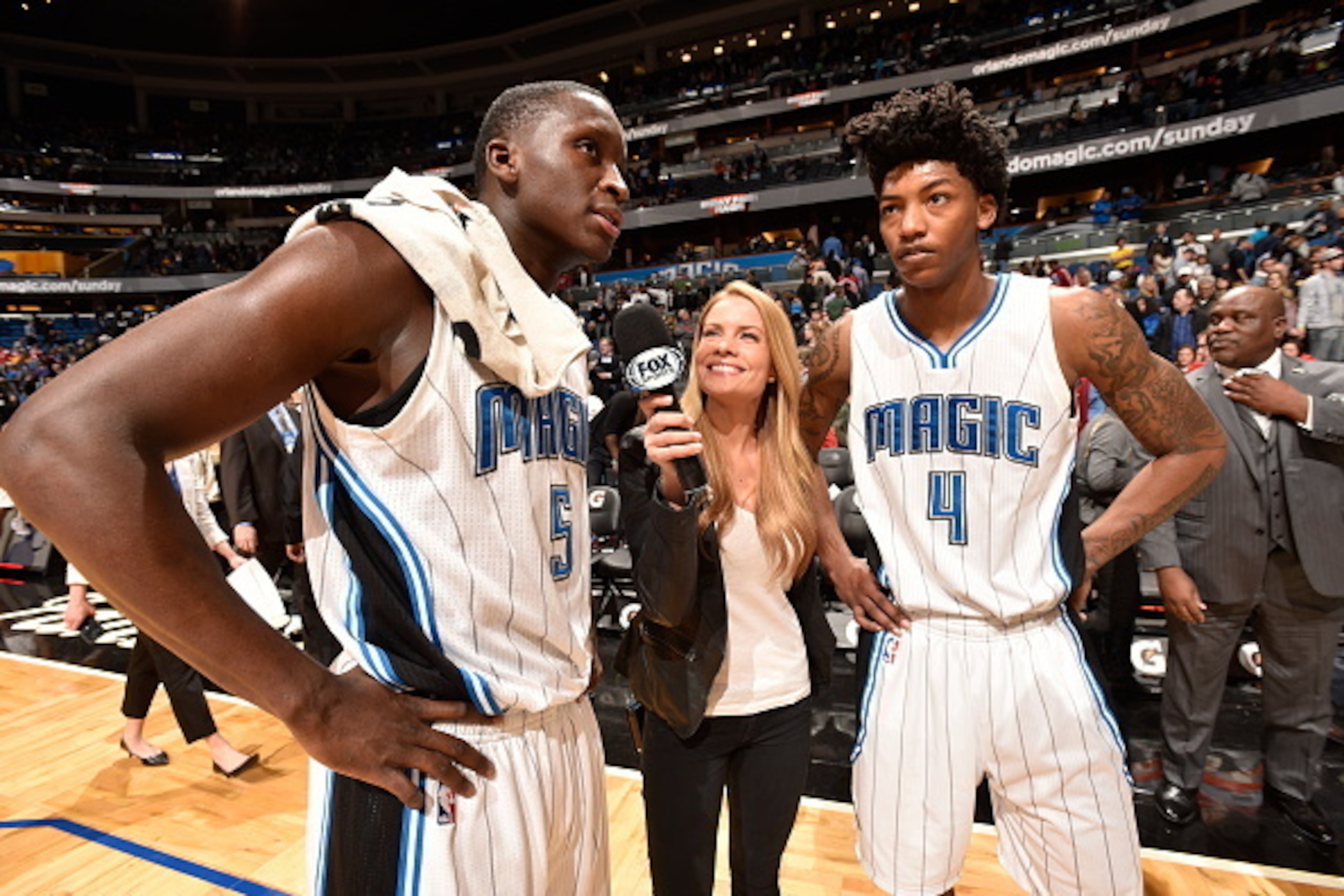
Orlando wasn't particularly good on either end of the floor last season. Both the defense and offense ranked in the bottom seven of efficiency, ostensibly looping the team into a gaggle of other squads (Nets) that failed (Nets) to create (Nets) an on-court niche (Nets).
But the defense is going to figure itself out. It showed signs eradicating offensive life during the preseason, and four of the franchise's building blocks project as plus-defenders: Aaron Gordon, Victor Oladipo, Elfrid Payton and Nikola Vucevic. Tobias Harris can be tossed in there as well, provided he starts to care on a regular basis.
Carving out an above-average offense will be the greater challenge. The Magic have a ton of individual talent in all of the above players, plus Mario Hezonja, but much like the Bucks, they're bogged down by deficient spacing.
Harris has already done his part by evolving into a lethal on- and off-ball shooter; he sank a career-high 36.4 percent of his threes overall last season and was even better off the catch, burying 38 percent of his spot-up rainbows. Vucevic has enough range for a starting center, and Hezonja will fire away from half court if you let him. Gordon has a ways to go before he resembles anything close to a stretch 4, but that process will unfold over time.
More immediately, if the Magic wish to rank higher than 26th in points scored per 100 possessions, they need Oladipo and Payton to get their jumpers in order.
Oldadipo flirted with 34 percent shooting from deep last season and spent the summer refining his form, per John Denton of Magic.com. He should be fine. Payton is a bigger project. He shot 26.2 percent from behind the rainbow and only 36.1 percent between three feet and just inside the three-point line.
If and when Orlando's backcourt guns become more reliable from the perimeter, the rest of the offense will fall into place. Lanes will open. Vucevic will have more room in the post. Defenses won't be able to blatantly sag off Patyon.
The Magic will start to generate some playoff buzz, even if it's for 2017.
Philadelphia 76ers: Finding a Point Guard
23 of 30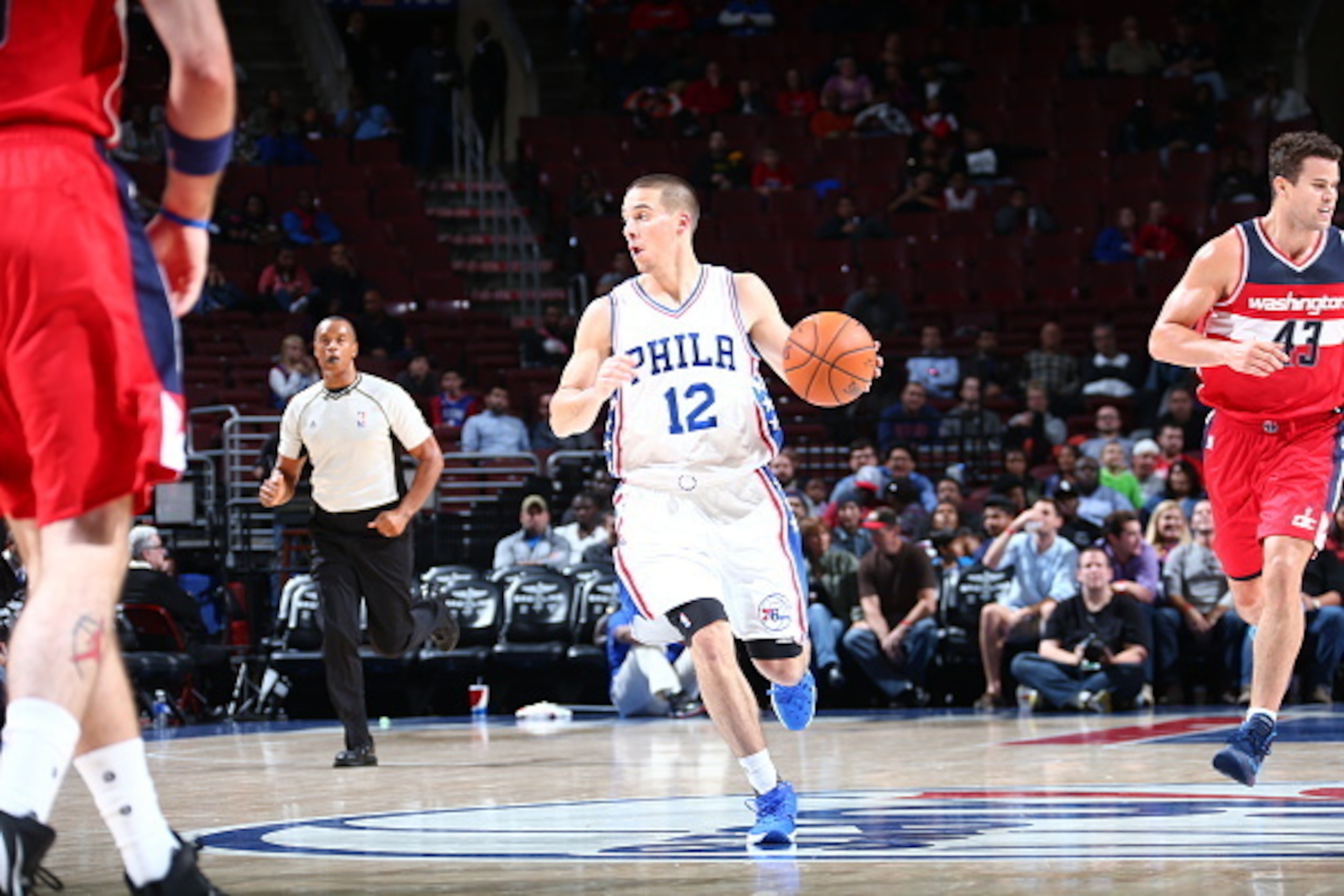
With Michael Carter-Williams long gone, the Philadelphia Sixers have, in his stead, simultaneously turned to everyone and no one.
Kendall Marshall and Tony Wroten Jr. will audition for the role of "Point Guard of the Future" eventually, but both remain on the shelf rehabilitating ACL injuries. In the meantime, Isaiah Canaan will be charged with the starting duties while the undrafted T.J. McConnell relieves him off the bench.
Is the Sixers' long-term solution at point guard already on the roster? Probably not.
Head coach Brett Brown already admitted that Canaan isn't really a floor general, telling reporters, per the Inquirer's Keith Pompey: "He's a shooter. He's a scorer. I'm not going to make him John Stockton. I'm not going to make him Steve Nash. So I have to take what he does, and what he does is quite well."
Canaan isn't a Hall of Fame point man. Got it. If it helps, neither McConnell nor Marshall nor Wroten is either.
McConnell led the Sixers in preseason assist rate, but exhibition defenses don't match the resolve of regular-season defenses. Marshall needs Philly to hire Mike D'Antoni as an assistant. Wroten avoids mid-range jumpers like the plague, but he remains predictable off the dribble and has never shot better than 26.1 percent from three-point range.
Here's hoping general manager Sam Hinkie puts some of his assets—draft picks and players—to good use ahead of the February trade deadline.
(And here's to acknowledging that he most likely won't.)
Phoenix Suns: Choosing a Direction
24 of 30
Existing in limbo between rebuildng and competing will come back to haunt the Phoenix Suns. In a way, it already has.
Winning an unexpected 48 games in 2013-14 led them to reinvest in a point guard-heavy foundation ahead of last season. But they were forced to take a wrecking ball to that at the trade deadline and finished the year with just 39 victories.
Some might take that as a sign. The Suns, evidently, have not. They have more than $125 million invested in their backcourt of Eric Bledsoe and Brandon Knight, a 33-year-old Tyson Chandler will take home $54 million over the next four years and Markieff Morris is either more important than ever or tremendously overrated (or both).
Meanwhile, Alex Len, the fifth overall pick in 2013, is now Chandler's understudy. Sophomore T.J. Warren is a unique amalgam of offensive versatility and limitations. Devin Booker and Archie Goodwin are first-round prospects themselves.
What is this team doing? Not making the playoffs, that's for sure.
Seriously, though, what are the Suns doing? Because if the answer is anything other than "loading up for midseason moves that will sway them in the direction of rebuilding or actually competing," they're doing this whole NBA thing wrong.
Portland Trail Blazers: Unleashing Meyers Leonard
25 of 30
Speaking of teams that are in no position to scrap for a playoff berth, the Portland Trail Blazers need to let Meyers Leonard loose. For good.
General manager Neil Olshey has assembled an overcrowded frontcourt in the wake of his roster overhaul, packing the depth chart with Ed Davis, Mason Plumlee and Noah Vonleh, not to mention Chris Kaman. Any one of them could cut into Leonard's playing time at the 4 and 5. But they shouldn't. They can't.
Leonard is a spitting image of what the center position will become. By now, you know he's the ninth player in NBA history to maintain a 50/40/90 shooting slash while averaging at least 15 minutes and attempting one or more threes per game. The company he keeps includes Larry Bird, Jose Calderon, Kevin Durant, Steve Kerr, Reggie Miller, Steve Nash, Dirk Nowitzki and Mark Price.
What you may not know is that Leonard, true to the direction of the center position, can also protect the rim. Bleacher Report's Adam Fromal has more:
"According to NBA.com's SportVU data, the 23-year-old Illinois product is coming off a season in which he held opponents to 42.3 percent shooting at the hoop while facing 3.5 attempts per game. Among the 150 players who contested at least three looks during the average contest, only Clint Capela, Rudy Gobert, Serge Ibaka and Andrew Bogut were more stingy.
And in case you're worried that Leonard is benefitting from a lack of involvement, it's playing time holding back the number of shots he faced, not immobility.
"
Stretch 5s who stack up defensively don't grow on trees. They're not even available in the most state-of-the-art, and covert, science labs. The Blazers have a truly unique talent on their hands, and as a team eyeing the future, it's their responsibility to tap into tomorrow's potential today.
Sacramento Kings: The Revival of Rajon Rondo
26 of 30
Today's NBA has seemingly passed Rajon Rondo by. The Sacramento Kings are betting that's untrue, in spite of evidence to the contrary.
It was easy to overlook Rondo's horrid jump shot (26.3 percent from deep for career) and free-throw struggles (60.9 percent) when he was contending for championships with the Celtics. But he hasn't been an offensive plus since 2011-12, and his All-Star credentials have essentially been revoked after a wildly unsuccessful 46-game stint in Dallas.
DeMarcus Cousins can shoot (and hopefully make) all the three-pointers ever. Head coach George Karl can have the Kings play at blistering speeds. He can run lineups with Rudy Gay as the stretch 4 in hopes of willing driving lanes into existence.
Ben McLemore could start to shoot more like Ray Allen. Seth Curry could shoot exactly like Steph Curry. Willie-Cauley Stein could, as a rookie, end up being the ideal pick-and-roll diver.
All of that could happen, and it would barley matter if Rondo isn't playing well. The Kings need him to impact the game as a playmaker, and they need him to (finally) shoot somewhere north of awful.
Then, and only then, might they emerge as the dark-horse playoff hopeful they've so obviously set out to be.
San Antonio Spurs: Putting All the Pieces Together
27 of 30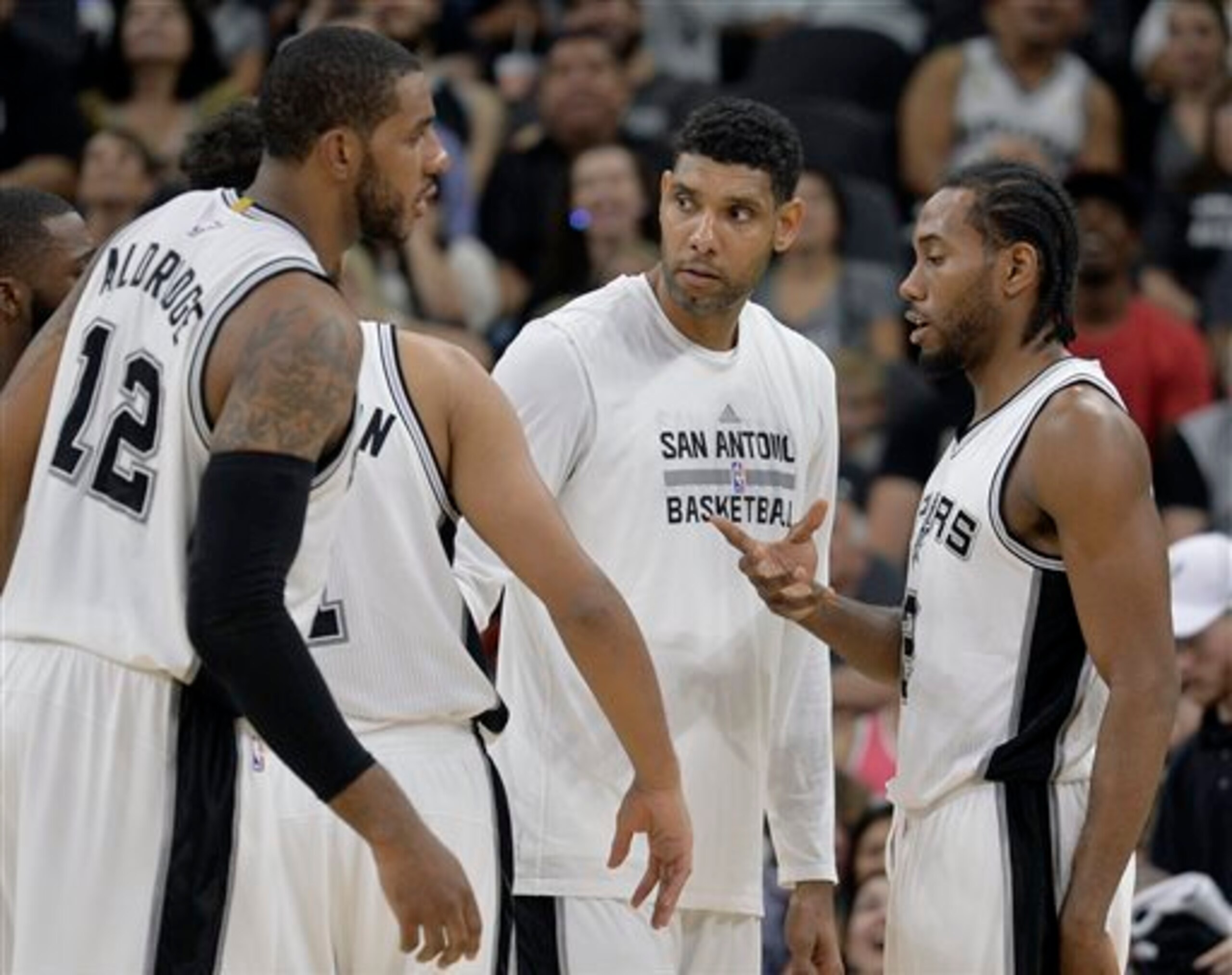
LaMarcus Aldridge's arrival changes things for the Spurs. They have never been more terrifying on paper, but they haven't been forced to incorporate such high-end talent into their offense since Tim Duncan entered the league.
You better believe they're worried about what happens next, as the regular season soldiers on, per Sports Illustrated's Chris Mannix:
"[Gregg Popovich] thought about how Aldridge, a midrange, volume shooting forward for most of his career, would fit in with the Spurs system. This was, of course, a fun exercise. Any team, regardless of system, would love to line up a player like Aldridge, a 20-point per game scorer in each of the last five seasons. Still, Popovich didn’t think it would be a seamless transition. He still doesn’t.
"
Fretting over the integration of a perennial All-Star, a worthy heir to Duncan's low-post throne, seems pointless. Aldridge. Duncan. Manu Ginobili. Danny Green. Kawhi Leonard. Tony Parker. David West. The Spurs will figure it out. They're the Spurs. The talent will figure it out. It's so much talent.
But there will still be a learning curve. They're already on pace to exceed last season's tightly regulated diet of mid-range jumpers, and Aldridge and Duncan have, on numerous occasions, struggled to divvy up the space inside the three-point line between them.
More likely than not, all will be well in the end. ("They're the Spurs" is, in fact, valid reasoning.) But San Antonio can't fast-forward to that end. It must first endure the process, however long it lasts.
Toronto Raptors: Diversifying the Power Forward Slot
28 of 30
Tyler Hansbrough and Amir Johnson were great energy guys and superb rebounders during their time with the Toronto Raptors. But neither of them encapsulated the role of a new-age power forward.
The Raptors often struggled when facing floor-spacing 4s. They didn't have frontcourt bodies to defend perimeter dwelling bigs. Even their offense, which ranked third in efficiency, was at times hampered by a lack of frontcourt flexibility.
Inserting Carroll into the rotation instantly reverses those concerns. At 6'8", he can defend either forward spot, and both his ball movement and shooting are assets the Raptors didn't have up front—outside of Patrick Patterson, that is.
As Ben Rohrbach wrote for Yahoo Sports:
"Still only 26 years old, Patterson has shot 38.2 percent from 3-point range since coming over from the Kings in the Rudy Gay trade. With a 7-foot-2 wingspan, he’s perfectly suited to be a stretch four, and the two most often used lineups featuring him last season outscored opponents by more than 15 points per 100 possessions. With Johnson gone, Patterson will have a regular starting role for the first time in Toronto, and the only question is whether more minutes will translate into more production.
"
Patterson ranked second on the team in total minutes played last season but has a real opportunity to shine now, even if he's expected to play behind Luis Scola. And if he, along with Carroll and Scola, can inject more versatility into the power forward spot, the Raptors will have a much easier time transitioning into the realm of well-roundedness.
Utah Jazz: Playing Ugly
29 of 30
Postseason berths aren't always earned by playing pretty—which is good, because the Utah Jazz, as currently concocted, aren't here to look good.
They're here to win ugly.
Although head coach Quin Snyder is cut from the same offensive cloth as Spurs head honcho Gregg Popovich, the Jazz are not built to space the floor, or to shoot and make threes, or to run particularly fast.
Derrick Favors, an offensive stud in his own right, and Rudy Gobert cannot shoot threes. Rookie Trey Lyles might be a stretch big three years down the line, but he isn't now. There is no star point guard on the roster—no one to initiate drive-and-kicks by weaving in and out of the paint like vintage Tony Parker. There is only a quasi-point forward in Gordon Hayward, a combo-guard in Alec Burks, an undersized Trey Burke, an injured Dante Exum and a pick-and-roll specialist in Raul Neto.
It's a mess of talent worthy of slightly improving upon the Jazz's 15th-ranked offense from last season and nothing more. But that's OK. They don't need a fancy-schmancy offense.
No, the Jazz need an encore performance from their league-lording defense. They led all teams in defensive efficiency after trading away Enes Kanter, allowing just 94.8 points per 100 possessions.
During that time, the offense was statically worse than their season average. And yet, the Jazz still posted the third-best net rating of any team, situating themselves behind only the Clippers, Spurs and Warriors—all because of their defense. That's what fueled their midseason climb, and that's what will keep them on the Western Conference's playoff grind.
Washington Wizards: Playoff Wittman Becoming Everyday Wittman
30 of 30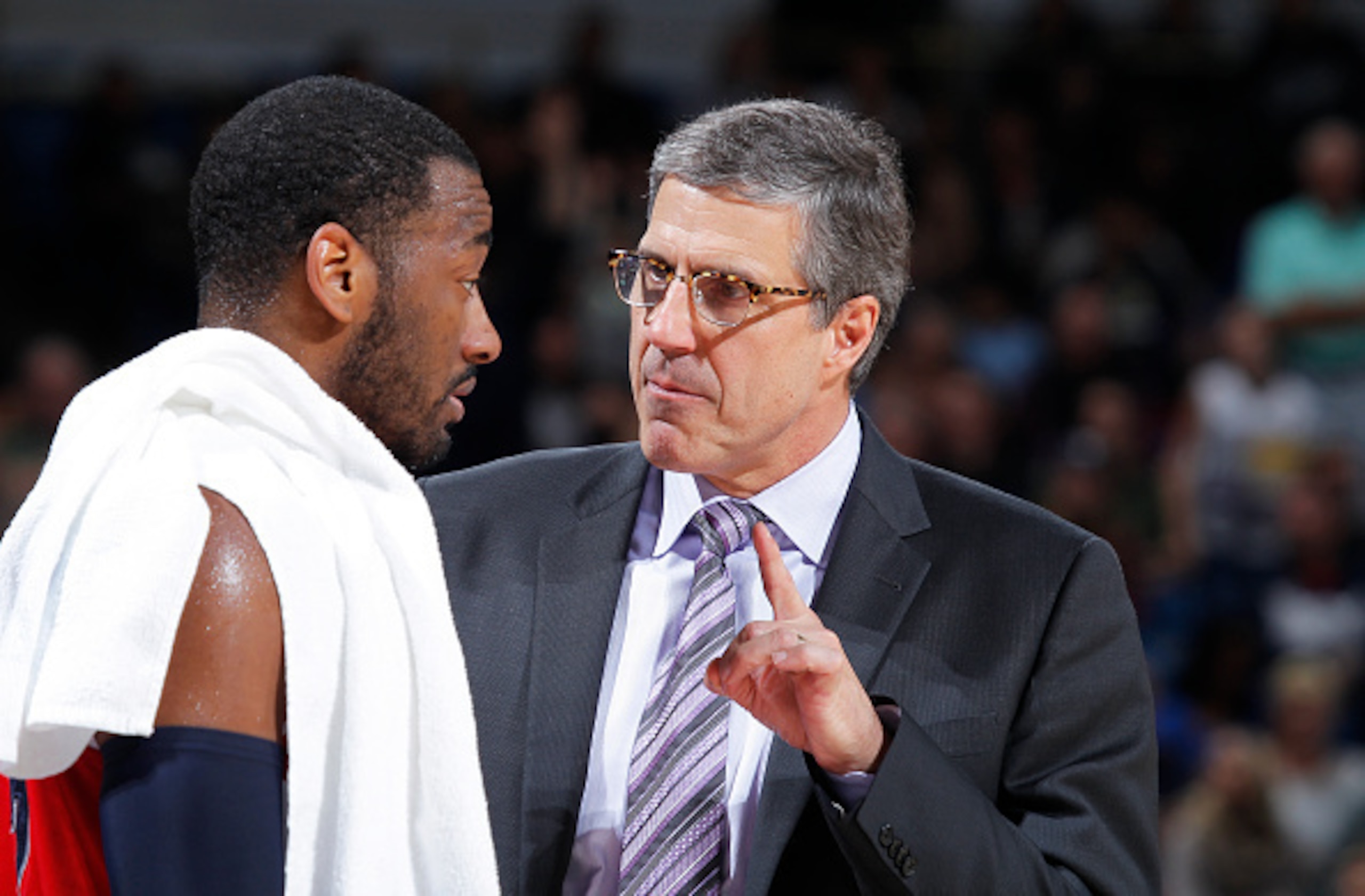
Randy Wittman is not the same head coach he was eight months ago. He's different. And the Washington Wizards offense is better because he's different.
Given the level of talent on last season's roster, the Wizards underachieved on the offensive end. They ranked in the bottom half of offensive efficiency and seemed oblivious to the small-ball style that has taken the league by storm. But not anymore.
After relying more on small-ball 4s in the playoffs, Wittman has officially tweaked Washington's offense to include the permanent presence of floor-spacing power forwards. He has changed the team's method of attack so much, so fast, that's it's drawing comparisons to universally respected systems, per the Washington Post's Jorge Castillo:
"Washington’s iteration of pace and space features hints of influence from various sources. There are drags and screens in transition for guards to create quick offense, staples in Stevens’s playbook. The frenetic pace is reminiscent of Mike D’Antoni’s “seven or seconds or less” offense with the Phoenix Suns, and D’Antoni was the first to have wing players constantly run to the corners to set up for three-pointers. And like San Antonio Spurs Coach Gregg Popovich, Wittman wants his players to shoot, attack or pass immediately. He preaches that dribbling more than three times is a sin.
“If I could compare it to any of the systems I’ve been in, it would be closest to San Antonio,” said Neal, who spent three seasons with the Spurs. “The difference is John is younger than Tony [Parker], so we can rely on John a little more.”
"
The Spurs offense? And the Wizards offense? Being mentioned in the same breath? This has to be a joke.
Only it's not. The Wizards finished first in preseason offensive efficiency and averaged nearly 10 possessions per 48 minutes more than they did in 2014-15.
Sure, it's early. The season-long verdict on Washington's new-yet-familiar offense—replete with a three-point-chucking Kris Humphries—is still out. But the initial returns are in, and they, like the Wizards overall, are pretty damn good.
Stats courtesy of Basketball-Reference.com and NBA.com unless otherwise cited and are accurate leading into games on Oct. 28.
Dan Favale covers the NBA for Bleacher Report. Follow him on Twitter @danfavale.

.jpg?w=2560 "Jonathan Taylor Landing Spots")
.jpg?w=2560 "NFL House in Paris Closes for Protests (AP)")

.jpg?w=2560 "Trevon Diggs Cut by Seahawks")