

Why Wayne Ellington Should Return to Los Angeles Lakers Next Season
It may have gone largely unnoticed during a generally miserable year, but Wayne Ellington heads into summer free agency on the heels of his best NBA season.
The 27-year-old shooting guard isn’t a big story in the lead-up to the draft, and he’s also not the first person who comes to mind when considering the larger picture of the Los Angeles Lakers' rebuild.
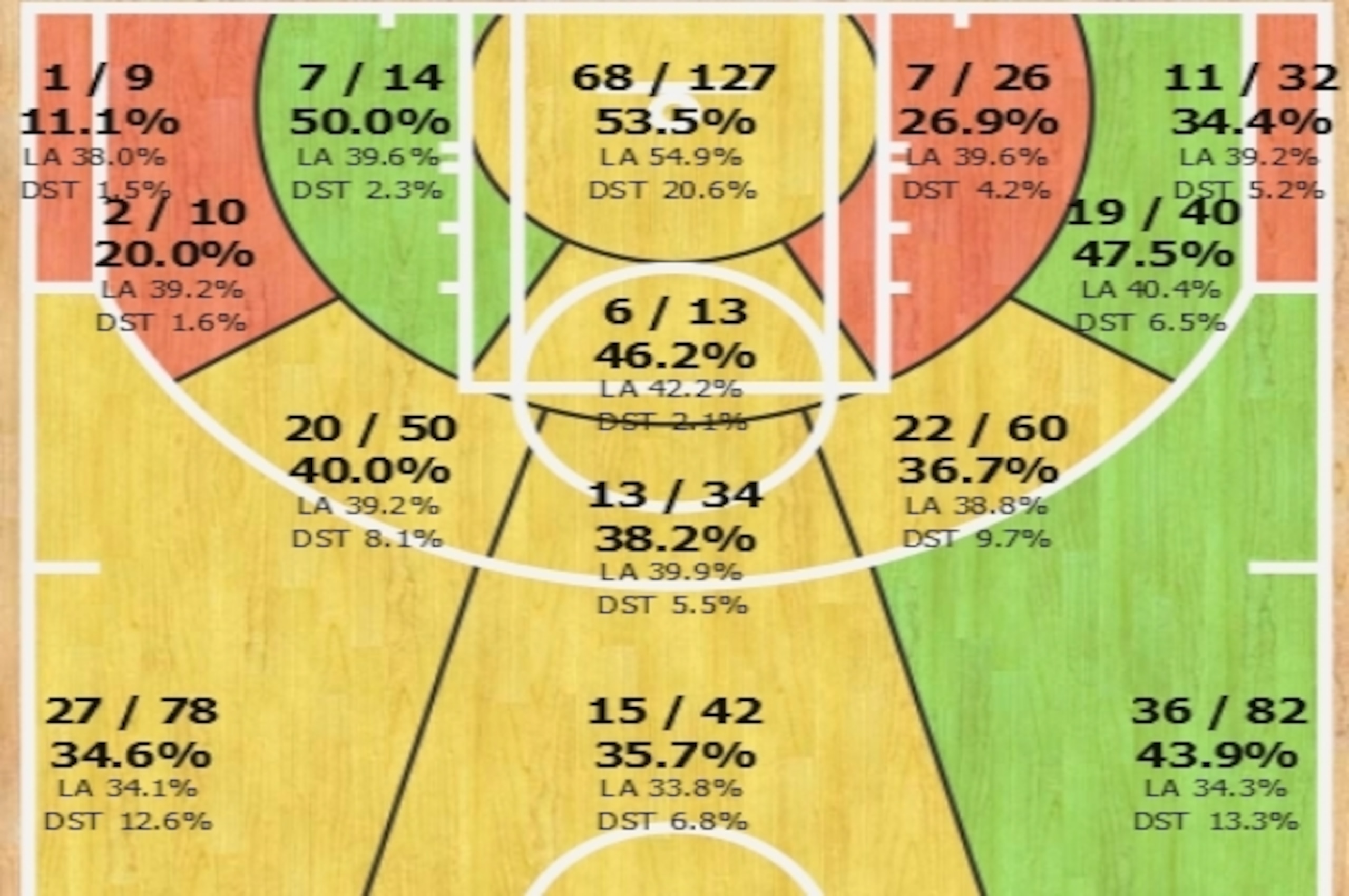
But the L.A. front office should re-sign Ellington regardless. The six-year veteran does a little bit of everything and does one thing particularly well—he has a proclivity for knocking down jumpers from beyond the arc.

That’s something of value for a low-scoring team with a conservative offensive approach.
For the 2014-15 season, Ellington averaged 10 points per game in 25.6 minutes, with 39 percent of his shots coming from downtown.
A shooting star at North Carolina, Ellington has largely played under the radar as a pro, signing with seven teams over the course of six years and playing for just five of them. He has become the definition of an NBA journeyman, going where the road takes him and filling needs with little fanfare.
Born and raised in the Philadelphia suburbs, Ellington was drafted by the Minnesota Timberwolves as the 28th overall pick in 2009. Fresh off an NCAA title and the Final Four MVP that year, the 2-guard might have gone higher if not for the pesky size issue—6’4” isn’t impressive for a player at that position, especially when not known for explosive speed or power.
It’s not that Ellington can’t find his way through traffic. But he’s just more of a spread-the-floor kind of guy. As it turned out, the Timberwolves were just the first stop in a serpentine career. One of Ellington's shortest subsequent stops, however, might have provided a prescient insight into the future.
Midway through the 2012-13 season, Ellington was traded from the Memphis Grizzlies to the Cleveland Cavaliers. Cleveland’s coach at the time was Byron Scott, and over a 38-game stretch, the shooting guard’s productivity spiked to 10.4 points per game.
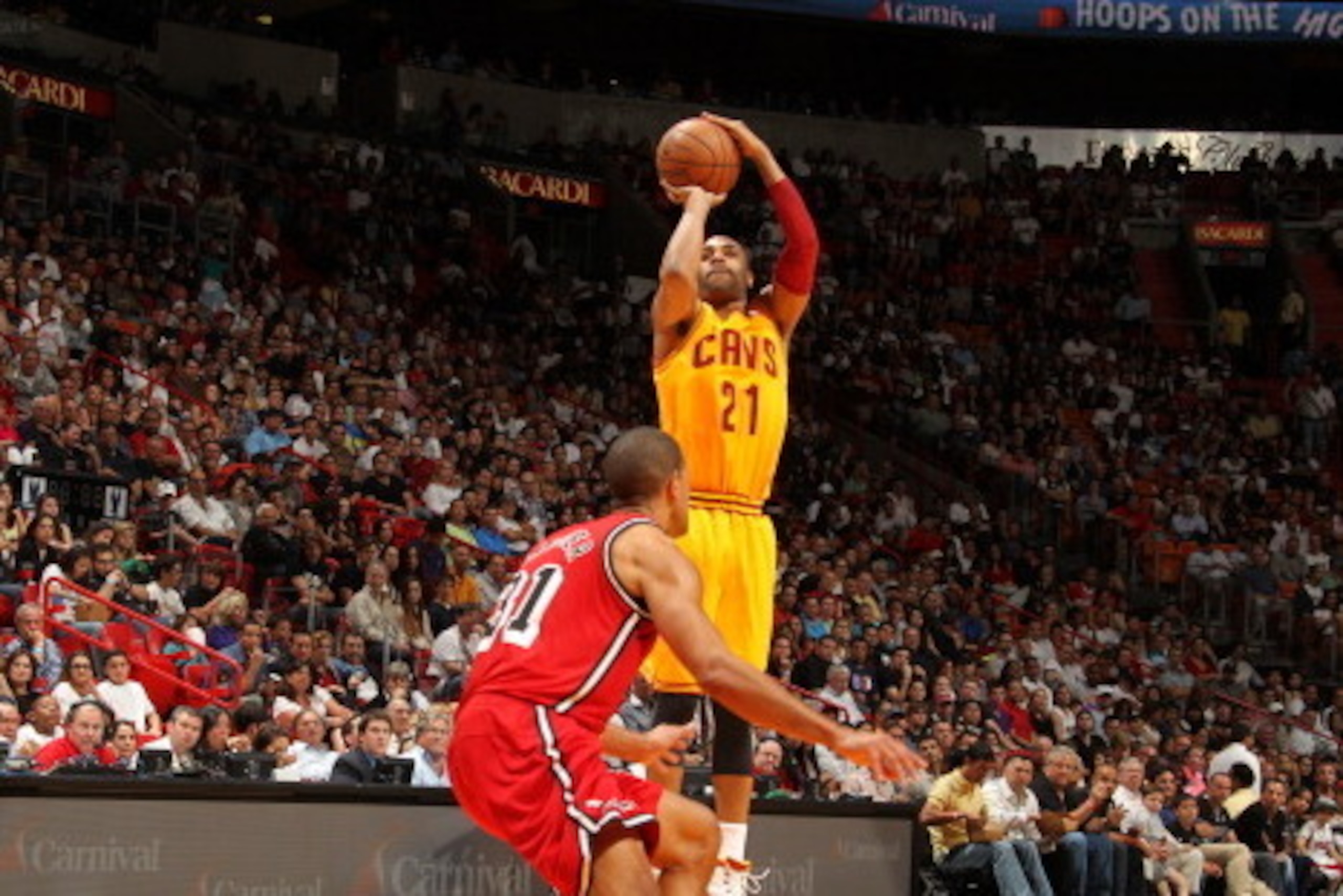
“I trust him when he's out there because I know he's going to do all the right things,” Scott said at the time, per Jodie Valade of the Cleveland Plain Dealer. “He plays within himself and competes. He's not afraid of the moment.”
But that was Scott’s last season in Cleveland, and Ellington also found himself on the road again, joining the Dallas Mavericks and averaging 3.2 points per game—his NBA nadir. Ellington was traded to the New York Knicks during the following offseason and was dealt again to the Sacramento Kings, where he was waived.
And then came a training camp invite in Los Angeles and a reunion with Scott. The contract was modest—a non-guaranteed $315,646 with an additional $581,692 if he could survive the cuts until December. That’s the life of a minimum-salary player in the NBA, and it is how the Lakers have been slowly and methodically building a roster—with short money and few long-term promises.
Ellington also found a common background in Los Angeles with his teammate from North Carolina, Ed Davis, as well as Lakers general manager Mitch Kupchak—another former Tar Heel.
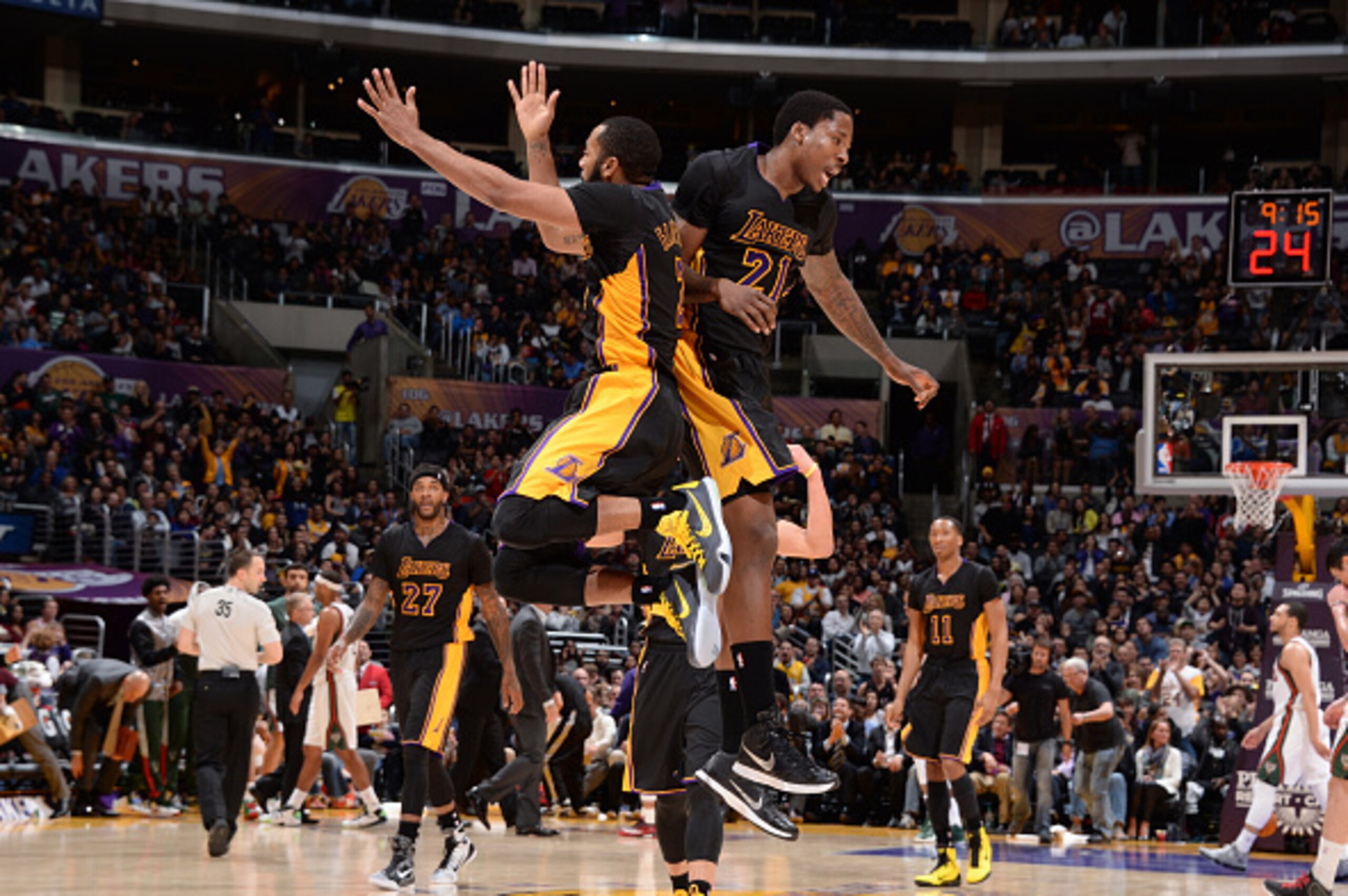
The veteran shooting guard’s 2014-15 season included a little something of everything, from limited support minutes to 36 games as a starter. At issue was a roster plagued by injuries, as well as the need to evaluate players for the future.
Ellington came off the bench behind Kobe Bryant early in the season, then took his place when the 19-year veteran went down with a torn shoulder. But when the team fell out of playoff contention, Scott began increasing minutes for other players at the shooting guard slot—first rookie Jordan Clarkson, and then undrafted rookie Jabari Brown, who was called up from the D-League.
So where did all that leave Ellington? Filling in the gaps whenever his number was called.
And while his best-known calling card may be as an outside shooter, it’s not his only talent. Ellington can score in a variety of ways: with a wicked pivot step, stopping and elevating off the dribble or tossing in a nice little floater on the run.
Scott touched on Ellington's improvement, per Ryan Ward of Lakers Nation:
He’s also a sneaky player, leaking out for opportunities or lurking unnoticed with flypaper hands, picking a pocket and loping back to finish easily and unspectacularly at the rim.
During his exit interview, Ellington expressed a desire to further demonstrate his value in Los Angeles and his appreciation for a coach who has given him another chance.
“I feel like coach and I have a really good relationship,” Ellington said, according to Eric Pincus of the Los Angeles Times. “We're more than just co-workers. He trusts me on the floor. He knows I'm not going to make a lot of mistakes. I'm not going to hurt the team.”
Not hurting the team is Ellington in a nutshell. His turnover rate of 0.8 this season is extremely low for a guard, and it's in line with his career average of 0.7.
Ellington injured his shoulder at the beginning of April and wasn’t able to play in the final eight games of the season. But Serena Winters of Lakers Nation reported he has recently been back at the Lakers' practice facility, working out with the assistant coaches.
The savvy guard with the pure shooting stroke won’t ever be a superstar like Bryant, and he doesn’t have the effervescent, media-happy presence of volume shooter Nick Young. He won’t give introspective soundbites like Jeremy Lin, and he doesn’t possess the slash-to-the-basket athleticism of Clarkson.
But he’s the definition of a value contract, and he’ll also bring a much-needed veteran presence to a young, rebuilding Lakers squad.
Management should bring Ellington back next season—it will be modest money well spent.
.jpg?w=2560 "WWE Raw Live Grades 🔠")
.jpg?w=2560 "Chiefs, Steelers Eye WR Trades")
.jpg?w=2560 "Multiple NFL Trades Predicted")
.jpg?w=2560 "🚨Jay-Z Headlining Super Bowl")

.jpg?w=2560 "JT's Projected Trade Cost")