


No stadium radar gun gets a workout quite like the one at Great American Ball Park. That's where Aroldis Chapman has done most of his work—and fired most of his 100-plus-mph fastballs.
But alas, it is time for the Cincinnati Reds to end that relationship. They need to trade Chapman, and the sooner the better.
If this seems like familiar territory, that's because this is the latest in my "All Reds Must Go!" series. I pushed for Cincinnati to deal ace right-hander Johnny Cueto last December and to sell off slugging third baseman Todd Frazier just last week. It was inevitable that I'd get around to their flame-throwing relief ace, too.
TOP NEWS
_0.jpg?w=2560 "MLB playoffs")
World Series Game 3 Takeaways ✍️

Best Free-Agent Hitters 💥

Bold MLB Predictions For 2026-27 Offseason 🔮
As for why, it's the same old story: The Reds' present is a lost cause, and they can help their future more by trading Chapman than they can by holding on to him.
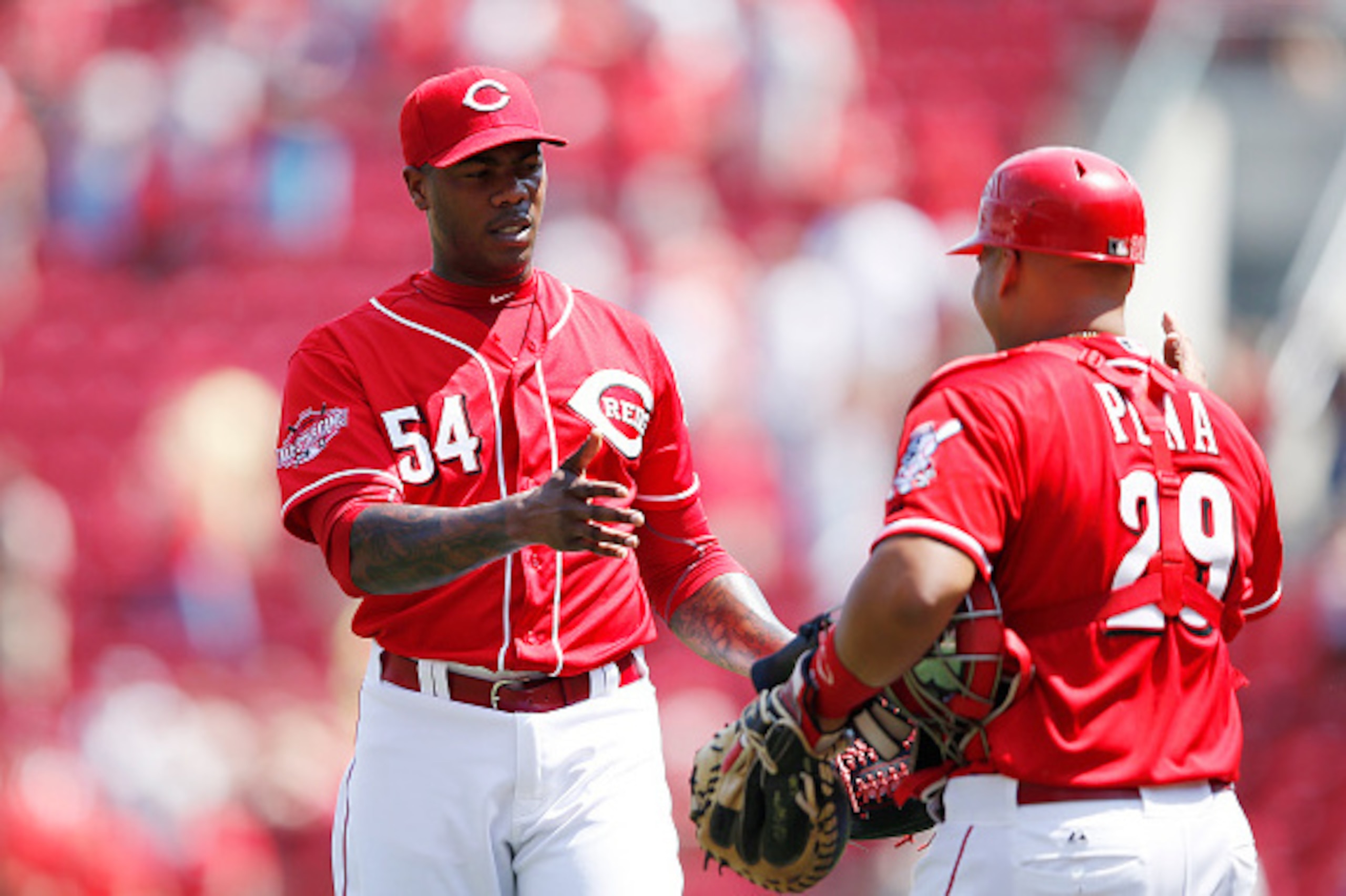
Though the Reds haven't strayed very far from the .500 mark in 2015, they also haven't been able to make any progress in climbing to the top of a very tough NL Central. Such is the case these days, as Cincinnati is 30-35 and 13 games out of first place.
That puts the Reds in a position to be trade-deadline sellers July 31, but there is a complication. Ken Rosenthal of Fox Sports said in a recent video that the man in charge is not convinced:
"The Reds look doomed. ... The only opinion that matters, though, is the one belonging to owner Bob Castellini, and Castellini, from what I'm told, still is not ready to concede. Now, most in the organization understand that the team needs to move pieces such as Johnny Cueto, Mike Leake, Aroldis Chapman and Jay Bruce. The trick now is convincing Castellini that that is the direction to go and that the team should not be reluctant to act even before hosting the All-Star Game.
"
Regarding Chapman specifically, Bob Castellini may not be the only person in the Reds organization reluctant to deal him. According to Nick Cafardo of the Boston Globe, rival scouts aren't convinced the Reds would move Chapman if "push came to shove."
It sounds like the Reds could use some compelling reasons to move Chapman. So let's get to it.
| Cardinals | 43-22 | - |
| Pirates | 38-27 | 5 |
| Cubs | 35-28 | 7 |
| Reds | 30-35 | 13 |
| Brewers | 24-43 | 20 |
Above all, there's this: Chapman is a big-time trade asset.
The 27-year-old left-hander out of Cuba is in the middle of a season in which he has a 2.08 ERA in 30.1 innings spanning 31 appearances. He's allowed only 21 hits and struck out 53 of the 132 batters he's faced.
So it goes for Chapman. Since 2012, he owns a 2.01 ERA in 221 appearances and has struck out 45.3 percent of the batters he's faced. According to FanGraphs, only Craig Kimbrel (41.2 K%) is close to Chapman in that department.
On a related note, there's not a pitcher alive who can match the fastball that's made so many of those strikeouts possible.
Chapman's career average fastball velocity is 98.6 mph, and he's bumped it closer to 100 mph over the last two seasons. This leads us to some fun Twitter information courtesy of America's Pastime:
The catch with Chapman, of course, is that he doesn't always know where the ball is going. His 13.6 walk percentage is a continuation of a trend that's seen him walk 12.0 percent of the batters he's faced since 2013. That's tied for the fifth-highest mark against a reliever.
All the same, that hasn't stopped him from being an elite arm out of the bullpen. Chapman ranks third among his fellow relievers in fWAR this year and leads all of them since 2012 (8.8). In the realm of relief aces, he has a strong claim to the throne.
Beyond loads of talent, another thing Chapman has going for him is controllability. He's not a free agent until after 2016, so he wouldn't be a mere rental if the Reds were to put him on the trading block. And that would be good for Cincinnati, as extra controllability allows for a higher asking price.
Even without context, all of this would bode well for the Reds if they dangled Chapman. But it gets better.
As Dave Cameron of FanGraphs noted, this summer's scene is shaping up to be an extreme seller's market thanks to how widespread parity has turned every playoff race into a Royal Rumble. Demand is going to be high, which would allow the Reds to further increase their asking price for Chapman.
And though he may only be a reliever, there's always a demand for bullpen help around the trade deadline. So much so, in fact, that we have a few examples of sellers getting better-than-expected returns in trades involving relief aces.
FanGraphs' Jeff Sullivan brought up a few examples in a piece for Fox Sports, such as:
- 2011: The Baltimore Orioles turned Koji Uehara into Chris Davis and Tommy Hunter.
- 2014: The Texas Rangers turned Joakim Soria into Jake Thompson, MLB.com's No. 70 prospect.
- 2014: The Boston Red Sox turned Andrew Miller into Eduardo Rodriguez.
- 2015: The Atlanta Braves turned Craig Kimbrel into Cameron Maybin, two prospects and a draft pick.
Of these, Sullivan says that the Kimbrel trade is the "best actual trade comp" for a possible Chapman deal, in part because he's one of the only relievers in baseball who's on Chapman's level.
That's a thought that should excite the Reds. It's certainly easy to say as much now knowing how Maybin has rebounded (.296/.365./.403) after a string of rough seasons. But even at the time the deal went down in early April, it was easy to get excited about the Braves' getting arguably a top-50 prospect in Matt Wisler and the No. 41 pick in the 2015 MLB draft (who ended up being high school hitter Austin Riley). All told, they stood to gain a lot from jettisoning Kimbrel.
Granted, Chapman's situation isn't a carbon copy of Kimbrel's. He may be as talented, but he's not controlled through 2018 like Kimbrel is. The extra leverage allowed by the summer's seller-friendly trade market, however, could make up for that and allow the Reds to land a similar package anyway.
And the Reds most certainly could use a package like that.
Outside of Billy Hamilton, Devin Mesoraco and Anthony DeSclafani, they're short on young, controllable pieces at the major league level. Their farm system, meanwhile, began the year as Baseball America's No. 17 system and has only moved up to No. 13 in the eyes of B/R's Joel Reuter since then.
This is to say that the Reds are short on long-term building blocks. And with Cueto and Leake due for free agency this winter and Brandon Phillips, 33, and Joey Votto, 31, getting older, they need to fix that.
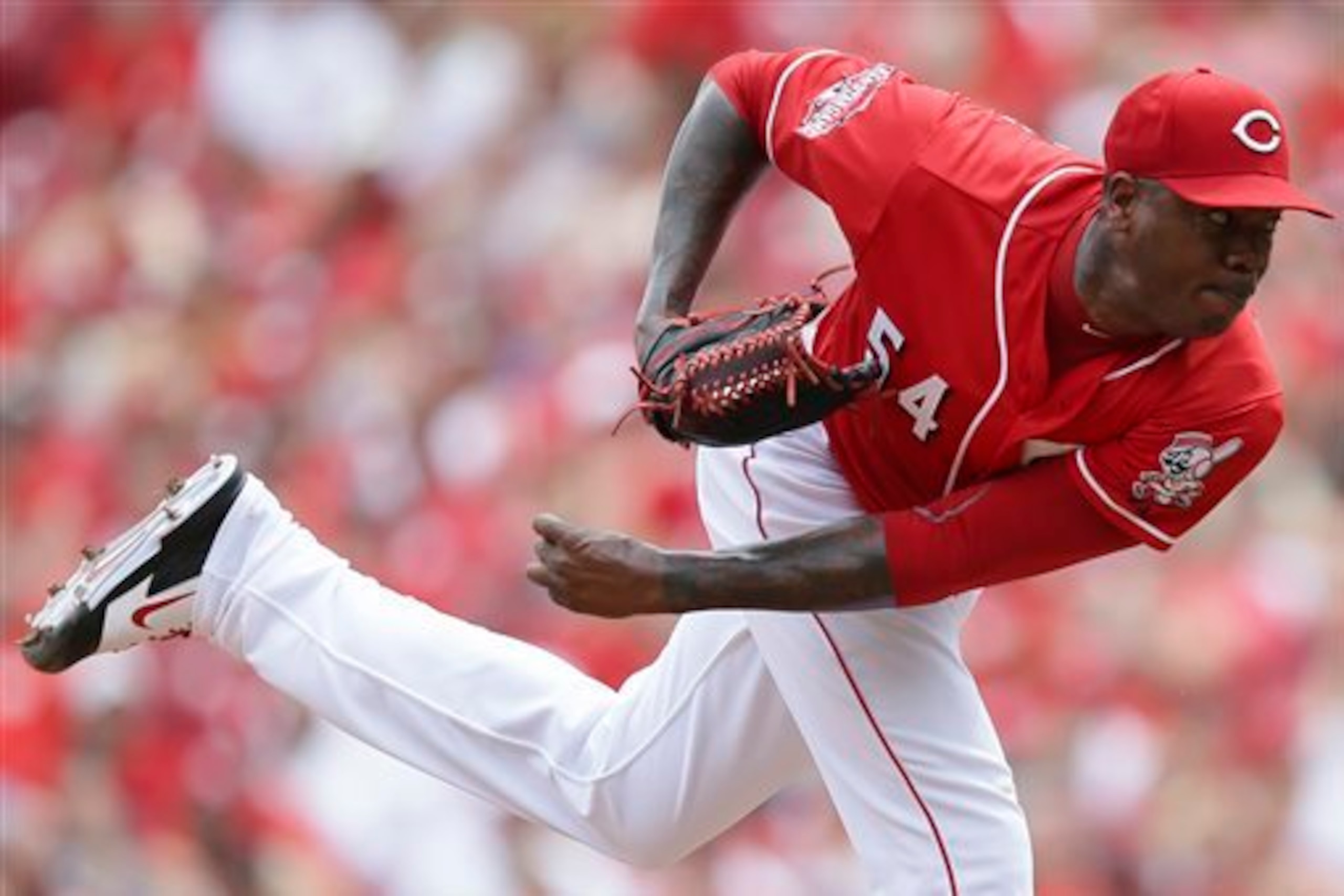
The other alternative for the Reds is to hold on to Chapman, perhaps to trade him next season or extend him beyond 2016. But his value will decrease significantly if they wait to trade him next year. And if Kimbrel really is the best comparison for Chapman, then it will likely cost eight figures a year to extend him.
With at least $53 million in salary commitments every year between now and 2019, per Cot's Contracts, that would be tough for the Reds to do. And even if they could do it, do they really want to trust that a guy with funky mechanics and a triple-digit fastball is going to age gracefully?
In the end, it's simple: The Reds don't have much in the way of reasons to hold on to Chapman, and the timing for a trade is never going to be better than it is right now.
This doesn't mean the Reds have to trade Chapman today. Or even tomorrow. It's not even July yet, and barring injury, he's still going to have plenty of value if Cincinnati chooses to hold on to him through the All-Star break.
But if the team doesn't trade its star reliever at some point this summer, no amount of triple-digit fastballs from Chapman's arm will fix its mistake.
Stats courtesy of Baseball-Reference.com and FanGraphs unless otherwise noted/linked.
If you want to talk baseball, hit me up on Twitter.

.jpg?w=2560 "WWE Raw Live Grades 🔠")

.jpg?w=2560 "Chiefs, Steelers Eye WR Trades")
.jpg?w=2560 "🚨Jay-Z Headlining Super Bowl")
.jpg?w=2560 "Multiple NFL Trades Predicted")

.jpg?w=2560 "JT's Projected Trade Cost")