
Breakout Watch: Predicting the 10 Biggest Risers of the 2015 Offseason
Basketball is played at its highest level in the NBA. So it makes sense that even among the most talented players in the world, there are some who take a year or two to find their footing before breaking out.
A player could have a coach who doesn't quite know how to use him. Another player might not know quite how to employ his own talents. Gaining the experience needed to produce just takes time.
Take Rudy Gobert of the Utah Jazz as an example.
In his first year in the Association, Gobert languished for most of the season on the bench under then-head coach Tyrone Corbin. He even spent some time in the D-League. All told, Gobert appeared in just 45 games as a rookie. He averaged 3.4 rebounds, 2.3 points 0.9 blocks.
In his second season, he continued to come off the bench for new coach Quin Snyder. It wasn't until Utah traded Enes Kanter that he truly broke out. Following that deal, Gobert averaged 13.4 rebounds, 11.1 points, 2.6 blocks, 1.8 assists and one steal.
This slideshow is an endeavor to find breakout candidates like Gobert. Predicted leaps from 2014-15 to 2015-16 could be similar to, albeit maybe not as large as, his rookie-to-sophomore boost. A change in situation or experience level will yield rewards.
Marcus Smart, Boston Celtics
1 of 10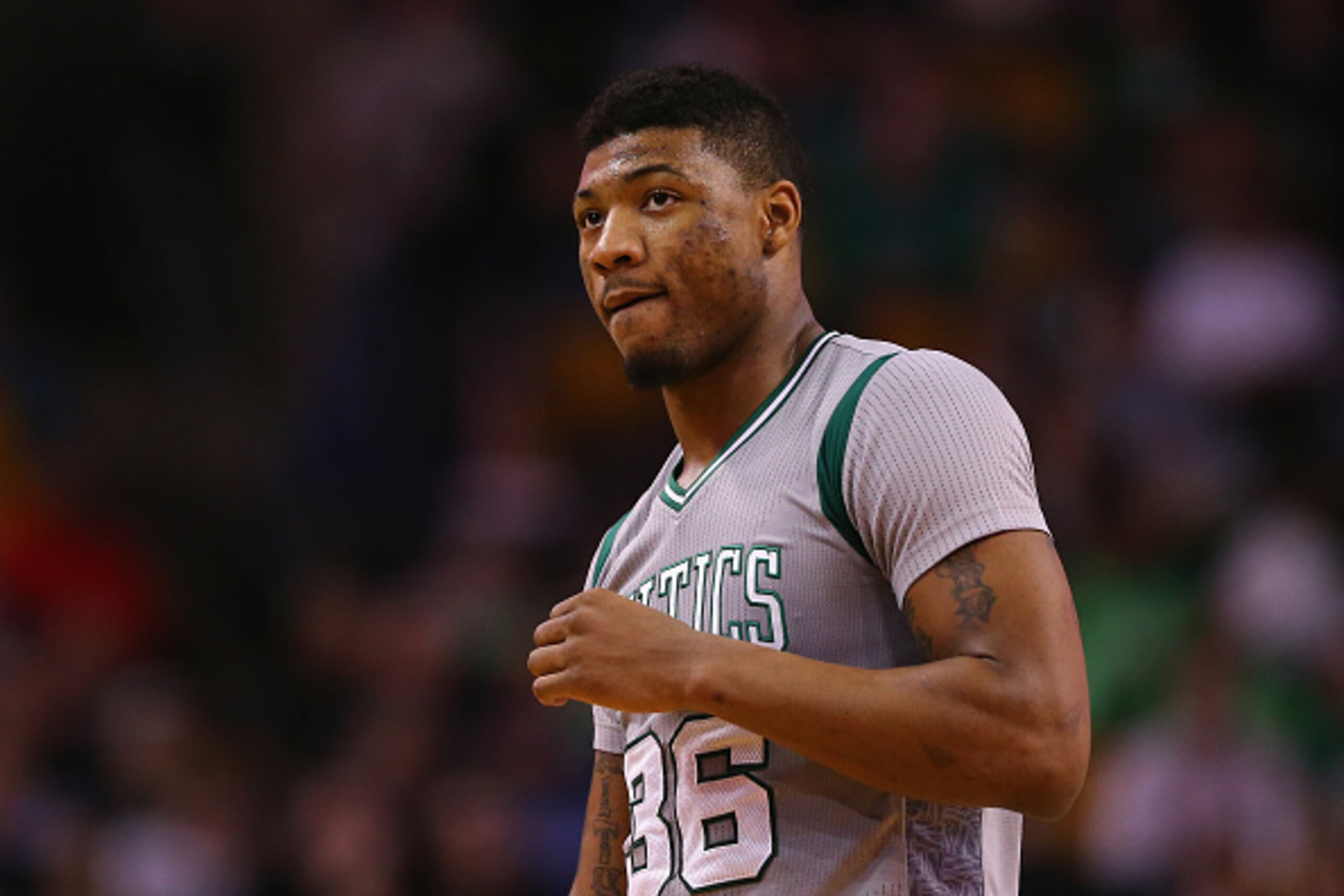
2014-15 Production: 7.8 PTS, 3.3 REB, 3.1 AST, 1.5 STL, 36.7 FG%, 33.5 3P%
2015-16 Prediction: 11.0 PTS, 4.0 REB, 4.0 AST, 1.5 STL, 40.0 FG%, 34.0 3P%
A number of factors contributed to a rocky first season for Marcus Smart, but the two biggest may have been an ankle injury in November and the Rajon Rondo trade the next month.
Rondo's presence in Boston made it harder to find minutes for Smart. That, combined with coming back from the injury, limited Smart to 17.3 minutes per game prior to the December 19 trade that sent Rondo to the Dallas Mavericks.
In those 11 pre-trade games, Smart averaged just 6.1 points and shot 34.9 percent from the field. After the deal, he averaged 8.1 points and shot 37.1 percent in 28.8 minutes.
But all this is really ancillary to what truly makes Smart a breakout candidate. In May, Celtics.com's Marc D'Amico named Smart Boston's Defensive Player of the Year, saying:
"More than 40 percent of Smart’s defensive possessions included him being placed into a pick-and-roll, according to Synergy Sports. Synergy rated Smart as an excellent defender in those scenarios, as he allowed only 0.643 points per possession in pick-and-rolls. That number ranked in the 84th percentile of the NBA...
...As you might expect, Boston was pretty darn good at the defensive end while Smart was on the floor. Opponents committed an average of 14.1 turnovers per 48 minutes while Smart was off the court, but that number spiked to 16.0 while he was on the court. Smart’s presence also resulted in a decrease in opponent field goal percentage, free throw attempts and scoring average per 48 minutes.
"
Smart's tenacious defense led to winning basketball for the Celtics, as he was one of six on the team with at least 500 minutes and a positive net rating.
A full season with healthy ankles (knock on wood) and no Rondo should allow Smart to showcase that defensive ability even more.
And if he can pull up his shooting percentages three or four percent, he'll likely be a double-figure scorer on the other end.
Doug McDermott, Chicago Bulls
2 of 10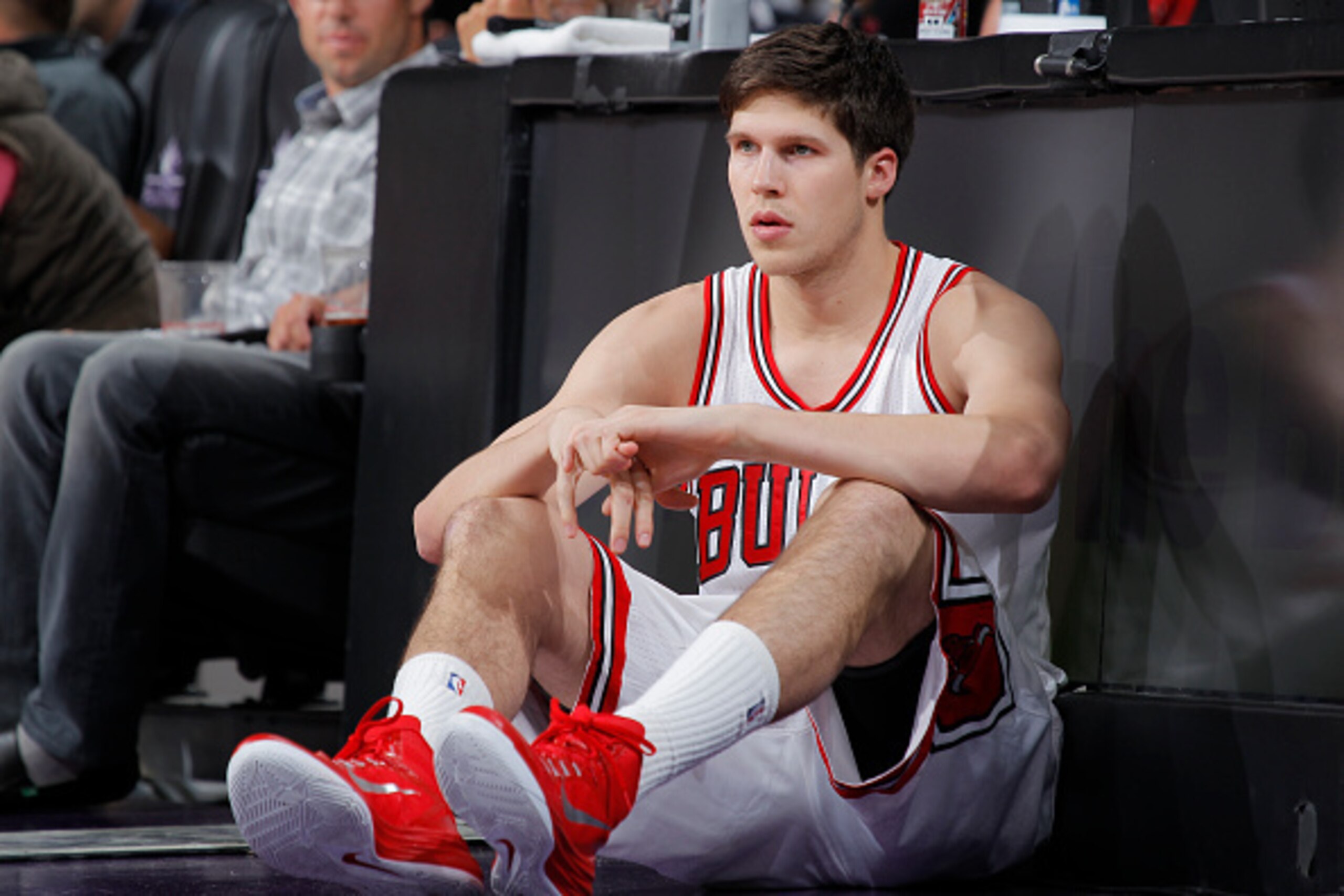
2014-15 Production: 3.0 PTS, 1.2 REB, 40.2 FG%, 31.7 3P%
2015-16 Prediction: 10.0 PTS, 3.5 REB, 45.0 FG%, 38.0 3P%
It's no secret that former Chicago Bulls coach Tom Thibodeau was never a fan of trusting his rookies. The average rookie season of a first-rounder picked under Thibodeau was 11.3 minutes per game in 50.8 appearances.
Doug McDermott's numbers came in even below that. During 2014-15, he appeared in just 36 games, with an average of 8.9 minutes.
In fairness to Thibodeau, McDermott did deal with a knee injury during the season, and Chicago was a veteran-laden team. But the fact remains: Young guys had a more difficult time getting on the floor under that regime.
Cue Fred Hoiberg, the Bulls' new head coach who may be just what McDermott needs to get his career off the ground.
Hoiberg has more of a mind for offense than Thibodeau, and as Bleacher Report's Kelly Scaletta writes, that should work in McDermott's favor:
"McDermott will get minutes. He’ll get chances to prove his shooting, driving ability and passing. Perhaps most importantly, he’ll get a chance to fail without getting yanked off the court. Because of that, he should benefit more than any player on the Bulls’ roster.
"
Having the opportunity to work through mistakes will go a long way for McDermott in year two. If he can achieve some level of comfort on the floor, he could quickly develop into the kind of floor-spacer Chicago needs to open up the lane for Jimmy Butler, Derrick Rose and Pau Gasol.
Meyers Leonard, Portland Trail Blazers
3 of 10
2014-15 Production: 5.9 PTS, 4.5 REB, 51.0 FG%, 42.0 3P%, 93.8 FT%
2015-16 Prediction: 9.5 PTS, 6.5 REB, 50.0 FG%, 37.0 3P%
The list of NBA players with seasons of at least 50 games, shooting 50 percent from the field, 40 percent from three and 90 percent from the free-throw line is exclusive.
Iconic shooters such as Steve Nash, Larry Bird, Dirk Nowitzki and Meyers Leonard populate the list. With the ability to hit fr...wait—Meyers Leonard?
Yes, his sample size is significantly smaller than the others who've joined the 50-40-90 club (in fact, he's not technically in it because of the NBA's qualifying rules), but there's no denying the 23-year-old's floor-spacing potential.
A 7'1" center who knocked down 47 of 112 three-point attempts in 2014-15 should be able to cause defenses to scramble next season, especially if more minutes are available to him.
With LaMarcus Aldridge and Robin Lopez both entering free agency this summer, there's a chance significantly more minutes will be available in Portland's frontcourt.
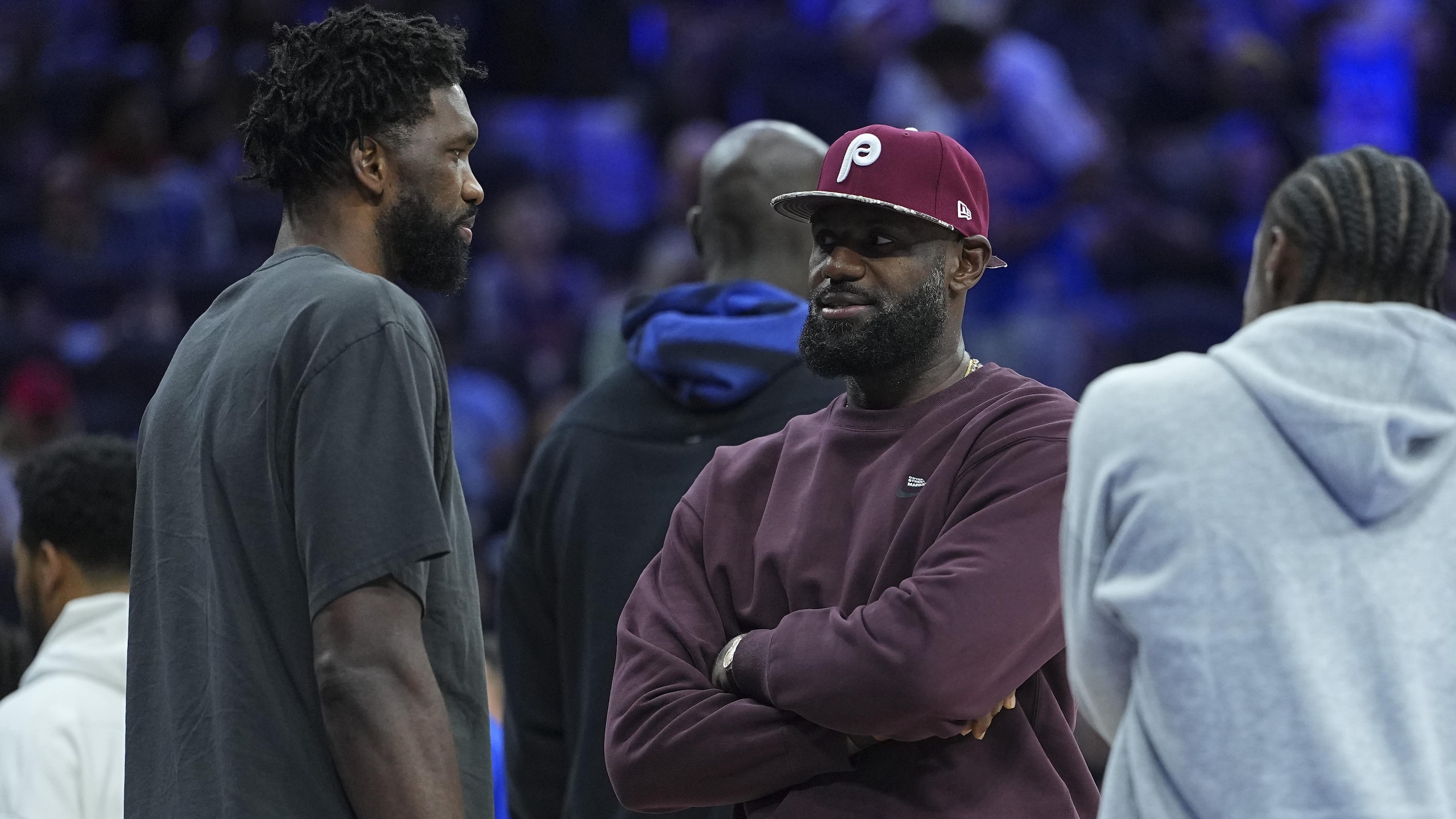


Enes Kanter, Oklahoma City Thunder
4 of 10
2014-15 Production: 15.5 PTS, 8.9 REB, 51.9 FG%, 35.6 3P%
2015-16 Prediction: 16.0 PTS, 9.5 REB, 55.0 FG%, 38.0 3P%
You could make the argument Enes Kanter already broke out following his trade to the Oklahoma City Thunder, where he averaged 18.7 points and 11.0 rebounds in 26 games.
But there's another step for Kanter, which includes playing on the national stage for a full season alongside Russell Westbrook and Kevin Durant.
Sure, with both of those superstars in the lineup, Kanter's almost certain to take fewer shots. But playing with teammates who demand that much defensive attention also means the shots he gets will be more open.
And if all three of those offensive juggernauts are rolling at the same time, there's little doubt the Thunder will be legitimate contenders.
The concern, of course, is defense. Kanter hasn't just struggled; he's been defensively terrible throughout his career. Hopefully, an entire offseason and training camp with OKC, and the presence of Serge Ibaka, will help him overcome that deficiency.
Ben McLemore, Sacramento Kings
5 of 10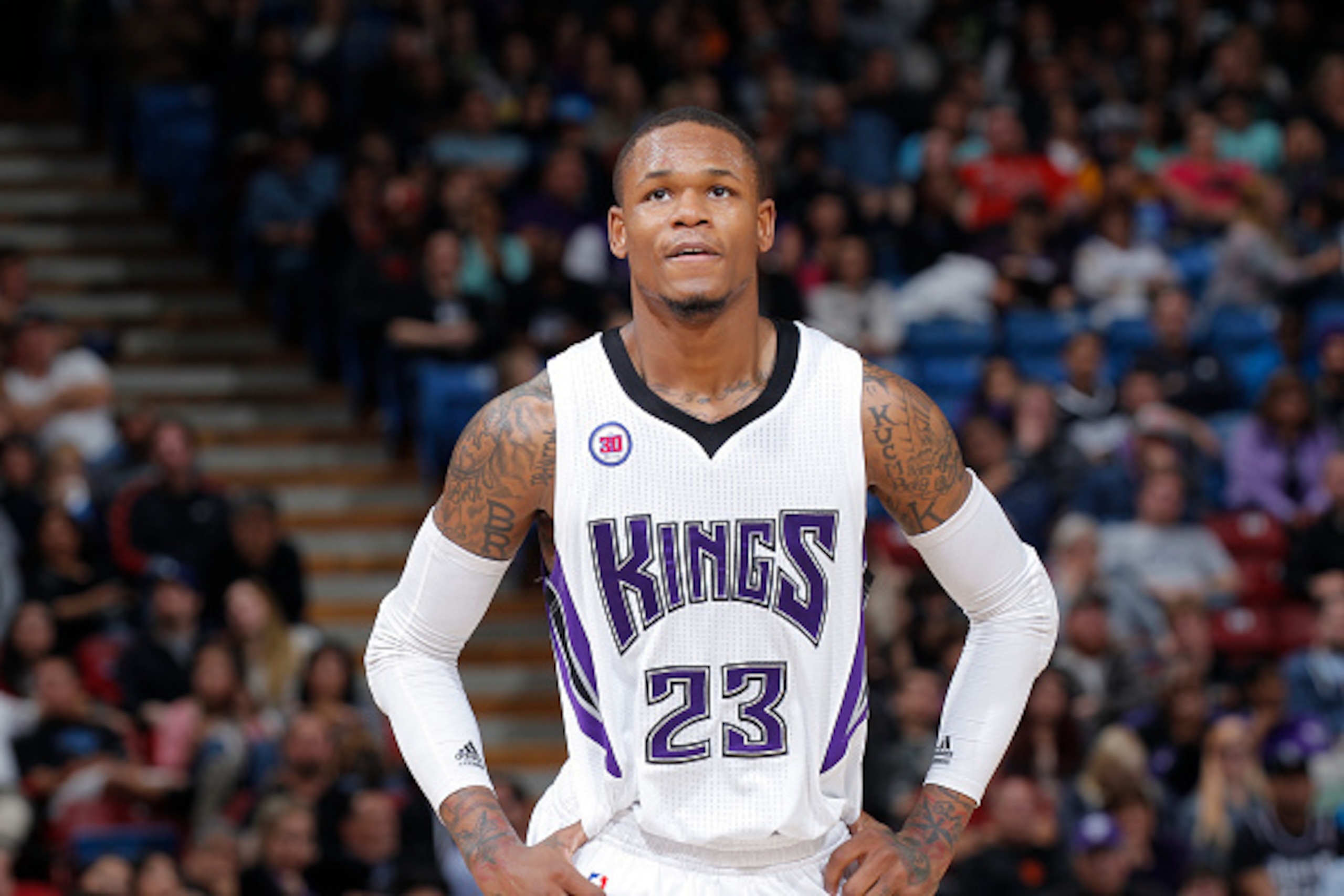
2014-15 Production: 12.1 PTS, 2.9 REB, 43.7 FG%, 35.8 3P%
2015-16 Prediction: 14.5 PTS, 4.5 REB, 44.0 FG%, 38.0 3P%
After a disappointing rookie season in which he shot just 37.6 percent from the field and 32 percent from three-point range, Ben McLemore showed signs of life as an NBA sophomore.
That was particularly true down the stretch of the regular season, as Cowbell Kingdom's James Ham explained:
"McLemore finished the final month of the season strong, averaging 16.1 points, 3.1 assists and 3.6 rebounds in 33.4 minutes a game. Over that stretch, he shot 49.1 percent from the field and 1.8 steals per contest as he acclimated to Karl’s system. If that is the player the Kings get next season, their search for an answer at the shooting guard position is over.
"
Part of the uptick in production was certainly due to Sacramento finally settling on George Karl as head coach, its third in a tumultuous season.
Karl's uptempo, free-flowing offense can put a player like McLemore to good use. The veteran coach has proved throughout his career that he knows how to identify a player's strengths and get the most of him.
McLemore will get looks at tons of open threes throughout 2015-16 as he spaces the floor around DeMarcus Cousins post-ups and Rudy Gay drives.
Rodney Hood, Utah Jazz
6 of 10
2014-15 Production: 8.7 PTS, 2.3 REB, 41.4 FG%, 36.5 3P%
2015-16 Prediction: 12.0 PTS, 4.0 REB, 3.0 AST, 45.0 FG%, 40.0 3P%
Various injuries, including a nagging foot issue, derailed the first half of Rodney Hood's season. He appeared in just 24 games before the All-Star break, averaged 5.3 points and shot an abysmal 31.7 percent from the field.
Following the break, when he was finally healthy, Hood's numbers took a dramatic swing in the right direction. From that point to the end of the season, he averaged 11.8 points and shot 46.4 percent from the field and 42 percent from three.
In 21 starts, he shot 46 percent from the field and 38.6 percent from three-point range while averaging 16.7 points and 3.1 assists per 36 minutes.
Simply put, Hood's smooth, well-rounded offensive game makes him a perfect fit for Quin Snyder's motion-heavy offense. It's a system that allows Hood to showcase a sweet shooting stroke, good ball-handling and tight decision-making out of pick-and-rolls.
The ability he showed down the stretch has caused many Jazz fans to openly wonder whether Hood might be a good trade chip this offseason.
Tony Jones of the Salt Lake Tribune replied to a couple of those ideas on Twitter, saying, "I don't think people realize how talented Hood really is. If he stays healthy he has near elite scoring potential."
Clint Capela, Houston Rockets
7 of 10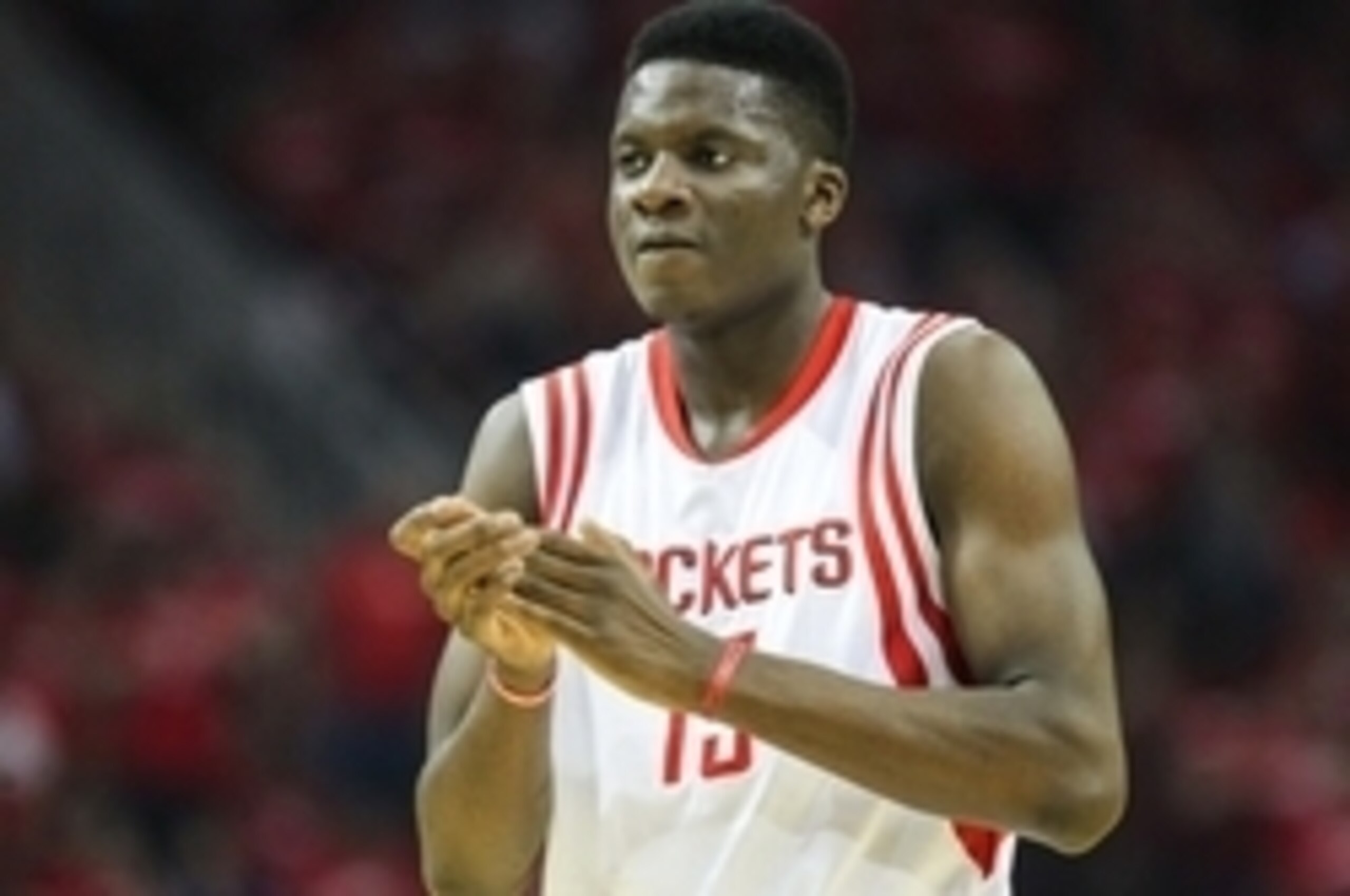
2014-15 Production: 3.0 REB, 2.7 PTS, 0.8 BLK, 48.3 FG%
2015-16 Prediction: 6.0 REB, 5.0 PTS, 2.0 BLK, 55.0 FG%
After seeing action in just 12 regular-season games as a rookie for the Houston Rockets, Clint Capela went borderline bananas during a postseason run that ended in the Western Conference Finals.
He only averaged 7.5 minutes over his 17 playoff appearances, but they were effective minutes. He averaged 16.2 points, 11.9 rebounds and 2.6 blocks while shooting 67.7 percent from the field (per 36 minutes).
His emergence gives Houston a very viable option to back up Dwight Howard.
That doesn't mean he'll average 20-25 minutes during his breakout campaign. But even at 10-15, he can make an impact.
His energy and activity level around the rim, on both ends of the floor, will make Houston's second unit significantly more dangerous, leaving less work for Howard and James Harden to do the rest of the game.
T.J. Warren, Phoenix Suns
8 of 10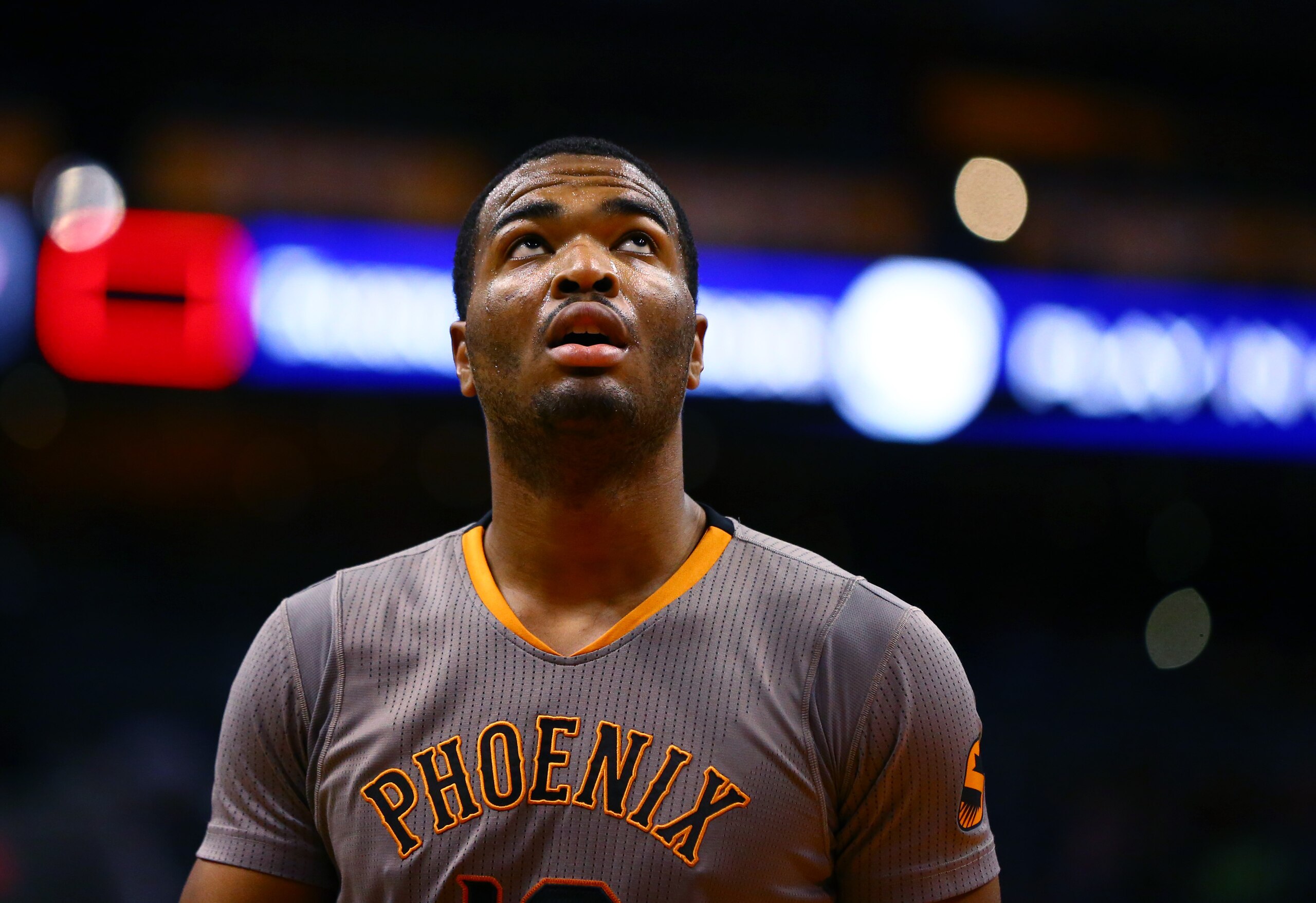
2014-15 Production: 6.1 PTS, 2.1 REB, 52.8 FG%
2015-16 Prediction: 11.0 PTS, 3.0 REB, 50.0 FG%
T.J. Warren's natural offensive instincts make him one of the better pure scorers from the 2014 NBA draft class. It was his age and concerns over his defense that allowed him to slip to the Phoenix Suns with the No. 14 pick.
Those things, in part, contributed to Warren barely seeing the floor over the first half of his rookie season. But as is the case with many on this list, things started to turn around the All-Star break.
Warren's minutes more than doubled after All-Star Weekend. He went from averaging 9.2 in 16 appearances prior, to 19.5 after. His points, rebounds and assist averages subsequently doubled as well.
His strong play down the stretch led to his coach, Jeff Hornacek, telling Doug and Wolf on Arizona Sports 98.7 FM, "I think we've all seen him and looked at him, and said, 'He's going to be a starter in this league.' Just the way he can put the ball in the hole with ease."
With P.J. Tucker under contract until 2016-17, there's no telling whether Warren will catapult into the starting lineup next season, but he certainly gave his coaches something to think about.
Over the entire season, he averaged 14.4 points per 36 minutes while shooting 52.8 percent from the field. And in March and April, he hit double figures seven times.
C.J. McCollum, Portland Trail Blazers
9 of 10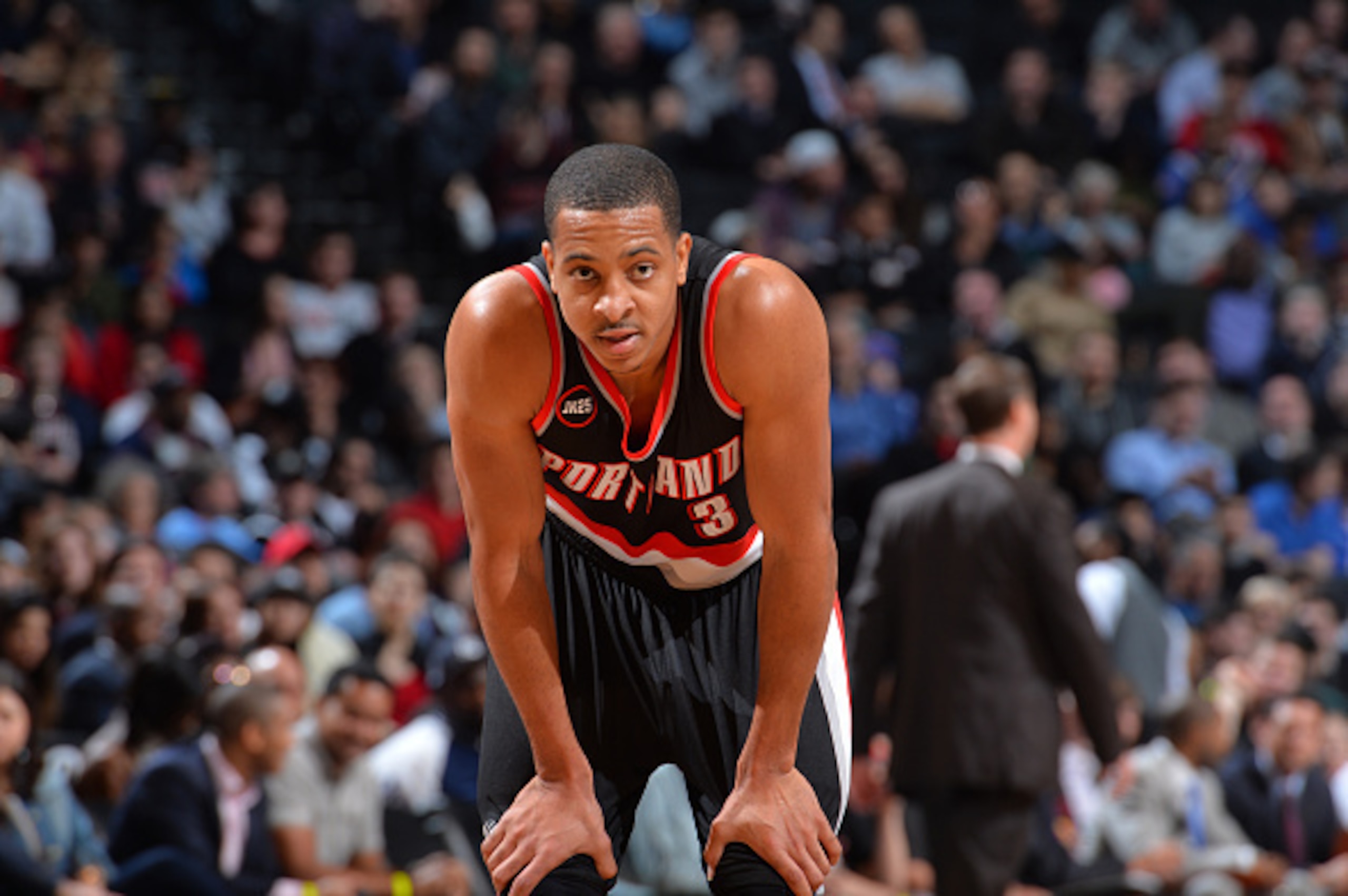
2014-15 Production: 6.8 PTS, 43.6 FG%, 39.6 3P%
2015-16 Prediction: 13.0 PTS, 3.0 AST, 44.0 FG%, 40.0 3P%
Combo guard C.J. McCollum spent most of his second season backing up Damian Lillard, Wesley Matthews and Arron Afflalo. And he was solid in that role, averaging 6.8 points and shooting 39.6 percent from three-point range.
But a short playoff run was when McCollum truly shined. Injuries forced coach Terry Stotts' hand, as he played McCollum 33.2 minutes per game during Portland's first-round series with the Memphis Grizzlies.
After a rocky start (eight points in the first two games of the series), McCollum erupted over the last three contests of his 2014-15 campaign. In the crucible of postseason basketball, he averaged 25.7 points while shooting 64.7 percent from three-point range.
It would be easy, and probably fair, to just call it a hot streak. But that short stretch typified the kind of player McCollum might be next season and for the rest of his career.
Combo guards who can get hot in a hurry and provide a spark off the bench have a place in the NBA. Think Jason Terry, Isaiah Thomas or Jamal Crawford.
McCollum has the offensive ability to be the next in that mold, giving the Blazers a flamethrower off the bench who should make their second unit more competitive.
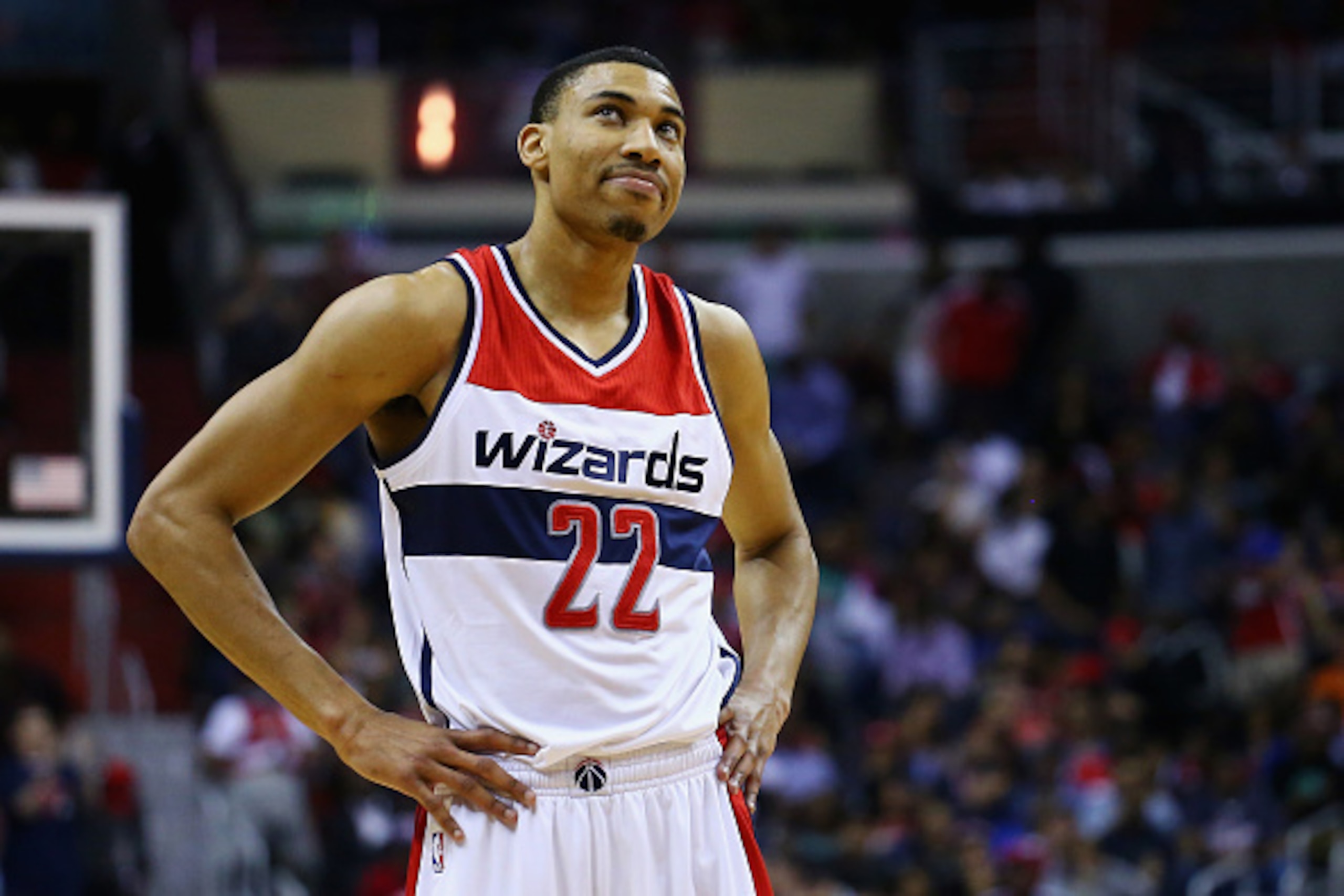
Otto Porter, Washington Wizards
10 of 10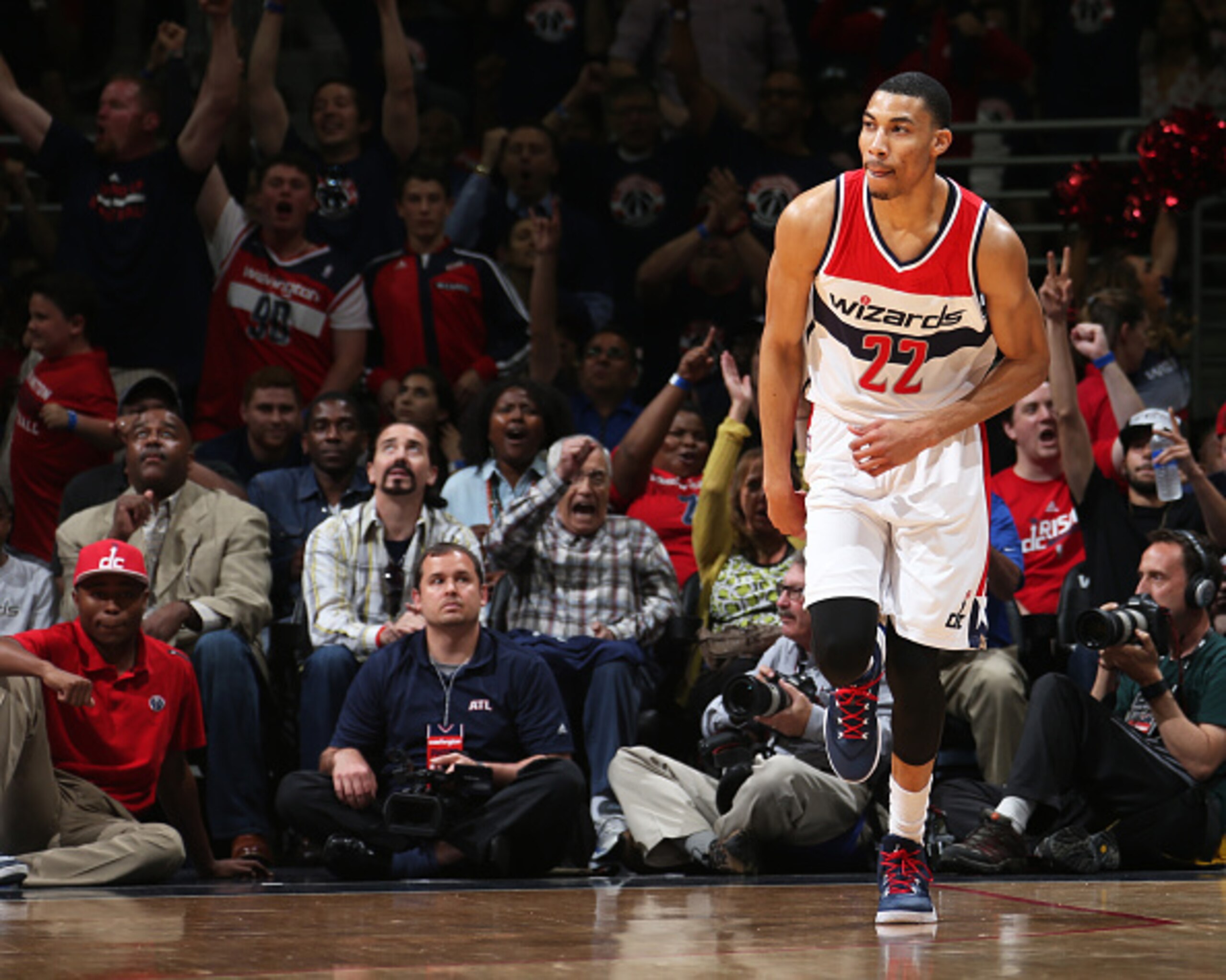
2014-15 Production: 6.0 PTS, 3.0 REB, 45.0 FG%, 33.7 3P%
2015-16 Prediction: 14.0 PTS, 7.0 REB, 48.0 FG%, 36.0 3P%
It took all the way till the postseason for Washington Wizards coach Randy Wittman to tentatively embrace the small-ball revolution. The Wizards were a much better team when he did.
When Otto Porter and Paul Pierce shared the floor in the playoffs (generally with Pierce as a stretch 4), Washington had a net rating of plus-10.7 in 147 minutes.
Porter's individual rating in the postseason was a Wizards-best plus-10.8.
Jorge Castillo of the Washington Post detailed Porter's playoff run, writing:
"Porter shed the goggles he wore for the majority of the regular season to average 10 points per game. He became an effective “three-and-D” wing player, displaying a reliable three-pointer to help space the floor while locking down scorers at the other end.
But he was a bigger factor in subtle ways. His sneaky cuts to the basket often resulted in easy buckets. Despite his slight frame, he was all over the glass, securing eight rebounds per game and 69.6 percent of rebounding chances, which ranks No. 3 in the playoffs among players with at least 10 chances per game. Defensively, he helped stifle Toronto Raptors leading scorer DeMar DeRozan in the first round and opponents shot just 37.9 percent when Porter was the closest defender.
"
That kind of scrappy, versatile play from a combo forward is all the rage in the NBA these days. Teams all over the NBA are looking for their own Draymond Green, Kawhi Leonard or Khris Middleton.
Washington may already have one in Porter. He just needs more time to showcase those skills.
Unless otherwise noted, all stats and salary figures are courtesy of NBA.com and Basketball-Reference.com and are current as of June 7, 2015.
Andy Bailey covers the NBA for Bleacher Report. Follow him @AndrewDBailey.

.jpg?w=2560 "Terrell Owens Being Sued for Defamation")
.jpg?w=2560 "Buyers or Sellers for NFL's Most Surprising Teams 🏈")
.jpg?w=2560 "CJGJ Shares Cryptic Post 🤔")