Denver Broncos: Full Position Breakdown and Depth Chart Analysis at Running Back
The Denver Broncos have a strong collection of running backs on the roster. They have a star in the making with starter C.J. Anderson. He burst onto the scene over the last half of the 2014 season and has the talent to be one of the best in the game at his position.
The zone-blocking system can make productive running backs. Even backs with decent talent can produce in this scheme. Talented backs in this offense—like Anderson—can put up numbers that lead the league in rushing.
Anderson and the rushing attack will be a key element for the Broncos offense under head coach Gary Kubiak. A strong ground game not only establishes the team’s identity, but it also sets up the play-action passing game.
.jpg?w=2560 "Seahawks Chiefs Football")


A robust ground game could be what puts the Broncos over the top in 2015. With quarterback Peyton Manning under center, they are still in a Super Bowl window. Add in an elite-level rushing attack, and it could lead to a championship for the Broncos.
Here is a full position breakdown and depth chart analysis of the running backs on the Broncos roster.
Starter: C.J. Anderson
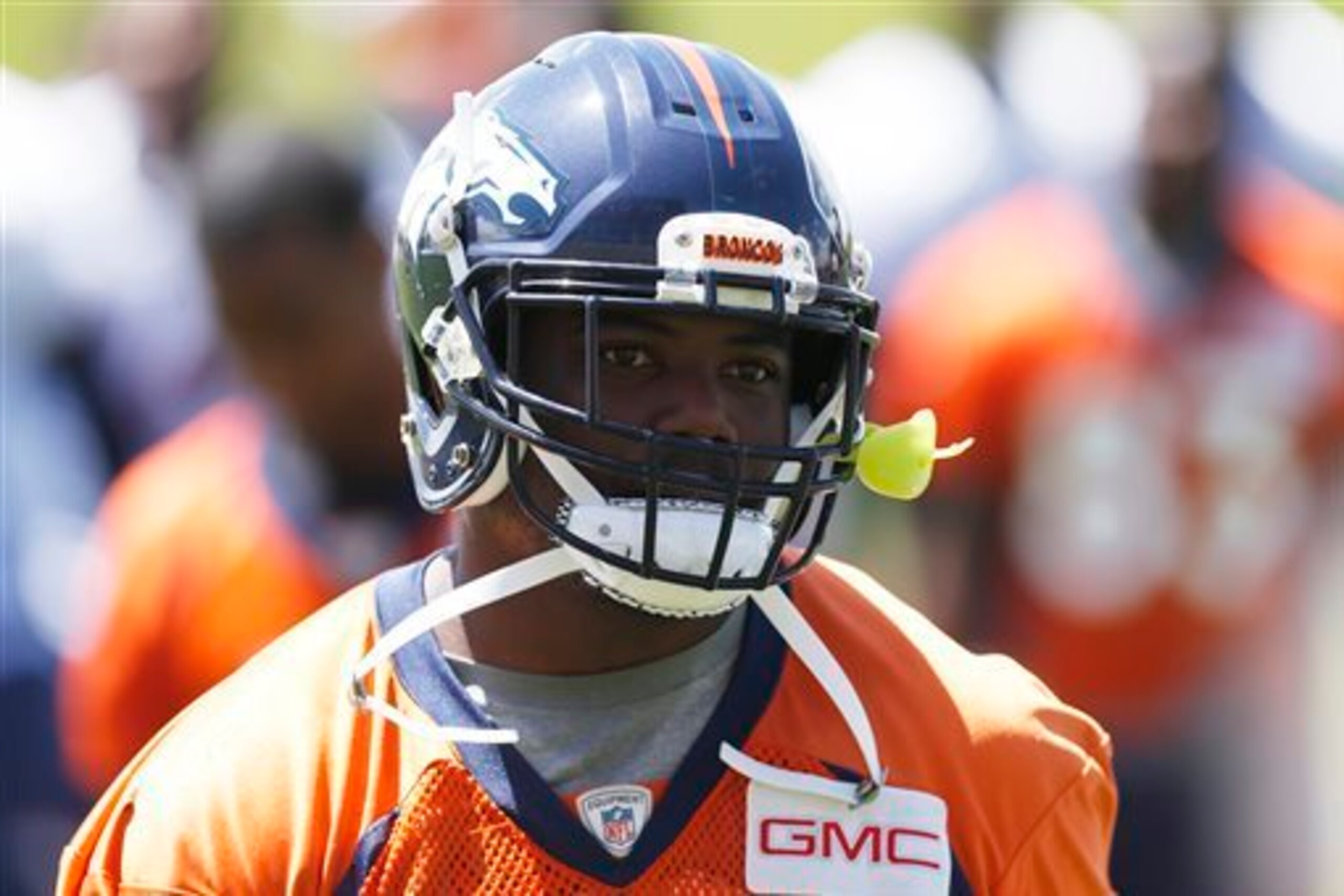
Over the final six weeks of the regular season in 2014, Anderson proved that he could be an impact player in the pros. With an ailing Peyton Manning, it was Anderson who became the engine of the offense—and he did not disappoint.
During that time, Anderson led the league in rushing with 648 yards, averaging a healthy 4.6 yards per carry. Anderson’s eight rushing touchdowns from Week 12 to Week 17 also led the NFL. His 273 rush yards after contact finished third in the NFL over that period behind only Seattle's Marshawn Lynch (299) and Green Bay's Eddie Lacy (292).
Over that period, Anderson rushed for a first down 35 times. In fact, he had a first down rate of 25 percent. That number was well over the NFL average of 20.6 percent.
The only stat Anderson could have improved as a rusher was his third-down conversion rate of 43.8 percent. The league average over the final six weeks of the regular season was 51.8 percent. Anderson’s rate ranked eighth-highest in the league among backs who received over 100 carries in that span. That number isn’t all on him, as it is also reflective of the short-yardage blocking ability of the Broncos offensive line.
Not only did Anderson impress as a runner, he came through in a big way as a receiver out of the backfield for the Broncos.
In Week 10 against the Oakland Raiders, Anderson made a memorable play on a 51-yard catch-and-run touchdown in the second quarter. His hands proved to be as reliable as any receiver on the team. Looking over the final six weeks, Anderson's 779 all-purpose yards (rushing and receiving) were third-most in the NFL behind New York Giants wide receiver Odell Beckham Jr. (853) and Pittsburgh Steelers running back Le'Veon Bell (780).
It’s not out of line to call Anderson perfect for the Kubiak offense. He’s built low to the ground, runs with proper balance and does a good job of finding cutback lanes. Anderson’s vision, footwork and acceleration can make him a very productive player in this system.
Even though he’s a big back, Anderson also has some make-you-miss ability in tight spaces. He can duck under defenders and does a good job of using shoulder fakes to buy himself some space. Many times when watching Anderson, he looks like a younger version of former Jacksonville Jaguars star Maurice Jones-Drew.
Anderson is working in the same system that Arian Foster became a superstar in for the Houston Texans. Like Anderson, Foster was also an undrafted free agent. Also like Anderson, Foster runs with great power, patience and determination. Foster’s best season under Kubiak (2010) saw him rush for 1,616 yards and catch 66 passes for 604 yards.
We could see Anderson produce similar numbers this year for the Broncos.
Primary Backup: Montee Ball
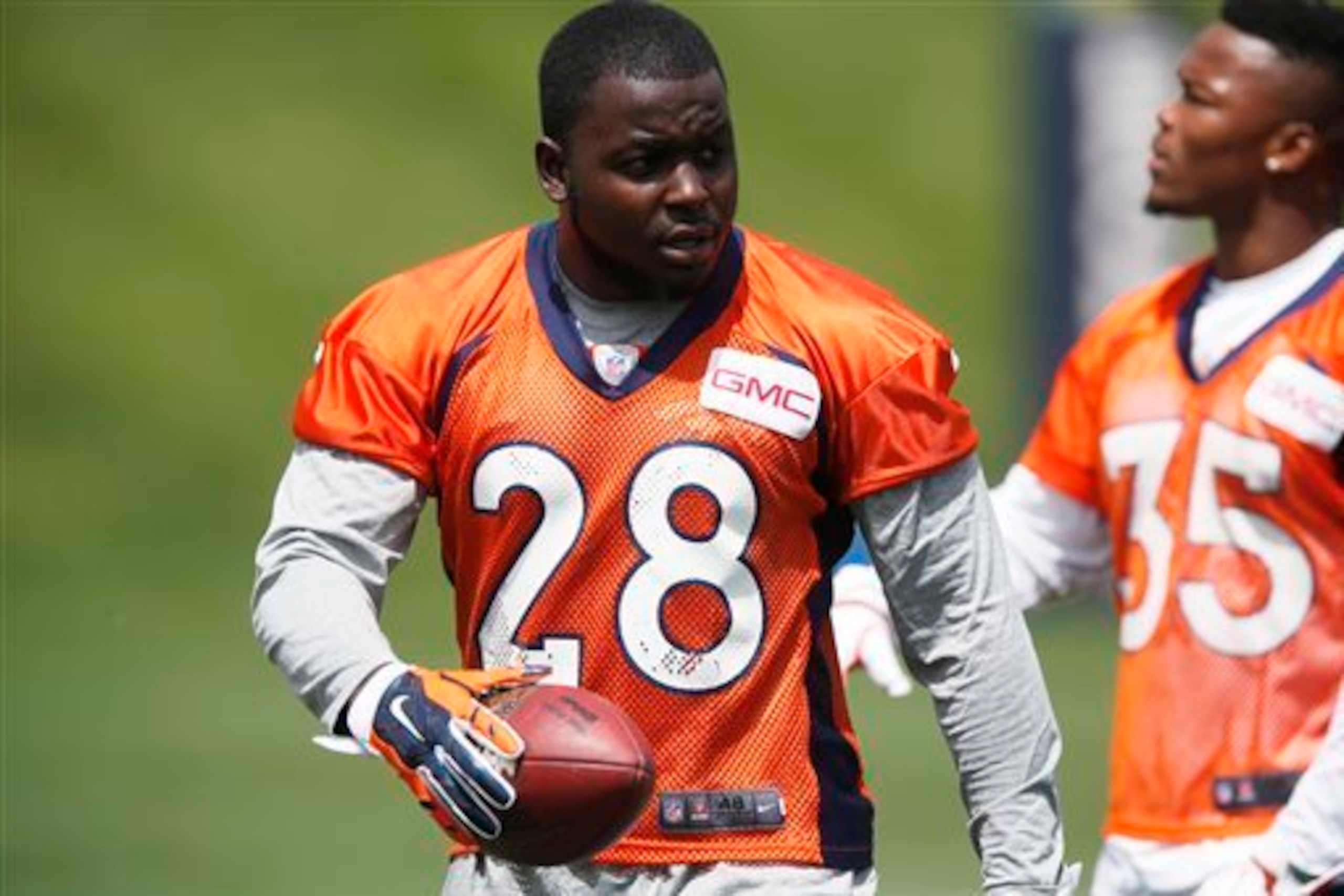
When the Broncos made Montee Ball a second-round pick in the 2013 NFL draft, the idea was to have him take over as the feature back as soon as possible. They passed on selecting Eddie Lacy because of concerns about him staying healthy. Instead, they chose a running back who was incredibly productive (but had almost 1,000 touches) in college at Wisconsin.
Ball has not taken over as the starter despite multiple chances to do just that.
As a rookie, Ball struggled to impress when making the transition from college to the pros. He ended up splitting time with Ronnie Hillman as the backup behind Knowshon Moreno. When Hillman fumbled that opportunity away, Ball took over as the primary backup. He had a 100-yard performance against the Kansas City Chiefs as a rookie in 2013, and many thought he’d be a featured part of the Broncos offense the next season.
Last year can only be categorized as a huge disappointment for Ball.
He did open training camp as the top back for the Broncos, but he had to have an emergency appendectomy in August. That set Ball back, but he recovered enough to begin the regular season as the starter.
Over the first five weeks of the regular season (four games for the Broncos), Ball ranked 35th in the league with only 172 yards rushing and a paltry average of 3.13 yards per carry.
In the Broncos' Week 5 game against the Arizona Cardinals, Ball went down with a groin injury. That kept him out of action until an ill-advised return to the field in Week 11 against the St. Louis Rams where he reaggravated the injury. That was it for Ball’s season, and he had to watch from the sidelines as Anderson became a star in what was supposed to be his role.
Ball is back at full strength this year, and he’s intent on getting his old job back. Ball played in the zone-blocking system in college and finished his career at Wisconsin as the NCAA's all-time leader in rushing touchdowns with 77 scoring runs. He has a proven nose for the end zone, and Ball can be a decent receiver out of the backfield too.
Ball will look better this season if he stops hesitating so much as a runner. Over his first two seasons in the pros, Ball has looked tentative when carrying the rock. NFL defenders are much faster, smarter and quicker than those in college and they are all over him by the time he actually makes a decision about where to go/cut/run.
He can’t mess around in this system. Ball needs to plant his foot and go as soon as the hole or cutback lane opens up. If he does that, Ball could put up a good fight in training camp.
Change-of-Pace Back: Ronnie Hillman
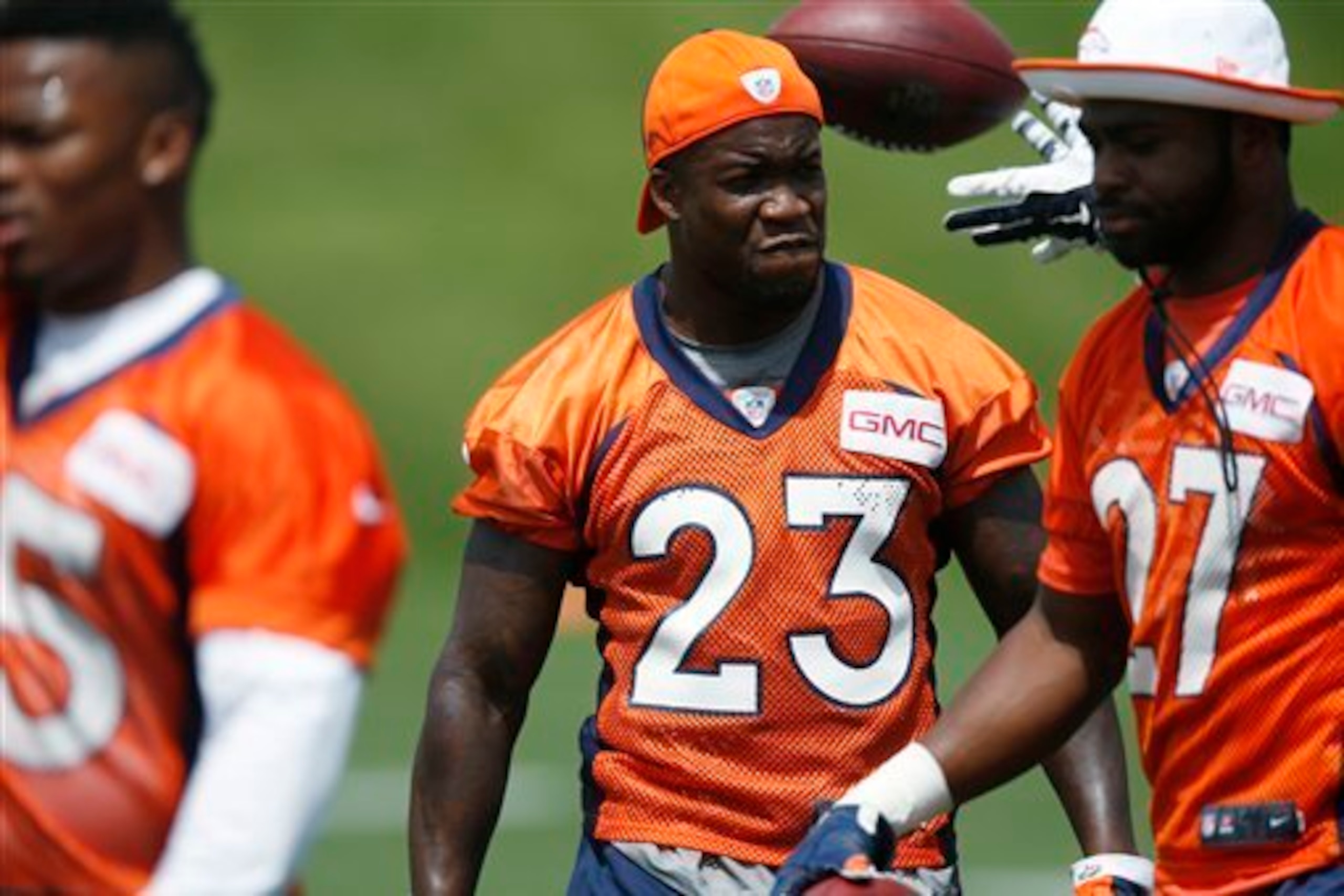
Ronnie Hillman finally showed why the Broncos picked him during his four-week run as the starter after Ball went down last year. A third-round pick in 2012 (that the Broncos moved up for), Hillman fumbled away the opportunity to be the starter in the 2013 preseason. He spent much of that year in the John Fox’s doghouse, only to re-emerge in training camp in 2014.
He won the primary backup job behind Ball last year, so it wasn’t a surprise to see the Broncos go to him next as the featured back when Ball was hurt.
From Week 6 to Week 9, Hillman gave the Broncos a speedy weapon as the starting running back. During that time, he ranked seventh in the NFL with 299 rushing yards. He had two 100-yard rushing performances in those four games. In the two contests where he didn't rush for 100 yards, Hillman scored four touchdowns. He provided an element of danger for the Broncos' fast-paced offense until he went down with his own injury in Week 10 against the Oakland Raiders.
Like Ball, Hillman then watched from the sidelines as Anderson became a star.
This year, Hillman is trying to prove his value as a change-of-pace back for the Broncos. He’s getting a few first-team reps during OTAs and is much faster than any other back on the roster. Hillman doesn’t need much space to get by defenders in a hurry, and he can make big plays in the open field.
As a runner, Hillman is an odd fit in the zone-blocking system. He has a dancing style that features plenty of hesitation and impatience.
Hillman will sometimes run right into the backs of his blockers as he looks to break a run to the outside. This style yields few results. Other times, Hillman will wait and wait and wait for the hole to develop—stretching the play outside only to find there is no place to run and no cutback lane.
Perhaps he can learn better patience as a runner and calm down a bit. We know that he’s not a pile-pusher, so that may be making him hesitant as an inside runner. Hillman needs to save his moves for the second level of the defense, as dancing behind the line of scrimmage results in lost yardage on many occasions.
Hillman may be surprisingly on the roster bubble. His roster spot is dependent on him hanging onto the rock to prove that his fumbling problems are a thing of the past. Hillman also needs to prove that he can pass protect in order to keep rushers away from Manning on play-action passes. He should make the team, but he’s no lock because of the problems listed above.
Depth/Developmental Running Backs: Juwan Thompson, Jeremy Stewart, Kapri Bibbs
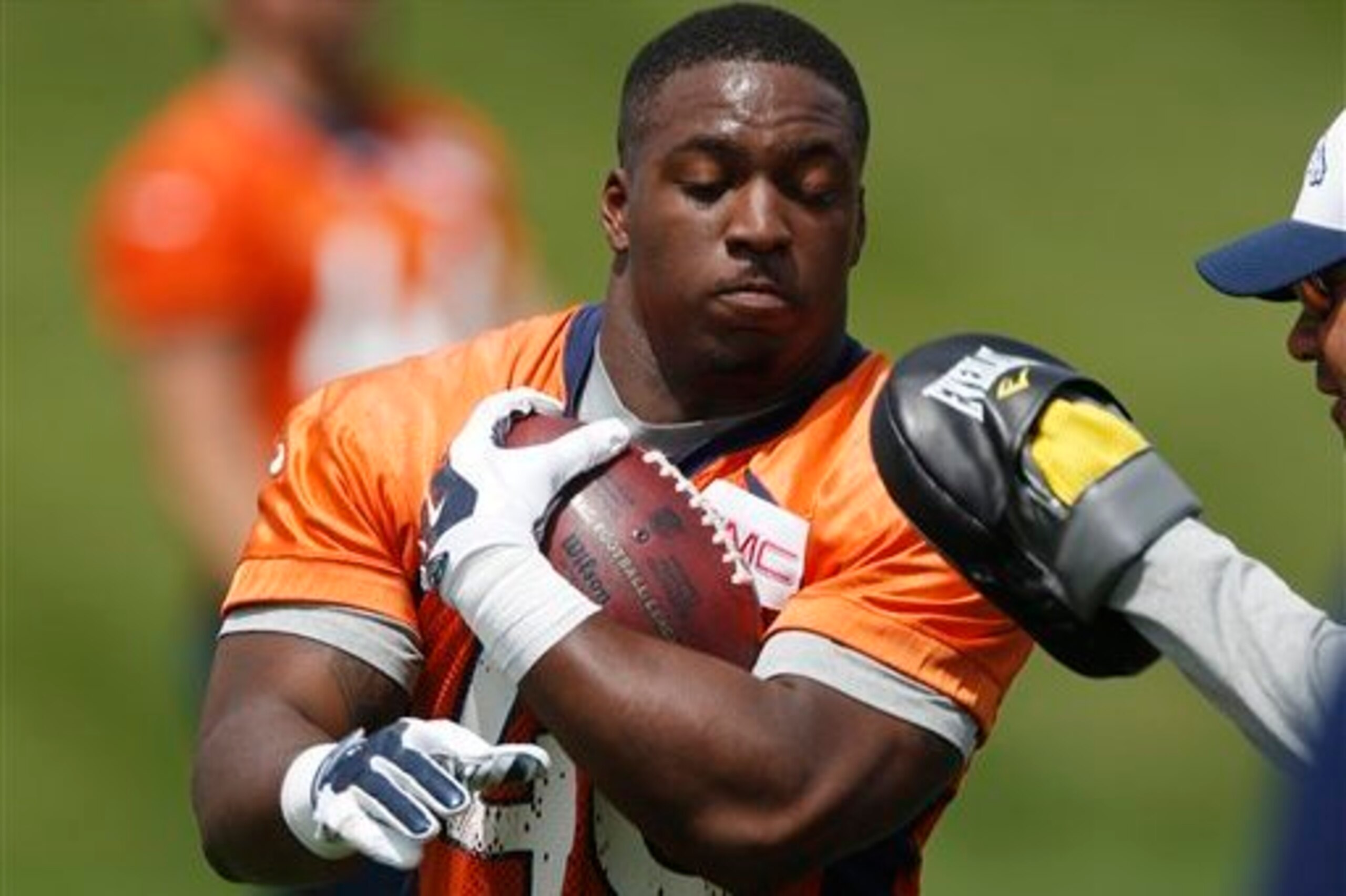
Behind the top three on the roster, the Broncos continue to show strength at the position. That strength is evident when watching Juwan Thompson carry the rock.
Thompson is built like a Mack truck and isn’t shy about initiating contact. He’s a true power back who can run over and carry defenders to pick up yards after contact. There’s little nuance to his game. Thompson is intent and decisive as a ball-carrier, but he could keep a better eye out for cutback lanes in the zone-blocking system.
He’s also a good receiver out of the backfield and can reliably lead block if asked. The Broncos will carry a fullback on the roster this year (likely tight end/H-back James Casey), but Thompson could play fullback as well.
Jeremy Stewart is a slasher at running back, a swift player with an upright running style. Last year, Stewart was active for six games and finished the season with 22 rushing yards in a limited role. He’s a good receiver out of the backfield and runs hard with the ball in his hands. Stewart is a good veteran to have around, but his spot on the roster is tenuous because of the talent around him.
Kapri Bibbs was added as an undrafted free agent last year. The Colorado State star rushed for over 1,700 yards in his lone season with the Rams—and he chipped in with a whopping 31 rushing touchdowns. He looked good last year in training camp and the preseason, but Bibbs did not make the final roster. Instead, the Broncos kept him around on the practice squad to develop.
This year, Bibbs looks great in the zone-blocking system. He’s well-balanced as a runner and does a good job of patiently waiting for holes to develop. When Bibbs sees the lane (cutback or otherwise) he’s quick to (and through) the hole. Bibbs also looks great as a receiver out of the backfield in practice, often getting upfield quickly after the catch.
It will be difficult for the Broncos to sneak Bibbs through to the practice squad if he keeps showcasing his talent in the preseason and training camp this year.
Summary
The Broncos are set at the running back position this season.
Anderson can shine as the main man for the Broncos. He’s a perfect back for what Kubiak wants out of a starter. Anderson knows that Ball is breathing down his neck for the starting job, and this should keep him motivated during training camp, the preseason and into the regular season. A motivated Anderson should be an incredibly productive player for the Broncos.
Ball is looking to bounce back this season after a disappointing year in 2014. He looks to be in great shape, and Ball will work hard in camp to prove that he deserves a large role. If Anderson falters, then Ball could take over and shine for the Broncos in the zone-blocking system.
Hillman provides plenty of speed and quickness as a part-time player. He’s too small to be relied on as a full-time back, and he needs to prove that he can hang onto the rock and protect Manning adequately.
Thompson is a power player who could be quite effective as a short-yardage and goal-line back. Every team needs a guy like Thompson on the roster. He can start if necessary, but know that his skill set as a runner is limited to power, power and more power. Thompson lacks the creativity and elusiveness to be anything more than a spot starter in the pros.
Bibbs has intriguing upside—especially in the zone-blocking system. He’s looked great as a runner, has a proven nose for pay dirt and has also shown well as a receiver out of the backfield. Stewart made the final roster last year and is looking to prove he’s worth that spot again.
The Broncos can dominate on the ground with Anderson as the starter this year. If needed, the team has a quality group of runners with varying skill sets to help the team establish the run and potentially win a championship in 2015.
All quotes and injury/practice observations obtained firsthand. Record/statistical information provided via the Broncos' media department unless otherwise noted. Advanced stats via ESPN's employees-only database.
Contract and salary-cap information provided by Spotrac. Transaction history provided by Pro Sports Transactions.