


The dust has settled on the San Antonio Spurs' 2014-15 campaign, and all that's left of a 55-27 year that ended in a first-round postseason exit is handing out grades.
Like Matthew McConaughey said, "Sometimes, you gotta go back to actually move forward." In this case, we'll quantify how each Spurs player performed throughout the year, regular season and playoffs included.
And since San Antonio has nine free agents, the front office is assuredly working on something similar, evaluating the recently concluded season in an effort to build the 2015-16 team.
Grades were compiled via a combination of factors: overall execution, year-to-year development and whether a Spur fell short of, met or exceeded expectations in his particular role. The players listed were on the team's roster at year's end and are organized by minutes played during the regular season.
Reggie Williams, Kyle Anderson, Jeff Ayres, Patty Mills and Matt Bonner
1 of 11Reggie Williams
Per-Game Stats: 20 appearances; 5.3 minutes, 1.9 points, 0.9 rebounds, 0.5 assists, 0.1 steals, 0 blocks and 10.5 PER
It's not entirely fair to grade Reggie Williams on anything more than being a capable body who typically entered during blowouts. The small forward logged double-digit minutes just four times, tallying a season-best 10 points on April 7 in 11 minutes.
Williams has a non-guaranteed $1.185 million contract for next season, according to Basketball Insiders, so the Spurs could waive him to make room for a rookie.
Grade: C
Kyle Anderson
Per-Game Stats: 33 appearances; 10.8 minutes, 2.2 points, 2.2 rebounds, 0.8 assists, 0.5 steals, 0.2 blocks and 8.2 PER
Though San Antonio's first-round pick in 2014 spent most of his season with the Austin Spurs of the D-League, Kyle Anderson gained some valuable experience in the NBA because of his flaws. The UCLA Bruins product started slowly on offense when called up (shooting 2-of-24 through nine games) and was caught napping occasionally on defense.
If Cory Joseph signs elsewhere this offseason, Anderson will have a serious chance to crack the rotation next year.
Grade: C-
Jeff Ayres
Per-Game Stats: 51 appearances; 7.5 minutes, 2.7 points, 2.3 rebounds, 0.3 assists, 0.2 steals, 0.2 blocks and 14.4 PER
Once Jeff Ayres lost his spot in the second unit to Aron Baynes, the 6'9" power forward was relegated to mop-up duty—just for a longer time than Williams. While Ayres was moderately effective, he was never really challenged.
Ayres will be a free agent come July 1, and it's difficult to envision him returning to San Antonio. It's not impossible, but it's not probable, either.
Grade: C
Patty Mills
Per-Game Stats: 51 appearances; 15.7 minutes, 6.9 points, 1.5 rebounds, 1.7 assists, 0.5 steals, 0 blocks and 13.0 PER
Shoulder surgery sidelined Patty Mills for 31 games, but the point guard didn't miss a single outing after he debuted. Yet, Mills nearly fell out of the rotation because the sharpshooter certainly wasn't sharp as a shooter. His 34.1 three-point percentage was a career-worst mark.
However, Mills bounced back and shined during the postseason, connecting on 16-of-28 trifectas (57.1 percent) and sparking a pair of victories. His playoff contributions atoned for a mediocre regular season.
Grade: B-
Matt Bonner
Per-Game Stats: 72 appearances; 13 minutes, 3.7 points, 1.6 rebounds, 0.7 assists, 0.1 steals, 0.2 blocks and 10.1 PER
Whenever the Spurs needed spacing on the offensive end, veteran Matt Bonner was there to enter the game and spread the floor. However, the 11-year pro only knocked down 36.5 percent of his triples, a subpar clip for the Red Mamba.
Consequently, since three-point shooting is—perhaps was—his lone on-court value, San Antonio would be smart to cut the emotional ties with Bonner. Spurs fans will be sad to see the personality leave, but the 35-year-old free agent isn't much of a weapon anymore.
Grade: D+
Tiago Splitter
2 of 11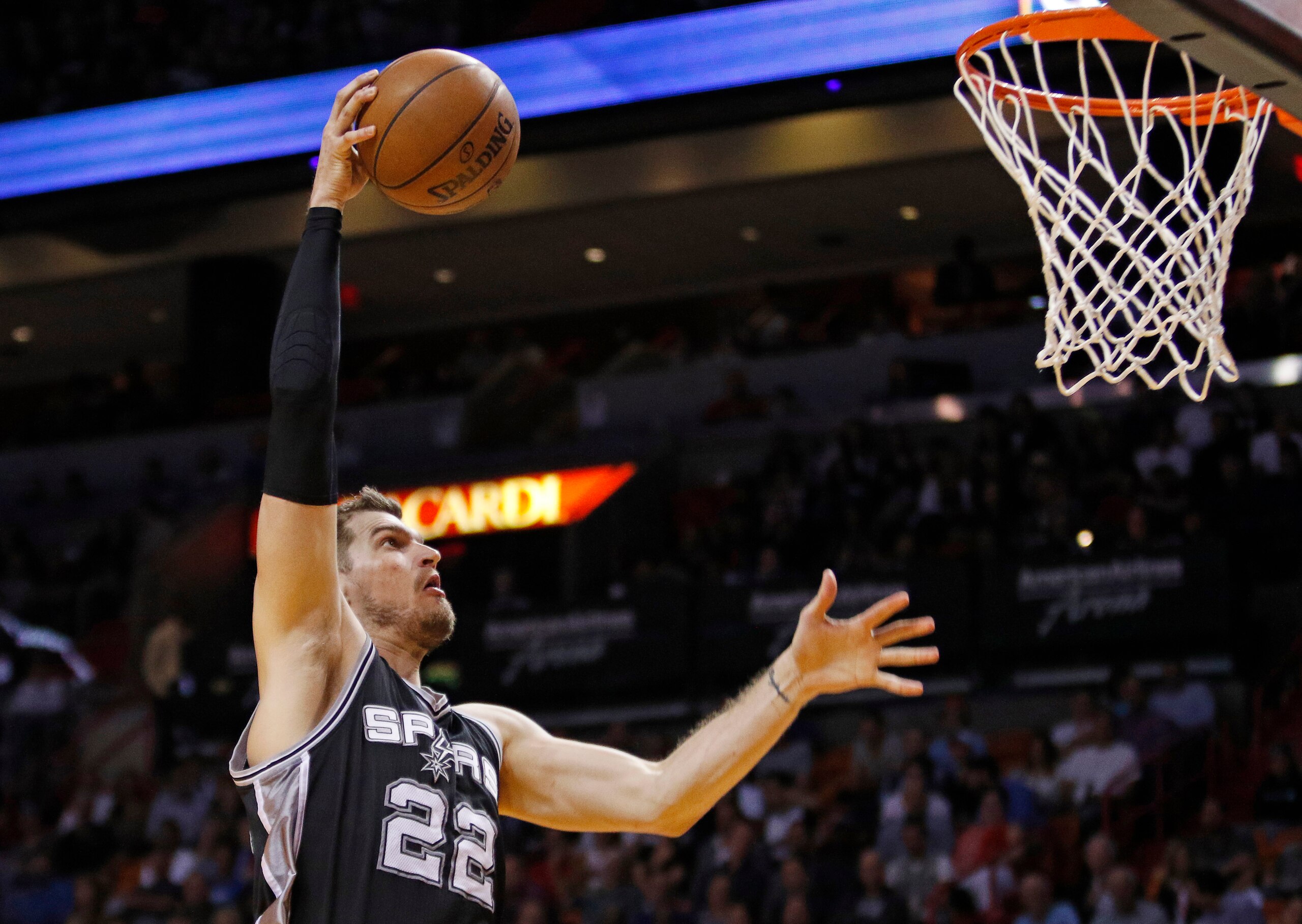
Per-Game Stats: 52 appearances; 19.8 minutes, 8.2 points, 4.8 rebounds, 1.5 assists, 0.7 steals, 0.7 blocks and 18.9 PER
San Antonio compiled a 21-9 record when Tiago Splitter was unavailable, mostly due to calf injuries. What that superb mark truly means is the center is simply a role player, but it doesn't take away from Splitter's value when healthy and productive.
The defending champions finally hit their stride in early April when Splitter was at full strength, winning nine of 10 games—one in which the Brazilian scored a season-best 23 points.
However, another calf injury derailed his final outings. San Antonio then struggled with Splitter on the floor during the postseason.
He's under contract through 2016-17, but a potential acquisition of Marc Gasol or LaMarcus Aldridge places a tiny question mark next to Splitter's future with the Spurs.
Grade: C+
Aron Baynes
3 of 11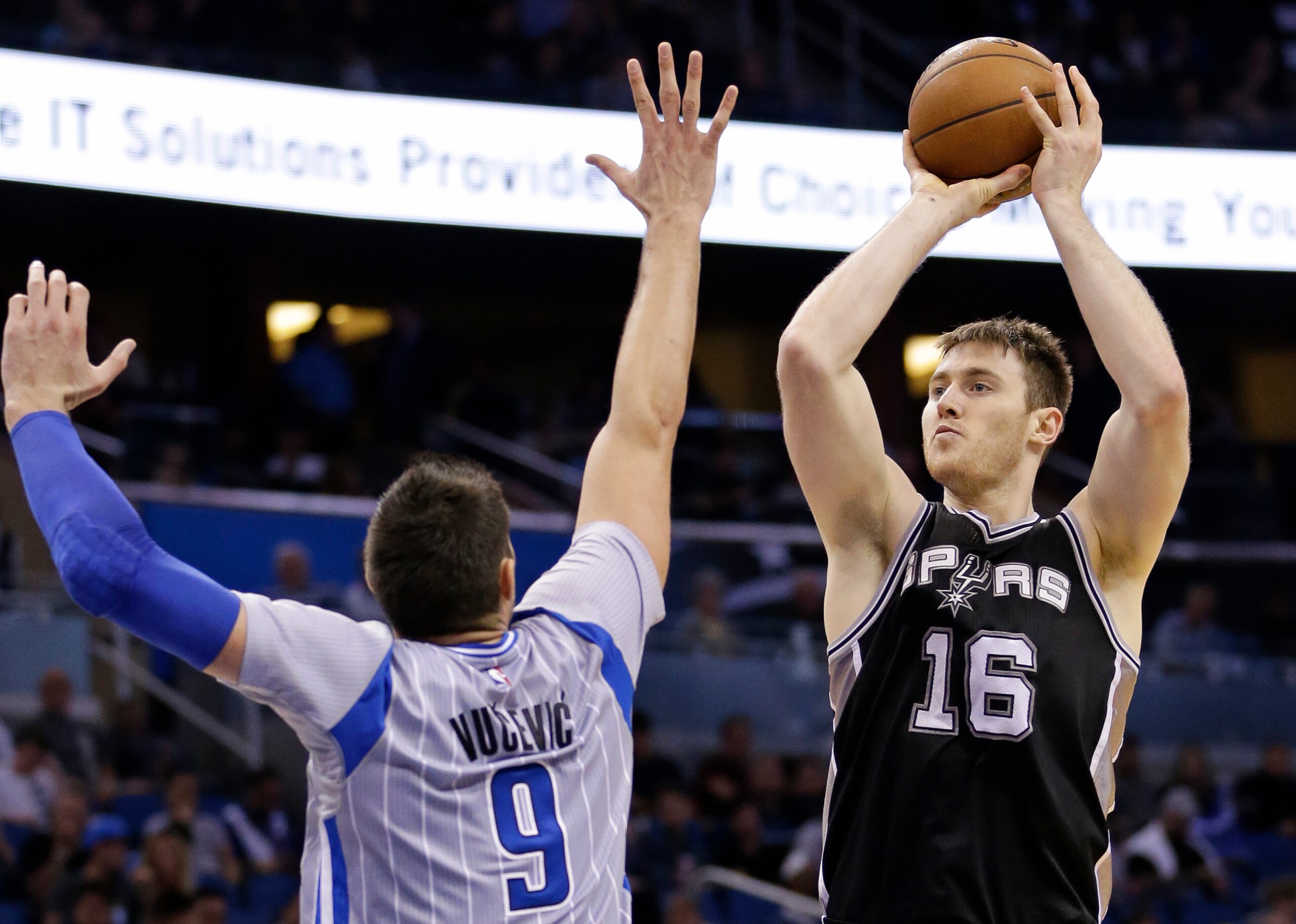
Per-Game Stats: 70 appearances; 16 minutes, 6.6 points, 4.5 rebounds, 0.5 assists, 0.2 steals, 0.3 blocks and 15.9 PER
The Big Banger flirted with the idea of playing in China but ultimately elected to return for the Spurs. Gregg Popovich and company certainly must be glad he did.
Baynes, who recorded minimal meaningful minutes during two prior seasons, jumped Ayres on the depth chart and even stepped into the starting lineup when Splitter sustained his multiple injuries.
"I was getting more opportunities and more comfortable when I was playing—I knew my role and tried to do it night in, night out," Baynes said, per Roy Ward of the Age.
Baynes is a restricted free agent, so San Antonio holds the rights to match any offer extended his way. And considering the thin draft class in the frontcourt and not-much-better free-agent options, the Spurs would be smart to keep Baynes around.
Granted, they'd probably like to see more production during the playoffs next season. Baynes' effort was always present, but his execution was a glaring issue.
Grade: C+



Marco Belinelli
4 of 11Per-Game Stats: 62 appearances; 22.4 minutes, 9.2 points, 2.5 rebounds, 1.5 assists, 0.5 steals, 0 blocks and 12.4 PER
Marco Belinelli etched himself into San Antonio history by burying a game-winning jumper that ultimately handed Popovich his 1,000th career coaching win. His 23-point performance in Game 6 of the playoffs put the team in a tremendous position to close the first-round series.
But that was about it.
A three-point specialist, Belinelli converted a mediocre 37.4 percent from long distance, barely higher than Joseph's 36.4 percent. To be frank, that's unacceptable, given Belinelli's role.
Additionally, when he was on the court, the Spurs posted a 107.6 offensive rating and 107.5 defensive clip, according to Basketball-Reference.com. When Belinelli left the floor, San Antonio improved to 109.5 and 99.5.
He's an unrestricted free agent, and it's not likely Belinelli returns following such a disappointing year.
Grade: C-
Cory Joseph
5 of 11
Per-Game Stats: 79 appearances; 18.3 minutes, 6.8 points, 2.4 rebounds, 2.4 assists, 0.6 steals, 0.2 blocks and 15.5 PER
Breakout player? Sure. Product of the system? Maybe. Due a sizable raise either way? Most definitely.
Joseph took full advantage of Mills' vacated minutes, and then he admirably filled in for an ailing Tony Parker in December and January, too. From Christmas Day until Jan. 10, Joseph tallied 13.8 points and 3.9 assists per outing.
The fourth-year pro's stat line featured career-best marks in every category, but his progression didn't stop there.
In addition to draining 50.4 percent of his field-goal attempts and knocking down 36.4 percent from three, Joseph posted a 115 offensive rating, per Basketball-Reference.com, a 104 defensive clip and committed just 0.8 turnovers per game.
San Antonio's ability to keep Joseph likely depends on Manu Ginobili's looming retirement decision and the potential addition of Gasol or Aldridge. But no matter what happens this summer, the restricted free agent has developed into a solid rotation piece.
Grade: B
Manu Ginobili
6 of 11Per-Game Stats: 70 appearances; 22.7 minutes, 10.5 points, 3 rebounds, 4.2 assists, 1 steal, 0.3 blocks and 16.2 PER
For all the annoying turnovers committed, forehead-slapping shots hoisted and utter chaos Ginobili created throughout 2014-15, the Spurs wouldn't have survived the year without him.
When Parker and Kawhi Leonard were simultaneously shelved, San Antonio had no other backcourt playmaker than Ginobili. The Argentine's turnover rate absolutely rose near the end of the calendar year, but his assist rate did, too.
Nevertheless, his clear value doesn't mean Ginobili cannot be critiqued. And according to Dan McCarney of the San Antonio Express-News, Ginobili's struggles aren't being overlooked. Per McCarney:
"A Spurs staffer said privately that Ginobili is only good in about one out of eight games any more. Or at least good as we've come to expect out of Ginobili, rather than the slightly above-average performer he generally was this season. That's a harsh assessment, but not completely off the mark. He was somewhere between bad and ineffective in probably half his 70 outings.
"
Emotional attachment aside, San Antonio should ask Ginobili, who will turn 38 in July, to take another pay cut in order to return, since the Magician's effectiveness has continued to drop as his age rises. Ginobili isn't finished at the NBA level, but he's certainly close.
Grade: C+
Tony Parker
7 of 11
Per-Game Stats: 68 appearances; 28.7 minutes, 14.4 points, 1.9 rebounds, 4.9 assists, 0.6 steals, 0 blocks and 15.9 PER
The biggest question surrounding Parker—from now until proven otherwise—will be if the Frenchman remains an elite point guard. In reality, the answer is easily found by one single component: health.
His shaky defense is undoubtedly an issue, but a normal Parker easily atones for any lapses on that end, picking apart defenders because of his explosiveness and vision.
According to Basketball-Reference.com, during the regular season—when Parker was mostly healthy—the Spurs recorded a 110.4 offensive rating with him running the point compared to 107.4 on the bench. In the playoffs, those numbers shifted to 106 and 111.9, respectively.
What's more, Parker shot just 36.3 percent in the seven-game battle with the Los Angeles Clippers and missed all nine three-point attempts.
Barring something completely unforeseen, the 33-year-old will play his 15th NBA season, earn $13.5 million, per Basketball Insiders, and the debate about Parker's elite-or-not status will rage on.
Grade: C
Boris Diaw
8 of 11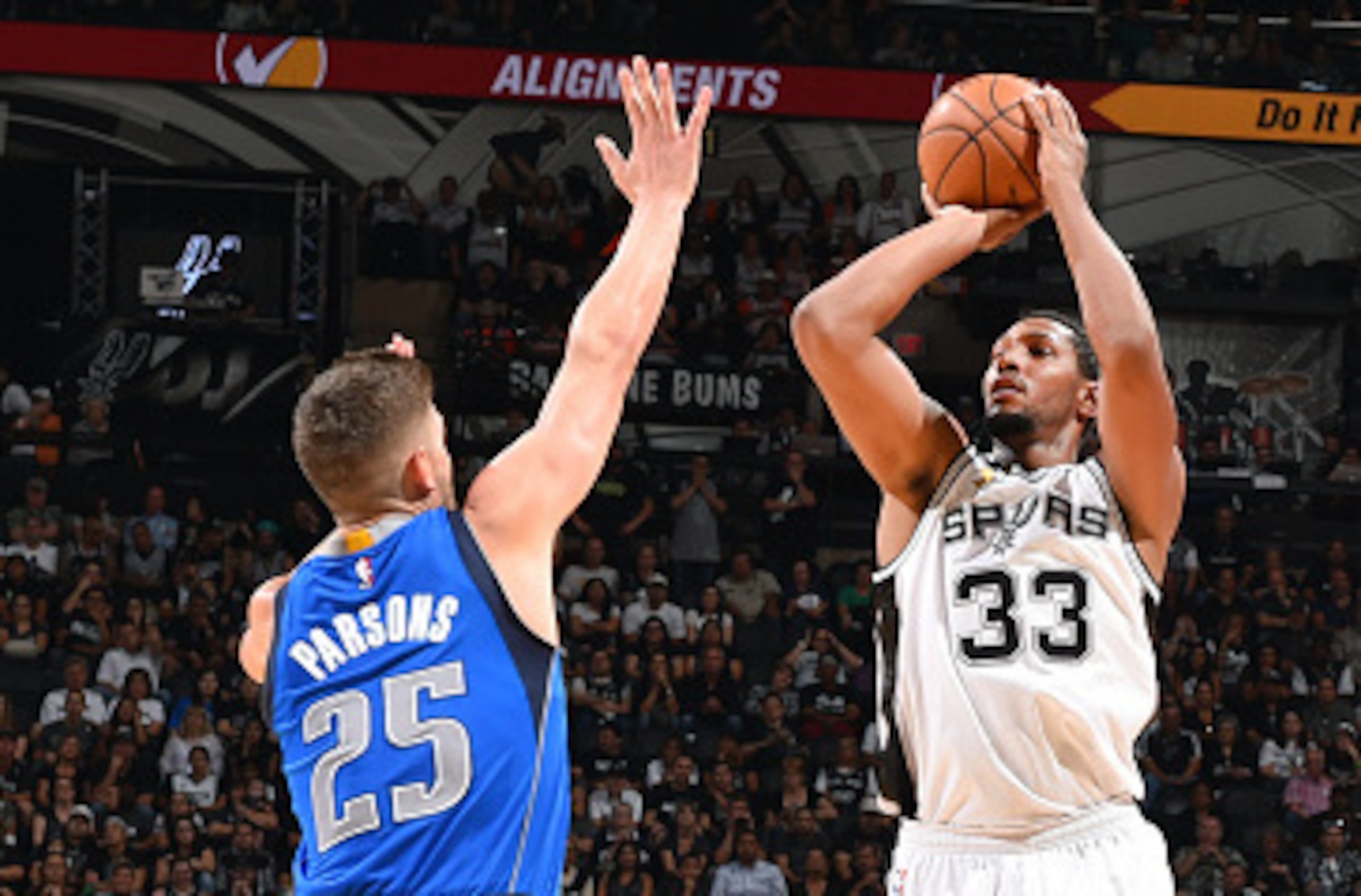
Per-Game Stats: 81 appearances; 24.5 minutes, 8.7 points, 4.3 rebounds, 2.9 assists, 0.4 steals, 0.3 blocks and 12.7 PER
Boris Diaw earned every bit of his $8 million contract signed last offseason. That didn't mean regression would bypass the veteran power forward.
In 2013-14, he converted 52.1 percent from the field and 40.2 percent beyond the arc. This year, though, Diaw's shooting marks plummeted to 46 percent and 32 percent, respectively, and his offensive rating dipped from 109 to 103.
Diaw still compiled a solid year, grabbing a few boards and dishing a few assists on a nightly basis. But his scoring problems linger on as the distinct memory of Diaw's season.
Unless—and this is purely speculation—Diaw is thrown into a sign-and-trade scenario to help secure a high-profile player, San Antonio will need a resurgent campaign from the 33-year-old.
Grade: C+
Kawhi Leonard
9 of 11Per-Game Stats: 64 appearances; 31.8 minutes, 16.5 points, 7.2 rebounds, 2.5 assists, 2.3 steals, 0.8 blocks and 22 PER
If the 2014 NBA Finals MVP didn't officially signal Leonard's arrival as one of the next best things, the San Diego State Aztecs product took that official step after the All-Star break.
Following an injury-shortened opening to the year, he racked up 17.9 points on 52.1 percent shooting. That might not sound impressive until learning Leonard netted 20-plus points in 14 of 29 contests—something he'd managed in only 17 of his previous 223 games.
Additionally, Leonard's stellar season-long effort on the opposite end of the floor culminated in his first career Defensive Player of the Year honor. He averaged an NBA-best 2.3 steals per game and led the league with a 96.4 defensive rating.
Though Leonard's postseason performance left a little to be desired, his offensive development and emergence, combined with his sustained defensive impact, should be properly rewarded.
Grade: B+
Tim Duncan
10 of 11
Per-Game Stats: 77 appearances; 28.9 minutes, 13.9 points, 9.1 rebounds, 3 assists, 0.8 steals, 2 blocks and 22.6 PER
Hearing Tim Duncan get called ageless must be boring, but that's absolutely what the 39-year-old has proven to be. Although his minutes have continued to slowly drop, Duncan's efficiency hasn't changed.
But this season, injuries took a toll on San Antonio's roster, and the team needed Duncan on a more regular basis. In fact, including the playoffs, he played 61 straight contests, the veteran's longest such streak since 2010-11.
Despite the defining play of the year—Chris Paul's series-winning layup in Game 7—reminding the NBA viewership that Duncan's athletic ability has decreased, he constantly exhibited game-changing defensive prowess. His 96.9 defensive rating and 4.7 defensive win shares both ranked third-highest in the league.
Duncan's contract officially expires July 1, and the Spurs (and Duncan) need to decide what the franchise's future direction is. But after a season capped by honors of All-NBA Third Team and All-Defensive Second Team, there's little reason to suggest Duncan shouldn't return for 2015-16.
Grade: A-
Danny Green
11 of 11Per-Game Stats: 81 appearances; 28.5 minutes, 11.7 points, 4.2 rebounds, 2 assists, 1.2 steals, 1.1 blocks and 16.5 PER
Danny Green may have played his way right out of San Antonio because the versatile role player was nothing short of terrific. He was a critical component of the Spurs being able to survive a slew of injuries to key contributors.
Throughout the regular season, Green stepped up to take on more offensive responsibilities, and he averaged a career-high 11.7 points per game while maintaining a solid 41.7 clip from three-point range. Green also tallied a 100.5 defensive rating, 16th in the NBA.
He managed to bury just 12-of-40 three-point attempts in the playoffs, but Green's Game 7 performance (16 points, eight rebounds, five blocks, three assists and two steals) epitomized his value to the squad. Per Basketball-Reference.com, Green recorded a tremendous total plus-14.4 on-off split in the postseason.
The North Carolina Tar Heels product had already earned a raise compared to his $4 million salary, but that fantastic contract season put his earning potential into the eight-figure range, which could be too rich for San Antonio moving forward.
Regardless, Green was one of the Spurs' most important and productive pieces in 2014-15.
Grade: A-
Stats are courtesy of Basketball-Reference.com and are accurate as of May 25.
Follow Bleacher Report NBA writer David Kenyon on Twitter: @Kenyon19_BR.

.jpg?w=2560 "Raiders Could Start Mendoza")

.jpg?w=2560 "Rodgers Iced Out on Plane 💎")
.jpg?w=2560 "🚨 Week 8 AP Top 25 Poll")
.jpg?w=2560 "Fantasy Waiver Wire Stars 🤩")
.jpg?w=2560 "Packers Safety Slams Refs 🤬")
