
What We Learned from the Memphis Grizzlies During the 2014-15 NBA Season
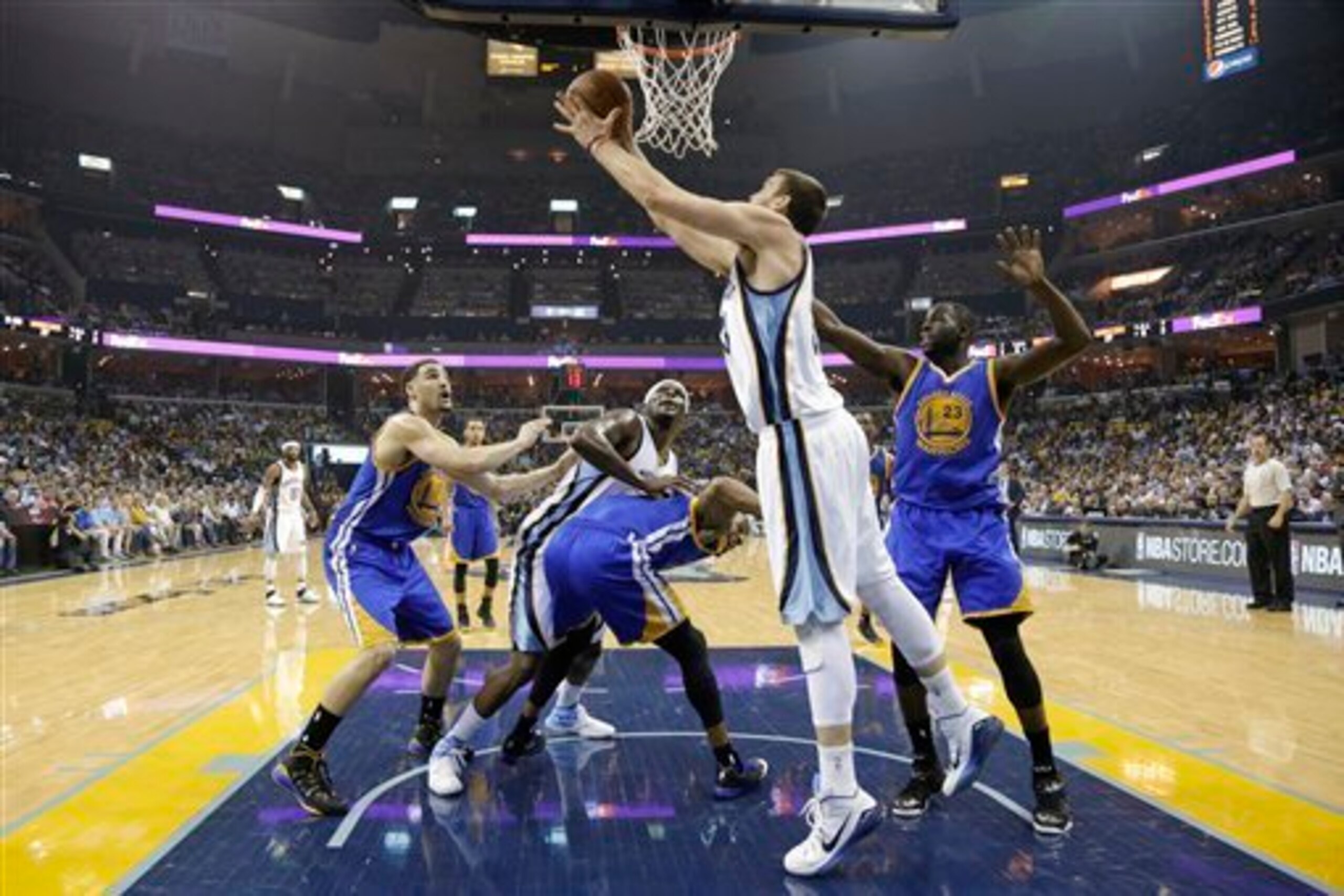
The Golden State Warriors dealt the Memphis Grizzlies a reality check, hopping away in the fourth quarter of a 108-95 Game 6 Western Conference Semifinals elimination contest.
The Warriors' perimeter shooting proved to be too much for a banged-up Grizzlies team as they gunned past Memphis after trailing 2-1.
While the Warriors had better luck this season with health than the Grizzlies, Memphis' injuries taught a few lessons about the team.
Even though they had their best roster ever and held the No. 2 spot a few days before the regular season ended, the Grizzlies needed everything to go right for an NBA Finals run. After missing the last nine games due to a hamstring injury, Tony Allen needed to stay active to hold up the defense.
Memphis required Mike Conley's best, even though he entered the postseason hobbled with a sprained left foot.
But they couldn't stay together, nor did Zach Randolph, Marc Gasol or anyone else score and defend well enough to make up for it.
Memphis spent a few years trying to get over the hump, filling as it could around a core lacking a dominant scorer, but fell to a stronger scoring team the past three years.
Maybe general manager Chris Wallace will re-sign Gasol and keep tweaking the roster.
Before that time comes, it's important to look at what this season revealed about the Grizzlies.
Still Not Strong Enough
1 of 7
Despite adding Courtney Lee, Beno Udrih, Vince Carter and Jeff Green since last January, the Grizzlies found themselves in the same position. A stronger offensive team silenced and outgunned them.
Like the Oklahoma City Thunder in the seven-game first-round series last year, the Warriors rebounded from a series deficit with their top two players overwhelming the Grizzlies. Stephen Curry and Klay Thompson scored 27.7 and 18.7 points per game, respectively, while combining to drain 27 threes in the last three contests.
Curry negated the Grizzlies' third-quarter rally in Game 6 with a period-ending 62-foot buzzer beater and deflated them.
The Warriors stuffed the interior, keeping Gasol and Randolph from attacking the rim. As a result, Gasol shot 37.6 percent from the field for the series and Randolph averaged 13.3 points per the last three games.
The Grizzlies have sought balance, but they relied on their big men and failed beyond the arc once again. They shot 27.2 percent in the series, which isn't surprising for a team that ranked 22nd in the category.
In the fourth quarter of Game 6, Conley and Lee, Memphis' leading three-point shooters, stepped up and took long two-pointers when they could have had threes.
The core trio of Randolph, Gasol and Conley combined for 49.2 per game in the series, which was only 0.1 short of their season average. That's inadequate for a group that should hit another gear, even with Conley pushing himself despite facial fractures.
ESPN.com's Royce Young summed up the disappointing ending for a rough-and-tumble team that won 55 games and for most of the season seemed like the second-best team in the West, saying:
"The Grizzlies have to adapt, have to adjust, have to evolve. They've played their stubborn way for five years now, and it's produced admirable success. This is a unique roster that plays a one-of-kind style. Even more, this was probably the Grizzlies' best team. They just couldn't match the Warrior buzz saw, and that's where lines get blurred. The Grizzlies had a terrific season; they also weren't good enough.
"
Considering that Memphis had its most complete roster ever, it's facing its fate as the team no one wants to meet in the playoffs. The Grizzlies will grind and pester the best in the West, but, unless everything goes their way, they fall short.
Conley stated the driest truth to The Commercial Appeal's Ronald Tillery, saying, "We have our personnel and we play through our personnel. We have our big guys. We have to play to our strengths. We can't change that. We have to work with what we have and we do a phenomenal job with it."
Conley knows what Memphis is—a tough, defensive-minded veteran squad working around scoring limitations in its core. That doesn't mean the core's breaking up anytime soon.
Marc Gasol's Ceiling
2 of 7Marc Gasol had his moments this year. He averaged 20.2 points through the first 30 games before tapering to a season average of 17.4. Gasol had five 30-point performances, which would have been unfathomable in prior years. His three-pointer to force the first of three overtime periods in a Dec. 17 triumph against the San Antonio Spurs was the stuff of legend.
Gasol slackened a bit defensively during his scoring surge before entering his characteristic elite mode in January, allowing 99 points per 100 from Jan. 5 onward, to finish 10th in the NBA at 99.6.
That furthered his status as a great two-way big man.
He showed he could be an offensive force when he wanted. When he was on fire, he could bull rush to the basket or knock down long jumpers at his choosing.
He wasn't as strong as necessary in the playoffs, averaging 19.7 points and 10.3 rebounds per game while making 39.4 percent from the field.
The Memphis Flyer's Kevin Lipe said after Gasol posted 18 points on 8-of-22 shooting in Game 5, "Marc Gasol was pretty awful most of the game offensively, not hitting shots he usually makes, not taking shots he usually takes."
Gasol will be a free agent this summer and has attracted a few suitors. The New York Knicks have made their desire known. But Bleacher Report's Jared Zwerling quoted Beno Udrih in a tweet as saying, "They're not going to get him. He's a laid-back guy and doesn't like drama."
The Sporting News' Sean Deveney reported in March that the Spurs had him as a priority, particularly if Tim Duncan retires.
However, the Spaniard seems destined to return to Beale Street. He attended high school in Memphis, has played his seven-year career for the Grizzlies and his family lives in Memphis. Also, the Grizzlies can offer him one more year than other teams.
Wallace bluntly stated in a CLNS radio interview the Grizzlies "have every intention of re-signing Marc Gasol."
Returning to Memphis, Gasol would likely play as he did this year, manhandling opposing defenses some nights and deferring other times. A little more scoring is all the Grizzlies can hope for, although they'd need a bigger jump from him in the playoffs.
Memphis Should Wean Itself from Dependence on Tony Allen
3 of 7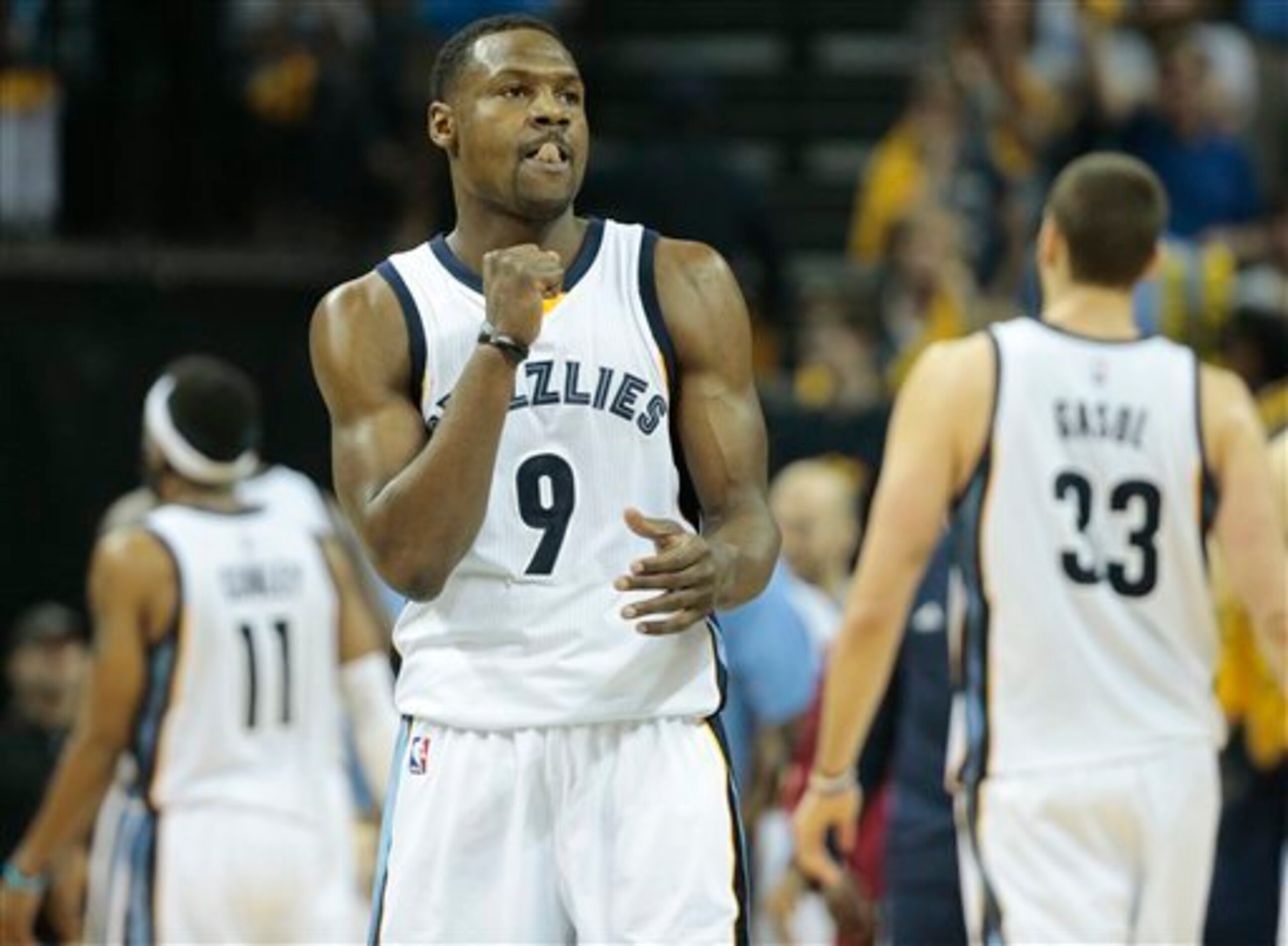
The Grizzlies defense feeds on Tony Allen's energy and turnover-forcing ability.
He was a Defensive Player of the Year candidate due to his knack for disrupting offenses. He led the league with a 4.1 percent steals rate and was sixth in defensive rating, allowing 98.2 points per 100 possessions. The Grizzlies gave up 8.3 fewer points per 100 with him on the floor.
But the 33-year-old couldn't stay on the floor long enough to keep them going. After missing the last nine games of the regular season due to a left hamstring strain, he missed Game 5 and struggled through five-and-a-half minutes of Game 6 against the Warriors before heading to the locker room because of the same hamstring.
That was a rough end to the postseason for the stopper who propelled the team on that end, grabbing 2.4 steals per game against the Portland Trail Blazers in the first round and 11 through three conference semifinals matches.
Without him, the Grizzlies defense was feckless against Golden State. As the Warriors downed Memphis 98-78 in Game 5, the Grizzlies allowed them to drain 14 three-pointers. The center couldn't hold for the Grizzlies defensively in Game 6 as they allowed 32 points in the fourth quarter without Allen's help.
When Memphis succeeded in the series, it was largely because of his defensive intensity. Without him on the floor, they couldn't adjust, often falling behind on defensive rotations.
After Game 4, Lipe prophetically uttered:
"To say that Allen has been the key to the Grizzlies' masterful defensive performance in the games they've won is to understate his importance; most of it has started and ended with him. If he's going to be hobbled the rest of the series, which I assume would press Nick Calathes into service as a backup Tony of some kind, the Grizzlies' chances of winning are hampered, just like Tony's mobility.
"
Considering Allen's advanced age and his 46 games of absence due to injury the past two years, the Grizzlies must not only regroup in the fall so that the "grit 'n' grind" defense operates as seamlessly as it should, but also groom a stopper for the future.
Nick Calathes, who grabbed 2.7 steals per 36 minutes this year and had five against the Warriors, seems unlikely to return. He was the Grizzlies' third-string point guard and will be an unrestricted free agent.
A few weeks after Memphis guaranteed his contract last summer, TalkBasket.net's John Hobbs reported he'd return to Panathinaikos, for whom he played in 2011-12, if the 2014-15 season didn't go as he'd hoped.
"It was a lot stressful everything that happened this summer," Calathes was quoted as telling the Greek newspaper Tovima.
With that, shooting guard Jordan Adams, who averaged 3.1 points in 8.3 minutes per game and allowed 100 points per 100 in 30 appearances as a rookie, is a candidate for significant playing time next year. Adams is an aggressive defender who had multiple steals three times for Memphis.
Even though Adams could provide the scoring Allen lacks, he's two years away from starting. That means Grizzlies head coach Dave Joerger must maximize Allen's effectiveness while ensuring he doesn't wear down.



Jeff Green Wasn't the Answer
4 of 7
The Grizzlies acquired Jeff Green from the Boston Celtics via trade on Jan. 12 in hopes that his scoring and athleticism would complete them as a title contender.
The New York Post's Tim Bontemps said acquiring Green made "the task of beating them that much harder."
Joerger complimented Green's athleticism, telling The Washington Post, "Jeff gives us a versatile athlete and he's been good for us. He's very conscientious, very coachable."
While replacing Tayshaun Prince with Green gave the Grizzlies additional offensive firepower and athleticism, it didn't help their spacing crunch and surprisingly hurt their defense.
Green couldn't use his physical gifts as adeptly as Tayshaun Prince, who could reach out his incredibly long arm and knock the ball out of an opponent's hands. Green hustled and applied pressure but was ineffective. Attackers sometimes blew past him.
This was an issue in the Western Conference Semifinals, as Golden State's backcourt players targeted him.
His 105 points allowed per 100 in the regular season and 107 in the playoffs would have been passable if he weren't such an inconsistent shooter.
In 45 appearances for Memphis, Green averaged 13.1 points per game on 42.7 percent from the field and 36.2 percent of his treys. He hit 40 percent 27 times.
His scoring mark might have been nice, but he was a drag on both ends, as seen by his minus-7.2 per 100 net rating. Also, Gasol, the Grizzlies' key offensive player, was hurt by having Green on the floor with him, as he received fewer shot opportunities and, according to NBA.com, shot 4 percent worse.
CBSSports.com's Matt Moore said on the Eye on Basketball podcast, "I know what he is and I know that he's a net negative."
Green disappointed in the playoffs, averaging 8.9 per game and making a third of his attempts. He scored in double figures twice against the Warriors and went 2-of-8 in Game 6.
He has a $9.2 million player option for 2015-16, which he should exercise since he won't earn much more elsewhere.
Tillery said, "It's hard to imagine Green wouldn't."
While it's nice to think he'd do better in the Grizzlies' defensive system for a full season, one can hardly believe that someone with his lack of awareness has room for improvement.
Dave Joerger Starts to Define Himself
5 of 7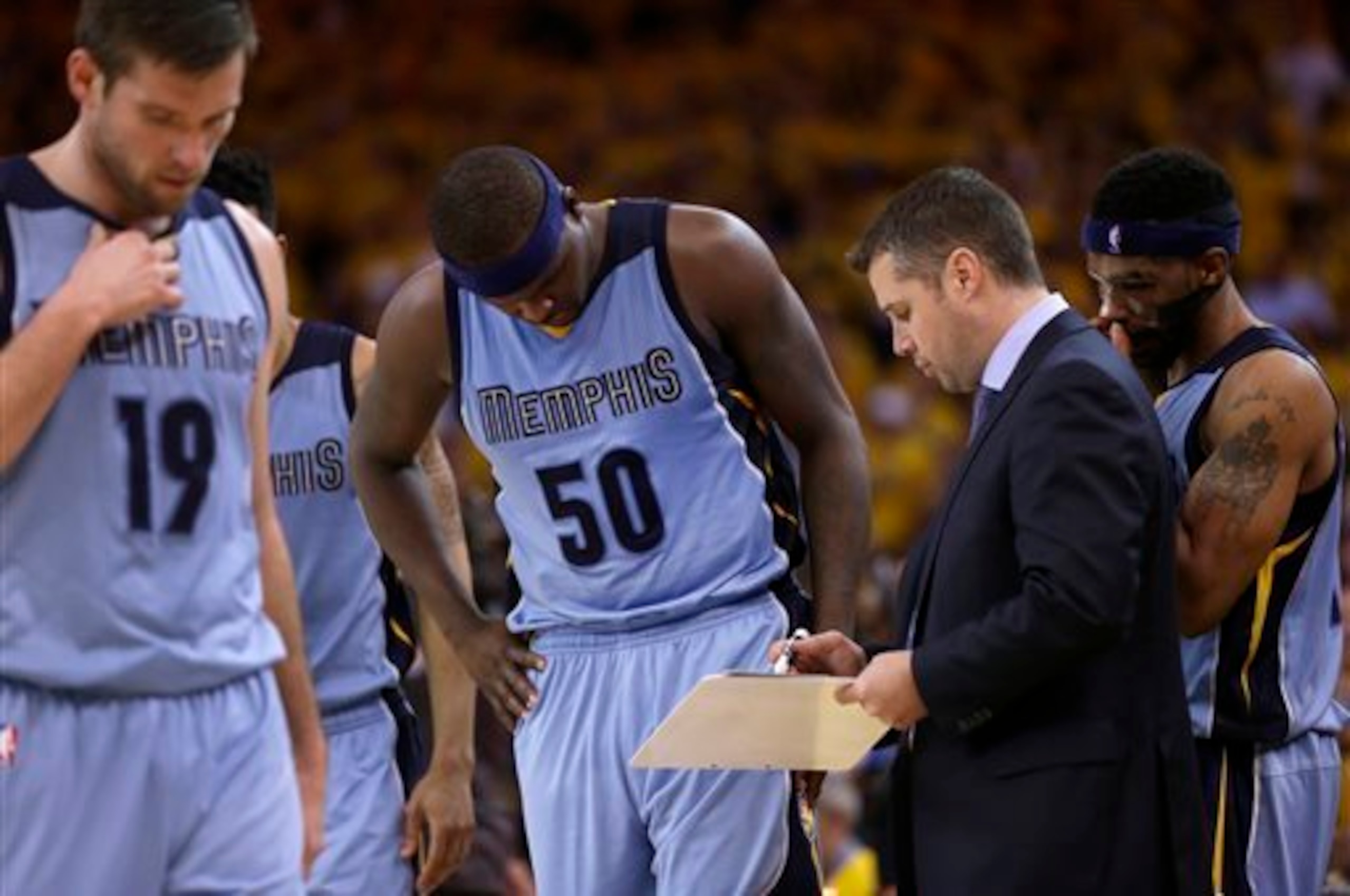
In his second season, Joerger had less pressure and helped the team grow into a somewhat balanced squad. He led it to a 13th-place offensive rating, two places better than last year, bringing it closer to the defense, which had a No. 3 rating while giving them 55 wins for the second time in franchise history.
Joerger pushed a faster pace. Largely, this was due to getting the ball in the half court sooner, as Chris Herrington wrote in an ESPN.com piece. CBSSports.com's James Herbert noted Joerger's insertion of more ball movement.
Also, the Grizzlies were generally more aggressive getting to the free-throw line. They were 11th in the league in free-throw rate, up from 29th last year.
One of Joerger's trademarks has become refusing to settle on the rotation until late in the season. Last year, he periodically altered the backup big men. In the second half of this campaign, he waited until March to reach a final decision on whether to start Allen or Green.
And that was after Green asked to come off the bench, as Tillery reported.
Joerger doesn't bring rookies along quickly. Like Adams, Jarnell Stokes appeared sparingly, playing 6.6 minutes per game in 19 contests. Last year, Jamaal Franklin only entered 21 games.
Granted, Joerger hasn't had the benefit of a polished first-year player yet.
Joerger, who has a 9-9 postseason record through two years, is the least refined aspect of one of the NBA's oldest teams. As he learns to make more adjustments through a series against strong defensive opponents, he gives the Grizzlies some hope for a deep playoff run.
Mike Conley Hits His Wall
6 of 7Injuries aren't easy to work through, and Conley survived more than his fair share. Among others, he battled a right ankle sprain, a left foot sprain and facial fractures.
Moore pointed out that Conley has battled foot and ankle injuries for three years.
His bodily pain bruised his output, as he posted 13.4 points per game on 41.9 percent from the field after the All-Star break.
His facial fractures, suffered during a collision with the Blazers' C.J. McCollum in Game 3 of the first round, kept him out for three games and wearing a mask against the Warriors.
"You can't catch a break, little bruh," Randolph told him, per SI.com's Rob Mahoney.
Conley scored 22 points in Game 2 of the Western Conference Semifinals, but the combination of the injuries kept him to 14.4 per game for the postseason, 1.5 fewer than last year's series against the Thunder.
The 27-year-old point guard needs plenty of rest during the offseason. With his body grieving, it's hard to say he can perform well enough to earn his first All-Star spot. His 16.9 points per game before the break didn't suffice. He'll need greater strength than ever to stand out.
Vince Carter Is Running out of Gas
7 of 7The Grizzlies signed Vince Carter in the offseason, hoping he could help improve their perimeter shooting.
Carter had reworked his game in the previous two years with the Dallas Mavericks, averaging 12.7 points per game with 40 percent long-range shooting during that time.
But the 38-year-old's body wouldn't allow him to sink deep balls. He had surgery to remove bone spurs from his left ankle last May and missed time in the preseason due to soreness.
Carter took the first several weeks of the regular slate to gain comfort and never became effective for an extended period. The 17-year veteran finished with his first single-digit scoring average, posting 5.8 points per game on career lows of 33.3 percent from the field and 29.7 percent from downtown.
His defense was his saving grace, as he allowed 103 points per 100 possessions and showed great awareness and discipline on that end.
He missed 14 games in the second half of the season due to a torn left foot tendon.
His first playoff run wearing the three shades of blue went somewhat better. Carter averaged 6.3 points per game on 40.3 percent shooting, although he hit just 36.6 percent from the field and 18.8 percent from downtown in the first eight playoff games.
He registered double figures twice in Memphis' last three contests, including a 16-point performance to give them a shot during Game 6.
During halftime, The Commercial Appeal's Peter Edmiston tweeted, "Vince Carter's 9 points in that second quarter were big. Old man played hard and was effective."
Carter also brought the same defensive energy in the playoffs as he did during the regular season, allowing 104 points per 100.
"You've got a lot of guys out here doing a lot of different things. Each individual has to play his role. For me, I just want to be ready whenever my number is called," Carter told The Commercial Appeal's Ronald Tillery.
While Carter could have a dead cat bounce offensively next year, the likelihood of a big comeback will leave Joerger calling another bench shooter's name more often.
Unless otherwise noted, advanced statistics come from basketball-reference.com.
Tom Firme is a Memphis Grizzlies featured columnist for Bleacher Report. Follow him on Twitter @TFirme.

.jpg?w=2560 "Raiders Could Start Mendoza")

.jpg?w=2560 "Rodgers Iced Out on Plane 💎")
.jpg?w=2560 "Packers Safety Slams Refs 🤬")
.jpg?w=2560 "🚨 Week 8 AP Top 25 Poll")