

Clippers-Rockets Game 6 Is About Who Can Neutralize Opponent's Stars
Somehow, we've all made it through five games of this Houston Rockets-Los Angeles Clippers series.
After 366 free throws and dozens of Deck-a-DJs, Hound-a-Howards, Smother-a-Smittys and Ha-Capelas, the Clippers head home to L.A. with a 3-2 series lead, coming off a 124-103 Game 5 loss in Houston where they had a chance to put the series away.
We've had some bench players step up throughout this series (I'm looking at you, Austin Rivers), but the Rockets are going to have to stop the Clippers' stars to force a Game 7, and the Clips will have to do the same to the Rockets' big guns to close out the series and move forward.



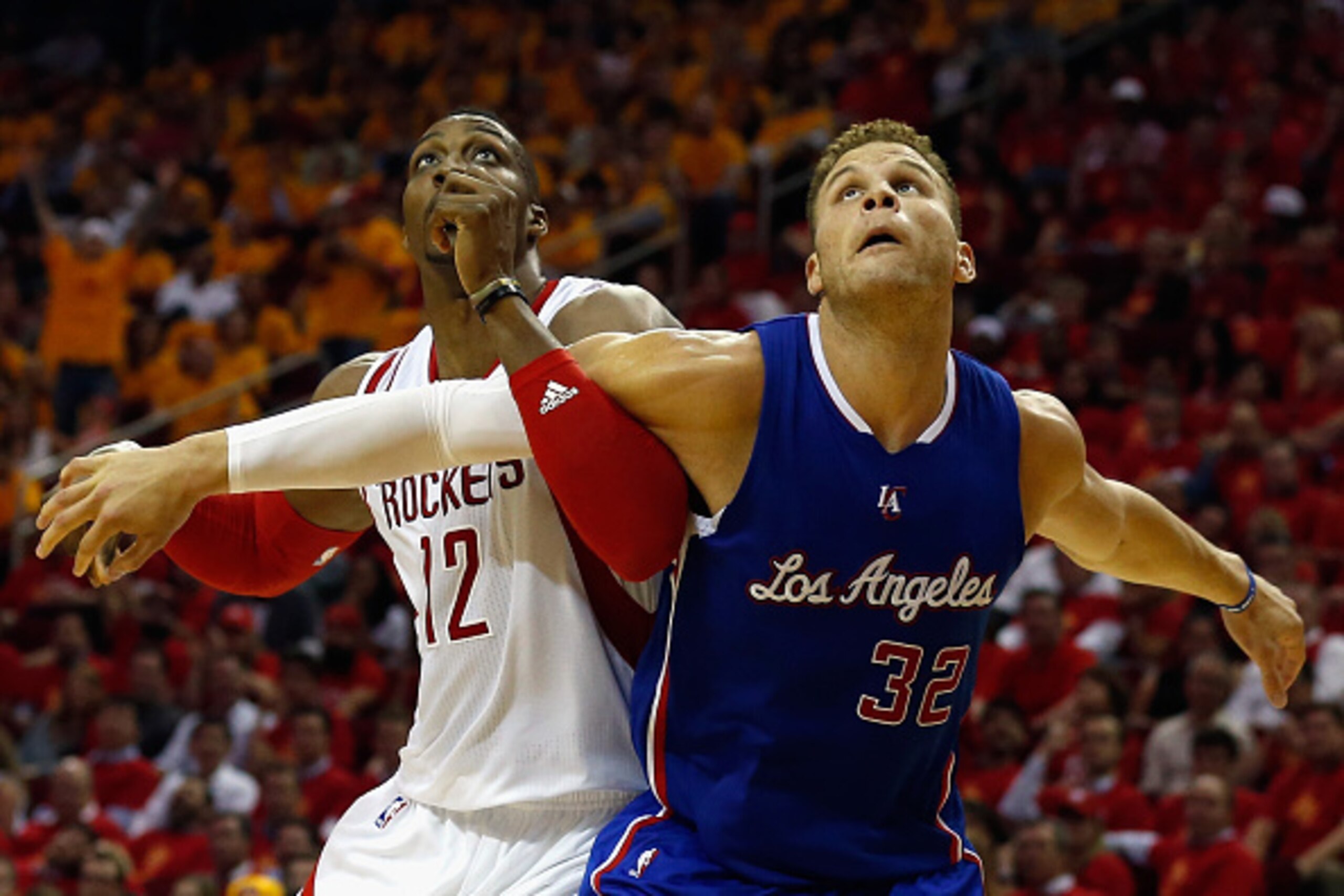
This is probably the point in Griffin's career when people start using the overarching cliches about his game. You know them.
You can't stop Griffin. You can only hope to contain him.
Playoff Blake has been a different animal than we've ever seen, averaging 25.2 points, 13.3 rebounds and 6.5 assists over his first 12 postseason matches, so you're probably not shutting down someone capable of putting up that production
You can't take away his whole game. You just have to concentrate on a particular element.
After Griffin came out as the Clippers' lead distributor in Game 1, piling up 13 assists with an injured Paul watching from the bench, the Rockets made a point to take away his elite facilitating skills.
They'll switch on screens. They'll give him one-on-one matchups. But they're doing whatever they can to take away passing lanes. The assists (only 13 assists over the past four games) have suffered because of it, but that doesn't mean the Rockets aren't mixing up coverages.
The Houston defense has been nothing short of dreadful during this series, allowing the Clippers to score 111.1 points per 100 possessions—a figure which would easily rank last in the NBA if it belonged to a team during the regular season—but it has done a sufficient job in bringing baseline defenders to come double on Griffin.
That's a strategy you'll see teams like the Portland Trail Blazers employ when Blake gets particularly comfortable on one side of the floor: sneakily bring a wing from the other side of the floor as Griffin backs down on the block. Griffin may have a killer handle in the open court, but he's easily flustered when he has to maneuver out of a double-team.
Bring those doubles sparsely but intelligently, cut off passing lanes, hope the jump shots are finding iron and you can slow down Griffin, especially if you start fouling him hard when he's charging at the rim, something we haven't seen much of from the San Antonio Spurs or Rockets in the postseason.
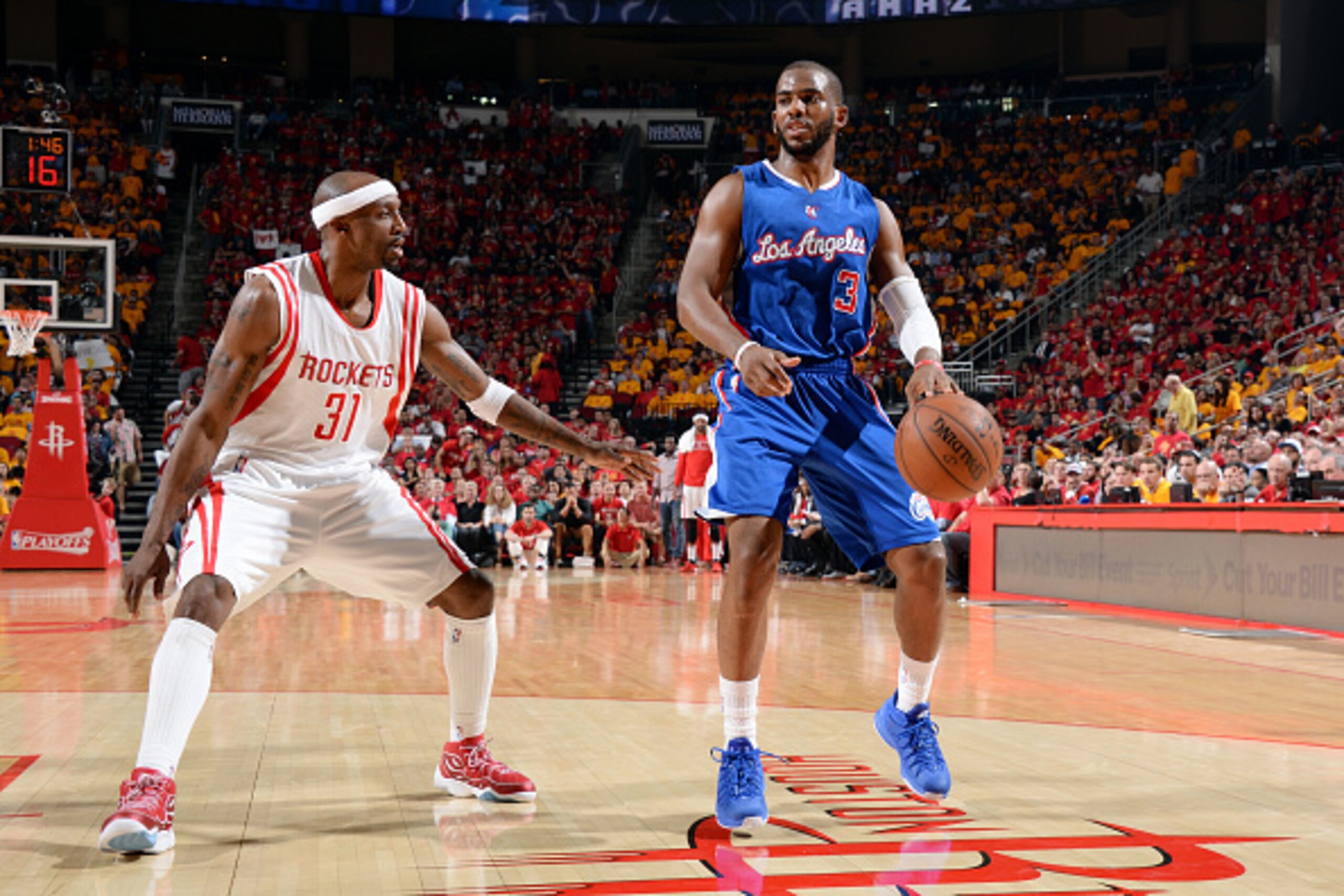
What to do about Paul?
Well, you could try to turn the game into a fast one, hoping his hamstring isn't as healthy as he may be conveying. You can't run if you're hamstrung.
You could trap him on pick-and-rolls to try getting the ball out of his hands, but then you're probably giving Griffin four-on-three half-court break scenarios, which would make him into, you know, a facilitator, exactly what the Rockets haven't wanted.
You could go to Deck-a-DJ when Paul starts to get hot...Actually, no. We're not talking about this. I can't possibly deal with any more hacking. Let's just transition with an impossible pass CP made Tuesday night:
What the Rockets truly need is Patrick Beverley, the ferocious point guard defender who's now out for the season with a wrist injury. Without him, their best chance to stop CP may be putting Trevor Ariza on him during important moments, letting Jason Terry man Matt Barnes in the corner while James Harden runs around screens with J.J. Redick—as scary a proposition as that may be.
Sure, it could tire Harden (which is why you don't do it all game). And yeah, Redick could end up bombing from three, but Paul struggles against lengthy defenders like Klay Thompson and DeMarre Carroll. Ariza is of the same breed. And if CP is going well, what other choice does Houston have?
DeAndre Jordan

The Rockets actually had a decent strategy against Jordan in Games 4 and 5, realizing Howard's post-up ability might be able to help in ways other than scoring. Going right at Jordan can get him into foul trouble—like what happened in Game 5, when the Rockets won by 21 and Jordan played only 24 minutes.
It's no coincidence the Clippers actually got outscored by 21 when D.J. was off the floor in that game. He was the difference. And he tends to be an X-factor, especially on the defensive end, not only because of his talent, but also because of the drop-off when he isn't playing.
When Jordan's out of the game and Spencer Hawes is in, as was the case in Game 5, the Clippers change up their defensive strategies. Hawes' athleticism doesn't allow him to play as aggressively as Jordan does.
So, instead of D.J. showing hard on pick-and-rolls, Hawes sags like a pair of Christmas stockings hanging next to one of his most seasonal suits. However, it's tough to pull off that strategy when Harden is the ball-handler.
Most guys see room in front of them and think, "Look at all this space to get off a shot." Harden, when he already has momentum going to the hoop—like when he's coming around a screen—goes straight to the rim, though. That's when he starts to go to the line, and when he gets to the stripe, there isn't much stopping him.
James Harden

The Clippers are actually one of the best Harden-defending teams in the league, even if his numbers this series are off the chain. Yes, they're so good we're bringing back "off the chain" just to describe them.
The MVP runner-up is averaging 24.8 points, 9.2 assists and 6.0 rebounds in five games against the Clippers after two years of struggling against Doc Rivers' Clips more than any other team. Still, he's had his troubles.
He only attempted six free throws in Game 1. In Game 3, he attempted only five. If he's not getting to the line, he's not scoring how he prefers. You're getting him out of his element.
The Clippers wings—Redick and Barnes, specifically—are disciplined enough that they don't fall for Harden's foul-bait as often as your average defender would. The Rockets shooting guard does this annoying action in which he holds the ball out in penetration, almost goading his defender into swiping. When he does, Harden pulls his hands back, absorbs the contact and goes to the line.
It's funny to speak to NBA players about Harden's free-throw drawing tactics. They almost universally describe it the same way, like a student would talk about an in-class essay on which they got a C- even though they prepared nonstop. They don't hate it. They don't think it's dirty. They're just so immensely frustrated they keep falling for it.
They're those fouls you know you're committing as you reach, the ones that have you yelping to yourself, "No! Don't do it!" as you're actually doing it. It's a rough way to live.
Ultimately, defending Harden is about balance and recognition. If you're not leaning, you're not reaching, which means you're not fouling and you're still cutting off passing lanes for Houston's only dangerous facilitator.
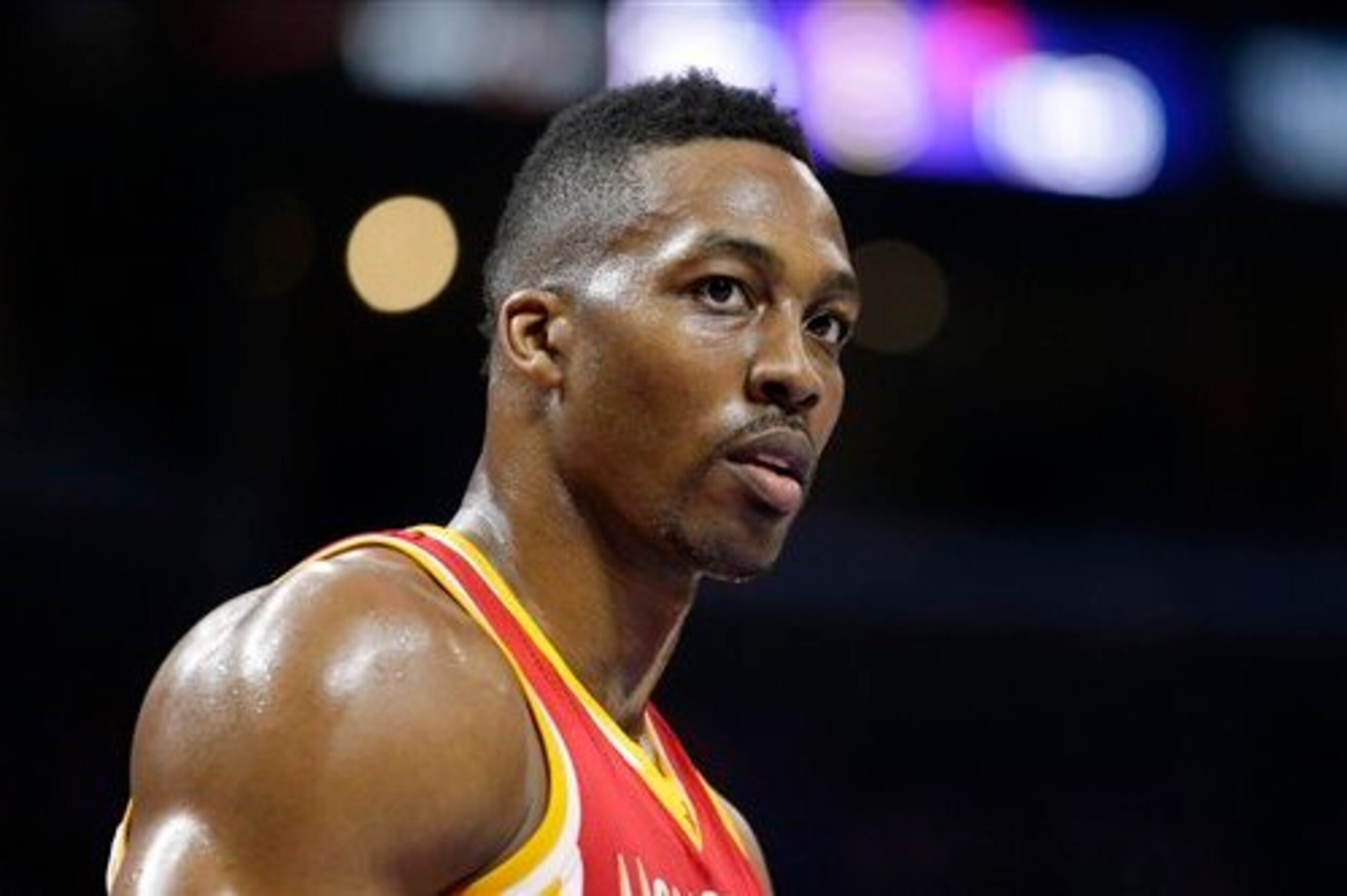
Teams can find positives even inside blowout losses. Hopefully the Clippers found one in the third quarter of Game 5, as famed gambler Haralabos Voulgaris initially pointed out on Twitter:
"DJ fearing foul trouble staying down on those Howard post ups, its actually better D bc it allows him to actually get rebound as well.
— Haralabos Voulgaris (@haralabob) May 13, 2015"
One of Jordan's biggest flaws as a defender, even when he's dominating games, is his jumpiness. He'll too often search for blocks, whether that means leaving his feet or just positioning himself differently than he should.
However, he wasn't doing that often when defending Howard in the second half of Game 5, when he was playing with four fouls, and that helps strengthen another weakness in his defensive arsenal, like his ineffectiveness while guarding the post.
Still, Howard isn't getting all his points on the block. Far from it. When he's been at his best in this series, it's been while scrapping for offensive rebounds and finding space on basket cuts to set up for dump-offs or lobs.
Non-Jordan Clippers have consistently rotated late on the baseline this series, and Howard has intelligently exploited those mistakes to the tune of a 19.2 points-per-36-minute average on 57 percent shooting. Quicker reactions can help block off those cutting lanes, and often, chucking Howard as he sprints through the lane (meaning giving him a firm nudge) can help deter him from the spots he feels most comfortable.
As for the defense, if Paul can get hot from mid-range (and he's really the only player in the league who you want to game-plan mid-range shots for), he can wind up for a bunch of pull-ups from that right elbow area after dribbling around ball screens. That'll force Howard to come up further from the paint, which could open rolling lanes for the bigs or cutting ones for someone like Barnes, who's usually good for a baseline catch-and-layup once or twice a game.
Force Howard to make decisions, and it means you're making him think. Like Jordan, he's still a rhythm defender. When he doesn't know which song is on the loud speakers, he takes a second to start dancing.
Follow Fred Katz on Twitter at @FredKatz.
Unless otherwise noted, all statistics are current as of May 13 and are courtesy of Basketball-Reference.com and NBA.com.

.jpg?w=2560 "Raiders Could Start Mendoza")

.jpg?w=2560 "Rodgers Iced Out on Plane 💎")
.jpg?w=2560 "🚨 Week 8 AP Top 25 Poll")
.jpg?w=2560 "Packers Safety Slams Refs 🤬")