The 2014-15 Utah Jazz didn't merely exceed expectations. They obliterated them, showing fans and writers that this team is much further along than expected.
After kicking off a total overhaul in the summer of 2013, Utah was still supposed to be too young and inexperienced to even sniff a .500 campaign.
Prior to the first official game, the over-under on the number of wins the Jazz would finish with was set at a paltry 25.5. Only the Milwaukee Bucks and Philadelphia 76ers were predicted to be worse, according to Case Keefer of the Las Vegas Sun.


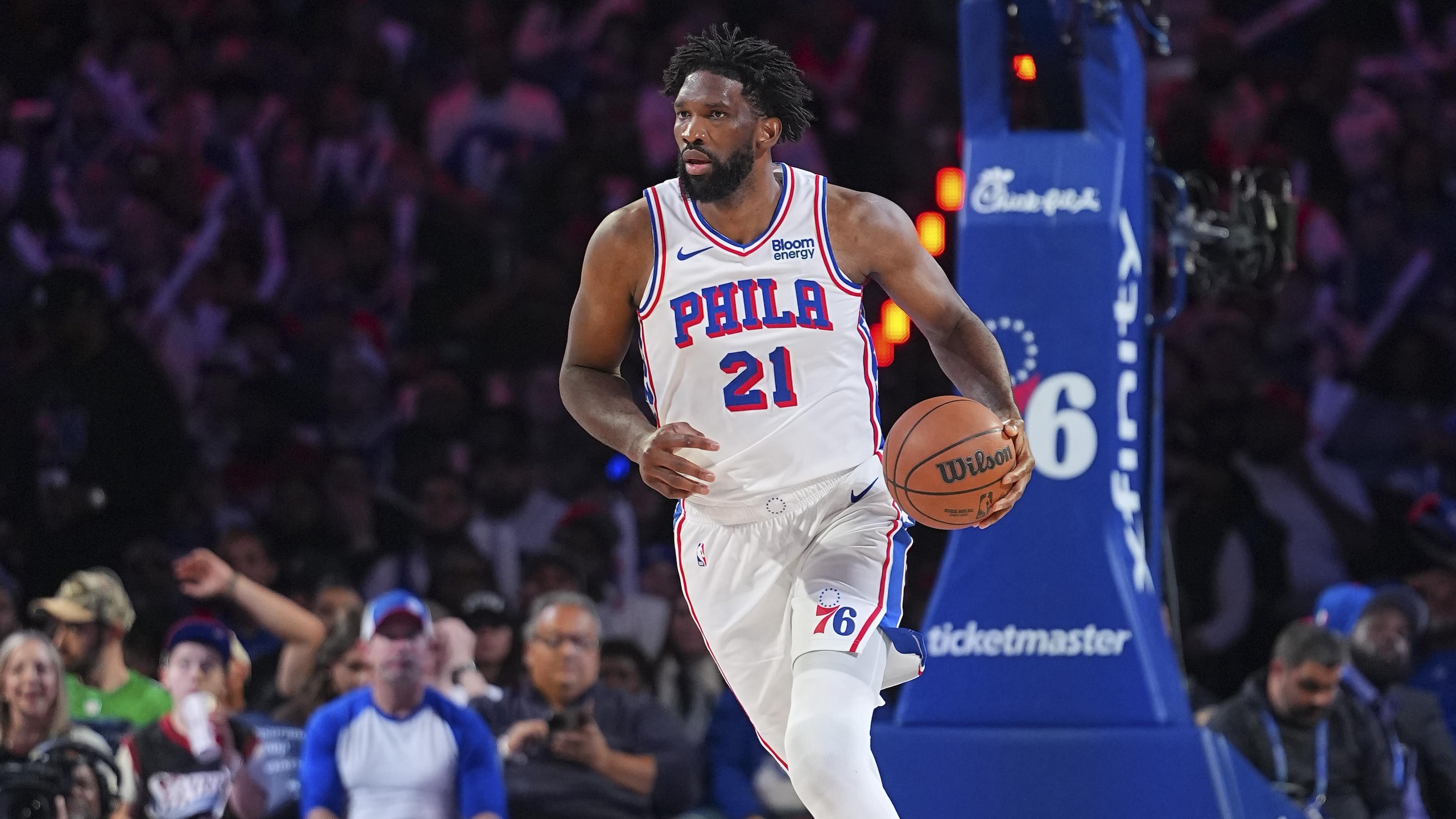
Utah would go on to make the initial line look silly in hindsight, finishing 38-44. They had a season plus-minus of plus-18, better than two Eastern Conference playoff teams (the Boston Celtics and Brooklyn Nets). And perhaps most importantly, almost every individual showed very real development.
Here's what we learned about the Jazz players who logged at least 500 minutes this season, as well as head coach Quin Snyder.
| Trevor Booker | Booker shot 34.5 percent from three-point range, showing that kind of range for the first time in his career. | Booker was an excellent energy guy, provided some toughness and was a leader among so many young teammates. |
| Trey Burke | In the three-point era (starting in 1979-80), Burke's field goal percentage of 36.8 ranks dead last among 272 NBA sophomores who played at least as many minutes. | Burke has a terrible time creating his own shot, yet persists in trying to be a shoot-first point guard. He also showed great character in how he handled moving to the bench. |
| Alec Burks | Burks hit 38.2 percent of his threes and shot 2.5 per game. Both were career highs. | Given that he only played 27 games, it's hard to pick up much from Burks' season other than his willingness to add an outside shot to his game. |
| Rodney Hood | Hood averaged 12.7 points and shot 38.6 percent from three-point range in 21 starts. | Hood showed the ability to not only space the floor as a shooter but also to operate pick-and-rolls. |
| Joe Ingles | Ingles shot 40.1 percent from three-point range from January 1 on. | After acclimating to a new league, Ingles became a solid point forward, capable of leading on and off the floor. |
| Enes Kanter | Utah gave up 108 points per 100 possessions when Kanter was on the floor and 99.1 when he was off. | Kanter demanded a trade, then trashed the Jazz upon his return with the Oklahoma City Thunder. He clearly didn't fit the culture general manager Dennis Lindsey is trying to build and was moved accordingly. |
| Elijah Millsap | Among Jazz players with at least 500 minutes, Millsap's Net Rating of plus-5.6 was the best on the team. | Millsap is an absolute terror on defense, with the ability to impact a game on that end like Tony Allen. |
The takeaways on Snyder and the four players absent from the table—Dante Exum, Derrick Favors, Rudy Gobert and Gordon Hayward—are more significant for the future of the team and warrant a closer look. Everyone but Kanter is either already on, or has a great chance to be on, the 2015-16 Jazz, but the following four represent the core.
Dante Exum Is Still Making the Leap

In case there was any need for physical evidence that the leap from Australian high school basketball to the NBA is immense, the basketball gods presented us with Exum.
At times, the 19-year-old point guard looked wholly overwhelmed by the size, speed and general talent level in the NBA. His basic box score numbers make that clear.
| 82 | 41 | 22.2 | .349 | .314 | 0.4 | .625 | 1.6 | 2.4 | 4.8 |
But if you look a little closer, there are definite reasons to be optimistic about Exum's future.
For one, he's already a plus defender. Utah gave up just 99 points per 100 possessions when Exum was on the floor this season, according to NBA.com. If Utah had maintained that defensive rating over the entire season, they'd have had the No. 2 defense in the league.
That obviously wasn't the case, though. Utah finished the season ranked 13th in defense and allowed 104.6 points per 100 possessions when Exum was on the bench.
Exum's strong defense led to a promotion to the starting lineup, which in turn led to much-improved play from the team as a whole.
Nick Smart of the Herald Sun, in Exum's hometown of Melbourne, Australia, related the point guard's thoughts on his promotion.
"I knew I was playing good defence and being a team player, but everything happened so fast,” Exum said. “Starting I was a bit nervous but after a few games I got used to it. That’s when I started to have a bit more of an impact.”
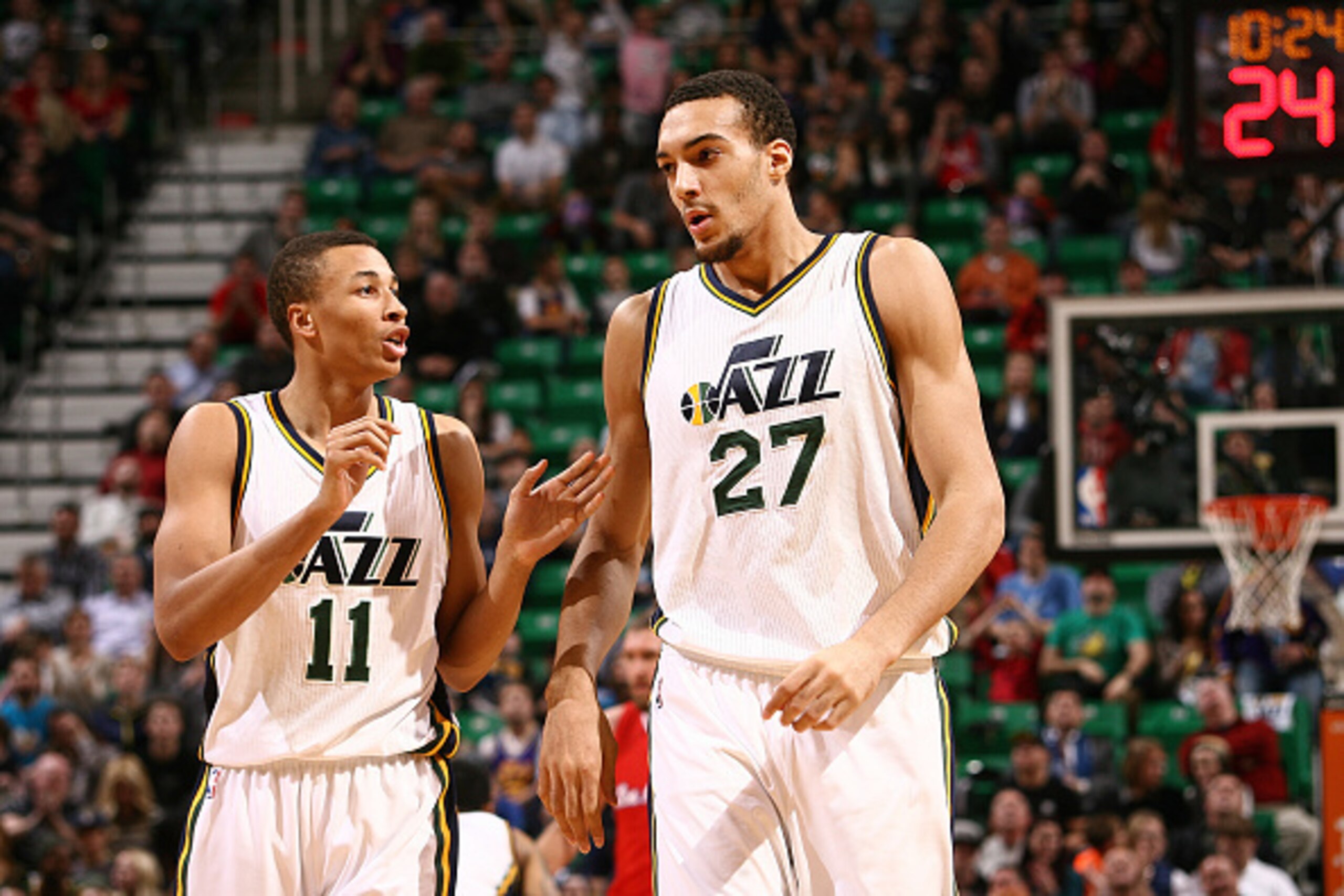
And therein lies the other positive takeaway on Exum. Upon being thrust into the starting lineup, the 19-year old, fresh out of Australian prep ball, could've wilted. Instead, he embraced the challenge of defending the best players at the game's strongest position. He grew into his role.
Of course, there are reasons to be concerned. Exum's field-goal percentage of 34.9 is the very worst in the three-point era among players who logged at least as many minutes (1,817). And he was fourth on his own team in assist percentage (though he did have a 12-assist outburst on April 1 against the Denver Nuggets).
But it's tough to compare Exum to any predecessors. His path to the league is unprecedented. That he showed any positive signs given the context of his leap should be viewed as a win.
Derrick Favors Is an Oak
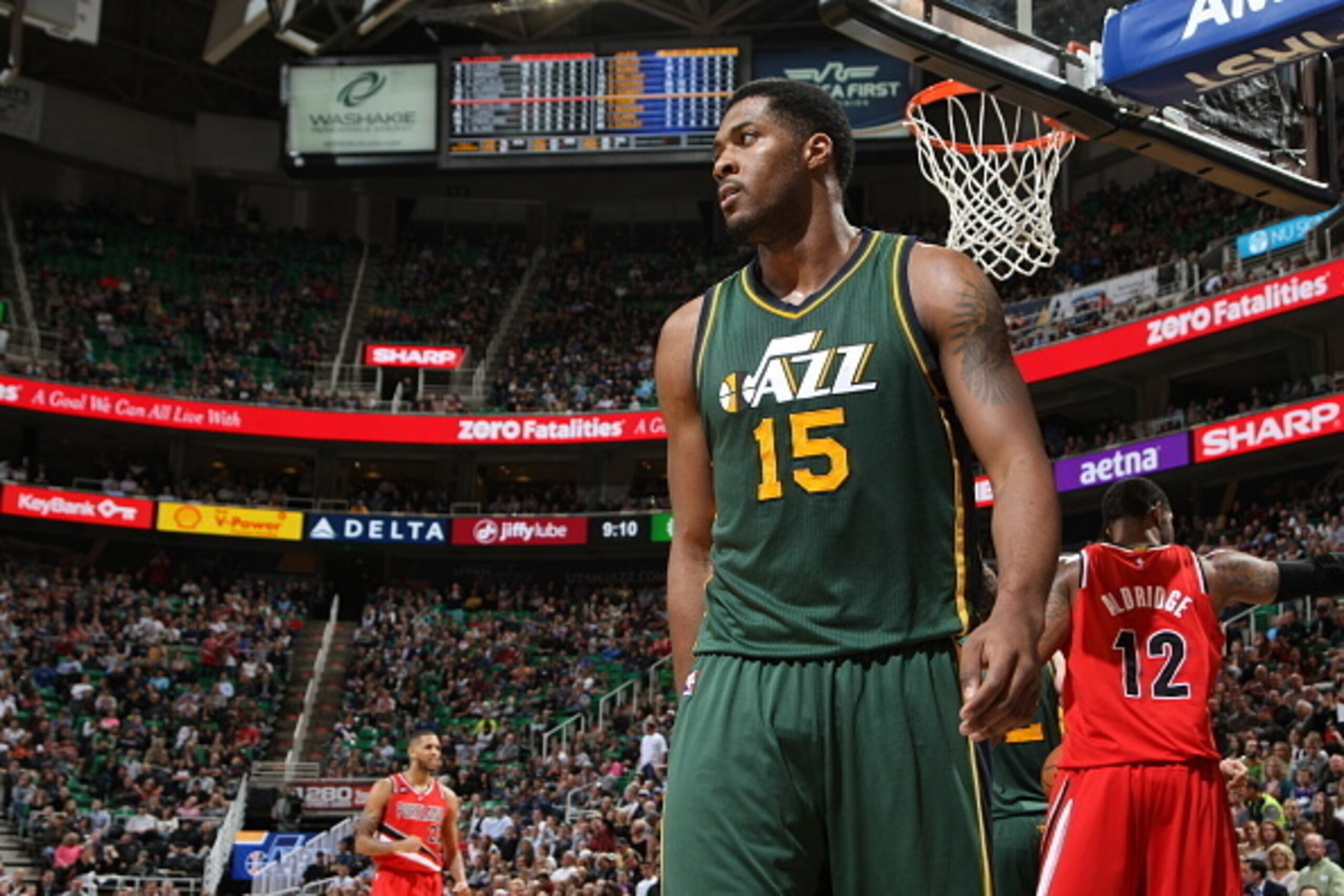
Like Wyatt Earp in the Western epic Tombstone, Favors is an oak. Solid, consistent, not easily swayed and steadily growing.
For the fourth straight season, he increased his scoring average. And he showed expanding range on his jump shot on the way to 16 points per game.
Favors' average distance from the rim on field-goal attempts has gone up each season right along with his points. But his field-goal percentage hasn't suffered because of it.
The ability to hit the mid-range jumper will be critical for Favors going forward, as he's paired with a center whose range doesn't extend much further than dunks and layups.
If the lane is constantly clogged by the two bigs, there will be significantly less room in which to operate for Hayward, Exum and anyone else initiating pick-and-rolls.
Rudy Gobert Is a Game-Changer
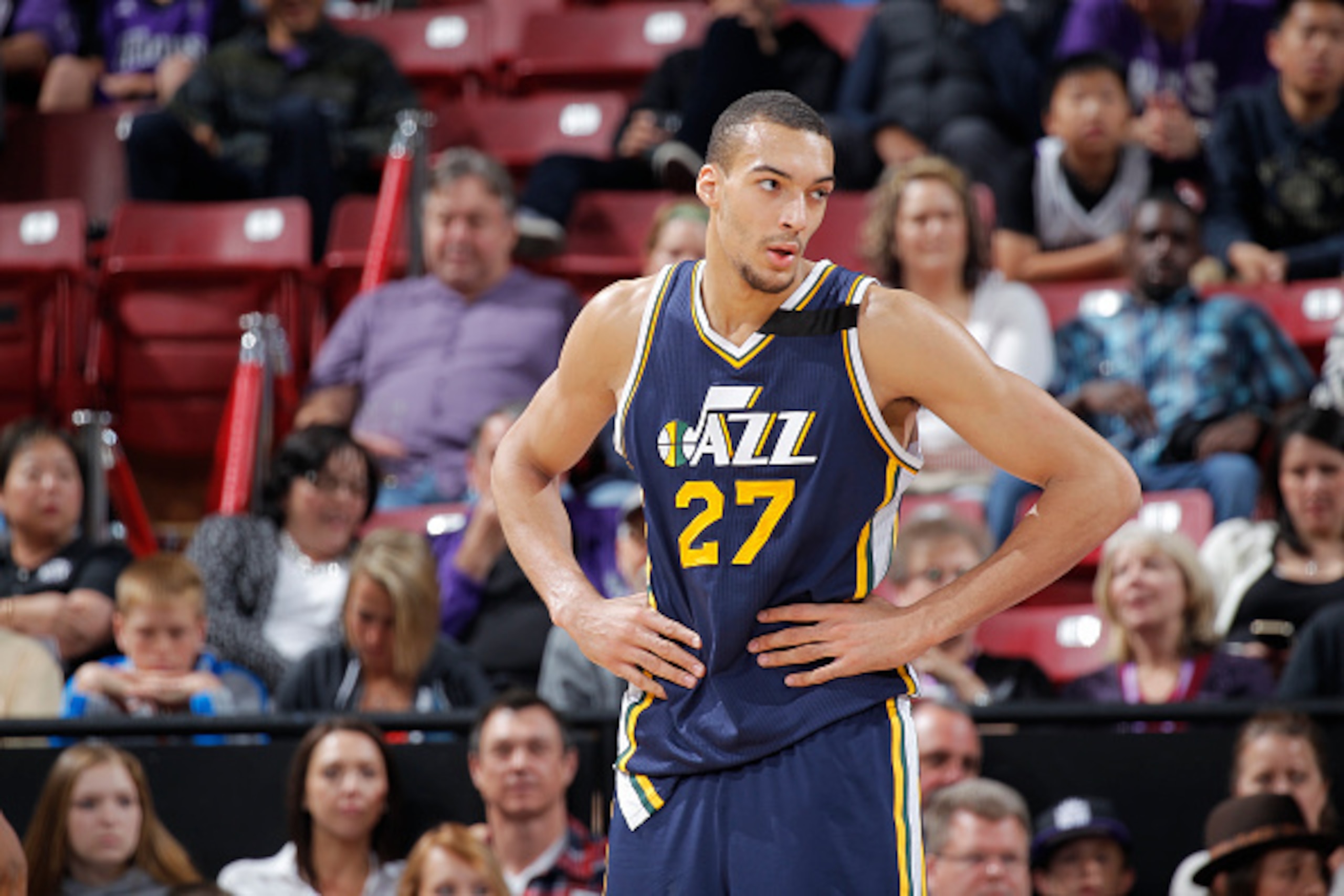
The night-and-day difference in the Jazz following the trade of Enes Kanter was remarkable. It was perhaps the biggest addition-by-subtraction move in the NBA this season, as it opened up a spot in the starting lineup for Gobert.
On the season, the Jazz went 22-15 in Gobert's 37 starts. They went 19-10 after the trade. The biggest difference, of course, was the defense. But there was more to it than that.
Kanter oozed a me-first attitude while in Utah. He finished the season with 55 assists—26 in his 49 games with the Jazz and 29 in his 26 games with the Oklahoma City Thunder. In the entire month of January, Kanter had three assists.
Gobert's willingness to pass alone made him a better fit offensively. He averaged 1.8 assists after Kanter was traded to OKC, and he showed a flair for the dramatic dime.
But what really set Gobert apart from Kanter, and what really makes him a game-changer, is his incredible defensive ability.
He's not just long (7'2" with a 7'9" wingspan, according to DraftExpress) and athletic, his timing and awareness on the defensive end have already made him one of the game's best rim protectors.
Among those who played at least 500 minutes, Gobert finished third in block percentage at 7.0 and third in blocks per 36 minutes at 3.2.
What's even more telling is the field-goal percentage allowed by Gobert at the rim. Among players who faced at least three attempts at the rim and played in at least 20 games, Gobert is first, with his opponents' field-goal percentage at the rim at 40.4.
That ability to protect the rim has helped transform the Jazz, or as Grantland's Kirk Goldsberry wrote:
"Gobert is having a Hibbert effect on the Jazz. He is facilitating a cohesive defensive brand that makes everyone look better. Great rim protectors are the best deodorant. This is a big moment for the Jazz, who have been floundering since the end of the Jerry Sloan era. The combination of good coaching and elite interior defense offers probably the simplest path to success in this league. And considering that Utah was the worst defensive team in the NBA just last season, this turnaround has been nothing short of remarkable. Magnifique, even.
"
Now might be a good time to remind everyone that Gobert's still just 22. The 2014-15 season was his second in the NBA. There's a ton of development yet to come.
Gordon Hayward Is a Legitimate No. 1
After he shot 41.3 percent from the field and 30.4 percent from three-point range in 2013-14, there was reason to wonder if Hayward could carry a team offensively.
He was clearly out of his comfort zone against opponents' top perimeter defenders, and at times, double-teams. Turns out, that season was just his adjustment period.
Hayward returned to the role of No. 1 option in 2014-15 and looked anything but uncomfortable. He was one of just six players to average 19.3 points and four assists, with a true shooting percentage of 56.7 (minimum 500 minutes played):
| James Harden | 25 | 36.8 | 7.0 | 27.4 | .605 |
| Kevin Durant | 26 | 33.8 | 4.1 | 25.4 | .633 |
| LeBron James | 30 | 36.1 | 7.4 | 25.3 | .577 |
| Stephen Curry | 26 | 32.7 | 7.7 | 23.8 | .638 |
| Kyrie Irving | 22 | 36.4 | 5.2 | 21.7 | .583 |
| Gordon Hayward | 24 | 34.4 | 4.1 | 19.3 | .567 |
That's pretty exclusive company. And you could narrow it down even more by height. Hayward, LeBron James and Kevin Durant are the only guys on that list at 6'8" or taller, making it pretty easy to call Utah's small forward a point forward.
Why does that matter? Simply put, it allows Exum plenty of time and freedom to be able to grow into his role with the starting five. Hayward takes so much pressure off Exum and really anyone else on the floor with him.
Quin Snyder Is a Keeper
It's hard to imagine all the aforementioned developments coming to fruition without the guidance of Snyder, Utah's first-year head coach.
Over the course of the season, he put together a solid coach-of-the-year resume, as detailed by Jazz radio voice David Locke:
And it wasn't just the media who appreciated the influence of Snyder. On his personal blog, Hayward shared some thoughts on his coach:
"As I’ve mentioned in previous entries, Coach Snyder is a big proponent of film. I can say pretty confidently that we watched more film than any team in the league, and it helped us out to a great extent. Individually, we were all better at the end of the season. Collectively, we were better as well. Film can’t lie. It holds people accountable. People can’t make excuses when you’re watching film. It’s right there in front of you.
One of the big things we picked up on by watching film as a team was just learning the importance of trust in one another. When we saw film of teammates coming from the help side, the ball movement, making the extra pass, and what those things do for the success of your team, it showed us what can happen when you learn to trust your teammates more.
"
Gaining the trust of the youngest roster in the NBA and leading them to significant improvements on both ends of the floor in just one year is amazing.
| 2013-14 (Tyrone Corbin) | Rank | 2014-15 (Quin Snyder) | Rank | |
| Offensive Rating | 100.6 | 25th | 102.5 | 15th |
| Defensive Rating | 109.1 | 30th | 102.1 | 12th |
| Net Rating | minus-8.4 | 28th | plus-0.4 | 16th |
Those surface numbers are great, eye-popping even. But it's even more remarkable when you see how Snyder developed his players and adjusted his approach as the season went on.
| Defensive Rating | Rank | |
| November | 107.2 | 26th |
| December | 107.1 | 25th |
| January | 102.1 | 16th |
| February | 97 | 2nd |
| March | 95.2 | 1st |
| April | 99 | 9th |
Following the Kanter trade, he saw that he had a defensive monster on his hands and embraced a Memphis Grizzlies-like Grit-N-Grind approach. The length and athleticism of Exum, Favors and Gobert was nightmarish for opposing offenses in slowed-down half-court games.
And remember, this team had the same core as the 2013-14 Jazz. Snyder was able to place them on the path toward maximizing their potential.
2015-16 Utah Jazz Should Contend for the Playoffs
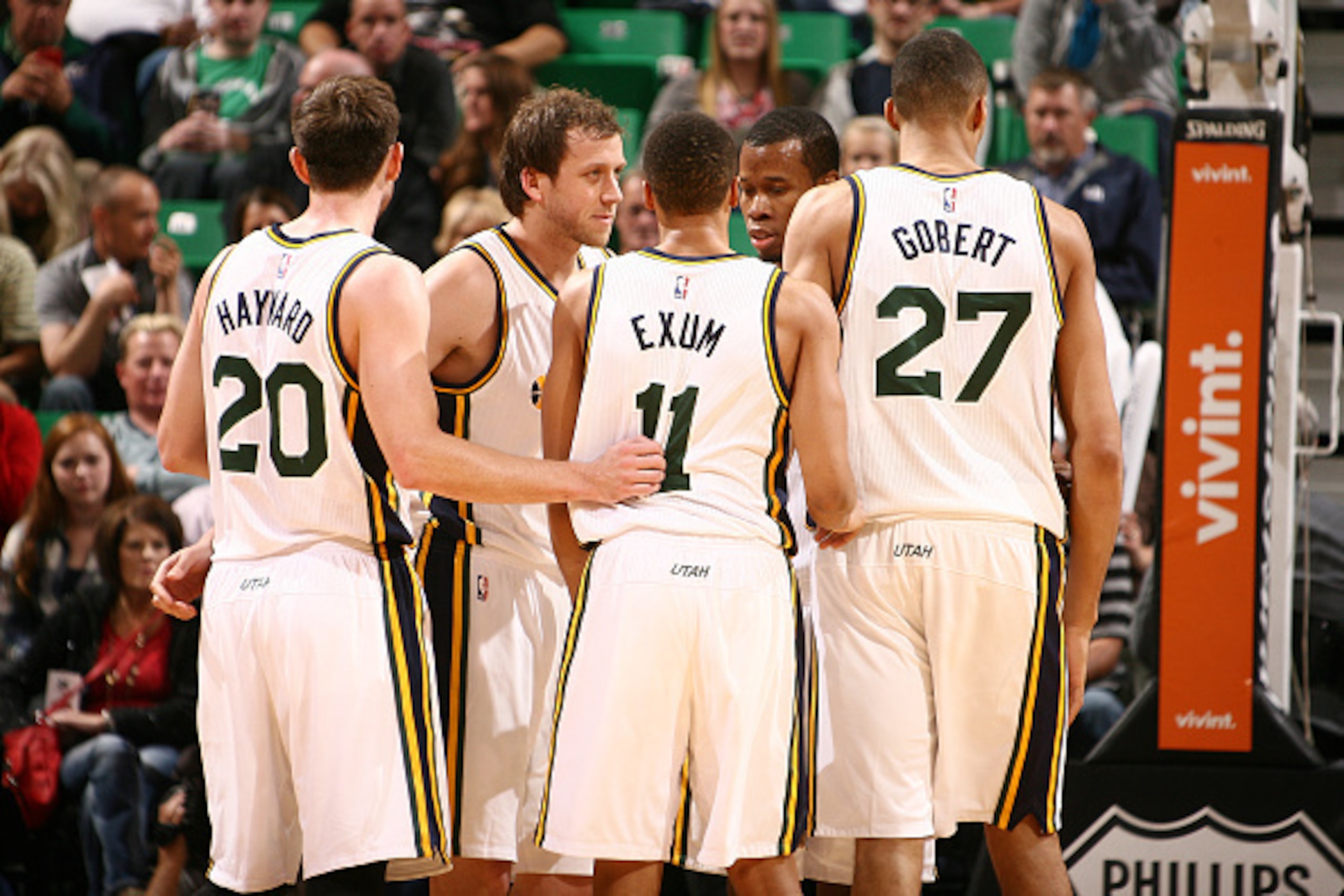
The craziest thing about all this is that every player on this team still has room to grow and years before he hits his prime. In some cases, many years.
Even if they pick up right where they left off this season and show no improvement over the course of 2015-16, they should be in the picture for playoff contention.
After the All-Star break, the Jazz went 19-10. That's easily a 50-plus-win pace. Over the same stretch, they had the best defensive rating in the league. And it wasn't close. They gave up 94.8 points per 100 possessions. The second-place Bucks were at 99.4.
But no one really expects this team to just pick up where it left off, right? Snyder develops players. DeMarre Carroll of the Atlanta Hawks has credited Snyder for Carroll's personal development. Lindsey told 1280 The Zone's David James and Patrick Kinahan that that's why Snyder was hired.
This team is going to get better. Even if they stand pat this offseason (as they probably should), pick up another rookie with a lottery pick and let this group grow organically, they should be in the mix for the No. 8 seed in the crowded Western Conference next season.
Unless otherwise noted, all stats and salary figures are courtesy of NBA.com and Basketball-Reference.com.
Andy Bailey covers the NBA for Bleacher Report. Follow him @AndrewDBailey.

.jpg?w=2560 "Raiders Could Start Mendoza")

.jpg?w=2560 "Rodgers Iced Out on Plane 💎")
.jpg?w=2560 "Packers Safety Slams Refs 🤬")
.jpg?w=2560 "🚨 Week 8 AP Top 25 Poll")