

Inexperienced Atlanta Hawks Learning Excuses Don't Matter in Playoffs
The Atlanta Hawks haven't been in this position many times.
They're the No. 1 seed in the Eastern Conference, and there's a target on the back of their jerseys whenever they step onto the court, even if they're now overlooked in the race to represent the NBA's weaker half. While trying to advance to the Eastern Conference finals—something that not even Dominique Wilkins could do—they've met one obstacle after another.
But now, what they collectively have to realize, despite the complete dearth of experience in the last few rounds of the playoffs, is that every team has to clear hurdles en route to the Larry O'Brien Trophy.



Injuries are a fact of life during the NBA's second season, as the Washington Wizards can attest to, having lost star point guard John Wall for Game 2 of their series with the Hawks. And the teams lucky enough to avoid those maladies usually have to stave off some combination of surprise performances from the opposition, cold-shooting nights and poor calls from the referees that, in the moment, seem to be awfully one-sided.
It all happens.
But these are the playoffs. There are no excuses.
That's what makes this latest victory so important. Sure, it was a nail-biting contest at times, but the East's top seed ultimately emerged from its Tuesday night affair against the Wizards with a 106-90 victory, one that featured them pulling away in the final quarter.
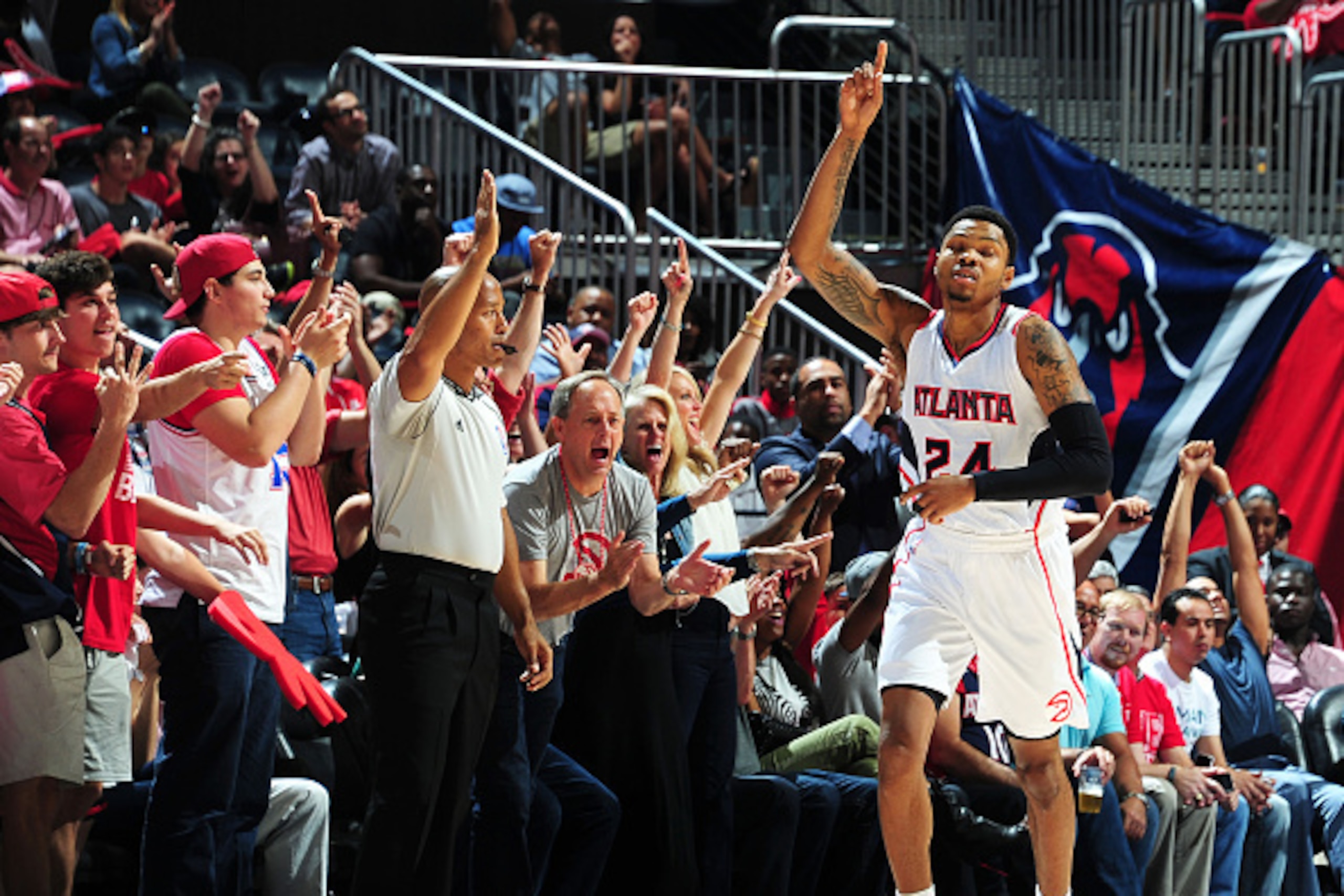
Another loss could've easily bred more excuses for the unexpectedly poor performance.
In the first round, it was far too simple to blame a lack of focus for the nights in which they couldn't throw a beachball into the ocean while standing in the surf. The Hawks seemed to know that they were perfectly capable of taking down the Brooklyn Nets, even without fully preparing for the series, and they often appeared to be operating in a somnambulant state. They woke up after the first-round battle was tied up at two games apiece, but it certainly wasn't always pretty.
Then, after a resurgent Deron Williams and an out-of-his-mind Alan Anderson had been properly dispatched, Game 1 against the Wizards loomed. And remember, Washington had taken care of business in the opening round with a clean sweep of the Toronto Raptors, so it entered the contest with a week of rest on its side.
The Hawks, meanwhile, had less than 48 hours to prepare for a new opponent and recover. And after a ridiculously hot first quarter, it showed.
"Our pace was better in the first half," Al Horford told reporters after the game. "Maybe in the second half, we were just tired or whatever."
Whatever the case may be, the Hawks missed one uncontested look after another, leading to a miserable second-half performance and a quick 1-0 deficit in the series.
Those aren't excuses. They're facts.
Less factual was Paul Millsap's claim that the Hawks won the game "internally," per CSN Washington's J. Michael:
"We played well enough to win the game. Internally, we felt like we won the game. A few crucial mistakes. A few plays let them back in the game.
[...]
Let me be specific, we feel good about it. Ten-point lead going into halftime. Come back out, took some good shots, missed some open shots. Wasn't as aggressive as we needed to be. We feel good about it.
"
It's an interesting conundrum.
On one hand, he's right. Despite the loss, the Hawks played like the slightly superior team during Game 1, missing plenty of uncontested looks they'd normally make and still hanging tough until the very end. But internal victories count for absolutely nothing during the playoffs, where the failure to earn even a single actual victory can lead to an earlier summer vacation.
Game 2 didn't offer the chance for more internal success. Instead, another opportunity for an excuse.
With Wall sitting out to let his injured left wrist heal, the Hawks could've overlooked the opposition, counting on Ramon Sessions to appear remarkably overmatched against Jeff Teague and the Hawks' system-based excellence.
We'd seen the exact same situation unfold one night earlier, with the Los Angeles Clippers upsetting a shellshocked Houston Rockets squad that seemed to assume it could easily handle a team without Chris Paul in uniform.
And based on the rest of this ongoing Atlanta postseason, it would've been par for the course.
But that's not what happened on Tuesday night, with an inspired team coming out ready to face whatever test presented itself. These Hawks know they're out of excuses; they're even starting to realize that they can't use them at any point during the postseason proceedings.
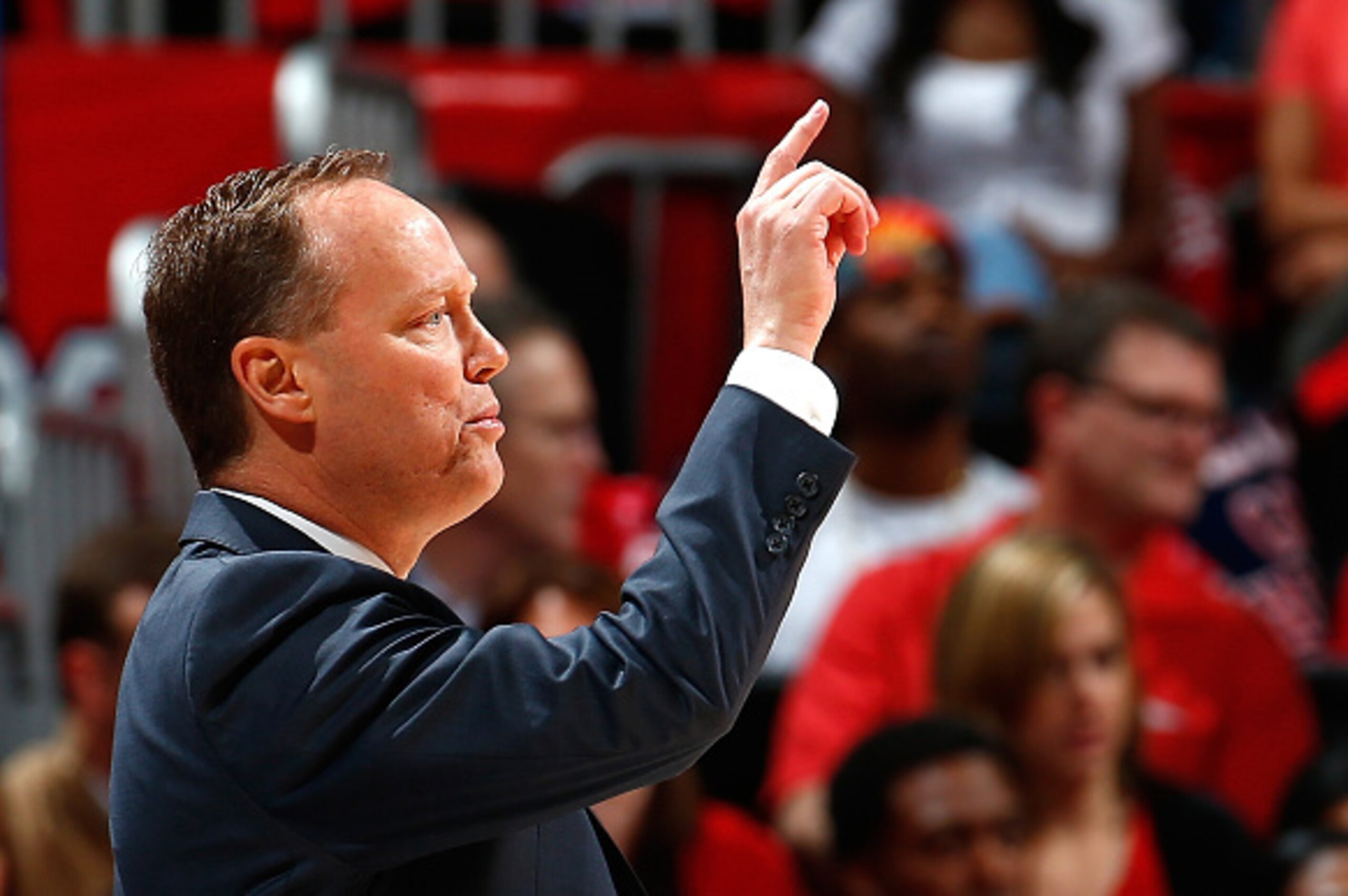
DeMarre Carroll had his sixth consecutive game of at least 20 points, but it was an opportunistic bench that impressed most. And it was just in time, as the Hawks rotation seemed to be shrinking, with newly minted Coach of the Year Mike Budenholzer realizing he needed to lean more heavily on his starters.
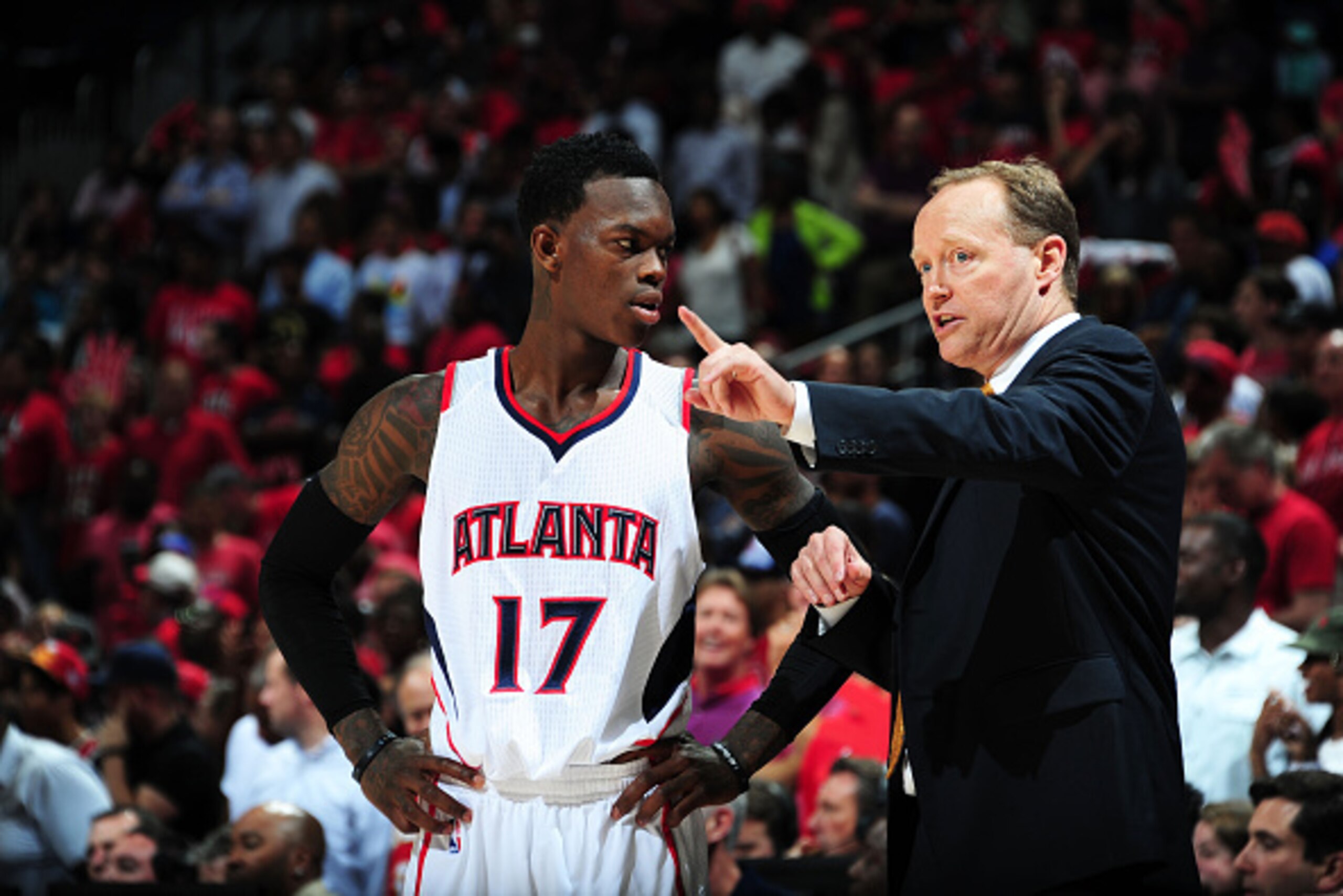
Though previous rotation members (Mike Scott in particular) didn't get off the pine, Dennis Schroder was constantly on the attack, penetrating into the teeth of the Washington defense time and time again en route to nine points, five rebounds, four assists and no turnovers.
Kent Bazemore, who has been ice-cold for a while now, made all three of his shots from the field, including some big triples when the Atlanta offense was in the midst of a drought. Pero Antic drilled two deep attempts as well, helping space out a big Wizards front line.
Now, the momentum from a 16-point victory and the improvement of the second unit are vitally important.
As Bleacher Report's Fred Katz observed at the end of a brilliant article highlighting Budenholzer's exploits on the Atlanta sidelines, "But with the Chicago Bulls still appearing inconsistent and with the Cavs missing Kevin Love, the Hawks have a chance to do something special, and they could do it all on the shoulders of one of the NBA's best locker room cultures."
But in order to get there, the Hawks first have to get by the Wizards, and future outings will not resemble Game 2.
Wall isn't going to be out of the lineup forever. The dynamic All-Star point guard will have five days of rest between the series opener and Game 3, which should allow him to get back onto the court following only the lone absence. When that happens, the Wizards are quite obviously a completely different team on both ends of the floor.
In fact, my FATS model (based on historical comparisons and explained in full here) shows that Washington played like a 28-win team when Wall wasn't on the floor during the regular season. But when the uber-athletic floor general was blazing up and down the hardwood, the Wizards morphed into a 51.8-win squad.
That's a huge difference. In fact, the 23.8-win swing was the fourth biggest among all players with a 2015 playoff appearance, trailing only Anthony Davis (24.1), LeBron James (25.1) and Chris Paul (28.8). With Wall running the show, the Wizards are a truly dangerous opponent, one that will beat any team justifying why things didn't go right instead of holding itself accountable.
In many ways, the NBA playoffs are all about winning in the face of moments that would inspire excuses from lesser units. Despite succumbing to some of them in their prolonged battle with the Nets, as well as during Game 1 of their second-round series, the Hawks have now prevented the Wizards from overcoming their own excuse (Wall's absence) and evened up the current clash in the process.
Going forward, we'll see how much they've learned.
Adam Fromal covers the NBA for Bleacher Report. Follow him on Twitter: @fromal09.
.jpg?w=2560 "Raiders Could Start Mendoza")

.jpg?w=2560 "Rodgers Iced Out on Plane 💎")
.jpg?w=2560 "🚨 Week 8 AP Top 25 Poll")
