

Playing Patience or Panic with Boston Red Sox Players Having Troubling Starts
The Boston Red Sox have a host of players with ugly batting averages and abhorrent ERAs, but not all slow starts are created equal. An annual April tradition across baseball is determining which scuffling players should garner actual concern and whose struggling starts are merely aberrations.
Let's dive into those Red Sox who have stumbled out of the gate and play a game of "Patience or Panic" to decide how worried fans should be about these less-than-ideal 2015 beginnings.
Patience: Mookie Betts
TOP NEWS

Realistic Offseason Trade Ideas 💡

Players Who Were Worse Than You Think in 2026 ⚾

Brewers Stun Padres in Game 2 😧
Though Mookie Betts' play has been awe-inspiring at times, the consistency hasn't been there in the early going. Through 15 games he's batting just .203 with .273 on-base percentage. While those are abysmal numbers, they're comprised of so few at-bats that it only takes one hot series to turn them around.
That begs the question for some: How are we sure this isn't an overhyped flop, aka Jackie Bradley Jr. 2.0? Betts' success as a hitter in one-third of a major league season just last year should reassure those who are fretting over the slow start. Bradley never showed any extended success with the lumber in 164 MLB contests from 2013 to 2014. Besides, the flashes of brilliance Betts has displayed this year more than pass the eye test.
The April 13 contest against the Washington Nationals particularly sticks out. That was the game where Betts played arguably the best two innings of anyone in the majors this season. First, he robbed Bryce Harper of a home run. Then in the bottom of the inning, he singled before stealing second and third base in one breathtaking swoop. He capped off his exhibit of greatness with a three-run homer into the Monster seats off All-Star Jordan Zimmermann.
He did all that before many pundits' pick to win the World Series could record five outs.
So don't focus too much on Betts' uninspiring batting average two-and-a-half weeks into a six-month regular season. His two home runs, four stolen bases, good plate discipline and fluid defensive play in center field also need to be taken into account.
The average and on-base percentage will rise as the season wears on and Betts starts squaring up to fastballs the way he did a year ago. According to Fangraphs, the 22-year-old has a negative PITCHf/x value against heaters in 2015 after making his living mashing them this past August and September. Expect that to normalize once Betts gets comfortable and hits his groove.
The quickest hands in the East won't get beaten by many fastballs this season.
Panic: Clay Buchholz
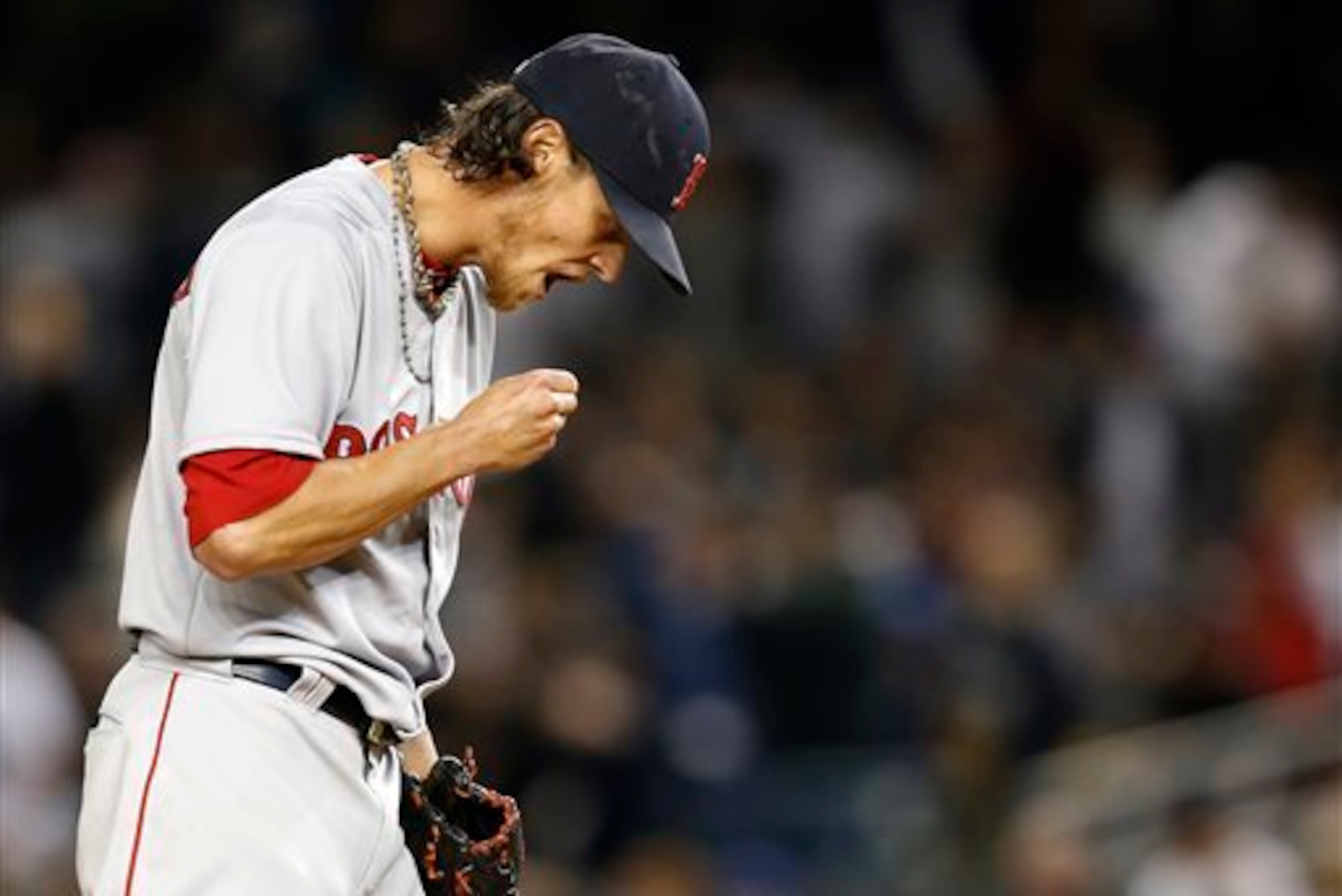
Opening Day starter Clay Buchholz (6.06 ERA entering Thursday) hasn't fared well in his two turns since he shut down the Philadelphia Phillies on April 6. The start after his sparkling debut was a disaster outing against the New York Yankees: 10 runs allowed (nine earned runs) in 3.1 innings while allowing 11 men to reach base (nine hits, two walks).
The following start was an anxiety-filled six frames where the right-hander constantly flirted with disaster. He ended up surrendering just two runs to the Baltimore Orioles thanks to his ability to escape a pair of bases-loaded jams—first with one out in the fourth inning and then again with nobody out in the fifth.
To some degree the resolve is encouraging. Then again, allowing 11 hits and 12 baserunners doesn't exactly instill confidence.
The key pitch to Buchholz's success has always been his fastball. In his two All-Star seasons of 2010 and 2013, good old No. 1 was a valuable weapon for the former first-round pick. Fangraphs' pitch values show Buchholz garnered 17.1 and 11.7 ratings with his fastball in those two career-best years. By contrast, the pitch drew negative scores in his other six underwhelming MLB seasons.
A notable change in Buchholz's approach in 2015 is that he's featuring his two-seam fastball much more than ever before. According to Fangraphs' PITCHf/x, he has thrown his two-seamer 114 times in three turns on the hill. That's more than twice as much as his second-most used pitch (curveball—54 times). For comparison's sake, last season Buchholz threw his two-seamer just 319 times in 28 starts—the least used offering in his five-pitch repertoire.
To this point Buchholz's tweak in attack strategy hasn't yielded favorable results. Opponents aren't just hammering his two-seamer (.400 average, according to Fangraphs' PITCHf/x), but they're feasting whenever he throws any fastball variation. Teams are collectively batting .429 off the two-time All-Star's traditional fastball and .500 versus his cutter.
Buchholz does sport an impressive strikeout rate of 10.5 per nine innings due to his elite changeup and plus-curveball. But the 6'3" veteran has to find better success with conventional primary pitches to set up his befuddling off-speed stuff.
His average fastball velocity is on par with 2013 when the pitch was effective, so it's not as though Buchholz's stuff has diminished to the point where it can't succeed against MLB hitters. Furthermore, a pitcher's max speeds tend to increase when the weather warms up. Those tidbits provide some semblance of hope, but Buchholz's roller-coaster career arc, past fastball struggles and lengthy injury history make it hard to bank on vast improvement in the coming months.

Patience: The Rest of the Starting Rotation
Buchholz is far from the only Red Sox starter to struggle at the onset of the season. Three other Boston rotation members tout ERAs over 5.70. The area everyone foresaw as an Achilles' heel hasn't crippled the AL-East leading Red Sox (9-6) yet, but it's proved that the preseason concerns were warranted. While the numbers aren't pretty, it's not time to sound the alarms just yet on the non-Buchholz starters in John Farrell's staff.
Justin Masterson (5.74 ERA) and Joe Kelly (4.08 ERA) have essentially had one bad inning apiece. Masterson allowed six earned runs in a fifth-inning implosion against the Nationals, and Kelly unraveled in the sixth against the Tampa Bay Rays when he surrendered four runs without recording an out. Aside from those hiccups, Masterson has allowed four runs in 15 innings, while Kelly has given up four runs in 17 innings.
Though Rick Porcello's 6.63 ERA suggests his Red Sox tenure has been horrid, he actually pitched well in his first two turns on the hill. His club debut was razor-sharp through five scoreless frames before Jeff Francoeur of all people belted a three-run shot in the sixth. In his next start against the Nationals, Porcello gave an overworked bullpen taxed by a brief Buchholz start and a separate 19-inning game a much-needed night off with eight solid innings.
The big ERA killer for Porcello came against the Baltimore Orioles. He surrendered eight earned runs in five innings while allowing 12 hits and three walks. Porcello was dealt some bad luck with a couple of seeing-eye singles and an infield hit, but he gave up two home runs and was fortunate the wind knocked down what appeared to be a no-doubter off Chris Davis' bat. Porcello was simply in the middle of the plate far too much that afternoon, but it hasn't been a season-long epidemic.
The problem for the soon-to-be highest-paid pitcher in franchise history is that he's been victimized by home runs in the early going. Porcello has allowed five dingers in his three starts of 2015. He has to curb that issue going forward in the bandboxes of the AL East.
You can slot Wade Miley (6.08 ERA) along with Porcello in the "two good starts, one terrible" camp. The Nationals battered him around for seven runs in 2.1 innings in his second outing of the year, but his first turn was a solid one in Yankees Stadium (two runs allowed in 5.1 innings). He bounced back well from his catastrophic start on April 15 by firing off 5.2 shutout innings in Tampa Bay. His pitches don't wow you, but he's a workmanlike lefty who relies on location and guile to get the job done.
Patience: David Ortiz and Mike Napoli
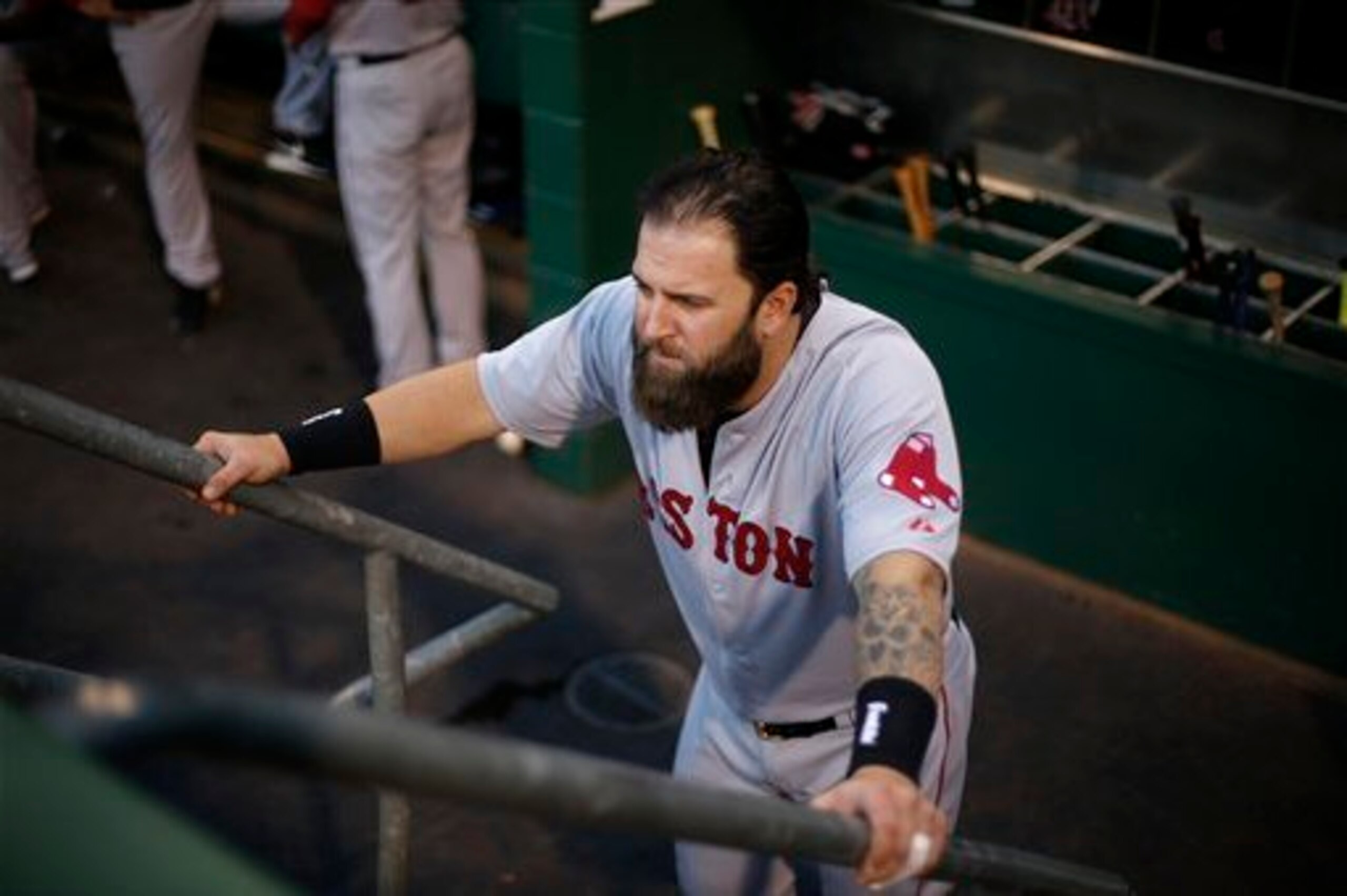
Boston's lumbering first basemen aren't exactly tearing it up thus far. David Ortiz is batting just .208, while Mike Napoli's average sits at a robust .170—his highest mark of the year after a 2-for-3 night Wednesday.
Fans are quicker to panic with Big Papi since he's now in his age-39 season, but this isn't like his 2009 slump where he had just one home run after May. Ortiz is walking at a good clip, as evidence by his .339 on-base percentage entering Thursday. The fact that Ortiz, a notoriously slow starter, has three home runs already should be considered a success.
Ortiz has had some big cuts on balls that he got under too much and just missed, which is an encouraging sign for a slugger who has an increasing trend of taking all-or-nothing swings. When he's locked in during the middle of the season he's more likely to do damage to some of these pitches left over the plate that he's yet to capitalize on. There is no evidence his eye or bat speed has abandoned him, so don't bury the future Hall of Famer for a subpar average in April.
As for Napoli, the lack of pop is more concerning than the .170 average. After a torrid spring where it seemed everything he swung at got hit on a line, Napoli has yet to homer in 47 regular-season at-bats. While that's particularly worrisome given his career-low .419 slugging percentage in 2014, he's had stretches like this throughout his career. In April 2010, he hit .167 with zero home runs and ended up slugging 26 bombs on the season. He batted .186 with no homers last May and .179 without a home run in June 2011.
So while a more promising start would have been welcomed, we aren't in uncharted territory. Just three weeks ago, his spring training display had some thinking the 2012 All-Star should slot fourth in the order.
Are we really ready to swing the polar opposite direction and declare him cooked? Napoli is healthy and with the sleep issues that plagued him last season being a thing of the past, he should be better-suited to endure the rigors of a 162-game season.
Panic: Shane Victorino
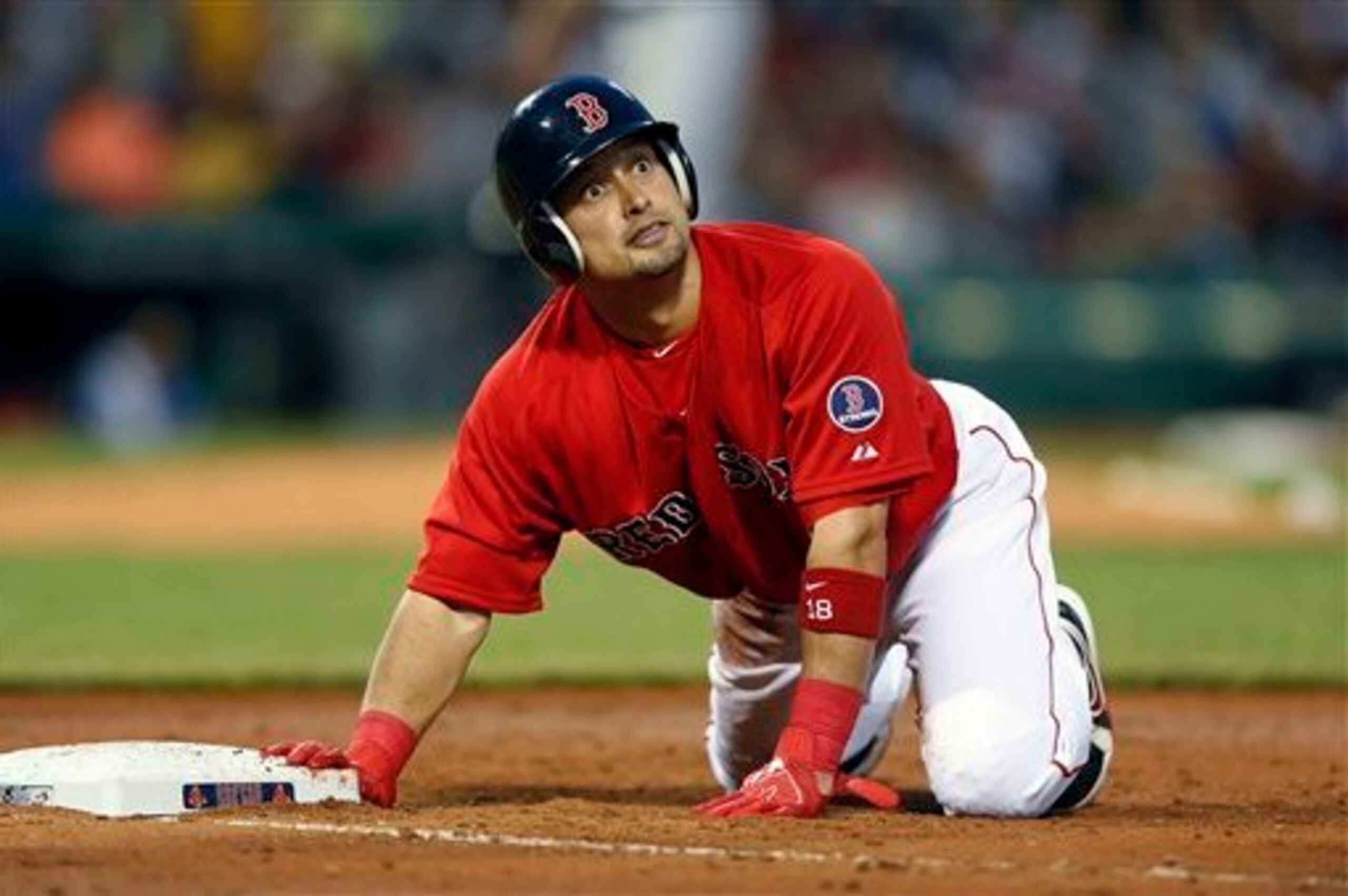
It's always sad to see a renowned player collapse in the latter stages of his career. At 34 years old it may seem early for Shane Victorino to be entering washed-up territory, but the expiration date tends to come sooner for a speed player.
The .143 batting average raises eyebrows, but the constant injuries are what land the Flyin' Hawaiian with the panic label. He's dealing with a hamstring injury, a red flag to fans who saw leg issues be one of many ailments to sideline the outfielder last season. This is after he gave up switch-hitting (again) in spring training due to continual pain when swinging from the left side. Victorino was also put on the shelf for a spell in March with what was called "general soreness."
Three injuries in five weeks doesn't bode well for the outfielder surviving the season.
There's been a lot more Daniel Nava in April than many expected, and he's come up with some big hits in key spots to reward Farrell for his faith.
There's also obviously $72 million outfielder Rusney Castillo marinating in Triple-A. The Cuban import is currently battling his own affliction as he's shelved with a shoulder injury, but MassLive.com reports he's begun a throwing program and is set to start hitting off a tee this week. Free-agent-to-be Victorino won't have a long leash, given the fierce competition for the final starting outfield spot and a presumed future cornerstone on the rise.
Note: Stats are courtesy of Baseball-Reference.com or FanGraphs unless otherwise noted. All prospect rankings courtesy of BaseballAmerica.com.

.jpg?w=2560 "Love's Body Already 'Tired'")
.jpg?w=2560 "NFL investigating 2 referees for separate viral exchanges")

.jpg?w=2560 "Ward Nearly Walks Out of Presser ▶️")
.jpg?w=2560 "OBJ Calls Out Giants 😳")

.jpg?w=2560 "Buzz: Tyreek Eyeing November Return")