


Kevin Love's postseason career is off to a 2-0 start after the Cleveland Cavaliers downed the Boston Celtics, 99-91, in Game 2 of the Eastern Conference quarterfinals Tuesday night, but his play is still leaving plenty to be desired.
In 30 minutes, Love scored 13 points on 3-of-8 shooting—including 1-of-5 from three and 6-of-7 from the free-throw line. The bulk of the scoring came from LeBron James (30 points) and Kyrie Irving (26 points) for the second straight contest, as the two combined to score Cleveland's final 28 points.

TOP NEWS

Brown with an all-time summary of relationship with Tatum

Heat, Giannis were down by 20+ in each of their 3 losses
Worst NBA Predictions 🫣
But Love's uninspiring totals weren't the product of passivity. Rather, they were indicative of systemic shortcomings that have forced him into an uncomfortable niche within head coach David Blatt's offense.
While James and Irving have rightfully assumed perches atop Cleveland's scoring hierarchy, Love has largely been relegated to the role of spot-up three-point shooter.
During the regular season, the three-time All-Star attempted a career-high 41.2 percent of his total shots from beyond the arc, with a career-low 21.6 percent coming from within three feet of the rim.
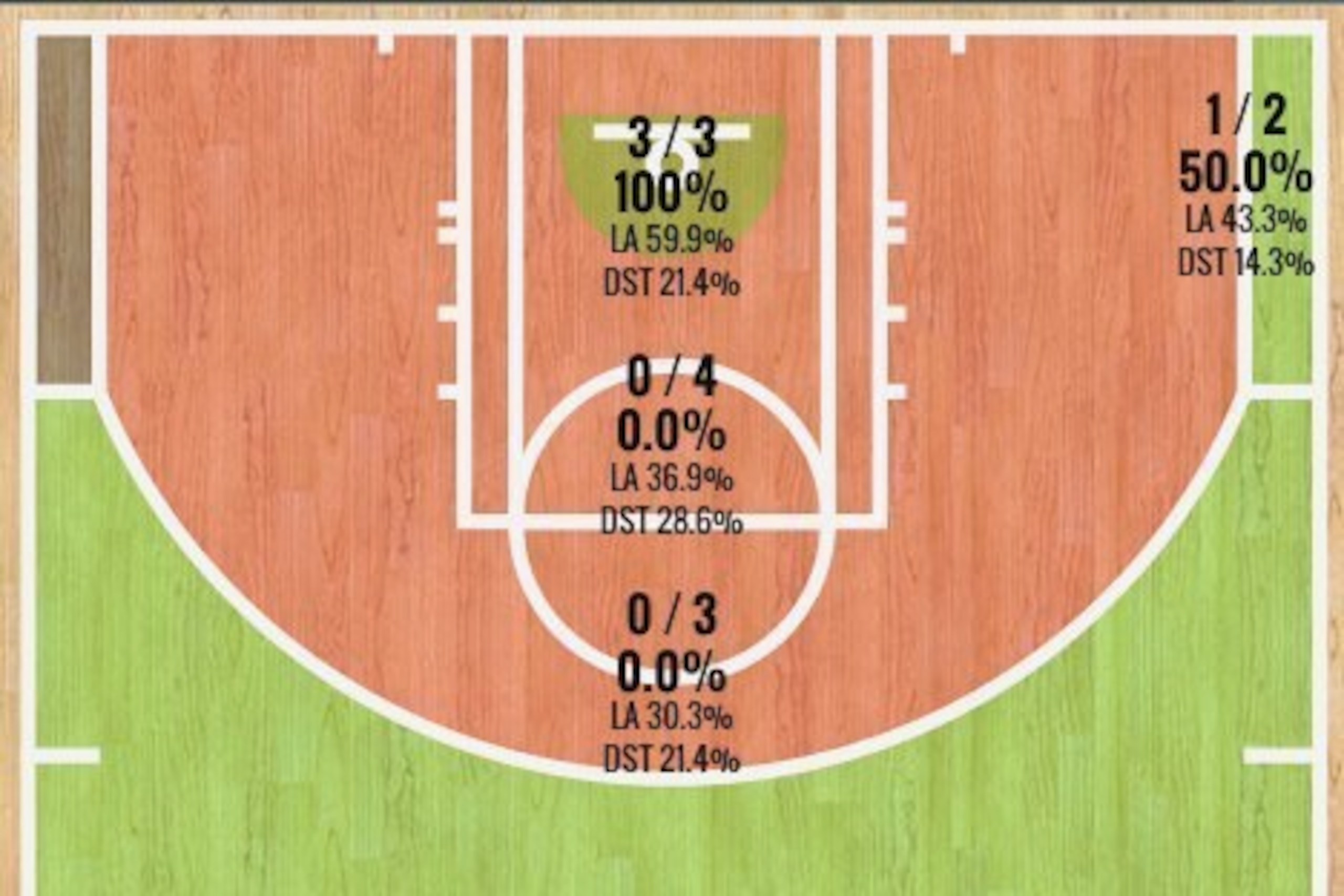
The Cavaliers tried to deviate from that trend in Game 1, as Love put up just four shots from distance (converting two) while attempting his other 10 shots inside the arc.
Subsequently, Love bullied his way to a team-high eight free-throw attempts. And despite shooting 5-of-14 from the field, he worked Boston's inexperienced front line with his low-post muscle and scored 19 points.
Following Game 1, James told Bleacher Report's Ethan Skolnick that he was encouraged by the tone Love set:
"Even with Kev's shot not falling early, I felt it was just the rhythm that he was in, the aggressiveness that he was in, would pay off later for us. And he turned it around in the second half. He was very aggressive, getting the ball where he wanted, getting the touches where he wanted. When Kev shoots eight free throws, that lets me know he's very aggressive.
"
It wasn't a strong line by Love's superstar standards, but the formula was spot-on. Cleveland outscored Boston by a team-best 15 points when Love was on the floor in Game 1.
"Make no mistake about it: Love is a valuable member of the team, and he has a unique skill set," Northeast Ohio Media Group's Chris Haynes wrote Sunday. "A couple of more games like this will jog everyone's memory to why he was brought to Cleveland in the first place."
Come Game 2, the script flipped. Five of Love's eight shots came from distance, with just one tickling the twine, as post-ups were few and far between.
The Cavaliers have to walk a fine line when it comes to getting Love touches in appropriate spots, but there's an undeniable need for low-post looks with regularity.

And yes, that strategy will come at a small price. Namely, the floor becomes more congested when Love battles for position on the blocks—which means James and Irving aren't in spots advantageous to drive-and-kicks or easy finishes in the paint, and the offense can grind to a halt.
But siphoning off an avenue to Love's success isn't going to help the Cavaliers, nor is it going to help Love's confidence during his first stint in the postseason. He can't be dependent upon ball reversals constantly finding him on the wings and in the corners—or hope that his teammates will always be able to make the extra pass.
Love's better than that, and James knows it.
"It's very important that Kevin stays in for our rhythm to feel like he's a part of what we're doing," he said after Sunday's win, according to The Plain Dealer's Terry Pluto. "We have to find a way to get Kev touches."
When in doubt, toss him a half-court alley-oop, as LeBron did in the third quarter of Game 2:
But where should Cleveland turn when its show-stopping spectacular isn't humming in transition?
That's where the Postmaster General comes into play.
This season, Love spent less than a quarter of his time posting up, despite the rousing success he experienced on those plays. According to Synergy Sports, Love scored in the 84th percentile on post-ups, which was better than Al Jefferson, LaMarcus Aldridge, Zach Randolph, Marc Gasol, Tim Duncan, DeMarcus Cousins, Anthony Davis and Dwight Howard.
Love scores on 50 percent of his post-ups with Cleveland, drawing shooting fouls on more than 15 percent of his opportunities. That's a number comparable to Memphis' Randolph, a low-post bully who obliterates opponents with brute strength.
Pace and space will be sacrificed when Love is isolated down low, but those opportunities are among the most efficient Cleveland can create against a Boston defense that's proved to be surprisingly stingy. In Game 2, Boston forced 18 turnovers while holding the Cavs to 44.7 percent shooting from the field and 24.1 percent shooting from three.
For a Cleveland team that ranked 21st in paint points during the regular season, per TeamRankings.com, a bit more balance couldn't hurt—particularly if it results in a more aggressive Love as postseason play ramps up.
And with the series shifting to Boston for Games 3 and 4, the pressure's on Blatt to redistribute Love's touches and change the complexion of his power forward's contributions.
All statistics are current as of April 21 and courtesy of Basketball-Reference.com and NBA.com unless noted otherwise.




.jpg?w=2560 "Mahomes Asked OT to Leave Meeting")
.jpg?w=2560 "Jonathan Taylor Landing Spots 📍")

.jpg?w=2560 "5 Teams Eyeing Jonathan Taylor")
