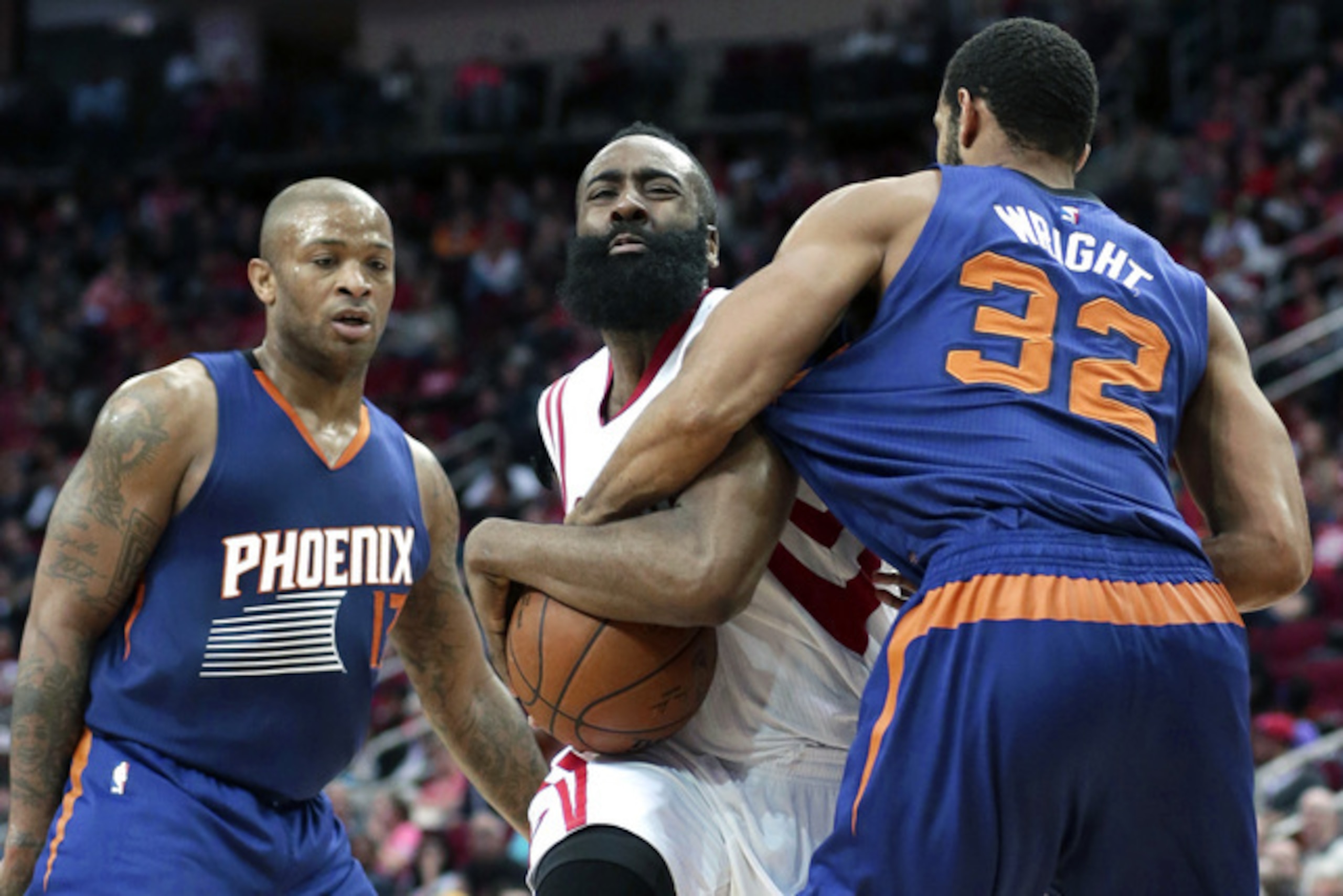

Are Heavy Minutes Finally Wearing Down James Harden?
The question seemed reasonable, even routine. Rockets guard James Harden had played more minutes than anyone in the NBA. He had carried at least as heavy of a load. Was he tired?
Harden gave the sort of look that Kobe Bryant shot to Jimmy Kimmel when Kimmel asked if the Lakers would have celebrated a losing-streak-busting win like a bunch of silly goofballs had Bryant been around.
Harden shook his head, barely said, “No,” then pointed to the road games in Portland and Salt Lake City, when he scored less than 20 points in consecutive games for just the second time this season. The topic was at least fair game.
TOP NEWS
Jokic says booing fans not welcome in Denver
Worst NBA Predictions 🫣

Brown with an all-time summary of relationship with Tatum
“I feel good,” Harden said. “I just had two terrible games. It’s all learning experiences. It’s a long season. You’re going to go through droughts like that where you have bad games. You just try not to make it three, four in a row.”
He didn’t. He followed the 18 and 15 points he scored in losses to the Portland Trail Blazers and Utah Jazz, respectively, with 34 in a win in Los Angeles, the most he has scored against the Clippers in his three seasons with the Rockets.
That might have been enough to end the topic of discussion, but given how vital Harden’s scoring is to the Rockets’ postseason chances, it seems illogical not to at least consider how much Harden has played.
Only Chicago Bulls forward Jimmy Butler (38.9) and Cleveland Cavaliers point guard Kyrie Irving (36.9) average more minutes per game than Harden’s 36.8. Cumulatively, Harden has played 11 more minutes than second-place John Wall, but has played two fewer games.
Harden has failed to reach 20 points in five of his past 10 games. He was short of 20 in 11 of his first 59 games this season.
At a time when coaches are searching for ways to give players the night off, Harden has played in every game, save for the night he served a suspension for kicking LeBron James in the groin.
Even Rockets coach Kevin McHale’s preference to give players days off between games rarely offers a respite, with Harden insistent on competing hard in practice and unwilling to stray from his routine of long shooting drills.
There are reasons to believe, however, that Harden’s recent games scoring well shy of his 27.2 points per game are a result of factors besides fatigue.
Harden is convinced that in his third season as the Rockets’ go-to scorer and facilitator, he has learned how to maintain his body to handle the workload.
“Definitely, definitely,” Harden said. “The first two years, I was just kind of going with the flow, figuring my way through it. Now, I have a feeling how to handle the long season and how to prepare my body and how to manage my body.”
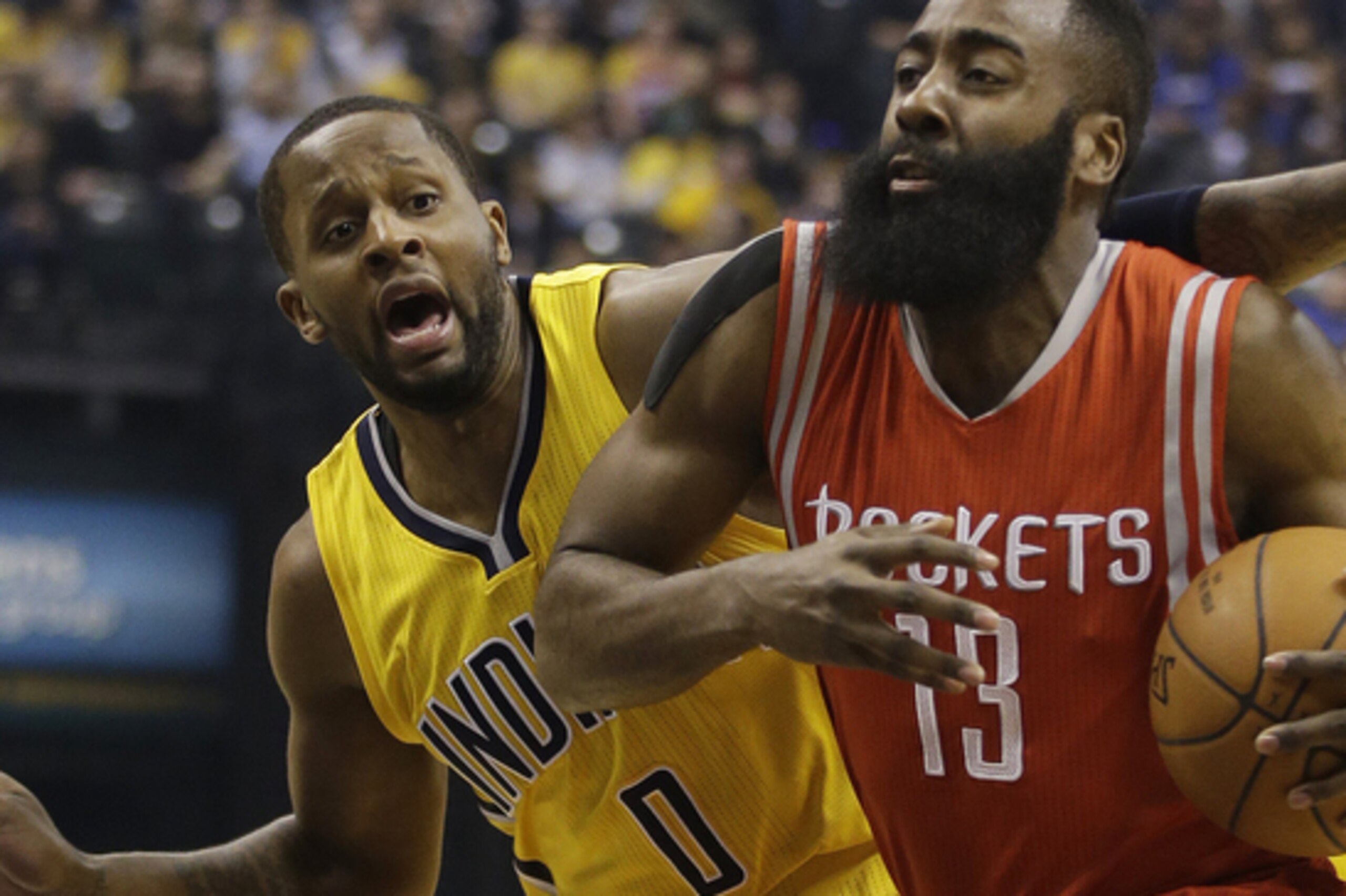
He also has had other games in which he appeared to be anything but worn down. In two of his past three games, Harden scored a career-high 50 points against the Denver Nuggets and 44 against the Indiana Pacers.
Even in the loss to the Phoenix Suns, when he had just 16 points and the Rockets defended as if playing pickup ball at a family reunion, he was energetic and aggressive. He looked to attack the basket and draw contact, as opposed to the games against the Jazz and Blazers when he often stayed on the perimeter, content to move the ball and see what developed.
Rather than an issue of energy, the low-scoring games usually are a result of how teams defend Harden. Though he has been the focus of defensive game plans all season, opponents have increasingly shaded a big man into the path to the basket behind Harden’s defender. Several teams chose to trap on high screens and provide defensive help inside.
McHale has wanted Harden to give up the ball earlier in the shot clock to encourage the kind of ball movement around him that prevents a defense from swarming when the ball swings back to The Beard.
That ball movement was vital to the success against the Nuggets and, to a lesser degree, against the Clippers. The Rockets’ tendency to launch the first open three-pointer they get, however, often leads to shots before the ball can find their best scorer.
Harden’s ability to score in a variety of ways still allows him to produce high-scoring performances, especially if he can penetrate and draw fouls against those defenses stacked to stop him.
But when Harden does not see those numbers, he insists it can be for a variety of reasons—none of which are fatigue.
Jonathan Feigen covers the Houston Rockets for Bleacher Report and the Houston Chronicle. You can follow him on Twitter: @Jonathan_Feigen.

.jpg?w=2560 "Mahomes Told Teammate to Leave Meeting")
.jpg?w=2560 "🚨 Week 8 AP Top 25 Poll")
.jpg?w=2560 "Baker Gets Glove From Rays 🧤")
.jpg?w=2560 "5 Teams Eyeing Jonathan Taylor")
.jpg?w=2560 "Steelers Roll Saints in Paris")
.jpg?w=2560 "NFL investigating Eagles")
