
Minnesota Vikings' Final Free-Agency Outlook and Predictions
With free agency looming and $23 million of cap space remaining, the Minnesota Vikings are well-positioned to take advantage of a rich market, even if it may be a little difficult to nail down the specifics.
The Vikings don't seem to have a uniform approach to free agency, having both courted premier free agents, like Mike Wallace in the 2013 offseason, and faced periods of relative quiet, like the 2012 offseason where John Carlson was the headlining player.
Still, given the loose framework for recent Vikings free-agency decisions and where the team is at now, we can make some predictions.
The Minnesota Vikings Will Sign a Starting Linebacker
1 of 5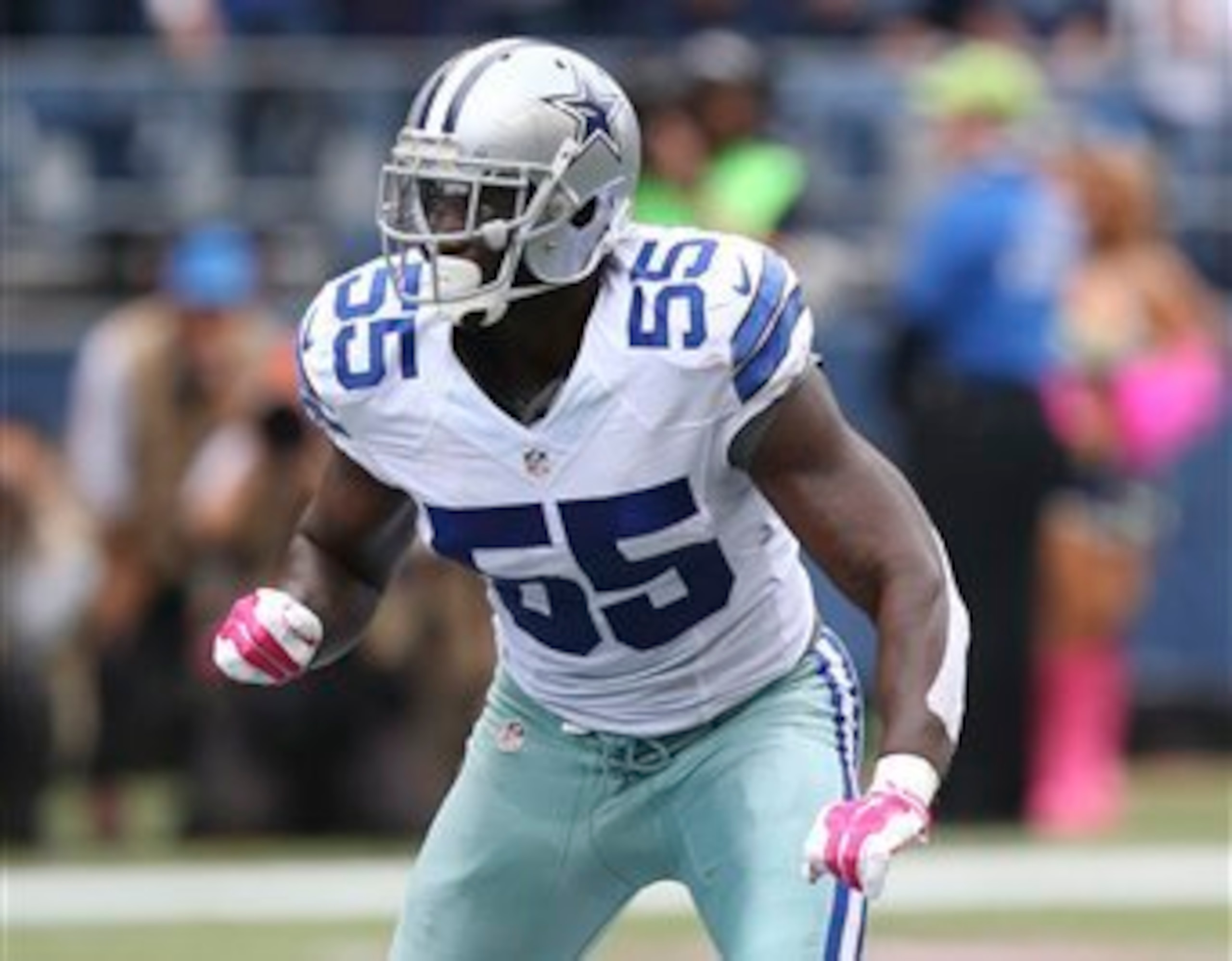
Though head coach Mike Zimmer indicated that he was none too impressed with the free-agency class at linebacker, a number of talented players could provide an instant boost to a defense struggling at that position, even though few meet the exacting athletic standards the Vikings have seemingly imposed in the past.
Darren Wolfson of local radio station ESPN1500 has speculated based on his conversations with folks at the combine that the Vikings would look into the linebacker and safety market despite those comments.
Wolfson specified "middle linebacker" in his tweet, and that makes sense given the athletic limitations of the market for linebackers—who often have to possess less lateral range and overall speed in a scheme to be effective.
To that end, the Vikings could sign a number of one-year "prove-it" deals if the market allows them to, or failing that, they can sign cheap contracts with minimal guarantees that make it easy to cut the player—effectively the same as a one-year deal from the perspective of the team.
Despite Rolando McClain's stellar year for Dallas, his overall playing history, multiple head injuries and recent violation of the NFL substance abuse policy should all depress his possible market. But gambling on young talent is something the Vikings are willing to do, and McClain, at 25, is exactly that.
Other than him, former Mike Zimmer linebacker Rey Maualuga should be available. After dropping weight from 260 to 250 pounds at the behest of then-linebacker coach and current Bengals defensive coordinator Paul Guenther, Maualuga improved his game—although, according to Pro Football Focus' player grades, that was from the worst inside linebacker in the NFL to third-worst. But Maualuga cut down on his missed tackles and increased his tackle share, putting together much better seasons in 2013 and 2014.
Though he is limited in what he can do, he knows the scheme well and has become a starting-quality middle linebacker. He could be the veteran presence the Vikings would want if it turns out they do have to part ways with Chad Greenway.
Other options are A.J. Hawk, recently cut by the Green Bay Packers, or Colin McCarthy, formerly of the Titans. Both started their careers in 4-3 schemes and seemingly did better there, although Hawk's career after Green Bay's switch to a 3-4 is nothing to be ashamed of. Hawk was a "Will" linebacker in the Packers' 4-3, but he has the kind of skills that translate to a 4-3 middle linebacker.
The most appealing option may end up being Brandon Spikes, who is the model of a two-down linebacker— absolutely dominant against the run and weak enough against the pass that he consistently comes off the field in passing situations. Just like there is value in a nose tackle who doesn't penetrate—like the Vikings have asked Linval Joseph to be—there is value in a specialist linebacker who can kill the opponents' run game.
Spikes is 27 and doesn't seem young enough to be a surefire target for the Vikings, but he isn't old enough to be completely out of the picture. His instincts are top-notch, and as a middle linebacker, he wouldn't have to cover the field with much range should the opposition choose to air the ball out.
Not many middle linebackers are long-term solutions, but the Vikings have enough holes on the roster that they cannot find all long-term solutions in one draft.
The combination of age, salary and potential might point to McClain as the likeliest target, but the Vikings are keen to avoid the off-field issues of the past, and McClain is one violation away from a four-game suspension. Instead, look for the Vikings to target Maualuga for a short-term deal if the Bengals don't keep him.
The Minnesota Vikings Will Target an Upper-Tier Safety
2 of 5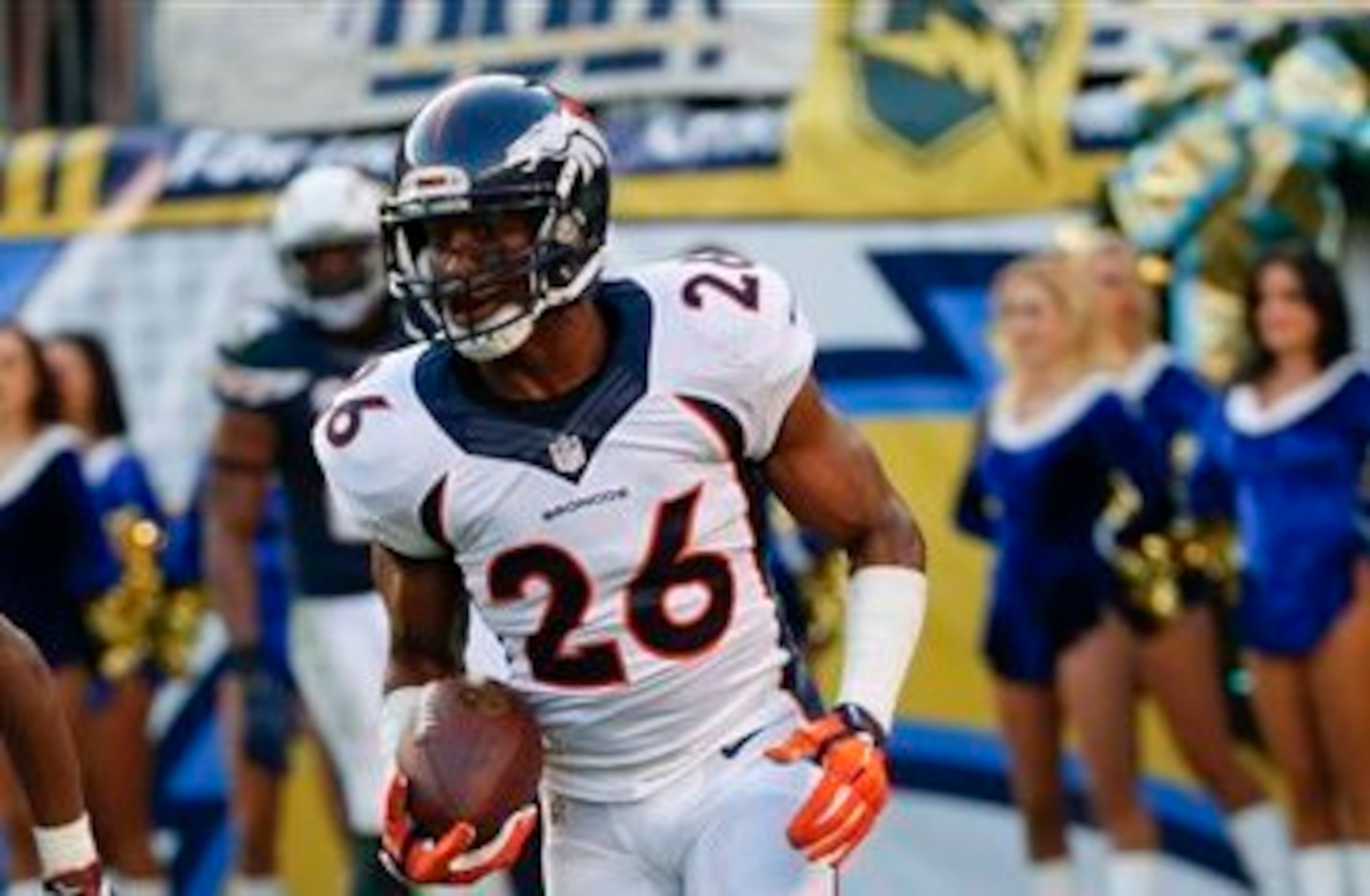
It seems unlikely that the Vikings will go after the top free safety on the market, Devin McCourty, if only because of the price he's expected to command. A stellar option who plays at an All-Pro level as a free safety, McCourty also has valuable and effective experience at cornerback and can play any position in the secondary, even the slot. His talent level alone should force teams to shell out big money, but the additional versatility he provides would mean an even greater salary.
Signing him would be a coup, but even though the Vikings are set to have quite a bit of money to play around with in free agency—especially after cutting or restructuring Chad Greenway—they will have to reserve some of that for extending their own players (like Harrison Smith, who is eligible for a fifth-year option or a long-term extension) and 2015 draft picks.
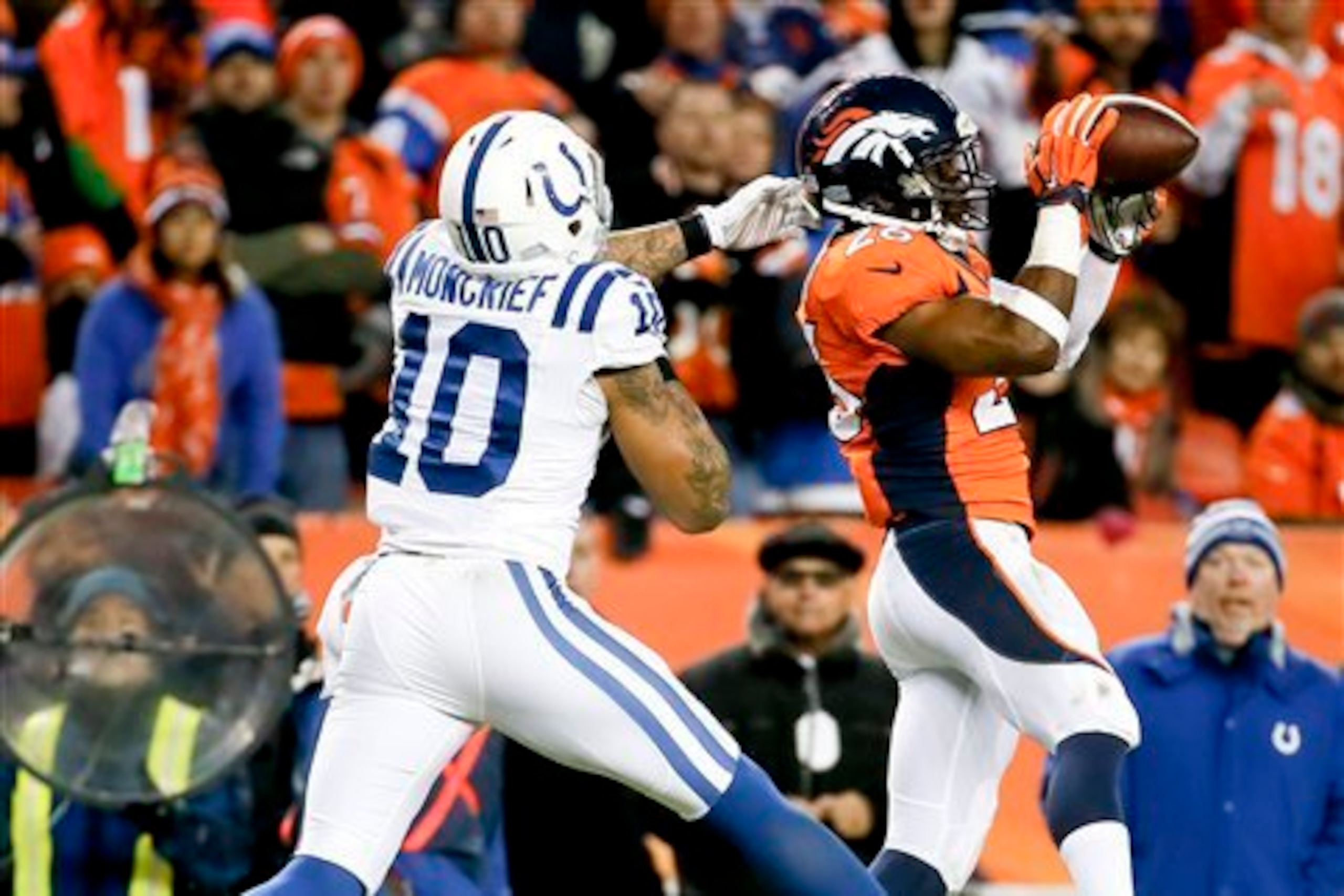
Instead, the most likely option seems to be 25-year-old Rahim Moore. He is young for a player who is coming out of his first contract and won't be 26 until next February. Though Moore's recovery from compartment syndrome and the subsequent surgery limited his effectiveness last year, expect the non-recurring injury to depress his market value without restricting his actual ability to play.
Before 2014, when forced to deal with surgery and injury recovery, Moore's cumulative Pro Football Focus grade from 2012 to 2013 was the 15th-best on a per-snap basis of all safeties with at least 1,000 snaps (there were 60 qualifying safeties) and eighth-best in coverage. He ranked seventh in coverage snaps per target despite the Broncos being passed on much more often than the typical team.
Even though those statistics are often context-dependent and markers of how well teammates played instead of Moore, his on-field play was excellent. He was ranked as the 18th-best safety by Matt Miller here at Bleacher Report going into the 2014 season.
If Moore is unattainable or isn't the target, recently released Tyvon Branch may be worth a look, but his injury history (he has played five games in the last two years) and age (he will turn 29 late in the 2015 season) may scare the Vikings off. Still, a short-term deal to resolve a need while the Vikings develop Antone Exum or draft a new safety isn't a bad plan, and Branch has talent.
Another upper-tier target who won't get top dollar is Stevie Brown, whose eight interceptions with the New York Giants in 2012 aren't easily forgotten, and his quality play since then hasn't received much attention. Again, if PFF grades are any guide, the 27-year-old former Giant had an equivalent per-snap performance between 2012 and 2014 to Rahim Moore. He could also be on track for a bounce back in ability, as he missed all of 2013 due to a preseason ACL tear and didn't look like himself in 2014, though he still played above the level of Robert Blanton or Andrew Sendejo.
If in the unlikely event 25-year-old restricted free agents Tashaun Gipson, Will Hill and Jaiquawn Jarrett aren't tendered by their respective organizations, expect the Vikings to drive hard at them, as they all could be considered in the upper tier of safety talent in the NFL, after which there would be a severe drop-off.
The Vikings have depth at the safety position with Blanton, Sendejo, Antone Exum and cornerback convert Shaun Prater, but they will want to go after a young starter in free agency in a weak year at the position in the draft.
The Minnesota Vikings Will Seek Offensive Line Depth
3 of 5
In cutting starting guard Charlie Johnson before the beginning of free agency, the Vikings may have signaled that they have a plan in place for what they'll do at the position in the long run. Either they've already made an under-the-deal table with a potential free agent or are happy with whom they have at the position.
Optimistically, it means that the Vikings are happy with the development of David Yankey despite his complete absence this last season when injury upon injury plagued the offensive line—to the point where only two of the five starters at the beginning of the year played in all 16 games and eight different players at some point started.
It might also mean that the Vikings are looking forward to Carter Bykowski, Austin Wentworth or Josh Samuda taking over, but that seems less likely.
The point is that with the abysmal state of guard depth in the league, the Vikings are unlikely to cut a starting player at the position who only took $2.5 million of the salary cap and is probably better than Vikings fans would give him credit for, even if he was in the bottom tier of starters overall.
Beyond that, the Vikings, who must bear Matt Kalil's contract anyway, have openly committed to giving Kalil another year given his late-season improvement and promising rookie showing.
Unless the Vikings announce at the open of free agency a megadeal (for a guard) with a player like Mike Iupati, Ronald Leary or Orlando Franklin (or even a more reasonable deal for Clint Boling or Justin Blalock) at 4:00 p.m. EST on March 10, there's a good chance that their plan for the starting guard position is already on the roster. There's no reason to gamble on landing a player through negotiation or the draft otherwise.
In that case, look for signings to round out the depth on the roster, because it became clear that the Vikings sorely needed it last year. Versatile swingman Jah Reid would be an interesting option and can play tackle or guard. At 26, he may even develop into a starting-quality player under Jeff Davidson, the offensive line coach.
Another young option the Vikings could sign with an eye toward development is James Carpenter, and though he didn't play well in Seattle, he's an athletic option who may just need the right line coach to get things going.
Former Cincinnati Bengal Mike Pollak also has that kind of versatility the Vikings will need on their depth chart, and though he would arrive slightly older, he's worth a look and better than most backups in the NFL.
The list of veteran options is long, and players like Fernando Velasco, Jeff Linkenbach and Paul McQuistan could end up playing behind Yankey in 2015.
.jpg?w=2560 "Cardinals Giants Football")

.jpg?w=2560 "Jets Dolphins Football")
The Minnesota Vikings Will Sign a Quality Defensive Tackle
4 of 5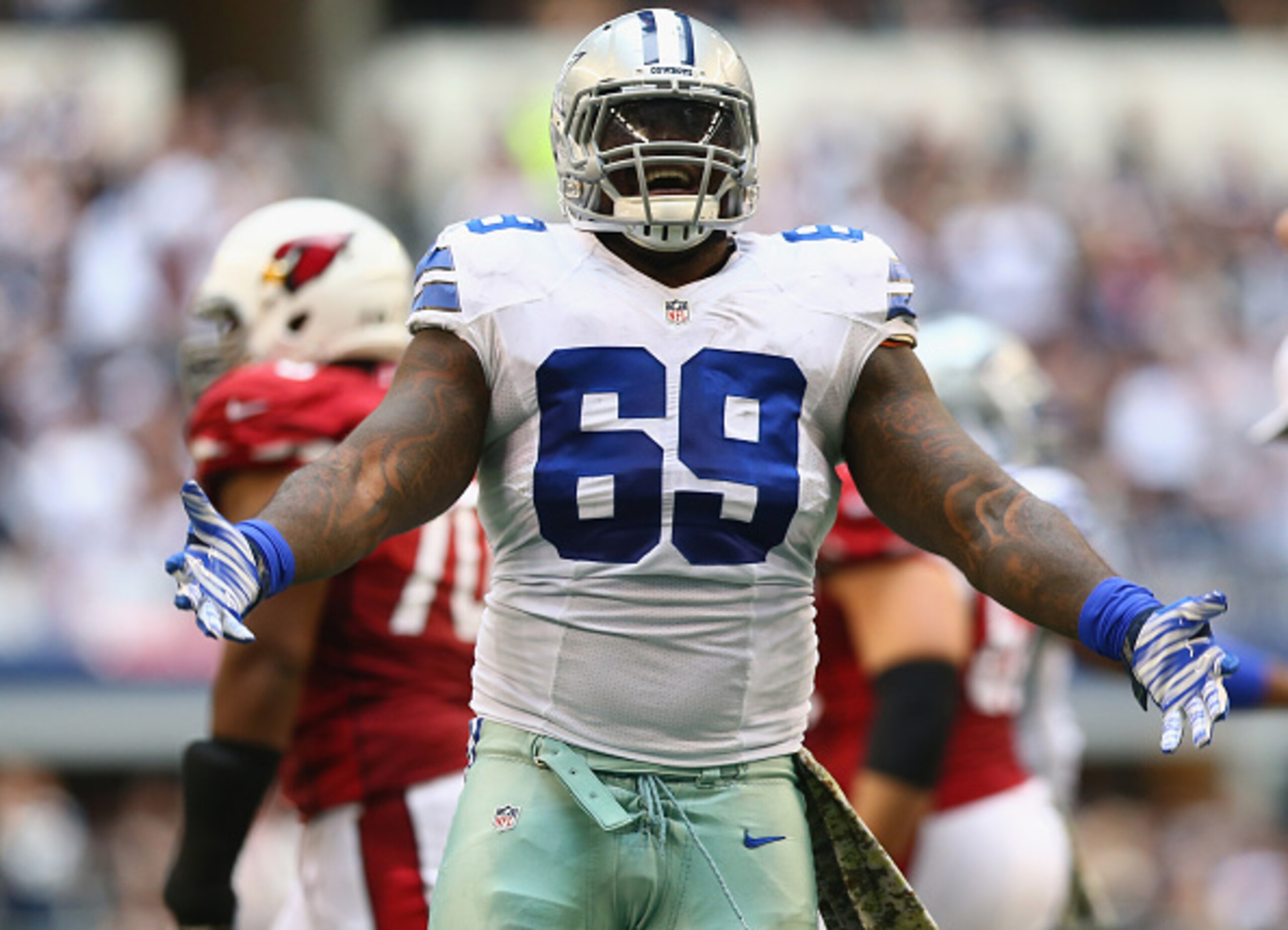
More than just looking for a backup, Mike Zimmer has often wanted to pursue a high-snap quality defensive tackle to put into the rotation, regardless of the amount of talent he already has on the roster. Though the Vikings have a good defensive line, and in particular a pair of defensive tackles on the rise, the amount of line rotation preferred by Zimmer necessitates more quality than a typical depth chart.
They went after Henry Melton in free agency last year, a star defensive tackle before his injury. He is available again and had a great year for the Cowboys, recording six sacks in only 433 snaps. The Cowboys declined their option on his contract, perhaps in part due to concerns that he was playing more for the incentives in the contract at the expense of sound schematic play, but he still would be a talented player to add to the rotation.
Though the Vikings won't be going after a player of Ndamukong Suh's caliber, options like Nick Fairley and Jared Odrick exist as outside shots (perhaps on a plan to play 700 of the 2,000 or so snaps given at the DT position every year), or the Vikings could grab extraordinary value in a player like Karl Klug—who hits free agency after underperforming after a scheme change but had excellent play in a 4-3, one-gap system.
If Seattle doesn't tender Greg Scruggs, he could be a developmental option, or Da'Quan Bowers could interest the Vikings. Injury and defensive confusion stalled his career in Tampa Bay, but Zimmer and his defense may be the cure to that issue.
Veteran options that aren't in the tier of Fairley or Odrick but are still starting-quality include Kendall Langford, Darnell Dockett, Chris Canty (a former Zimmer defensive tackle), Pat Sims and the Vikings' own Tom Johnson—who may be a preferred option, given that signing in-house free agents is not only cheaper but makes for easy evaluation. The Vikings know that he is good in their scheme, because he performed at a high level for them last year.
The Minnesota Vikings Will Otherwise Reserve Cap Space for Future Rollover
5 of 5
The Vikings have been quiet in free agency in recent years, even after a high-profile chase for Mike Wallace a few years ago. Though they've been more active than their neighbors across the St. Croix River, they still haven't made enormous splashes in free agency.
The biggest signing since Greg Jennings (and Matt Cassel) has been Linval Joseph. Though that was a big signing in terms of team development and talent acquisition, it still wasn't a star-level signing, with just over $31 million spread out over a five-year contract.
Though the Jennings deal seems like a big mistake in retrospect, it was in part driven by a weak receiver free-agency class that outside of Wallace and Jennings only featured Wes Welker. Without those three, the Vikings would have been picking between Danny Amendola, Brandon Gibson, Donnie Avery and Donald Jones—the next four largest contracts at the position.
With a strong draft class and a strong free-agency class at the position—and the other positions of need not already mentioned—the Vikings can grab more talent for less money by waiting out the market or taking players in the draft.
At defensive end, the Vikings likely expect Robison to rebound but will also give rookie Scott Crichton every chance to succeed while grabbing another pass-rusher in a strong class for it in the draft. The Vikings have grabbed five in the last five years, and the Bengals have done it every year but one with Zimmer—investing more draft capital than the Vikings, with Day 2 picks in every one of those years.
Though the cornerbacks in free agency are strong—with underrated Kareem Jackson an excellent shot to replace Captain Munnerlyn in the slot—the Vikings may be thinking the same thing of Munnerlyn they did Kalil: give him another year. His issues came not from talent or technique but what looked like scheme confusion, an issue that can be resolved with another year in the system. As a good slot cornerback for the Carolina Panthers, Munnerlyn has the ability to turn things around.
On the outside, Josh Robinson was actually quite good and, absent one game against Chicago, had a strong showing all season—even in the other game against Chicago.
The other linebacker spot requires more athleticism than the market has to offer, and the Vikings have a model they like for athleticism there that everyone but Sean Weatherspoon (and the previously mentioned A.J. Hawk), just cut by the Atlanta Falcons, seems to fall outside of. Given that Weatherspoon is expected to re-sign with the Falcons, that option may be off the table.
With Christian Ponder leaving (and uncertainty with Matt Cassel), the Vikings need another backup quarterback but already mentioned that they want to draft a developmental one in the same interview that Mike Zimmer expressed some unease over the free-agency linebacker options. The free-agency market for a quarterback is barren, and most veteran backups worth signing are looking to places where they can potentially start, like Buffalo.
The Vikings have long preserved cap space for rollover to give themselves wiggle room and also work out extensions for young, high-performing players on their own schedule. They'll do it again this year, despite the needs at multiple positions.
.jpg?w=2560 "Titans Ravens Football")

.jpg?w=2560 "NFL investigating 2 referees for separate viral exchanges")
