

Why Washington Redskins Must Take Advantage of Marcus Mariota Trade Market
Ever had an idea and wish you said it sooner? Or have you ever had an idea and it seemed like everyone else had the same thought at once?
If you've been thinking the Washington Redskins should trade the fifth overall selection in the 2015 NFL draft and earn some extra picks, then you can answer "yes" to both of those questions.
It seemed to happen all at once. What started as a possibility began to make more sense. Then as soon as one person said it was the right way, everyone seemed to agree.

.jpg?w=2560 "Rams Eagles Football")
.jpg?w=2560 "Falcons Saints Football")
ESPN analyst Todd McShay said it; so did MMQB writer Peter King. Even former Redskins return ace and current CSN Washington pundit Brian Mitchell gave a trade the thumbs-up. All agreed Washington should listen to calls and seriously consider offers for the fifth pick on draft day.
Well, now's the time to substitute "should" for "must."
New Redskins general manager Scot McCloughan simply must trade out of the fifth overall pick and acquire more ammunition to rebuild this talent-short roster. Fortunately, that won't be too difficult.
Not when up to three teams will be tripping over each other for the right to select Oregon quarterback Marcus Mariota. He wowed the audience at the 2015 NFL Scouting Combine, posting top marks in every major event, per his NFL.com draft profile page.

ESPN Redskins reporter John Keim correctly pointed out how Mariota's showing in Indianapolis will have tempted trade suitors. So did King, who detailed the likely candidates:
"I think teams that pick after six in the first round but like Mariota could finally give Washington a lucky personnel break. Washington, of course, traded half the western world to move up four spots in 2011 to get Robert Griffin III, and its roster-restocking efforts have been crippled by that deal. But now Washington picks five, and if Mariota generates the kind of interest he should, maybe St. Louis (picking 10th), Cleveland (12th) or even Chip Kelly’s Eagles (20th) would move up for him. God knows Kelly would want the quarterback he recruited to Oregon. If Washington could recoup an extra first-round pick, or a high two at least, new GM Scot McCloughan would be smart to consider moving down five spots or so.
"
Keim poured a little cold water on these scenarios by arguing teams outside the first 10 picks might be loath to part with the bevy of choices it will take to move up to No. 5, at least not for a read-option quarterback.
As Keim noted, Washington fans know how tricky things can get when you try and wedge an option signal-caller into the pocket. But the flip side of that coin is that there's only two first-round-quality quarterbacks in this draft class, and Mariota is one of them.
Jameis Winston is the consensus top pick. With the Tampa Bay Buccaneers taken care of, pundits believe the New York Jets will be the next team to snag a quarterback in the opening round, with the sixth overall pick.
NFL.com Media analyst Charles Davis sends Mariota to the Jets in his latest mock draft. So does NFL.com draft profiler Lance Zierlein.
Meanwhile, B/R draft analyst Matt Miller also sends Mariota to the AFC East. So does CBS Sports pundit Dane Brugler.

You get the idea: There aren't many draft commentators who believe the Jets will pass on Mariota. More pertinently, any team drafting later than sixth that wants Mariota will have to move past them to get him.
That's the trade market for Washington. Played right, it's a quick route to getting a leg up in the rebuilding process.
The justification for doing that is simple: It hinges on McCloughan. Specifically, it's dependent on his reputation as a masterful judge of talent.
Seattle Seahawks general manager John Schneider and Green Bay Packers GM Ted Thompson, who both worked with McCloughan in the past, praised his keen eye for judging potential, per Liz Clarke of The Washington Post.
Just like a talented running back needs more carries to let his ability dominate, a capable team-builder should be given as many picks as he can use. That's certainly true when McCloughan is being tasked with bolstering a group that's won seven games in two years and has endured five losing seasons out of six.

An inept run like that is usually an obvious indicator of a roster not underpinned by enough quality players at the starter and backup levels.
Entering the last two seasons, it's been easy to fall into the trap of thinking this team has merely misused its talent. After all, a 1,000-yard running back has been on the roster, along with 1,000-yard wide receivers and 10-sack pass-rushers.
But each time you take a closer look at the state of things, the whole picture just looks a little bleaker.
If it isn't the decaying, lightweight offensive line with mediocre depth making you worry, glancing at a raw and paper-thin secondary is cause for real concern. But even positions that seem settled are actually only strong on the surface.
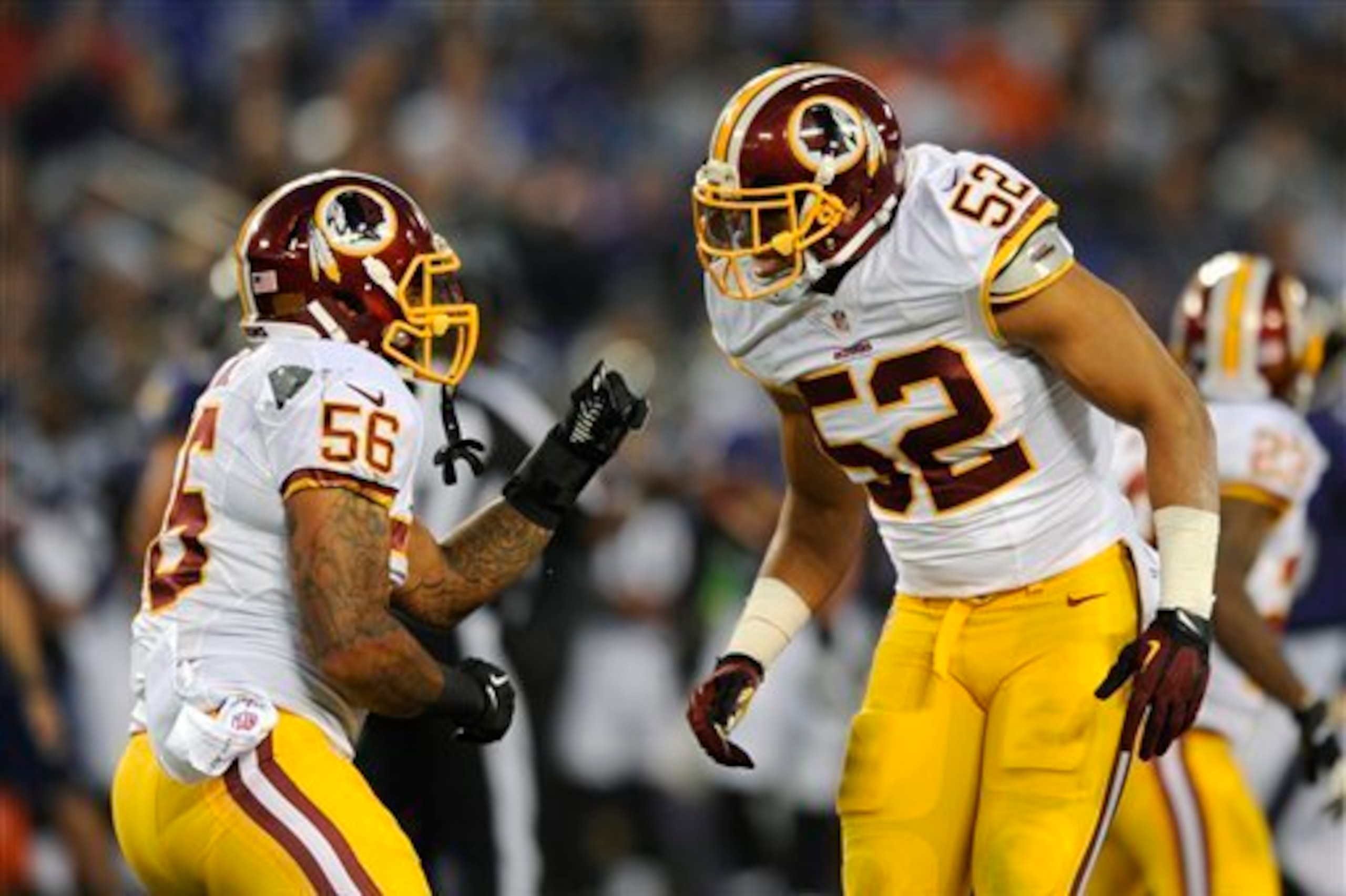
Take inside linebacker as a prime example. On the face if it, this franchise boasts two quality young starters with plenty of upside in Keenan Robinson and Perry Riley Jr.
But Robinson is still brittle, while Riley's form hit the skids last season after he signed a new multiyear deal.
It's a similar story at tight end. Jordan Reed should be one of the best young players at his position in the NFL.
Perhaps he would be if he could stay on the field or put multiple productive games together. The Redskins may not even be able to rely on Niles Paul instead. One of the team's breakout players of 2014 will enter free agency.
The roster McCloughan's inherited is like a maze of caves. Once you find your way out of one hole, you simply tumble down another.
There's certainly too much to fix in one draft.
That's why the Mariota trade market will be McCloughan's best friend this year. He can play that market to earn an extra chance to find a blue-chip, first-year starter, plus grab extra picks late on to improve depth.
Some of the possible scenarios are more than just appealing—they are positively too good to refuse.
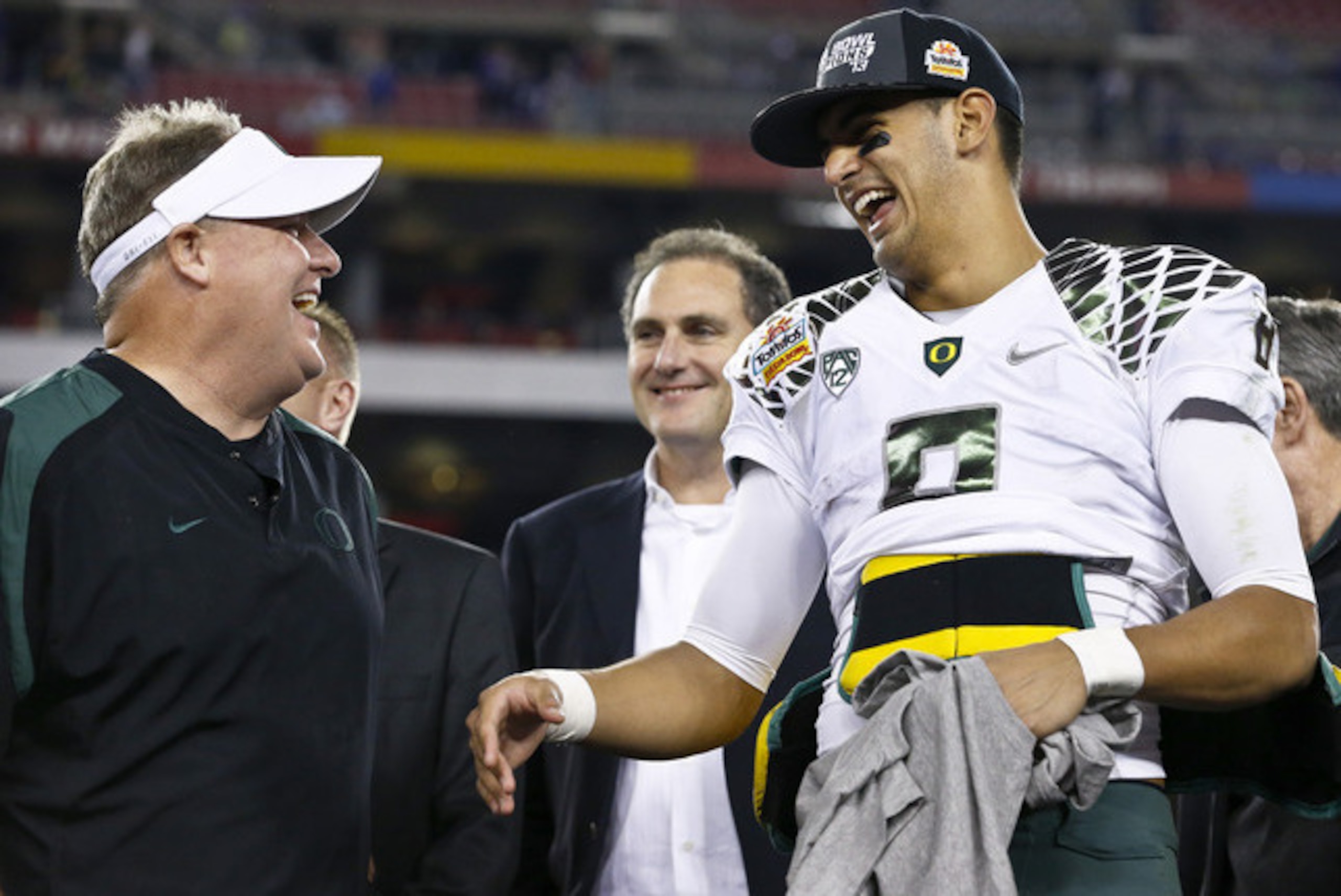
In his post-combine mock draft, King offered one of the most tantalizing. It involved dealing the pick to NFC East rivals the Philadelphia Eagles.
They have the obvious connection to Mariota, since head coach Chip Kelly recruited him at Oregon. Here's how King laid out the deal: "Washington gets Philadelphia’s first- and second-round picks this year, and first- and fourth-round picks in 2016."
Sign me up now.
Picking 20th would let the Redskins justify using a first-round pick on either strong safety Landon Collins or offensive lineman Brandon Scherff. Both fit one of the two biggest needs on the roster and represent the safest, smartest picks for Washington.
The problem is neither can easily be justified as a top-five pick. Not many teams grab a safety at that stage, particularly not when a safety's range and deep-coverage skills are questioned as much as Collins.
Nor do many pick a guard so early in the opening round, which is where Scherff projects best, per NFL Media analyst Mike Mayock (h/t NFL.com College Football 24/7 writer Mike Huguenin).
But taking either at No. 20 is a decision most fans and pundits could comfortably live with.
King's trade is also one that would soften the blow of the debacle that sent three first-rounders and a second-rounder to the St. Louis Rams in 2012 to draft Robert Griffin III.
If we accept that McCloughan won't be able to steady this perpetually sinking ship in one year, arming him with another first-rounder in 2016 makes perfect sense.
But what about increasing McCloughan's chances of striking it rich in 2015's draft? That will depend on tempting the Cleveland Browns into believing they have to have Mariota now.
The need is certainly there. Johnny Manziel entered rehab after a disastrous rookie year. Meanwhile, veteran Brian Hoyer, who lost his job in 2014, is a free agent.
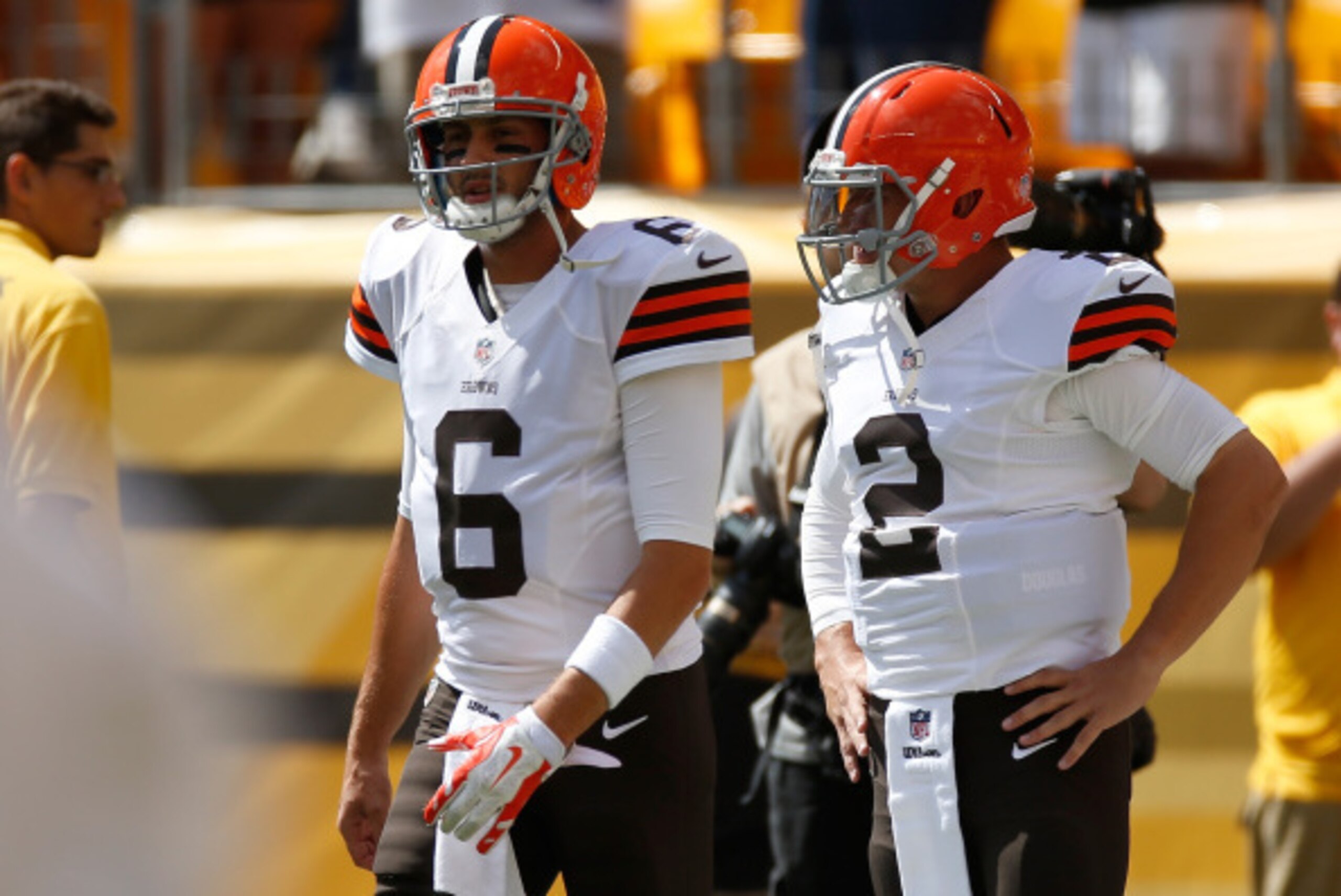
Mariota even worked with new Browns quarterbacks coach Kevin O'Connell earlier this offseason, according to Mary Kay Cabot of the Cleveland Plain Dealer.
The Browns make the perfect trade partners because they hold two first-rounders this year, the 12th and 19th picks. The idea becomes even more attractive when looking at previous deals in similar situations.
Keim described how the Jets gave the Chicago Bears the 13th and 22nd picks along with a fourth-rounder to move up to No. 4 in 2003. That same draft saw the New Orleans Saints give the Arizona Cardinals the 17th and 18th overall picks in Round 1, plus a second-rounder, to move up to six.
Meanwhile, the Atlanta Falcons gave the Browns the 27th pick as well as second- and fourth-round picks the same year and another first- and fourth-rounder the next year to move up to No. 5 in 2012.
Focusing on the first two trades, the Redskins won't have a better moment to parlay one first-round pick into two. Not when they have so many needs and the draft is deep at several of those positions.
For instance, taking Scherff at No. 12 and Collins at No. 19 would represent a brilliant day's work for McCloughan. But even if he looked past Scherff at the earlier pick, he could instead opt for one of the many top-quality tackles with first-round grades.

Players such as T.J. Clemmings, La'el Collins and Andrus Peat would now firmly be on the radar, either at No. 12 or No. 19. Perhaps McCloughan would use the other pick on a natural pass-rusher, one of the most loaded positions in this class.
Maybe Dante Fowler Jr., Randy Gregory and Shane Ray won't make it past the first 10 picks. But what about Vic Beasley? His combine was sensational, but concerns about his size are still likely to hinder his stock.
Of course, this is assuming Washington will even target an edge-rusher. Keim recently tweeted the team has started talking to Brian Orakpo, a talented but brittle pass-rusher the Redskins want to keep in town:
If Orakpo returns to join Ryan Kerrigan, Trent Murphy and Jackson Jeffcoat, maybe bolstering the pass rush won't be so pressing after all.
It could be a similar story along the defensive line. McCloughan has already added to the team's options up front. He moved very quickly to secure a player he helped draft in 2008, according to NFL Media Insider Ian Rapoport:
That's an indication of how free agency will naturally impact draft priorities, both for Washington and any potential trade partners.
But the options afforded by a trade are just too enticing to ignore. Moving back would let McCloughan draft players this team needs now without having to reach for them.
It would also give him more chances to significantly improve the roster in his first year. He could even extend those chances to Year 2 by adding more picks for 2016.
All of those options are real and have been put on the table by both Mariota's rise and the number of teams vulnerable at football's most important position.
Of course, any trade is only going to be as good as the person using those extra picks. But if McCloughan is as skilled as advertised, imagine what he'll be able to do with more.
The idea of sustained success may not stay an alien concept in Washington for much longer.
.jpg?w=2560 "Texans-Mixon Released Football")
.jpg?w=2560 "Commanders Eagles Football")

.jpg?w=2560 "Grading WWE Raw 🔠")


