Why a Switch to Power Running Attack Can Work for Washington Redskins
The Washington Redskins became masters of the outside zone running game when Mike Shanahan installed the scheme in 2010. But a move toward a more power-based ground attack can work wonders for 2014's 19th-ranked rush offense.
There is growing evidence the team is ready to ditch its zone-style principles in the trenches. Head coach Jay Gruden and general manager Scot McCloughan are known admirers of power techniques.
So is Bill Callahan, the offensive line guru the Redskins plucked from hated NFC East rival the Dallas Cowboys, per ESPN reporter Ed Werder:
.jpg?w=2560 "Seahawks Chiefs Football")


A switch in blocking techniques will work in D.C. for a quartet of reasons. First, it would show evidence of a coherent strategy from the front office to the sideline and onto the field.
The idea of the team's decision-makers all pulling in the same direction is rare in Washington. But that will be a reality if this team starts running with some power.
CSN Washington reporter Rich Tandler has already noted how Gruden has made no secret of his preference for power-based blocking: "I like the power plays. I like the gap blocking plays."
Tandler also made it clear that McCloughan covets size in the trenches and a wear-down ground game: "Enter new general manager Scot McCloughan. He likes to say, 'It's a big man's game.' And when it comes to the running game, big men means power blocking."
What Gruden and McCloughan want for 2015's running game appears to have been a prime motivation in hiring Callahan. ESPN Redskins reporter John Keim cited an unnamed NFL executive who emphasized Callahan's general preference for power blocking: "He’s heavier on the power and gap scheme. He excels at power, but he knows zone stuff, too."

Keim highlighted his belief that Callahan's "philosophy" meshes with what Gruden wants for his offense.
That's the key point here. The general manager, his coach and his staff all working with a clear idea in mind. It's the kind of symmetry of purpose that winning organizations share.
It also means you can count on a personnel overhaul along the offensive front. That's great news for frustrated fans who have suffered through five seasons of diabolical line play.
The nadir moment came in 2014. Gruden's first O-line surrendered 58 sacks and was generally inconsistent blocking for the run.
But a shift in scheme will naturally facilitate long overdue changes in personnel. After all, the current line was constructed with zone-style, stretch blocking in mind.
Shanahan stockpiled light and mobile trench warriors. But while the likes of center Kory Lichtensteiger and right guard Chris Chester can quickly get to the second level of a defense, they can't handle linemen one-on-one and drive them off the ball.
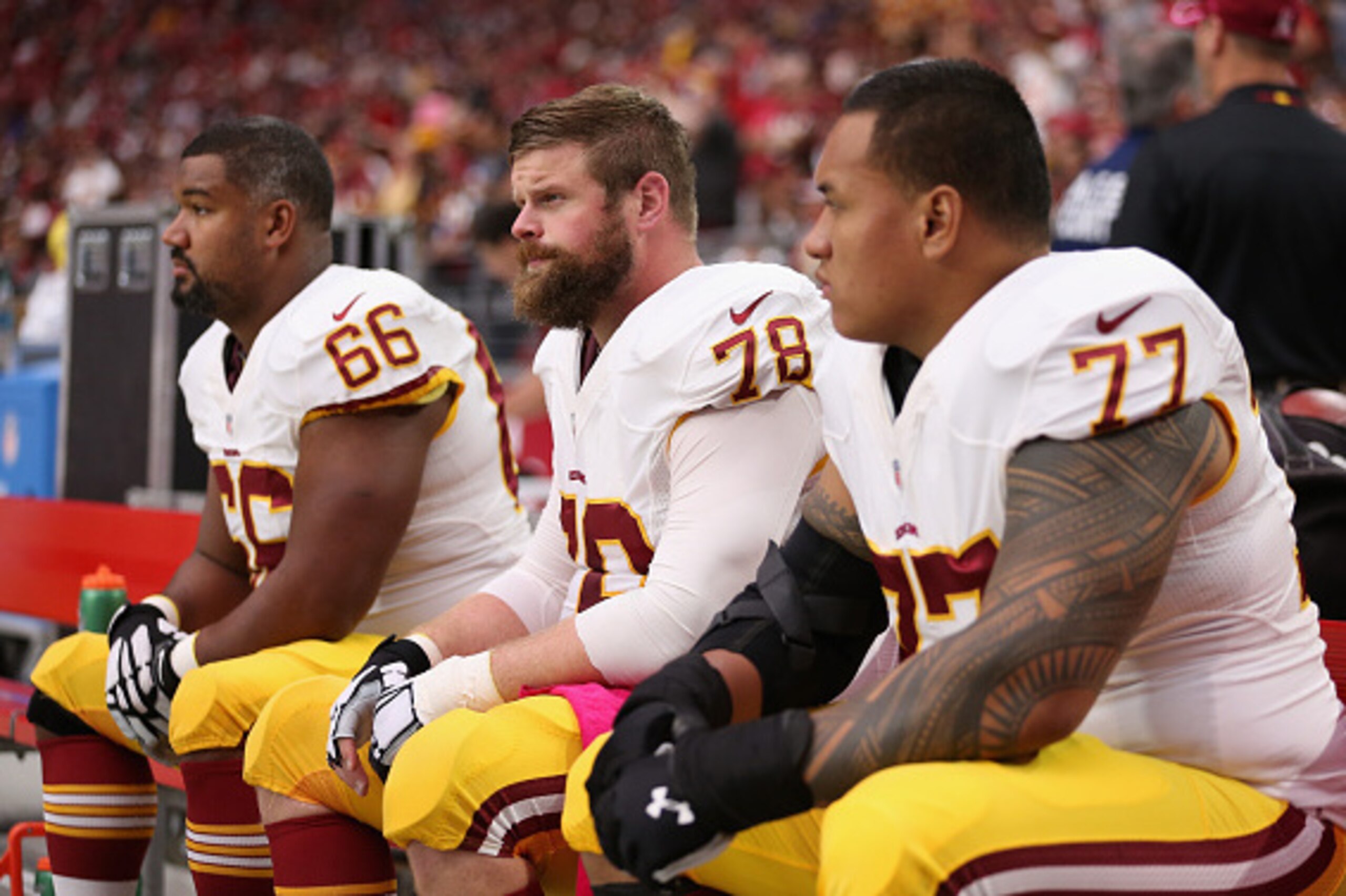
In another report for CSN Washington, Tandler noted how few members for the current rotation would have a home in a power scheme:
"Left tackle Trent Williams has the ability to thrive in any scheme and left guard Shawn Lauvao was in a power scheme in Cleveland for his first four years in the league before signing with Washington a year ago. But the other three positions may be up for grabs.
"
This makes sense of signing Lauvao last offseason, one of Gruden's first moves when he took over as Redskins head coach. It could also explain Lauvao's struggles during his first year wearing burgundy and gold.
The 6'3", 315-pounder never really looked nimble enough to thrive in space. Maybe that's why the Browns let him leave. Cleveland ran a zone-stretch running game in 2014, called by ex-Washington offensive coordinator Kyle Shanahan.
Gruden's desire to slowly move away from the deeply entrenched Shanahan zone scheme might also explain drafting tackle Morgan Moses and guard Spencer Long in the third round in 2014.
Both struggled to stay healthy and see the field as rookies. But 6'6", 318-pounder Moses and the 6'5", 311-pound Long could have futures in a power-style system. Salvaging the pair should be one of Callahan's primary objectives.
If three spots up front are indeed in play as Tandler contends, expect the Redskins to actively pursue free agents such as guards Mike Iupati and Clint Boling. Drafted by McCloughan in 2010, Iupati is a pure power blocker. So is Boling, who worked with Gruden when the latter ran the offense for the Cincinnati Bengals.
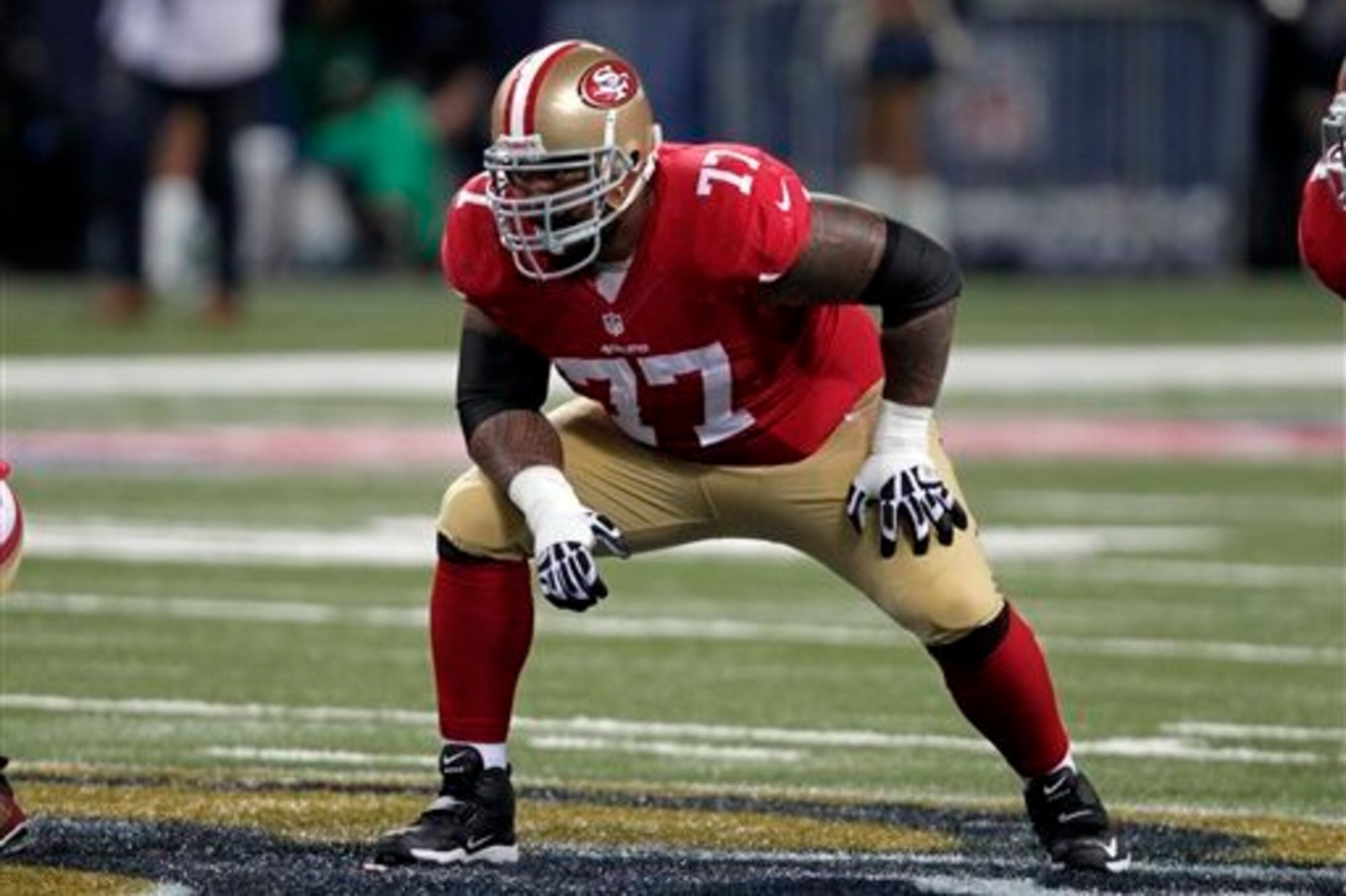
How about Oakland Raiders center Stefan Wisniewski? At 6'3" and 315 pounds, he'd offer greater size in the middle than mighty mite Lichtensteiger.
In the draft, a lean toward power could put a man-mountain tackle such as Andrus Peat in play. He's well-versed in Stanford's power game.
With Gruden's preference, along with the arrival of a new general manager and a line coach with similar ideas, you can count on major changes up front.
But if things do look different in the playbook and at the personnel level, what will the new scheme actually look like? You can usually distinguish power blocking from the zone variety by two key things.
The first is hat-on-hat blocking. This just means one blocker per man. Zone schemes rely on double-teams that soon split to get a blocker to the linebacker level; power plays depend on each blocker driving his man off the ball.
The second distinguishing feature is pulling linemen. Power teams love to pull guards and tackles around the corner. Think Joe Gibbs' legendary counter trey.
In the zone scheme, Washington's blockers usually slide one way in unison to get the defense moving laterally. A power system bunches the defense inside while a pulling lineman leads around the corner, obliterating an unfortunate edge defender on his way.
Callahan made this a forte for the Cowboys and NFL rushing kingpin DeMarco Murray this season. Take a look at this play from the divisional-round loss to the Green Bay Packers.
The Cowboys planned to pull rookie right guard Zack Martin out into space:

The Cowboys used two tight ends, Jason Witten and Gavin Escobar, to ensure they still got a hat on a hat against Green Bay's stacked nine-man front. That would give Martin the freedom to release around the corner.
The presence of two tight ends also allowed interior linemen to release to the linebacker level in a zone-style riff on the power formula:
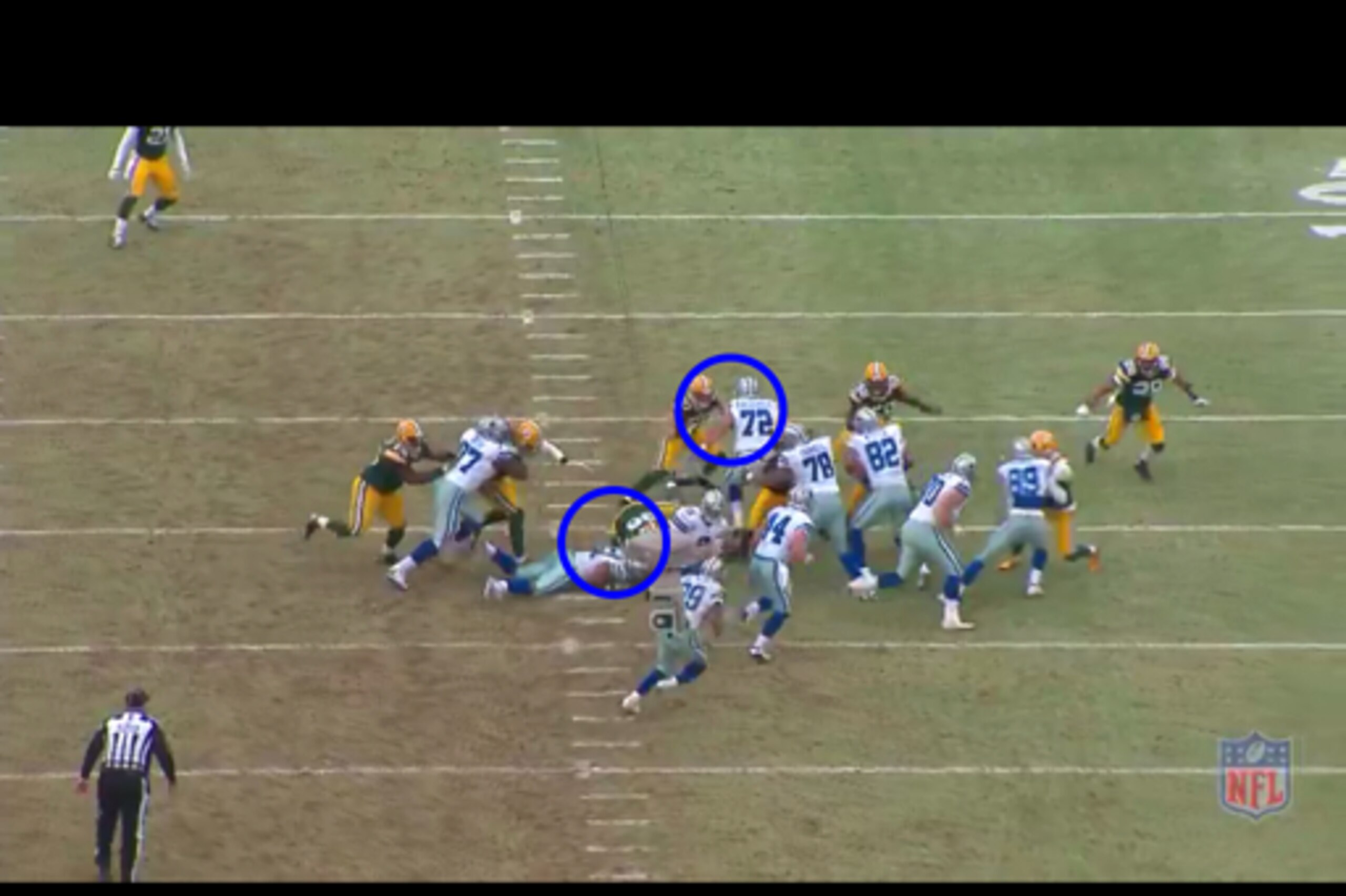
Notice how center Travis Frederick (72) absorbed an inside linebacker. Meanwhile, left guard Ronald Leary executed a cut block to prevent backside pursuit.
But the rest of the Dallas blockers put a hat on a hat in true power-blocking fashion.
Once Martin sealed the edge and fullback Tyler Cutts made his lead block, Murray had two lanes to aim for. He pressed the play to the outside on a classic power sweep that gained 26 yards:
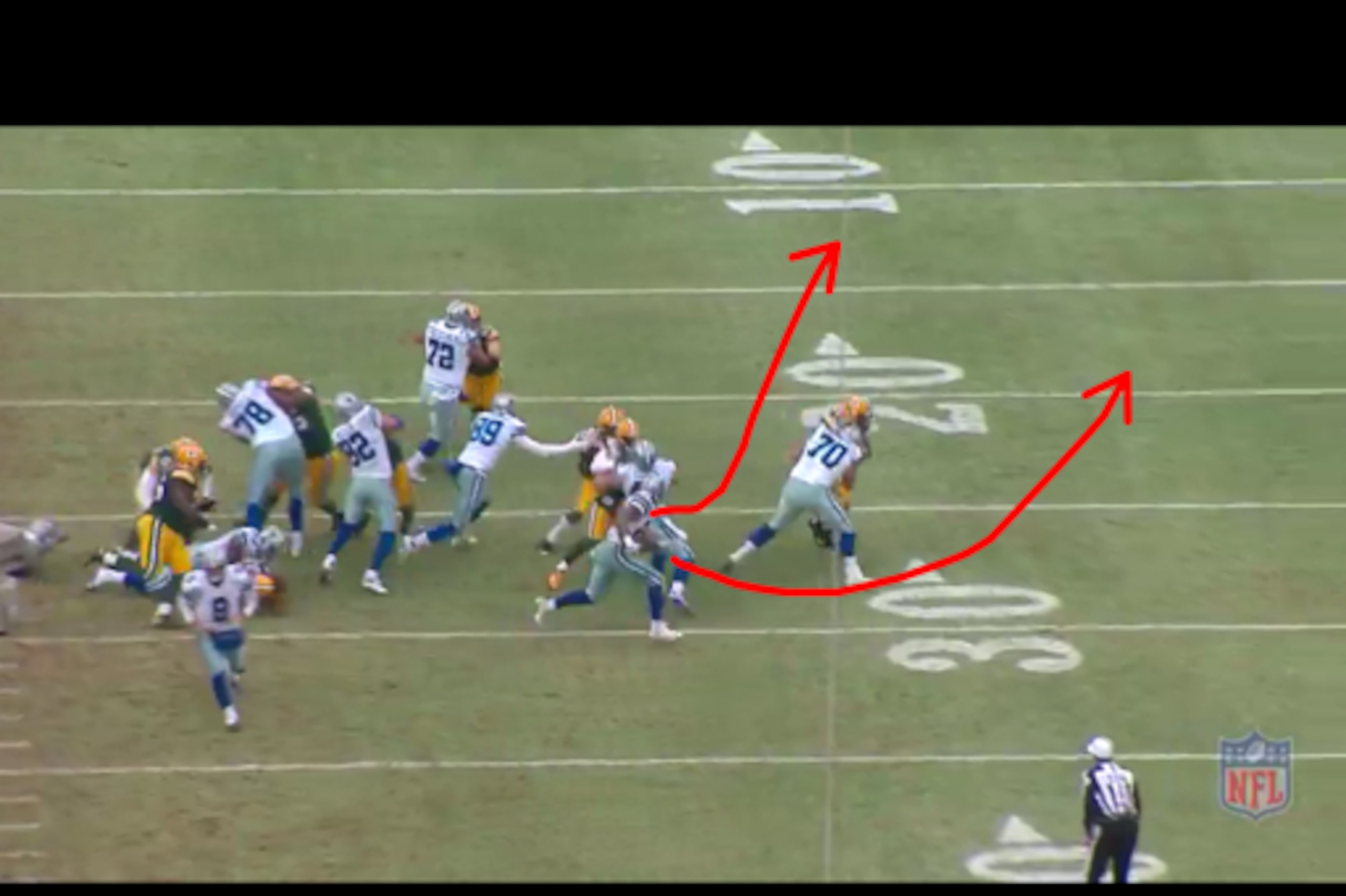
The Cowboys made their living off these plays on Callahan's watch this season.
McCloughan also knows the value of the principles at work on this play. Frank Gore became a star for the 49ers running in a power scheme when McCloughan was calling the shots in San Francisco.
That should be great news for the two primary members of Washington's backfield. First, Alfred Morris could enjoy the biggest benefit, despite posting a trio of 1,000-yard seasons in a zone scheme.
But while his numbers have stayed solid, Morris' overall effectiveness has been sporadic. He went 17 games from Week 10 of the 2013 season to Week 12 of 2014's campaign between 100-yard performances.
It's also worth noting that Morris' average has steadily decreased every year since his explosive rookie season. He averaged 4.8 yards per carry in 2012, 4.6 in 2013 and 4.1 this season.
So there are indicators that Morris' success running zone has a shelf life. But he does have the size to thrive between the tackles.
Smart scheming by Callahan will still let him use cutback plays and get to the edge on sweeps. That's what worked for Murray.
Just as important, more power principles will place greater value on fullback Darrel Young. He's one of the best players in the league at his position, but is too seldom used.
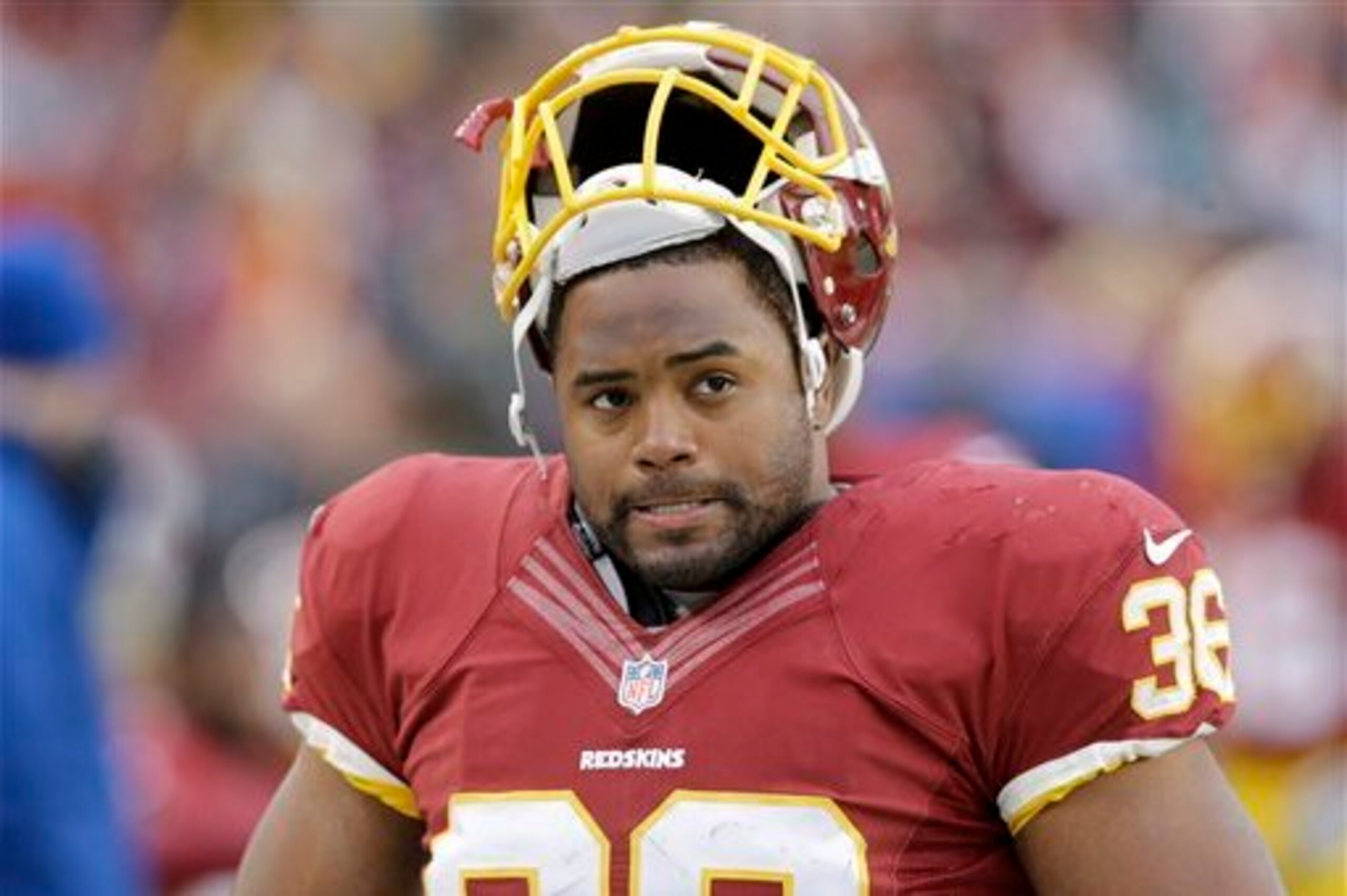
More power plays often means more I-formation looks, and that means more opportunities for Young to get on the field. This is a look the Redskins relied on more often this season.
During Week 15's road loss to the New York Giants, Grant Paulsen of 106.7 The Fan noted how effective the I-formation has been:
Of course, it's also worth noting that no scheme in today's NFL is any one thing. Every great ground attack should have an emphasis, whether it's power or zone.
But a smart play-caller should always be flexible enough to include concepts from both. One thing to bear in mind though, five of the top seven rushing offenses in 2014 ran a power scheme: The Cowboys, New York Jets, 49ers, Cincinnati Bengals and Carolina Panthers.
Off all the things Gruden may want to change on this team, moving to a power-based running scheme is the most promising idea. It would help revitalize Morris, get a key player like Young more involved and, most important, guarantee an overhaul of a dreadful O-line.
All statistics and rankings via NFL.com.
All screen shots courtesy of Fox Sports and NFL.com Game Pass.
.jpg?w=2560 "Raiders Saints Football")