Anderson Varejao's injury is, among other things, cause for the Cleveland Cavaliers to wade through the NBA's trade market faster than ever.
After landing awkwardly on his left foot midway through the Cavaliers' 125-104 victory over the Minnesota Timberwolves on Tuesday, Varejao has been diagnosed with a torn left Achilles tendon and will miss the rest of 2014-15, according to Yahoo Sports' Adrian Wojnarowski.
This injury comes not two months after the Cavaliers handed Varejao—who missed an average of 42 games per season between 2010-11 and 2013-14—a three-year, $30 million extension. More importantly, it comes at a time when the Cavaliers are short on big men and already phone surfing for roster depth.
TOP NEWS
.jpg?w=2560 "NBA Gambling Charges")
Malik Beasley Negotiating Plea Deal (AP)

Yaxel: Luka Not MJ 🗣️
Knicks, Spurs On Wrong Side of History
Prior to Varejao's injury, the Cavaliers were linked to Kosta Koufos of the Memphis Grizzlies and Timofey Mozgov of the Denver Nuggets, per ESPN.com's Marc Stein. They were also in play for Corey Brewer before he was shipped to the Houston Rockets, according to The Plain Dealer's Terry Pluto.
Nothing ever came to fruition, but the message was—and remains—undeniably clear: The Cavaliers are on the prowl, pining after upgrades.
Said search is only expected to ramp up now. Sources told Stein and colleague Brian Windhorst the Cavaliers have already been in talks with the Boston Celtics, discussing trades and scenarios that would add to their frontcourt depth.
Tristan Thompson will slide into Varejao's starting spot for now, while Lou Amundson and Brendan Haywood should see more meaningful playing time. And that's not enough.

Losing Varejao shouldn't hurt the Cavaliers offensively, to be sure. They have already played more minutes without him (665) than with him (636). In the time without him, they're pumping in eight points more per 100 possessions.
Playing without the 6'10" tower won't hurt their defense either; their play on that end remains statistically unchanged when he's on the bench. Not even their rebounding rate plummets when he's off the floor; they grab 50.9 percent of available boards with him, compared to 50.6 percent without him.
But Varejao was still a body for a Cavaliers team already in the market for bodies. His absence is, if nothing else, yet another inconvenience for an imperfect model—especially on defense. The Cavaliers rank 23rd in points allowed per 100 possessions, and they've been even worse when it comes to interior prevention.
Rival offenses are shooting 57 percent at the iron against the Cavaliers, giving them the league's second-worst point-blank protection. Among their (shallow) well of bigs, there isn't a single rim-policer to lean on, the way so many of the Association's best defenses do.
Amundson is the only one allowing sub-50 percent shooting inside six feet, and he's played all of 62 minutes this season. It's no wonder general manager David Griffin has been in the market for size since before the season started.
"Our rim protection is going to be an issue moving forward," he said in September, per Northeast Ohio Media Group's Chris Fedor. "We would definitely like to improve it. I can't just talk people into getting off of centers, but right now it's something that we look at and think that's an area where we can improve."
Now, in the Cavaliers' defense, their new projected starting lineup has found success. When rolling with Kyrie Irving, Mike Miller, LeBron James, Kevin Love and Thompson, the Cavaliers are outscoring opponents by 7.6 points per 100 possessions, more than double the team's net rating overall (3.2).
Substitute Miller with Shawn Marion, and they're even better. An Irving-Marion-James-Love-Thompson quintet is the Cavaliers' second-most used five-man combination, and they're outscoring opponents by 30.4 points per 100 possessions, posting the equivalent of the league's best offense and defense.
Still, one lineup—that, admittedly, sees under five minutes of action together per game—isn't a tactical panacea. Cleveland's defense has fluctuated all season and, as of now, will assuredly dwell among the bottom 10. And the last NBA team to win a championship while ranking outside the top 10 in regular-season defensive efficiency was the 2000-01 Los Angeles Lakers.

That the Cavaliers have a bumbling bench doesn't help. The second unit ranks 27th in offensive efficiency and 29th in defensive efficiency, according to HoopsStats.com, and will now lose its most valuable contributor (Thompson) to the starting lineup.
Something will need to happen if the Cavaliers wish to change the status quo. Price was (probably) the primary issue before, but Varejao's absence creates urgency—the kind that incites activity. As Fear The Sword's David Zavac writes:
"The Cavs were already looking to acquire a competent defensive big. Those efforts might increase. They might now be more willing to deal the protected lotto pick from Memphis they are owed. They might now be more willing to include Dion Waiters in potential deals. Quite simply, the team has no depth in the frontcourt. A team with a weak bench just lost a key contributor. It hurts.
"
Griffin may have been placing premiums on the Cavaliers' assets before. After all, they have very few. But desperate times call for exceptional measures, and the Cavaliers should, at the very least, be more open to unloading their most movable parts.
Dion Waiters, who has been in and out of the rumor mill since James came to town, holds value for his intrigue alone. Though he's shooting just 41.2 percent from the floor and averaging career lows in points (10.4) and minutes (22.8), he's a No. 4 pick who can create his own shot with Jamal Crawford-esque flair.
Haywood's contract is also a valuable trade piece. His salary balloons to $10.5 million (non-guaranteed) next season, making him an attractive acquisition for teams hoping to flip him for a more talented player on an expensive deal.
There's the trade exception the Cavaliers created through the Keith Bogans deal as well. While it cannot be combined with players or other exceptions, it does allow the team to absorb the contracts of outside players earning $6.7 million this season (125 percent plus $100,000 of the exception's $5.2 million value).
Following Varejao's injury, the Cavaliers can apply for a disabled player exception worth $5 million. But that's essentially the same thing depicted above and cannot be combined with players or other exceptions, so it does little to augment their options—the ones that are not available in endless supply.
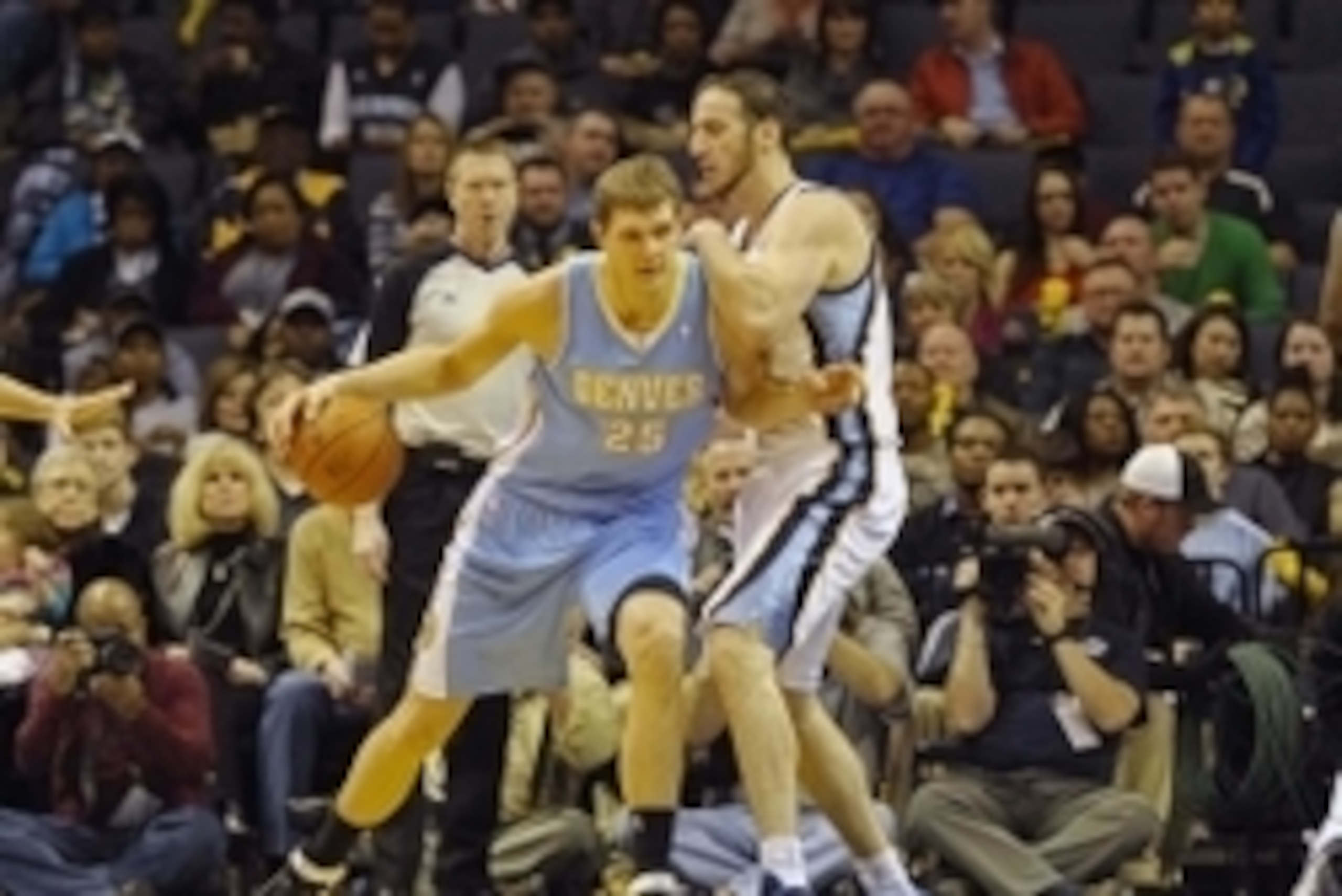
Indeed, Mozgov and Koufos may be the two biggest names we hear. Sam Amico of Fox Sports Ohio writes that the Cavaliers have registered interest in brothers Brook and Robin Lopez, but the former is earning north of $15 million this season—making it impossible for the Cavaliers to meet trade constraints without dealing both Thompson and Waiters—and doesn't offer rim protection, while the latter is injured and miles above the rumor mill.
And with household names out of the question, that leaves players such as Mozgov, Koufos, Brandan Wright and, well, you know:
Hence the reason why it was once better for the Cavaliers to wait. They have plenty of star power, and their fourth-ranked offense is more than enough to get them by in the woebegone Eastern Conference.
Waiting until this summer allows them to capitalize on Haywood's pending raise, which, for contract-matching purposes, is more valuable than anything—including Waiters—they can immediately dangle.
Standing pat would be pushing it now, though. The Cavaliers only have the East's fifth-best record and are now down one of their most crucial contributors. The time to tinker with this roster isn't just nigh. It's here.
"The guys in the locker room is who we have, and I think we can compete against anybody when we're playing at our best," James said of Cleveland's up-and-down season, per ESPN.com's Dave McMenamin. "But it's going to take us to maintain our focus every single day because we cannot afford to take a step backward, because a lot of teams are just better than us as far as chemistry, as far as the camaraderie they have over the years, and we don't have that.
"So we do have enough talent, but talent doesn't win anything."
Without diving head first back into the trade market and finding the necessary help, that's who these Cavaliers are: fantastic enough to win, flawed enough to lose.
*Stats courtesy of Basketball-Reference and NBA.com and are accurate as of Dec. 25, 2014. Salary information via HoopsHype.


.jpg?w=2560 "Jonathan Taylor Landing Spots")

.jpg?w=2560 "Aikman Blasts Cowboys WR 🫣")