Check out Rick Carlisle's Bag of Play-Calling Tricks for Dallas Mavericks
Rick Carlisle is widely acclaimed as one of a few truly special head coaches in the NBA. The praise isn't unmerited, as the Dallas Mavericks have thrived in the 55-year-old's offensive system this season.
Even though the Mavs' inflated offensive numbers have slowly evened out, they still boast the No. 1 offense in the league, putting up 113.4 points per 100 possessions. Carlisle certainly has all the right players to craft an elite offense, but it requires expertise to have a team sniffing around these heights relatively early in a season.
Tyson Chandler, who returned to the Mavericks this year after being traded by the New York Knicks, knows all about the time and effort the veteran coach puts into his craft.
TOP NEWS
.jpg?w=2560 "NBA Gambling Charges")
Malik Beasley Negotiating Plea Deal (AP)

Yaxel: Luka Not MJ 🗣️
Knicks, Spurs On Wrong Side of History
"He is very strategic in his thought process, and he's locked in," Chandler told Bryan Gutierrez of MavsOutsider.com. "His mind is working at all times. He's always thinking about the game, he's always calculating and putting things into play."
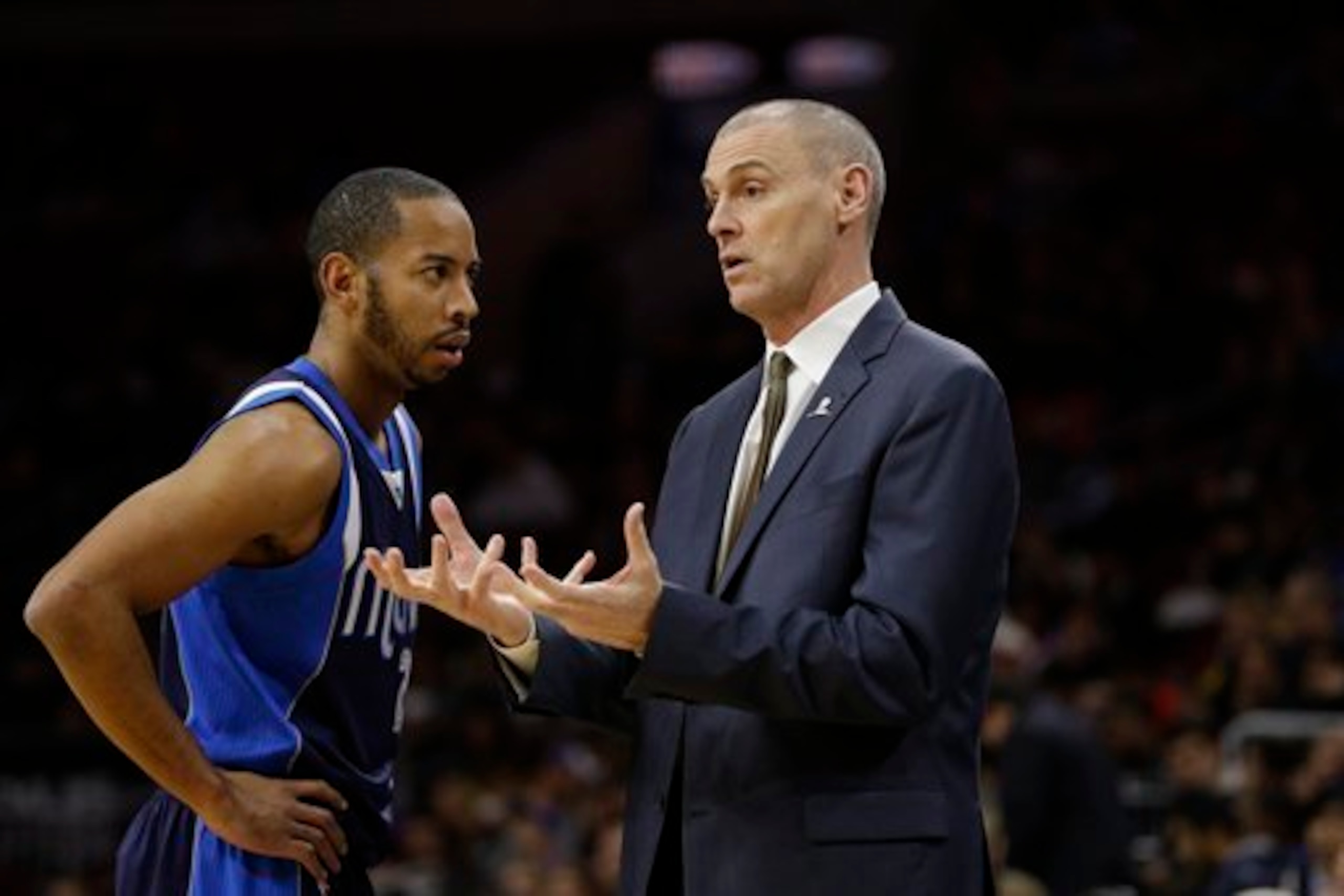
While he is a master tactician, Carlisle hasn't restrained his players or forced them into defined roles. This has allowed Dallas to have its innate creativity flourish, with players improvising and staying unpredictable. It's something that Zach Lowe of Grantland also pointed out:
"The best way to sow such doubt is to act early, before a defense is set. That’s easier coming off a stop, when the Mavs can rebound and push the ball amid the chaos of transition. There is no time for Carlisle to call plays after a Dallas stop, and the coach likes it that way. “We try not to call any plays if we can,” Carlisle says. “We want to be difficult to defend, and the more random we can make it, the more difficult it will be for defenses.”
"
The Mavericks are not mechanically drilled to fill a certain purpose. Instead, the offense is a self-sufficient machine, with Carlisle acting as the engineer who tinkers with it when it jams.
Dallas has certain established routines to get into some of the sets, after which it's all up to the players to penetrate, cut and move the ball as they see fit.
For instance, the Mavs often start possessions in a horns formation, with the two big men occupying the elbows. They set two soft screens for one of the guards, who then flares to the weak-side wing and gets the ball back. After that, your guess is as good as anyone's as to what will develop. Here are a couple of examples:
In the first clip, J.J. Barea hands the ball off to Devin Harris and flares to the left side. Barea briefly ponders using Dirk Nowitzki's pick but swings the ball right back to Harris, who then combines with Brandan Wright on a high pick-and-roll. Harris' rim attack pulls the Chicago Bulls' Pau Gasol into the paint, which gives Nowitzki enough room to drain the jumper when he gets the pass.
Lowe put this type of action into context very well in his column:
"Teams have specific rules about which defender draws that help assignment. It is almost always one of the defenders on the weak side, so if Ellis is driving down the right side of the floor, a defender all the way across on the left wing has to dive into the paint and bump Chandler.
The Mavericks specialize in throwing those rules into chaos. They want to confuse you about very basic things: Which side is the weak side?
"
Everything happens organically and at a frantic pace, which confuses even the most organized defenses.
The second play of the montage is almost identical to the point of the initial penetration. The Bulls do a good job stopping Monta Ellis' drive, but he quickly swings the ball to Jameer Nelson. The Bulls' Derrick Rose closes out hard, which gives Nelson enough time to drive past him and hit an open shooter in the corner once the defense collapses around him.
The Mavs are great at this type of stuff. They twist and turn the knife in their opponent's back until they find the best shot. If the initial action doesn't yield results, there's almost always some kind of an opening elsewhere on the floor. Carlisle deserves credit for spreading such an unselfish mindset across the roster.
Here are two more examples of the same set, with slightly different outcomes:
In the first play, Harris decides to use Nowitzki's initial ball screen. Chicago switches and Dallas instantly spreads the floor to allow the German to work the mismatch.
The following play, Harris rejects the screen and takes the ball to the basket. Notice how open Al-Farouq Aminu is in the corner if the Philadelphia 76ers had managed to take away the layup.
Carlisle uses this type of a setup a lot, and he trusts his players to make the right decisions. When it's clicking, it's beautiful to watch. When it isn't, the head coach steps in and gets his players on the right track.
Dallas' 132-129 double-overtime victory on Dec. 2 over the Bulls required Carlisle to make some adjustments. He is great at making the most of his timeouts, which allows the Mavs to break the rhythm of the opposing team.
Early in the third quarter of the game, the Mavericks were getting sloppy. In back-to-back possessions, Nelson settled for a tough running jumper early in the shot clock, and then Ellis turned the ball over. Carlisle instantly called for a timeout, and these were Dallas' two following offensive possessions:
Even though Ellis misses the three on the first play, it's still a positive possession. Unlike earlier in the quarter, the Mavs refuse to settle for an average look early in the shot clock. They patiently probe the defense and eventually force the Bulls' Jimmy Butler to rotate and leave Ellis open.
The very next play, Dallas returns to the super-effective Nowitzki-Ellis handoff. Nowitzki comes off a couple of picks, sets a back screen for Nelson and proceeds to hit Ellis, who is already in full sprint. The Mavs simultaneously clear out the strong side for his drive.
Sometimes, Carlisle will go to specific sets as that second play. Other times, his timeouts are simply taken to remind the players to move the ball, stay patient and not settle. More often than not, the message is received and Dallas tends to come out with reinvigorated focus.
Late in the fourth quarter and overtime of the same game, Carlisle also had a plan to get Nowitzki going. Here are two plays he ran for the German coming out of a timeout and following Chicago free throws:
There's no reason for Nowitzki to grind it out in the post against an excellent defender in Joakim Noah. Instead, Carlisle had Noah, who tweaked an ankle late in the game, chase Nowitzki off screens. Dirk only needs a tiny window of time to square up for shots like that, and he punished Noah.
Carlisle also has some plays for Chandler, having the center come out high to get the ball, drop it back off to a guard and use the confusion created by constant off-ball movement to cut to the basket.
That type of misdirection and decoy action isn't limited to just Chandler. It's something that trickles through to most of Carlisle's sets. The Mavs run a ton of high pick-and-rolls, and they do a terrific job transitioning that into something entirely different based on how a defense reacts.
Even relatively simple stuff, such as inbounding the ball in a crucial late-game situation, is something that certain teams around the league fail to do. Dallas is well-drilled when it comes to taking care of the ball and not gifting opponents opportunities in those vital moments.
This is what makes Carlisle a terrific coach. He asks his players to abide by reasonable principles without forcing them to remember tricky sets that are hard to execute. His situational play-calling and ability to adjust and exploit in-game developments is truly top-notch, and that makes the Mavs unpredictable.
You can follow me on Twitter: @VytisLasaitis



.jpg?w=2560 "Aikman Blasts Cowboys WR 🫣")
.jpg?w=2560 "Jonathan Taylor Landing Spots")