Portland Trail Blazers Power Rankings: Gauging Full Roster After First 6 Weeks
The season is still young, but the Portland Trail Blazers have already proved their worth. With a record of 13-4, Portland has shown it belongs in the upper echelon of the NBA’s best, by means of the terrific production of its players.
These Blazers have outperformed most on a nightly basis, so let’s see every which way they’ve done so. From LaMarcus Aldridge to Meyers Leonard, each of these players has contributed to keep Portland in the Western Conference race.
Each player listed is ranked according to his production and effectiveness as to have a measurement of analysis across the board.
Let’s take a look at the specifics.
The Young Guys
1 of 11
This slide includes those who haven’t had a major role in the rotation but have contributed nonetheless (for the most part). Most of them are still developing and finding their way as NBA players, not quite providing the consistent and effective play a contending team like Portland needs.
Yet regardless, these players have given 100 percent in an effort to show what they can do.
Meyers Leonard, C
2014-15 Statistics: 3.3 points, 3.2 rebounds, 46.7 percent shooting, 9.2 minutes per game.
While he might have been more known for his mustache in recent weeks, Meyers Leonard has shifted his approach to professional basketball this season.
Since arriving in the league, he was viewed as a physical big man due to his height at 7’1”. Per Jason Quick of The Oregonian, Leonard put it in his own words:
"I think people see a 7-footer...pretty strong...big...wide shoulders...and everyone thought I was a five. There was no point in trying to impress people in something that I was not that great at. I wanted to continue to work on defense and rebounding, but also be what they brought me in to do: Be skilled. Run the floor. Shoot the ball when you are open. Be athletic.
"
There’s been a change of plans.
This season has seen Leonard take a different approach, as a stretch 5 of sorts. He’s attempted 1.2 three-point shots per game through six games on 57.1 percent. He has struggled defensively, posting a 105.7 defensive rating courtesy of NBA.com, which has affected his playing time.
Head coach Terry Stotts did start him against the Brooklyn Nets on Nov. 15, during which Leonard had seven points and 12 rebounds in 30 minutes of play. In the absence of LaMarcus Aldridge (illness), Leonard filled the role as a shooter in the frontcourt to stretch the defense.
He’s played in just one game since then, in 12 minutes of garbage time against the Chicago Bulls on Nov. 21.
It’s clear Stotts is very choosing with his rotation, but Leonard has shown improvement nonetheless. He’s upped his player efficiency rating from 9.5 during last season to 16.7 thus far, as well as adding an accurate jumper.
He still has a ways to go, but Leonard is making strides. And that’s what counts.
Thomas Robinson, PF
2014-15 Statistics: 2.0 points, 3.1 rebounds, 40 percent shooting, 8.0 minutes per game.
Thomas Robinson started out the season strong but has since suffered due to an overcrowded frontcourt.
With new addition Chris Kaman playing well and backup Joel Freeland doing the dirty work, Robinson has played in just two of the last 10 games. That streak might even be longer had the Blazers not blown out the Bulls on Nov. 21, when Robinson playing the last eight minutes of the game.
He’s in his third NBA season but hasn’t yet shown the potential that led to him being taken No. 5 overall in the 2012 draft. Bleacher Report’s Jonathan Wasserman outlined Robinson’s struggles, noting that “his strengths from college haven't held strong enough in the pros, while his weaknesses never improved and have ultimately weighed on his effectiveness.”
Robinson has performed well as a spark plug off the bench, hustling for loose balls, offensive rebounds and athletic plays on both ends to get the crowd into the game.
But that's about it. Which is totally fine, as players have cemented their careers as those types of guys. But Robinson must be more consistent.
His defensive rating, per NBA.com, playing at home and on the road couldn’t be more conflicting. When suiting up in the Moda Center, the Blazers allow just 84.3 points with Robinson on the court. When playing outside of Portland, however, that measure jumps to an alarming 128.9 points per 100 possessions.
Once again, Stotts rules his rotation with an iron fist. Robinson’s role looked promising early on, but a string of head-scratching plays has slowly led to a lesser part in what the Blazers do.
There’s still a long way to go before the season ends, so it’s possible Robinson can break back in. But it’ll take a concerted effort.
Will Barton, G
2014-15 Statistics: 3.0 points, 0.8 assists, 40 percent shooting, 9.9 minutes per game.
Ah, “The Thrill.”
Much like Robinson, Will Barton’s role has revolved around his ability to pull off the insane and the unlikely. That’s his calling card, but it hasn’t always worked thus far.
Barton hasn’t been particularly efficient offensively while carrying the same affliction on the other end of the court.
His PER of just 4.8 ranks 11th-worst among all qualifying NBA players, in addition to a net rating of minus-10.7, per NBA.com. A net rating is the variance between a player’s offensive rating and defensive rating.
He’s shooting just 40 percent and 28.6 percent from the field and the three-point line, respectively, which limits his ability to contribute in an offense that thrives on shooting.
With C.J. McCollum out due to injury (finger), you could argue Barton has been thrust into a role that doesn’t quite suit his skill set.
His PER of 13.6 during the 2013-14 season was respectable, so it may be a case of Barton getting into a groove over the course of the season.
Here’s to hoping it’s sooner rather than later.
Dorell Wright, F
2014-15 Statistics: 1.6 points, 1.9 rebounds, 25 percent shooting
Dorell Wright has played in just seven games thus far, playing 6.7 minutes per game. Aside from his rookie days with the Miami Heat, this has been the least amount of time that Wright has seen throughout his career.
His 14.5 minute-per-game clip last season saw his 5.0 points and 2.8 rebounds as noteworthy off Portland’s less-than-stellar bench, but that hasn’t been the case this season.
Wright’s net rating of minus-16.6, per NBA.com, ranks the lowest of all the Blazers, following suit with Leonard, Robinson and the like.
There seems to be a bit of a trend, with low offensive numbers and high defensive numbers limiting these players’ contributions. It could be a case of these guys playing in garbage time, which would thoroughly skew such statistics.
Though simultaneously, it may be perfectly accurate.
Willy Raedy of BlazersEdge.com painted a concise picture of how Wright’s role has diminished:
"When he attacks off a pick and roll he doesn’t even make it below the foul line. And even if he does, Wright hasn’t shown the ability to read the help defense and pass to open shooters or the rolling big man. What usually happens is Dorell takes a dribble or two towards the hoop, gets cut off at the foul line and picks up his dribble. This lets the defense reset and it takes a beat for Dorell Wright to pass out of trouble. This reset is key because it makes the next action much easier to defend.
"
Portland’s offense and defense are supported on almost constant movement on the perimeter, in addition to pick-and-roll play/help defense in the middle and down low. Wright has been a bit in between in doing so, in which case he hasn’t seen the court all that much.
And with the Blazers looking to make their mark early and onward, Stotts has looked elsewhere on the bench for those who have contributed effectively.
Victor Claver, F
2014-15 Statistics: N/A
Claver has yet to suit up for the Blazers this season.
And he hasn’t been OK with that.
From BlazersEdge.com’s Dave Deckard and a translation from a faithful reader, Claver expressed his frustration to Spanish website ACB.com:
"Despite how things happened last season, and the few moves that the team made in the summer, I came here ready to do everything and having trained to the top, so I could help from the start of the season. I love the franchise, the city and the treatment from the people, but I think I'm ready to play and if it cannot be here it must be in another place. I'm in the last year of my contract and I want the chance to prove that I can help the team to win games.
"
Claver’s frustration is understandable, and he has been utterly patient with his role. He’s seen his role consistently diminish, going from 16.6 minutes during his rookie year (with 16 starts in 49 games) to 8.8 minutes last season to literally zero minutes so far.
Going back to last season, the Blazers scored 109.8 points per 100 possessions with him on the court, alongside 100.8 points per 100 possessions defensively, per NBA.com. Claver also had a PER of 8.8 while shooting 40.5 percent from the field.
He sorely lacks the jumper that almost every offensive player for Portland possesses, going just 4-of-26 on jump shots last season, per NBA.com. Claver’s limited offense and so-so defense might be the cause of his limited opportunities (if you can call it that), but there’s surely a method to Stotts’ decision.
The forward has been able to contribute, albeit sparingly, in the past, going for 12 points, six rebounds and four assists in 23 minutes in the Blazers’ final regular-season game last year.
It may take an injury or a rotation change before Claver sees the court this season, but that might be a ways down the track.
10. Allen Crabbe, SG
2 of 11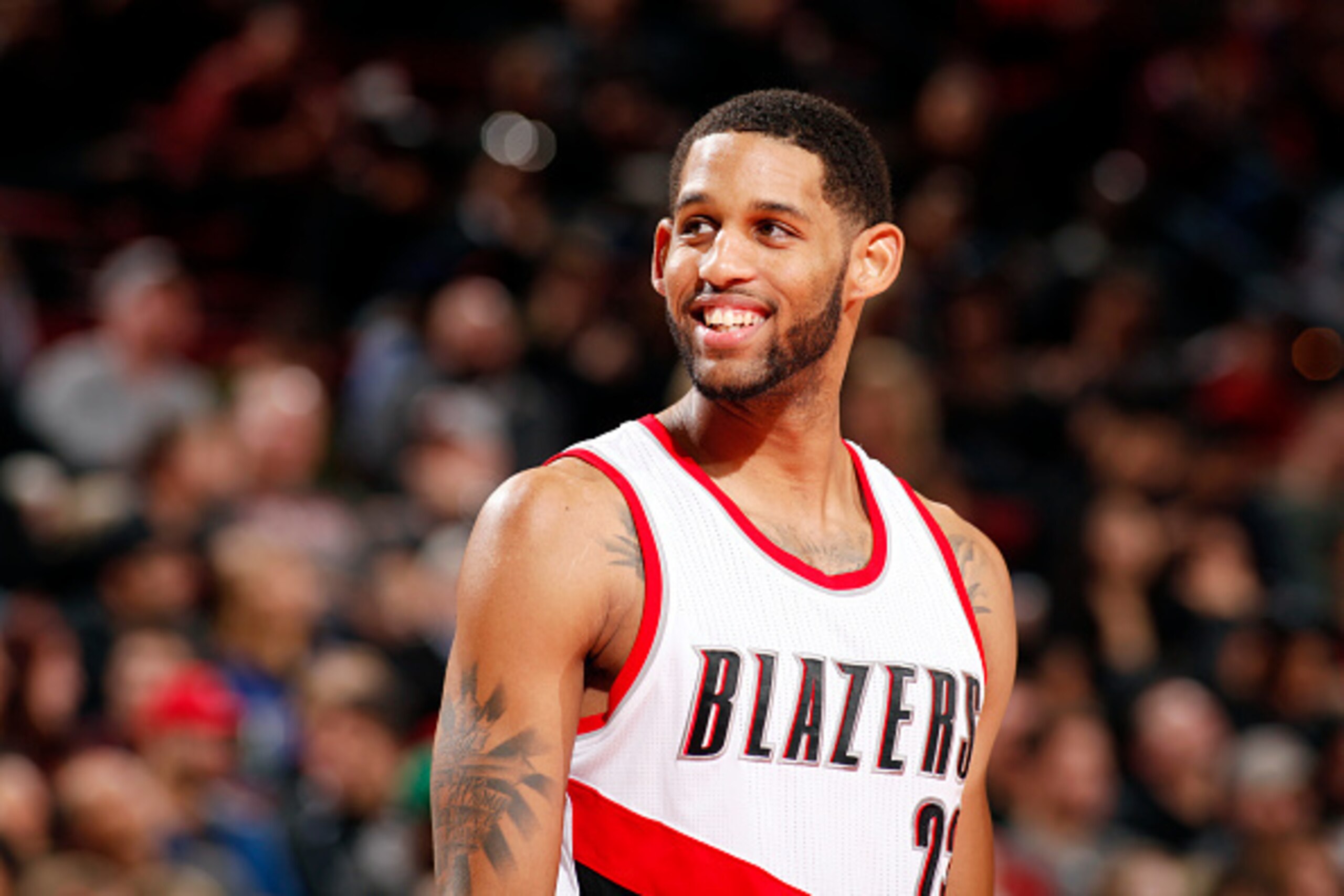
2014-15 Statistics: 4.5 points, 38.7 percent three-point shooting, 15.8 minutes
As we covered the limited chances of some players, Allen Crabbe might just be the cause of all that.
The 6’6” guard is seeing career-best minutes to this point, playing 15.8 minutes per game compared to last season’s 6.7 per contest.
Crabbe got the starting nod as Nicolas Batum went down to injury (knee) and has not slowed down since. He has emerged as a long-range threat off the bench, with 31 of his 45 field-goal attempts this season coming from beyond the arc.
Save for this gem.
Crabbe’s 4.5 points per game aren’t much, but they’ve helped the Blazers keep a consistent offense running when the starters need a breather. Portland’s reserve unit ranked last in points per game during 2013-14 but is up to No. 25 this season, courtesy of Hoops Stats.
It isn’t a huge leap, but any improvement is welcome from the bench.
Crabbe has shown promise as a shooter off the pine, which gives him an advantage over the other reserves. He’s carved out a niche in the rotation with McCollum sidelined and gives Stotts another option to turn to.
Happy days.
9. Joel Freeland, C
3 of 11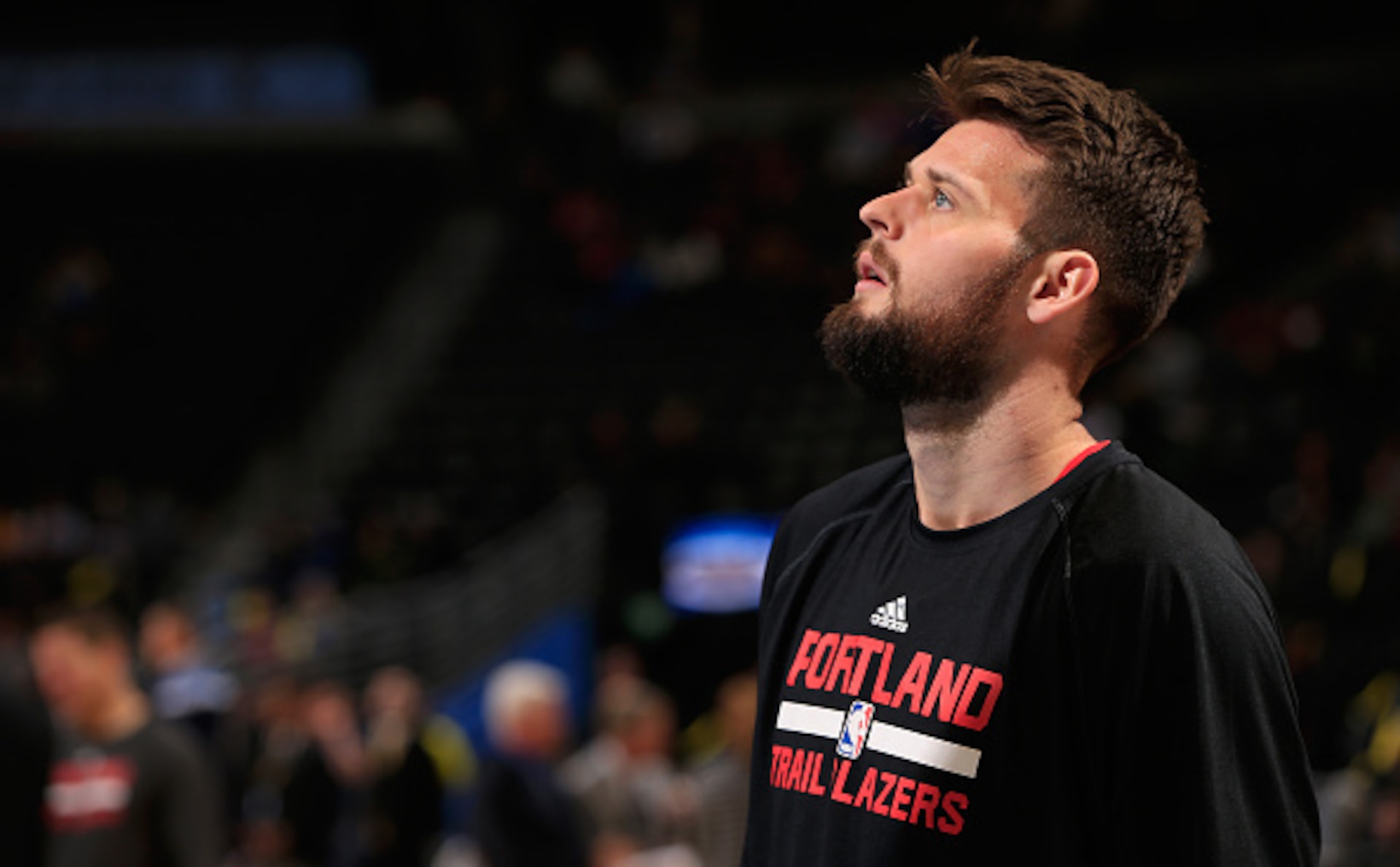
2014-15 Statistics: 2.9 points, 3.3 rebounds, 44.4 percent shooting, 10.6 minutes per game
Joel Freeland has battled injuries over the course of his young career, but he’s been relatively healthy thus far.
And in turn he has been one of the Blazers’ more reliable frontcourt options.
It’s easy to forget Freeland among the likes of Aldridge, Robin Lopez and Chris Kaman, but he’s been solid on both ends this season.
Portland keeps opponents to 95.9 points per 100 possessions with Freeland on the court, per NBA.com, and he was a pivotal role player in the Blazers’ win over the Charlotte Hornets on Nov. 11.
The big man helped keep Hornets’ All-Star Al Jefferson to just one made field goal during the fourth quarter of the 102-100 victory. Courtesy of Bruce Ely of The Oregonian, point guard Damian Lillard praised Freeland:
"He was huge. He's a guy that doesn't know when he's going to come in. And then he comes in and he's coming in vertical and he's challenging shots. I think he did a great job on (Jefferson). He fought him for position...and he made it tough for him. Everybody knows Al Jefferson is pump-faking and he's crafty with the ball. But Joel gave him a hard time down the stretch and that was big for us.
"
Freeland has been a mostly reliable contributor in the paint, providing smart defense and a sneaky jumper on offense. Both have been key behind the starters and alongside Kaman, as the Blazers have a respectable reserve frontcourt on both ends of the floor.
.jpg?w=2560 "NBA Gambling Charges")

8. C.J. McCollum, SG
4 of 11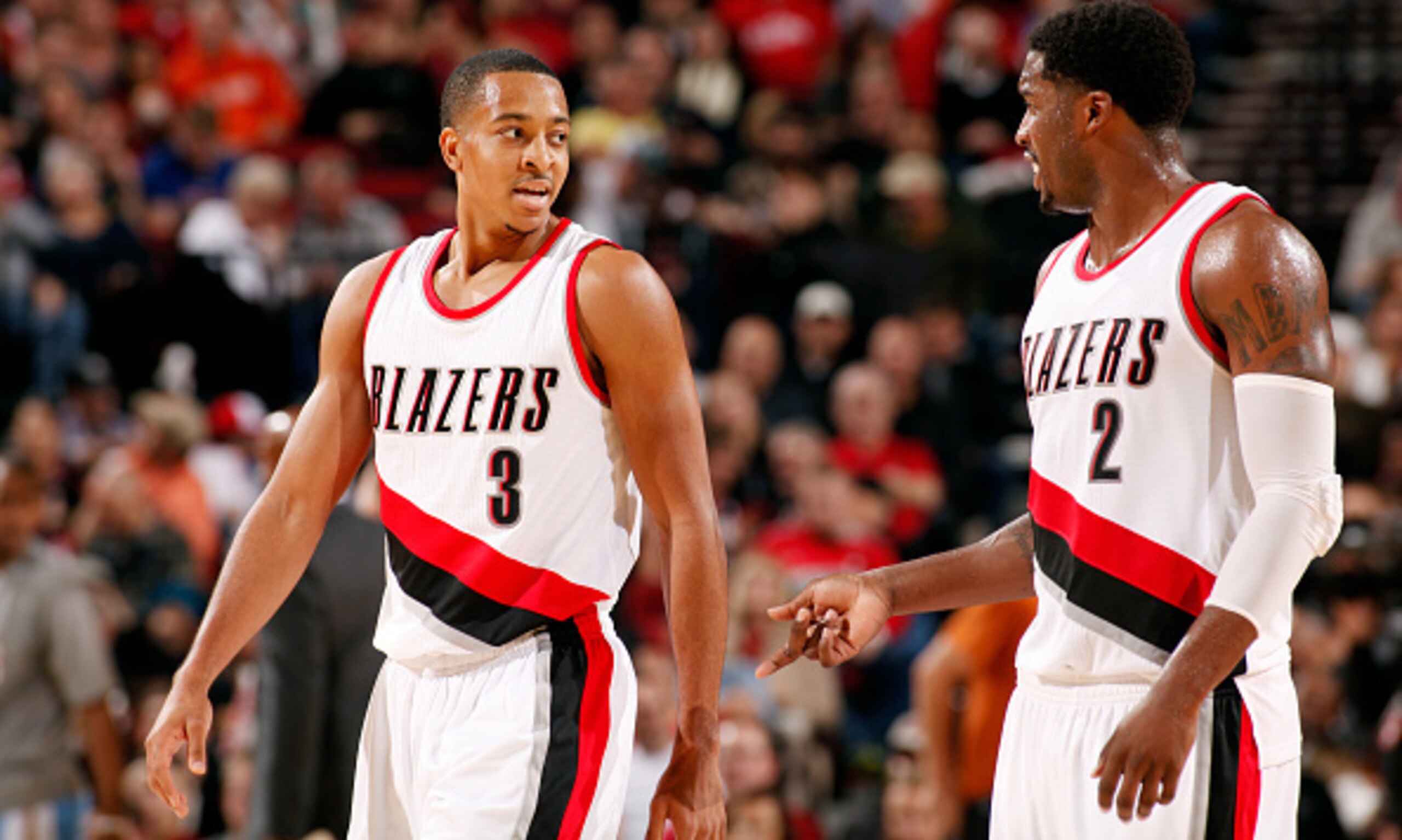
2014-15 Statistics: 5.0 points, 1.1 assists, 45.8 percent three-point shooting, 13.1 minutes per game
Oh, not again.
After missing a vital chunk of last season due to a broken foot, McCollum is injured once again.
It’s a broken finger this time around, but the injury comes during a pivotal time. McCollum missed a chance during 2013-14 to make his mark and break into the rotation, breaking his foot prior to the start of the season en route to playing just 38 games.
He was able to play 11 games before missing time this season, but it happened when he could have found a rhythm and a role within the team.
Even so, one would expect the second-year guard to find his seat waiting for him when he returns.
But you never know with the Blazers coaching staff.
At least Stotts and Co. have an encouraging sample size, as McCollum started the season with a bang. His two points on opening night aren’t what I’m referring to but rather his play over the first two weeks of the season.
He displayed a remarkably accurate jumper off the bench, converting on 45.8 percent of his three-point tries. He had a big 13-point game in Portland’s 108-87 victory over the Dallas Mavericks on Nov. 6, in addition to scoring 15 points a week later against the Denver Nuggets.
The Blazers have been lucky with the play of Crabbe and others to momentarily fill the void, but McCollum’s scoring off the bench was major in the team’s hot start.
He was initially evaluated on Nov. 18 and expected to miss four weeks, which mean No. 3 has about two more weeks before emerging from his warm-ups.
Portland should be exceptional until then, but McCollum’s return will be welcomed nonetheless.
7. Steve Blake, PG
5 of 11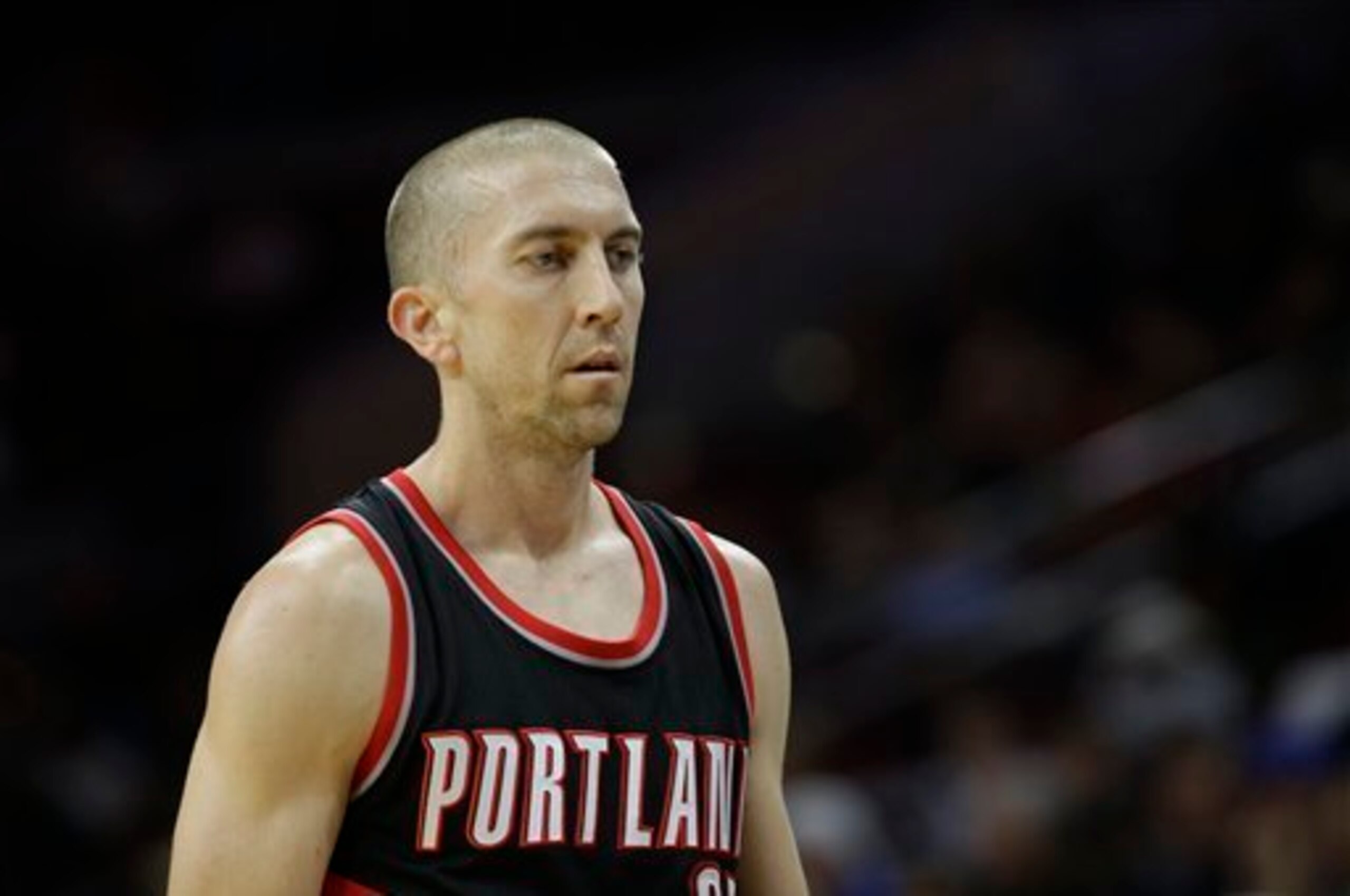
2014-15 Statistics: 4.4 points, 4.5 assists, 31.5 three-point percentage, 3.5 assist-to-turnover ratio
Portland might have lost Mo Williams at the point guard spot, but all is well with Steve Blake operating behind Lillard.
Blake’s return to the Blazers was a bit of an under-the-radar move, due to his age and limited ability as an effective defensive player.
Neither has been an issue so far.
The 34-year-old point guard has been an instrumental part to Portland’s offense, despite his shooting struggles. His 31.5 percent from long range isn’t great, but the key part of Blake’s efforts has been his passing.
He has been careful in terms of distributing, committing just 1.3 turnovers per game. His assist-to-turnover ratio of 3.45, which measures how many assists a player will dish before making an error, is a team-high mark as well as ranking No. 8 in the NBA.
His handle and vision have led to plays like this, while his play on the other end has been just as efficient.
Per NBA.com, Blake has a defensive rating of just 97.2 and has acted as a reliable and sometimes menacing on-ball defender.
From NBA.com, Portland play-by-play announcer Mike Barrett called Blake “a bit of an enforcer. Not a Maurice Lucas-style enforcer, but an enforcer nonetheless.”
At 6’3” and 172 pounds, the point guard didn’t take kindly to a bit of a shove from Denver Nuggets’ forward Kenneth Faried, hitting back at the big man who checks in at 6’8” and 228 pounds.
Blake was careful to separate recklessness from passion, however, saying, “There’s a fine line. You don’t want to cross the line, and I try not to take it that far. I just want to be intense, and I’m always ready to defend myself and my teammates.”
He’s done just that so far.
6. Nicolas Batum, SF
6 of 11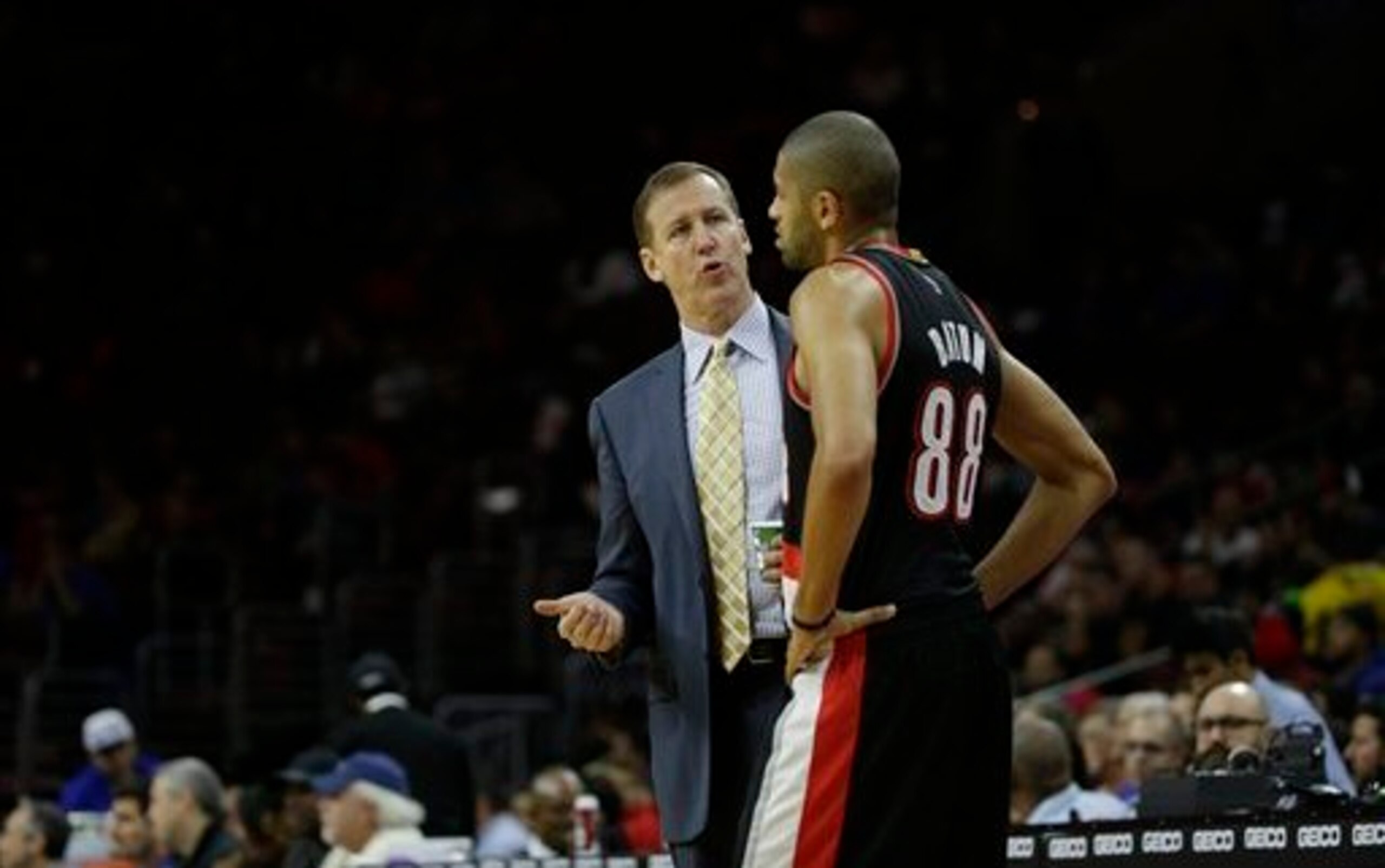
2014-15 Statistics: 8.9 points, 6.6 rebounds, 4.6 assists, 37.5 percent shooting
It’s a bit of a luxury when one of your best players shoots 37.5 percent and you don’t miss a beat.
That’s been the Blazers and Nicolas Batum’s struggles in a nutshell.
The do-it-all swingman suffered a knee contusion early on and has since tried to work himself back into in-game form. Batum’s passing, rebounding and defense are still there, but his shooting has been poor over the last six games.
It’s potentially an indication of his knee still giving him trouble when rising for jumpers, but Batum has shot an unsightly 13.7 percent since returning from injury.
He has still averaged 8.8 points, 5.3 rebounds and 3.3 assists in that span, with Portland going 5-1.
Most of those games have come against lesser competition, with just the loss against the Memphis Grizzlies as a matchup with a team over .500.
It’s therefore fortunate in a way for Batum to struggle against subpar competition as he looks to find his rhythm once again.
Yet per Joe Freeman of The Oregonian, the knee hasn’t just required rest:
"According to a source with knowledge of Batum's injury and treatment, the Trail Blazers' starting small forward spent last Monday in a Vancouver doctor's office receiving two rounds of PRP injections in his right knee. The nonsurgical procedure, which first became well known in Portland during the Brandon Roy era, is a process that involves extracting a patient's blood, running it through a centrifuge -- which separates red blood cells from platelets -- and re-injecting the resulting fluid into the injured area, in this case Batum's right knee. A source close to Batum said his injury isn't simply a right bone contusion, though the source could not state exactly what the ailment is. That said, there are no concerns about the long-term health of his knee.
"
His near triple-double play was a constant prior to his missing time, so it’s merely a waiting game before his pesky knee just chills out.
At least, that’s what Rip City hopes.
5. Chris Kaman, C
7 of 11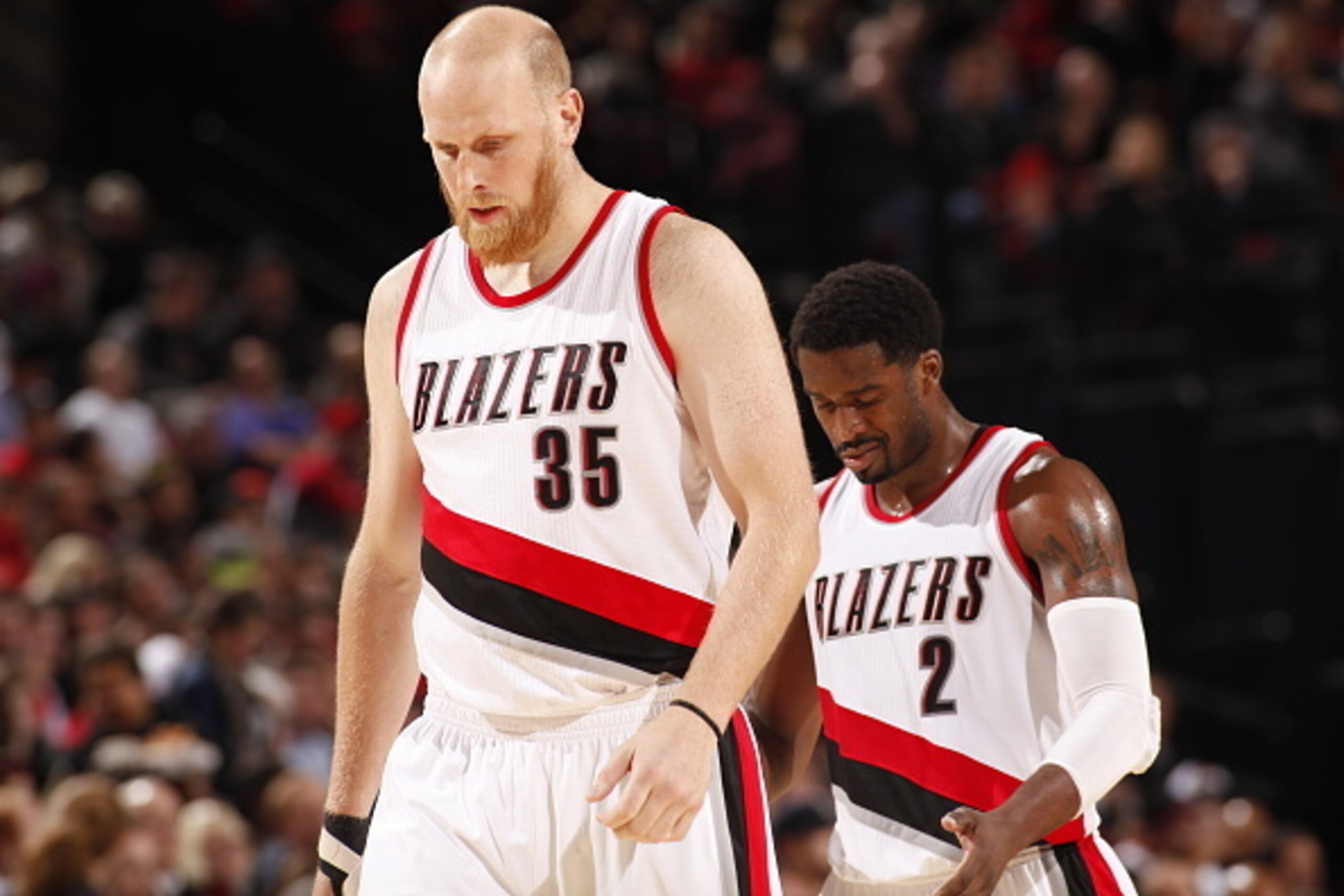
2014-15 Statistics: 11.1 points, 7.2 rebounds, 50.6 percent shooting, 20.1 PER
When the Blazers signed Chris Kaman in the offseason, there were high hopes.
He has fulfilled them so far.
Kaman has been a dependable player for Portland, chipping in starter-like numbers with high efficiency. He’s having one of the better seasons in his late career, averaging point and rebound numbers not seen since his 2011-12 stint with the then-New Orleans Hornets.
He has been a shoot-first big man down low for the Blazers, filling a void that was glaring during all of last season. The lack of another go-to option besides the starting players was blatant for much of the year, but Kaman’s level of consistency off the bench has been stellar.
His PER of 20.1 is No. 3 for the team, with his 106.0 offensive rating and 96.0 defensive rating, courtesy of NBA.com, allowing Portland to go long stretches to rest the starters.
Kaman has been the foremost reason in the Blazers bench jumping from a 27.3 efficiency mark last season (No. 30) to a 34.2 mark this season (No. 18), per Hoops Stats.
He’s also put in work off the court as well, taking the developing Leonard under his wing, per Erik Gundersen of The Columbian: "I mean, the anxiety and all that, that was me. I couldn't slow myself down. I took a long time to figure that out. Getting a level head, learning what to do and not to do comes with experience. I was on some bad teams and they let me play through some bad times to get experience."
Whether he’s in the pick-and-roll or letting the young players pick his brain, the big man has been stellar for the Blazers so far.
4. Robin Lopez, C
8 of 11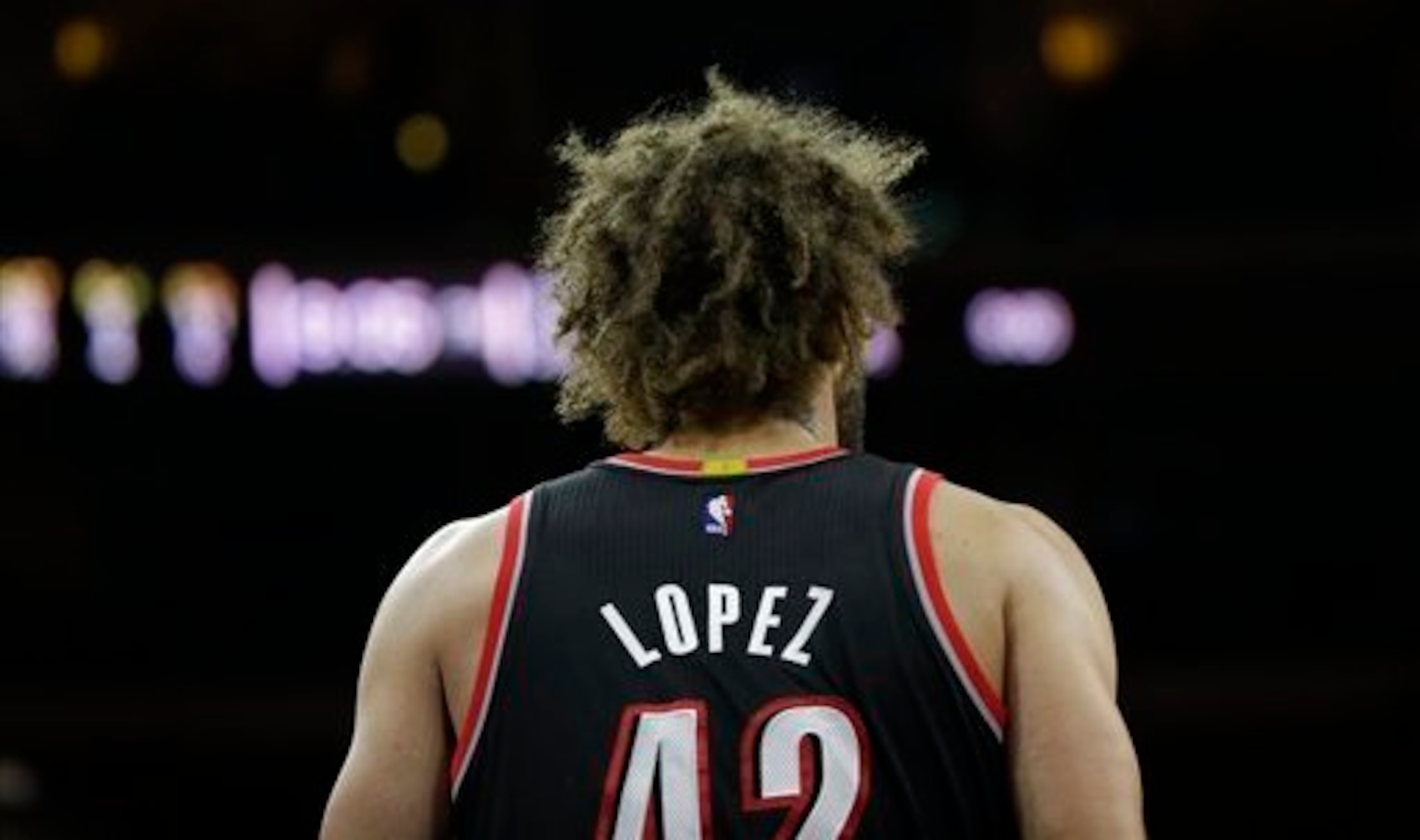
2014-15 Statistics: 11.1 points, 7.3 rebounds, 1.8 blocks, 53.4 percent shooting
Robin Lopez might be seeing a lesser role with Kaman on board, but his production has been just as terrific.
His minutes have dropped from 31.8 per game during the 2013-14 season to 27.7 per game this season, largely due to the improved play of Freeland and the addition of Kaman.
But even considering that, Lopez is still putting up similar numbers and contributing in every which way possible.
Even if that’s kicking back on the sidelines and cheering on his teammates.
Lopez’s 11.1 points and 7.3 rebounds largely mirror what Kaman has been able to do as a reserve, albeit with a stronger defensive presence. RoLo’s impact goes beyond the 100.0 defensive rating next to his name, per NBA.com, with his size and strength being a big part of Portland’s improved defensive effort this season.
His play in the paint on both ends is just what the team has needed, with his rebounding, passing and even timely scoring all coming when necessary. It’s hard to imagine a better fit for the Blazers at the center position, which will ultimately have a big impact over the course of the season.
Not as big as that hair, though.
Or maybe bigger.
You guys decide.
3. Wesley Matthews, SG
9 of 11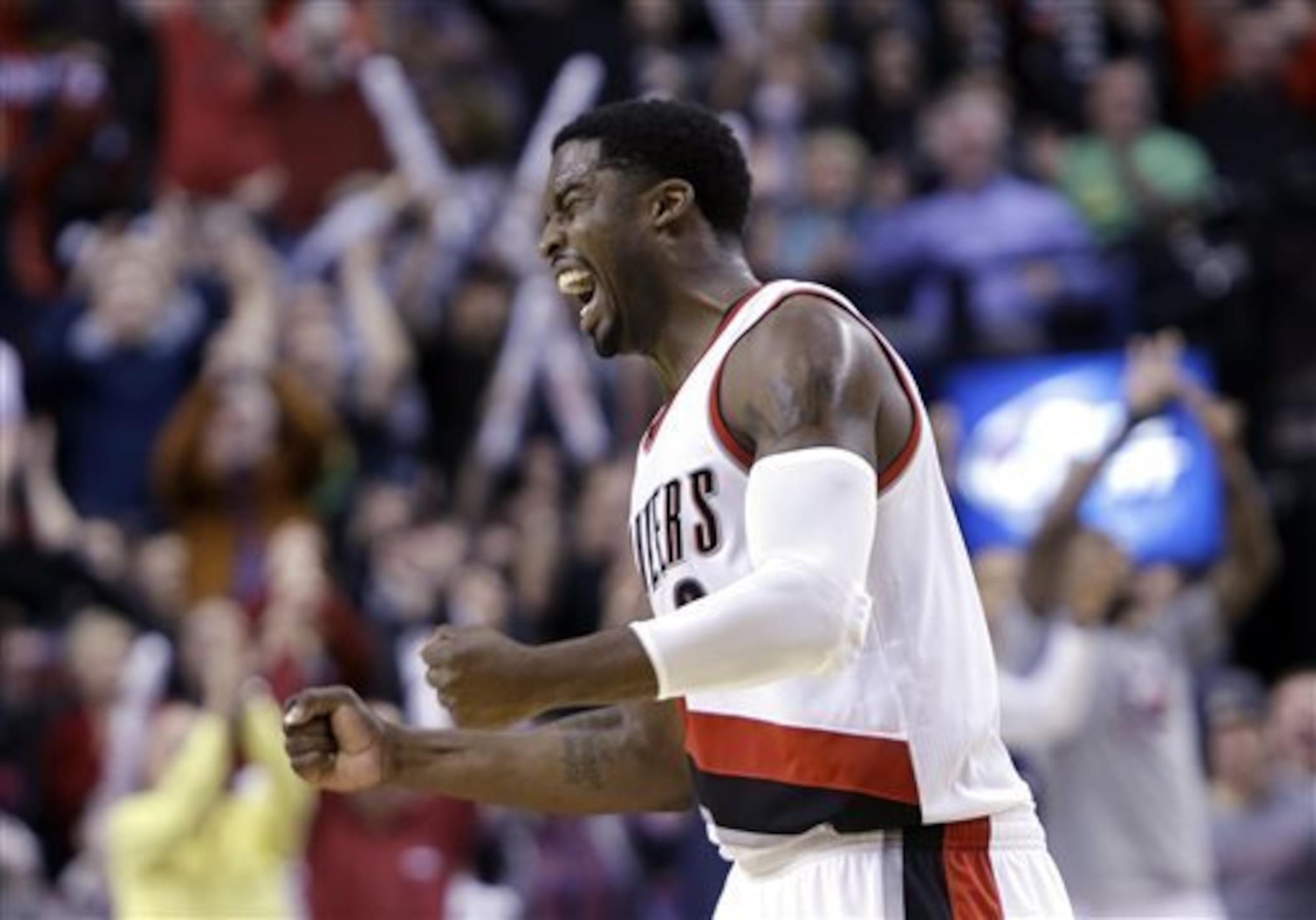
2014-15 Statistics: 17.3 points, 4.1 rebounds, 2.6 assists, 49.3 percent shooting
Wesley Matthews started the season hot and simply hasn’t slowed down.
He’s shot below 50 percent in just seven of 17 games so far, in addition to being a knockdown shooter to this point. Matthews has made and attempted the most three-point field goals in the NBA this season, converting 40.9 percent of them.
His 3.1 threes per game trail the Golden State Warriors’ Stephen Curry’s 3.2 per game mark by a sliver, ranking No. 2 in the league.
Matthews’ play from outside over the last three games has been off the charts as well, as he is averaging 6.3 made three-point field goals. The sixth-year guard is no doubt having a career year, which is also coming in the last year of his contract with the Blazers.
Matthews is doing more than a $7.2 million contract for this year, per Basketball Insiders, would normally merit, which will bring a host of suitors to his door in free agency.
But let’s not get too ahead of ourselves.
Matthews has paired a deadly outside stroke with a nimble post-up game, creating another reliable go-to option for Portland offensively. A large portion of his field goals have come assisted at 62.6 percent, courtesy of NBA.com, but it’s still a lesser number than last season’s 72.8 percent mark.
His work as an intense defender should be noted as well; he is providing skilled on-ball defense without gambling or losing sight of his man.
It’s safe to say the Blazers wouldn’t have quite the same amount of success to this point without Matthews’ play. He has emerged as an unequivocal offensive weapon and one that Portland will take advantage of going forward.
Keep a tab on whether or not Iron Man ever cools off.
2. LaMarcus Aldridge, PF
10 of 11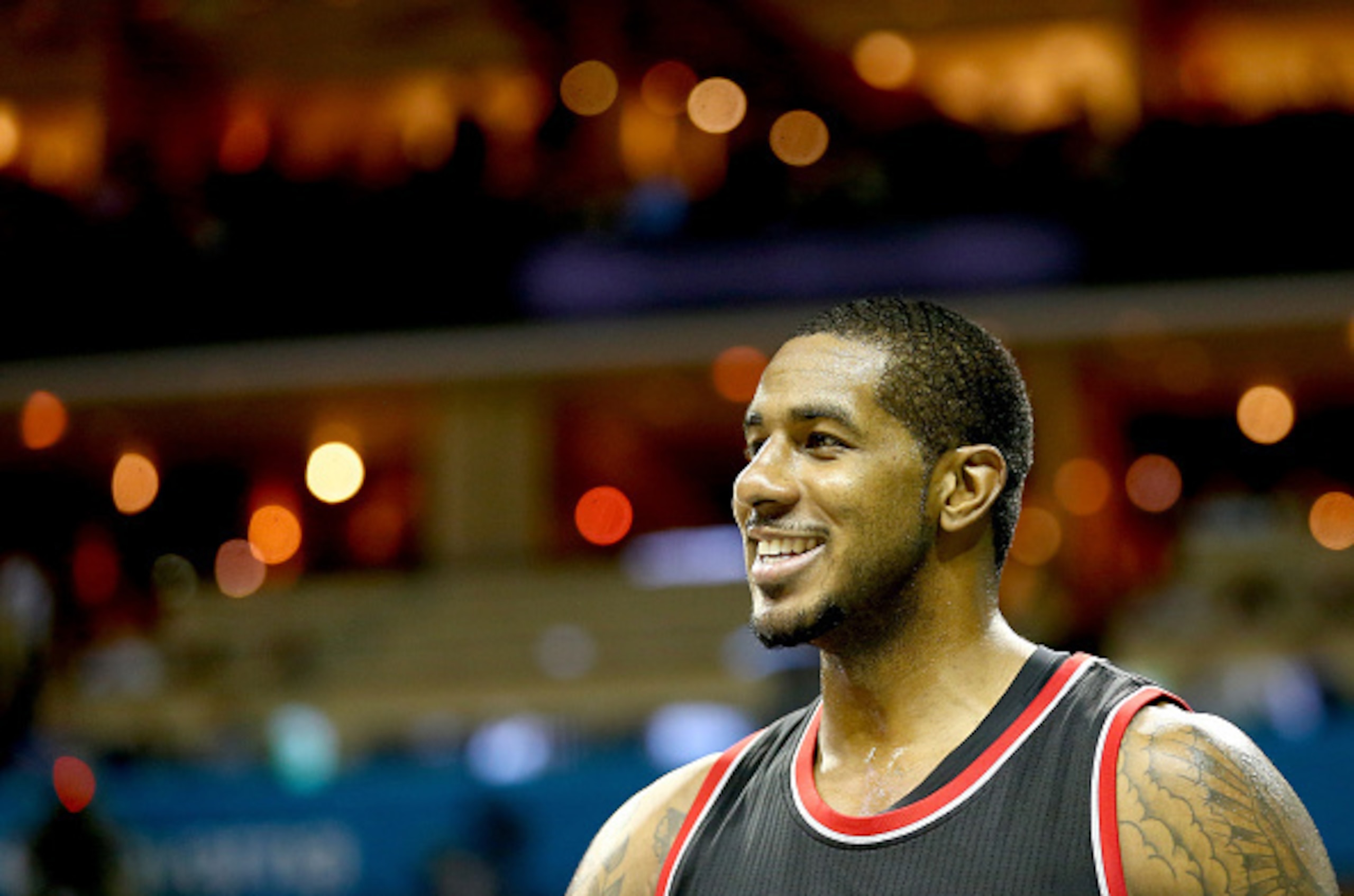
2014-15 Statistics: 21.4 points, 9.6 rebounds, 1.2 blocks, 45.2 percent shooting
Portland’s two All-Stars are pretty much interchangeable at No. 2 and No. 1. This time around, though, Aldridge takes the short straw.
That isn’t to say the big man has played with less proficiency than his point guard, but Lillard has a very slight edge in terms of overall effectiveness.
Aldridge is coming off a career-best season during 2013-14, but has played with respectable numbers to rival it. His scoring and rebounding are down, but both can be attributed to the team’s different look.
He is no longer relied upon to score, rebound and do just about everything else, namely with Kaman pinching a few of his opportunities.
His 45.2 percent shooting is in fact a career-low mark, as Aldridge has struggled with his shot early on. Per NBA.com, he’s converted on just 36.5 percent of his jump shots and 39.3 percent of his layup attempts.
His characteristic turnaround jumper from the post is also lacking at 36 percent.
Aldridge has had highs and lows offensively this season, namely a 3-of-18 shooting night against the Charlotte Hornets on Nov. 26 being the lowest to this point.
What’s noteworthy, however, is his three-point shooting.
Despite his struggles putting it up from outside, Aldridge has made more three-point field goals thus far (eight) than in his past three seasons combined (seven). That may be by design, with him attempting at least one three-point field goal per game, thought it may be a product of just how spread out the Blazers offense is.
Moreover, at least he has been able to hit shots from outside at a consistent rate at 50 percent. It’s normally the other way around, with players needing to take a step or two closer to the rim to get their shot going before moving back out.
But not with LMA.
At least for now.
1. Damian Lillard, PG
11 of 11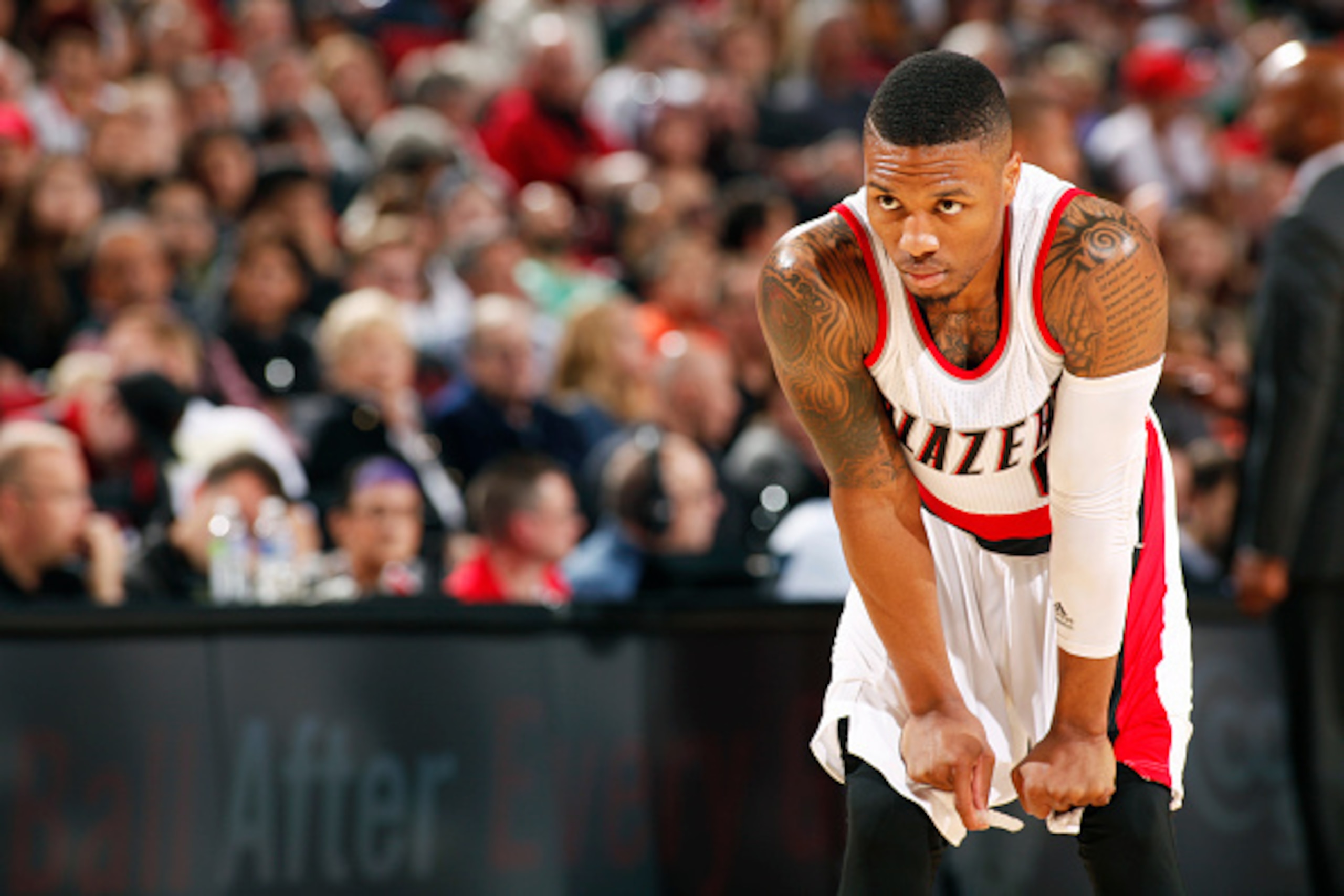
2014-15 Statistics: 19.9 points, 5.0 rebounds, 6.8 assists, 1.4 steals
Though Aldridge is the first option offensively and the current alpha dog of the Blazers, Lillard gets the nod for No. 1 in the power rankings.
Aldridge’s struggles were well-noted, while Lillard has gone above and beyond his usual play, performing at high efficiency and doing more than expected.
The point guard is performing much better offensively, upping his shooting percentage from 42.4 during last season to a 46.3 percent clip to this point. Lillard is also shooting 42.5 percent from three-point range, trailing his teammate in Matthews and sharpshooter Curry in made three-point field goals.
In addition to that, Lillard is dishing out a team-high 6.8 assists per game, as well as 5.0 rebounds per game which ranks No. 4 among all point guards.
He had a slow start to the year, shooting below 40 percent through his first three games, but has since stormed back to his usual self.
Lillard sees no end in slowing down though, per Dan Feldman of Pro Basketball Talk:
"Understanding why you are who you are. I know didn’t come here because I was a big-time recruit or nothing. I had to work my ass off to make it happen. Now that I made it, that doesn’t change. You have to stick to what gave you the opportunity. I’m a worker, I always find ways to improve, to better myself. I’m not afraid to challenge myself.
"
Truer words could not have been spoken, as Lillard mindset shines through his play on the court. Aside from his scoring average (by a measly 0.8 points), all of Lillard’s major statistics have been career-high marks to this point.
His PER of 23.0 leads the team as well, ranking No. 14 among all players.
Lillard is showing no signs of slowing down, leading this Blazers team to what many hope is increased success on the back of last season’s run.
There’s still a long way to go, but when the moment strikes, keep an eye out.
It’ll be #LillardTime.
All statistics courtesy of ESPN.com, unless otherwise noted.



.jpg?w=2560 "Aikman Blasts Cowboys WR 🫣")
.jpg?w=2560 "Jonathan Taylor Landing Spots")