The One Key for Each NBA Team in the 2014-15 Season
As NBA teams are running out of the gate, they find themselves preoccupied with some objective within the roster or staff.
For some, like the Cleveland Cavaliers, the issue is getting new teammates on the same page.
Steve Kerr and Lionel Hollins are among the coaches adjusting to their new surroundings.
The Oklahoma City Thunder must work around injuries to key players to survive.
Some teams, such as the Milwaukee Bucks, Orlando Magic and Philadelphia 76ers, need developmental signs to show that they are heading in the right directions.
Follow along to see what each team must focus on in order to succeed or find peace this season.
Statistics are through Nov. 2 games. Unless otherwise stated, advanced metrics come from basketball-reference.com.
Atlanta Hawks: Al Horford's Health
1 of 30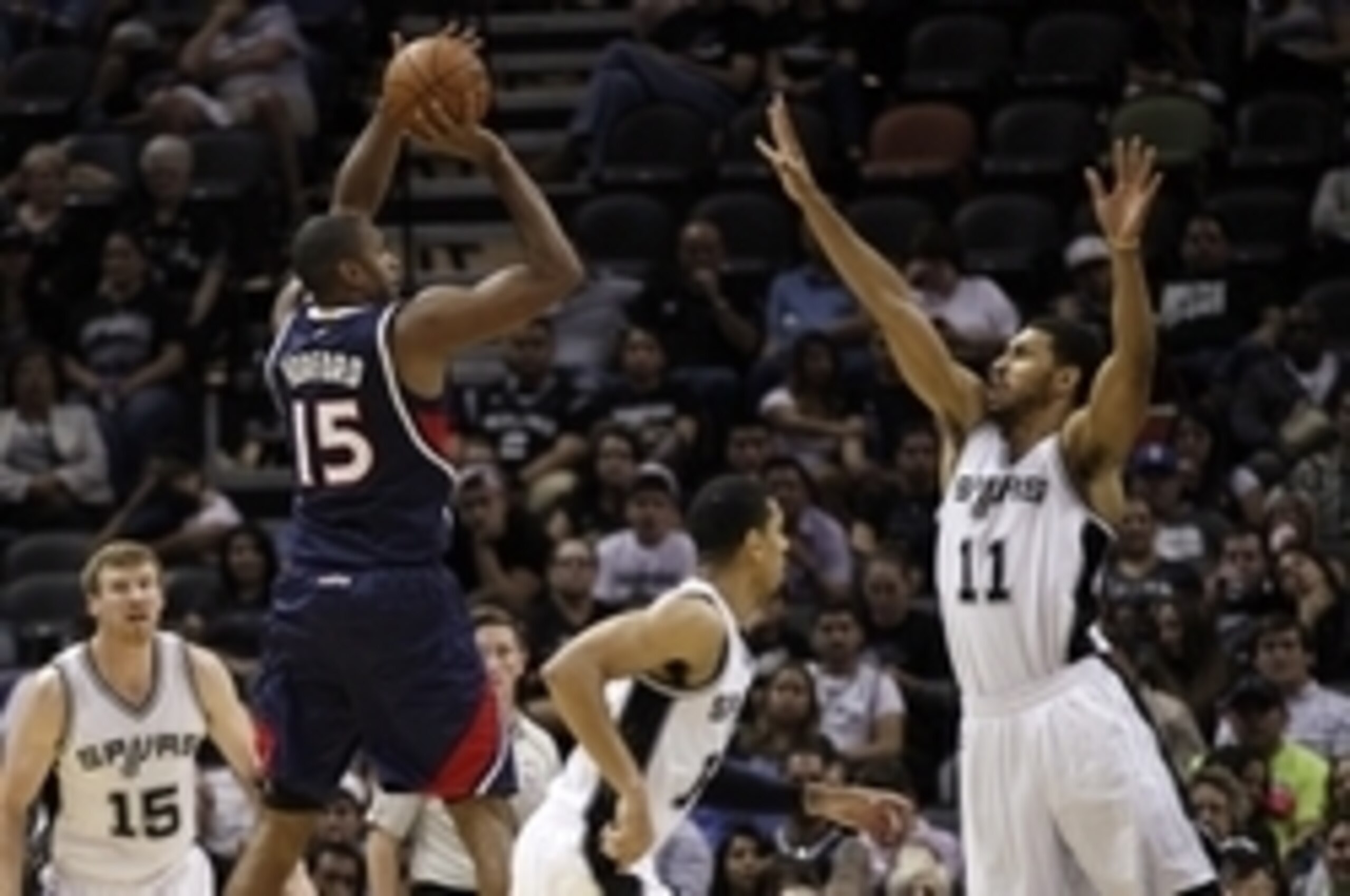
Al Horford went down for the 2013-14 season with a torn pectoral muscle as the Atlanta Hawks stood third in the Eastern Conference. Without him, they scraped to an eighth-place finish.
Horford's inside scoring, defense and rebounding could help drive the Hawks back to a spot in the middle of the playoff bracket.
Dime Magazine called the eight-year pro "one of the most versatile bigs in the league," noting his ability to shoot from different ranges and his place as the Hawks' defensive anchor.
He's been a key shooter for the Hawks for the past couple years, averaging 17.7 points on 14.4 field-goal attempts per game and 54.9 percent shooting.
Horford averages 9.5 rebounds per game for his career. Since 2012-13, his defensive rebounding percentage has been 22.5 percent.
He has been key to their defense, allowing 104 points per 100 possessions for his career. Atlanta slipped without him, allowing 106.3, one more than beforehand.
He had a decent start, averaging 16 points and 8.5 rebounds per game while shooting 51.7 percent from the field in two contests.
"I think he is getting more comfortable on the offensive end and finding ways he can contribute. His jumper, he is a great mid-range shooter and he'll continue to work on that," head coach Mike Budenholzer said after Saturday's game against the Indiana Pacers, as quoted by the Atlanta Journal-Constitution.
Boston Celtics: Development of Young Players
2 of 30
The Boston Celtics have hardly anyone equipped to help them reach the playoffs this year.
As Moke Hamilton said in Basketball Insiders' Celtics preview, "this is a team heading into the second year of what may be a long rebuilding effort."
They have six players younger than 25 years old, and each of them has much growth to show.
After a rough final season at Oklahoma State, Marcus Smart didn't fare well in his first two NBA games, scoring six points per game on 21.4 percent shooting. He has succeeded defensively, allowing 103 points per 100 possessions and grabbing two steals per game.
Second-year center Kelly Olynyk has been productive, averaging 13.5 points per game on 55 percent from the field, a nice show after he had 8.7 per game on 46.6 percent last year.
The Boston Globe's Bob Ryan expressed excitement about Olynyk's start, saying, "Any big man who can shoot that well from the outside and who can pass the way he does can enhance an offense."
Avery Bradley showed his first full year of promise last year, averaging 14.9 points per game on 43.8 percent shooting. The fifth-year pro is averaging 10.5 per game on 41.7 percent thus far.
If Olynyk, Smart, Bradley, Jared Sullinger and James Young grow throughout the season, head coach Brad Stevens has enough of which to be proud, even if they don't compete for a playoff spot.
A quick turnaround offensively by Smart may quicken the effort to trade Rajon Rondo. Since the Celtics aren't likely to make the playoffs, Smart could show his potential as a starting point guard, hastening the nine-year pro's exit.
Brooklyn Nets: Living with Lionel Hollins
3 of 30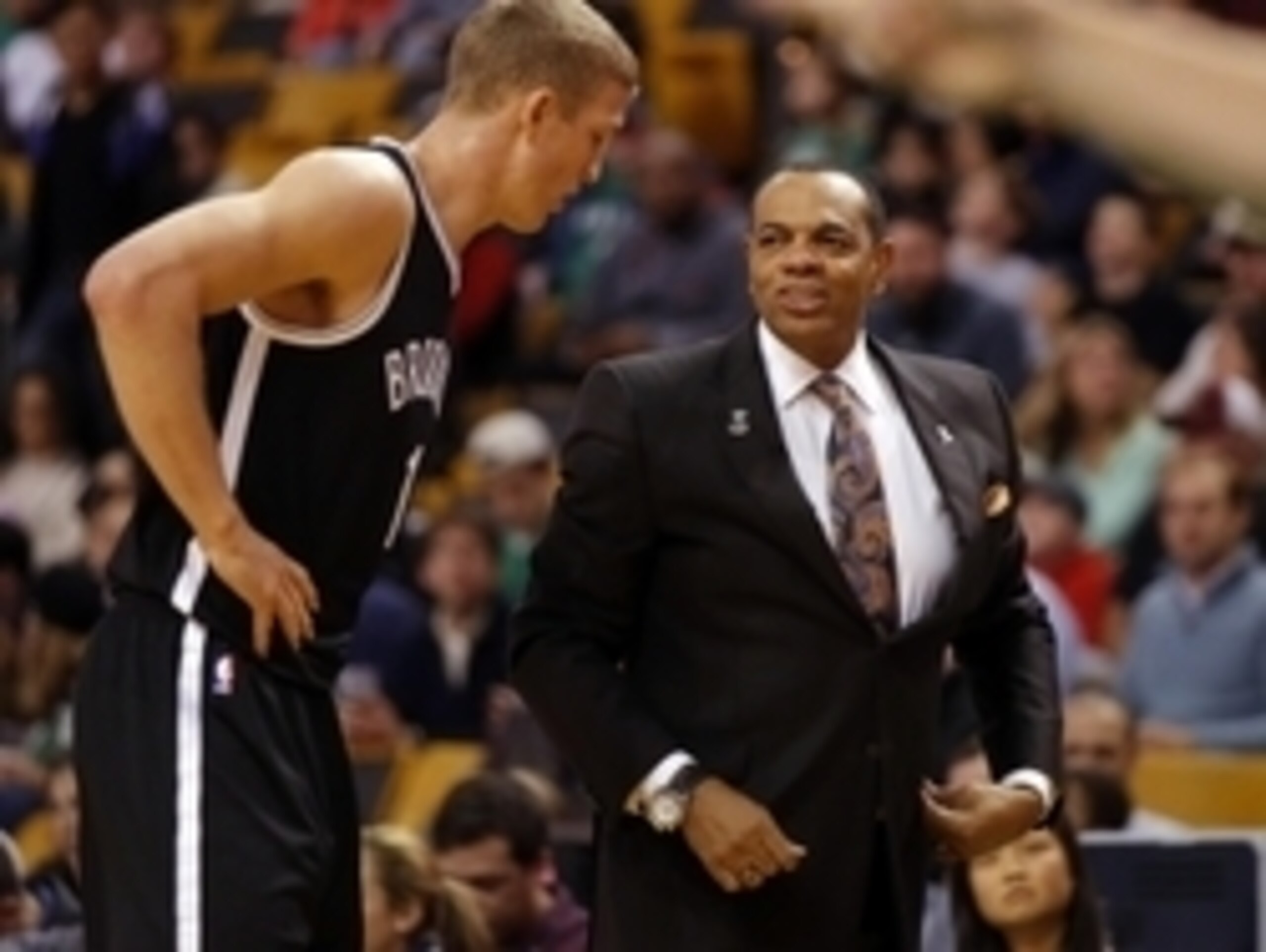
As the players he led for the Memphis Grizzlies can attest, Lionel Hollins isn't easy to play for. The first-year Brooklyn Nets head coach will force guys to play tough and run them through heavy minute loads. Marc Gasol, Zach Randolph and Mike Conley saw 34 or more minutes per game in three of four seasons under Hollins.
Hollins isn't afraid to call out players. He questioned Brook Lopez's toughness in October, telling the New York Daily News, "When you're 7-feet and 260 pounds, I'd like him to be a force."
He's exhorted passion to rookie Bojan Bogdanovic, as he told ESPN New York, "I just told him keep playing, being aggressive and just play your game."
Hollins pushes players to play defense.
He expressed frustration after they allowed the Celtics to score 121 points in the opener, telling ESPN New York, "It was like open gate, and all the sheep got out the gate. It was layup after layup."
The Nets responded by holding the Detroit Pistons to 90 points on 42.1 percent shooting.
If the veteran-led Nets can maintain intensity and defend respectably, they should keep Hollins' trust.

Charlotte Hornets: Lance Stephenson's Maturation
4 of 30
In their last year as the Bobcats, Charlotte was top-five defensively, but ranked 24th in offensive rating. The Charlotte Hornets picked up Lance Stephenson in hopes that he could help them shore up their scoring.
He turned the corner for the Indiana Pacers last season, averaging 13.8 points per game on 49.1 percent shooting.
Stephenson won't have the support he had in Indiana. As Pro Basketball Talk's Dan Feldman said:
"From criminal to clownish, Lance Stephenson has nearly halted his upward trajectory many times. But—thanks in large part to Larry Bird and the Pacers—Stephenson has overcome. The organization nurtured him. While many teams let marginal prospects sink or swim on their own, Bird took special care with Stephenson.
"
Hornets owner Michael Jordan won't be as hands-on. He told ESPN he would give Stephenson freedom, but step in if he's going wrong.
Thus far, Stephenson has disappointed. He's averaging 7.7 points per game on 29.6 percent from the field. He amounted two points on 1-of-6 shooting against the Memphis Grizzlies on Saturday, causing head coach Steve Clifford to bench him for the fourth quarter.
"He just didn't play very well. I coach to win. I went with the team that played the best," Clifford explained to NBA.com.
Hardwood Paroxysm's Scott Rafferty stated that the Hornets aren't creating spacing and "[Kemba] Walker and Stephenson haven't been able to find the seams to the basket that enable them to shine."
That doesn't mean the fifth-year pro, who took three three-pointers in the first two games, can't make up for it with his perimeter stroke. He was decent from the outside last year, shooting 35.2 percent from long range while taking 28 percent of his shots from that distance.
The Charlotte Observer's Scott Fowler criticized Stephenson's immature play, saying, "Clifford obviously isn't happy with his team freelancing its way through a lot of offensive possessions. Stephenson—while not all of the problem—is a big part of that."
Chicago Bulls: Involvement of Rookie Scorers
5 of 30
Chicago Bulls head coach Tom Thibodeau was averse to playing rookies before this season. Jimmy Butler and Marquis Teague received less than nine minutes per game as rookies. Tony Snell played 16 per game last year.
But Nikola Mirotic and Doug McDermott are much more skilled than the aforementioned trio. McDermott is a talented perimeter shooter who shot 45.8 percent from long range in his college career.
Mirotic is a terrific all-around scorer.
Still, Thibodeau has been slow to give them many minutes. McDermott averaged 17.7 minutes in the first three games, while Mirotic had 16 per game.
The Bulls need to use them more often to boost an offense that was 28th in offensive rating last year and doomed them in the playoffs as they averaged 90 points per game in the first-round loss to the Washington Wizards.
McDermott had a rough start, shooting 37.5 percent from the field and 20 percent from downtown.
Meanwhile, Mirotic, who saw 19 minutes in the first two games, has shot 50 percent and showed why he deserves substantive action against the Minnesota Timberwolves on Saturday, posting 12 points and eight rebounds in 28 minutes.
Grantland's Zach Lowe noted their combined effect, tweeting after the opener, "When the Bulls put Mirotic and McDermott on the floor together, you felt the spacing effect. Best shooting of any Rose-era contender."
Indeed, the Bulls are crowded at power forward, with Pau Gasol and Taj Gibson ahead of Mirotic. While Gibson is a superior defender, Mirotic gives more offensively and can defend capably. Gasol has faded enough in the past few years that he lacks any edge on the Montenegrin.
Thibodeau could rotate Gibson and Mirotic situationally, using Mirotic more when facing teams they need more scoring to keep pace with. McDermott won't get as many chances due to his failure to keep opponents in front of him, allowing 108 points per 100 possessions, but should find spots with Mirotic to create the spacing of which Lowe speaks.
Cleveland Cavaliers: Smooth Offense
6 of 30
The Cleveland Cavaliers have several new pieces, including two new stars, and they'll take time jelling offensively.
Kevin Love admitted his struggle adjusting to having to share touches, telling the Northeast Ohio Media Group's Chris Haynes, "My entire life I've played the game from inside-out. So the more touches I can get going inside the better. I'm not accustomed to starting out a game shooting a three, so it's just something that I see."
LeBron James struggled to shoot and distribute in the opener, hitting 5-of-15 from the field and committing eight turnovers to four assists.
Love acknowledged that the Cavs were out of sync offensively, telling the Plain Dealer, "I think we were sloppy with the ball. We didn't get into our sets."
They controlled the ball better in the second game against the Bulls, turning it over nine times, but shot 39.4 percent from the field. LeBron committed three of those turnovers.
LeBron and his teammates must communicate so that they understand when he's trying to create opportunities. This is part of his offensive mastery, and the other Cavs should be ready for those chances.
Dallas Mavericks: Perimeter Shooting
7 of 30
The Dallas Mavericks' hope of rising above last year's eighth-place finish in the Western Conference depends of the success of their perimeter shooting.
Last year, Monta Ellis tied his third best field-goal percentage at 45.1 percent, which was 3.5 percent better than the year before, and had a reasonable three-point mark at 33 percent. In the process, he scored 19 per game.
That boost in efficiency helped lift the Mavericks. He's continuing his fine aim this year, averaging 19 points per game on 50 percent from the field through three games.
Chandler Parsons will be a major part of Dallas' outside game after they signed him in the offseason. He averaged 16.6 per game for the Houston Rockets last season on 47.2 percent shooting and 37 percent from three-point range. The fourth-year small forward has started a bit slower, scoring 15.3 per game on 43.6 shooting.
The Sporting News' Dane Carbaugh noted how Parsons' open-court ability will help the Mavericks, saying, "In kicking up the pace with Parsons, Dallas could find themselves easy, efficient buckets that would save some wear-and-tear on an aging Dirk Nowitzki."
They might need to monitor Nowitzki. The 36-year-old averaged 21.7 points per game on 49.7 percent from the field and 39.8 percent from long range last year while holding a 26.9 percent usage rate.
Nowitzki's perimeter preference makes the game easier on his body, but the balance of shooters should work to ease the load on him.
The 17-year veteran has started well, averaging 18.7 per game on 55.8 percent from the field.
Jameer Nelson will help somewhat. He has faded as a shooter, but had a decent three-point stroke last year, shooting 34.8 percent. He's started well, hitting 50 percent from beyond the arc.
As Pro Basketball Talk's Dan Feldman noted, the Mavericks have been top five in offensive rating nine times since Nowitzki became a full-time starter. Another such year is in the works if he, Ellis and Parsons hit their marks.
Denver Nuggets: Frontcourt Development
8 of 30
Kenneth Faried is a thick, powerful big man who could be a force on the inside.
Faried posts promising stats, although during short minutes. In 2013-14, he had 13.7 points and 8.6 rebounds in 27.2 minutes per game.
He gets beaten defensively, allowing 106 points per 100 possessions last year.
As CBSSports.com's Matt Moore said in a podcast, "He doesn't keep that mental awareness to make that second or third rotation and that's where he ends up giving up a lot of points."
He's had an extraordinary first two games, averaging 14.5 points and 11.5 rebounds in 26.5 minutes per game while shooting 55 percent.
The Nuggets' centers are far from sure bets. Timofey Mozgov and JaVale McGee will share minutes. Mozgov is capable. He averaged 9.4 points and 6.4 rebounds in 21.6 minutes per game last year. He isn't impressive defensively, having allowed 106 points per 100 possessions.
McGee, who has underwhelmed throughout his six-year career, missed all but five games of last season due to injury.
Head coach Brian Shaw declined to guarantee him a spot in the rotation, but allotted him 20 minutes in the second game and said he looked good defensively.
"I thought he was doing a good job of patrolling the middle," Shaw told the Denver Post of McGee, who blocked four shots.
McGee needs to play consistently in order to instill confidence from Shaw.
Led by Arron Afflalo and Ty Lawson, the Nuggets' backcourt provides plenty of scoring. But the Nuggets need Faried to play well enough on both ends and meaningful production from the 5 spot to reach a playoff spot.
Detroit Pistons: Accurate Perimeter Shooting
9 of 30
The Detroit Pistons can count on Andre Drummond and Greg Monroe producing on the inside, but they need better output from the perimeter players.
Josh Smith has taken a quarter of his shots as long twos in his career, making 34.9 percent.
D.J. Augustin is averaging 13.7 points per game, but only shooting 36.4 percent from the field and 23.1 percent from three-point range.
If the Pistons are to compete for a playoff spot, they need better accuracy from the outside.
Golden State Warriors: Steve Kerr Acclimating to Head Coaching
10 of 30
Steve Kerr has spent a fair amount of time in basketball organizations since retiring in 2003. He spent a couple seasons as the Phoenix Suns general manager and has held a minority ownership stake in the franchise.
Now, he faces new pressure with the Golden State Warriors as head coach. He must get the best from a talented offensive unit that features one of the best backcourt combinations in the NBA, Klay Thompson and Stephen Curry.
Curry had a slow start last year, shooting below 44 percent from the field in the first two months, but came on strong shooting 48.8 percent after the All-Star break.
Kerr will need to create sets that allow space for them, as well as opportunities for three-pointers off the dribble, which Curry has managed on occasion.
Already, Kerr has made a controversial decision, starting Harrison Barnes at small forward instead of veteran stopper Andre Iguodala.
"So from that standpoint, you could call me an idiot. If he's the best player and I'm not starting him, maybe I'm the one who's wrong," Kerr told The Bay Area News Group.
Houston Rockets: Complementary Scoring
11 of 30
The Houston Rockets know Dwight Howard and James Harden will provide high-volume scoring, even if Howard doesn't do it in the most effective way. They combined for 43.7 points per game last season. Through three games of 2014-15, they averaged 41.7 per game.
The greater concern is whether they can get enough from the supporting cast after losing Chandler Parsons in free agency. Two other returning players, Terrence Jones and Patrick Beverley, averaged double figures last season.
Eric Freeman of Yahoo Sports said Jones "has the best chance to step up to another level of production."
Jones has started well, averaging 16.7 points per game.
Houston pinned hope of replacing Parsons' production at the 3 spot with Trevor Ariza. The 11-year veteran is an unspectacular perimeter shooter, averaging 9.7 points per game on 43.5 percent from the field and 35 percent from long range for his career. Last year, he shot a career-high 40.7 percent from three-point range for the Washington Wizards.
One would be hesitant to say he could repeat that in his basketball midlife at age 29.
Ariza has started strong, averaging 15 per game on 55.2 percent from the field and 55.6 percent from beyond the arc.
The 26-year-old Beverley, who has played 99 games, boasts scant history to suggest he'll give much more than his 10.2 per game from last season. He has averaged eight per game on 41.7 percent shooting thus far.
Indiana Pacers: Frontcourt Scoring
12 of 30
With Paul George out, the Indiana Pacers have little backcourt scoring on which to fall back. That leaves them turning to their big men to pour in points.
Roy Hibbert and David West had been accustomed to being complementary options to George. In the past three years, Hibbert has averaged between 10.8 and 12.8 points per game while taking between 9.3 and 10.9 shots per game. In that time, West has posted between 12.8 and 17.1 points on 10.8 to 13.8 shots per game.
Now, they must become more aggressive.
To a degree, Hibbert has responded. He's second on the team with 14.7 points per game on 56 percent shooting. Also, he's forced his way to the free-throw line, connecting on 76.2 percent and taking seven free-throw attempts per game.
As West sits out the beginning of the season with a sprained right ankle, Luis Scola has averaged eight points in 23 minutes per game while shooting 52.4 percent from the field.
Head coach Frank Vogel told USA Today he wants to attack the rim. Hibbert and West, who take more than 20 percent of their shots at the rim, give them a chance to do that.
The Pacers can't expect Donald Sloan, Chris Copeland and C.J. Miles to continue scoring significant amounts. Hence, they must lean on their established big men.
Los Angeles Clippers: A Great Contract Year by DeAndre Jordan
13 of 30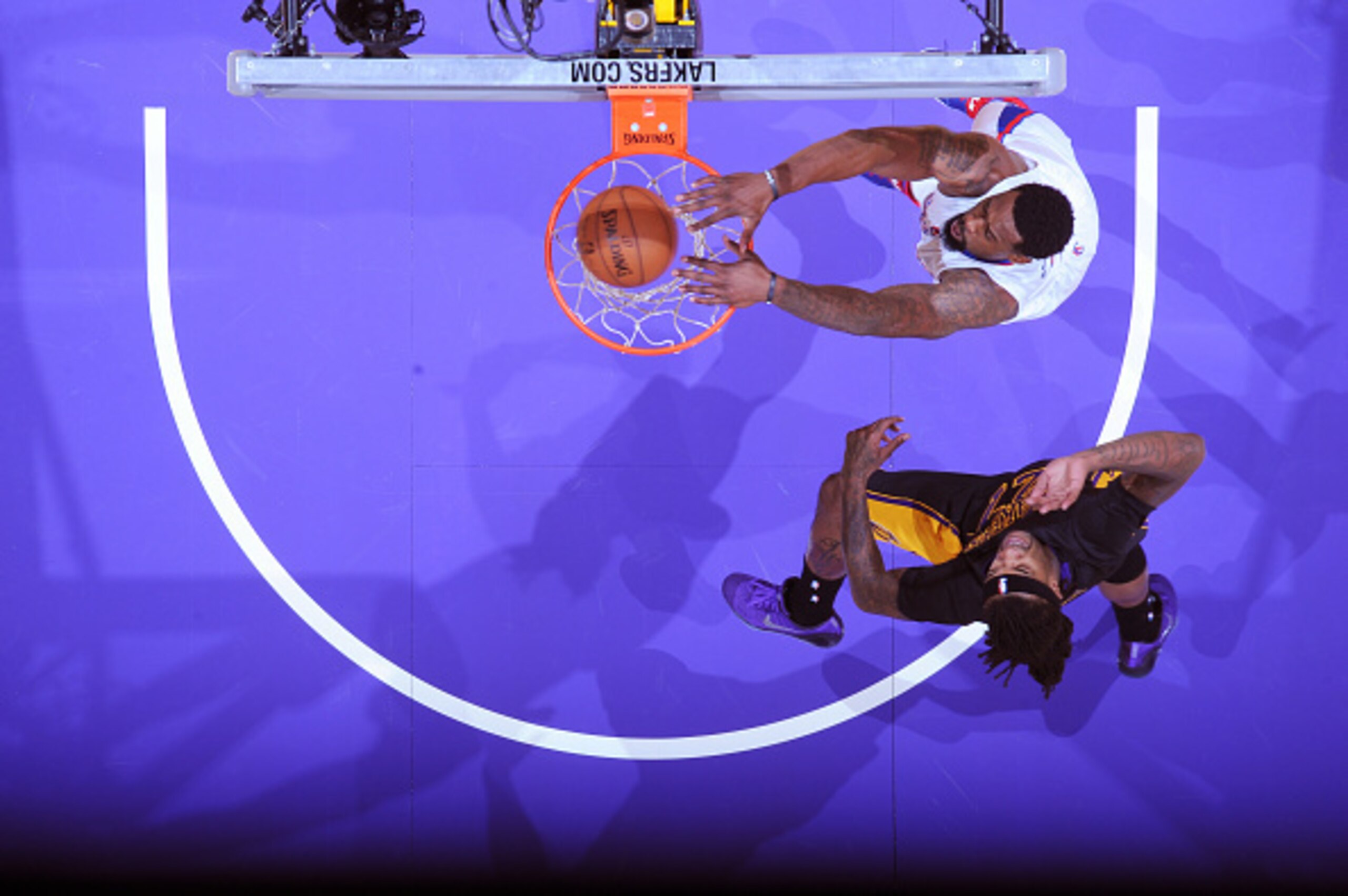
Chris Paul and Blake Griffin have cemented their positions among the best at their respective spots. DeAndre Jordan must do the same in a contract year to help the Los Angeles Clippers win a championship.
Jordan turned the corner last season, averaging 10.4 points per game on a league-leading 67.6 percent shooting while also leading the NBA with 13.6 rebounds per game. While earning more than 30 minutes per game for the first time, he fortified his reputation as a rim protector, allowing 98 points per 100 possessions.
"He's just a great defensive player and he gets to places a lot of people don't get to. He has quick hands and he's moving his feet now, which is something he worked on this summer," head coach Doc Rivers told the Orange County Register.
He's had a fair start, averaging eight points per game on 68.8 percent shooting while grabbing 10.7 rebounds per game and blocking two shots per.
If he remains efficient offensively and elite on the other end, the 26-year-old will fit the Tyson Chandler mold as a protector who deposits putbacks.
Los Angeles Lakers: Glimmers of Kobe Bryant's Greatness
14 of 30With Steve Nash and Julius Randle out for the season, the Los Angeles Lakers are far from having a competitive year. Besides Randle, L.A. had no developmental pieces to monitor.
Now, the Lakers' best hope for excitement is Kobe Bryant's ability to roll out as many great games as his aging body will allow.
Kobe is averaging 24.8 points per game through four contests. That he has shot 41.2 percent is immaterial as the Lakers can't worry about his inefficient shooting with their dim playoff hopes. He's still capable of producing memorable plays.
After throwing down a reverse dunk, he told insidesocal.com, "I shocked the [heck] out of myself. I am old I feel strong though."
While they wait for their future star to become healthy, the Lakers can enjoy the burning embers of a 36-year-old who once was on top of the game.
Memphis Grizzlies: Better Scoring
15 of 30A sinking feeling fell on Memphis Grizzlies fans after the Oklahoma City Thunder eliminated them in seven games in the first round of the playoffs. Kevin Durant and Russell Westbrook combined for 60 points or more in Games 6 and 7. All three of the Thunder's regulation wins were by double digits.
This year, Memphis looks to Conley to lead the way in his second year as a key scorer. He averaged 17.2 points per game on 45 percent shooting. He'll need to shoot better than his 36.1 percent clip last season.
At age 33, Zach Randolph may finish with a bit less than his 17.4 points per game in 2013-14.
Randolph has started hot, averaging 19.7 points on 59 percent shooting through three games. Then again, he did the same the past two seasons, only to finish with 46 and 46.7 percent, respectively.
Vince Carter is the best hope of added scoring. He averaged 11.9 points per game last year for the Dallas Mavericks while shooting 39.4 percent from downtown. Memphis didn't have a bench scorer averaging 7.5 or more in 2013-14.
Carter has started slowly for the Grizzlies, scoring 5.3 per game on 27.8 percent from the field and 36.4 percent from three-point range.
Generally, the Grizzlies haven't found their rhythm offensively yet. They're shooting 44.4 percent from the field, two percent worse than last season, and scoring 98.8 points per 100 possessions.
The Commercial Appeal's Ron Tillery noted that the Grizzlies became the first team in 11 years to win a road game while scoring less than 72 points on Saturday (subscription required).
Memphis may be able to win ugly now, but they should liven the offense before the playoffs arrive.
Miami Heat: Volume Scoring from Chris Bosh and Dwyane Wade
16 of 30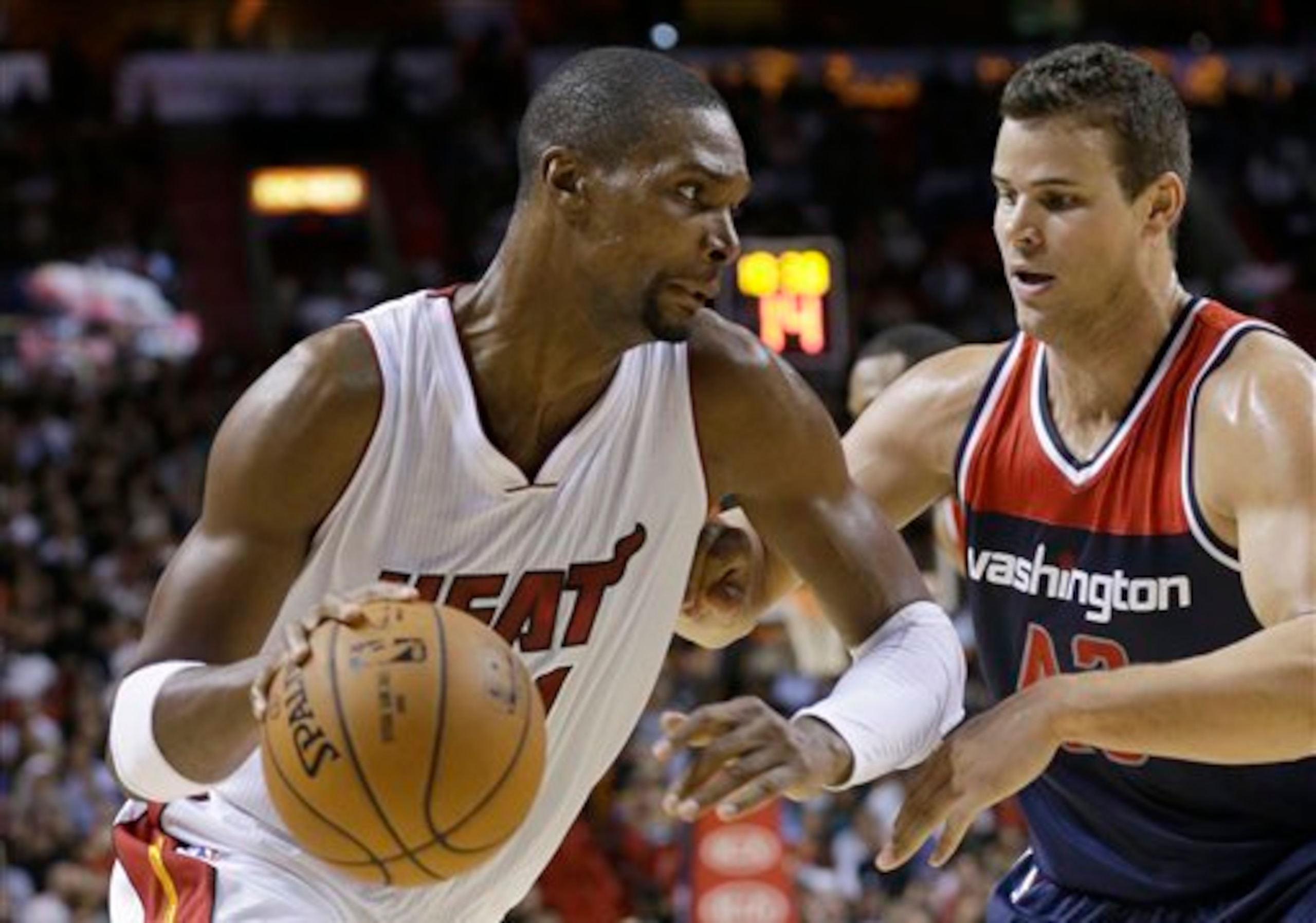
With LeBron James gone, the Miami Heat must hope Chris Bosh and Dwyane Wade rally to lead the scoring effort.
Bosh is stepping up after averaging between 16.2 and 18.7 points per game during LeBron's time in Miami. Through three games, Bosh is averaging 26.3 points while taking 16 shots.
Head coach Erik Spoelstra emphasized Bosh's importance to ESPN.com, saying:
"I don't expect everyone to always understand it. But in terms of what we do, how we want to play, what we need to happen on the court on both ends for us to be successful, C.B. is our most important player. That's how we see him.
"
While discussing the matchup implications of this, SB Nation's Mike Prada said:
"Bosh was already too skilled in the post for smaller defenders, too quick for slower ones and too accurate from the perimeter for traditional big men. Now, he's all that empowered in a Heat setup that actually requires him to use his many gifts.
"
Wade is playing within himself, averaging 16.3 points per game.
The 32-year-old may need to pace himself after scoring 19 per game in 54 appearances last season while getting frequent rest.
For Wade, the problem is that the Heat don't have any strong supporting scorers besides Luol Deng. Norris Cole is averaging 12 per, but the player who didn't break seven in his first three years won't sustain double digits.
Milwaukee Bucks: Jabari Parker Arriving as a Star Rookie
17 of 30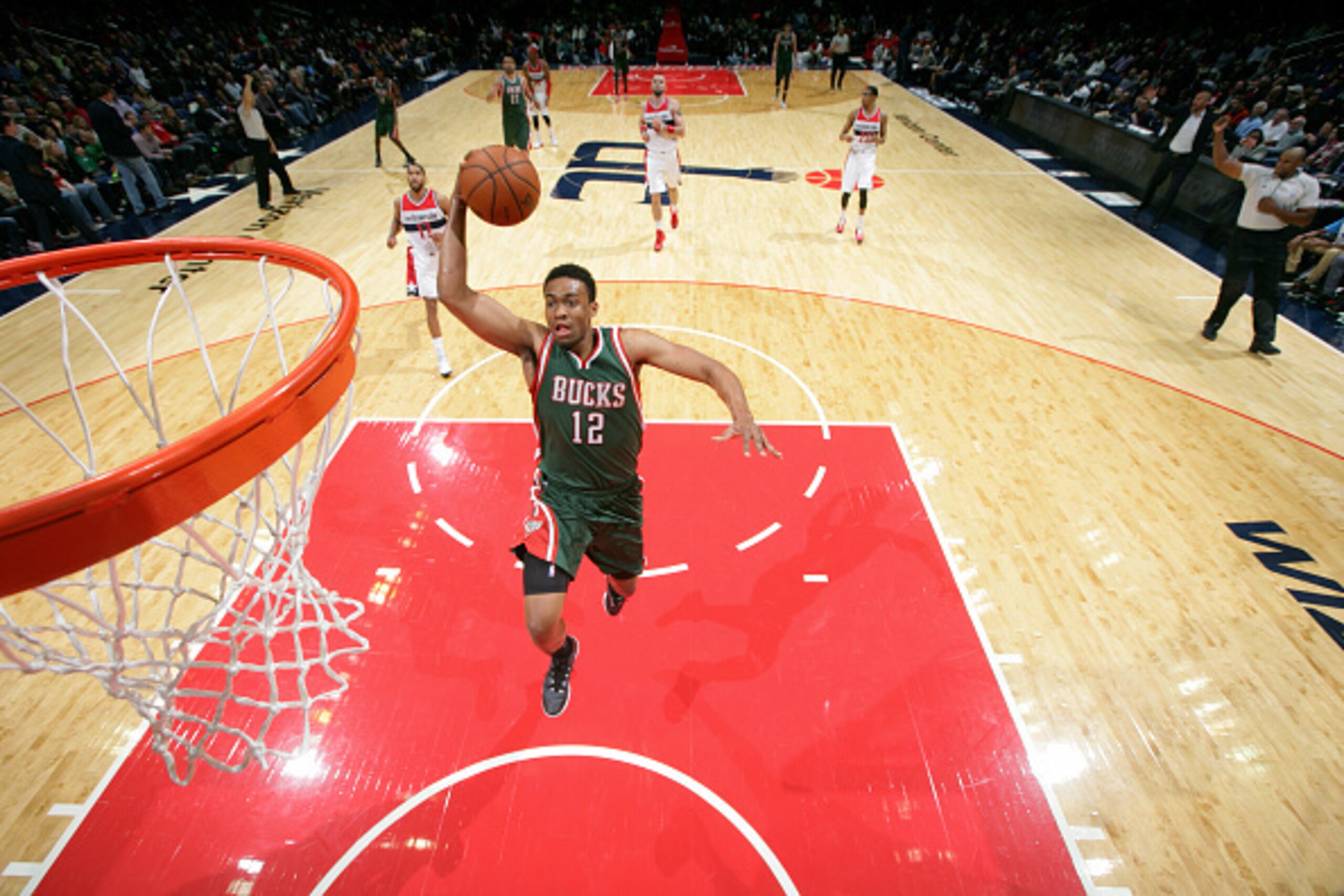
If the Milwaukee Bucks are to experience any success this season, they'll lean on Rookie of the Year favorite Jabari Parker.
Besides Parker, the Bucks only have a couple scorers, including Brandon Knight and O.J. Mayo. Knight and Mayo have been streaky in their careers. Knight hasn't strung together consecutive months of 43 percent or better from the field. Last season, he scored a career-high 17.9 points per game, but lost his three-point aim, hitting 29 percent from Feb. 12 onward.
Mayo, a nifty instant scorer, fell back into his dreaded bench niche last year with the Bucks, averaging 11.7 points per game on 40.7 percent from the field. He shot 39.6 percent from the field most of the season before catching fire in late February and succumbing to injury in March.
On a team largely filled with low-usage players, Parker must be aggressive and effective.
SI.com's Chris Johnson said, "It's easy to see Parker becoming Milwaukee's top scoring option right away. The Duke product can hit three-pointers, convert from mid-range and attack the basket."
The 19-year-old hasn't started well, averaging 10.7 points in the first three games on 35.1 percent shooting.
Bucks head coach Jason Kidd said Parker needs to get used to the NBA game, telling the Milwaukee Journal Sentinel, "It's just a matter of time for him starting to understand the tendencies in this league."
Minnesota Timberwolves: Strong Play by Under-22 Set
18 of 30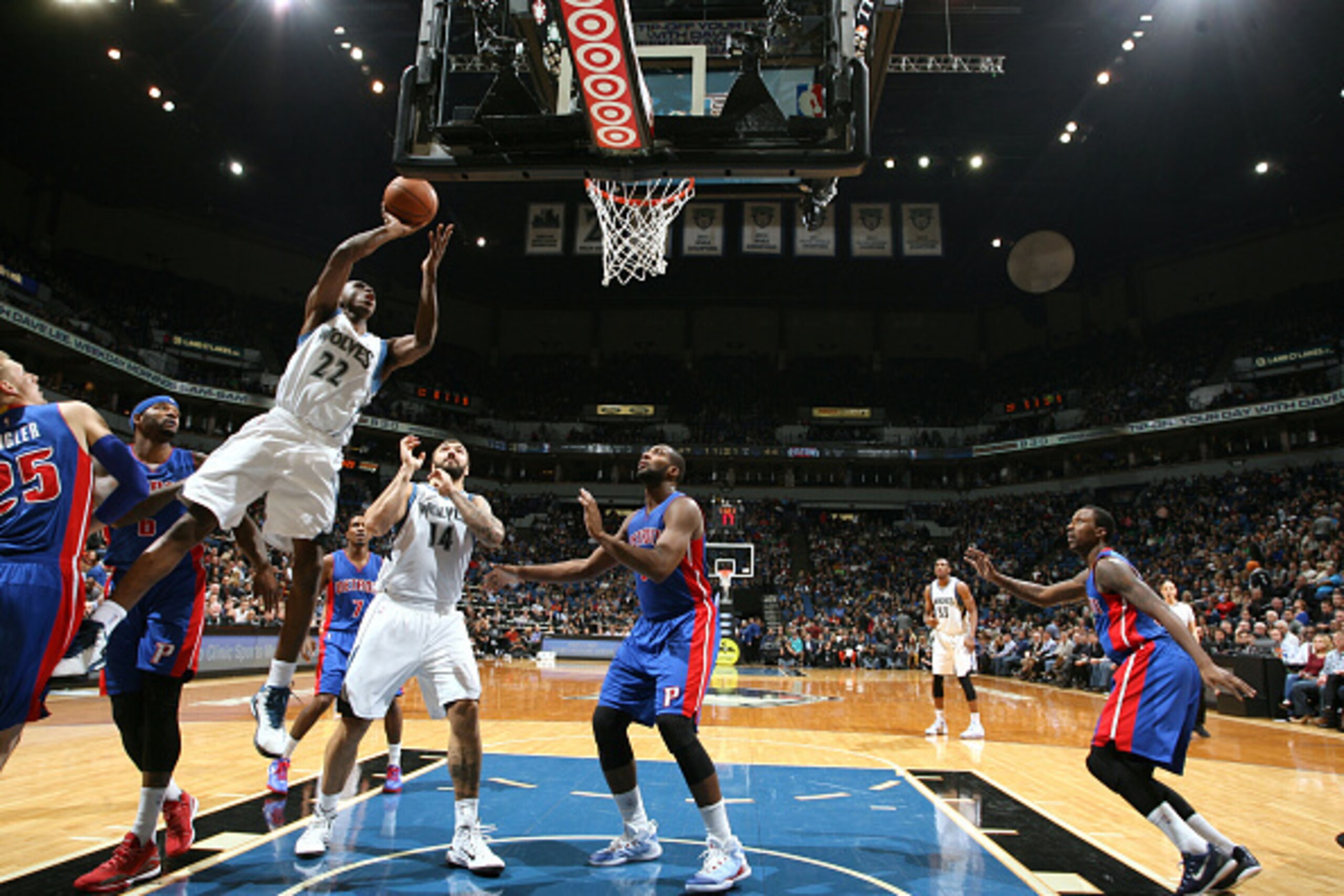
The Minnesota Timberwolves entered rebuilding mode by trading Kevin Love. Now they have five players among their young group under 22, including two players acquired in the deal: Andrew Wiggins and Anthony Bennett.
The Timberwolves place some hope in Bennett bouncing back from a horrid rookie year. He scored 4.2 points per game on 35.6 percent shooting. Thus far, he's fared well as a sophomore, averaging 8.3 points in 16 minutes per game while shooting 63.2 percent from the field.
ESPN.com Chicago's Nick Friedell tweeted, "Anthony Bennett looks so much more confident this year."
Wiggins has started slowly, averaging 7.3 points in 24.3 minutes per game on 37.5 percent shooting.
But his draft profile indicated that he would take time to sort himself out.
While mentioning his impressive size and outstanding defensive talent, Draft Express' Mike Schmitz said,
"To reach his full potential, NBA teams will want to see Wiggins become more aggressive with the way he approaches the game. He has somewhat of a laid-back demeanor on the floor, which can be seen in the way he finishes around the basket at times, his tendency to shy away from contact, and his propensity for settling for long jumpers.
"
Head coach Flip Saunders should challenge him to keep him motivated. Saunders hinted at this after the opener in which Wiggins was guarded by lockdown Grizzlies defender Tony Allen, telling the Minneapolis Star Tribune, "Wig played well at times. He had a great challenge with Allen. I purposely went to him a little bit."
Zach LaVine has played five minutes in one game. An exciting playmaker, the rookie is buried in the backcourt rotation behind Kevin Martin and Chase Budinger.
New Orleans Pelicans: Reasonable Backcourt Play
19 of 30
The New Orleans Pelicans can be sure of the return from their big man rotation of Omer Asik, Anthony Davis and Ryan Anderson. However, they have questions regarding the backcourt.
Tyreke Evans needs to be more efficient. Last season, he had 14.5 points per game on 43.6 percent shooting and 22.1 percent from downtown, the second-worst marks in his career.
The sixth-year player started this season in attack mode, averaging 17 per his first two games while shooting 38.2 percent from the field and collecting as many shot attempts as points.
Eric Gordon has yet to show durability as he starts his fourth year with the Pelicans. He played the most games last season, and that was only 64. Meanwhile, he had a career-low 15.4 points per game on 43.6 percent shooting.
Gordon has been quiet thus far, averaging four points per game on 21.4 percent from the field despite playing 33 minutes per game.
Acknowledging his struggle adjusting to a new role as a peripheral scoring option, the seventh-year pro told the New Orleans Times-Picayune, "Overall, I don't get a chance to do some of the things that I do best as far as coming off a lot of pick and rolls, catching and shooting."
Behind Gordon, Austin Rivers is growing slowly. He averaged 7.7 points per game on 40.7 percent shooting last year after posting 6.2 per game on 37.2 percent shooting. To open this season, Rivers is averaging five points per game on 37.5 percent from the field.
Jrue Holiday is trying to bounce back after missing most of 2013-14 due to injury. Holiday played well before going down in January, posting 14.3 points and 7.9 assists per game.
SI.com's Ben Golliver stated what Holiday could be, saying, "Allow the 24-year-old Holiday to reintroduce himself as a solid two-way player capable of running an offense, creating for himself and others, knocking down three-pointers and defending his position."
If Evans, Holiday, Gordon and Rivers can support a high-scoring Pelicans squad, they should compete for a playoff spot.
New York Knicks: Heroic Point Guard Play
20 of 30
If the New York Knicks are to make the triangle offense work, they need Jose Calderon to lead the passing that makes the offense works.
Calderon has established himself as a solid point guard, averaging 6.8 assists per game and shooting 47.9 percent from the field in nine seasons.
However, the Knicks must live without him for the first couple weeks of the season due to a right calf strain, as the team's public relations tweeted.
In his place, Shane Larkin, the interim starter, and Pablo Prigioni must facilitate well enough that they may survive. Larkin is doing a decent job, averaging 4.3 assists and 1.3 turnovers per game. Prigioni has 3.3 assists per game and only one turnover.
Head coach Derek Fisher spoke proudly of Larkin, telling the New York Daily News, "He has handled himself extremely well. He has been good for our team, not just controlling the basketball and making solid decisions but defensively being scrappy and aggressive out there."
Oklahoma City Thunder: Surviving Without Kevin Durant and Russell Westbrook
21 of 30
The Oklahoma City Thunder face their worst nightmare with Russell Westbrook and Kevin Durant missing at least the next few weeks due to injury. Durant suffered a Jones fracture to his right foot in preseason and will be evaluated in late November, per ESPN.com. Westbrook broke his thumb and will be examined in four weeks, per ESPN.com.
While the Thunder are without their two superstar scorers, they're stricken with the injury bug. They routed the Nuggets on Saturday despite having eight players available.
Perry Jones has stepped up in the past two games, scoring 53 points. With 59 points in three contests, he looks to blow past a 2013-14 campaign in which he averaged 3.5 per game.
Serge Ibaka has started strong, with 16.7 points per game on 48.8 percent from the field.
Before the season, head coach Scott Brooks told USA Today, "He's ready to improve another step, and I think he's done that. He's one of the best midrange shooters, and I thought he showed that he's even going to make corner threes."
If the Thunder can win half their games without Durant and Westbrook, they should rally for a top-four playoff spot after they return. Ibaka and Jones could help them stay afloat.
Orlando Magic: Tangible Development
22 of 30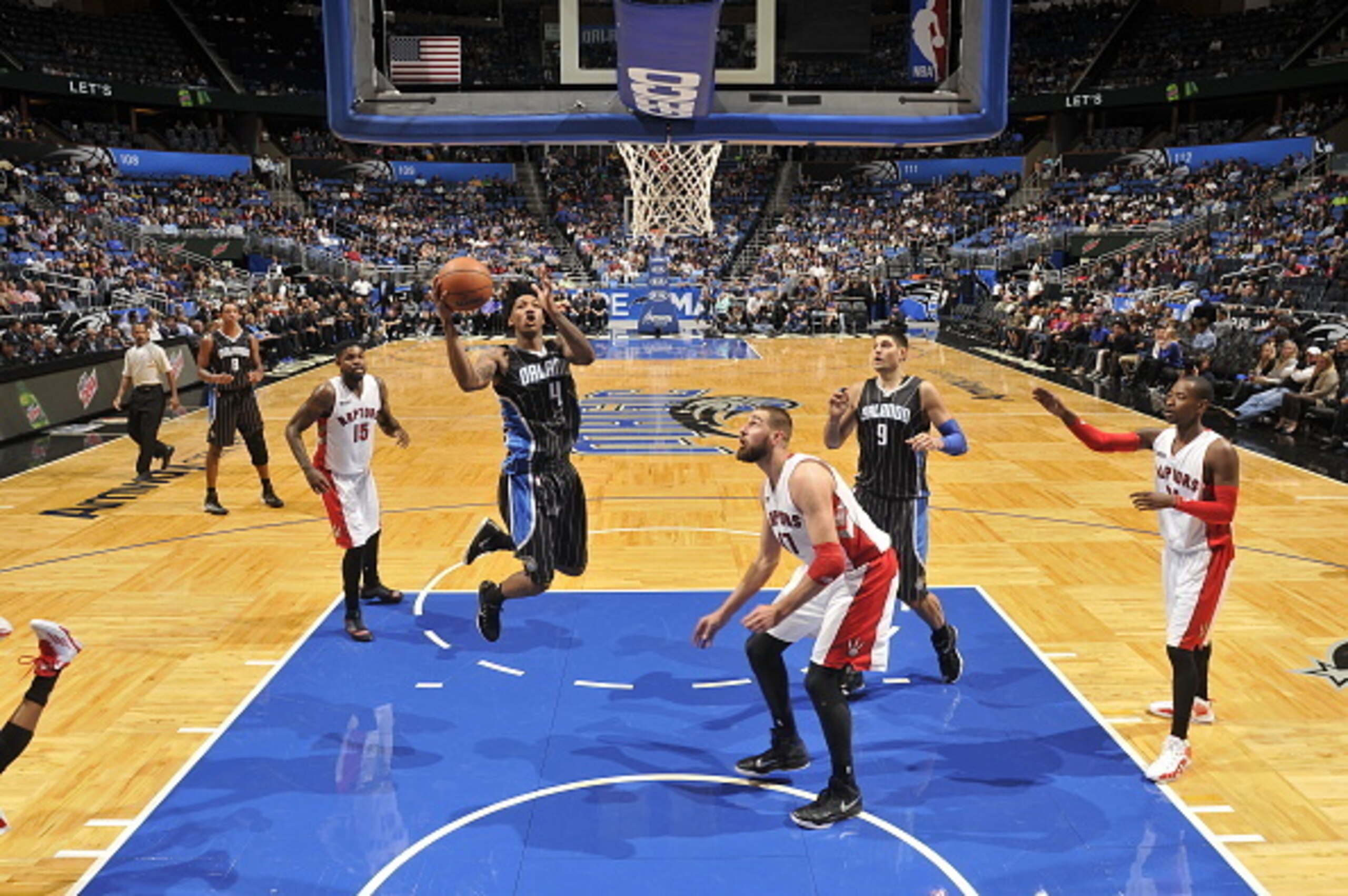
The Orlando Magic are in the third year of their rebuilding project. Time has come for them to show concrete signs of development after 43 wins in the first two years.
Partly, that hinges on a strong sophomore campaign by Victor Oladipo, who is out indefinitely due to a facial fracture, per the Orlando Sentinel. Oladipo was impressive last year, averaging 13.8 points per game on 44.8 percent from the field.
After two rough games, rookie point guard Elfrid Payton had 16 points and nine assists while shooting 6-of-12 from the field in a 108-95 loss to the Toronto Raptors on Saturday.
Draft Express' Mike Schmitz noted a few glaring flaws in Payton's game, such as his outside shot, lack of strength, passive attack and high turnover rate.
Third-year center Nikola Vucevic is the furthest in the maturation process of their franchise pieces. He averaged 14.2 points and 11 rebounds per game while shooting 50.7 percent from the field last season. While Vucevic has averaged 17.7 points and 15.7 rebounds through three games, he must show he can maintain these numbers.
The Magic may make only modest strides in the win column, but seeing Oladipo, Payton and other young players progress imperative for setting markers for when the team can become competitive.
Philadelphia 76ers: Promise of the Future
23 of 30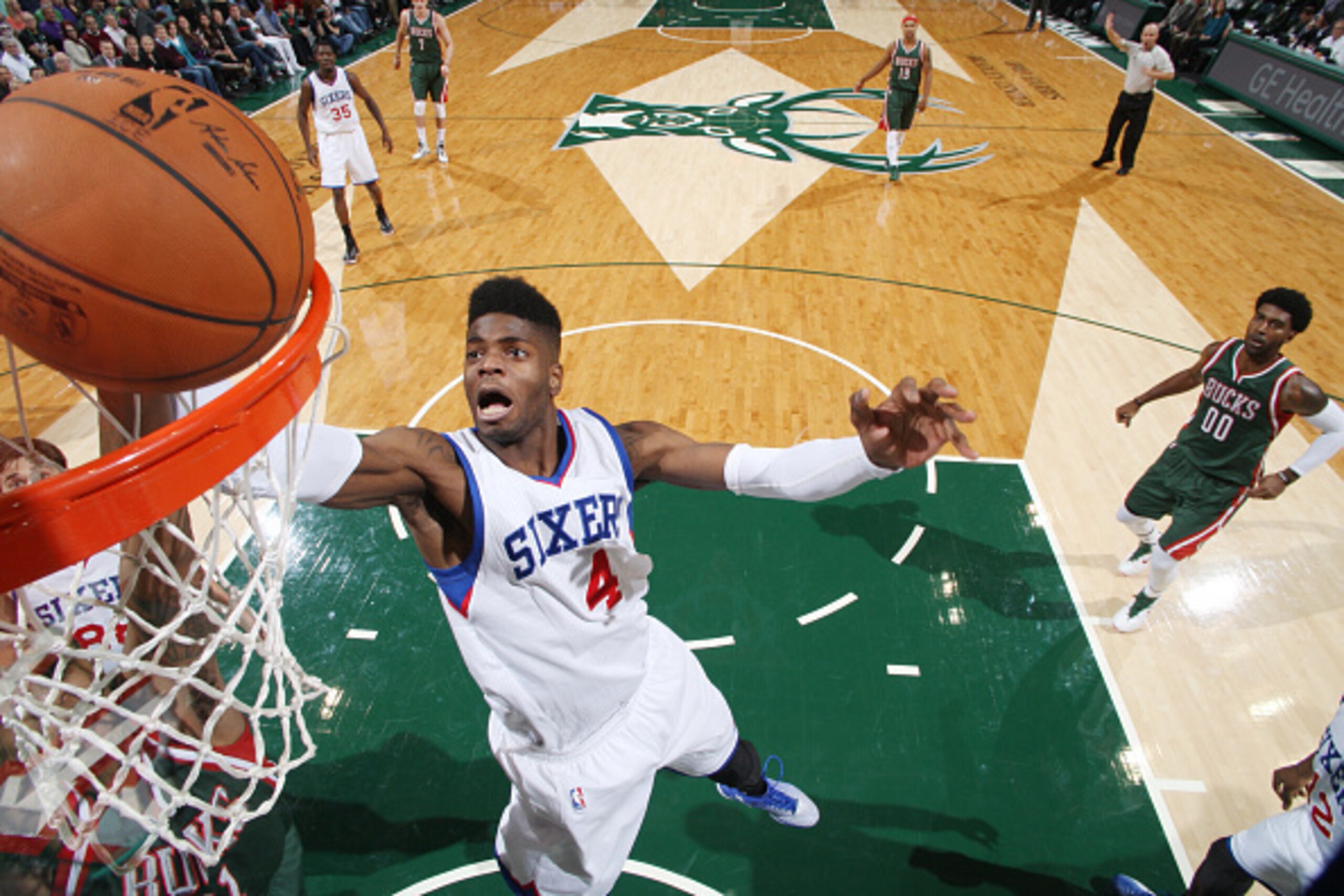
The Philadelphia 76ers are sorting themselves out in their second rebuilding year. They can watch a couple players blossom, but must wait on Michael Carter-Williams and Joel Embiid, who are sidelined with injuries.
Carter-Williams, who had surgery in May to repair the labrum in his right shoulder, will be evaluated when he returns to practice on Nov. 6, per the Philadelphia Inquirer.
Meanwhile, Tony Wroten and Nerlens Noel are showcasing their skills. Noel is averaging 7.3 points and 8.3 rebounds in 31.7 minutes per game while shooting 38.5 percent from the field.
Wroten is roaring out of the gates after averaging 13 points in 24.5 minutes per game last year, posting 19 per game in three contests and shooting 44.7 percent from the field.
K.J. McDaniels is starting his rookie year well, averaging 7.3 points per game on 50 percent shooting.
Head coach Brett Brown told the Philadelphia Inquirer of his need to handle players delicately, saying, "I need to coach them. And [Noel] gets it. It's something where, defensively, it was getting a little too easy, and the group—you could feel it. ... That is a difficult [Heat] team to guard."
If Wroten, Noel and others produce and grow, it will show some promise for a competitive 76ers team in the seemingly distant future.
Phoenix Suns: Overwhelming Backcourt Scoring
24 of 30
The Phoenix Suns' attack is led by three guards who can burn opponents. Goran Dragic and Eric Bledsoe scored 20.3 and 17.7 points per game last season, respectively. Isaiah Thomas came on board this year after posting 20.3 per game for the Sacramento Kings in 2013-14.
Thomas has had a terrific start, averaging 18.7 points in three games. Meanwhile, Dragic and Bledsoe both have 12.7 per game. Bledsoe is shooting 33.3 percent from the field.
Head coach Jeff Hornacek has used the three of them together twice thus far, but he told AZCentral.com he prefers rotating to stay competitive on the boards.
With the imbalance of strong backcourt scoring ability and mild frontcourt production, Phoenix needs the trio to pile up points. Getting each one above 15 per game should make them a playoff threat.
Portland Trail Blazers: Help from the Bench
25 of 30
The Portland Trail Blazers have leaned heavily on their starters in the past couple years. Last season, LaMarcus Aldridge, Damian Lillard and Nic Batum played at least 35.8 minutes per game. The year before, they all saw at least 37.7 minutes per game. Wesley Matthews played 33.9 and 34.8 minutes per game in those two seasons, respectively.
This summer, Portland made a few moves to bolster their bench. They acquired Steve Blake to back up Lillard and Chris Kaman in hopes that he can add frontcourt depth.
Blake and Kaman have helped. They're averaging 21.7 and 21 minutes per game, respectively. Lillard is the only starter with more than 34 minutes per game. Kaman is scoring 8.7 points and 6.3 rebounds per game.
However, no other reserve besides Thomas Robinson is averaging double-digit minutes. If this persists, the length of the rotation and reliance on starters could remain a concern.
San Antonio Spurs: Strong Shooting
26 of 30
As they compete for titles, the San Antonio Spurs have had great shooting from all parts of their rotation. They had nine players shooting better than 46 percent from the field and seven hitting better than 37 percent from downtown last year.
That they can maintain similar percentages this year is likely. The Spurs return almost every player from last season.
San Antonio has begun right shooting the ball, hitting 41.5 percent from three-point range and standing eighth in field-goal percentage at 46.6 percent. Tony Parker started hot, with 54.8 percent in the first two games en route to 21 points per game.
Consistent shooting played a big role in their championship run last year, as they scored 97 or more in 17 of their last 19 playoff games. If they repeat, they will keep their aim.
Sacramento Kings: Overwhelming Offense
27 of 30
A Sacramento Kings team that can't keep opponents from scoring can only hope to compete by outpacing them in converting buckets.
They need DeMarcus Cousins and Rudy Gay to shoulder the load. Cousins averaged 22.7 points per game on 49.6 percent from the field. Gay averaged 20.1 per game on 48.2 percent shooting in 55 games for Sacramento last year.
Cousins and Gay have done their part, combining for 50 points per game through three contests.
Besides Gay, the Kings aren't teeming with scoring talent in the backcourt. Starting 2-guard Ben McLemore put up 8.8 points per game on 37.6 percent last year. Nik Stauskus is a dark-horse Rookie of the Year candidate, but needs the minutes behind McLemore to show his scoring ability.
McLemore and Stauskas are averaging 3.3 and four per game, respectively.
While McLemore and Stauskus can grow this year, point guard Darren Collison is a middling veteran. Collison is averaging 14.7 points per game, but will end up closer to his 11.4 per game career mark.
Toronto Raptors: Outstanding Point Guard Play
28 of 30
The Toronto Raptors benefited from a star season from Kyle Lowry to win the Atlantic Division last season. Lowry was seventh in assists per game at 7.4. He was eighth in offensive win shares with 8.4.
He scored a career-high 17.9 points per game on 42.3 percent shooting. That was the product of finally having the trust from a head coach, Dwane Casey, who gave him complete control of the starting job.
The 28-year-old said as much to Grantland, stating, "He's learned to trust me. I learned to trust him a bit more."
Lowry will need another great season to keep the Raptors on top of the division. He has started right, averaging 19.3 points and 5.3 assists per game while shooting 48.9 percent from the field through three games. Toronto's leading scorer, DeMar DeRozan, will count on Lowry to set him up and provide secondary scoring.
Utah Jazz: Scoring from Young Players
29 of 30
The Utah Jazz have churned their roster the past few years, and now they need certainty that the young players on whom they've set their sights can score capably.
Gordon Hayward settled into his likely place for the near future last season when he posted 16.2 points per game. He's started in that neighborhood with 16 per game.
Derrick Favors has rushed out of the gate with 21.7 points per game on 59 percent shooting. He took a step last year by averaging 13.3 points per game on 52.2 percent from the field. Staying near his current mark would be big for the fourth-year pro.
Starting point guard Trey Burke has been an item of potential. He scored 12.8 points per game on 38 percent shooting as a rookie last year and is at 12.7 per game through three appearances this season.
Rookie Dante Exum has the potential to become a star lead guard, but is stuck on the bench and averaging 5.7 points in 15.7 minutes per game.
If the group combines for efficient shooting, they hold some hope of making the playoffs.
Washington Wizards: John Wall and Bradley Beal Taking the Next Step
30 of 30
Among the most anticipated developments in the Eastern Conference is how John Wall and Bradley Beal will follow up last year's trip to the second round of the playoffs.
Wall posted tremendous figures last year, with 19.3 points 8.8 assists and 1.8 steals per game while shooting 43.3 percent from the field. His turnover rate was a reasonable 16.3 percent.
Wall is averaging 21.7 points per game on 45.8 percent shooting.
Beal, who averaged 17.1 points per game on 41.9 percent from the field and 40.2 percent from beyond the arc, is recovering from wrist surgery.
Once he's back, Beal will help his up-and-coming backcourt mate space the floor and score from the perimeter.
.jpg?w=2560 "Every Trade's Best Trade Asset 🔁")
.jpg?w=2560 "Insiders: Cowboys Overpaid for Porter")
.jpg?w=2560 "Top NFL Trade Targets")