Redskins vs. Vikings: What Are Experts Saying About Minnesota?
This Sunday, TCF Bank Stadium will host a matchup between two teams that need a victory to get back into the playoff conversation. After engineering this season's biggest upset victory over the Dallas Cowboys (6-2) on Monday Night Football, Jay Gruden and his Washington Redskins (3-5) will hook up with his former colleague Mike Zimmer and his Minnesota Vikings (3-5) in downtown Minneapolis. The Vikings are returning home after notching their third win of the 2014 season over the Tampa Bay Buccaneers (1-6).
With Gruden telling reporters earlier this week that his franchise quarterback, Robert Griffin III, is "very, very, very close" to returning, Zimmer and the Vikings have been preparing for him as well as Monday Night Football hero Colt McCoy.
However, the answer to this uncertainty became "very, very, very" clear Wednesday afternoon when news broke that Gruden had named Griffin III the Redskins starting quarterback against the Vikings this Sunday:
"Barring a setback, #Redskins QB Robert Griffin III will return to the lineup this week against #Vikings, as @NBCdianna said.
— Tom Pelissero (@TomPelissero) October 29, 2014"
Given his familiarity with Gruden, as a result of working closely with him over the course of the past three seasons while both were coordinators for the Cincinnati Bengals (4-2-1), there is a strong possibility that Zimmer already expected RGIII to be the Redskins quarterback this Sunday. With Griffin's status for this weekend now etched in stone, Zimmer and his defensive personnel can narrow their focus to defending the former No. 2 overall pick.
While Zimmer stated in a recent press conference that he does not like coaching against his friends, he will have no choice but to do everything in his power to wrestle a victory away from his buddy, Gruden. This rivalry game between former colleagues with conflicting football backgrounds has been the talk of the Twin Cities this week.
Since everyone should be up to date on the relationship status of Zimmer and Gruden, this article will move away from this over-covered Vikings topic and into a variety of different material.
The ensuing slides will review subject matter such as the improvement of Sharrif Floyd, an in-depth look at the Vikings pass defense, the importance of (rookie) quarterback rhythm and more.
Dave Dameshek: Vikings Will Defeat Redskins
1 of 5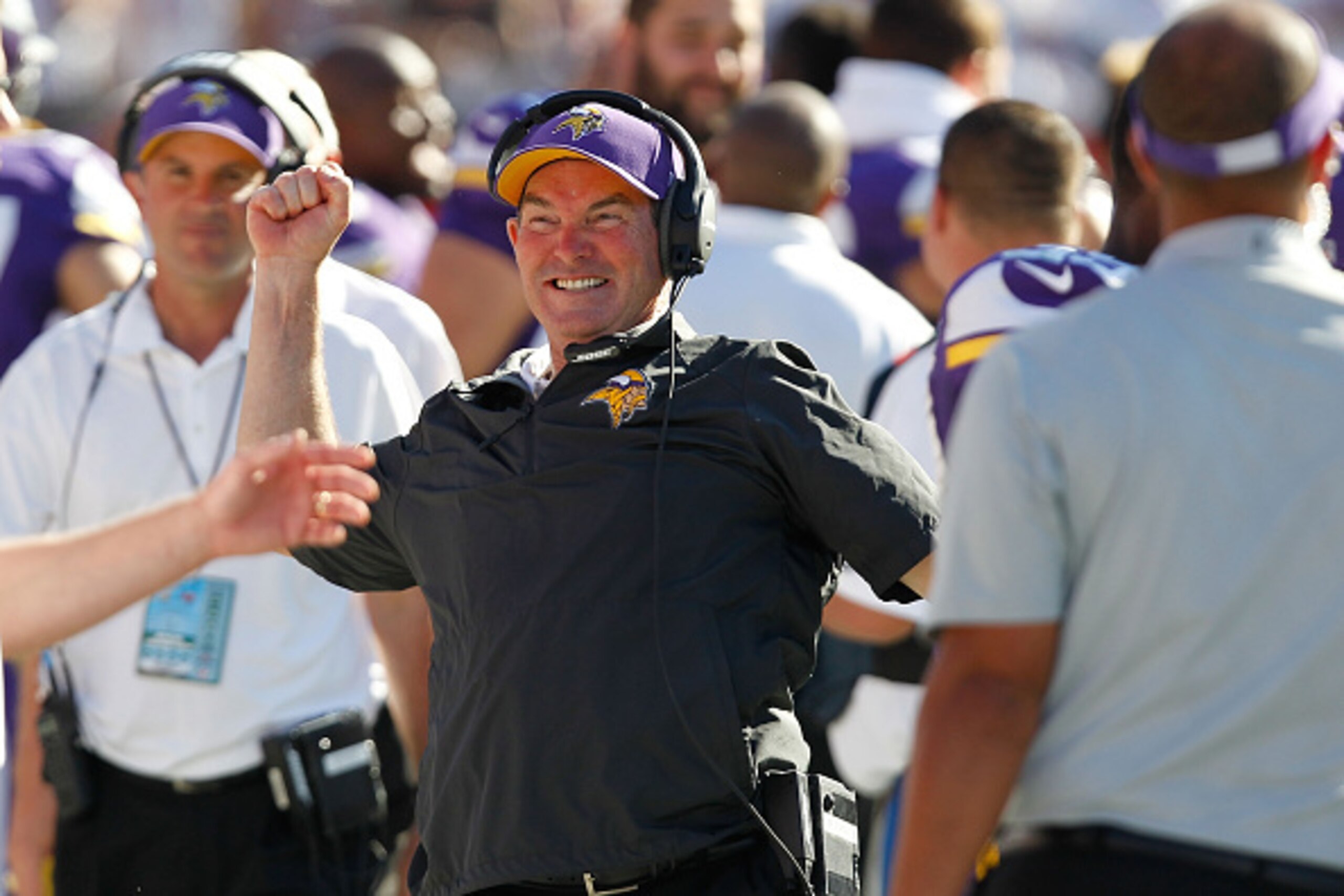
During a short segment on the NFL Network, Dave Dameshek of NFL.com revealed his prediction for this Sunday's contest between the Vikings and Redskins. Instead of choosing a winner and elaborating on it, Dameshek took the route of simply noting player expectations and declaring a final score for the contest.
His first prediction for this matchup is a 65-yard Redskins touchdown courtesy of explosive wide receiver DeSean Jackson. While Dameshek does not elaborate further on this "spoiler" as he calls it, his prediction of a deep touchdown completion from Griffin to Jackson is justifiable.
According to Pro Football Focus (subscription required), Jackson has recorded seven receptions, 351 receiving yards and two touchdowns on targets of 20 or more yards downfield. When comparing these statistics to other wide receivers, Jackson ranks tied for fifth in receptions, first in receiving yards and tied for third in touchdowns. Furthermore, he has been targeted 49 times this season by Redskins quarterbacks, and 24.5 percent (12) of these targets have qualified as deep pass attempts, according to Pro Football Focus.
Jackson has made a living on big plays throughout his career, so it should come as no surprise that his totals rank among the leaders at his position. However, he will have a tough time creating separation at the line of scrimmage against physical cornerbacks Xavier Rhodes and Captain Munnerlyn. In the event that Jackson does free himself from their coverage, he will then have to deal with safety Harrison Smith.
The presence of Smith in coverage over the top is the best argument against Dameshek's prediction of another long touchdown reception for Jackson. According to Pro Football Focus, Smith has received 22 targets from opposing quarterbacks while in coverage. He has allowed only 14 of these passes to be completed, which amounts to a mediocre completion percentage of 63.6 percent, for 183 yards. While he has allowed two touchdowns, Smith has registered the second-most pass defenses (three) and interceptions (three) among safeties.
Zimmer and the rest of his coaching staff are aware of Jackson's big-play ability. As a result, Smith will presumably spend a great deal of time protecting against deep shots downfield. While it remains possible that Jackson will create enough space to demonstrate his playmaking ability, Griffin might defer to a safer option due to Smith's dangerous playmaking skills on defense. If Griffin underthrows or telegraphs a pass, Smith may not only intercept the pass, but his three career defensive touchdowns during his three-year career suggest he could turn it into six points for the Vikings.
The other player whom Dameshek projects statistical totals for is rookie quarterback Teddy Bridgewater. As Dameshek did with Jackson, he states very specific numbers for Minnesota's signal-caller: 22-of-33, 300 passing yards and two passing touchdowns.
Again, Dameshek's prediction is realistic, but there are numerous reasons to doubt the claim. In his four starts this season, Bridgewater has managed to cross the 300-yard mark only once. Additionally, he has yet to pass for multiple touchdowns in a single performance. In fact, he has only thrown two passing touchdowns in his young career.
However, Bridgewater is at his best (84.8 quarterback rating) when facing the blitz, and Redskins defensive coordinator Jim Haslett has dialed up the blitz on nearly 40 percent of opposing quarterbacks dropbacks this season, according to Pro Football Focus.
Washington's defense does rank 11th in the NFL in yards allowed, but given Bridgewater's comfortability against the blitz and consistent week-to-week improvement, Dameshek's statistical projections for the former Louisville quarterback could end up close to reality.
Dameshek's score prediction: Vikings 21, Redskins 16
I too predict a Vikings victory at home this Sunday against the Redskins, but my scores are slightly different: Vikings 17, Redskins 10.
While our projected scores may be different, Dameshek and I agree that this will be a close contest, with Bridgewater and an imposing Vikings defense claiming their fourth victory heading into the team's bye week.
Sid Hartman: Vikings Missed out on Selecting Robert Griffin III
2 of 5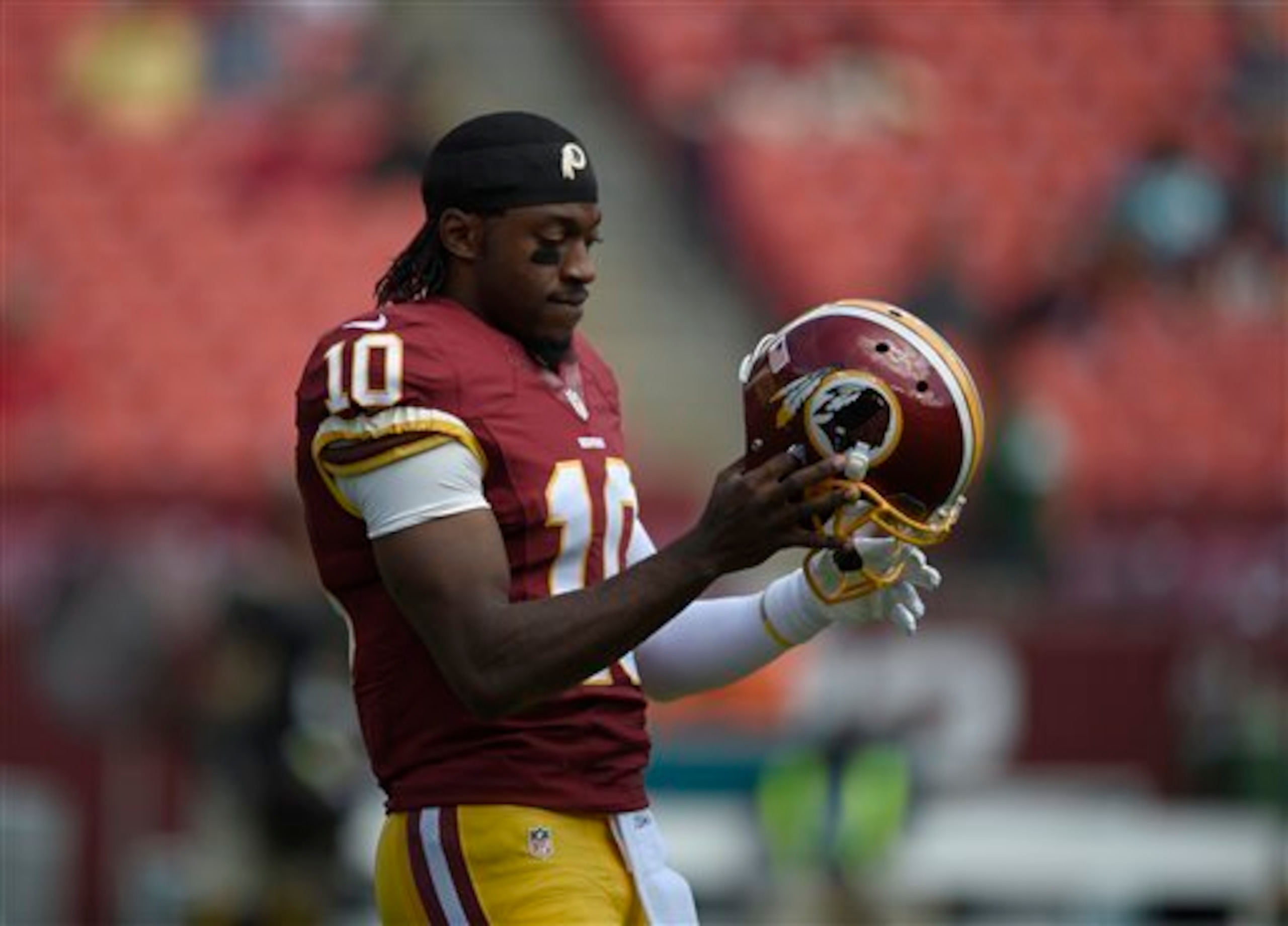
With the possibility of Griffin III returning from injury to start against the Vikings this Sunday dominating sports headlines earlier in the week, many experts focused their columns on the third-year Redskins quarterback. This popular focus only increased upon confirmation that RGIII will make his first start at quarterback since exiting Washington's Week 2 contest with the Jacksonville Jaguars.
Earlier this week, Sid Hartman of the Star Tribune reflected on the Vikings' opportunity to select Griffin III during the 2012 NFL draft and the team's ultimate failure to make this vision a reality.
The Vikings ended up with the third overall pick in 2012, but Hartman explained how the team could have had the second overall pick necessary to select Griffin III:
"A number of know-it-all Vikings fans were upset on Christmas Eve in 2011 when the Purple upset the Washington Redskins 33-26, because it turned out that if the Vikings had lost that game, they would have gotten the second overall pick in the NFL draft and been able to select Baylor quarterback Robert Griffin III who, along with Stanford quarterback Andrew Luck, was ranked as one of the top players available.
"
Had the Vikings elected to lose this contest with the Redskins, Minnesota would have had the second-worst record in the NFL and, as a result, the second overall pick. However, the Vikings would go on to win this late-season matchup, and the St. Louis Rams would finish with the second-worst record. The Rams would trade the No. 2 draft selection to the Redskins for three first-round draft selections and one second-rounder.
Hartman then highlighted Griffin's Pro Bowl rookie season and elaborated on his recent slew of serious injuries:
"Griffin had one of the best rookie seasons for a quarterback in NFL history when he posted a 102.4 QB rating and led the Redskins to the playoffs. He completed 258 of 393 passes for 3,200 yards and 20 touchdowns and only five interceptions, and he was named to the Pro Bowl. He also ran for 815 yards and seven scores. Vikings fans will remember Griffin destroying the team in a Week 6 matchup in 2012, when he ran for 138 yards and two TDs while passing for 182 yards and a score. But since that season, Griffin’s injuries have hampered his production. He underwent offseason surgery to repair his lateral collateral and anterior cruciate ligaments in his right knee.
"
Near the end of his article, Hartman explained the reality of the Vikings 2012 draft, which obviously did not include the former Baylor quarterback:
"After missing out on a chance to draft Griffin, the Vikings traded the 2012 third overall pick to Cleveland in exchange for the fourth overall pick (tackle Matt Kalil), a fourth-rounder (wide receiver Jarius Wright), a fifth-rounder (safety Robert Blanton) and a seventh-rounder they traded to Tennessee for a 2013 sixth-rounder. Then the next season in training camp, they traded that sixth-rounder to Arizona for cornerback A.J. Jefferson and a seventh-rounder in 2013, which they used to pick linebacker Michael Mauti. So by making that move with Cleveland, they got three players who are still with the team and picked up another later by trading draft picks.
"
With Griffin's highlights and injuries examined and the Vikings 2012 draft class properly explained, Hartman speculated—both in lieu of and despite the provided information—how the Vikings might be a different team had they drafted the Heisman winner: "But Griffin, despite his lack of durability and failure to perform as he did as a rookie, might have solved the quarterback problem that still exists for the Vikings."
When (truly) healthy, Griffin III is one of the top quarterbacks in the NFL. His impressive statistics and win total during his rookie season prove he is capable of having great success in this league. However, he is susceptible to injury, and his style of play only makes this risk even worse.
Simply, the Vikings are better off without him. While Kalil has regressed significantly over the last season-and-a-half, he proved he can be a top offensive lineman when he was elected to the Pro Bowl during his rookie season.
In addition, Wright has come up with a number of huge receptions—most notably his touchdown to help the Vikings earn a playoff berth against the Green Bay Packers in Week 17 of the 2012 season—throughout his young career and remains part of the Vikings' future.
Finally, Blanton has performed well in his first season starting at strong safety opposite of Harrison Smith. He is limited, and there is little reason to believe that he has locked his position up for the foreseeable future, but he has been, at the very least, one of many defensive surprises this season for the Vikings.
Hartman also failed to note that the Vikings drafted quarterback Christian Ponder in the first round of the 2011 draft. While we all know how this selection turned out, the Vikings were still evaluating Ponder when the 2012 draft took place. It would make very little sense to draft quarterbacks in the first round of consecutive drafts, and Minnesota would not have had an opportunity to fill an area of greater concern (such as left tackle) with an elite-caliber talent.
The Vikings made the right choices to try to beat the Redskins and, correspondingly, not use a first-round selection on RGIII. Given the personnel the Vikings have now and what we know about Griffin as an injury risk, selecting him over Kalil would have been a big mistake, even if Kalil never returns to Pro Bowl form.
Derek Wetmore: Teddy Bridgewater's Composure and Rhythm
3 of 5
Since the Vikings named Bridgewater their starting quarterback before the Week 4 matchup with the Atlanta Falcons, journalists and bloggers have written countless columns regarding Minnesota's developing signal-caller. Most recently, Derek Wetmore of 1500ESPN.com discussed the rookie's composure in pressure situations and his issues settling into a rhythm early in games.
Wetmore introduced his premise by briefly touching on Bridgewater's composure and proclaiming it as his most noticeable (quarterback) trait: "One of the traits on display in press conference settings is perhaps the one that is most often repeated by Teddy Bridgewater's teammates. The rookie has composure."
Every time Bridgewater is called upon to speak in front of an audience, he glows with composure. Regardless of whether he is coming off an impressive performance or a forgettable one, he never allows his emotions to control him. While this composure has shown up multiple times on the field under circumstances where most rookie quarterbacks would melt, as Wetmore noted later in his article, Bridgewater frequently appears to lack the composure many have come to identify him with early in games:
"But Bridgewater doesn't always show that on the field from the opening kickoff. He threw a pair of picks against the Buffalo Bills two weeks ago and said after the game that he really felt like he settled in after the second interception. That could be both a good thing and a bad thing. One on hand, it's impressive that a player who won't turn 22 for a couple weeks doesn't get rattled by his mistakes. On the other, it's fair to wonder why he isn't settled in earlier in games.
"
Bridgewater's ability to shake off his mistakes is a character trait that is almost impossible to teach and is key at the position. In addition, rookie quarterbacks experience far more struggles than veterans and the ones who allow their mistakes to tear them down instead of using mishaps as building blocks normally do not last very long.
While not a quarterback, Kalil's often discussed inability to forget about a mistake has driven him deeper into a hole that (likely) a small blunder created. It may be difficult to teach Bridgewater's mindset, but Kalil could learn a lot from the young man he is in charge of protecting.
Wetmore's next point regarding Bridgewater's difficulty getting into a rhythm early in games is odd considering his personal traits, football traits and performances under much more difficult circumstances. Veteran quarterback Matt Cassel attempted to provide some clarity and reason to this issue:
"I think any time you start to get in a rhythm - and the other part of it is starting to build a rapport with your receivers and understanding matchups," Cassel said. "Understanding what guys run certain routes better than others and where you want to go with the ball against man-to-man [coverage] versus zone. I think Teddy's still learning but at the same time I think he's done a great job.
"
Simply, Bridgewater's composure and rhythm issues early in football games can be explained by inexperience and not having a full understanding of his receivers' strengths and weaknesses, according to Cassel. Although this explains Bridgewater's early-game issues, it complicates the reasoning for his success at running the two-minute drill or other similar pressure-filled situations. Wetmore touched on a pair of successes Bridgewater had under these circumstances during last week's matchup with the Buccaneers:
"Bridgewater's most recent game, against the Buccaneers, may be the best example of not being rattled. He led a late drive in the first half Sunday that netted the Vikings a field goal with time expiring. Then, after the Bucs had jumped ahead in the fourth quarter, Bridgewater led a drive that ended in a game-tying field goal to force overtime.
"
For Bridgewater, it never seems to be a physical issue as much as a mental one. He touches on a few of these in a quote Wetmore featured toward the end of his article:
"I have to continue to remind myself to stop thinking so much. Our coaches are calling great plays allowing me to think less, but still, me being a young guy and trying to be perfect, I find myself thinking too much. I have to continue to trust my teammates, trust everything that I'm being taught and allow those guys to make plays.
"
Thinking too much. Trust issues with his receivers. Too much time to think. These problems are common for young quarterbacks. Few situations on an NFL field are perfect and without potential consequences. Quarterbacks who understand this are able to determine the least-threatening option and still take (calculated) risks to advance the ball down the field. They are the guys who make the job look easy.
Bridgewater still has many miles to travel in his development process, but it appears he has the mental fortitude to utilize his physical strengths successfully and regardless of circumstance. It is this composure that his coaches, teammates and analysts talk about that one day might just make him great.
.jpg?w=2560 "NFL Paris Football")
.jpg?w=2560 "Seahawks Chiefs Football")
.jpg?w=2560)
Ben Goessling: Technique Change Behind Sharrif Floyd's Dramatic Improvement
4 of 5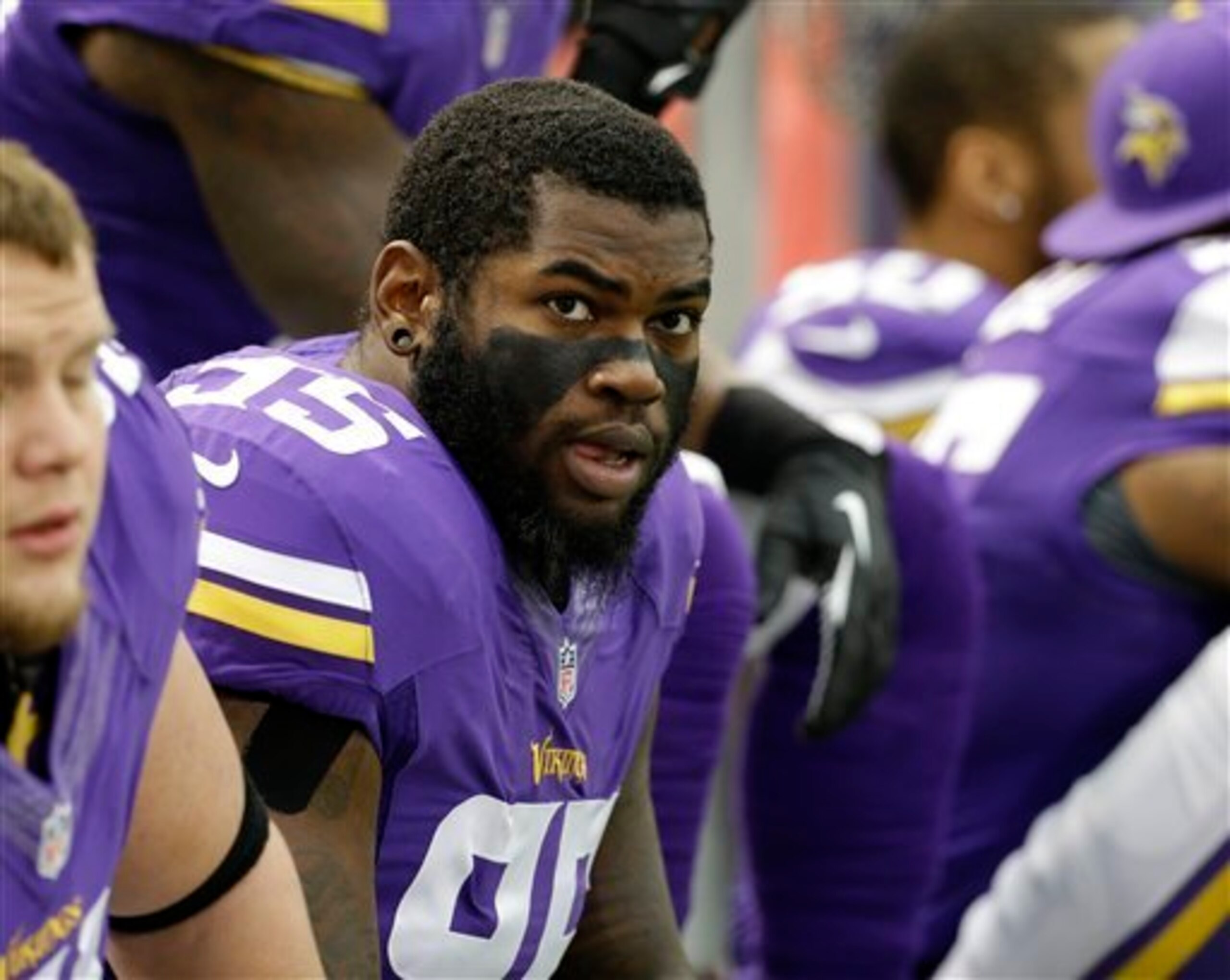
Before there was Anthony Barr and Teddy Bridgewater, there was Sharrif Floyd, Xavier Rhodes and Cordarrelle Patterson.
Minnesota did not have to think twice before sending in its draft selection at pick No. 23 in 2013. Floyd, who was regarded by many as a top-five talent, somehow slipped all the way down to the Vikings, who also happened to be in search of a replacement for longtime stud defensive tackle Kevin Williams.
General manager Rick Spielman instantly knew Floyd was his guy, but it took a coaching change, a scheme change, a technique change and more than a year of experience for Floyd to prove Spielman was right to be so confident about selecting him.
Ben Goessling of ESPN.com recently discussed Floyd's development process and how head coach Mike Zimmer and defensive line coach Andre Patterson transformed him into the player he is now.
After struggling through his rookie season playing in Leslie Frazier's defensive scheme, Floyd began to see progress in his development almost immediately under the new coaching staff. Goessling went on to explain the role of a 3-technique defensive tackle in Zimmer's system, how it differs from Frazier's scheme and the teaching methods he utilized to develop his new personnel:
"Zimmer's system asks defensive tackles to use a different set of footwork than they were employing in the Vikings' old Cover 2 scheme, where three-technique tackles like Floyd and Williams were asked to push upfield with big first steps, surging past offensive linemen into the backfield. Instead, Zimmer brought in a system where tackles were taught to take a quick, short first step, which would still leave them in position to engage blockers and play the run before working to the quarterback.
"
Following his explanation of the base of Floyd's transformation, Goessling included a quote from the former Florida Gator illustrating his initial concerns and the reasoning behind them:
"It was new to me. I never was told to play that way (before). But Coach wanted me to do it, so I was going to work at it. After a while, it was comfortable. I played faster and stronger at holding the point in the run game with the short steps.
"
Floyd did not truly begin to shine until Week 7 against the Buffalo Bills. This notion is supported by Pro Football Focus, as Floyd consistently received subpar to average run defense and pass-rushing grades, excluding a par performance Week 3 against the New Orleans Saints.
Goessling next highlighted just how much Floyd has improved this season, referencing his performance in Buffalo as the perceived turning point. According to Pro Football Focus, Floyd recorded one sack, two quarterback hits and three quarterback hurries for a total of six pressures against Buffalo.
Once again, the term "comfort" is used in regard to the development of a young player. Similar to how Bridgewater must become more comfortable as a quarterback, Floyd had to become comfortable in a defensive system that fit his strengths to reach a turning point:
"'I think it's the game plan that the coaches put in place and the way they want me to play my technique now,' Floyd said. 'It's just comfort in knowing what I need to do.'
"
It's difficult to understand what Floyd was unable to grasp in his rookie season from the perspective of a fan. He seemingly did not feel comfortable in his role last season and, as a result, was not developing in the way his coaches had initially hoped.
Zimmer came into Minnesota with a clear mind; he did not have any preconceived notions about anyone in his new group of players. In Floyd's case, and likely many others as well, he built him from the ground up without skipping any chapters.
Throughout this season, we have seen dramatic and consistent improvement from Floyd, Harrison Smith, Anthony Barr, Everson Griffen, Xavier Rhodes, Josh Robinson and Robert Blanton. Even Jasper Brinkley looks like an entirely different player than the one he was in Arizona last season or with the Vikings before that.
Zimmer just knows how to coach defensive players, especially young ones. Players who are willing to put in the time and effort improve. It's that simple. As Goessling ambiguously put it, "time will tell" if Floyd can become a consistently disruptive player within the Vikings interior defensive line.
Only time will tell with multiple members of the Vikings defense, but Zimmer is the right man for the job and has the track record to prove it.
Matt Vensel: Pass Defense Has Improved
5 of 5
Another topic experts frequently poke at is the Vikings pass defense. While it has improved significantly from last season on paper, analysts are more than happy to point out and criticize the remaining flaws.
In a recent article, Matt Vensel of the Star Tribune explained how statistical evidence proves the Vikings pass defense has improved dramatically this season. He used a short narrative to introduce the subject of his article. In this narrative, the reporter asked cornerback Captain Munnerlyn how he feels about the Vikings' fourth-ranked pass defense, to which Munnerlyn replied with a hint of confusion that he was completely unaware of this statistic.
After briefly explaining where the Vikings stand in terms of ranking, recent production and the defensive units they are now in the same conversation with, Vensel explained how the No. 4 ranking may actually be a bit misleading:
"That No. 4 ranking might be a little misleading (they are 12th in yards allowed per pass attempt, a more telling stat). And their recent fourth-quarter failures are certainly concerning (two blown leads the past two weeks). But there is no denying the Vikings are vastly improved from a season ago when it comes to disrupting quarterbacks and slowing down their receivers, which are musts in today’s NFL.
"
He made a couple of important points. The first statistic regarding yards allowed per pass attempt proves that Minnesota's remarkably low number of passing yards allowed could be infinitely higher if teams opted to pass more frequently. Buffalo, for example, has seen noticeable improvement since Kyle Orton took over at quarterback but would rather run the ball than pass it. Naturally, in a situation like the two-minute drill, when passing is the only efficient method of moving the ball, the Vikings have struggled. The average yards-per-attempt statistic plays an important role here, as essentially every play is a pass attempt.
Break it down however you like, but the result is the same: The Vikings pass defense this season is much better than last year's edition. To be honest, it would be difficult for the pass defense to not improve, as the Vikings pass defense allowed a 31st-ranked 287.2 passing yards per game on average.
Vensel noted that Zimmer's defenses ranked in the top 10 against the pass in four of the final five seasons he was in Cincinnati. The hiring of Zimmer meant a change in direction and, as a result, a necessity for new personnel to fit this direction:
"And once Zimmer was on board, the Vikings focused on overhauling his personnel, starting with the defensive front. They re-signed defensive end Everson Griffen and added defensive tackles Linval Joseph and Tom Johnson. They used their top draft pick on linebacker Anthony Barr, who was just named the NFL’s best defender for Week 8.
"
Vensel, similar to Goessling and Wetmore, used the term "comfortable" in relation to the development of the Vikings' defensive backs. Additionally, the defensive line's (dramatic) recent improvement has been beneficial to the secondary due to the inherent relationship between these two levels of the defense:
"The defensive backs are growing comfortable with what Zimmer is asking them to do, and the pass rush has made life easier, too, as they often look back and see a pile of purple on the quarterback. With 14 sacks the past three weeks, the Vikings now rank second with 25. The Vikings know, though, that there still is plenty to improve upon over the season’s second half, which probably explains why Munnerlyn was surprised to learn that the team’s pass defense ranks that high.
"
Being aware of inefficiencies and being willing to work to improve them is half the battle. Maintaining an entire defensive unit made up of guys who share this awareness, as the Vikings appear to, is an important benefit that never shows up on paper. The Vikings defense, as an entire unit, seems to have cohesively developed a feeling of urgency as well. The players are aware of how taking plays off, not practicing hard and not being emotionally attached to the ultimate goal can have catastrophic effects.
In the final blurb of his article, Vensel quoted Munnerlyn, who voiced this feeling of urgency the Vikings must have to improve on a week-to-week basis. "It’s a long season," Munnerlyn said. "To be ranked fourth right now halfway through is pretty good. But hey, we’ve got to keep it up. Because we know in eight games you can go from [No.] 4 to 32 easy."
This feeling of urgency is a mental state that improves work habits and makes more difficult goals easier to attain.
Hard work has a direct correlation with improvement and success, which appears to be the direction the Vikings defense is heading toward.
For more Vikings analysis and news, follow me on Twitter @RobertReidellMN.
.jpg?w=2560 "Titans Colts Football")