Redskins vs. Vikings: Breaking Down Minnesota's Game Plan
The Minnesota Vikings return home on Sunday to take on the suddenly surging Washington Redskins, a team coming off consecutive wins.
Both teams continue to look up at the rest of their divisions in the standings, each sitting on three wins and five losses at the moment. The winner may keep climbing, while the loser can all but renounce its playoff hopes.
Some interesting subplots could unfold in this one. All signs currently point to Robert Griffin III making his long-awaited return to the field after a worrisome ankle injury.
TOP NEWS
.jpg?w=2560 "NFL Paris Football")
NFL House in Paris Closes for Protests
.jpg?w=2560 "Seahawks Chiefs Football")
Trevon Diggs Cut by Seahawks
.jpg?w=2560)
B/R's Expert Week 7 NFL Picks 🔮
Minnesota head coach Mike Zimmer and Washington head coach Jay Gruden will face off for the first time as head coaches. The two coached together for the Cincinnati Bengals the last few seasons before getting their first gigs as NFL head coaches before this season.
Let's dig into how the Vikings can get their second home victory of the season and go into their bye week at 4-5.
Another step forward for Teddy
After the Detroit debacle, rookie quarterback Teddy Bridgewater has made noticeable strides over the last two weeks.
Bridgewater still has to take significant steps to become the type of quarterback we expected him to be by the end of his rookie season. In the meantime, the forward steps are something the Vikings can hang their hats on.
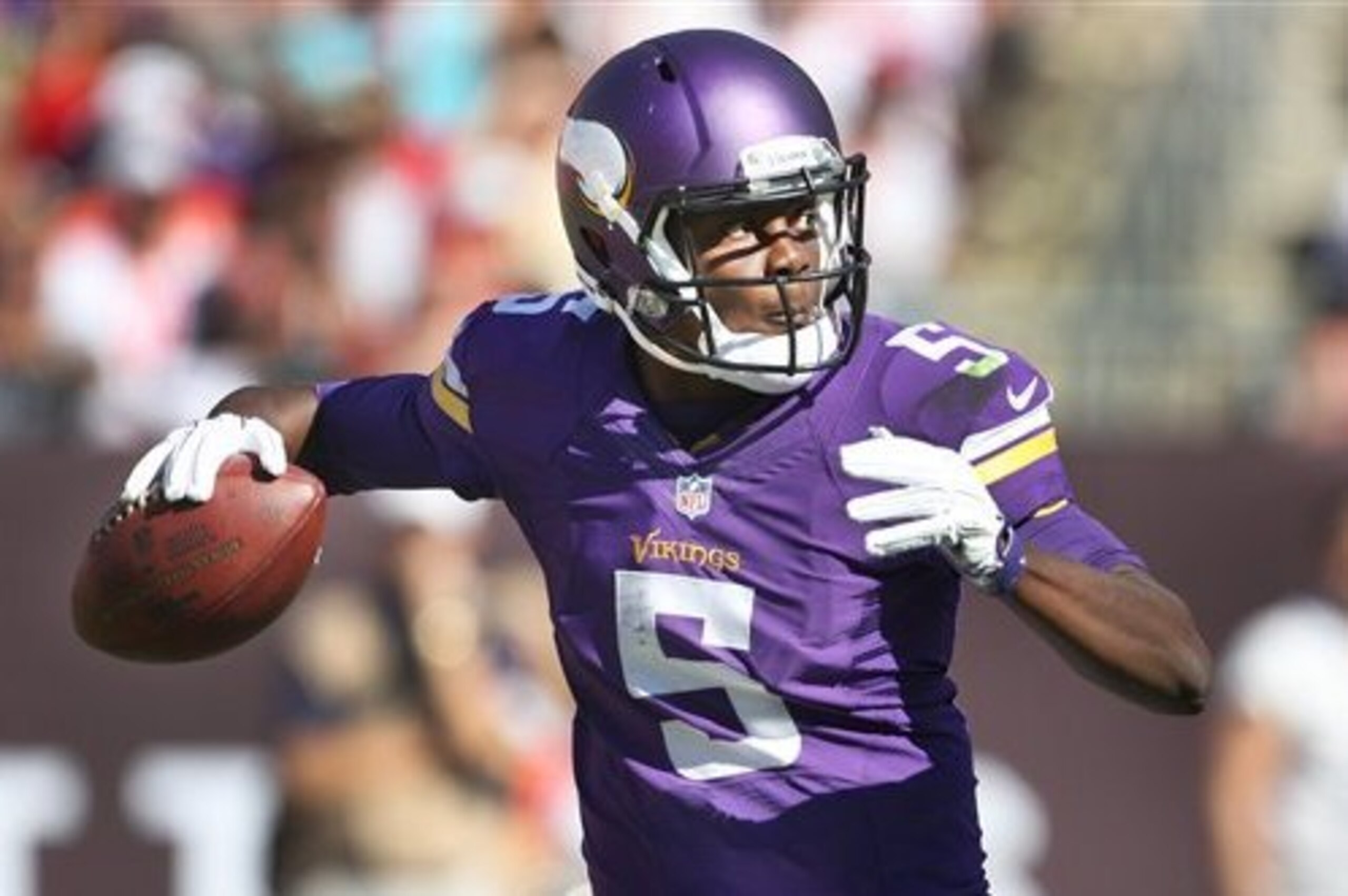
In each of the last two weeks, Bridgewater has been quicker getting the ball out of his hand and making more decisive coverage reads. Against a talented Tampa Bay defensive line, Minnesota conceded only a single sack, a credit to his quicker release and smart pocket movement. The Vikings will need another performance like that against a Washington team that gets to quarterbacks frequently.
Numerous signs point to Bridgewater’s growth, so Sunday’s game is another opportunity to make that next step in the right direction.
Ready for the blitz
For the Vikings offense to be successful, handling the deadly blitz packages Washington brings is step No. 1.
Tenured Washington defensive coordinator Jim Haslett will throw the kitchen sink at quarterbacks too, something Bridgewater seems fully aware of, as quoted by VikingUpdate:
"Teddy Bridgewater called the Redskins blitz package "pretty exotic." #Vikings
— VikingUpdate.com (@VikingUpdate) October 29, 2014"
Part of the exotic nature of Haslett’s blitzes is the overt aggression. He is not afraid to bring more blitzers than there are blockers. Take this 3rd-and-8 play in Dallas for example:
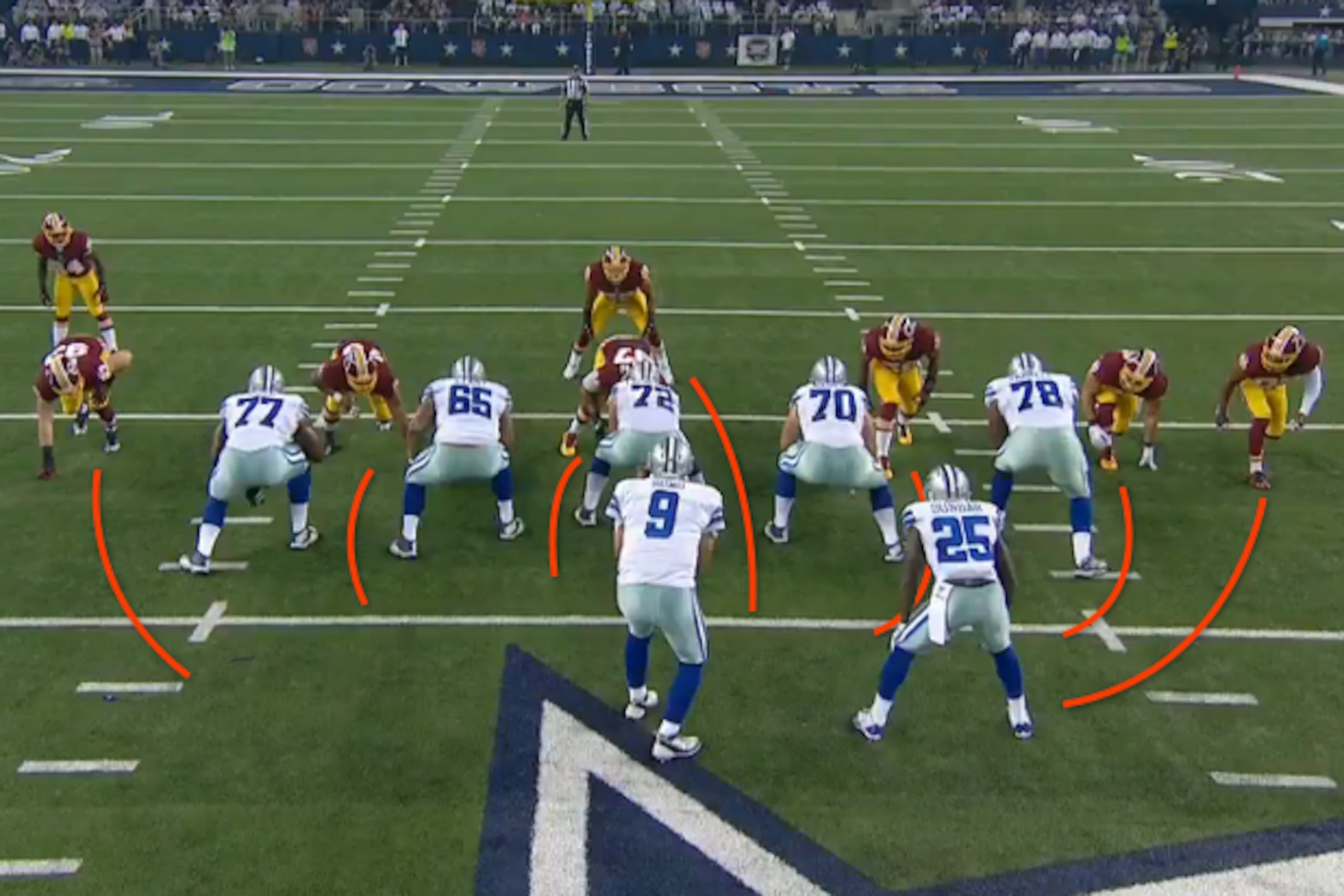
Count the rushers and the blockers: The Redskins have seven on six. That means a free rusher will be coming. It also means that Washington has four in coverage against four eligible receivers who are running routes, each defensive back on an island.
For the offensive line, basic rules apply. The most immediate threats to the quarterback are top priority. That usually prioritizes rushers from the inside out, because those from the interior have the shortest route to the quarterback. Dallas picks up this blitz accordingly.
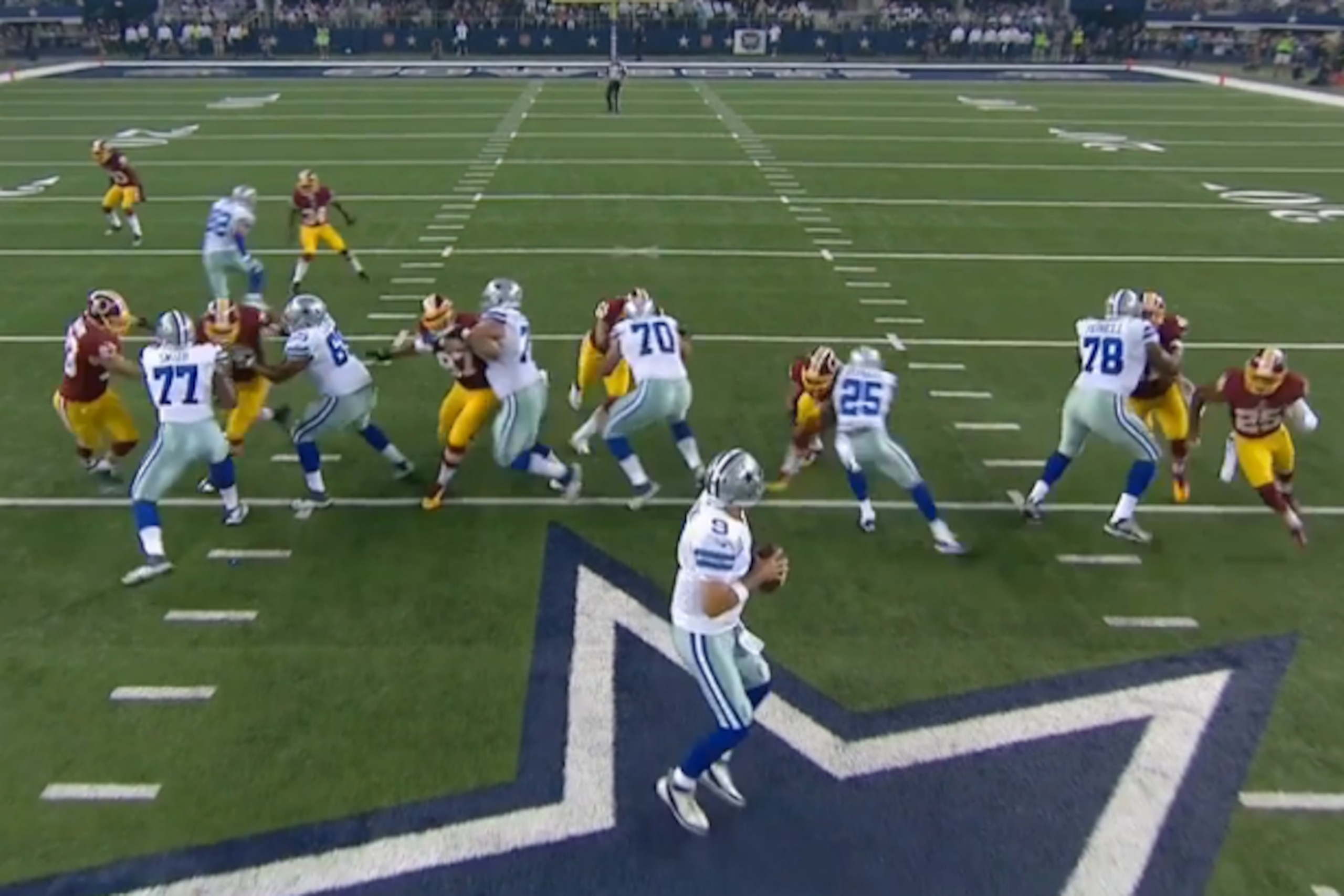
The second part falls on the shoulders of the quarterback. With zero coverage, meaning no safety help, the ball either comes out, or the quarterback gets sacked.
Bridgewater must be willing to trust that his receivers can win the ball in the air. That can mean throwing back-shoulder or finding other ways to throw covered receivers open. A blitz like this is usually combined with press-man coverage, challenging receivers to beat contact before a rusher gets home.
On top of bringing loaded blitz packages, Haslett is quite frequent dialing up extra rushers. From 2010 to 2012, the first three years of Haslett’s stay in Washington, he called for the blitz on 39.2 percent of plays, eighth-highest of NFL teams in the time period, per Neil Hornsby of Pro Football Focus.
All the blitz talk should not keep the Vikings offense up at night. In fact, Bridgewater is fully capable of handling it. Over a small sample, his numbers point to his early proficiency when passing against the blitz:
| Comp. % | YPA | TD | INT | Rating | |
| Blitz | 66.0% | 7.1 | 1 | 1 | 84.8 |
| No Blitz | 57.4% | 6.7 | 1 | 4 | 65.4 |
The offensive line has a difficult task ahead. If it has some semblance of success picking up pressure, expect Bridgewater to thrive.
Keep the screen passes going
There are other ways to attack the blitz beyond hoping receivers can bail out Bridgewater, especially with a cerebral quarterback who has enough autonomy before the snap to check out of plays. That’s what Bridgewater did when Atlanta showed an aggressive blitz on this third-down play:

He checks into a jailbreak screen for Jarius Wright that releases numerous blockers to the second level.

When Wright catches this pass, he looks up at a parted sea to run through.
Quick-hitting passes can take advantage of Washington’s aggressive tendencies and can dissuade Haslett from future blitzes, at least to some degree. When the Vikings can get the ball into the hands of their best playmakers, Wright, Cordarrelle Patterson and Greg Jennings, they can look up at acres of space to run through.
Another player who needs to find more of the ball in the screen game is Jerick McKinnon. Minnesota has struggled to get the jitterbug going in the passing games, with numerous screen passes sniffed out too quickly.
The answer is to stick with it. Big plays will come.
Ride the hot hand
On the ground, Minnesota needs to fully commit to McKinnon. Late in the Tampa Bay game, Matt Asiata was rotated into the game despite McKinnon plundering a stingy run defense for most of the game.
McKinnon is currently the best thing the Minnesota offense has going for it, so it only makes sense to rely heavily on him. The Vikings failed to do that against the Bucs, feeding him only 16 carries.
Brian Hall of FoxSportsNorth.com provides the stats that tell a pretty clear story of the McKinnon vs. Asiata decision:
"Over the past 3 games, Matt Asiata has 12 carries for 20 yards (1.6 yards per carry). McKinnon has 46 carries for 226 yards (4.91). #Vikings
— Brian Hall (@MNBrianHall) October 28, 2014"
Even though he is only a rookie, McKinnon can handle 20 or more carries, which should be the expectation on Sunday, especially if the Vikings lead for stretches of the game. McKinnon has the frame to hold up with a high number of carries, and the running game is being solely carried by him at this point.
The coaching staff must resist the urge to take a conservative approach with running back duties. Asiata should get some snaps to spell McKinnon but should not be rotated in for whole series at a time.
Do what you do best
One of the most unique aspects of Sunday’s game will be the familiarity between Zimmer and Gruden. Having worked together in Cincinnati prior to their current gigs, few secrets exist as to what each tries to accomplish schematically.
The important point for the Vikings is not to throw defensive calls into the mix that players are unfamiliar with or that don’t play to the strengths of the personnel. Paranoia could take over, and Zimmer could try to reinvent the wheel. This defense has enough talent to handle the Redskins offense on its own.
Zimmer admitted the need to fight off this temptation, via Andrew Krammer of 1500 ESPN:
"Zimmer on playing Gruden: "I don't like playing against my friends," says he's wary of changing too much to throw him off. #Vikings
— Andrew Krammer (@Andrew_Krammer) October 29, 2014"
Trust the scheme. Trust that the players can handle their assignments and effectively respond to whatever Washington throws at them.
Know the West Coast offense
Zimmer does have a wealth of knowledge to tap into when it comes to dealing with Gruden’s offense, one steeped in West Coast principles.
At its most simple, the offense is built to get the ball out of the quarterback’s hands quickly and in rhythm.
Ravens head coach John Harbaugh gave this short summary of Gruden’s offense, via Mike Jones of The Washington Post: "They’re very physical up front, and three-step, controlled passing. The ball comes out quickly and it’s really hard to get to the quarterback. It’s based on probably a quick read and the ball’s out quick."
Statistics back up the idea that pressure is hard to come by. Per Pro Football Focus' premium statistics (subscription required), Cincinnati quarterback Andy Dalton averaged a release time of 2.43 seconds last season under Gruden, the quickest release time in the league after Peyton Manning.
With Kirk Cousins as the starter, the only Redskins quarterback with a decent sample size to this point, the ball has come out in an average of 2.41 seconds in 2014.
For cornerbacks and safeties, preparation for slants, outs, hitches and other quick-hitting routes is important. After the quarterback gets his initial read of the defense, he can deliver to short and intermediate routes very quickly. Defensive backs must plant and drive on routes to get there as the ball arrives or prepare to make open-field tackles that limit yards after the catch.
Not every throw will be to underneath receivers, of course. With a vertical threat like DeSean Jackson, the Redskins will look to test the defense over the top occasionally as well. RG3 certainly has the arm for that.
For the front seven, some fine-tuning may be required.
Bring appropriate pressure
An oft-used antidote for the West Coast offense is the zone blitz, the one perfected by longtime Steelers defensive coordinator Dick LeBeau.
At its most basic, the zone blitz gives defenses the ability to generate pressure with five rushers while dropping into zone coverage behind it, which limits the risk of big plays. It also gives defenses the ability to overload one side of an offensive line with more rushers than there are blockers.
Zone blitzes are common in a Zimmer-led defense, just not a series-to-series staple.
There are numerous ways to craft a zone blitz, especially in terms of who is and isn’t rushing. Minnesota has dropped defensive linemen into coverage with numerous permutations already in 2014, even dropping both defensive tackles once against Tampa Bay. Let’s take a look at one example from Week 3 in New Orleans.
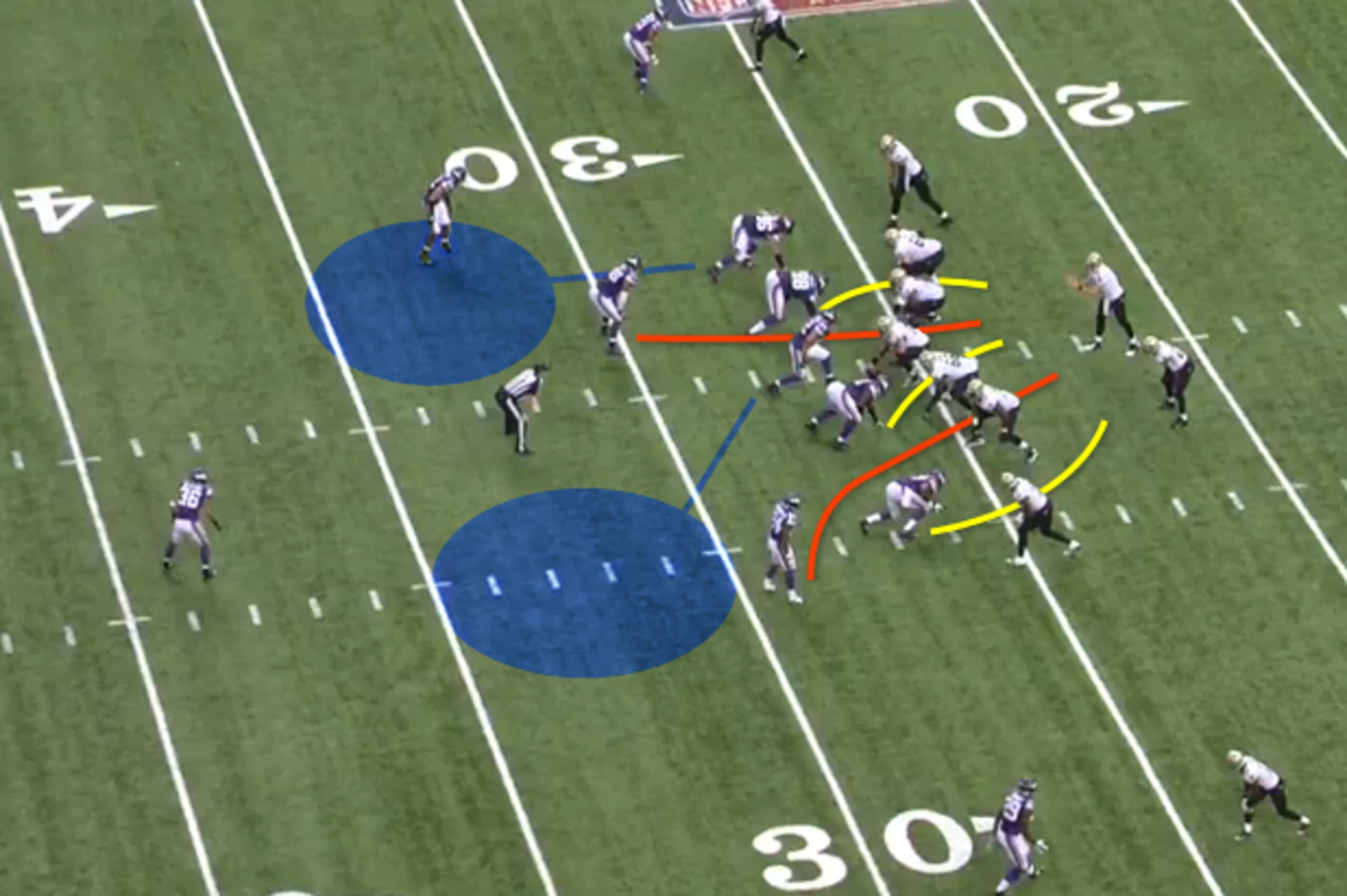
On this blitz, defensive end Brian Robison will drop into coverage. So will Chad Greenway, who bluffs an A-gap blitz before the snap. Anthony Barr and Captain Munnerlyn blitz off the line of scrimmage.
In coverage, some defenses tend to play three-deep zone with three underneath, also in zone coverage. Zimmer tends to rely on pattern matching, a matchup-zone-type coverage that resembles man coverage. The beauty of the coverage aspect is that in most cases the quarterback can only hold the ball for so long because the overloaded blitz often produces a free rusher.

Munnerlyn is unaccounted for because the Saints offensive line cannot not slide its protection for the extra rusher. The back is also confused by the disguising done pre-snap.
But why is this effective against the West Coast offense?
Most blitzes, especially those that get home quickly, don’t get the benefit of disguising themselves. West Coast quarterbacks can quickly decipher their best options and release before a rusher gets to them.
With zone blitzes, the dropping of defensive linemen or others who appear to be rushers can cause chaos in the quarterback’s reading process. If his first read tells him to throw a slant pattern but an end he didn’t account for drops into the throwing lane, he may either throw a risky ball into coverage or be forced off his first option, giving time for the rush to get there.
Griffin is no stranger to locking onto a receiver and throwing into coverage either, so zone blitzes could be an avenue toward creating turnovers on Sunday. At the very least, they can slow down Griffin's mental processing in the pocket and lengthen the window for a proficient pass-rushing unit to get home.
Zone blitzes also limit risk. A man-based blitz could be beaten by numerous quick-hitting throws, and when a defensive back or linebacker is beaten by a route-runner, big yardage can follow.
Rush with discipline
The offense is drilled in quick passing. With Griffin, the Redskins have a quarterback who can create beyond the structure of plays and is naturally inclined to do so.
Defensive ends must keep outside leverage on him and keep their eyes up, tracking the movements of the quarterback. When an end decides to dip inside the tackle, he can easily be washed down, opening up a big lane for a mobile quarterback to escape and extend the play.
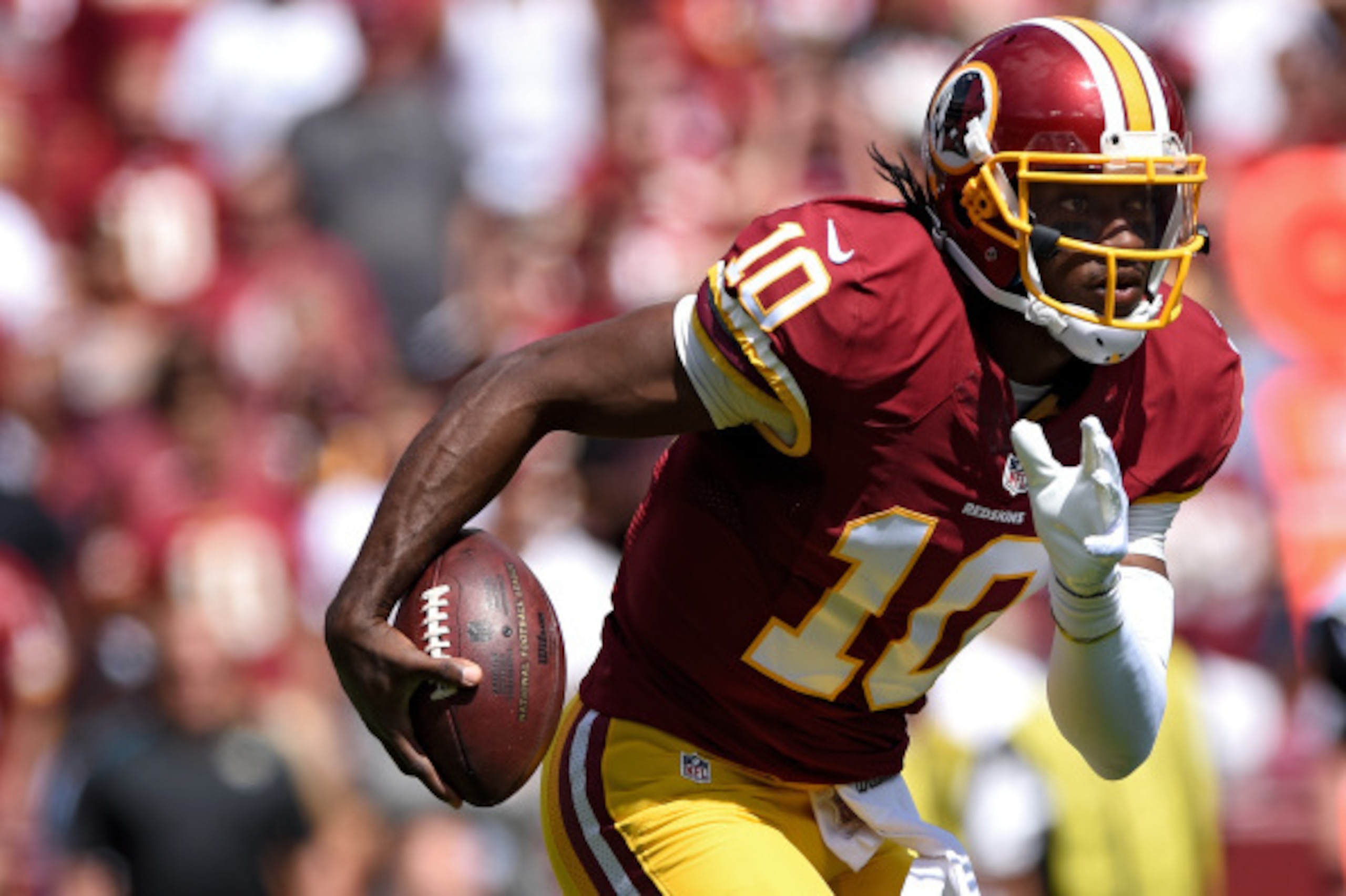
Allowing RG3 to escape the pocket puts the entire defense in trouble. Cornerbacks and safeties are pressed into covering receivers for longer periods, a tough ask with the type of athletes Washington has on the perimeter and at tight end.
Linebackers are forced to decide whether to come forward and play the quarterback or stay in coverage. Whichever decision they make probably proves to be the wrong one.
All rushers must stay true to their gaps. They must also play with their eyes up. Rushing through a gap without variation is unproductive, but each rusher must protect against a mobile quarterback and not freelance. Make RG3 pick apart coverage from inside the confines of an ever-collapsing pocket.
Maintain energy and get to the football
The hallmark of the Vikings’ defensive dominance against the Buccaneers was the energy brought to the field. On seemingly every run play, the Tampa Bay ball-carrier was swarmed by multiple Vikings, leading to few yards after contact.
The defensive line played especially well, fighting off blocks and causing backfield disruption regularly. Doug Martin and Bobby Rainey were rarely able to break through a hole and hit the second level with a head of steam.
That type of play is a must for Minnesota’s defense in order to keep Alfred Morris and the Redskins’ run game in check.
Morris is a powerful back who can bully second-level defenders, so giving him room to build up momentum is dangerous. When defenses make contact with him early in run plays, his effectiveness falls quicker than most backs. Morris is less of a creator as a runner than he is a maximizer of decent holes.
This description from Matt Miller’s BR 1000 series sums up Morris well:
"Alfred Morris (5'10", 218 lbs, two seasons) is a big, powerful back who works through contact. He keeps his legs moving forward, which allows him to consistently finish plays moving in the right direction. His one negative is that he is not an overly violent runner, so he doesn't break as many tackles as he should.
"
Advanced statistics back up the idea that Morris doesn’t often break tackles. According to Pro Football Focus premium statistics, Morris has only caused 12 missed tackles on 133 rushes. By comparison, the Vikings' McKinnon has caused 13 missed tackles on half as many rushes.
To shut down the Redskins on the ground, Minnesota must remain stout at the line of scrimmage against a run scheme that mixes man-blocking and zone-blocking principles. The defense must also swarm Morris before he builds up a head of steam, pouring defenders on the football with maximum effort given.
Morris also has a tendency to cough the ball up, fumbling five times in 2013 with a rate of 1.81 percent per SportingCharts.com. That fumble percentage ranked him ninth-highest of running backs with 100 or more carries, a group that had 49 qualifiers last season.
When multiple tacklers get to Morris, the second and third should be looking to rip the ball out, just like Barr did to win the game in Tampa Bay.
If the Vikings can accomplish these tasks in Sunday’s game, they can add another win to their 2014 tally, further revitalizing a campaign that started much too slowly.
.jpg?w=2560 "Titans Colts Football")