Detroit Tigers: Top Five Offseason/Spring Training Acquisitions of 2013
With the Detroit Tigers’ 2014 season over and the offseason just around the corner, the Tigers are naturally in preparation mode—preparation mode in the sense that the team is getting ready for an offseason of change.
Numerous areas of the roster (the bench, the bullpen, center field and the fifth spot in the starting rotation) could be improved in a number of different ways (promotion of internal candidates, trades or free agency).
In the end, the additions made in the 2013-14 offseason weren't good enough to propel the Tigers to a World Series title. Still, those additions greatly improved the team in areas where struggling was commonplace.
With the 2014-15 offseason about to begin, here’s a look back at the top five players Detroit acquired before Opening Day 2014.
All stats courtesy of http://www.baseball-reference.com/ unless otherwise noted.
5. Joe Nathan
1 of 5
Joe Nathan was signed to end the Tigers’ bullpen woes. After Jose Valverde’s implosion and the decision that Joaquin Benoit wasn’t going to be the closer, the team settled on Nathan.
It seemed like a fantastic investment. The former Rangers closer posted a 2.09 ERA in two years of pitching in the launch pad of a hitter’s park in Texas. With a 1.39 ERA, it seemed then 38-year-old Nathan wasn’t slowing down.
Then he got to Detroit.
Nathan pulled something similar to the opposite of what happened to Joba Chamberlain. His first-half numbers were ugly—a 5.61 ERA, a .274 batting average against, five home runs and 22 runs allowed in 36 games.
The former Twin turned it around in the second half, posting improved numbers in nearly every statistical category. Even with his improved numbers, his pitching didn’t necessarily befit the two-year contract he got from the Tigers. However, the flipside to that coin is that he has another year left on the deal—a year to continue to turn it around and provide his employers the bullpen solution they’ve been looking for.
4. Joba Chamberlain
2 of 5
To assess Joba Chamberlain’s 2014 season in Detroit, one must look at his pitching splits to get a better understanding.
At first glance, Chamberlain’s numbers are encouraging. Brought in to strengthen the bullpen, he posted a 3.57 ERA in 69 appearances while striking out 8.4 batters per nine innings. Throw in a couple of saves, and you have a pretty solid season for a relief pitcher—especially for one who was only signed for $2.5 million.
That’s just the thing, though—on the surface it seems a solid investment, but his first- and second-half splits tell a very different story.
Chamberlain achieved his ranking on this list due to his tremendous performances in the first half of the season, when he posted a 2.63 ERA, struck out nearly 10 batters per nine innings (9.6) and held hitters to a .226 batting average and a .590 OPS. He was effective, to say the least.
Then the second half of the season hit. And hitters… well, they hit Joba pretty well. The former Yankee’s ERA in the second half was 4.97. His strikeout numbers waned as he struck out 6.8 per nine innings, and hitters collectively batted .271 off Joba while posting a comparatively staggering .726 OPS.
All of this culminated with Chamberlain getting annihilated by the Orioles in the ALDS, surrendering five runs while only getting a single out in two relief outings. His ERA for the series was 108.00.
3. Rajai Davis
3 of 5
Rajai Davis’ game has always included a lot of speed. Speed on the basepaths. Speed covering ground in the outfield. Speed.
Because of that, it wasn’t surprising that the Tigers brought him in during free agency. Davis swiped 45 bags in 2013 in Toronto before stealing 36 in his first go-around in Detroit. Davis, along with Kinsler and Andrew Romine, brought a renewed sense of speed to a lineup that was sorely lacking it.
In addition to his speed, Davis also brought pop. He tied a career high with eight home runs and drove in a career-high 51 runs.
The former Blue Jay filtered in and out of the leadoff spot, often hitting at the top of the order or batting ninth as an auxiliary leadoff hitter of sorts. Davis’ addition gave Tigers added depth, while also making them more dynamic on the basepaths—two things Detroit needed desperately.

2. J.D. Martinez
4 of 5
Despite being acquired late in spring training, Martinez still provided a massive impact.
Good for a WAR of 4.9 (only bettered on the team by Ian Kinsler, Victor Martinez and Miguel Cabrera), J.D. Martinez solidified the fifth spot in the Tigers batting order.
A true scrap-heap addition, Martinez was released by the Houston Astros and signed with Detroit. After a brief rampage in Triple-A Toledo where he hit 10 home runs in 17 games, Martinez moved to the big league club, and the success he found in Toledo carried over.
He obviously didn’t continue the same torrid pace in the big leagues, but he did manage a superb 56 extra-base hits (23 of which left the yard) and drove in 76 runs.
All of this earned the former Astro second place in the voting for AL comeback player of the year and the widespread consensus that he’s a legitimate, middle-of-the-order hitter.
The 27-year-old Tigers left fielder posted a sparkling .912 OPS and looks to be a presence in the lineup for years to come.
1. Ian Kinsler
5 of 5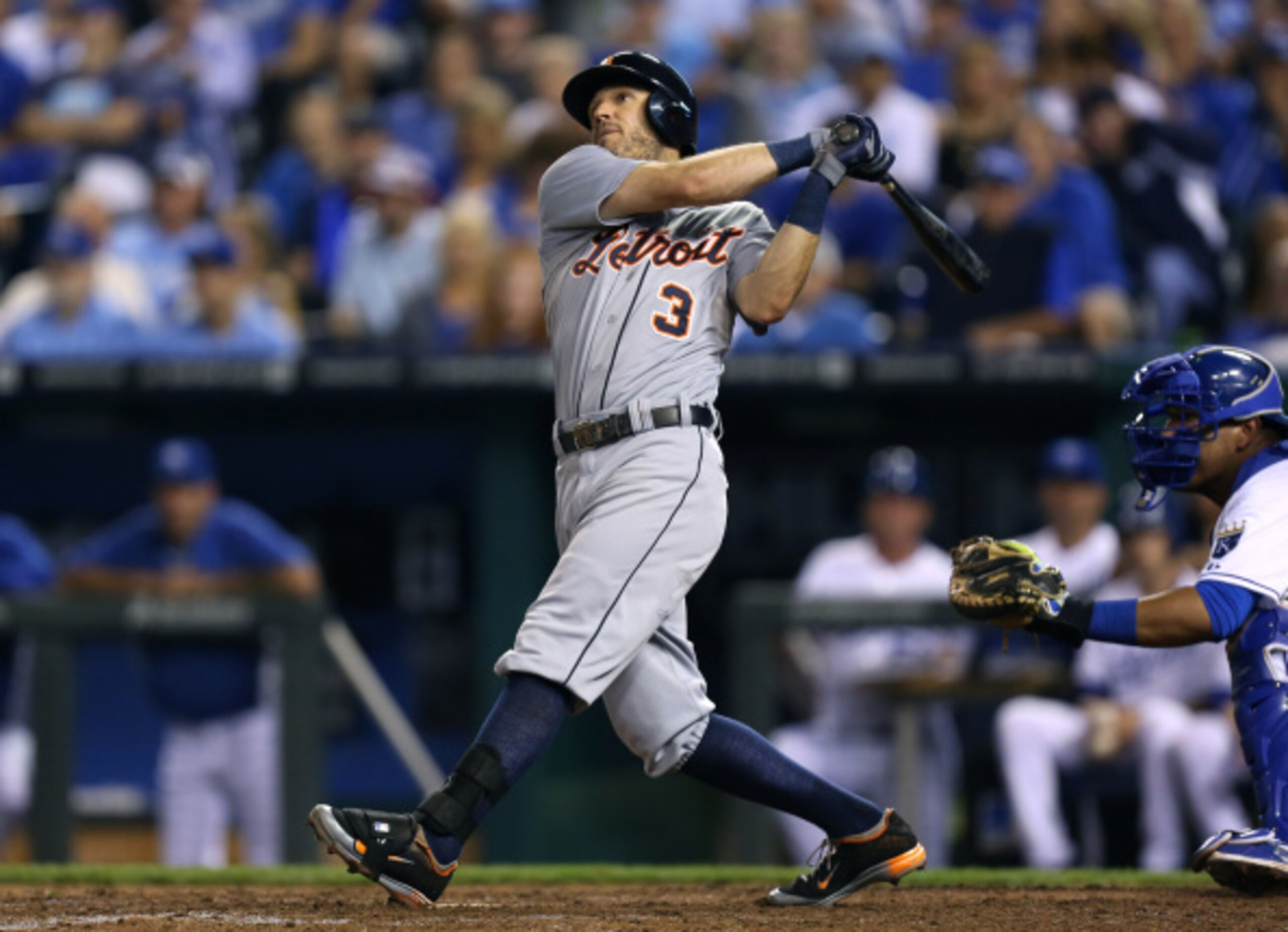
Acquired in a blockbuster trade with the Texas Rangers for Prince Fielder, the move to acquire Kinsler not only saved the team an immense amount of cash, but it also shored the Tigers’ middle infield.
The former Ranger provided a substantial offensive upgrade to predecessor Omar Infante, despite Infante posting a .795 OPS and accounting for 37 extra-base hits. Kinsler drove in almost twice as many runs in his inaugural season in Detroit as Infante did in his last season (92 to 51), while grading out better defensively than Infante ever did in his second tenure in Motown.
In addition to his defensive prowess, for which Kinsler was named a finalist for a Gold Glove at second base in the American League, the four-time All-Star led the league in at-bats and plate appearances.
He accomplished the latest feat mainly by hitting first and second in Detroit’s lineup. His bat’s presence will continue to be vital near or at the top of the Tigers lineup with Austin Jackson gone.
Any number of stats can be used to explain why player A is better than player B, but with Kinsler, one statistic stands out: his WAR. Kinsler’s WAR was 5.5, higher than any other Tigers player in 2014, including Victor Martinez. Infante’s WAR in 2013 was 2.4.
.png?w=2560)


.jpg?w=2560 "NFL House in Paris Closes for Protests")
.jpg?w=2560 "Trevon Diggs Cut by Seahawks")