Uncertainty has become something of a buzzword around the NBA in recent months, especially for the league's front-office folks.
The chief driver of said uncertainty? The NBA's new nine-year, $24 billion national television deal with ESPN and Turner Sports (the latter of which owns Bleacher Report).
Nobody knows yet how the league plans to handle an unprecedented spike in revenue that could send the salary cap skyrocketing toward $100 million from it's current $63.2 million threshold. However, it has some idea as to how it might "smooth in" the cap increase.


As commissioner Adam Silver said at his most recent press conference, via ESPNNewYork.com's Ohm Youngmisuk, "While players would still receive every nickel of their 51 percent that year, we will in essence artificially lower the cap and then make a shortfall payment directly to the union, and then they will distribute that money proportionately to the players."
Still, no definitive decision has yet been made on that front. Until then, owners, team presidents, general managers and their ilk do little more than stew in their own speculative juices and hope for a concrete answer to a question so central to the business of basketball.
That ambiguity likely had everything to do with the league's owners failing to ratify pending reforms to the draft lottery system at the most recent Board of Governors meeting in New York. According to Yahoo Sports' Adrian Wojnarowski, said reforms would've both expanded the number of picks subject to the lottery and flattened the odds that each non-playoff team had of switching spots in the order:
"Under the proposal, the worst four teams would have had a 12 percent chance at the first pick, No. 5 would have had an 11.5 percent chance, No. 6, 10 percent, and on down. What's more, the worst team could have dropped as far as seventh in the draft order, the second worst could drop to No. 8, and so on.
"
Per Woj, the proposal drew only 17 affirmative votes—six shy of the 23-out-of-30 it needed to pass.
Think Tanking
Those changes were presumably proposed as a means of discouraging teams from pursuing full-blown, multiyear franchise teardowns like the one in which the Philadelphia 76ers are currently (and quite flippantly) engaged. The thing is, there's no telling if the Sixers' plan will succeed, much less prove to be an attractive model for other teams to pursue.
Granted, some NBA higher-ups have already admitted that Philly's approach, which some have labeled as tanking, is "definitely a strategy."
"I don't look at it as tanking," Rod Thorn, the league's president of basketball operations, told ESPN.com's Henry Abbott during the most recent All-Star weekend in New Orleans. "I look at it as I don't want to be at this level here. I may have to get worse to be good. It's definitely a strategy and more and more teams are looking at it."
But most teams that go about rebuilding this way don't do so quite as aggressively as Philly has. Even the Boston Celtics—who sold off Paul Pierce, Kevin Garnett and Jason Terry for spare parts and draft picks last summer and could move Rajon Rondo before 2015—haven't been stuffing their roster with D-Leaguers and hangers-on to any extent approaching what the Sixers have done under general manager Sam Hinkie.
As Abbott noted back in 2012, when the then-Charlotte Bobcats were supposedly tanking their way to the top, there's little proof that such an approach to team-building is actually a sound one:
"Any objective look through NBA history suggests that "the Thunder model" is no model at all. Good luck with your tanking. If you get bad, you will get a high pick and you may even get a good player. But by far the most likely thing is that you'll be tanking again long before you make it to the promised land, or even the conference finals.
"
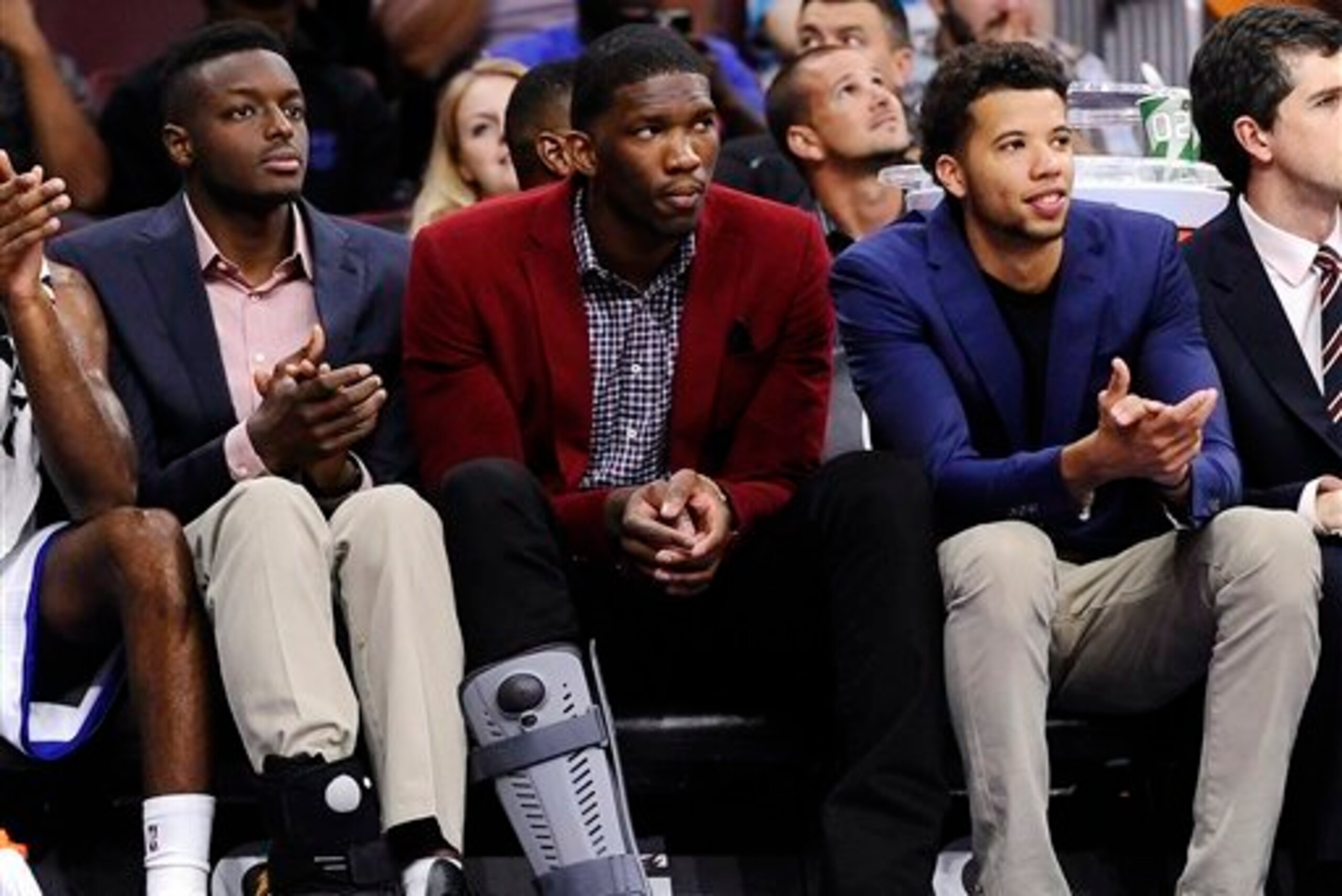
Fast-forward to today, and you'll find that the Sixers aren't even close to sniffing a measure of success that, in a copycat league like the NBA, would warrant imitators. They'll probably be terrible again this year and figure to languish in the league's basement for another year or two after that as Joel Embiid, the No. 3 pick in the 2014 draft, works his way back from foot surgery and Dario Saric, the No. 12 pick, awaits his buyout from Europe.
The Reality of Rebuilding
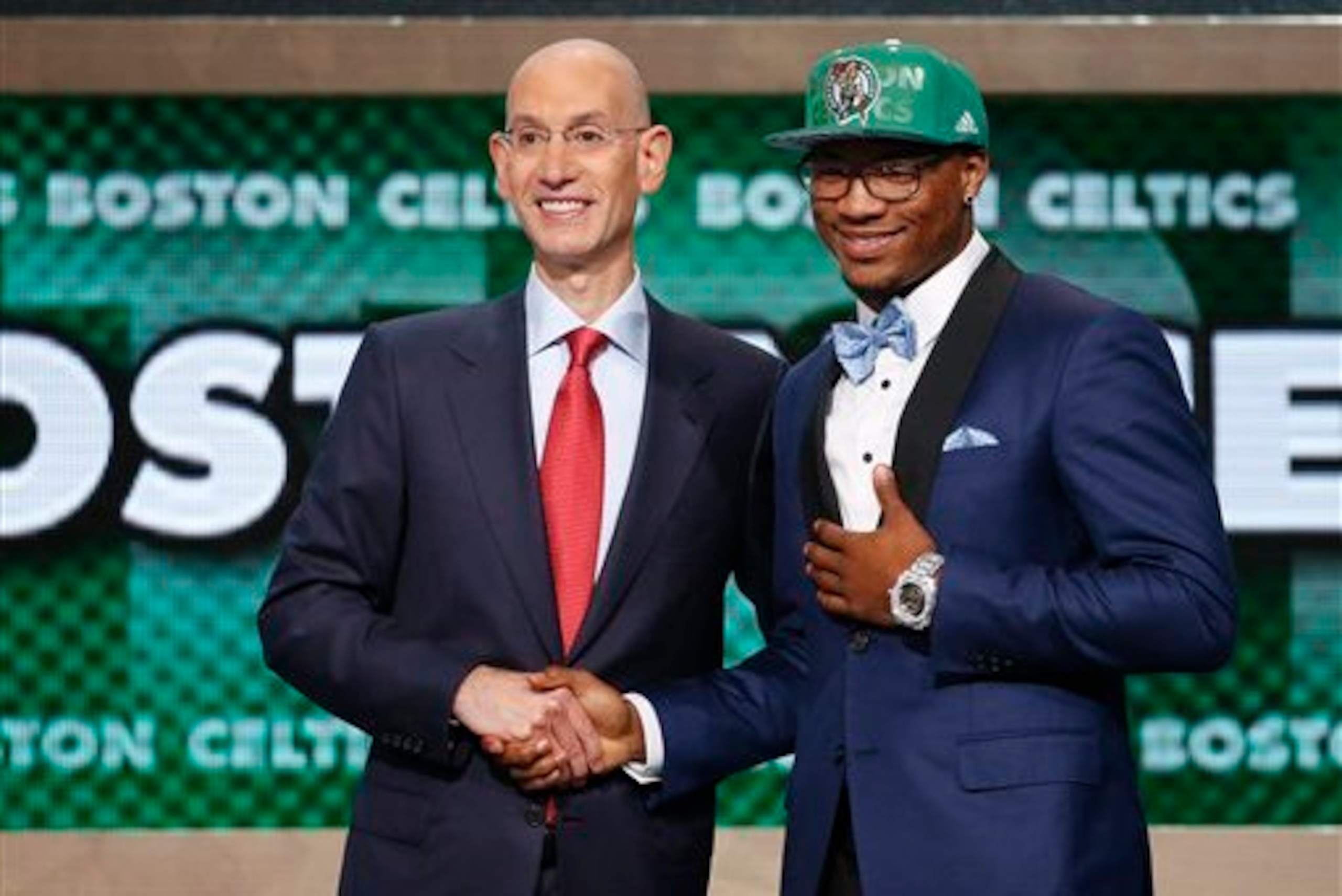
Commissioner Adam Silver, for his part, isn't convinced that Philly is actually tanking. "Whether it’s the case, I’m frankly not sure," Silver said after the Board of Governors meeting via NJ.com's Eliot Shorr-Parks. "Sometimes perception becomes reality. I think there’s an unfair pressure on some of our teams to actually underperform. There’s a view in those markets that they’re better off performing poorly in order to win in the long term."
Silver, and the league at large, should have a clearer idea of that in a few years, once the Sixers have had time to further flesh out their grand experiment. By then, Silver and Company will also know better how the the flood of TV dollars has affected the NBA's business.
Sure, it's not a good look for the NBA when not all teams look like they're attempting to win, especially when the exceptions play in major markets like Philadelphia and Boston. But there's nothing to indicate that the perceived problem is a) a problem at all, or b) if a problem, a systemic one that requires a systemic response. In essence, the league's efforts to curb tanking in this case aren't unlike those to stamp out voter fraud (via voter ID laws), the frequency of which ranges somewhere between infinitesimally small and practically nonexistent.
And, like those voter ID laws within America's larger electoral system, the NBA's lottery reforms would've likely occasioned a whole host of other consequences, unintended or otherwise, that have nothing to do with tanking.
For one, most teams that stink don't do so on purpose, and certainly not to the extent that Philly does. Think back to the 2013-14 season. As much as the Sixers may have tried to be the worst of the worst, they were still shown up in that department by the Milwaukee Bucks, a team that came into the campaign intending to compete for a postseason berth, however futilely. The C's and the Jazz, both of whom took decisive steps back during the summer of 2013, were joined atop the lottery by the likes of the Los Angeles Lakers and the Sacramento Kings, two teams that, like Milwaukee, tried (and failed miserably) to win games.
The Orlando Magic, who finished with the league's third-worst record last season, were still picking up the pieces in the aftermath of Dwight Howard's departure. The Minnesota Timberwolves figure to be in a similar boat this time around, courtesy of Kevin Love.
As it happens, all of these teams were leapfrogged by the Cleveland Cavaliers, who jumped from the No. 9 spot all the way to the top of the draft order by way of the very same lottery system that the NBA was just trying to overhaul. That marked the 27th time in 30 years since the lottery's inception in 1985 that the team with the worst record did not come away with the best pick, and the eighth time a squad that wasn't one of the league's bottom five in terms of wins came away with the biggest prize in the sport. That would seem reason enough for most teams to tread lightly when it comes to tanking, since there are no guarantees that futility yields even the prerequisites of success.
More Money, More Problems

This isn't to say that the NBA shouldn't or won't explore these or other lottery reforms at a later date. The problem is, there's so much else around the league that's in flux at the moment that it doesn't make sense to throw yet another wrench into the system right now.
As an owner told Yahoo Sports' Adrian Wojnarowski, "Several teams started to wonder about unintended consequences and voted 'no' to be able to do further study."
Those concerns would seem more than fair. The 12 teams that voted along with the Sixers against the lottery changes probably did so less out of support for Philly's right to stink—per Zach Lowe, most teams are actually anti-Philly-style tanking—and more out of fear that an expansion of the lottery would only further tilt the table in favor of teams in attractive destinations over those in smaller and/or colder-weather markets.
There are, in essence, three ways for teams to change their rosters: free agency, trades and the draft. The coming deluge of TV money figures to drastically impact the former two, with the teams in more attractive locales benefiting the most.
To be sure, the NBA's rising tide will lift all boats financially. No longer should a third of the league's teams continue to operate in the red, as Silver claimed was still the case. It's all well and good that the NBA could consist of 30 profitable franchises, as opposed to the current system, in which so many teams need revenue sharing to have any hope of breaking even.
But with the way that revenue sharing is arranged, the coming day of jubilee may well widen the competitive gap between the haves and the have-nots. Allow Lowe to explain:
"Small-market teams fear a scenario in which the new TV deal allows them to crack a tiny profit, which in turn deprives them of some revenue sharing, according to several league sources. ... The flip side is that the mega-markets would absolutely clean up if their revenue-sharing obligations vanished.
"
As such, those teams with lucrative local TV contracts (i.e. the Lakers, Knicks and Bulls) would be rolling in more of their own dough, which they could then throw at free agents. And with the cap set to explode, they may not need to worry about the luxury tax and all the trade restrictions dipping into it would normally entail, either.
Winners Take All

In truth, stars won't necessarily flock via free agency or force trades to big-ticket teams every time. Each player has different motives that drive his important career decisions, with money often playing a pivotal part. But for the best of the best, winning is of paramount importance.
And winning, more often than not, begins in the draft, regardless of market size or climate. The mechanism by which the San Antonio Spurs (Tim Duncan, Tony Parker, Manu Ginobili, Kawhi Leonard) and the Oklahoma City Thunder (Kevin Durant, Russell Westbrook, Serge Ibaka) assembled their respective cores is the same that made Dwyane Wade the foundation of the Miami Heat's subsequent success, turned Blake Griffin into the Los Angeles Clippers' golden ticket out of irrelevance and cemented LeBron James' underlying ties to the Cavaliers.
In today's NBA, wherever there's one superstar, another is likely to follow. Griffin's presence in L.A. made the Clippers an intriguing option for Chris Paul in 2011. The year prior, Wade's pedigree as a champion and Finals MVP with the Miami Heat played a crucial role in convincing James and Chris Bosh to take their talents to South Beach. This past summer, James' return to northeast Ohio as a two-time champion was enough for Love to eschew what once seemed like his own inexorable West Coast homecoming in favor of a chance to win in Cleveland.
Tinkering with the lottery odds now might only make it harder for those without stars to improve, since those teams that have them might soon stumble upon enough cap space to fit still more into their respective financial equations.
"The only chance for a lot of teams to ever get a transformational player is through the draft, and eventually we are all going to be in the lottery, in that spot," an anonymous GM told Wojnarowski:
"The teams that'll drop from two to eight, or three to nine – that's just going to take the air out of those fan bases and franchises. They'll get little, if any chance, to improve.
We are going to see more big-market teams who just missed the playoffs jump up and get a great young player at the top of the draft. And people are going to go 'What the [expletive] just happened?'
"
There's no telling whether that would actually be the case, but that's the point. With so many other parts of the business of basketball already or soon to be in motion, the NBA might've put its entire model at risk just to punish a fringe team here or there whose attempts to game the system could fall flat.
In that case, why not wait and see what the league decides to do about the new TV money and how those choices affect the whole operation? By then, any fears over tanking may well have subsided, done in by a lack of results from those that tried it, the league's upcoming economic paradigm shift or some combination thereof.
Should tanking still be a concern by then, the NBA could always revisit the failed proposal or take a fresh look at some other ideas, including (but certainly not limited to) a less drastic tweaking of the lottery odds, an unweighted system wherein every team that misses the playoffs has the same chances of landing any of the top 14 picks; adjusting odds according to how teams fare after they are eliminated from postseason participation; and the oft-discussed draft wheel.
But if the system isn't broken, why fix it? And if that system's soon to be rendered obsolete by a tidal wave of uncertainty, why try to change it now?
Tweet me your thoughts on the league's lottery proposal!


.jpg?w=2560 "NFL House in Paris Closes for Protests")
.jpg?w=2560 "Trevon Diggs Cut by Seahawks")