How Colt McCoy Can Succeed Leading Washington Redskins' Offense
Colt McCoy gets his turn as the Washington Redskins' wheel of quarterback (mis)fortune takes another spin. How can Washington thrive with a passer who hasn't started since 2011, but who ex-Super Bowl-winning head coach and Cleveland Browns team czar Mike Holmgren once dubbed "the guy?"
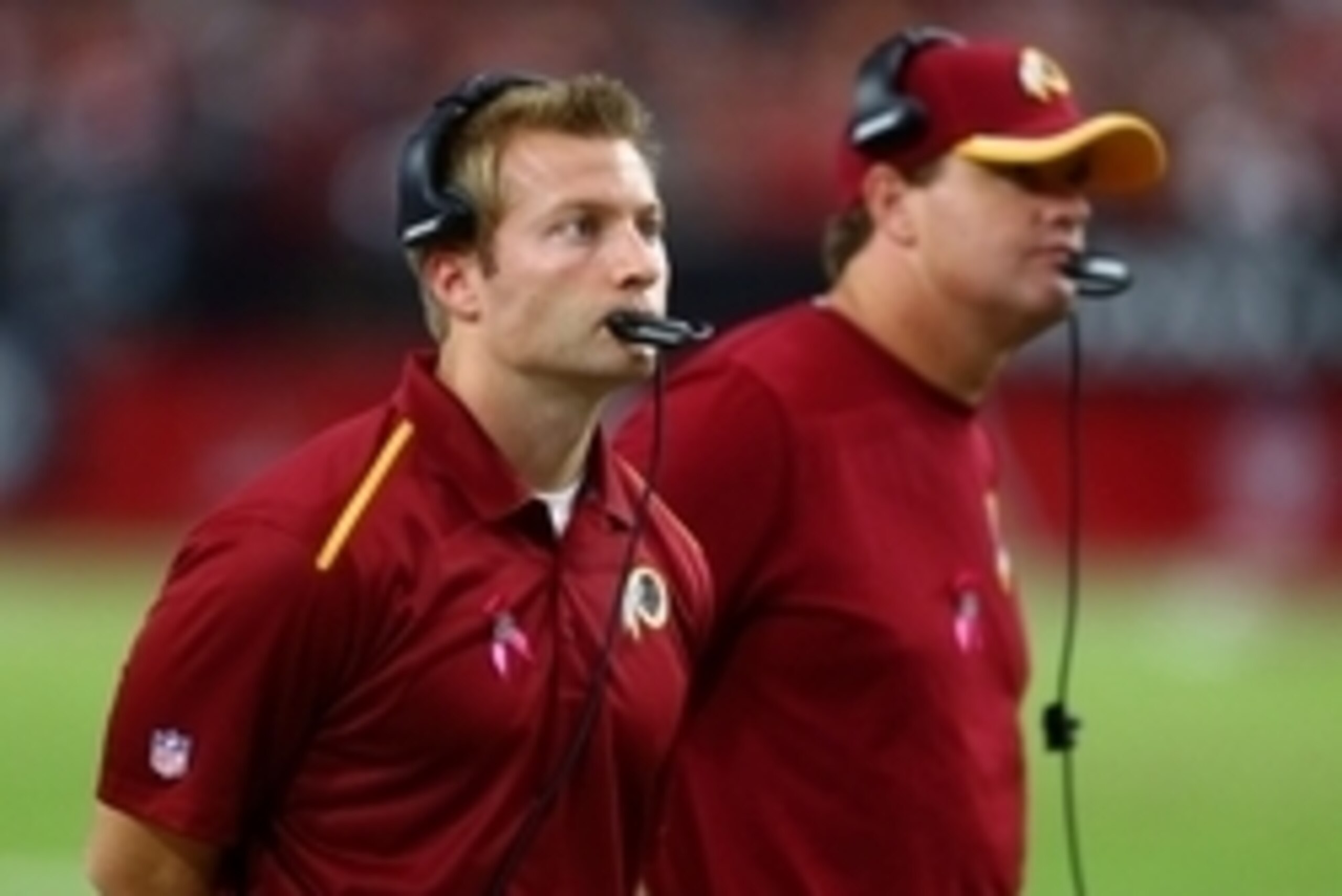
The answer involves making a concerted effort to play to McCoy's strengths. That's not something head coach Jay Gruden and offensive coordinator Sean McVay did particularly well with either Robert Griffin III or Kirk Cousins.
Let's take a look at how they should make life easier for McCoy.
TOP NEWS
.jpg?w=2560 "NFL Paris Football")
NFL House in Paris Closes for Protests
.jpg?w=2560 "Seahawks Chiefs Football")
Trevon Diggs Cut by Seahawks
.jpg?w=2560)
B/R's Expert Week 7 NFL Picks 🔮
Shorten the Field
With McCoy under center, Gruden may have to shelve his preference for striking deep. Yes, McCoy did heave a pair of long passes in the direction of DeSean Jackson during the waning moments of Week 7's 19-17 win over the Tennessee Titans.
But generally speaking, McCoy is noted more for his lack of arm strength. Neil Greenberg of The Washington Post has offered these numbers as proof:
"During his first two seasons in the NFL, McCoy completed 58.4 percent of his passes for 4,309 yards, 20 touchdowns and 20 interceptions. He was sacked 55 times for a loss of 305 yards, producing 5.4 net yards per passing attempt. That was 16 percent lower than the league average over that span and the fifth worst mark in the past decade among the 26 quarterbacks throwing at least 500 passes (Pro Football Reference) in their first two seasons. It is also lower than either Griffin or Cousins produced in their first two seasons.
"
McCoy instead requires an offense built around short passes designed to free playmakers in space underneath. Fortunately, the Redskins possess players who can make this watered-down scheme work.
One such player who should instantly become a favorite target is tight end Jordan Reed. The dynamic "move" weapon was on the receiving end of a pass that showcased how a McCoy-led Washington offense can best move the ball.
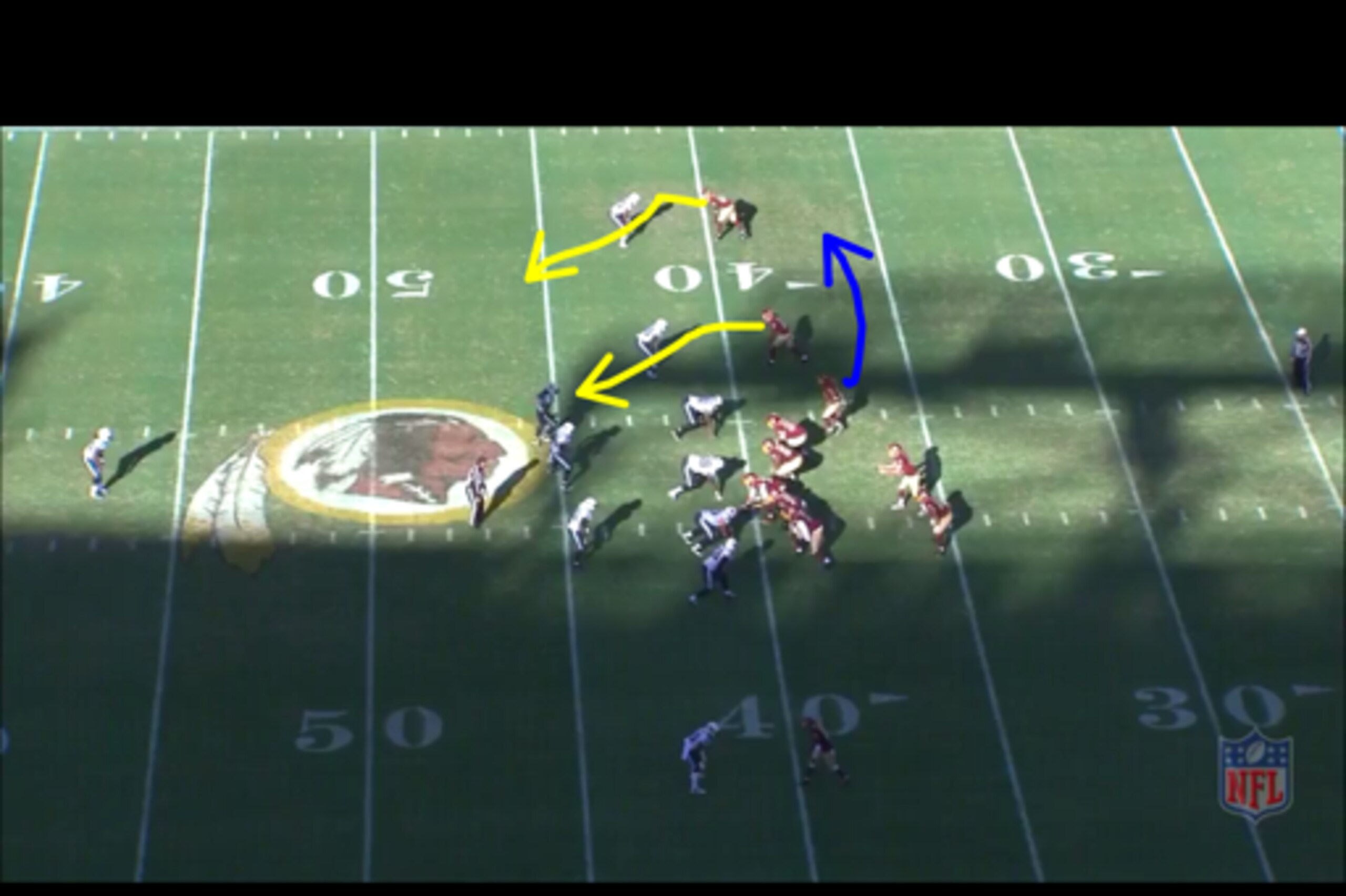
It began on a 2nd-and-10 with McCoy aligned in the shotgun. Reed crept across the line in motion pre-snap:
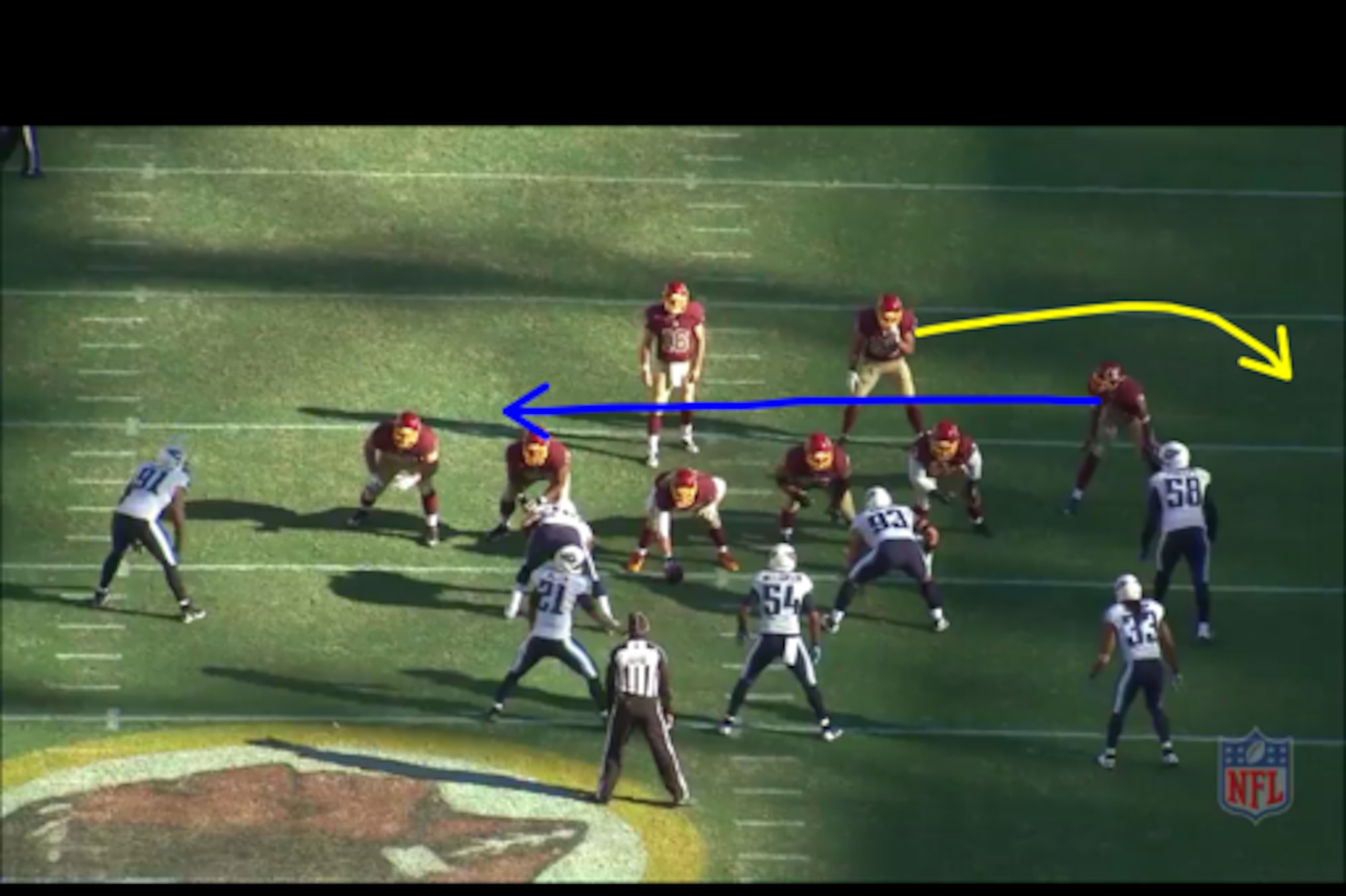
He was flexed in the slot off right tackle. Reed ran a shallow swing route behind two deep-breaking slants from wide receivers Jackson and Andre Roberts:
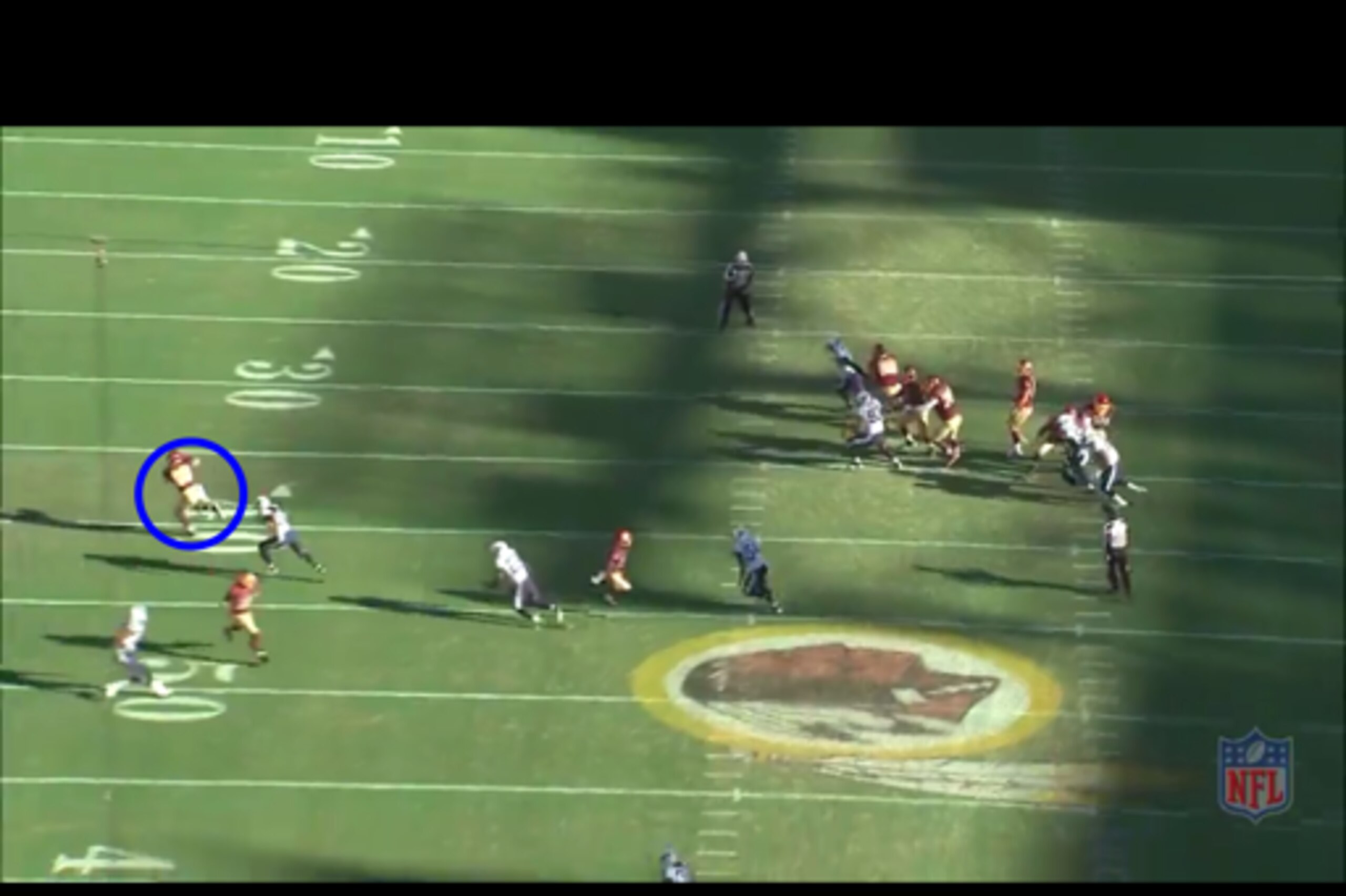
McCoy made his decision quickly and hit Reed in space, allowing the nifty runner to turn the short grab into a nine-yard gain:
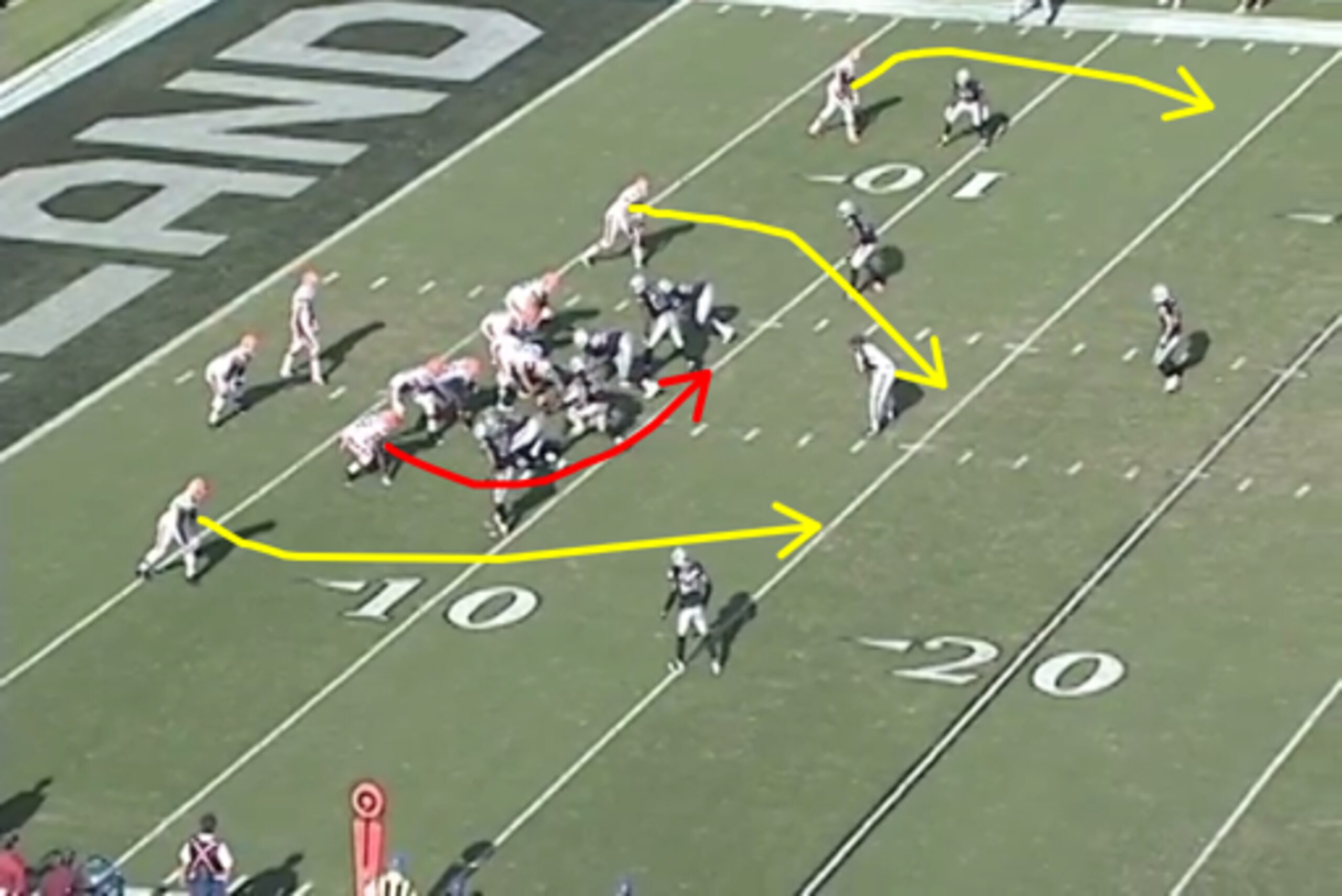
This was similar to a pair of plays McCoy ran for the Browns against the Oakland Raiders in Week 6 of the 2011 NFL season. In the first example, the Browns faced a 2nd-and-7 deep in their own territory.
The plan was to have tight end Ben Watson run a middle screen (red arrow) underneath three deeper-breaking routes (yellow arrows):
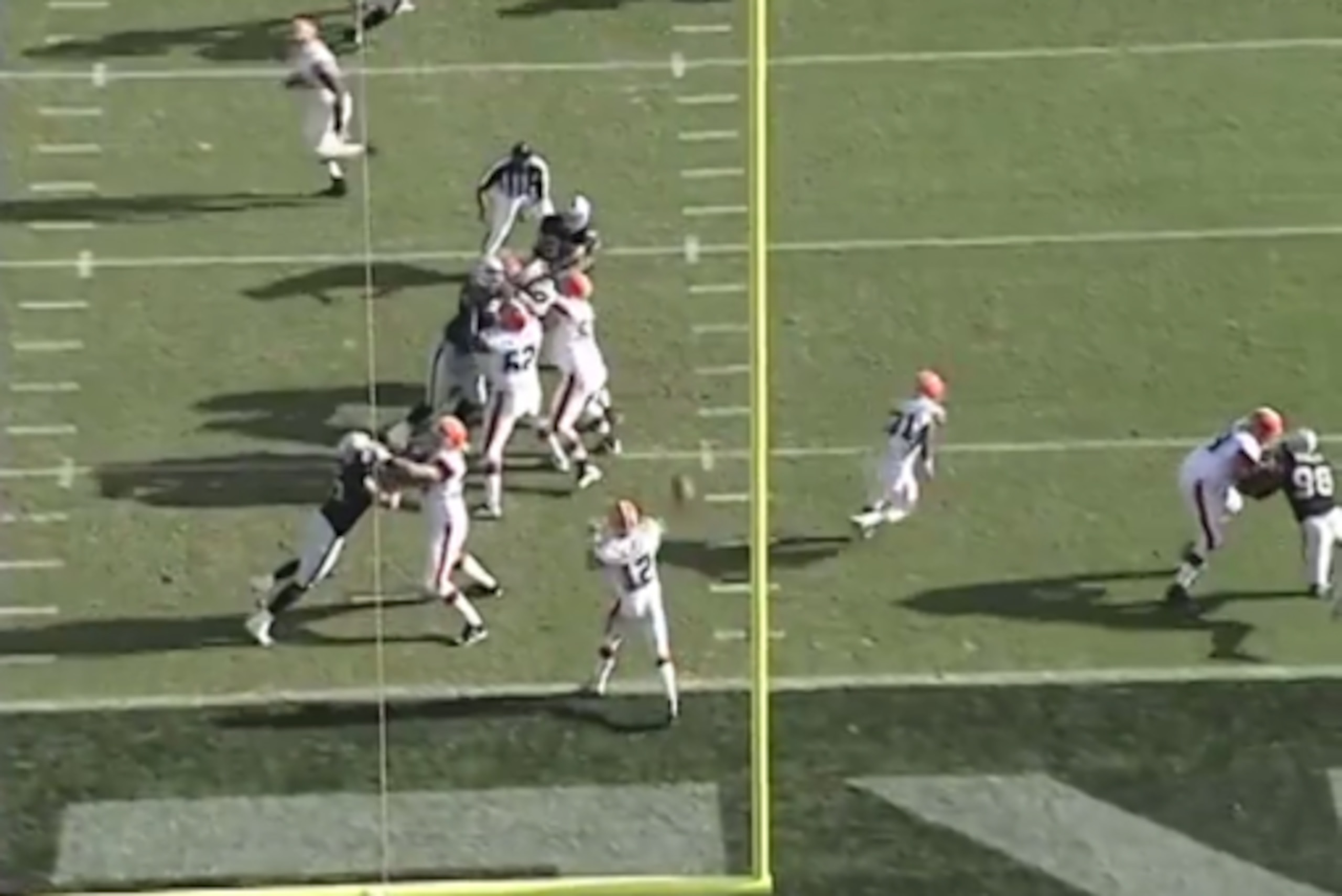
With Cleveland's wideouts running their coverage long, Watson was uncovered (once he'd avoided the referee) across the middle:

Again, McCoy wasted no time targeting his short-range outlet. Watson then turned the catch into a 12-yard gain:
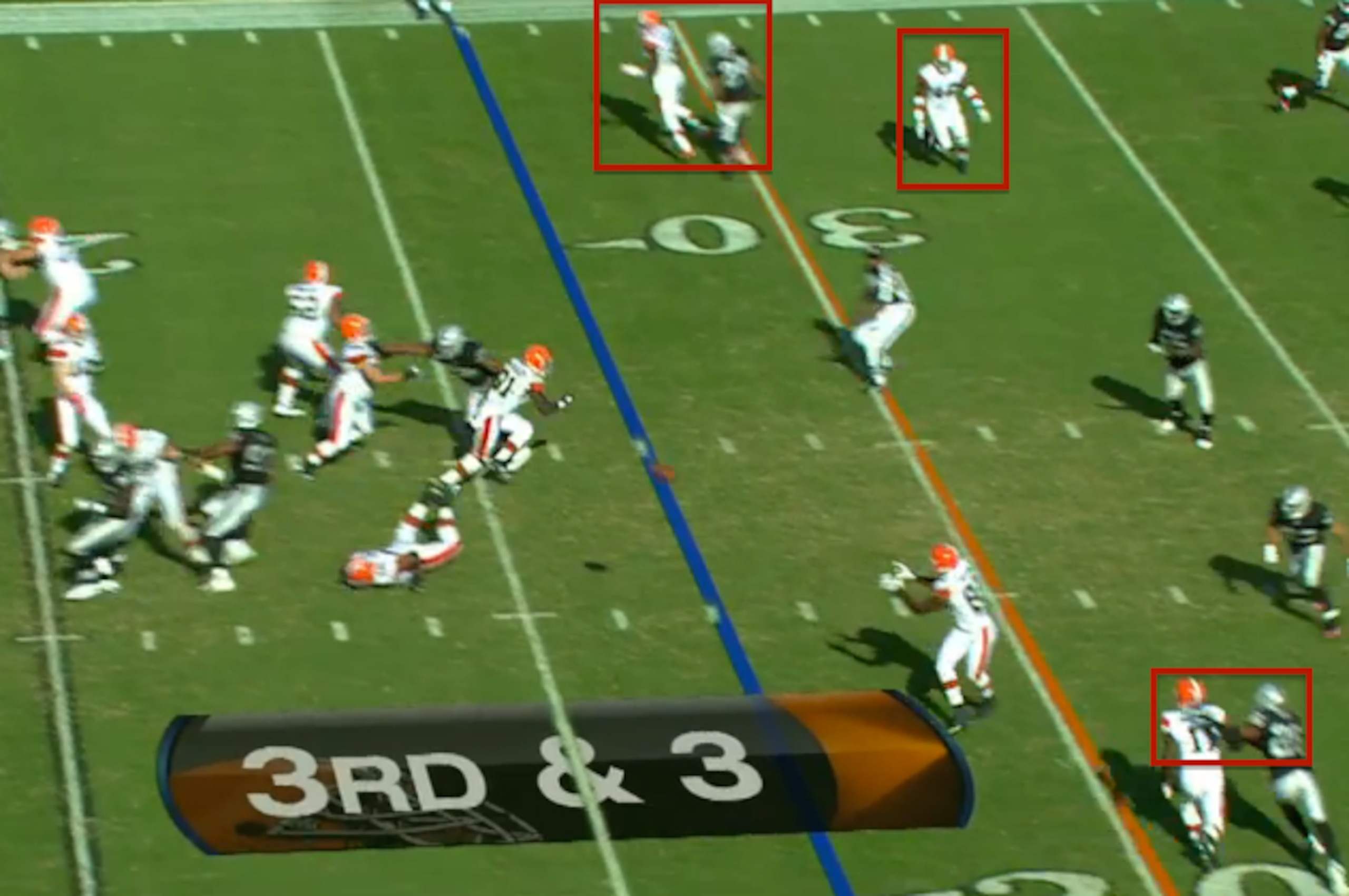
In the second example, from the same game, the Browns faced 3rd-and-3. Watson would again be the target. This time, in-breaking routes cleared space for Watson to get into the outside flat:

McCoy made a quick throw to dump the ball off to Watson. With receiver Mohamed Massaquoi (11) taking his defender to the inside, Watson was able to scamper around the corner and gain 18 yards.
The basic principle of these plays is simple and rarely changes. The idea is to allow McCoy to get the ball out of his hand quickly by targeting receivers underneath on the run. Vertical attacks are merely decoys to create the short-range windows for McCoy to aim for.
With Reed and Niles Paul both excellent after the catch, and Jackson and Pierre Garcon effective on bubble screens, Gruden has the weapons to craft a scheme McCoy will be comfortable executing.
The next step has to be incorporating what McCoy does best with some of the staples of Washington's offense.
Bootlegs and Play-Action Passing
Bootlegs and play-action passing are still core concepts in this offense. The former helps create moving pockets, a major boost for quarterbacks playing behind such a shaky offensive line.
Meanwhile, although running back Alfred Morris is struggling to match the standards set during his first two seasons (both 1,000-yard campaigns), he's still drawing plenty of attention.
Fortunately for Washington, McCoy is a smart, willing and surprisingly nifty runner. He's also comfortable throwing on the move.
One of the most pleasing aspects of his cameo against the Titans was how effective McCoy looked rolling out of the pocket. An early connection with Paul was a great example.
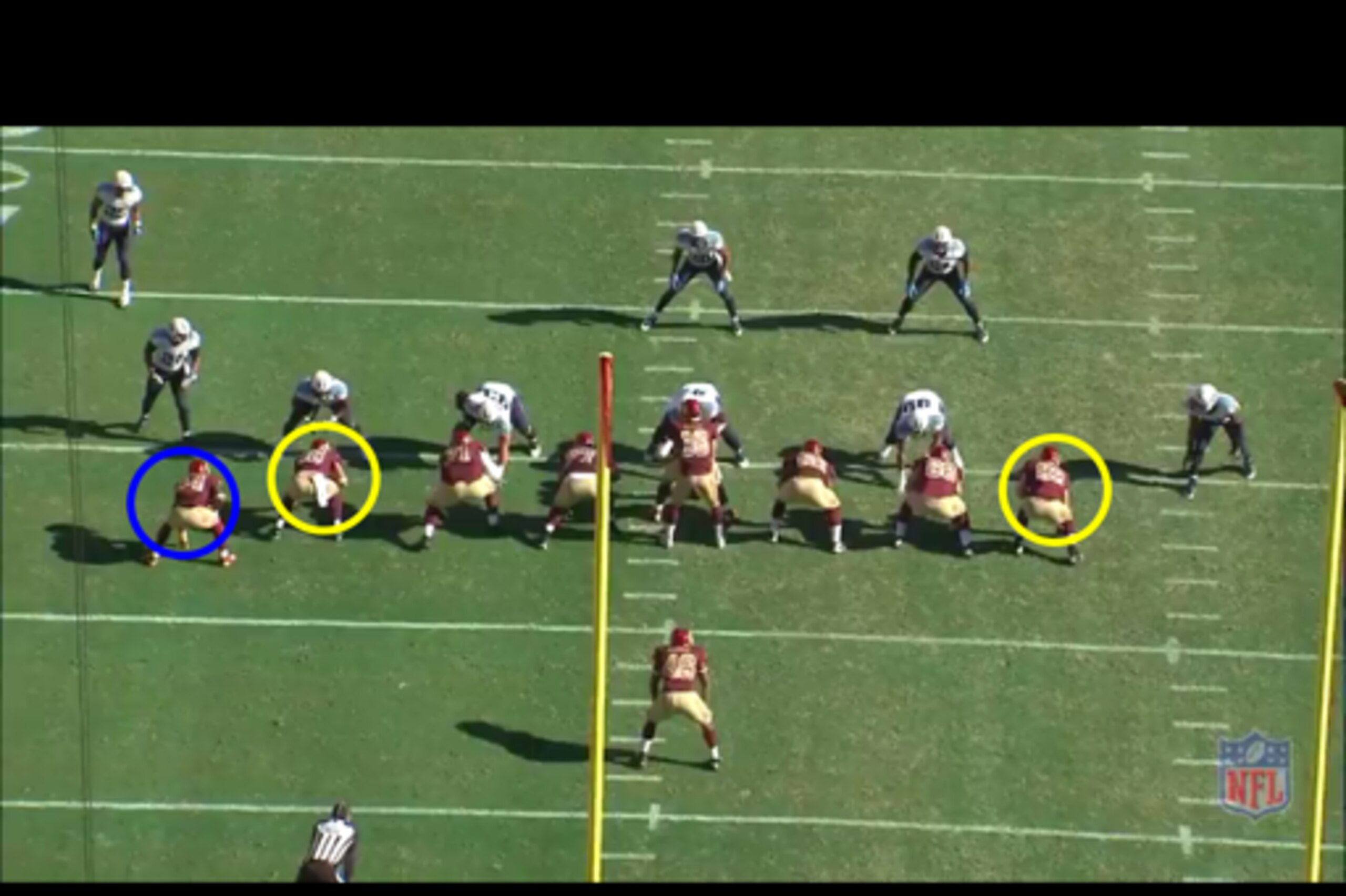
The Redskins aligned in a run-heavy set on first down. They showed three tight ends, with Paul (blue circle) and Reed on one side, while Logan Paulsen aligned on the other:
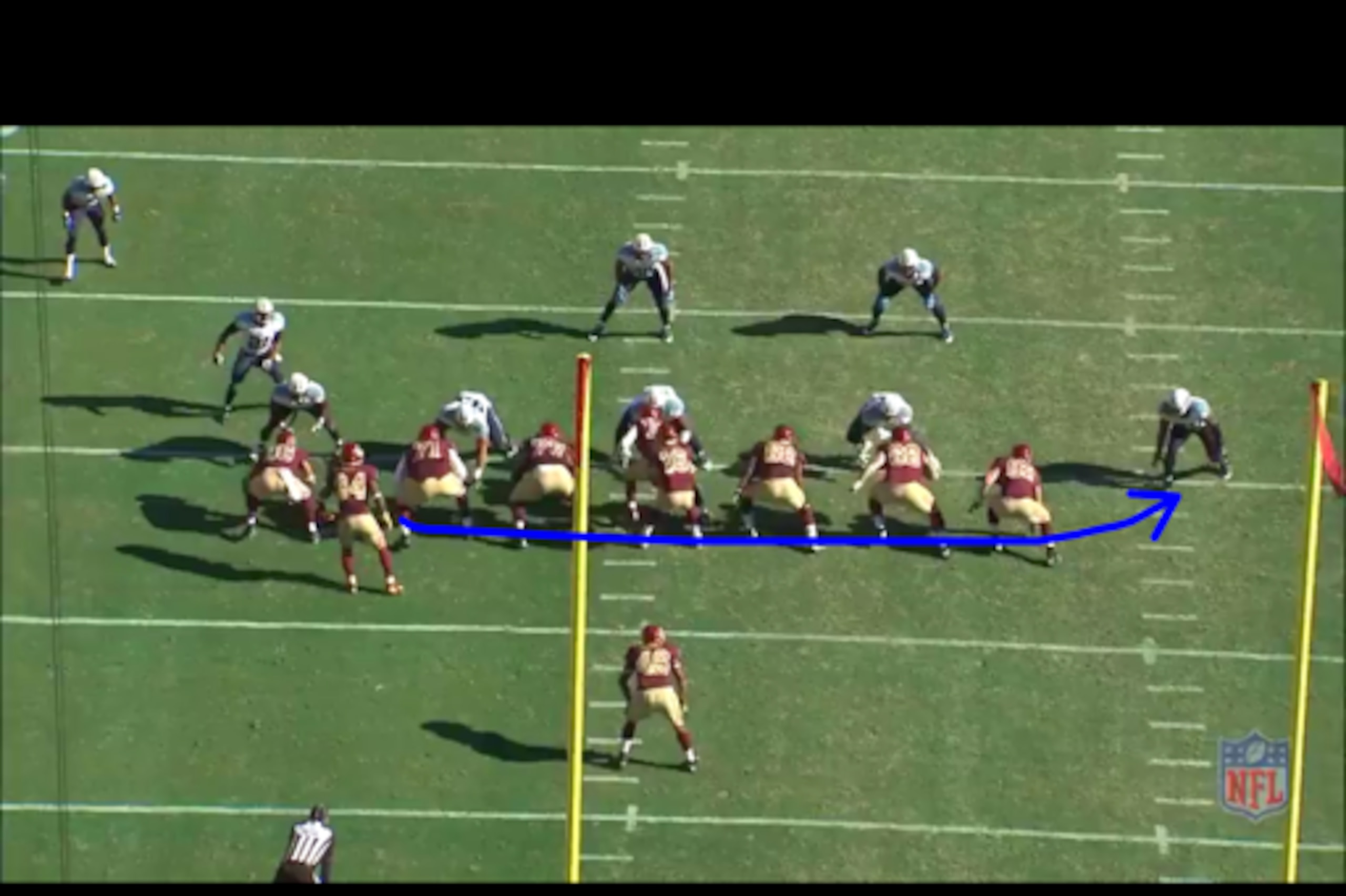
Just prior to the snap, Paul flexed off the line and took up an H-back-like position. From there, he would drift across the formation to get free on the other side:
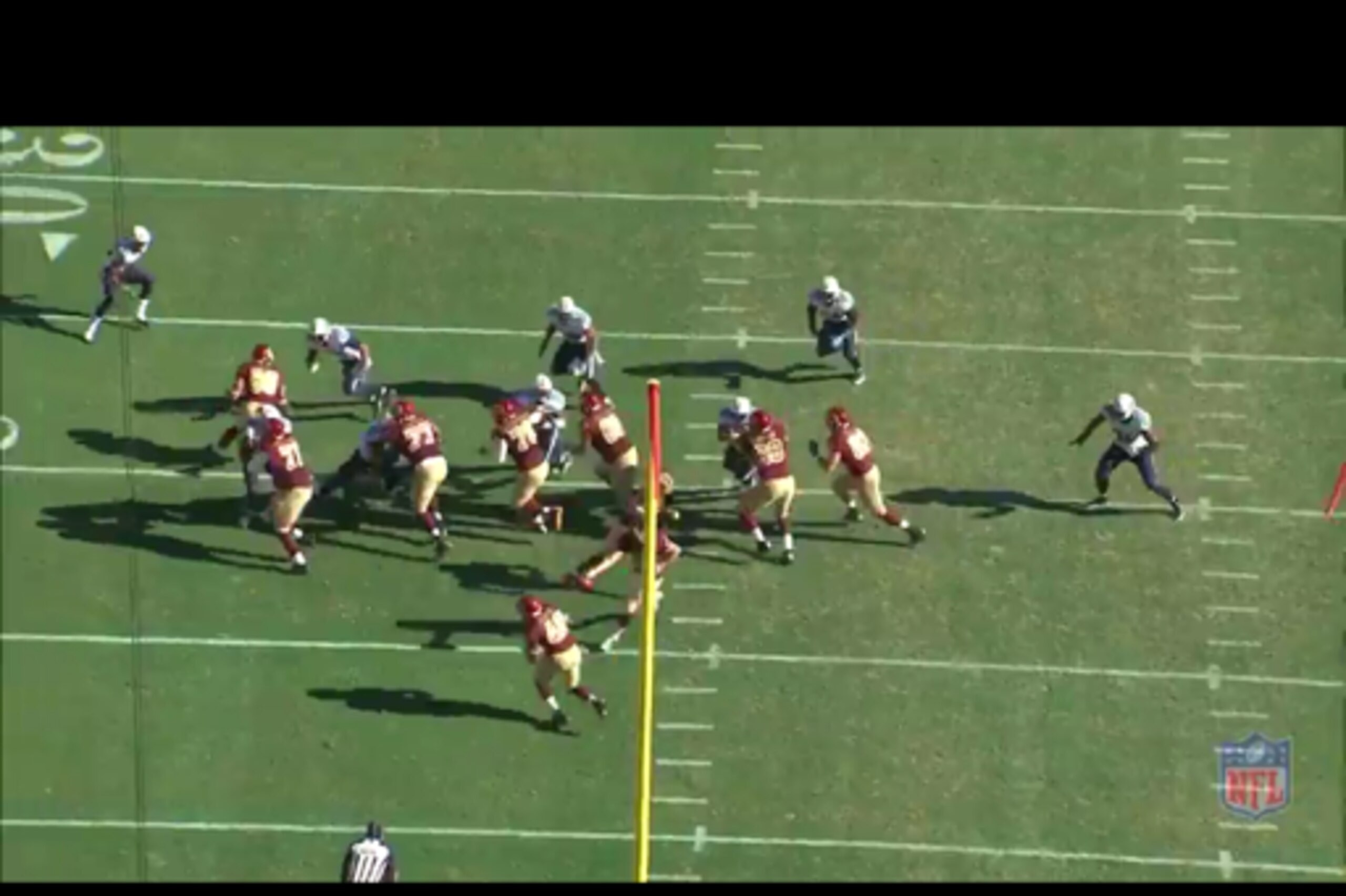
To draw attention away from Paul's movement, Washington ran a play action with McCoy faking to Morris (excuse the goal post). To help sell the fake, the offensive line fanned Morris' way, as it would for the team's trademark zone-stretch run:
McCoy was now free to roll out and hit Paul with a quick strike the tight end turned into an eight-yard gain:

This play offered the perfect illustration of how this offense will function with McCoy at the helm. It was a typical short-pass-into-space concept, ideally suited to McCoy's style, packaged around Washington's familiar play action-bootleg combination.
McCoy can make these plays work because he's mobile and makes quick choices. Compare the previous play with one from Cleveland's game against the Indianapolis Colts from Week 2 of the 2011 season.
The Browns showed an I formation look behind an overloaded line that stacked two tight ends next to the left tackle. This look certainly screamed run:

At the snap, McCoy faked to Peyton Hillis before taking a short rollout away from the guard-center gaps:

Just as he did, McCoy immediately encountered pressure thanks to a poor block from the right tackle (sounds familiar). But thanks to his move skills, McCoy managed to nimbly avoid the rush and shift the pocket further to the outside:
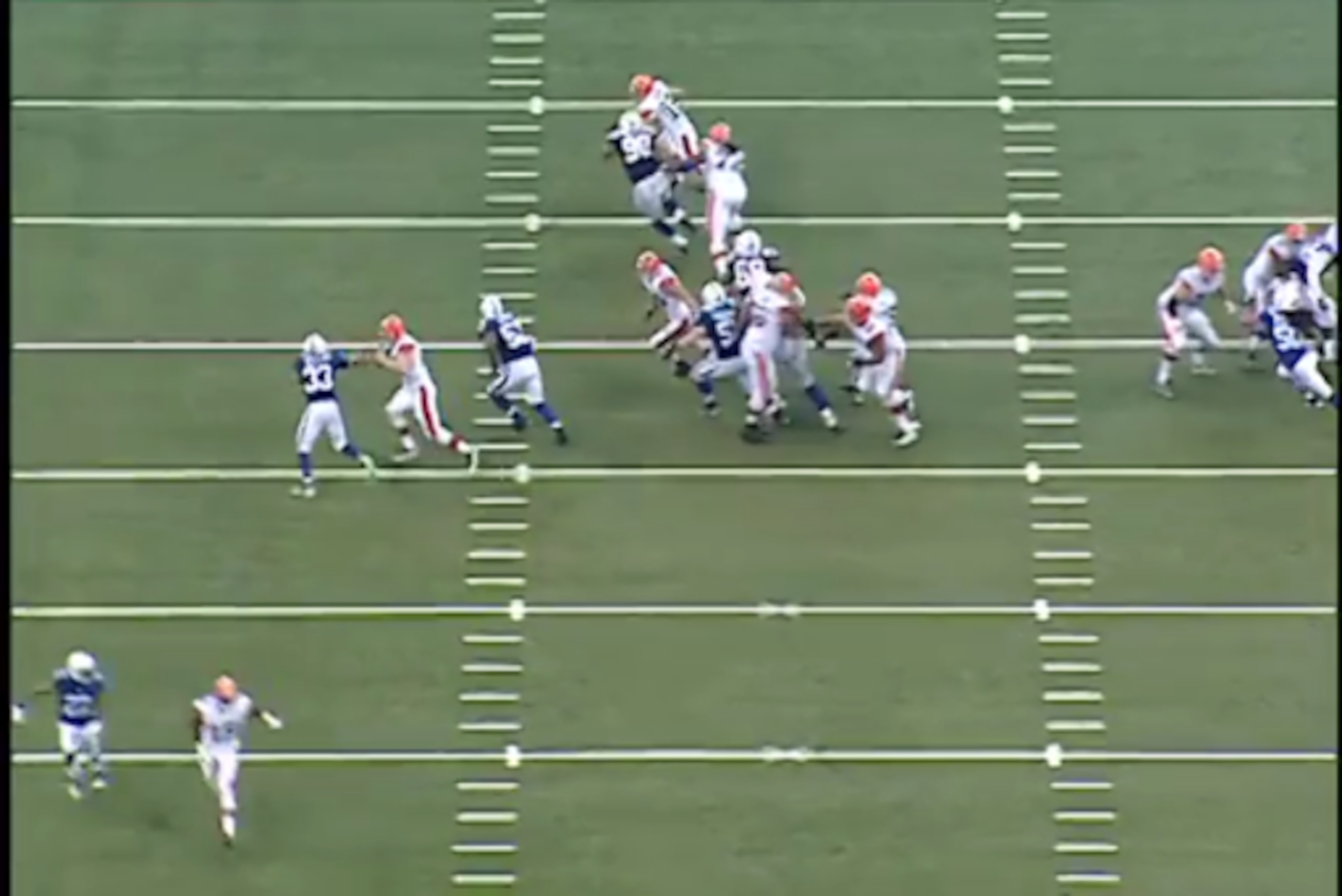
Throwing on the run, McCoy connected with fullback Owen Marecic for nine yards:
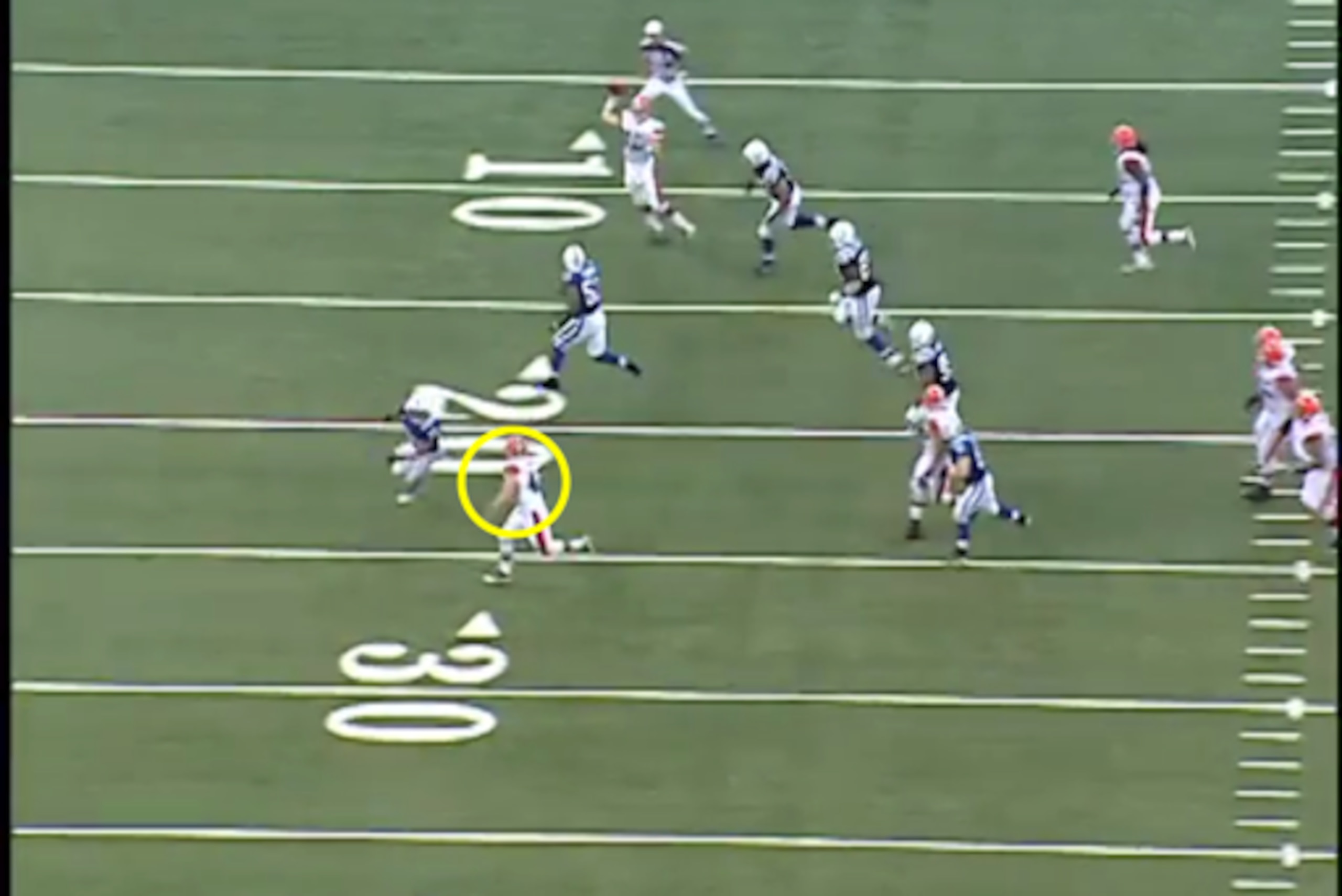
This was not so much a designed bootleg pass as much as an enforced one. However, it showcased McCoy's chops as a runner, as well as how effective he can be manufacturing gains by throwing on the move.
Those are qualities Gruden and McVay should be able to take full advantage of. However, some things will have to be off the menu for Washington's play-callers.
McCoy Will Struggle Pushing the Ball Downfield
There's no way to hide it: McCoy's pro career has floundered largely due to his struggles attacking defenses vertically. A questionable arm means he doesn't push the ball down the field with any real velocity or trajectory.
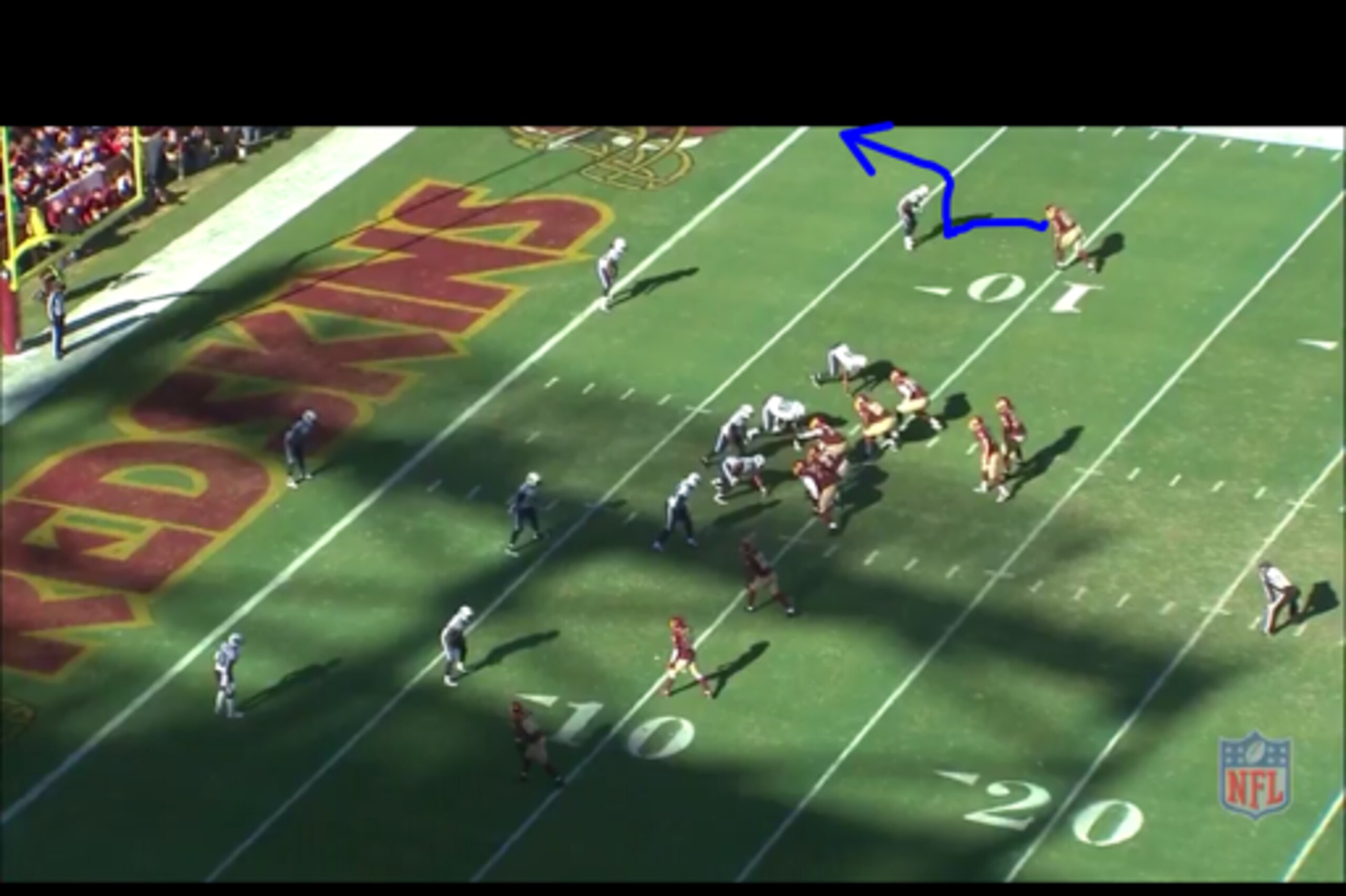
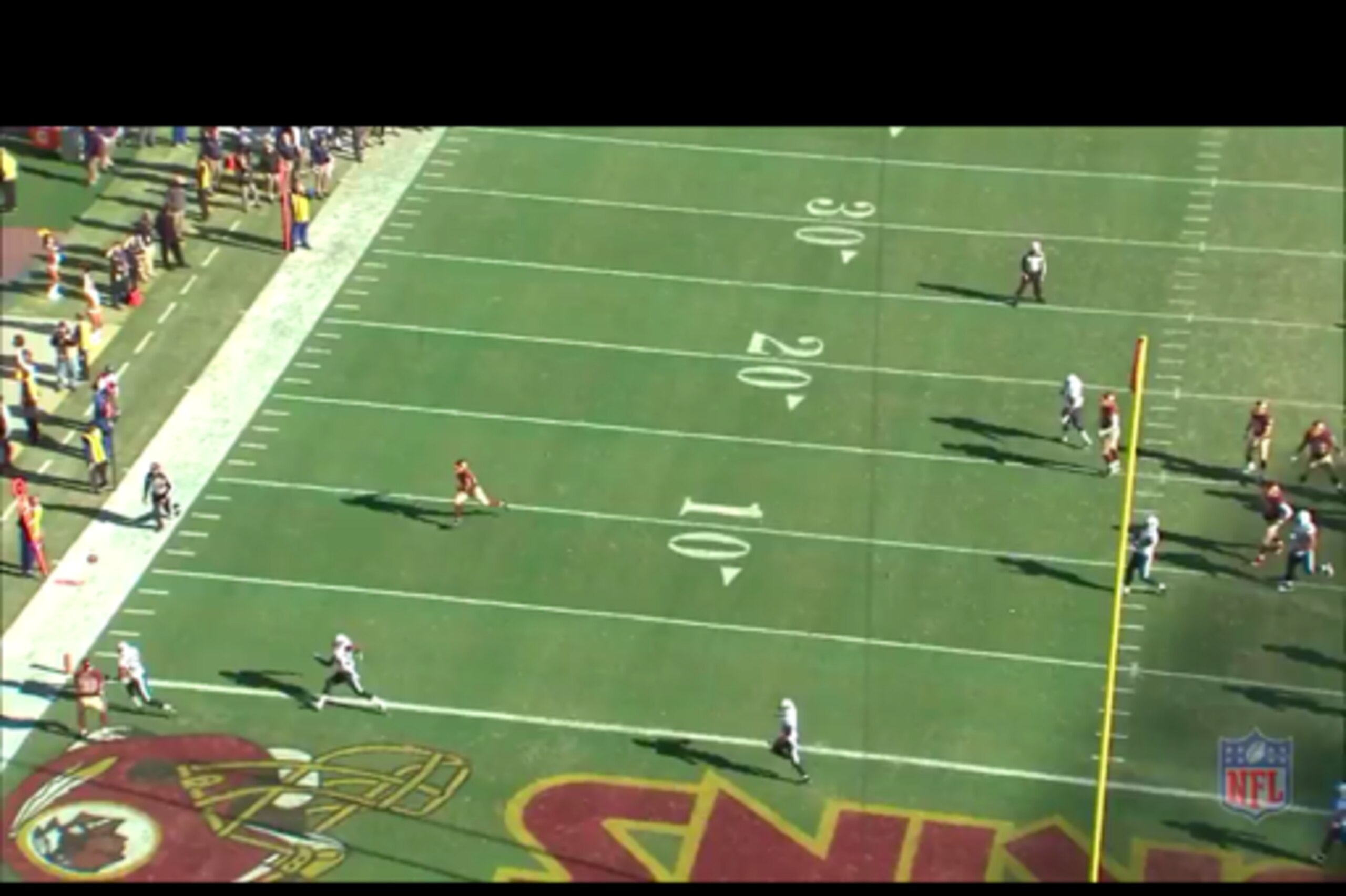
The latter issue was made painfully clear by what could have been a costly miss against the Titans. The idea was to target Reed against a cornerback inside the 10-yard line:

The 6'2", 237-pound tight end ran a route that demanded a jump ball over the top of 6'1", 198-pound cornerback Blidi Wreh-Wilson:
McCoy managed to loft his throw over the outstretched arm of defensive tackle Jurrell Casey. But apparently, that was all the height he could muster:
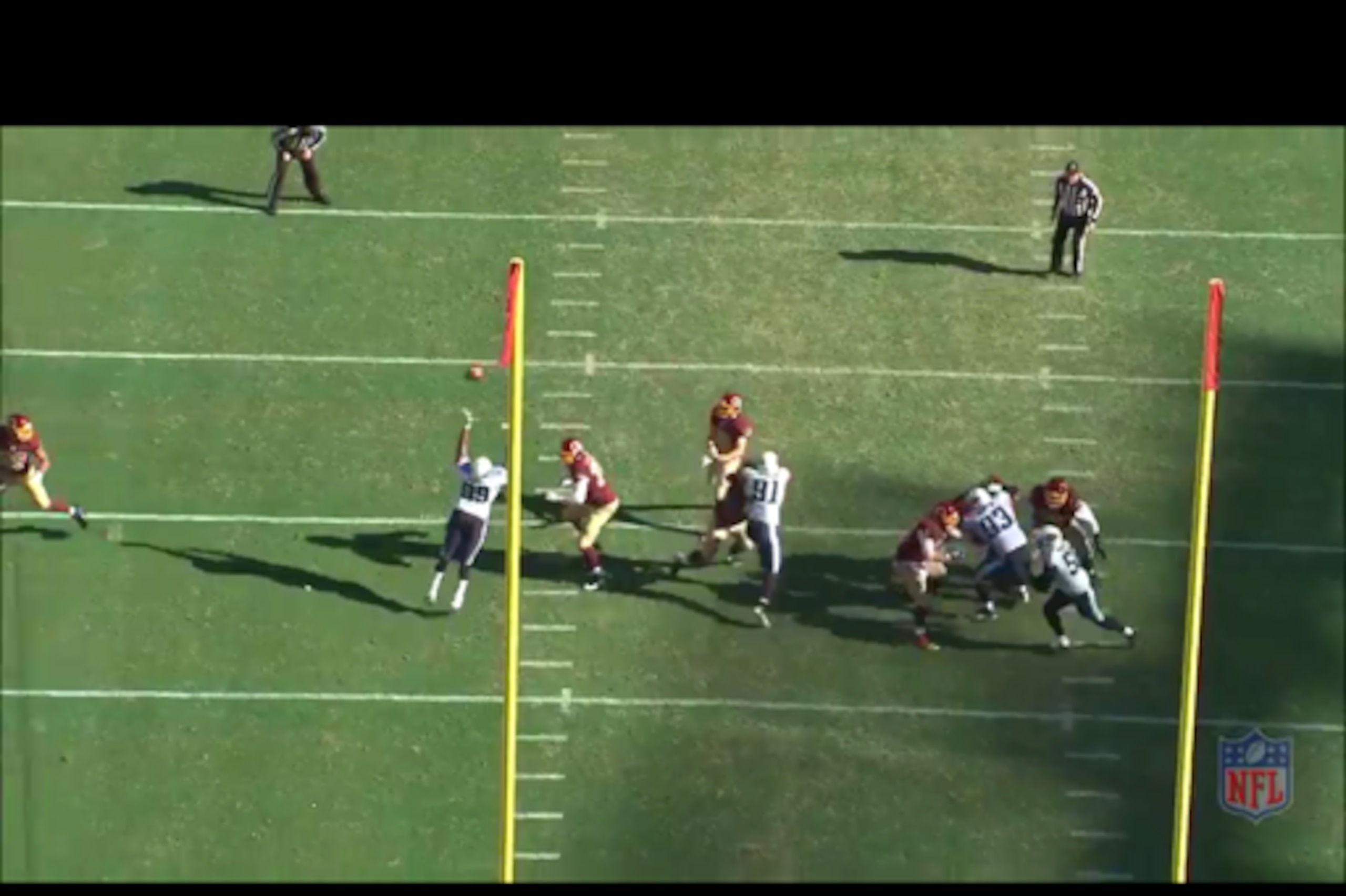
The ball flopped short of Reed and in front of the coverage:
ESPN.com Redskins reporter John Keim immediately chided McCoy for wasting a favorable matchup:
Grant Paulsen of 106.7 The Fan was even more specific. He detailed how McCoy's pass hadn't even given Reed a chance:
These are the kind of issues that are frequent with McCoy. It's rare to see much zip on his passes. That's a concern not only on a play like this one that needed to be rifled high but for Washington's deep passing game.
The vertical strikes to Jackson have become a key part of this offense. But they are simply not a strength of McCoy's game. He is more of a touch passer rather than one who launches the ball deep.
That was evidenced by his best long ball aimed toward Jackson, one wiped out by Jason McCourty's pass interference penalty. It was a delicately lofted ball over coverage.
But Gruden still shouldn't expect McCoy to be too successful targeting vertical routes. That's just not been his history.

Obviously, he'll have to look Jackson's way on occasion and even force a few downfield, if only to keep defenses honest and not waste one of the team's best weapons.
McCoy also can't be afraid to target the sidelines on some comeback patterns exceeding the 15-20-yard range. But again, these will be rare sightings.
What McCoy does best is the type of short-range game detailed here. That's what Gruden and McVay should let him execute.
If there's a concern it's that the Week 8 opponent Dallas Cowboys boast a defense based on speed and hustle. The unit has coped well with concepts designed to turn short passes into big gains.
However, it's more important to give a third-string quarterback the plays he is most comfortable running.
Every quarterback needs a system that emphasizes his strengths and masks his weaknesses. So far, Gruden has done a poor job following that rule.
He had too many dump-offs for Griffin in Week 1, wasting the dual-threat quarterback's rocket-like arm and natural inclination to look downfield. By contrast, Cousins was given too many options vertically and not enough safety-first checkdowns that might've limited his erratic tendencies and built confidence.
Take a look at McCoy, and you won't see a passer able to light up scoreboards and produce big plays in bunches. But you will see a quarterback who makes quick throws based on safety-first decisions.
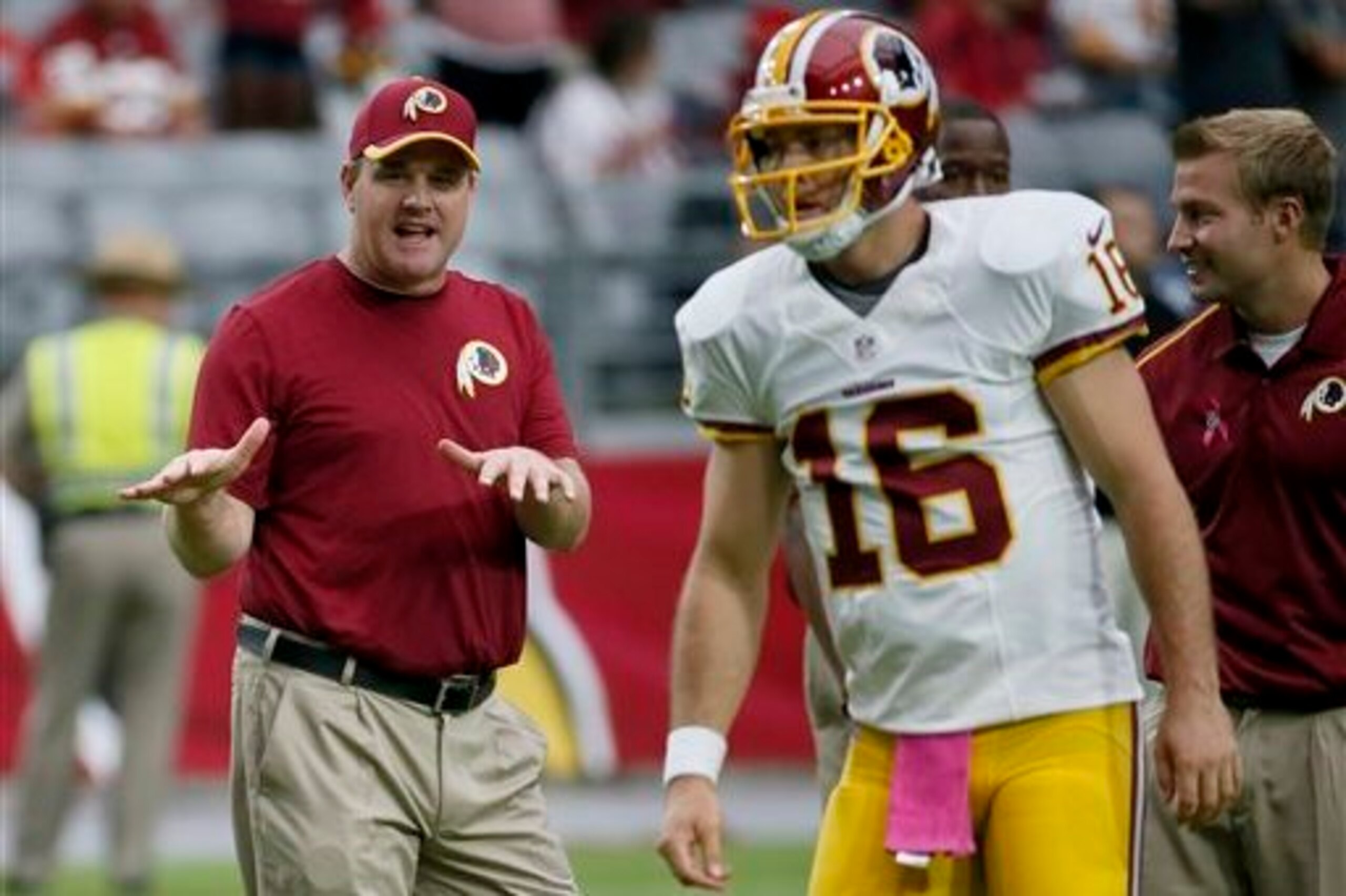
Gruden has already endorsed that quality, per Liz Clarke of The Washington Post:
"He is very poised. He is a great competitor. I feel like he is going to get us in the right play and make the right throw. You know, he has had some opportunities to succeed in the past as a starter and had some rough patches, but he is here for a reason, and I’ve always liked his demeanor.
"
If Gruden continues to have his offense pushing the ball long with McCoy throwing the passes, Washington's third starting quarterback this season will sink rather than swim.
But if McCoy is allowed to play the game he executes best, he could provide a self-destructive offense with some much-needed efficiency.
All statistics via NFL.com.
All screen shots courtesy of CBS Sports and NFL.com Game Pass.
.jpg?w=2560 "Colts Football")