Los Angeles Clippers' Biggest Red Flags Entering This Season
A slow start to the preseason isn't the end of the world. The Los Angeles Clippers are taking note of that.
The Clippers, who sit at 1-4 through five exhibition games, are trying to do the impossible: evaluate the team during the preseason.
Ultimately, preseason success isn't predicated on wins and losses. It's about [reaches into the cliche box] process and not results.
The Clippers may have won 57 games last year and improved their depth over the summer, but this is still a team with flaws, though some of which aren't worth giving your attention. Here's a look at five Clipper red flags, the concerning ones and the ones to ignore:
Preseason Win-Loss Record
1 of 5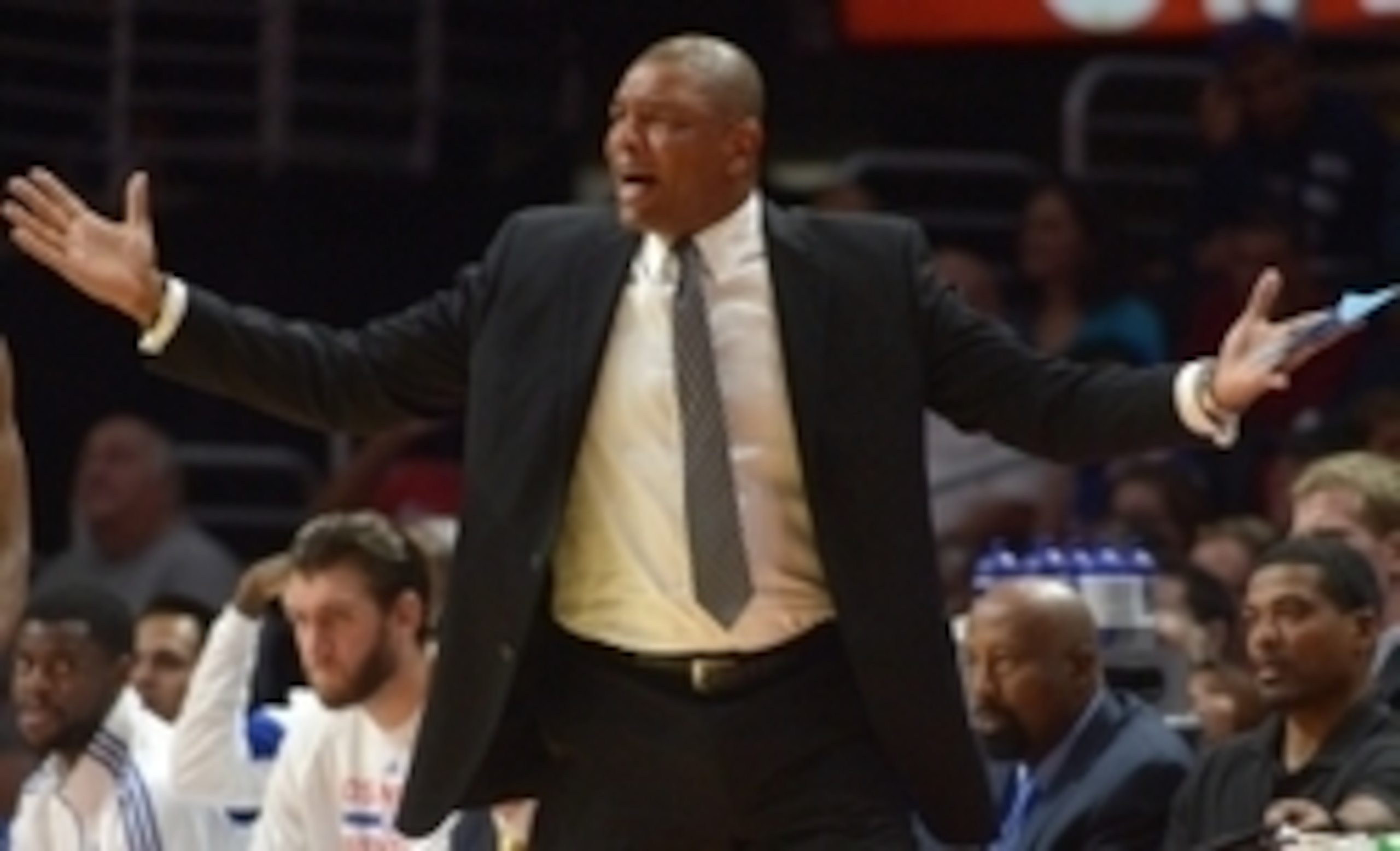
You are not allowed to worry about this.
"The preseason is just the preseason" is a worthy mantra to follow. Don't steer yourself wrong.
The Clippers have begun the preseason 1-4. But who cares?
Doc Rivers isn't playing his usual rotations. Neither are the coaches of the Clippers' opponents. Meanwhile, we've seen the team consistently work on plays at which they struggle.
That's the beauty of the preseason. As opposed to accentuating your strengths—like you would once the 82-game schedule begins—you emphasize your weaknesses in games. It's glorified practice, and we've seen Rivers live by that thus far.
There's a concerted effort to get the new guys involved in plays the team ran last year. It's a familiarization process.
Once Oct. 30 comes, Griffin and Paul will start playing 36 minutes, the integration process for the new guys will take a step back and the intensity of the regular season will surface. So please, stop talking about 1-4. It doesn't matter.
Small Forward
2 of 5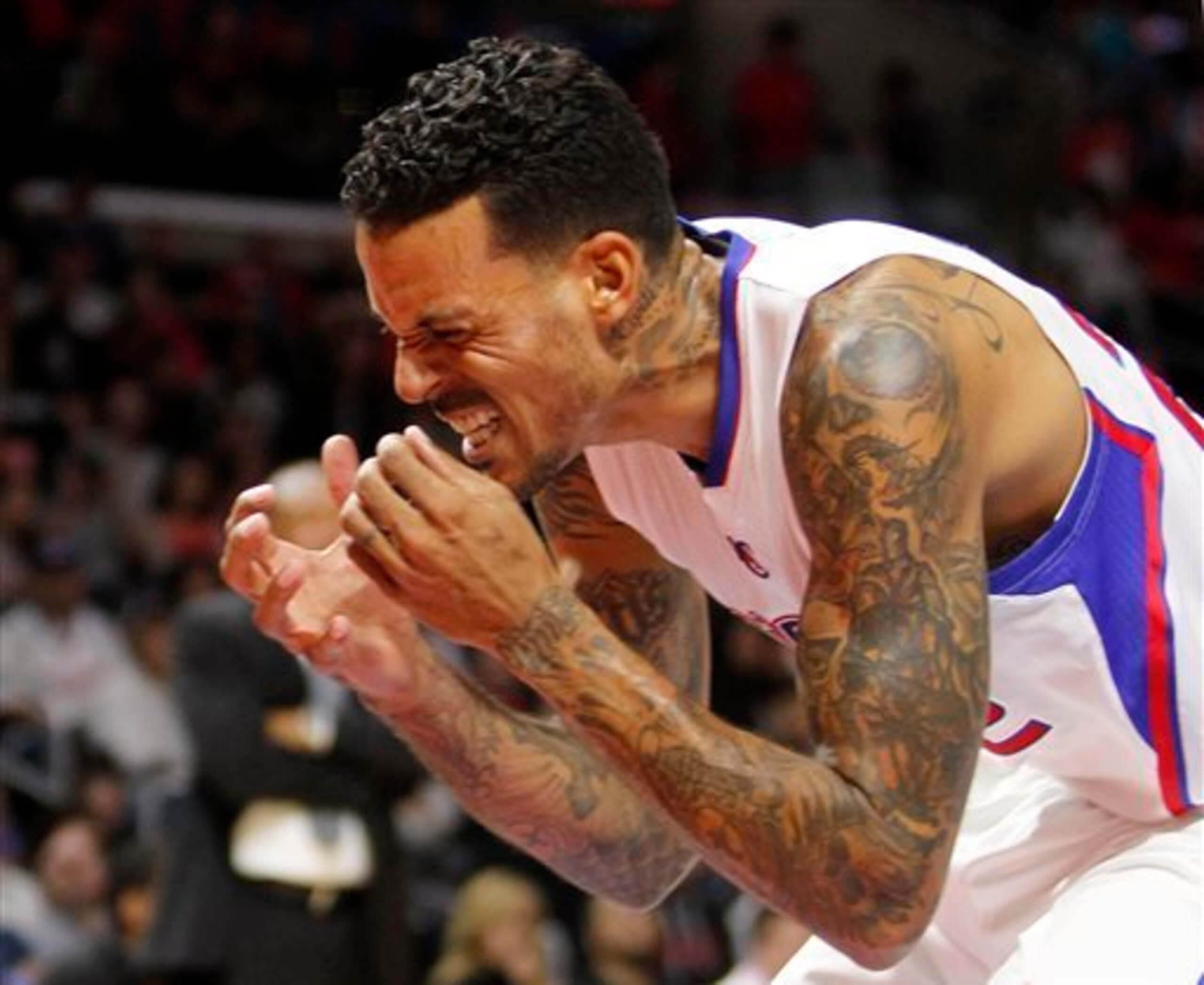
Now, you're allowed to get a little nervous.
The Clippers' small forward battle is being pegged as a three-horse race between Matt Barnes, Chris Douglas-Roberts and Reggie Bullock, but that storyline does seem a bit contrived.
In actuality, Bullock is still raw, too uncooked for a title contender to throw into its starting lineup. He's still learning how to move off the ball, how to rotate on defense and how to implement what he learns in the scouting report onto the floor.
The Clippers can't afford to start someone with such traits, which means we're likely seeing Barnes at the 3 to begin the year. But his preseason performance has hardly been encouraging.
Plenty of players hit early-preseason struggles, and Barnes started off last regular season just as slowly, but the numbers are far from impressive: 2 of 24 from the floor and 1 of 15 from three in four games.
The 34-year-old Barnes isn't a spring chicken anymore. And though the Clips have themselves a fine backup small forward in CDR, the position becomes a bit disconcerting if the former First-Team All-American has to step into a starting role. That's a possibility if Barnes continues to struggle.
Remember that the Clippers signed Barnes to a three-year, $10.1 million contract during the summer of 2013 with the intention of him being a backup, not a starter. Jared Dudley was supposed to solidify that first-string role. But when Dudley fell from centerpiece of the Bledsoe deal to centerpiece of the benchwarmers, Barnes had to take over.
So now, with Dudley gone, the Clippers find themselves with two guys who they probably deem as quality backups manning their small forward position. For a contender hoping to get far enough in the playoffs to match up against small forwards named Kevin Durant and LeBron James, that's a problem.
Man-to-Man, Perimeter Defending
3 of 5
The Clippers can defend the long ball. They proved that last year, finishing with the best three-point percentage against in the league. (Brent Barry and Vinny Del Negro did an excellent X's and O's segment explaining exactly why the Clips are so effective during the Clippers NBATV season preview show.)
So much of the team's three-point defense actually comes down to the mobility of the bigs, Blake Griffin and DeAndre Jordan. It's about team defending, hitting rotations, understanding when/how to help and making sure to close out on shooters properly.
Those are fundamental skills. But what the Clippers lack are athletic, one-on-one defenders on the perimeter.
In actuality, only CDR really fits this description. The aging Barnes isn't a top-notch athlete anymore, though he's still an above-average defender. Redick is a system defender who can get beat off the dribble by quicker guards or overpowered by bigger ones.
The offensive-minded Jamal Crawford actually had an improved defensive season last year but began at a relatively low starting point. Jordan Farmar doesn't have the quickness of Darren Collison—though Collison's detrimental inability to fight through screens won't be missed. Bullock, meanwhile, is still learning.
That leaves Chris Paul, who isn't going to defend guys on the wings like he did against Durant in Game 4 of last year's Western Conference Semifinals (you can read the real reason why Paul guarding KD was successful here).
CP3 is your point guard defender, the rare breed of non-gambler who racks up a bunch of steals. He's not tiring himself out banging with bigger guys in the regular season.
This isn't just an issue against the Durants and LeBrons of the world. Even a Gerald Green type, an athletic wing with range and strong finishes around the rim, matches up well against the Clippers. Somehow, this is a problem the team has to remedy.

DeAndre Dependence
4 of 5
The lack of athleticism on the perimeter means more stress for DeAndre Jordan, who finished third in last year's Defensive Player of the Year voting. Athletic wings powering to the basket puts the onus on DJ to protect the rim more often.
Meanwhile, the Clips didn't perfectly fix the third-big-man issues they showed off all last season, though they did clearly better them. Spencer Hawes is a massive upgrade on the Ryan Hollins-Byron Mullens-Antawn Jamison-Glen Davis concoction the Clippers stewed a year ago.
Actually, that's an understatement. A 7-footer with three-point ability, highly underrated passing skills and the skills to play the 4 and 5 is a luxury most any team would value at the mid-level exception. But the one flaw in the Hawes offseason signing is that the former Cleveland Cavalier doesn't fix the Clippers' porous big-man defense off the bench.
That's why the Clippers went out of their way to sign Ekpe Udoh, who has averaged 2.6 blocks per 36 minutes over his career. But realistically, a 43 percent shooting big who ranks no better than the team's 10th-best player isn't getting many minutes. And in big games, it seems perfectly possible the Clips will go with a three-man, Jordan-Griffin-Hawes big rotation with some small-ball Barnes to play filler for a few minutes at the 4.
If that's the case, the Clippers didn't fix every struggle they had with backup bigs a year ago, even if they did vastly improve them. And because of that, Jordan could be in for another season at 36 high-leverage minutes a night for 82 games.
Defensive Rebounding
5 of 5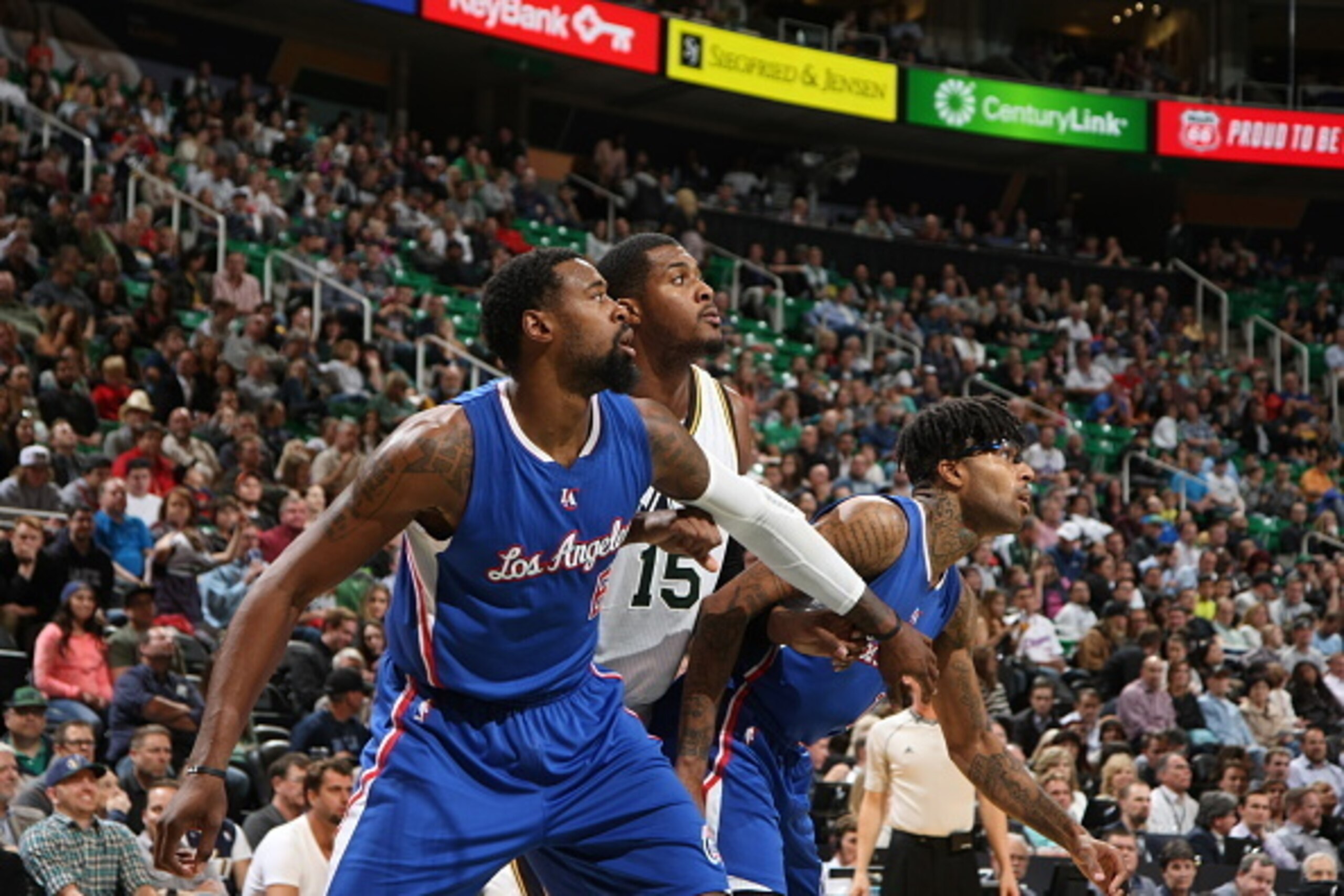
When the average fan evaluates team rebounding, he tends to look at the individual bigs on the team. In that sense, the Clippers roster can be misleading.
A starting lineup that employs Jordan, the NBA's rebounding leader last season, and Griffin, who pulls down 10.1 boards per game in his career, has to bang on the glass as well as anyone else, right?
Not quite.
In reality, team rebounding isn't going to be effective if the guards and wings aren't crashing, and the Clippers, who finished 26th in defensive rebounding rate last season, don't employ a load of wings who rebound well from the perimeter.
Crawford has finished last in the NBA in rebound rate during his career, and Redick boarded at a similar percentage to Crawford last season. CDR's career-high 6.6 percent rebound rate in Charlotte last year grades about average for a shooting guard, but if he's going to play small forward, such a figure would be unproductive.
Essentially, the Clippers should only expect rebound production on the wing from Barnes. It's not an end-of-the-world problem, as Hawes can remedy some of the issues the Clippers had with bench, big-man rebounding last year, but it's a scratch on the team's facade.
Fred Katz averaged almost one point per game in fifth grade but maintains that his per-36-minute numbers were astonishing. Find more of his work at WashingtonPost.com or on ESPN's TrueHoop Network at ClipperBlog.com. Follow him on Twitter at @FredKatz.
Unless otherwise noted, all statistics are current as of Oct. 20 and are courtesy of Basketball-Reference.com and NBA.com.

.jpg?w=2560 "NFL House in Paris Closes for Protests")
.jpg?w=2560 "Trevon Diggs Cut by Seahawks")