Featured roles aren't a memento of Paul Pierce's past just yet.
If at any point he thought his time with the Washington Wizards would be a lesson in ancillary devices, Pierce was wrong. Bradley Beal's injury has, once again, thrust him to the forefront of his team's battle ground.
The Wizards announced that Beal sustained a "non-displaced fracture of the scaphoid bone" in his left hand during the first quarter of their preseason loss to the Charlotte Hornets. Beal has since undergone successful surgery and will now begin his path back to Washington's rotation—one NBA.com's David Aldridge says will take a while:

Six to eight weeks is a long time. The worst end of that projection could have Beal sidelined through November, returning sometime in December, 15-plus games into the Wizards' schedule.
Quite obviously, everyone will need to step up in his absence. Beal led the team in scoring during last year's impressive postseason run, and he remains Washington's deadliest shooter. One player isn't going to replace everything he does. This is a replacement-by-committee situation.
Chief of that committee, though, must be Pierce. He's been a featured fang of playoff-bound, championship-chasing animals many times before. This is the perfect opportunity for him to show his bite still rivals his bark.
Nowhere to Turn
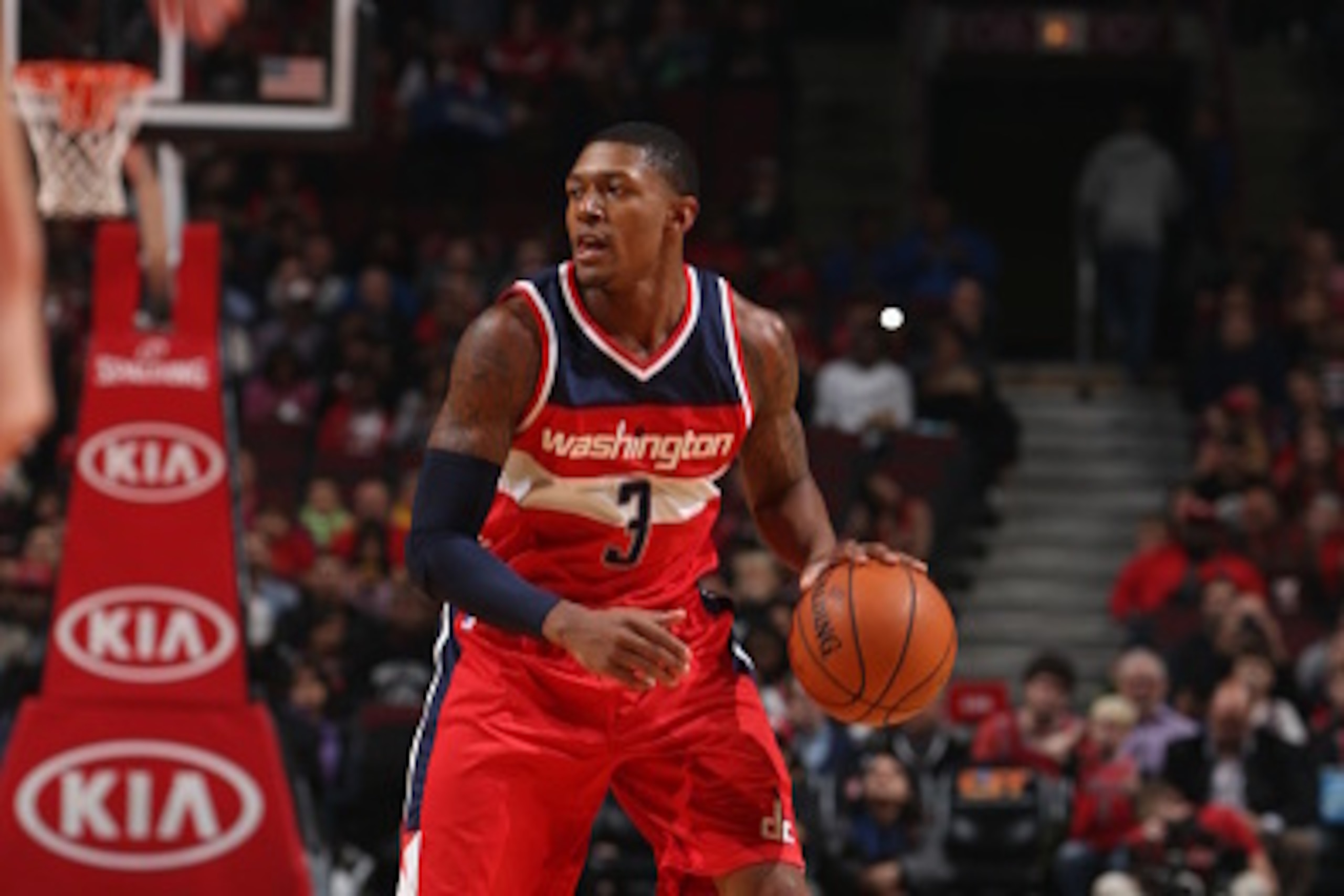
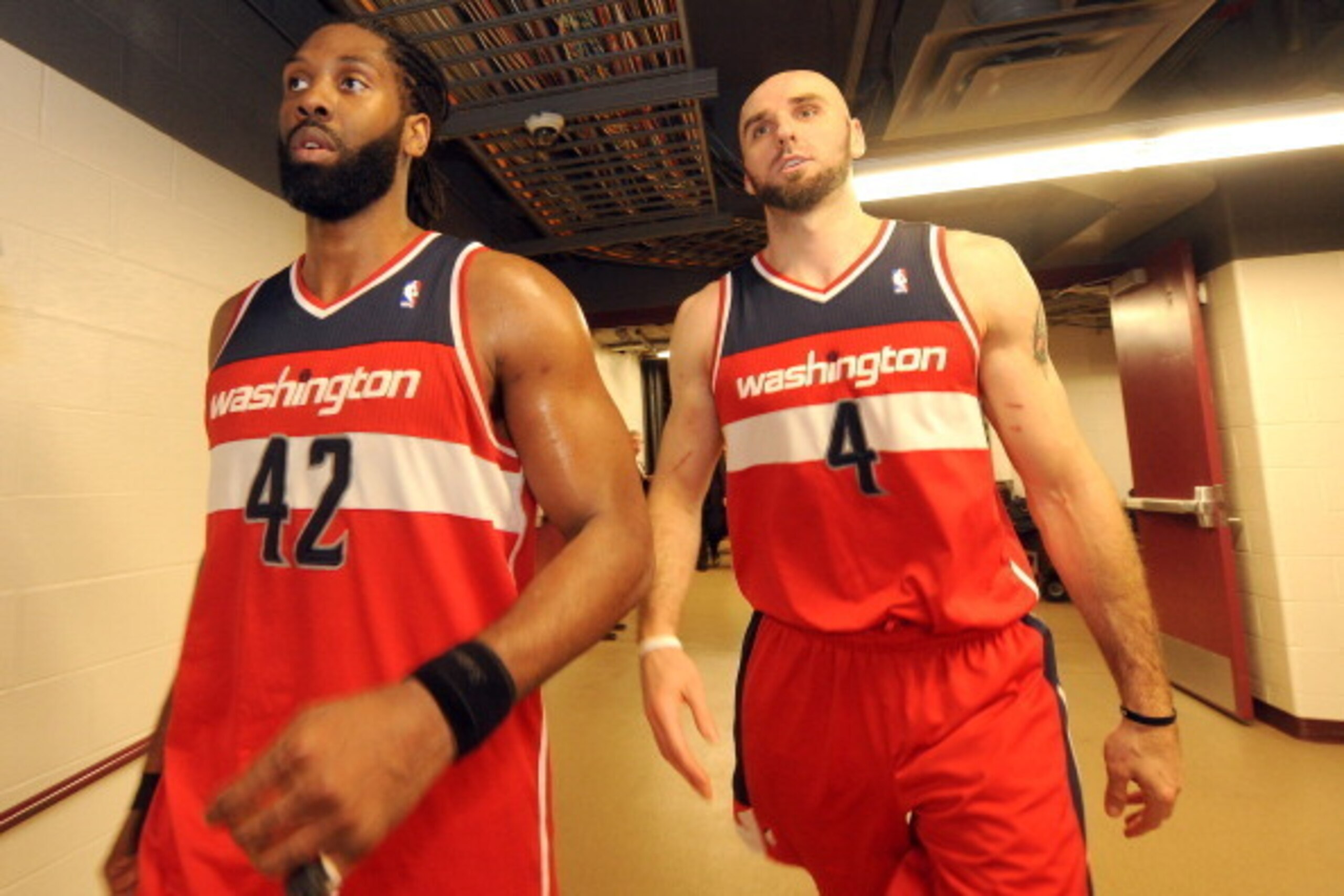
Playing "next guy up" isn't a realistic option for the Wizards. Their system is built around John Wall and Beal. Everyone else just sort of falls into place. The third option should, in theory, be someone different on any given night, whether it's Pierce, Marcin Gortat, Nene or even Otto Porter.
But Beal's injury leaves a gaping hole in the pecking order. They don't have an established contributor ready to step in at shooting guard, let alone function as Beal in terms of importance.
Martell Webster is still recovering from back surgery, and his return doesn't appear imminent. Trevor Ariza is now catching passes for the Houston Rockets. Glen Rice Jr., Garrett Temple and even Otto Porter should all see time at the 2 slot. While any or all of them should hold the Wizards' floor-spacing potential steady, not one of them is equipped to be second in command.
Relying on Gortat or Nene to cart heavier offensive burdens isn't the answer, either. The NBA is perimeter-focused these days. First and second options are rarely traditional big men. Inside-out scorers are both valued and utilized more.
And that's how it was for the Wizards last season. Nene and Gortat were the No. 4 and No. 5 scorers, respectively. It's unrealistic for either of them to be featured much more given the league's perimeter obsession and the fact that both towers are on the wrong side of 30. They'll be expected to do more, just not much more.
That leaves Pierce.
Standing at 6'7" and fresh off a campaign that saw him spend 99 percent of his time at either forward spot, he isn't going to replace Beal in the positional sense. That challenge will belong to Rice or Temple, or perhaps even Andre Miller for stretches.
As a former superstar familiar with bearing sizable offensive crosses, though, Pierce is someone the Wizards can and will lean on to fill the conspicuous crater in their systematic ladder.
Requisite Skill Set
Although Pierce ceded star status while on the Brooklyn Nets, he's not far removed from his days with the Boston Celtics, when he was their primary offensive option.
Pierce can serve as a point forward of sorts, someone who gives the Wizards the secondary playmaker they had in Beal. His assist totals plummeted in Brooklyn, but he handed out 4.8 dimes a night with the Celtics in 2012-13. Though Wall isn't an off-ball guard—his shooting is still too stormy—having that second-tier passer allows the Wizards to utilize his speed within backdoor cuts off screens and slashes that slice through the hearts of opposing defenses.
Even more value is found in Pierce's defense-stretching range.
Three-point accuracy was a huge part of the Wizards' limited offense success last season. They ranked fourth in long-ball conversion rate, banging in 38 percent of their treys.
Drive-and-kick and catch-and-shoot opportunities were their bread and butter. They finished atop the league in spot-up three-point shooting, draining 41.2 percent of all their attempts, largely thanks to Beal, who put in 44.5 percent of his standstill bombs. Webster was also a significant helping hand, finding the net on 40.5 percent of his deep, standalone missiles.
Pushing forward without both of them puts the Wizards at risk of warping their already shaky attack. Their offense was middling at best last year, finishing in the bottom half of efficiency. The results were even worse when Beal was off the floor. They scored fewer points per 100 possessions, and their overall field-goal percentages trended in the wrong direction.
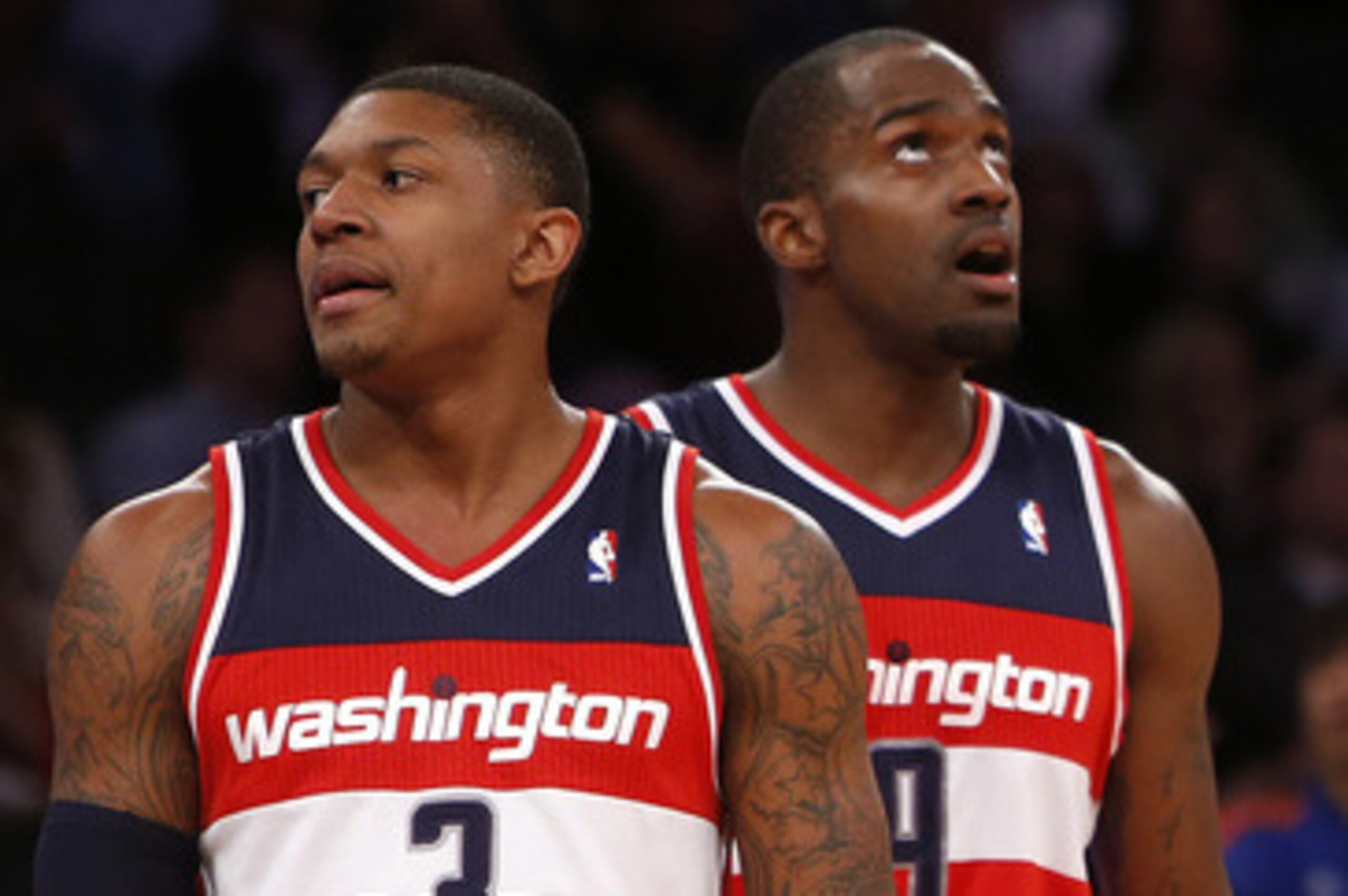
None of the team's primary concerns have dissipated during the preseason to boot. Last year's flawed model has looked even worse thus far. Removing Beal only puts them at a further disadvantage.
"Spacing the floor—which has already been a nightmare so far in the preseason—becomes infinitely tougher after removing the most threatening shooter on the roster," wrote Bullets Forever's Umair Khan. "This has been the underlying issue all throughout the offseason. Washington chose to bolster its frontcourt, but it came at the expense of balancing out the rest of the team."
Pierce at least begins to replace Beal's distance shooting. He pumped in 37.3 percent of his threes last season, and he hasn't shot under 37 percent from deep since 2005-06. He also drilled 39.7 percent of his catch-and-shoot threes for 2013-14.
For a team that relies so much on drive-and-kicks, Pierce's climbing efficiency in a complementary role will help keep the offense flowing.
But he adds another dynamic as well.
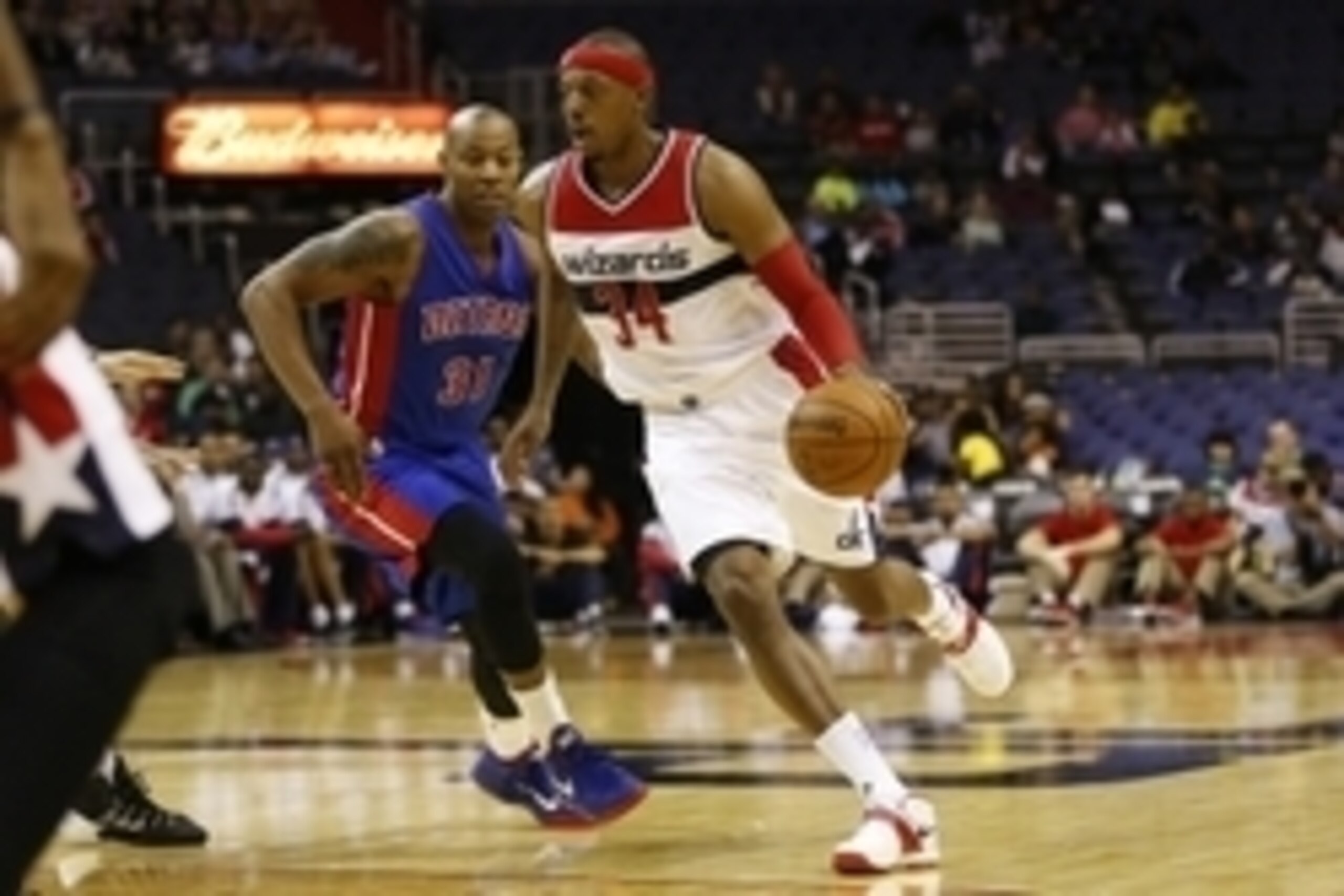
This is a Wizards squad with a dearth of shot-creators. More than 60 percent of their made baskets came off assists last season, and they lack the self-sufficient firepower—especially without Beal—to balance that out any further.
Creating his own shots isn't foreign practice for Pierce. Many of his made buckets came off assists last year, but no more than 57.1 percent of his baskets were the product of assists between 2007 and 2013. He instantly becomes the Wizards' most dangerous scorer behind Wall until Beal returns.
Let us also not forget his performance at power forward last year. The Wizards' aren't going to start games small, but Kris Humphries' injury does increase the importance of one-in, four-out lineups. So, too, does Beal's absence, since it's easier for the team to supplant his offense with two outside-oriented shooters.
It's at power forward that Pierce registered a 20.7 player-efficiency rating and a 56.9 effective field-goal percentage—which takes into account two-pointers and three-pointers—per 82games.com. Both marks are above his career average.
Washington isn't in position to ignore that versatility.
Not without Beal.
Old Dog, Old Tricks
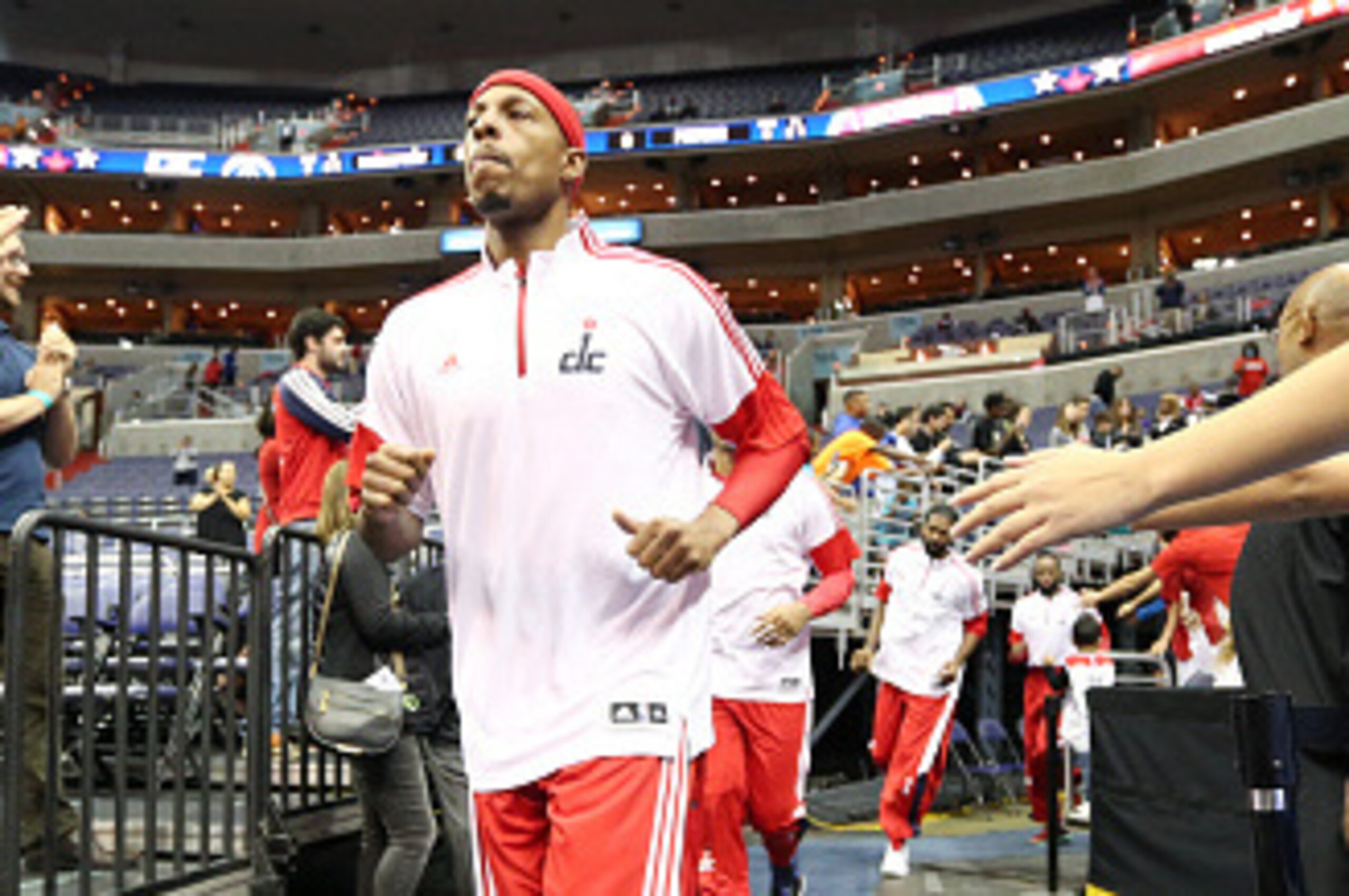
In all likelihood, the Wizards aren't going to thrive without Beal. But they can survive.
Locking Pierce up in free agency remains one of the most understated offseason moves any team made. They added production and fire on a beggar's dime, the latter of which isn't any less important than the former.
Especially now.
Confidence isn't a virtue Pierce lacks, even at 37. He is the perfect teammate, in that he leads and fights through his actions and the spoken word. And in lieu of Beal's youth, athleticism and rising star, the Wizards need that profound direction. They need someone who is going to scrap and claw and believe.
“So why not us?” Pierce said of the Wizards less than one month ago, per The Washington Post's Jorge Castillo. “And that’s what I try to bring to this ballclub and that’s what I try to tell them in the locker room. Why not us?”
That, in a nutshell, is Pierce.
Brooklyn doesn't navigate its series of injuries and severe underachieving without Pierce last year. It doesn't piece a playoff crusade together without Pierce's willingness and ability to adapt and push, then push some more. It didn't matter if he was playing small forward, point forward or power forward. It didn't matter that his playing time decreased and his role within the offense diminished, even at the most crucial times.
Whatever the Nets needed, Pierce provided. And what they needed was a glorified role player.
What the Wizards need is an emotional bellwether who, for now, can find that requisite medium between prominent role player and featured star. Lucky for them, they have Pierce—the best possible in-house solution to their Bradley Beal problem.
*Stats courtesy of Basketball-Reference and NBA.com unless otherwise cited.

.jpg?w=2560 "NFL House in Paris Closes for Protests")
.jpg?w=2560 "Trevon Diggs Cut by Seahawks")