Last season, the Phoenix Suns shocked the world. A team that was widely expected to "tank" and win no more than 20 games completely exceeded expectations, finishing the year with a 48-34 record despite being forced to play without star player Eric Bledsoe for 39 games.
But even 48 wins was not enough to propel the team into the playoffs. The Suns finished with the No. 9 seed in the West, just one game back of the eighth-place Dallas Mavericks and two behind the seventh-place Memphis Grizzlies.
Going into the 2014-15 season, the expectations have changed. The organization added several players to the roster, some prospects and some established talent. The goal now is clearly to make the playoffs, and that is recognized by the front office, the coaches and the players. But in order to accomplish that, some adjustments will have to be made.
That's the only way to avoid another season like the one Phoenix just had. Here are some of those adjustments.
Pick Up the Pace
1 of 5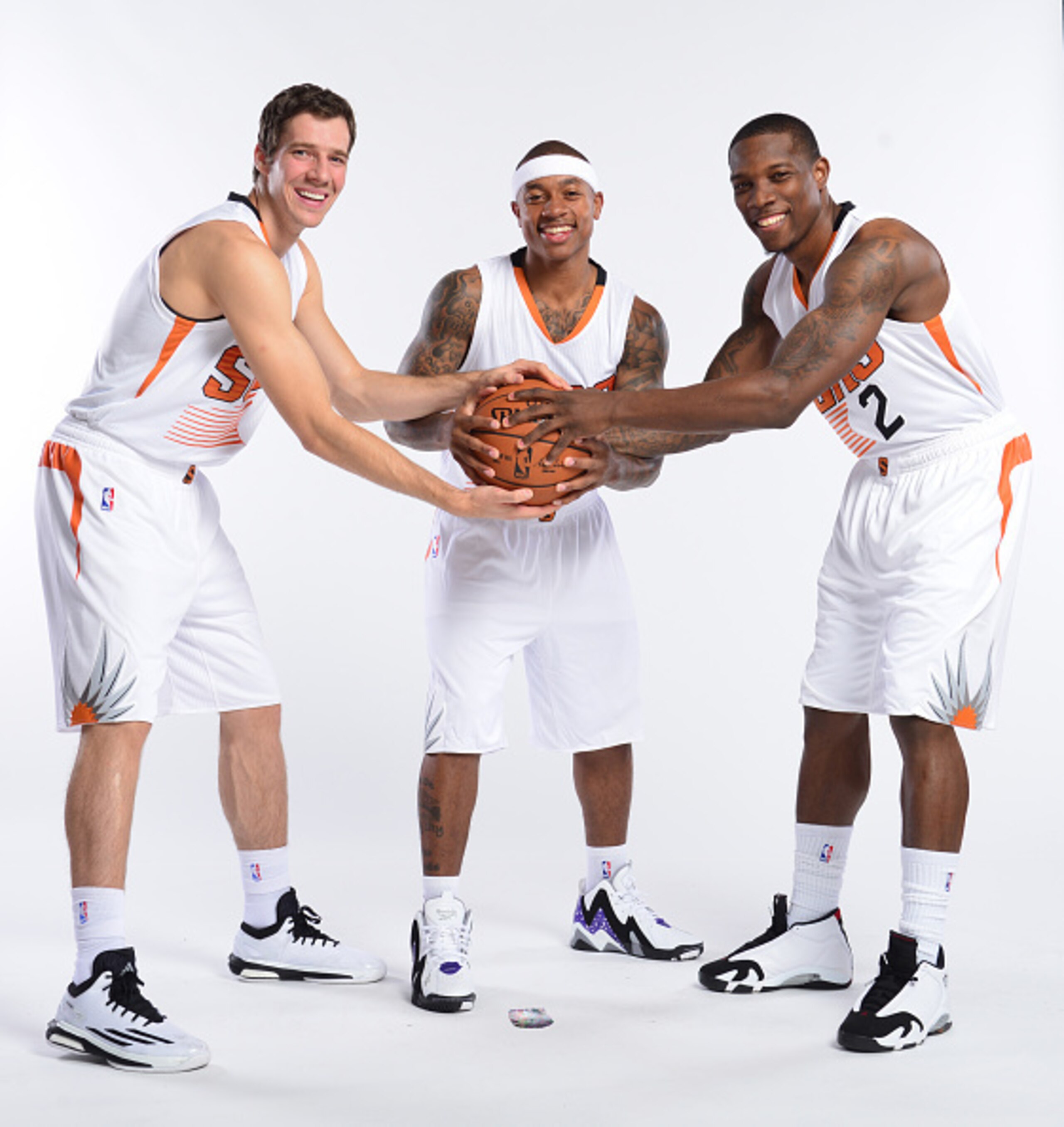
Last season, the Suns finished eighth in the league in pace, a measure of the number of possessions a team uses per game. With that pace, the Suns finished seventh in the league in points per game, showing a revival of the up-tempo offensive style that made them so successful throughout the '90s and 2000s.
But for head coach Jeff Hornacek, eighth isn't fast enough. Here's what he said at training camp, according to Paul Coro of the Arizona Republic:
"We want to pick that up. We want to be one, two or three. Really try to get the ball out of bounds and go with it. Put pressure on the other teams. We have a deep team so we feel we can do that. Again, that's us pushing these guys to get in the kind of shape you need to be to do that.
"
After acquiring former Sacramento Kings starting point guard Isaiah Thomas over the summer, the Suns boast one of the deepest backcourts in the league. Currently, it features players such as Thomas, Goran Dragic, Bledsoe and Gerald Green. With such a deep, talented backcourt, they can afford to push the pace for all 48 minutes, scoring on defenses before the opposition has time to set up.
It probably won't quite resemble the "seven seconds or less," pick-and-roll heavy offense that dominated mid-2000s Suns basketball. Despite the talent of their point guards, the Suns do not have a player with the passing ability of Steve Nash on this roster.
Still, if what Hornacek said is true and the Suns really do want to be a top-three team in pace, they will be very exciting to watch. Generating even more fast-break points and opportunities is what could allow this offense to take a leap forward and become truly dominant.
Manage a Deeper Rotation
2 of 5
One of the best "problems" Hornacek has entering the preseason is that he has to figure out how to manage the minutes of players in the backcourt.
Right now, it's clear that Dragic, Bledsoe, Thomas and Green will be the most prominently featured backcourt players. But how many minutes will each one receive? And will there be anything left over for prospects such as Archie Goodwin, Tyler Ennis and Zoran Dragic?
First of all, don't expect Dragic and Bledsoe to handle the same load that they did last season. Instead of playing their two starters close to 36 minutes per game, and occasionally relying on them for 40-plus minutes, the Suns can lower their playing time to approximately 30 MPG.
But that's a good thing. Goran Dragic just represented his home country of Slovenia in the FIBA World Cup over the summer, and Bledsoe has suffered a couple of major injuries over the first few seasons of his career.
Therefore, keeping those two well rested and healthy only ensures that the team will play better. Dragic and Bledsoe will have the energy and strength to play at their best every moment they're on the court, and they will have less pressure placed on them because of the depth of the bench.
It is also time for Thomas and Green to slide into sixth-man/seventh man roles, even though both started for significant chucks of last season. If the two can come off the bench for 20-25 minutes each and terrorize opposing backcourt defenses, they will have done their job. On defense, they leave much to be desired.
Even Zoran, Goodwin and Ennis will get to see some action at various times throughout the season. The only way that Phoenix will be able to achieve its goal of leading the league in pace is by frequently subbing in fresh guards who can continue to put pressure on opposing defenses.
It will be much like what head coach Gregg Popovich does with the San Antonio Spurs, though for a different reason. Last season, not a single Spurs player logged over 30 MPG, and the Suns could possibly afford to do the same thing. The only difference is that the Suns have much younger, fresher legs in their rotation, both in the starting lineup and on the bench.
Replace the Production of Channing Frye
3 of 5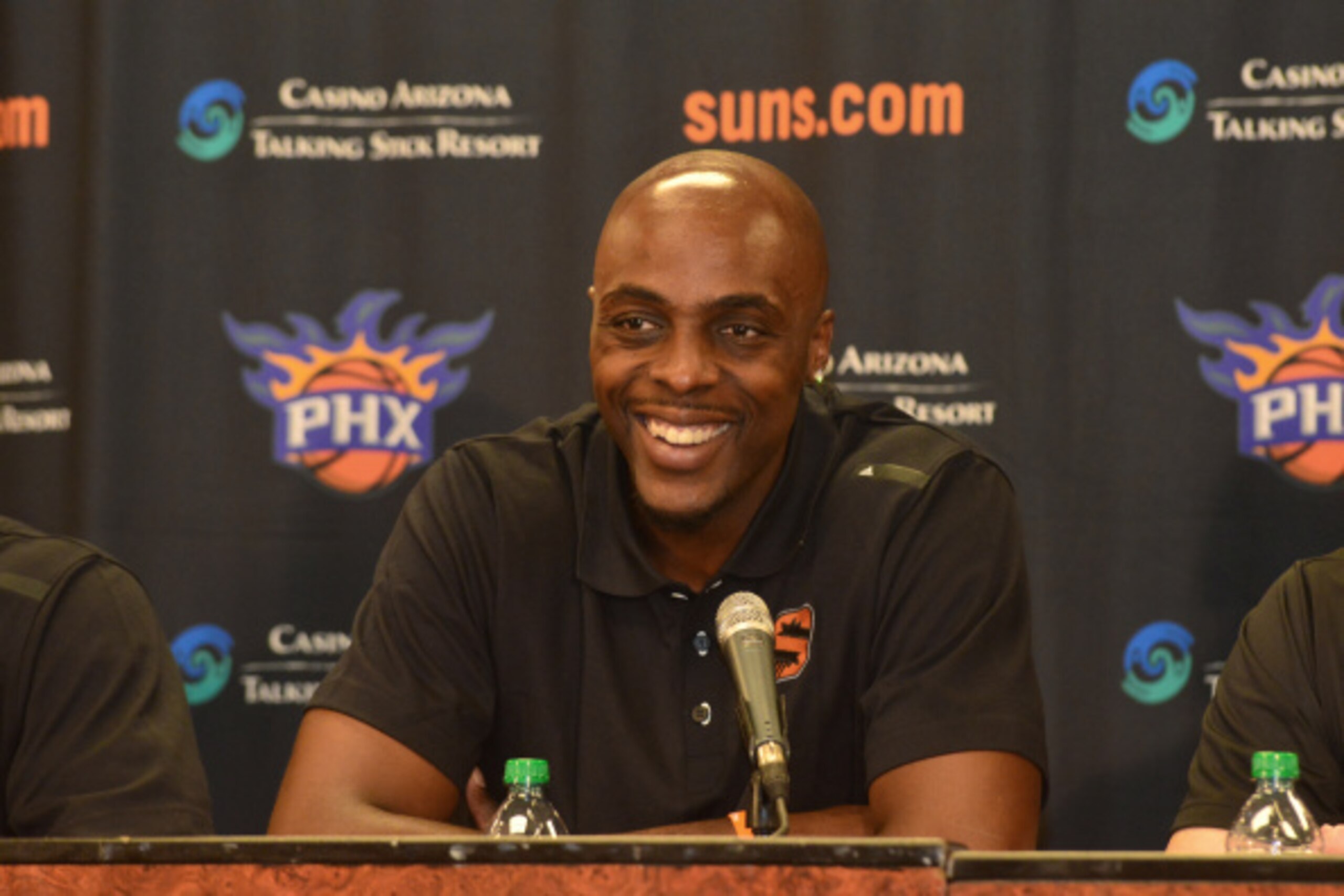
Unfortunately, the Suns lost Channing Frye to the Orlando Magic in free agency this summer. Frye had spent five seasons with the Suns.
But on the other hand, not paying Frye $8 million per year was a smart move by general manager Ryan McDonough, especially because he may have found a replacement for less than half that price.
Anthony Tolliver was not a major acquisition like Thomas, but he will be an integral part of the team's offensive spacing. Last season, the 6'8" forward shot 41.3 percent from downtown.
Not only that, but an astounding 80.4 percent of his field-goal attempts were threes with the Bobcats. That is a much higher three-point shooting frequency than Frye, and it shows that Tolliver's main priority will be shooting the ball when he's open. Like Frye, his defense and rebounding is below average, but his shooting will make him a quality role player capable of spacing the floor for the guards to drive the lane.
And Tolliver isn't the only big man who can shoot.
Small forward/power forward Marcus Morris made 38.1 percent of his threes last season, and his twin brother Markieff is a career 33 percent shooter from downtown. Markieff doesn't have the most consistent three-point shot, but his mid-range jumper has become more and more efficient since his rookie season. A small frontcourt lineup of Tolliver, Marcus and Markieff would be terrible defensively, but at the same time, it would maximize offensive spacing.
If the Suns didn't have so many other shooters on the roster, perhaps the loss of Frye would seem like more of a problem. But they have enough sharpshooters that spacing and three-point shooting should be about the last of Hornacek's worries.


Improve the Assist-to-Turnover Ratio
4 of 5
Yet another job that falls on the shoulders of the point guards. Here's something that isn't talked about often but is very important.
Last season, the Suns were tied for last place in assist-to-turnover ratio. That is, the number of assists a team converts per turnover. The Suns' ratio was 1.29, tied with the Sacramento Kings for worst. They finished 29th in the league in assists per game and 26th in turnovers committed.
Compare that ratio to the teams at the top of the list. The Bobcats, Clippers, Spurs and Mavericks all had ratios close to 1.8. And eight of the top 10 teams on the list made the playoffs.
An efficient offense is pivotal if the Suns want to win more games with their style of play. Though fast-paced teams are generally more likely to commit turnovers due to their frenetic style of play, that is not always the case. The Clippers, for instance, maintained one of the league's best ratios while also finishing seventh in the league in pace. The Suns' goal should be to have an offense like that—one that is both fast and efficient.
Last season, Eric Bledsoe finished 46th out of 47 qualified players in assist-to-turnover ratio. Isaiah Thomas of the Kings ranked 37th. Unsurprisingly, Chris Paul sat at the top of the list by a wide margin.
It is common for young point guards like Bledsoe and Thomas to make more mistakes running an offense, but now they must improve. The fewer easy points off turnovers they give to opposing teams, the better chance the Suns will have at winning games.
More Rebounding from the Big Men
5 of 5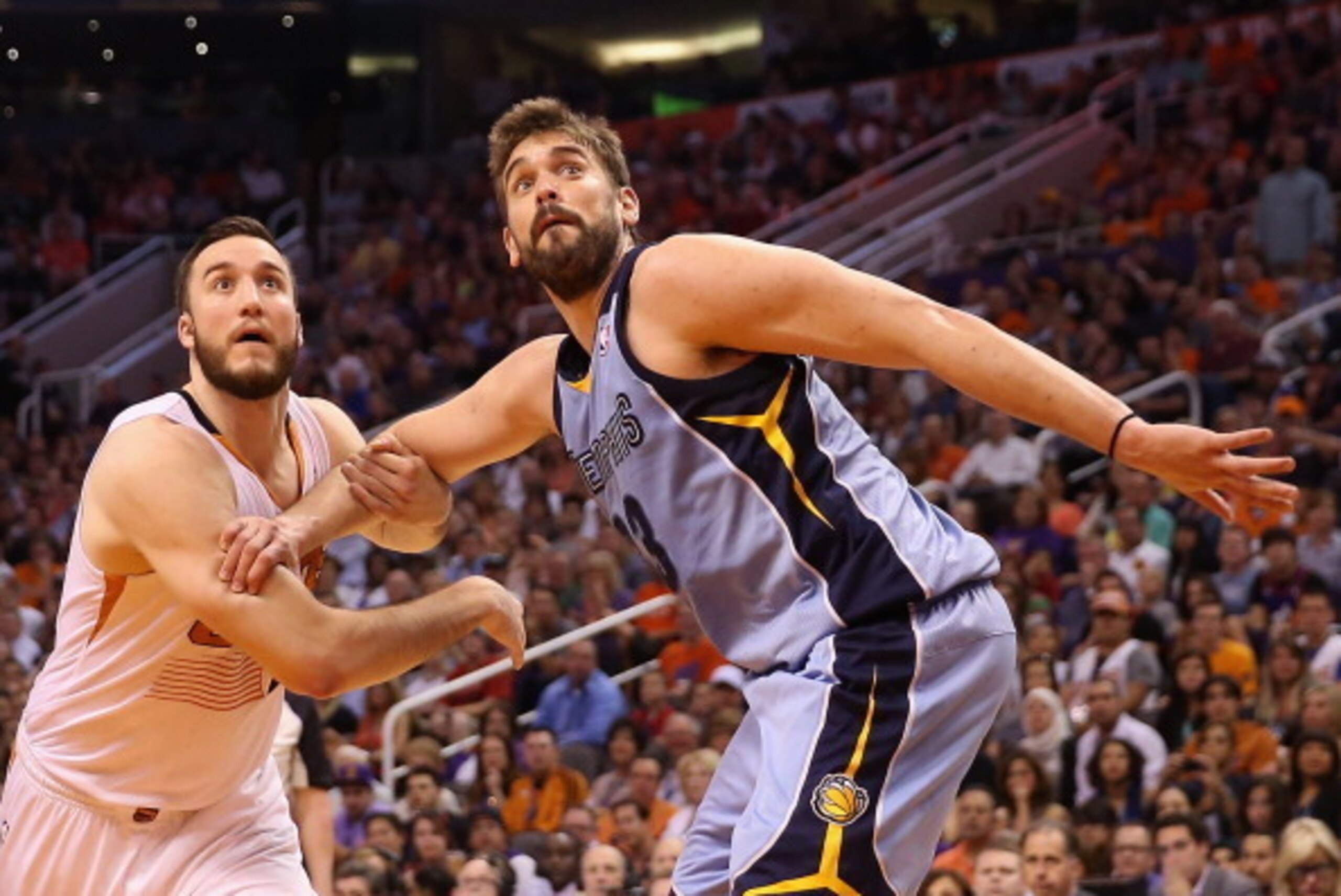
While the backcourt starters benefit from added depth, the frontcourt players are faced with more pressure than ever before.
The Suns only have four legitimate "big men" on the roster. There's Miles Plumlee, Markieff Morris, Alex Len and Shavlik Randolph. Tolliver and Marcus can play power forward, but both are naturally better suited for the small forward position.
Though the Suns ranked 13th in the NBA with 43 rebounds per game last season, keep in mind that an increased pace leads to more rebounding opportunities (both offensively and defensively). The team's ranking certainly benefited from that.
And while the Suns have no offensive firepower in the frontcourt, they at least need to avoid being dominated by opposing big men in order to win. The guards can take care of most of the scoring, but Markieff Morris and Plumlee must stop frontcourt duos like Zach Randolph-Marc Gasol and Blake Griffin-DeAndre Jordan from snatching up every rebound opportunity.
Last season, Plumlee averaged 11.5 rebounds per 36 minutes, which is certainly encouraging. However, he rarely played more than 30 minutes in a game, as he tended to run out of stamina fairly quickly. We saw the effects of a long, grueling season on Plumlee in March and April, when he started playing fewer minutes and struggled to attain the same level of production.
Morris averaged 8.1 rebounds per 36 minutes, which could certainly improve. If any big man on the roster is able to become a consistent scoring option, it's Markieff.
Finally, Len and Randolph will both be crucial to the team's success, as they are great rebounders. Len averaged 9.8 rebounds per 36 minutes in his rookie season, and Randolph's career per-36 average is 10.9. Those two may constantly be called on to provide hustle, physicality and rebounding against bigger teams.
Overall, the Suns frontcourt is admittedly thin. The big questions will be whether Plumlee can step up, if Randolph is able to contribute at all and if Len can stay healthy. If even one key player suffers a major injury, the Suns might be forced to look for some frontcourt help at the trade deadline.
All stats courtesy of ESPN.com and Basketball-Reference.com.


.jpg?w=2560 "NFL House in Paris Closes for Protests")
.jpg?w=2560 "Trevon Diggs Cut by Seahawks")