

New York Giants vs. Washington Redskins: Breaking Down Washington's Game Plan
The Washington Redskins played as well as a team can play offensively in Week 3 without winning. Beating the New York Giants and evening the team's record at 2-2 will take a better game from the defense.
Priority No. 1 has to be stifling the Giants' West Coast-style passing game, one based heavily on slants. The Redskins can combine their coverage efforts with blitz pressures to challenge Big Blue's receivers and offensive line.
Let's take a look at some of things the Washington defense can do to execute these two keys to a winning game plan:
.jpg?w=2560 "Rams Raiders Football")

.jpg?w=2560 "Steelers Saints Football")
Sit on the Slant Lanes in Coverage
Since Ben McAdoo took over the Big Blue offense and installed a West Coast scheme, the Giants have made their yards through the air on slant concepts. Despite plenty of early struggles, McAdoo and quarterback Eli Manning are becoming adept at releasing receivers ahead of coverage where they can gain yards after the catch.
Two plays from New York's 30-17 Week 3 win over the Houston Texans reveal how proficient the Giants have become on slant plays.
The first play was designed to target Preston Parker over the middle. McAdoo isolated Parker's cornerback by using backfield receivers to draw defenders into man coverage:
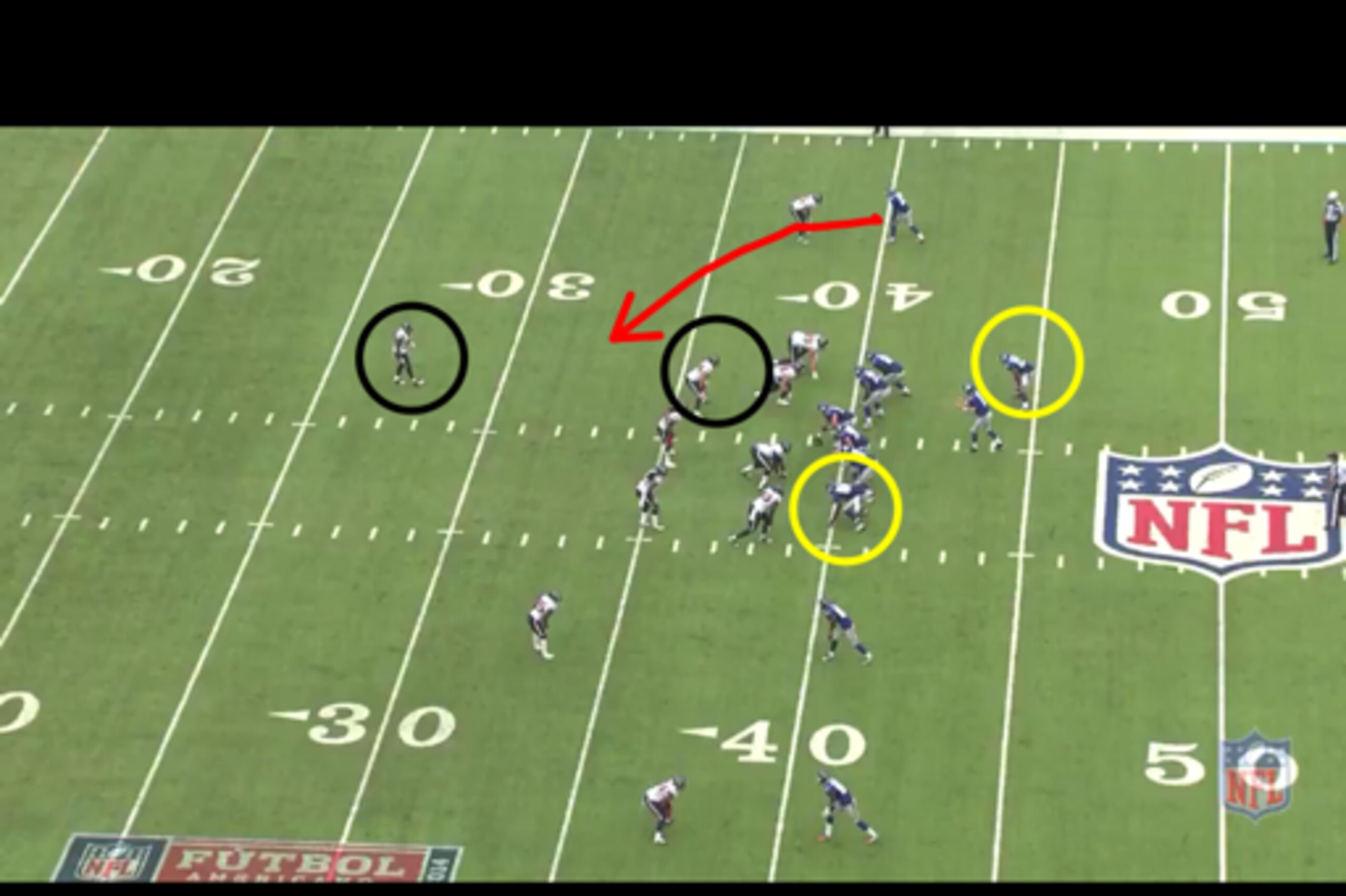
Running back Rashad Jennings ran a swing route to take linebacker Mike Mohamed out of the middle. Meanwhile, tight end Larry Donnell occupied safety D.J. Swearinger underneath on a shallow crossing pattern.
Parker simply ran his slant pattern behind these routes:
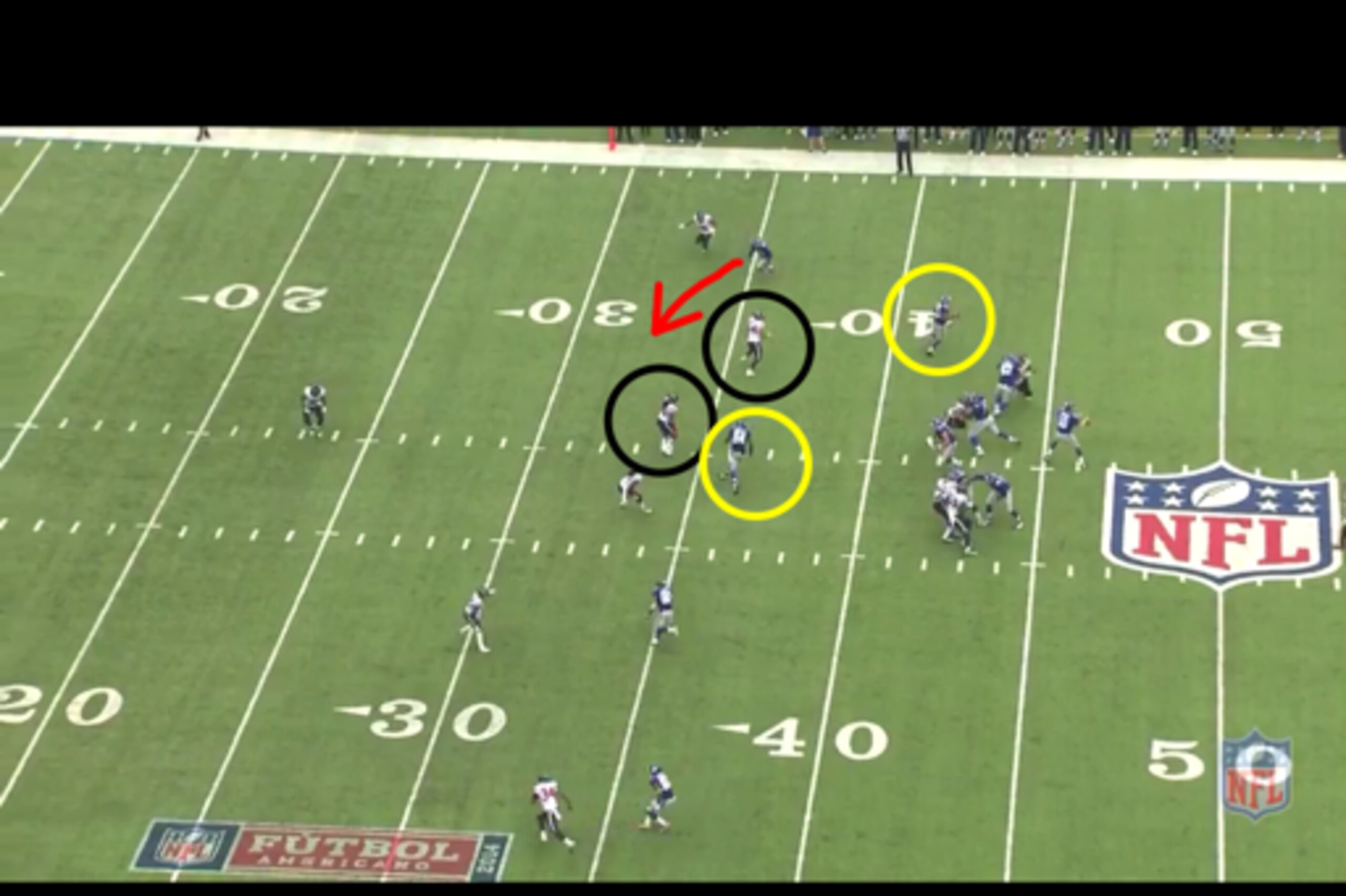
Because the coverage had been split, and because cornerback Kareem Jackson was playing off Parker, the receiver had a natural hole to exploit in the coverage:
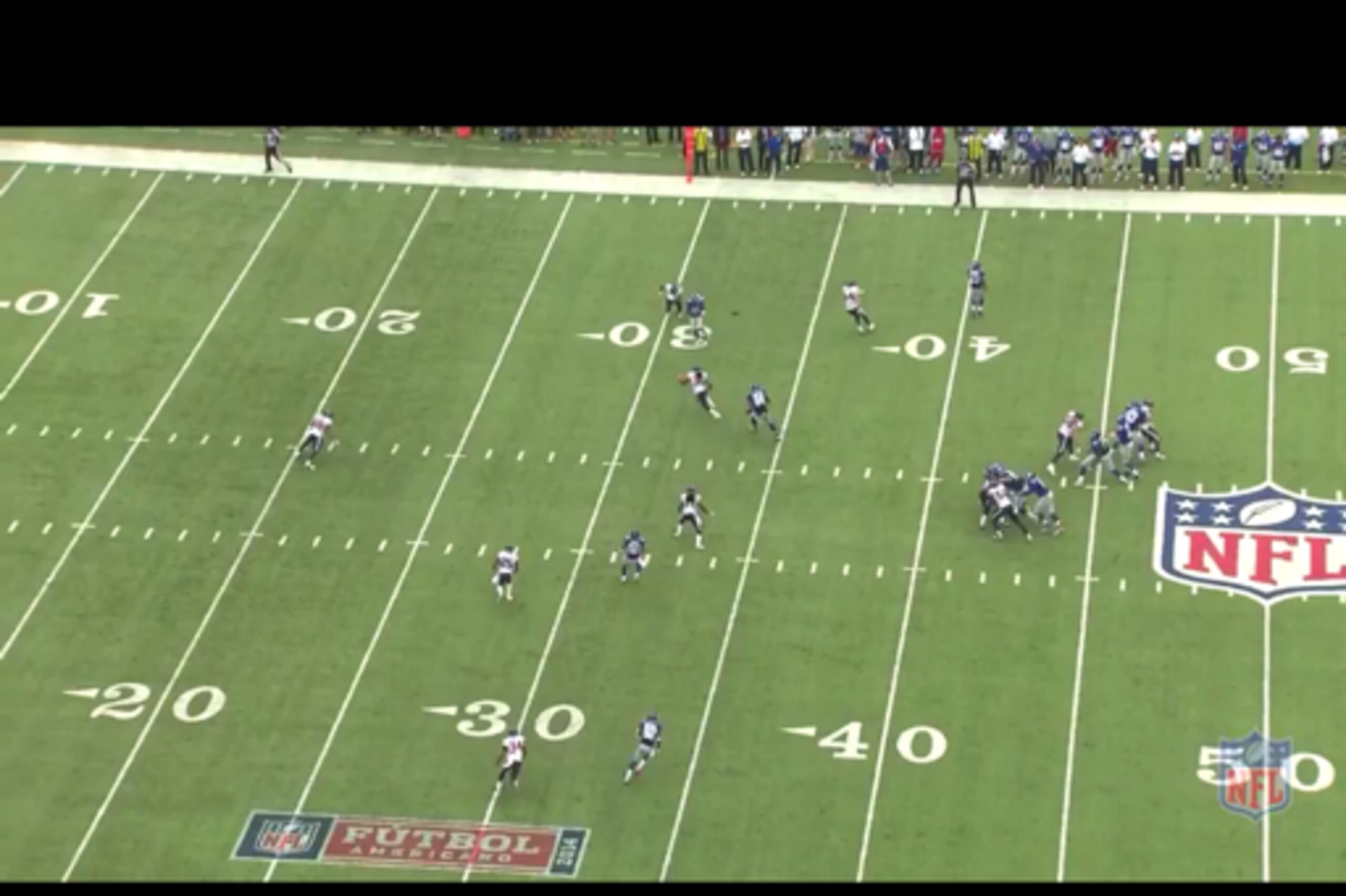
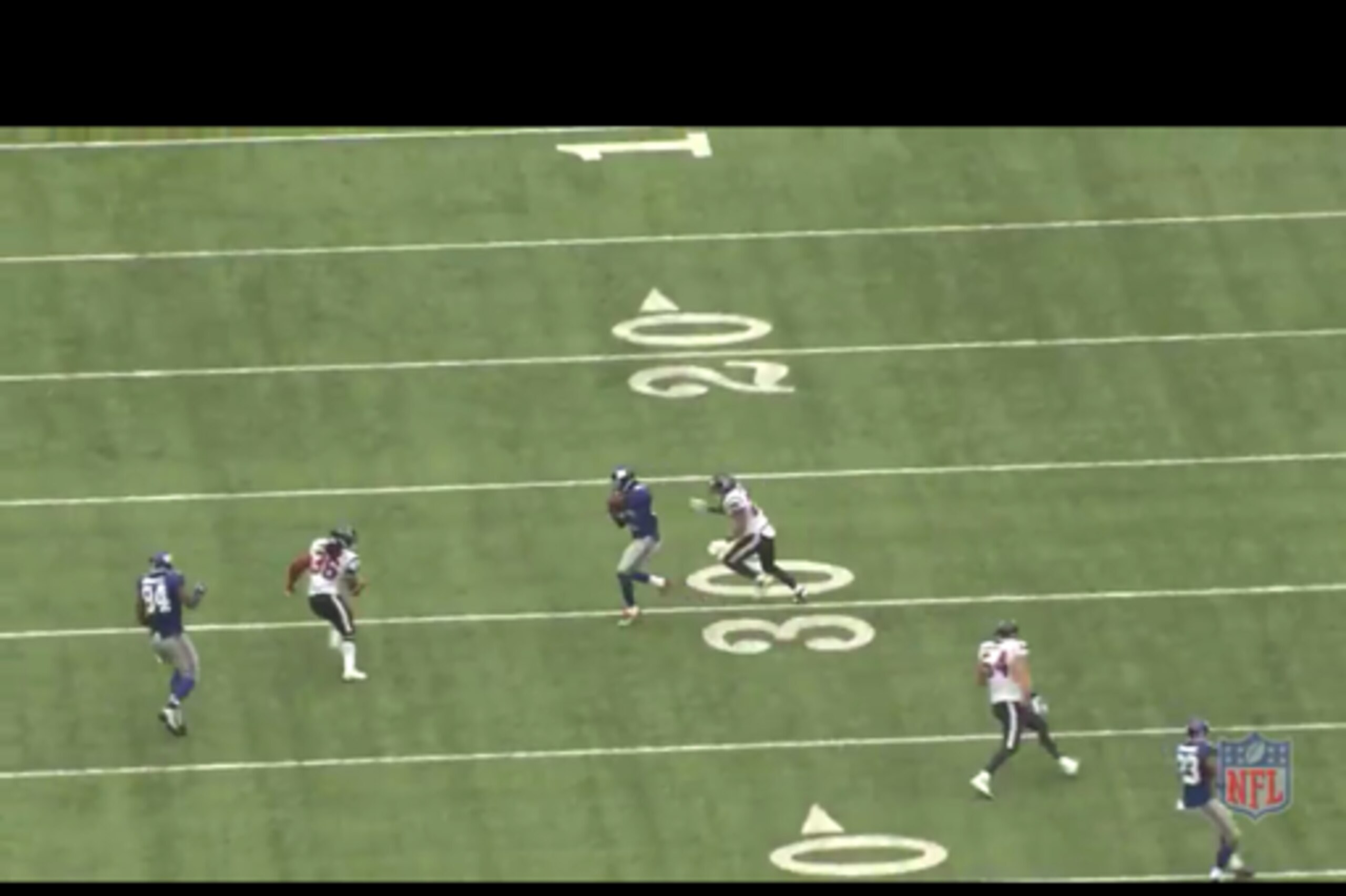
He made an easy grab in that gap for 13 yards:
This was a solid play, but the concept at work can produce much bigger gains when combined with a more explosive receiver such as Victor Cruz. Earlier in the game, Cruz attacked the Texans on a slant and turned the quick pass into a 61-yard gain.
This time, the Giants used two tight ends to clear the underneath coverage out of the middle. Daniel Fells was the in-line tight end (yellow circle). He would occupy Swearinger:
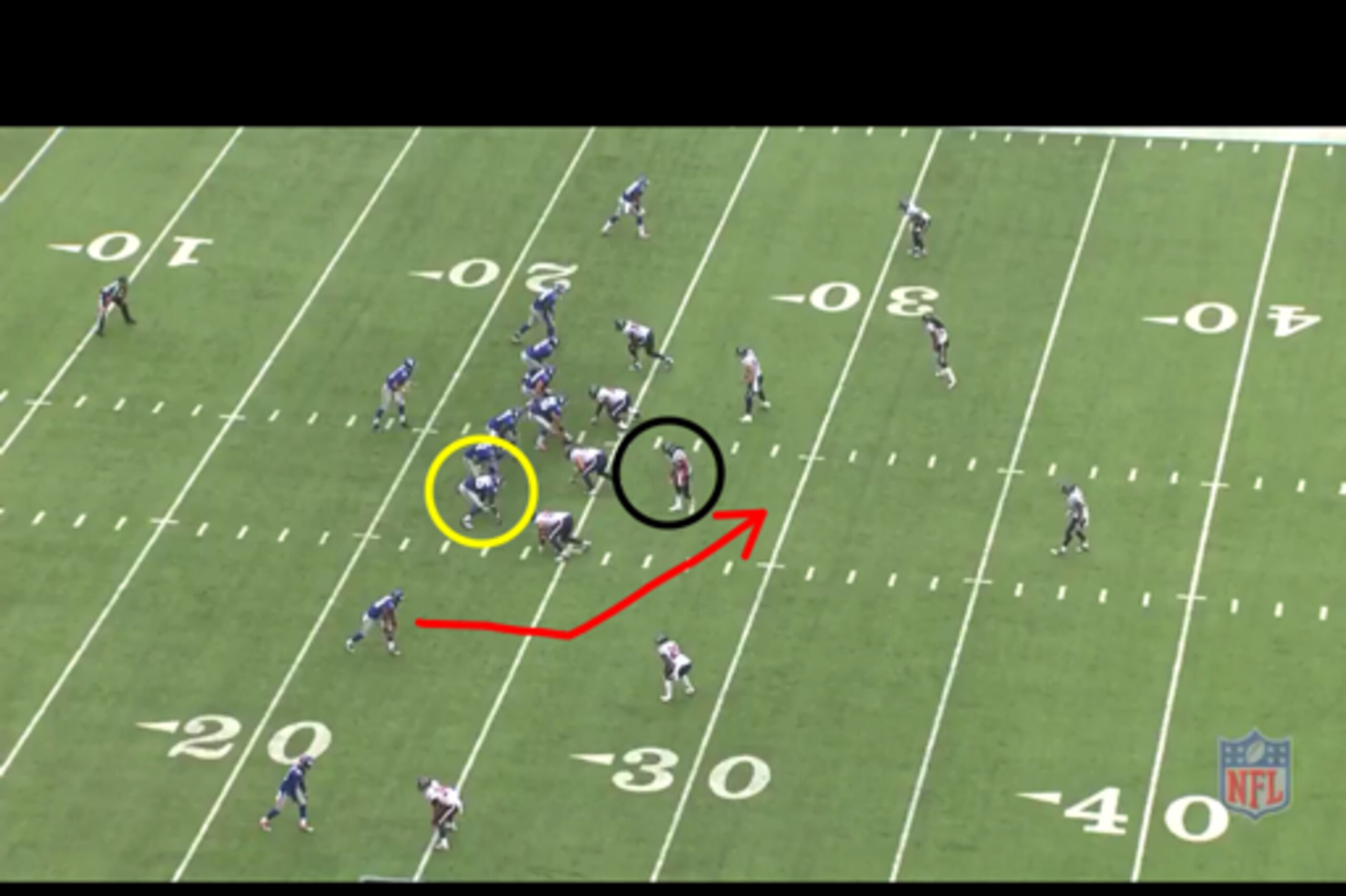
On the other side of the formation, Donnell flexed into the slot. He was ready to run the deep safety out of the play.
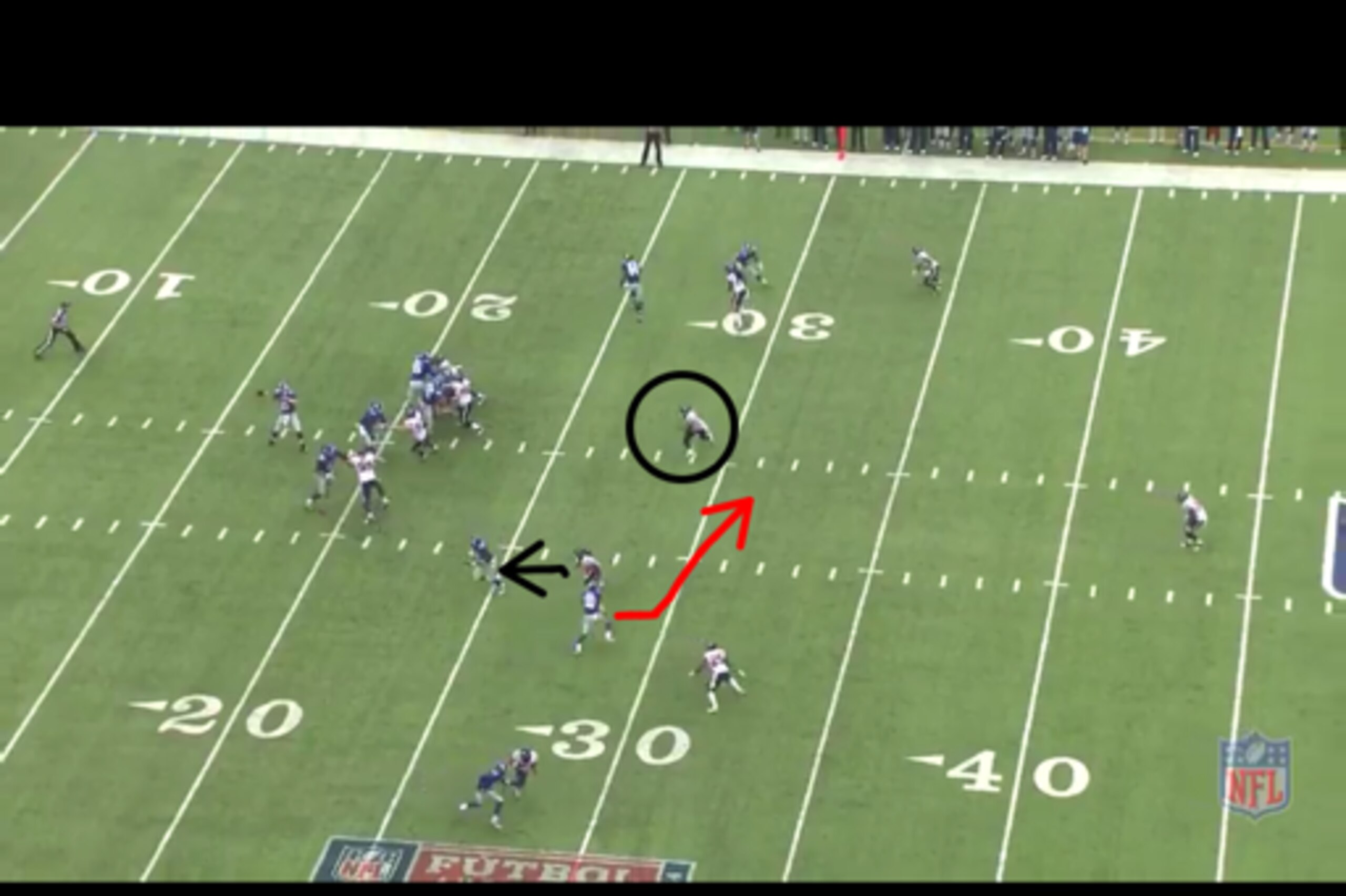
As the play developed, that's just how things unfolded. The gap Fells and Donnell created allowed Cruz to quickly beat his coverage to the inside and get behind the linebacker level of the defense:
Once there, Cruz caught the ball in an inviting gap and quickly turned upfield and sped for 61 yards:
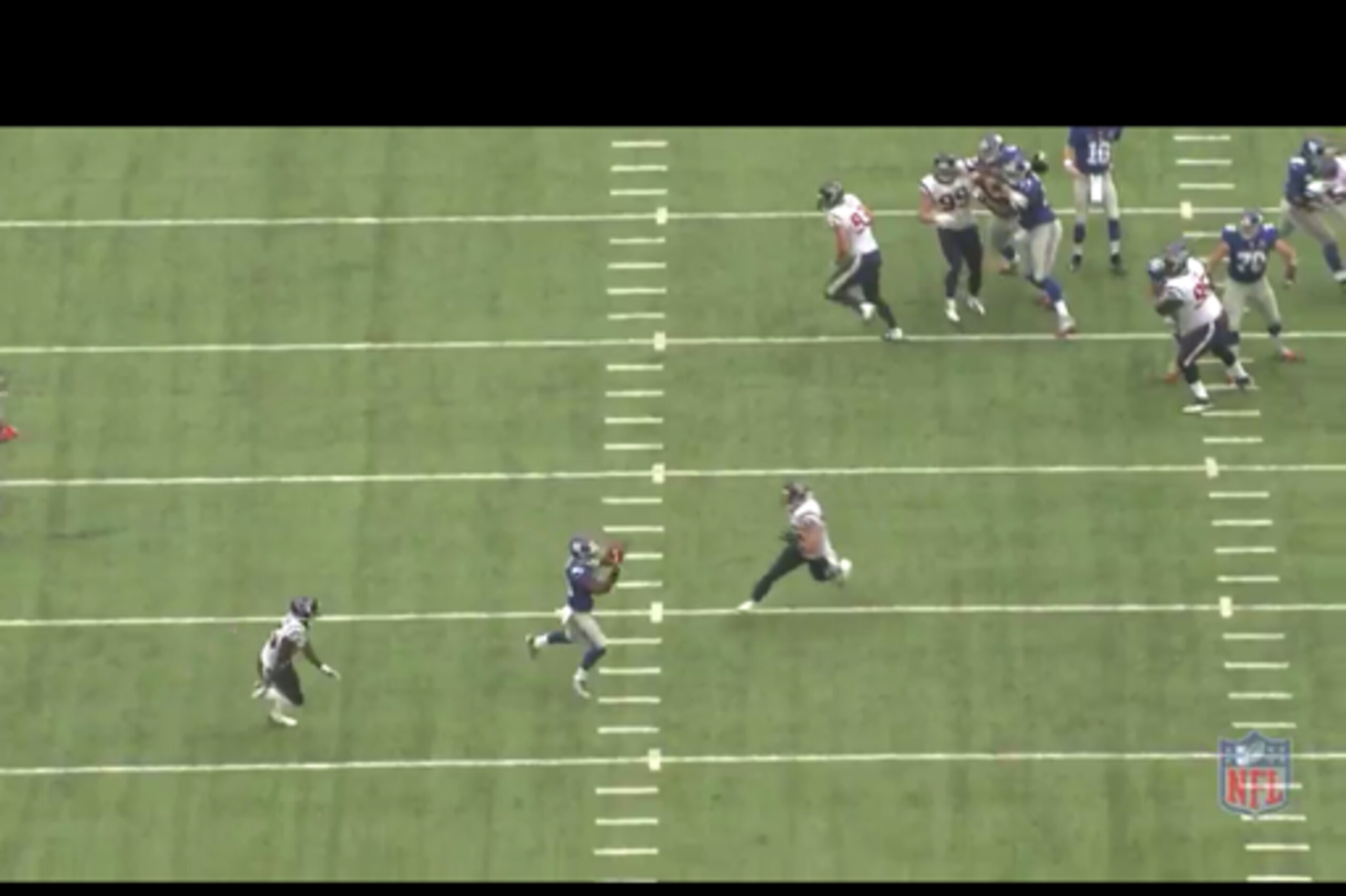
Cruz's quickness and skill in the open field are well known to Washington. He beat the Redskins in a Week 7 overtime clash in 2012.
Cruz is already preparing to take advantage of the absence of Washington's best cover man, DeAngelo Hall, per Mike Jones of The Washington Post:
Jim Haslett can't allow Cruz to get free for big plays this week. Much of that will depend on his unit's ability to stifle Big Blue's slant game. The best counter to the heavy dose of slant concepts is to sit covering defenders down on those routes and crowd receivers over the middle.
The D can take some pointers from the Texans about what not to do against these concepts. The primary failing was twofold.
First, the outside and slot receivers have to be pressed at the line. That means Haslett must roll his cornerbacks up to those receivers pre-snap. Playing press is the only way to prevent a clean release to the inside.

But it will be equally important to pack the spaces over the middle with covering defenders. That means inside linebackers have to bail to get depth and attack crossing receivers. Perry Riley Jr. and Keenan Robinson cannot allow slant routes to be run behind them.
Combining these two elements in coverage will take away one of the principle concepts underpinning Big Blue's offense. That will force Manning out of his comfort zone and into situations where Haslett's group can unleash pressure.
Blitz the Giants' Suspect O-Line
The Giants have given up five sacks already, principally because their offensive line is not identifying and reacting to blitz pressure. That should be all the invitation a blitz-happy play-caller like Haslett needs to send extra rushers after Manning.
A great example of how Manning and the Big Blue blocking schemes struggle with blitz pressure was provided by the Arizona Cardinals in Week 2. This is a pertinent example for Haslett because it combined taking away a slant route while freeing a rusher to force Manning into a mistake.
The Cardinals intended to make Manning target Cruz as his hot read, on a slant behind the blitz. Arizona defensive boss Todd Bowles wanted Manning to throw there because he was going to drop defenders into the middle:
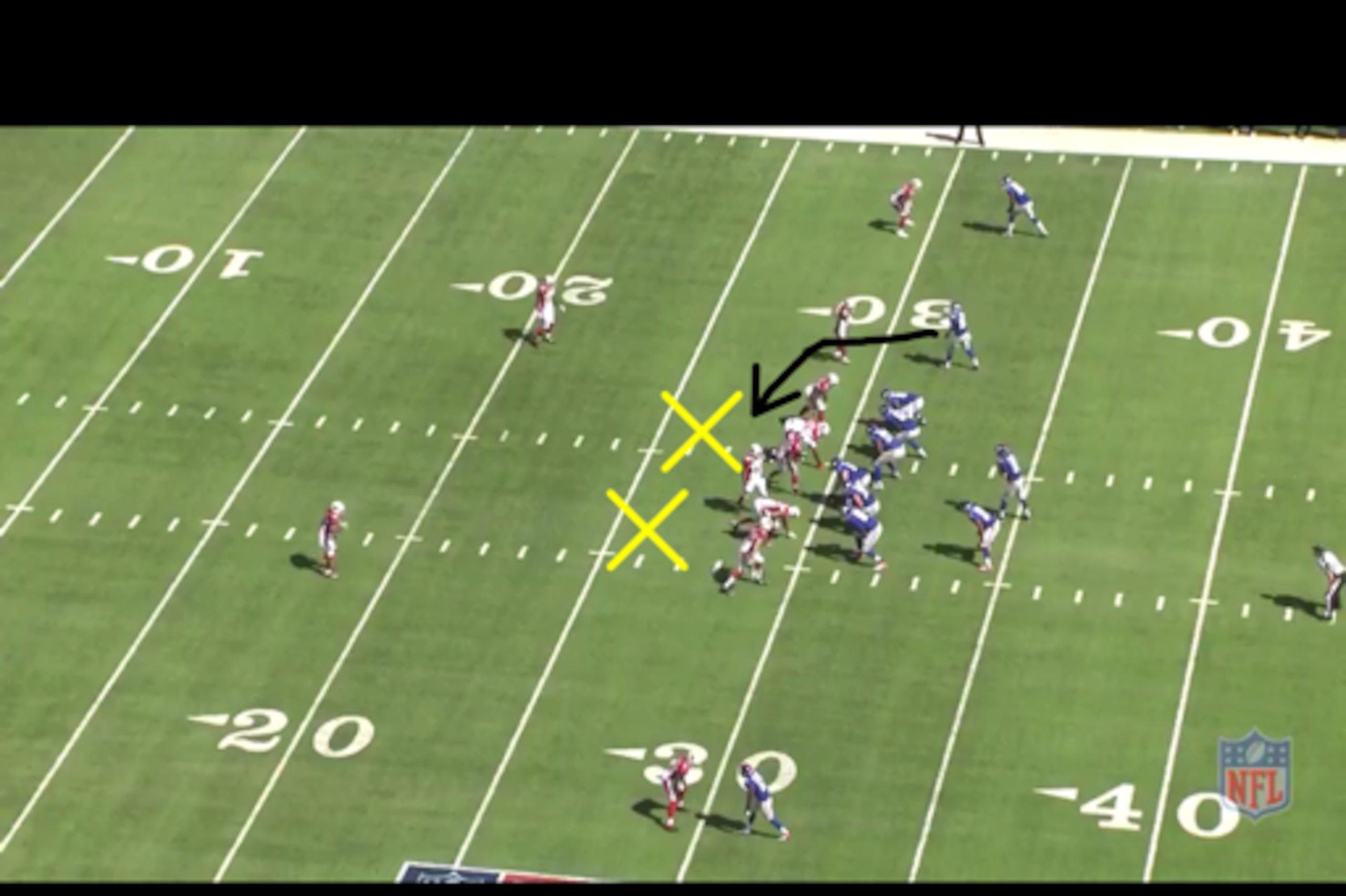
Bowles would send two, inside 'backer Larry Foote and rookie safety Deone Bucannon, through both A-gaps either side of center J.D. Walton. At the same time, defensive back Jerraud Powers would come off the edge.
The key to the play was having rush ends Sam Acho and Thomas Keiser drop out into underneath coverage:

As soon as the pressure came, the Giants made mistakes at every level of the line. Jennings stepped up to block an A-gap blitzer, while Walton took the other.
But the fatal error was both guards turning inside to double the two defensive tackles, who had each taken outside steps toward the quarterback to occupy O-tackles Will Beatty and Justin Pugh.
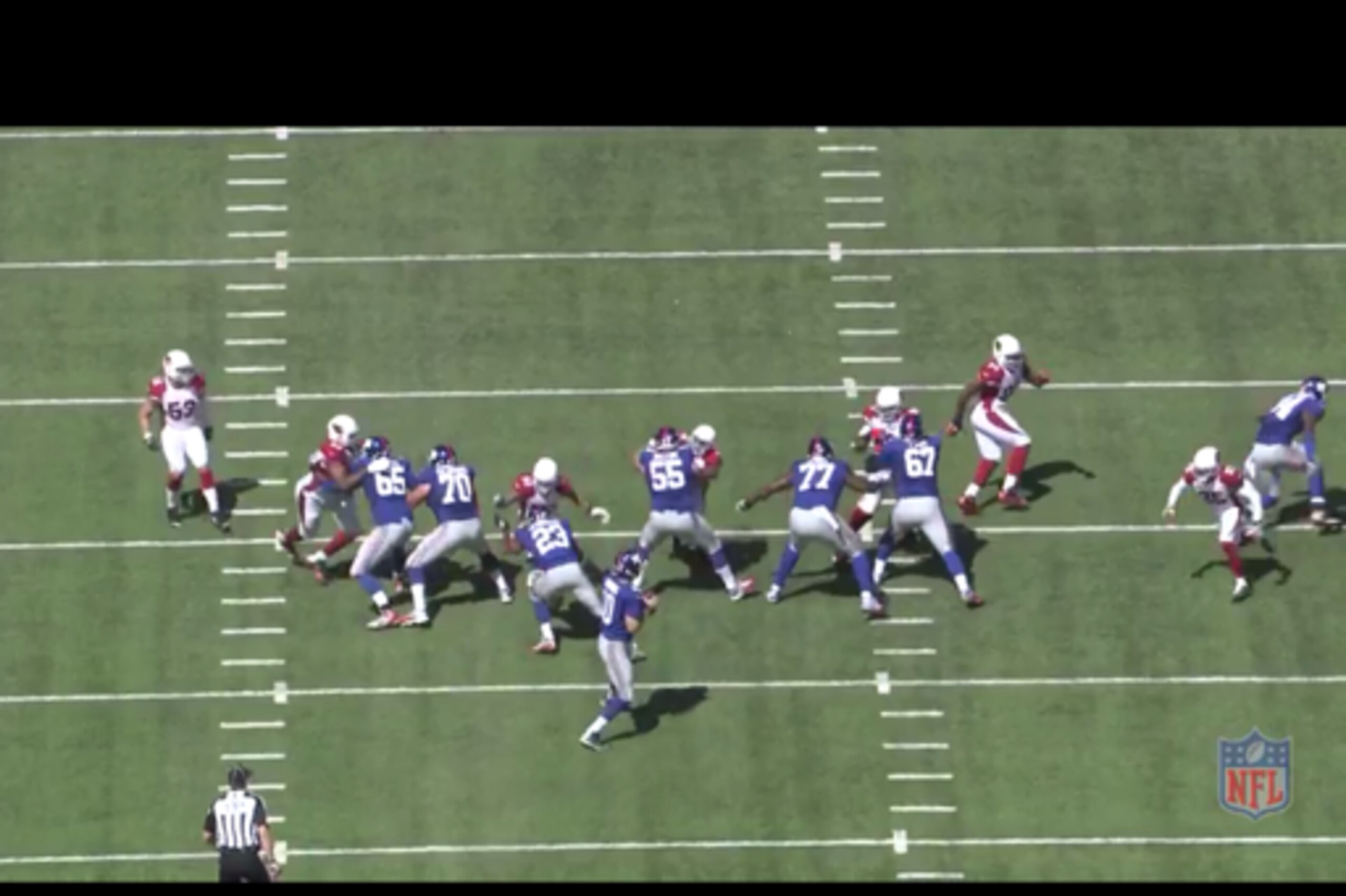
That meant nobody blocked Powers. The guard and tackle on that side should have switched off so one could slide out to pick up the edge pressure.
Alternatively, Walton could have directed the interior to slide toward one of the A-gap blitzers. Sadly for Manning, the Giants did neither.
That left the quarterback exposed to immediate pressure. He had to rush his throw toward the hot read, Cruz. That's just where Acho was waiting to intercept the errant pass:
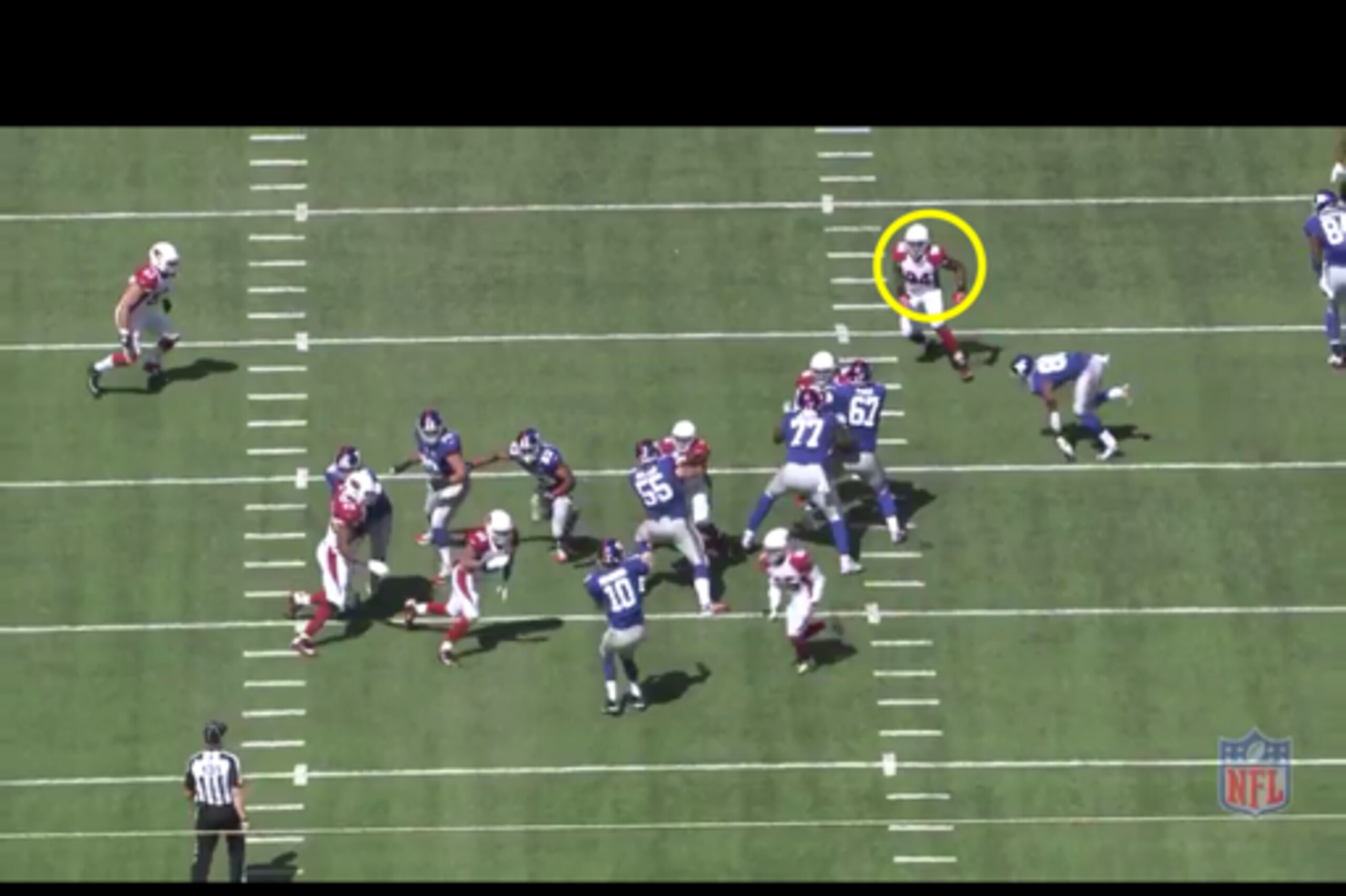
The Giants have had trouble with pressure looks like this all season. Haslett can design similar blitzes to confuse inconsistent blocking and put Manning under duress.
But Washington head coach Jay Gruden should also be concerned with Big Blue's ability to generate pressure.
Control New York's Edge-Rushers
For quarterback Kirk Cousins to repeat the kind of performance that produced 427 yards and three touchdowns last week in Philadelphia, the Redskins must control New York's edge-rushers.
That should mean using supplemental blockers to nullify ends Jason Pierre-Paul and Robert Ayers. The two have already combined for 3.5 sacks.

That's bad news for a banged up Washington front five. Center Kory Lichtensteiger and right tackle Tyler Polumbus both left the Eagles game with injuries. They'll be available to face the Giants, but the whole line will need help.
Gruden can provide that help by using some two-tight end sets to help slow down Ayers and Pierre-Paul off the edges. Niles Paul and Logan Paulsen can chip both players before setting off on routes or simply stay in to block in some maximum-protection looks.
Gruden could even use Tom Compton as an extra lineman to help out. That's a ploy Gruden has utilized several times already this season.
Whatever he decides, Gruden can't trust basic blocking schemes to handle the New York front four. He must give Cousins time to loosen up the Giants defense.
That can be achieved by attacking deep early in the game.
Use the Deep Ball to Empty the Box
Cornerbacks Prince Amukamara and Dominique Rodgers-Cromartie are both talented, but they are also risk takers. They play aggressive and will gamble on quick throws. Fortunately, Washington boasts wide receivers who can punish any reckless habits in coverage.
DeSean Jackson and Pierre Garcon should use double moves to get behind the New York secondary. Jackson has tormented the Giants for years and showed last week that he hasn't lost his knack for stretching the field, after hauling in an 81-yard scoring reception.
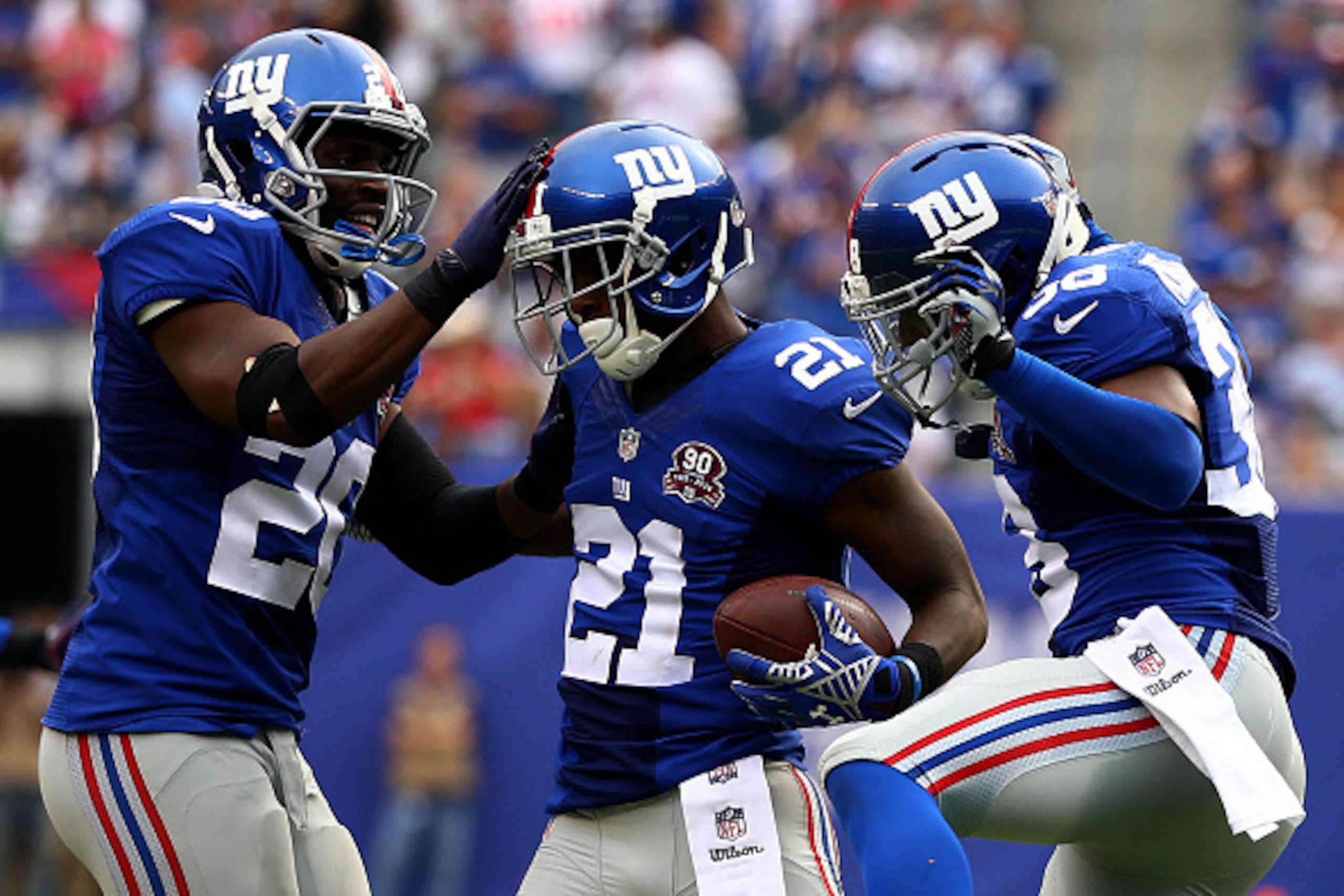
Cousins and his receivers should attack the edges of a secondary weakened by the season-ending injury suffered by Walter Thurmond III. The former Seattle Seahawks nickelback needed surgery to fix a pectoral problem, per ESPN New York reporter Dan Graziano. Trumaine McBride will be his replacement.
The defensive backfield has been further shaken up by the decision to replace Stevie Brown at free safety with Quintin Demps, per NJ.com writer Jordan Raanan. With Jackson, Garcon and Andre Roberts at Cousins' disposal, this could be the wrong game for the Giants to alter personnel in the deep zones.
It will be important to loosen up what is a tough defense to run against. The Giants are ranked 14th against the run so far, but they have an excellent recent record of keeping Washington's ground game in check.
In last season's two meetings, Big Blue held Alfred Morris to just 88 yards combined. That statistic must improve this week.
Sharing the carries more liberally between Morris and the speedy Roy Helu Jr. would help. But the real key will be getting the Giants to empty the box and keep their safeties deep.
Defensive coordinator Perry Fewell loves to stack his fronts, particularly whenever he deploys three safeties. However, Fewell won't be able to risk that approach if Garcon and Jackson prove they can win deep.
Things won't be easy against a New York defense that is starting to look fearsome, at least according to linebacker Jameel McClain, per New York Daily News writer Ebenezer Samuel:
"And their talents are starting to take over. On Sunday, there was Jason Pierre-Paul finally playing with furious intensity and chasing Fitzpatrick the entire afternoon. There was big-money signing Dominique Rodgers-Cromartie playing a key role in shutting down Andre Johnson.
There was Antrel Rolle corralling a wild throw and returning it to the Texans’ 2-yard line to set up a score.
Most of all, McClain said, the Giants were a collection of defensive players who felt comfortable and finally trusted each other.
"
One week after an explosive tussle with the Eagles, the Redskins can expect another intense battle in the NFC East. The Giants are in a transition similar to the one Gruden is overseeing in Washington.
But Week 3 provided glimpses that Tom Coughlin's team is beginning to get comfortable with its new schemes and starting to look like a tough outfit again.
All statistics via NFL.com. All screen shots courtesy of CBS Sports, Fox Sports and NFL.com Game Pass.
.jpg?w=2560 "Cowboys Packers Football")




.jpg?w=2560 "🚨 Week 8 AP Top 25 Poll")