NY Giants vs. Washington: Breaking Down New York's Game Plan
Say what you want about statistics in the NFL, but sometimes the numbers just don’t lie.
Take for instance the Thursday night prime-time clash between the New York Giants (1-2) and Washington (1-2), one of the oldest rivalries in the NFC East.
How important is this game to both teams? The winner will be in good shape as far as keeping pace with the Philadelphia Eagles, the current NFC East division leaders.


.jpg?w=2560 "Commanders Eagles Football")
The loser will fall 2.5 games back of the Eagles, a steep hole.
Let’s take a quick look at what New York and Washington has on their schedules over the next four weeks to gain a better sense of how important this game is for the Giants:
| Atlanta (2-1) | Seattle (2-1) |
| at Philadelphia (3-0) | At Arizona (3-0) |
| at Dallas (2-1) | Tennessee (1-2) |
| Bye | at Dallas (2-1) |
Although the giants have a bye week coming up in the next four weeks, they also have a more difficult schedule.
Only one club can emerge victorious. Will it be New York?
Read on.
The Series
This will be the 163rd regular-season meeting between the Giants and Washington, the NFC East's longest rivalry. New York leads the series, 94-64-4.
| Unit | Giants | Washington |
| Quarterback | X | |
| Running Backs | X | |
| Tight Ends | X | |
| Receivers | X | |
| Offensive Line | X | |
| Defensive Line | X | |
| Linebackers | X | |
| Defensive Secondary | X | |
| Special Teams | X |
Unit Snapshots
Quarterback

Eli Manning has been playing much better ball of late, but there are a couple of things that give a slight edge to Kirk Cousins.
First are the interceptions. Manning didn’t throw any last week, but the fact that he has four for the year to Cousins’ one is a big reason why his passer rating of 84.3 pales in comparison to Cousins’ 105.8.
Second, 6.2 percent of Cousins’ passes have gone for touchdowns compared to Manning’s 5.0 percent.
The biggest difference is in the yards per pass attempt: Cousins easily tops Manning 8.36 to 6.74 in this category.
Running Backs
The Giants' duo of Rashad Jennings and rookie Andre Williams have combined for 325 yards on 87 carries, a 3.7 per-carry average. Meanwhile, Washington’s Alfred Morris and Roy Helu are averaging 4.5 yards per carry.
Interestingly, Jennings (286) and Morris (253) are currently ranked third and fourth respectively in rushing yards in the league.
Washington gets the edge here because of Helu’s experience and his five receptions for 81 yards.
Tight Ends
The Giants' tight end corps might not consist of any “big” names, but Larry Donnell and Daniel Fells are healthy, which is more than Washington can say for this unit, given that starter Jordan Reed will not play on Thursday.
Did we also mention that Donnell is Pro Football Focus’ second-highest-graded tight end (behind Jimmy Graham of the Saints) among those who have played in 75 percent or more of their team’s snaps (subscription required), and that his 78.3 pass-reception percentage is higher than Graham’s 77.4?
Receivers
The Giants right now have one consistent deep-receiving threat.
That would be Victor Cruz, who has caught 54.5 percent of his pass targets for 191 yards and one touchdown.
Per Pro Football Focus (subscription required), Cruz has also been the intended target on two of Eli Manning’s interceptions this year and has had four dropped balls.
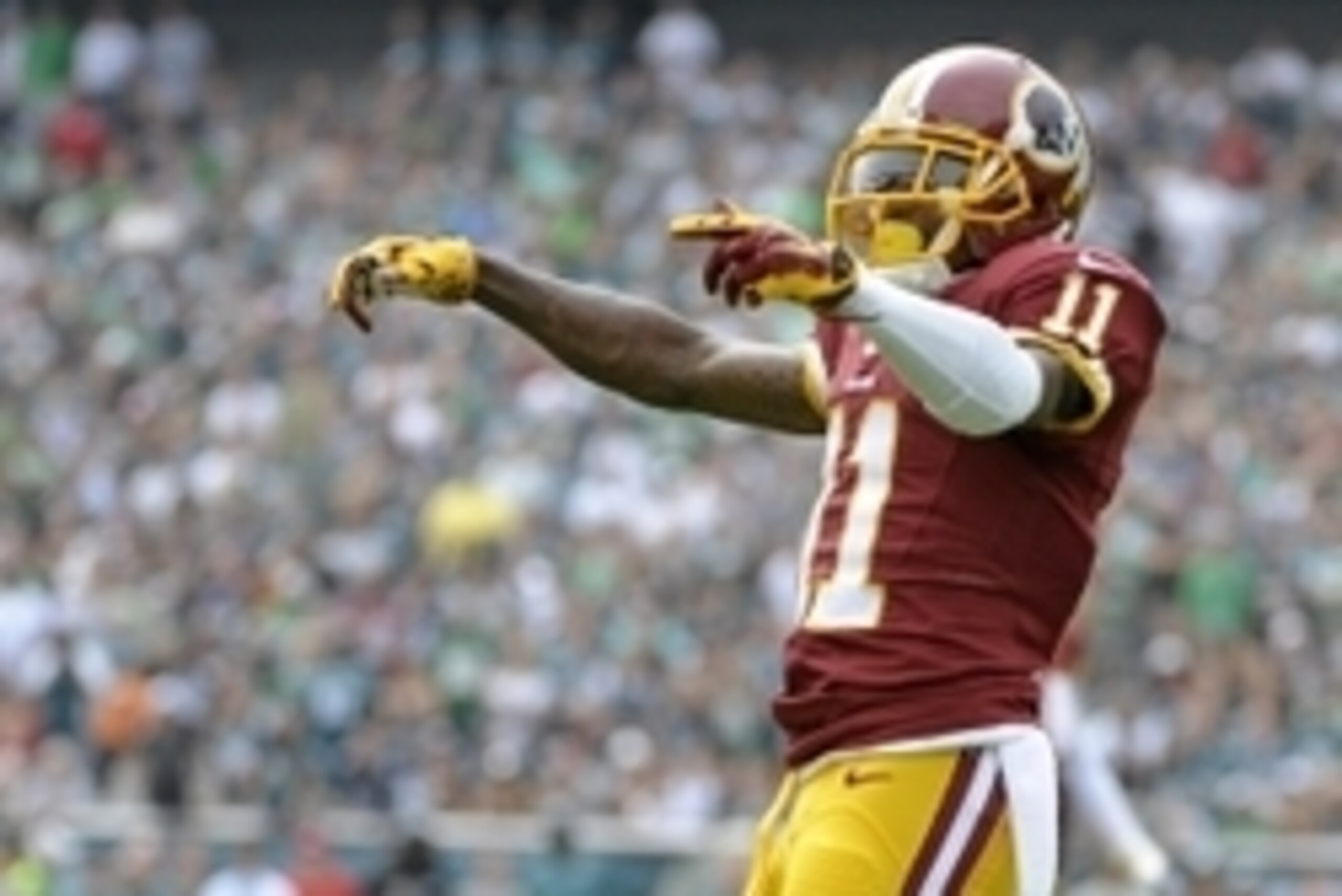
Rueben Randle, the Giants’ No. 2 receiver, has caught 57.9 percent of his targets for 67 yards and one touchdown. That’s a measly 6.1 yards per reception.
DeSean Jackson, who is fighting through a shoulder injury, and Pierre Garcon are averaging 14.1 and 10.3 yards per reception, respectively.
As an added bonus, Washington’s slot receiver, Andre Roberts, has nine receptions for 117 yards, a healthy 13.0 average.
Offensive Line
The Giants' offensive line has come a long way since Week 1, when it had its share of struggles against the Lions’ tough defensive front.
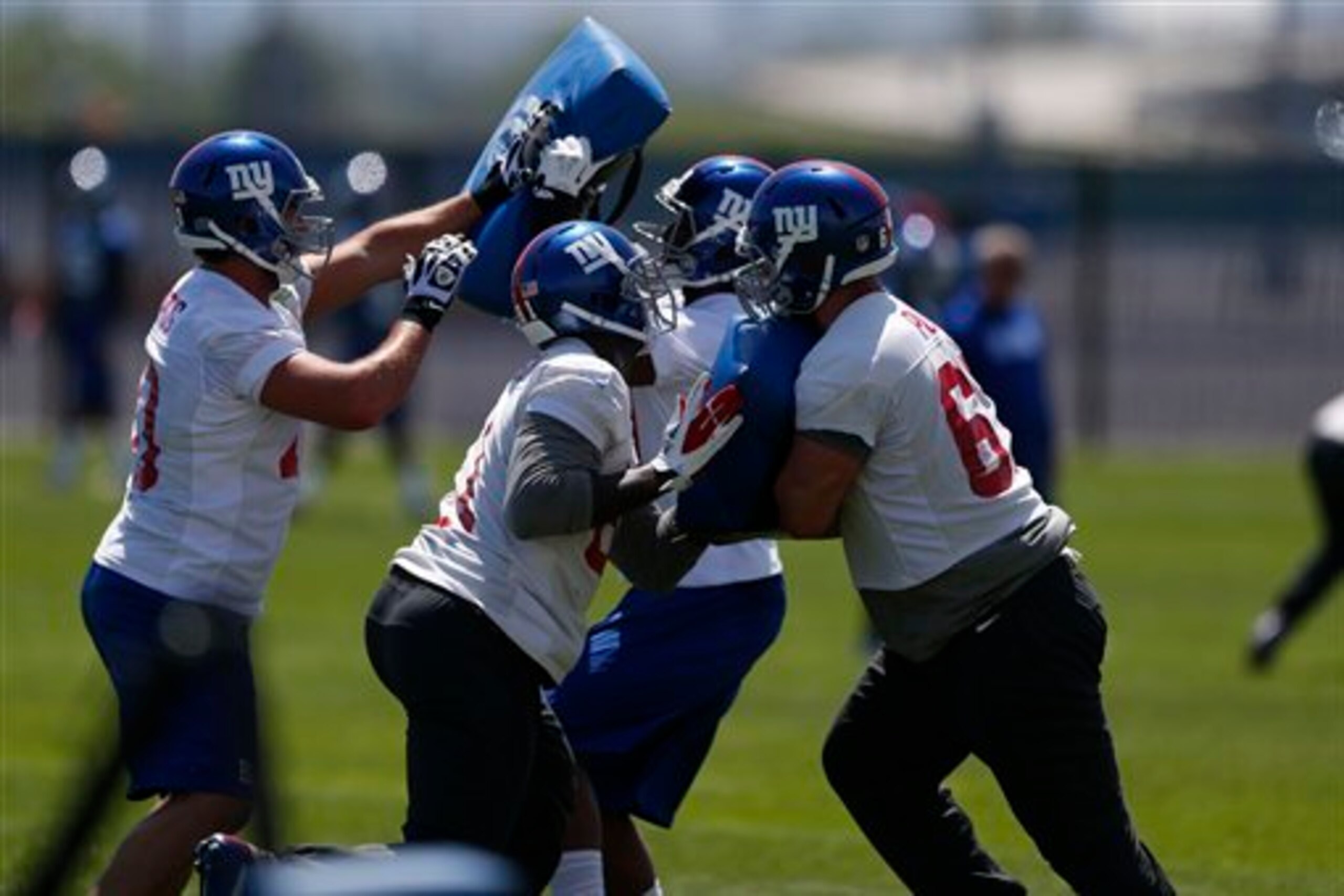
Last week, it did its best job against Houston’s aggressive 3-4 scheme, allowing just one hit on quarterback Eli Manning and opening up holes for running back Rashad Jennings to exploit between the tackles.
Washington’s line, meanwhile, has some injury concerns. Left guard Shawn Lauvao has been unable to work so far this week thanks to a knee injury.
Center Kory Lichtensteiger, listed with multiple injuries (groin, rib/hip) has been limited in practice, while starting right tackle Tyler Polumbus is trying to work through a knee injury. Polumbus has taken his full reps in practice.
Defensive Line
The Giants' defensive front finally broke free and started to put the heat on an opposing quarterback last week. New York could still probably benefit more if it considers increasing the snaps for Robert Ayers, Jr., who has quietly had a strong start to his 2014 season.
Ayers has eight tackles for zero or negative yards this year and has recorded 2.0 sacks in the 97 snaps that PFF has credited to him.
Mathias Kiwanuka, who would be the defensive end in line to be replaced if such a move were to be made, has three tackles for zero or negative yards and a half-sack and two less tackles than Ayers in 158 snaps.
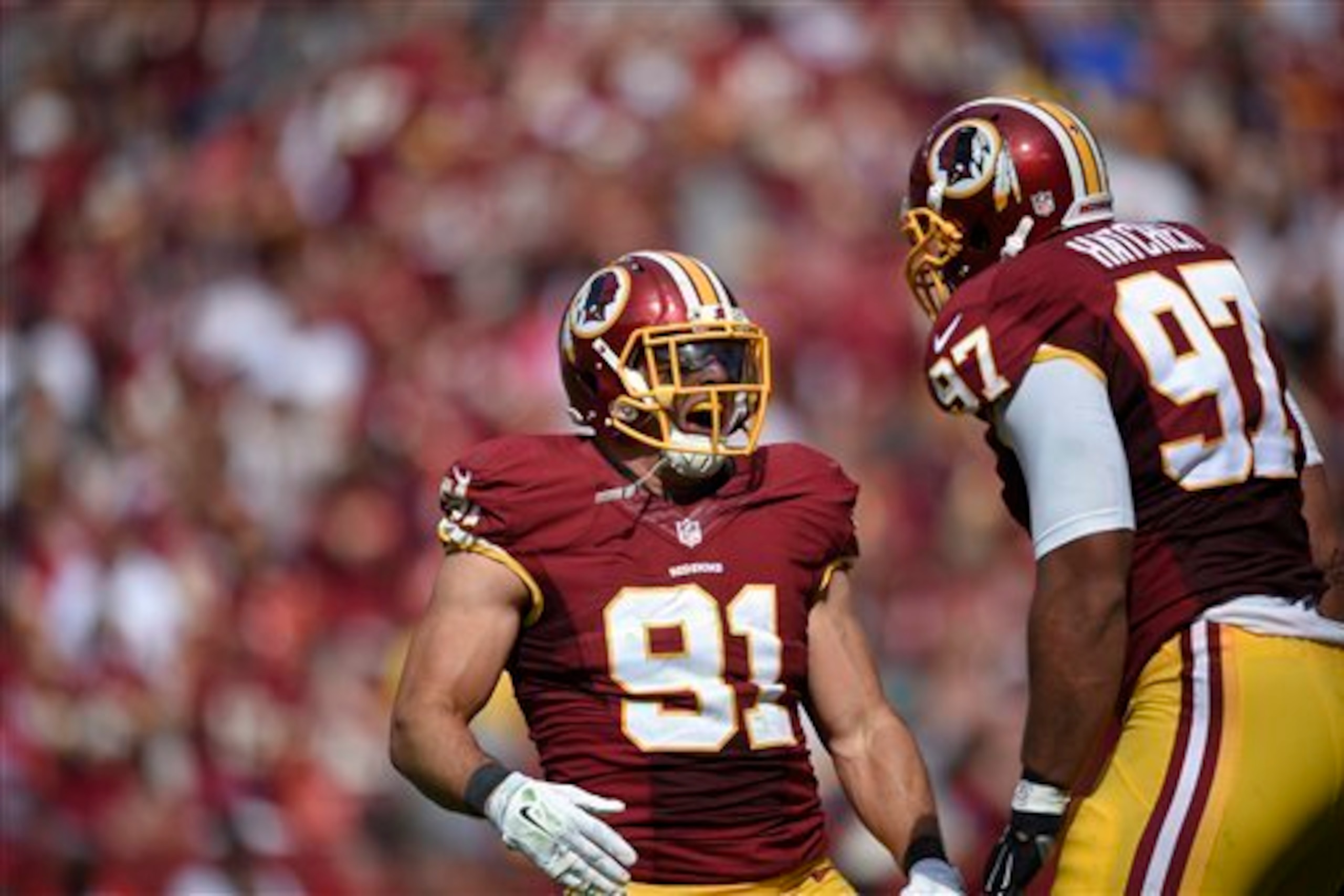
None of Washington’s front three—Jason Hatcher, Chris Baker and Jarvis Jenkins—are in the team’s top 5 in tackles, which usually isn’t a good sign, as it usually means opponents are getting past them to the second level.
Hatcher is the only one of the three to record a sack this year—he has 2.5, to be exact. He’s also dealing with a hamstring injury that could be an issue this week.
Linebackers

New York might be getting middle linebacker Jon Beason back this week from his toe ailment. However, head coach Tom Coughlin has already told reporters that Beason will have to deal with any lingering discomfort from his injury, originally suffered on June 12, for the rest of the year.
Will he be able to make it through the entire game? The good news is the game will be played on grass, which is more forgiving on the body. However, all it takes is for Beason to step awkwardly on someone’s foot as he did in Week 2, and he’s right back to being held out.
Washington has a very strong linebacker group featuring Brian Orakpo, who will wear a cast on his injured hand, and Ryan Kerrigan on the outside, with Keenan Robinson and Perry Riley, Jr. inside. Robinson and Riley are respectively first and third in tackles for Washington; Kerrigan is the team's sack leader with 4.0.
Defensive Secondary
The Washington defensive secondary will miss cornerback DeAngelo Hall, who ruptured his Achilles and is out for the season.
Safeties Brandon Meriweather and Ryan Clark, are the strength of this unit.
The Giants, meanwhile, could be planning to bench struggling free safety Stevie Brown. Quintin Demps is projected to be his replacement, though Nat Berhe, a hard-hitting rookie, could be sprinkled into the mix as well in certain situations.
Special Teams
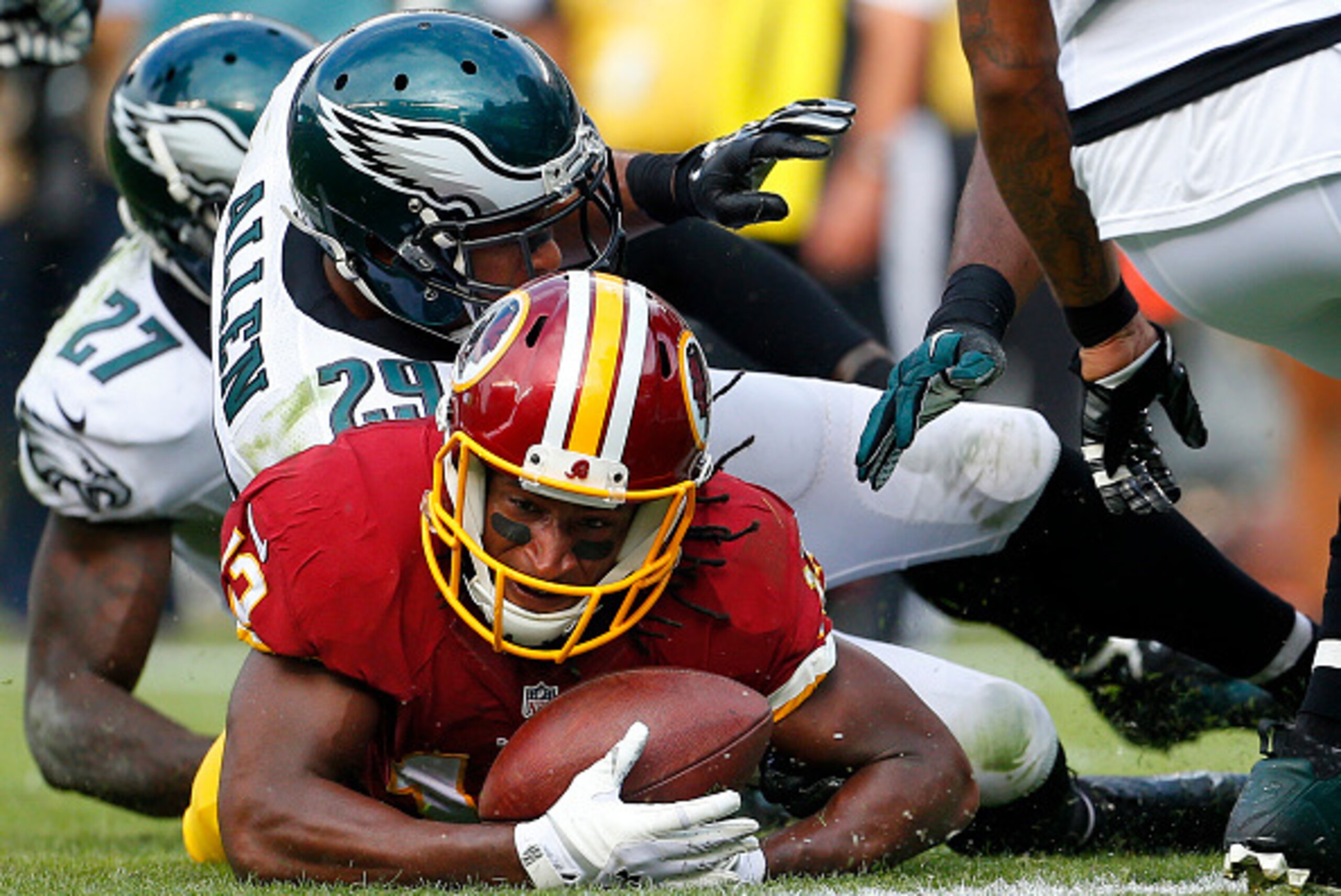
Washington return specialist Andre Roberts is averaging 10.1 yards per punt return and 23.0 yards per kickoff return.
Unlike the Giants, Washington also cleaned up some of its special teams follies from last season, giving the home team the edge in this area.
| LB Devon Kennard (Hamstring) | QB Robert Griffin III (Ankle) - Out |
| LB Jon Beason (Foot/Toe) | G Shawn Lauvao (Knee) |
| WR Odell Beckham (Hamstring) | TE Jordan Reed (Hamstring) |
| CB Zack Bowman (Quad) | DE Jason Hatcher (Hamstring) |
| T James Brewer (Back) | DE Kedric Golston (Groin) |
| T Charles Brown (Shoulder) | WR DeSean Jackson (Shoulder) |
| P Steve Weatherford (Left Ankle) | DE Frank Kearse (Ankle) |
| LB Akeem Jordan (Knee) | |
| C Kory Lichtensteiger (Groin/Rib/Hip) | |
| LB Brian Orakpo (Finger) | |
| CB Tracy Porter (Hamstring) | |
| S Trenton Robinson (Abdomen) | |
| LB Keenan Robinson (Shoulder) | |
| DL Chris Baker (Ankle/Hip) | |
| K Kai Forbath (Right Groin) | |
| RB Alfred Morris (Knee) | |
| T Tyler Polumbus (Knee) |
Giants Key Injury: Safety Cooper Taylor
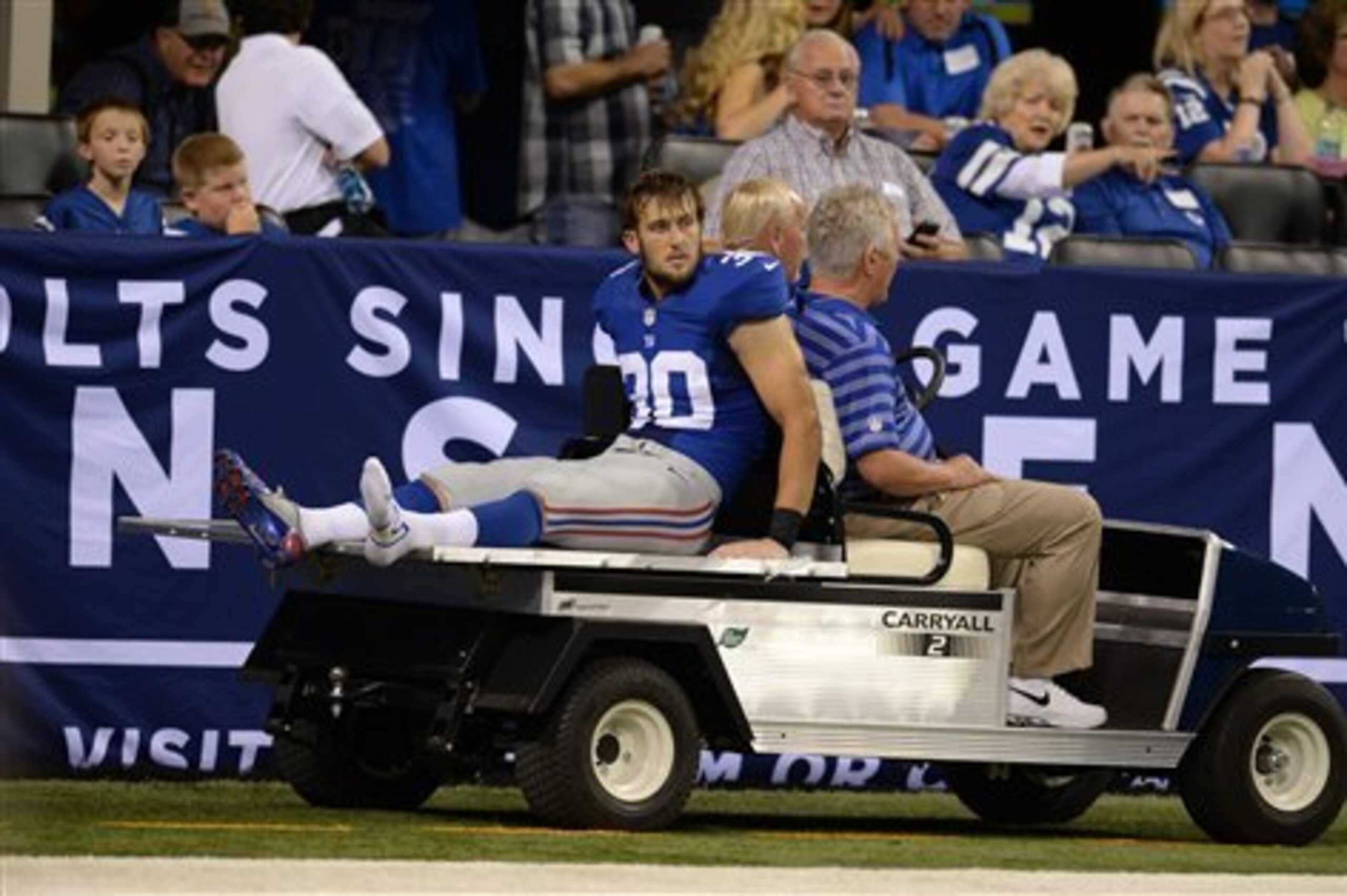
It’s not very often that we’ll list a player who is currently on season-ending injured reserve and has no chance of contributing to the team this season as the key injury of the week.
However, there’s an exception to every rule, and the reason why safety Cooper Taylor is this week's key Giants injury is because this unit's depth is suddenly paper-thin.
To recap, starting free safety Stevie Brown is on the verge of being benched, according to both Nat Berhe and Quintin Demps, both of whom spoke to reporters on Tuesday and took reps with the starting unit in practice.
Brown’s pending benching was not confirmed by the coaching staff, though defensive coordinator Perry Fewell did say of Brown, “He is playing good football, but he can play better football.”
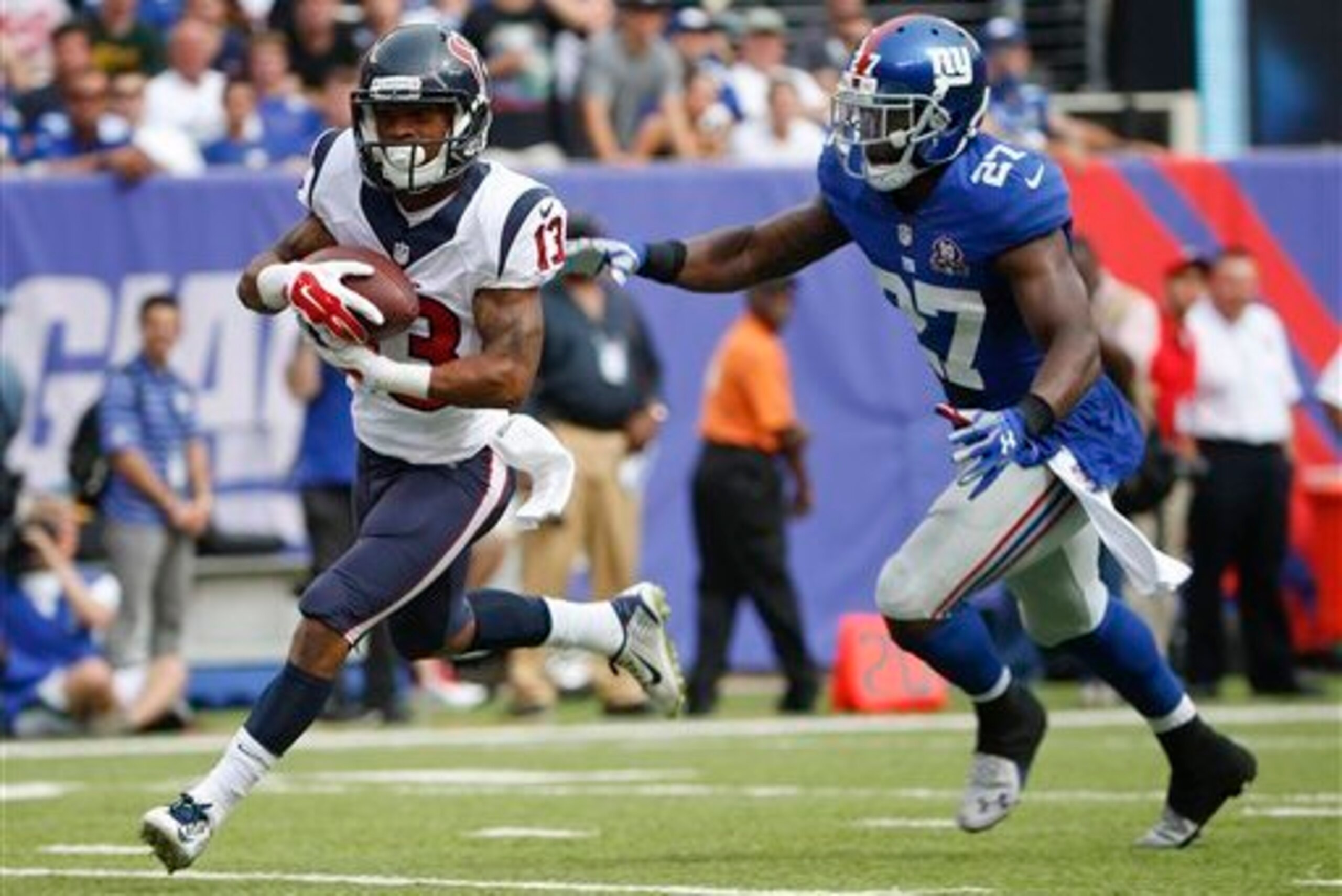
However, we have noted now for weeks that Brown, who is in his first year back after ACL surgery, has looked to be a step or two slower than he was prior to the injury, something Coughlin noted last week when he volunteered a similar observation to reporters.
“We referred to Stevie Brown as kind of a ball-hawking guy in center field when he had that opportunity,” the coach said. “He’s just not there yet; he’s not back yet to where he was a couple of years ago. Let’s hope he gets there.”
That leaves the coaches with either Quintin Demps (the likely choice) or rookie Nat Berhe to step into the starting lineup, likely reducing Brown to that third safety role—assuming the coaches don’t give it to whoever of Demps and Berhe isn’t starting.
Okay, so what happens then if Demps and/or Berhe are injured this week? The Giants are probably left with no choice but to go back to Brown as the starter.
So why choose Taylor, a little-known second-year player, for this week’s key injury? Prior to suffering a foot injury, Taylor was having a strong camp and had been praised by Coughlin, who rewarded the 6’4”, 232-pound Taylor with first-team reps during training camp.
"He's worked hard in the offseason,” Coughlin told reporters during training camp. “He's stronger, he's bigger, he's in his second go-around, so he has an excellent opportunity to contribute in a lot of ways."
Unfortunately, Taylor’s injury put an end to any plans the team might have had for him, leaving the Giants thin at the safety position in the process.
Keys to the Game
Giants on Offense
Because of the nickel and dime defensive sets that Houston threw at the Giants in response to New York’s three-wide formations, the Giants were able to get their running game going so well that the final numbers in the run/pass breakdown tilted heavily toward the run, 42-to-28 pass attempts.
This week, look for a lot more balance, with maybe the pass being favored given Washington’s banged-up cornerback situation.
Limiting turnovers will be key as well; the Giants have yet to play a game this season in which they didn't give the ball away.
Finally, the Giants must win the time-of-possession battle. Cousins is an underrated yet very dangerous weapon who finally has a strong set of receivers to stretch the field.
The Giants can keep that unit on the sideline as much as possible if they can establish an early rhythm.
Giants on Defense
Defensive coordinator Perry Fewell insisted that he’s been using a combination of man coverage and zone schemes on defense.
However, when it comes to putting a percentage on things, that’s where Fewell clammed up.
“I won’t comment on that. We are doing a little bit of both,” he said during his weekly press conference with reporters. “I think it is 50/50. I won’t answer that for an exact number because I will be helping (Washington head coach Jay Gruden) out.
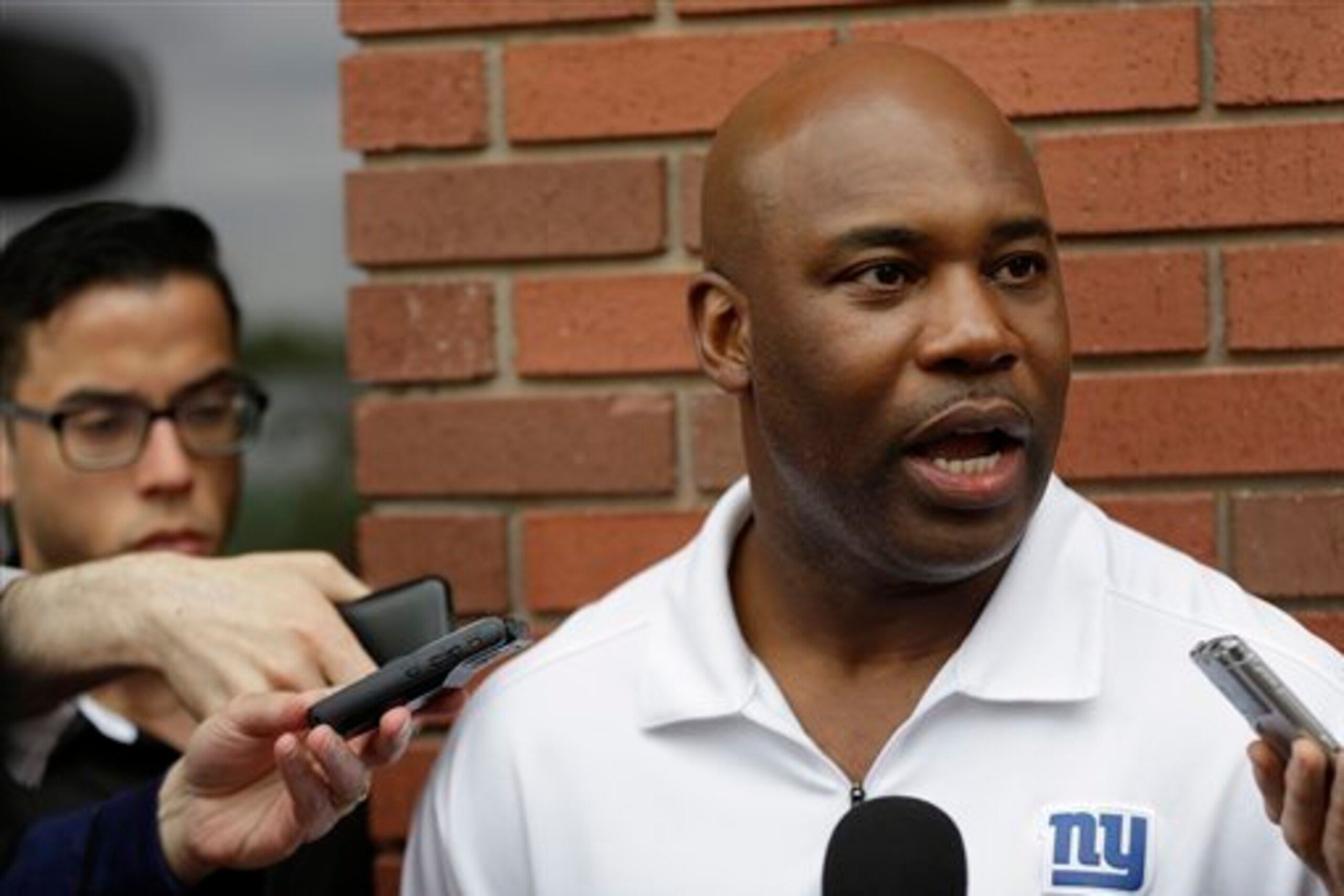
“I think we have man-cover guys, and we try to take advantage of that. We also can play zones because it gives you vision. We like to do a little bit of both.”
The problem is that the use of the zone coverage, which appears to be the scheme of choice so far, hasn’t really meshed with the personnel’s talents.
So why not play more man coverage?
“Offensive coaches are so sharp these days that if you play so much man, they have pick routes, they have level routes, they can run and bump you off and they can do some things that can free up a receiver,” Fewell explained.
“When you free up a receiver from a bump or what have you, then the big play occurs.”
The problem is that the Giants' pass defense, which is currently ranked 22nd in the NFL, has been victimized by the big pass play (20 or more yards) with most of those big plays coming as a result of quarterbacks finding receivers in the soft spots in the zone.
New York is tied for fifth in the league in big pass plays allowed and tied for first for big pass plays of 40-plus yards allowed.
So what can they do besides remaining patient with letting the chemistry develop in the zone schemes?
It might help this week for them to start getting their hands on Washington's receivers, DeSean Jackson and Pierre Garcon, within the legal five-yard range, if just to attempt to disrupt the timing with the quarterback.
It also might help if the areas between the zones aren’t as deep, thus allowing Cousins a chance to slip a ball underneath and hope that his receivers can outrun a Giants defender.
Giants on Special Teams
Special teams coordinator Tom Quinn told reporters this week that his unit’s channeling of the Keystone Cops these first three weeks hasn’t sat well with him.
“It still bothers me,” he said. “Do everything to help your team out. There are going to be ups and down. Just keep fighting and protect everyone’s back.”
Gee, ya think?
In all seriousness, the common theme with the special teams miscues appears to be in the teaching.
For example, why in Week 2 was kickoff returner Quintin Demps trying to run the ball out of the end zone when he was more than five yards deep?
Why were the Giants asleep at the switch on Houston’s fake punt last week?
Why are guys continuing to resort to using incorrect techniques that often lead to penalty flags?
That’s on the coaching. These are all correctable issues that for whatever the reason continue to pop up.
That needs to stop now. Just look at the relationship starting field position has had on the outcome of the Giants' games so far:
| NYG 23 | DET 37 | -14 | Loss |
| NYG 19 | ARI 33 | -14 | Loss |
| NYG 40 | HST 21 | +19 | Win |
The Giants' special teams need to win the field-position battle. To do that, they don’t need any special schemes or plans.
They need to eliminate these ridiculous and fundamental errors that have mucked up their game and play smart, fundamentally sound football.
Prediction
This game is likely to be won in the trenches, where the Giants have a personnel advantage on paper.
New York's offensive line is healthy and should be able to neutralize the Washington defensive charge.
On the flip side, the Giants' defensive line will be facing a Washington offensive line that has three starters on this week's injury report.
This game does have the potential to be a high-scoring affair that will probably see several lead changes.
Washington is probably going to jump out on top first, but the Giants, who now understand what it takes to win with each other, should be able to prevail in avoiding the NFC East cellar if quarterback Eli Manning can work his fourth-quarter magic to give his team the lead for good.
Final: Giants 37, Washington 30; 2014 record prediction: 1-2
Advanced statistics courtesy of Pro Football Focus (subscription required), unless otherwise noted.
All quotes and information obtained firsthand unless otherwise sourced. Follow me on Twitter, @Patricia_Traina.
.jpg?w=2560 "Chiefs Dolphins Football")


.jpg?w=2560 "Love's Body Already 'Tired'")