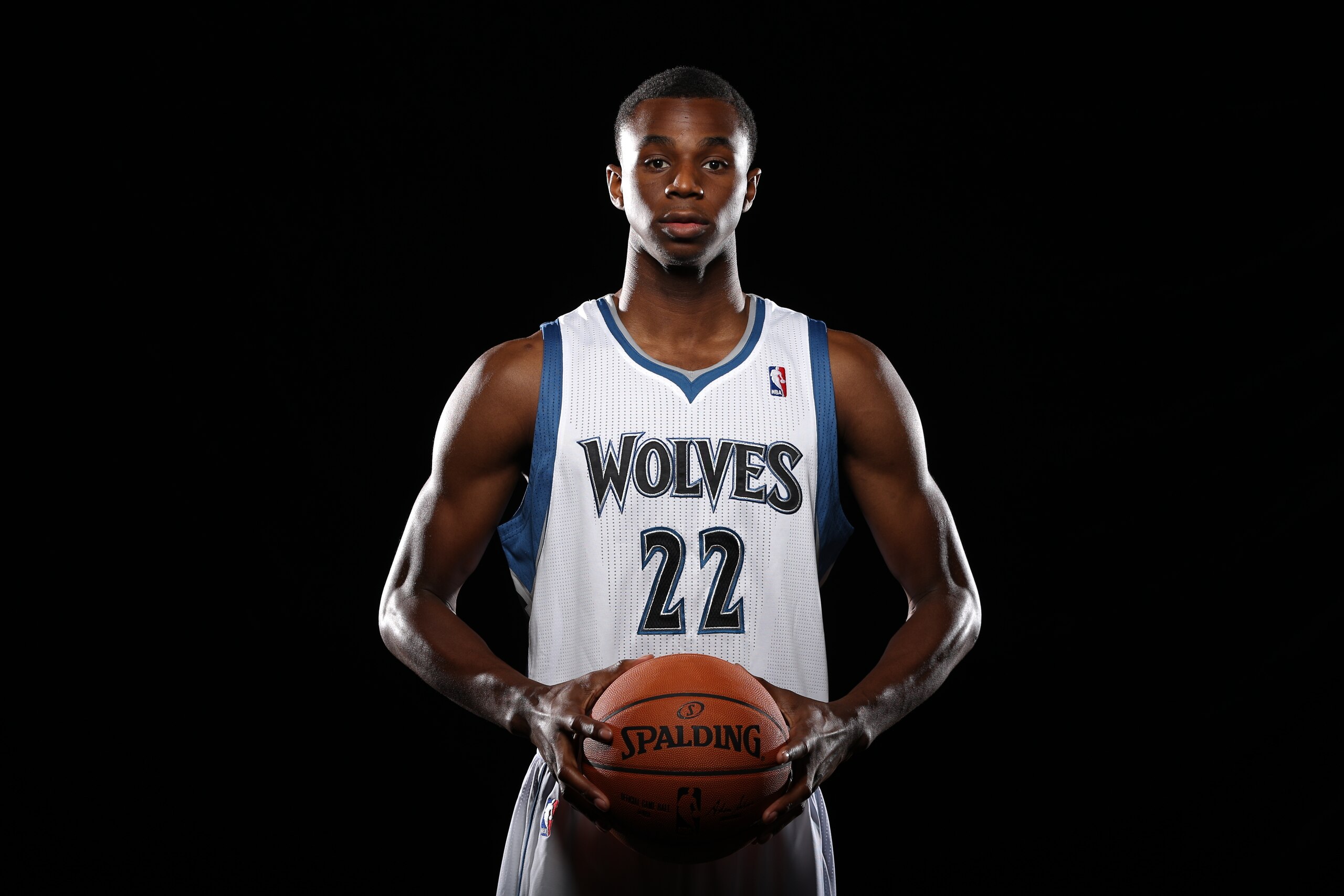

Pros and Cons of Andrew Wiggins Starting Right Away for Minnesota Timberwolves
When the 2014-15 NBA season tips off, there's still no telling where Andrew Wiggins will be.
At least we know what team he'll be playing for, as he's officially joined the Minnesota Timberwolves following the trade that sent Kevin Love to the Cleveland Cavaliers. But beyond that, everything is up in the air, as Minnesota head coach and president of basketball operations Flip Saunders won't commit to starting Wiggins.
According to Andy Greder of the St. Paul Pioneer Press on Twitter (h/t CBS Sports' Zach Harper), Saunders was "noncommittal on Andrew Wiggins starting" during a radio appearance.
That's fine.
There's plenty of time remaining—as well as training camp and preseason—before the Timberwolves have to make any sort of decision as to Wiggins' role during the opening salvo of his rookie season. Rushing into a choice would be foolish.
But what's in the team's best interest? We can determine that much at this stage, even if that doesn't lock Wiggins into the starting five or onto the pine.
Pro: Immediate Chance
1 of 5
There's no better way to learn how to play NBA basketball than to spend as much time on the court as possible, playing against the top competition that you have at your disposal. Wiggins isn't going to learn as much going against the young guns on the Timberwolves roster and the lackluster collection of veteran wing talent as he is playing against the best the Association has to offer.
The FIBA Basketball World Cup is viewed as an opportunity for players to gain experience playing against the best possible competition. Even earning a training-camp invite is viewed as valuable experience, as the player in question gets to square off with some of the world's best on a daily basis.
Playing at a small school during a collegiate career is sometimes viewed as detrimental, because the player being analyzed doesn't get a chance to practice against other future NBA standouts and won't be suiting up on the other side of one during actual game action.
Why is this any different?
Wiggins would have a chance to play against stars even if he came off the bench, but he'd naturally spend more minutes on the court if he began the game without his warm ups on. The sixth men and second-unit standouts who play more minutes than starters are always few and far between.
By starting him immediately, Saunders would be doing more than giving him minutes. He'd be actively promoting his growth as a central figure for this franchise, imbuing him with confidence from day one and granting him an opportunity to learn on the job.
Con: Thrown into the Fire
2 of 5
The NBA is significantly different than the NCAA, and Wiggins didn't even dominate on a consistent basis when he was playing for the Kansas Jayhawks. During his one and only collegiate season, the future No. 1 pick averaged 17.1 points, 5.9 rebounds and 1.5 assists per game while shooting 44.8 percent from the field, and it wasn't until the end of the campaign that it really felt like he was taking over.
Now, he's working with a longer three-point arc, better defenders, better offensive players and a completely different style of play. He's inevitably going to feel overmatched at times, seeing as he's a rookie with only one year of post-high school experience.
Remember, even LeBron James and Kevin Durant were both mortal during their respective rookie seasons.
Not only does playing Wiggins right off the bat open up the possibility of him losing confidence in his game, focusing on the mistakes and tough times at the expense of his positive moments, but it also gives him more of a chance to reinforce bad habits.
Wiggins has a limited arsenal of offensive moves right now, and NBA defenders will be able to exploit him on a regular basis until that changes. His spin move, for example, will inevitably lead to lots of steals by players who have read the scouting report and done their due diligence.
But if the former Jayhawk is in the starting lineup and feeling as though his team depends on his positive production, he's not going to take as many risks. That means sticking with his tried-and-true moves and building bad, predictable habits.
There's no guarantee of that happening, but giving Wiggins too much false confidence and asking him to think of himself as a key contributor right off the bat could be problematic.
Pro: Flip Saunders Can Evaluate Properly
3 of 5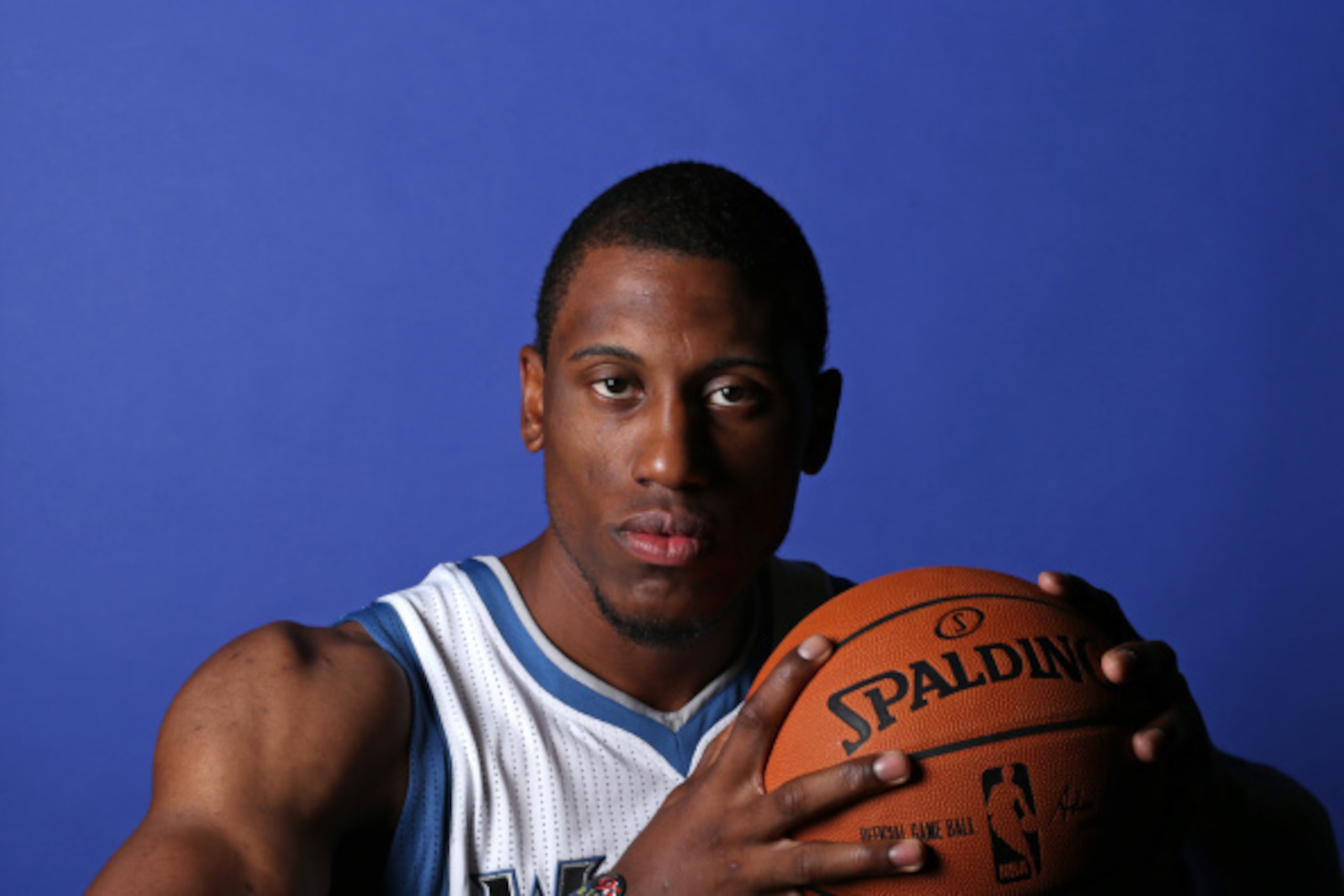
Does anyone know exactly what the future of this team looks like?
I certainly don't, and I can't imagine that Saunders does either, even though he's directly involved with shaping the personnel in Minnesota. It was abundantly clear that Nikola Pekovic's lack of rim-protection skills made him a poor complement for Kevin Love. Likewise, Ricky Rubio's inability to draw defensive attention was problematic alongside Love.
But what about next to Wiggins?
Pekovic could suddenly look like a keeper. So too could Rubio. And that's saying nothing of Thaddeus Young, who hasn't played with talent like this in a while. The combo forward thrived as a No. 1 option for the Philadelphia 76ers (individually speaking), but there's no telling how he'll play when suiting up in the same starting lineup as Wiggins and the aforementioned incumbents.
Wiggins, without a doubt, is a franchise centerpiece. Zach LaVine, Anthony Bennett, Glenn Robinson and everyone else on the roster is surrounded by significantly more question marks.
Evaluating players like Pekovic, Rubio and Young cannot happen in a vacuum. They must be looked at through the "How do they play with Wiggins?" lens, as that's a vital part of the decision-making process going forward.
What better way to do that than by putting him in the starting lineup? Sure, 2014-15 Wiggins will be a far different player than 2016-17 Wiggins, but even that first version will shine a light on the teammate connections more than bringing him off the bench and having him practice with the second unit.


Con: Less Time with the Future of the Team
4 of 5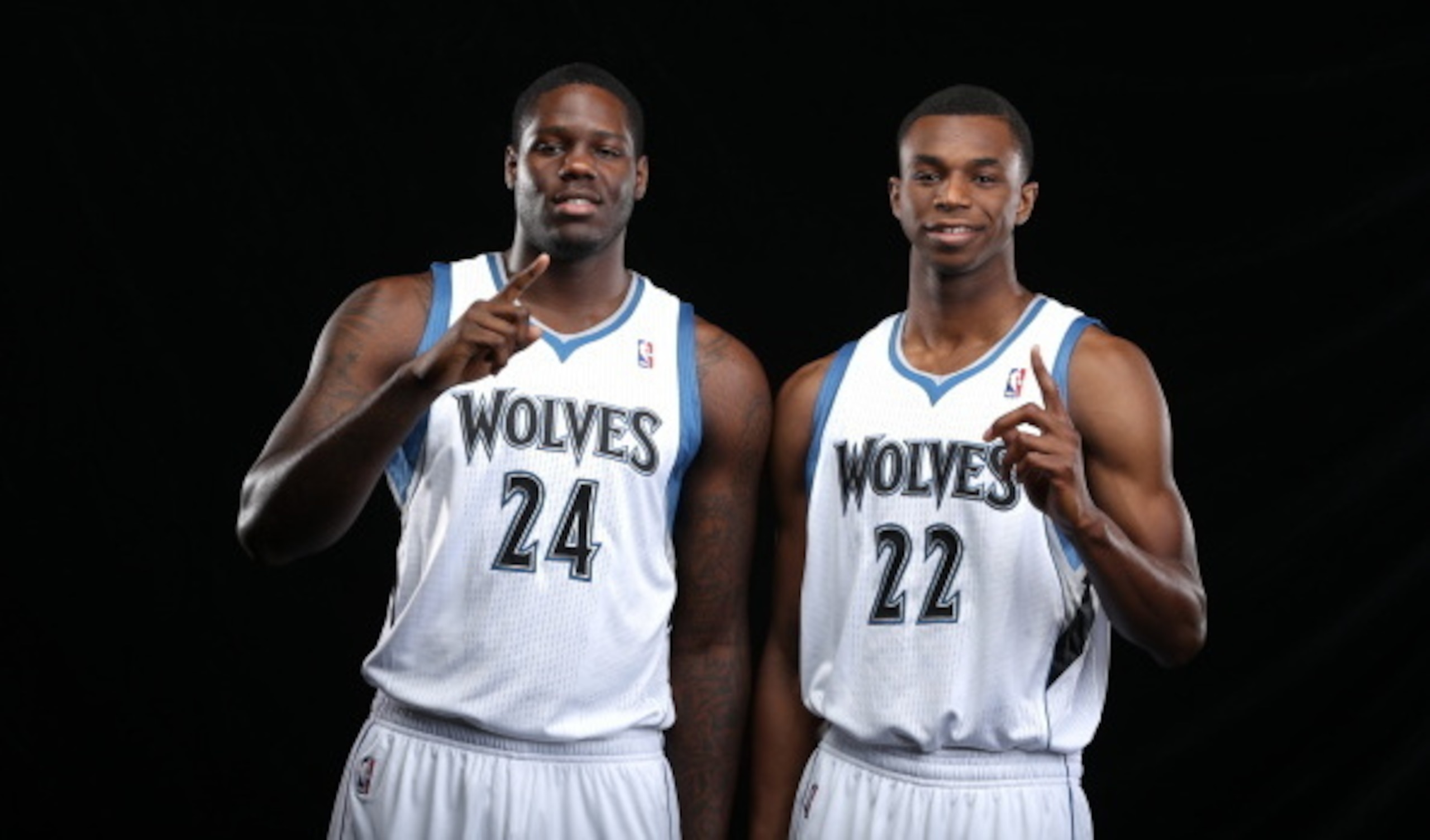
Figuring out how Wiggins fares next to Young, Pekovic and Rubio is nice, but that trio isn't the only part of the future. Even if they're filling roles in Minnesota for the next few years, the idea is that they'll still be relying heavily on the potential of the other young prospects.
We're talking about a large group of players here:
- Anthony Bennett: last year's No. 1 pick, who was brought aboard this offseason as part of the Kevin Love trade
- Zach LaVine: a raw first-round pick with immense upside and ridiculous, jaw-dropping athleticism
- Glenn Robinson: another draft pick, though he doesn't carry as much upside with him as LaVine does
- Gorgui Dieng: a second-year big man who broke out late in his rookie season and could be the center of the future
- Shabazz Muhammad: another second-year player who wasn't given a fair shake under Rick Adelman, even if he's in possession of a nice amount of offensive upside
Which is more important—playing Wiggins with the incumbent veterans or figuring out how he works with the other young guns?
He'll have more chances to do the latter if he's coming off the bench rather than operating in the starting lineup, as none of the aforementioned players—with the possible exception of Dieng—figure to be on the court when a referee throws the ball up in the air at half court.
"For now, Wolves fans can simply enjoy what the NBA's newest high-flying duo has to offer," writes Bleacher Report's Zach Buckley. "With boarding passes in hand, Wiggins and LaVine are ready for takeoff."
Thing is, in order to be a promising duo, the two have to play together.
Verdict: Do It
5 of 5
Wiggins is eventually going to start for the Timberwolves, so it's best to get that process kicked off from the very beginning of his rookie season and start establishing some form of continuity.
That allows Saunders to evaluate how he looks next to the starters during the most important moments of a game (as well as for the most time), and it also shows immediate confidence in the player who was the centerpiece of a trade for an All-Star. Plus, the cons are manageable with good coaching, as that will allow Wiggins to avoid forming bad habits, maintain confidence in himself and still gain experience next to the other high-upside players on the roster.
Finally, there's the issue of profitability.
According to ESPN.com's attendance figures, Minnesota finished No. 27 in home attendance percentage during the 2013-14 campaign, better than only the Milwaukee Bucks, Philadelphia 76ers and Detroit Pistons. That was with Love on the roster, and he was rather easily the best player under the supervision of the Timberwolves.
Now that Love is gone, putting fans in seats has to be a consideration. Wiggins is a player capable of affecting attendance numbers in a positive way, not to mention the jersey sales that will accompany his presence in the lineup and on highlight reels.
With that in mind, this shouldn't be a decision the front office loses sleep over. The pros outweigh the cons by a huge margin.
Of course, it also helps that Wiggins appears to be happily along for whatever ride he embarks upon.
"It's a great situation," Wiggins said in mid-September, via KSTP TV. "It gives me more freedom. I'm surrounded by young guys that have the same intentions and determination as me...to win, get better every day."
That, above all else, is key. Starting would be nice, but Wiggins is determined to grow no matter where the Timberwolves put him.

.jpg?w=2560 "Rodgers Iced Out on Plane 💎")
.jpg?w=2560 "Raiders Could Start Mendoza")
.jpg?w=2560 "Mahomes Told Teammate to Leave Meeting")
.jpg?w=2560 "🚨 Week 8 AP Top 25 Poll")


.jpg?w=2560 "Lamar Being Out Shocked Ravens")
.jpg?w=2560 "Packers Safety Slams Refs 🤬")