

How Michael Carter-Williams Can Keep Growing After Rookie of the Year Season
Michael Carter-Williams' NBA debut was one to remember.
Against the two-time defending champion Miami Heat, the Philadelphia 76ers' rookie point guard rang up 22 points, 12 assists, nine steals and seven rebounds in a stunning 114-110 victory. Few prognosticators could have foreseen the Sixers, who were projected to be one of the NBA's worst teams last season, upsetting a Miami squad coming off a dominating opening-night win over the Chicago Bulls.
TOP NEWS

LeBron's Special Helicopter Deal

MJ Makes Record-Setting Donation 🙌
Shams: KAT, Hart Could Be Trade Names
Though Philly's season quickly derailed from there—the Sixers won only 18 of their remaining 81 games—Carter-Williams remained a bright spot in an otherwise dismal situation. He averaged 16.7 points, 6.3 assists, 6.2 rebounds and 1.9 steals per game en route to winning the 2014 Rookie of the Year award, earning 104 of the possible 124 first-place votes.
How can the No. 11 overall pick from 2013 build upon his rookie-season success, especially given the alarming lack of talent surrounding him? Three areas in particular stand out.
Fix His Jump Shot
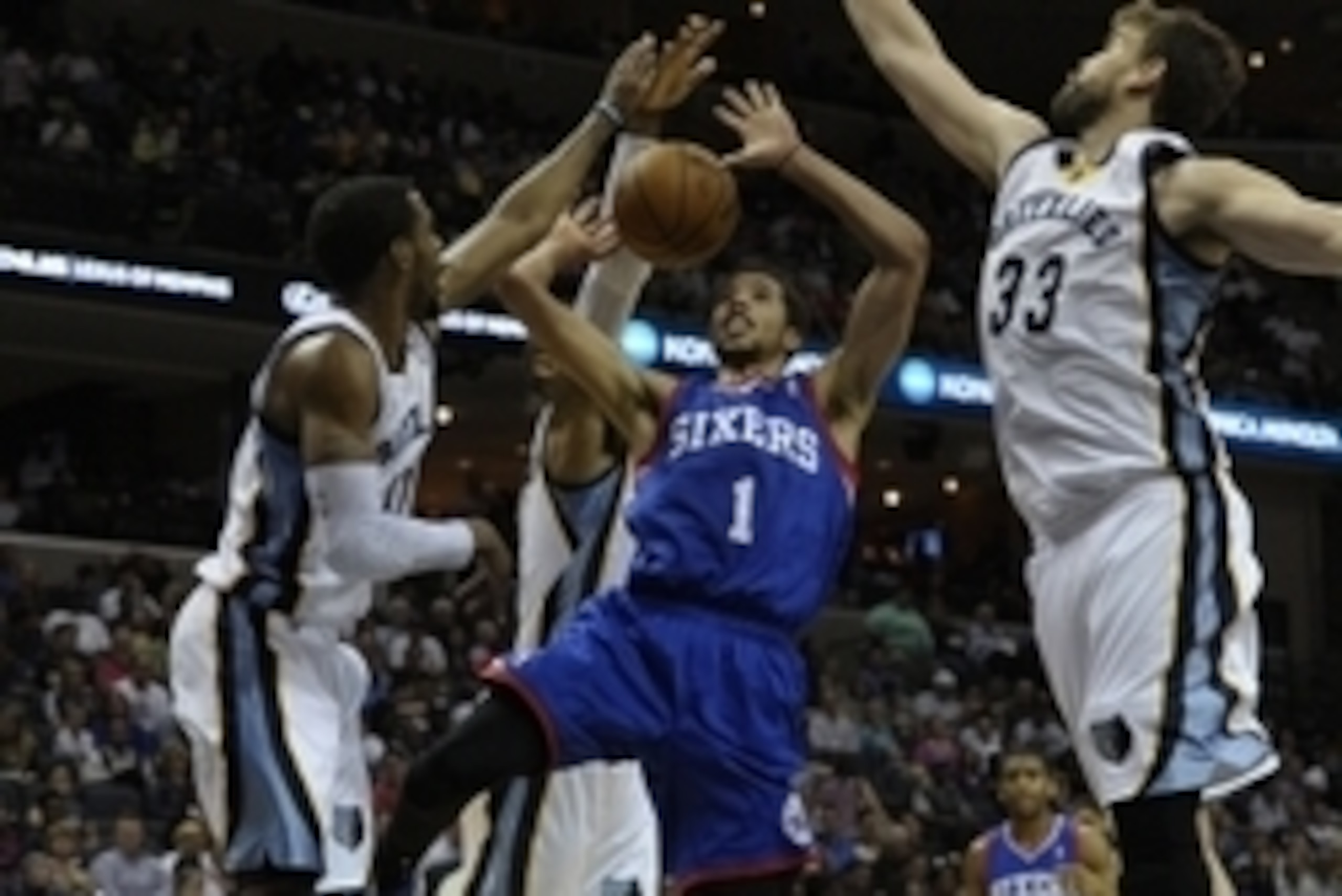
Though Carter-Williams' per-game averages were pristine for a rookie, his shooting percentages left much to be desired.
The Syracuse product finished the year shooting just 40.5 percent from the floor and a ghastly 26.4 percent from three-point range. It was the sixth-worst overall shooting performance from any Rookie of the Year winner, ahead of just Tom Heinsohn (1957), Jason Kidd (1995), Monk Meineke (1953), Woody Sauldsberry (1958) and Maurice Stokes (1956).
MCW's jump shot deserves most of the blame for his 2013-14 shooting woes. Of the 519 jumpers he attempted last season, he knocked down just 104, or 20.0 percent. Those jump shots constituted nearly half of his 1,054 field-goal attempts, which helps explain his dismal overall shooting percentage.
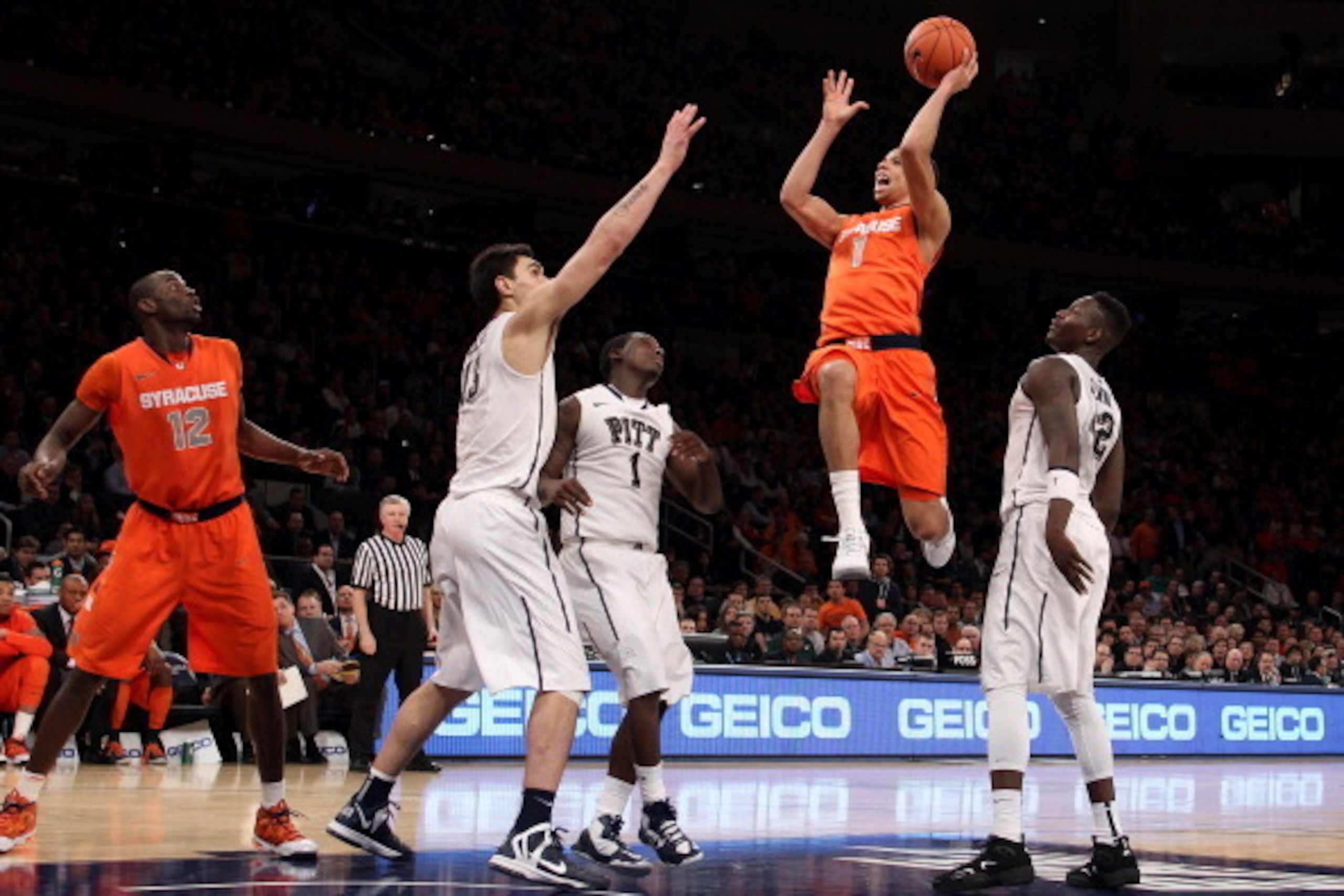
Anyone who watched Carter-Williams in college couldn't have been surprised by his inability to drill jumpers with regularity. As a sophomore at Syracuse, he went 29.4 percent from downtown (35-of-119) and just 39.3 percent from the floor, causing ProBasketballTalk's Rob Dauster to dub MCW a "future NBA All-Star if he can ever learn how to shoot."
That could end up being a big "if," however. Back in April, Liberty Ballers' Derek Bodner expressed concern about Carter-Williams' ability to fix his jumper:
"Most of the problems I've noticed with MCW are in the lower half of his body: his balance and footwork. He'll occasionally not get full extension on his shot, and sometimes his elbow->forearm angle will be greater than 90 degrees (we'll frequently simplify this and call it "extra motion" in a scouting report), which impacts repeatability, but those problems are relatively few and something that I am relatively confident can be corrected with repetition. It's the lower body that concerns me. ...
Shooting is a function of muscle memory. It's why the saying goes that great shooters are not born, but made. Obviously, MCW should not be thinking about his form while pulling up for a jump shot. If he does, he's already missed the shot. He needs to have practiced the shot, the right way, and in enough different situations, that having his footwork and balance is something that just comes naturally to him. From what I've seen, he is not at that stage.
"
Without a sound lower-body base, Carter-Williams has little chance of becoming even a league-average shooter. He's not going to transform into Stephen Curry overnight, but an increased focus on his footwork should help his jumper splash home more frequently.
Currently, opponents don't have to respect Carter-Williams' jumper, allowing them to play off him and focus their attention on helping prevent his teammates from getting loose.
"If defenders have to respect his shot," wrote Michael Kaskey-Blomain of Philly.com, "they will stick closer to him, affording him increased opportunity to beat them off of the dribble and break down the defense."
Improving the fundamentals of his shooting stroke is clearly the first step on Carter-Williams' checklist. Even if he does develop a more lethal jumper, though, he'll need to couple that with better shot selection to truly harness its power.
Improved Shot Selection
Carter-Williams' shot chart from 2013-14 (via NBA.com) made Detroit Pistons forward Josh Smith look like Ray Allen.
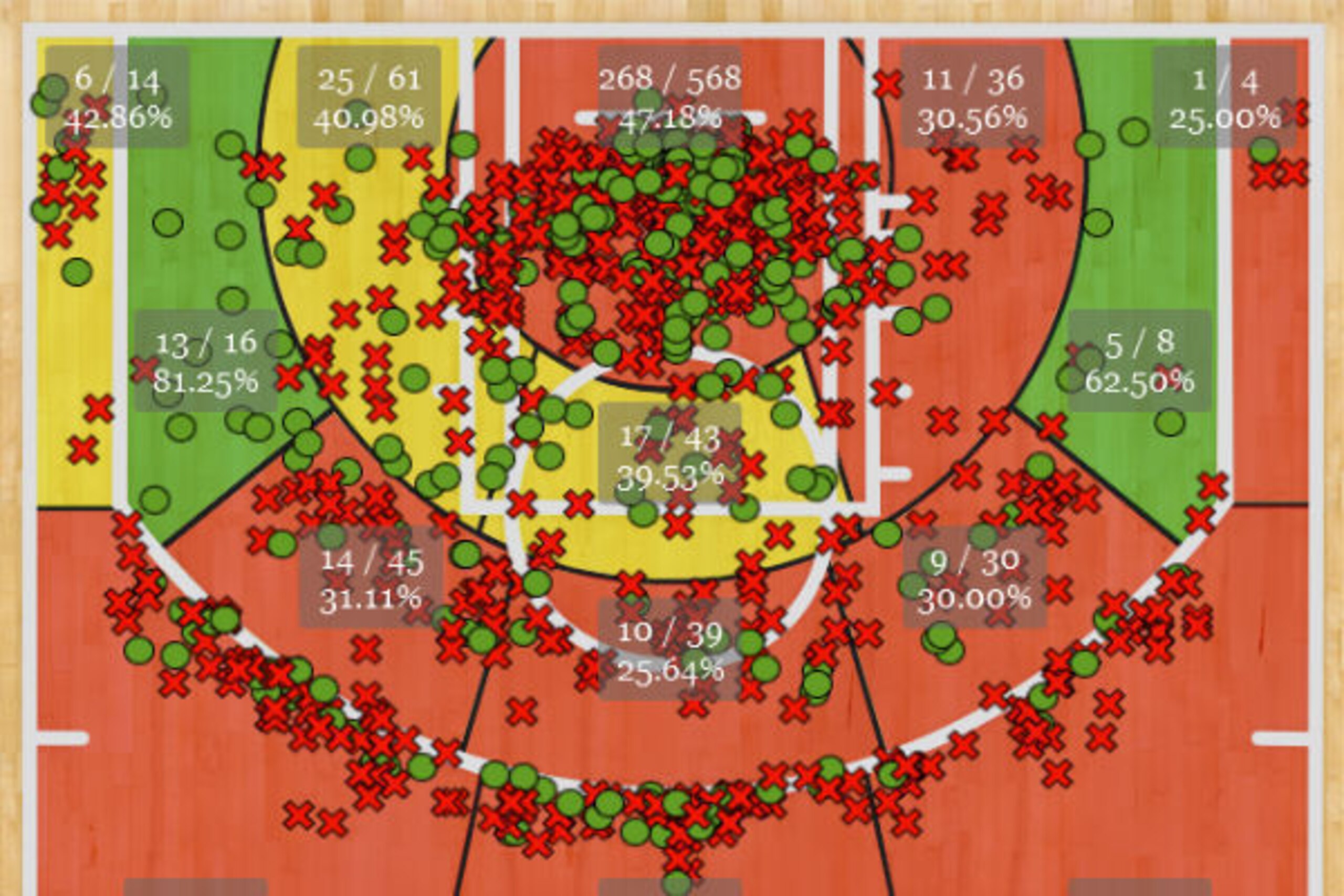
Frankly, there weren't many areas on the court from which MCW even knocked down a league-average percentage of buckets. He was shockingly prolific on mid-range jumpers from each corner, but he was far weaker when it came to above-the-break mid-range shots and three-point attempts.
His pull-up jumpers proved particularly problematic. Of the 68 players who attempted at least four pull-up shots per game, Carter-Williams had the ninth-worst field-goal percentage (33.9), according to NBA.com's SportVU data, trailing players such as Evan Turner, Rajon Rondo and Brandon Jennings.
Though we've already covered the issues with his shooting mechanics, MCW's shot selection was suboptimal, too. Nearly 20 percent of his field-goal attempts came from behind the three-point arc, where he shot 26.4 percent. He drilled 38.9 percent of his corner three-point attempts; however, those only constituted 8.7 percent of his total shots from deep.
More than one-third of MCW's shot attempts (362 in total) came from 15 feet or further from the basket. He banged home a ghastly 30.9 percent (112 shots), 44 of which came from the 15- to 19-foot range.
Here's a look at how he fared from each distance, courtesy of NBA.com:
| Shot Distance | FGM | FGA | FG% |
| Less than 5 ft. | 228 | 457 | 49.9% |
| 5-9 ft. | 60 | 162 | 37.0% |
| 10-14 ft. | 27 | 73 | 37.0% |
| 15-19 ft. | 44 | 115 | 37.9% |
| 20-24 ft. | 37 | 103 | 35.9% |
| 25-29 ft. | 31 | 141 | 22.0% |
Given his significantly diminishing returns beyond 20 feet, Carter-Williams clearly had little business hanging around the three-point arc on the rare occasions he played off the ball. The Syracuse product struggled finishing through contact at the rim, too—he finished with the third-lowest field-goal percentage of all players with at least five drives per game, according to SportVU—but he had even less success out on the perimeter.
Carter-Williams also experienced a midseason swoon in his shooting. After knocking down 123 of his 297 field-goal attempts from October through December (41.4 percent), he went just 252-of-658 from the floor over the next three months (38.3 percent). From December through March, he banged home just 31 of his 140 three-point attempts (22.1 percent), which helps explain why he ended the year with the fourth-worst effective field-goal percentage of all players who averaged at least 30 minutes per game, according to SportVU.
MCW seemed to grow more aware of his iffy shot selection as the year progressed, as evidenced by his comments to reporters following Philly's 113-108 victory over the Boston Celtics on April 14:
"I think I'm taking better shots, and I'm having more trust in my shot," MCW said. "I'm having a lot more trust in my pull-up, and that opens things up for me to get to the basket."
Sixers coach Brett Brown can't fault Carter-Williams' willingness to take open shots from anywhere on the court, as he's likely only to improve with additional reps. However, as MCW enters his sophomore season, it's his responsibility to become slightly more selective with his shooting, recognizing that a badly bricked miss will likely result in a transition opportunity for the opposition.
Limiting Turnovers
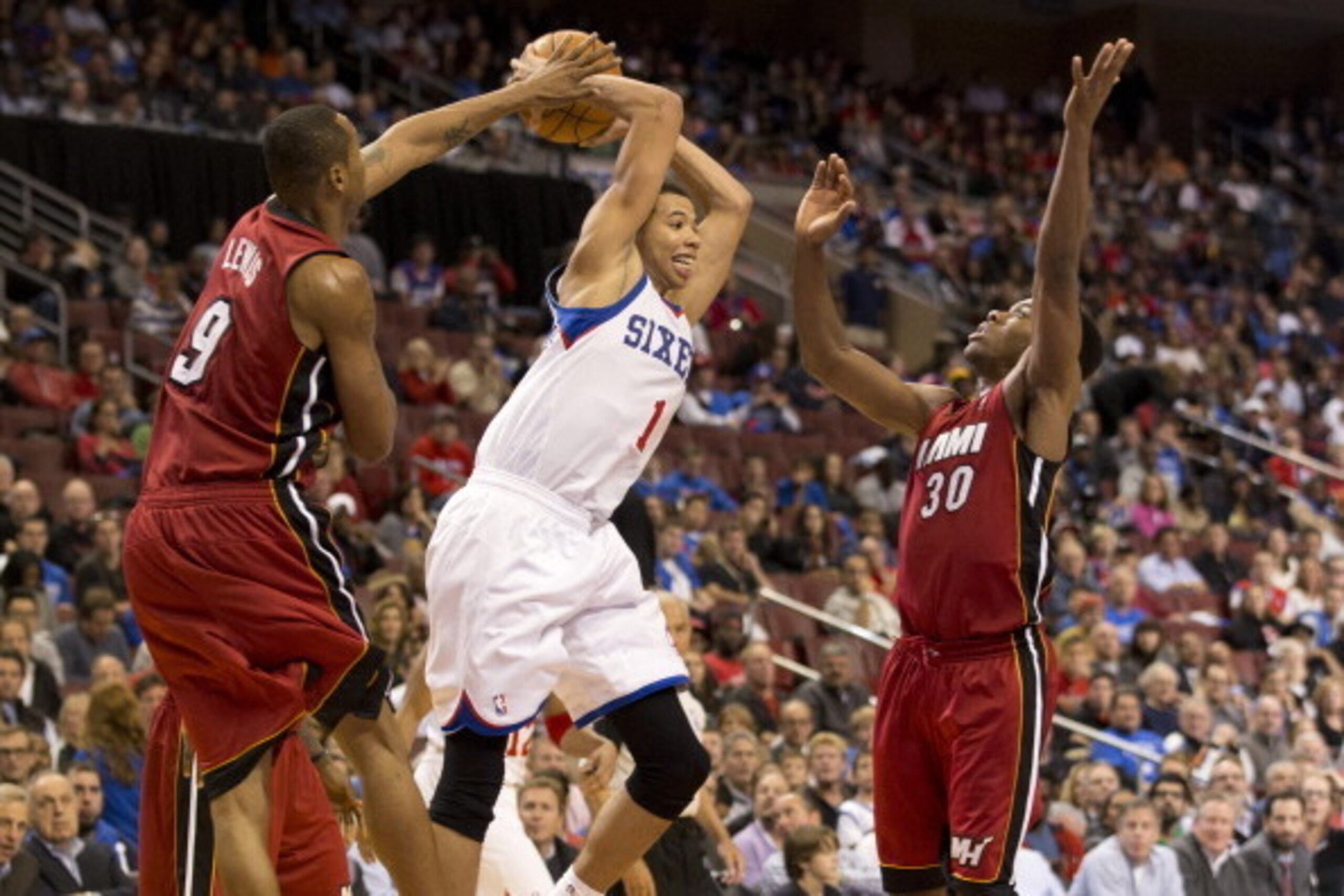
Carter-Williams' busted jumper isn't the only issue that followed him from college to the NBA. His propensity to turn the ball over did, too.
As a sophomore at Syracuse, MCW averaged 3.5 giveaways per game. His 138 total turnovers led not only the Big East that season, but the entire NCAA.
"Taking care of the ball is something I have been trying to work on," Carter-Williams told reporters during the preseason last year, via Dei Lynam of CSNPhilly.com. "I had a few turnovers in college, so I am trying to get better each and every day. In practice, I have had some turnovers, but I am working on taking care of the ball and making smart plays."
That work didn't seem to translate once the regular season began, however. During his first year with the Sixers, Carter-Williams again averaged 3.5 giveaways per game, finishing with 247 in total. He ranked ninth in the NBA in total turnovers and sixth in turnovers per game.
Those numbers are partially inflated by Philadelphia's league-high pace—the squad averaged 101.62 possessions per 48 minutes—but MCW was the only Sixer who finished the year with at least 3.0 turnovers per game. Many of them were his fault, too, as he finished the year with 144 bad-pass turnovers in just 70 games.
| Offensive Foul | Bad Pass | Lost Ball | Other |
| 18 | 144 | 65 | 20 |
"Only seven players recorded more [bad-pass turnovers] per game, and each of them generated more points off assists, making the biggest problem on this young floor general's resume quite obvious," Bleacher Report's Adam Fromal noted.
MCW finished fifth in total bad-pass giveaways, trailing just Stephen Curry (193), John Wall (178), Ricky Rubio (175) and LeBron James (152), per Basketball-Reference's play-by-play data.
Much like with his shot selection, Carter-Williams doesn't shoulder all the blame for his turnover woes last season. Being surrounded by teammates who aren't straight out of the D-League should help MCW cut down on giveaways in future years although he'll have no such reprieve in 2014-15.
Despite the glaring lack of talent around him, the Sixers floor general needs to be more careful with the ball this coming season. Carter-Williams ranked sixth in touches per game (89.3) last year, according to SportVU data, and he'll likely experience similar usage as a sophomore.
Cutting down on his bad-pass and lost-ball turnovers isn't necessarily unfeasible. For a 6'6" point guard, his handle is surprisingly stout, as he demonstrated to Bleacher Report's Lance Fresh last September:
So long as he begins picking his spots more efficiently, MCW should be able to shave at least 0.5 turnovers from his per-game averages this coming year. He's still likely to be among the league's top 15 or 20 in both turnovers per game and total turnovers, but even a slight reduction in giveaways should help the Sixers remain slightly more competitive each night.
Though Carter-Williams turns 23 in mid-October, seemingly reducing the ceiling for this second-year floor general, he's still fully capable of blossoming into an All-Star-caliber talent. Honing his shooting stroke, improving his shot selection and cutting back on his turnovers as a sophomore will help him take major strides toward becoming one of the NBA's top point guards.
Unless otherwise noted, all statistics courtesy of Basketball-Reference.com and NBA.com/stats.
Follow @btoporek


.jpg?w=2560 "Viral Rams Coach Vid 🖕")
.jpg?w=2560 "Injury-stricken Seahawks signing veteran RB")
.jpg?w=2560 "2 NFL Officials Suspended")
.jpg?w=2560 "Grading WWE Raw 🔠")
.jpg?w=2560 "Mahomes' Wife Trolls Kubiak 💀")
