Biggest Adjustments Chicago Bulls Must Make This Season
The Chicago Bulls are a defensive-minded basketball team with one of the most easily recognized identities in the league. But—Derrick Rose’s health aside—that predominant focus on one side of the ball has done them little good in the playoffs these last few years.
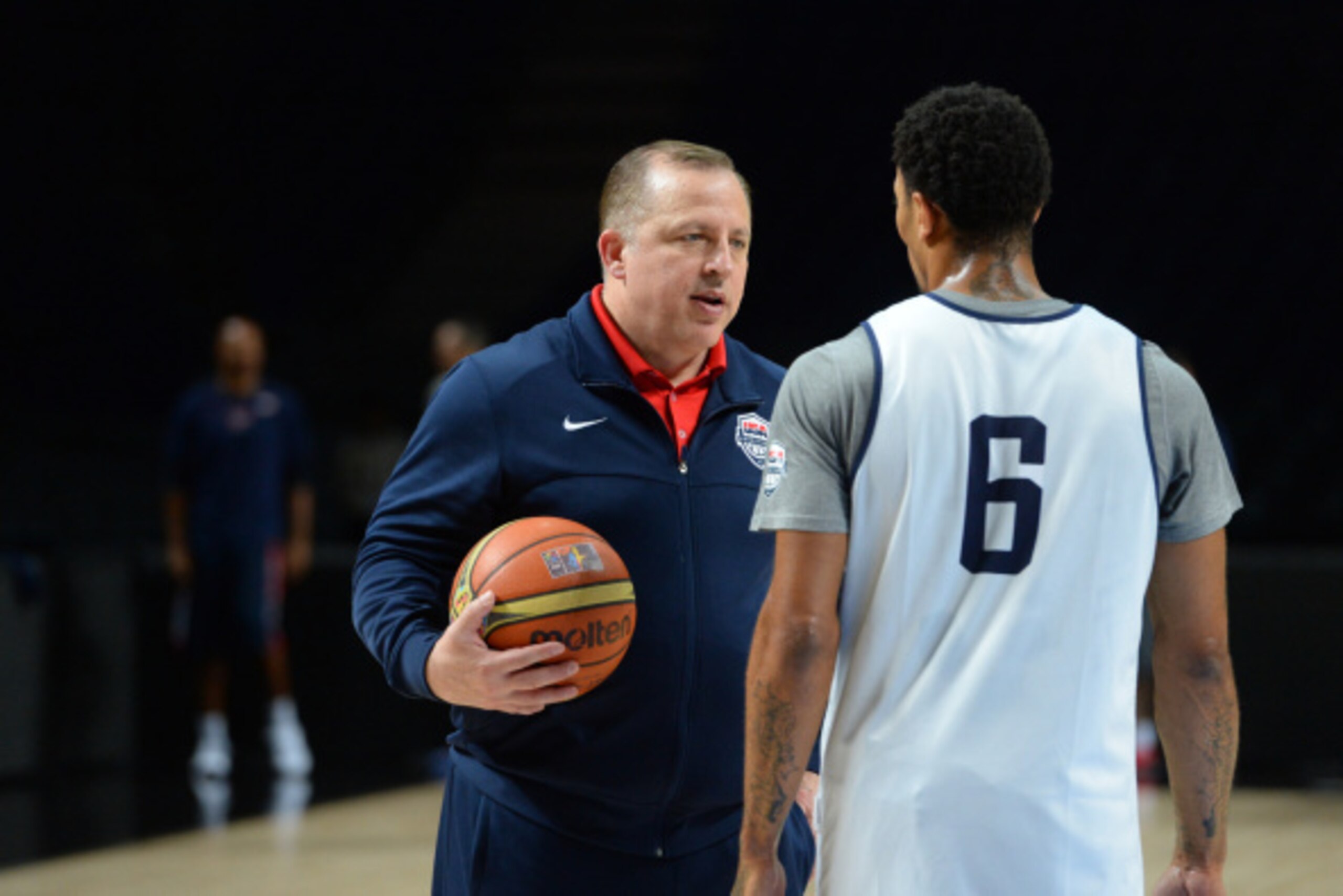
Chicago’s 2013-14 season ended because they could not score the ball. But after an offseason filled with major additions to the roster, including the hopeful return of a dominant 26-year-old Rose, the Bulls need to make a slight adjustment to the brand of basketball that’s long distinguished them under head coach Tom Thibodeau as an intimidating brick wall. They need points.
TOP NEWS

Buzz: Bron Chopper Part of Deal 🚁

MJ Makes Record-Setting Donation 🙌
Shams: KAT, Hart Could Be Trade Names
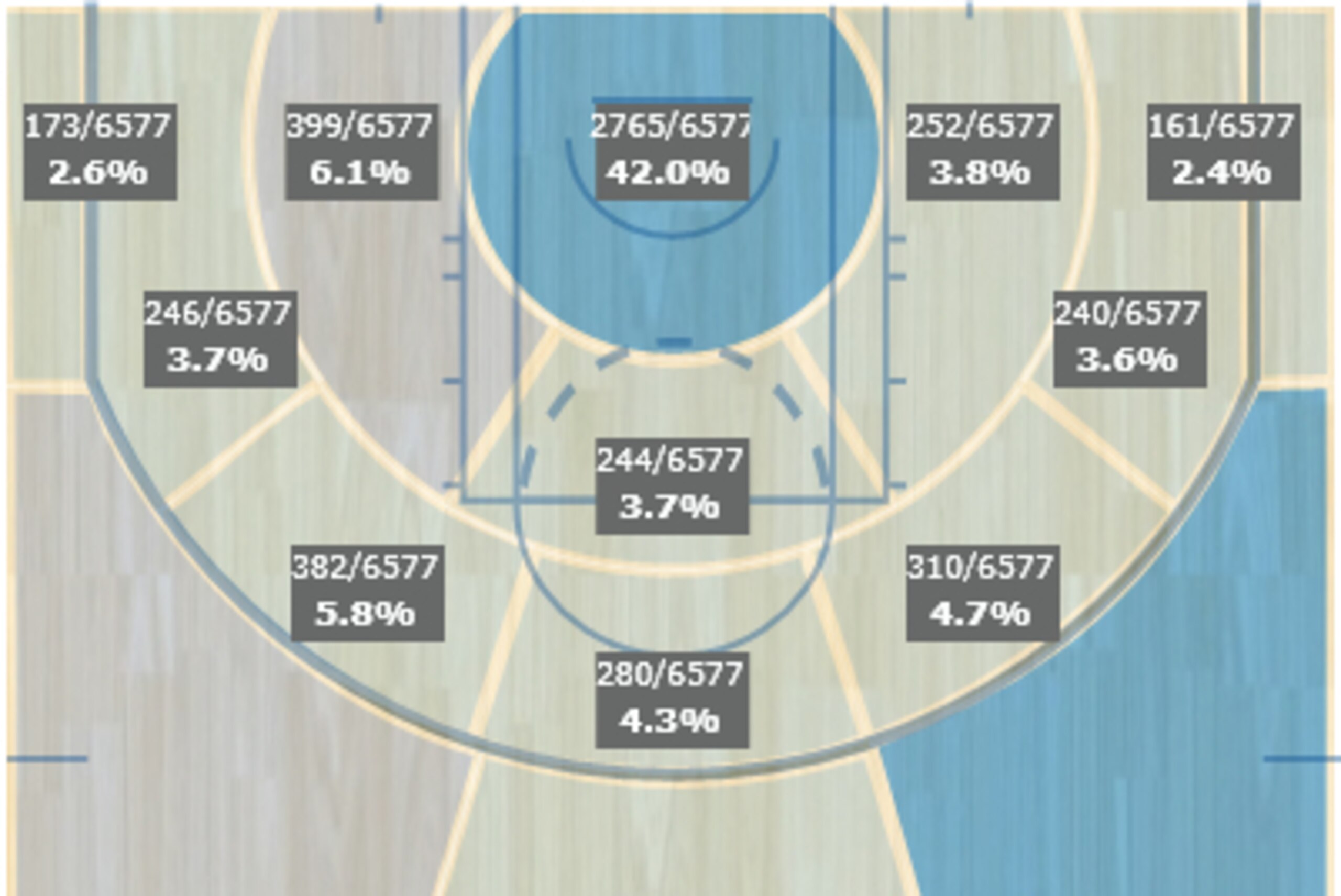
The Bulls finished last season as one of the NBA’s most pedestrian and eye-gougingly harsh offenses, finishing dead last in field-goal percentage (43.2 percent), 28th in offensive rating and 25th in three-point rate. Entering the playoffs, journeyman point guard D.J. Augustin led the team with a 14.9 points-per-game scoring average, and the only player efficiency rating found above the teens was Joakim Noah’s 20.0.
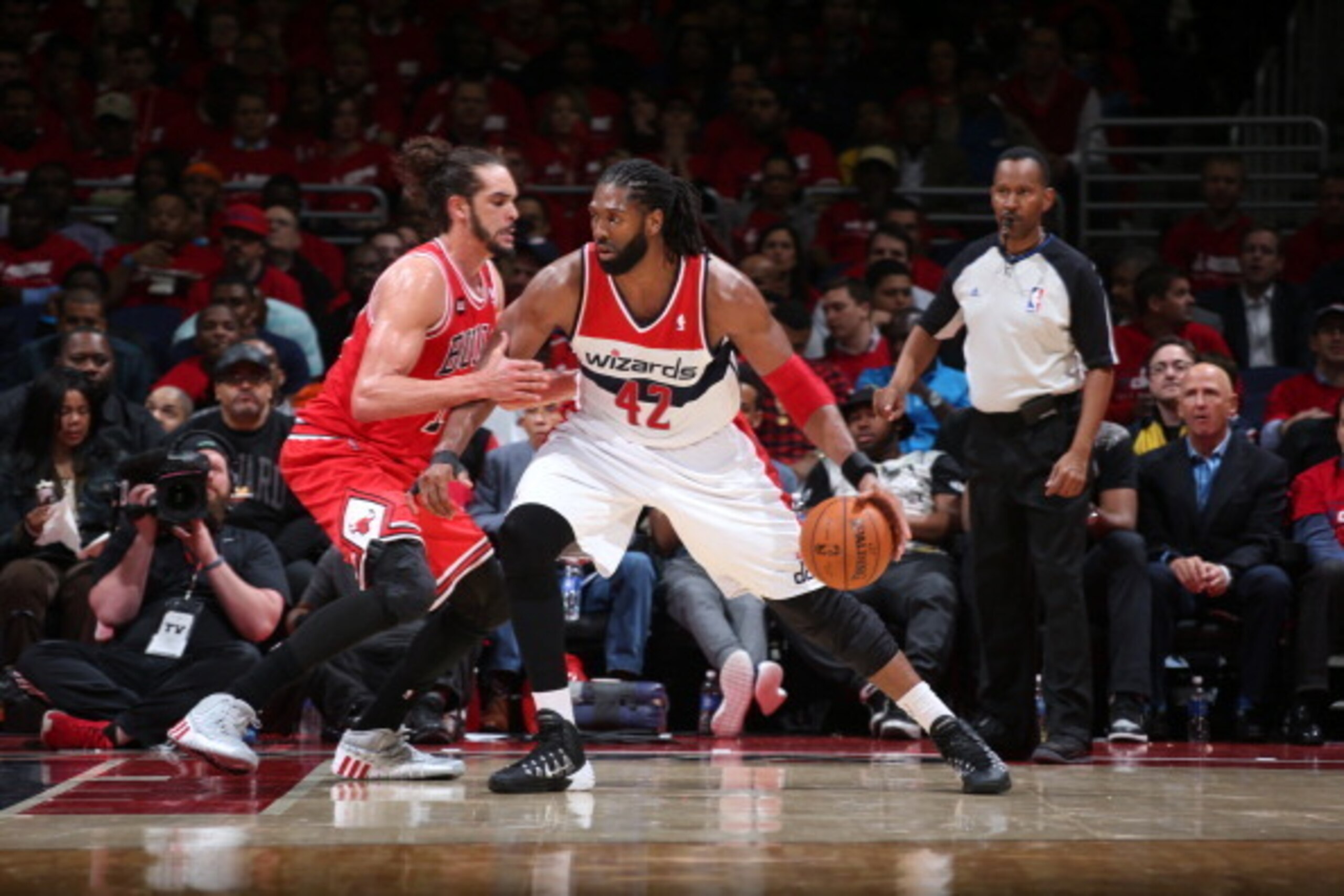
Their taste of the postseason was brief and brutal, with the Wizards beating them to a pulp in five quick games. Expectations are higher this season (like, championship-or-bust higher), but in order for Chicago to avoid having its season come crashing down once again, they need to jolt the offense to life while still maintaining an effective and crippling defensive unit.
One of the most obvious reasons Chicago dominates on defense is they don’t seem to care too much about offense. Games almost never turn into track meets, meaning the Bulls rarely look to push pace and score in transition. This lets Thibodeau keep things under control, allowing his men to set up their half-court defense, which is borderline legendary at this point.
Unfortunately, it’s a two-way street that comes back to bite them on the other end. If Chicago is so focused on not letting the other team score easy points in the unstructured open court, how do you think they operate on offense? Slow and methodical, with carefully plotted shots that have to come against the other team's set defense.
It’s a strategy that ultimately worked out for Chicago (they still won 48 games last season), but it may need to be toned down in 2014-15 with a new roster that’s loaded with offensive-minded pieces coming off the bench and infused in the starting lineup.

Playing for Spain at the FIBA World Cup, Pau Gasol looked like a 2.0 version of 1977 Bill Walton. Before his team was shockingly eliminated by France, Gasol was arguably the tournament’s most impressive player, a low-post force of nature who clubbed opponents into submission with pinpoint outside shooting and a throwback effort on the glass.
Gasol ended the tournament averaging 20 points and six rebounds per 27 minutes of play. He was phenomenal and is expected to be an upgrade over the amnestied Carlos Boozer next season with the Bulls.
Gasol was a slogging defender last season for the Los Angeles Lakers, but it’s almost fair to chalk that experience up as a bad nightmare. For whatever reason, the 34-year-old big man never fit into Mike D’Antoni’s system, and the results were evident on the floor.
Granted, the level of competition is lower and the sample size is small, but Gasol showed a glimpse of his former self in Spain. It's a promising sign for the Bulls, a team that could really use a low-post scorer who can also stretch opposing bigs to the corner and knock down threes.
According to CSNChicago’s Mark Strotman, Gasol will also help open things up with his unique passing ability.
"Though Gasol rarely has played with a traditional pass-first point guard and spent a large portion of his career in the triangle offense, he still was able to average 3.4 assists per game a year ago alongside Kendall Marshall, who in 54 games finished second in the NBA in dimes (8.8 per game).
And now Gasol will get the chance to work his passing magic alongside one of the game's best facilitating big men. Gasol's distributing numbers last year made him one of four big men in the NBA to average at least three assists per game, joining his brother Marc Gasol, Spencer Hawes and Pau's newest teammate, Joakim Noah.
The presence of both Gasol and Noah in the same frontcourt is something that hasn't been seen in more than a decade. The last team to feature two forwards or centers averaging three or more assists per game was the 2003-04 Sacramento Kings.
"
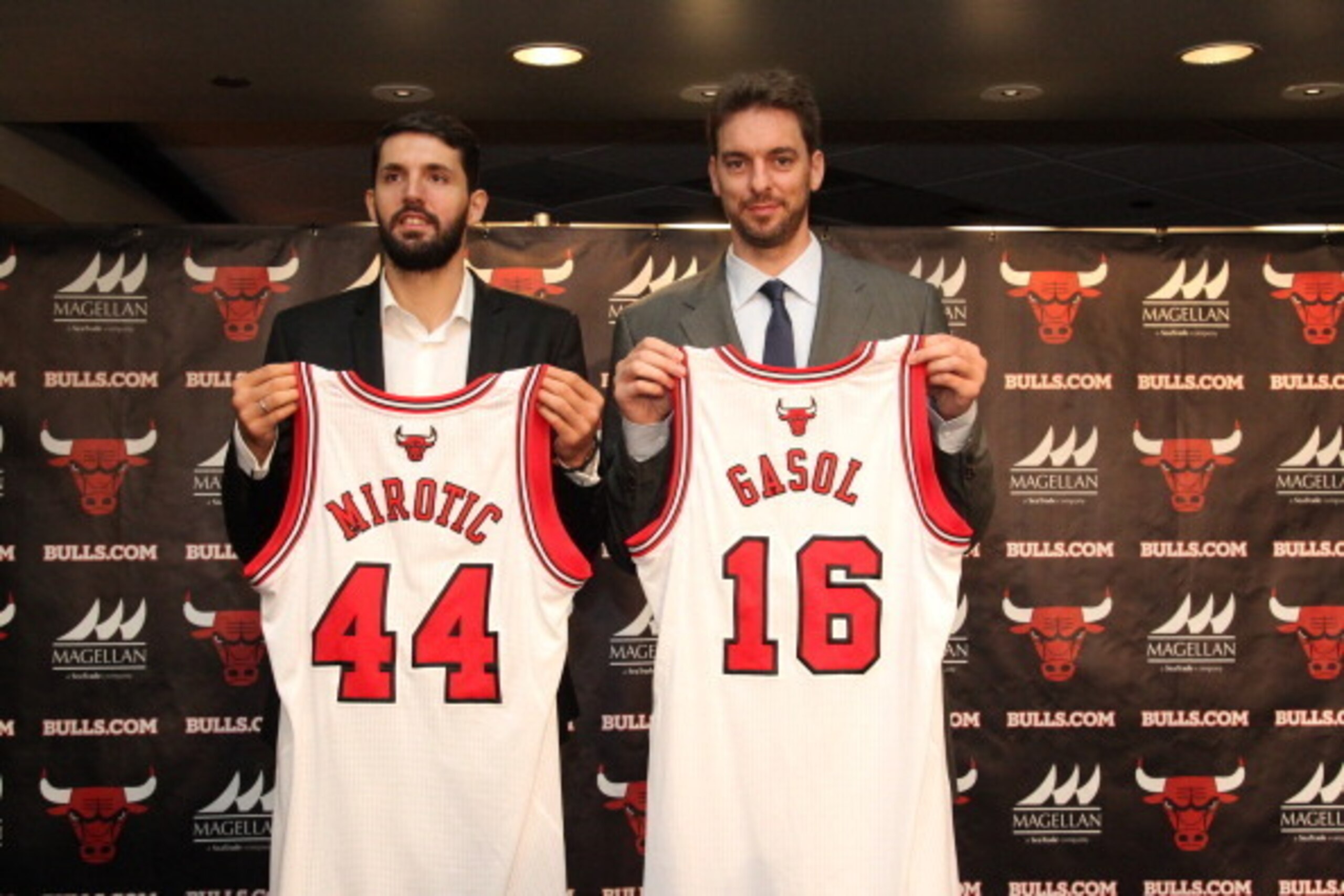
In addition to Gasol (and Rose, of course), the Bulls will bring in rookie Doug McDermott and European stretch 4 Nikola Mirotic. Both forwards can really shoot, but their defense is a question mark. Adding them both is an admission by Chicago’s decision-makers that the three-point shot must be implemented into the offense next season, and doing so makes a ton of sense.
Here's Chicago's shot distribution chart from last season, which details their lack of a deep threat.
The 6’8” McDermott averaged 26.7 points per game in his senior season at Creighton, shooting an ungodly 44.9 percent from beyond the arc. Somehow, that figure is lower than his career three-point average of 45.8 percent.
The good news is most of McDermott’s attempts came as the center of the other team’s defensive game plan. In the NBA, he won’t nearly gain that much attention, and he should develop into a spot-up threat right away.
As for Mirotic, he made 46.1 percent of his threes in 31 Euroleague games last season, per DraftExpress. He’s 6’10”, 23 years old and could be a dynamite partner beside either Noah or Taj Gibson, keeping the floor spaced as wide as possible for Rose and even Jimmy Butler to penetrate through the paint.
The Bulls are already so good on defense, but in order for them to win a championship this season, they need to take advantage of all the offensive firepower signed in the summer.
If their focus can shift a tiny bit from defense toward becoming an efficient and varied scoring team, specifically from behind the three-point line, it’s tough to picture any opponent in the league being able to beat them four times in a seven-game series.
They need to be more willing to take risks with the ball. Maybe firing the first open look they can get in a possession instead of working the shot clock and trying to squeeze out two points or a trip to the free-throw line. If they do, their defense may get punctured every once in a while.
But that's fine, especially in the playoffs, when the pace of play tends to slow down and work to Thibodeau's liking.
All statistics are courtesy of Basketball-Reference.com or NBA.com unless otherwise noted.
Michael Pina covers the NBA for Bleacher Report, Sports on Earth, FOX Sports, ESPN, Grantland and elsewhere. Follow him on Twitter @MichaelVPina.

.jpg?w=2560 "2 NFL Officials Suspended")

.jpg?w=2560 "Mahomes' Wife Trolls Kubiak 💀")
.jpg?w=2560 "Love's Body Already 'Tired'")