Jay Gruden Would Be Wrong to Ditch the Read-Option Altogether
He may not like it, but Washington Redskins head coach Jay Gruden would be wrong to ditch the read-option altogether. In fact, he needs to bring back at least a watered-down version of the college-style system as the staple of Washington's offense.
The read-option can still let Gruden accomplish what he wants to get done with Robert Griffin III. The coach wants his young quarterback to make smarter reads and quicker, more accurate throws.
He doesn't necessarily need to confine Griffin to the pocket to make that happen. A carefully packaged version of the option-based zone-read scheme is the best way for Gruden to adapt his play-calling to what Griffin does best.
.jpg?w=2560 "Commanders Eagles Football")


Of course, that would require Gruden warming to a scheme he's not particularly fond of. Back in late-April, the coach declared his intention to scale back use of the read-option in an interview with SportsTalk 570's Andy Pollin (h/t Dan Steinberg of The Washington Post):
"We’ll have sprinkles here and there. It’s not going to be a major part. I want to make sure that we have other things that we can do besides the read-option, because it takes a toll. You have to practice it a lot to be very good at it. It kind of takes away from the defense’s ability a little bit, it takes away from other plays that you need to work on, your protection schemes, your running game, all that stuff. It just takes away from that. So we want to make sure that we work on the core running game that we have, the core drop-back passes we have. And then once we get going, we get those implemented, maybe sprinkle in some read-option.
"
But in mid-July, Gruden gave a more interesting quote about the read-option, one applicable to this season's offense, to Sports Illustrated writer Don Banks:
"Personally my belief is the read option is better as an element of surprise. If you're making it a major focal point of your offense -- though they had success with it -- that's problematic. You want to have some of it, no question, because it's the way to get the numbers back in your favor offensively. And with a quarterback like him, why wouldn't you have some of it?
"
Those last two lines strike at the balance Gruden has to master between the read-option and his plan to refine Griffin as a pro-style passer. He won't get a template for that balance from watching game film of Washington's 17-6 season-opening defeat to the Houston Texans.
The read-option was like an endangered species in Week 1's game plan. Gruden wasted the chance to play to Griffin's strengths, namely his natural mobility and accuracy on the run.
He noted that problem after the game, per ESPN980 reporter Chris Russell:
As a passer on bootleg designs, Griffin can still make quick underneath throws and become a more efficient quarterback. The best example of that combination at work is provided by the defending Super Bowl champion Seattle Seahawks.
They trounced the Green Bay Packers, 36-14, in Week 1, thanks largely to the way they used option and zone-read concepts to create yards. A few solid passes when quarterback Russell Wilson was sent on the move show how Griffin would benefit from the return of the read-option.
The first went to tight end Zach Miller. He initially aligned in the slot in a two-tight end set. Fellow tight end Luke Willson was on the line as a blocker to help sell the idea of a run.

With a play fake to running back Marshawn Lynch to freeze the defense, Miller snuck in front of the linebackers on a shallow crossing pattern.
Wilson faked the handoff to Lynch, which encouraged the Green Bay defensive front to slant toward the stretch run. As they did, Miller simply released across the field the other way.
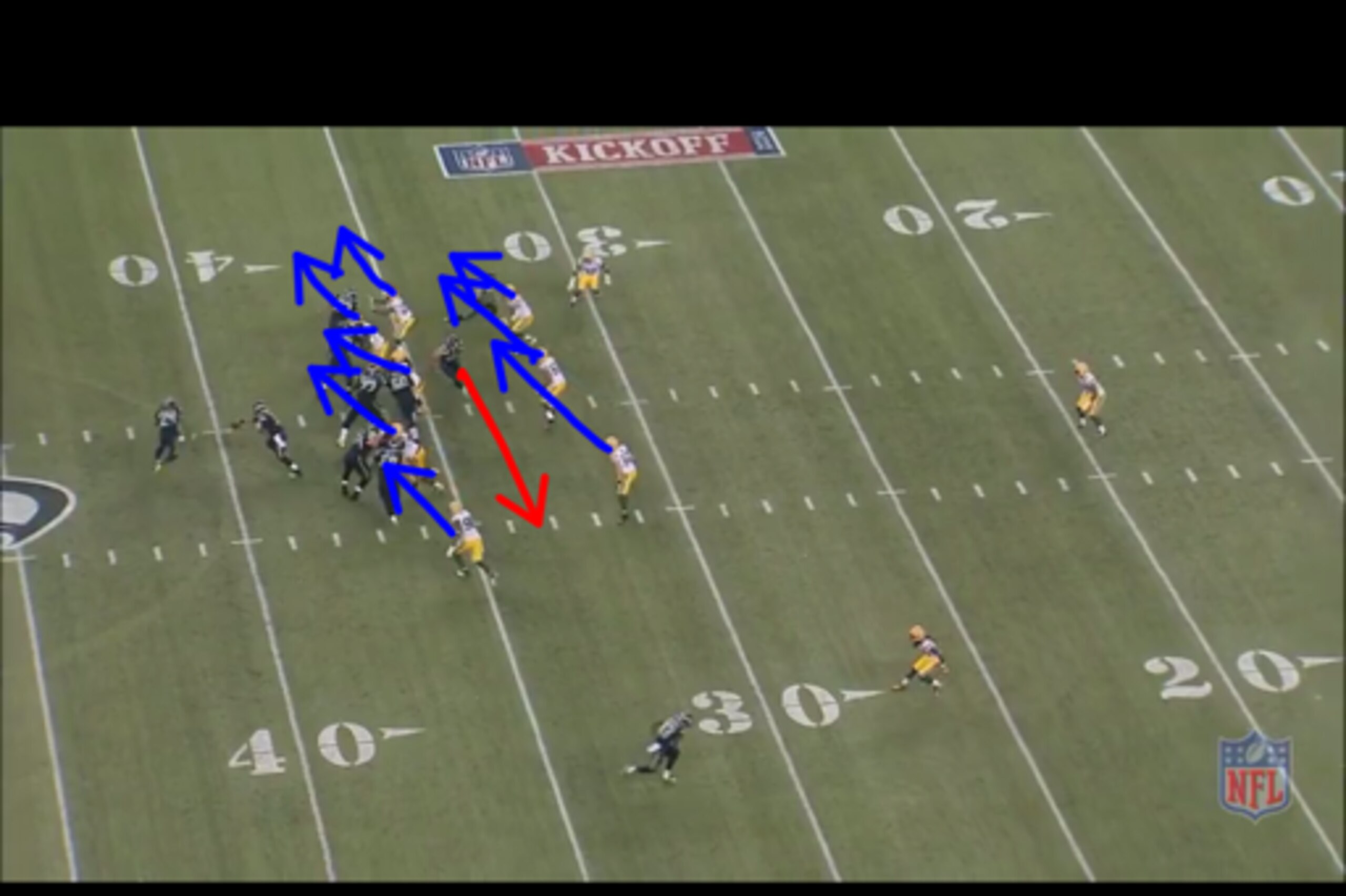
He left inside linebacker Brad Jones trailing. Jones was so preoccupied with the run, he completely ignored Miller's route.
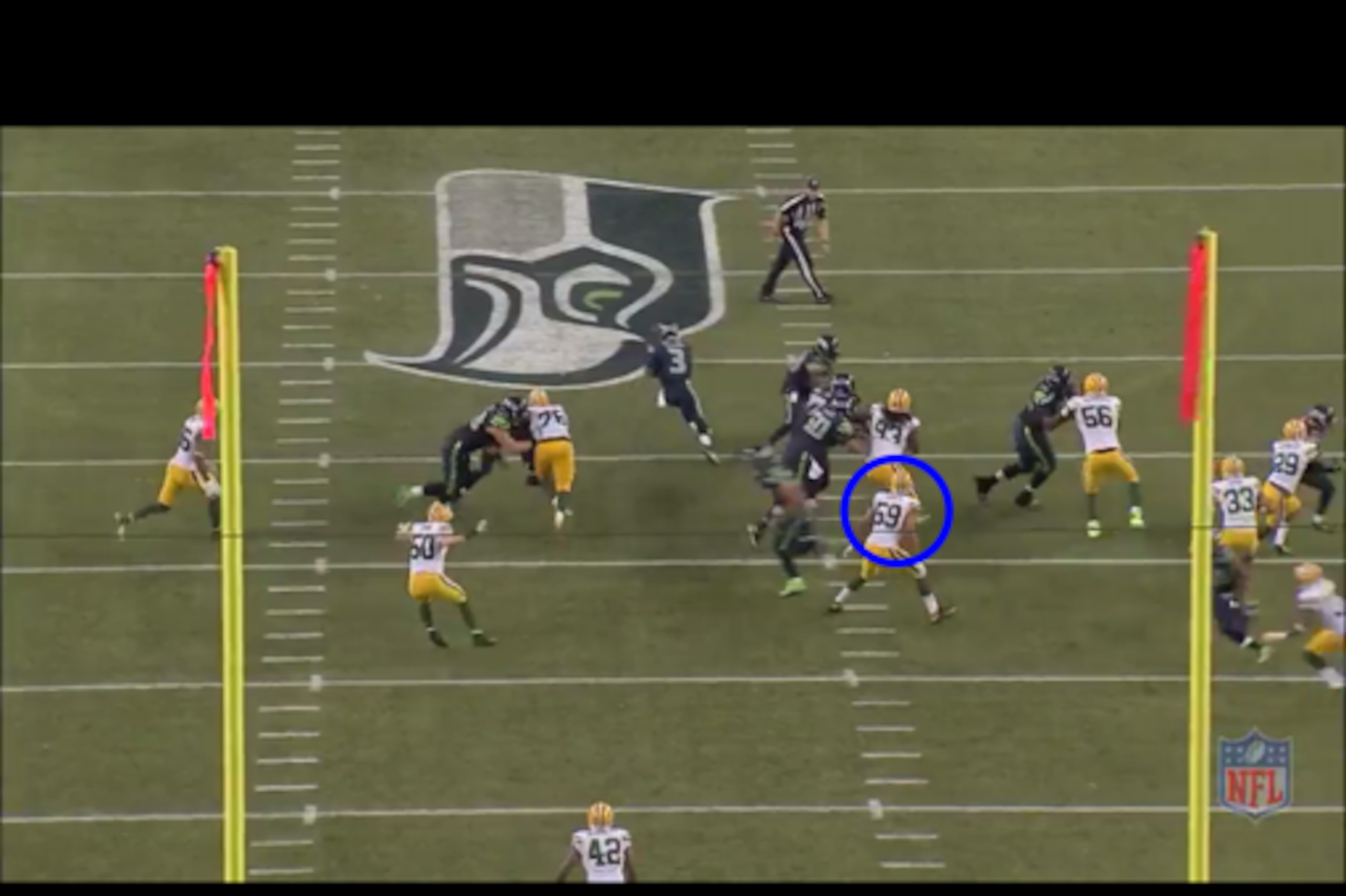
With the defenders away from the run fake concentrating on pursuit from the back side, Wilson rolled out the other way on a bootleg.

This boot action took Wilson away from the pass rush, allowing him to flip an easy throw to Miller for nine yards.
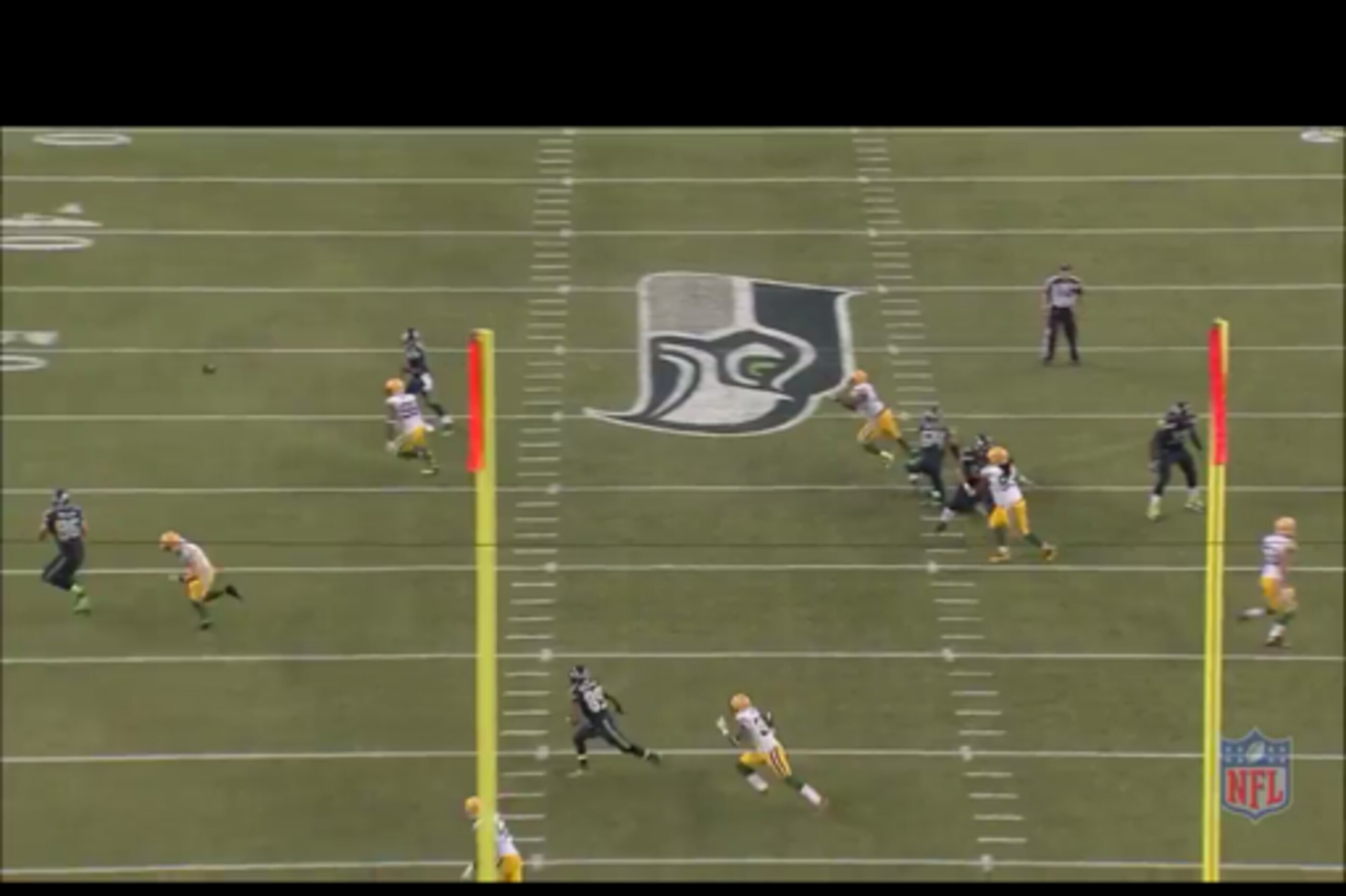
Even though it was packaged as a play-action pass and involved rolling the quarterback out of the pocket, this was exactly the kind of high-percentage throw Gruden wants Griffin to make more often.
The Seahawks later repeated the concept on a Wilson pass to Percy Harvin. This was run from the shotgun but could easily be run from the option-style pistol or short-shotgun look.
Wilson would fake another handoff to Lynch and again reverse the other way on a rollout. Harvin was aligned in the slot on the bootleg side of the formation and would run a quick out.
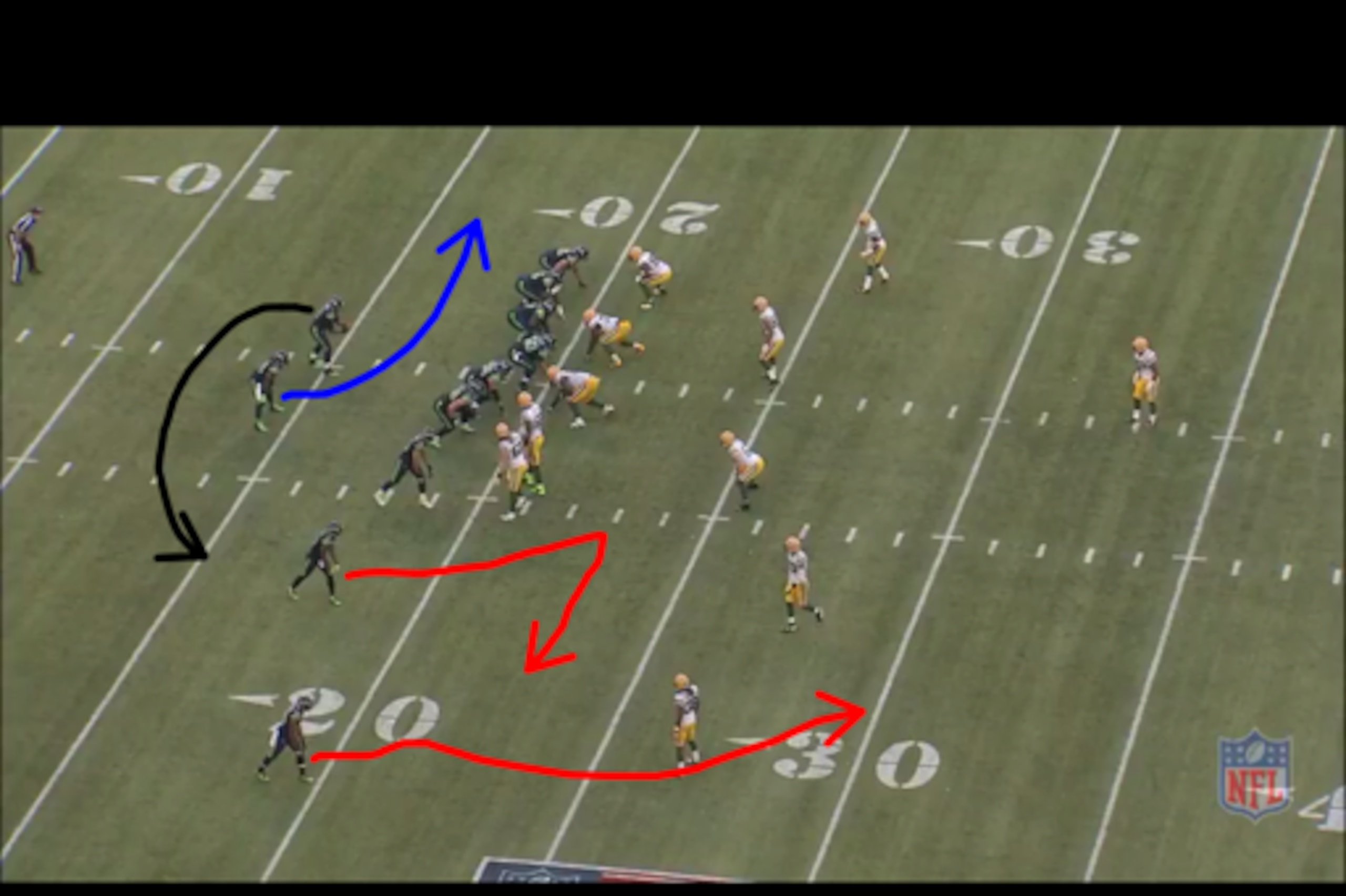
A deep route on the outside helped run the coverage downfield, leaving the underneath open for Harvin.
Once again, the fake drew the Packers away from the pass zone in large numbers. The threat of Wilson as a runner also froze the backside defender, middle 'backer A.J. Hawk (50).
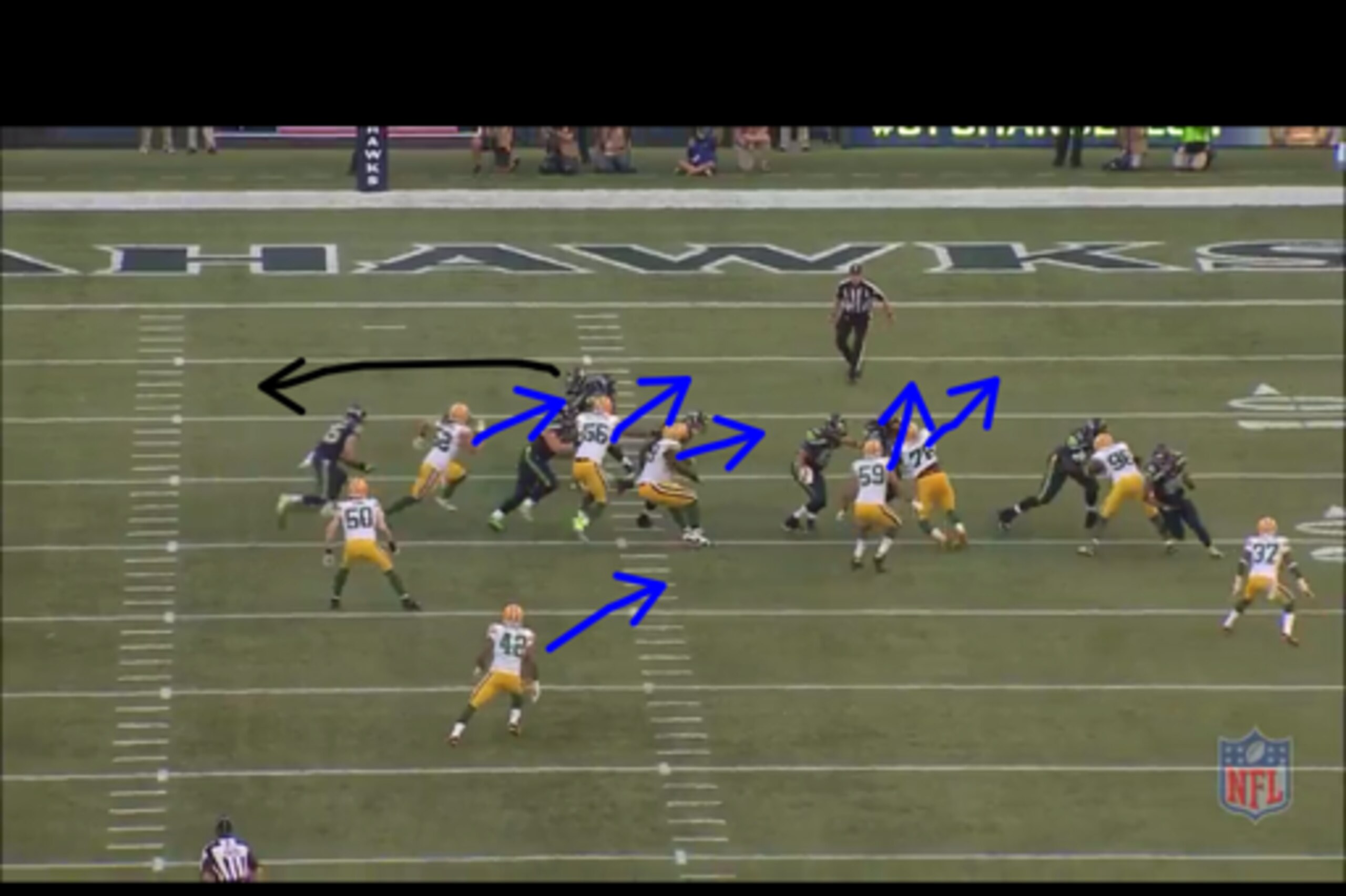
Wilson was free to toss a simple pass to Harvin for eight yards the Seahawks practically stole away from the Green Bay defense.
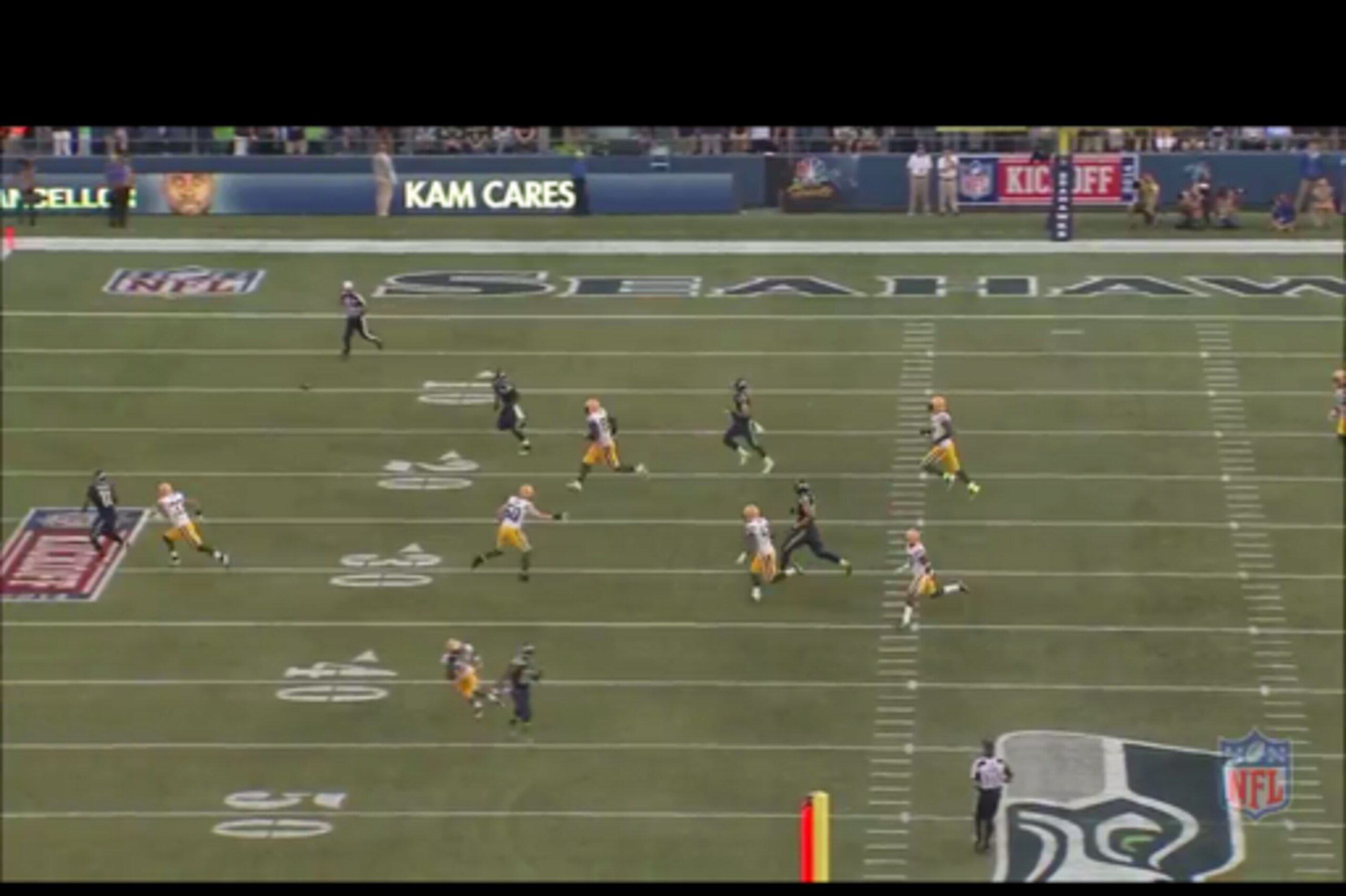
Plays like this make it easy to see why Washington courted Seahawks offensive coordinator Darrell Bevell before hiring Gruden, per Mark Maske of The Washington Post.
It's not churlish to wonder if hiring a man who runs a zone-stretch, option-based offense to suit a star running back and mobile quarterback might have made more sense than choosing a play-caller faithful to pro-style concepts.
However, only time will prove that theory right or wrong. It's also way, way too early to write off Gruden or his offense.
But there certainly is something Washington's coaches and personnel can take from how the Seahawks do things.

Neither of these plays was spectacular, but they efficiently moved the chains. Both plays maximized a mobile quarterback and the threat posed by a strong running game.
Those are things the Redskins already have. Even on two surgically repaired knees, Griffin is still as nifty a runner as any quarterback in the NFL.
Washington runs the same outside zone-stretch ground scheme that's made Lynch a star in Seattle. Gruden also has the receivers to play the same games in coverage to isolate defenders underneath.
Consider that last play with DeSean Jackson and Andre Roberts lined up on that side. Jackson would certainly take coverage deep, allowing Roberts a one-on-one matchup on a short-range route.
Speaking of working deep, if the Redskins want to get better at attacking vertically, they need the deception of the read-option and the hesitation it creates at every level of a defense.
Gruden's couldn't get his receivers behind coverage in Houston. However, it wasn't long ago that Griffin's rocket arm and play-action skills were producing monster games.
Let's go back to Week 11 of the 2012 season and the team's 31-6 win over the Philadelphia Eagles. Washington conceived a deep strike to Aldrick Robinson from a look disguised as an option formation.

Flexed receiver Brandon Banks would come across the backfield on fake reverse action to help freeze the Philly defense. Griffin would also work in a play fake to running back Alfred Morris.
All of the misdirection created by the double play fake was designed to shift the free safety out of the deep zones and into the box. Robinson would run an inside post behind the safety and into the vacated zone.
At the snap, Griffin faked to Morris. That attracted the entire Eagles front seven.
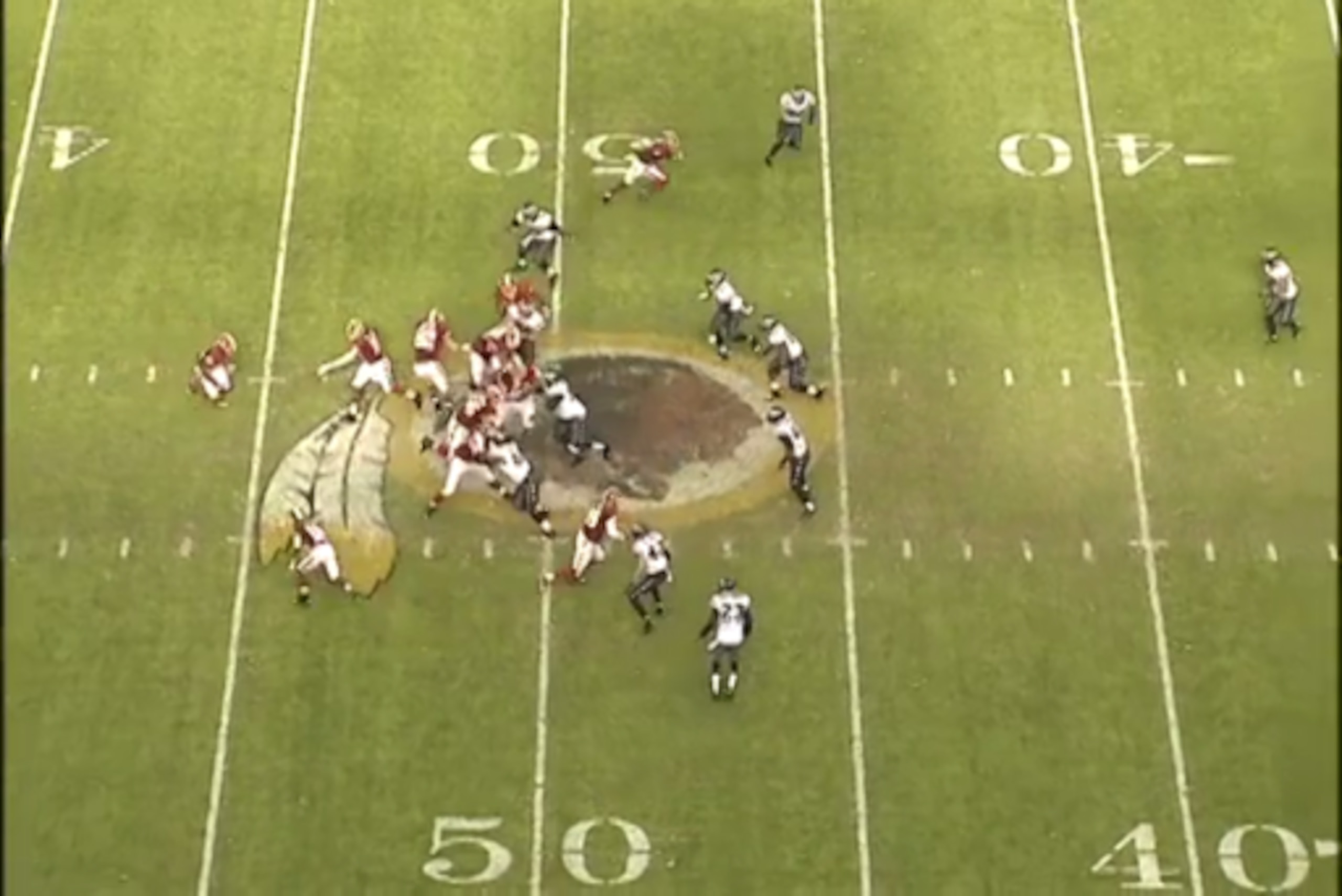
The backfield fakes also slowed down the pass rush. Both defensive ends paused in response to possible runs from Morris, Banks or even Griffin.

With a clean pocket to throw from, Griffin was able to launch a pass to a wide-open Robinson. The result was a 49-yard touchdown strike.

Option designs like this one can help Gruden free his stable of talented receivers deep. It's not just about confusing coverage. It's more about slowing down pressure.
Nobody could dispute it would have been next to impossible to strike deep against the Texans amid the intense pressure applied by defensive end J.J. Watt and others.
But what's the answer? Better protection? Of course, that would be great.
Yet with an O-line devoid of elite talent at every position except left tackle, the likelihood of better protection is like the great closing line from The Maltese Falcon: "The stuff that dreams are made of."
So Gruden is going to have to get creative about getting Griffin the time he needs to launch passes of 40 yards or more.
It would also help slow down pass-rushers if they were more concerned about Griffin the runner. Sadly, that skill wasn't deployed against the Texans, as Gruden noted, per ESPN 980:
"Gruden on Griffin "we didn't have many designed runs today. "
— ESPN 980 (@ESPNRadio980) September 7, 2014"
Since Gruden wasn't prepared to take advantage of one of Griffin's core skills, we'll have to again take a page from the Seahawks. Wilson gashed the Packers on a planned roll that was classic read-option.
Wilson was going to bait to the play-side defenders, the D-end and outside linebacker.

He faked to running back Robert Turbin to draw those edge defenders inside. As they crashed down, Wilson rolled around the corner.

He had a favorable angle on rush linebacker Nick Perry, who had turned inside.
The play only accounted for seven yards. But it was a safe, sure way to get yards on the ground and keep the Green Bay front seven concerned with the threat of Wilson as a runner.

This is something Gruden should still do with Griffin in Washington. The arguments against it are obvious when considering Griffin's injury history, as well as the exposure to hits from defenders able to treat the quarterback as a live runner.
But if the Seahawks are willing to risk 5'11", 206-pound Wilson on running plays, Washington has to roll the dice with Griffin.
There's no sense wasting his ability as a runner or taking away the concern it creates in the minds of defenders. That doesn't mean running Griffin from option looks as often as he did as a rookie, but it has to be a part of playbook.
Going back to the 2012 route of the Eagles shows a good example of why it can work. Griffin was in the pistol look with Morris behind him and beefy tight end Logan Paulsen also in the backfield.

Again, the idea was to react to the edge defender on the play side.
Griffin stuck the ball in Morris' gut and waited to see what the D-end would do. As he crashed inside, he surrendered the outside lane. This gave Griffin his cue to run.

As he fled the pocket, Paulsen blocked the linebacker to prevent quick pursuit. Meanwhile, the end didn't need to be blocked since he had stranded himself by getting fooled by the initial option action.

Paulsen secured his block, and Griffin ran free.

But the part of this eight-yard run on which this season's coaches should focus is the end of it. It involved Griffin doing one key thing, stepping out of bounds.

The quarterback with a granite-like resistance to playing smart as a runner actually made the effort to avoid contact. That's always a hot-button topic with Griffin.
It was during preseason when he couldn't execute a safe slide or show a willingness to seek the sanctity of the sideline. Liz Clarke of The Washington Post detailed the problems:
"The first hit was a helmet to the chest. The second, a helmet between the shoulder blades. And the third hit came from the ground itself, which is where Washington Redskins quarterback Robert Griffin III was flung by the third Cleveland defender to lay a hand on him during his frenzied scramble on second and 20. ...
And the more pressing concern is that Griffin, the 24-year-old face and future of the franchise, has either failed to learn how to protect himself on running plays or refuses to do so.
"
But if Griffin is willing to rein in his more reckless instincts, his running should still be a big part of this offense. Putting the threat of that running together with misdirection and play-action fakes is the best way for this quarterback to manipulate coverage and avoid pressure to hit big plays.
The Redskins still need the read-option this season. Gruden has a dominant running game, led by Morris and Roy Helu, that would be even better from option looks.
Most important, he has a quarterback who rarely looks comfortable outside the system. Totally remaking Griffin on the fly could be the fastest way to condemn this franchise to another losing season.
Using the read-option shouldn't mean Gruden can't make Griffin a more efficient, pro passer.
Instead, it can help Gruden thread the needle between refining Griffin's game without embroiling his offense and team in another year of transition.
All screen shots courtesy of Fox Sports, NFL Network and NFL.com Game Pass.
.jpg?w=2560 "Chiefs Dolphins Football")
.jpg?w=2560 "Cardinals Giants Football")



.jpg?w=2560 "Injury-stricken Seahawks signing veteran RB")