Diego Simeone's Atletico Taking Europe by Storm, but This Is Not a Revolution
It's been on T-shirts, banners, hats, mugs, political material and countless other things. Instantly recognisable, it has been described by the Maryland Institute of Art as "the most famous photograph in the world," while a book dedicated to it insists it's as iconic as the Nike swoosh or McDonald's golden arches.
And now, Diego Simeone was on it.
It was the Friday between the first and second legs of the UEFA Champions League semi-finals, and the football community was busy marvelling at Atletico Madrid. Less than 48 hours earlier, Atletico had repelled Bayern Munich, suffocating them, infuriating them and demoralising them.
TOP NEWS

New NFL contenders starting to emerge after Week 4

Deion Playbook Found at Hotel
.jpg?w=2560 "Cardinals Giants Football")
NFL investigating 2 referees for separate viral exchanges
In fact, "repel" probably sells it short. "Rebel against" might be better.
On the banks of Madrid's Manzanares river, where the shabby and dated Vicente Calderon hangs above a motorway, Bayern had arrived with all their staggering power, resources and reputation, but it hadn't mattered. Not at all. Just like it hadn't mattered for Barcelona.
Yeah, this Barcelona. And this Bayern.
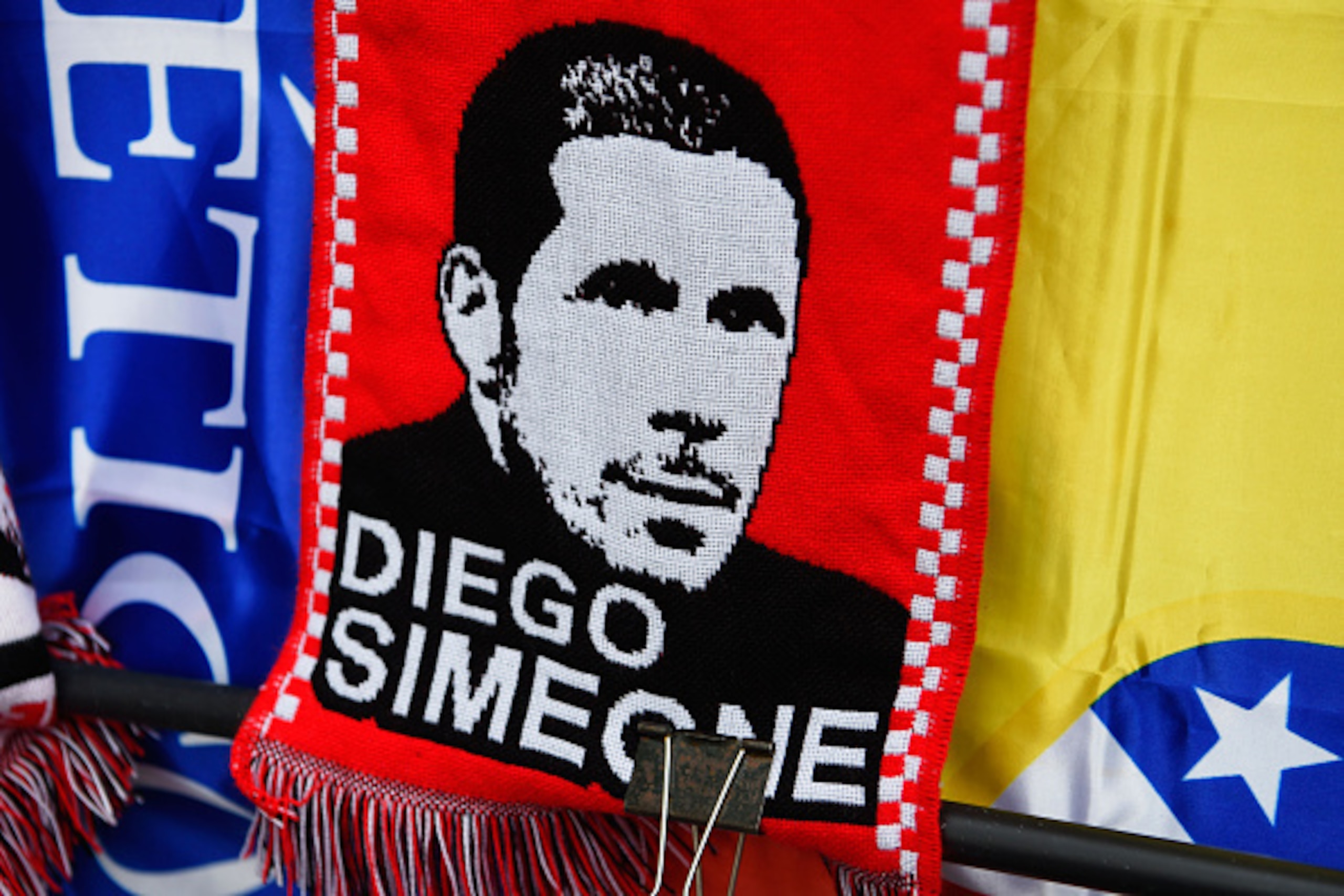
So then came the Friday, and with it that image, "the most famous photograph in the world": Alberto Korda's shot from 1960 of Argentinian revolutionary Che Guevara, splashed across the cover of Gazzetta dello Sport in Italy. Except it wasn't Guevara; Simeone's face had been imposed onto the image.
"Commander Simeone: Cholismo and the revolt against tiki-taka," read the headline.
A revolt? A revolution?
If some see it as such, it's hardly surprising.
What Simeone is currently achieving at Atletico is nothing short of astonishing. An Atletico legend as a player, the Argentinian took over the club in late 2011 when it was a mess, the whole thing fractured and directionless.
In the league, Atleti were handcuffed to mid-table mediocrity. In the cup, they'd just been dumped out by Albacete from the cash-less Spanish third tier. On every level, they looked like a club in crisis, gripped by massive debt, held back by a merry-go-round of managers and playing staff, and too busy getting in their own way.
Then: Cholismo.
By the end of that season, Atleti had won the Europa League. Soon after came the UEFA Super Cup with a demolition of Chelsea.
In 2013, the Copa del Rey arrived, before Atleti did what the world had said could no longer be done in breaking the hegemony of Real Madrid and Barcelona to claim a historic league title in 2014—the same year the club reached a Champions League final.
And now Atleti are in another such final, and that might not be all.
The transformation beggars belief. This is now a team and a club moulded entirely in Simeone's image: ferocious, relentless, the most competitive group in world football. The most competitive? Yep. If they weren't, this wouldn't be happening.
Atletico, after all, have still been a selling club for the bulk of Simeone's tenure, a club working with a budget roughly one-fifth of Madrid and Barcelona's.
Financially, they can't compete, but somehow, on the pitch they do.
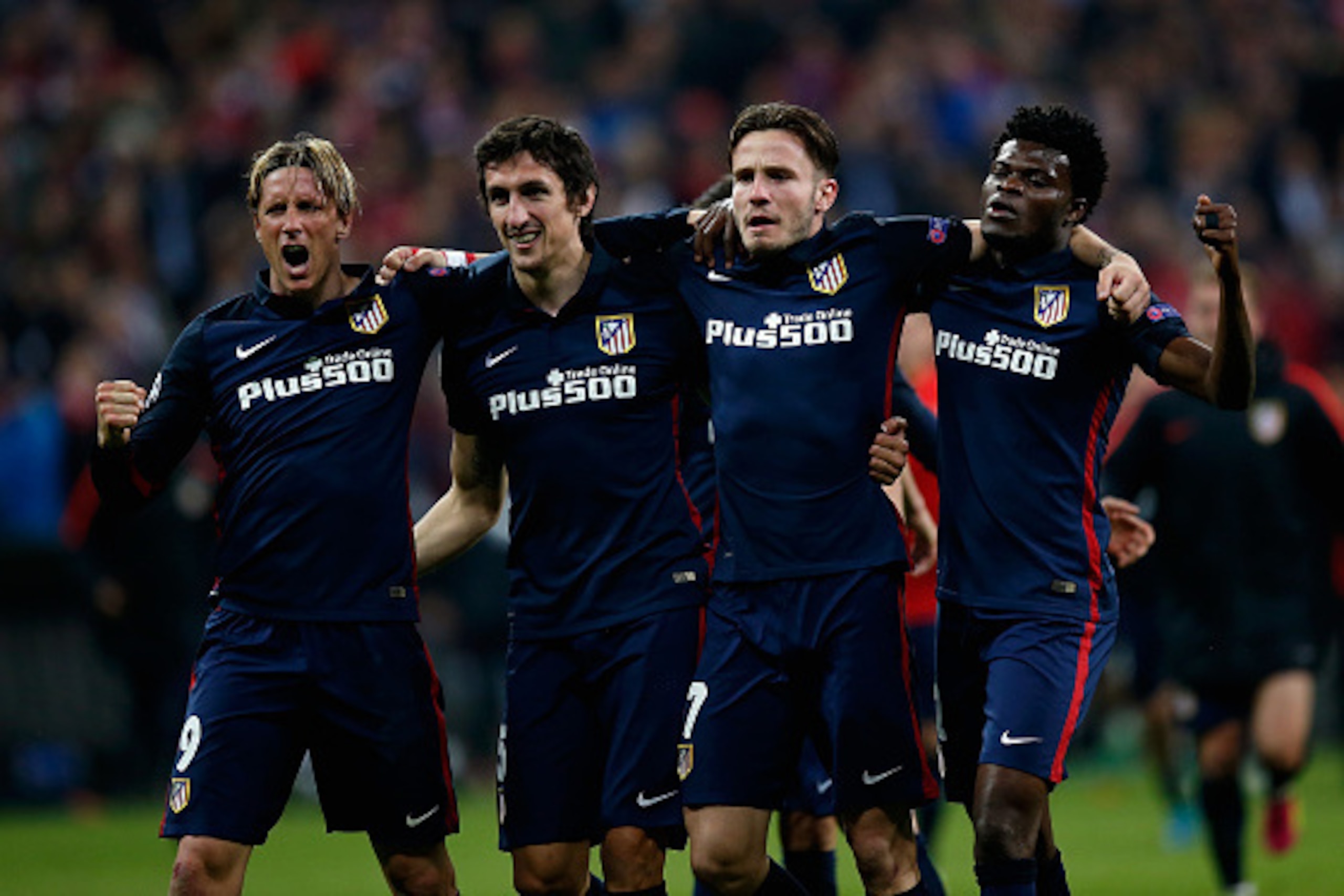
What Simeone has done at the Calderon is build upon the club's on-field identity he knew as a player—"I like an aggressive team," he said on the day he was unveiled in 2011. "I want to see a team that is strong, committed and quick on the break. These are things which Atletico fans have always liked, it helps them identify with and love this shirt"—but completely transform the mentality.
Gone is the inferiority complex. Gone is the fatalism. Now, Atleti work, train, fight and scrap harder than everyone. Nothing bothers them. Barely anything works against them.
It's as if they look at you, grin menacingly and say, "Is that all ya got?"
Behind the resilience and the mentality lies a tactical approach of extraordinary sophistication. Indeed, Atleti's method may look uncomplicated, but the level of work required to get it to this standard is immense.
The way they cover for one another is unrivalled. So is their ability to deny teams the central third of the pitch, the manner in which they switch between high pressing and sitting deep, their luring of danger men into clusters of defenders, their variety at set pieces and the triumph of the system above all else.
It might be that last point that's most striking.
Unlike at other clubs, it doesn't seem to matter which players are available at any given moment for Atleti. In the second leg of the quarter-final tie with Barcelona, Simeone had to field 20-year-old Lucas Hernandez in the absence of Jose Gimenez.
The result: a clean sheet and a victory regardless.
In the first leg against Bayern, the manager was without leading centre-back Diego Godin and was forced to use Stefan Savic.
The result: a clean sheet and a victory regardless.
It's these examples that are forcing football to take note, and those within it to consider their position: If Atletico can do this, what can the rest of us do? After the Barcelona-led wave of expansive football, is the Atletico way now the way? Is, as Gazetta suggested, Cholismo ready to overthrow the current order?
Prompting such a discussion is the fact that football has always had a follow-the-leader nature, the most obvious and recent example being the widespread shift to more fluid, attacking and possession-based play in the wake of the dominance achieved by Barcelona and Spain.
But this isn't just a football thing.
This is simply the nature of sport as a whole.
Across the Atlantic in the United States, "small ball" is taking hold of the NBA. Due to the success of the Miami Heat and now the Golden State Warriors while employing the concept—one that involves removing traditional big men in favour of more mobile and athletic wing players to create smaller, more explosive lineups—teams around the league have followed the trend.
"This is a copycat league," said former Washington Wizards coach Randy Wittman late last year, per ESPN's Zach Lowe. "The success of Golden State has propelled coaches to play more small ball than maybe they even wanted to. More teams will push the envelope."
In golf, the empire of Tiger Woods completely revolutionised the sport, redefining what it meant to be a golfer. Stronger, fitter, more dynamic to the point where it wasn't even close, Woods dominated on a physical level as much as anything else, and on his own has created the sea of supremely athletic golfers who've followed.
"These guys are now squatting 150 kgs and dead-lifting 180," a strength and conditioning coach who works with elite young golfers, both professional and amateur, in Australia told Bleacher Report. "Pound for pound, they sit alongside or above most team-sport athletes."
The same copycat pattern was witnessed in cricket in the 1980s, when the success of the West Indies in using a battery of four fast bowlers sent the rest of the world into a search for their own equivalents. It happened again two decades later, when Adam Gilchrist revolutionised the wicketkeeper position and propelled the game into a generation in which glovemen must also be dashing batsmen.
This is what sport does.
So are the astonishing Atletico set to become another example here?
Well, no.
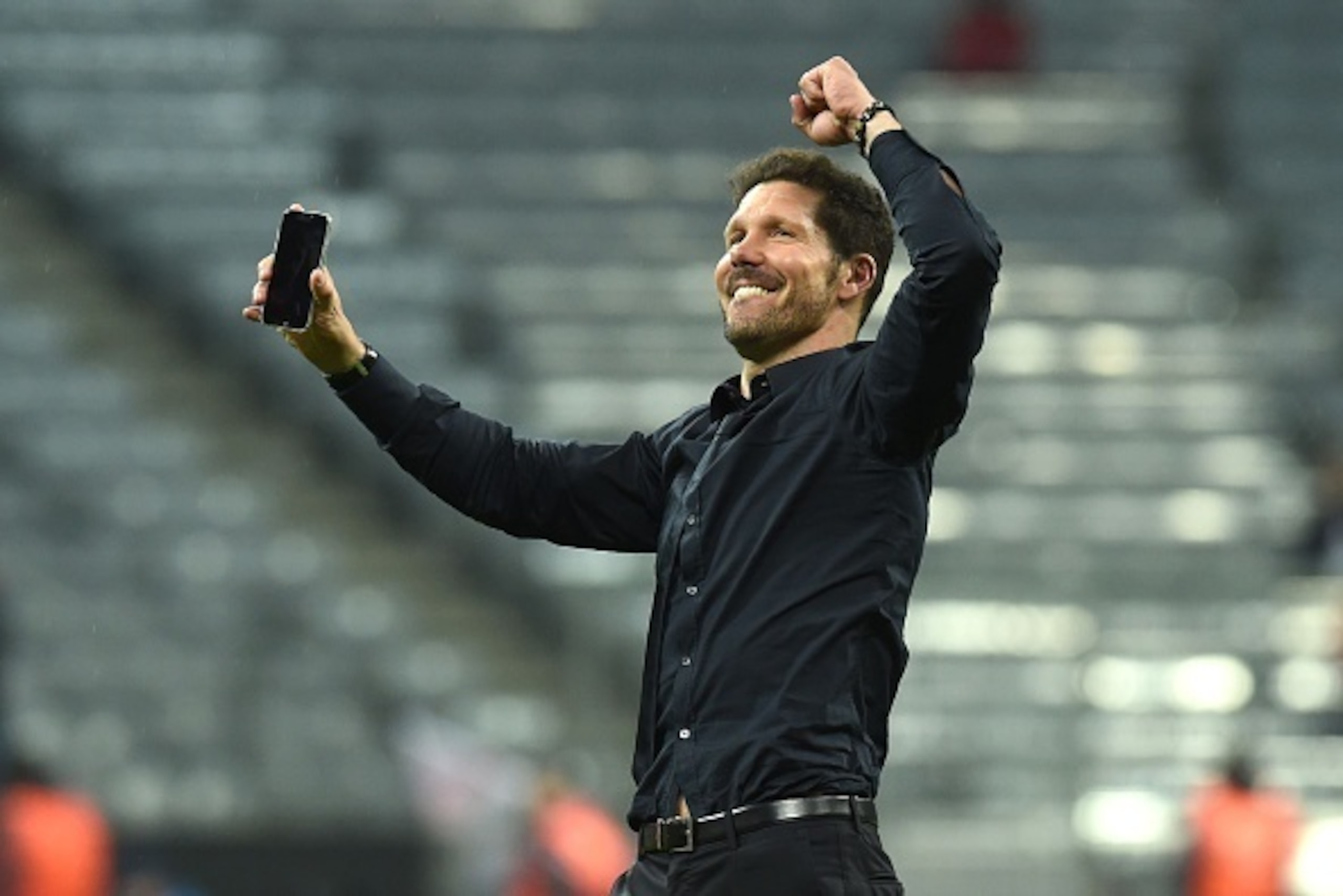
The thing about Atletico is that their distinctive method is not so much a desire as it is a necessity.
In a footballing landscape in which the vast majority of the world's top-end talent exists at three clubs, Simeone has been forced to look for something else.
For talent, for resources, for style, he knows Atleti can't compete, and thus has created an identity of both extreme contrast and strength rather than following the trend—even if he's flirted with doing so.
Indeed, last summer in an interview with AS (h/t Football Espana), the Argentinian spoke of style, change and evolution. "We're in an important situation," he said. "The team needs a change, a new stimulus. We've spent a lot of time together. They know my strengths, my weaknesses, and I know theirs. I'm convinced we need a change, an internal movement where the team takes a step forward."
Simeone spoke of playing with a 4-3-3, of putting the creative Koke at the base of the midfield and being "ready to play in space."
The club's moves in the transfer market spoke of such an intent, too.
In came Jackson Martinez, Luciano Vietto and Yannick Carrasco. Oliver Torres returned from a loan spell. Angel Correa was ready to play a part. It looked as if Atletico were ready transform again, to become a new sort of attacking force, some sort of sumptuous halfway point between their old selves and their extravagantly expansive title rivals.
But it didn't unfold like that.
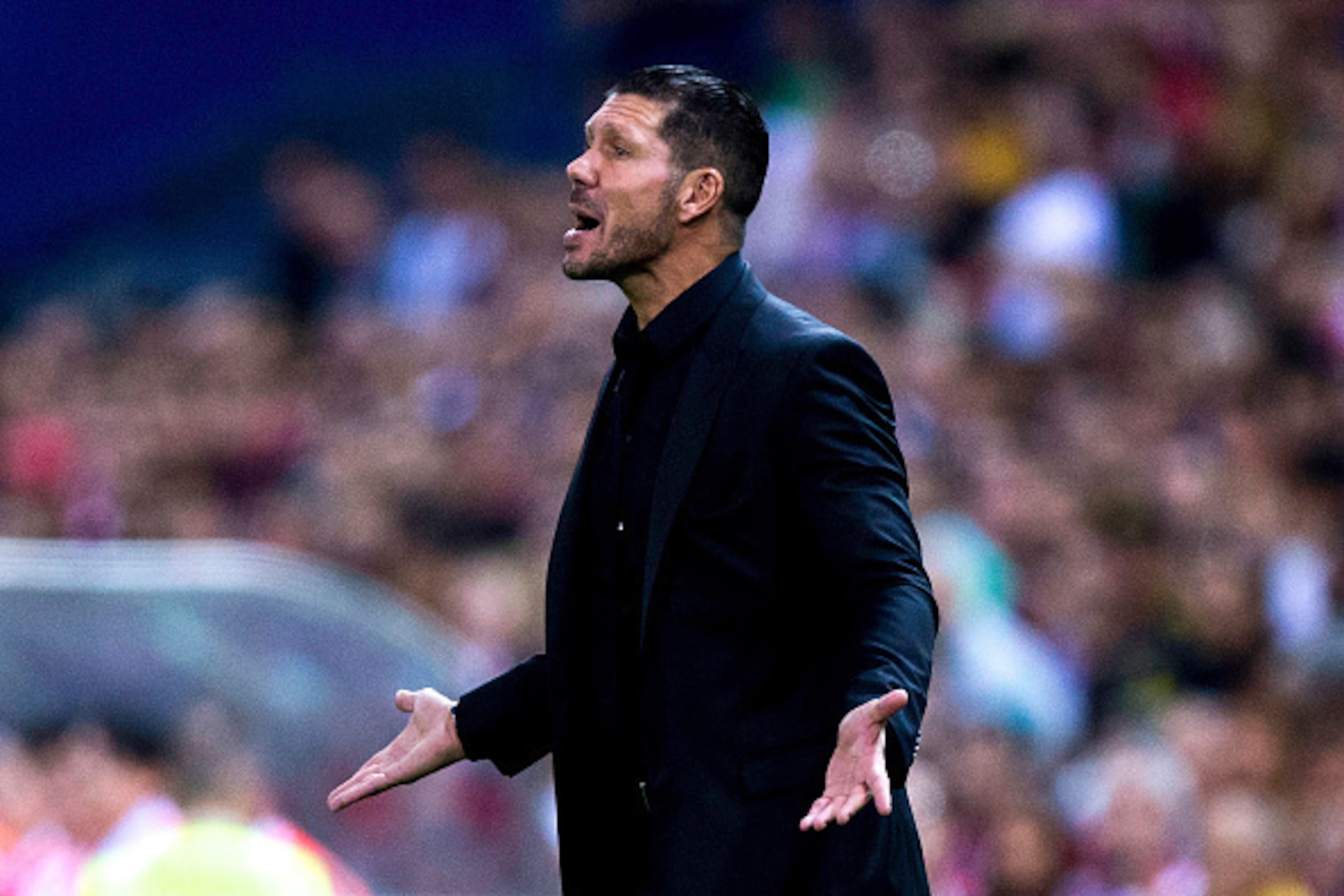
Despite the desire for an internal shift, the realities were problematic.
In the opening months of the season, a selection of the statistics were indicative of the plan—possession figures shot up, pass-completion rates rose, foul and card counts fell—but the plan itself wasn't working: Atleti were scoring less than ever before under Simeone, fluency became an issue and, temporarily, they lost a portion of what had made them who they were.
Eventually they went back, and that's the point here.
To a degree, Simeone and Atletico had wanted to move with the current trend that Gazzetta depicted them as revolting against, but they found out they couldn't. They lacked the fearsome talent to do so. The resources. The breeding.
Thus, this is a lesson to be yourself rather than a revolt, and there's another dimension to this, too—one that refutes the idea that Simeone's approach could lead to a tactical revolution across Europe.
By definition, the intense and robust counter-attacking method employed by Atletico is not a new way of thinking but a response to one. What Atleti have built is a method designed to blunt a dominant style rather than to be a dominant style.
After all, if everyone opted to counter-attack, there would be nothing left to counter-attack.
As such, the ongoing success of the Atletico model is dependent upon the ongoing success of those belonging to the likes of Barcelona and Bayern Munich. Those outfits, with their football that is the result of a previous revolution in the game, are needed to sustain Atletico, their supremacy a prerequisite for Simeone and Co. to thrive in the way they do.
A leader, a reference point, a driver of extraordinary success: Simeone is all of that and more.
But he's not Guevara. And this is not a revolution.
.jpg?w=2560 "Hill Injury Update Football")
.jpg?w=2560 "Titans Giants Football")

.jpg?w=2560 "Tyreek makes another cryptic post amid Chiefs rumors")