

Planting the Seeds for a Soccer Relegation Revolution in the U.S.
If you crave stories about the early days of professional soccer in the United States, if you want to relive the fleeting moments of success and the crushing failures, if you want to recall so many defunct teams from so many defunct leagues, Perry Van Der Beck is the man to see.
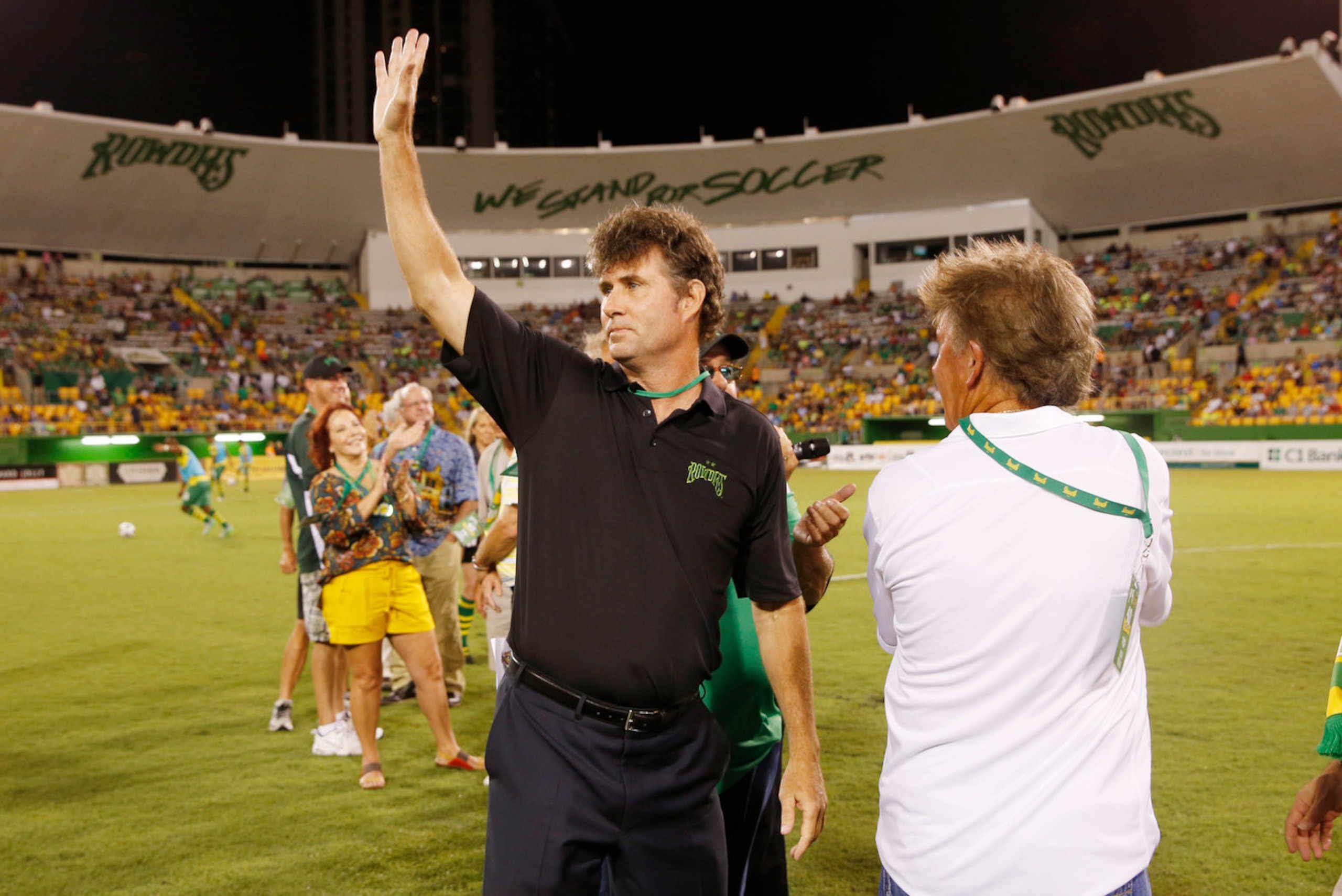
The 56-year-old Van Der Beck began his professional playing career in 1978 with the Tampa Bay Rowdies of the North American Soccer League. After five seasons, he moved to another NASL squad, Team America, which was made up of U.S. national team players.
After the NASL folded, Van Der Beck plied his trade with a series of Major Indoor Soccer League teams (the Dallas Sidekicks, St. Louis Steamers, Wichita Wings and so on). Then he spent a season as player/coach of the Tampa Bay Terror of the National Professional Soccer League, and in 2001, he coached the Tampa Bay Mutiny for the final 11 games of that franchise’s existence.

.jpg?w=2560 "Saints Cowboys Football")
Next came a front office job with FC Tampa Bay, which switched leagues before even playing a game, and up until April, he was the assistant general manager of the new Tampa Bay Rowdies in a reincarnated NASL.
Given Van Der Beck’s experience with soccer’s struggle to gain a foothold in the U.S., one would think he’d be overjoyed with the present state of the professional game here. Major League Soccer is thriving, with 20 current teams, four more to be added by 2020 and announced plans to eventually get to 28 teams.
The level of talent has undeniably improved over the last few years, and the league is finally financially stable, with wealthy ownership groups in place and others waiting in the wings. Yet Van Der Beck and others like him believe that, for all MLS has become, it still lacks a crucial component:
Promotion and relegation.
“[MLS] needs to be on the same page as the rest of the world,” Van Der Beck says. “[Promotion and relegation] creates accountability for the existing teams and opportunity for teams in the lower levels. ... And this new generation of fans, they are very educated about the game. They want it to be part of the sport in this country.”
Van Der Beck is not wrong on at least one point: The world’s top leagues—in England, Spain, Italy, Germany, France and Netherlands—feature a setup in which teams that finish at or near the bottom of the standings are bumped down a division while the best from below move up. The contest between who stays and who goes is, at times, more thrilling than the crowning of the champion of the top flight.
Yet despite the excitement promotion and relegation generates in other countries, MLS officials dismiss it as an option.
“In the near term, and that near term is a long time from now, there’s not going to be promotion and relegation. It makes absolutely no sense,” MLS Commissioner Don Garber told a group of sports editors last year. “There is not a developed secondary division. We have union agreements. We have national television deals. We have investors that have put in billions of dollars. It is not going to be something that could be managed in anytime soon.”
Garber reiterated that stance to reporters during a global soccer convention in Manchester, England, when it was suggested that MLS would not be a “proper league” until it had promotion and relegation.
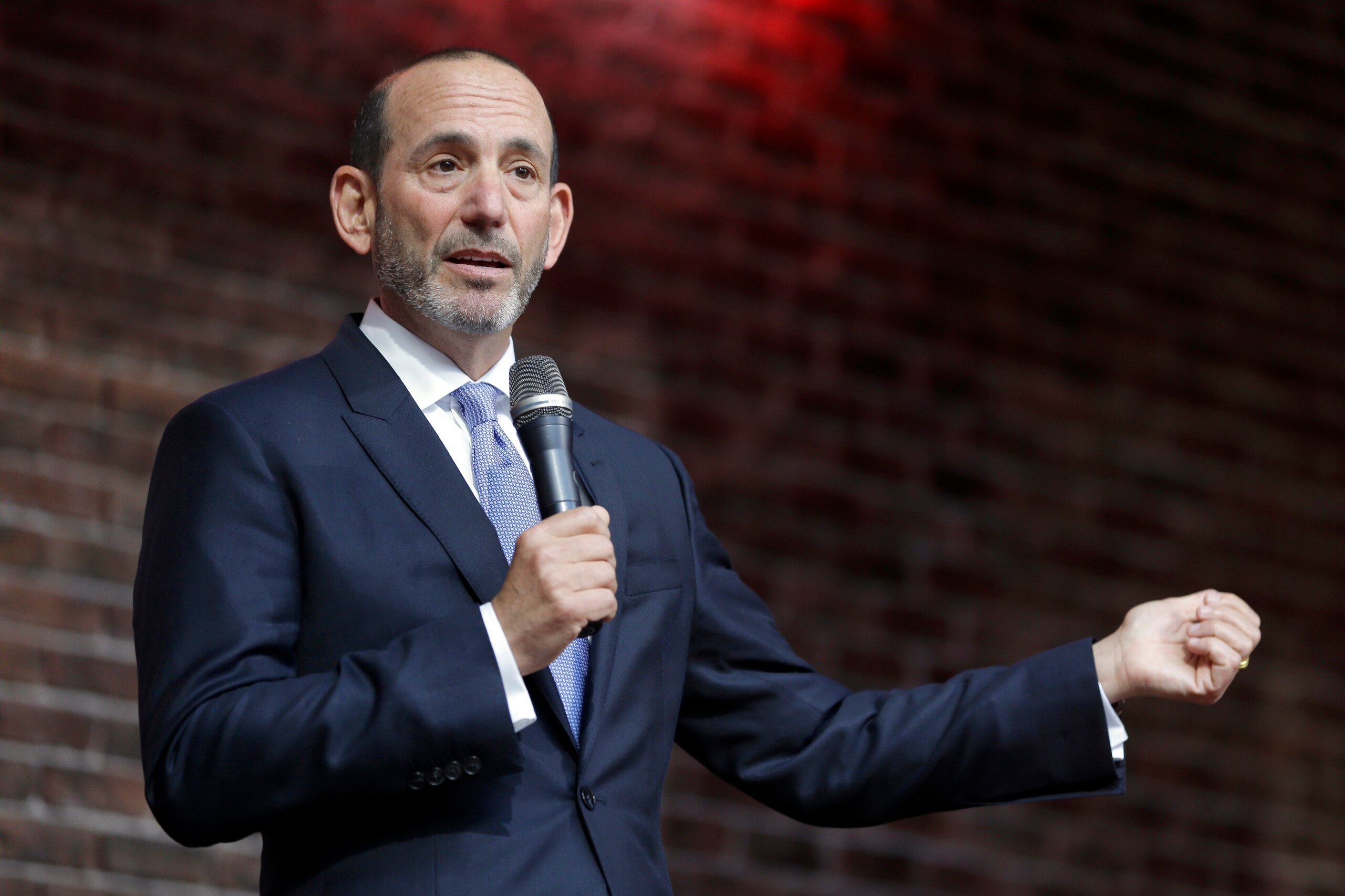
“A real league in whose eyes?” he asked. “We are a real league now, with real business, our games live on TV and live around the world. ... We play in a country where the major leagues are really successful. There is no promotion and relegation in hockey and basketball, and they work really well. It is not happening in MLS any time soon.”
Garber’s insistence hasn’t killed the issue entirely because, for one, so many people involved in the sport in the U.S. favor it. In one recent ESPN FC poll, 49 percent of MLS players questioned preferred promotion/relegation. A year earlier, the number in favor was 64 percent. U.S. men’s national team head coach Jurgen Klinsmann is “a deep believer” in it—one of several examples of his wishes running counter to MLS policy.
“[It] furthers our national team,” Klinsmann told German newspaper the Rheinische Post (via ESPN FC’s Stephan Uersfeld). “Something is at stake week in, week out. Be it at the top or at the bottom, you always have to perform.
“This thrill of the relegation battle is nonexistent in the U.S. league.”
Despite such endorsements, promotion/relegation is viewed as such a nonstarter that some soccer insiders won’t even discuss it. After all, why tackle an issue that has no chance of coming to fruition?
But there have been many transformative changes to American sports that were once viewed as dead on arrival (paying college athletes, for example).
Instead of starting with the premise that promotion/relegation won’t happen, why not begin with a more inquisitive approach? Instead of closing the book on promotion and relegation from the jump, why not first ask:
What would it take for it to happen?

The brick-walled office building occupied by Sacramento Republic FC was once an art studio and has an open, industrial look that, combined with the young employees bustling about, “makes it feel like a startup,” says Warren Smith, the team’s co-founder. In a way, that is exactly what Republic FC is.
The team began playing only two years ago, and it has a product that wealthy individuals, including owners of the Sacramento Kings and San Francisco 49ers, have invested in. How is that different from what happens about 120 miles away in Silicon Valley?
Before exploring how promotion/relegation could come to the U.S., it is worth trying to understand why Garber and others are so against it. In that regard, the origin story of Republic FC is a good teaching tool.
Smith, a local businessman with a background in minor league baseball, founded the franchise and paid for a spot in the United Soccer League, considered the third tier of soccer in the U.S. His stated goal at the time was for Republic FC to be awarded a spot in MLS by the end of 2016.
This was, on the surface, a preposterous ambition; the MLS website ranked Sacramento 28th on a list of potential expansion cities. Smith was betting the long shot, but history informed his bet. In 2007, he was part of the group that sold the Portland Timbers, then a USL franchise, to Merritt Paulson.
“Merritt said he wanted to go to MLS, and we honestly thought he was crazy. We just didn’t think the sport could make money,” Smith says.
Two years later, Paulson bought into MLS, and now Portland is one of the league’s most valuable franchises, valued by Forbes at $185 million before the Timbers won the league title last season. Portland could add 10,000 seats to 22,000-capacity Providence Park and still not empty its waiting list for season tickets.
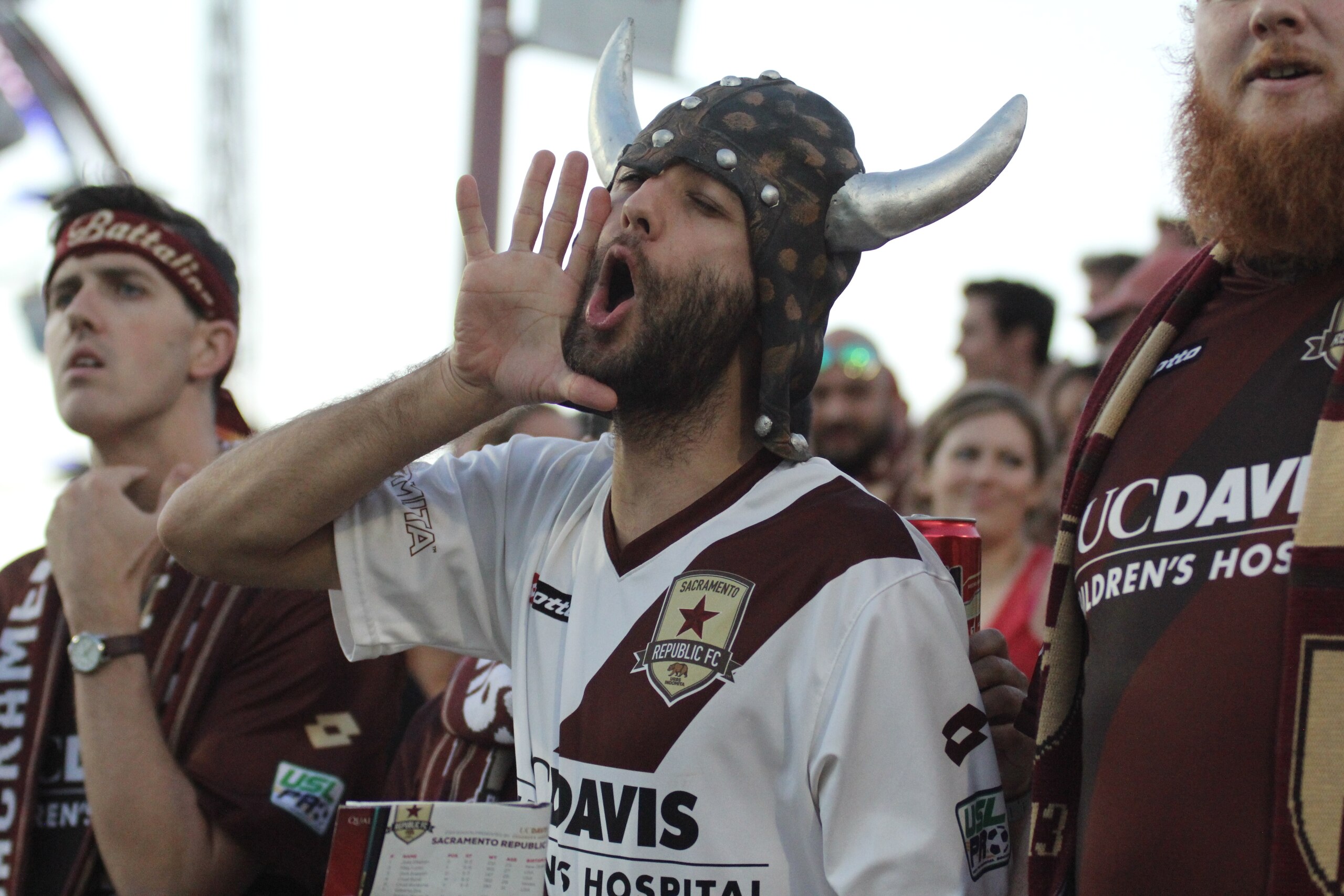
Republic FC is the United Soccer League’s most popular team by far, setting attendance records in 2014 and 2015 while averaging 11,323 fans per match this past season. The Republic FC sold out every home game in 2015 at Bonney Field and had to cap season tickets at 9,500 to ensure open seats at the gate. The hiring of longtime MLS head coach Preki and some shrewd player signings helped Sacramento win the league title in 2014. In its second season, the team again made the playoffs.
Smith was able to attract an investment group led by Sacramento Kings minority owner Kevin Nagle, who became the team’s managing partner, and Nagle courted 49ers owner Jed York and others. The political climate in Sacramento was also favorable to formulating a plan for a soccer-specific stadium, and the land and funding were quickly secured.
“Build a platform that proves the market. That was the goal, and that was what we did,” Smith says.

Suddenly, the city once slotted 28th on the list of potential expansion sites had the attention of Garber and other league officials and was added to the short list of expansion cities. Republic FC could be in MLS by 2020—much depends on what happens with David Beckham’s franchise in Miami—or it could take longer, but the question now is not if Sacramento will house an MLS team, but when.
Republic FC’s emergence as a viable option underscores what is most important to the men who run MLS and own its teams: certainty.
They want franchises in proven markets, run by respected and well-heeled owners, and a modern, soccer-specific stadium in place or on the way. If MLS were to allow a team to play its way into the league via promotion and relegation, it would have control over none of the above.
Additionally, why would MLS and its owners allow a team to play its way in to the league for free when so many will pay for the privilege? In 2014, New York City FC paid MLS a $100 million franchise fee, and Republic FC’s owners will gladly pay that amount if given the chance. That income stream is vital because for most of the league’s existence, its teams have lost money (and some still do).
Philip Anschutz, for one, funded six franchises during MLS’s early travails—he has been called the savior of the league—and has endured losses that might exceed $100 million. So, imagine Garber trying to convince Anschutz or another original investor that his team should get relegated.
Hey, Philip, I know you saved the league again and again, but your Los Angeles Galaxy are going down, and you’ll lose millions more as a result because, sorry, that is what fans want.
Proponents of promotion and relegation hate when the concept is viewed through the cold reality of dollars and cents. They claim it disregards the impact promotion/relegation would have on the quality of play across all levels. They also argue the excitement generated by promotion and relegation would increase interest in the sport, which would lead to more tickets being sold, more television viewers and, in the end, more money for the owners.
But viewed strictly as a business proposition, there is no cost certainty in promotion/relegation. Embracing it now would be making an investment that is certain to result in losses (for the owners of the teams that go down) and not certain to increase revenue. And “certain” is the key word.
Could promotion and relegation have long-term financial benefits for the league? Sure. But anyone who says they can quantify those benefits is lying.
“There is no doubt that promotion and relegation holds teams accountable, that it forces teams to keep innovating, which is great. And there is no doubt fans love the competition and excitement. But on the business side, it is just not smart for MLS teams,” says Kevin Goldthwaite, a former MLS player and Sacramento’s vice president of football administration. “You can’t look at the issue just as a fan.”
Dave Galas is not just a fan. He is the founder and managing director of Lane United FC, a semi-pro team in Lane County, Oregon, which includes the Eugene/Springfield metropolitan area. Lane United plays in the USL Premier Development League, the fourth and bottom tier of soccer in the U.S. When a big business like MLS acts strictly in its self-interest, there is usually a little guy who feels shafted. Galas is one of those little guys.
Galas, 46, founded Lane United in 2013 after he quit working as an engineer in Portland, and he and his wife moved to Eugene, where Galas went to college at the University of Oregon. Galas and his brother, John, who previously worked for the Timbers and Real Salt Lake organizations, have long been passionate about soccer and wanted to bring a team to the area. They raised about $50,000 (the PDL franchise fee) from local investors and built a roster of college players and others John had previously coached.
Dave Galas’ goals for Lane United were modest.

“In the original business plan we submitted to USL, which controls PDL, we laid out a timeline and plan for us to move into a downtown stadium and move up to USL in three to five years,” he says. “The problem is that while we have stuck to our plan, USL has since affiliated with MLS and has raised the franchise fee to sky-high. They are now only focusing on big markets.”
The best argument for why MLS and soccer in this country needs promotion and relegation is made by people like Galas, those toiling on the bottom rung of soccer, in a league with more than 60 teams spread across North America. Their case centers not on financials but on an irrefutable fact: The more professional teams that are committed to player development, the better it is for the sport.
“In England, Italy, Germany and elsewhere, a guy can take a club and win and work his way up,” Galas says. “But not here because MLS wants to be the NBA. But what MLS doesn’t understand is that the farm system for the NBA is working. The farm system for soccer in this country is not.”
That is a charged statement that requires some unpacking. What Galas (and others) believe is that choking the ability for teams to move up via promotion/relegation contributes to a system that discourages investment in the game at the local level.
If Lane United and clubs like it had a path upward that didn’t require millions of dollars in franchise fees, if they could win their way up to the top level, those clubs would theoretically spend heavily on scouting and player development. A club like Lane United isn’t able to buy a Clint Dempsey or a Michael Bradley, but it can mine and develop their successors.
“If there was promotion and relegation and some investor came and gave me a million dollars, what would I do with that money?” Galas asks. “I would take over the Lane County Fairgrounds, which is a wreck, and put in a massive sports facility and fields and build the infrastructure for a European-style development academy system. I would build the best youth and player development system in the country.
“But what investor is going to do that if there isn’t a way to get promoted up the chain?”
MLS is asking ownership groups like the one in Sacramento to spend $100 million (or more) to buy into the league.
“But wouldn’t it be better for the sport if teams in the lower divisions invested that $100 million over many, many years in infrastructure and on developing the game in their area?” Galas says.
Last year, USL applied to the United States Soccer Federation to go from Division III to Division II status, a move that Galas took as an ominous sign. If USL becomes a second-tier league, it will be one level below MLS. That could be cast as a positive—a more robust pool of second-division teams is essential to a promotion/relegation system—but there is a problem.
USL is filled with MLS reserve teams—11 of the 29 franchises are owned by an MLS club and another nine are affiliated with one. In England and in other countries, reserve teams play outside the divisions that have promotion and relegation. MLS/USL, on the other hand, is creating a setup that more closely resembles a Triple-A baseball league.
“You can’t reach enough players if you only have tentacles coming down from MLS clubs. You need a broad base of teams all over the country at all the different levels,” Galas says. “MLS is essentially saying we don’t care about the base. But MLS has all the power, so I don’t know what can be done about it.”
Here is something that can be done, something that won’t come soon or easy, and something that, if it occurs, if the stars align, could see promotion and relegation come to the U.S.:
Another league—not MLS—could introduce it first.
There is an economic concept known as disruptive innovation. In brief, it is where a new product or idea disrupts an existing market, typically by making something available to consumers that was previously unavailable to them. It isn’t perfectly applicable to the topic of promotion and relegation, but the broader meaning sticks: If MLS won’t bring promotion/relegation to the U.S., another soccer league could do it and alter the landscape.
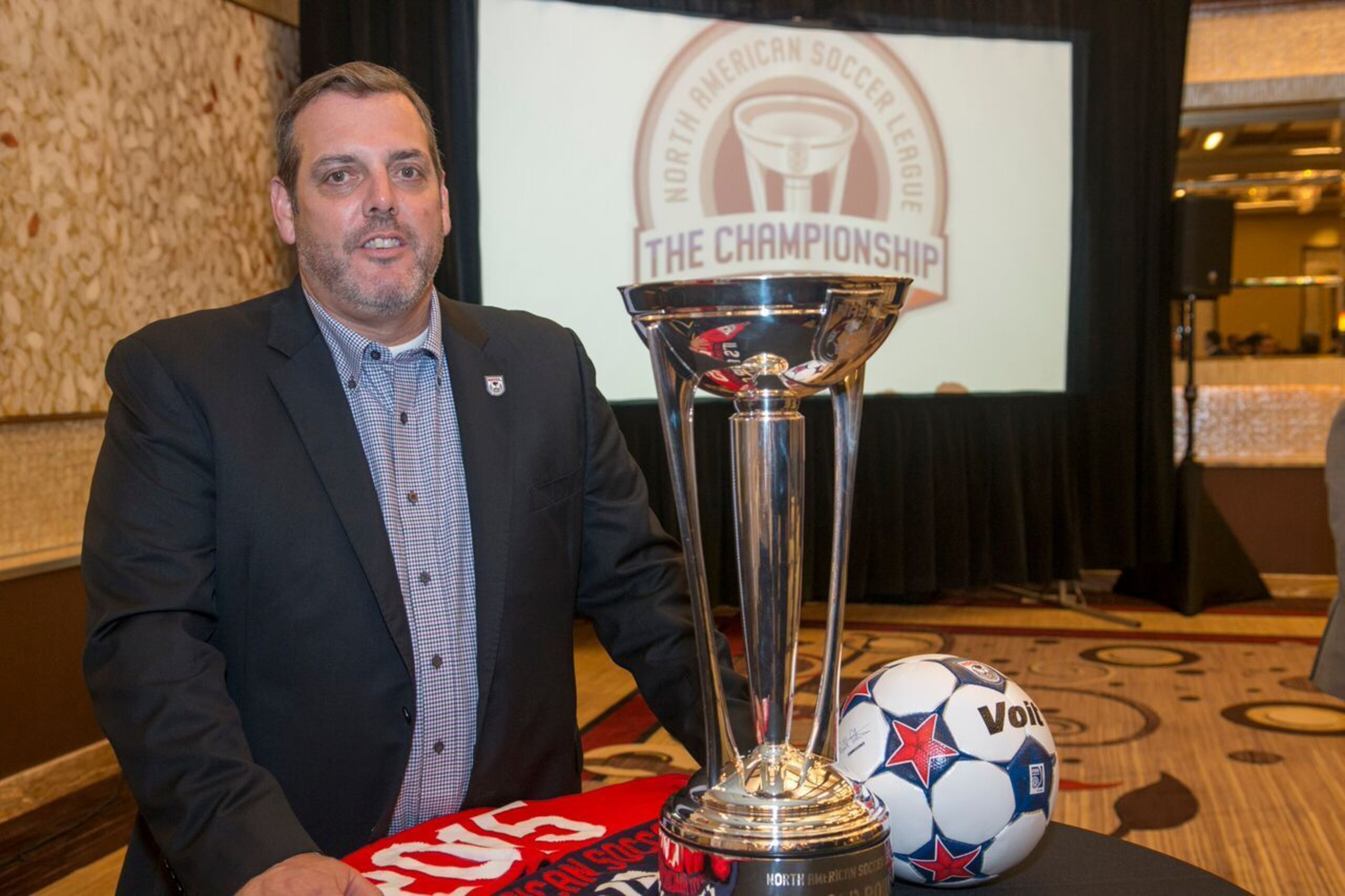
The only real possibility is the North American Soccer League.
“We could introduce it ourselves and get the train rolling,” says Bill Peterson, the NASL commissioner.
For that to happen, NASL would first need to get bigger.
It is currently a Division II league with 12 teams, most of them in good-size markets (Indianapolis, Jacksonville, Tampa Bay, Ottawa, etc). NASL wants to grow, and some of that growth has and will continue to come in markets that already have MLS teams (New York and Chicago) and in markets underserved by professional sports (like Oklahoma City).
The goal would be to get to 24 teams in the next two to three years, establish a strong following for those teams and then reward the fans by breaking the league into two tiers and introducing promotion and relegation.
NASL doesn’t need to reach MLS’s popularity to have an impact; it needs only to become popular enough that MLS sees in the league an opportunity. In 2022, MLS’s television contract is up. Just before then, MLS officials could approach potential television partners and propose they purchase not only the rights to broadcast MLS games but also rights for games in a second division.

That second tier would be comprised of the plum markets from the NASL and the USL, teams unaffiliated with MLS franchises. There are enough teams located in good markets in both the NASL and USL that winnowing it to 24 would be a challenge, but the leftovers would form a third division.
The jewel in that proposal would be the broadcast rights to the promotion and relegation battles late in the season, the icing on top of the large increase in games a TV partner could offer viewers.
“If you compare the excitement promotion and relegation would generate with the excitement of 60 percent of [MLS] teams getting into the playoffs, it would be night and day,” Peterson says. “So, sit down with [the NASL], create a league below [MLS] over the next three years and then in 2021, just before the TV contract is up, go out in the marketplace and say, ‘We want to triple the broadcast rights we previously had.’”
Would MLS see enough of an increase in television money to make the possibility of relegation palatable to its existing owners? Maybe. Maybe not.
In England, when a team goes down from the Premier League to the Football League Championship, it receives a parachute payment to soften the blow. It is paid out over several years, like a subsidy that buttresses the relegated club’s efforts to get back to the top flight. In England, that payment is typically more than $10 million for clubs that have been in the top flight for many years. MLS couldn’t offer anything close to that, but it could it subsidize teams on the drop with, say, $1 million staggered over a few years?
There are, admittedly, a lot of “ifs” in that plan, but it is exciting to think of the ramifications for the sport at all levels.
“You’d likely need four or five or even six divisions of teams to get in every community in the country,” Peterson says.
That would take time to organize, but if you give all teams a path to the top, it would accelerate investment at the lower levels.
People like Dave Galas at Lane United may not find someone willing to invest a million dollars in their club, but they could locate investors willing to part with, say, $100,000 (currently the club’s total operating budget). It is a form of trickle-down economics that might actually trickle down.
The NASL could become the soccer version of the American Basketball Association. The ABA brought a lasting innovation to basketball: the three-point shot, which the NBA adopted. Similarly, the NASL could help MLS see the benefits of promotion and relegation.
In the end, any path to promotion and relegation in the U.S. hinges on the people who want it most: the fans. If they prove the market for promotion/relegation by supporting the NASL in droves, MLS might see the potential financial benefit is worth the risk.
“Leagues all over the world make this work, and if we are going to ever be a top [soccer] country, we have to make it happen eventually,” Peterson says. “A good start would be for people to stop focusing on why it can’t work. Let’s start talking about how we can make it happen.”
George Dohrmann is a Pulitzer Prize-winning journalist. He is a contributing writer at Sports Illustrated, where he worked for 14 years, and previously was on staff at the Los Angeles Times, where he covered the inaugural season of the Los Angeles Galaxy, and the St. Paul Pioneer Press. He has written extensively about MLS and the U.S. men’s and women’s national teams.


.jpg?w=2560 "NCAA Sues Ohio Governor (AP)")