

NBA Draft 2011: The Top 15 Rookies and Their Best Case NBA Comparisons
The transition from the NCAA to the NBA is one of the toughest in the sports world.
We've seen dominant college players like Adam Morrison and J.J. Redick fall to the wayside once they've gotten to the NBA.
However, this year's lottery picks look promising. These are what each of them has the potential to become with hard work and dedication.
Marshon Brooks (New Jersey Nets)
1 of 16
Best Case: Nick Young/Jordan Crawford
Now he wasn't a lottery pick, but Marshon Brooks will become one of the best scorers in the NBA.
Somehow, someway, he just finds ways to put the ball in the basket on a consistent basis. Brooks averaged 24.6 points, seven rebounds and 1.2 blocks per game at Providence.
His breakout game was when he dropped 52 points on Notre Dame, and ever since then, he's been full steam ahead.
Brooks has a smooth game to him. He can shoot the three with confidence, he's got the ability to create his own shot anywhere on the court and his long arms allow him to finish at the rim with ease.
Brooks lulls his defenders to sleep with his crafty ball handling skills, and, most of the time, tends to make the correct decision when penetrating the lane.
Playing alongside Deron Williams in New Jersey, Brooks will get plenty of open looks and opportunities to put points on the board. He just needs to get stronger and work on his defense, and he'll become a premier player in the league.
Bismack Biyombo (Charlotte Bobcats)
2 of 16Best Case: an athletic Ben Wallace in prime/a 6'9" Dwight Howard
Bismack Biyombo is the best defensive big man in the Draft, by far.
Biyombo averaged 2.3 blocks in 17 minutes per game in the Euroleague. He's a freakish athlete, and he's got a pretty decent post game, under the basket.
Biyombo's biggest issue, however, is his offense. His footwork is far from subpar, and he's got absolutely no left hand. Additionally, he tends to be sporadic with his jumping, causing him to lose out on several rebounds per game.
He could really help the Bobcats if he can protect the middle. Especially without Tyson Chandler down low, Charlotte has no one to protect the inside.
Alec Burks (Colorado)
3 of 16
Best Case: a slower version of Dwyane Wade/a more consistent Evan Turner
Alec Burks definitely needs to get stronger, but he'll be yet another slasher that causes havoc for big men around the league.
Burks gets to the rim whenever he wants, combining his quickness and athleticism to finish at the rim with ease. He averaged 20.5 points, 6.5 rebounds and 1.1 steals and was one of two unanimous All-Big 12 Team picks.
Burks won't become Dwyane Wade; he's not nearly quick or electrifying enough. But he can become a great scorer in the NBA. Certainly better than Evan Turner's turned out.


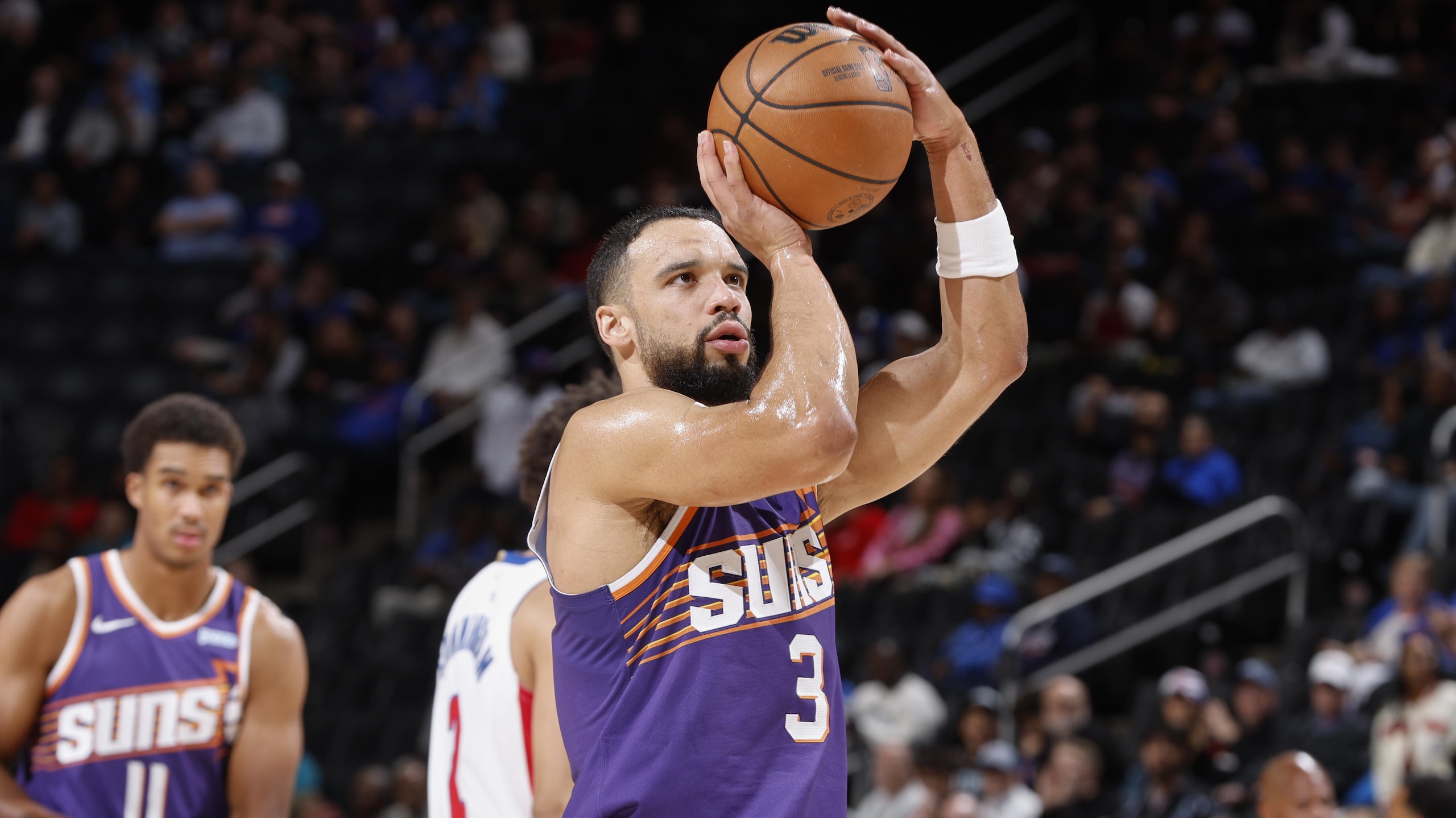
Marcus Morris (Houston Rockets)
4 of 16
Best Case: Lamar Odom
Marcus Morris isn't an excellent shooter, nor an excellent defender, but he does a bunch of different things well, making him one of the most versatile players in the draft.
Morris is a combo forward, being able to play either the three or the four and knock down mid range jumpers on a consistent basis. His go-to move, Morris can also knock down turn-around jumpers with ease.
The biggest problem with Morris is defining his true position. He's not big or strong enough to play the 4, and his skills aren't up to par with a true 3. The Rockets will need to develop him, but Marcus Morris could very well become an asset that would definitely help them out.
Markieff Morris (Phoenix Suns)
5 of 16
Best Case: Drew Gooden (in prime) with range/Lamar Odom
Just like his twin brother, Markieff Morris does a lot of things that the prototypical power forward does not. He's got consistent range out to the three-point line and surprising ball-handling skills for someone his height.
Morris has yet to develop a mid range game, but he can score around the rim and out at the thee-point line. He averaged 13.6 points, 8.3 rebounds and 1.1 blocks per game and shot 42.4 percent from downtown.
He'll be the perfect fit to replace Amar'e Stoudemire, and though he might not be as dominant at STAT, Morris will help get the Suns back to the playoffs.
Jan Vesely (Czech Republic)
6 of 16
Best Case: Andrei Kirelinko (in prime)
One of the more athletic international prospects in the draft, Jan Vesely will surely have an Andrei Kirilenko-like career.
He definitely struggles guarding smaller, quicker opponents, but Vesely has great size and length to become a very effective player in the NBA. Known for his supreme dunking ability, Vesely has athleticism not normally found in European big men.
The best facet to his game is what he does off the ball. Vesely is an incredible transition scorer and makes very precise movements.
Klay Thompson (Washington State)
7 of 16
Best Case: 2006-2007 Mike Miller/Kevin Martin
Klay Thompson is definitely one of the best shooters in the draft.
He's a bit weak to be a 2-guard in the NBA, but Thompson possesses the passing ability, ball-handling, and size to develop into a great player.
He averaged 21.6 points, 5.2 rebounds, 3.7 assists and 1.1 steals per game, while shooting 39.8 percent from three. If the Golden State Warriors are definitely going to trade Monta Ellis, Klay Thompson wouldn't be a bad place to start replacing him.
Kawhi Leonard (San Diego State)
8 of 16
Best Case: Gerald Wallace/Shawn Marion (Dallas)
Kawhi Leonard is an instant defensive upgrade for the San Antonio Spurs, who acquired him by trading Goerge Hill and a 2005 draft pick to the Indiana Pacers.
I'm not too sure how Coach Pop will utilize him, but Leonard brings athleticism and size that are vital to the success of a defense. Leonard averaged 15.5 points, 10.9 rebounds and 2.3 steals per game at San Diego State.
He wasn't the greatest shooter, only shooting 29 percent from downtown, but Leonard used his athleticism to finish above and around defenders at the rim. His 7'1" wingspan makes him a high-rate rebounder, and he had the largest hands by far at the draft.
The best part about his game is his versatility. Leonard can guard the shooting guard, small forward or power forward, making him a hot commodity in the NBA.
If Coach Pop can find a way to integrate Leonard in the Spurs game, he will bring a new sense of youth and energy to one of, if not the oldest team in the league.
Jonas Valanciunas (Toronto Raptors)
9 of 16
Best Case: Pau Gasol
Jonas Valanciunas has a lot of great traits for an NBA center, especially his great touch around the rim.
The international big man averaged 12.8 points, 8.5 rebounds and 2.2 blocks per game. The Pistons definitely need a center like him to refocus their franchise around.
Valanciunas has a great stroke from mid range, and is an above average rebounder. He shot 83 percent from the free-throw line—a very good percentage for a big man—and has a wide array of moves to finish around the rim with.
He will crack the starting lineup immediately, next to or over Andrea Bargnani, and Jonas Valanciunas will be an effective player for the Toronto Raptors.
Tristan Thompson (Cleveland Cavaliers)
10 of 16
Best Case: a scorer version Tyrus Thomas/a less athletic Josh Smith
To complete the Cavaliers' dynamic duo, Cleveland drafted Tristan Thompson out of Texas.
Though he's rather undersized for the power forward position at 6'9", Thompson used his 7'2" wingspan to grab 7.8 rebounds (three of which were on the offensive glass) and block 2.4 shots per game.
Thompson only averaged 13.2 points per game, but he just had a knack for finding ways to put the ball in the basket. He wasn't the best shooter, but he got the job done.
Enes Kanter (Kentucky/Europe)
11 of 16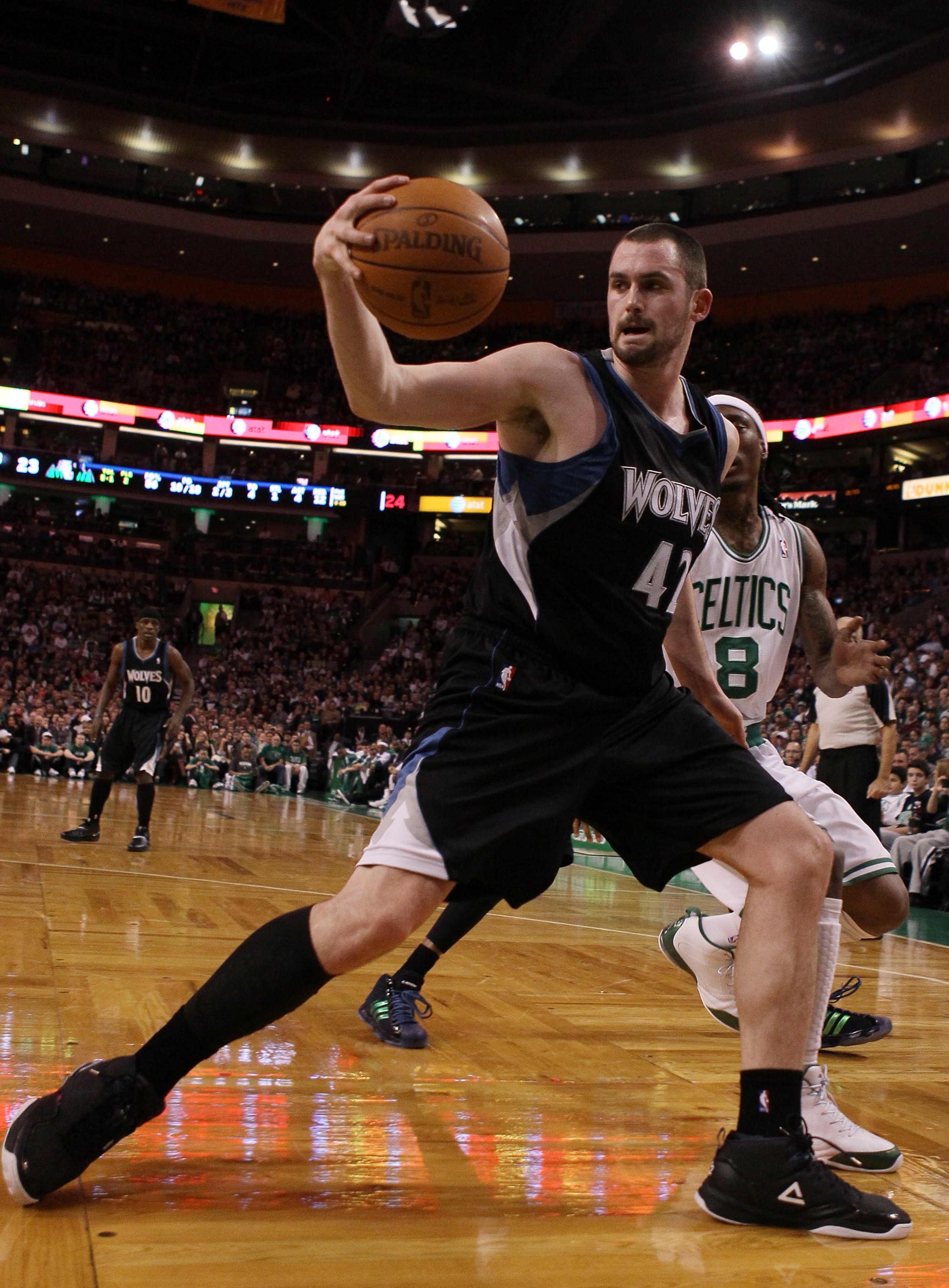
Best Case: Carlos Boozer/Kevin Love
Even though he sat out the entire 2010-2011 season due to eligibility problems at Kentucky, Enes Kanter dropped 18.6 points, 16.8 rebounds and 1.8 blocks during the 2009 Euroleague Championships.
Kanter has consistent range out to the three-point line when set and uses his great footwork to score in the low post. And at the 2010 Nike Hoop Summit, he dropped 34 points and 13 rebounds in a mere 24 minutes.
Now for the bad part. Kanter hasn't played since then. He's a great player, undoubtedly, but he's slower than many NBA players and exhibits laziness at times. If he puts energy into his game for a full 48 minutes, he'll be a feared center in the NBA.
Brandon Knight (Detroit Pistons)
12 of 16
Best Case: 2005-2006 Chauncey Billups
The fact that Brandon Knight was drafted to the Detroit Pistons makes this comparison even more concrete.
Knight has everything it takes to become the next Chauncey Billups. His is 6'3" height and 6'7" wingspan allows him to use his body to play defense and finish well around the rim. Knight's got a great mid-range to three-point jumper and can create a shot for himself with ease.
One of the most important factors, Brandon Knight finished his freshman year at Kentucky with a 4.0 GPA, which implies that he's responsible and won't cause off-court issues. He must develop his ball-handling and playmaking skills, but with the right fine tuning, Knight could become a great point guard in this league.
Kyrie Irving (Cleveland Cavaliers)
13 of 16
Best Case: Deron Williams
Now, it will take YEARS for him to become the elite point guard that Deron Williams is, but Kyrie Irving definitely has what it takes to be a premier point guard in the NBA.
The jumper is clearly there. If you leave Irving open, it's like shooting yourself in the foot. But what has yet to come to him, which in most cases takes time to develop, is the court vision and passing ability.
Irving only averaged 4.3 assists last season, with 2.5 turnovers to go along with it. Granted he was injured for most of the season, but he's got to do a better job leading his team by setting other players up to become a top-tier NBA point guard.
Regardless, Kyrie Irving is an incredible talent and is bound for All-Stardom. His scoring ability is what teams salivate at, and he'll be the crutch on which the Cleveland Cavaliers rely on to bring them back to the postseason.
Let's just hope he doesn't walk out on them.
Derrick Williams (Minnesota T'Wolves)
14 of 16
Best Case: Derrick Williams
It's almost impossible for me to find the perfect NBA comparison to Derrick Williams.
At first I wanted to say Michael Beasley, but when you think Beasley, you think a talented, immature player. Then, I wanted to say a more mature Michael Beasley, but Williams is a better rebounder and inside scorer than him.
Next I took the Al Harrington route, someone that does a little bit of everything. But Derrick Williams does A LOT of everything. He shot 56.6 percent from deep last season, not to mention his thunderous dunks and his ability to score on the block.
So that was it for Al Harrington.
Therefore, this player comparison of Derrick Williams I open up to you, the reader. Who do you think he compares best to in the NBA today?
A more athletic Kevin Love? Maybe a poor man's Carmelo Anthony? What do you think?
Kemba Walker (Charlotte Bobcats)
15 of 16
Best Case: a less athletic Derrick Rose/a shoot-first Chris Paul
After moving Stephen Jackson to the Milwaukee Bucks, Charlotte is looking to build their team around the sensational point guard, Kemba Walker.
Walker averaged 23.5 points per game at UConn, becoming the first player in school history to break the 900-point mark with 965 points in the season. He also averaged 5.4 rebounds and 4.5 assists per game, while using his quick hands to average 1.9 steals per game.
Michael Jordan made the smartest move in picking up Kemba Walker with the ninth overall pick. He's got unmatched quickness, a consistent jump shot and the ability to explode off of the ground.
A leader both on and off the court, Walker will take Charlotte by storm and possibly return them to the postseason.
Jimmer Fredette (Sacramento Kings)
16 of 16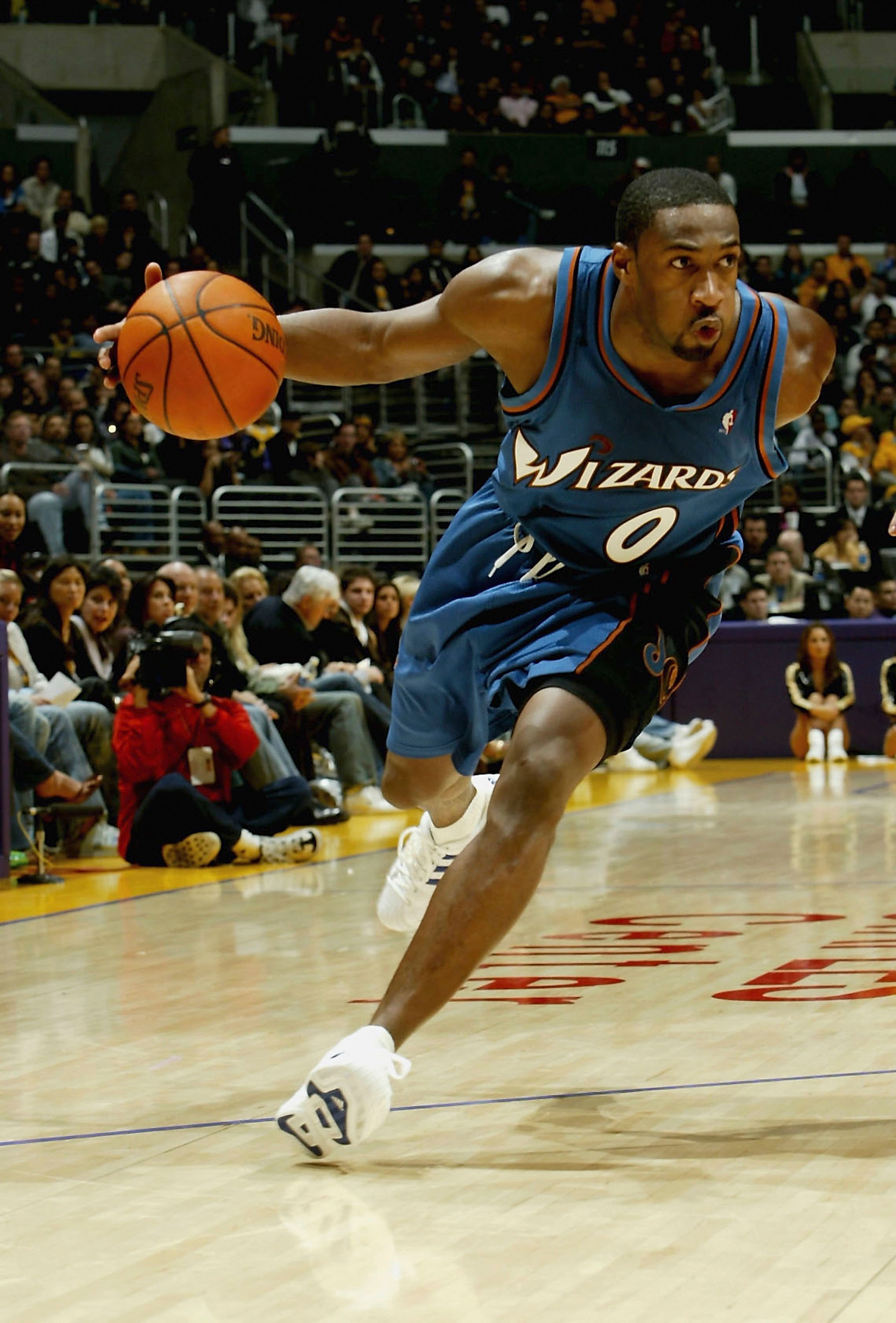
Best Case: Gilbert Arenas (2005-2006)
Gilbert Arenas was never a super athlete, but he used his unique mix of size, strength and ball-handling skills to get to the basket. He was a deadly shooter, and at times, he was even a playmaker.
Jimmer Fredette could take the NBA by storm if he can combine his nasty crossover with his supreme shooting ability. Against Gonzaga in round 3 of the NCAA Tournament, Fredette was simply unstoppable with his 34 points in the landslide victory.
If you think about it, Fredette and Arenas in his prime have striking similarities:
- the cocky swagger
- the supreme shooting range
- the nasty crossover
- the ability to finish around the rim
When Jimmer let's his jumper go, it's almost certain that it's going in. With range of 30 feet and beyond, he will be a nightmare for all opponents.

.jpg?w=2560 "Grading WWE Raw 🔠")


.jpg?w=2560 "2 NFL Officials Suspended")
.jpg?w=2560 "Viral Rams Coach Vid 🖕")