NBA Power Rankings: Michael Jordan and Each Franchise's Greatest Player Ever
A few weeks ago, I concluded a series of the "Greatest Ever," creating five slideshows of 30 players, one from each position on each team.
Coupling the information I used in those slides with my new research, I made each decision and explained why that player was the go-to guy in that franchise's history.
For example, Michael Jordan is easily the Bulls' best player, and there are several reasons enclosed why this is so.
Without further ado, here is the best player in each team's history.
Atlanta Hawks: Dominique Wilkins
1 of 30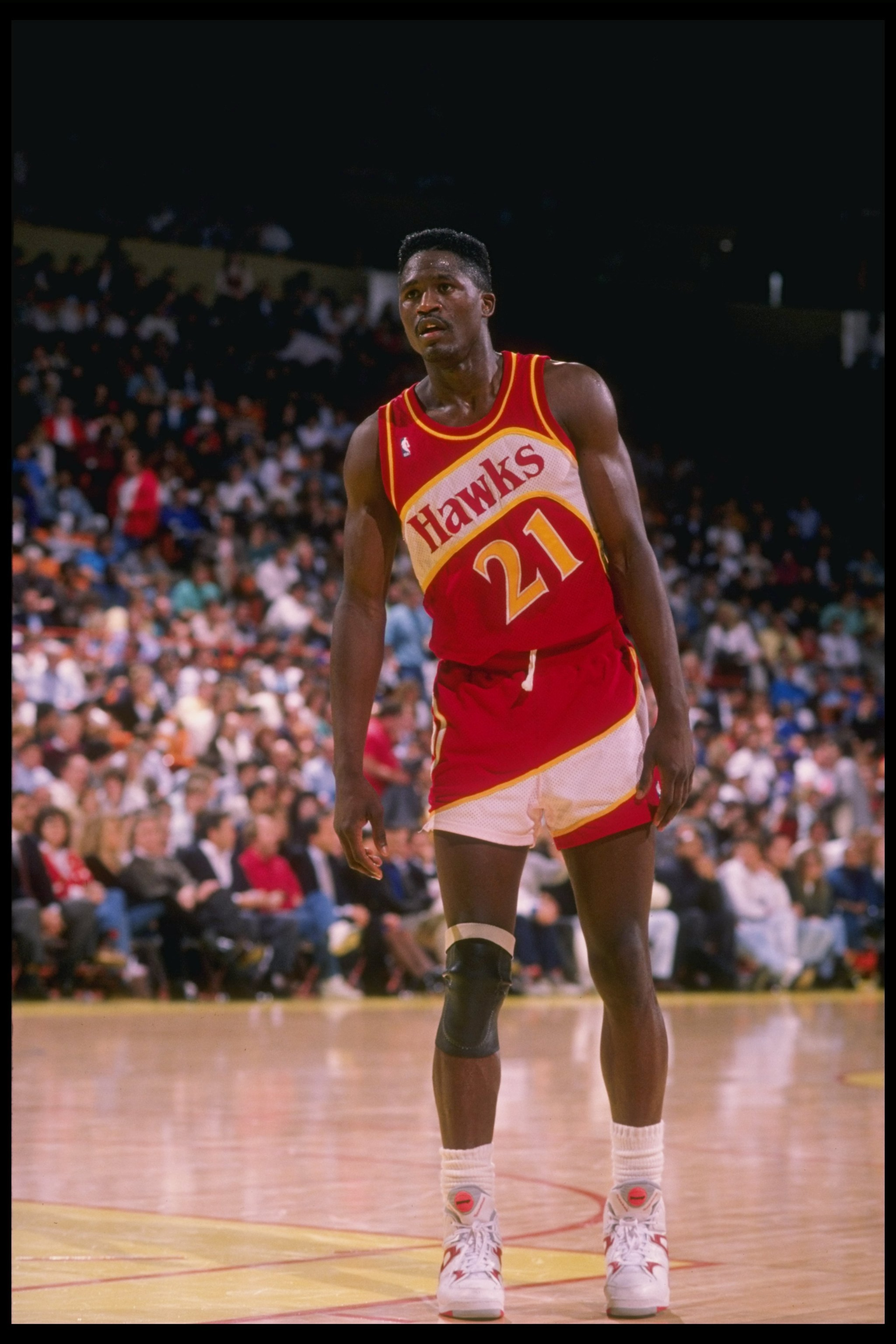
Years as a Hawk: 1982-1994
Key Achievements: Nine-time All-Star, 1/4/2-time All-NBA (first, second and third team respectively)
"'Nique" practically defines the Atlanta Hawks.
He was, simply put, basketball's greatest in-game dunker of all time.
In 12 full seasons in A-Town, "The Human Highlight Film" averaged 26.4 points and seven rebounds per game.
All in all, he had five different seasons where he put up better than a 29-point-per-game clip, and in 1986 he claimed the scoring title, averaging 31 per game in that campaign.
He was one of the 1980s' best forwards, a man whose defining characteristic was his ability to literally take up the Hawk name and fly. Everyone knows of his epic dunk contest battles with Michael Jordan, most notably in '88.
The one thing missing from Nique's trophy case is a championship.
Boston Celtics: Bill Russell
2 of 30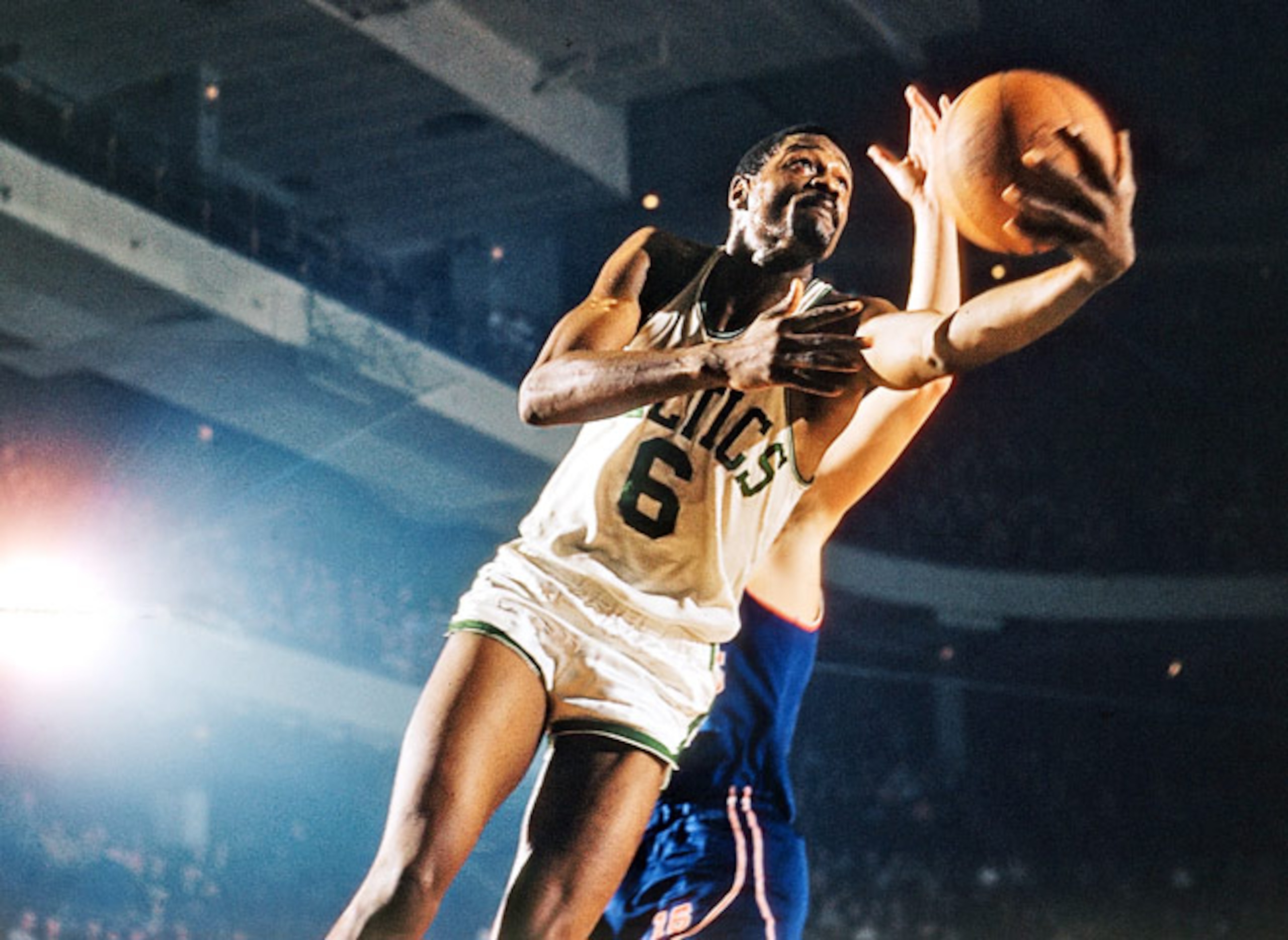
Years as a Celtic: 1956-1969
Key Achievements: 11-time NBA champion, five-time NBA MVP, 12-time All-Star, 3/8/0-time All-NBA, one-time All-Defensive, No. 6 jersey retired
The Boston Celtics are a team that has won more championships (17) than any other NBA franchise, and throughout their storied history they have had a plethora of superstars to choose from.
The one that sticks out to me is Bill Russell, for the reasons below.
Oh boy, I could talk about Bill Russell all day. Actually, if you don't mind, I think I will.
First off, I'm a believer in Russ' side in regards to the much-heralded debate between him and Wilt Chamberlain.
Russell is still the greatest champion in the history of professional sports and perhaps the game's best defensive force ever. If they had started making All-Defensive teams before his final year, he would have undoubtedly had at least 10 or 11 selections.
Bill Russell without a doubt changed the game of basketball and is the most under-appreciated player in the history of the association.
Instead of putting up Wilt-like offensive numbers, he opted to play the less traveled and less popular route: defense. He was arguably the best frontcourt defender that the NBA has ever seen and let his teammates, who were more than able themselves, do the majority of the scoring.
The difference between Russell and a guy like Wilt (yes, it's going to become a Simmons-like debate here) is that Russell wanted to win and Wilt wanted to pad his stats. I'm not in any way ripping Wilt, but the truth is that he wasn't the best teammate in the history of basketball; that title belongs to Bill Russell.
In a time where segregation was at an NBA all-time high, Russell rose to the occasion and became the most polarizing figure in the game. When he was refused services in cities around the country, Russell chose not to fight, but to let his game do the talking.
Another thing that separates Russell from the greatest had to do with his stellar basketball IQ. Russ cared and knew more about the game than anybody, Red Auerbach (his coach) included. Red, while being a phenomenal coach, was additionally a friend of Bill's, and their friendship is still one of the sport's most desirable.
The funny thing is that I haven't even mentioned his championships yet. For any of you who have been living under a rock, Bill Russell had 11 titles in 13 years.
Words can't even begin to describe how important he was to the Boston Celtics. He has meant more, even 40-plus years after retiring, to his respective franchise than any player not named Michael Jordan.
He averaged 15 points, 22.5 rebounds and better than four assists per game during his time as a legendary Celtic—but even those numbers don't tell the full story of his ultimate impact on the game.
He didn't need to be Wilt and score 100 points or have a nickname because, in all honesty, he was that much greater.
Bill Russell is the single biggest pioneer in the history of basketball.
Charlotte Bobcats: Gerald Wallace
3 of 30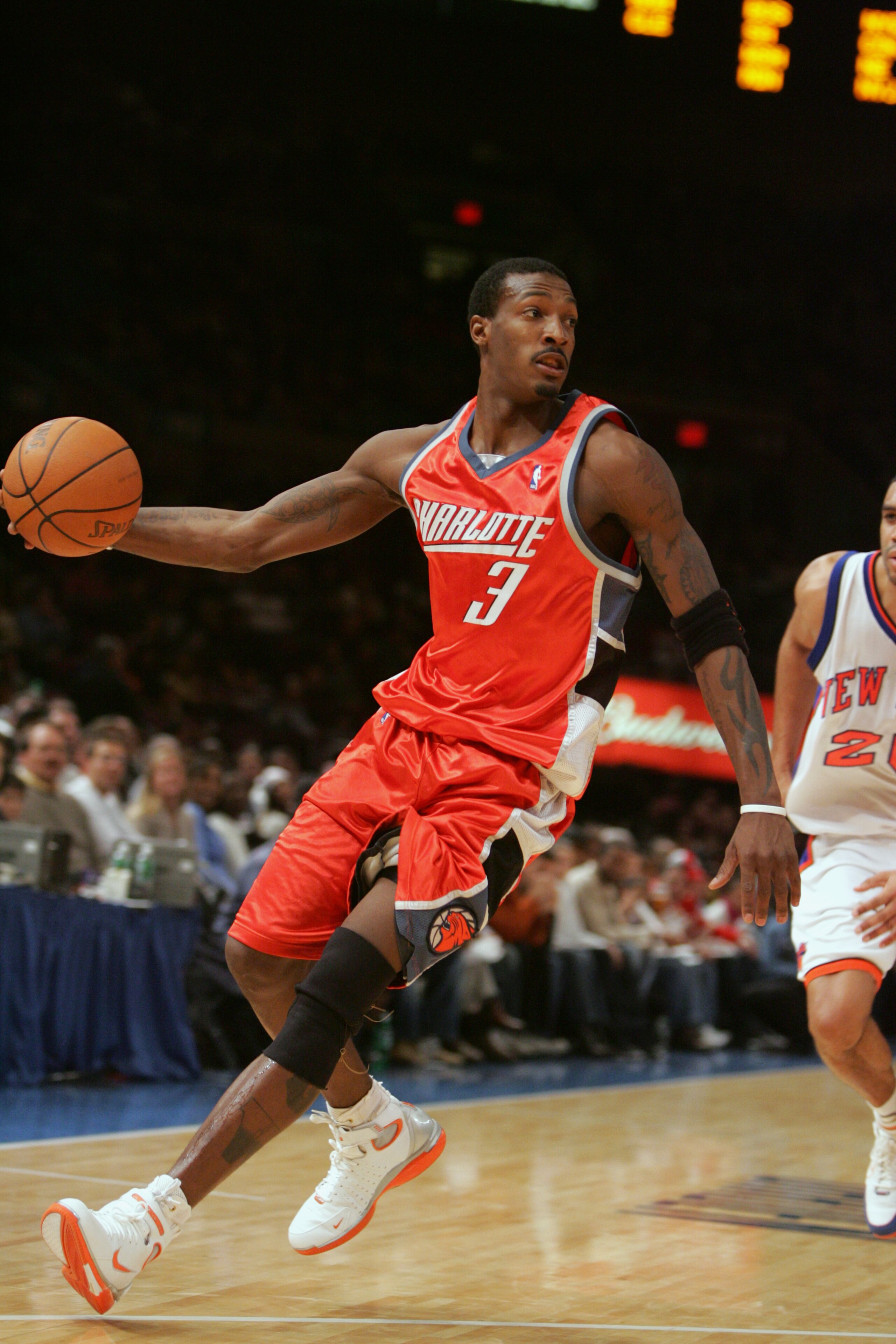
Years as a Bobcat: 2004-2011
Key Achievements: One-time All-Star, one-time All-Defensive
As all "best Charlotte Bobcat" selections are concerned, this one was particularly easy.
Wallace almost singlehandedly led the Bobcats to their first playoff appearance last season while being the cornerstone of the NBA's newest franchise.
He averaged 10 rebounds last season—an amazing feat considering his 6'7" frame and his 220-pound build—to go with 19 points and 48 percent shooting.
He led the team to its first playoff berth last year, and prior to being traded this February he was the only player to be on the squad since its inception in 2004.



Chicago Bulls: Michael Jordan
4 of 30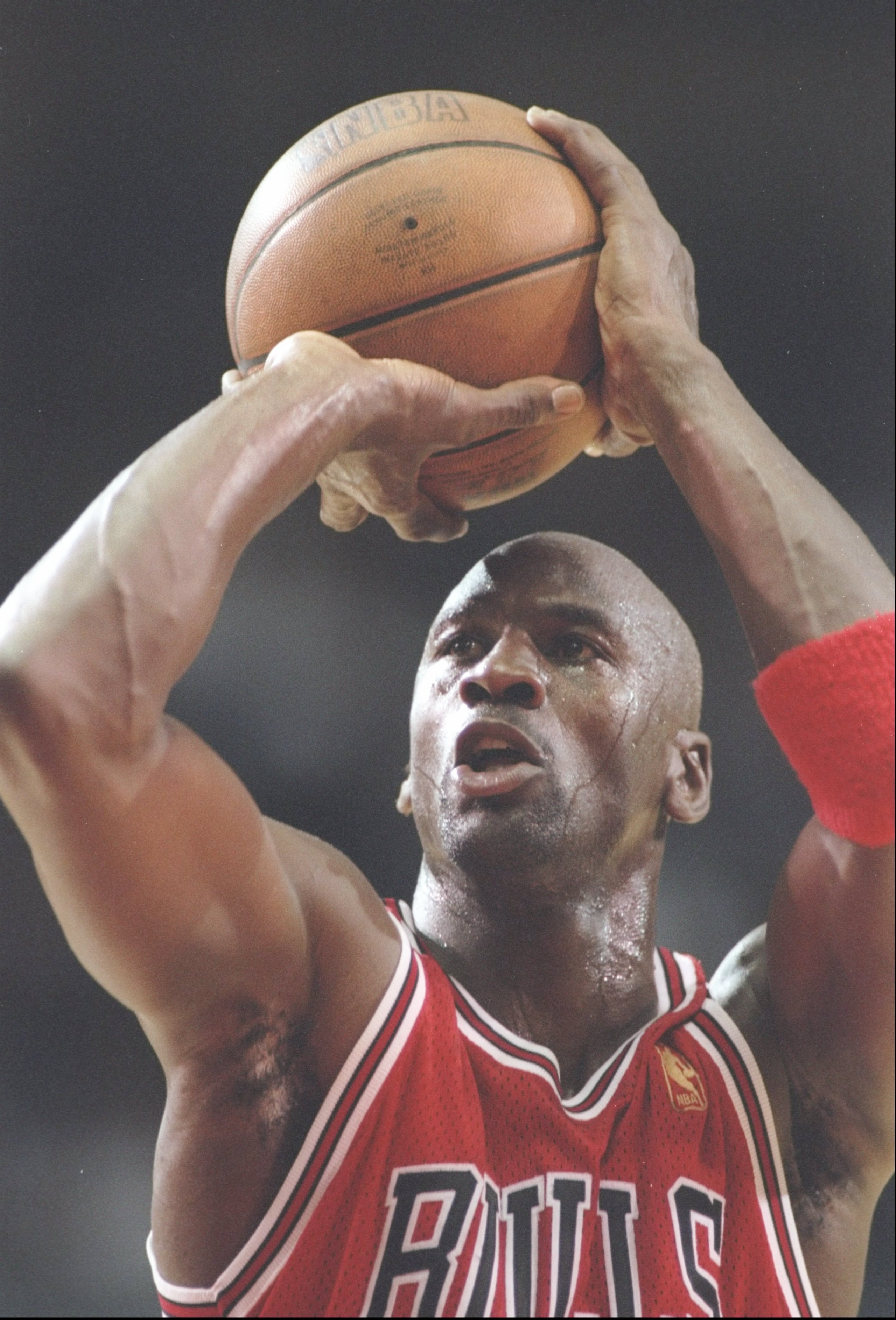
Years as a Bull: 1984-1993, 1995-98
Key Achievements: Six-time NBA champion, five-time NBA MVP, 12-time All-Star, six-time NBA Finals MVP, 10/1/0-time All-NBA, 1985 Rookie of the Year, 1988 Defensive Player of the Year, nine-time All-Defensive
Wow, what to say about the great Michael Jordan in a slideshow about each team's greatest player in franchise history?
Just for giggles, how about this: While there is no clear second, you would need to dock off a decade of Jordan's career just to have someone match up against him for this spot.
Yeah, that's how good His Airness was—no quotations necessary.
He had a career scoring average of 30.1 points per game and collected five Most Valuable Player awards throughout his career, only second to Kareem Abdul-Jabbar's six.
He also displayed his excellent passing ability with a five-assist-per-game career average, and he could rebound like almost no other shooting guard, routinely grabbing more than six per game.
The G.O.A.T. (greatest of all time) was flashy on the court and rivaled Dominique Wilkins as the best dunker in the NBA during his playing days. I don't think anyone is about to forget those epic dunk contest battles between the two during the late 1980s.
MJ was a great all-around player (emphasis on the word "great"), one who could take a team to the playoffs even if it was four-on-five during the entirety of the regular season.
In addition, he was a spectacular defender, as displayed in his nine appearances on the All-Defensive team.
He was so good that he sent the entire basketball universe into a trance when he retired for the first time, in 1993, to play baseball for almost two years.
He was so good that a roster spot was guaranteed for him on the Wizards after he retired for the second time and decided he was going to come back two years later.
Something that goes beyond unnoticed in the career of Michael Jordan was the number of kids he inspired to stick out their tongues as they rose toward their seven-foot rims, myself included. I'll never forget that oversized jersey I had of Michael's, one of the greatest Christmas presents I can ever remember receiving.
I am proud to say I can remember Michael's last three championships, and I'll never forget his impact as well as his legacy in basketball, and neither will the basketball world. In other words, no one else can touch his Airness, and it's going to take a lot to have another.
So uh, yeah, he's the best Chicago Bull ever. His teammate Scottie Pippen finishes runner-up, but knowing Scottie, he'd be all right with it as long as the Bulls were winning.
Cleveland Cavaliers: LeBron James
5 of 30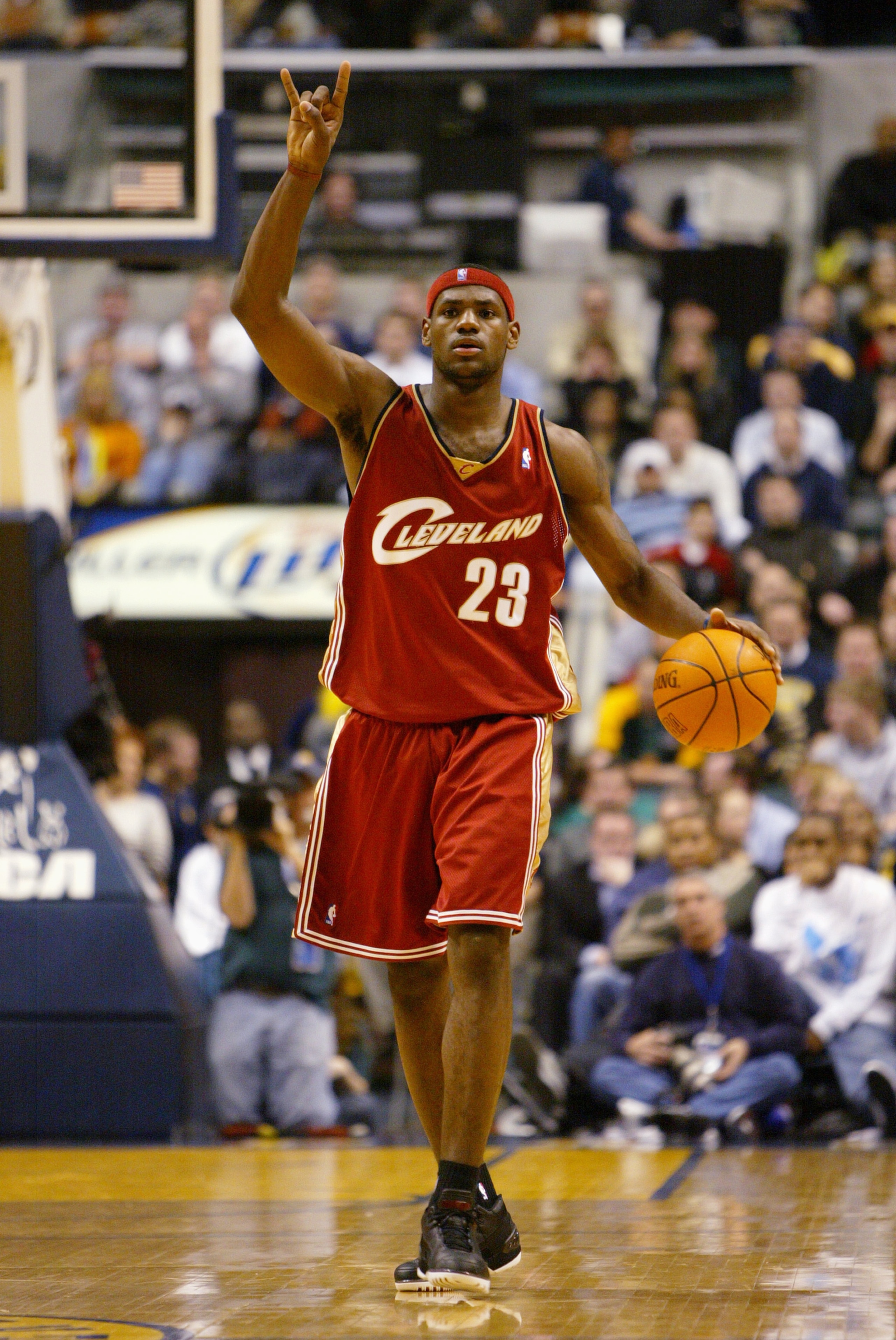
Years as a Cavalier: 2003-2010
Key Achievements: Two-time NBA MVP, seven-time All-Star, 4/2/1-time All-NBA, two-time All-Defensive, 2004 Rookie of the Year
I want to apologize if you're from Cleveland from right now. I debated for a second on whether I should put LeBron James or Mark Price, and then I proceeded to roundhouse kick myself in the rear for even thinking about debating.
When you average about 28 points, seven assists and seven rebounds over seven full seasons, I don't care what kind of departure you had from the city—you will still easily be the best player in that franchise's history 99 percent of the time.
Understanding that King James didn't handle his departure too well with the Cavaliers and the city, he is still undoubtedly the greatest player in the history of the Cleveland Cavaliers franchise.
When you take a team that "features" the likes of Eric Snow, Larry Hughes and Zydrunas Ilgauskas to the NBA Finals, do you really need an explanation?
I could go on and on about what LeBron has done, but I'll try to keep this short so you don't doze off in the middle of this slideshow (I'm impressed if you got past the part where I waxed aimlessly about the talents of Michael Jordan).
Heck, I'm not even the one who should tell you about LeBron, since even he himself displayed superstar talent in his first game as a professional, as he recorded 25 points, nine rebounds, six assists and four steals.
That season, he was just the third player in NBA history to average better than 20 points, five rebounds and five assists, the first two being Jordan and Oscar Robertson—two of the best 10 players ever.
And his defense? He established himself as one of the top two or three help defenders in the league during his tenure by Lake Erie. He never skipped a beat and hustled all the way home on every single possession.
When all is said and done, LeBron will likely go into the Hall of Fame with the team he wins his first title with. If he never wins a championship, you've got to think Cleveland will retire the No. 23 jersey that everyone wants burned in Ohio. But really, that all depends on whether Dan Gilbert is still in charge of the team, I guess.
Although the legacy of LeBron James will one day be better than its current state—which at the moment is arrogant, I suppose—he will still need to pull off that first title to prove he is the absolute team player that I know he is. The point is that he singlehandedly made the Cleveland Cavaliers relevant once more, and for that he will be lauded years from now.
It might be too early to say, but pending a few championships, it might be safe to call Bron the best small forward ever.
Dallas Mavericks: Dirk Nowitzki
6 of 30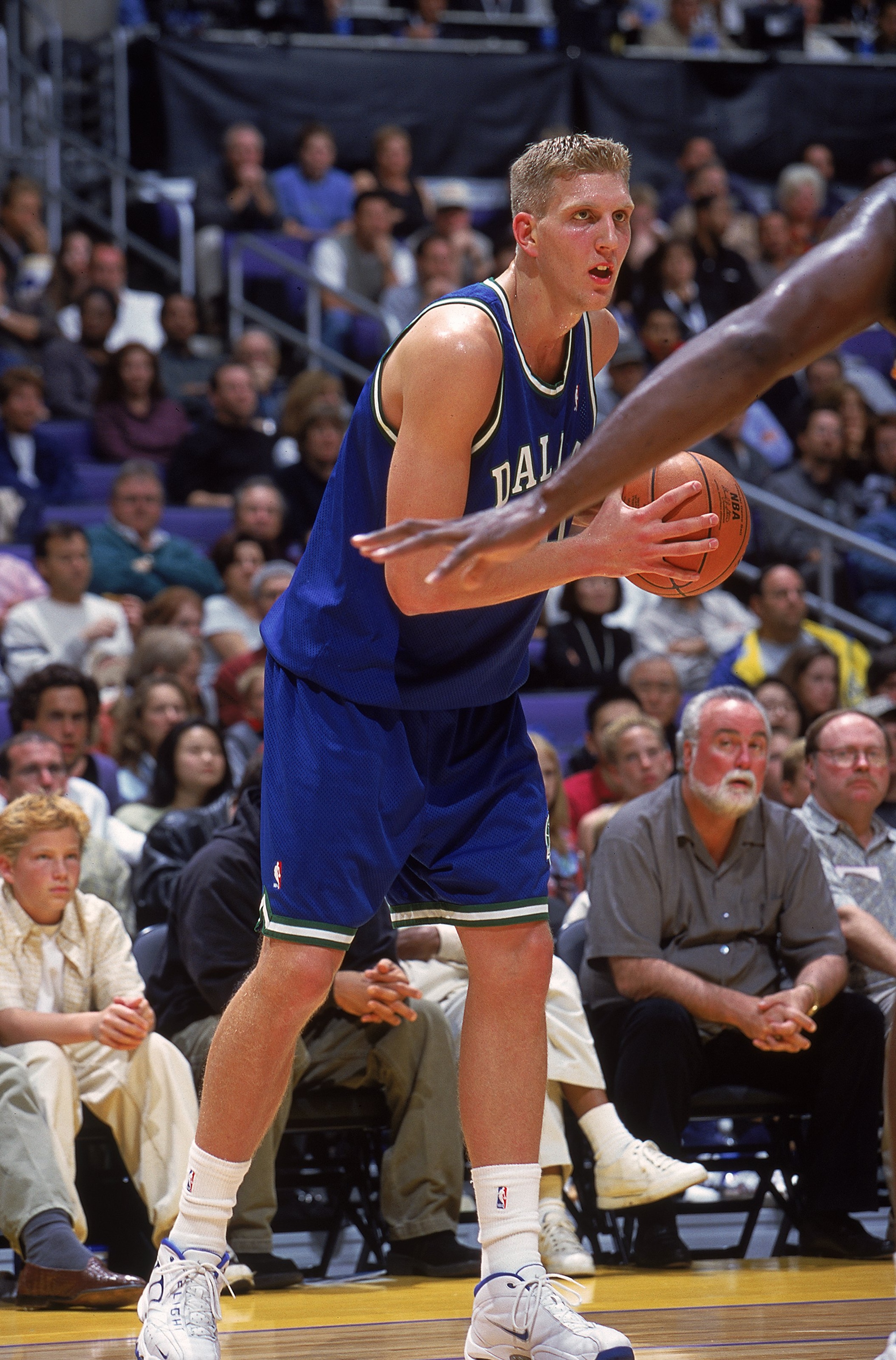
Years as a Maverick: 1999-present
Key Achievements: 2007 NBA MVP, 10-time All-Star, 4/4/2-time All-NBA
From the moment Dirk Nowitzki came into the NBA a dozen seasons ago, we knew what we were getting in perhaps one of the league's best big little men ever.
Easily the greatest European and Dallas Maverick ever, Dirk's game goes far beyond his already superb numbers.
He's been the unquestioned leader over the last decade for the Mavs and is already the franchise's all-time leader in points.
All in all, Nowitzki has averaged 23 points on the dot and 8.4 rebounds per game throughout his illustrious years as a Maverick. He also is perhaps the best seven-foot shooter in NBA history and isn't too far off the career 50-40-90 club for shooting percentages, sporting 48, 38 and 88 percent clips from the field, the three-point line and the free-throw line, respectively.
The one glaring weakness is Dirk's unwillingness to put forth his best effort defensively, but he has averaged a block and a steal per game during his career.
When we look back on Dirk years from now, one thing we will notice is that he was a one-team wonder, something only a handful of current players can say (Kobe Bryant and Paul Pierce, for example) since some players nowadays are so tempted by money that they value it over loyalty to a city and the club itself.
The only thing that Dirk's career lacks (other than a title) is a solid nickname.
Denver Nuggets: Alex English
7 of 30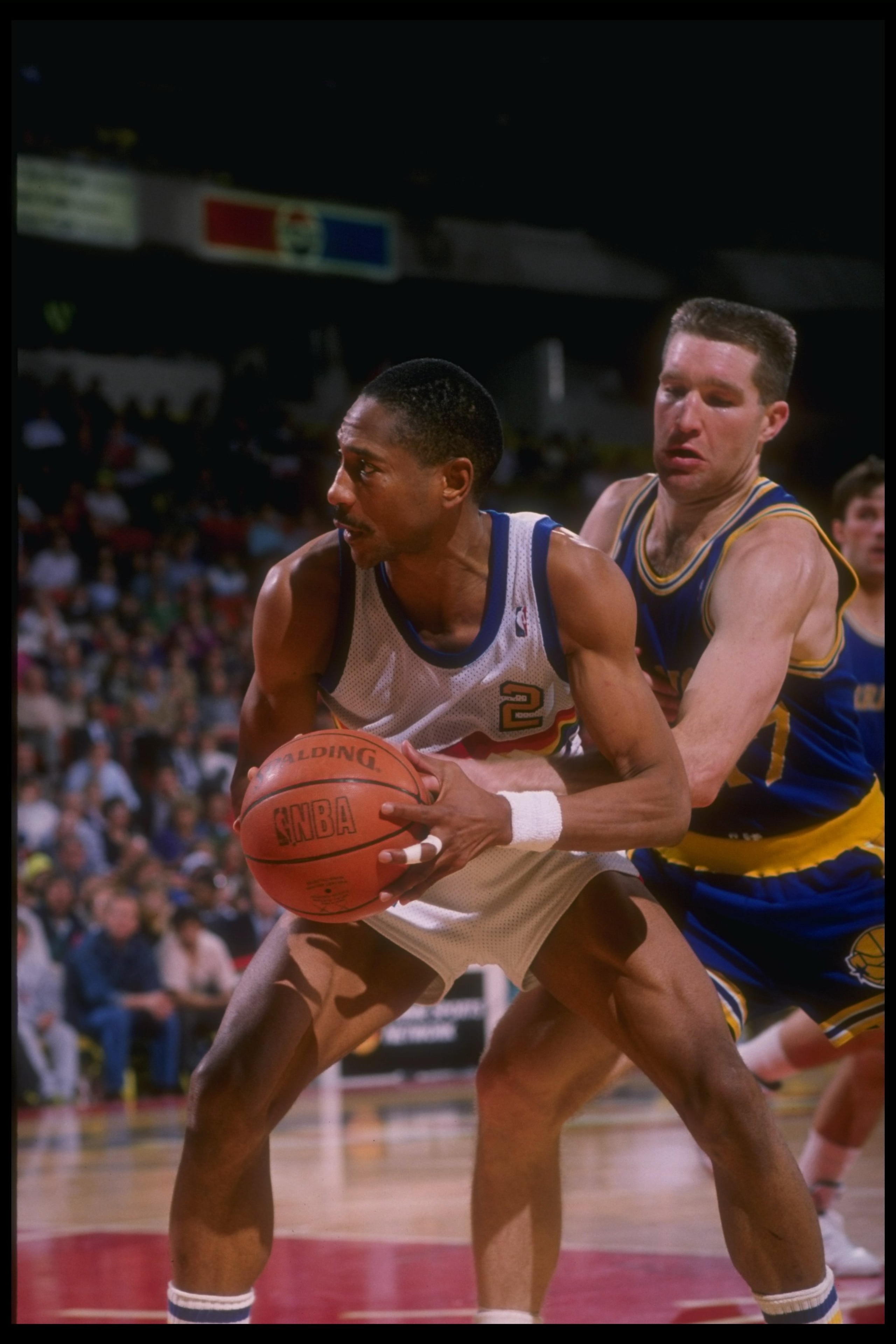
Years as a Nugget: 1980-1990
Key Achievements: Eight-time All-Star, 0/3/0-time All-NBA, No. 2 jersey retired
Alex English was the unquestioned leader of the Denver Nuggets throughout the '80s as well as being the leading scorer of the decade with 19,682 points to his name.
That's a truly amazing accomplishment considering that Larry Bird and Magic Johnson's primes occurred during this decade.
English was a product of the revolutionary coach Doug Moe, whose no-nonsense offensive approach to the game was seen as unsightly considering how poor of defense English and the rest of the crew played.
Although the team never won a title with Moe as head coach, the rainbow-style jerseys were often worn by fans, and English was by far the most popular player on the team, mainly due to his scoring ability—a trait that helped him become the first player in league history to post eight consecutive seasons with 2,000 points or more.
Additionally, the former South Carolina Gamecock was a solid all-around person, once even offering his All-Star position to his point guard, Fat Lever, when he determined that it was Lever and not he who deserved the bid.
English's career as a Nugget saw him put up 25.9 points and 5.6 rebounds per game while in Denver.
For his efforts, his No. 2 jersey was retired by the club.
Detroit Pistons: Isiah Thomas
8 of 30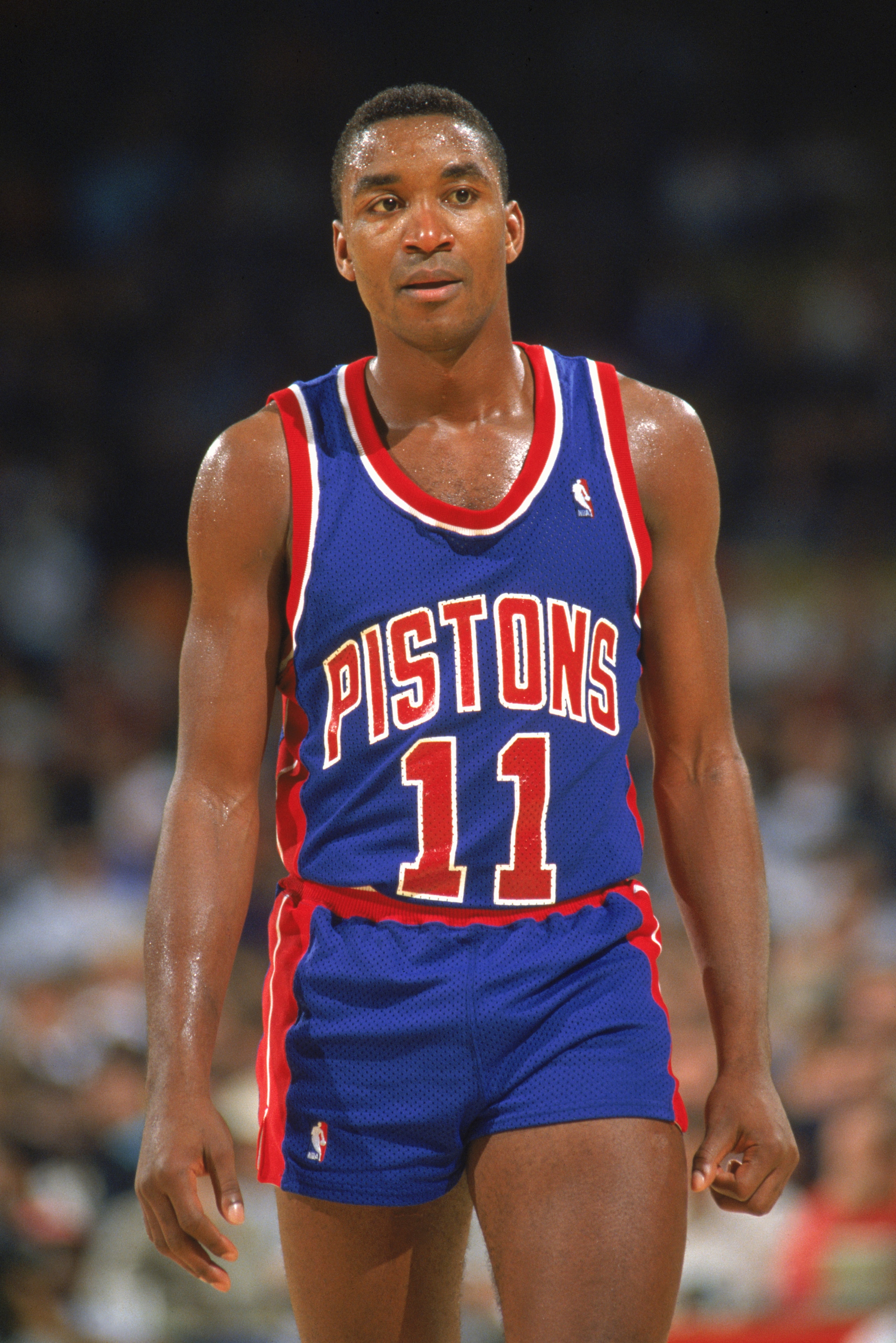
Years as a Piston: 1981-1994
Key Achievements: Two-time NBA champion, 12-time All-Star, 3/2/0-time All-NBA, 1990 NBA Finals MVP, No. 11 jersey retired
Once upon a time there was a man who, before screwing up the New York Knicks and publicly feuding with sportswriters, was one of the greatest point guards ever.
The youngest generation of NBA fans (admittedly, ones about my age) doesn't remember Isiah Thomas for what he should be remembered as—the starting point guard for a team that won two championships during the best stretch in association history.
He played in the late '80s and early '90s as a member of Detroit's "Bad Boys" with guys like Bill Laimbeer, Joe Dumars, Vinnie Johnson and Dennis Rodman. As a team, they won back-to-back championships, the latest proving Thomas was clutch, something that no doubt factored into his winning the 1990 NBA Finals MVP trophy.
Always a prime model of consistency, "Zeke" started 971 out of a possible 979 games throughout his 14-year career, all of which was spent in Motown.
He was always a good bet to put up good numbers and was also a remotely fierce defender too.
His career averages of 19 points, nine assists and nearly two steals aren't exactly anything to shy away from either.
The Detroit Pistons are underrated in the fact that they have had so many great players. I think it's safe to call them a top-six or -seven franchise, and Zeke is much of the reason they have a great place stored in the league's history.
Golden State Warriors: Wilt Chamberlain
9 of 30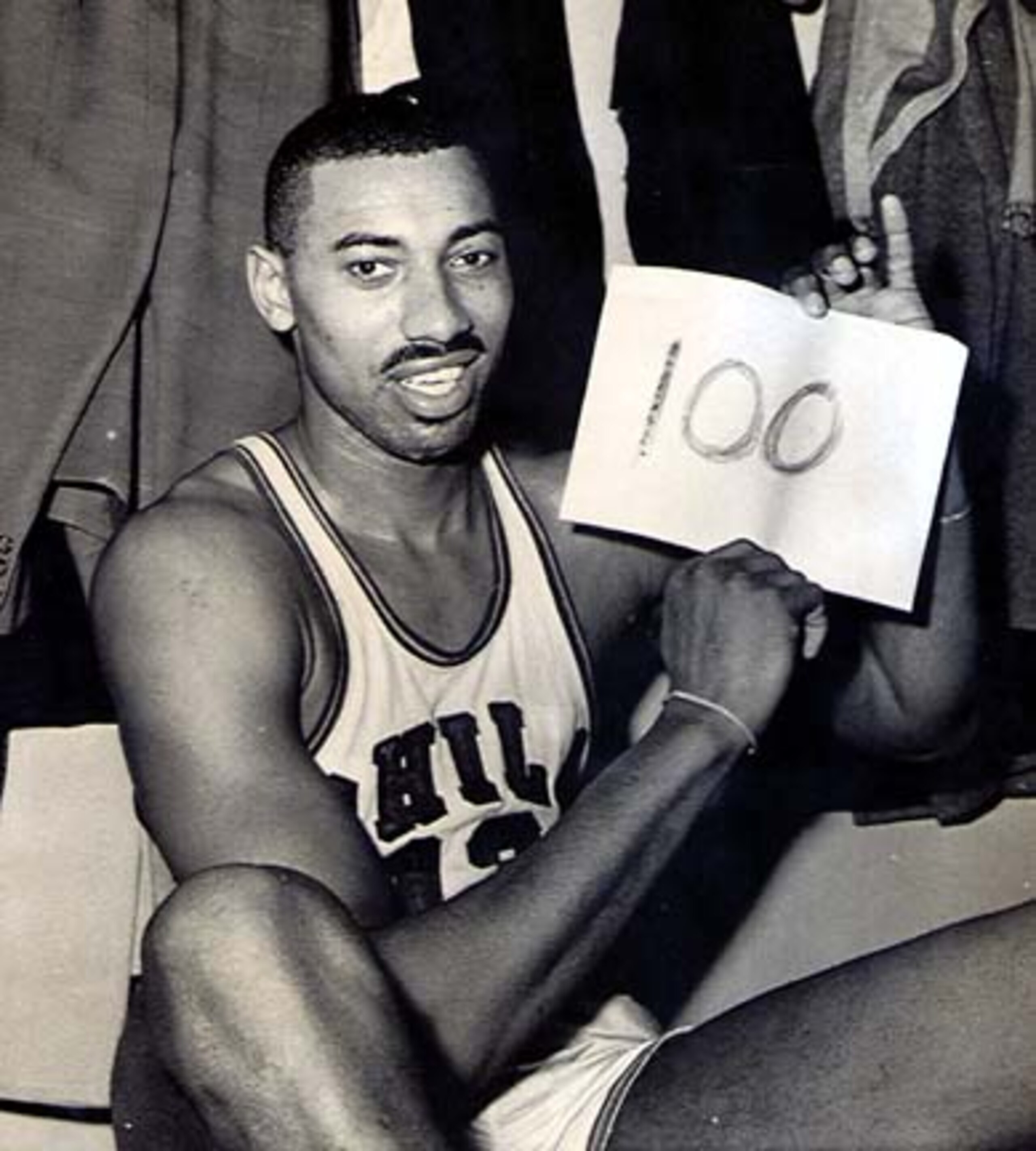
Years as a Warrior: 1959-1965
Key Achievements: 1960 NBA MVP, six-time All-Star, 4/1/0-time All-NBA
Wilt Chamberlain, the most accomplished basketball player statistically of all time, began his legendary (and unmatched individually) career in Philadelphia with the Warriors before the team relocated to its present-day Oakland location, and while he was there he had one of the best six-year runs in league history.
During his tenure there, Wilt naturally put up monster numbers but did not win any titles.
"Wilt the Stilt" put up 41.5 points, 25.1 rebounds and three assists per game in over 400 games.
He was an All-Star every year and made the All-NBA team five times, four of them as a first-teamer.
He won the MVP his rookie year after averaging 44 points, and never once during his time in Philly did he average anything under 23 rebounds per game. Understanding that, yes, it was a different era, let's for a moment remember that only Kevin Love has topped 23 rebounds this season—in a single game.
Most notably he performed the now-epic 100-point game as a Warrior, refusing to get 102 in the final minute because "100 sounded better."
While there is other "competition" at the spot, no one can touch what Wilt did as a Warrior, not even the great Rick Barry.
Houston Rockets: Hakeem Olajuwon
10 of 30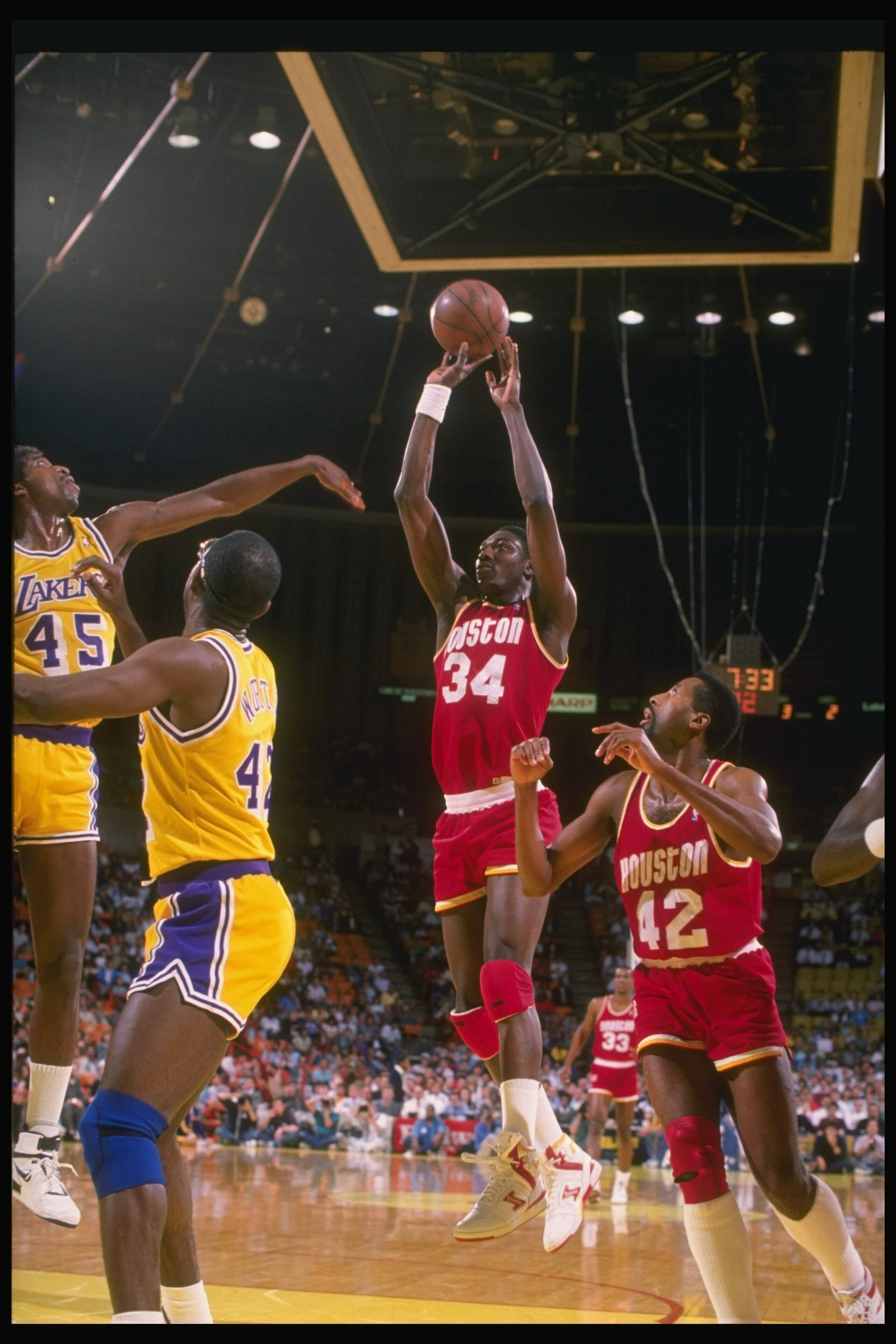
Years as a Rocket: 1984-2001
Key Achievements: Two-time NBA Champion, 1994 NBA MVP, 12-time All-Star, two-time Defensive Player of the Year, 6/3/3-time All-NBA, five-time All-Defensive, No. 34 jersey retired
Hakeem Olajuwon's surname means "always on top" in Arabic.
How fitting is that for the seven-foot, 255-pound beast of a man? He was always a top-two or three center when he played and was perhaps the best all-around player with a noticeable knack for the blocked shot, a statistic where he averaged an awesome 3.2 clip per game.
In Houston, the same place he established himself as a college basketball legend, Olajuwon played the double duty as an NBA superstar.
In the association, he had the incredible ability to excel in all facets of the dominant center's game. He won two Defensive Player of the Year titles and was voted an All-Star and All-NBA member 12 times apiece.
During his time there, Olajuwon established himself as one of the best centers in NBA history, as he averaged 22.5 points and 11.4 rebounds per game in well over a thousand contests played.
During Michael Jordan's two-year baseball hiatus (how awkward would that be if someone like LeBron or Kobe Bryant did that today?), Hakeem and the Rockets took advantage, winning both of the "available" championships, and took unwarranted heat due to His Airness' absence. The two titles are still the only instances the Rockets have hoisted the trophy in their storied 44-year existence.
But that's not fair to take away those championships from Hakeem and the Rockets. Let's just be fair and say that Michael and Co. would have had a run for their money in '94 and '95. That's how good those Rocket teams were.
No one can debate that Olajuwon is easily the best player in Rockets history, and for his efforts his famous No. 34 jersey has been placed in the rafters of Houston's Toyota Center.
Indiana Pacers: Reggie Miller
11 of 30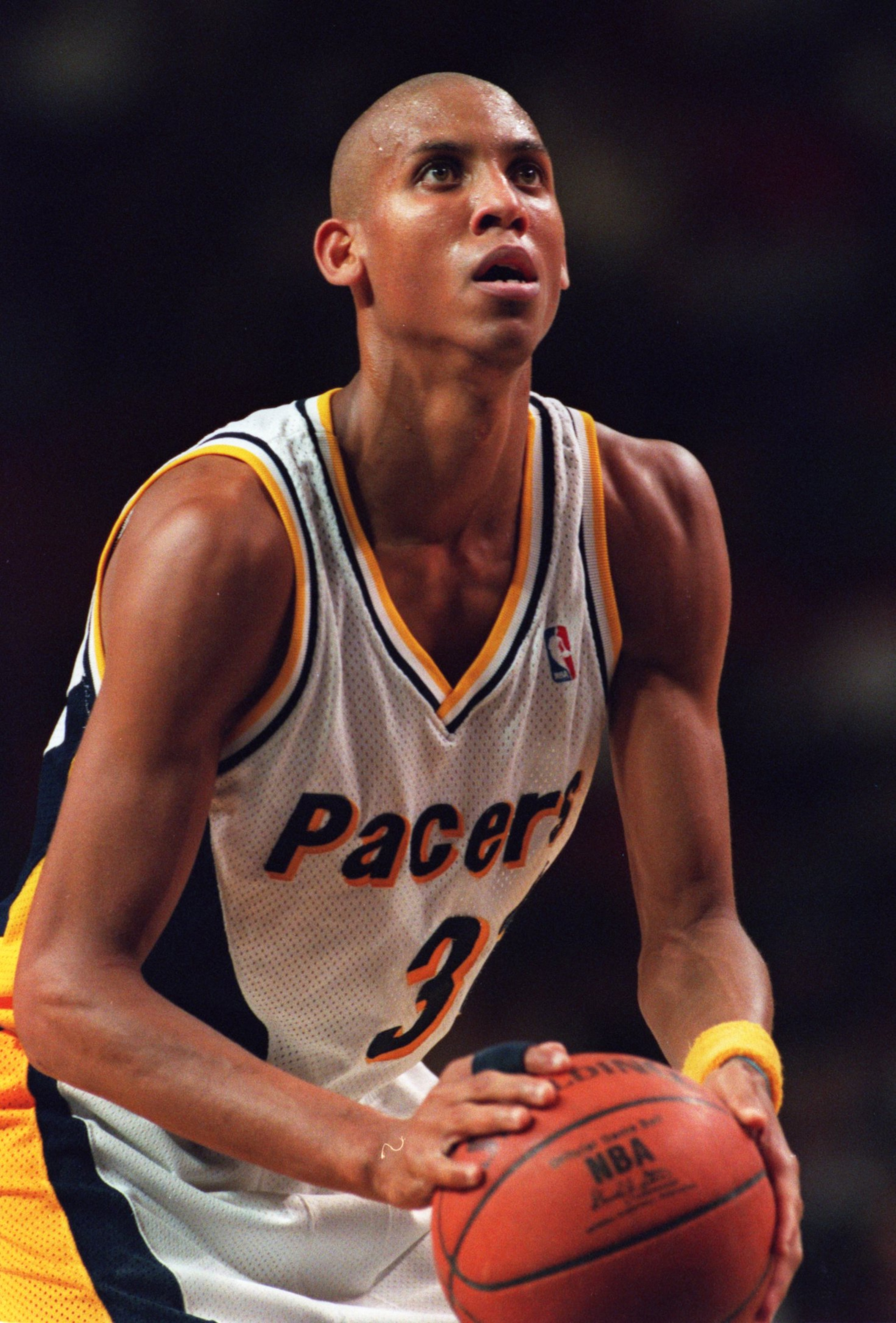
Years as a Pacer: 1987-2005
Key Achievements: Five-time All-Star, 0/0/3-time All-NBA
Even if Reggie Miller never makes it to the Hall of Fame (which would honestly be a third-degree crime), he will still be known as the most beloved Indiana Pacers and one of the greatest shooters ever.
He will forever hold a spot in the hearts of NBA fans everywhere outside the Big Apple for his true grit and loyalty to the small-market club that he so loved.
He averaged good, not great, numbers throughout his 18 seasons. His 18.2 points, three rebounds and three assists per game averages might not help his cause when he is compared to other greats.
Miller was as clutch as they come and always had a big shot for the big stage—especially in Madison Square Garden, where he scored a lot of points in a small window of time and publicly feuded with Spike Lee. He is so hated by New York that an ESPN 30 for 30 is entirely devoted to the curious Miller v. NYC case. All in all, he shot an incredible 39 percent beyond the arc during the NBA's biggest months of the year.
Unfortunately, Rik Smits, Dale Davis and Jalen Rose were never enough talent around Miller, the supposed franchise player, to win a title.
Los Angeles Clippers: Bob McAdoo
12 of 30
Years as a Brave: 1972-76
Key Achievements: 1975 NBA MVP, three-time All-Star, 1973 Rookie of the Year, 1/1/0-time All-NBA
Bob McAdoo's first four seasons of his standout career were spent as a member of the Buffalo Braves. It was there that he put together four memorable seasons and became the franchise's greatest player ever.
During his four seasons in New York, McAdoo averaged 28.2 points and 12.7 rebounds and took home an MVP award in 1975 to put the icing on the cake. Those are some pretty crazy numbers, even for the time it took place.
During that magical 1974-75 season, he averaged better than 34 and 14 for the seemingly otherwise mediocre Braves, whom McAdoo helped become relevant briefly.
Other than Elton Brand, McAdoo is the only great big in team history.
Los Angeles Lakers: Magic Johnson
13 of 30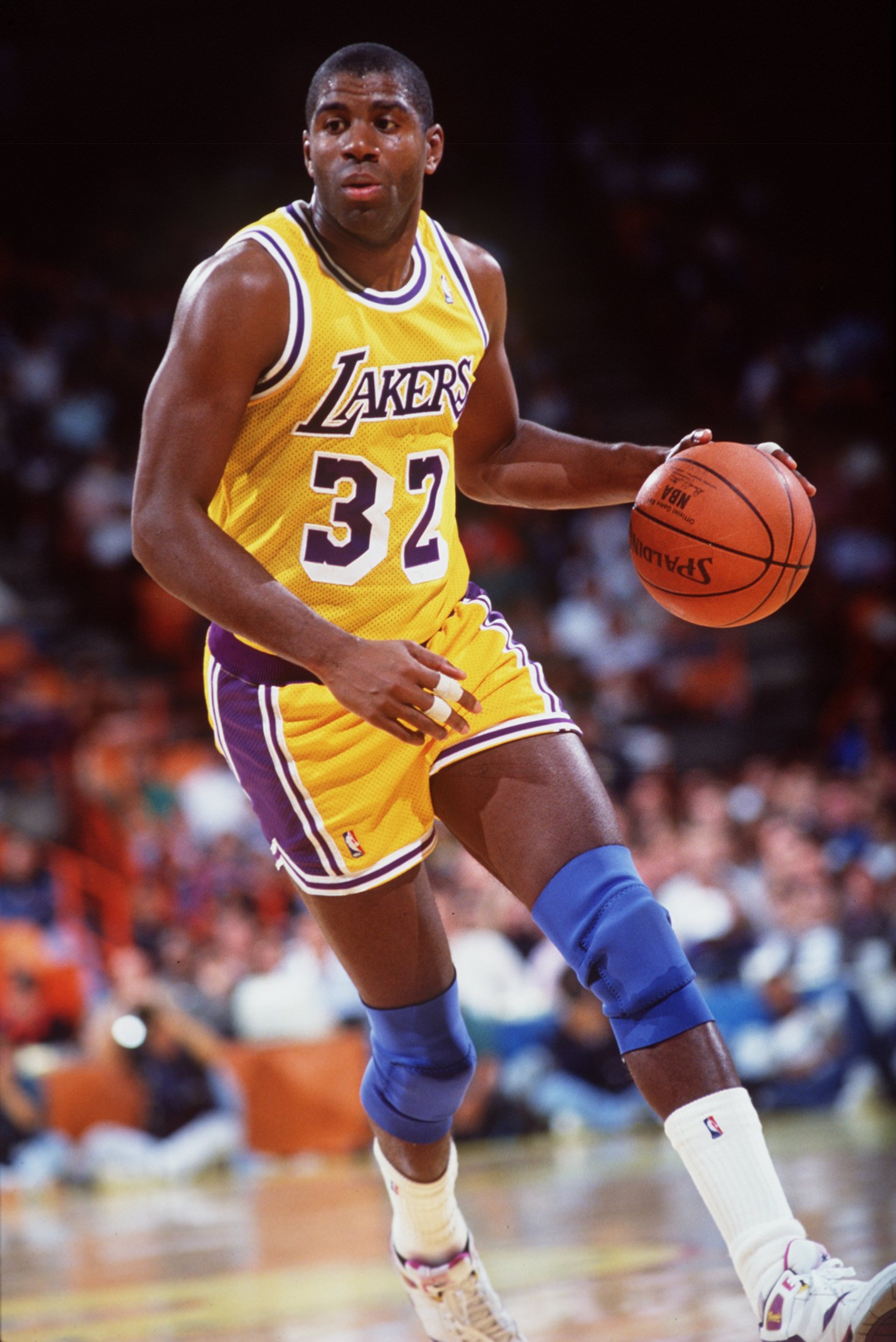
Years as a Laker: 1979-1991, 1996
Key Achievements: Five-time NBA champion, three-time NBA MVP, 12-time All-Star, three-time NBA Finals MVP, 9/1/0-time All-NBA, No. 32 jersey retired
I can't believe it's not Kareem Abdul-Jabbar. I just can't.
After deliberating for a solid hour, I have come to the conclusion that it has to be Magic Johnson.
Johnson, simply put, is the greatest point guard to ever play the game of basketball, despite having a shortened career due to HIV.
In 12 full seasons, Magic, which doesn't even really require quotations, accomplished practically everything necessary to attain legendary status with the Laker faithful.
He won multiple NBA titles (five), snagged multiple MVPs (three), was a frequent visitor to the All-Star Game (12 appearances) and had his legendary No. 32 jersey sailed into the rafters at the living legend that is the Staples Center. Last but not least, he was part of the All-NBA first team nine times. If you weren't Magic Johnson or Michael Jordan in the 1980s, there was no realistic chance you'd find yourself part of the first team.
All in all, Magic had great career numbers. He averaged 19.5 points, an unmatched 11.2 assists and 7.2 rebounds per game. He was a legitimate threat for a triple-double any time his sneakers met the hardwood.
Oh, and I guess I forgot to mention that his career field-goal percentage is 52 percent, completely atypical of someone who played the point guard position the way Magic did.
I have to mention Abdul-Jabbar, who won his final five titles in the city of angels, the last three with Magic.
No player in Lakers history is more synonymous with the franchise than "Magic."
Memphis Grizzlies: Pau Gasol
14 of 30
Years as a Grizzly: 2001-08
Key Achievements: 2002 Rookie of the Year, one-time All-Star
It was in Memphis, Tennessee that Pau Gasol established himself as one of the best power forwards in the league, a statement that is still true today.
After being selected third overall in the 2001 NBA draft by the Grizzlies, Gasol was determined to find success individually as well as with the team, but in Memphis there was no such luck for the latter.
On the bright side, Gasol averaged 19 points and nine rebounds. He also shot well over 50 percent and picked up one All-Star selection (the first of two in team history, for that matter), a number that could have been controversially higher.
However, after seven-plus seasons with the Grizz, Gasol was swapped for his brother Marc and others, a trade that placed him in his current home in Los Angeles.
Miami Heat: Dwyane Wade
15 of 30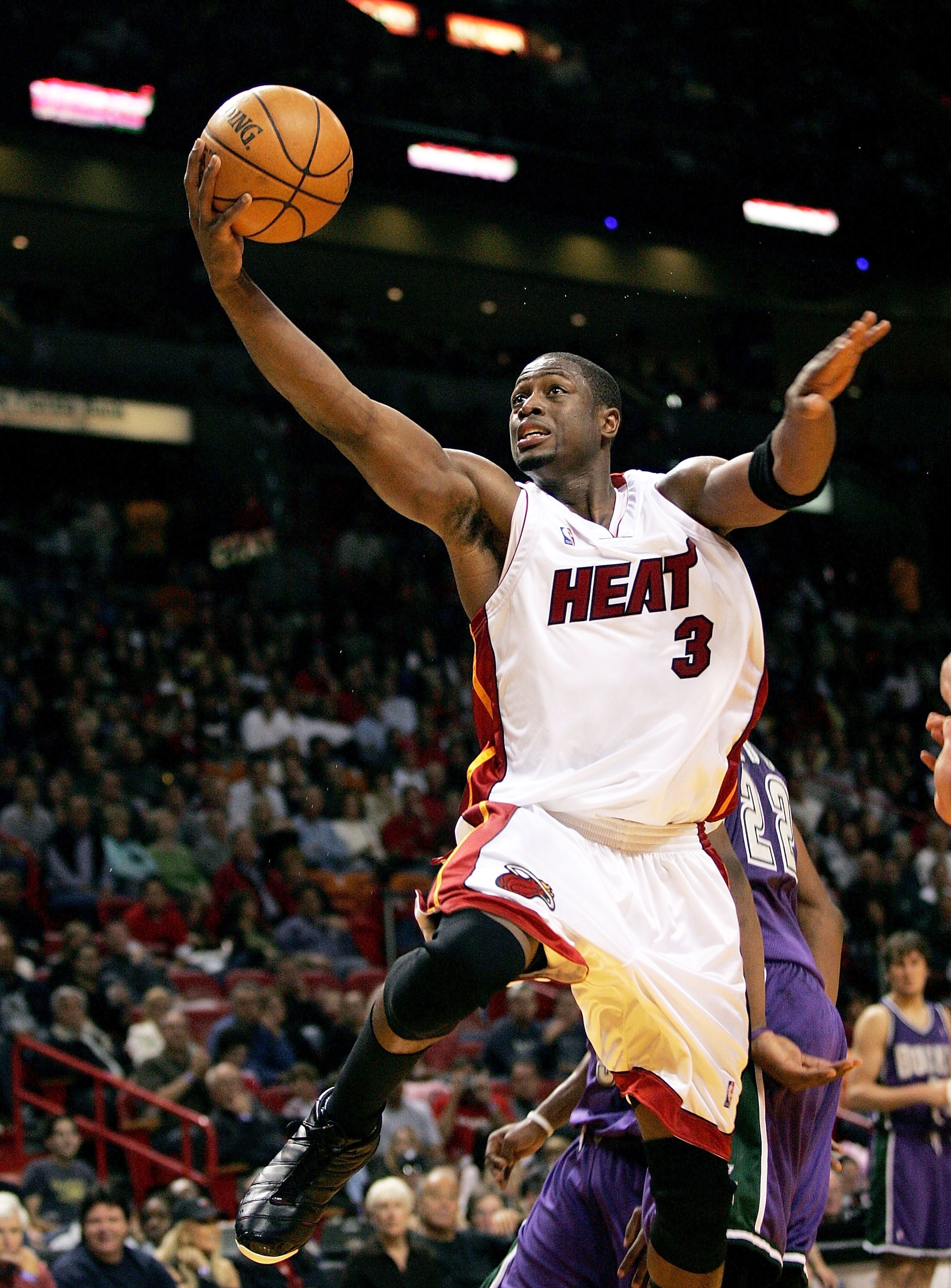
Years as a Heatle: 2003-present
Key Achievements: One-time NBA champion, 2006 NBA Finals MVP, seven-time All-Star, 2/2/2-time All-NBA
What exactly has Dwyane Wade done in his eight-year career in South Beach?
Aside from winning a title, a Finals MVP, being elected an All-Star on seven occasions, being a member of six All-NBA teams and getting himself some second-team All-Defensive picks, I can't think of anything.
"Flash" has been outstanding and consistent throughout his tenure in Miami and has averaged 25.4 points, 6.6 assists and five rebounds, the last number being astounding considering he is a 6'3" shooting guard.
He is also easily one of the most popular players in the league, and his jersey was the most sold for two consecutive seasons early on in his career.
He is a solid all-around offensive player, and defensively he is simply one of the game's best lockdown defenders.
At just 29 years of age, you've got to think the Marquette University graduate has at least six or seven more seasons in him, and hopefully the Heat can hold on to him.
In my opinion, he will be a top-20 player (and top-five shooting guard) when his career concludes, and the scariest part is that he's still in the midst of his prime. Some even call him (dare I say it) better than LeBron!
Milwaukee Bucks: Kareem Abdul-Jabbar
16 of 30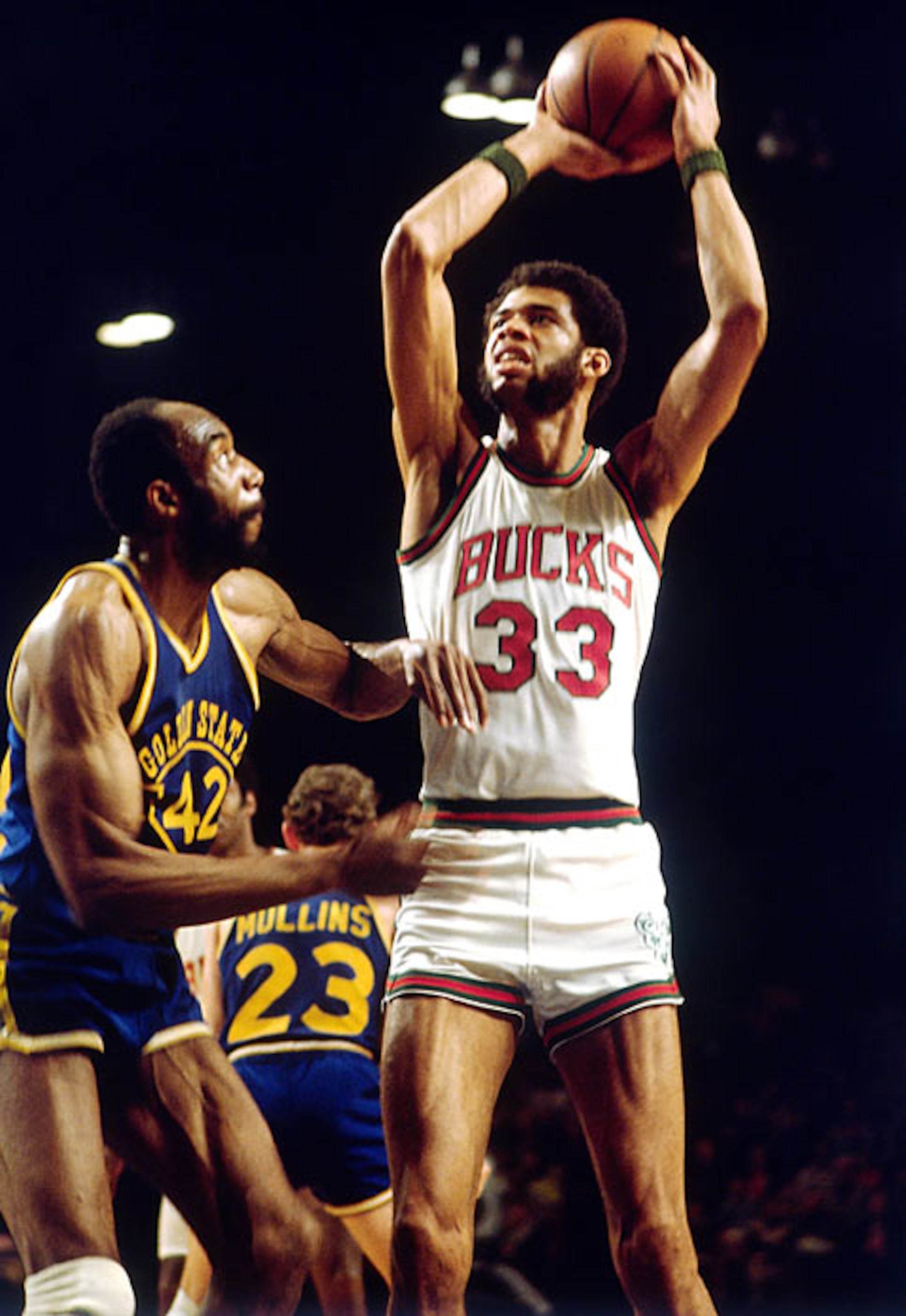
Years as a Buck: 1969-1975
Key Achievements: One-time NBA champion, three-time NBA MVP, six-time All-Star, one-time Finals MVP, 4/1/0-time All-NBA, 1970 Rookie of the Year, two-time All-Defensive
Most NBA junkies know that Kareem Abdul-Jabbar began his legendary career as a Milwaukee Buck.
What they don't know is how exactly he got there.
To quote Bryan Adams, back in the summer of '69 were perhaps the best days of young Lew Alcindor's life.
It was then that he changed his name and signed a massive deal with the Bucks, who outdid the Nets of the ABA in acquiring his rights.
He played six seasons with the Bucks, and during that time he won three MVPs and was selected to the All-NBA team five times, four times as a first-teamer. More importantly, he won the first of his six NBA titles in Wisconsin, a feat he, a past-his-prime-but-still-good Oscar Robertson and the rest of the Bucks accomplished in 1971.
Abdul-Jabbar's statistics were unbelievable in Milwaukee, as he sported 30.4 points and 15.3 rebounds per game averages. He also shot 54 percent and dished out better than four assists per night.
Want to hear something crazy? During Kareem's tenure, he never averaged less than 27 points or 14 rebounds in a season. Basically he was a member of Bill Simmons' 42 Club each and every season as a Buck.
How's that for a beginning to a legendary career? Not many, if any, players can match those numbers.
Now that I've got that monkey off my back and have found a spot for Abdul-Jabbar on this list, I feel less guilty for selecting Magic on the Lakers slide.
You can lower your pitchforks.
Minnesota Timberwolves: Kevin Garnett
17 of 30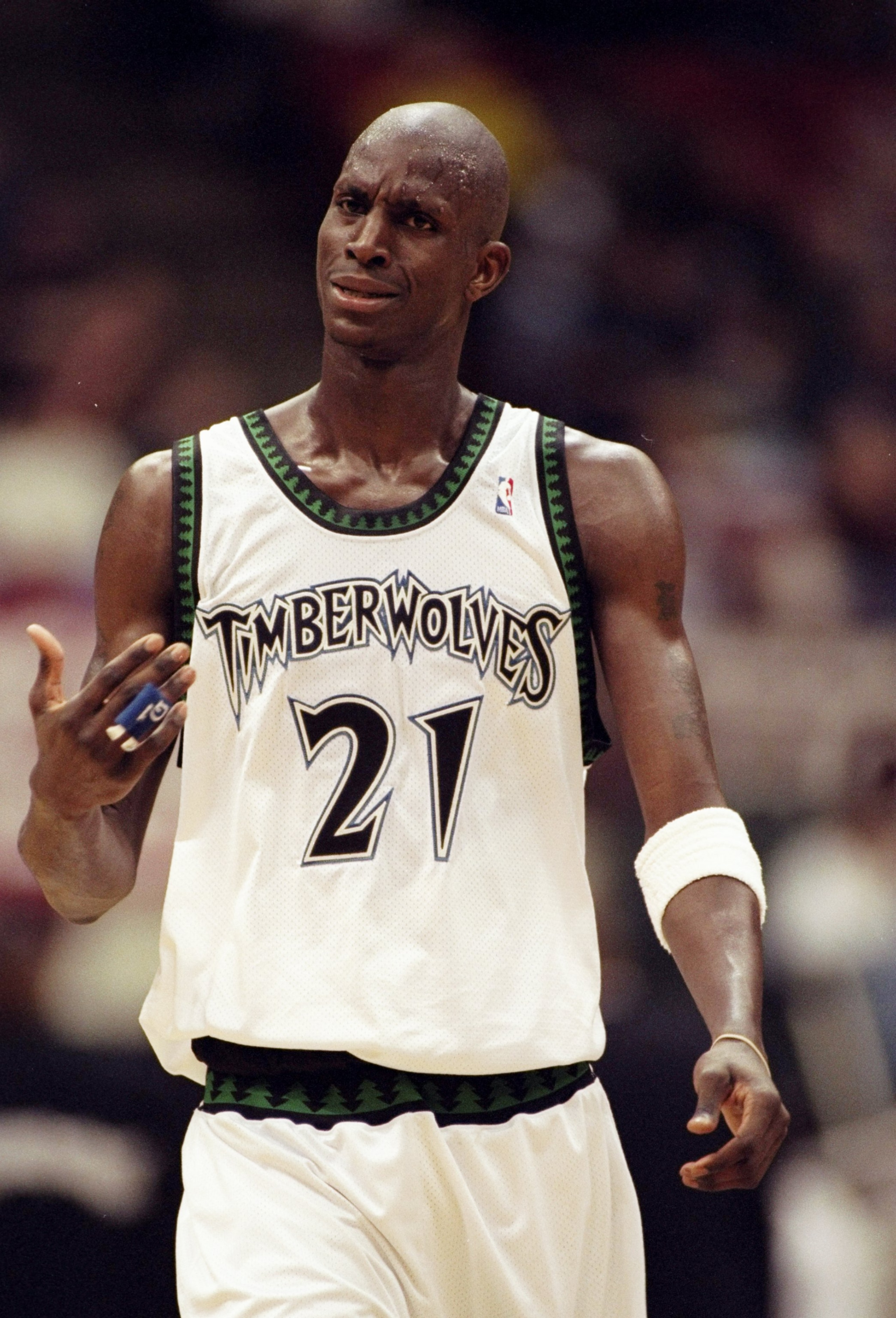
Years as a Timberwolf: 1995-2007
Key Achievements: 10-time All-Star, 2004 NBA MVP, 3/3/2-time All-NBA, eight-time All-Defensive
Excuse me for the length of this slide, but Kevin Garnett is the Minnesota Timberwolves, and four years after his departure the statement remains the same.
Every single franchise playoff berth in T'Wolves history came when Garnett's name was found on the roster. Every single time!
Easily the best Timberwolf in history (and that's a large understatement), his records above indicate what he has done for the NBA's 26th franchise, which happens to be my favorite team in the NBA, if you haven't been able to tell from my previous writing.
If you've read any of my previous writing, you'll know I allude to the 2003-04 season every time Garnett is mentioned. The fact of the matter is that it helps me hold on to that nostalgia that has been in Wolves fans' hearts ever since he departed four long (and winless) seasons ago. Even if I have done it 20 times, I need to be left alone for it. It's hard to root for the NBA's 28th-most storied franchise.
In the magical season (there's reference number 21), "The Big Ticket" won the NBA's MVP, but ultimately the Wolves fell short in the Western Conference Finals. He led the Wolves in scoring in his last 11 (out of 12) seasons with the team. He holds four out of the five single-season scoring totals, with Tony Campbell holding second place amongst the KG plethora of records.
His last three seasons delivered absolutely nothing, and after the team fell apart in the following years, nothing good happened for "The Kid" and the Pups, and he was shipped off to Boston in a blockbuster trade.
So how am I even supposed to put someone up to Garnett on this slide? Al Jefferson had three decent years, and Wally Szczerbiak had seven decent campaigns, but then again, Garnett had 10 great years for the Wolves.
Get this though: Garnett is first in franchise history in points (his 19,041 number is 11,000 better than the second-best), rebounds, assists, steals, blocks and free throws.
Anytime the ball was in KG's hands, fans went berserk, anxiously anticipating the fallaway jumper that would go in on seemingly every attempt.
No one's going to replace him anytime in the near future.
New Jersey Nets: Jason Kidd
18 of 30
Years as a Net: 2001-08
Key Achievements: Six-time All-Star, 2/1/0-time All-NBA, two-time All-Defensive
Ignoring the fact that when Dr. J played for the Nets they were an ABA team, Jason Kidd is an easy selection here.
Being one of the best pure point guards ever, Kidd's skills were based on defensive intensity on the perimeter and some of the best instincts and basketball knowledge of any player, let alone a point guard.
Kidd always put up great numbers, and even then he couldn't be appreciated enough. Arguably his second-best season came when he sported the Nets uni back in 2003, when he averaged 18.7 points, 8.5 assists and seven rebounds in his second full season in Jersey.
While there, Kidd would routinely out-rebound forwards and centers.
No one can argue with how tremendous Kidd's career has been, except for one thing holding him back—a title. The 38-year-old might have his best chance this year as a member of the Mavericks.
Does anyone actually realize how freakishly high his 6.8 per game rebounding career average is? Does anybody get that he's the best little rebounder since Oscar Robertson?
New Orleans Hornets: Chris Paul
19 of 30
Years as a Hornet: 2005-present
Key Achievements: Four-time All-Star, 1/1/0-time All-NBA, one-time All-Defensive, 2006 Rookie of the Year
Do the New Orleans Hornets understand that it's okay to have top-flight talent all the time?
Apparently Chris Paul understands perfectly, and he is easily the winner of the race in the nest.
In just five-plus seasons, the Louisville native has established himself as a premier scorer, passer and defender, the last of which is a greatly underrated aspect of his game. He really has the whole point guard package.
CP3 had one of the best statistical seasons in point guard history during the 2008-09 season, where he averaged 22.8 points and 11 assists and shot better than 50 percent from the field. Additionally and remarkably, he snagged 2.8 steals per contest.
Wow, that is a fabulous season if I've ever seen one, and from a fabulous player too.
It's a shame that he'll be out of there in the summer of 2012. Otherwise he'd be one of the NBA's best one-team wonders.
New York Knicks: Walt Frazier
20 of 30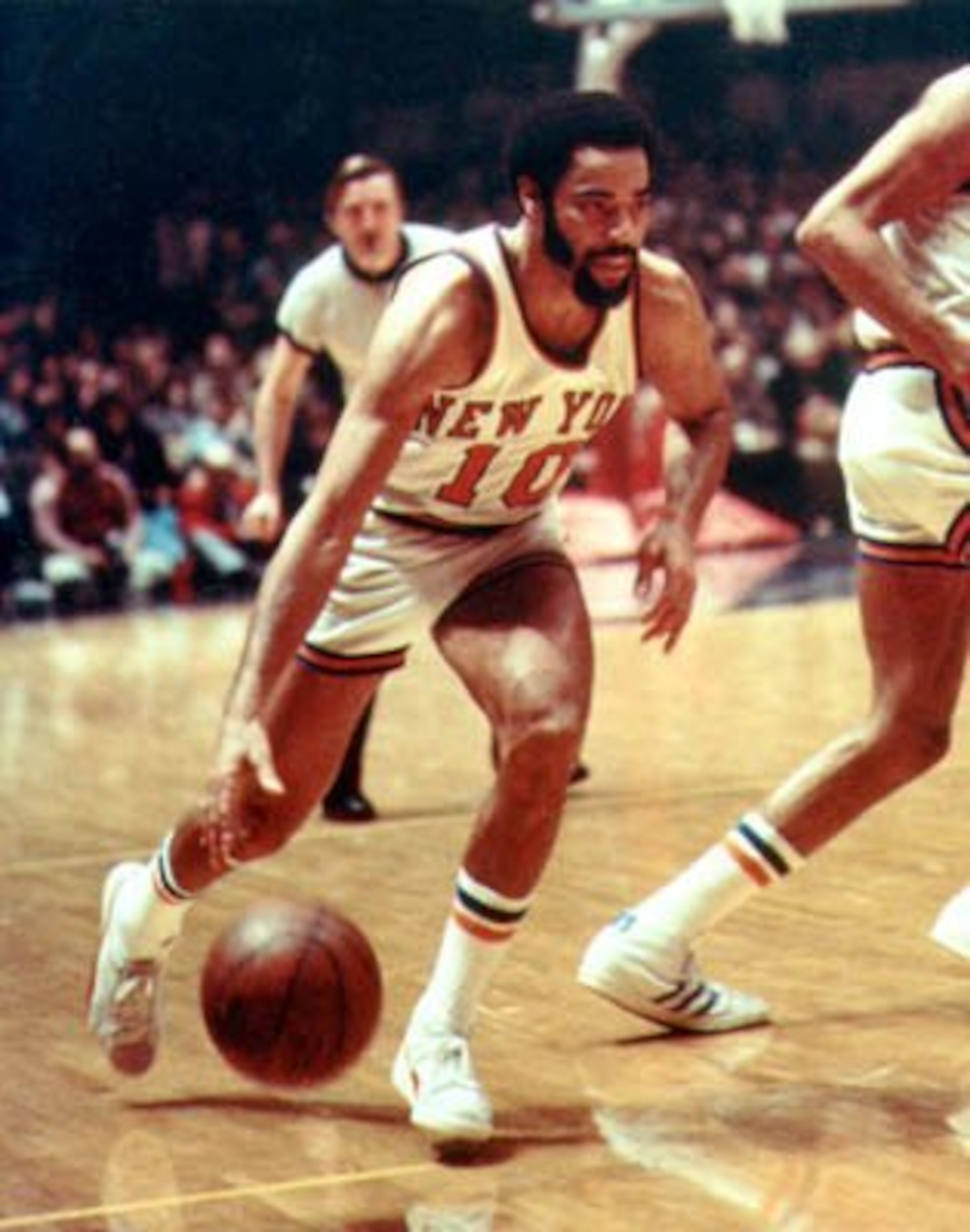
Years as a Knickerbocker: 1967-1977
Key Achievements: Two-time NBA champion, seven-time All-Star, 4/2/0-time All-NBA, seven-time All-Defensive, No. 10 jersey retired
Walt Frazier was undoubtedly the floor general of the New York Knicks during his time there, which was the peak of the franchise.
Additionally, "Clyde" won just about every individual award one can pick up throughout the course of a season, except a season's Most Valuable Player, but that shouldn't take away from his polarizing legacy.
While everyone remembers Game 7 of the 1970 NBA Finals as the Willis Reed show, it was Frazier who ultimately helped secure the Knicks' first-ever championship. He went a solid 12-of-17 from the field that day and an incredible 12-of-12 from the free-throw line, totaling 36 points, and chipped in 19 assists as well.
Three seasons later, he and Reed did it again, leading the Knicks to the 1973 NBA Finals trophy.
Clyde was not only an icon around the world but also quite possibly the most beloved Knick ever, a guy who was there during the rough times before leading them once more to relevancy.
In all honesty, no Knickerbocker can even touch what Frazier did for the team. In his entire career as a Knick, his scoring average of 19.3 coupled with his six boards and assists per game tell you the numbers, but what you don't see on the stat sheet is the heart he brought to the Big Apple. Walk down the street and mention the name "Clyde," and every single person will tell you of Frazier, not Drexler.
It was hard to pick against Willis Reed and Patrick Ewing, but Frazier's legacy, importance and numbers trump them with ease.
Oklahoma City Thunder: Gary Payton
21 of 30
Years as a SuperSonic: 1990-2003
Key Achievement: Nine-time All-Star, 2/5/2-time All-NBA, nine-time All-Defensive, 1996 Defensive Player of the Year
Throughout the 1990s, Gary Payton was considered quite possibly the best remedy for Michael Jordan syndrome, which occurred every time the Bulls took the hardwood against their opponents. When the Bulls and Sonics faced each other in the 1996 NBA Finals, it was Payton who held Jordan to 21 points per game, a decade lower than his career playoff average.
"The Glove," as he was affectionately known, is the greatest defensive point guard in NBA history, and why he doesn't rank with the consensus top-five point guards will always be a mystery to me. Who's better? Big O, Magic and...?
He had nine first-team All-Defensive selections and was voted the NBA's Defensive Player of the Year in 1996.
He could play offensively too, and he sported career averages of 18.1 points, 7.3 assists and 2.1 steals per game.
The one thing that was detrimental to Payton's career was his lack of a ring, something he would finally find years later as a role player for the Miami Heat.
Orlando Magic: Dwight Howard
22 of 30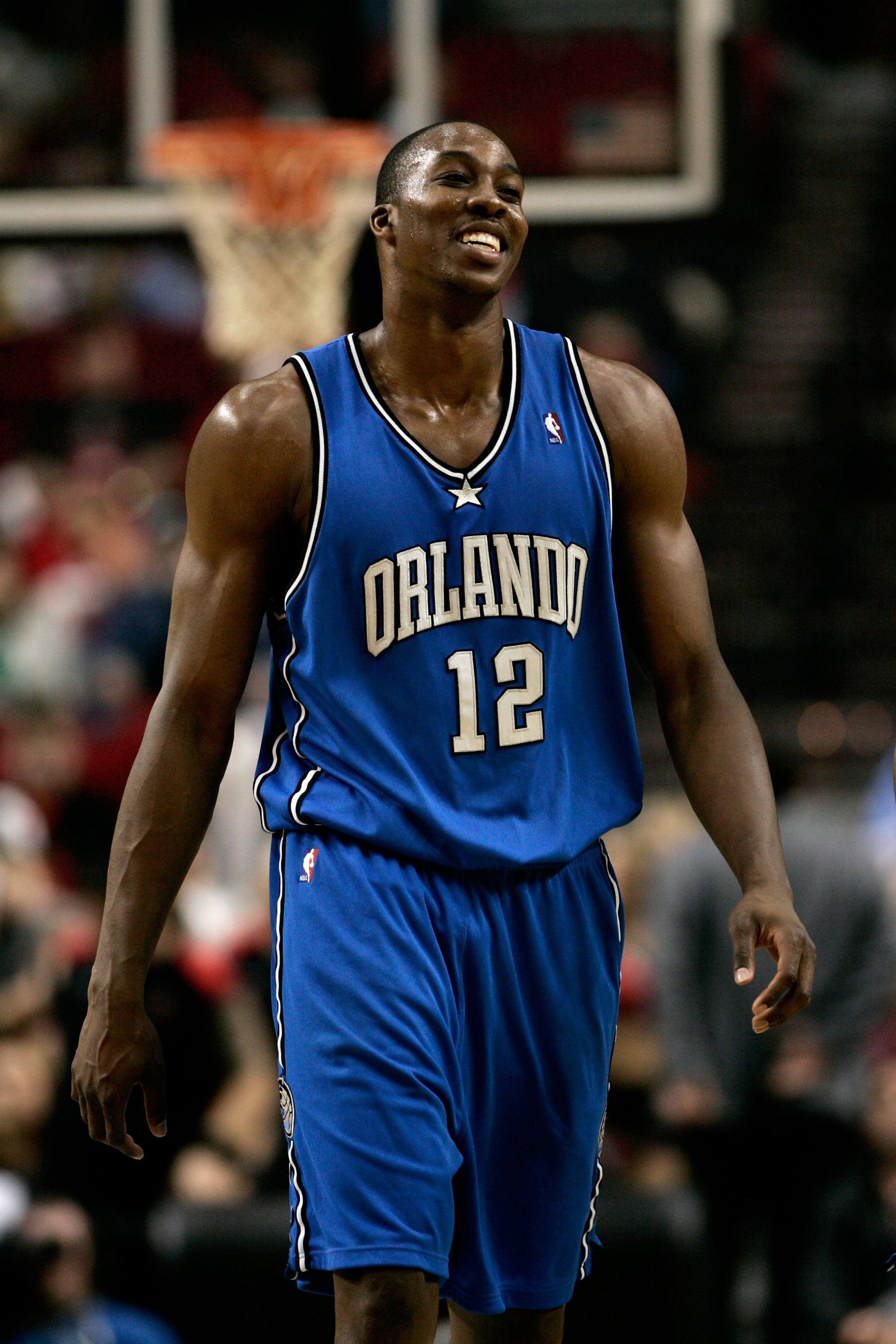
Years as a Magician: 2004-present
Key Achievements: Five-time All-Star, 3/0/1-time All-NBA, two-time Defensive Player of the Year, three-time All-Defensive
Dwight Howard has been the Orlando Magic in recent history. Like literally, he's been the team.
He has the build of a bodybuilder (6'11", 265 pounds) and fights like a warrior.
Unfortunately, he hasn't had much of a supporting cast to deal with during his tenure.
After singlehandedly taking the Magic to the Finals in 2009, Dwight effectively proved himself as the best Magician of all time.
In 567 games with the team, Howard has averaged 18.2 points and 12.9 rebounds to go with his terrific 57.8 field goal percentage.
However, there are some people who say Shaquille O'Neal had a better career with the team.
Howard's five All-Star selections are more than Shaq's four. Dwight's four All-NBA (soon to be five) selections, three of which are first-team slots, are one (soon to be two) more than the Diesel's total as a member of the Magic.
Dwight Howard continues to dominate as he holds tight to this position.
Philadelphia 76ers: Julius Erving
23 of 30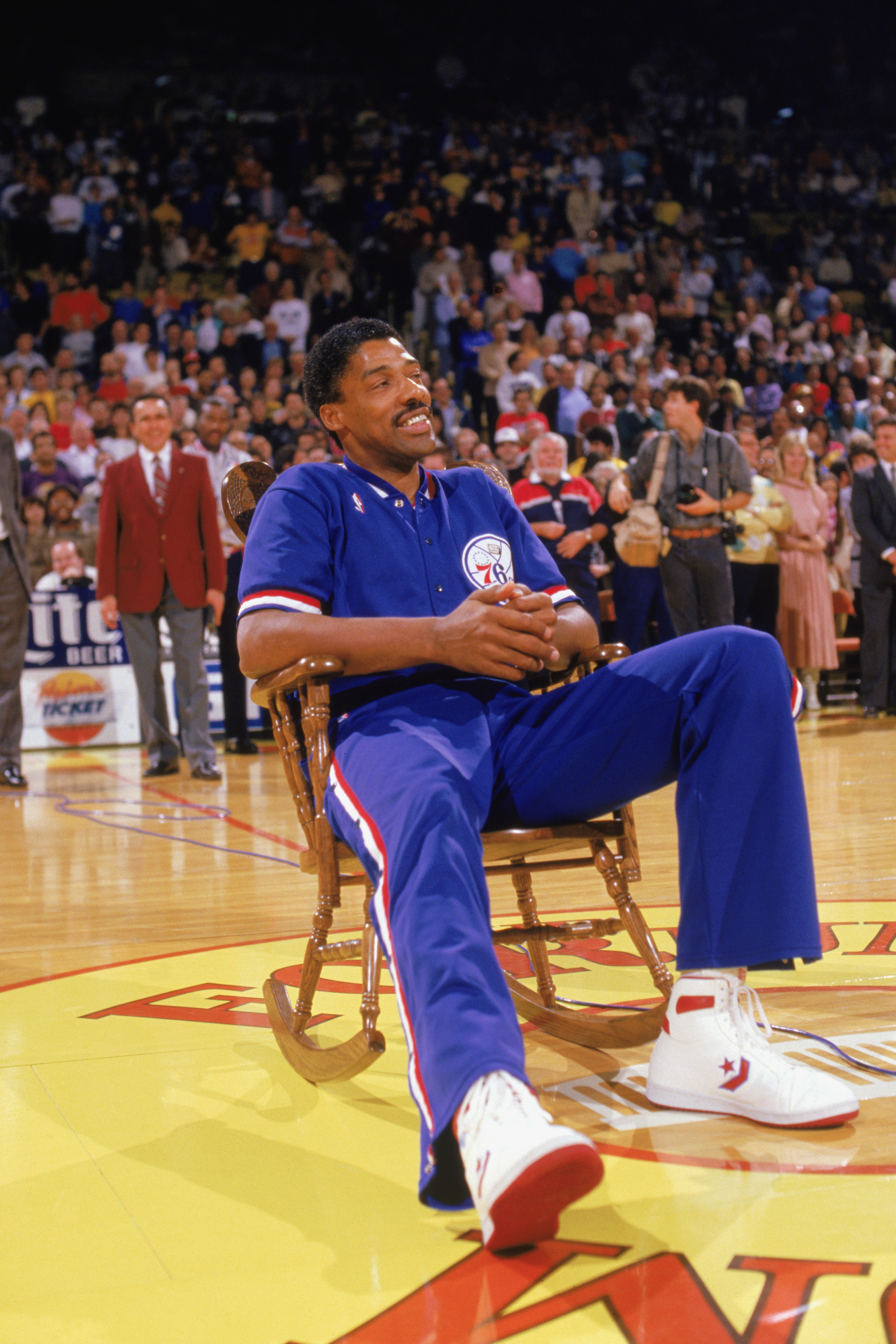
Years as a Sixer: 1976-1987
Key Achievements: One-time NBA champion, 11-time All-Star, 5/2/0-time All-NBA
Julius "Dr. J" Erving changed the scope of the wing position and its play in the NBA, and for that he is easily rewarded with this spot.
The best ABA player of all time, Erving continued his play as the merger occurred in the '70s and he found himself a member of the Philadelphia 76ers. It was there that in 11 seasons Dr. J averaged 22 points, nearly seven rebounds and two steals to go with 1.5 blocks per game. His defense was stifling at times, and no one knew exactly how to stop him on offense.
At the tender age of 33, Dr. J ultimately solidified his legendary status by helping the 76ers sweep the Pat Riley-led Lakers in the 1983 NBA Finals.
While digging up pictures from Getty Images, I tried to come across one where he sported his awesome afro that made him seem seven feet tall, but alas, I couldn't, so please settle for the one above.
He gets the nod over Allen Iverson and Charles Barkley here based on the way he helped revolutionize the game.
Phoenix Suns: Steve Nash
24 of 30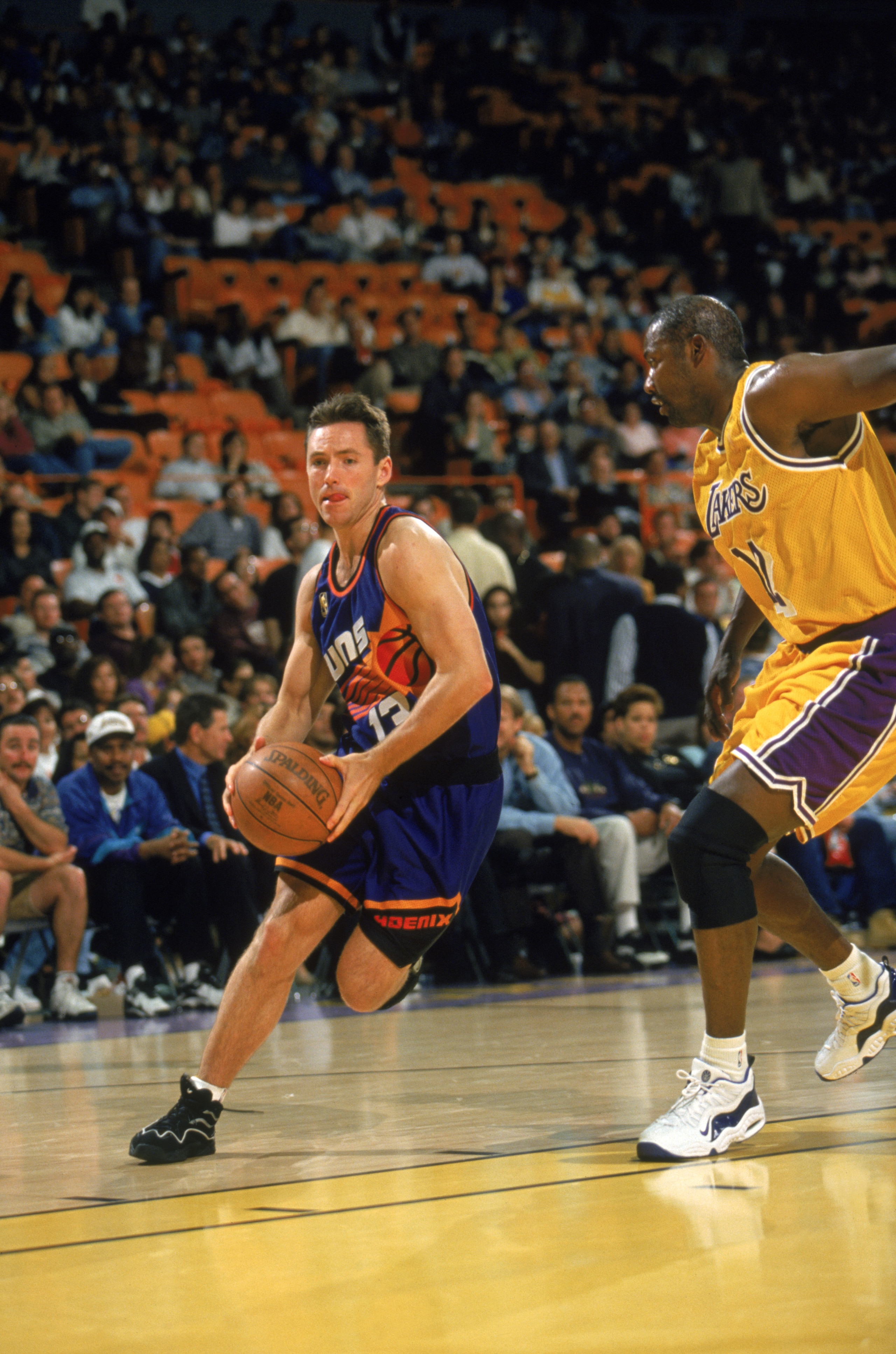
Years as a Sun: 1996-98, 2004-present
Key Achievements: Two-time NBA MVP, four-time All-Star, 3/2/0-time All-NBA
Steve Nash is a guy who will be more appreciated once his career is all said and done.
For now, we look at the 6'3" Canadian as a prospective top-10 point guard of all time, a guy who won two MVPs and has had six seasons of double-digit assist averages, a man who never has been able to perform excellently on defense and thus cannot win a title.
I say those two MVPs get him into Springfield with ease, and his 14.6 point and 8.6 assist averages don't really hurt his cause either.
Another slide and another runner-up from Sir Charles here.
Portland Trail Blazers: Clyde Drexler
25 of 30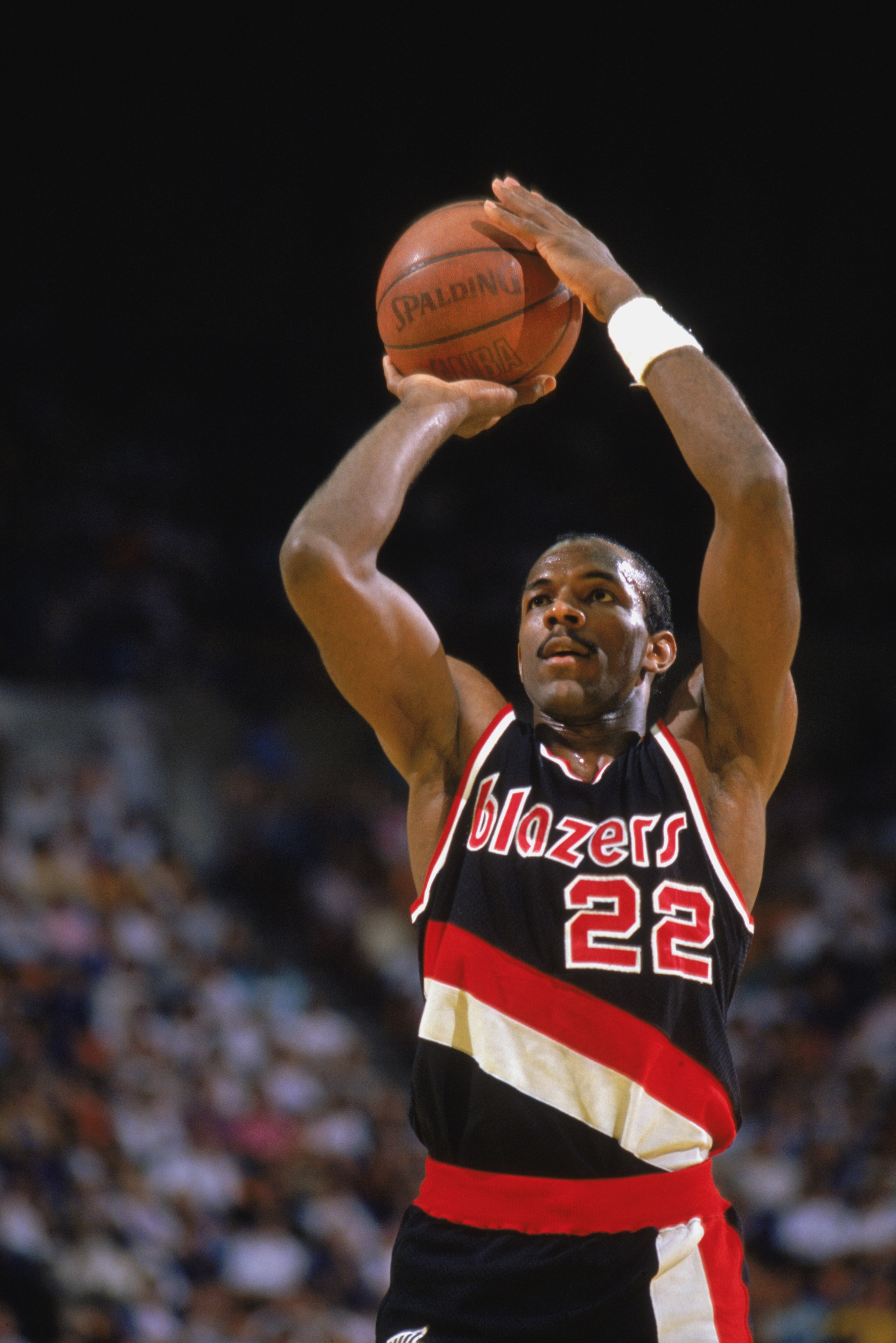
Years as a Blazer: 1983-1995
Key Achievements: Eight-time All-Star, 1/2/2-time All-NBA
Clyde "The Glide" Drexler was one of the NBA's most versatile players throughout his career, a statement verified by his 20.8 points, 6.2 rebounds and 5.8 assist clips he averaged in the City of Roses.
His best days came in Portland, where he accumulated eight All-Star selections and collected five All-NBA selections, including one first team, an honor he shared with Michael Jordan in 1992.
Drexler is the best player in Trail Blazers history, even if some people are ignorant enough to claim Bill Walton was despite the fact that he only made 208 appearances in Portland.
The Glide is the subject of one of Bill Simmons' greatest "what-ifs." In Hakeem Olajuwon's biography he claims that the Rockets nearly traded Ralph Sampson to the Blazers for Drexler and the No. 2 pick, which in turn would've been Michael Jordan.
Regardless, Drexler had a fine career in Portland and did everything but win a title there. Even so, he would win one in Houston the year he was dealt.
Sacramento Kings: Oscar Robertson
26 of 30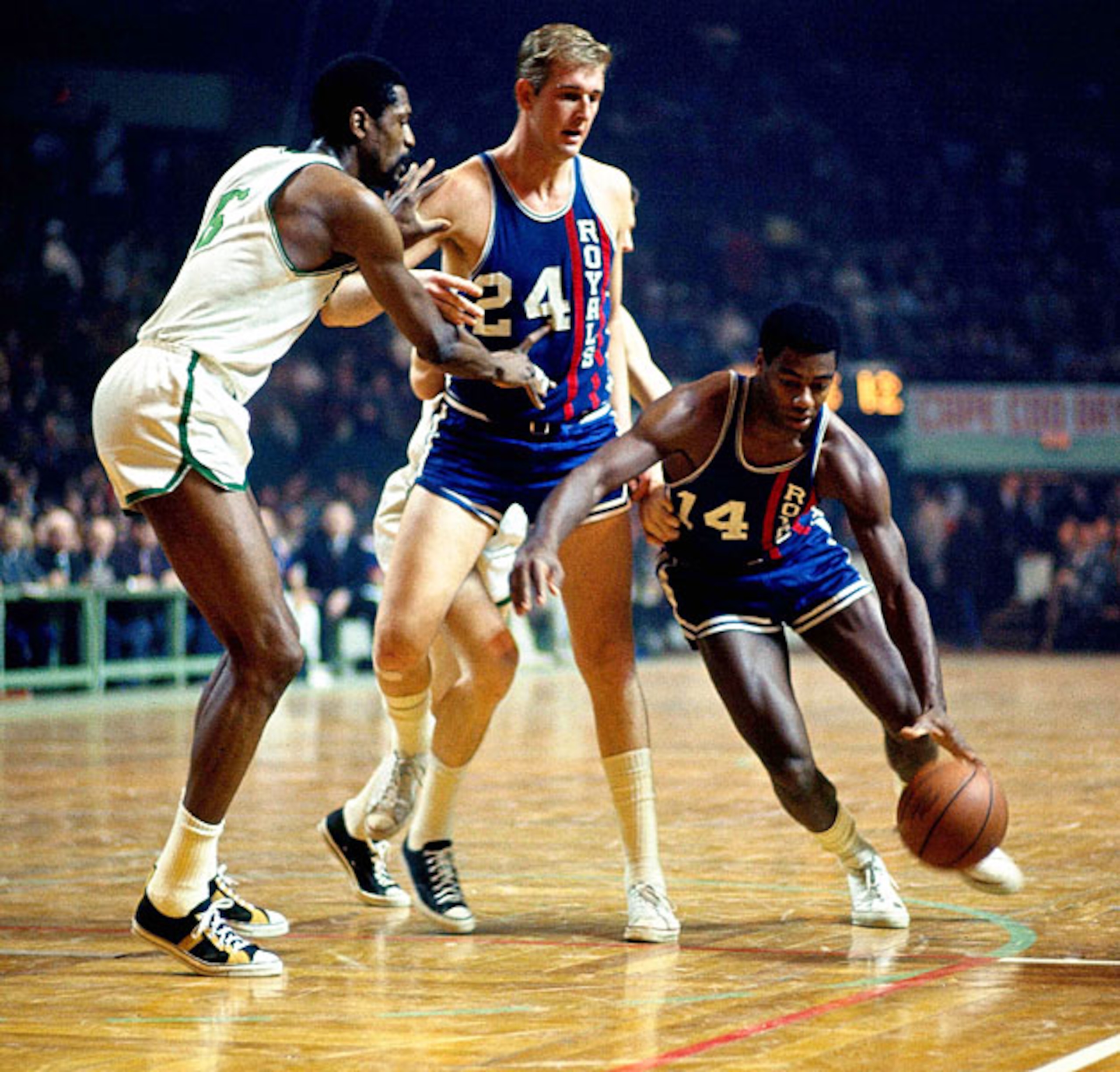
Years as a Royal: 1960-1970
Key Achievements: 1964 NBA MVP, 10-time All-Star, 1961 Rookie of the Year, 9/1/0-time All-NBA
The greatest statistical master of the point guard position ever, Oscar Robertson, or "Big O," as he was known, was a regular triple-double threat year in and year out, and in just his second season he did average a triple-double.
That season the numbers were astounding: 30.8 points, 12.5 assists and 11.4 rebounds per game.
He never averaged less than 24 points per game during his decade with the Royals, and all in all he averaged just over 29, as well as 10.3 assists and 8.5 rebounds.
He was LeBron James before LeBron James existed. He had swift offensive moves and was a solid defender and a lights out shooter.
The one thing that terminated thoughts about calling Big O the greatest point guard ever was the missing jewelry on the fingers, and although he would win one later in his career as a member of the Bucks, as previously noted, he didn't play the star role as routinely as he did for the Royals in Cincinnati.
No other Sacramento King/Cincinnati Royal can touch what Oscar Robertson did for them.
San Antonio Spurs: Tim Duncan
27 of 30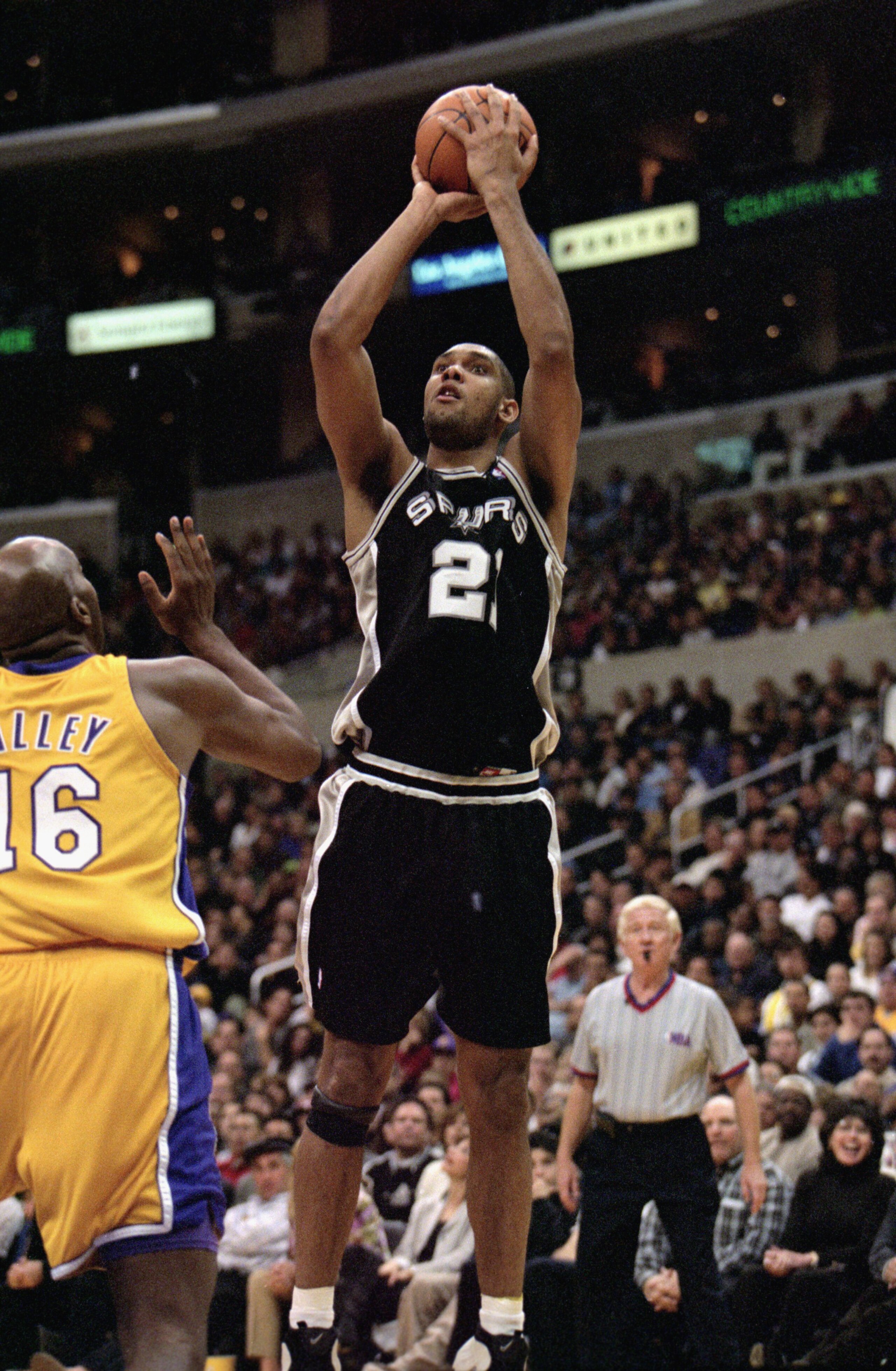
Years as a Spur: 1997-present
Key Achievements: Four-time NBA champion, three-time NBA Finals MVP, two-time NBA MVP, 13-time All-Star, 9/3/1-time All-NBA, 1998 Rookie of the Year, eight-time All-Defensive
Taking an excerpt from an article I wrote last month:
"Already 14 years (wow, I feel old now), two MVPs and four championships into his illustrious career, Duncan really has nothing to prove, as he is already the greatest player in the history of the NBA at his position. He no doubt will join the best in the Hall of Fame on the first ballot. He is a top-15 player of all time. If he adds a few titles, he could be a top-10 player when all is said and done."
I stand by my comments. I also challenge someone to find something Duncan has not done in his career. He's won four titles, three Finals MVPs and two regular season MVPs. Duncan has been an All-Star, All-Defensive, All-NBA and lastly was a Rookie of the Year recipient.
Simply put, "The Big Fundamental" is the San Antonio Spurs franchise. All four titles have been under Timmy's reign.
Nobody from Spurs history can get close to matching what Duncan has done for the franchise. He holds every important statistical record of the club other than assists and steals.
I could mention the fact that he has averaged 21 points, 11 rebounds, three assists and two blocks over his career too, but you already get the point.
In essence, in a small way Tim Duncan has changed what the NBA means to small-market clubs. A dozen years ago no one ever thought of San Antonio as anything other than a small-market franchise. Now it's one of the most successful clubs in the NBA's history!
It's hard to believe he's well over a thousand games into his career already.
How many years does he have left in the tank?
Only time will tell, but I'll guess three or so. In all honesty, though, he's accomplished everything there is to accomplish in the NBA, and it wouldn't go against his great legacy if he stepped away now.
Not many others can say the same.
Toronto Raptors: Chris Bosh
28 of 30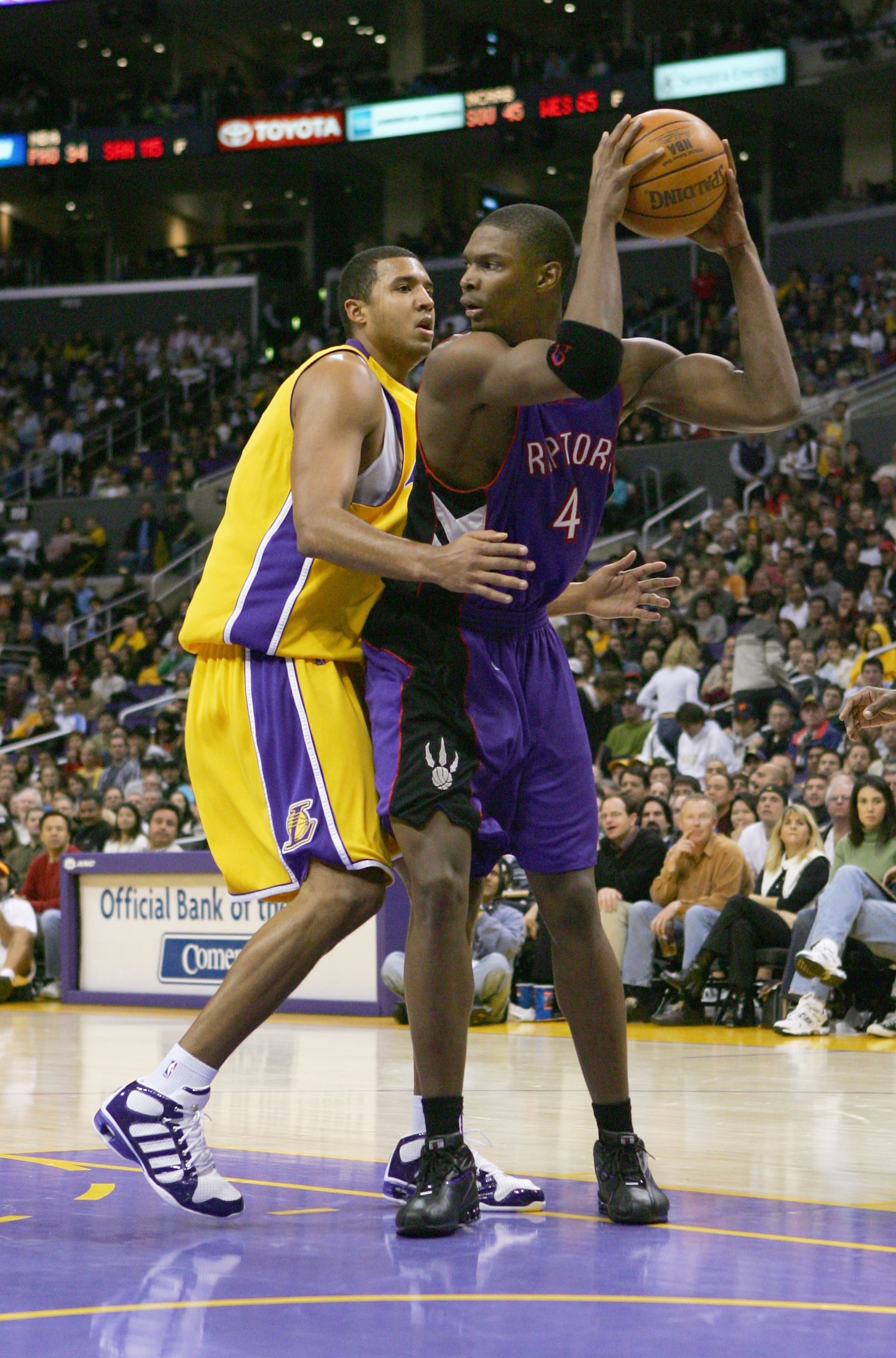
Years as a Raptor: 2003-2010
Key Achievements: Five-time All-Star, 0/1/0-time All-NBA
Easily one of the five or so least stressful decisions on the list, Chris Bosh is yet another example of a player who found great individual success in Toronto, one of the NBA's most miserable franchises historically, but got absolutely nowhere beyond April with the team (see Vince Carter, Tracy McGrady, Andrea Bargnani or Damon Stoudamire). In seven campaigns Bosh only took the underachieving Raptors to the playoffs twice.
Bosh, while being a top-10 power forward during his time in Canada, was never really considered a superstar like Carter was a decade ago.
Fans revered him but weren't attached to him. Then again, they weren't the biggest fans of Vince either.
He is as soft as they come now, and even as a member of the Raps he was. Still, that doesn't take away the 20.2 points and 9.4 rebounds he averaged while establishing himself as simply a great player on a bad team.
He also had some decent range and could shoot well from the charity stripe.
I have a feeling some Raps fans might be out to get me if I selected Vinsanity here too.
Utah Jazz: Karl Malone
29 of 30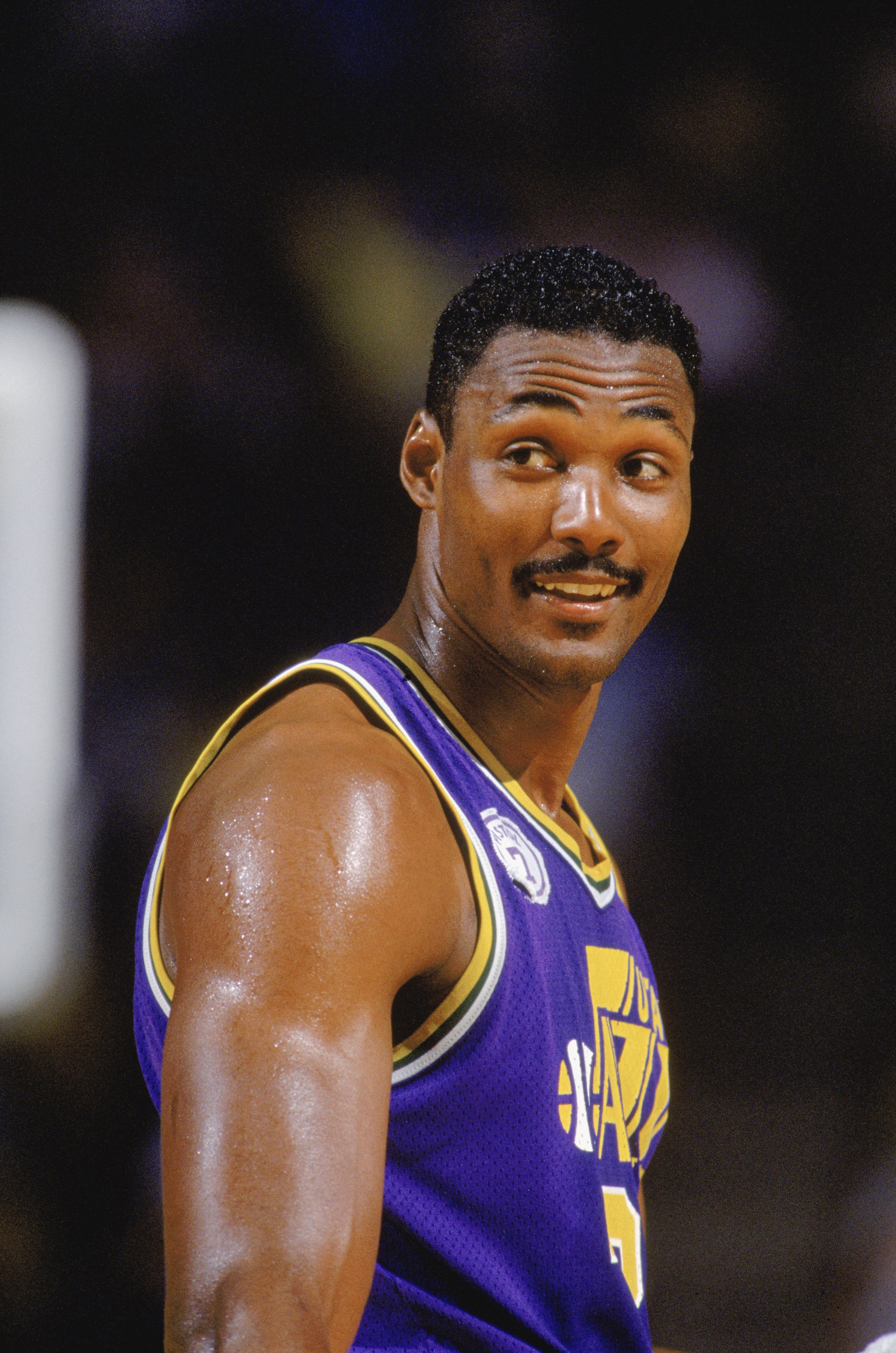
Years as a Jazz player: 1985-2003
Key Achievements: 13-time All-Star, two-time NBA MVP, 11/2/1-time All-NBA, three-time All-Defensive
Is it altogether plausible to call Karl Malone the greatest forward to never win a title?
Well, I'm going to do that anyway. I'll also give him the benefit of the doubt to make him the best Jazz player ever.
Despite his already extremely high standing among NBA greats, "The Mailman" never tasted pay dirt besides having a solid support cast that included the walking pick-and-roll disposal that was John Stockton.
He didn't win a title, so what did he do individually? He was a two-time MVP, 13-time All-Star, 14-time All-NBA pick and even pitched in on D and snagged three All-Defensive selections.
Now to the stats: 25.4 points, 10.2 rebounds and 3.5 assists to go with a career field-goal percentage of 51.7. Those are pretty astounding numbers, huh? He played in a grand total of 1,434 games, a number that ranks with the all-time best.
Oh yeah, and he is a top-five scorer of all time. I can't believe I forgot to mention that! Sorry, Mailman.
Washington Wizards: Elvin Hayes
30 of 30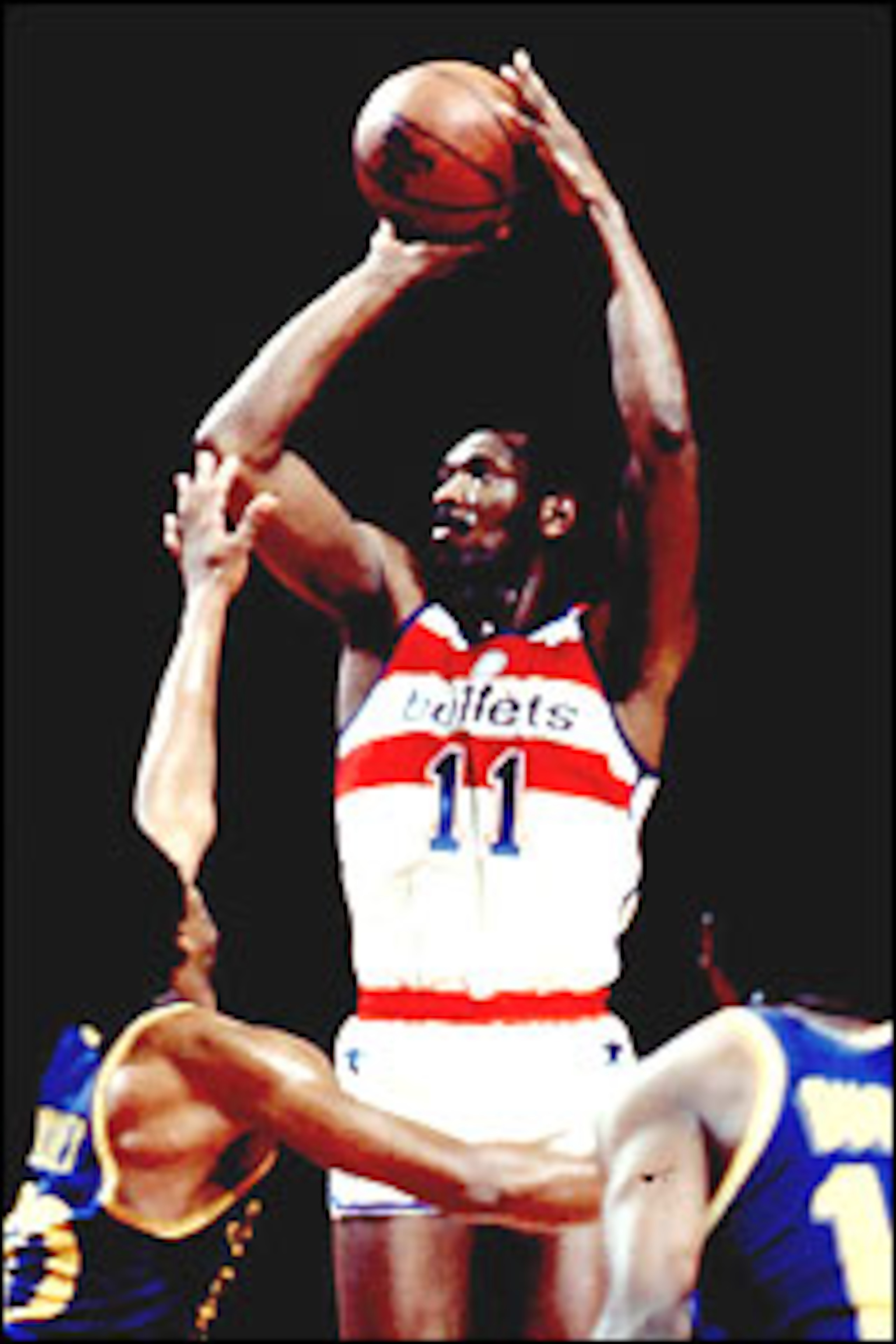
Years as a Bullet: 1972-1981
Key Achievements: One-time NBA champion, eight-time All-Star, 3/3/0-time All-NBA, two-time All-Defensive
Sandwiched between two four-year stints with the Houston Rockets, Elvin Hayes spent a nine-year run with the Washington Bullets, with whom he won his coveted first title in 1978.
He played alongside Wes Unseld in the frontcourt to form one of the greatest rebounding duos ever. Together they would routinely average 27 boards: Hayes, a 6'9" power forward, snagging just under 13 of those with Wes, a 6'7" center, collecting the rest.
Throw in the 21.3 scoring average and the two swats per game he sported, and you have yourself a fairly simple pick for the franchise of our nation's capital.
Plus he had eight All-Star selections, six All-NBA picks and two All-Defensive team selections. The choice has become even clearer: Elvin Hayes!
Had Earl Monroe played more than four seasons in the District of Columbia, we'd be having a whole other story. He revolutionized ball-handling as we know it while a Bullet.
Joseph Fafinski is currently a freshman at the University of Missouri. Originally from Chaska, Minnesota, Joseph is an NBA and Minnesota Timberwolves Featured Columnist and a frequent writer on all things NBA, NFL and MLB. You can e-mail Joseph at jef3m8@mail.missouri.edu or follow him on Twitter at @JosephFafinski.
.jpg?w=2560 "NFL investigating 2 referees for separate viral exchanges")
.jpg?w=2560 "OBJ Calls Out Giants After Release")
.jpg?w=2560 "Tyreek makes another cryptic post amid Chiefs rumors")
.jpg?w=2560 "Report: Chiefs Contact Hill's Agent")