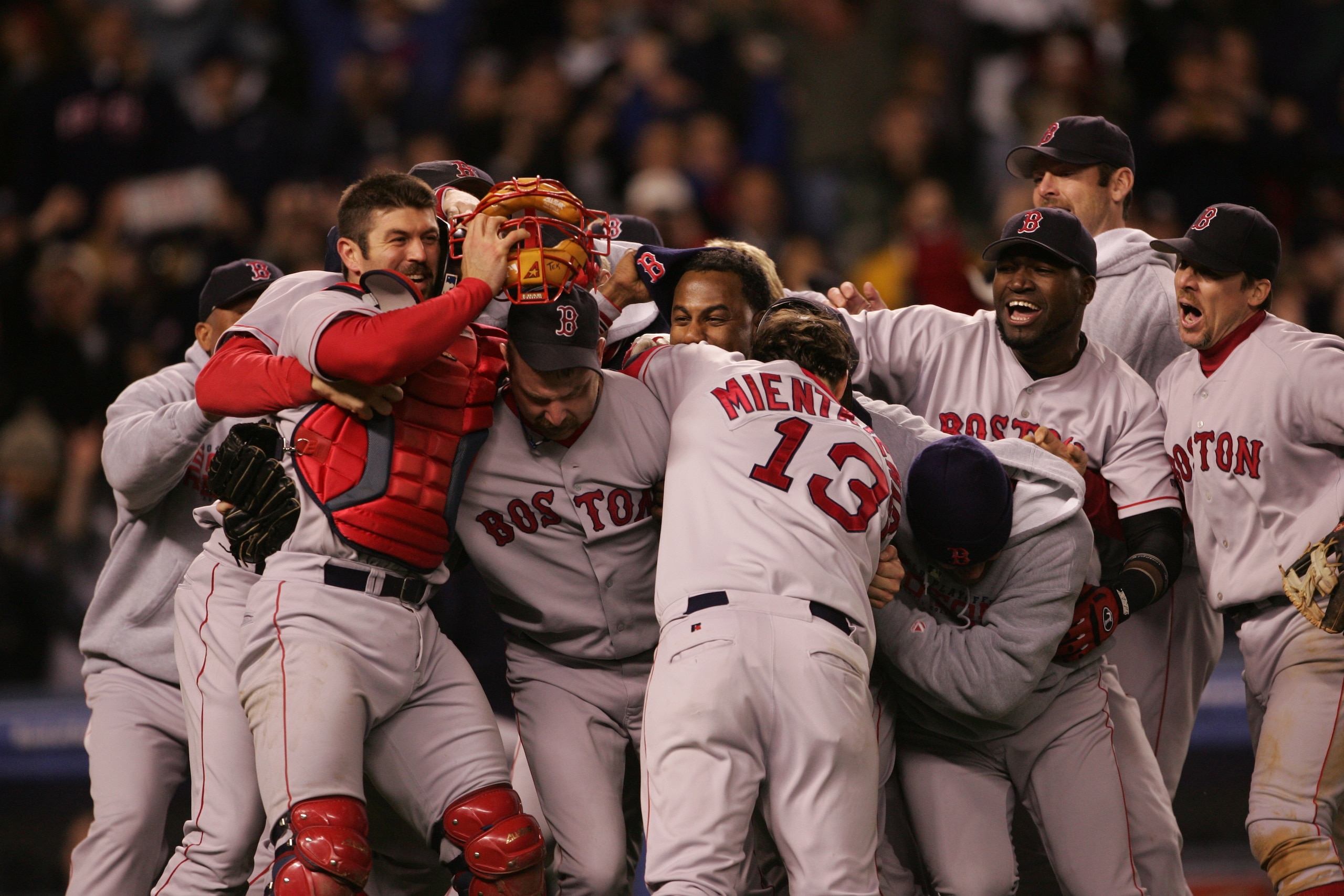

MLB Power Rankings: 2004 Yankees and the 50 Most Crushing Losses of All Time
In October of 2004, the New York Yankees were on the verge of defeating the Red Sox in the American League Championship Series for the second year in a row, and this time more emphatically than the previous season, when Aaron Boone homered in the bottom of the eleventh inning off Sox pitcher Tim Wakefield in Game 7, propelling the Yankees to the World Series.
This time around, the Yankees had spanked the Red Sox through the first three games of the series, and held a 4-3 lead in the bottom of the ninth, three outs away from a sweep.
What happened next was literally the stuff of legend, as the Red Sox not only rebounded to win Game 4, but went on to win the series, becoming the only team in major league history to win a series after being down 3-0.
In the grand scheme of things, was it actually the most crushing defeat in baseball history? The game has certainly seen its share of heartbreaking losses throughout its over 100-year history, from colossal collapses by teams in the pennant stretch, to teams heavily favored in past World Series matchups, to single games with amazing outcomes.
We will take a stroll back in time and look at some of the most heart-breaking defeats suffered by teams throughout the history of Major League Baseball, and take a look at exactly where the Yankees collapse in 2004 fits in.
This list is comprised of not just individual games, but also series of games and a course of events that led to a major collapse as well.
For continuing coverage of Major League Baseball, follow Doug on Twitter @Sports_A_Holic.
50. New York Mets- 2006 NLCS, Game 7
1 of 50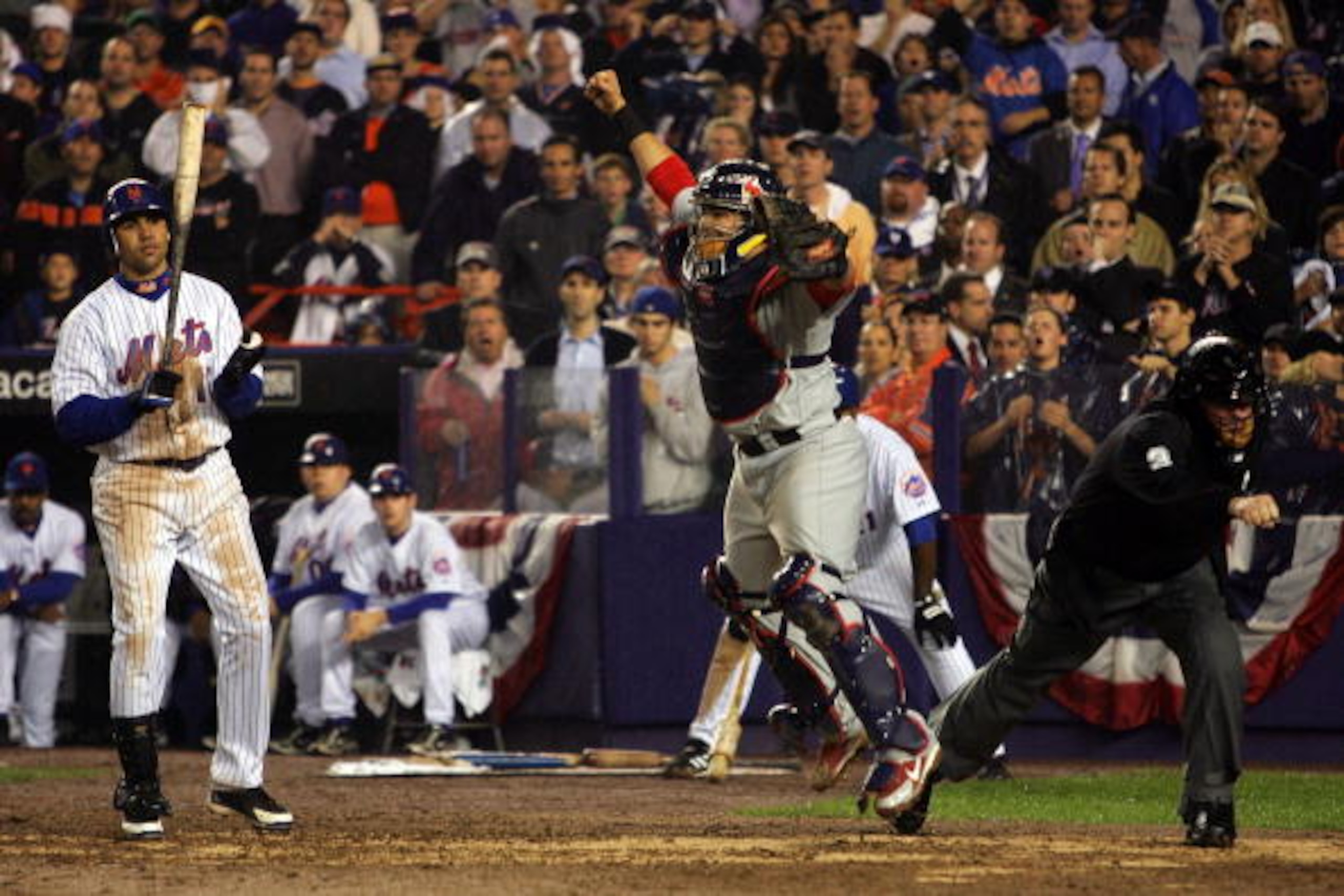
In 2006, the New York Mets sported one of the highest payrolls in all of baseball, fielding a team of All-Stars like David Wright, Jose Reyes, Carlos Beltran, Carlos Delgado, Tommy Glavine, Billy Wagner and a very deep bench.
The Mets won the NL East and breezed through the NLDS, dispatching the Los Angeles Dodgers in three games, and faced the St. Louis Cardinals in the Championship Series.
The Cardinals limped into the playoffs with a record of 83-78, the worst record for any team to qualify for the playoffs since the 1973 New York Mets (83-79).
Surprisingly, the NLCS was close throughout, as the Cardinals fought furiously to force a seventh game. With the score 1-1 in the top of the ninth, Cards’ catcher Yadier Molina hit a two-run homer, giving the Cardinals a 3-1 lead. However, the Mets were not about to go out quietly.
After loading the bases against rookie closer Adam Wainwright, Carlos Beltran stepped to the plate with the game, and the series, on the line. Wainwright proceeded to strike out Beltran, and the heavily favored Mets were headed home.
The Cardinals would go on to defeat the Detroit Tigers in the 2006 World Series.
49. Washington Senators- May 23, 1901
2 of 50
In 1901, the American League was a newly formed major professional league, rivaling the older National League. On May 23, the Washington Senators played the Cleveland Indians (known as the Blues at that time), and the Senators had jumped out to a huge lead. The Indians were down 13-5 heading into the bottom of the ninth in what appeared to be a certain victory.
However, the Indians had other plans. After a collection of singles, doubles, walks and errors, all of a sudden the Indians had closed to within a run. The Cleveland crowd began throwing anything they could out onto the field, including umbrellas, hats, canes and seat cushions. The game was halted and the crowd was warned that any further rowdiness would result in a forfeit.
After Oliver Pickering singled to drive in the tying run, Jack McCarthy, batting in the inning for the second time, strode to the plate. Pickering advance to second on a passed ball, and on the next pitch, McCarthy singled to left, driving in Pickering with the winning run, and turning a certain victory for the Senators into a stunning defeat.
The game still stands as the largest single comeback in the bottom of the ninth inning in major league history.
48. Cleveland Indians- 1995 World Series
3 of 50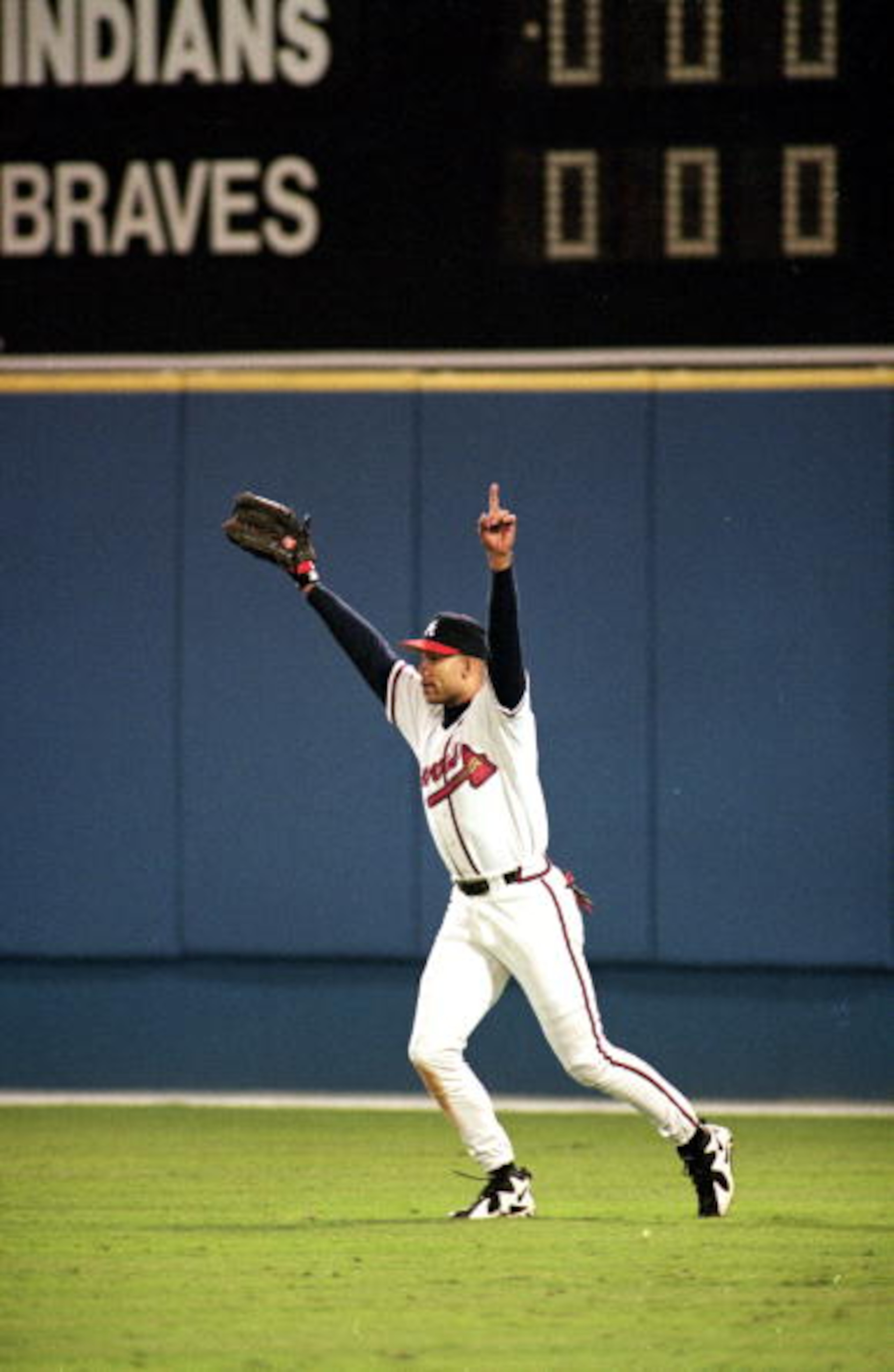
The Cleveland Indians of the mid-1990s was a team completely stocked with stellar players, and the Indians had amassed a record of 100-44 in the strike-shortened season of 1995. Albert Belle, Manny Ramirez, Carlos Baerga, Eddie Murray, Paul Sorrento and Jim Thome led a vaunted offense into the 1995 World Series to face the Atlanta Braves, and the Indians were the prohibitive favorites.
The Braves, however, while not sporting an offense quite like the Indians, had a pitching staff that rivaled any in baseball, with Tommy Glavine, Greg Maddux and John Smoltz leading the way.
The Braves completely shut down the vaunted Indians offense, holding the Tribe to a .179 average for the series. With the Braves holding a 3-2 edge, Glavine pitched a beauty in Game 6, allowing just one hit in eight innings, and Mark Wohlers closed out the ninth to send the Indians to a shocking defeat.


47. Warren Spahn- July 2, 1963
4 of 50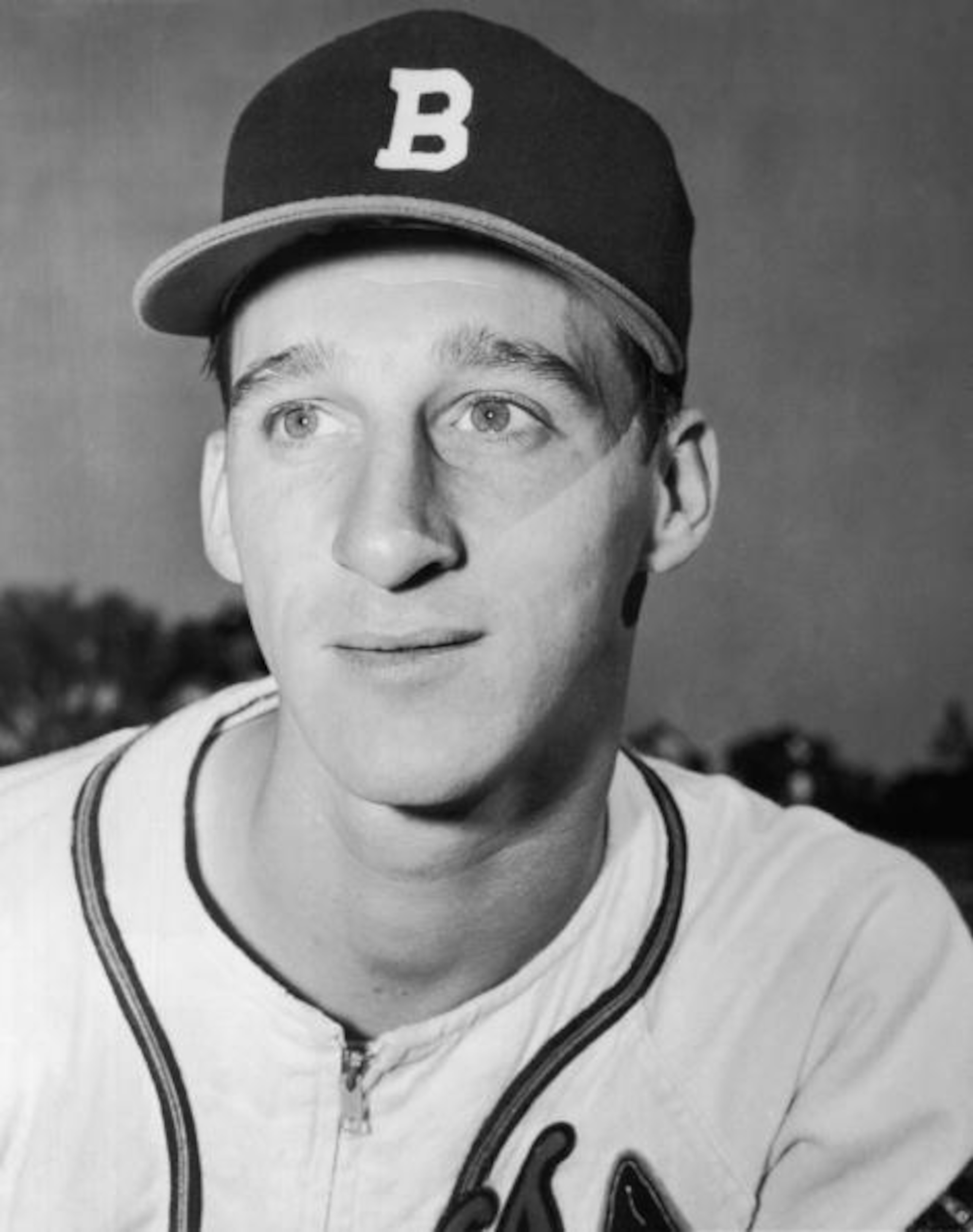
On an early July day in 1963, the Milwaukee Braves were in San Francisco to face the Giants at Candlestick Park. The Giants had young 25-year-old fireballer Juan Marichal on the hill, and the Braves countered with 42-year-old Warren Spahn, who had already surpassed 300 wins in his illustrious career.
Both pitchers came in with similar records: Marichal was 12-3, Spahn was 11-3. Despite his age, Spahn was still the ace of the Braves staff.
As the game played on, it was obvious that both teams would be hard-pressed to mount an offense of any kind, and both Spahn and Marichal kept putting goose eggs up on the scoreboard. The score remained scoreless at the end of the regulation nine innings, and Giants manager Alvin Dark considered pulling Marichal. Marichal pleaded with Dark to stay in, and Dark relented.
The game continued on, and after the 14th inning had ended, Dark was again ready to pull Marichal. However, according to the New York Times, Marichal said to Dark, “Do you see that man on the mound?” Marichal said, pointing to Spahn. ”That man is 42, and I’m 25. I’m not ready for you to take me out.”
Dark relented once again, and Marichal and Spahn continued their incredible duel. Finally, with one out in the bottom of the 16th, Willie Mays ended the marathon duel by hitting a solo home run, giving the Giants the 1-0 victory.
Marichal’s pitching line: 16 innings, 8 hits, 0 runs, 4 walks and 10 strikeouts.
Spahn’s line: 15 1/3 innings, 9 hits, 1 run, 1 walk and 2 strikeouts.
An epic game that no one deserved to lose.
46. Baltimore Orioles- 1971 World Series
5 of 50The Baltimore Orioles, under manager Earl Weaver, finished 101-57, winning the American League East Division by a comfortable margin. With two future Hall of Fame players in its lineup with Brooks and Frank Robinson, a stellar supporting cast with Boog Powell, Paul Blair, Mark Belanger and Don Buford, and a pitching staff that featured four 20-game winners, the Orioles were heavy favorites heading into the World Series against the National League champion Pittsburgh Pirates.
The Orioles took the first two games of the series at Memorial Stadium in Baltimore, and headed to Pittsburgh with a comfortable 2-0 lead. However, the Pirates came roaring back in front of their home crowd at Three Rivers Stadium, capturing all three games to take a 3-2 Series lead.
In an epic Game 6, the Orioles staved off elimination, winning in the tenth inning on a Brooks Robinson sacrifice fly, with Frank Robinson barely beating the throw of Pirates outfielder Vic Davalillo.
Game 7 featured the Pirates’ Steve Blass facing the Orioles’ Mike Cuellar. Blass beat Cuellar in Game 3 with a complete game three-hitter, and Game 7 figured to be a great duel between the two. They certainly did not disappoint, as they duked it out for eight innings. The Pirates had drawn first blood in the fourth on a Roberto Clemente solo home run, and added another run in the eighth when Jose Pagan doubled in Willie Stargell.
The Orioles countered in the bottom of the eighth, scratching out a run on an RBI groundout by Don Buford, however Blass once again shut the door, and the Pirates prevailed 2-1, to hand the Orioles a stunning defeat.
45. Boston Red Sox- 1972
6 of 50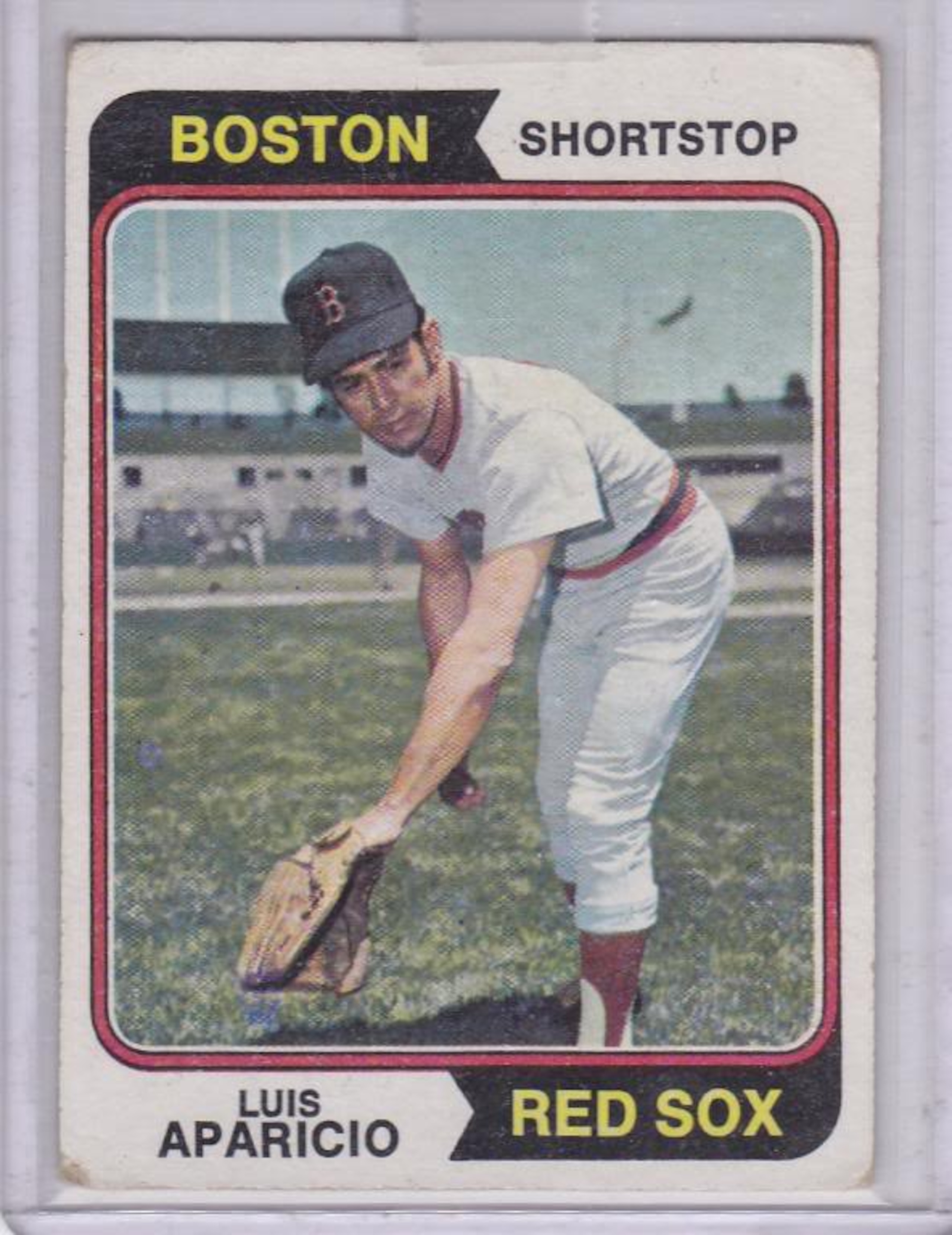
The 1972 season saw the first strike in baseball history. Even though the strike lasted for only two weeks, every team in the majors lost between six and nine games, with Commissioner Bowie Kuhn refusing to allow the games to be made up.
As a result, the Boston Red Sox played one less game than the Detroit Tigers, and the result would have disastrous consequences. Heading into the last weekend of the regular season, the Red Sox led the Tigers by one half game with three games to play against the same Tigers. In the first game of the series, the Tigers struck early and jumped out to a 1-0 lead, however Boston started a rally of their own in the top of the third. Here is what happened, according to FenwayFanatics.com.
"With one out, left fielder Tommy Harper singles and shortstop Luis Aparicio follows with a ground ball single to left, moving Harper to third. With runners on the corners, Carl Yastrzemski, playing first base, steps to the plate and hits a deep shot to center field for what seems like a sure triple. Harper easy strolls home and the fleet-footed Aparicio races from first looking to cross the plate as well. However, as he nears the third-base bag, Aparicio stumbles suddenly, then slips on the bag and falls into foul territory; he immediately gets up to return to the base. Unfortunately, Yastrzemski, who has not seen the miscue, motors around second with his head down, thinking he had an easy triple; to his surprise, Yaz arrives at third only to find his teammate still there. Aparicio makes a final attempt to head home but slips again on the wet grass and scrambles back to third; Yastrzemski has no choice but to try and return to second, but he’s easily tagged out by Tigers third baseman Aurelio Rodriguez.
"
The Red Sox were unable to recover and lost, 4-1. The Sox also lost the second game of the series, clinching the American League East title for the Tigers.
The Sox won the last game of the series, giving them an 85-70 record. However the Tigers, by virtue of having one less game cancelled by the strike, finished with an 86-70 record. Aparicio’s baserunning blunder was a disheartening blow for the Sox, indeed.
44- Los Angeles Dodgers- 1942
7 of 50
The Brooklyn Dodgers had been part of the National League since 1890 and had never won the World Series. In 1941, the Dodgers won 100 games and won the National League pennant over the St. Louis Cardinals by two and a half games, only to lose the World Series to the New York Yankees in five games.
In 1942, the Dodgers again got off to a hot start, and by August 4, they were 73-30 with a ten-game lead in the National League.
However, the St. Louis Cardinals got hot as well, and went on to win 45 of their last 56 games, beating the Dodgers several times in September in the process, and overtook the Dodgers to win the National League pennant by two games.
The Dodgers won 104 games, the second-most in the history of the franchise, and had nothing to show for it.
43- San Francisco Giants- 1993
8 of 50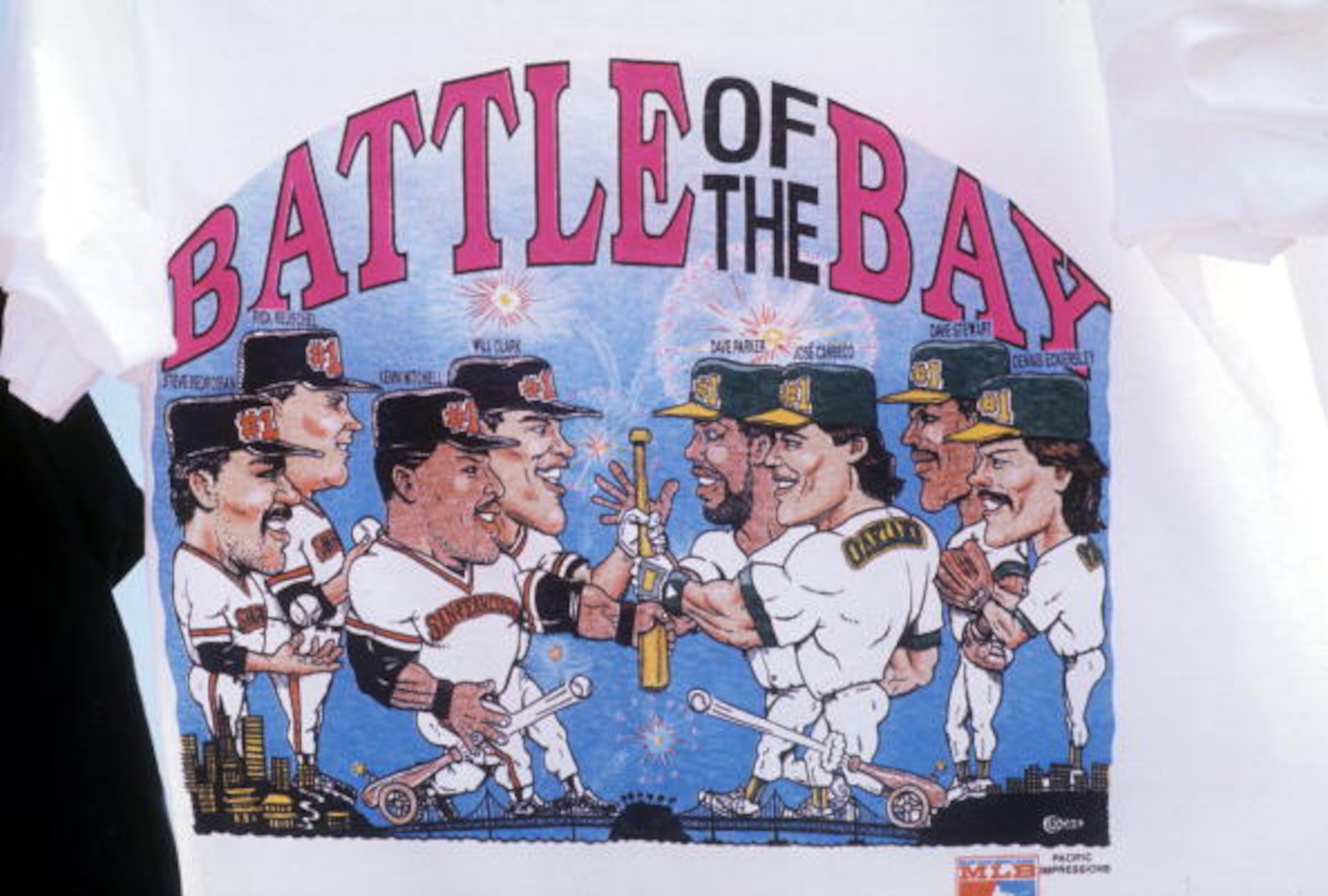
During the previous offseason, the Giants signed Barry Bonds to a free-agent worth $43.75 million over six years, making it the largest contract ever signed at the time. Bonds was returning to the team that his father had played with for the first seven years of his career.
Bonds and the Giants were enjoying terrific seasons, with Bonds leading the National League with 46 home runs and 123 RBIs, and capturing his second consecutive NL MVP award, and third overall. The Giants were involved in an incredible pennant with the Atlanta Braves, with the National League West coming down to the wire.
The Giants ended the season with a four-game series against the rival Los Angeles Dodgers. The Giants took the first three games of the series and headed into the last game in a dead heat with the Braves. However, in the season finale, the Giants were soundly thumped 12-1, losing the National League West by one game.
In spite of winning the third-most games in team history, the Giants, much like the 1942 Dodgers, had nothing to show for their efforts.
42. Brooklyn Dodgers- 1956 World Series, Game 7
9 of 50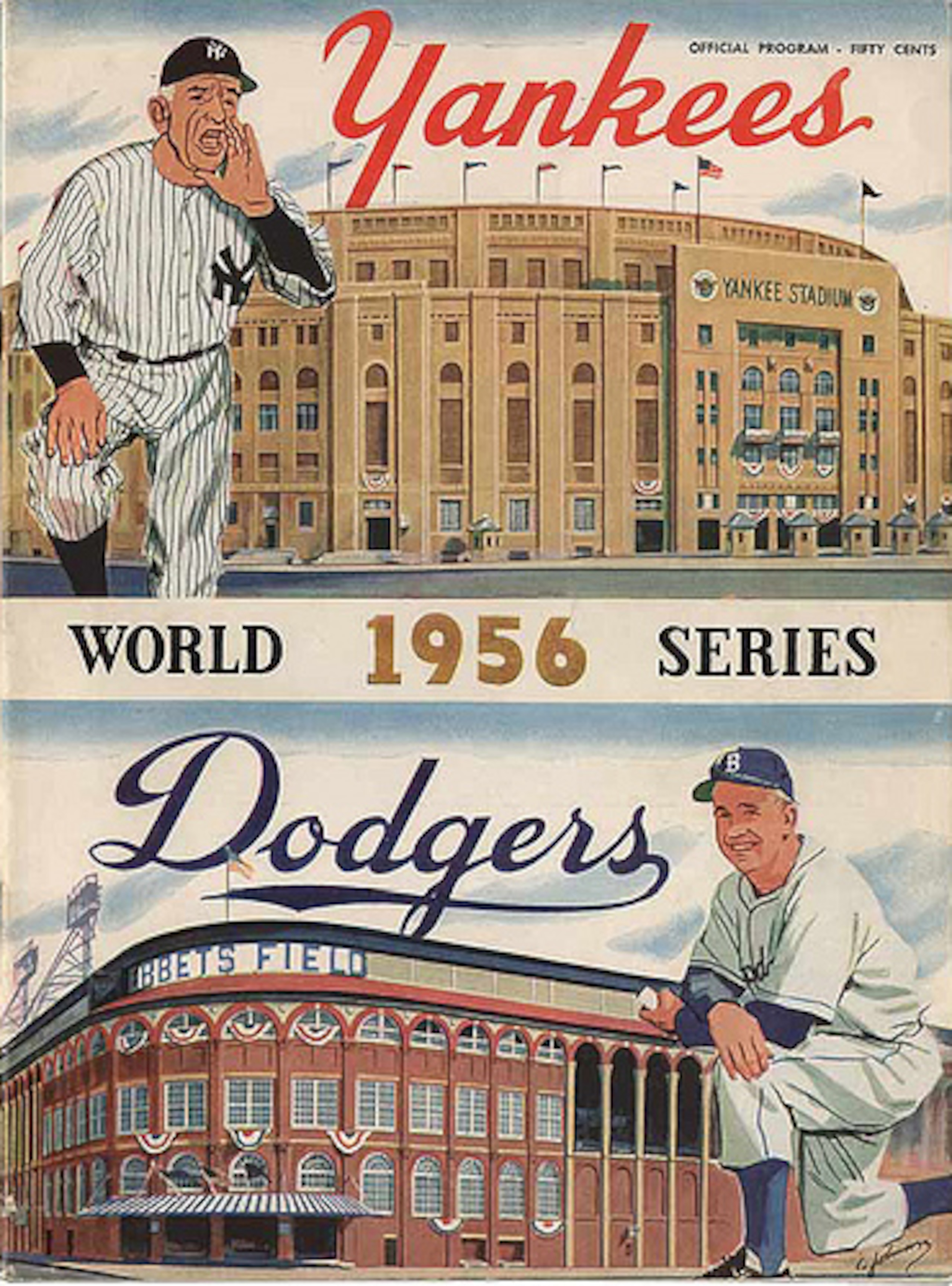
The 1956 World Series pitted the defending champion Brooklyn Dodgers against the New York Yankees for the second straight season. In the previous year the Dodgers captured the first World Series championship in franchise history, and were looking to repeat.
While the ’56 Series is largely remembered for the perfect game thrown by Yankees pitcher Don Larsen in Game 5, the series came down to a deciding seventh game at Ebbets Field in Brooklyn.
Don Newcombe, who was coming off a spectacular season during which he posted a 27-7 record with a 3.06 ERA, was on the mound for the Dodgers, and the Yankees countered with 22-year-old Johnny Kucks, who was relatively unknown but had a record of 18-9 that particular year for the Bronx Bombers, easily the best year of his short career.
Newcombe was unable to deliver for the Dodgers, while Kucks completely shut down the vaunted Dodgers offense, throwing a complete game three-hit shutout, winning 9-0 and handing the Dodgers a disheartening loss.
Kucks would be the last pitcher that the legendary Jackie Robinson would ever face, announcing his retirement after the conclusion of the World Series. It would also be the last World Series game ever played at Ebbets Field.
41. Baltimore Orioles- August 22, 2007
10 of 50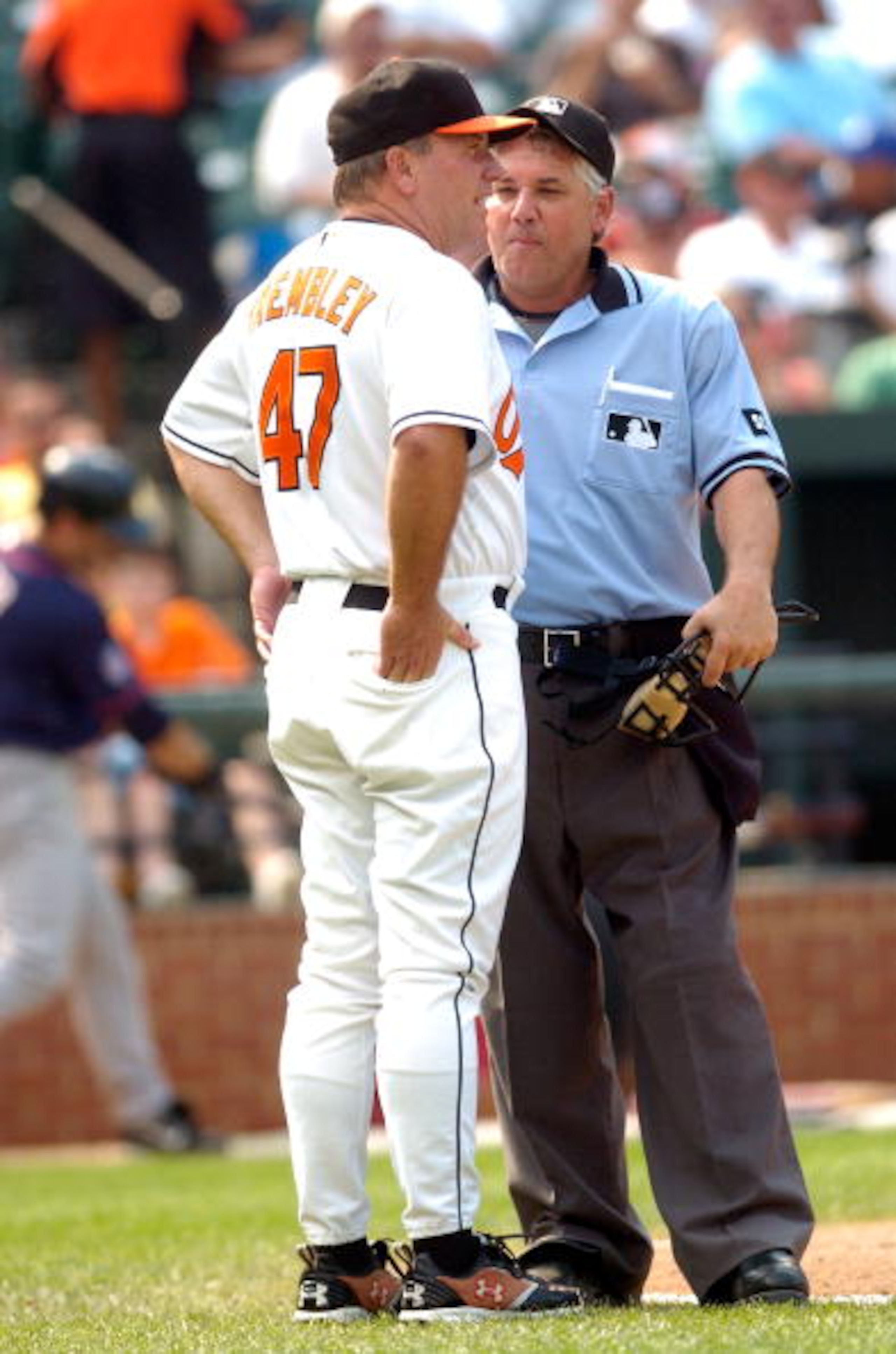
In 2007, the Baltimore Orioles were in the midst of their 10th straight losing season, on their way to losing 93 games. However, for one night in August, the Orioles suffered through one of the worst games in major league history.
On August 22, the Texas Rangers were in town to play the Orioles at Camden Yards. The game started on a positive note, with the Orioles holding a 3-0 lead after three innings.
However, the Rangers scored five runs in the top of the fourth, and tagged on an additional nine runs in the top of the sixth, knocking out starter Daniel Cabrera in the process, and shelling his replacement, Brian Burres, as well.
With a 14-3 lead heading into the eighth inning, the Rangers were already well on their way to victory. However, the continued their onslaught, scoring ten runs in the eighth and another six runs in the ninth, giving them an incredible 30-3 victory.
Is there really anything more crushing in baseball than losing by 27 runs?
40. Pittsburgh Pirates- 1992 NLCS
11 of 50In the early 1990s, the Pittsburgh Pirates were actually relevant. Yes, I know it’s hard to believe, sports fans, but it’s true. The 1992 season saw the Pirates win their third straight National League East Division title. In the two previous seasons, the Pirates lost the 1990 NLCS to the Cincinnati Reds and the 1991 NLCS to the Atlanta Braves.
The 1992 NLCS was to be a rematch between the Pirates and Braves, in what turned out to be an absolutely riveting seven-game set.
With the series tied at three, the deciding seventh game pitted the Braves’ John Smoltz against the Pirates’ Doug Drabek. The Pirates scratched out a run in the first inning and another in the sixth off Smoltz. Meanwhile, Drabek was sailing along for the Pirates, and headed into the bottom of the ninth inning with a 2-0 lead.
Terry Pendleton doubled for the Braves to start the ninth, and David Justice reached on an error by second baseman Jose Lind, moving Pendleton to third. After Sid Bream walked to load the bases, Drabek was replaced in the game by reliever Stan Belinda.
Ron Gant lined out to left fielder Barry Bonds, scoring Pendleton and cutting the lead to 2-1. After another walk loaded the bases once again, pinch hitter Francisco Cabrera singled to left field, scoring Justice. Bream rounded third and headed home, beating the throw home from Bonds on a very close play, giving the Braves the 3-2 victory and denying the Pirates the chance to go to the World Series once again.
After the season, Barry Bonds signed a free-agent contract with the San Francisco Giants, and the Pirates have not had a winning season since.
39. Chicago Cubs- 1984 NLCS
12 of 50
The 1984 Chicago Cubs put together a magical season and won the National League East Division by six and a half games over the New York Mets. The Cubs featured Cy Young award winner Rick Sutcliffe and NL MVP award winner Ryne Sandberg.
It was also the first postseason appearance for the Cubs since 1945, and hopes were high in the Windy City. The Cubs were matched up against the San Diego Padres, who were in the playoffs for the first time in team history.
The Cubs won the first two games of the series, and headed to San Diego with a commanding lead. However, the Padres came roaring back, winning the next two games at Jack Murphy stadium, with the deciding fifth game to be played in San Diego.
The Cubs jumped out to an early 3-0 lead, and heading into the bottom of sixth with Cy Young award winner Rick Sutcliffe on the mound, it certainly appeared as if the Cubs were headed to their first World Series in 39 years.
However, the Padres got to Sutcliffe in the bottom of the sixth inning for two runs, and then chased Sutcliffe in the seventh, scoring four more runs to take a 6-3 lead. The Cubs were unable to answer, and with future Hall of Fame closer Rich Gossage on the mound, the Padres were victorious, sending Cubs fans home disappointed once again.
38. Harvey Haddix- Pittsburgh Pirates, May 26, 1959
13 of 50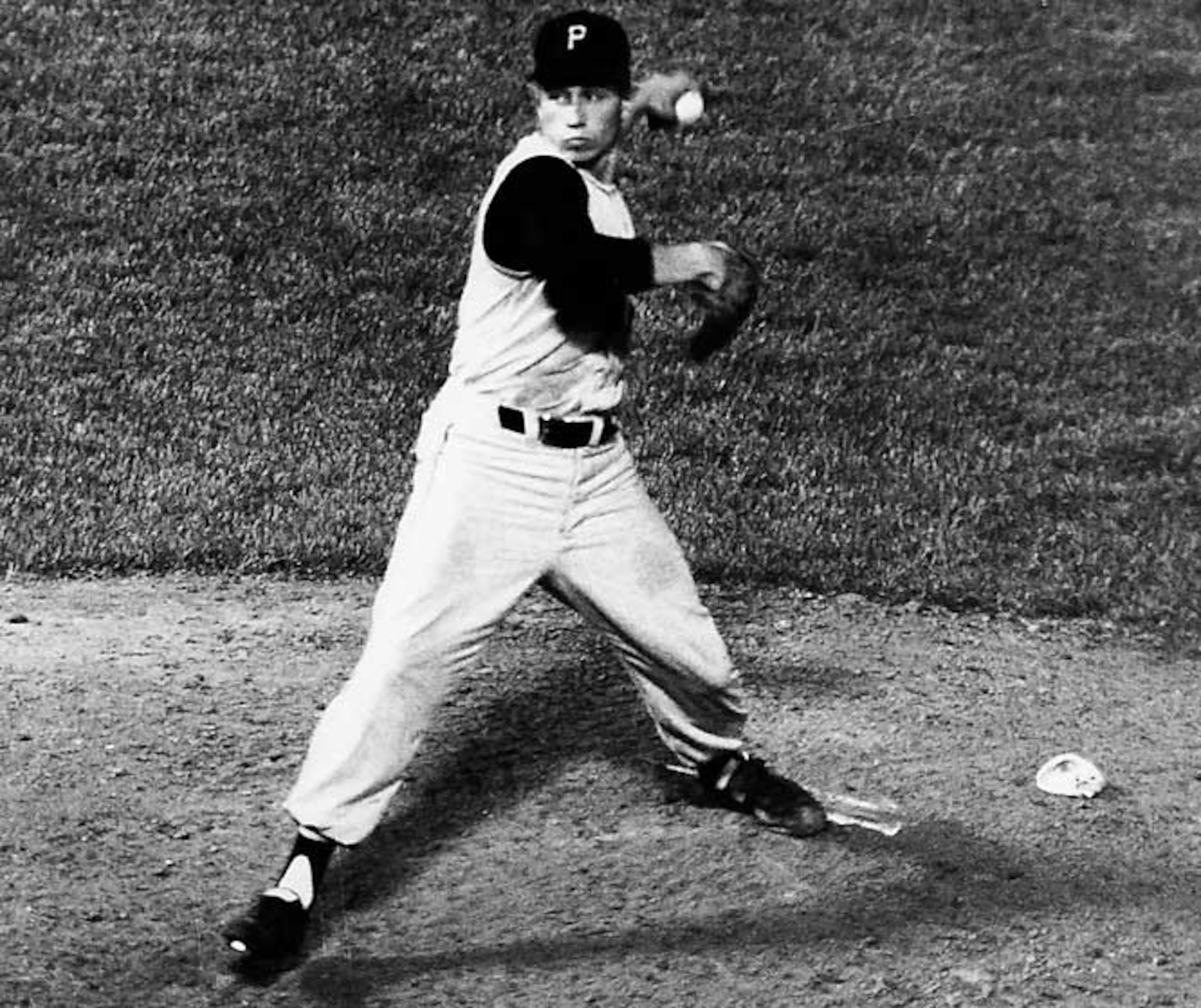
The Pittsburgh Pirates were at County Stadium to play the Milwaukee Braves on May 26, 1959. The Pirates were starting Harvey Haddix, who thus far in the season had gone a fairly pedestrian 4-2. The Braves countered with crafty veteran Lew Burdette.
As the game progressed, it appeared that baserunners would be a luxury, as both pitchers sailed through the early innings. The Pirates threatened in the third and ninth innings, with runners on third base on both occasions, but were unable to capitalize.
However, the Braves were completely unable to even come close to touching Haddix, and by the time the ninth inning rolled around, Haddix had retired all 24 batters faced.
The Braves once again went 1-2-3 in the bottom of the ninth, and Haddix had pitched a rare perfect game. But wait! The Pirates hadn’t scored on Burdette either, so the game was headed into extra innings.
Tension mounted, as the Braves once again went down in order in the 10th and 11th. But Burdette continued keeping the Pirates off the scoreboard as well.
Haddix faced the bottom of the Braves’ order in the 12th, and once again, Haddix put them down in order. 36 batters up, 36 batters down. But the game was still tied.
Burdette came back to the mound in the top of the 13th and once again held the Pirates scoreless. In the bottom of the 13th, Haddix faced second baseman Felix Mantilla. Mantilla hit a grounder to third. Third baseman Dick Hoak came up with the ball cleanly, but his throw to first was in the dirt, and first baseman was unable to dig it out. Mantilla had reached on an error, and the perfect game was over.
After a sacrifice by Eddie Matthews moved Mantilla to second, Haddix intentionally walked slugger Hank Aaron to create a force situation. The next batter, Joe Adcock, took Haddix’ second pitch and launched it deep to left field. Left fielder Bob Skinner angled back, but the ball sailed over his head and into the seats for an apparent home run, giving the Braves a 3-0 victory and ending the perfect bid of Harvey Haddix.
However, Hank Aaron never saw the ball leave the park and never touched second base, heading back to the dugout. The umpire called Adcock out for over-running Aaron, and the hit was then ruled a double, giving the Braves a 1-0 win instead. However, for Haddix, none of that mattered. He had pitched one of the most masterful games in the history of Major League Baseball, and lost.
Many years after the game, Lew Burdette said, "I have to be the greatest pitcher who ever pitched, because I beat the guy who pitched the greatest game ever pitched."
37. St. Louis Cardinals- 1968 World Series
14 of 50The St. Louis Cardinals went into the 1968 World Series against the Detroit Tigers looking to repeat as champions, having beaten the Boston Red Sox in seven games the previous season.
The Cardinals jumped all over the Tigers, mounting what appeared to be an insurmountable 3-1 Series lead. However, the Tigers came storming back, riding on the backs of their star pitchers, Mickey Lolich and 30-game winner Denny McLain, to win Games 5 and 6.
Tigers manager Mayo Smith elected to go with Lolich in Game 7 on two days’ rest, and the Cardinals countered with ace Bob Gibson on his normal three days’ rest. The game was scoreless through six, as both pitchers brought their A-games on that day.
However, in the top of the seventh, after Gibson had retired both Mickey Stanley and Al Kaline, Norm Cash and Willie Horton both singled, putting runners on at first and second. Center fielder Jim Northrup followed with a triple to deep center, scoring both Cash and Horton, and catcher Bill Freehan followed with a double of his own, scoring Northrup and giving the Tigers a 3-0 lead.
The Tigers tacked on another run in the top of the ninth off Gibson, and Lolich, exhausted after pitching a complete game in Game 5 and coming back just two days later, came back out for the bottom of the ninth.
After getting two quick outs, Lolich gave up a solo home run to Mike Shannon, finally putting a run on the scoreboard for the Cardinals. However, Lolich retired Tim McCarver on a popup to Freehan, and the Tigers and Lolich had just defeated one of the most clutch pitchers in the history of baseball to capture the 1968 World Series.
36. Chicago Cubs- 1969
15 of 50The 1969 season saw changes in baseball, mainly due to expansion. With new teams like the San Diego Padres, Seattle Pilots, Montreal Expos and Kansas City Royals, divisions were set up in each league, with a championship series to determine the pennant winners of each league.
Change was in the air for the Chicago Cubs as well, as they were not only good, they were leading the newly-formed National League East division on August 19 by 8 ½ games over the St. Louis Cardinals, and by 9 ½ games over the upstart New York Mets.
However, September came, and the Cubs started on a downward spiral that saw them lose 18 of 25 games. The Mets went on a ten-game winning streak and overtook the Cubs for first place on September 11, and never looked back.
While the Cubs finished a very respectable 92-70, they ended up losing 17 ½ games to the Mets in the standings during the last 40 games of the season.
35. New York Giants- 1934
16 of 50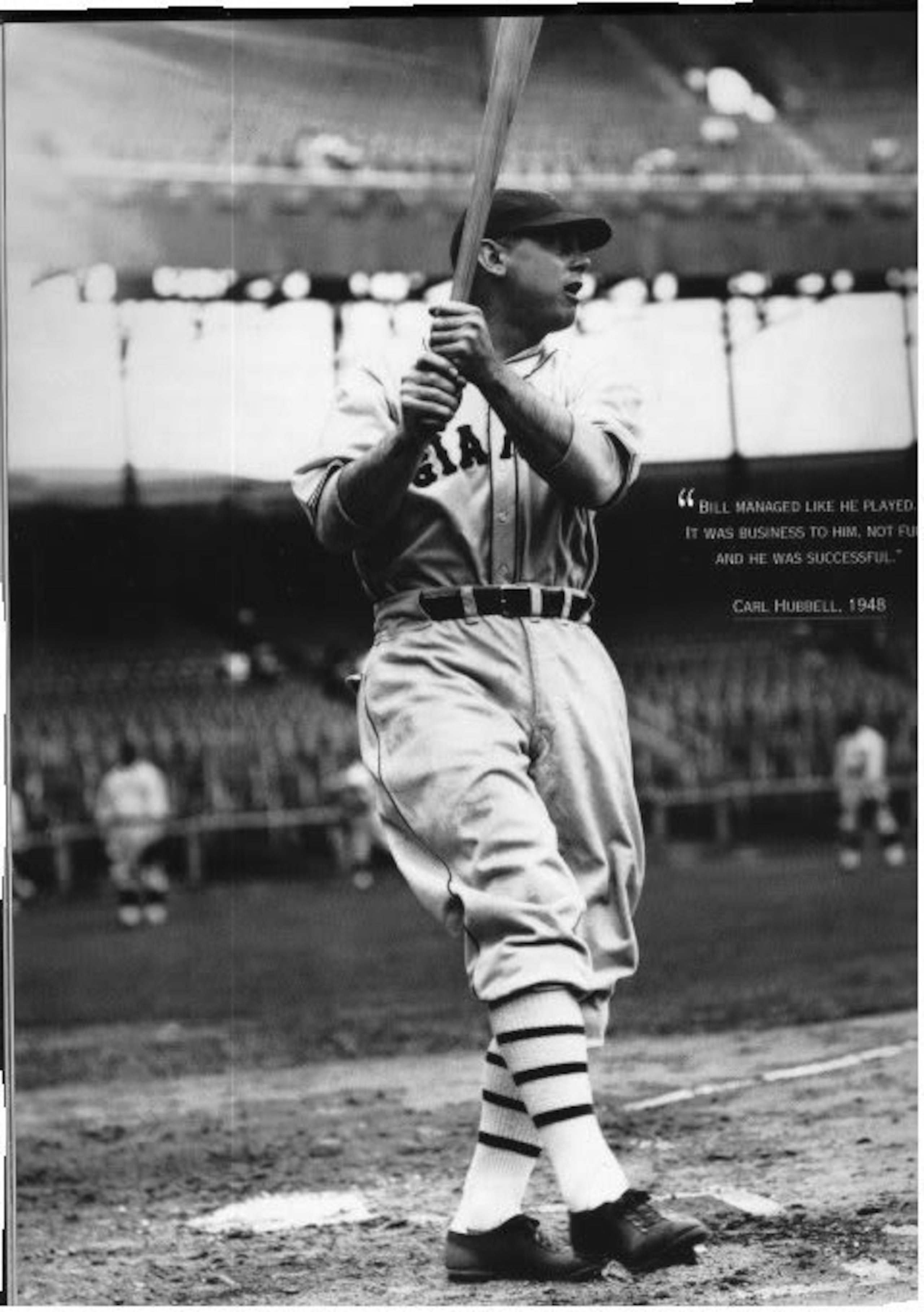
The 1934 New York Giants were led by player/manager Bill Terry (.354 BA, 8 HR, 83 RBI) and young slugging outfielder Mel Ott (.326 BA, 35 HR, 135 RBI), with Carl Hubbell (21-12, 2.30 ERA) heading up a terrific pitching staff.
On September 1, the Giants were 81-46 and seven games up on the St. Louis Cardinals. However, the Gashouse Gang got hot, winning 21 of 28 games in the month of September, while the Giants played just .500 ball in that critical month.
On September 28, the Cards, behind Dizzy Dean, defeated the Cincinnati Reds 4-0 to move into sole possession of first place. The Cardinals swept the Reds in their final series of the year, with Dizzy and Paul Dean picking up the final three victories.
The Giants lost their last final five games of the season, and became the first team in baseball history to lose a pennant when leading the league by at least seven games on Sept. 1.
34. Fred Merkle- New York Giants, Sept. 23, 1908
17 of 50In 1908, the New York Giants were involved in a tight pennant race with the Chicago Cubs. On Sept. 23, with the Giants playing the Cubs and the score tied 1-1 in the bottom of the ninth, Fred Merkle, at the time the youngest player in the National League at 19, singled, advancing Moose McCormick to third on the play. The next batter, Al Bridwell, followed with another single, driving McCormick home with what appeared to be the winning run.
All of the fans at the game jumped onto the field in jubilation. However, Merkle, thinking that the game was over, never touched second base and ran back into the clubhouse. Cubs second baseman Johnny Evers saw that Merkle hadn’t touched the bag, ran into the outfield to retrieve the ball and tagged second base. He appealed the play to umpire Hank O’Day, who then called Merkle out on a force play, meaning McCormick’s winning did not count.
The Giants were unable to clear the fans from the field, and with darkness falling the game was called a tie, and would be replayed at the end of the season, if necessary.
It turned out that the game was necessary, as the Giants and Cubs were tied atop the National League standings. The Cubs beat the Giants 4-2, winning the National League pennant, and Fred Merkle was forever known for making the “boner.”
33. Pittsburgh Pirates- 1938
18 of 50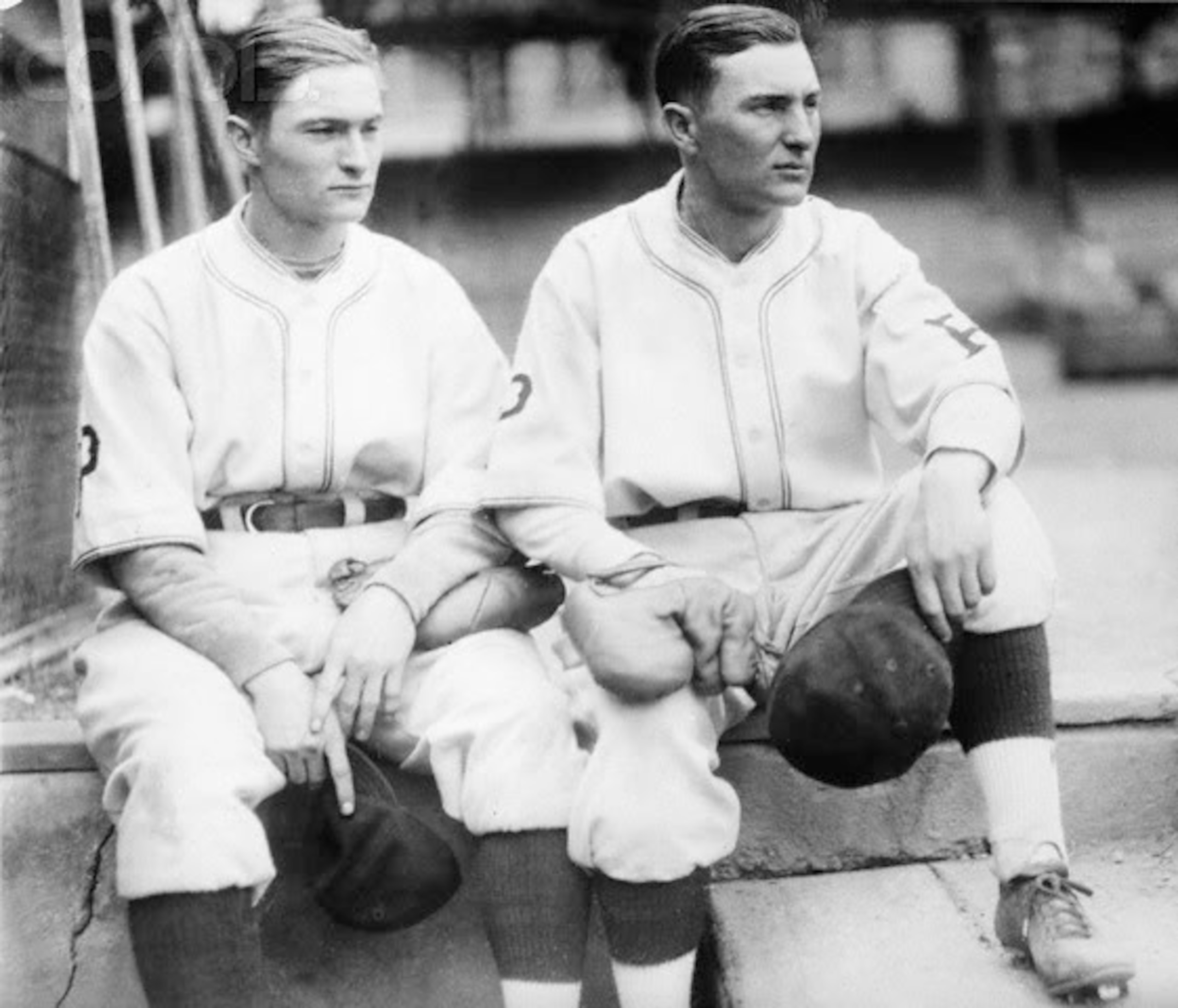
On Sept. 4, 1938, the Pittsburgh Pirates, led by brothers Paul and Lloyd Waner, and future Hall of Fame shortstop Arky Vaughn, were leading the National League by seven games over the Chicago Cubs. However, the Pirates faltered in September, and in late September, they traveled to Chicago for a three-game series at Wrigley Field. At the time, the Pirates lead over the Cubs was down to 1 ½ games.
The Cubs took the first game of the series, cutting the Pirates lead to a half game, and on Sept. 28, the Cubs and Giants were tied 5-5 heading into the ninth inning. Darkness was approaching, and the umpires declared that the ninth inning would be the last inning played. At that time, if the game was tied heading into darkness, there was no suspension of the game, it would be replayed in its entirety at another time.
The Cubs Gabby Hartnett came to bat, and with dusk descending on Wrigley Field, Hartnett sent a Mace Brown pitch into the bleachers in left field, giving the Cubs a 6-5 victory and sole possession of first place.
The Cubs went on to sweep the Pirates in the series, and then clinched the pennant in St. Louis later in the week. The home run by Hartnett would become forever known as the “Homer in the Gloamin’,” a takeoff on a popular song “Roamin’ in the Gloamin’,” written in 1911.
32. California Angels- 1995
19 of 50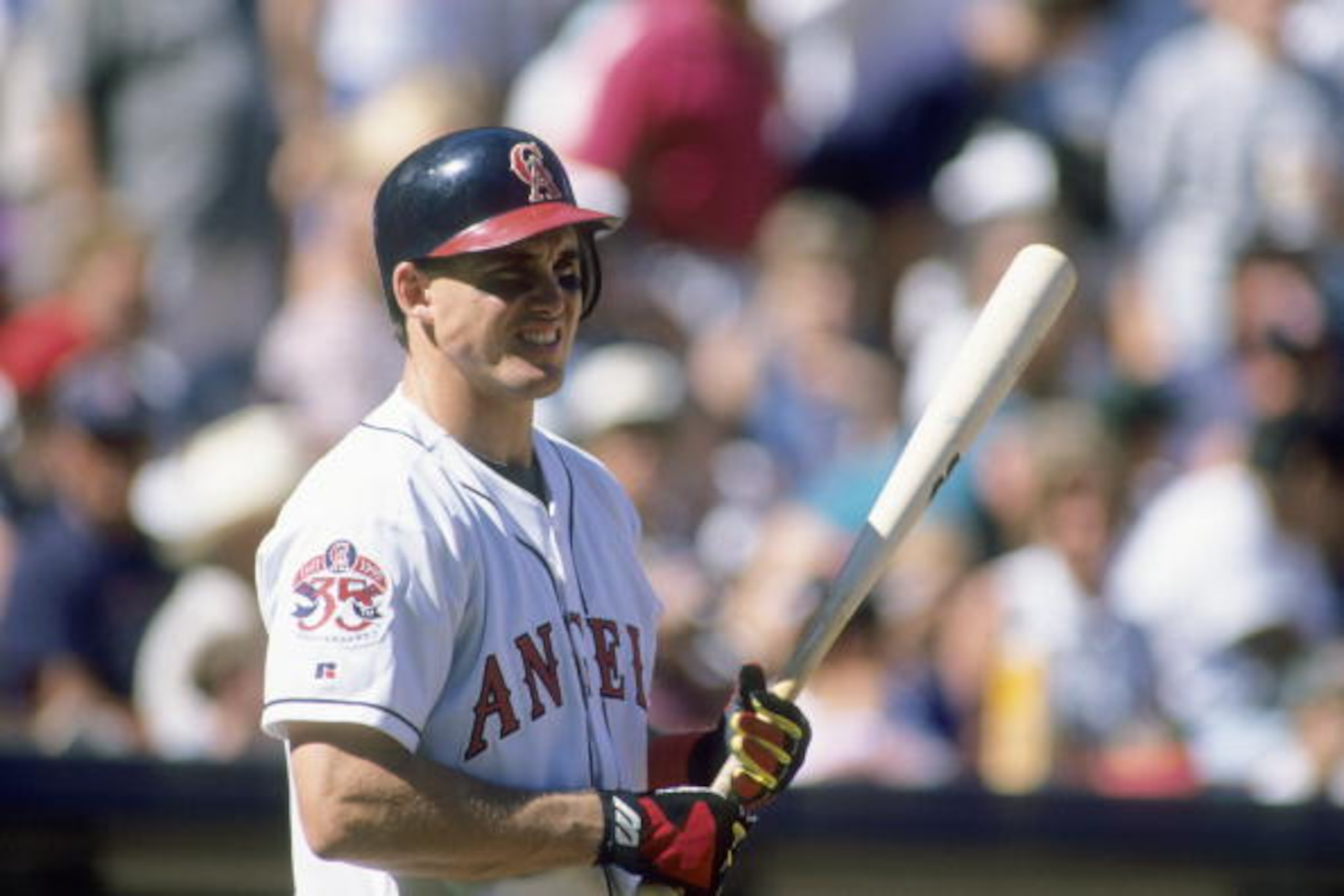
While this may be the first time the Los Angeles/California Angels have made this list, it will not be their last.
In 1995, the California Angels were loaded with talent, with Jim Edmonds, Tim Salmon and Garret Anderson roaming the outfield, J.T. Snow and Tony Phillips providing great offensive support, and Chuck Finley and Mark Langston anchoring the starting rotation.
On August 13, the Angels were 62-38 through their first 100 games and led the American League West division by 10 ½ games over the Texas Rangers and 11 ½ games up on the Seattle Mariners. The Angels would then go on to lose 29 of their last 45 games, including nine in a row from Aug. 25 to Sept. 3, losing the division lead to the Mariners.
The Angels rebounded to win their last five games to tie the Mariners for the AL West title, forcing a one-game playoff. However, Randy Johnson of the Mariners silenced the Angel bats, giving the Mariners a 9-1 victory and completing one of the worst collapses in major league history for the Angels.
31. Los Angeles Dodgers- 1962
20 of 50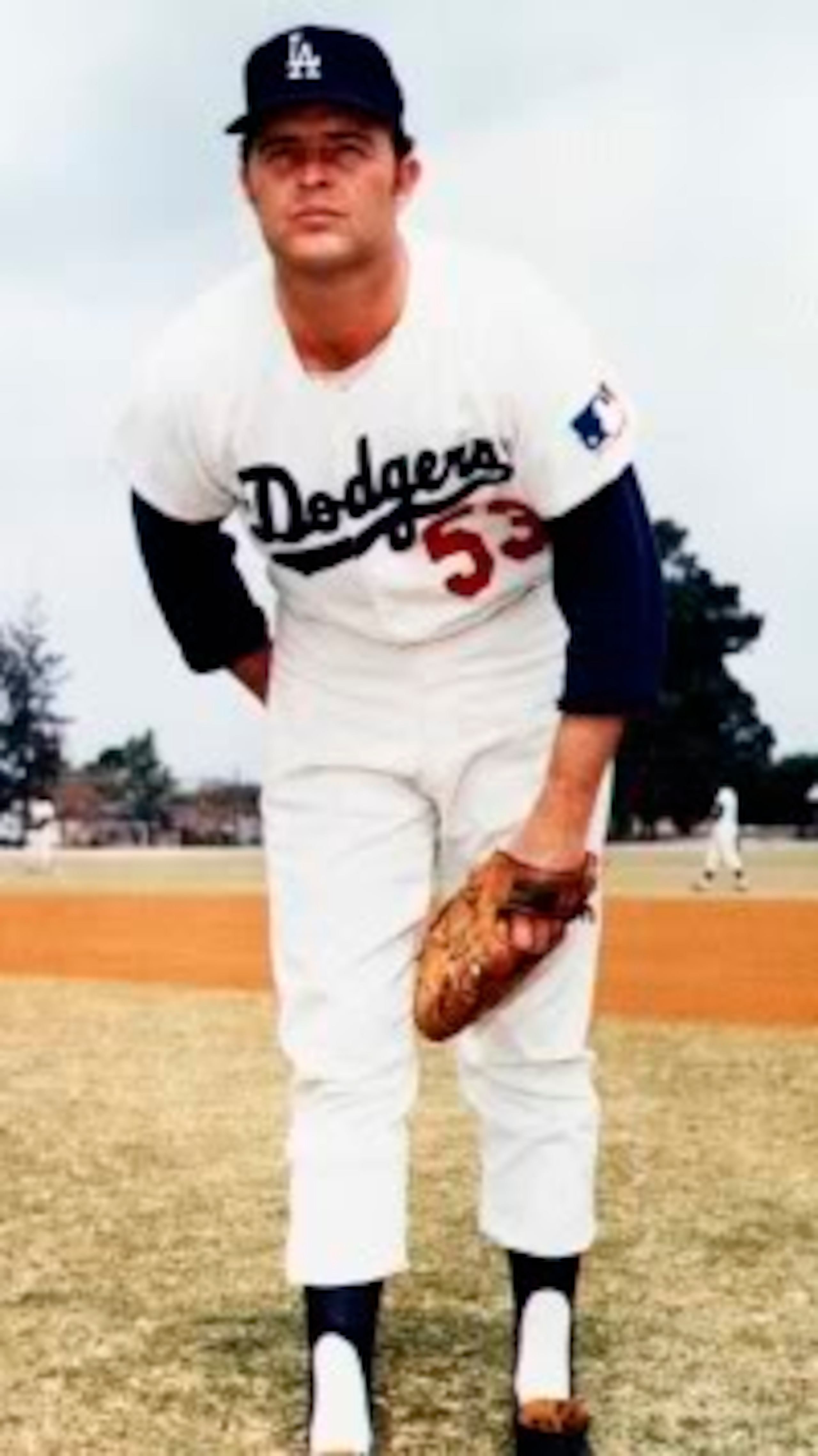
On Sept. 15, 1962, the Los Angeles Dodgers had a record of 98-52 and had a four-game lead over the San Francisco Giants. The Dodgers, with Don Drysdale, Johnny Podres and Sandy Koufax, appeared destined to win the National League pennant.
However, the Dodgers inexplicably swooned, losing nine of their last 12 regular season games, and the Giants caught them in the standings on the last day of the season, forcing a three-game playoff.
The Giants shelled Koufax in the first game, winning 8-0. The Dodgers came back in the second game, with Ron Fairly driving in Maury Wills with the winning run on a sacrifice fly.
In the deciding third game, the Dodgers held a 4-2 lead heading into the ninth, when the inevitable happened. The Giants scored four runs, beating the Dodgers 6-4 and moving on into the World Series against the New York Yankees. Once again, the Dodgers were left at the altar, courtesy of the Giants.
30. Toronto Blue Jays- 1987
21 of 50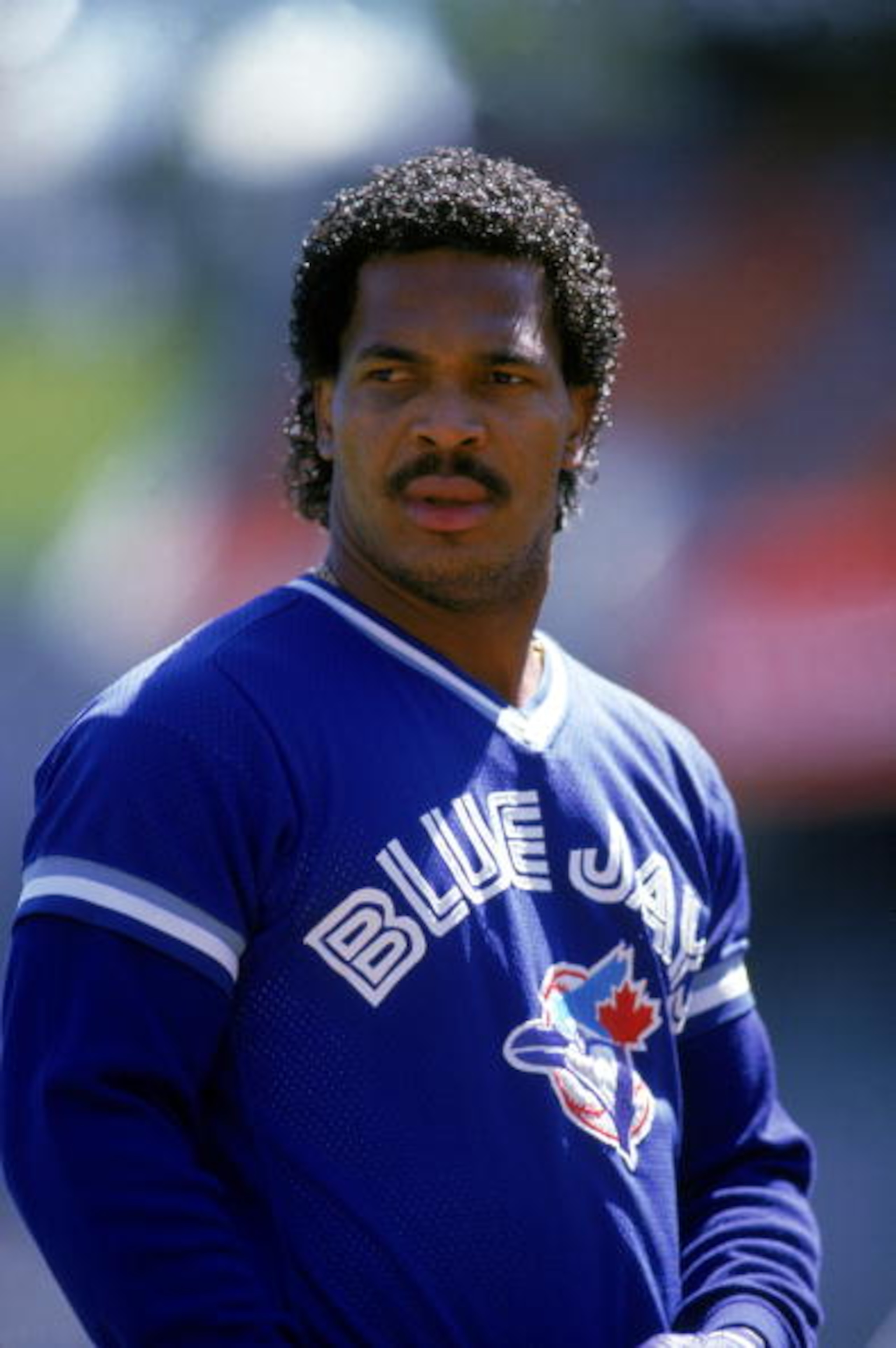
Heading into the final week of the season in 1987, the Toronto Blue Jays held a comfortable 3 ½ game lead over the Detroit Tigers and looked primed to take the American League East division and move on in the playoffs.
Led by George Bell (47 HR, 134 RBI, .308 average), who would later win the American League MVP award, and Jimmy Key, who had the American League’s lowest earned run average at 2.76, there didn’t appear to be anything standing in Toronto’s way.
However, the last week of the season turned into a nightmare. Toronto lost their last seven regular season games, including a season-ending three-game sweep at the hands of the Detroit Tigers, giving the Tigers the American League East title and a stunning collapse by the Blue Jays.
29. New York Mets- 2007
22 of 50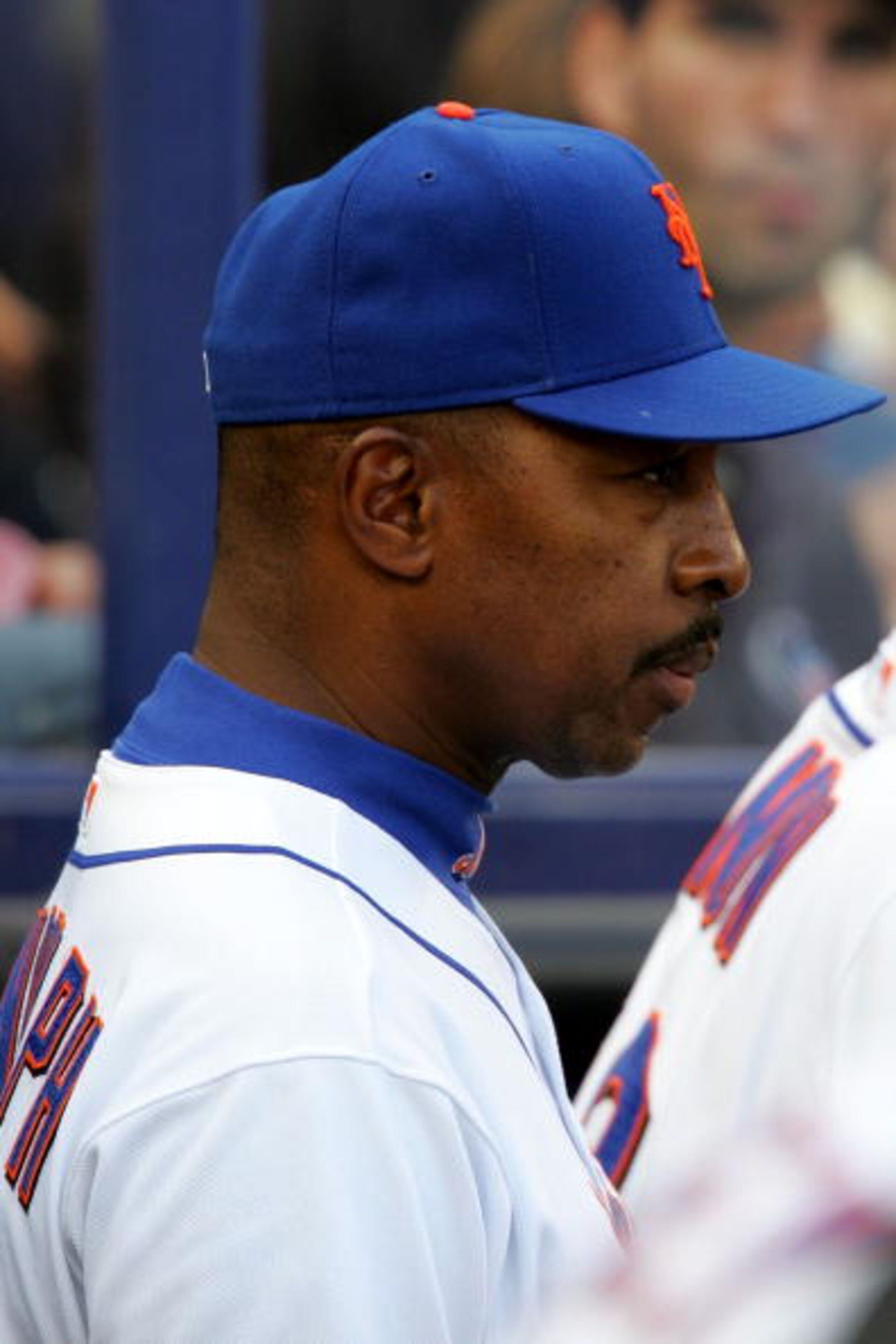
On Sept. 12, 2007 the New York Mets were flying high. With a record of 83-62, the Mets enjoyed a seven-game lead in the National League East over the Philadelphia Phillies. While Phillies shortstop Jimmy Rollins had boldly predicted earlier in the season that the Phillies would win the division, it certainly appeared unlikely at that point in time.
The Mets, however, would go on to suffer one of the worst collapses in major league history, losing 12 of their last 17 games and losing the NL East title to the Phillies on the last day of the regular season. Mets manager Willie Randolph, who had won several championships as a player with the New York Yankees, was poignant in his remarks after the Mets’ historic collapse.
“I told my players this is a life lesson in baseball and in how to become champions,” Randolph told the New York Times. “And, when you get to that road, you have to seize it because you never know when it’s going to come again.”
28. Armando Galarraga- June 2, 2010
23 of 50On Wednesday, June 2, 2010, the Detroit Tigers were facing the Cleveland Indians in front of a sparse crowd of 17,738 fans at Comerica Park. Armando Galarraga was on the hill for the Tigers, and was effective from the start.
As the game progressed, and Galarraga kept mowing down Indians’ hitters, it was clear that something special was happening. Galarraga had not allowed a baserunner all night long.
By the time the ninth inning approached, Galarraga had set down 24 Indians in a row, and the air at Comerica Park was electric. In the top of the ninth, Galarraga got Mark Grudzielanek on a flyout to deep left center field, and an audible sigh could be heard throughout the stadium. Galarraga then retired Mike Redmond on a grounder to short, and the entire stadium was now up on their feet, anticipating history about to unfold.
Indians’ shortstop Jason Donald stepped to the plate, and with a 1-1 count, Donald took a Galarraga pitch and hit a weak grounder to first. First baseman Miguel Cabrera, ranging to his right, backhanded the ball and flipped it to Galarraga covering the bag for the final out.
But wait! Jim Joyce, the first base umpire, called Donald safe on the play. A perfect game no more. Replays clearly showed that Donald was out by at least a half-step. All Galarraga could do was smile.
Joyce would later admit that he blew the call, however commissioner Bud Selig would not reverse the decision, and Galarraga will forever be known for throwing the “imperfect perfect game.”
27. Chicago Cubs- 2003 NLCS, Game 6
24 of 50Up until Oct. 14, 2003, the baseball world had never heard of Steve Bartman. By the time the night was over, Bartman was a household name, and will forever be linked to disaster in Chicago.
The Chicago Cubs were five outs away from reaching their first World Series since 1945, and hoping to win their first World Series since 1908. Cubs starter Mark Prior had been dealing all night long, allowing only three hits to the Florida Marlins up to that point.
Prior had retired eight hitters in a row after retiring Mike Mordecai on a popup for the first out of the eighth inning. Juan Pierre then delivered a double for the Marlins, bringing second baseman Luis Castillo to the plate.
Castillo worked Prior during the at-bat, fouling off several pitches. On the eighth pitch of his at-bat, Castillo hit a pop fly to short left field, near the foul line. Cubs left fielder Moises Alou angled towards the left field stands and reached out for the ball.
However, Steve Bartman was doing the same in the stands. The ball bounced off Bartman and into the stands. The Cubs pleaded with the umpires to call fan interference, but the umpire crew ruled that the ball had left the field of play and was up for grabs. Alou, absolutely furious at the call, returned to his position.
Prior then walked Castillo on his next pitch, and the inning completely unfolded for the Cubs. By the time it was over, eight Marlins had crossed the plate, and the Cubs lost Game 6, 8-3. The Cubs would also go on to lose Game 7, 9-6, and were denied their first World Series appearance in 58 years by an overzealous fan.
26. Seattle Mariners- August 5, 2001
25 of 50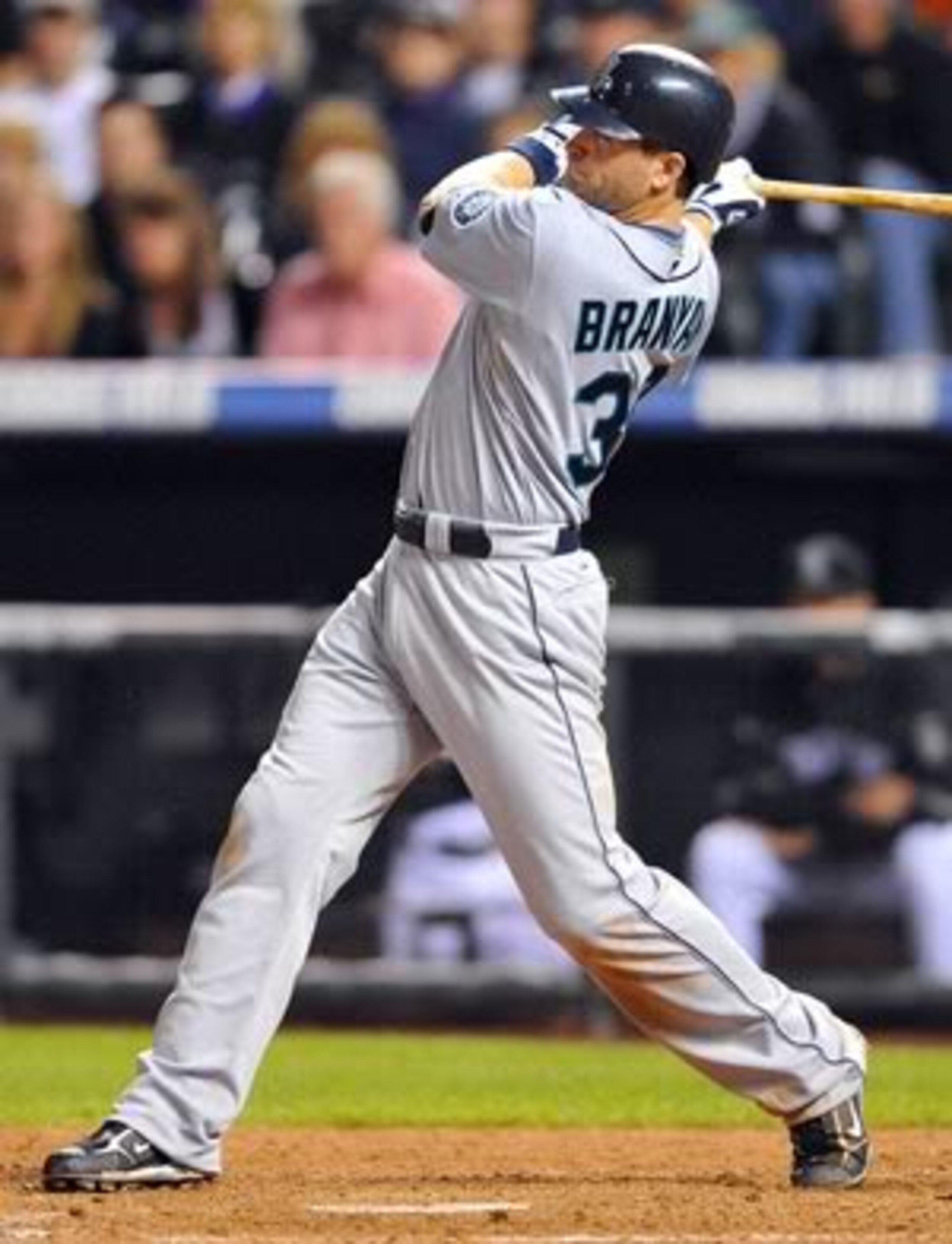
The 2001 Seattle Mariners tied a record in Major League Baseball by winning 116 games during the regular season. If not for a historic collapse on Aug. 5, the Mariners would own the record outright.
The Mariners held a 14-2 lead over the Cleveland Indians heading into the bottom of the seventh inning at Jacobs Field. Aaron Sele, the Mariners starter, then gave up a solo home run to Russell Branyan, and after a single and two walks to load the bases, Sele gave way to John Halama. Halama gave up a two-run single to Jolbert Cabrera, but escaped further damage.
However, Halama, Norm Charlton, Jeff Nelson and Kazuhiro Sasaki were unable to stem the tide, allowing the Indians to tie the game 14-14 at the end of regulation.
Jose Paniagua gave up the winning to the Indians in the bottom of the 11th on a single to left field by Cabrera that scored Kenny Lofton, and the Mariners made the record books, not only for tying the record for most wins in one season, but also by blowing the largest lead in major league history.
25. Philadelphia Athletics- 1914
26 of 50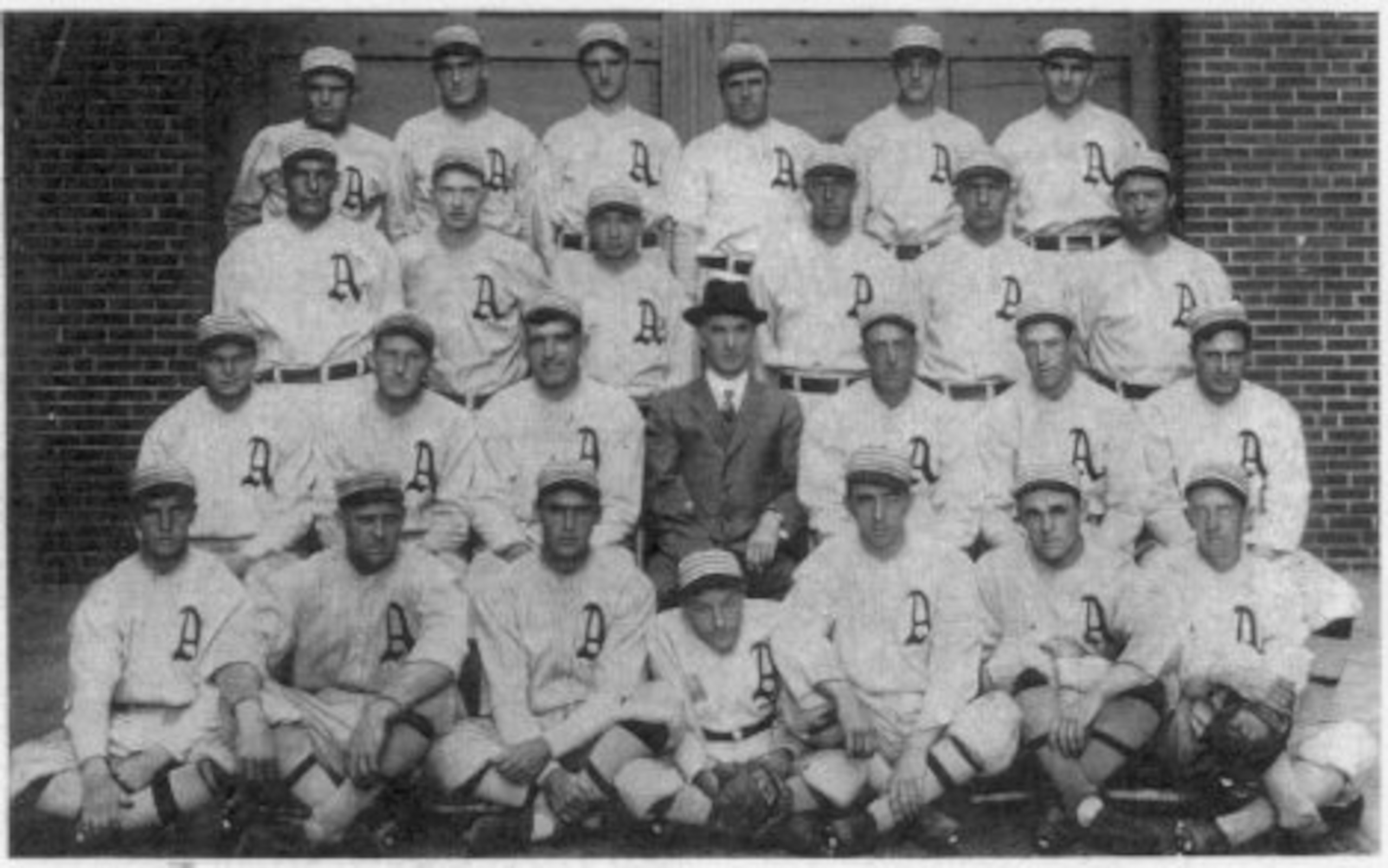
In the early 1910s, the Philadelphia, managed by the legendary Connie Mack, were a powerhouse in the American League. With star players Chief Bender, Jack Coombs, Herb Pennock, Eddie Plank, Frank Baker and Eddie Collins, the A’s had won three of the last four World Series, and were primed to win once again in 1914.
With a record of 99-53, the A’s easily won the American League pennant by 8 ½ games over the Boston Red Sox, and were heavily favored over the Boston “Miracle” Braves, who won 70 of their final 89 games to capture the National League pennant. The Braves were in last place in the NL on July 4, hence the name the “Miracle” Braves.
However, Mack and his boys were still the favorites heading into the Fall Classic, but they were upset in the first game, 7-1, on a complete game five-hitter by Dick Rudolph.
The Athletics never recovered, and were swept in shocking fashion by the Braves. Mack, completely flustered and furious, then sold off most of his stars to the fledgling Federal League, and the A’s were mired in mediocrity until 1929.
24. California Angels- 1982 ALCS
27 of 50The 1982 California Angels won the American League West division with a record of 93-69, and were to face the Milwaukee Brewers in the AL Championship Series. The matchup was significant in that for the first time, two teams not of the original 16 were to play each other in the playoffs.
The Angels jumped out to a 2-0 series lead courtesy of complete-game efforts by pitchers Tommy John and Bruce Kison. Headed back to County Stadium in Milwaukee, the Angels needed just one more win to reach the World Series for the first time in franchise history.
However, the Brewers came storming back in Games 3 and 4, notching the series at two with one to play. In Game 5, the Angels held a 3-2 lead heading into the bottom of the seventh, when the Brewers scored two runs off Angels’ reliever Luis Sanchez to take a 4-3 lead.
Brewers’ pitchers Bob McClure and Pete Ladd shut the Angels down the rest of the way, giving the Brewers the American League pennant, and the first of what would turn out to be several collapses for the California Angels.
23. Oakland Athletics- 1990 World Series
28 of 50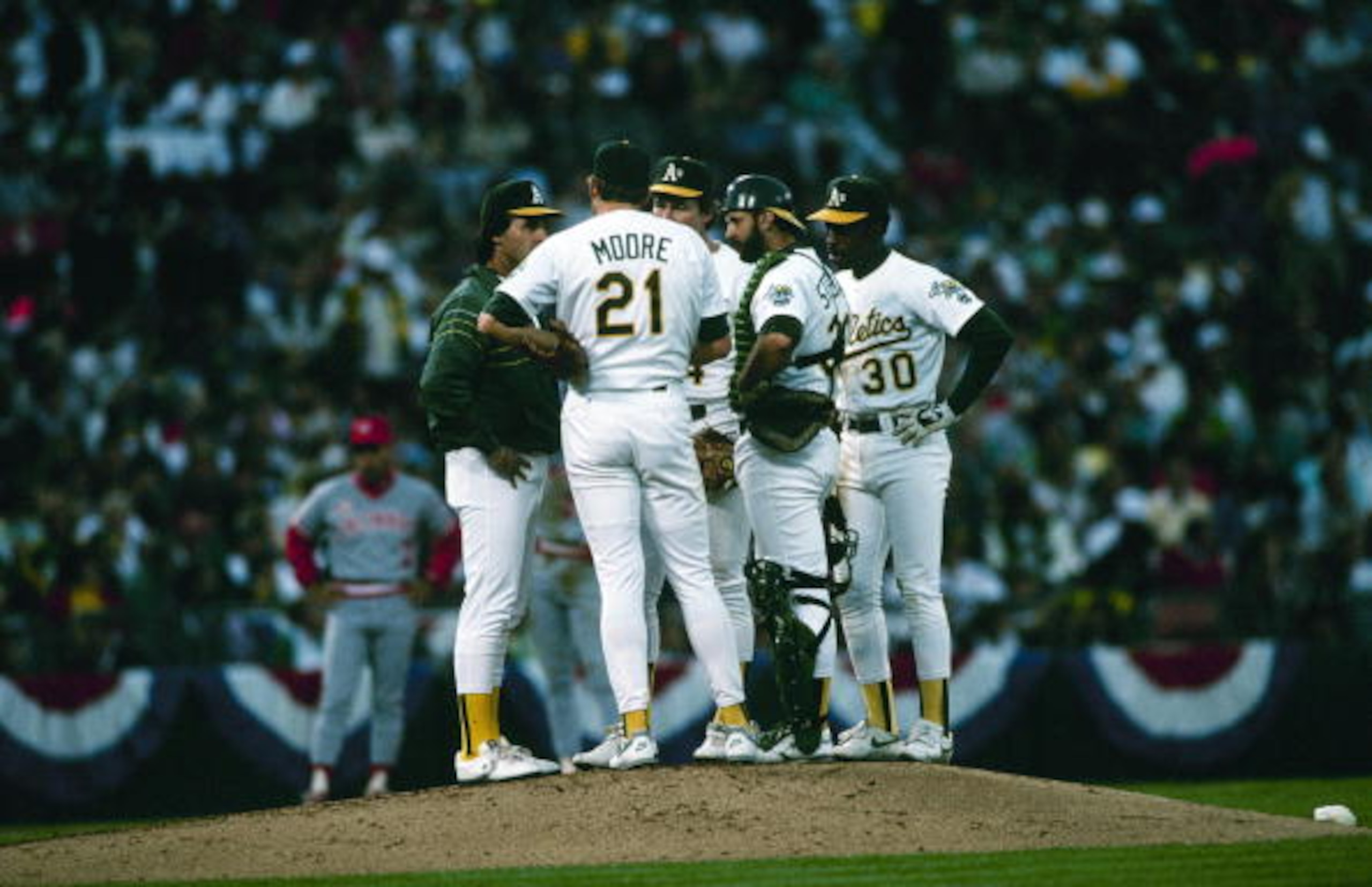
For a three-year stretch beginning in 1988, the Oakland Athletics were an absolute powerhouse in the American League.
Featuring the “bash brothers,” Jose Canseco and Mark McGwire, and a complementary lineup that included future Hall of Famer Rickey Henderson, Carney Lansford and Dave Henderson, and a pitching staff that featured 22-game winner Dave Stewart and 27-game winner Bob Welch, the A’s were heavily favored over the National League pennant winners, the Cincinnati Reds.
The Reds were not considered to be an offensive force, hitting .265 as a team with 125 home runs, ranked seventh in the National League. However, their pitching staff featured the trio of Randy Myers, Norm Charlton and Rob Dibble, known as “The Nasty Boys.”
It was the strength of the bullpen along with some very timely hitting that led the Reds to a shocking sweep of the powerful A’s in the 1990 World Series, as the Nasty Boys held the A’s scoreless over a collective nine innings. Billy Hatcher made history by collecting seven hits in a row, and finished the World Series with a .750 average.
The Athletics have not been back to the World Series since.
22. Philadelphia Phillies- 1964, the “Phold.”
29 of 50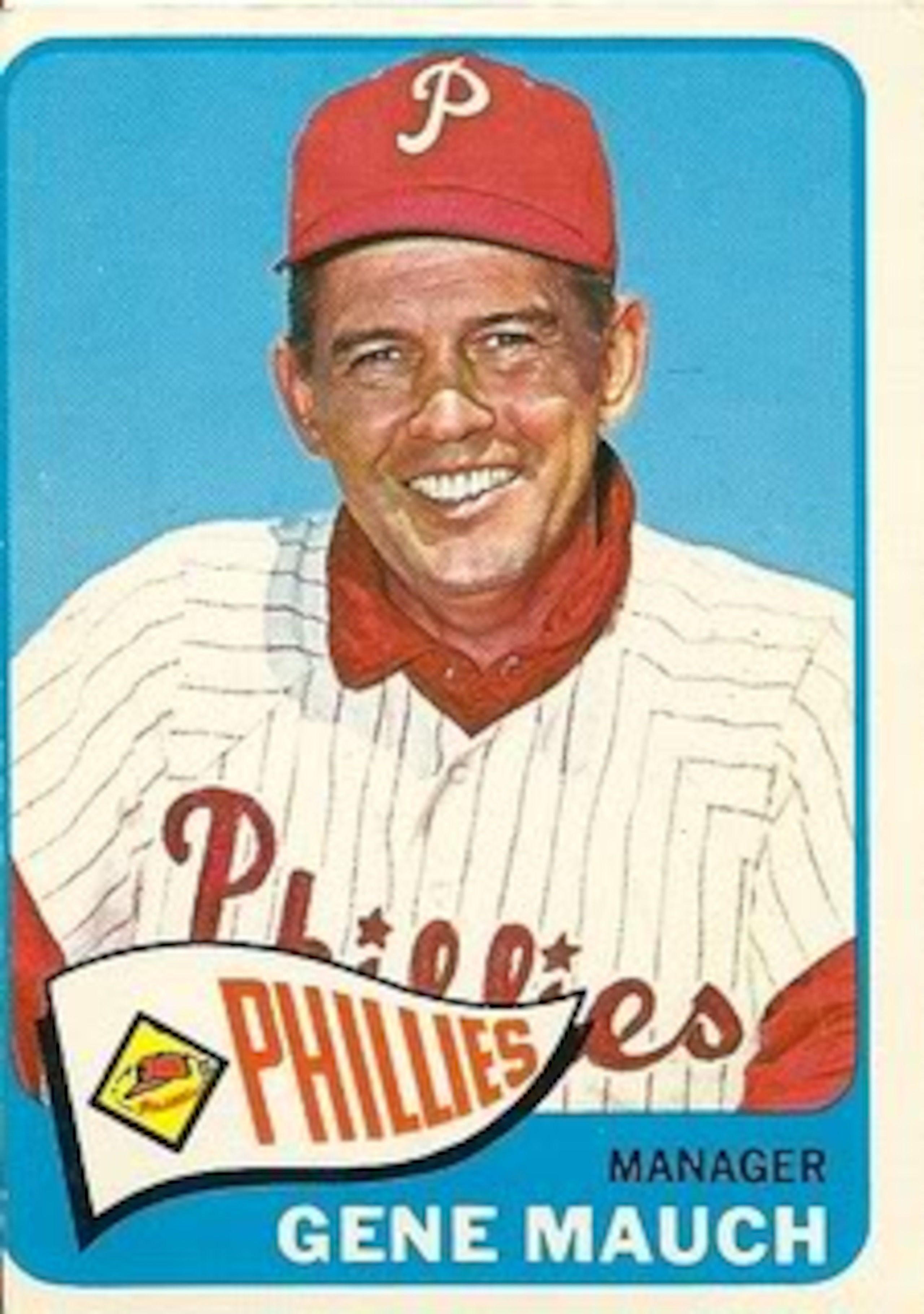
In 1964, the Philadelphia Phillies, who had been mired in mediocrity for the previous five decades, were in the midst of their best season since 1950, the last year they won the National League pennant. With just 12 games to play in the season, the Phillies had a 6 ½ game lead over the St. Louis Cardinals.
On Monday, Sept. 21, the Phillies lost to the Cincinnati Reds 1-0, the only run coming from a rare steal of home by Reds third baseman Chico Ruiz.
That loss started a slide for the Phillies that would see them lose ten games in a row, including a three-game sweep at the hands of the Cardinals, who clinched the pennant with the final win of the series.
It marked one of the single worst collapses by any team in major league history, forever becoming known as the “phold.”
21. New York Yankees- 1926 World Series
30 of 50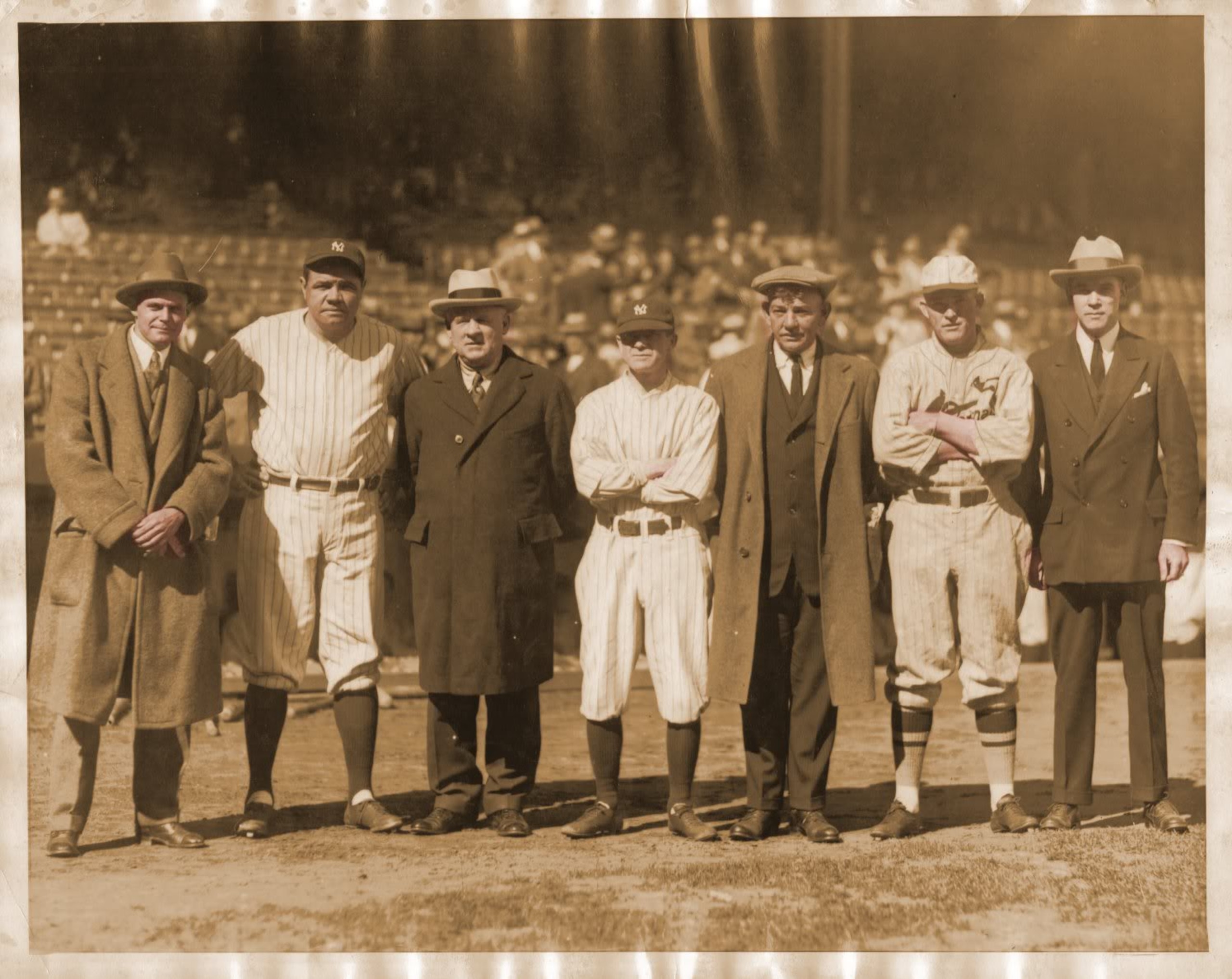
The 1926 World Series marked the fourth time in six seasons that the New York Yankees had reached the Fall Classic, and the first ever for the St. Louis Cardinals, under player/manager Rogers Hornsby.
The series see-sawed back and forth, with the Yankees jumping ahead of the Cardinals to take a 3-2 series lead. However the Cardinals, behind Grover Cleveland Alexander, won Game 6.
In Game 7, the Yankees were down 3-2 heading into the bottom of the ninth inning. With two outs, Babe Ruth drew a walk from Alexander, who had come on in relief.
With Bob Meusel at the plate, Ruth inexplicably tried to steal second base. Cardinals catcher Bob O’Farrell made a perfect throw to second baseman Hornsby, and Ruth made the last out of the 1926 World Series, giving the Cardinals their first-ever World Series championship.
20. Chicago Cubs- 1929 World Series, Game 4
31 of 50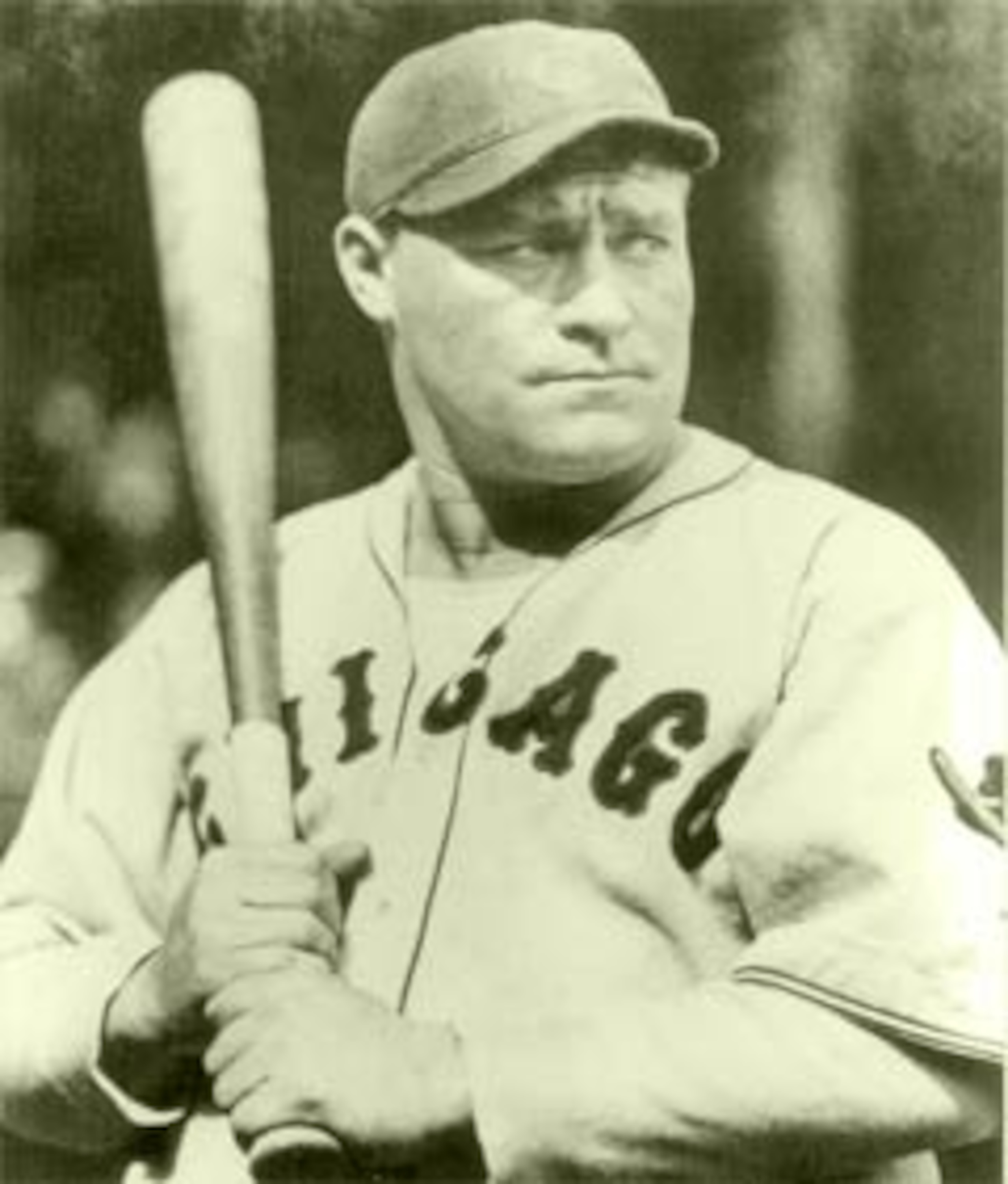
The 1929 World Series featured the Chicago Cubs, managed by Hall of Famer Joe McCarthy, against the Philadelphia Athletics, who were returning to the World Series for the first time since 1914, when legendary manager Connie Mack sold off all his stars after being swept by the Boston Braves.
Game 1 at Wrigley Field saw 35-year-old Howard Ehmke set a new World Series record by striking out 13 Cubs’ hitters in a complete game 3-1 victory. The A’s also won Game 2 before the Cubs bounced back with a win in Game 3 at Shibe Park in Philadelphia, cutting the A’s lead to 2-1.
Game 4 saw the Cubs get off to a quick start, leading 8-0 heading into the bottom of the seventh inning. However, the A’s would go on to what would become famously known as the “Mack Attack.” By the time the bottom of the seventh was finished, the A’s scored ten runs, three of them coming on a three-run inside the park home run by Mule Haas on a ball that Cubs center fielder Hack Wilson lost in the sun.
The A’s would go on to win the game 10-8, and wrapped up the World Series two days later with a 3-2 victory.
Cubs manager Joe McCarthy was reportedly so furious at Wilson’s miscue that when a young boy came by and asked McCarthy for a baseball, Joe reportedly muttered, "Come back tomorrow, and stand behind Wilson, and you'll be able to pick up all the balls you want!"*
*Source- Baseball’s Greatest Managers, 1961
19. Los Angeles Dodgers- 1966 World Series
32 of 50The Baltimore Orioles as a franchise started play in the American League in 1901 as the Milwaukee Brewers, and then moved to St. Louis the following season and became known as the Browns. In 1954, they moved to Baltimore, becoming the Orioles. However, no matter what city or nickname, they had never been crowned world champions.
The Los Angeles Dodgers, on the other hand, had won two of the previous three World Series championships, and were heavy favorites headed into the 1966 World Series against the Orioles, who were there for the first time since moving to Baltimore.
What happened was a complete whitewash for the Dodgers. Orioles’ pitchers Dave McNally, Wally Bunker and Jim Palmer all threw complete game shutouts in the final three games of the series, sweeping the heavily favored Dodgers in four straight games. Orioles pitchers ended up with a team ERA of 0.50, and the Dodgers scored two runs in the entire series, all of them in Game 1.
Dodgers’ legendary pitcher Sandy Koufax, who lost Game 2, announced his retirement at the end of the World Series at the age of 30.
18. New York Yankees- 2006 AL Divisional Series
33 of 50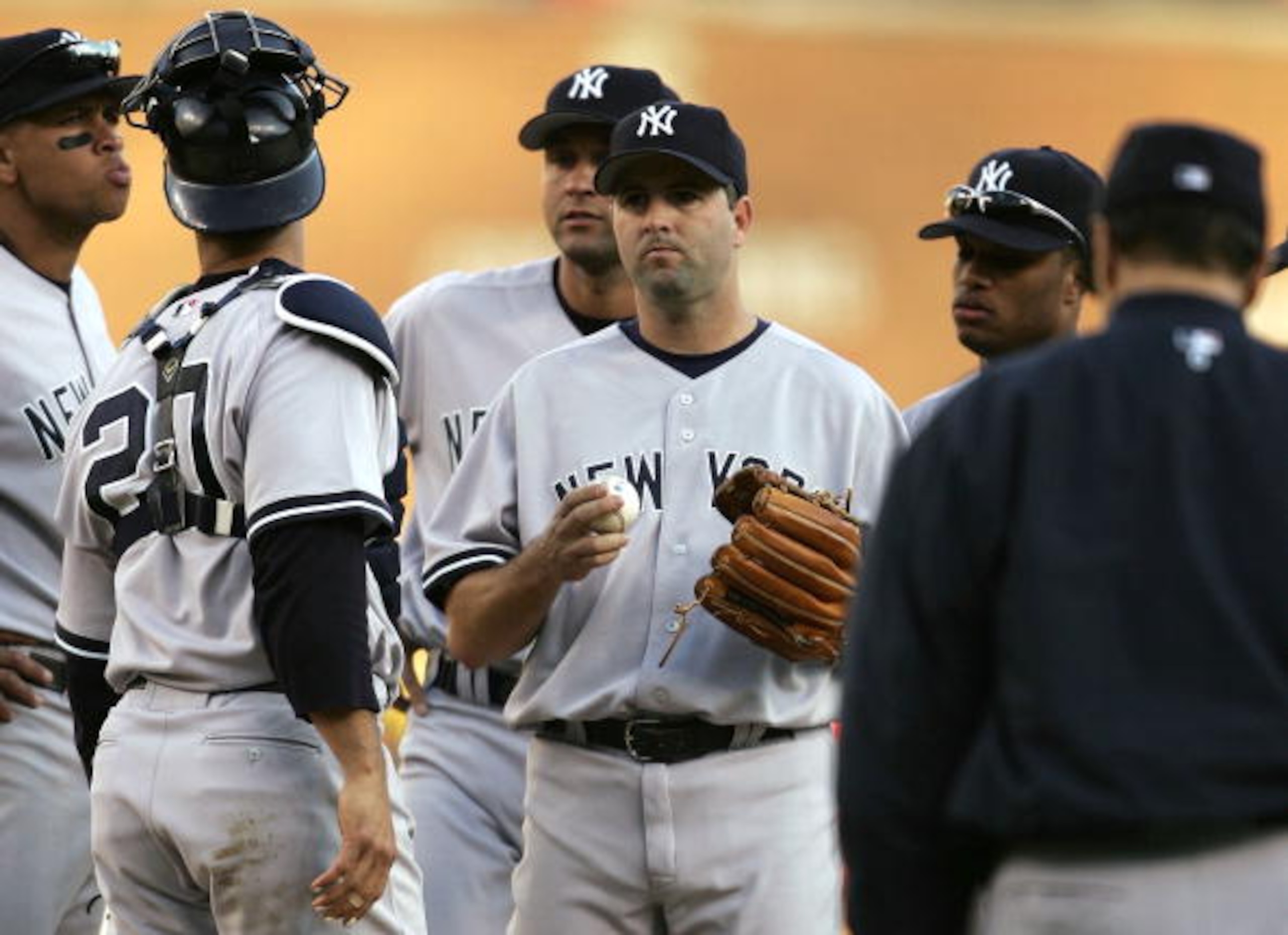
In 2006, the New York Yankees wrapped up the AL East Division title early, clinching on Sept. 20 when the Boston Red Sox were eliminated by a loss to the Minnesota Twins. The Detroit Tigers however were leading the American League Central Division, before losing the last five games of the regular season to hand the Minnesota Twins the Central Division title.
The Tigers still qualified for the playoffs as a wild-card, but with their late season swoon, the Yankees were prohibitive favorites heading into their Divisional Series matchup.
The two teams split the first two games, with Game 3 scheduled at Comerica Park in Detroit. 41-year-old Kenny Rogers, who had strung together a remarkable season with a 17-8 record and 3.84 ERA, pitched 7 2/3 innings of scoreless ball, allowing just five hits while striking out eight, leading the Tigers to a 6-0 victory.
Jeremy Bonderman followed up the following day with another superlative effort, beating the Yankees 8-3, and handing the Tigers a monumental upset.
17. New York Yankees- 2003 World Series
34 of 50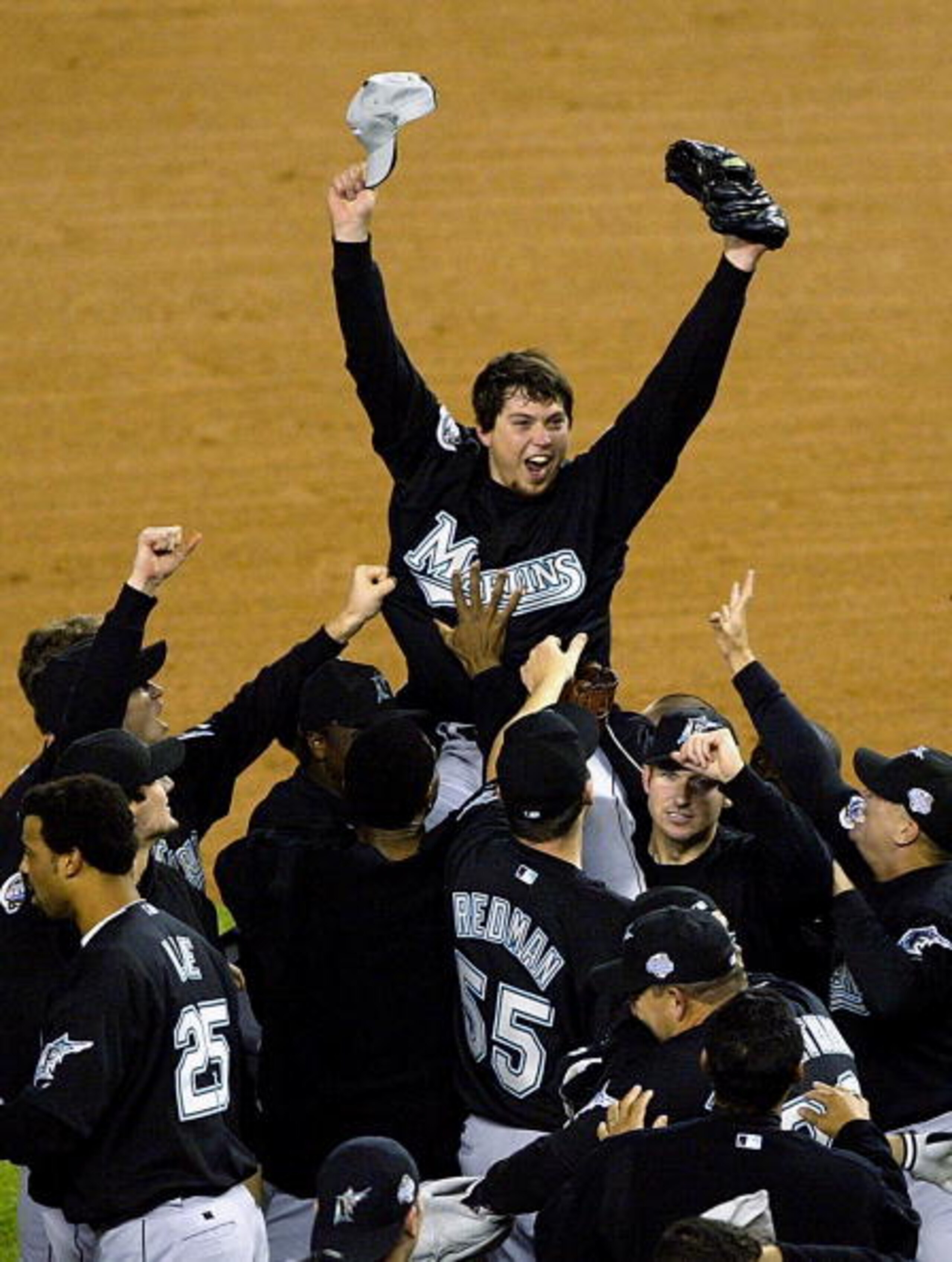
The 2003 World Series marked the 100th anniversary of the World Series, and pitted the New York Yankees against the Florida Marlins. Both teams had gone through grueling seven-game championship series in their respective leagues, with Aaron Boone’s home run in the 11th inning of Game 5 propelling the Yankees over the Boston Red Sox, and the Marlins beating the Chicago Cubs in a controversial series that featured a bizarre non fan-interference call in Game 66.
The Yankees were once again prohibitive favorites to win over the Marlins. This was also the first World Series in which home field advantage would be decided by which league won the All-Star. Since the American League won, the Yankees would have the advantage.
The Marlins won Game 1 at Yankee Stadium, however the Yankees stormed back to take next two games, heading into Game 4 with a 2-1 series lead. Game 4 was tied 3-3 at the end of regulation, and in the bottom of the twelfth inning, Marlins shortstop Alex Gonzalez led off with a home run over the left field fence, giving the Marlins a 4-3 victory and evening the Series at two apiece.
Game 5 saw Marlins starter Brad Penny work seven innings, allowing just two runs. The Marlins meanwhile got to both starter David Wells and his replacement, Jose Contreras, and were leading 6-2. Despite a rally by the Yankees in the ninth, Ugeth Urbina preserved the victory by retiring the last two batters, and the Marlins headed into New York with a 3-2 series lead.
Game 6 saw manager Jack McKeon make the decision to go with starter Josh Beckett on three days’ rest. The decision paid off in spades, as Beckett threw a complete game five-hit shutout, giving the Marlins a 2-0 victory and their second-ever World Series title.
It was also the first time since 1981 that a National League team won the World Series without having home field advantage.
16. Cincinnati Reds- 1973 NLCS
35 of 50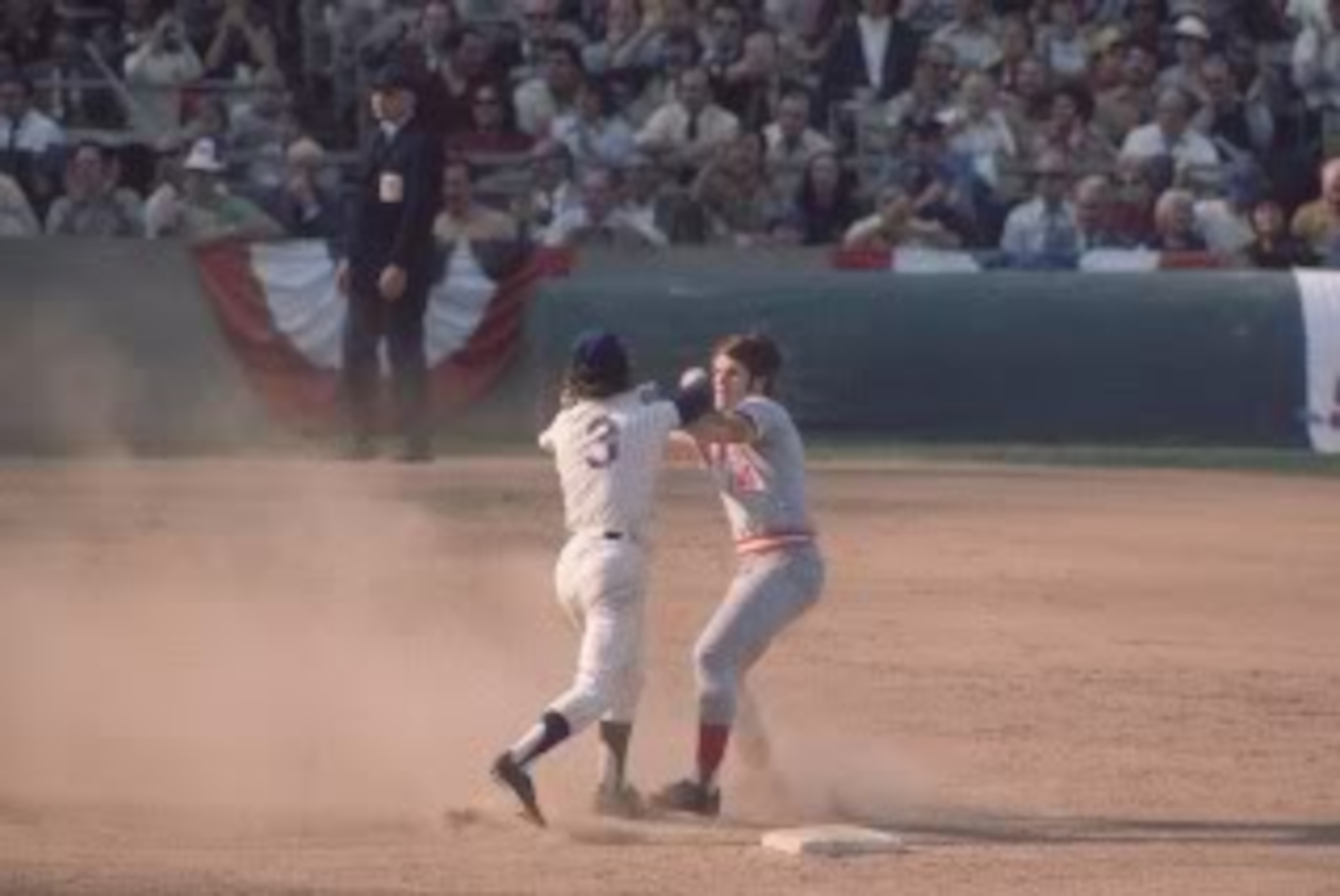
In 1973, the Cincinnati Reds, the Big Red Machine, captured the National League West Division title with a 99-63 record, while the New York Mets won the East Division with a record of 82-79, marking the worst record ever for any team entering the playoffs.
In Game 1, the Reds beat the Mets 2-1 in what turned out to be a classic pitcher’s duel between Jack Billingham and Tom Seaver. Seaver pitched a complete game three-hitter, however two of the hits were solo homers to Pete Rose in the eighth and Johnny Bench in the ninth.
The Mets came back in Games 2 and 3, with Jon Matlack throwing a two-hit shutout in Game 2 and Jerry Koosman beating the Reds in Game 3. Game 3 also featured the famous bench-clearing brawl between Pete Rose and Mets’ shortstop Bud Harrelson, with Shea Stadium becoming a sea of rowdy fans that threatened to cause a forfeit until several Mets players were finally able to convince the fans to stop throwing items onto the field and calm down.
Game 4 was an extra inning affair decided in the twelfth inning, when Pet Rose hit his second home run of the series in the top of the twelfth, knotting the series at 2 games apiece.
In Game 5, Seaver, who threw a marvelous Game 1 with nothing to show for his efforts, once again stymied the Reds until the ninth inning, when the Reds loaded the bases. However, closer Tug McGraw came on to retire the last two batters, giving the Mets an improbable 3-2 series victory.
15. New York Giants- 1924 World Series
36 of 50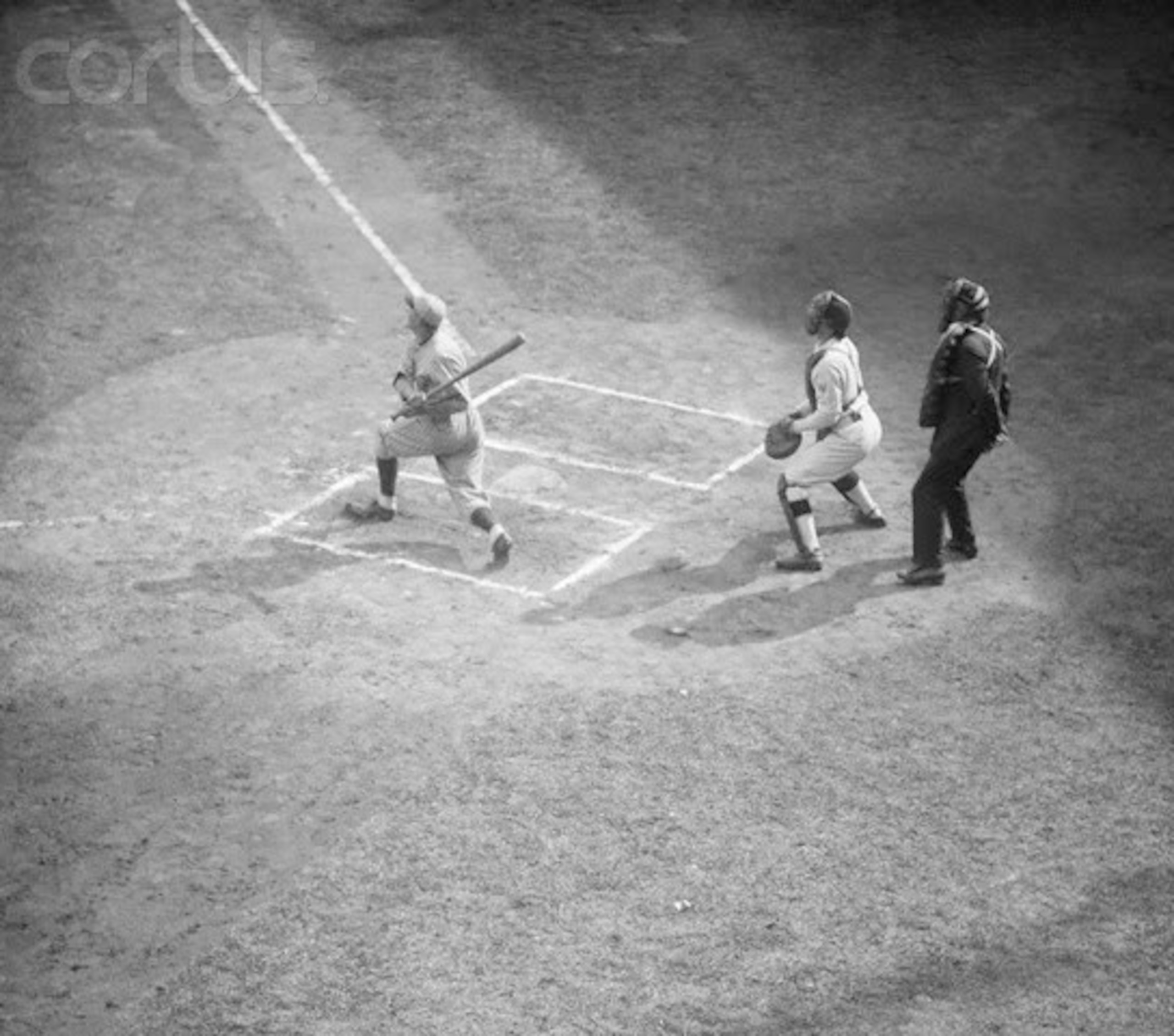
In the early 1920s, the New York Giants, led by manager John McGraw, were a force to be reckoned with. They won back-to-back World Series championships in 1921-22, and lost in 1923 to the New York Yankees. They once again returned to the World Series in 1924, marking the first time that any team had made four consecutive World Series appearances.
Meanwhile, the Washington Senators were making their first World Series appearance ever, and also the first time for legendary pitcher Walter Johnson, who, at the age of 36, won 23 for the Senators that year.
The Series see-sawed back and forth, with the Giants winning and the Senators matching their win three times. Game 7 was to decide the championship.
Johnson, who had lost Games 1 and 5 for the Senators, was itching to get back on the mound to exact his revenge. In the top of the ninth, with the score knotted at 3-3, Johnson got his wish, replacing Firpo Marberry.
Johnson pitched four scoreless innings, and in the bottom of the twelfth, with runners on first and second, Earl McNeely hit a grounder to third that took a bad hop, scoring Muddy Ruel with the winning run and giving the Senators their first and only World Series championship in Washington.
14. Oakland Athletics- 1988 World Series
37 of 50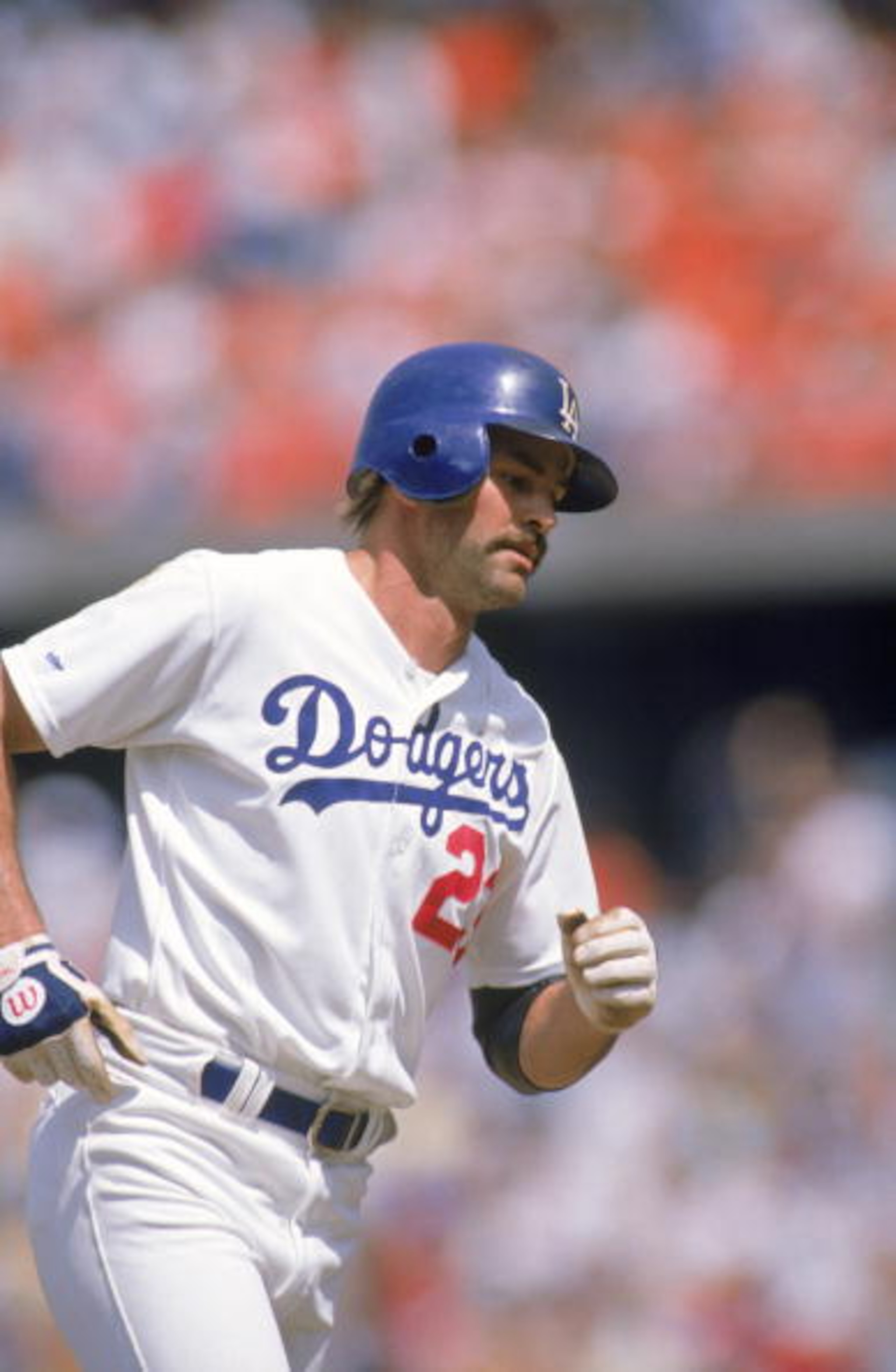
The 1988 Oakland Athletics were an absolute hitting machine, slugging their way to the American League West Division title by 13 ½ games over the Minnesota Twins and then sweeping the AL Championship Series against the Boston Red Sox. The A’s also featured the best pitching staff in the American League, with 20-game winner Dave Stewart, 17-game winner Bob Welch and closer Dennis Eckersley, who saved 45 games for the A’s.
Meanwhile the Dodgers were rather unspectacular, with the exception of pitcher Orel Hershsiser, who captured the NL Cy Young award with a 23-8 record and eight shutouts. The Dodgers had no position players make the All-Star team, and Kirk Gibson led the team with 25 home runs.
The Dodgers would be further handicapped in the World Series, as it was widely believe that Gibson would be unable to play due to sore knees and a bad hamstring.
Game 1 saw the A’s break out with a four-run second inning, courtesy of a grand-slam home run by Jose Canseco. The A’s would continue holding the lead until the bottom of the ninth inning, when Dennis Eckersley came on in relief to preserve the 4-3 lead and close it out for Dave Stewart.
Eckersley gave up a walk to pinch-hitter Mike Davis, and then Gibson was announced as the next batter, pinch-hitting for reliever Alejandro Pena. It was clear that Gibson was indeed hobbled, grimacing with each swing while fouling off several of Eckersley’s pitches. With the count full, Gibson took an Eckersley slider and launched it into the right field bleachers for a walk-off two-run home run.
Even though Gibson would not come to bat again in the Series, his one appearance clearly deflated the A’s, who went on to lose the Series in five games.
13. Detroit Tigers- 2009
38 of 50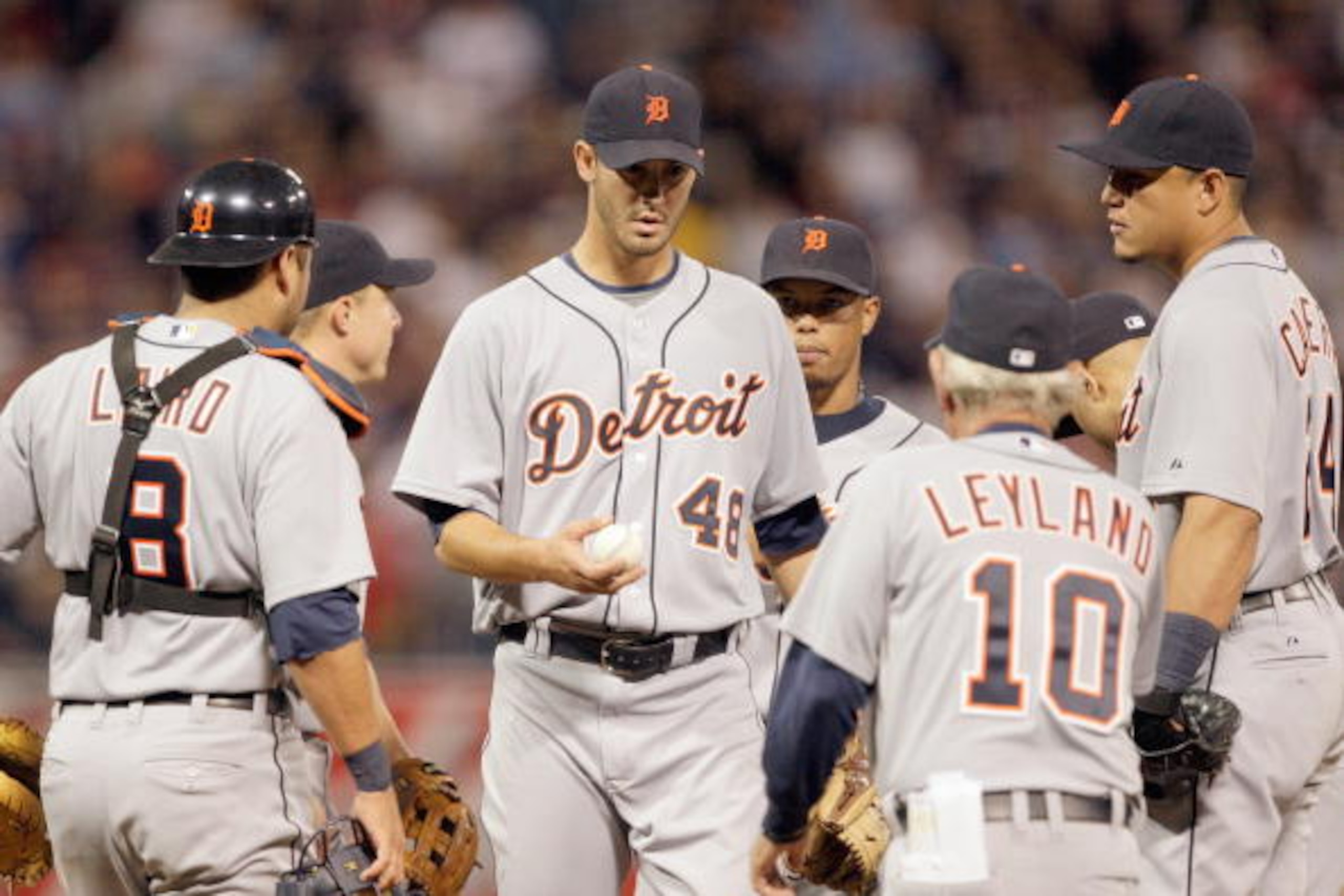
On Wednesday, Sept. 30, 2009, the Detroit Tigers beat the Minnesota Twins 7-2 to take a three-game lead in the American League Central Division with just four games left. While not mathematically eliminated, it certainly seemed as if the Twins’ chances of reaching the postseason were next to impossible.
However, the Tigers lost their next three games while the Twins won their next three, creating a tie at the top of the division on the final day of the season. The Tigers and Twins both won their final games, and a tie-breaker game was scheduled for Tuesday, Oct. 6 at the Metrodome.
With the game tied 5-5 heading into the bottom of the twelfth, Fernando Rodney, working his fourth inning in relief, gave up a single to Carlos Gomez to start the twelfth. After a Michael Cuddyer groundout moved Gomez to second, Rodney issued an intentional walk to Delmon Young, hoping to set up a force situation. Alexi Casilla, who had entered the game in the 10th inning as a pinch-runner, singled through the hole between first and second, scoring Gomez with the winning run and giving the Twins the American League Central Division title.
It marked the first time in history that any team had relinquished a three-game lead with four games to play.
12. Boston Red Sox- 1948 Playoff Game
39 of 50
In 1948, the Boston Red Sox were a stacked ballclub, and considered one of the favorites to win the American League pennant, along with the New York Yankees.
The Red Sox and Yankees were as good as advertised, with identical records of 91-56 with just seven games left to play. However, they were joined by an unlikely third team, the Cleveland Indians. The last week of the season figured to be an all-out race to the finish.
On the last day of the season, the Red Sox beat the Yankees, while the Cleveland Indians lost to the Detroit Tigers, with both teams finishing with identical 96-58 records. There would be a one-game playoff to decide the American League pennant, the first ever in AL history.
With the game to be played at Fenway Park, Indians’ player/manager Lou Boudreau elected to pitch Gene Bearden, a 19-game winner who had beaten the Sox twice during the season. Bearden however would be going on just one days’ rest.
However, Sox manager Joe McCarthy elected not to pitch Mel Parnell, who was rested and had beaten the Indians three times during the season. McCarthy instead chose Denny Galehouse. It was later revealed that McCarthy liked Galehouse’s chances as a right-hander in Fenway Park, as opposed to Parnell with the short left field wall and strong Indians’ right-handed batters.
The move backfired, and the Indians scorched Galehouse for five runs in four innings, and the Indians prevailed 8-3, giving them the American League pennant for the first time since 1920, while Sox manager McCarthy became public enemy No. 1 in Boston.
11. New York Yankees- 2001 World Series, Game 7
40 of 50The 2001 World Series, featuring the New York Yankees and Arizona Diamondbacks, is widely considered one of the most thrilling in history, featuring two extra inning affairs and three late inning comebacks. However, none of the comebacks was more enthralling than the one that occurred in Game 7.
At the end of seven innings, the game was tied 1-1. In the top of the eighth, Diamondbacks’ starter Curt Schilling gave up a solo home run to Alfonso Soriano, giving the Yankees a 2-1 lead. Manager Bob Brenly pulled Schilling, and after Miguel Batista got Derek Jeter to ground into a fielder’s choice, Brenly called on Randy Johnson, who had just thrown 104 pitches the night before in the Diamondbacks’ Game 6 victory.
Yankees manager turned to closer Mariano Rivera to attempt a two-inning save, and the move appeared to be the right one, as Rivera struck out the side in the bottom of the eighth. Coming back out for the bottom of the ninth, Rivera allowed a single to Mark Grace to open the ninth. Damian Miller followed with a sacrifice bunt attempt, but Rivera threw to second to get the lead runner David Dellucci, pinch-running for Grace. The throw pulled Jeter off the bag, putting runners at first and second.
Jay Bell followed with another bunt, and this time Rivera threw to third, forcing Dellucci, leaving one out with runners at first and second. The next batter, Tony Womack, drove a double down the right field line, scoring Midre Cummings with the tying run.
Rivera then hit Craig Counsell, loading the bases for the D-Backs. Luis Gonzalez, the next hitter, looped a soft fly over the head of a drawn-in Derek Jeter, scoring Jay Bell with the winning and giving the Diamondbacks their first-ever World Series championship. It was a stunning upset given the fact that Rivera had been practically unhittable in postseason play.
10. Baltimore Orioles- 1969 World Series
41 of 50In 1969, the Baltimore Orioles were heavily favored over the New York Mets in the World Series. The Mets had never even finished above .500 in their seven seasons prior to 1969, but their remarkable turnaround, coupled with a late-season swoon by the Chicago Cubs, gave the Mets their first-ever National League pennant.
Many experts and pundits at the time considered this version of the Orioles one of the finest teams ever assembled, amassing a 109-53 record and winning the American League East Division by 19 games, then dispatching the Minnesota Twins in three straight to win the American League pennant.
Holding to form, the Orioles took Game 1 of the World Series 4-1, behind the complete game victory by Mike Cuellar. However, the rest of the series belonged to the Mets, as they would go on to win the next four games, capped by great pitching efforts from Jerry Koosman in Games 2 and 5. The series still stands as one of the greatest upsets in history.
9. Cleveland Indians- 1997 World Series, Game 7
42 of 50In 1997, the Cleveland Indians were back in the World Series for the second time in three years, while the Florida Marlins, who entered the National League as an expansion franchise in 1993, and set a record by reaching the Series in only their fifth season.
The Indians were prohibitive favorites to win their first World Series championship since 1948. The Marlins, however, had other ideas. The teams alternated winning games, and the Series was headed to a seventh game.
The Indians jumped out to the early lead, scoring two runs off starter Al Leiter in the third. Bobby Bonilla’s solo homer in the seventh got the Marlins back to within one, and with the Indians holding a 2-1 headed to the bottom of the ninth, Mike Hargrove turned to closer Jose Mesa to close it out.
However, once again, the Marlins weren’t ready to give up. Moises Alou led off the inning with a single, and catcher Charles Johnson singled with one out, advancing Alou to third. Craig Counsell then lifted a sacrifice fly to right, scoring Alou and knotting the game at two, sending it into extra innings.
In the bottom of the eleventh, Edgar Renteria’s two out single drove Counsell in with the winning run, giving the upstart Marlins the World Series championship, and sending Cleveland home as losers again for the second time in three seasons.
8. New York Yankees- 1960 World Series, Game 7
43 of 50The 1960 World Series featured the New York Yankees, against the Pittsburgh Pirates, who were playing in their first World Series since 1927.
The Series came down to a deciding seventh game. The teams traded leads, with the Pirates jumping out first to a 4-0 lead, and the Yankees roaring back, scoring four runs in the sixth to take a 5-4 lead. The Yankees tacked on two more runs in the top of the eighth, taking a 7-4 lead, however the Pirates answered with five of their own in the bottom half of the frame, re-taking the lead at 9-7.
In the ninth, the Yankees stormed back once again, with Mickey Mantle hitting a run-scoring single and Yogi Berra producing an RBI-groundout to tie the score at 9.
In the bottom of the ninth, Bill Mazeroski stepped into the batters’ box to face Ralph Terry. Mazeroski took Terry’s second pitch and launched it over the left field wall, giving the Pirates their first World Series championship since 1925.
Mantle would later go on to say that it was the most difficult loss of his entire career.
7. Philadelphia Phillies- 1993 World Series, Game 6
44 of 50The Toronto Blue Jays, who had won the previous World Series, were back once again to defend their championship. The Philadelphia Phillies were there for the first time in ten years.
The Blue Jays jumped out to a commanding 3-1 Series lead, however the Phillies clawed back in Game 5, courtesy of a complete game five-hit shutout by Curt Schilling.
In Game 6, the Blue Jays jumped out a 5-1 lead, only to see the Phillies score five runs in the top of the seventh to take a 6-5 lead. In the bottom of the ninth, the Phillies turned to closer Mitch Williams to close it out and force a deciding seventh game.
Williams walked Rickey Henderson, and after retiring Devon White on a fly to left, Williams gave up a single to center, putting runners on first and second with one out. The next hitter, Joe Carter, worked a 2-2 count, then drove a Williams offering over the left field fence for a walk-off three-run home run, giving the Blue Jays their second consecutive World Series championship.
It was the first time that a World Series had been decided by a come from behind walk-off home run.
6. Boston Red Sox- 1978 Playoff Game
45 of 50In 1978, the Boston Red Sox enjoyed a 14-game lead in the American League East over the New York Yankees in mid-July, standing at 62-28. The Red Sox proceeded to lose 28 of their next 52 games, and by Sept. 10, the Yankees had caught the Red Sox in the standings, accentuated with a four-game sweep of the Sox.
The Red Sox needed to win their last eight games of the regular season to pull back into a tie atop the American League East Division, forcing a one-game playoff with the Yankees at Fenway Park.
No need to explain what happened next, as Bucky “Bleeping” Dent ended the Sox’ hopes with a three-run homer in the game that MLB Network recently rated the 11th greatest game in MLB history.
5. Brooklyn Dodgers- Oct. 3, 1951
46 of 50In 1951, the Brooklyn Dodgers held a 13-game lead on Aug. 11 with a record of 70-36. However, the Bums were only four games above .500 for the rest of the season, while the New York Giants won 50 of their final 62 games to catch the Dodgers. The Dodgers needed to beat the Giants on the final day of the season to force a one-game playoff, and they came through, winning 10-0.
The following day, the teams met once again to decide the National League pennant. The Dodgers once again appeared to have victory within their grasp, heading into the bottom of the ninth with a 4-1 lead. However, Dodgers’ starter Don Newcombe tired, and after giving up two singles and a run-producing double, handed the ball off to Ralph Branca to preserve the victory.
For the Giants, Bobby Thompson was at the plate with one out and two runners on. Thomson took Branca’s second pitch and drove it into the left field bleachers for a three-run home run, giving the Giants the 5-4 victory and the National League pennant.
The “shot heard round the world” became one of the most famous radio calls in history with Giants’ broadcaster Russ Hodges’ voice being immortalized.
4. Boston Red Sox- 2003 ALCS, Game 7
47 of 50The Boston Red Sox were once again in battle with the New York Yankees, this time for the right to go to the 2003 World Series.
It seemed inevitable that the ALCS would go to a Game 7, and certainly it did. In the bottom of the eighth inning, with the Yankees trailing 5-2, it appeared that Pedro Martinez was done after pitching seven innings. However, manager Grady Little called for Pedro to head back for the eighth inning.
The move backfired, as Martinez gave up three runs to notch the game at 5-5.
Manager Joe Torre went to closer Mariano Rivera in the top of the ninth, and Rivera ended up pitching three scoreless innings, one of the longest stints of his career. In the bottom of eleventh, with Tim Wakefield pitching second inning for the Red Sox, Aaron Boone took a Wakefield knuckleball and planted it into the left field seats, giving the Yankees a 6-5 victory.
To this day, Grady Little is still heavily criticized for leaving an obviously tired Martinez in the game.
3. Boston Red Sox- 1986 World Series, Game 6
48 of 50In Game 6 of the 1986 World Series, the Boston Red Sox were within one strike of winning their first World Series in 68 years. Champagne was on ice in the clubhouse, and the scoreboard at Shea Stadium had already revealed that Bruce Hurst was named the World Series Most Valuable Player.
However, Gary Carter breathed life into the Mets with a sharp single to center off Red Sox reliever Calvin Schiraldi. Kevin Mitchell followed with another single, and Ray Knight followed with yet another single, scoring Gary Carter. Red Sox manager John McNamara brought in Bob Stanley to replace Schiraldi with the score 5-4.
Stanley unleashed a wild pitch, scoring Mitchell and tying the score at 5. Mookie Wilson then rolled a dribbler down the first base line that somehow got under the glove of first baseman Bill Buckner, and Ray Knight scored to give the Mets one of the most improbable victories in the history of the World Series.
The Mets would go on to win Game 7 and keep the Red Sox curse alive for another 18 seasons.
2. California Angels- 1986 ALCS, Game 5
49 of 50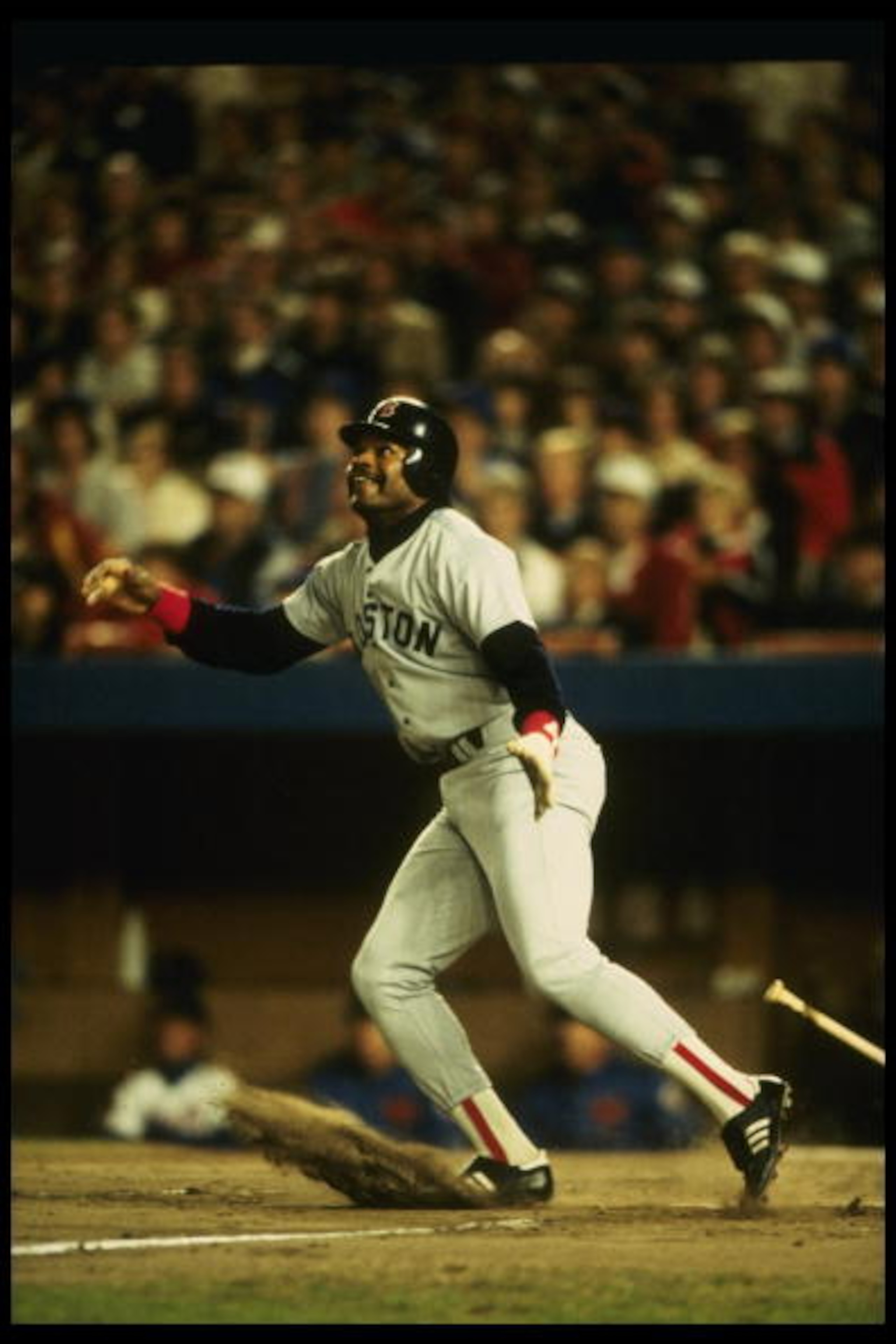
The California Angels appeared to be on the verge of getting to their first World Series ever in 1986. After a bitterly disappointing loss to the Milwaukee Brewers in the 1982 ALCS, the Angels appeared to be on the verge this time around.
With Mike Witt on the mound in the top of the ninth, holding a 5-2 lead, Witt gave up a single to Bill Buckner. After striking out Jim Rice, Witt gave up a mammoth two-run home run to designated hitter Don Baylor, and all of a sudden, the Red Sox were within a run.
Gary Lucas came on to relieve Witt, and promptly hit Red Sox catcher Rich Gedman with a pitch. Lucas gave way to closer Donnie Moore, with Dave Henderson coming to the plate for the Red Sox. With the count 2-2, Henderson took Moore deep for a two-run home run, giving the Red Sox a 6-5 lead.
Moore would stay on and get out of the inning, while the Angels tied the game in the bottom of the ninth with a run-scoring single by Rob Wilfong. The game moved on to the 11th inning, and Moore, still in the game for the Angels, gave up a sacrifice fly to Dave Henderson, scoring Don Baylor with what proved to be the winning run.
The Angels never recovered, and the Red Sox went on to win Games 6 and 7 to snatch victory from the jaws of defeat. Moore was never the same again, and on July 18, 1989, Moore shot his wife Tonya three times before fatally shooting himself.
1. New York Yankees- 2004 ALCS
50 of 50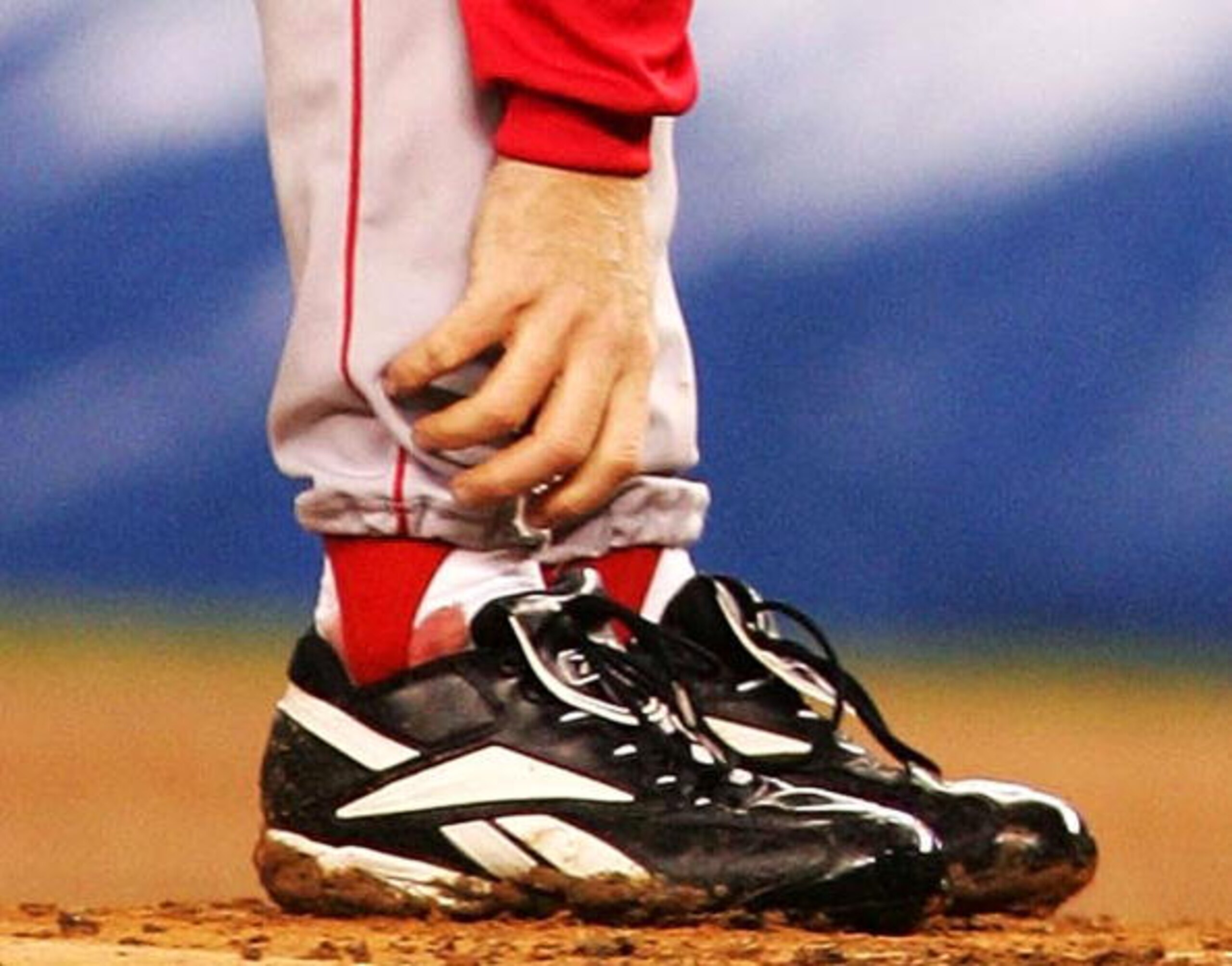
This was without question the most crushing defeat in major league history. The New York Yankees completely outplayed the Red Sox in the first three games of the American League Championship Series, including a crushing 19-8 victory in Game 3.
The Dave Roberts steal of second base in the ninth inning of Game 4 was considered the defining moment for the Boston Red Sox, who went on to become the only team in major league history to come back and win a series when facing a 3-0 deficit.
Give us your thoughts… What are the major collapses that you feel were the most significant? Share your thoughts with us in the comments section down below!



.jpg?w=2560 "Malik Beasley Negotiating Plea Deal (AP)")
.jpg?w=2560 "Aikman Blasts Cowboys WR 🫣")

.jpg?w=2560 "Jonathan Taylor Landing Spots")