

Can Shohei Ohtani Play Every Day Without Being Ruined?
Pretty much everyone's ideal scenario involves Shohei Ohtani putting his extraordinary pitching and hitting talents on display more often.
That includes the man himself.
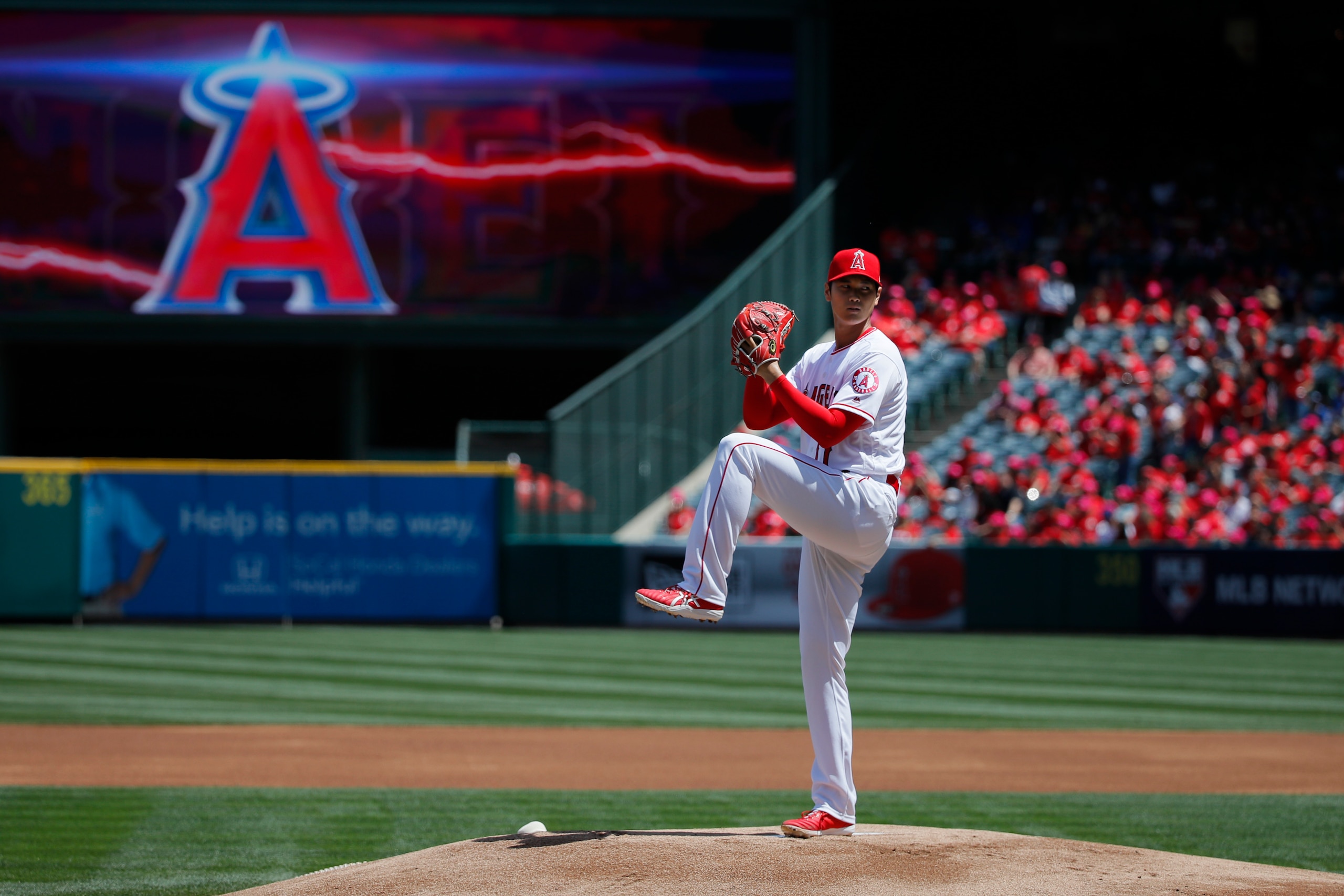
Ohtani has appeared in 11 of the Los Angeles Angels' first 17 games of 2018—three times as a starting pitcher, seven times as a starting designated hitter and once as a pinch-hitter. And yet, the 23-year-old Japanese phenom wants to see more action.
TOP NEWS

Realistic Offseason Trade Ideas 💡
Yankees Sloppy in Game 2 Loss 😬

Players Who Were Worse Than You Think in 2026 ⚾
"It's the beginning of the season, so I think they are being pretty careful with me right now," Ohtani told reporters, via a translator, on April 11. "Once the season gets tougher and the schedule gets tougher throughout the summer, hopefully I can make them want to play me more. I would like to play more. If not, that's what it is. I have to follow what they have to say."
The reality check that Ohtani got on Tuesday isn't going to help his cause. Beyond getting bossed around by the Boston Red Sox in a 10-1 loss, he also had to leave after just two innings because of a blister on his right hand.
Even still, Ohtani owns a 3.60 ERA and 19 strikeouts over 15 innings and a 1.191 OPS and three home runs over 33 plate appearances. Those results present a strong case for more playing time. This case is further strengthened by the numbers under the hood, such as his elite fastball (97.2 mph) and extreme exit velocity (96.0 mph).
In theory, additional playing time for Ohtani could be a boon to an Angels squad that's already off to a 13-4 start. The Angels have to hold off the reigning champion Houston Astros and other contenders in a tough AL West, so...yeah, why not?
Now that it's obvious he has the talent to be a two-way star in Major League Baseball, the biggest remaining question of the Angels' Ohtani experiment is: How far is too far with his workload?
In most cases where there's a question regarding what's possible in MLB, relevant answers reside somewhere in the past. The American League and National League have been playing side by side for 117 years. There's an excess of precedent for everything.
But for this case? Not as much.
Let's run some quick numbers for what Ohtani is on pace to do as a rookie. The current plan is for him to pitch every seven days, which should lead to roughly 25 starts. If he continues to get three DH assignments between starts, he'll start roughly 75 games as a hitter.
Assume six innings per pitching start and four plate appearances per hitting start and, the current plan could result in Ohtani logging as many as 150 innings and 300 plate appearances.
With the help of Baseball Reference's Play Index and the FanGraphs' Jay Jaffe's history of two-way major leaguers, I went looking for players who've hit those marks in a single season. The complete list is:
- Harry Howell, 1902: 199 IP and 377 PA
- Doc Crandall, 1914: 196 IP and 348 PA
- Babe Ruth, 1918: 166.1 and 382 PA
That's it. Three guys. All of whom did so at least a century ago.
This isn't that surprising to one obvious extent: 100 years is a fair estimate for how long legitimate two-way players had been extinct before Ohtani came along.
But this is also a window into how, even in the age of two-way players, there weren't many who were good enough to warrant excessive action. Among those three, only Ruth managed an above average ERA+ (122) and an above average OPS+ (192).
Lower the bars to 100 innings and 200 plate appearances, and only three more seasons join the party: Ruth (1919), Jack Coombs (1908) and Doc White (1909).
And here comes the kicker: Even though they proved they could excel as everyday two-way stars, neither Ruth nor Coombs nor Crandall ever replicated their biggest two-way workloads. Ruth came the closest, but that 1918 season was effectively the beginning of the end of his pitching career.
This has some relevance to Ohtani's history in Nippon Professional Baseball.
He had success as a pitcher and hitter for the Hokkaido Nippon-Ham Fighters between 2013 and 2015, but it wasn't until 2016 that he became a superstar on both fronts. As a pitcher, he logged a 2.12 ERA and 174 strikeouts over 140 innings. As a hitter, he had a 1.004 OPS and 22 homers over 382 plate appearances. And that isn't even counting a postseason that ended with the Fighters winning the Japan Series.
But that series also proved to be fateful for Ohtani. That's when he sustained a right ankle injury that sidelined him for the World Baseball Classic and sent him under the knife in October 2017. In between, his regular-season workload for the Fighters fell to 25.1 innings and 231 plate appearances.
Of course, a baseball player need not be a two-way star to be beset by the injury bug. Even still, the correlation between Ohtani's heaviest workload and most serious injury is not something that the Angels can dismiss out of hand.
Other things they can't dismiss are the UCL damage in Ohtani's right elbow and the reality that the MLB season is more of a grind than the NPB season. The differences include more games, more arduous travel and no Mondays off.
In light of all of this, it's hard to push back against the Angels' current instinct with Ohtani's playing time. As manager Mike Scioscia put it, per ESPN.com: "He always says he's ready. But right now, we're definitely going to protect him as much as we can."
Should the Angels start to struggle and find themselves needing more from Ohtani, Scioscia's tune may start to change.
But that might not be destined to happen.
Although Ohtani was the big prize of the Angels' offseason, general manager Billy Eppler also re-upped Justin Upton and corralled Ian Kinsler, Zack Cozart, Chris Young and Rene Rivera for an offense that already had Mike Trout, Andrelton Simmons, Kole Calhoun and Albert Pujols. The team's pitching staff got fewer upgrades, but it was well stocked with starting and relieving options to begin with.
The Angels thus looked like one of the deeper and more talented teams in MLB even before they raced out to a hot start. They don't need Ohtani to carry them. They should be fine if he merely helps carry them.
If it's between that and leaning into the risk of losing him and having the whole thing crumble, the Angels should know what to do.
Stats courtesy of Baseball Reference, FanGraphs and Baseball Savant.

.jpg?w=2560 "Grading WWE Raw 🔠")

.jpg?w=2560 "Bijan's INSANE 1st Half 🤩")
.jpg?w=2560 "Viral Rams Coach Vid 🖕")
.jpg?w=2560 "Injury-stricken Seahawks signing veteran RB")


.jpg?w=2560 "2 NFL Officials Suspended")
