

No One's Safe from Blame as Dodgers Blow Chance to Grab Epic World Series Title

The Los Angeles Dodgers came oh so close to winning their first World Series in 29 years. Close enough to touch it. Heck, close enough to taste it.
Instead, the only thing they're tasting is defeat.
The Houston Astros put the lid on the Dodgers coffin early in Wednesday's Game 7, jetting out to a 5-0 lead in the second inning. That turned the capacity crowd at Dodger Stadium from stoked to stunned, and then it was just a matter of pounding in the nails.


Seven innings and one Dodgers run later, the Astros did just that. They are World Series champions for the first time in their 56-year history.
If there's any comfort in defeat for the Dodgers, it's that they lost to a worthy foe.
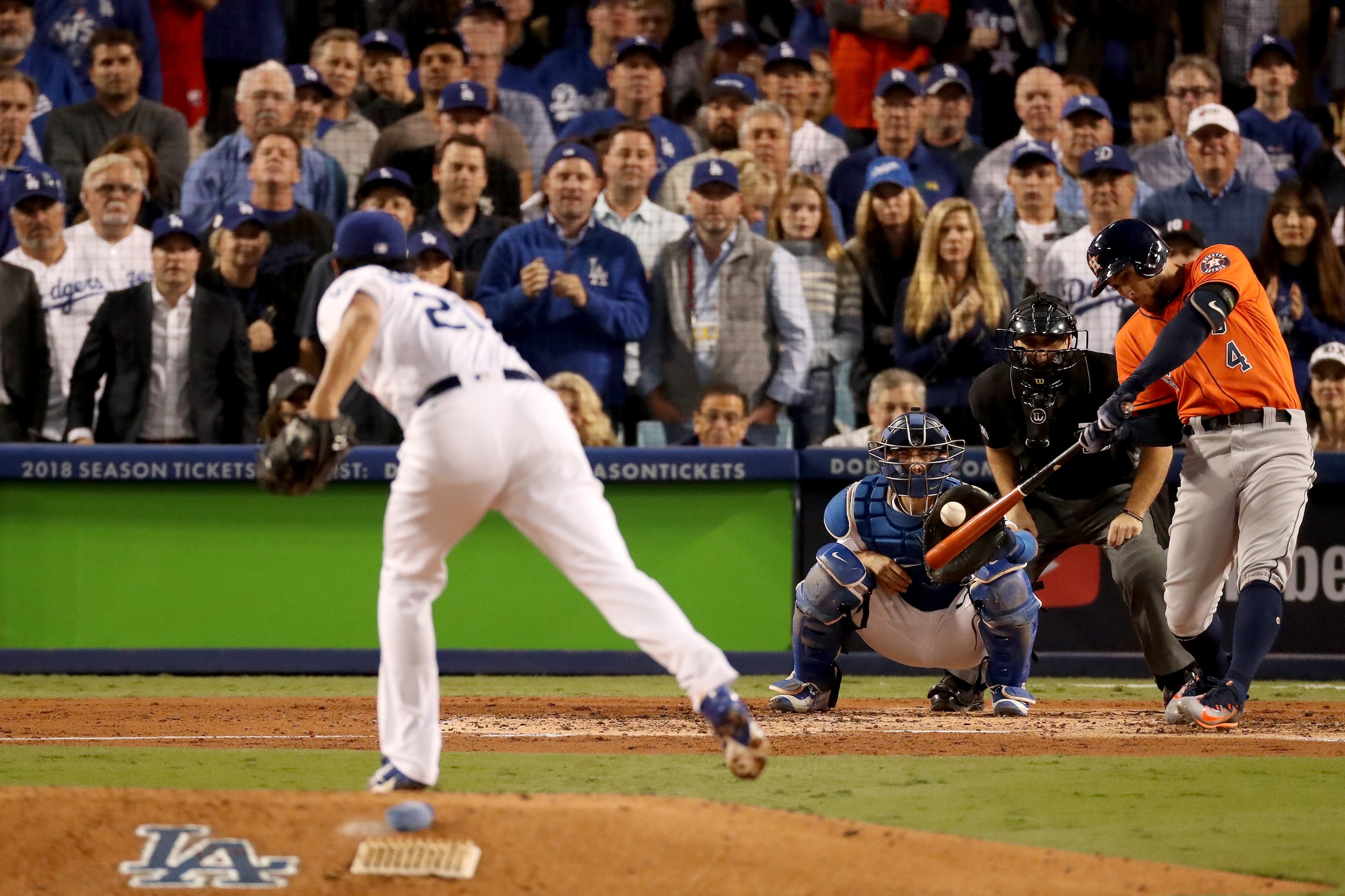
Nobody did better than the Dodgers' 104 wins in the regular season, but the Astros came close with 101 wins of their own. Their engine was one of the greatest offenses in Major League Baseball history. Led by series MVP George Springer and his five home runs, they gave the Dodgers a healthy dose of that offense in hitting 15 of the series' record-setting 25 homers.
There's also comfort to be had in the reality that the Dodgers didn't roll over for the Astros. The series did go to a Game 7, after all. The Dodgers also scored exactly as many runs (34) as the Astros in the end.
And while the series ended in a relative dud, the whole shebang will not soon be forgotten. Using The Baseball Gauge's "Championship Win Probability Added" metric, it ranks as the fifth-most dramatic World Series of the expansion era (since 1961). As Rob Arthur of FiveThirtyEight noted, Games 2 and 5, in particular, rank among the best World Series games ever played.
It is with those two games, however, that the Dodgers' list of regrets begins.
In Game 2, they turned a 3-1 lead and, according to FanGraphs, a peak win expectancy of 93 percent into a 7-6 loss in 11 innings:
Later in Game 5, the Dodgers had an early 4-0 lead an a win expectancy of 76.1 percent as late as the seventh inning. Both went down the drain in a 13-12 loss in 10 innings:
The easiest target to blame for these two losses is manager Dave Roberts, who does deserve his share.
Taking Rich Hill out after only four innings in Game 2 put a heavy burden on the club's bullpen. He also paid for asking Brandon Morrow to pitch for the third time in as many days in Game 5, as it took him only six pitches to turn an 8-7 lead into an 11-8 deficit.
And the blame on Roberts doesn't end there.
Whereas he was quick with the hook for Hill in Game 2, he was too slow with it for Yu Darvish in Game 7. Although the right-hander was clearly struggling and already in a 3-0 hole in the second inning, Roberts let him face Springer for a second time. Springer launched a two-run homer that practically put the game on ice.
But to blame Roberts exclusively for the Dodgers' failure is to forget that a manager is only as good as his players.
Above all, Darvish must not escape a scolding. The Dodgers got him in a trade-deadline blockbuster to be a finishing touch for their World Series quest. But in two chances to hold up his end of the bargain, he allowed a total of nine runs in 3.1 innings.
Fellow ace Clayton Kershaw isn't blameless in his own right. He bookended his first World Series with a dominant start in Game 1 and a clutch four-inning relief appearance in Game 7, but in between was a six-run dud in Game 5.
Kenley Jansen, the Dodgers' ace closer, has a black mark next to his name, too. He fumbled the two-run lead he was handed in Game 2 and was on the mound when the Game 5 roller coaster finally ended.
And while the Dodgers may have scored as many runs as the Astros, their runs didn't come as easily.
The list of Astros hitters who played a starring role in the World Series doesn't end with Springer. Jose Altuve, the likely American League MVP, hit two home runs. So did Carlos Correa, Alex Bregman and Yuli Gurriel.
For the Dodgers, only Joc Pederson and Yasiel Puig went deep more than once in the series, and Puig's homers accounted for half his hits. Fellow stars Cody Bellinger, Corey Seager, Justin Turner and Chris Taylor each had their moments, but none was a steady threat throughout the series.
The offense's collective struggle was crystallized in Game 7. The chances to score runs were there, as they took 13 at-bats with runners in scoring position. But Andre Ethier provided the only hit, and it wasn't the big one they were waiting for.
Looking back, it's astonishing how few Dodgers can say they had a good series with no ifs, ands, buts or strings attached. Pederson can. So can Alex Wood, who was terrific in Game 4. A few relievers—namely Kenta Maeda, Tony Watson and Tony Cingrani—made it through relatively unscathed. But that's it.
Looking ahead, it's easy enough to believe the Dodgers will be back. Their trip to the World Series is only the most recent step of a five-year run of success. Many of the players who made it possible are around for the long haul, and now they have every reason to be even hungrier.
"This team is not going to give up. We are going to bring a championship back to L.A. I promise you that," Jansen said after Game 7, per Bill Shaikin of the Los Angeles Times.
But if this sounds familiar, that's because the Dodgers have been promising a championship in one way or another since 2012. There's been bold talk, big-ticket free-agent signings, blockbuster trades and hundreds of millions of dollars spent on payroll. All for the sake of bringing home the big prize.
So far, each chance they've had has gone to waste. And while more chances do await them, none may be as ideal as the one they just blew.
Data courtesy of Baseball Reference, FanGraphs and The Baseball Gauge.
.jpg?w=2560 "Mahomes Told Teammate to Leave Meeting")
.jpg?w=2560 "5 Teams Eyeing Jonathan Taylor")
.jpg?w=2560 "Baker Gets Glove From Rays 🧤")
.jpg?w=2560 "🚨 Week 8 AP Top 25 Poll")
.jpg?w=2560 "NFL investigating Eagles")
.jpg?w=2560 "Steelers Roll Saints in Paris")
