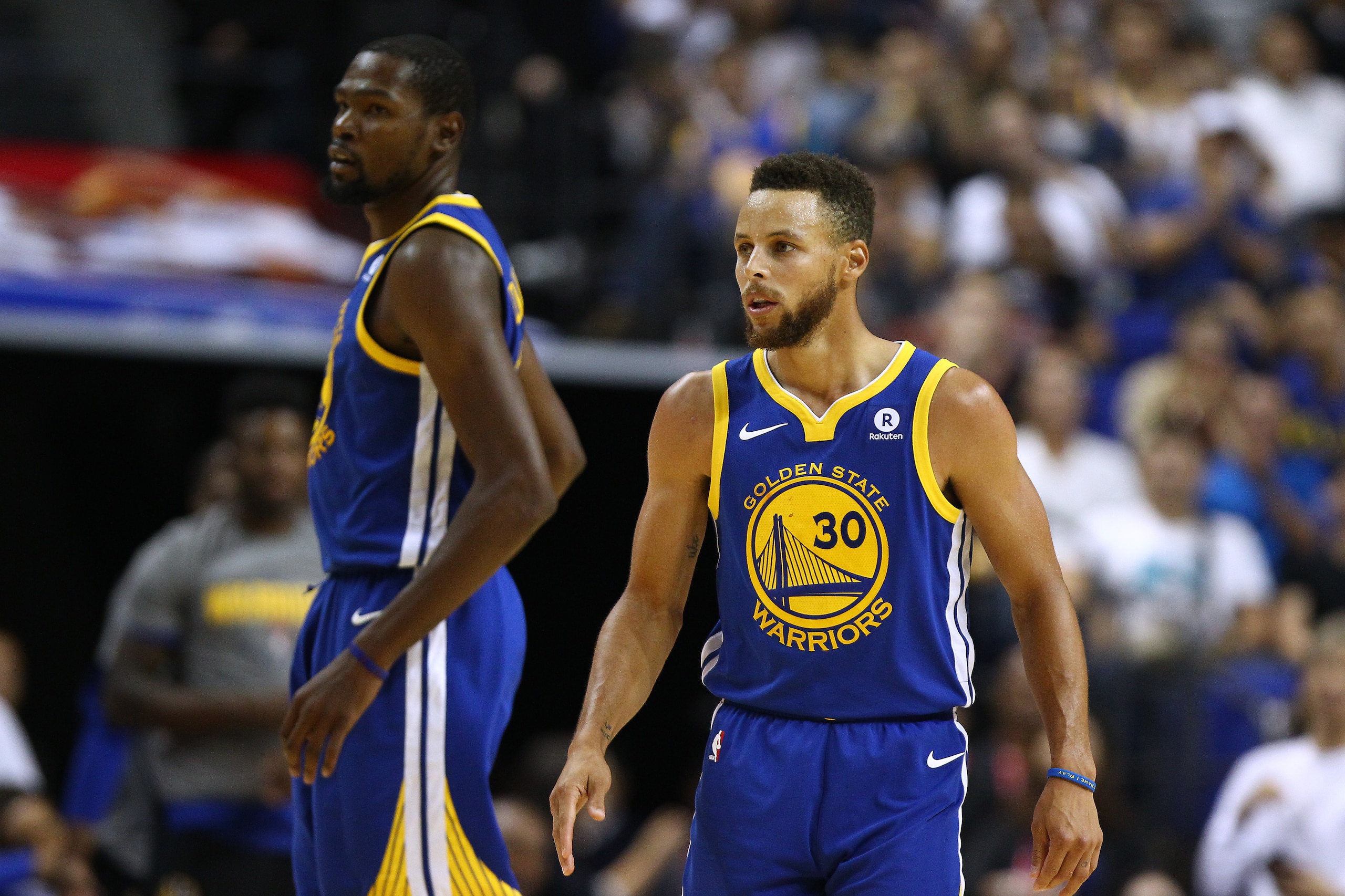

Power Ranking Golden State Warriors Roster Entering 2017-18 Season
On a micro level, the Golden State Warriors are operating on the same championship-or-bust scale as the rest of the NBA's 2017-18 championship hopefuls.
But the Dubs ditched the micro level a while ago. Sure, they're desperate to add a third world title in four years. And no, that isn't a guaranteed result as they begin their quest for the franchise's first repeat.
However, with four in-prime future Hall of Famers on the roster and the deepest supporting cast to date behind them, external expectations have reached a fever pitch. Breeze through the upcoming campaign and hoist another championship banner, and they could lay claim to the title of best team to ever lace them up.
That's the macro goal for this season, and on paper it seems within reach. So we're dissecting each player involved in that pursuit—the 15 guys with guaranteed big league contracts and a 16th holding their first two-way pact.
Through objective analysis and subjective projections, we have ranked those 16 based on their importance in this latest bid for historic domination. These rankings peg each player's significance by their likely statistical output, talent level and anticipated role for the 2017-18 season.
16-11: Boucher, Looney, Jones, McGee, Bell, West
1 of 7
16: Chris Boucher, PF
It's easy to see the appeal in Boucher. He's essentially an athletic (7'4" wingspan) two-way rim-runner (career 53.2 field-goal percentage, 4.4 blocks per 40 minutes at Oregon), only he's also capable of burying the long ball (1.2 threes at a 35.0 percent clip last season).
It's also impossible to miss the concerns. He's coming off an ACL tear, he'll turn 25 in January (three years older than Kevon Looney), and his 200-pound frame makes Kevin Durant look beefy. Boucher is an intriguing question mark, hence the two-way pact that will keep him at the G League level for most of this season.
15: Kevon Looney, PF/C
Two hip surgeries effectively erased Looney's rookie year, and he's moved like someone who's had multiple hip surgeries ever since. He's tried adding value as a rebounding specialist (career 10.3 per 36 minutes), but that doesn't fill a great enough need to free him from the frontcourt congestion. He needs developmental minutes that the win-now Warriors have been unable to provide.
14: Damian Jones, C
Jones had his own freshman campaign derailed by injury, but his torn pectoral muscle came free of any long-term concerns. He's still stuck in the same traffic jam at center, though, and too rough around the edges for the Dubs to drop into their championship pursuit.
Jones will factor into Golden State's future, possibly in a major way. He's an above-the-rim 7-footer, and he has flashed the coveted contemporary combination of shot-blocking and jump-shooting. But his need for seasoning will likely relegate him to spot minutes and mop-up duties this year.
13: JaVale McGee, C
If the Association awarded its biggest surprise, McGee would have taken last season's trophy by a landslide. He arrived with only a prove-it camp deal and then made 77 appearances and paced the team in on-court net efficiency (plus-18.7 points per 100 possessions). He feasted on the spacing created by the Golden State shooters and cleaned up their looks by collapsing defenses as a lob threat.
This campaign could follow a similar script—but it wouldn't bump McGee up the rankings. He's limited to short bursts by both his full-throttle approach and his shaky awareness. Smart, skilled teams can exploit his pick-and-roll coverage and force him off the floor (he only played 22 total minutes in the Finals). But more often than not, he's an electric energy boost.
12: Jordan Bell, PF/C
Like Patrick McCaw a year before him, Bell looks ready to make the leap from second-round steal (purchased from the Chicago Bulls) to rookie rotation member. There might be bigger, more polished players ahead of him in the current pecking order, but few better fit the fabric of this franchise.
"I think he'll be a big part of this team, especially with his ability to guard smaller guys and bigger guys as well being a strong athletic guy that runs, blocks shots and rebounding," Zaza Pachulia said, per Bay Area News Group's Mark Medina. "It's going to be crucial for us. He brings something different that we need as a team."
Bell isn't the next Draymond Green, but he'll follow many of the same Swiss army knife footprints. Whether operating as a backup 4 or small-ball 5, Bell brings explosiveness, defensive versatility, rebounding, highlight finishing and savvy passing. He could be in a constant fight for floor time, but he'll ultimately get more than the guys ranked behind him.
11. David West, PF/C
At 37 years old, the former All-Star has long since settled into a supporting role. But he's rock-solid in his second basketball life, almost a mistake-free contributor who gives veteran guidance on and off the floor.
Inside the lines, he's still a capable second-team fulcrum on offense. He operates on both the low block and the elbow, spotting cutters and open shooters or outwitting defenders himself. Year 1 with Golden State brought a new high mark in assists per 36 minutes (6.4) and his second-best field-goal percentage (53.6). Year 2 should feature even more precise execution.
10-6: Casspi, Young, McCaw, Pachulia, Livingston
2 of 7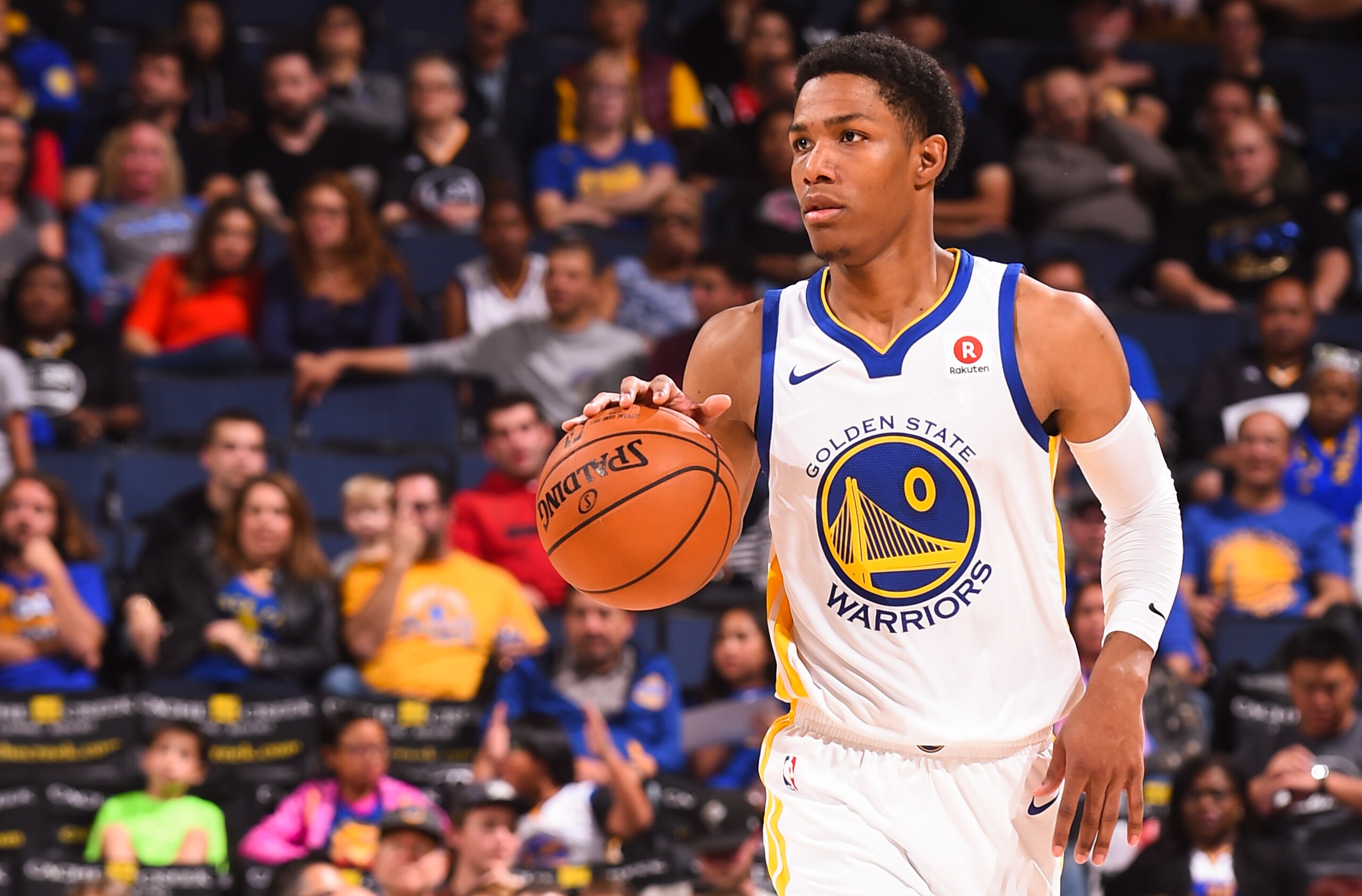
10: Omri Casspi, SF
Casspi on a veteran's minimum contract with this team is criminal. He's a hustler, a versatile defender, a three-point marksman and a high-IQ player. In other words, he perfectly fits the system with which the Warriors have already won two world titles.
"His game is so well suited to how we play," Stephen Curry said, per Bay Area News Group's Carl Steward. "He moves without the ball well, he's a shooter, he's a slasher, he's a great passer. He's made comments about how much fun it is to play in this type of system because everybody gets involved."
Casspi, who turned 29 in June, has yet to experience the postseason. Surely, that drove him to Oakland from Minneapolis and presumably makes him the least likely to complain if his individual numbers take a hit. There's so much to like about this addition, and it wouldn't be shocking to see Casspi ranked even higher by season's end.
9: Nick Young, SG
If Young appreciates and embraces the opportunity he's been given, he'll make this ranking look comically low. He's the most naturally talented player in this group, with the size, athleticism and shooting stroke to handle a substantial role. But we're guessing spotty awareness and questionable decision-making will have his floor time fluctuating from week to week.
It doesn't need to. The shot quality headed his way will be staggering. Last season, as part of a ball-sticking Los Angeles Lakers offense, Young averaged as many catch-and-shoot triples as Stephen Curry (2.1) and splashed them at a higher rate (44.2 percent) than Klay Thompson (43.8). If Young is content capitalizing on those chances and giving maximum effort on defense, he'd jump two or three spots on this list.
8: Patrick McCaw, SG
For cash considerations, the Warriors acquired a player in McCaw who made 20 starts, open a Western Conference Finals game and record an 18-point, five-assist, three-steal performance in the same series. There are reasons to continue marveling at the initial run, but Golden State is ready for his encore.
"I'm looking forward to Patrick developing further," Warriors head coach Steve Kerr said, per Daniel Brown of Bay Area News Group. "He's clearly a good player with a chance to be a great player."
McCaw looked, at times, tentative and undersized as a freshman, but he was also a second-rounder who stepped right into a championship run. All things considered, he found his comfort zone surprisingly quickly. And with that part of the process already settled, he can focus on using his two-way talents to keep himself ahead of the new wings.
7: Zaza Pachulia, C
He's the lowest-ranked starter by a mile, which surprises no one. The Dubs do their best work without a traditional big man, which is why he ranked just 13th on last season's squad in fourth-quarter minutes.
But he's a snug fit in the specialized grunt-work role Golden State requires him to fill. He's one of the NBA's most active screeners, he battles on the boards (11.6 rebounds per 36 minutes last season) and he keeps some of the interior physical punishment away from the small-ball bigs. He doesn't have the talent to move up the rankings, but his position is important enough to keep him from falling down.
6: Shaun Livingston, PG
The Warriors seemingly found themselves with less of a need for Livingston last season than ever before. He averaged just 17.7 minutes per game—the fewest of his three-year tenure—and saw that number trimmed to 15.7 during the playoffs.
But almost as soon as free agency opened, Golden State lured him back with a three-year, $24 million deal. Why? Because the Warriors understand whether his stats show it or not, he's a vital piece of their championship puzzle. He defends multiple positions, makes passes from all angles, rarely gives the ball away (62 turnovers in 1,345 minutes) and abuses smaller defenders with a surefire turnaround jumper.
If the Dubs lose a Death Lineup member, Livingston is the most logical replacement. He actually played more minutes alongside the four All-Stars in the playoffs (30) than the regular season (29), a unit that thrashed opponents in both settings (plus-35 in 59 minutes). His lack of spacing will always impact his minutes, but he has complete trust of the coaching staff when his number is called.
5: Andre Iguodala, SF
3 of 7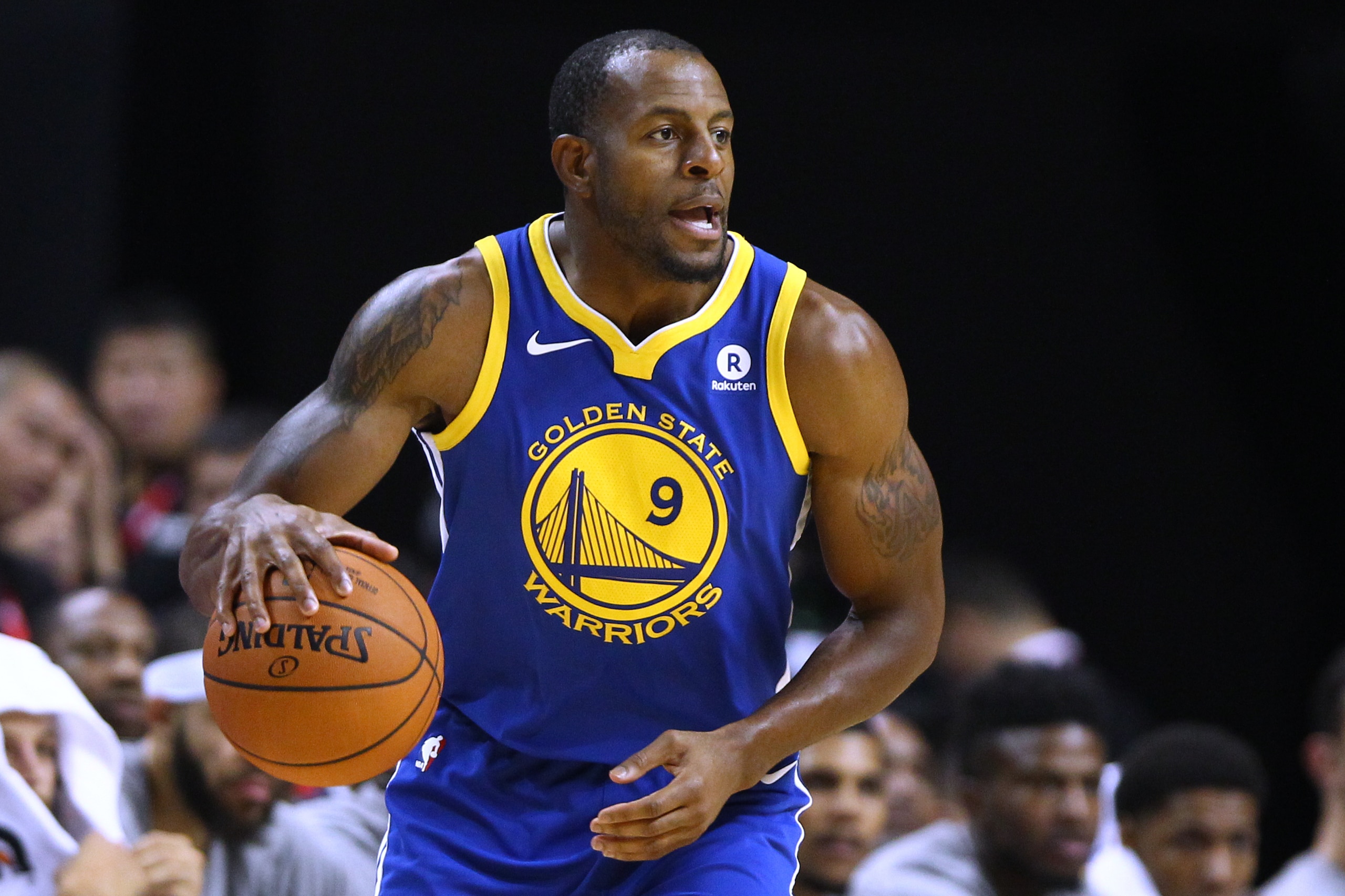
Picture the ideal fifth wheel for the modern game. He'd be malleable at both ends of the court, content without consistent touches and productive with the ones he gets, light on mistakes and heavy on efficiency.
Are you visualizing Andre Iguodala yet? You should be.
The 33-year-old has sacrificed a little of everything to make this work—salary, stardom, individual statistics, even his starting spot. His ball control is almost spellbinding; his 4.5 assists per turnover in 2016-17 were the most in three seasons. He also posted a true shooting percentage north of 60 for the first time (62.4).
And his defense is largely the reason he's a former Finals MVP. He routinely draws the assignment of a dynamic scoring wing and last season held those players 1.4 points below their normal shooting rates.
"Golden State throws him on LeBron James and Kawhi Leonard, without hesitation or regret," Bleacher Report's Dan Favale wrote. "They seldom send help unless he's defending deep inside the free-throw line. He has carte blanche to crowd ball-handlers or drop back to guard against drives. The Warriors let him work on his own either way."
Iguodala is a stabilizer at either end, an invaluable role for a team that often teeters between carefree and careless. He's at the point where his ceiling shrinks a bit every season, but his instincts and intelligence give him one of the club's highest floors.


4: Klay Thompson, SG
4 of 7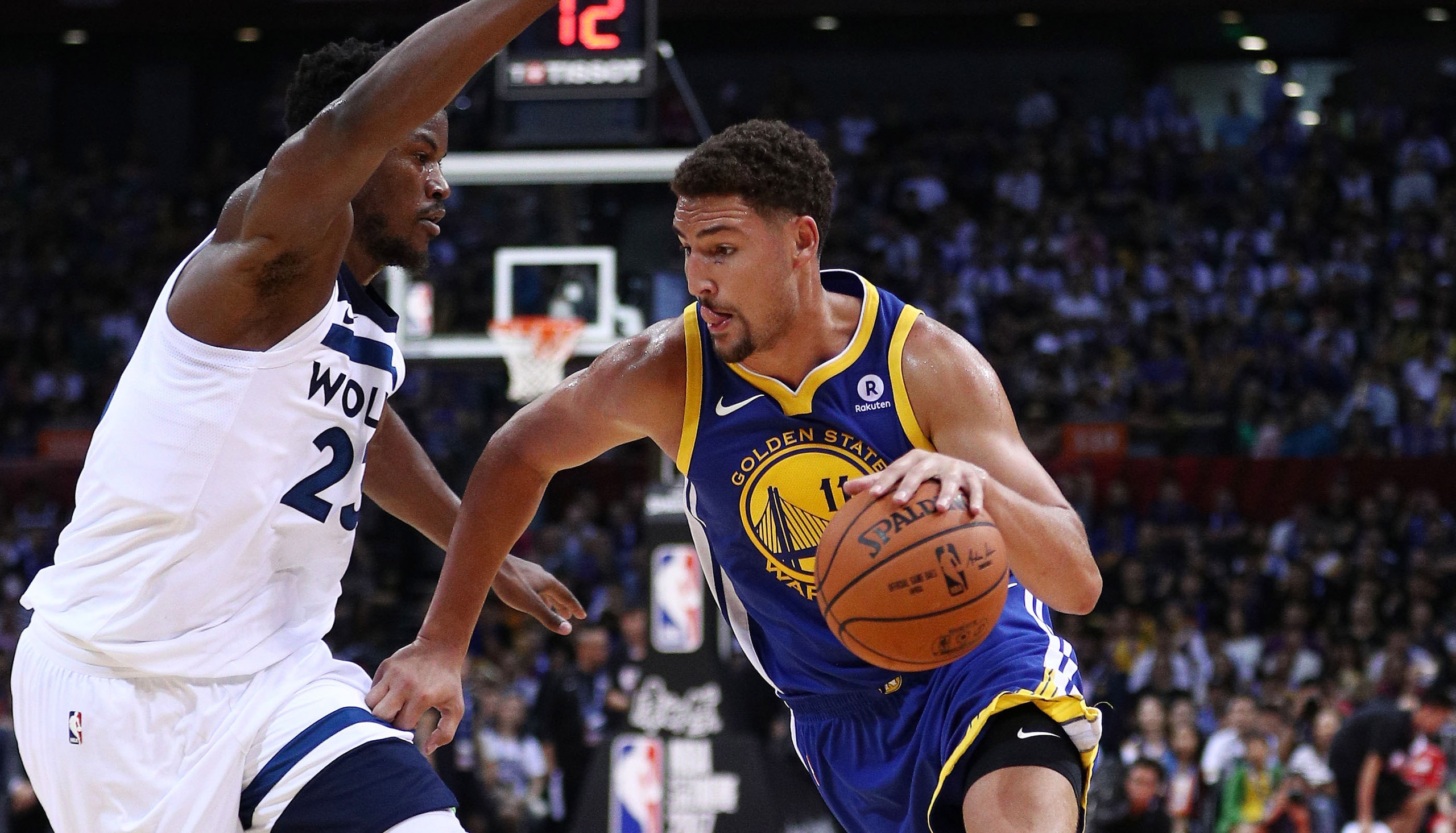
Thompson might have the smallest to-do list of any current All-Star.
The Dubs rarely, if ever, ask him to venture outside his comfort zone. Some paint that as a weakness, perhaps fuel to eventually flee the franchise and test out his team-running talents. But not Thompson. He sees his current digs as the pinnacle of the sport.
"At the end of the day, I've tasted winning," Thompson told Marcus Thompson II, then with Bay Area News Group, in June. "No stats can ever overcome that. I'd rather win these championships and score no points than have 60-point games and 37-point quarters. These championships are everything to me."
With the Warriors, Thompson doesn't have to choose between stats and the spotlight. He's never averaged fewer shots or points than the previous season. He's been named an All-Star three times and been a member of two All-NBA teams.
He's the ultimate three-and-D talent at a time when they're most valued. His ability to defend both backcourt spots keeps Stephen Curry from being a major liability. And Thompson is perhaps his Splash Brother's only rival as a pure shooter. Thompson, who has a prettier form, trails only Curry in single-season triples and bested his backcourt mate in perimeter percentage for the first time last year.
3: Draymond Green, PF
5 of 7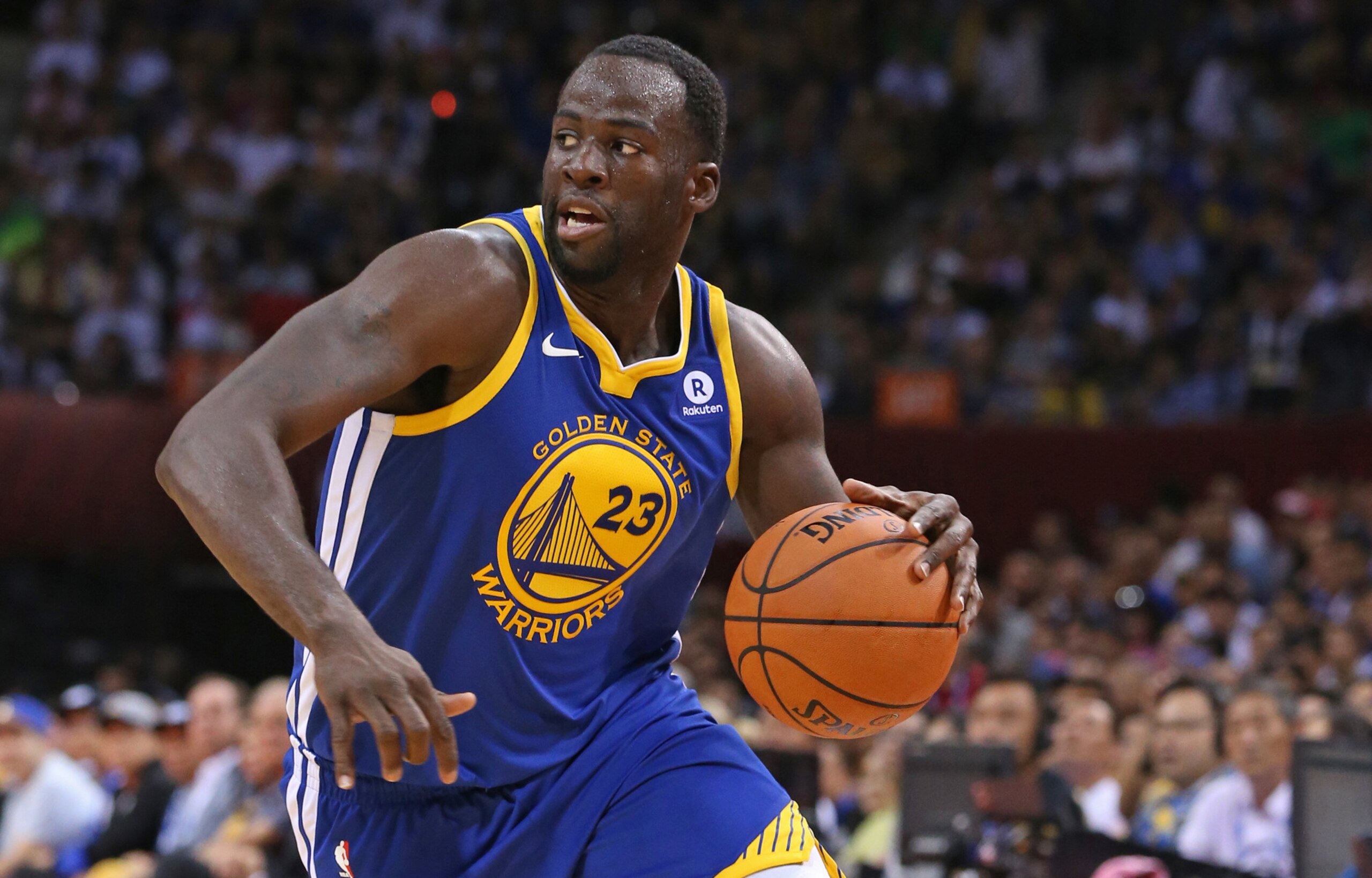
Remember the old debates about whether Draymond Green qualified as a superstar or if he would be the same caliber of player on a different roster? You know what conversations you never heard even then—whether the Warriors would be the same without Green.
That's because everyone already knew the answer, as Sports Illustrated's Rob Mahoney explained:
"He is exactly the player he needs to be to catalyze the team game around him. The way Green reads the floor on the move makes it almost useless to trap his point guard (as is so tempting with Stephen Curry). His passing is good for approximately 18 points a night between twos, threes, and free throws, a handful coming through assists at incredible angles. His shooting—while touch and go—offers just enough tug on the defense to keep things moving at all times. And most important of all: Green plays an all-encompassing brand of defense that allows any lesser defenders around him to play to their strengths."
Green is as unique as the Warriors themselves.
He's a rare enough breed as a 6'7" elite rim protector. But then, he also has the foot speed to defend along the perimeter and the hand speed to pace the league in steals. Last season, he was the top distributor on perhaps the most efficient offense ever, and two years back he buried 1.2 threes per night at a 38.8 percent clip.
The Warriors can't work their small-ball wizardry without him. Being irreplaceable should mean more than a No. 3 ranking, but Green just so happens to have a pair of annual MVP candidates as teammates.
2: Stephen Curry, PG
6 of 7
During three of the last four seasons, Stephen Curry had the NBA's highest plus/minus. The lone exception was 2015-16, when he took second (by 48 points) to Green—and secured the league's first unanimous MVP award by orchestrating a 73-win effort and tallying a 50/45/90 shooting slash while averaging 30.1 points per outing.
There are better defensive point guards out there. And Curry will probably never challenge for an assists title. But he's an evolutionary force who changes the ways offenses attack and defenses operate.
Kerr said, per Bay Area News Group's Dieter Kurtenbach:
"He is the most impactful offensive player in terms of what he does to the defense—maybe ever. There are guys, obviously, Michael Jordan impacted things. But the way Steph plays, [he] puts the fear of God into defenses like nobody I've ever seen. If you want to just say who affects the game the most offensively, Steph's the best player in the NBA."
Curry's perimeter volume is unprecedented. The league's best non-Curry shooting season featured 276 triples (Thompson, 2015-16). Curry has cleared the 300 mark during each of the last two seasons, totaling 726 makes.
His accuracy is elite. Only Kerr and Hubert Davis boast better career percentages than Curry's 43.8. And he's not launching the same looks as everyone else, either. He's creating most of them on his own (just 60.9 percent have been assisted), and he's within range as soon as he crosses half court.
He doesn't have the all-around game of No. 1, but very few players on any club could keep Curry out of the top spot. The Warriors were world-beaters when he played last season (plus-17.2 net rating) and like the Miami Heat when he didn't (plus-1.0).
1: Kevin Durant, SF
7 of 7
Kevin Durant was an all-time great before he got to Golden State. So when the Dubs discovered they had a chance to get him, they were all-in on the pursuit—no second thoughts, no worries about whether there were enough touches, no hesitations to make the requisite sacrifices.
"We lost some key guys to get him, but you are talking about the second-best player in the world," Kerr told ESPN.com's Zach Lowe. "You don't even think about it. You think, basically, it's a miracle—'Holy s--t, we are getting KD to this team.'"
Last season was never fair after that point. Durant became his best self yet, replacing his reduction in volume scoring with newfound efficiency (career-high 53.7 field-goal percentage) and a more complete stat sheet (personal-best 8.3 rebounds and 1.6 blocks). Had injuries not robbed him of 20 games, he seemed a certainty for his first All-Defensive selection.
Dubs Durant: The Sequel could easily be more incredible. Last year at this time, he was trying not to step on his new teammates' toes and vice versa. Now, they've had two training camps and a full championship marathon to see how all the pieces fit, and in case anyone forgets, they have world-title bling to remind them.
The last time we saw Durant, he was at his absolute peak with the Warriors—sprinting to the Finals MVP behind series averages of 35.2 points on 55.6 percent shooting (47.4 percent from three), 8.2 rebounds, 5.4 assists, 1.6 blocks and 1.0 steals. It was the Durant who makes people wonder whether LeBron James is still the world's greatest player.
Durant's place in the NBA hierarchy is up for debate. Here's what isn't—he's the best player on the NBA's best team, a title that's arguably the sport's most desirable.
Unless otherwise indicated, all stats from Basketball Reference or NBA.com.
Zach Buckley covers the NBA for Bleacher Report. Follow him on Twitter: @ZachBuckleyNBA.

.jpg?w=2560 "Grading WWE Raw 🔠")


.jpg?w=2560 "Viral Rams Coach Vid 🖕")
.jpg?w=2560 "Injury-stricken Seahawks signing veteran RB")