
Adjustments Washington Redskins Should Make Post-Bye Week
Getting more creative with their third-down defense, scoring touchdowns in the red zone and involving Terrelle Pryor Sr. as a deep threat are among the adjustments the Washington Redskins must make coming out of their bye week.
A 2-2 record belies many of the good things the Redskins have been doing this season. Among them has been stopping the run and being more productive on the ground.
Yet a .500 mark is also a good indicator that for all the progress Washington has made, the team is still struggling in key areas. Fixing these issues will demand showing more imagination with defensive scheming while learning to trust what works on offense.
These are broad strokes, but if there's one area where Washington's coaching staff must get more specific it's putting together defensive game plans tailored to taking away an opponent's best threat. This is essential after more than one notable playmaker has been afforded too much freedom by the Burgundy and Gold already this season.
Read on for the top five post-bye week adjustments the Redskins should make.
Get Terrelle Pryor Involved Deep
1 of 5
Four games as a member of the Redskins have shown Pryor is still raw as a wide receiver. His route-running lacks refinement, his hands are inconsistent and the chemistry with quarterback Kirk Cousins is uneasy at best.
Yet for all his weaknesses, Pryor still has enticing raw attributes Washington has to make more use of. Specifically, his imposing height, size and vertical speed can be exploited more often in the deep passing game.
Head coach Jay Gruden, offensive coordinator Matt Cavanaugh and wide receivers coach Ike Hilliard need to create extra opportunities for Pryor to be targeted vertically. It's something this team has so far failed to do.
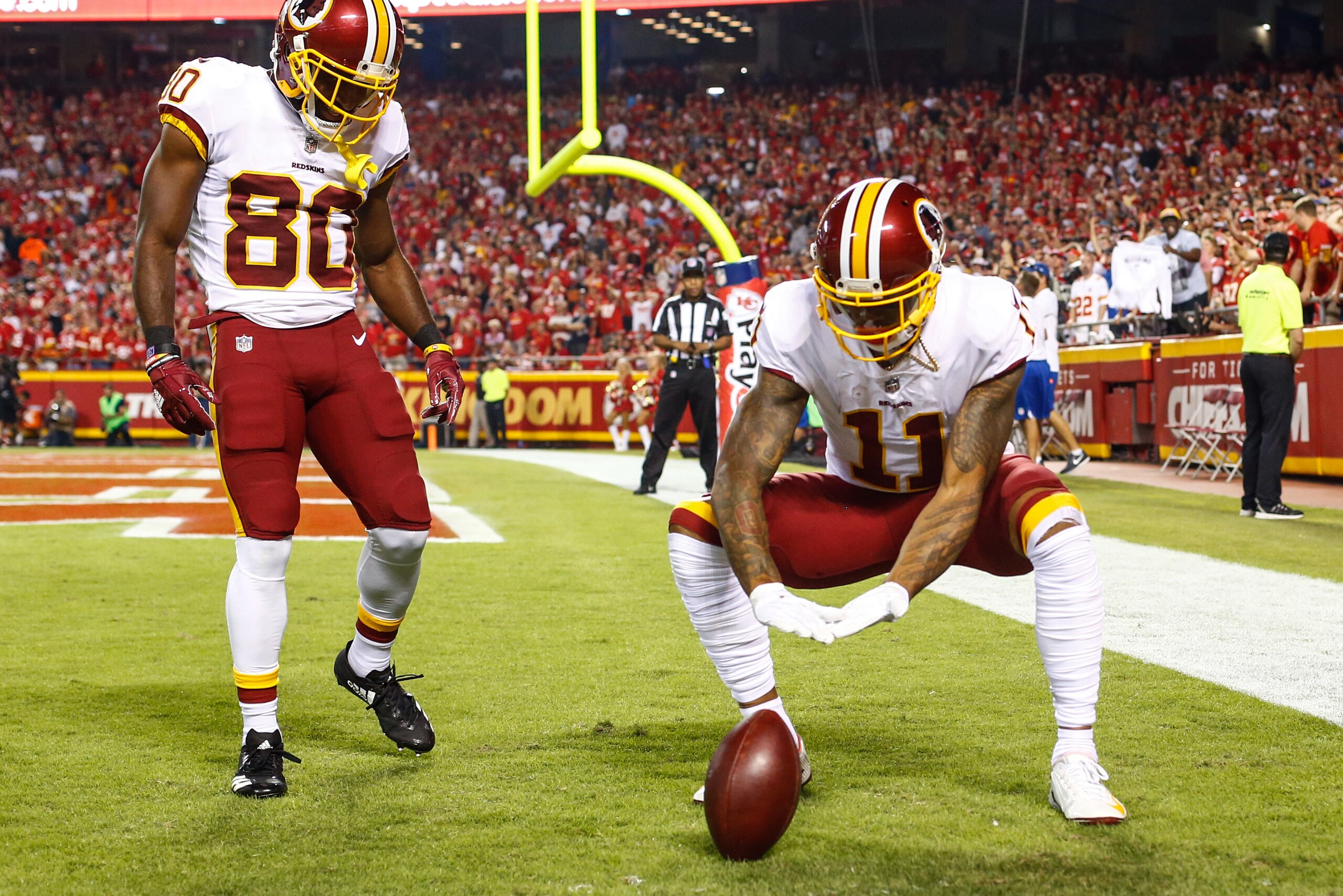
Pryor has just one reception of over 40 yards to his credit, the 44-yard scoring grab in the loss to the Kansas City Chiefs on Monday Night Football in Week 4. The paucity of long strikes aimed his way is a waste of a true burner who boasts a 6'4", 223-pound frame.
His lone deep catch proved Pryor has what it takes to torment the league's best cornerbacks vertically. Sure, he needed a not-so-slight push-off to expose Chiefs cover man Marcus Peters, but Pryor's size and speed combination is too dynamic not to be utilized more often.
Use a-Gap Pressure to Help Fix Third-Down Defense
2 of 5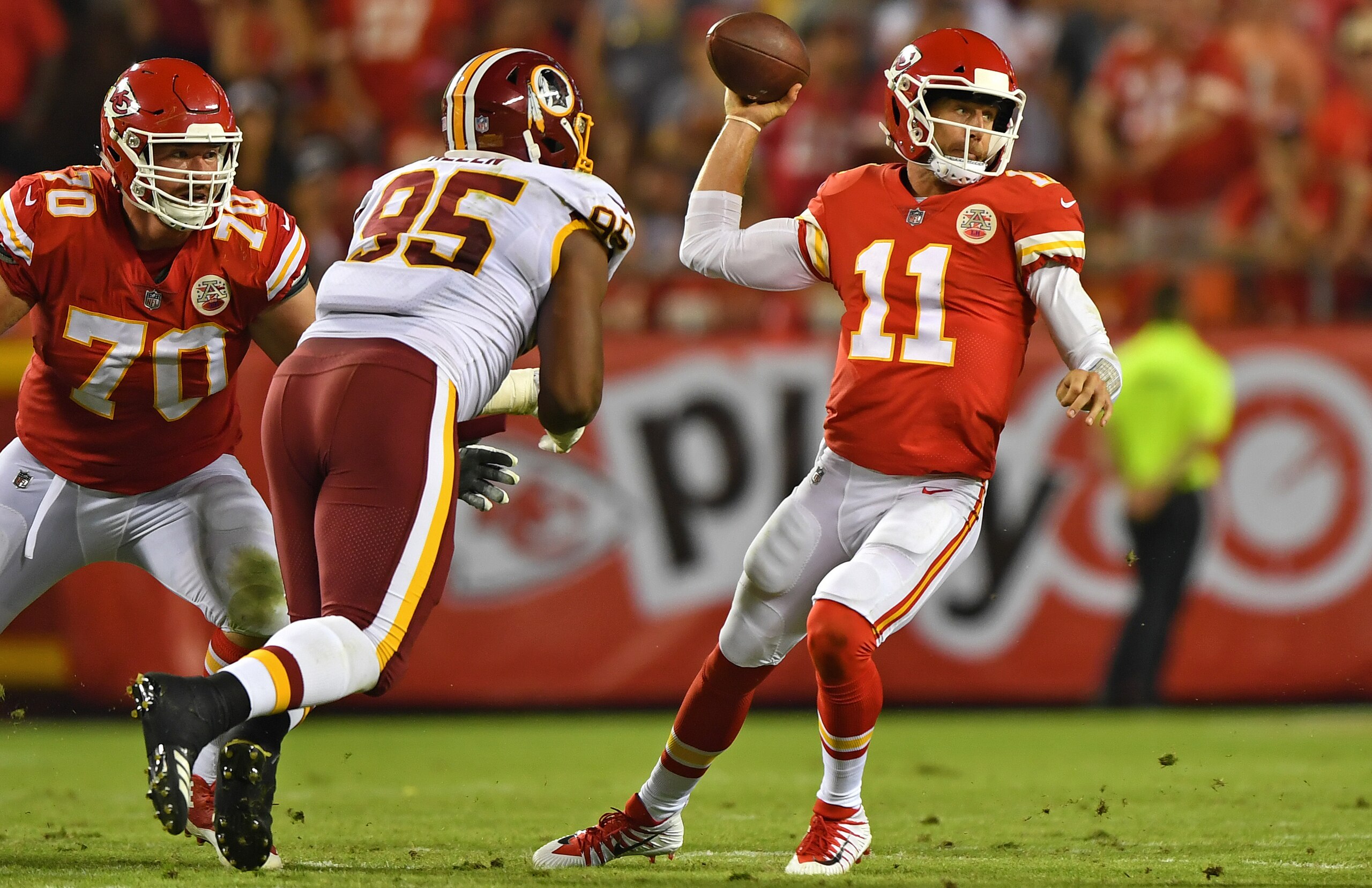
Washington's defense has shown encouraging signs of life so far this season. The unit is stingier against the run and is creating a ton of pressure.
Those improvements have come thanks to a line loaded with more talent. It's also helped to have inside linebackers who are quicker to the ball and surer tacklers.
Yet none of those things have helped Washington's D get off the field on football's money down consistently. Even the hint of improvement in this area has been minimal, at best, per Rich Tandler of NBC Sports Washington:
"The Redskins have made some improvement in their other 2016 bugaboo. They allowed opponents to convert 46.6 percent of their third downs into first downs. That was dead last in the league. This year the conversion rate is 42.0 percent, good for 21st in the NFL."
Solving this issue demands a mix of more aggression and greater creativity from coordinator Greg Manusky and his defensive staff.
Dealing with the need for more aggression first, the Redskins can turn players loose on the blitz more often. Manusky had success sending inside linebackers Zach Brown and Mason Foster through the middle against the Chiefs.
This is a ploy Manusky can utilize more effectively with some double A-gap pressure looks. It means putting Brown and Foster, or Brown and nickel linebacker Martrell Spaight, either side of the center to threaten blitz.
The double A-gap look has become old hat in recent years, but it's still alarmingly effective at creating confusion for offenses pre-snap. Quarterbacks seeing two potential blitzing linebackers threaten the middle must adjust protection to cope with the potential pressure.
Such adjustments usually leave an offense vulnerable to free rushers off the edge, as well as challenging running backs to cope in pass protection against linebackers, an obvious matchup advantage for a defense.
Additionally, showing pressure in both A-gaps affords a crafty coordinator a lot of scope for creativity. For instance, the Redskins don't have to blitz out of this look.
Instead, Manusky could have his linebackers bail late to take away underneath throws and act as robbers on crossing routes. Linebackers bailing out of the middle could be combined with a safety coming free off the edge.
Mixing things up this creatively is the key for any defense to win consistently on third down. The double A-gap blitz look gives the Redskins greater scope to be more creative and aggressive when it counts.
Rush 3 and Drop 8 to Help Win the Third-Down Battle
3 of 5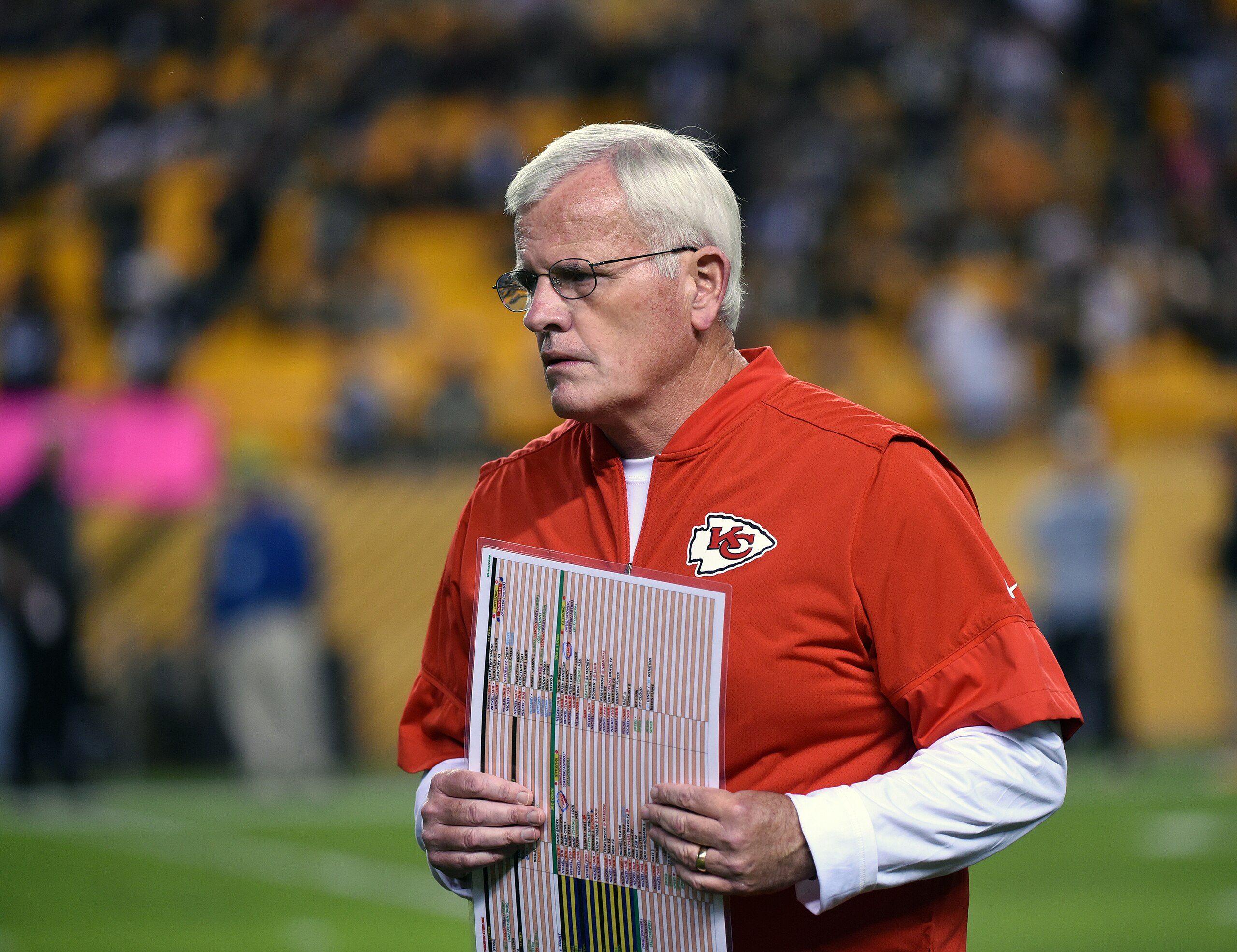
Using double A-gap pressures will give Manusky more ways to wreck an offense, but it's not a look he can show every single third down.
After all, keen-eyed and cerebral quarterbacks will burn A-gap blitzes with swift releases or by quickly spotting the favorable matchups of quality receivers against zone-dropping linebackers.
Any consistent third-down defense has to be built on nuance. Variety has been lacking for a group "allowing 56 percent (23 of 41) of third-downs faced against them to be converted" through four weeks, per Neil Dalal of Scout.com's Breaking Burgundy.
Manusky can add another string to the bow by borrowing a page from Washington's conquerors in Week 4, the Chiefs. Rather than pushing the blitz button, Kansas City's defense is relying on a more cautious, but arguably more disruptive, approach on third-downs.
KC coordinator Bob Sutton has concocted a devilish mix of three-man pressure with eight in coverage. Rushing three and dropping eight is allowing the Chiefs to consistently cover every zone, flood the middle and even create double coverage against key targets.
A nifty example of how well the scheme works came in Week 1's shock road win over the Super Bowl champion New England Patriots. It was a 3rd-and-5 play in the third quarter, one where the Chiefs showed a four-man rush out of dime (4-1-6) personnel.
At the snap, KC rush end Justin Houston bailed into the shallow hook zone and was available to help safety Eric Berry double Danny Amendola over the middle. Tom Brady's pass to Amendola fell incomplete and the Patriots were forced off the field.
Brady couldn't have gone deep because the Chiefs were playing a two-deep shell with man coverage underneath. Dropping an eighth player into coverage gave Sutton's unit the ability to bracket a receiver underneath.
The Redskins have some experience with this type of defense, having deployed similar concepts with some effectiveness against Brady and the Patriots in Week 9 of the 2015 NFL season.
Alternating A-gap pressure looks with eight-man coverage drops will give the Redskins the variety, disguise and creative aggression they need to become a miserly third-down defense.
.jpg?w=2560 "Rams Raiders Football")

.jpg?w=2560 "Steelers Saints Football")
Commit to Taking Away a Team's Best Weapon
4 of 5
I wrote last week about how ineffective the Redskins are at limiting their opponents' obvious threats, citing the performances of Travis Kelce in Week 4 and Philadelphia Eagles tight end Zach Ertz on opening day.
Kelce exposed Washington's defense for 111 yards and a touchdown off seven catches, while Ertz reeled in eight grabs for 93 yards during Week 1's loss to the Eagles at FedExField.
All those numbers are unacceptable when it's hardly a secret Kelce and Ertz are the players to watch when facing the Chiefs and the Eagles. Manusky and his staff must do more to take away a team's primary weapon.
It may not be an approach coaches with the swagger of Manusky and line guru Jim Tomsula prefer. After all, many defenses thrive on the philosophy of doing what they do regardless of the opposition.
Take the Seattle Seahawks, for instance, who will show some form of Cover 3 with press coverage on the outside mixed in behind a four-man rush most weeks. Defenses loaded with elite talent in every phase can keep the playbook simple and familiar.
The rest have to take more subtle approaches.
Despite improvements, Washington's defense belongs in the second bracket. It means the staff has to commit to planning specifically to eliminate a primary weapon. If it means double coverage every snap, assigning a spy or moving players around to create a more favorable matchup, then so be it.
No defense wants to be pulled too far out of its comfort zone. Yet it's also true a team can't defend everything.
Instead, Manusky must focus more on stopping the players and plays that make each offense tick. It may not be as impressive as physical dominance and beating the you-know-what out of people, but there's no shame in making special plans for special players.
Get More Efficient in the Red Zone
5 of 5
Taller wide receivers and a better running game have made little to no difference to Washington's ability to come away from trips into the red zone with touchdowns.
It's a familiar problem, one still impacting the Redskins' fortunes, according to Rich Tandler of NBC Sports Washington:
"They still are struggling to score touchdowns there, getting into the end zone 36.4 percent of the time. That’s 30th in the NFL; they were 29th at 45.9 percent last year. It’s arguable that lost red zone opportunities were responsible for both of their losses as they were 0-2 including a red zone interception against the Eagles and 1-2 against the Chiefs with the missed opportunity costing them a chance to take a 14-0 lead. The Redskins’ quest to get to even average in the red zone, which would mean getting a TD on about 50 percent of their opportunities, continues."
One of the surprising things is how the Redskins could struggle so much inside the 20 when they have so many players who should thrive near the goal line. The roster is loaded with gifted tight ends, four of them to be exact, in Jordan Reed, Vernon Davis, Niles Paul and rookie Jeremy Sprinkle.
Then there is Chris Thompson, one of the best pass-catching running backs in football. Add in Rob Kelley and Samaje Perine, two tough inside runners, and Washington should be coming away with touchdowns more often.
Perhaps the biggest part of the problem has been play-calling. More specifically, an inability by Gruden to stick with what's working.
Think back to Week 2's win over the Los Angeles Rams when the Redskins ran their way to the goal line only to throw three-straight passes, including two fades, a Gruden favorite that rarely works.
Not surprisingly, each of those passes fell incomplete and Washington settled for three points. The run was working, so why abandon it?
Better still, why not use the effectiveness of the run to set up play-action opportunities? The latter would be particularly useful given how efficient Cousins has been off play action, per Nathan Jahnke of Pro Football Focus: "He's completed 18-of-24 play-action passes, and of his six incompletions two were intentionally thrown away and three were dropped passes."
Play-action passes to tight ends as good as Reed and Davis are usually a staple of efficient and productive red-zone offenses. Using formations more effectively will also help.
For instance, Gruden can load the field with all four of his tight ends and split some of them out to spread coverage and create more room for inside runs or make those fades finally work.
The Patriots used a four-tight end package superbly to beat the Pittsburgh Steelers in Week 1 of the 2015 season. Brady threw three touchdowns out of the look, including one to Rob Gronkowski off play action.
New England stacked tight ends together in-line, had them lineup in the backfield and even split them out to isolate linebackers. Washington using this look inside the 20 would keep defenses guessing about the run-pass balance, as well as helping the Redskins create favorable matchups in both phases of their offense.
Gruden has the personnel, with Reed in particular a mismatch whenever he's split out near the goal line.
There's a lot to like about the Redskins after four games, but there's also enough room for improvement to put the onus on coaches to refine the schemes on both sides of the ball coming out of the bye week.



.jpg?w=2560 "🚨 Week 8 AP Top 25 Poll")
.jpg?w=2560 "Packers Safety Slams Refs 🤬")