

Every NBA Team's Biggest Regret of the Offseason
What happens during the NBA's offseason doesn't stay in the offseason, even though almost every team eventually wishes there were at least a few things they didn't have to take with them into real life (aka mid-October through mid-June).
Not every squad realizes it right away—or even in due time—but they should lament something, anything, about their summertime sabbatical. Missed trades. Botched trades. Free-agency strikeouts. Bad signings. Brutal negotiations. Indefensible departures. Dysfunctional front offices. There will always be a moment, mistake or decision teams should want back.
Let's harp on those misreads, because melding hindsight and nitpicking into one exercise is fun.
Certain pangs of discomfort are more serious than others. A few franchises have tied their gold shoes too tight. Others have potentially set themselves back years. Some issues are of the to-be-determined variety; they don't look great now but could still work out. The rest fall somewhere in between.
Just to be clear, these are regrets from a bystander's perspective. Most teams would likely defend their cherry-picked qualm because it's still early and they've yet to realize the error of their ways.
Atlanta Hawks: Trading Paul Millsap About Five Months Too Late
1 of 30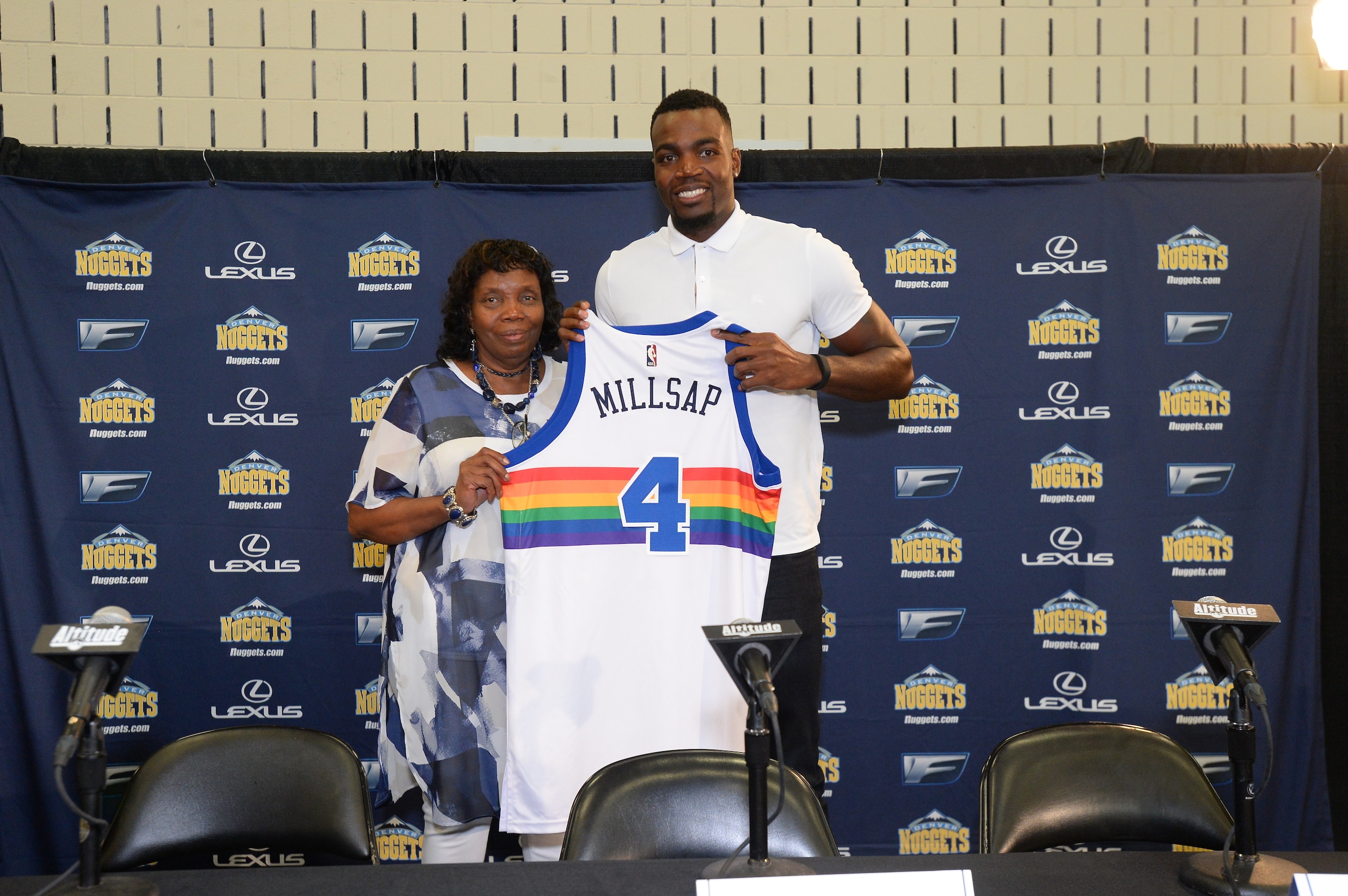
Are we going to acknowledge the Atlanta Hawks lost two top-25 players over the past two offseasons for a combined return of one low-end first-rounder or nah?
The Hawks did well to extract a pick out of the Los Angeles Clippers in the three-team Danilo Gallinari and Paul Millsap trades. But they could have done better months ago...or in 2016.
Also: They didn't do that well. They needed to take on Jamal Crawford and Diamond Stone to grease the wheels, both of whom they later waived.
Millsap's name surfaced on the chopping block last summer while Atlanta was (inexplicably) trying to forge an Al Horford-Dwight Howard frontcourt. It then returned to the speculation factory during the middle of the season when the Hawks were contemplating a teardown.
On the wrong side of 30 and with free agency on the horizon, Millsap never would have commanded a king's ransom. Atlanta's current front-office regime, headlined by general manager Travis Schlenk, also isn't to blame for the franchise's inaction.
That still doesn't let the Hawks off the hook. They'll be lucky if the Houston Rockets pick conveys earlier than No. 25 overall. That's not a strong enough return for an All-Star—especially one they undoubtedly could have dealt for more on multiple occasions.
Brooklyn Nets: Failing to Get a 1st-Round Pick or Prospect in Allen Crabbe Trade
2 of 30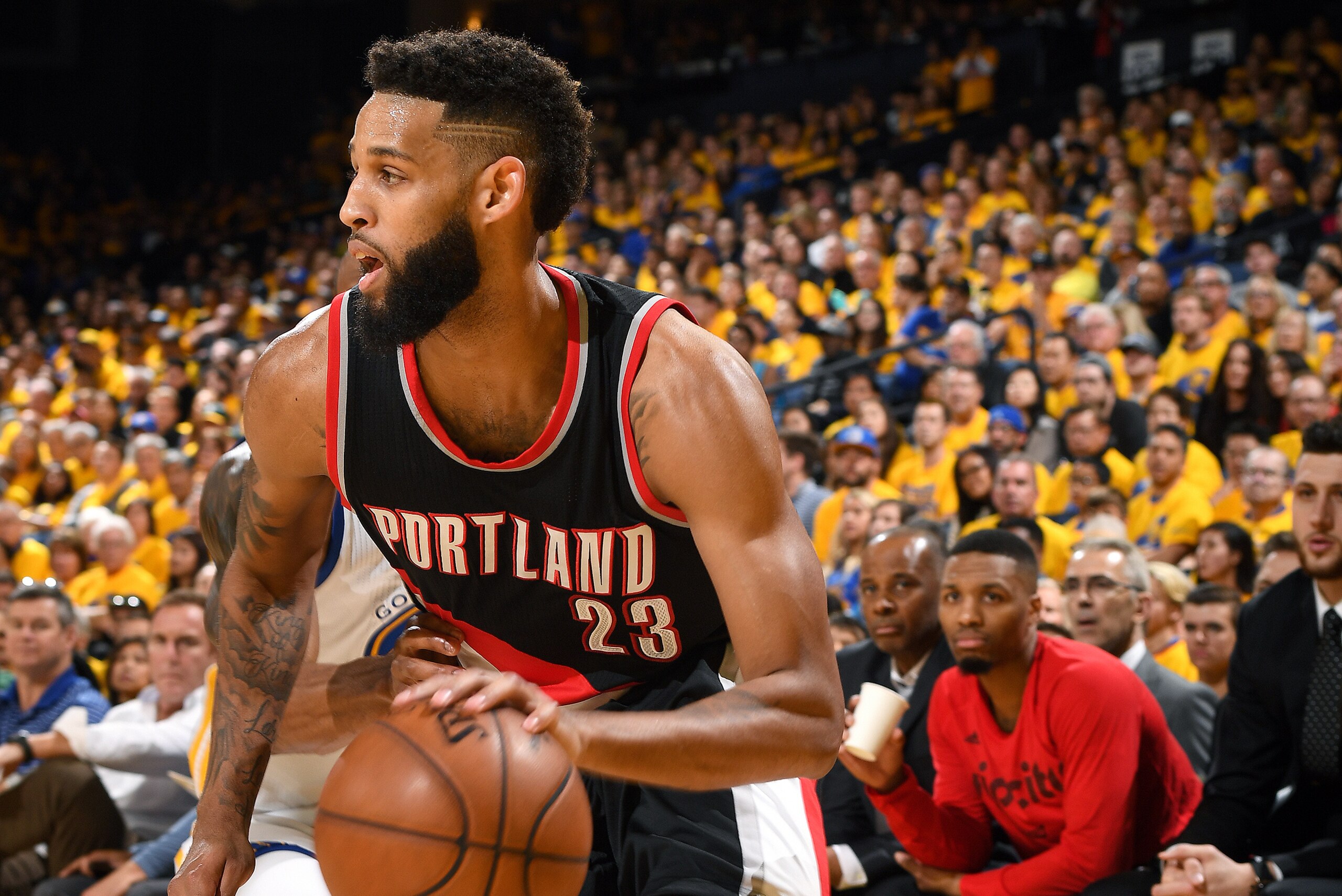
There's no sense in roasting the Brooklyn Nets for their offseason with a straight face. They forced the Washington Wizards to pay max money for Otto Porter. They continued to restock their first-round pick and prospect cupboards by absorbing unwanted salaries. They were aggressive.
Perhaps too aggressive.
DeMarre Carroll, Allen Crabbe and Timofey Mozgov will earn a combined $49.4 next season and $49.9 million in 2018-19. That's a steep cost for what amounts to D'Angelo Russell, a non-lottery pick from the Toronto Raptors, a second-round choice (also via Toronto) and Andrew Nicholson's exit.
Broken-record style: Brooklyn's approach is fine. These exact end results are even justifiable. But cap space will hold even more cachet leading into next summer as the market continues to correct itself following the league-wide 2016 spending spree, as ESPN.com's Tim MacMahon and Bobby Marks noted.
The Nets know some of this firsthand. Russell, the No. 2 pick from 2015, isn't your typical pot-sweetener in a salary dump. That set the bar for what they should charge when renting out financial flexibility—which is why the Crabbe-for-Nicholson trade feels so underwhelming, as ESPN.com's Zach Lowe wrote:
"The Nets instead played their last flexibility chip on Crabbe—and extracted zero picks for saving the taxed-to-oblivion Blazers almost $45 million. They undid what most executives considered a lucky break in Portland matching Brooklyn's offer sheet for Crabbe a year ago. 'Would we have liked a pick?' [general manager Sean] Marks asked. 'Sure. But this is what it took.'"
Brooklyn's past interest in Crabbe limits the lingering regret. Marks and Co. clearly believe he can develop into more than a spot-up specialist. If he does, great. If he doesn't, the Nets have the timeline to wait out his contract.
Either way, it feels like they had the leverage to coax more out of Portland—even if they needed to win a long-winded staring contest to do it.
Boston Celtics: Chicago and Indiana Didn't Plan Around Their Timeline
3 of 30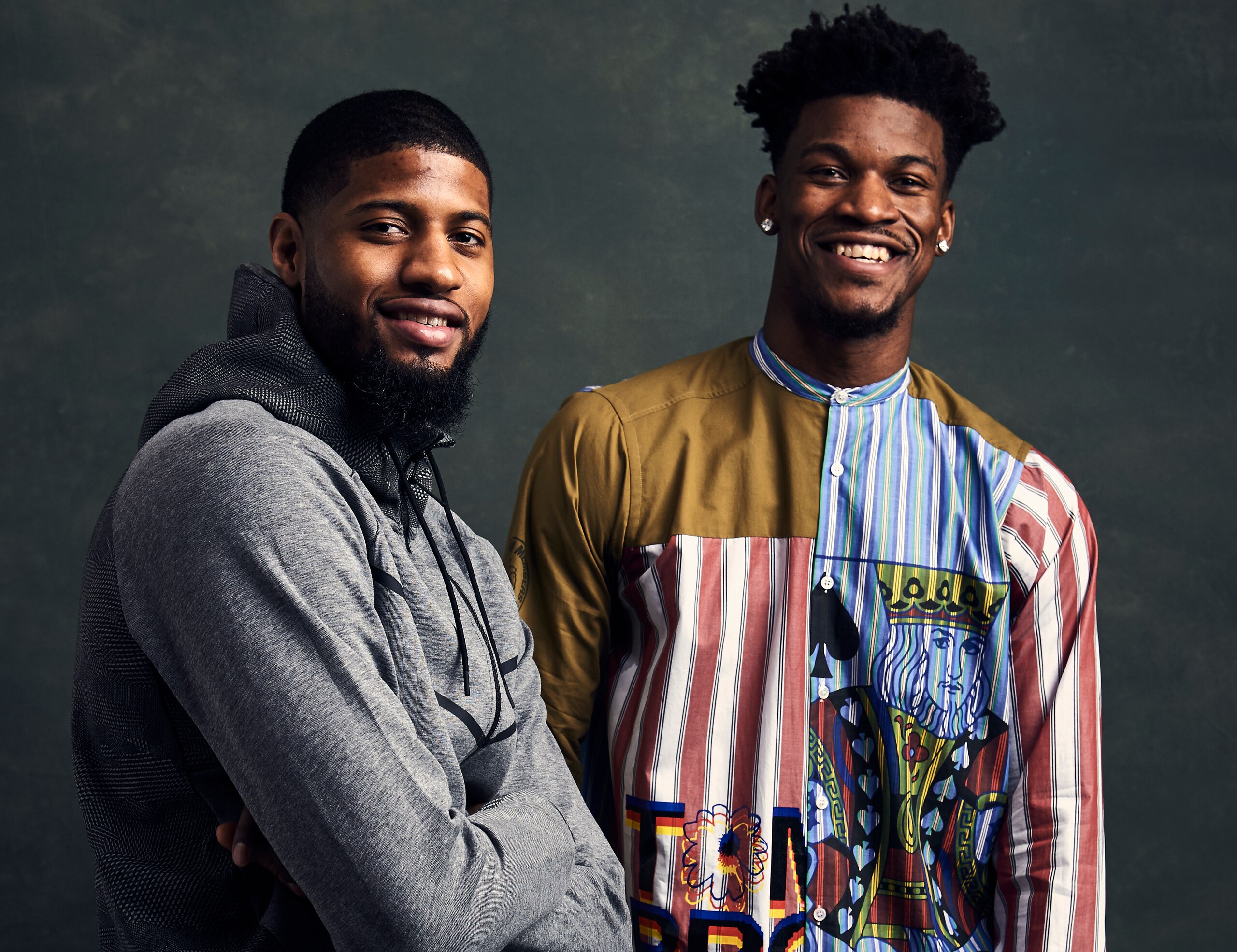
Shame on the Chicago Bulls and Indiana Pacers for not taking the Boston Celtics' pursuit of Gordon Hayward into stronger consideration before trading their respective stars.
Chicago tried getting the Celtics' No. 3 pick as part of a deal for Jimmy Butler prior to the draft, according to CSN Chicago's Vincent Goodwill. Boston declined. Indiana never received a "real offer" for Paul George from its Beantown rivals ahead of free agency, per ESPN.com's Adrian Wojnarowski (h/t CelticsBlog's Jared Weiss).
The Celtics' hardline stance is easy to forgive. They wanted to see how Gordon Hayward's free agency played out before forking over assets in a blockbuster trade.
Say what you will and joke as you must about Boston team president Danny Ainge. This stance isn't blasphemous. The Celtics aren't better than the Cleveland Cavaliers after landing just Hayward. Sub out him for Butler or George, and nothing changes. They needed two more marquee players to build their case as the flat-out Eastern Conference favorites before any games are played.
And so, they waited. Chicago and Indiana traded Butler and George for unimpressive returns, respectively—packages the Celtics could have trounced and trampled without including either of their four best players or Mr. Untouchable (Terry Rozier).
Knowing this hurts, but the Celtics will move on. They have moved on. They landed an All-Star wing. They flipped the expiring contract of Avery Bradley for Marcus Morris, another rangy wing who'll cost about one-third of what the former does in 2018-19. They are offseason winners. But think about what they could have been if the Pacers didn't deal George for the right to continue being almost average.
Could the Celtics have done anything that persuaded Indiana to wait for Hayward's decision before pulling the trigger? It doesn't matter. The Celtics are free to lament their botched dual-superstar coup even if that failure isn't on them.
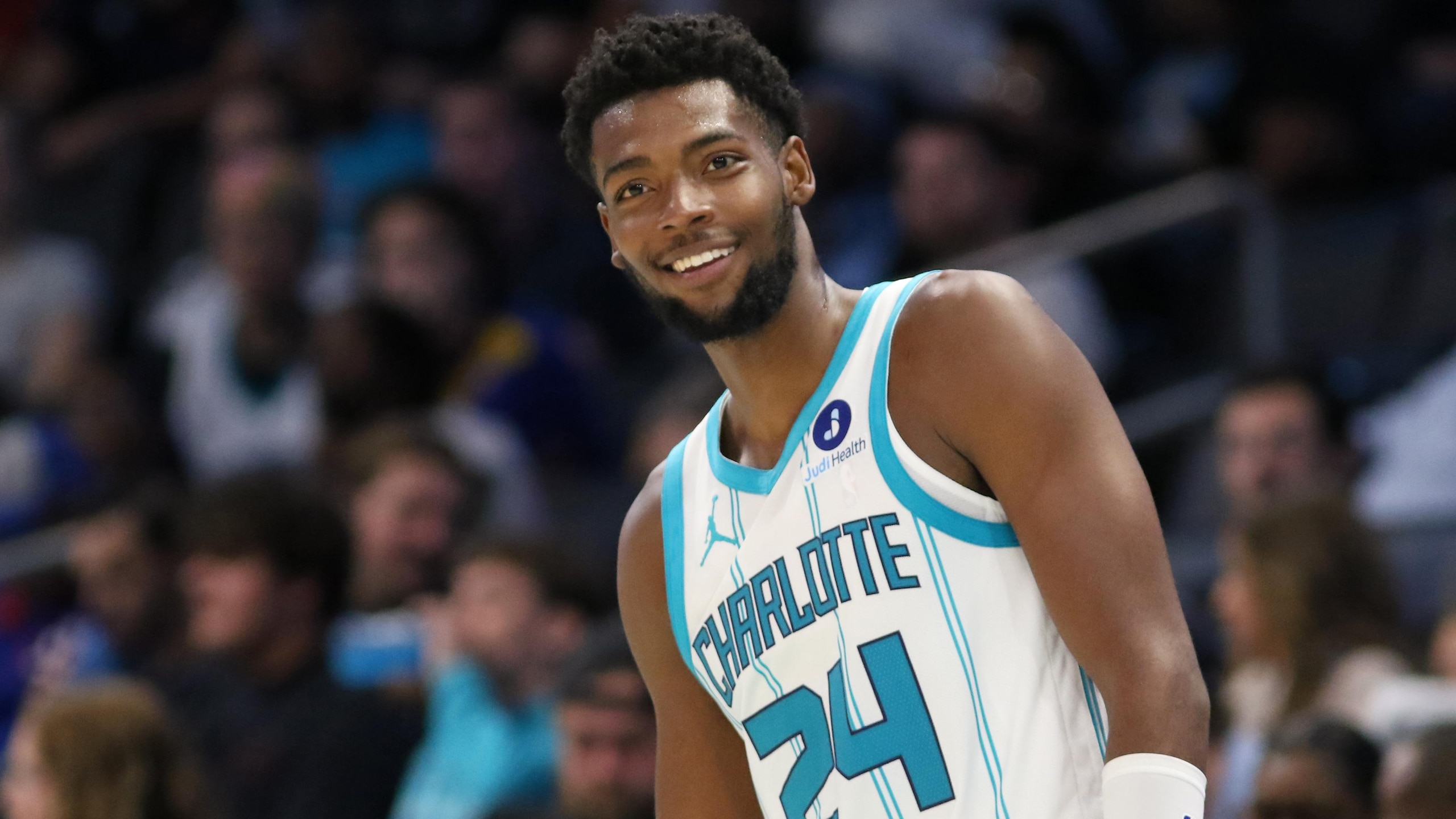
Charlotte Hornets: They Didn't Wait Out the Backup Point Guard Market
4 of 30
Michael Carter-Williams is long and might be able do some nice things within Steve Clifford's defensive schemes. The Charlotte Hornets needed a backup playmaker behind Kemba Walker, even after drafting Malik Monk.
This partnership works.
It did not have to exist so soon.
Charlotte scooped up the 2013-14 Rookie of the Year at the very beginning of free agency. He's not someone you sign that early, when the market is in its developmental stage. The Hornets likely could have waited without worrying about him being yanked off the board.
In the event someone else signed him, so be it. Kemba Walker may have endorsed him, but he's still Michael Carter-Williams. He doesn't advance your offensive cause. Chicago's production dipped whenever he took the floor last season, and his career 25.2 percent clip from deep doesn't fit the bill for a Charlotte team that's shooting more threes yet finished middle of the road in outside efficiency (18th) last year.
Carter-Williams doesn't make up for his lack of range with his rim assaults, either. He shot a ho-hum 43.6 percent on drives while with the Bulls, and of the 208 players to average more than two shots per game in the restricted area, his 50.6 percent success rate placed 199th.
Penalizing anyone for a lack of foresight in this past summer's turbulent climate is unfair. Few, if any, teams anticipated the price-tag crunch. Even by those standards, though, the Hornets acted before they needed to. They could have targeted Ian Clark. Or they could have considered baiting Milos Teodosic with a larger share of the non-taxpayer's mid-level exception after trimming some salary.
Instead, they settled on Carter-Williams too soon.
Chicago Bulls: Giving Up a 1st-Round Pick in the Jimmy Butler Trade
5 of 30
Either the trade market for superstars is ice-cold, or the Bulls don't know how to value a 27-year-old All-NBA stud who won't reach free agency for another two years.
Only one of these can be true given what Chicago received from the Minnesota Timberwolves in exchange for Butler. SB Nation's Ricky O'Donnell (correctly) sided with the latter:
"The trade with the Timberwolves is simply unforgivable. If the Bulls were going to trade Butler, they needed premium picks in this draft and future drafts. They had to give themselves more shots at acquiring another superstar who could carry this franchise like Jimmy Butler. Instead, the Bulls got none of that, trading only for an old point guard prospect who can't shoot, an electric athlete recovering from a torn ACL and a pick swap that moved them up just nine spots in the draft order."
Feel free to talk yourself into paying Zach LaVine big bucks in restricted free agency next summer when he's barely one year removed from an ACL injury. Go ahead and believe Kris Dunn has an offensive leap or 20 in him. Convince yourself that Lauri Markkanen's summer-league struggles were an anomaly, and that he's more than the Ryan Anderson of Kevin Loves.
Rose-colored goggle collectors won't face resistance here. Not on those players. The Bulls are taking a handful of risks. One or more of them could pan out in unknown ways. Viva la upside.
Under no circumstances whatsoever, though, should they have forfeited a first-round pick in this deal. Giving up the No. 16 selection is untenable. It means they changed out Butler for Dunn, LaVine and a nine-spot jump. That sounds so much worse than "Dunn, LaVine and the No. 7 pick."
Retaining No. 16—which became Justin Patton—wouldn't have reinvented the optics. But it would have been a start. And you know what happens if that mid-end first-round selection proved to be the Timberwolves' breaking point: They don't get Jimmy gosh darn Butler. Chicago would have lived. Maybe Boston inevitably offers the world after nabbing Hayward.
Worst-case scenario, the Bulls wind up stuck with a top-10ish player until a better offer comes along.
Cleveland Cavaliers: Letting David Griffin Go
6 of 30
Look no further than the Cavaliers as justification why we're embracing with the "What every team should regret" method.
Owner Dan Gilbert likely doesn't guilty about how things ended with general manager David Griffin. He made that much clear while introducing Griffin's successor, Koby Altman—a totally reasonable hire who has zero influence over Cleveland's self-reproach.
Griffin is the driving force here because of everything the Cavaliers might have avoided with him in the big kid's chair.
Do the rumors about LeBron James' interest in turning down his player option and bolting Cleveland next summer as a free agent subside? Absofreakinglutely not. But maybe he doesn't end up throwing shade where thrown shade is due. And maybe he doesn't end up, as USA Today's Jeff Zillgitt termed it, "frustrated and concerned" over the Cavaliers' direction.
Would Griffin have assuaged Kyrie Irving's desire to run his own team outside of Cleveland and free from James? Perhaps not. Counterpoint: Maybe so. As ESPN.com's Dave McMenamin, Ramona Shelburne and Brian Windhorst unearthed during their extensive reporting on Irving's trade demand, Griffin had basically rescued the Cavaliers from would-be disaster before.
Does keeping Griffin ensure the Pacers don't back out of a done deal for George, as the ESPN.com trio revealed they did? Probably not. But he sussed out creative packages with limited assets in the past. He of all people would have been the guy to rally a fourth team that sold Indy on keeping its word.
One or more of these logistical plights could have been sidestepped with Griffin at the helm smoothing things over. Instead, the Cavaliers are barreling toward next season with an unhappy point guard, a restless GOAT and a universe's gap separating them from the reigning-champion Golden State Warriors.
Dallas Mavericks: Nerlens Noel Contract Talks
7 of 30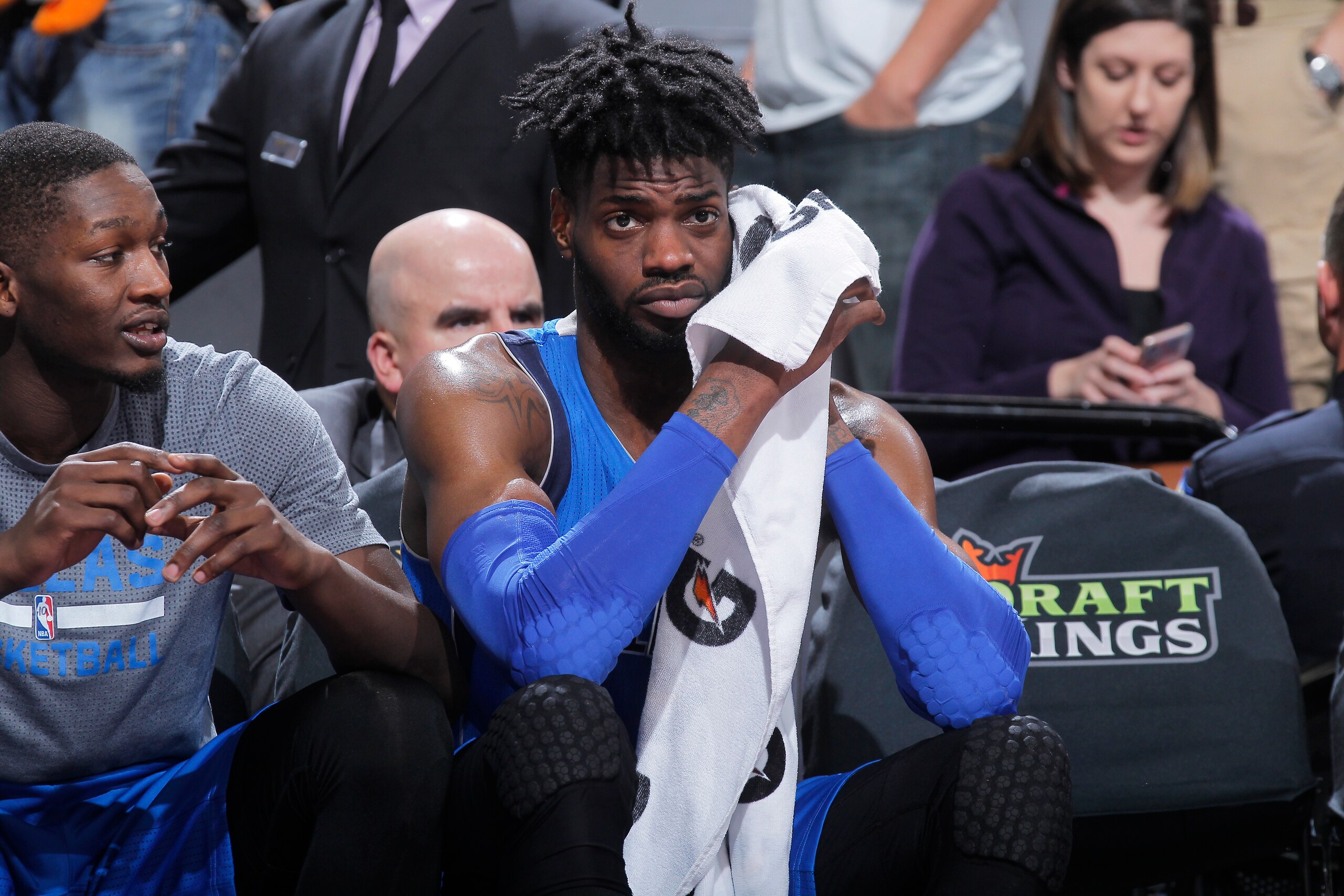
Nerlens Noel and the Dallas Mavericks remain at an impasse in contract talks, and a resolution isn't expected anytime soon, according to Eddie Sefko of the Dallas Morning News—which, yikes.
Inching closer to training camp with your center of the future floating around the restricted-free-agent market is light-years from ideal. The Mavericks are rebuilding by their own admission, and the 23-year-old Noel fits perfectly into that timeline—doubly so when Dallas isn't particularly flush with prospects under the age of 24.
At the same time, Noel's impending raise doesn't jibe with that window. Rebuilding squads are usually trying to cut costs and amass rookie-scale deals; they're not typically getting ready to bankroll a lucrative second contract.
A depressed center market isn't simplifying matters. No one else is throwing Noel near-max money, and the Mavericks aren't about to be the first, as The Ringer's Haley O'Shaughnessy unpacked:
"Had Noel been offered a maximum contract elsewhere, the negotiation would be straightforward: match or lose out. But his selling power was Kentavious Caldwell-Pope’d, which is to say, overestimated, misjudged, and misvalued. There is a short shortlist of teams still able to offer a payday, and with the Nets committing to Allen Crabbe, it’s whittled down to, basically, the Bulls. Without any other suitors holding roses, Dallas can play hardball and try to hold onto future cap space. By offering a shorter deal with a team option, or less overall money, the Mavericks would have more resources to fast-track their rebuild and wouldn’t need to overinvest in potential before it materialized."
Both sides are right. Noel's camp shouldn't bend to the point of breaking before absolutely necessary. The demand for centers who don't hoist threes isn't on the cusp of an upswing—not even when said tower switches better on defense than most other skyscrapers. But the Mavericks shouldn't overpay Noel just to spare his ego. A nightmarish deal clogs up the books and handcuffs their ability to make upgrades in the coming years.
Eventually, though, the relationship between player and team comes into play. Animosity will start to brew if the Mavericks get Noel to sign at what he deems a cut rate, or if he bets on himself and signs the qualifying offer so he becomes an unrestricted free agent in 2018. Dallas may be smart to hardball this negotiation, but a good business decision doesn't always make for the most amicable work environment.
Denver Nuggets: Laying Low on the Point Guard Front
8 of 30
Eric Bledsoe caught the Denver Nuggets' eye ahead of this year's draft, according to ESPN.com's Chris Haynes.
He is still a member of the Phoenix Suns.
George Hill popped up on the Nuggets' radar shortly after they reached an agreement with Millsap, per The Ringer's Kevin O'Connor. They were one feasible salary dump away from dredging up the requisite cap space.
He instead signed with the Sacramento Kings.
Irving is trying to escape Cleveland, and the Nuggets might be interested. But they're not willing to include Gary Harris and Jamal Murray in potential deals, according to Cleveland.com's Terry Pluto. Nor are they one of the suitors Wojnarowski said made official offers as of July 28.
On some level, you have to respect the Nuggets playing it cool. They landed Millsap. They have Nikola Jokic. They're good. But they have an opportunity to be a lot better—a chance they might not necessarily get beyond this season.
Jokic will be up for a big raise next summer if the Nuggets decline his team option and make him a restricted free agent. Harris is headed for restricted free agency, and his trade value will never be higher than it is now, before that big-time payday kicks in. Will Barton is set to hit the open market in 2018 as well, and Wilson Chandler could join him if he declines his $12.8 million player option for 2018-19.
Denver's core is about to get expensive no matter what. Consolidating some impending free agents and incumbent salaries (Kenneth Faried, Darrell Arthur) into an upgrade over Emmanuel Mudiay and Jameer Nelson helps keep that bubble from bursting a while longer.
If nothing else, the Nuggets know they have the flexibility and movable contracts to strike a trade now. They won't be able to say the same during the middle of next season, let alone by year's end, as their best assets near reinvestment points and the most sought-after trade targets get new homes.
Detroit Pistons: Hard-Capping Themselves So Early
9 of 30
The Detroit Pistons must be really high on Langston Galloway
Or just absurdly low on Kentavious Caldwell-Pope.
Dipping into the non-taxpayer's mid-level exception to pay Galloway hard-capped the Pistons, severely limiting what they could offer Caldwell-Pope while fleshing out the rest of the roster. They made this decision on the first day of free agency. The first day!
The Pistons didn't renounce their rights to Caldwell-Pope until nearly a week later, after the Marcus Morris-for-Avery Bradley trade, but they didn't even try feigning flexibility. They drew a line in the sand early.
According to SI.com's Jake Fischer, Detroit wasn't willing to go higher than a five-year, $80 million deal. That's fine. Caldwell-Pope isn't a superstar. His efficiency fell off a cliff in mid-January, and he posted Detroit's worst plus-minus over his final 36 appearances.
If only there was a reasonable explanation for his decline.
Oh, right: He was injured. He suffered a strained rotator cuff in his left shoulder, missed four games and never returned to form.
Prior to that Jan. 12 injury, Caldwell-Pope registered as the Pistons' best player. He put down more than 40 percent of his long balls, and no starter notched a better net rating. When he wasn't himself, the Pistons still turned to him for defensive stances against opposing point guards and pick-and-roll orchestration while Reggie Jackson (unsuccessfully) tried playing on one knee.
None of which means the Pistons needed to max out Caldwell-Pope. No one else did. He's an offensive project. He's also 24. Giving up on a quality player that young is an objectively bad decision. At minimum, they should have held off hard-capping themselves for a player like Galloway and let the Caldwell-Pope situation run its course. Even if the outcome was a short-term deal—like the one he signed with the Los Angeles Lakers—they would have been better off.
Golden State Warriors: Literally Nothing
10 of 30
Let's recap all that went right for the Warriors this summer:
- Locked down Stephen Curry for the next five years.
- Retained Andre Iguodala and Shaun Livingston.
- Re-signed Kevin Durant for $9.7 million less than he was eligible to make in 2017-18.
- Also retained JaVale McGee, Zaza Pachulia and David West.
- Purchased the rights to Jordan Bell for $3.5 million.
- Added Omri Casspi at the veteran's minimum.
- Brought in Nick Young for the taxpayer's mid-level exception.
- Watched the Cavaliers devolve into a borderline non-threat.
Now for the bad news:
- Ian Clark left for the New Orleans Pelicans.
- Gordon Hayward didn't beg to join them at the veteran's minimum.
Someday, somehow, something will go wrong for the Warriors. That day is about three to seven championships away, but it's en route. It has to be. Doesn't it?
Houston Rockets: The Knicks Aren't Completely Oblivious (As of Now)
11 of 30
It turns out the Rockets cannot, in fact, have everything. Not yet, anyway.
Please forgive those who believed otherwise. Their mixup is perfectly reasonable. The Rockets spent most of the offseason bathing in what-we-want, when-we-want, however-we-want-it perfection.
They poached Chris Paul for a package built around Patrick Beverley, spare parts and a first-round pick. They signed PJ Tucker for a bulk of the non-taxpayer's mid-level exception. They picked up Luc Mbah a Moute, one of the league's feistiest perimeter pests, at the veteran's minimum. They kept Nene on a palatable three-year, $11 million pact.
Life is good.
But the New York Knicks refuse to let it get better.
Carmelo Anthony still has no intention of waiving his no-trade clause for anyone other than the Rockets, per the New York Post's Marc Berman. That hard-nosed slant ties the Knicks' hands, but even the most stubborn stance has its limits. They aren't willing to take back the three years and $61.3 million left on Ryan Anderson's contract, which the Rockets must move if they're to complete this blockbuster without relinquishing Trevor Ariza or Eric Gordon.
The Rockets were seeking out third and fourth teams to lend helping hands as of mid-July, according to Wojnarowski, but they remain Melo-less as New York's refusal to surrender, while uncharacteristic, persists.
To think, the Rockets might not be able to turn what is now one of the NBA's worst contracts into their second All-Star of the summer. How will they ever get past that kind of pain?
Indiana Pacers: Jettisoning Paul George Before Free Agency
12 of 30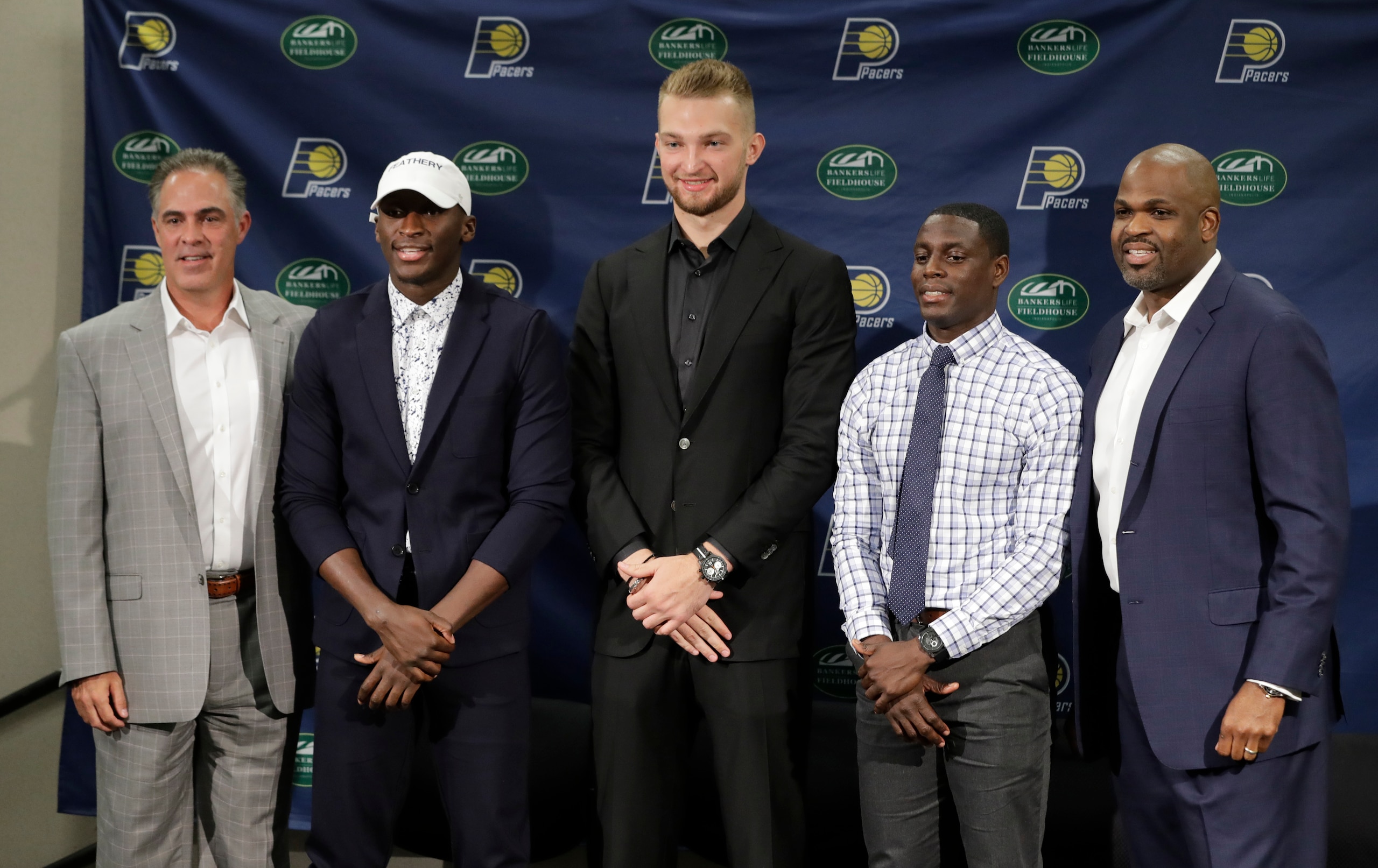
Is it possible to lose a trade twice?
Apparently, yes.
Indiana backed out of a three-team deal with Cleveland and Denver that would have brought them Harris and the No. 13 pick in exchange for George. That offer trumps the heck out of what the Pacers accepted from the Oklahoma City Thunder—an overpaid Victor Oladipo and former lottery pick Domantas Sabonis.
Harris alone was worth the green light. He isn't long, but he busts his behind on defense, can run some pick-and-rolls and knows how to thrive off the ball. Inbound fits don't get more seamless. And with the free-agent market collapsing onto itself, his next contract might come cheaper than Oladipo's four-year, $84 million sticker price. It doesn't help the optics that the No. 13 pick, which Denver sent to the Utah Jazz, became summer-league standout Donovan Mitchell.
If the Pacers weren't enamored with this package—they should have been—or irreversibly against sending George to Cleveland, they should have waited. That Oklahoma City deal wasn't going anywhere. General manager Sam Presti trades Oladipo and Sabonis for George any day of the week and twice on Wednesdays.
Pacers president Kevin Pritchard could have let the Celtics' pursuit of Hayward reach its conclusion and then make a decision. His itchy trigger finger would have been easier to spin if the boys in green whiffed on their top target, but they didn't. Hayward chose Boston. And in doing so, he increased the likelihood Celtics president Danny Ainge would have coughed up the moon for George—sort of like he tried to do at the trade deadline, per Lowe.
Agenda-driven leaks happen. We don't know for certain whether the Celtics were willing to pay a monster price in February. But signing Hayward gave them an incentive to open their treasure chest of assets. The Pacers could have, and should have, waited to see what that entailed.
Los Angeles Clippers: Losing Chris Paul
13 of 30
News flash: You can be relatively impressed with how the Clippers rebounded from Paul's departure and acknowledge that losing him activated their nightmare scenario.
Letting go of a top-10 superstar is never a rewarding experience. Don't twist the Clippers' hesitation to offer him a five-year max into something it's not. Ditto for head coach Doc Rivers' sentiments after the fact.
"We're going to have ball movement," he said when asked about life without Paul, per USA Today's Kevin Spain. "That's one of the things, for the most part, that I've always preached."
Chris-Paul-was-part-of-the-problem truthers are free to pump themselves full of chill pills. The Clippers will be measurably worse without the 32-year-old superstar.
Many of the ill effects might not be felt on the offensive end. That much is accurate. They scored like a top-three bucket-getter when Blake Griffin played without him last season. But they didn't do the same in 2015-16, when they instead fared like a bottom-two offense, according to NBAWowy.com. And they didn't pack on points with top-10 efficiency during Griffin's solo acts in 2014-15.
Sample sizes matter, and Griffin has seldom needed to log extensive time without Paul. But that's part of the point. So, too, is the Clippers' defense independent of Paul. They've rarely held up on the less glamorous end without him.
Something, somewhere, will give. Patrick Beverley may upgrade the defense while the offense finds its collection of second-tier perimeter playmakers cannot carry a premier attack. Or the Clippers' defense could crater with Griffin and Danilo Gallinari logging heavy minutes together.
Whether Paul's next contract—which he hasn't yet signed after opting in to join Houston—would have missed the mark is irrelevant. Losing him was never part of Plan A. Los Angeles is trying to stay afloat without him before it was supposed to.
Los Angeles Lakers: Selling So Low on D'Angelo Russell
14 of 30
Lakers team president Magic Johnson wasted little time in changing the locks after shipping D'Angelo Russell to Brooklyn.
"D'Angelo is an excellent player," he said, per ESPN.com's Baxter Holmes. "He has the talent to be an All-Star. We want to thank him for what he did for us. But what I needed was a leader. I needed somebody also that can make the other players better and [also] somebody that players want to play with."
Russell responded to Johnson's comments with poise and tact, because, at 21, he apparently needed to be the adult in this situation. This critique of his game and value is lazy. Russell has his warts, and the Lakers were well within reason to use him as a sweetener in the Mozgov trade. But say that.
Admit that you sold low on a top-two prospect because you're placing more stock in cap space. Don't peddle this as something it's not—as if Russell's demeanor and occasionally selfish play are more than incurable growing pains, and as if the Lakers ever really put him in a position to aim for better.
Lonzo Ball could be an immediate upgrade. Los Angeles could parlay next summer's cap flexibility into George or James...or both. All will be forgotten and forgiven then.
Yet Ball could also flop while the Lakers strike out in free agency, and they'd still have a leg on which to stand. Sacrificing Russell was the price of maneuverability, and they paid it.
Own that.
Memphis Grizzlies: JaMychal Green Is Still a Free Agent
15 of 30
JaMychal Green's status with the Memphis Grizzlies is eerily similar to Noel's tug-of-war with the Mavericks—only potentially more destructive.
"I'm looking at two offer sheets and sign-and-trades," Green's agent, Michael Hodges, told the Commercial Appeal's Ronald Tillery on July 4. "Seems to us Memphis is going in a different direction."
The Grizzlies have yet to go in a different direction—unless counting on a healthy Chandler Parsons, rookie Ivan Rabb and Brandan Wright, plus some James Ennis and Rade Zagorac, to man the 4 spot qualifies as choosing your own fate. They need Green.
They also need to keep his next contract in check. They're not on the verge of cannonballing into the luxury tax, but a market-value deal for Green—say between $10 and $12 million annually—ferries them past the $115 million marker. Paying that much for a non-contender doesn't sit right.
Memphis does hold all of the leverage this late in the game. Only the Bulls, Philadelphia 76ers and Phoenix Suns can drive up Green's salary demands without ancillary moves, and not one of them has the minutes and/or timeline to shell out beaucoup bucks for a 27-year-old power forward.
Still, return-by-default doesn't equate to the best reunion. The Grizzlies tendered an offer on July 1, per Wojnarowski, only to have Green's rep infer imminent divorce three days later. Even if this ends with him back in Memphis, the unsettling fog from these negotiations, however thin, may continue to linger.
Miami Heat: Waiting on Gordon Hayward
16 of 30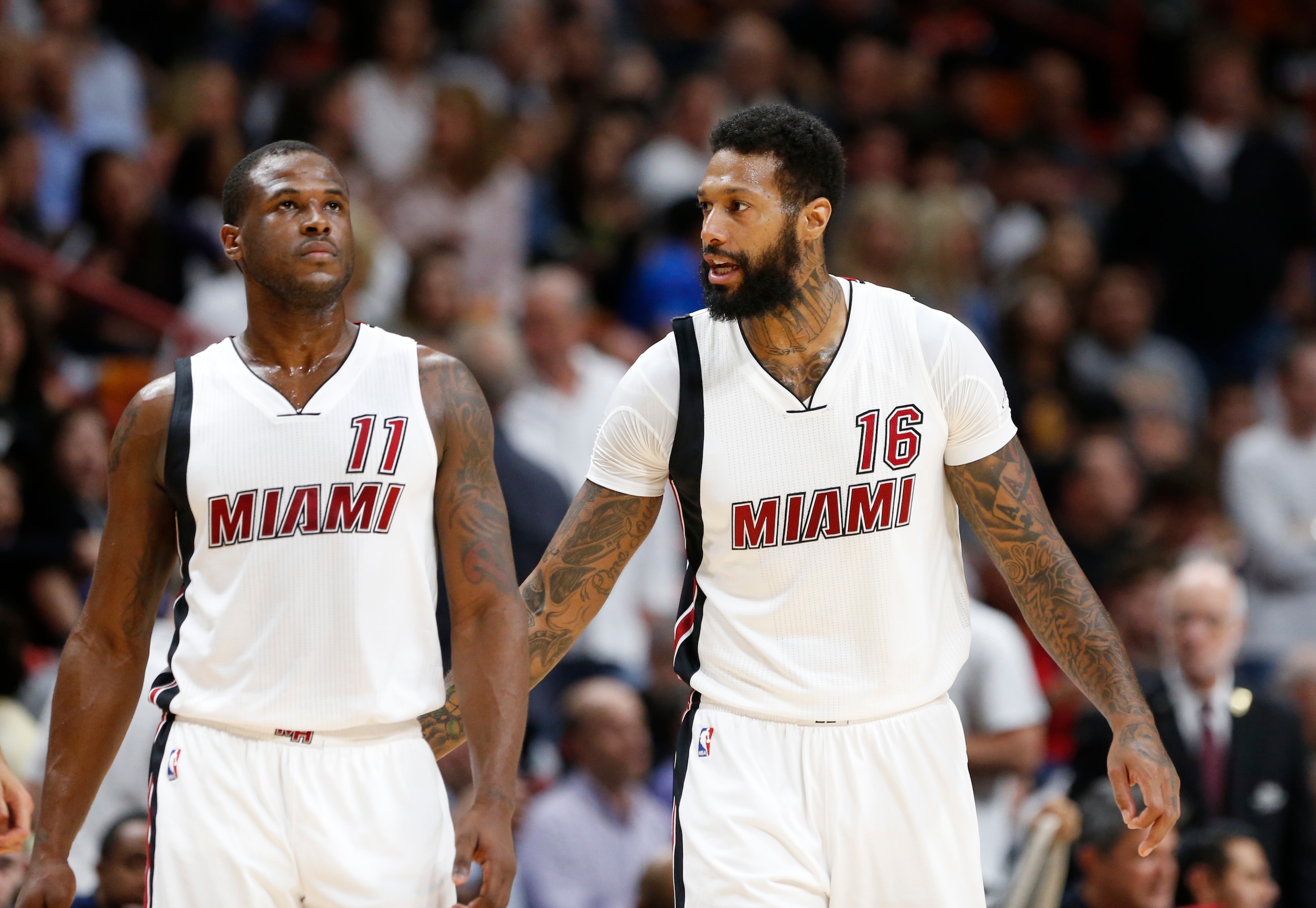
Congratulations to the Miami Heat for being one of the three finalists in the Hayward sweepstakes. They missed out on the grand prize, but they did earn a participation trophy...and the right to pay James Johnson, Kelly Olynyk and Dion Waiters a combined $162 million over the next four years.
Each of these contracts is acceptable on its own. Johnson and Waiters owned the Heat's best per-game plus-minus scores during their 30-11 finish, while Olynyk is a legitimate stretch 5 with sneaky-good vision and sideway amble.
Loop all of them together, and the outlook gets dicey.
Miami ran roughshod over the rest of the league for a half-season by leveraging small-ball mixed with unreal spacing. Almost half of its 2017-18 payroll is now wrapped up in bigs; Johnson, Olynyk and Hassan Whiteside will collectively cost $48.3 million.
Fast forward to 2018-19, and the Heat's cap sheet mushrooms into unmanageable territory. Tyler Johnson's hit explodes to $18.9 million, leaving them with $56.2 million allocated to him and this summer's three biggest expenditures.
Stir in salaries for Whiteside ($25.4 million) and Goran Dragic ($18.1 million), and the Heat will have $97 million tied to their six-player core next summer, with new deals for Josh Richardson (restricted) and Justise Winslow (extension-eligible) coming down the pipeline.
Abandoning pursuit of Hayward wouldn't have guaranteed the Heat discounts on the Johnson and Waiters contracts. Nothing suggests they paid some sort of wait-and-see fee. But they bet an awful lot on two wild cards remaining the best-ever version of themselves while assuming Olynyk enhances rather than hamstrings their play style—a series of gambles they may not have needed to settle on if they didn't use the first part of free agency to unsuccessfully woo Hayward.
Milwaukee Bucks: Front Office Weirdness
17 of 30
Unrest in the front office is never comforting, but the Milwaukee Bucks' recent upheaval infers a wayward sense of confusion and dysfunction.
First, the Bucks lost general manager John Hammond, who oversaw the selection of Giannis Antetokounmpo. A little more than three weeks later, they named Jon Horst as his successor—but only after passing over Justin Zanik, now of the Jazz, who they supposedly tabbed as the GM-in waiting, according to Lowe and Windhorst. They continued:
"Horst might end up being a wonderful choice; those who have worked with him over the past dozen years in Detroit and Milwaukee speak highly of him. But the league reaction was bewilderment at such a move at this vital moment in the franchise's history. There were quite a few 'Jon who?' comments in rival front offices when his hiring was announced.
"Even Horst was surprised by the move. According to sources, the job was already earmarked for him when he was summoned to see the owners two weeks ago in New York, even though he didn't know he was a candidate. The team began planning a news conference before Horst had even signed his deal."
Imagine going from the director of basketball operations to ownership's top general manager choice without ever knowing you were up for the gig. What a trip.
Milwaukee's quirky general manager search shouldn't impact the quality of play on the court. But Antetokounmpo is entering the first season of a (slightly) discounted extension, and teams are already hatching escape plans on his behalf, per Wojnarowski (h/t Jordan Heck of Sporting News).
Behind-the-scenes volatility does nothing to simplify what figures to be a long, rumor-rife couple of years.
Minnesota Timberwolves: Not Adding Enough Guaranteed Shooting
18 of 30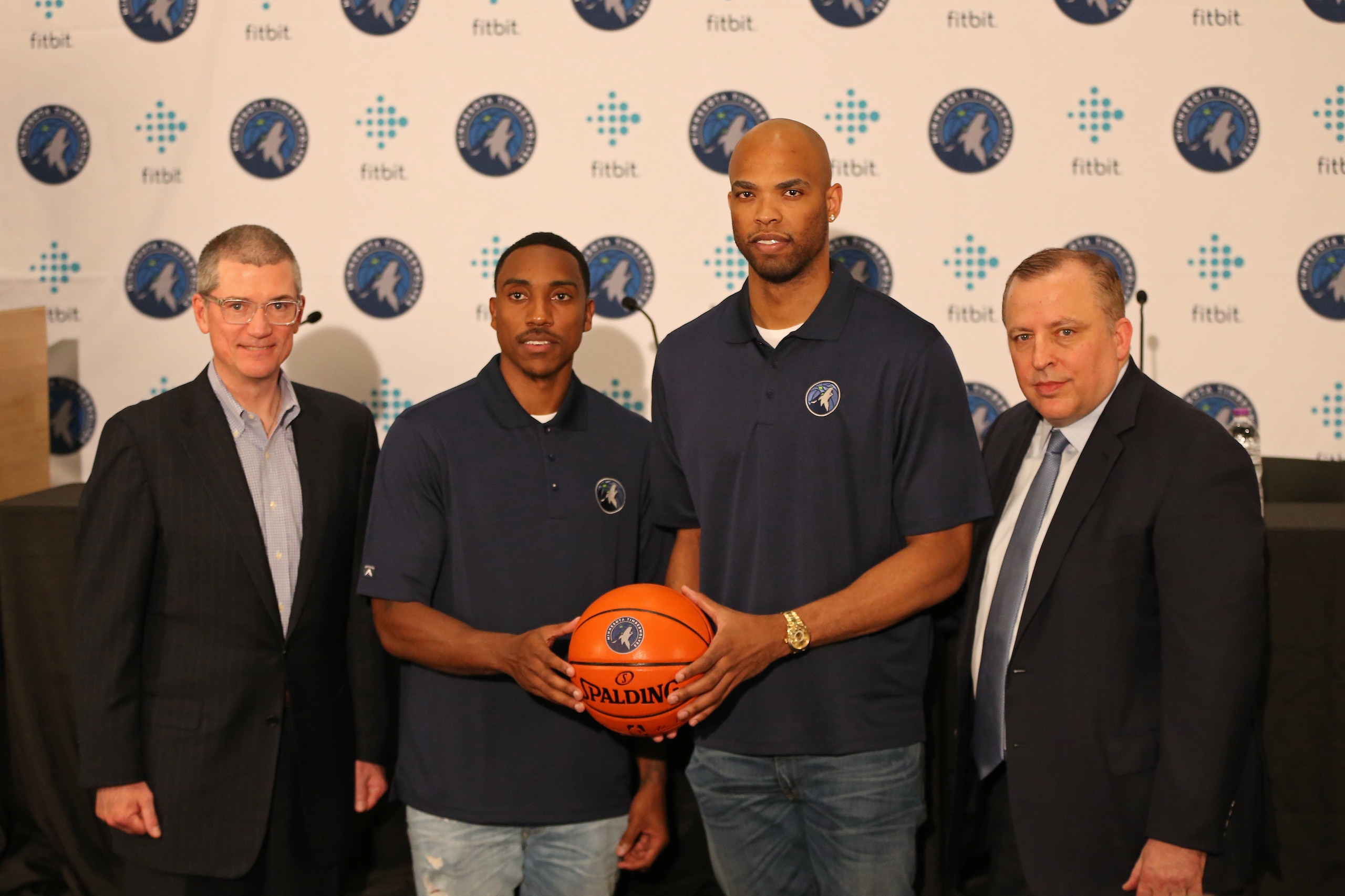
Chances are the Minnesota Timberwolves have enough shooting to get by, and that concerns to the contrary are being overblown by worrywarts and hot-takers.
And yet, after one blockbuster trade, moving the incumbent starting point guard and two pricey free-agency additions, a bundle of coulds and shoulds isn't good enough.
Butler should be a floor-spacing boon next to Jeff Teague, Karl-Anthony Towns and Andrew Wiggins, but he has never drilled threes at a league-average rate in consecutive seasons.
Wiggins could build upon his career-best 35.6 percent clip from downtown, but what does that mean? His personal high fell below the NBA mean (35.8), and he isn't used to spending a ton of time off the ball. More than half of his baskets went unassisted last season. His stroke could falter as he adjusts to playing beside a larger swath of ball-dominant running mates.
Gorgui Dieng should continue his gradual improvement from the perimeter, but what if he doesn't? Must head coach Tom Thibodeau stagger his minutes with Taj Gibson to prevent the Timberwolves from ever playing without a single elite three-point shooter at the 4 and 5?
Towns could render all of the frontcourt hiccups moot, but introducing another non-shooter like Gibson into the rotation may also mess with his mojo. Minnesota saws its offensive production increase last season whenever he didn't play with Cole Aldrich or Nemanja Bjelica, neither of whom effectively stretched opposing defenses.
Everything might still work out in the Timberwolves' favor. They employ a lot of talent. They just don't have the offensive certainty that's supposed to come with it.
New Orleans Pelicans: "What the Timberwolves Said"
19 of 30
Similar to the Timberwolves, the Pelicans needn't lose too much sleep over their spacing concerns. They might yet have the juice to leave last year's below-average three-point-attempt rate (16th) and accuracy (19th) behind them.
DeMarcus Cousins swished 36.1 percent of his triples in 2016-17 amid career-high volume. Anthony Davis has never cleared a 33 percent success rate from beyond the arc, but he's shooting better than 42 percent between 16 feet and the three-point line since 2014-15.
Jrue Holiday will shoot better than 30.4 percent on spot-up threes. He splashed in 35.9 percent of those catch-and-shoot threebies for 2015-16 and 38.2 percent for 2014-15. A full year playing off two of the four best behemoths on the planet will not make him worse.
Rajon Rondo has even spent the past two seasons converting his fair share of treys. He's shooting 39.2 percent (83-of-212) on spot-up three-balls since 2015-16. Ian Clark, meanwhile, drained 42.3 percent of his standstill triplets during his final go-round with Golden State. And who knows, maybe Solomon Hill returns to 2015 postseason form with two megastars and a pair of crafty ball-handlers feeding him open looks. It could happen.
But the Pelicans could also stumble under the weight of a what-if infestation.
What if Holiday never grows accustomed to working off the ball in volume? What if Davis doesn't consistently take his jumper past the rainbow? What if Rondo's past two seasons are anomalies? What if Clark doesn't enjoy the same number of uncontested gimmes he did on the Warriors? What if Hill never develops into a reliable three-point threat?
Unaccommodating finances didn't leave the Pelicans with an endless slate of options. This roster is about the best they could assemble without striking gold on salary dumps and stretching Omer Asik. But that doesn't negate the shooting concerns left to chance—or the potential impact this roster's uncertainty could have on Cousins' free agency in 2018.
New York Knicks: Failing to Preserve Cap Space
20 of 30
Consider this another way of saying the Knicks should not have shelled out $71 million for Tim Hardaway Jr.
Never mind the subatomic odds he has of living up to that jackpot. And forget that they ultimately gave him around $23 million more than the Hawks were willing to pay, per Lowe.
Burning through cap space at all is the real issue here.
Aggressive buyers will invariably pay to lop off taxing deals. The Lakers deeded over 2015 No. 2 pick D'Angelo Russell to get out from under Mozgov's contract. The Knicks could have been that salary-dumping junkyard for other teams during the middle of next season and leading into the summer. They could have leased out cap space in exchange for picks, prospects or both as they navigated their latest might-be rebuild.
Offers eventually would have been there waiting for them. Cap space is going to be that sparse, and thus pricey, leading into next July, as squads continue to react and rebound from 2016's punch in the face.
The Knicks no longer have the flexibility. They sit comfortably over the $99 million salary cap after signing Michael Beasley, and no Anthony trade scenario is going to save them that much money.
Opening a bad-contract storage facility ahead of next summer is even out of the question. The Knicks could have more than $105 million on the books in 2018-19, with no foolproof path to clearing the decks. They either need to keep Anthony and hope he leaves $27.9 million on the table to explore free agency or trade him solely for a bundle of expiring contracts.
Good luck on both counts. Anthony wouldn't be in New York right now if the Knicks had a salary-slicing return at their disposal, and in the current cap climate, he'll be lucky to make back that money in fewer than three seasons on the open market.
Solid cap management, Knicks.
Oklahoma City Thunder: Russell Westbrook's (Apparent) Patience
21 of 30
Acquiring George knowing he might be a one-year rental was, in theory, supposed to alleviate any concerns Russell Westbrook had about the Thunder's future and persuade him to sign an extension before 2017-18 is underway. The dice roll may still have its intended effect.
For now, Oklahoma City is waiting, which is all it can do—even if Westbrook doesn't put pen to paper by opening night, as Daily Thunder's Weston Shepherd wrote:
"The idea of losing Westbrook for nothing (not to mention Westbrook AND George) is hard to stomach, but it’s a reality that’s on the table until he signs his name on the dotted line. The roster is too talented to tear it all down prematurely, which leaves one route forward—risking it all and letting it ride. The results could be disastrous, but sometimes gambles pay off handsomely. I don’t know that Presti has any other choice."
This outcome is one the Thunder weighed long before dealing for George. They don't complete the trade without thinking about the worst-case scenario, and without being committed to seeing this experiment through in spite of it.
Holding serve is all the Thunder have now. The wait may last until tomorrow, or next week, or next month, or until the following July. They have no viable option outside of enduring it.
And if everything goes to hell—if both George and Westbrook leave—they cannot be ridiculed for trying to create their own luck. This all-in play is admirable. But compliments and applause aren't long-term commitments from top-seven superstars.
This absence of an answer from Westbrook, and the idea that Oklahoma City still hasn't done enough to win him over again, will sting until it doesn't.
Orlando Magic: Lack of Floor-Spacing Upgrades
22 of 30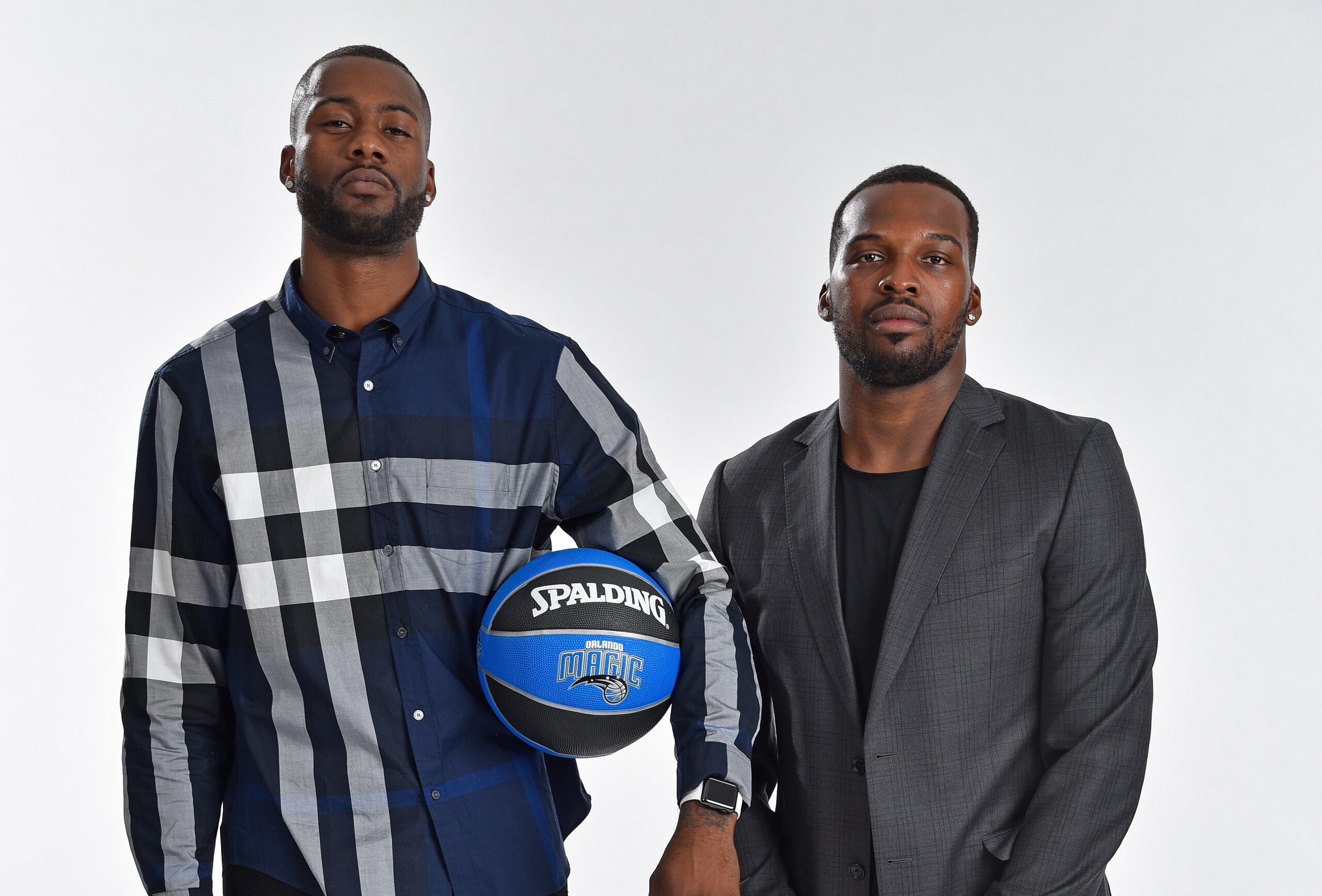
How should a team respond to finishing 29th in long-range accuracy, 26th in wide-open three-point percentage and dead last in spot-up efficiency?
By adding proven shooters.
Ergo, the exact opposite of what they Orlando Magic did.
Sixth overall pick Jonathan Isaac, backup point guard Shelvin Mack and smothering ball-defender Jonathon Simmons headline Orlando's list of offseason accessions. And wouldn't you know it, not one of them addresses the team's foremost concern, as Bleacher Report's Adam Fromal lamented:
During his freshman season at Florida State, Isaac connected at a 34.8 percent rate from beyond the (shorter) arc, and he took only 2.8 long-range attempts per game. Mack is coming off a campaign in which he shot 30.8 percent from three-point territory and dropped his career mark to 32.1 percent. Simmons posted a miserable 29.4 percent clip as a sophomore with the San Antonio Spurs.
Somehow, the Magic may have compounded their biggest offensive problem rather than solving it.
Getting Marreese Speights helps a little bit. He's shooting 37.5 percent from distance on 2.2 attempts per game since 2015-16. But he spent his last two campaigns with the Clippers and Warriors—a pair of top-four offenses that, unlike the Magic, have surrounding playmakers and firepower to churn out high-quality looks for their non-focal points.
Philadelphia 76ers: Missing the Boat on KCP
23 of 30
Singling out Amir Johnson's one-year, $11 million deal is a harbinger of how successful the Sixers have been this summer. And, truth told, nothing is wrong with his contract.
Johnson isn't worth $11 million annually in a vacuum, but the Sixers are assuming zero risk. If Johnson flops, he comes off the books at the end of the season. If he hits, like he did for the Celtics, they get a decent pick-and-roll finisher, mobile-enough rim protector and roving switcher who now sports three-point range. His skill set will come in handy, even with the team's congested 4-5 rotation, as Philly seeks to make an impromptu playoff push.
Of course, hindsight is all about what could have been. And had the Sixers holstered the cap space they invested in Johnson on July 1, they could have been major players for Caldwell-Pope when the Pistons renounced him not a week later.
Journeying down that rabbit hole doesn't come without its collateral damage. Swapping out Johnson's $11 million salary for Caldwell-Pope's $17.7 million hit takes the Sixers' current wiggle room from $15 million-plus to less than $9 million. That difference could matter when they go to renegotiate and extend Covington in November.
This changes nothing. The Sixers could have let Covington's raise ride out until next summer if their remaining coin wasn't enough. Taking a flier on Caldwell-Pope would have been well worth the risk.
Besides, if ever there was a time to throw a coveted asset like Covington to the field, next summer is it. Multiple people around the league expect contract-seekers to get "squeezed" in 2018—the residual offshoot of 2016's market misread, per MacMahon and Marks. Covington might end up being cheaper in the long run depending on how the buyer's pool shakes out.
Indeed, all of this is very "My wad of hundreds battered the spine of my wallet." But adding Caldwell-Pope to a rotation that already includes Covington, Joel Embiid, Markelle Fultz, Richaun Holmes, JJ Redick, Dario Saric and Ben Simmons would've been something special—a power move worth the eulogy for its nonexistence.
Phoenix Suns: Drawn-out Kyrie Irving Soap Opera
24 of 30
The Suns need the Cavaliers to trade Irving. It doesn't matter where or how. They can even keep him, as sources told Bleacher Report's Ric Bucher remains an option.
Whatever the Cavaliers do with Irving, the Suns need them to do it, swiftly and decisively, so this bizarre dalliance between them and the idea of Irving can end.
Phoenix is among the teams that have made a definitive pitch to Cleveland, per Wojnarowski. That in itself is disingenuous to the rebuild. Mortgaging part of the farm for an offense-first player so you can pair him with the offense-first Devin Booker is a bad decision.
Irving, at 25, fits the franchise's timeline better than the 27-year-old Bledsoe, but at what defensive cost? Would a Booker-Irving 1-2 punch ever transform into a collaborate plus on the less glamorous end? Are the offensive gains worth any of this trouble?
Remember: Cleveland dropped in what would have been a league-worst 90.7 points per 100 possessions last season with Irving as the lead distributor...alongside Kevin Love. The right team can, and will, build an above-average attack around him, but that formation is far from a given.
Lowballing the Cavaliers doesn't make this any better. (OK, maybe a little.) The Suns are unwilling to part with Booker or Josh Jackson in negotiations, according to Pluto. They'll need to pull a generous third party out from the depths of Planet Not Gonna Happen or pray the Cavaliers are exceptionally high on Dragan Bender's sophomore ceiling to become anything more than someone else's blockbuster accessory.
Declaring Booker and Jackson untouchable—if they're even that—won't slow the rumors. Permitting this to drag out until training camp, or opening night, is no way to begin the new phase of your rebuild (entitled: Actually Rebuilding Now).
Some players might be worth the headache. Irving, relative to the Suns' supporting cast and bargaining-table posture, is not one of them.
Portland Trail Blazers: Overloading the Frontcourt
25 of 30
Al-Farouq Aminu. Zach Collins. Ed Davis. Moe Harkless. Meyers Leonard. Jusuf Nurkic. Caleb Swanigan. Evan Turner. Noah Vonleh.
Yeah, the Portland Trail Blazers have too many frontcourt bodies.
Aminu, Harkless and Turner can get by at the 3, but they should all be getting intermittent spin at the 4. Yet, as of now, they'll be lucky to avoid getting stationed at the 2.
Assuming they needn't factor into the power forward carousel (they should), the Blazers are still left to wade through six different options at the 4 and 5. And if they ticket Nurkic as the primary big from the get-go, they're looking at five could-be rotation players to fill, say, 1.5 positions' worth of playing time.
This problem would be an enviable one if the Blazers were built to be interchangeable. They're not. Davis and, if they're lucky, Swanigan are the only switch-friendly options among bigs, and they don't have a wealth of shooting beyond their backcourt.
Pat Connaughton, Damian Lillard and CJ McCollum are the only returning players who knocked down threes with above-average efficiency last season. Pencil in Harkless for another career performance and Leonard for a turnaround, and the Blazers still don't have the look of a well-rounded squad.
Lillard and McCollum will elevate the offensive oomph of some unexpected faces. Stars usually do. But they cannot balance out the frontcourt whirligig. So while the Blazers are deep, they tout what feels like the wrong brand of depth.
Sacramento Kings: Leaning a Bit Too Far into a Cultural Overhaul
26 of 30
Take the Knicks' offseason, swap out the inexplicable Hardaway contract with deals for high-character veterans, and you have the Kings' summer in a nutshell.
Hill, Vince Carter and Zach Randolph will run about $40 million next year, which is money Sacramento could have funneled toward Project Nets West. And though they're valuable figures at the center of a cultural reinvention, they tack on unnecessary wins to the bottom line.
Philly owns the rights to Sacramento's 2019 first-rounder free and clear, giving the Kings a one-year window in which to tank for a transcendent draft pick. Waiting until 2020, when the franchise might be stable enough to handle such a stark undertaking, creates a bunch of problems—mainly the suddenly divergent timelines of youngsters like Willie Cauley-Stein and Buddy Hield, who are coming up on raises.
Some will maintain this approach won't completely ruin the Kings' tank. I'm one of them. I gave them a B+ in my free-agency grades. Carter, Hill and Randolph won't steal that many losses from under their noses.
But the criticism attached to their cap allocation is fair. They didn't need to lean this far into locker-room morale-boosters. Passing on Randolph while signing Carter and Hill would have left them with more than $15 million to use for salary absorption and the picks/prospects incumbent of it.
Maybe they take on Carroll instead of the Nets. Perhaps another opportunity arises midseason. The Kings will never know. Barring salary dumps of their own, they'll have to wait until next summer before converting cap space into picks and cost-controlled assets they've long needed.
San Antonio Spurs: Pau Gasol's Contract
27 of 30
Paul Gasol's decision to opt out of his contract was supposed to portend some dominant, perhaps CP3-shaped splash. The San Antonio Spurs, it seems, thought so, too.
Why else would they willingly hand Gasol a three-year, $48 million deal? It had to be an unspoken agreement, right? Compensation for the flexibility he initially chiseled out?
Gasol is coming off a fine season, his first with the Spurs. He found nylon on 53.8 percent of his 104 three-point attempts, both of which were career highs, and panned out as a stationary rim protector. He's also 37. He should not be the third-highest-paid player on any contender.
The odds of Gasol finishing out this deal are slim. Or maybe not. We clearly know nothing. He has a partial guarantee in 2019-20 for $6.7 million—an unsettling number that feels a bit too high to jettison as dead cap.
Overpaying Gasol might be the Spurs' way of nodding toward LaMarcus Aldridge's return in 2018-19, for which he holds a player option worth $22.3 million. The prevailing assumption is he'll enter free agency, but the market is awkward right now. That lump sum could appeal to him. And if he's coming back, another year of Gasol at full price before flexing muscles during 2019 free agency is a semi-sensible course.
Then again, not really. The Spurs are supposed to be chasing the Warriors. Devoting more than 15 percent of the salary cap to someone who doesn't help you one bit against them is a weird way to do that.
Toronto Raptors: Losing BOTH Patrick Patterson and PJ Tucker
28 of 30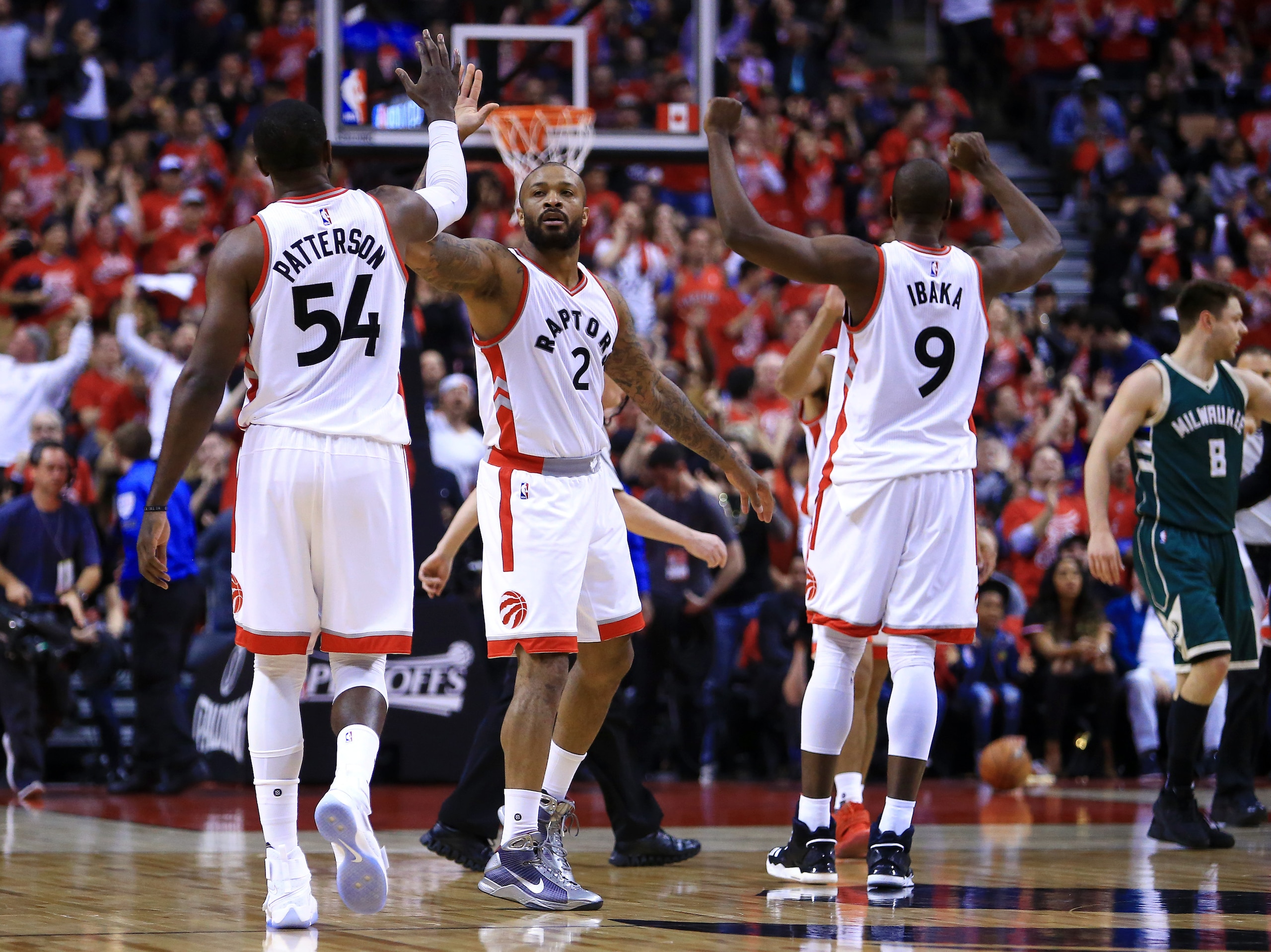
Is it cool to simultaneously love and loathe a team's offseason? Because that's where I'm at with the Raptors.
Team president Masai Ujiri did well with his back up against the luxury tax. He kept Serge Ibaka and Kyle Lowry, then dumped Carroll and Cory Joseph to open up the full non-taxpayer's mid-level exception. He turned that into CJ Miles, one of the summer's biggest steals.
Toronto remains within striking distance of 50 wins—no small feat when ducking the tax prompted the losses of Carroll, Joseph, Tucker and Patrick Patterson. But that might have just as much to do with Eastern Conference stagnancy.
Parse the depth chart, and the Raptors don't look any better. They don't even look the same. They feel inferior.
"My big concern is how Toronto will fill the minutes Ibaka doesn't play at power forward," ESPN.com's Kevin Pelton wrote. "Miles is dramatically undersized for the position, meaning Toronto might be counting on second-year player Pascal Siakam taking a big step forward. How well the Raptors fill those minutes might determine how much they drop off this season, if at all."
Miles' 6'6" frame will make a difference. The Pacers used him to guard power forwards oftentimes before George, and he's an under-the-radar post defender. But the Raptors' defensive versatility was shaky to begin with, in large part thanks to Carroll's disenchanting tenure. Replacing two multi-position defenders like Patterson and Tucker with Miles alone doesn't cut the mustard.
To be clear: The Raptors weren't faced with attainable contingencies. Leaping into the luxury tax would have allowed them to keep Patterson and Tucker but added a wrinkle to the Miles sign-and-trade. Their departures were more about Ibaka, and looking at their price points compared to his (three years, $65 million), it's fair to wonder how much better off they are rolling with him.
Utah Jazz: Gordon Hayward's Exit; Duh
29 of 30
Don't bother trying to put a positive spin on Hayward's departure. It doesn't exist, because there isn't one.
Utah lost a top-25 player without receiving anything in return. Worse, his exit came after the Ricky Rubio trade and Joe Ingles' four-year, $52 million deal—moves aimed at strengthening Hayward's interest in staying put.
Neither of those decisions looks particularly bad now. That helps. If Donovan Mitchell's summer-league showing is any indication, he might be ready to create shots from scratch right out of the gate. That helps, too.
Plus, on the even brighter side, few teams beyond the Warriors are more prepared to make up for the loss of their best player. Just look at how Utah's net rating without Hayward compared to the star-less marks of the Western Conference's other seven playoff squads:
See? Good things! Rudy Gobert is a tried-and-true cornerstone! Head coach Quin Snyder should be able to eke out just enough scoring from his collection of ball-handlers and wings for the Jazz's snail-paced offense to retain its efficiency! They will make the playoffs with flying colors if they remain healthy!
Things will be fine!
But they would have been better with Hayward.
Washington Wizards: Getting Thinner on the Wings
30 of 30
Matching Otto Porter Jr.'s offer from the Nets solidifies the Wizards' nice wing foundation. Porter, Markieff Morris and Kelly Oubre Jr. can all switch across multiple positions, and playing them together unlocks some intriguing small-combinations.
Those lineups fared well last year in limited run. The Wizards outscored opponents by 18.4 points per 100 possessions in the 68 minutes Porter, Morris and Oubre shared the floor. But they don't have much beyond them.
Jodie Meeks doesn't promise anything on defense when he's healthy, and Mike Scott is more of an emergency option. They need a breakout year from 6'7" Tomas Satoransky to sport any meaningful depth.
Granted, the Wizards' best alternative was Bojan Bogdanovic. Rivaling the two-year, $21 million deal he signed with the Pacers would have buried them in luxury-tax penalties, while doing little, if anything, to bolster their defensive versatility. They were blasted by 12 points per 100 possessions whenever they played Bogdanovic next to Morris and Porter.
Adding Miles or Tucker would have laid the groundwork for something special, but each player, like pretty much everyone else of significance, fell outside their price range. They needed someone such as Mbah a Moute (veteran's minimum) or Patterson (taxpayer's mid-level exception) to pounce at the opportunity to play for peanuts.
Really, then, the Wizards' biggest regret is they don't yet boast as much curb appeal as Houston or Oklahoma City.
Dan Favale covers the NBA for Bleacher Report. Follow him on Twitter (@danfavale) and listen to his Hardwood Knocks podcast co-hosted by B/R's Andrew Bailey.
Stats courtesy of Basketball Reference or NBA.com. Salary information via Basketball Insiders, Spotrac and RealGM.

.jpg?w=2560 "Cam Ward Says He's Not A Loser")
.jpg?w=2560 "Chargers Fall to 0-5 🤢")

.jpg?w=2560 "Grading MHJ Trade 📝")