For six games, the Atlanta Hawks gave the Washington Wizards all they could handle. A seventh wasn't in the cards for this crew, as Atlanta's 115-99 home loss Friday made all too clear.
The defeat ends a 2016-17 campaign that, while successful in extending the Hawks' playoff streak to an even decade, represented a second sizable step back in as many seasons. Since a landmark 2014-15 campaign, during which the team won a franchise-record 60 regular-season games and cracked the Eastern Conference Finals, Atlanta has slipped to 48 wins and a second-round ouster in 2015-16 and 43 wins without a postseason series victory this time around.
The Hawks could be in for another step down the NBA's ladder in the months to come. Dennis Schroder's role atop Atlanta's pecking order, with Dwight Howard as his pick-and-roll partner, may be the only certainty down south. The futures of Paul Millsap and Tim Hardaway Jr. will be chief among those hanging in the balance this offseason.
How the Hawks handle their big decisions, detailed here, will determine whether they extend their postseason run or embark on a rebuild in 2017-18.
To Pay or Not to Pay Paul Millsap
1 of 5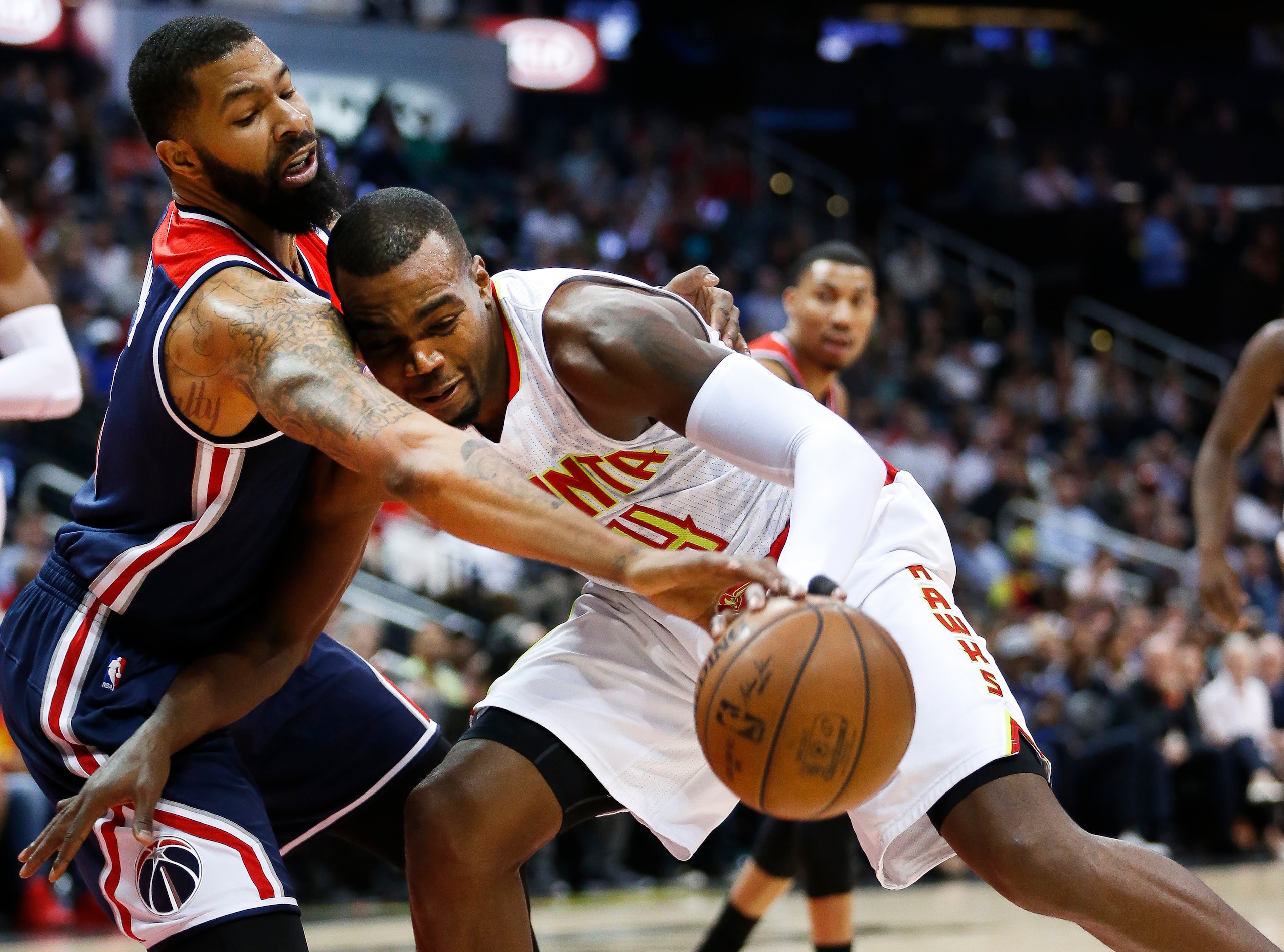
Paul Millsap is the latest in a line of Hawks stars on whom the franchise has seemed to waffle. Last summer, there was some scuttle, per ESPN's Zach Lowe, about Millsap's being on the block before and after Al Horford left Atlanta for Boston. This past January, Marc Stein, then with ESPN, laid out what the Hawks wanted in return for their All-Star forward, following a flurry of concurrent activity in the rumor mill and on ESPN's trade machine.
Through it all, one thing has held true: Millsap is Atlanta's best player. His spectacular play inside the arc on offense (24.3 points on 50.5 percent shooting, 9.3 rebounds, 4.3 assists per game) and versatile defense against the Washington Wizards in these playoffs merely confirmed this distinction for the 9,375th time.
That still might not be enough to convince the Hawks that paying the piper in Millsap's situation is the best way to go. According to calculations from Peachtree Hoops, he'll be eligible to sign a max contract this summer worth upward of $207 million over five years with Atlanta, or for approximately $154 million over four years anywhere else.
Would the Hawks want to hitch their wagon to a 32-year-old power forward who's no better than passable as a perimeter shooter? To what extent might the team's cascading playoff exits—from conference finals in 2015 to conference semis in 2016 to the opening round this year—fuel any potential reluctance?
Then again, Millsap's never been particularly reliant on his athleticism, so his game should age well. And after losing two longtime franchise stalwarts last summer, in Horford and Jeff Teague, can Atlanta realistically afford to lose a third without jeopardizing its decadelong playoff streak?
Tim Hardaway Jr.'s Restricted Free Agency
2 of 5
All it took was the specter of a contract year for Tim Hardaway Jr. to come of age in the NBA. Even then, his role in Atlanta seemed to shift with the wind.
During the first half of the season, he started just six times in his first 39 appearances—including a string of five straight in December—despite dropping 20 or more points off the bench seven times over that same span. He went on to log 24 starts over his final 40 games, including 12 straight to end his regular season.
All told, the son of former All-Star Tim Hardaway distinguished himself as the promising perimeter talent he seemed to be when he entered the Association in 2013. During the 2016-17 campaign, he posted career highs in points (14.5), assists (2.3) and field-goal percentage (.455), and followed that with 12.8 points on 32.9 percent shooting with 1.2 assists per game in the playoffs.
At 25, the University of Michigan product might just be coming into his own as a pro. In a league where quality shooting guards are increasingly hard to come by, as Bleacher Report's Howard Beck mentioned in his latest masterpiece, a player of Hardaway Jr.'s profile and pedigree stands to make a pretty penny in restricted free agency this summer.
The Hawks will have the right to match any offer sheet that lands on Hardaway Jr.'s doorstep, assuming the team first extends a qualifying offer his way. After Atlanta's inartful handling of Jeff Teague's restricted free agency in 2013, the team would do well to tread carefully with how it handles its latest entrant into the less-than-open market.
Reshuffling on the Wing
3 of 5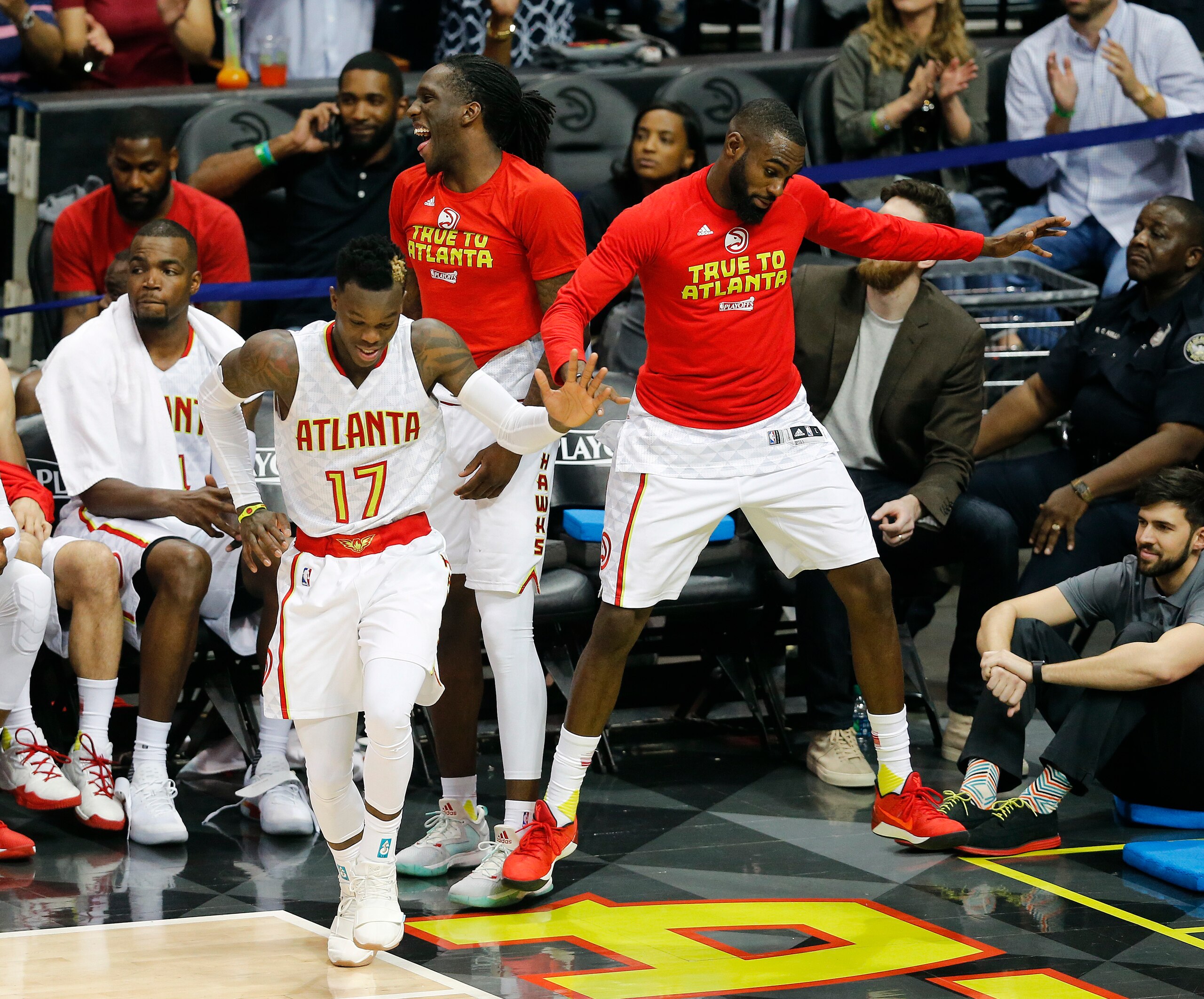
With or without Tim Hardaway Jr., the Hawks will have at least one conundrum to consider on the wing.
Last summer, Atlanta rewarded Kent Bazemore with a four-year, $70 million deal. Since then, the former beloved Warriors benchwarmer has lost his starting gig to Taurean Prince. The rookie out of Baylor averaged 11.4 points and 3.9 rebounds over the final 10 games of the regular season and continued that with 11.2 points and 5.3 rebounds per playoff contest.
In some respects, Bazemore makes more sense as a sub. His frenetic energy can change the complexion of the game, particularly on the defensive end, when he's thrown into the flow as a member of the Hawks' second unit.
But at what cost? Bazemore will make just over $16.9 million next season and just under $18.1 million in 2018-19, with a player option for approximately $19.3 million in 2019-20.
With so many other expenses on the docket, and another young swingman (DeAndre' Bembry) waiting in the wings, Atlanta might have to consider whether it's wise to keep so much of its cap space tied up in Bazemore, especially with Hardaway Jr. due for a raise.
For the Hawks, it's a good problem to have. Two-way wings are in tremendous demand around the NBA, so Bazemore should have ample value if Atlanta decides to move him.
More importantly, Prince—whom the Hawks acquired in a three-way trade that sent Jeff Teague to Indiana last summer—has emerged as the kind of quality player who's created such a surplus in the Peach State.


Dwight Howard's Role
4 of 5
Dwight Howard had a sneaky-good first season with his hometown Hawks. He shot a personal-best 63.3 percent from the field, snagged a career-high 15.4 rebounds per 36 minutes and helped Atlanta make the leap from a bottom-three rebounding team to the top half on the glass.
Howard's work around the rim was everything the Hawks could've hoped for during the regular season. He had his moments of dominance up front in the playoffs, as well.
But the Wizards also exposed Howard for the aging basketball antique he's become. The former All-Star played sparingly during fourth quarters against Washington, in large part because he didn't (and doesn't) fit the pace and space that are critical to success on both ends in today's NBA.
That much was clear on the defensive end—where the Hawks allowed 108.7 points per 100 possessions with Howard on the floor and 102.8 when he sat, per NBA.com—though Hawks head coach Mike Budenholzer was more concerned about the other end.
"It's more about the offense and more space, but our transition defense is critical to us, too," Budenholzer said between Games 5 and 6, per the Atlanta Journal-Constitution's Chris Vivlamore. "They are putting a lot of pressure on us going back the other way. At times, it's asking a lot of Dwight. He's putting a lot of pressure going to the offensive boards and get second- and third-chances."
The Rockets ran into similar issues when Howard was in Houston. And you can bet Atlanta's Eastern Conference foes will take full advantage going forward.
That doesn't mean the Hawks should dump Dwight outright. His ability to control the paint, even with his oncoming 32nd birthday, makes Howard an important part of Atlanta's post-Al Horford construction.
What the Hawks need, then, is another big man who can back up Howard and play more on the perimeter when he's in. The search for such a stand-in figures to kick into high gear this summer, with Mike Muscala and Kris Humphries both bound for free agency.
Restock the Rest of the Roster
5 of 5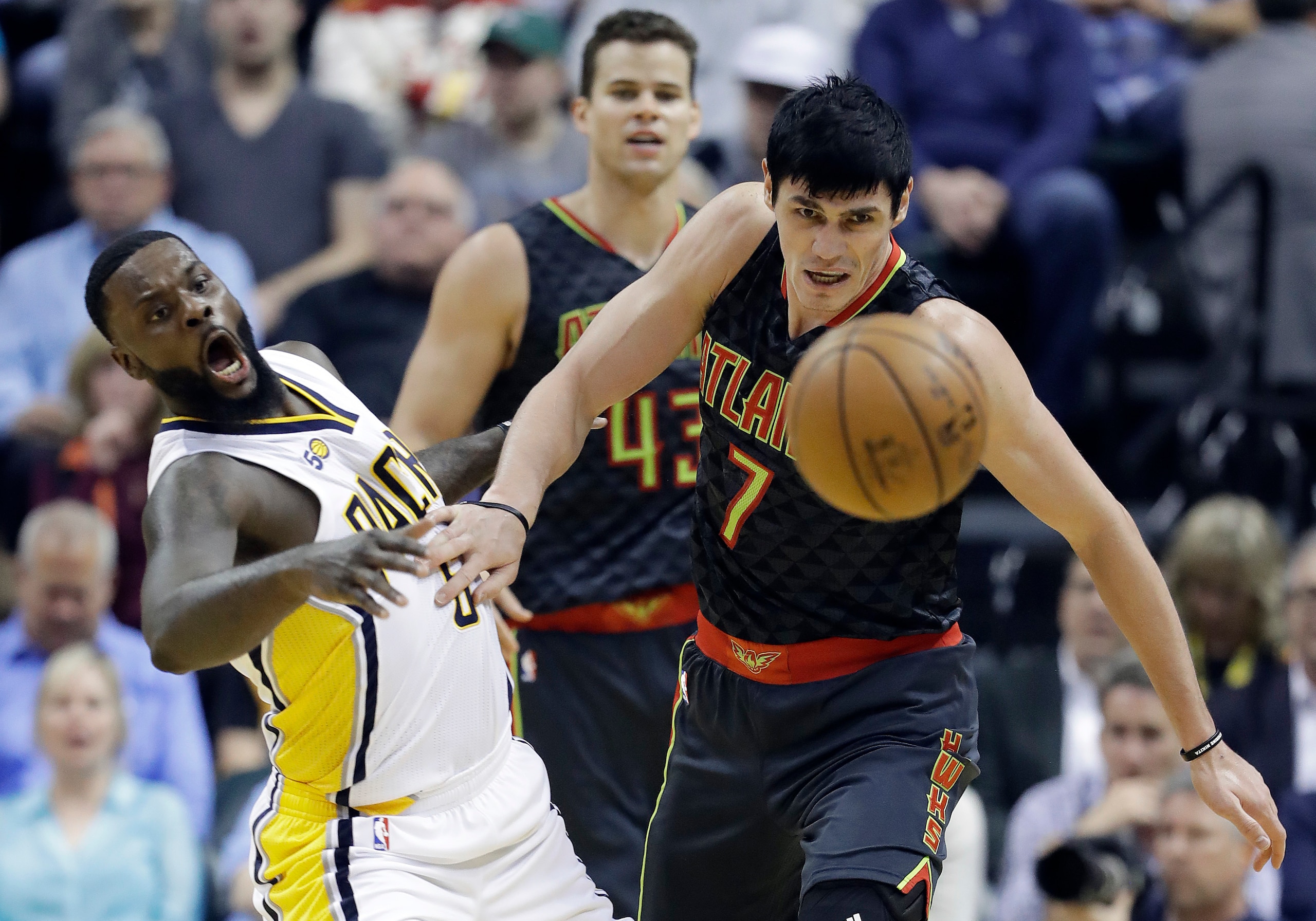
Mike Muscala and Kris Humphries will be joined on the open market by Thabo Sefolosha, Ersan Ilyasova and Jose Calderon—all valuable veterans. Mike Dunleavy Jr.'s 2017-18 salary is only partially guaranteed, and he could get the ax if Atlanta is desperate for any modicum of financial flexibility.
With only six guaranteed contracts on the books for next season, the Hawks will have more than a few roster spots to fill. And if Millsap and Hardaway Jr. come back at bigger numbers, Atlanta will have even less cap space to devote to its next round of role players.
Not that the Hawks won't have other options to consider internally. Bembry figures to get a longer look next season. Atlanta will have picks Nos. 19, 31 and 60 in this year's draft to spend, either as means of bringing in young blood or trading for more seasoned talent.
The Hawks could also be an attractive destination for those players left out of this summer's round of free-agent musical chairs. Players and agents around the Association have surely noticed the exemplary work that Mike Budenholzer and his staff have done coaching up the likes of Kent Bazemore, Hardaway Jr. and DeMarre Carroll—not to mention how much those guys either have been or will be paid as a result.
The impending opening of a new practice facility, in partnership with Emory Healthcare and P3, figures to be yet another selling point for Atlanta, particularly in pursuit of bargain-bin players looking to up their games for bigger paydays down the line.
"If our players are healthy and our players have fabulous experiences and our players' careers are extended," Hawks CEO Steve Koonin told USA Today's Jeff Zillgitt of the new facility, "then it is an asset to the organization."
All stats via NBA.com and Basketball Reference unless otherwise noted.
Josh Martin covers the NBA for Bleacher Report. Follow him on Twitter, Instagram and Facebook, and listen to his Hollywood Hoops podcast with B/R Lakers lead writer Eric Pincus.


.jpg?w=2560 "Mahomes Asked OT to Leave Meeting")

.jpg?w=2560 "5 Teams Eyeing Jonathan Taylor")

.jpg?w=2560 "Jonathan Taylor Landing Spots 📍")