
NFL1000: Atlanta Falcons 2017 NFL Draft Preview
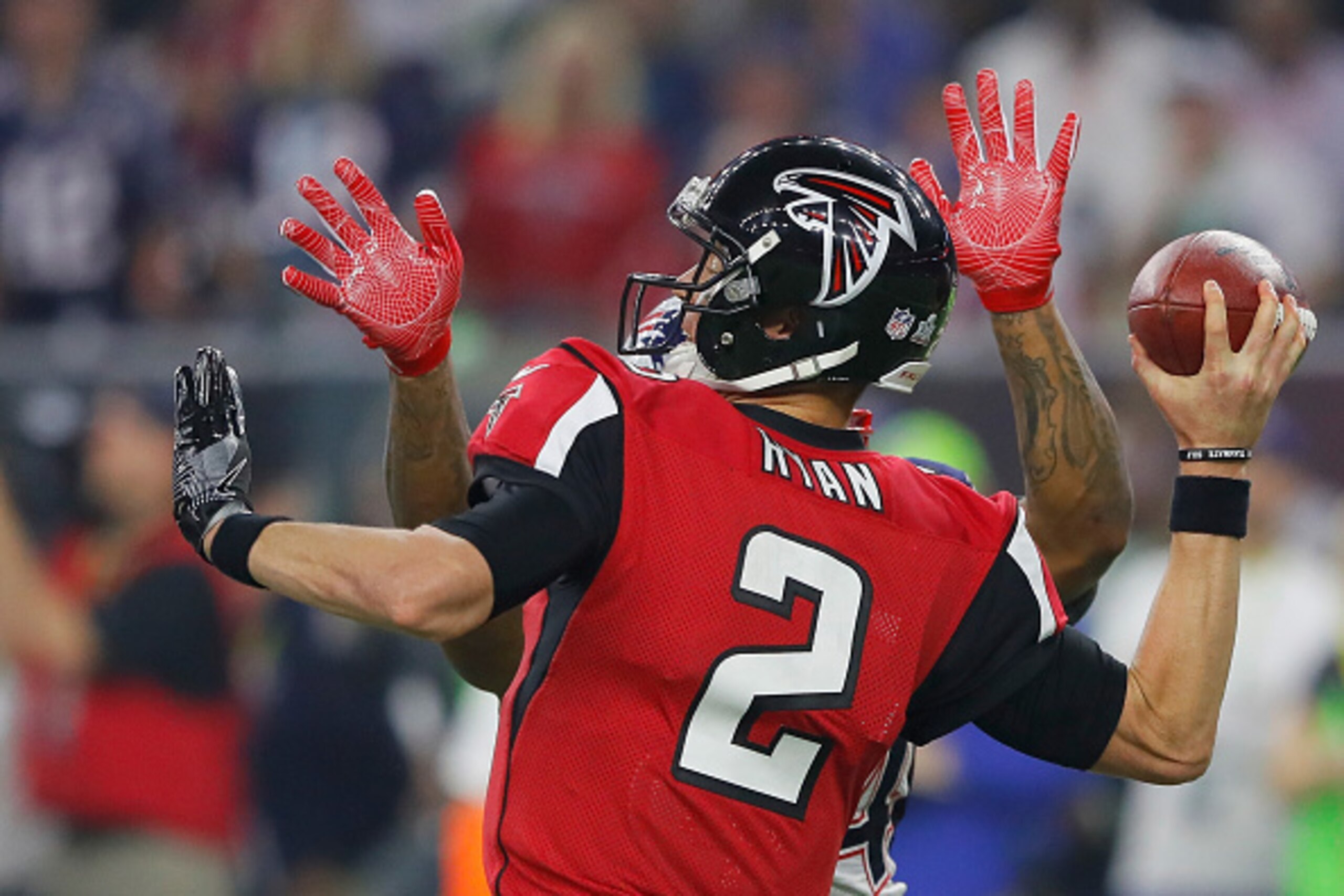
No team has ever lost a Super Bowl after holding a 25-point lead, which means no team has ever had to overcome those scarring memories the following season. This is the challenge facing the Atlanta Falcons after the most stunning single-game collapse in NFL history in Super Bowl LI. Though the team has plenty of talent on both sides of the ball, including a defense that looks ready to emerge as one of the NFL's best, there's no way to know how the team is going to deal with failure at that level.
The bad news for the 2017 Falcons is that offensive coordinator Kyle Shanahan, who brilliantly utilized the weapons at his disposal through most of 2016, is now the 49ers' new head coach. Replacement Steve Sarkisian will run a similar offense, though it remains to be seen how well Sarkisian will elevate the offense in the ways Shanahan did—namely through unique personnel deployment and versatile schemes.
The good news? Two straight stellar drafts set this franchise up to be the NFL's next great defense. Atlanta became the first team in NFL history to start four rookies on defense—safety Keanu Neal, linebacker Deion Jones, linebacker De'Vondre Campbell and undrafted slot cornerback Brian Poole—in a Super Bowl. Second-year tackle Grady Jarrett demolished New England's offensive line for three sacks in that game, and 2015 first-rounder Vic Beasley led the league in sacks with 15.5.
When the Falcons hired former Seahawks defensive coordinator Dan Quinn as head coach in 2015, it appeared as though they wanted to emulate Seattle by building a great defense with a versatile rushing attack and a franchise quarterback. Now that Atlanta has done so, we'll see whether the team can overcome its heartbreaking Super Bowl defeat.
Methodology
1 of 19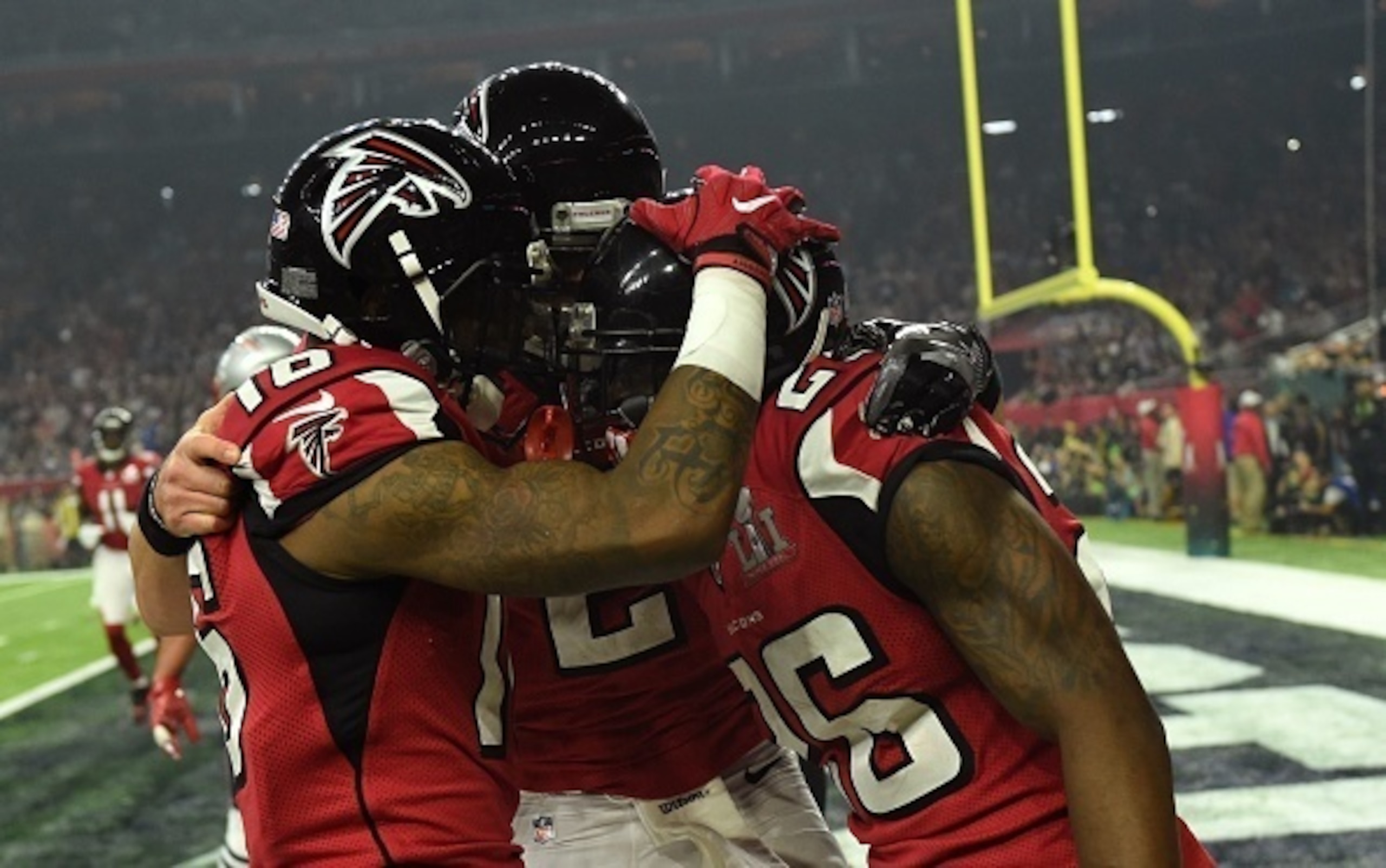
The NFL1000 team of scouts graded a series of important attributes for every player in their positional review. Using a scale starting at zero and going up to anywhere from five to 50 based on the position and the attribute, our scouts graded each player based on their own expertise and countless hours of tape review over the years. Our evaluators had specific positional assignments based on their proven fields of expertise.
- Doug Farrar: Lead scout/quarterbacks
- John Middlekauff: Running backs/fullbacks
- Marcus Mosher: Wide receivers/tight ends
- Mark Schofield: Wide receivers/tight ends
- Duke Manyweather: Offensive tackles
- Ethan Young: Offensive guards
- Joe Goodberry: AFC defensive ends
- Justis Mosqueda: NFC defensive ends
- Charles McDonald: Defensive tackles
- Zach Kruse: 3-4 outside linebackers
- Derrik Klassen: 4-3 outside linebackers
- Jerod Brown: Inside linebackers
- Kyle Posey: Cornerbacks
- Ian Wharton: Cornerbacks
- Mark Bullock: Safeties
- Chuck Zodda: Special teams
Each corresponding position slide was written by the assigned scout.
Quarterback
2 of 19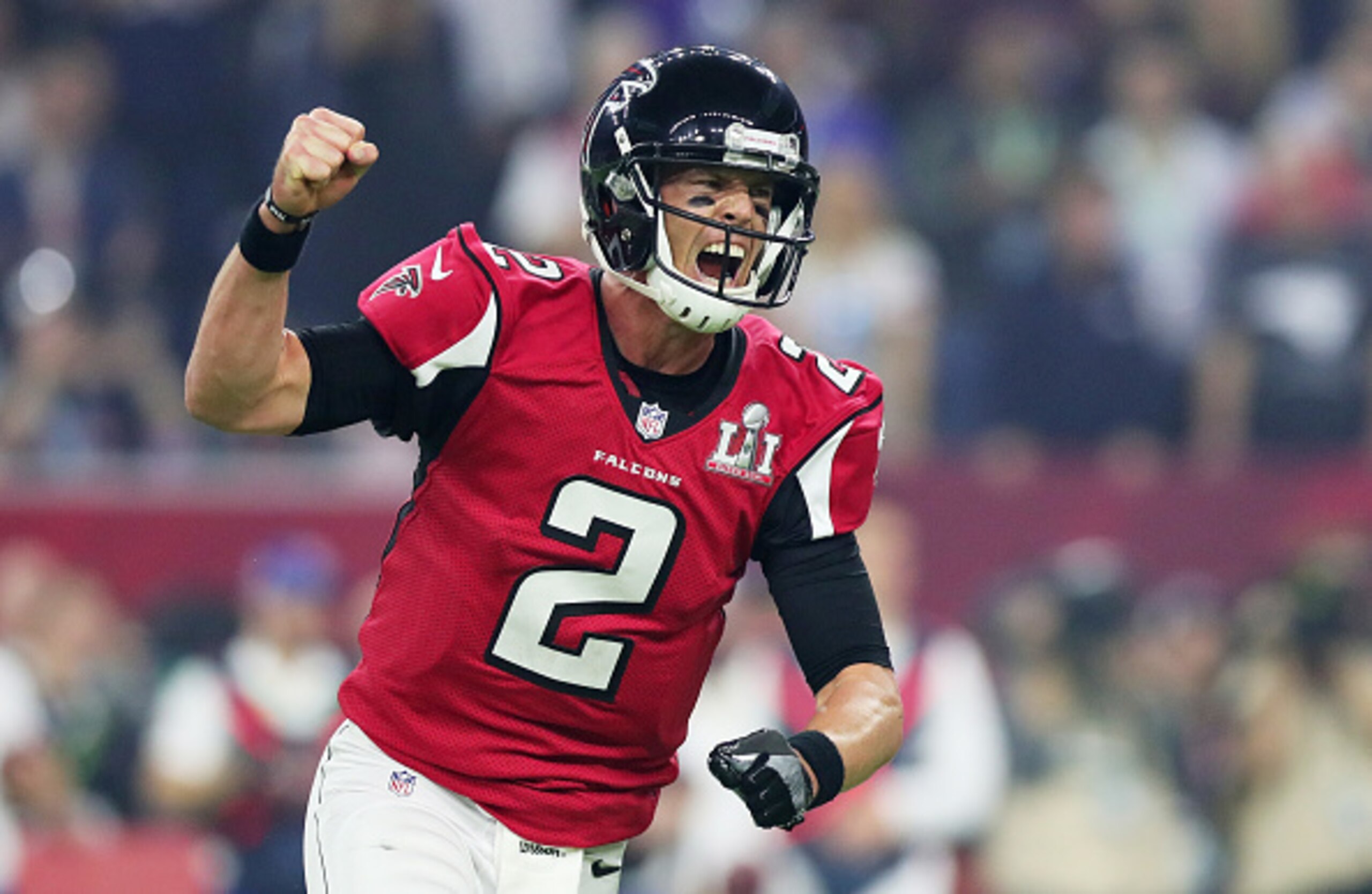
Scheme: West Coast/Zone
Starter: Matt Ryan
NFL1000 Score: 74.1/100
NFL1000 Position Rank: 10/38
Ryan has been an above-average quarterback for a number of years, but what made him great in 2016 was his ability to work within Kyle Shanahan's boot-right offense, put the pocket on the move and avoid the disasters under pressure he experienced before.
Between the regular season and the playoffs, he threw 13 touchdown passes in which the ball traveled 20 yards in the air or more, and he was the only starting quarterback in the league last season who threw no picks on deep balls.
Ryan was far more efficient under pressure, throwing no interceptions when rocked out of the pocket one year after throwing five picks in such situations. That's part of the reason why he was named the league's MVP in slam-dunk fashion, and though the Super Bowl LI collapse cast a shadow on Atlanta's 2016 campaign, it should not minimize the ways in which Ryan developed in his ninth season.
Backup: Matt Schaub
NFL1000 Scores: Did not have enough snaps to qualify
The Falcons re-signed Schaub to a two-year, $9 million deal in March, which is a lot of money to pay someone you hope never throws a pass in a regular-season game. Schaub fits Atlanta's offense in his ability to drive the ball reasonably well outside the pocket, but his decision-making has always been suspect. He's a decent reserve at best.
Backup: B.J. Daniels
NFL1000 Scores: Did not have enough snaps to qualify
Daniels is a smaller hybrid player who has seen time in various NFL training camps and minicamps as a quarterback and receiver. He's never put it together to the point where a team will commit major resources to his future, but he intrigues just enough with his base athleticism to get spots on practice squads. That's probably where he'll end up in 2017.
Team Need: 5/10
Potential Draft Fits: Nathan Peterman, Pitt; Joshua Dobbs, Tennessee
Running Back
3 of 19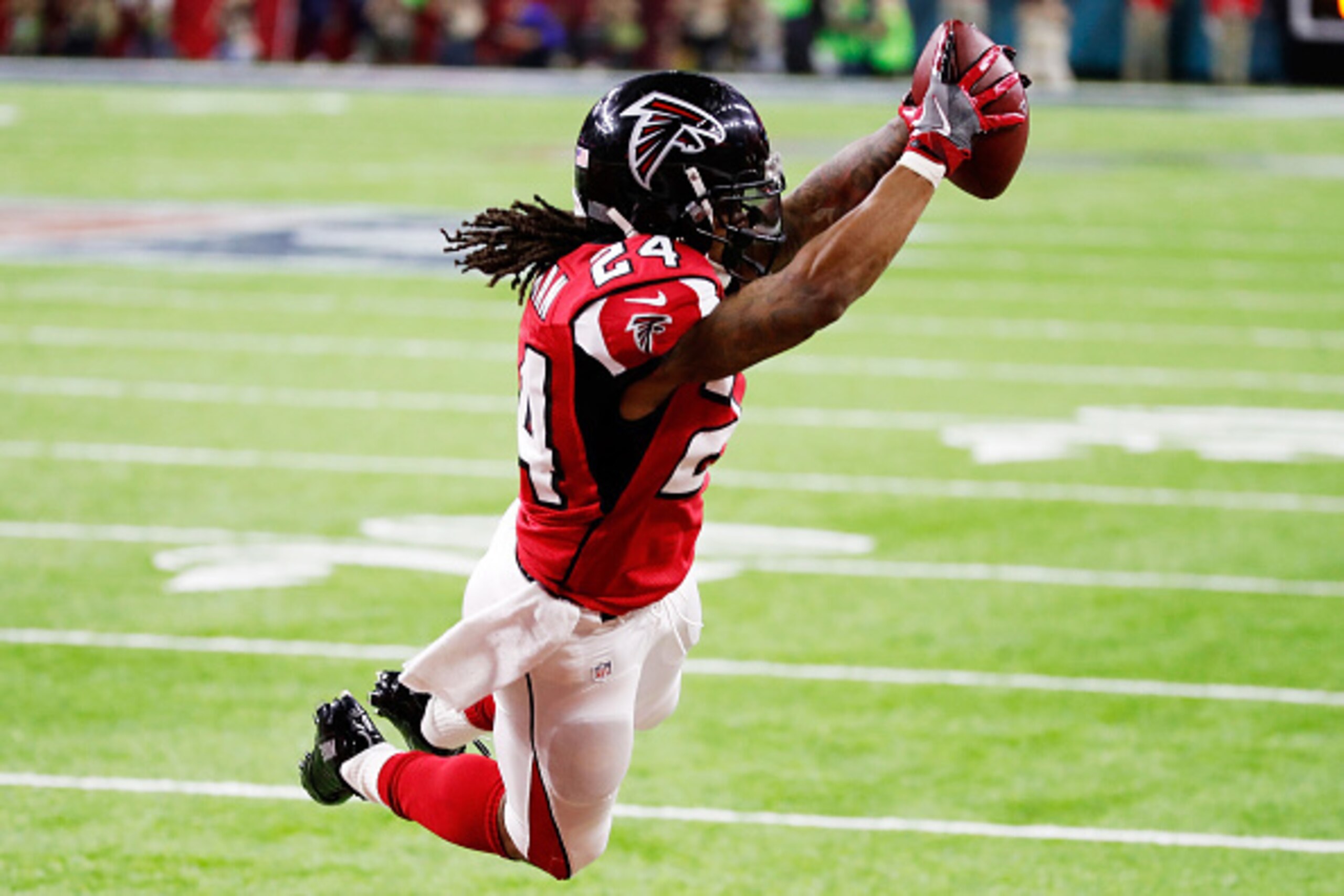
Scheme: West Coast/Zone
Starter: Devonta Freeman
NFL1000 Scores: 75.0/100
NFL1000 Position Rank: 6/82
The former fourth-round pick has put together two very good seasons. Freeman has established himself as one of the more complete running backs in the NFL. He ran for 1,079 yards and 11 touchdowns, and he also had 54 catches. He is the ultimate hybrid; there is not any area Freeman doesn't display top end-traits.
For a smaller back, 5’8”, Freeman is a good inside runner. He possesses vision, quick feet and the explosive qualities to hit the hole when a crease presents itself. He has solid change-of-direction and the ability to make a guy miss in space. Freeman has the speed and burst to get outside and make plays in space.
In the passing game, he is dominant. Defenders are not able to cover him, and he is a dynamic option as a receiver. With the football in his hands, good things happen. Pass protection is an area he can improve in, but overall Freeman is one of the better young players in the league. He should only improve in 2017.
Backup: Tevin Coleman
NFL1000 Scores: 72/100
NFL1000 Position Rank: 23/82
Tevin Coleman, combined with Devonta Freeman, might be the best young running back duo in the NFL. Coleman is an excellent backup who’s a change of pace from Freeman and excellent in the passing game. While Coleman is a straight-line back, he is ideal for the zone scheme.
His one-cut style works well for the inside and outside zone. With limited carries in 2016, he averaged 4.4 yards per tote and had eight touchdowns. Coleman has the top-end speed to get vertical fast and be a home run hitter if he sees green grass.
He is also versatile in the passing game. He is a mismatch against linebackers out of the backfield and can match up with safeties when he gets flexed out wide. He averaged 13.6 yards per catch, proving he is someone defensive coordinators have to account for when he is on the field. Coleman should continue to improve and become the best No. 2 running back in the game.
Backup: Terron Ward
NFL1000 Scores: Did not play enough snaps to get a grade
Terron Ward has played a limited role in the Atlanta offense the past two seasons. He has only had 61 career carries and doesn't bring much to the table. He doesn't have much burst or possess the ability to make guys miss. If the Falcons bring in a player in training camp, Ward will have to play well to make the team.
Team Need: 2/10
Potential Draft Fits: None

.jpg?w=2560 "Cardinals Giants Football")
.jpg?w=2560 "Titans Giants Football")
Fullback
4 of 19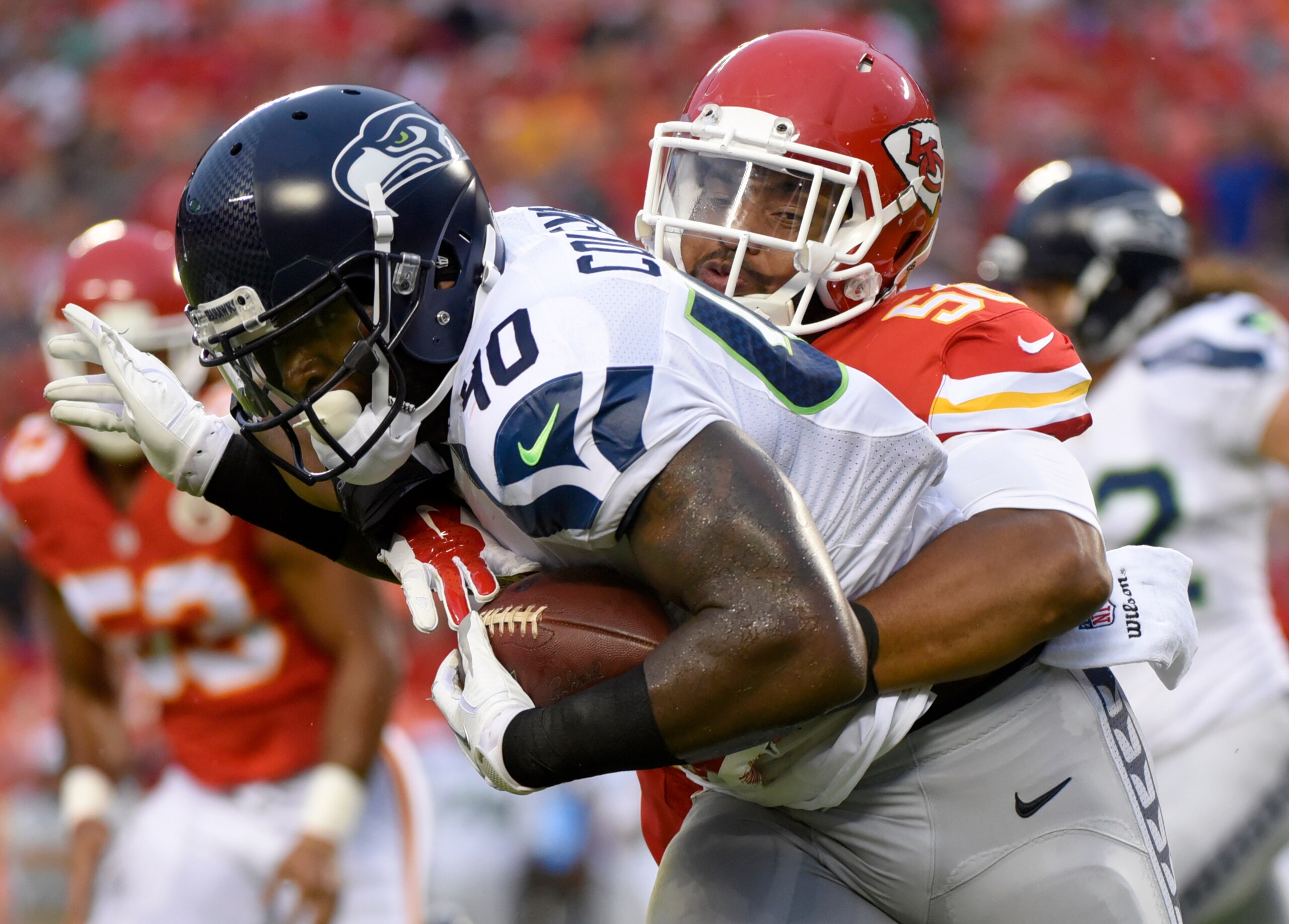
Scheme: West Coast/Zone
Starter: Derrick Coleman
NFL1000 Scores: Did not have enough snaps to qualify
Derrick Coleman was out of the NFL in 2016 and is suspended for the first four games in 2017. This was from a prior hit-and-run conviction. This suspension was levied during the 2016 season, but he was out of the league, so it still stands.
Coleman will be at a major disadvantage making the team because of the suspension, and he lacks reps these last several seasons. I would expect the Falcons to draft a guy or at minimum bring in an undrafted free agent.
Team Need: 5/10
Potential Draft Fits: Freddie Stevenson (Florida State), Sam Rogers (Virginia Tech)
Wide Receiver
5 of 19
Scheme: West Coast
Starter: Julio Jones
NFL1000 Scores: 75.1/100
NFL1000 Position Rank: 2/155
Jones played most of the year injured, but he was still able to be one of the most dominant players in the NFL. Despite missing two games and playing hurt in many others, Jones was able to eclipse 1,400 receiving yards for the third straight season.
Aside from health, Jones has no flaws. He has the size, speed and body control to win anywhere on the field. He’s a matchup nightmare because he can’t be pressed at the line of scrimmage, but he eats up off-coverage with ease.
He’s nearly impossible to tackle in the open field one-on-one, and his body control down the sideline is otherworldly. When he’s healthy, he may be the best offensive weapon in the league. Jones just turned 28, so he still has a few more dominant years left in him.
Starter: Mohamed Sanu
NFL1000 Scores: 68/100
NFL1000 Position Rank: 36/155
Sanu signed with the Falcons to play second fiddle to Julio Jones in the Atlanta offense. At 6’2”, 210 pounds, he’s an ideal fit as the team’s Z-receiver, as he’s one of the better blocking receivers in the league.
The Super Bowl was a great example of what Sanu can provide the offense. While he only caught two passes for 25 yards, the offense thrived after multiple big runs by Devonta Freeman were set up by blocks by Sanu on the outside.
Sanu will likely never be a 1,000-yard receiver in the Falcons offense, but he’s a nice complement to Jones in the receiving game and a great contributor in the run game. He’ll have his occasional big game throughout a season, and he’s an above-average receiver who found the ideal role in Atlanta.
Backup: Taylor Gabriel
NFL1000 Scores: 65.4/100
NFL1000 Position Rank: 69/155
After washing out in Cleveland, Gabriel found himself a home in Atlanta. He wasn’t used often on offense, but when he was, he was dynamic (seven touchdowns).
He’s a game-breaker in the open field and provides extra speed to one of the fastest offenses in the league. He’ll likely never be anything more than a No. 3 or No. 4 receiver, but he has a role as a gadget player who can score anytime he touches the ball.
Backup: Justin Hardy
NFL1000 Scores: 62.2/100
NFL1000 Position Rank: 110/155
Hardy fought for snaps as the team’s fourth receiver during the year, but he became a more reliable target as the season went along. Hardy has massive hands and is lightning-quick. He will likely fight Taylor Gabriel for snaps in the slot in 2017.
Backup: Andre Roberts
NFL1000 Scores: 58.1/100
NFL1000 Position Rank: 151/155
The Falcons signed former Detroit Lions receiver Andre Roberts to a one-year deal this offseason to compete for a role on special teams. He has experience playing in the slot, and he will likely make the roster as the team’s kick and punt returner.
Team Need: 2/10
Potential Draft Fits: Dede Westbrook (Oklahoma), KD Cannon (Baylor), Shelton Gibson (West Virginia)
Tight End
6 of 19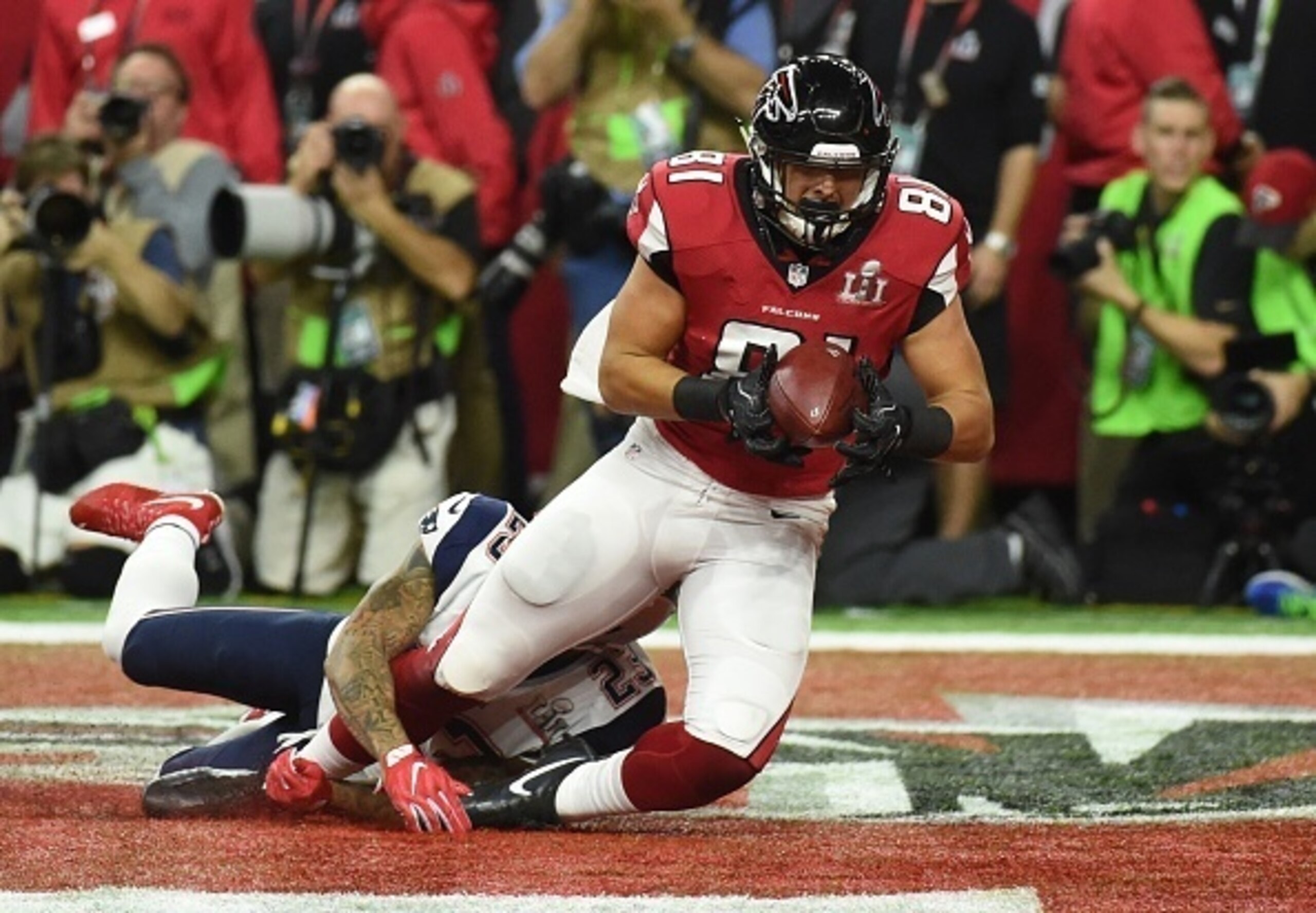
Scheme: West Coast
Starter: Austin Hooper
NFL1000 Scores: 60.4/100
NFL1000 Rank: 57/96
A third-round pick from Stanford, Hooper saw more playing time in his rookie season once veteran Jacob Tamme went on injured reserve. Hooper is the classic flex tight end who can be moved around to create mismatches. He’s a young player who has a lot of potential and should be the team’s starter going into 2017.
Backup: Levine Toilolo
NFL1000 Scores: 60.3/100
NFL1000 Rank: 59/96
At a massive 6’8”, 265 pounds, Toilolo was re-signed by the Falcons to be the team’s blocking tight end and to play with Austin Hooper at times. He is a huge target, but he has never been able to translate that size into much success in the receiving game.
He managed to catch only 13 passes all year for 264 yards and two touchdowns, one of which was a blown assignment in Seattle’s secondary. He’s too big and athletic to only have six career touchdowns in four years. He will be the team’s No. 2 tight end going into 2017.
Team Need: 6/10
Potential Draft Fits: Evan Engram (Ole Miss), Jordan Leggett (Clemson), Jonnu Smith (Florida International)
Left Tackle
7 of 19
Scheme: Zone
Starter: Jake Matthews
NFL1000 Scores: 75.4/100
NFL1000 Position Rank: 12/40
Atlanta drafted Jake Matthews sixth overall out of Texas A&M in 2014, with high hopes that he would be the franchise bookend at left tackle they had previously hoped Sam Baker would have been.
Three seasons into Matthews’ young career, steady improvement has been made in his development. Last season, Matthews showed much more consistency in pass protection and was comfortable being left on an island against the NFL’s premier pass-rushers.
Numbers don't always tell the full story, as Matthews surrendered seven sacks as a rookie, one sack in his second season and seven in 2016, yet 2016’s tape is night-and-day cleaner. As a run blocker, Matthews shows tremendous initial explosion to engage at the snap and showed more overall power at the point of attack to create movement.
Backup: Kevin Graf
NFL1000 Scores: Did not have enough snaps to qualify
Kevin Graf was a 2014 undrafted free agent out of USC who originally signed with the Philadelphia Eagles and bounced between their active roster and practice squad before he was released in his second season.
In 2016, Graf spent time in Indianapolis but was released during training camp.
Atlanta signed Graf to its practice squad late in the 2016 season, promoting him once to the active roster for depth, before making him a practice-squad member again. Graf signed with Atlanta as a reserve-futures in February.
Team Need: 0/10
Potential Draft Fits: None, but Atlanta will need bring in camp competition with veteran and undrafted free agents to add depth.
Right Tackle
8 of 19
Scheme: Zone
Starter: Ryan Schraeder
NFL1000 Scores: 75.6/100
NFL1000 Position Rank: 6/38
From being undrafted in 2013 out of NCAA Division II Valdosta State to ending the 2016 season as a top-50 player of NFL1000, Ryan Schraeder’s football journey has come full circle.
Schraeder came into the league always possessing the physical traits you'd want from a starting NFL tackle, but his technique needed major refinement. Now entering his fifth season, Schraeder has established himself as tremendous run blocker while providing solid pass protection in his 46 career starts.
His continual development was rewarded late in the 2016 season when Atlanta signed him to a contract extension right in the midst of its Super Bowl run.
Team Need: 0/10
Potential Draft Fits: None, but Atlanta will bring in camp competition with veteran and undrafted free agents to add depth.
Offensive Guard
9 of 19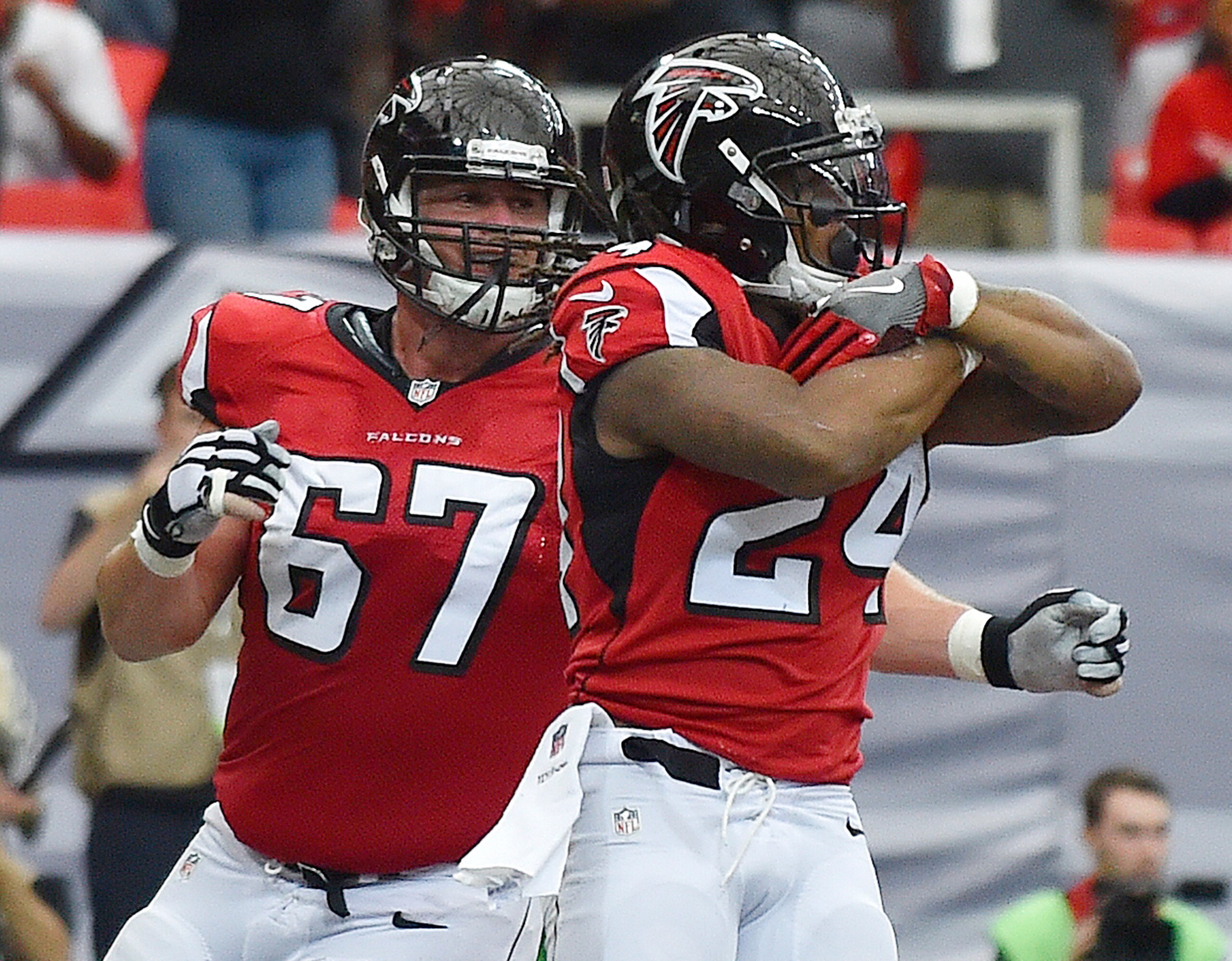
Scheme: Zone
Starter: Andy Levitre
NFL1000 Scores: 72.0/100
NFL1000 Position Rank: 15/78
2016 was a renaissance year for Levitre and the Falcons offensive line as a whole. Levitre not only looked healthier last year, but he also became a lot more comfortable schematically in his second year in Kyle Shanahan’s offense.
Even though Levitre has had injury problems, he is still just 30 years old. In guard years, that could mean several more seasons of high-caliber play, health permitting.
Starter: Hugh Thornton
NFL1000 Scores: Did not have enough snaps to qualify
With Chris Chester gone, addressing the right guard position is a whole different story. Ex-Colt Hugh Thornton was brought in via free agency, but he should be nothing more than a veteran depth option at this point, meant to push the highly drafted guard the Falcons select later this month.
Backup: Wes Schweitzer
NFL1000 Scores: Did not have enough snaps to qualify
If the board doesn’t fall the way the Falcons want in the first or second round, last year's sixth-round pick, Wes Schweitzer, could push for the right guard job. His movement ability makes him an intriguing fit for a zone-heavy scheme.
Hopefully the converted tackle put on some functional strength last year, or else the MVP’s health and arguably the NFL’s premier running attack might be at risk.
Team Need: 8/10
Potential Draft Fits: Dorian Johnson (Pitt), Dan Feeney (Indiana)
Center
10 of 19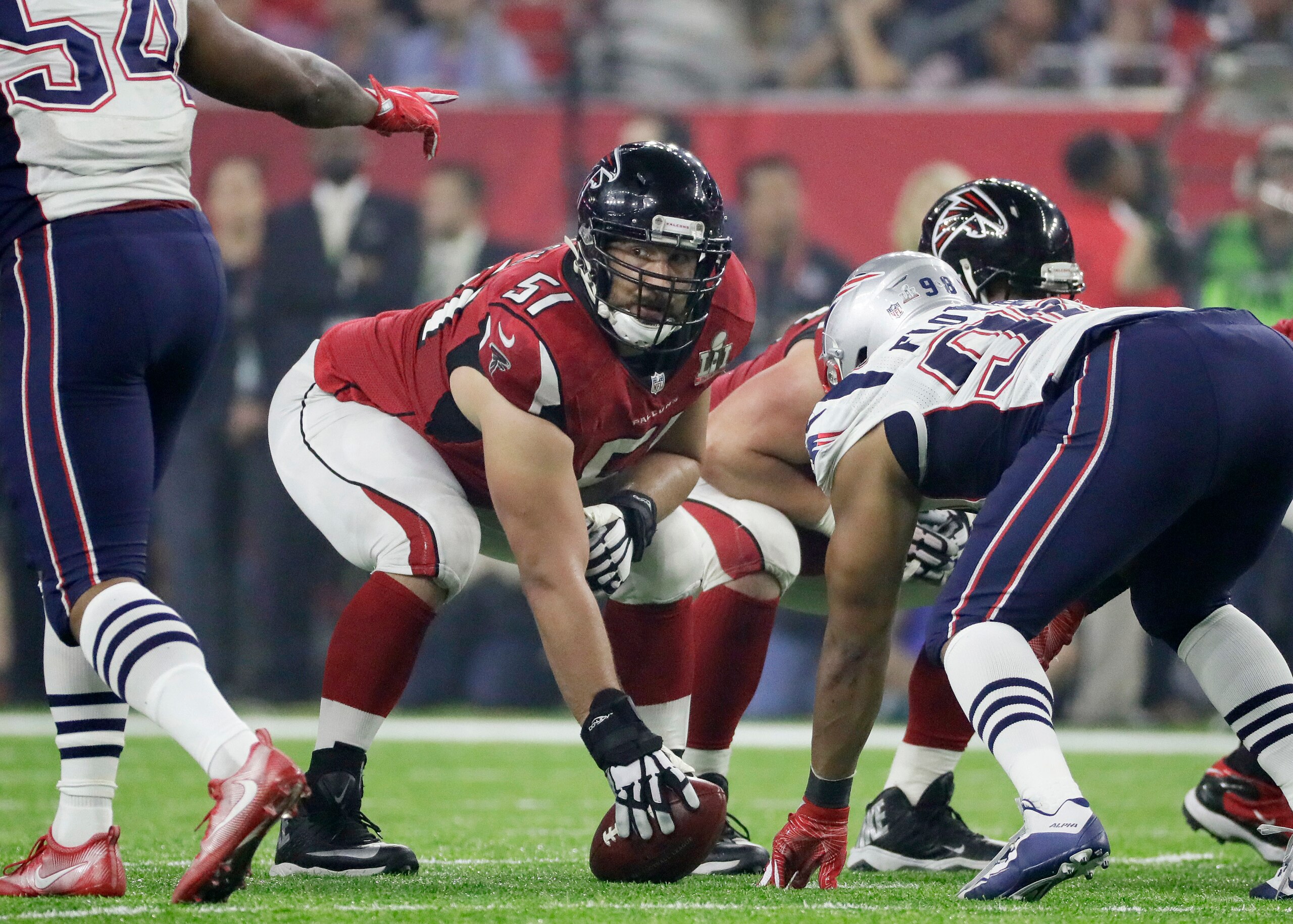
Scheme: Zone
Starter: Alex Mack
NFL1000 Scores: 72.6/100
NFL1000 Position Rank: 4/38
Mack was the X-factor for this Atlanta front last year.
His introduction to the offense changed everything from day one. His ability to diagnose opposing defensive fronts and make correct corresponding calls at the line was a huge part of the success of this read-based blocking attack.
Mack has a unique blend of traits that give him the ability to get to his spot with a set base on reach blocks, a big value for this offense.
Backup: Ben Garland
NFL1000 Scores: Did not have enough snaps to qualify
Ben Garland is a spark plug who plays both offensive and defensive line. What is most impressive about Garland is his body transformation, as he has managed to put on nearly 33 pounds since entering the league and still has enough quickness to play in the B-gap on defense.
His offensive line tape is limited, but his background is interesting.
Team Need: 0/10
Potential Draft Fits: None
Defensive End
11 of 19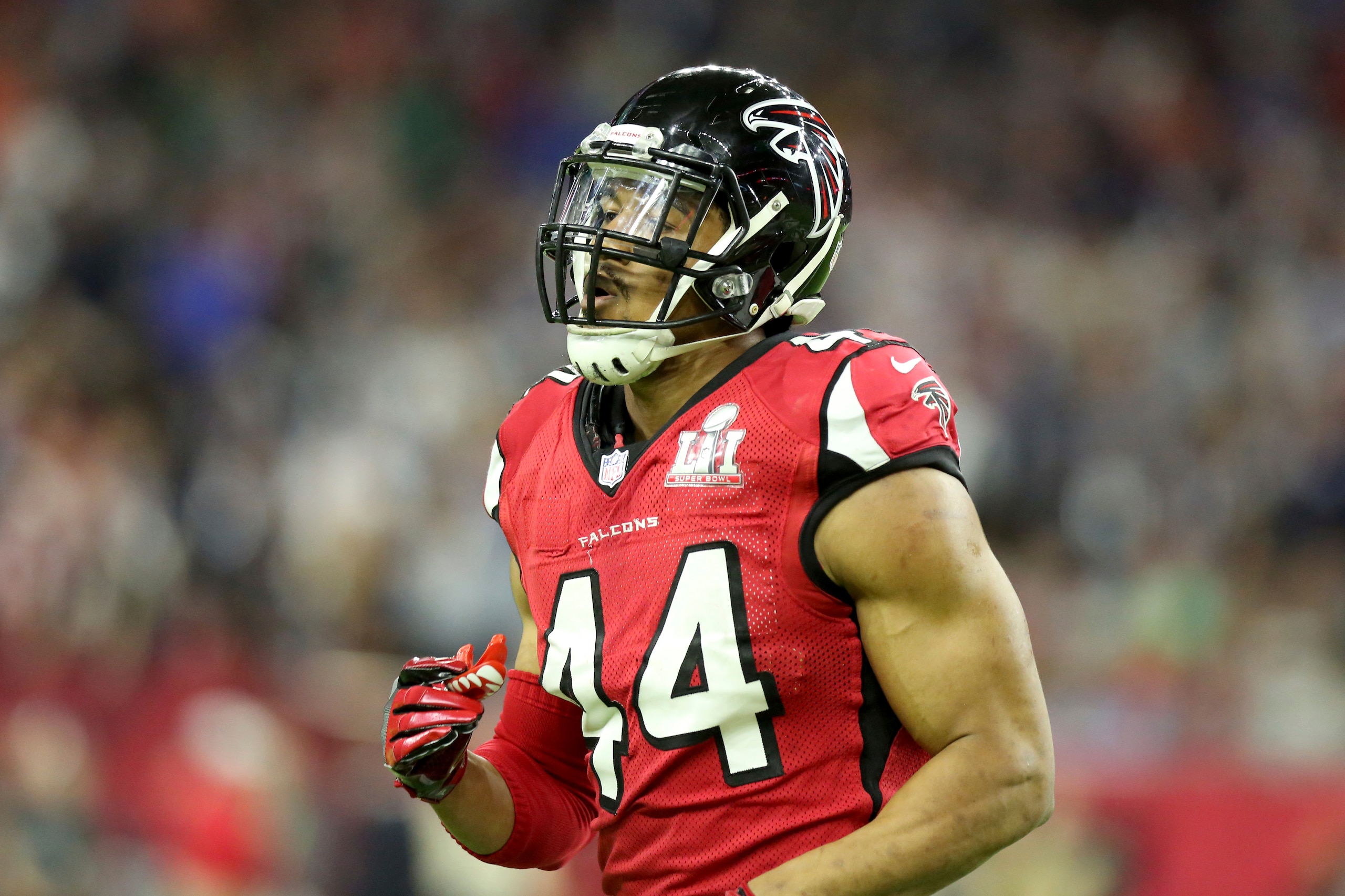
Scheme: 4-3
Starter: Vic Beasley
NFL1000 Scores: 69.8
NFL1000 Position Rank: 11/68
Heading into the 2015 draft, the Atlanta Falcons badly needed a No. 1 pass-rusher. With a top-10 pick, they selected Vic Beasley from Clemson, which historically has put out some disappointing edge defenders at the top of drafts.
Beasley led the team with four sacks in his rookie season, despite a labrum issue, but he was viewed as a “disappointment” by some. In his second year, Beasley led the league in sacks with 15.5. At 24 years old, he’s one of the better young pass-rushers in the league and is a staple for the Falcons moving forward.
He’s not elite, and there are some young names like Seattle’s Frank Clark and Minnesota’s Danielle Hunter who could make the claim for being the best young 4-3 defensive ends in the league, but Beasley is right up there.
Starter: Derrick Shelby
NFL1000 Scores: Did not have enough snaps to qualify
Derrick Shelby was supposed to be one of the better complementary pass-rushers in the league last year after signing on with the Falcons from the Miami Dolphins. He only played in six games due to a torn achilles, though he made four starts.
He’s an underrated pressure player because he’s never been able to translate his pressure into sacks next to the likes of Vic Beasley, Cameron Wake and Ndamukong Suh, but his four-year, $18 million contract tells you what Atlanta thought of him before his injury.
His injury is a question mark, but he’s going to be a Falcon for at least two more years based on his contract structure.
Backup: Adrian Clayborn
NFL1000 Scores: 66.2/100
NFL1000 Position Rank: 26/68
Adrian Clayborn is one of the more interesting “what if” questions in the NFL. He was considered a top pass-rusher in a loaded 2011 class which included Pro Bowlers Von Miller, Aldon Smith, J.J. Watt, Robert Quinn, Ryan Kerrigan, Cameron Jordan, Muhammad Wilkerson and Justin Houston.
During the draft process, though, Clayborn was found with an Erb’s Palsy issue that stemmed from birth, which made some concerned about his shoulder health long term. Despite that, the Tampa Bay Buccaneers drafted him with a top-20 pick, and he posted a 7.5-sack season as a rookie. He then missed 13 games due to a knee injury.
He bounced back with a 5.5-sack season but then missed 15 games due to a biceps issue. After playing out his rookie contract with the Bucs, he moved on to the NFC South rival Falcons, where he’s started 11 games over two years and recorded 7.5 sacks.
Last year, he struggled with knee and biceps issues late, leading to his missing the majority of the Falcons’ playoff run. Without Shelby and Clayborn, two ends who kick inside as pressure tackles, the team struggled to generate pressure down the stretch.
Clayborn is a third-down tackle and a backup defensive end for the team in 2017, if he recovers well, though his “third rusher” designation doesn’t change much with the contract of Dwight Freeney expiring from 2016.
Backup: Brooks Reed
NFL1000 Scores: 65.3/100
NFL1000 Rank: 39/68
Brooks Reed was an athletic pass-rusher coming out of the 2011 draft, when he was selected in the second round by the Houston Texans. He’s a lot like Vic Beasley in that he plays a bit like an outside linebacker with his hand in the dirt.
For whatever reason, his six-sack rookie season was the best in his career, but he’s started 64 games over six seasons. He’s a roster bubble player with potential, as he showed in the playoffs when he flashed with both Shelby and Clayborn out and Freeney on a snap count.
Backup: Jack Crawford
NFL1000 Scores: 64.5/100
NFL1000 Rank: 47/68
For a team with a questionable starter across from Beasley, the Falcons have a lot of depth at the bottom end of the defensive end depth chart. If the team adds a premier pass-rusher in the draft, that’s a good spot to be in.
Crawford has 9.5 sacks in five seasons in the NFL, with 10 of his 11 starts coming last year with the Dallas Cowboys. For the most part, he’s just a body, but his three-year, $8.8 million deal means he will at least be a part of the 2017 team.
The 28-year-old is basically playing year-to-year on this deal, which jumps up about $1.3 million in terms of a cap hit from 2017 to the back end of his contract. This may give us a look at how the Falcons view the recovery situation of both Shelby and Clayborn.
Crawford is the fifth-most talented pass-rusher on the Falcons’ defensive end depth chart, but you don’t hand your fifth-best rusher $3 million in promised money for no reason.
Team Need: 8/10
Potential Draft Fits: Charles Harris (Missouri), Derek Barnett (Tennessee), Derek Rivers (Youngstown State)
Defensive Tackle
12 of 19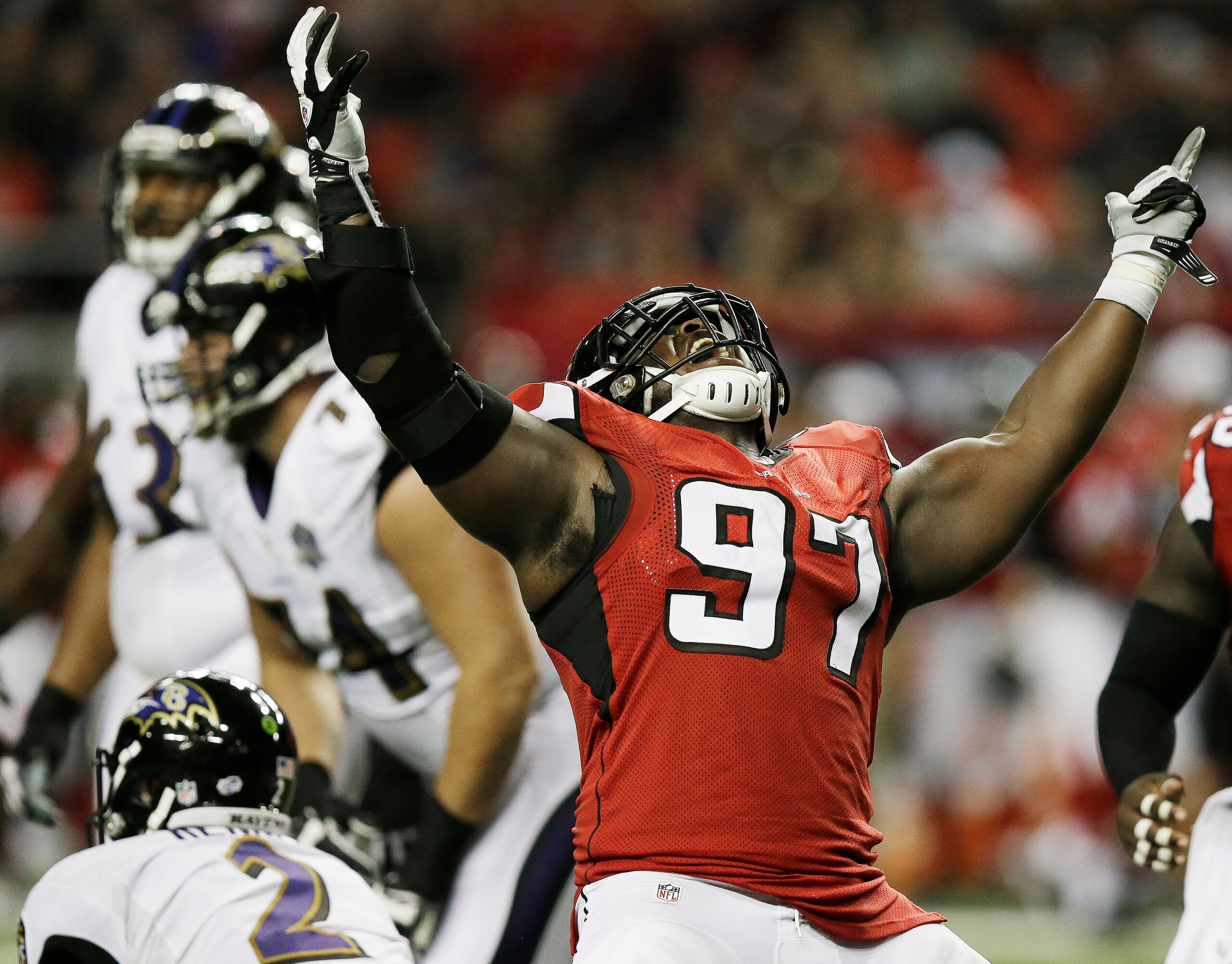
Scheme: 4-3
Starter: Grady Jarrett
NFL1000 Scores: 71.8/100
NFL1000 Position Rank: 12/99
Grady Jarrett had a breakout year in his second season after being a fifth-round pick in 2015. He was primarily used as a nose tackle at the beginning of the season, where he played well, but his best play came at 3-technique.
When Adrian Clayborn missed time in the regular season and the playoffs, Jarrett took over at 3-technique in the nickel packages. His ability to disrupt was better utilized there, where he saw fewer double-teams. Jarrett had the game of his career in the Super Bowl with three sacks.
Backup: Dontari Poe
NFL1000 Scores: 67.5/100
NFL1000 Position Rank: 25/99
Dontari Poe was the Falcons' biggest free-agent acquisition. His play has fallen off since his dominant years in 2013 and 2014, but he’s still an above-average defensive tackle.
What hampered Poe in Kansas City was his high snap count; he played at least 70 percent of the snaps in every season since 2013. His playing time peaked in 2013 and 2014, when he played nearly 90 percent of the defensive snaps at 346 pounds.
Dan Quinn has said the Falcons will rotate Poe between 1-technique and 3-technique. With a bevy of players who can line up on the interior in Atlanta, Poe should see the lowest snap count of his career. He still has flashes of the athletic dominance that made him a star.
With his reduced snap count, he should be able to regain his consistency.
Backup: Ra’Shede Hageman
NFL1000 Scores: 64.7/100
NFL1000 Position Rank: 41/99
Ra’Shede Hageman had two halves to his 2016 season.
In the beginning, he struggled to stay on the active game-day roster. When he did play, he was miscast as a two-gapping 4-technique and consistently showed poor gap discipline. In the back half of the season when he primarily played 1-technique, he shined.
He was near unblockable in the Falcons' playoff run at nose technique and 1-technique while Grady Jarrett manned the 3-technique. If Hageman can continue to play on the interior where he belongs, he should be an effective player in 2017.
Backup: Courtney Upshaw
NFL1000 Scores: 59.8/100
NFL1000 Position Rank: 78/99
Upshaw was signed to play 3-technique after playing primarily outside linebacker for the Baltimore Ravens. He was brutal to start the season, but once he filled in for Clayborn and Shelby as an inside/outside player, his play became more consistent.
Like the rest of the Falcons defense, he hit a hot streak in the playoffs, with fantastic showings versus Green Bay and New England. If that can become the norm, the Falcons defensive line might become scary.
Team Need: 2/10
Potential Draft Fits: Eddie Vanderdoes (UCLA), Tanzel Smart (Tulane), Larry Ogunjobi (Charlotte)
Outside Linebacker
13 of 19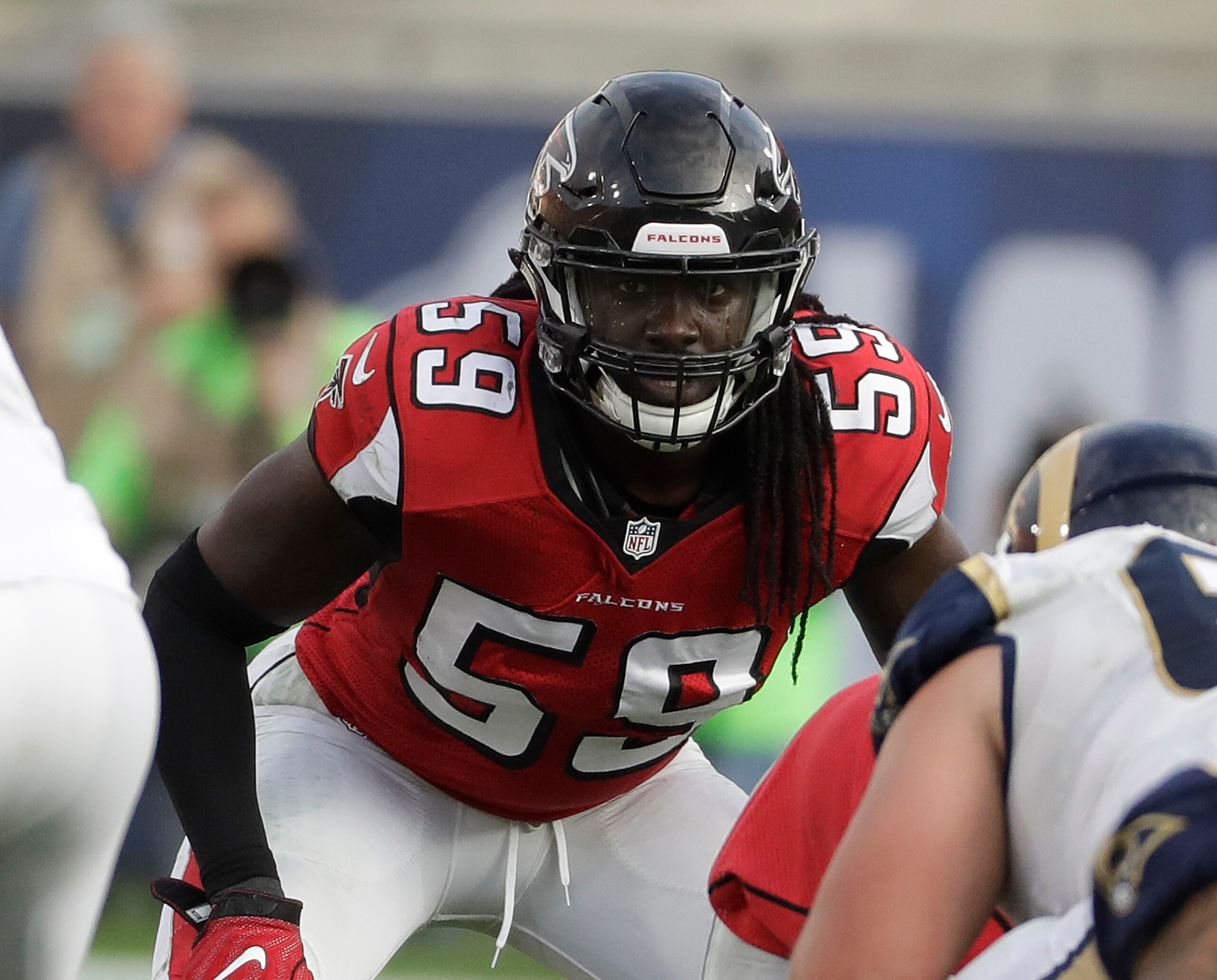
Scheme: 4-3
Starter: De’Vondre Campbell
NFL1000 Scores: 67/100
NFL1000 Position Rank: 12/46
De’Vondre Campbell was one of this year’s rookie surprises. He was selected in the fourth round and was not expected to step in as an immediate starter. However, by the time the regular season rolled around, Campbell proved himself as starter material.
His rookie season featured a fair share of rookie mistakes and mental lapses, but Campbell showed baseline skills as a run defender, coverage piece and blitzer. He proved he could be a solid starting option for the Falcons.
Atlanta could get a better starter than him, but there is no need to press the issue.
Backup: Tyler Starr
NFL1000 Scores: Did not have enough snaps to qualify
The Falcons lost a lot of their linebacker depth. Philip Wheeler, Sean Weatherspoon and Paul Worrilow are not currently on the team after being there last year, and Worrilow has already signed with the Detroit Lions.
With neither Weatherspoon nor Wheeler certain to be back in 2017, Tyler Starr is next in line for the Falcons, even though he's a free agent. Starr is a 2014 seventh-round pick who has hovered on the roster bubble since his draft year.
He is a pseudo-edge player who fits best in Atlanta’s strong-side role down near the line of scrimmage. Considering Starr did not play on the active roster last season, the Falcons need to address linebacker depth.
Backup: Josh Keyes
NFL1000 Scores: Did not have enough snaps to qualify
Josh Keyes was hardly a Falcon last season. He suited up for one game and only contributed on special teams. Keyes, who will be entering his third season in 2017, is a career backup. The Falcons need to add a player to surpass him on the depth chart and serve as a capable emergency backup.
Team Need: 7/10
Potential Draft Fits: Duke Riley (LSU), Elijah Lee (Kansas State), Tanner Vallejo (Boise State)
Inside Linebacker
14 of 19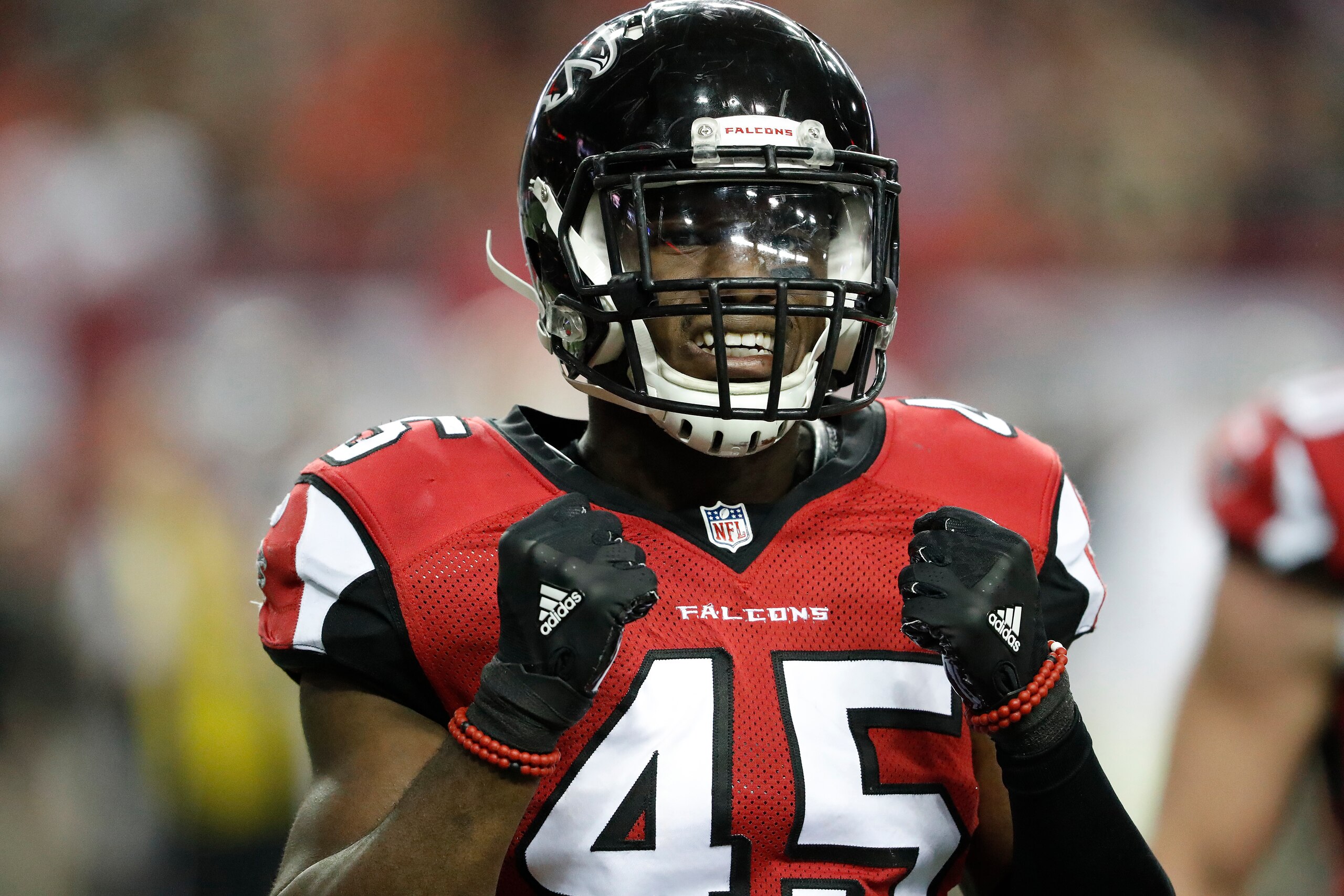
Scheme: 4-3
Starter: Deion Jones
NFL1000 Scores: 73.7/100
NFL1000 Position Rank: 8/65
Although just a rookie, no inside linebacker improved as much as Deion Jones did throughout the 2016 season. He was routinely standing out by the end of the season, proving himself to be an elite athlete capable of filling multiple roles for the Falcons defense.
Few players in the NFL are able to make the splash plays Jones made a habit of all season. Whether returning interceptions for touchdowns or forcing fumbles, Jones is not only efficient but an explosive playmaker as well.
He was touted as an excellent athlete, but few thought he’d develop into the solid starter he has already. By the end of 2017, if he continues playing at his current rate, Jones will comfortably sit in the top 10 of inside linebackers. The force that Jones delivers upon contact is largely based on the speed at which he plays. He’s not the biggest or thickest, but he plays at a speed few can match.
Atlanta made a commitment to linebackers in the 2016 draft and should be set moving forward. Even as depth players, it’s unlikely Atlanta would spend resources on inside linebackers aside from the late picks as special-teamers. Jones’ impressive rise is a representation of an Atlanta defense that is young, fast and developing rapidly.
Backup: LaRoy Reynolds
NFL1000 Scores: Did not have enough snaps to qualify
LaRoy Reynolds re-signed with Atlanta almost immediately after free agency began, electing to remain a Falcon for at least one more year. He is an ideal backup, lacking the athleticism or technique that Jones does but providing enough on special teams to be worth his contract.
As the Falcons continue to push for an NFC crown, Reynolds gives the coaching staff stability should Jones miss time in 2017. He won’t win games, but he’s solid enough to hold the position afloat in a pinch.
Reynolds has the requisite thickness and athleticism to play the run and cover, but his technique and aggressiveness is inconsistent. Whereas Jones plays hyped up for the entire game, Reynolds’ effort comes and goes.
Nonetheless, he’s a qualified backup with knowledge of the system. The Falcons are set at inside linebacker for at least another year.
Team Need: 1/10
Potential Draft Fits: None. Could consider bringing camp competition with undrafted free agents.
Cornerback
15 of 19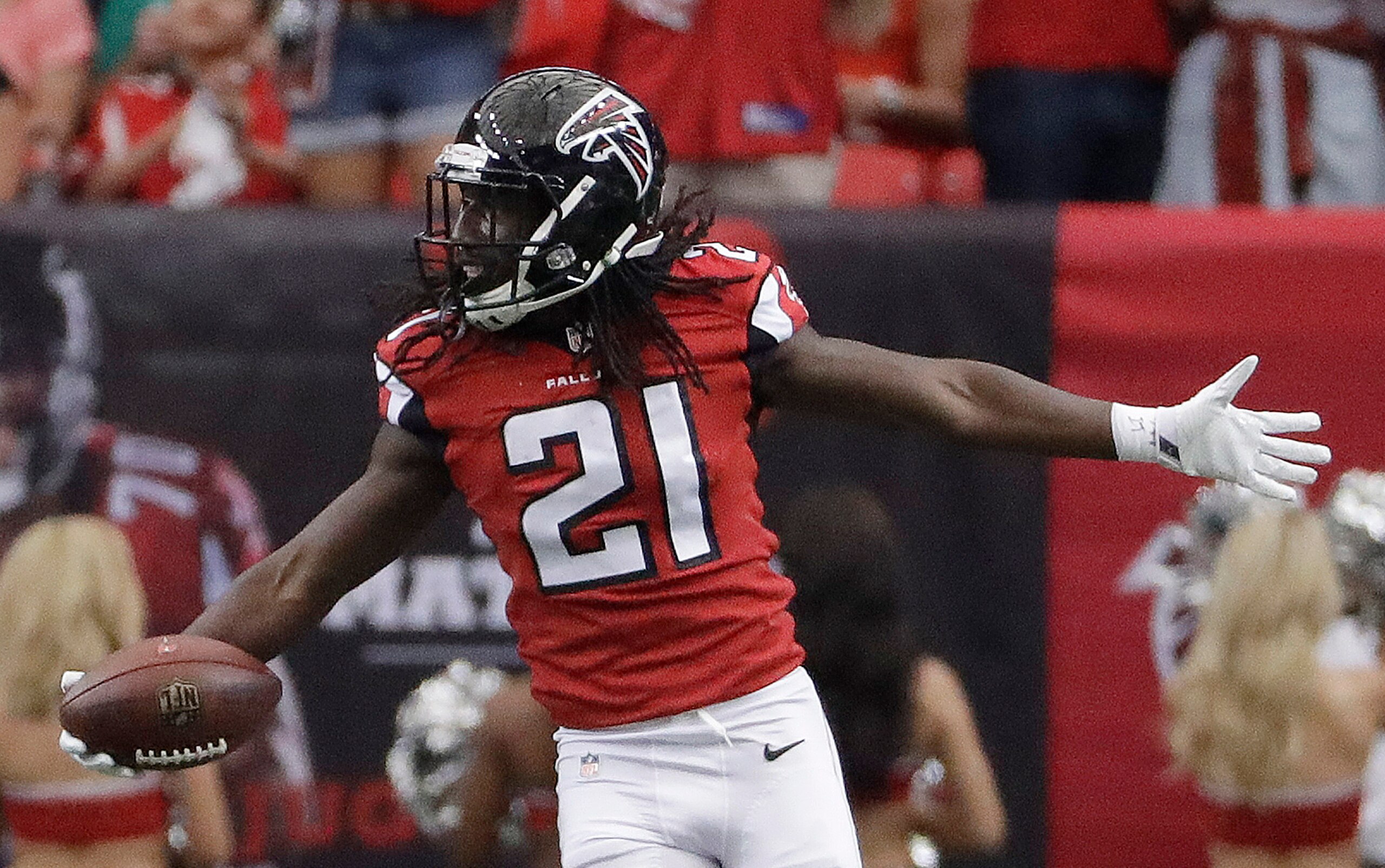
Scheme: Cover 3 Zone
Starter: Desmond Trufant
NFL1000 Scores: 73/100
NFL1000 Position Rank: 5/133
The Falcons secondary played without one of the best corners in the league from Week 10 on, and getting Desmond Trufant back is adding an elite player to an already dangerous defense. Trufant’s interception total is the only thing lacking on his resume, but he’s a shutdown corner.
Trufant signed a five-year extension worth $68.75 million this offseason. It’s deserved, and Trufant will continue to headline a great unit.
Starter: Robert Alford
NFL1000 Scores: 67.4/100
NFL1000 Position Rank: 28/133
Robert Alford was a stud when Trufant went down last year. The Falcons wisely signed him to an affordable contract, locking him in for the foreseeable future. Alford is an above-average No. 2 corner under team control.
Slot: Jalen Collins
NFL1000 Scores: 64/100
NFL1000 Position Rank: 52/133
Jalen Collins is still just a 24-year-old corner, and he’s coming off an impressive stretch of football to end his second season. He can play inside and outside, using his length and solid footwork to eliminate separation and force difficult catches.
Collins hit his stride right before the playoffs and continued through the Super Bowl. He’s not a ball magnet in terms of takeaways—which may come, as he has become more technically proficient and consistent—but he’s locked in for the next two years.
Team Need: 1/10
Potential Draft Fits: None. Could consider bringing camp competition with undrafted free agents.
Free Safety
16 of 19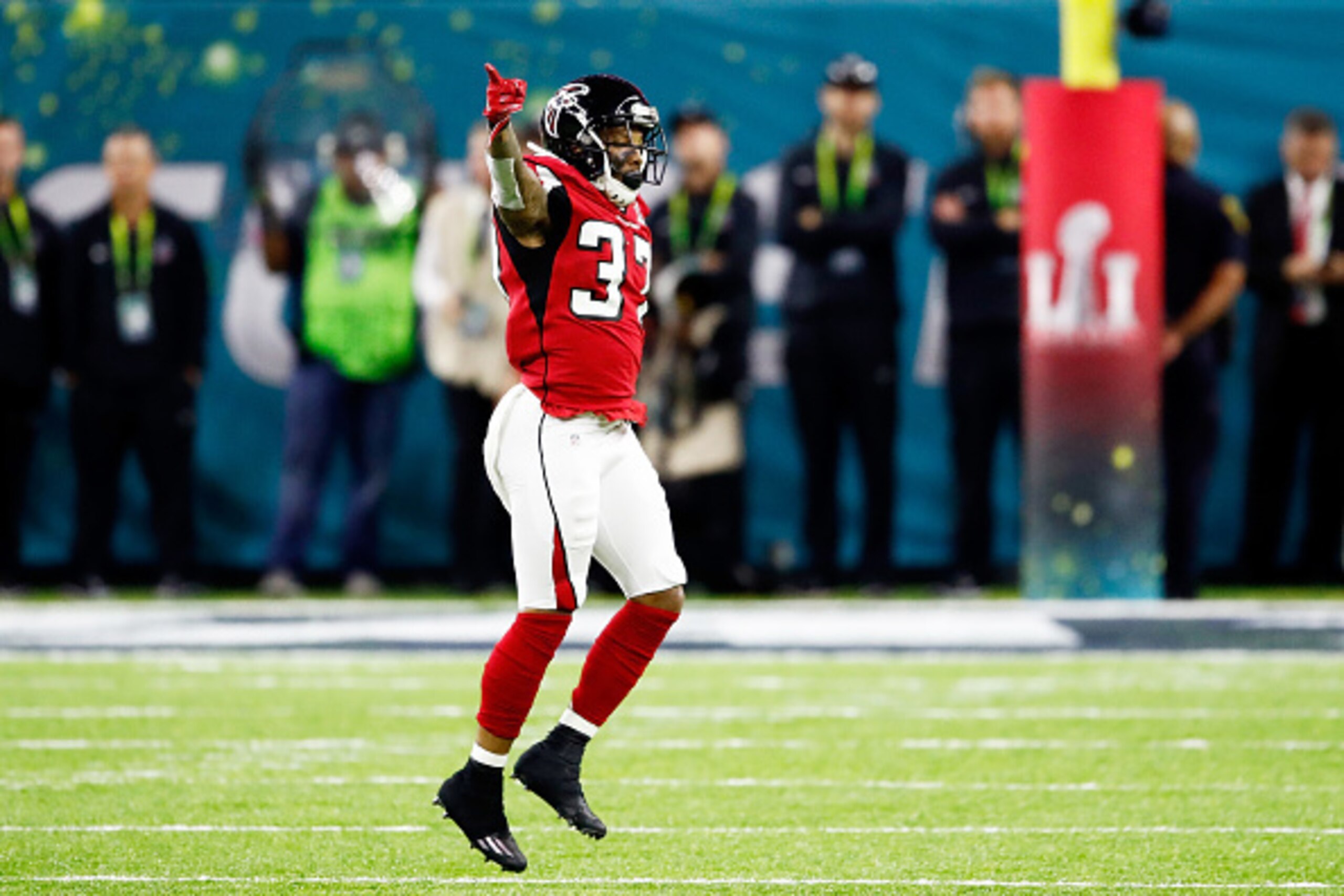
Scheme: Cover 3
Starter: Ricardo Allen
NFL1000 Scores: 70.8/100
NFL1000 Position Rank: 25/50
Allen’s grades and rank don't truly represent the player he had become by the end of the season. He had a poor start to the season, struggling for his first four games. After that, he was rock-solid as he became fully accustomed to the free safety role.
He consistently stayed on top of deep routes, reading route combinations and correctly anticipating where the ball was going to take away deep shots. The Falcons took the cheap option of retaining him as an exclusive rights free agent, but if he picks up where he left off last season and continues to improve, he’ll be set for a good payday next year.
Backup: Sharrod Neasman
NFL1000 Scores: Did not have enough snaps to qualify
Neasman was an undrafted free agent. He only played a handful of snaps last year and isn’t yet ready to see the field in any sort of extended period of time. Neasman is likely to see competition from the draft or from an undrafted free agent.
Team Need: 3/10
Potential Draft Fits: Marcus Williams (Utah), Justin Evans (Texas A&M), Desmond King (Iowa)
Strong Safety
17 of 19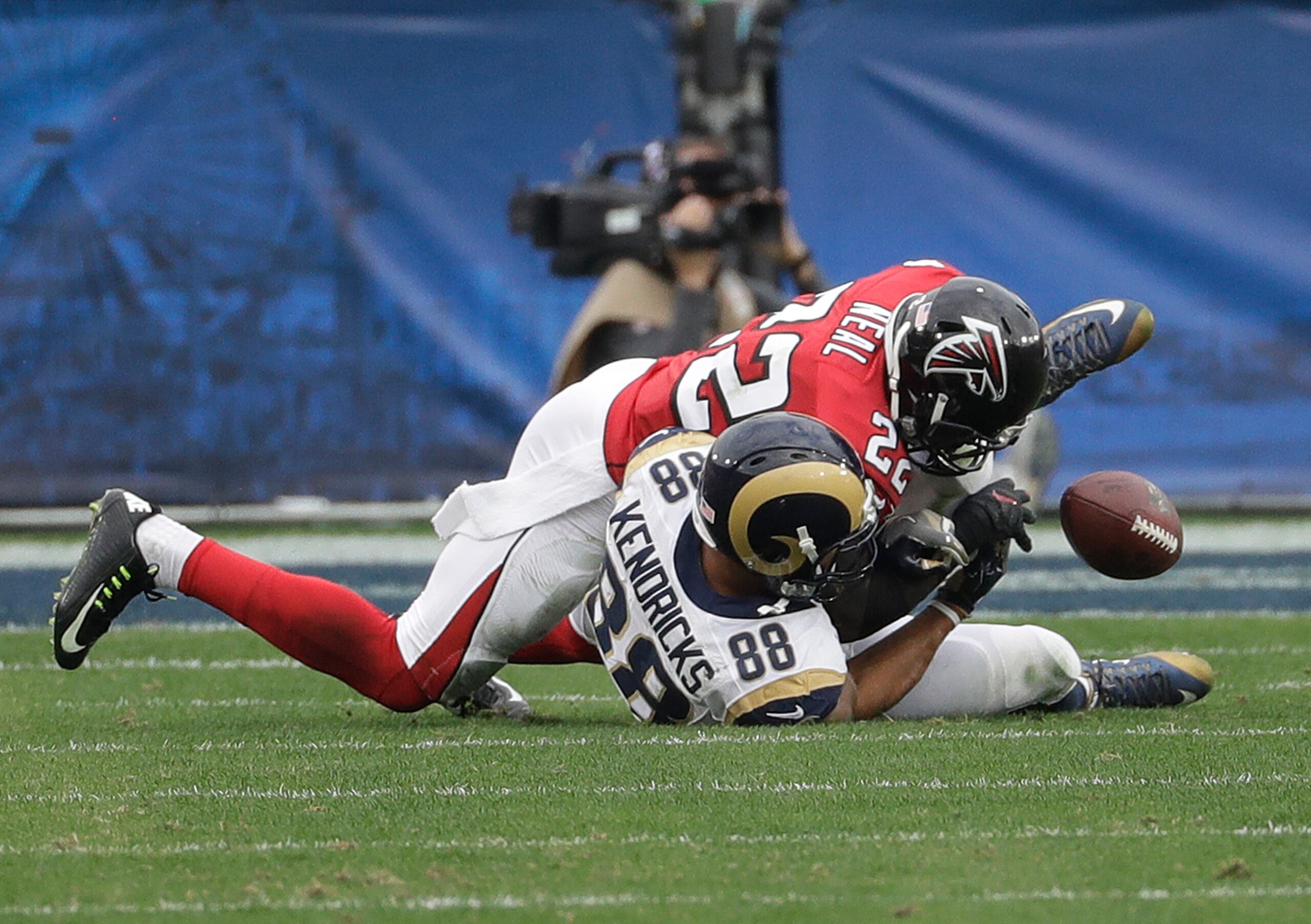
Scheme: Cover 3
Starter: Keanu Neal
NFL1000 Scores: 75.3/100
NFL1000 Position Rank: 4/53
The 2016 first-round pick of the Falcons missed the start of last season due to an injury suffered in preseason. However, he quickly made up for lost time. By the middle of the season, he had established himself as one of the better box safeties in the league.
He was still prone to a few rookie errors here and there, particularly when he was asked to match up in man coverage against receiving tight ends, but overall he exceeded expectations.
Neal quickly picked up the Kam Chancellor role in the Falcons' copy of the Seahawks defense. He was strong against the run and exceptional in underneath zones, where he displayed a natural feel for zone coverage. He knew when to sink in his zone to close throwing windows behind him.
When opposition quarterbacks dumped the ball off to a checkdown, Neal was often the first to react and close on the receiver to make the tackle and keep the gain to a minimum. Assuming his development continues, the Falcons should have one of the best box safeties in the league.
Backup: Kemal Ishmael
NFL1000 Scores: Did not have enough snaps to qualify
Ishmael can count himself slightly unlucky to be left to a backup role. While Neal was injured at the start of the season, Ishmael stepped in and provided the same spark at the strong safety spot that Neal offered later in the season.
But when a team spends its first-round pick on a safety, he’s expected to be the starter. Once Neal came back, Ishmael was forced out of the starting job. He did slide down to play some linebacker as the Falcons dealt with a few injuries there, but once those injuries cleared up, Ishmael was back to sitting on the bench and contributing on special teams.
It was surprising Ishmael didn’t draw more attention in free agency, instead re-signing with the Falcons on a one-year deal. But the Falcons will benefit from having him back, knowing he can fill in at both safety and linebacker if needed.
Team Need: 1/10
Potential Draft Fits: UDFA for competition, but no need.
Kicker
18 of 19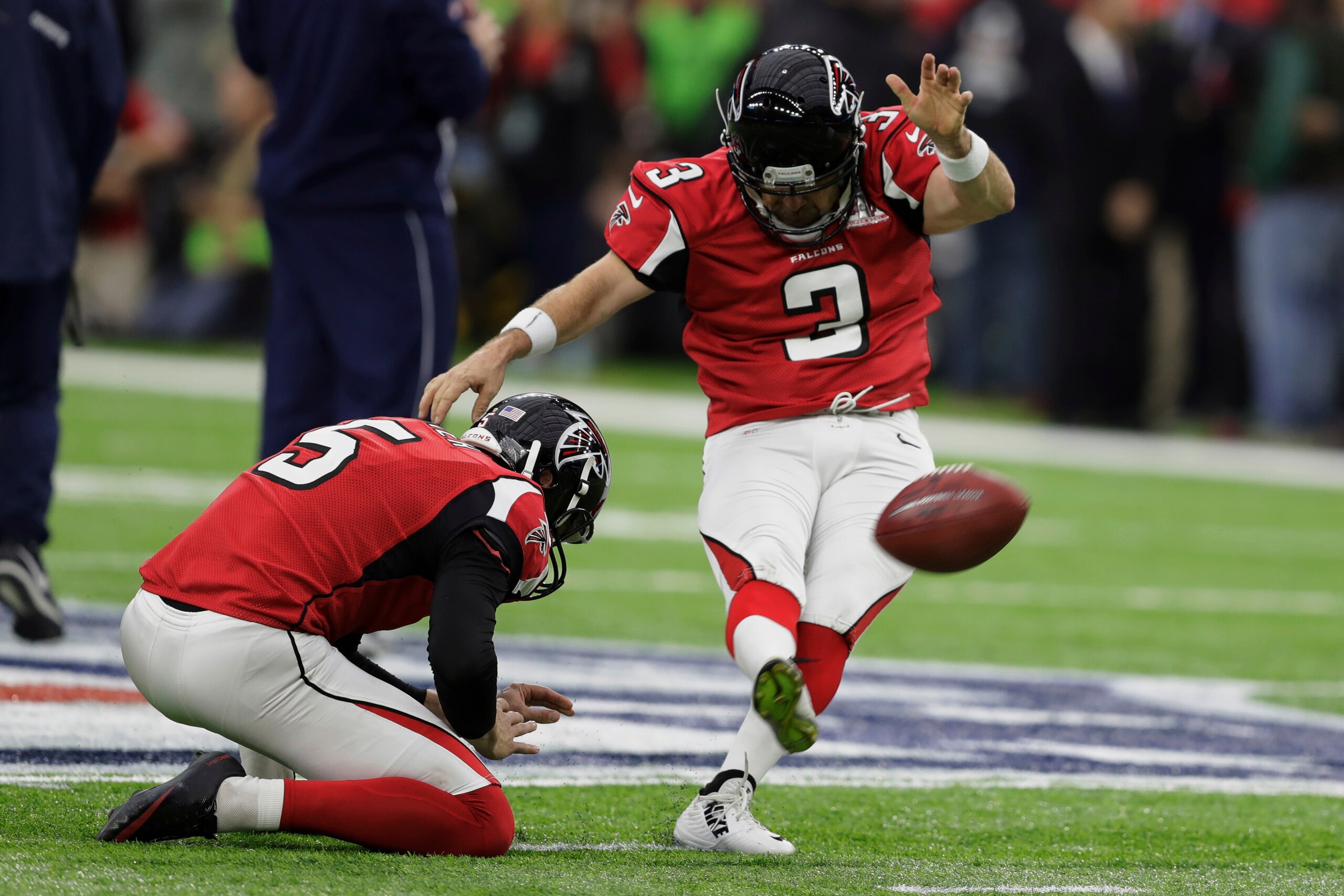
Starter: Matt Bryant
NFL1000 Scores: 71.1/100,
NFL1000 Position Rank: 2/34
Matt Bryant, in his age-40 season, continued his run of excellence he started back in 2010, with only one season during that time below 86 percent accuracy on field goals (2015).
Bryant made 34 out of 37 field goals in 2016, including going 6-of-8 on 50-plus-yard attempts and 9-of-9 on attempts between 40 and 49 yards. Simply put, Bryant was outstanding in 2016, trailing only Justin Tucker’s near-perfect performance.
While Bryant is 41 now, he shows no signs of slowing down. The only reason he wouldn’t be the Falcons’ starter is if he no longer wants the job.
Team Need: 0/10
Potential Draft Fits: None
Punter
19 of 19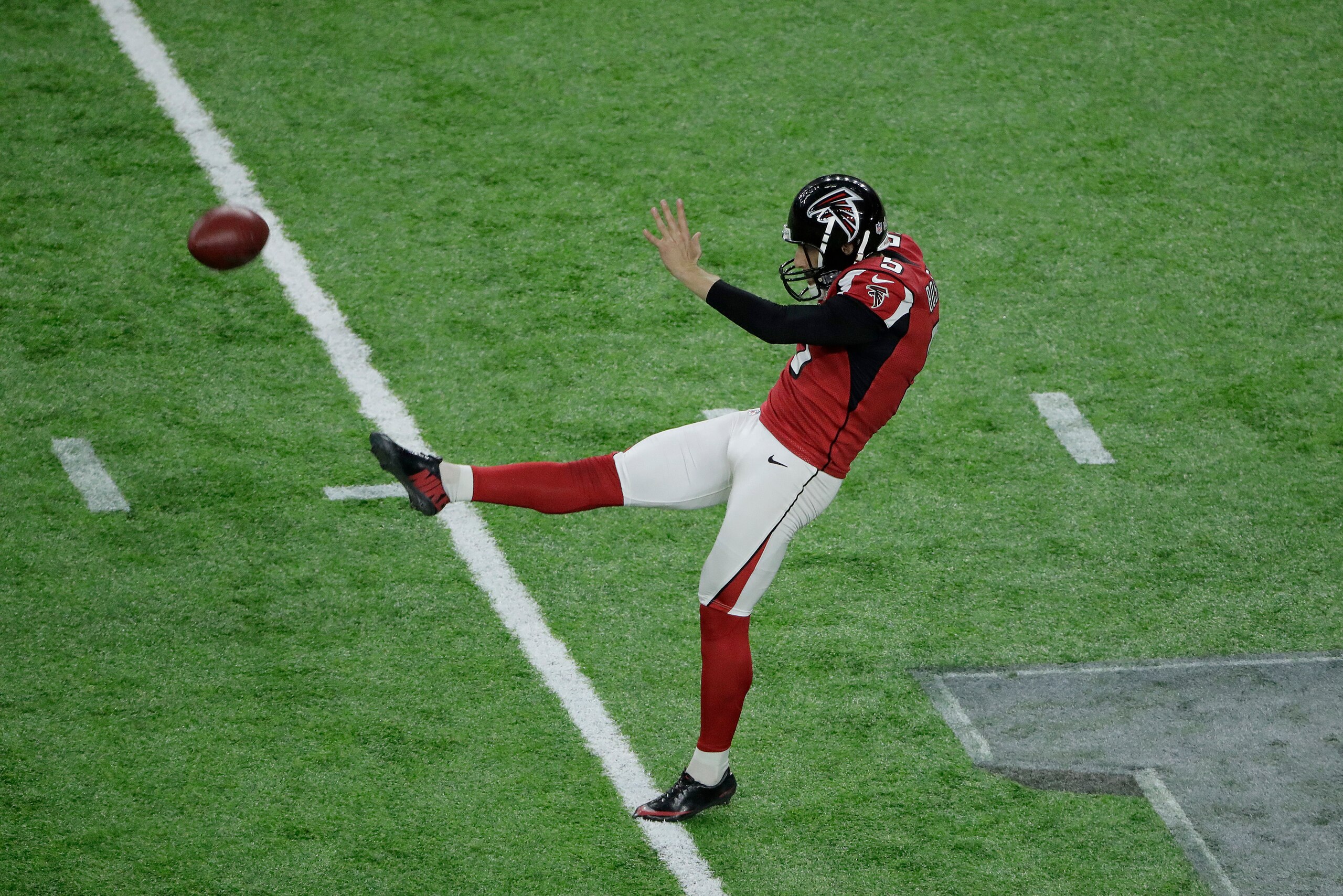
Punter: Matt Bosher
NFL1000 Scores: 67.9/100
NFL1000 Position Rank: 10/34
Matt Bosher possesses one of the stronger legs in the league, though he still falls slightly behind Tampa Bay’s Bryan Anger for the leg-strength crown. Bosher routinely blasts 50-plus-yard punts out of his own end, though with an offense as potent as Atlanta’s, the need for such punts is less frequent.
Bosher was consistent this season, posting only two weeks of subpar power numbers; however, his directional game tends to come and go somewhat from week to week.
Bosher is a bargain for the next three seasons at just under $2.6 million in AAV, and there is no reason to think Atlanta will be moving on from him. He is young (29), possesses top-10 talent at the position and is likely to continue to improve as he works on his feel and improves his ball placement going forward.
Team Need: 0/10
Potential Draft Fits: None
.jpg?w=2560 "Titans Ravens Football")




.jpg?w=2560 "Tyreek makes another cryptic post amid Chiefs rumors")