

Oakland Raiders: Updated Draft Big Board After 1st Wave of Free Agency
Swirling rumors about the Oakland Raiders' consideration to lure running back Marshawn Lynch back to the field, via ESPN's Adam Schefter and Josina Anderson, pushed draft talk down by the wayside. Whether Beast Mode returns to the field or not, we all know how much general manager Reggie McKenzie values the draft.
NFL Network's Ian Rapoport tweeted about the Raiders' unwillingness to part ways with anything more than conditional picks for Lynch. Despite the entertaining chatter, Oakland may ultimately look toward a deep draft class to fill running back Latavius Murray's role.
The ideal candidate must have a decent build to endure hits near the goal line and on short-yardage scenarios. Above all, he should be equipped to protect quarterback Derek Carr on blitz pickups.
Other than running back, the Raiders have holes on every level of the defense. Strangely, the front office has yet to sign a defensive player. The Raiders hosted linebacker Zach Brown for a visit, but he left without a contract. McKenzie could still re-sign Perry Riley to fill one of two linebacker vacancies, or he can push all his chips to the middle of the table during draft time.
We'll take a sneak peek at what the Raiders' big board may look like in April and five prospects at each position of need.
Top 100 Big Board
1 of 7
The big board below ranks each player according to their fit with the Raiders. It’s not a standalone draft ranking for the 2017 class.
For example, the Raiders have their franchise quarterback in Carr and signed EJ Manuel, per Schefter. Don’t expect to see Mitchell Trubisky or Deshaun Watson listed below.
Furthermore, this big board doesn't include unrealistic draft picks such as Texas A&M edge-rusher Myles Garrett. At the moment, here are the Raiders' top 100 prospects in descending priority order:
| Rank | Player | Position | School |
| 1 | Reuben Foster | LB | Alabama |
| 2 | Malik Hooker | FS | Ohio State |
| 3 | Leonard Fournette | RB | LSU |
| 4 | Christian McCaffrey | RB | Stanford |
| 5 | Zach Cunningham | LB | Vanderbilt |
| 6 |
Jabrill Peppers | SS | Michigan |
| 7 | Haason Reddick | LB | Temple |
| 8 | Caleb Brantley | DT | Florida |
| 9 | Gareon Conley | CB | Ohio State |
| 10 | Malik McDowell | DT | Michigan State |
| 11 | Chidobe Awuzie | CB | Colorado |
| 12 | Tre'Davious White | CB | LSU |
| 13 | Obi Melifonwu | SS | Connecticut |
| 14 | Cam Robinson | OT | Alabama |
| 15 | Ryan Ramczyk | RB | Wisconsin |
| 16 | Dalvin Cook | RB | Florida State |
| 17 | Cordrea Tankersley | CB | Clemson |
| 18 | Kevin King | CB | Washington |
| 19 | Teez Tabor | CB | Florida |
| 20 | Budda Baker | FS | Washington |
| 21 | Garett Bolles | OT | Utah |
| 22 | Marcus Williams | FS | Utah |
| 23 | Quincy Wilson | CB | Florida |
| 24 | Anthony Walker Jr. | LB | Northwestern |
| 25 | Jarrad Davis | LB | Florida |
| 26 | Marlon Humphrey | CB | Alabama |
| 27 | Josh Jones | SS | NC State |
| 28 | Chris Wormley | DT | Michigan |
| 29 | Desmond King | FS | Iowa |
| 30 | Adoree' Jackson | CB | USC |
| 31 | Fabian Moreau | CB | UCLA |
| 32 | Raekwon McMillan | LB | Ohio State |
| 33 | Taylor Moton | OL | Western Michigan |
| 34 | Roderick Johnson | OT | Florida State |
| 35 | Montravius Adams | DT | Auburn |
| 36 | Danny Isidora | OG | Miami |
| 37 | Larry Ogunjobi | DT | Charlotte |
| 38 | Isaac Asiata | OG | Utah |
| 39 | Jeremy McNichols | RB | Boise State |
| 40 | Vincent Taylor | DT | Oklahoma State |
| 41 | Sidney Jones | CB | Washington |
| 42 | Carlos Watkins | DT | Clemson |
| 43 | James Conner | RB | Pittsburgh |
| 44 | Dalvin Tomlinson | DT | Alabama |
| 45 | Brian Hill | RB | Wyoming |
| 46 | Ben Braden | OG | Michigan |
| 47 | Will Holden | OT | Vanderbilt |
| 48 | Eddie Jackson | SS | Alabama |
| 49 | DeMarcus Walker | DE | Florida State |
| 50 | Samaje Perine | RB | Oklahoma |
| 51 | Antonio Garcia | OT | Troy |
| 52 | Davon Godchaux | DT | LSU |
| 53 | Ahkello Witherspoon | CB | Colorado |
| 54 | Kendell Beckwith | LB | LSU |
| 55 | Alvin Kamara | RB | Tennessee |
| 56 | Rasul Douglas | CB | West Virginia |
| 57 | Chris Godwin | WR | Penn State |
| 58 | Nico Siragusa | OG | San Diego State |
| 59 | Jamaal Williams | RB | BYU |
| 60 | JuJu Smith-Schuster | WR | USC |
| 61 | Ryan Glasgow | DT | Michigan |
| 62 | Justin Evans | SS | Texas A&M |
| 63 | Chad Wheeler | OT | USC |
| 64 | Elijah Qualls | DT | Washington |
| 65 | Rayshawn Jenkins | FS | Miami |
| 66 | Nazair Jones | DT | North Carolina |
| 67 | Damontae Kazee | CB | San Diego State |
| 68 | David Sharpe | OT | Florida State |
| 69 | Jarron Jones | DT | Notre Dame |
| 70 | Stacy Coley | WR | Miami |
| 71 | Alex Anzalone | LB | Florida |
| 72 |
Jayon Brown | LB | UCLA |
| 73 | Adam Bisnowaty | OT | Pittsburgh |
| 74 | Corey Clement | RB | Wisconsin |
| 75 | Charles Walker | DT | Oklahoma |
| 76 | Sean Harlow | CB | Oregon |
| 77 | Ben Gedeon | LB | Michigan |
| 78 | Isaiah Ford | WR | Virginia Tech |
| 79 | Jessamen Dunker | OG | Tennessee State |
| 80 | Jon Toth | C | Kentucky |
| 81 | Shelton Gibson | WR | West Virginia |
| 82 | Xavier Woods | SS | Louisiana Tech |
| 83 | D'Onta Foreman | RB | Texas |
| 84 | Jay Guillermo | C | Clemson |
| 85 | Calvin Munson | LB | San Diego State |
| 86 | Elijah Lee | LB | Kansas State |
| 87 | Tanoh Kpassagnon | DE | Villanova |
| 88 | Lucas Crowley | C | North Carolina |
| 89 | DeAngelo Brown | DT | Louisville |
| 90 | Brandon Bell | LB | Penn State |
| 91 | David Jones | FS | Richmond |
| 92 | Conor McDermott | OT | UCLA |
| 93 | Chad Kelly | QB | Mississippi |
| 94 | Dan Skipper | OT | Arkansas |
| 95 | Channing Stribling | CB | Michigan |
| 96 | KD Cannon | WR | Baylor |
| 97 | Jalen Reeves-Maybin | LB | Tennessee |
| 98 | Joshua Dobbs | QB | Tennessee |
| 99 | Adam Griffith | K | Alabama |
| 100 | Zach Banner | OG | USC |
Linebackers
2 of 7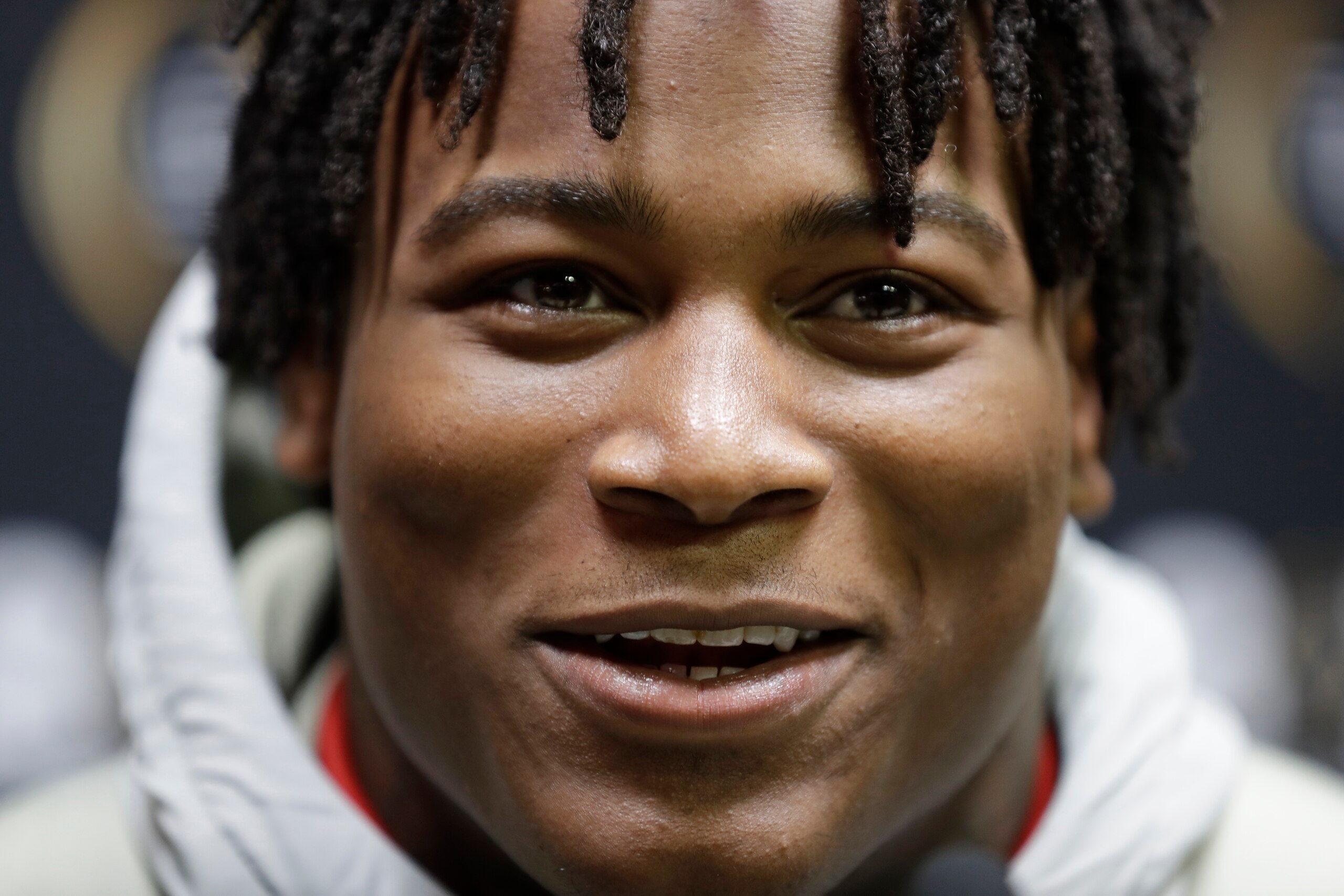
The Raiders have two spots to fill at this position. Riley started 11 games at inside linebacker, and he remains on the free-agent market. Malcolm Smith signed with the San Francisco 49ers. Meanwhile, the coaching staff witnessed Ben Heeney struggle in an expanded role and Neiron Ball has only played six games in two seasons. Therefore, the front office may draft two players at this position.
Reuben Foster, Alabama
An incident at the NFL Scouting Combine, which resulted in the league sending Reuben Foster home without a workout, may hurt his draft placement. Keep an eye on the Alabama prospect's status in case front office executives continue to uncover details about the incident or a behavioral pattern.
When looking at the glass half-full, typically coaches want a fiery linebacker who's going to hold his teammates accountable. On the other hand, the inside linebacker oftentimes takes on a leadership role on the field. While setting up the defense and making adjustments, he must show poise rather than recklessness.
On film, Foster looks like an old-school downhill linebacker, but he's athletic enough to move in space in short-area coverage assignments.
Zach Cunningham, Vanderbilt
At 6'3", 234 pounds, Vanderbilt product Zach Cunningham plays with a lean frame. On the pro level, he's a weak-side linebacker with the ability to cover tight ends and running backs in space. As a first-round selection, he'd immediately step into Smith's role as a Week 1 starter.
Based on the tape, you'll notice Cunningham missing some tackles due to poor technique. At times, he'll attack head on but fail to wrap up a ball-carrier or pass-catcher. It's a fixable flaw with coaching and repetition on the practice field. He's the best available weak-side linebacker in the draft.
Haason Reddick, Temple
After the Senior Bowl, buzz focusing on Haason Reddick grew exponentially. Bleacher Report's Matt Miller highlighted good qualities about the Temple linebacker during his time in Mobile, Alabama.
"Nothing could stop Haason Reddick, who played both linebacker and defensive end in practices. He was a monster all over the field, making plays as an inside linebacker in run/pass drills and again when asked to put his hand in the dirt and rush the quarterback," said Miller
Reddick comes into the league with tremendous upside, but he's still a project. The Temple product played defensive end at the collegiate level. There's no guarantee that his skill set translates to linebacker in the pros. The decision to take him in the first round should come with patience for his development at a new position.
Anthony Walker Jr., Northwestern
Behind Foster, Anthony Walker Jr. ranks as one of the best pure inside linebackers in the draft. He can thump against the run on early downs and drop back in small-area pass coverage. He's not supremely athletic, which drops him into the second round.
Nonetheless, college production doesn't lie. He checked three boxes as a linebacker on the collegiate level. Walker amassed 7.5 sacks, 38 tackles for a loss and 12 passes defensed over three years as a starter.
The Raiders can unleash Walker on the quarterback or assign him to help out against teams that excel with the short passing attack.
Jarrad Davis, Florida
Physically, Jarrad Davis looks like a sturdy inside linebacker, but he's missed games due to multiple injuries throughout his four-year career in Florida. According to Rapoport, he nursed an ankle injury and didn't participate in the combine, which makes his pro day performance a crucial influence on his draft stock.
The Raiders must do a thorough check on Davis' medicals before deciding to take him in the first or second round. Nonetheless, when healthy, he's a capable inside linebacker who can cover quality tight ends on the professional level. His athleticism may also slot him on the outside. He's quick enough to chase down ball-carriers and clean up plays on the weak side.
Interior Defensive Lineman
3 of 7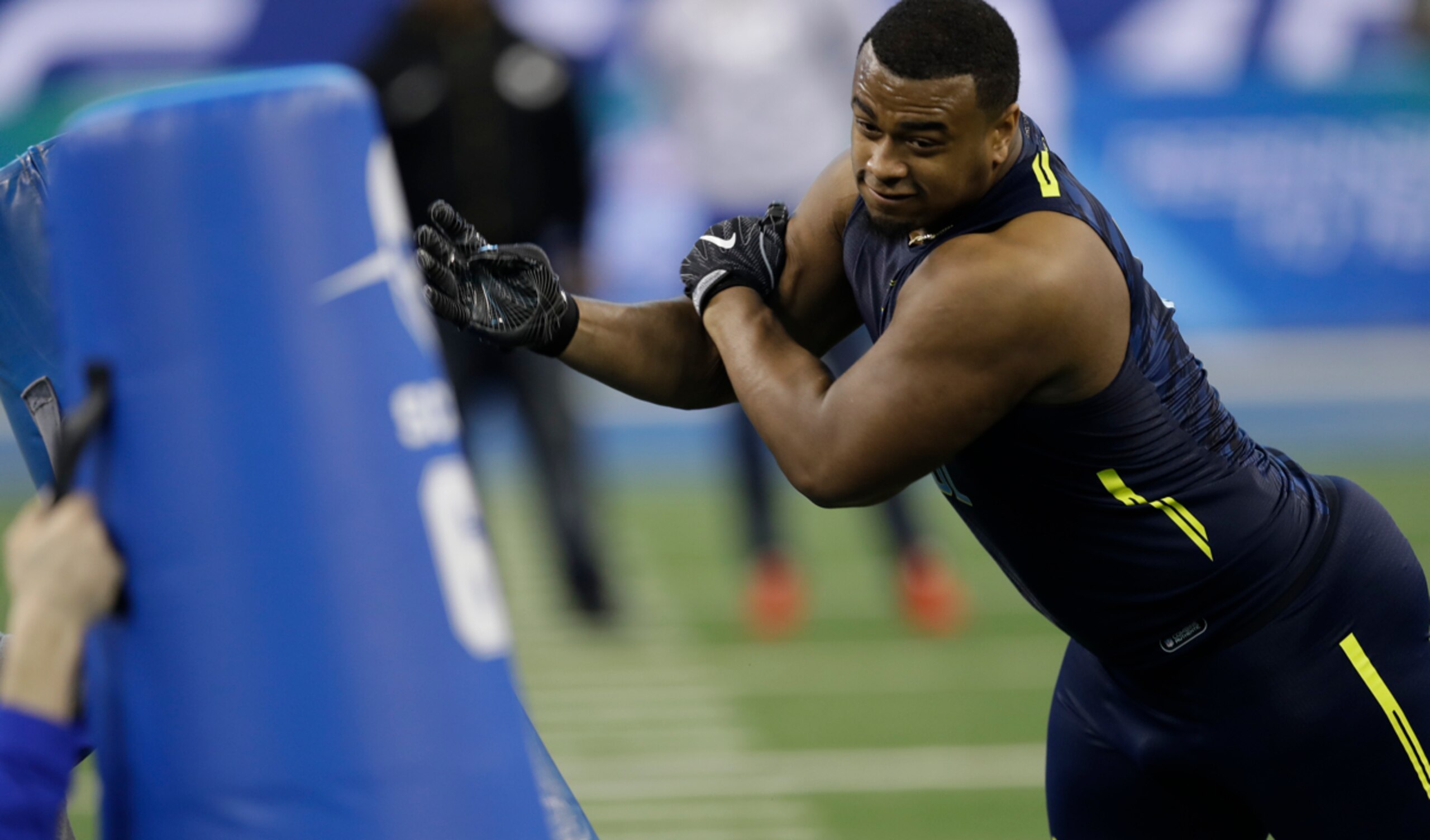
Defensive tackles Justin Ellis and Dan Williams faltered in the previous season. It's understood neither interior lineman has the ability to rush the quarterback. Williams has recorded 1.5 sacks since signing with the team in 2015, while Ellis hasn't logged a sack in his three-year career. As a rookie, Jihad Ward struggled to hold his ground. Someone must bring the interior pressure in the upcoming season.
Caleb Brantley, Florida
Florida defensive lineman Caleb Brantley showcased his power on the collegiate level. He shows quickness off the snap, and his ability to strong arm offensive linemen should impress Raiders scouts and personnel executives. He's reliable as a run defender who's able to wrap up ball-carriers attempting to squeeze through tight lanes.
NFL.com's Lance Zierlein drew a comparison to Los Angeles Rams defensive tackle Aaron Donald, which is a lofty bar to set for a rookie. Unlike Brantley, Donald showed extensive pass-rushing production on the collegiate level.
He logged 29.5 sacks over four seasons at Pittsburgh. The Florida prospect amassed 5.5 sacks during his three-year collegiate career. At worst, the Raiders have a quality run-stopper.
Malik McDowell, Michigan State
Michigan State's Malik McDowell could translate into a high-upside first-round pick or a disappointment for a prospect with his physical measurements and capabilities.
Many will discuss his uneven tape, but defensive end Mario Edwards Jr. faced similar criticisms coming out of Florida State.
When looking at McDowell's collegiate resume, he's shown some pass-rushing value. As a sophomore, he racked up 4.5 sacks before dropping to 1.5 quarterback takedowns as a junior.
On film, he shows a burst but not enough relentlessness in his finish to pad his sack statistics. Don't underestimate defensive line coach Jethro Franklin's ability to maximize McDowell's potential.
Chris Wormley, Michigan
Between his film and collegiate statistics, Michigan's Chris Wormley defines consistency. His upside may not reach McDowell or Brantley's level, but the coaching staff can send Wormley on the field knowing what they'll see week to week.
At 6'5", 298 pounds, his weight isn't disproportioned, which drops the tendency to play with poor mechanics or solely rely on natural ability.
Over the past two years, Wormley accumulated 12 sacks and 22 tackles for a loss. He brings more proven pass-rush ability than the two prospects mentioned above.
McKenzie chose potential over production when selecting Ward during the previous draft. In April, the front office should trust on-field production as an influential draft indicator rather than perceived potential in the early rounds.
Montravious Adams, Auburn
Here's another prospect who exhibits first-round talent in spurts but consistency will hurt his draft stock. Auburn defensive tackle Montravious Adams logged four sacks during his senior season. He also flashed as a 300-plus pound disruptor in the backfield with 19.5 tackles for a loss in four seasons.
Adams has the ability to secure a starting spot, but he must add variety to his pass-rush moves to catch the opponent off balance. Like many defensive linemen his size, he relies on sheer power more than refined technique. As a third-round selection, he holds solid value.
Jaleel Johnson, Iowa
Jaleel Johnson's breakout senior season could help raise his stock. He jumped out as a dominant force on Iowa's defensive line, logging 7.5 sacks and 10 tackles for a loss. According to CBS Sports' draft rankings, he's a third-round pick. The Raiders may consider rolling the dice on a late bloomer and develop him into a rotational pass-rushing defensive tackle.
At 6'3", 316 pounds, he flashes quickness and the ability to penetrate or disengage blocks against the run. As a rookie, he'll likely rotate in on obvious passing downs. Nonetheless, his natural qualities suggest there's more to his game as a three-down defender on the interior.

Running Backs
4 of 7
Most would consider Lynch on a one- or two-year contract as a short-term solution to Murray's vacancy. At the moment, he's still retired and the Seattle Seahawks own his rights.
Despite general manager John Schneider's cozy relationship with McKenzie, he's not obligated to help him out by releasing Beast Mode. So, we'll look at younger, cheaper draft alternatives.
Christian McCaffrey, Stanford
Stanford product Christian McCaffery could be the third running back to come off the draft board. Based on his film, collegiate production and a great showing at the combine, he has the potential to provide more impact on an offense than LSU's Leonard Fournette or Florida State's Dalvin Cook.
There's one caveat. McCaffrey doesn't have a consistent track record in pass protection, per Zierlein.
"[He's] inconsistent squaring up blitzers in pass pro and ducks his head into contact," said the pro scout.
Nonetheless, coaching could improve McCaffrey's blocking technique. Alternatively, the Raiders may opt to utilize Jamize Olawale to protect Carr on the inside. Head coach Jack Del Rio spoke glowingly about the Stanford's product's humble beginnings and prospective career outlook during the combine.
Jeremy McNichols, Boise State
Boise State running back Jeremy McNichols should continue to surge on big boards as the draft approaches in April. He put together a solid showing at the combine and caught the ball with ease during the receiving drills. He's a second-round prospect, who may drop into the third or fourth round due to top-heavy talent at the position.
McNichols amassed 3,980 yards from scrimmage and 43 touchdowns between his sophomore and junior years at Boise State.
He's not the most polished blocker, but he's not afraid to chip in and slow down the oncoming pass rush. The Raiders would acquire a solid third component in the ground attack and someone who can play on all three downs as a lead ball-carrier if injuries strike the backfield.
James Conner, Pittsburgh
Pittsburgh's James Conner ranks as the best pass protector among the fives names listed at the position.
According to Zierlein, he's willing to put his body in the line of fire as a ball-carrier and pass blocker. Unlike the two running backs mentioned above, he's a one-gear runner on tape. He doesn't dial into a second speed in the open space. As a bigger ball-carrier, Conner would become a 233-pound battering ram in the Raiders backfield.
Conner would essentially move the chains and score touchdowns, which is all the Raiders need with running backs DeAndre Washington and Jalen Richard doing the heavy lifting between the 20-yard lines and on early downs.
Brian Hill, Wyoming
Wyoming ball-carrier Brian Hill compares closely to McNichols. He's not a bruising running back, but he can move the ball in short-yardage situations. He's also willing to stand in the backfield and absorb a hit for his quarterback. Typically, rookies don't walk into the league with the sharpest blocking techniques anyway.
At 219 pounds, he carries a slightly bigger body frame compared to McNichols at 214 pounds. The Wyoming product carried the load in the backfield over the past two seasons and logged 22 rushing touchdowns during his final year with the school. As a fifth-round pick, he's certainly worth consideration.
Samaje Perine, Oklahoma
Oklahoma running back Samaje Perine compares closely to Conner with less refined pass-blocking abilities. At the combine, Perine bench-pressed 225 pounds more times than some offensive linemen. He exhibits uncanny strength. On game day, he'll mow over defenders with a power downhill run style.
Zierlein compares Perine to Michael Turner, who notched at least 10 touchdowns in all five years as a starter with the Atlanta Falcons between the 2008-12 seasons. The Raiders should be able to select the Oklahoma power runner in the fourth or fifth round. Aside from his pass-protection issues, he's a perfect complement to Washington and Richard.
Offensive Guard
5 of 7
The Raiders signed offensive tackle Marshall Newhouse, which creates a four-man competition at right tackle. Austin Howard will cede starting snaps during training camp as he recovers from two shoulder surgeries.
ESPN's Adam Caplan pinpointed Denver Kirkland and Vadal Alexander as primary candidates to start at the position.
With all the possibilities at right tackle, the Raiders need reinforcements or an eventual replacement for Gabe Jackson if he hits the free-agent market in 2018.
Dan Feeney, Indiana
The Raiders can prepare for Jackson's departure a year in advance with a high draft pick at the position. Dan Feeney lined up at both positions on the right side during his latter years at Indiana. In today's NFL, it's important for offensive linemen to familiarize themselves with multiple spots.
The Indiana product would likely stay inside, but the ability to slide outside should intrigue the Raiders front office. At the combine, Feeney tested well on the cone drill, which indicates short-area quickness; it's a beneficial quality as a pulling guard.
Danny Isidora, Miami
Miami offensive guard Danny Isidora earned multiple ACC accolades as a standout guard, per Zierlein. For the most part, he lined up on the right side, which helps the Raiders with a potential departure or fill in for an injured player. A foot injury that cost him 10 games during the 2013 season shouldn't come up as a concern.
Isadora could potentially supplant Jon Feliciano as the primary interior offensive lineman. On film, the incoming Miami product displayed more foot quickness than his fellow alum already on the roster. He ran 5.03 40-time as a top performer at his position.
Taylor Moton, Western Michigan
Technically, Western Michigan's Taylor Moton will list as an offensive tackle on the draft board. He played 25 games at right tackle and spent a season at right guard, and he earned recognition at both spots. It's not often the tape shows an athletic offensive lineman who can also maul defenders after a hand off to the running back.
At 6'5", 319 pounds, coaching staffs will envision Moton as an interior lineman. Fortunately, offensive line coach Mike Tice hasn't tied his players to specific positions. Due to Moton's versatility, the Western Michigan product would have a good chance at holding a starting position within a year or two.
Isaac Asiata, Utah
At first glance, Utah's Isaac Asiata fits the Raiders' offensive line mold as a big-body asset. On film, he shows physical power and doesn't shut his motor off until the whistle. Tice would appreciate his mean streak―a demeanor that made Kelechi Osemele so valuable in the trenches during the previous year.
At his size, don't expect Asiata to pull like an athletic guard. His ability to ward off pass-pushing defensive tackles has a place on the roster. The Utah prospect isn't as slow-footed as Feliciano, but he's less agile than Osemele. Overall, he's worth a third-round pick as an eventual starter.
Ben Braden, Michigan
Offensive guard Ben Braden comes from a culture that encourages physicality and grit. It's evident when battling Michigan in trenches under head coach Jim Harbaugh. The 6'6", 329-pound lineman didn't amaze spectators with quick-twitch movements at the combine. However, his tape shows a solid pass protector with the ability to clear running lanes.
Braden played four positions across the offensive line at the collegiate level. He wouldn't have to start right away, but extensive development with his hand and foot techniques should vault him into a starting spot when available.
Cornerbacks
6 of 7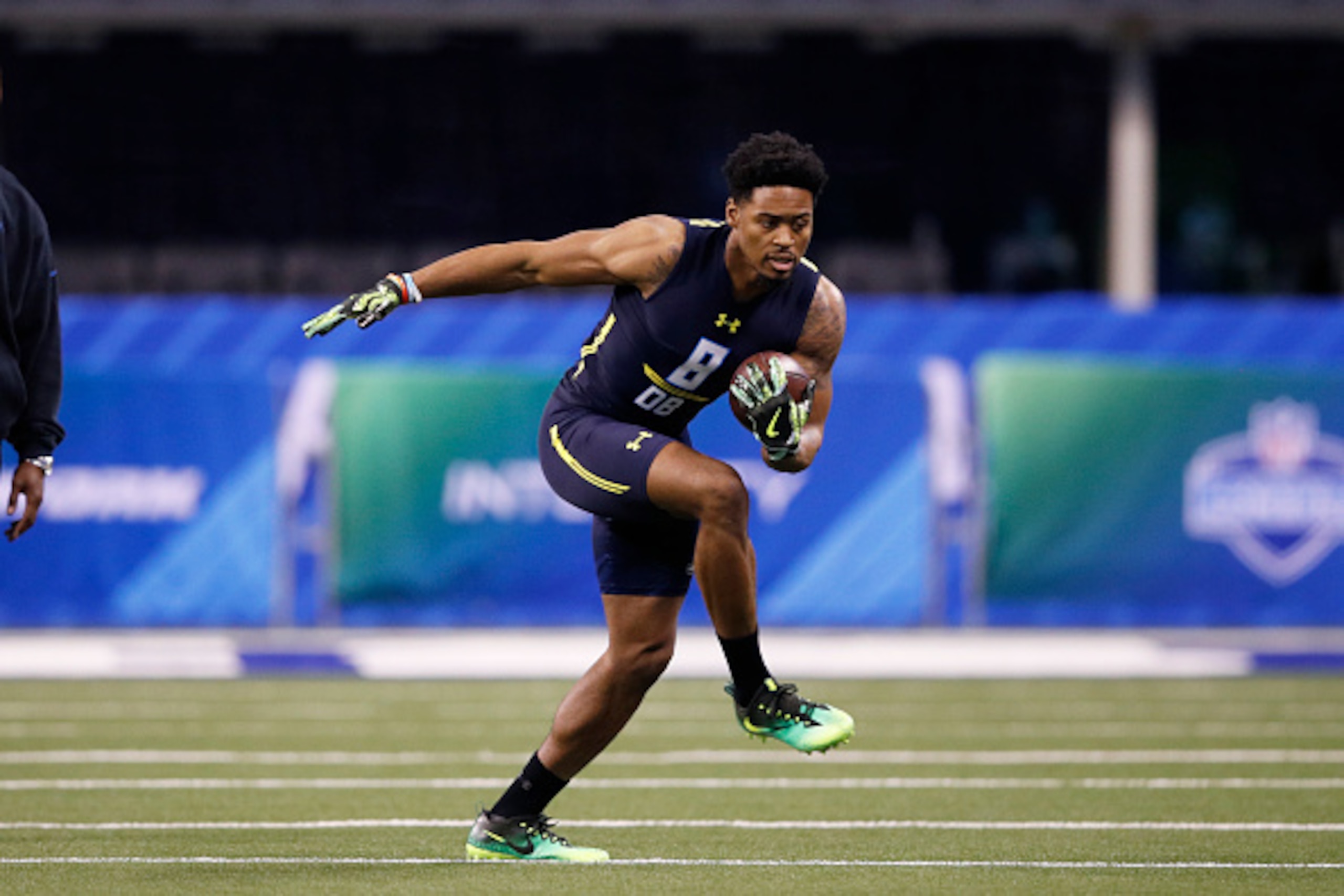
The Raiders struggled to defend the deep ball in the previous season. If Sean Smith takes the fault for more coverage breakdowns, someone would need to take over on the perimeter. TJ Carrie enters a contract year with an opportunity to cash in on his market value, pending an impressive season. An early-round selection at cornerback shouldn't surprise anyone outside the organization.
Gareon Conley, Ohio State
Ohio State defensive backs Marshon Lattimore and Malik Hooker garnered most of the attention through the early draft process. If not for an impressive combine showing, we'd still discuss Gareon Conley as the other defensive back coming out of Ohio State. Nonetheless, he deserves as much hype as his fellow Buckeyes.
Conley's long arms and speed allow him to cover extensive distance and recover on subtle mistakes. Furthermore, the Raiders will find his ability to press wide receivers on the outside as a beneficial trait in their defensive scheme. David Amerson and Smith attempt to challenge receivers early in their routes but lack Conley's foot quickness and speed to keep stride downfield.
Chidobe Awuzie, Colorado
Chidobe Awuzie's draft stock continues to rise after the combine. He displayed good hands and fluid hips during the on-field drills. He didn't record as many interceptions as others on this list, but he increased his passes defensed every year at Colorado. At 6'0", 202 pounds, Awuzie has the size to play on the perimeter or on the inside.
Unlike most cornerbacks, the Colorado prospect takes pride in his tackling. With a full training camp, Awuzie could step into the slot position right away. Most teams use their nickel package more than the base defense. As a result, a cornerback who's equipped to excel in man-to-man coverage and play downhill on the inside possesses tremendous value.
Tre'Davious White, LSU
Tre'Davious White could be the next quality cornerback out of LSU. Despite recording no more than two interceptions in a season, White brings physicality and timing to his play style. He shows great instincts with the ball in the air. Eventually, interceptions will accumulate on the professional level.
Similar to Awuzie, he's a slot cornerback as a rookie. However, he must refine his tackling technique to thrive at the position. At 5'11", 192 pounds, bigger running backs may run him over in the open field. If the Raiders need someone to cover quick-twitch receivers like Denver Broncos wideout Emmanuel Sanders, White fits the bill.
Adoree' Jackson, USC
Southern California cornerback Adoree' Jackson has received mixed reviews due to his 5'10", 186-pound stature, but he put his ball-tracking skills on display during his combine drills and workouts.
Even though bigger receivers such as Julio Jones, Sammy Watkins and Jordy Nelson capture the spotlight, defenses must be equipped to cover guys such as Odell Beckham Jr. and Antonio Brown as well.
A wide receiver will need more than a double move to shake Jackson in coverage. The USC cornerback's speed stands out most, but he's also good with anticipation and placement. Jackson can make an interception return look like a kick return in space. As a playmaker, he can break the game open on defense or special teams.
Sidney Jones, Washington
Initially, Sidney Jones flashed first-round potential. Unfortunately, he tore his Achilles at Washington's pro day, per Yahoo Sports writer Eric Edholm's source.
He'll likely drop to the second or third round, but the Raiders can draft and stash him for a year. When healthy, Jones can line up on the perimeter. There's no need to rush a second- or third-round cornerback on the field.
If Jones returns to pre-injury form, the Raiders would have a first-round talent in waiting. The Washington product could take over for either Smith or Amerson, pending their performances. As a third-round selection, Oakland could run away with the biggest steal of the draft.
Safeties
7 of 7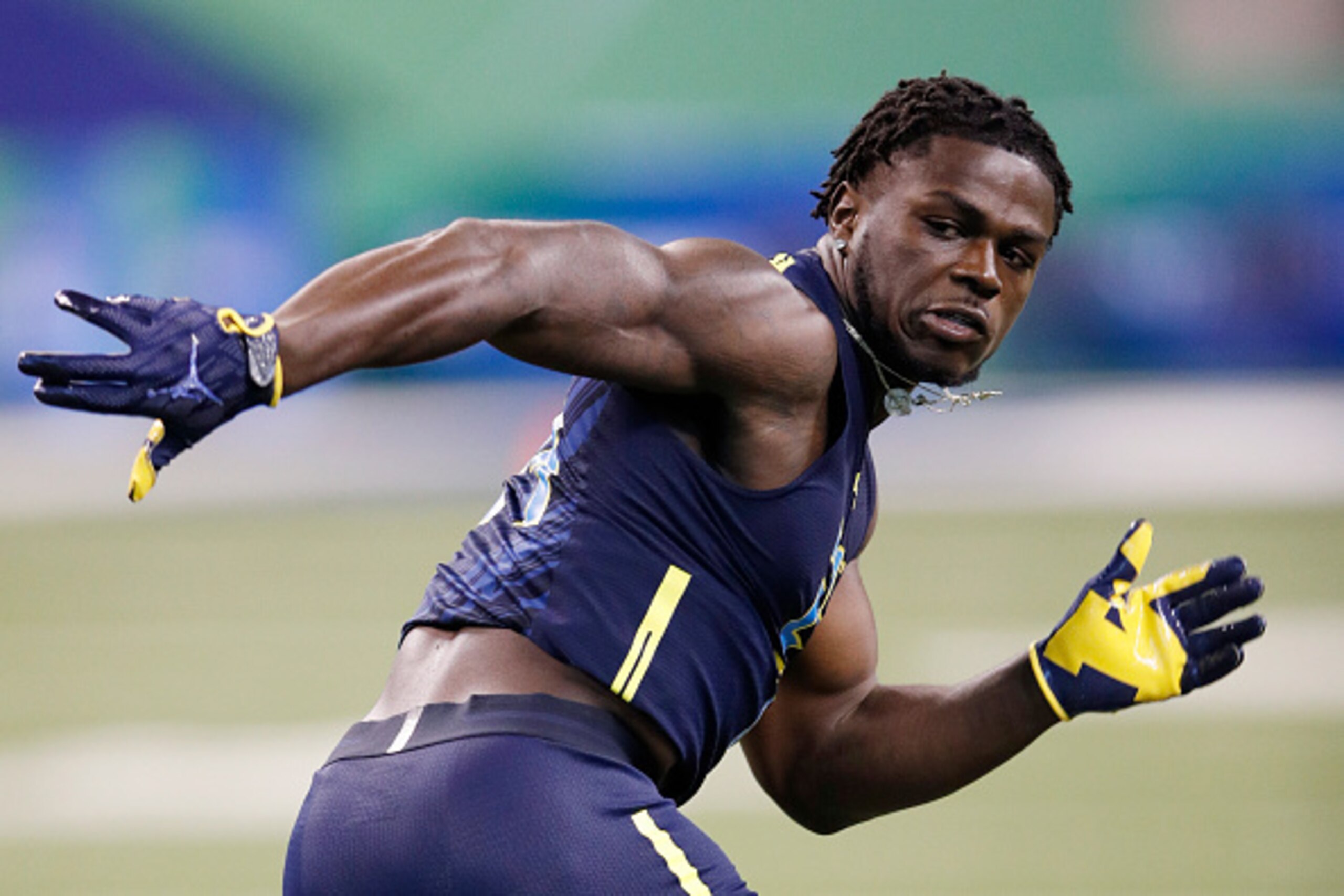
Reggie Nelson's contract will expire after the 2017 season, per Spotrac. Despite coming off a Pro Bowl year, Oakland should move on from the soon-to-be 34-year-old safety. The front office would have to find a complement to second-year pro Karl Joseph who can interchange between the safety positions.
Jabrill Peppers, Michigan
Before his eye-opening combine performances with the linebackers and safeties, Jabrill Peppers flashed as a playmaker in all three phases of the game.
Along with wide receiver Cordarrelle Patterson, the Michigan product would undoubtedly push the Raiders to No. 1 in special teams return yards for the 2017 season. Richard would focus solely on his duties at running back.
Oakland wouldn't need Peppers to run its gadget plays, but he can play multiple roles on defense. He shows enough coverage ability to cover tight ends and reliable tackling technique as a box safety closer to the line of scrimmage. Together, he and Joseph would limit yards after the catch and rip off some interceptions downfield.
Marcus Williams, Utah
Since the Raiders won't have a good shot at Hooker in the first round, Marcus Williams should lead the list for deep-cover safeties available in the draft. At 6'1", 202 pounds, he isn't prone to passes sailing over his head like shorter prospects at this position. He displayed top-notch coverage skills with five interceptions in his sophomore and junior seasons.
The decision to add Williams would slot Joseph at strong safety for the long term. Oakland shouldn't consider wasting the Utah product's ball-hawking tendencies. He's the perfect blanket defensive back over the top for Smith and Amerson when they're trailing in coverage against speedy receivers.
Obi Melifonwu, Connecticut
The Connecticut product put forth a freakish effort at the combine in front of scouts and spectators. At 6'4", 224 pounds, Obi Melifonwu ran a 4.40 40-time and led all safeties with a 44-inch vertical and 11'9" broad jump.
Without getting too caught up in workout numbers, it's hard to ignore his physical makeup when drawing a connection to his collegiate play.
During Melifonwu's senior year, he logged four interceptions and patrolled the field as a reliable tackling safety. He finished a four-year collegiate career with 349 tackles in total. Despite his straight-line speed, the Raiders shouldn't use him as a deep safety but as a tight-end eraser downfield who can aid in run support.
Josh Jones, North Carolina State
Don't quibble about where Josh Jones belongs between the two safety positions. The Raiders would have to put him on the practice field and find out how he coexists with Joseph.
On one hand, his 6'1", 220-pound stature with 32-inch arms suggests he's able to play the deep ball. With a 4.41 40-time and a flexible lower body, he also possesses recovery speed in coverage.
Nonetheless, he's a willing tackler who can deliver a big hit on a ball-carrier or receiver. Theoretically, the Raiders can't go wrong with him in the secondary at either safety spot. Though, the coaching staff will have to discuss his questionable decisions between gambling on interceptions vs. pass breakups.
If Jones comes into the league as a coachable prospect, he'll develop into an NFL gem.
Budda Baker, Washington
Along with Jones as a third-round steal, the Raiders can double up on Washington prospects at defensive back. Similar to Joseph, critics will speak about Budda Baker's smaller frame as a negative. He's 5'10", 195 pounds, but he compensates with a high football IQ. When considering his timing, toughness and reliable tackling, he's a good fit within the Raiders secondary.
A Baker-Joseph combination would influence opposing teams to attack the Raiders centerfield with larger receiving targets. However, neither safety is shy about laying a heavy hit.
Two smaller defensive backs playing with extra spice could work toward their benefits. Baker would patrol center field as a read-and-react cover safety while Joseph corrals ball-carriers or pressures the pocket.
Stats provided by Sports-Reference.com and Pro-Football-Reference.com unless otherwise noted.
Player measurements and combine results provided by NFL.com.
.jpg?w=2560 "Rams Eagles Football")

.jpg?w=2560 "Grading WWE Raw 🔠")



