New York Yankees: 5 Key Questions That Need Answering in Spring Training
After committing to a youth movement in 2016, the New York Yankees are gearing up for a different kind of season in 2017. It'll be onward and upward toward a better tomorrow.
But that's skipping ahead a bit. First, they have questions they need to answer in spring training.
We're going to look at the five most pressing questions the Yankees are facing this spring. Most of them have to do with how their roster is going to be settled, which is no small matter this year. There's also a question about one important player's performance.
Let's take it away.
Are They Done Dealing?
1 of 5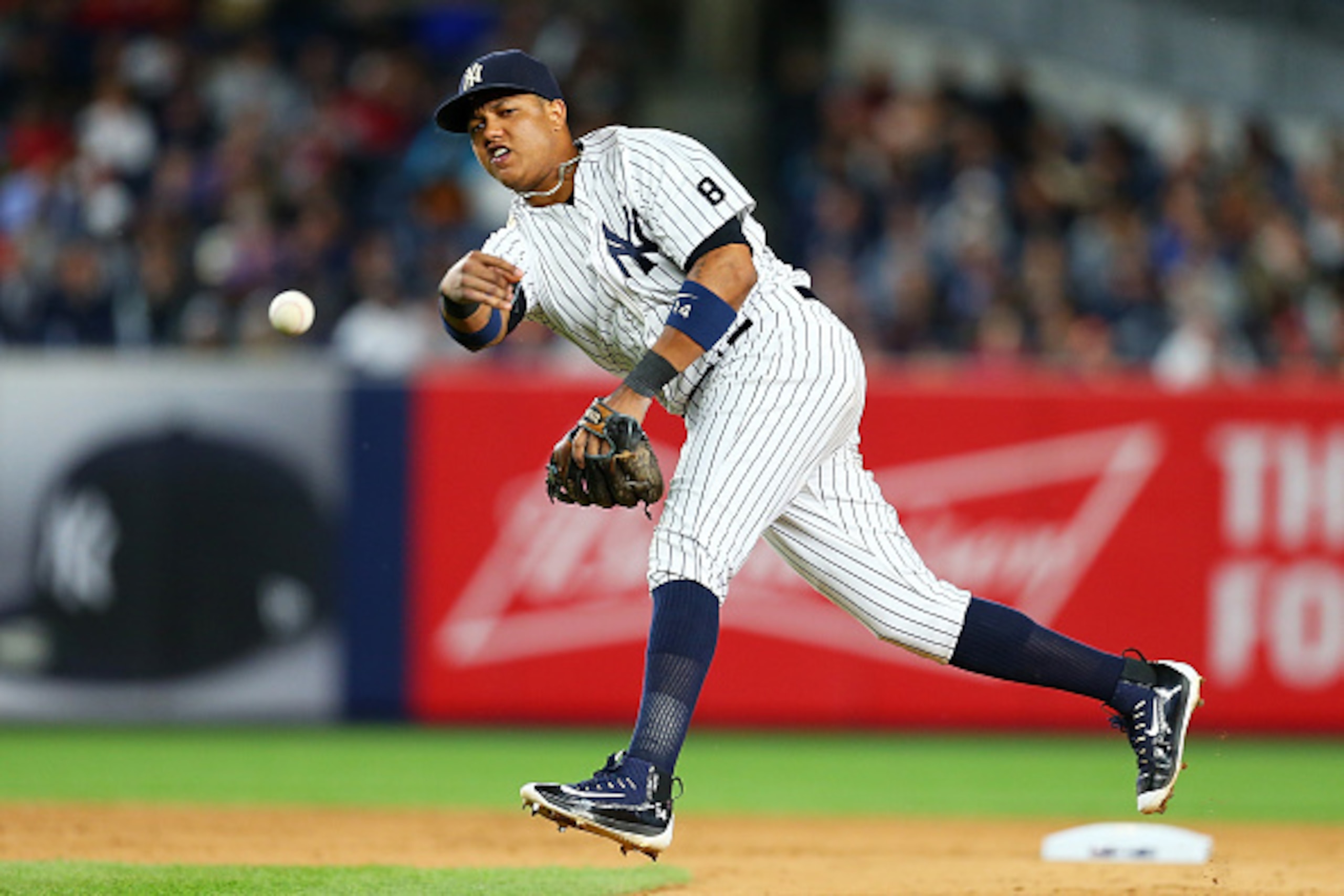
Yankees general manager Brian Cashman didn't rest on his laurels this winter. His big moves included trading Brian McCann and signing Matt Holliday, Aroldis Chapman and, most recently, Chris Carter, according to Kristie Rieken of the Associated Press.
But even with pitchers and catchers due to report to Tampa, Florida, next week, Cashman's transaction finger might still be itchy.
Another relief pitcher may be in order. Jesse Sanchez of MLB.com reported the Yankees made a "strong push" to sign veteran right-hander Sergio Romo before he chose the Los Angeles Dodgers. Jon Heyman of FanRag Sports claimed they've also "checked in" on left-hander Travis Wood.
And while we'll go deeper into the state of the Yankees' starting rotation later, here's a small spoiler: It could use another solid piece. For that, there are still one or two options on the open market.
The tricky part is that the Yankees are already projected to be well over the competitive balance tax in 2017. It would be best if they shed some salary before making any more signings.
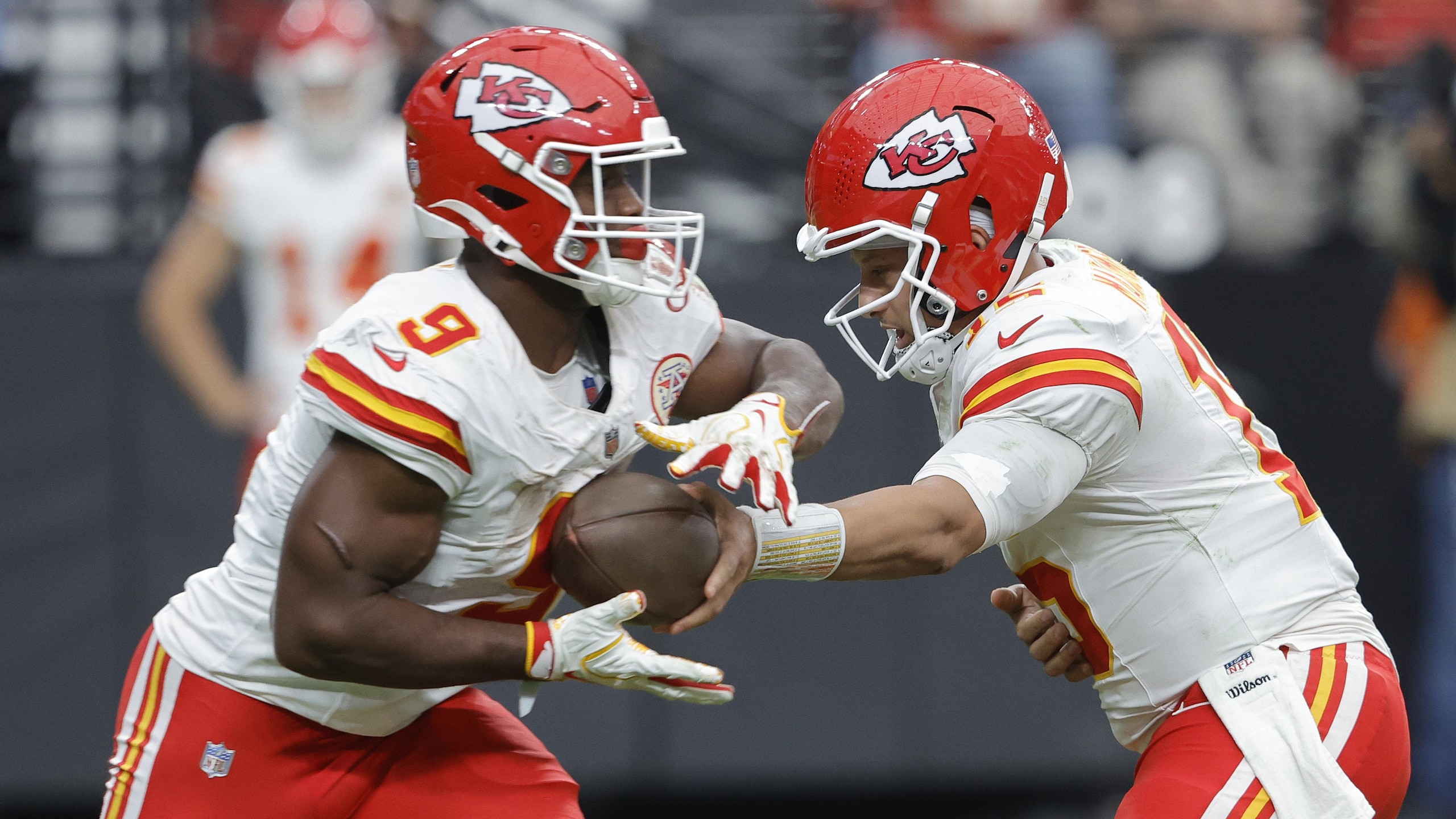
For that, Joel Sherman of the New York Post reported the club has made Brett Gardner, Chase Headley and Starlin Castro available. Each is owed tens of millions of dollars and is coming off a mediocre season, so it's no wonder there haven't been any takers. At least, not yet.
With Carter in the bag, there is a chance Cashman is done dealing. But after watching him be highly proactive with both additions and subtractions over the last year, nothing should be ruled out.
Who's Playing Right Field?
2 of 5
Even if the Yankees don't make any more moves, there will still be drama this spring. Including in right field, where they're set to have an old-fashioned position battle.
The chief competitors will be two Aarons: Aaron Judge, a former first-round pick and a current top prospect, and Aaron Hicks, a former first-rounder and top prospect in his own right.
There's little question the Yankees would prefer Judge seize the opportunity, but that's no sure thing.
On the plus side, the 24-year-old is a 6'7" behemoth with big-time power and surprising athleticism. But if the .608 OPS and 44.2 strikeout percentage he put up in 27 major league games in 2016 are any indication, he might not be ready yet.
"The strikeouts are a concern," Yankees manager Joe Girardi told Laura Albanese of Newsday last fall. "For me, I think it's making more contact, because when he hits it, there's a real good chance that he's going to hit it hard."
Since Hicks hasn't proven to be much of a prize in four major league seasons of his own, there's room for a dark horse to swoop in and steal the club's right field gig.
Clint Frazier looks right for the part. He's rated as MLB.com's No. 24 prospect and could already be major league-ready at 22 years old. Nobody's eye should stray too far from him this spring.
Who's on First?
3 of 5
The Yankees also seemed primed for a position battle at first base, but that changed with Carter's signing.
The Yankees could commit to Carter as an everyday player at first base. That would mean living with subpar defense and baserunning and a whole lot of strikeouts. But it would also mean living with legit power. The righty swinger has averaged 33 home runs per year since 2013, peaking at 41 last season.
But the Yankees still have Greg Bird in the picture. Although his absence from 2016 following shoulder surgery helps explain the Carter signing, the Yankees surely haven't forgotten about how quickly Bird's star was rising before he went under the knife.
Bird raked with an .878 OPS in the minors before a promising major league breakthrough in 2015. In 46 games, he produced an .871 OPS and 11 home runs. His swing was ideal for power hitting, producing both loft (18.6-degree launch angle) and hard contact (93.7 mph exit velocity).
The unknown is whether Bird, 24, is fully recovered from his surgery. It was on the lefty swinger's right shoulder, which is his front shoulder in the batter's box. For hitters, that area can be slow to recover.
If Bird does show well this spring, the Yankees could choose him as their everyday first baseman. That would leave Carter, who signed for only $3.5 million, to scrounge for at-bats.
Or the Yankees could make it easy on themselves and go with a Carter/Bird platoon. We'll find out.

A World Series Hangover for Aroldis Chapman?
4 of 5
It cost the Yankees $86 million to bring Chapman back to the Bronx. That's a record for a relief pitcher.
Based on his past performance, he's worth it. The left-hander owns a 2.08 ERA in seven seasons, and his 15.2 strikeouts-per-nine-innings rate is the highest on record. Such is life when you can summon 100 mph fastballs like nobody else.
But with Chapman nearing his 29th birthday, there is a long-term concern about how he'll hold up in his five-year contract. The possibility of a short-term burnout also can't be ignored after last season.
Chapman pitched a career-high 73.2 innings, including 15.2 innings in the Chicago Cubs' World Series run. By the end of that, he was gassed and apparently unhappy with Cubs skipper Joe Maddon.
"I think he was wrong in the way he used me," Chapman told reporters in December. "He abused me a bit on how much he made me pitch, and sometimes he made me pitch when I didn't need to pitch."
Only three months have passed since the World Series, so the Yankees would be wise to take it easy on Chapman and also to watch him like so many hawks for any hints of ill effects.
The Yankees do have Dellin Betances and Tyler Clippard to fall back on if Chapman isn't right—not to mention a potential bullpen wild card in Luis Severino. But certainly, it would be best if their $86 million investment was in shipshape.
How Does the Starting Rotation Line Up?
5 of 5
And now, a moment of appreciation for Masahiro Tanaka. He quietly had an excellent 2016, and there's plenty to like about the 3.12 ERA he owns through three major league seasons. He's an ace.
As for the rest of the Yankees' starting rotation...well, it's a project.
Per Bryan Hoch of MLB.com, the only other locks outside Tanaka are Michael Pineda, who's young and inconsistent, and CC Sabathia, who's old and inconsistent. After them, there's a crowd at the doors for the final two spots. Included in it are Severino, Adam Warren, Luis Cessa, Chad Green and Bryan Mitchell.
As a former elite prospect, Severino is to this race what Judge and Bird are to the competitions for right field and first base. But he has much to prove after a stock-killing 2016 season. In particular: whether he should even be starting after dominating in a brief stint as a reliever.
"I think you have to take one more look in the rotation at him because of his age, so young," former Yankees pitcher and current TV analyst David Cone told George A. King III of the New York Post. "But I think it's comforting to know he can contribute in the bullpen as well."
After Severino, it's a mixed bag of talent, results and upside. In other words: an ideal cast of characters for a wide-open race.
For anyone not named Joe Girardi, be thankful this is not your headache.
For anyone named Joe Girardi, good luck.
Data courtesy of Baseball-Reference.com, FanGraphs, Baseball Savant and Cot's Baseball Contracts.
.jpg?w=2560 "NFL investigating 2 referees for separate viral exchanges")
.jpg?w=2560 "Report: Chiefs Contact Hill's Agent")

.jpg?w=2560 "OBJ Calls Out Giants After Release")
.jpg?w=2560 "Tyreek makes another cryptic post amid Chiefs rumors")