

How Atletico Madrid and Sevilla Embrace Life as Spain's No. 3 and 4 Clubs
This weekend sees the meeting of third against first in Spain. If it was fourth against second, you’d have heard an awful lot more about it.
But Sevilla vs. Atletico Madrid won’t get the coverage or worldwide attention that Barcelona vs. Real Madrid does, and there are plenty of reasons for that. Indeed, there are far too many to do justice to in one article such as this.
Those two clubs, the country’s traditional big two, have a following that transcends merely Catalonia or Spain. They are worldwide brands, almost global movements, and when they meet, the world stops and watches on.


.jpg?w=2560)
For Atletico and Sevilla, life is somewhat different.
As this January’s Forbes SportsMoney list—published here by Total Sportek—illustrates, Barca and Real are the two richest clubs in football. Real top the list at a value of $3.26 billion (U.S.) with a yearly income of $746 million. Barca sit second at $3.17 billion, bringing in $657 million last year.
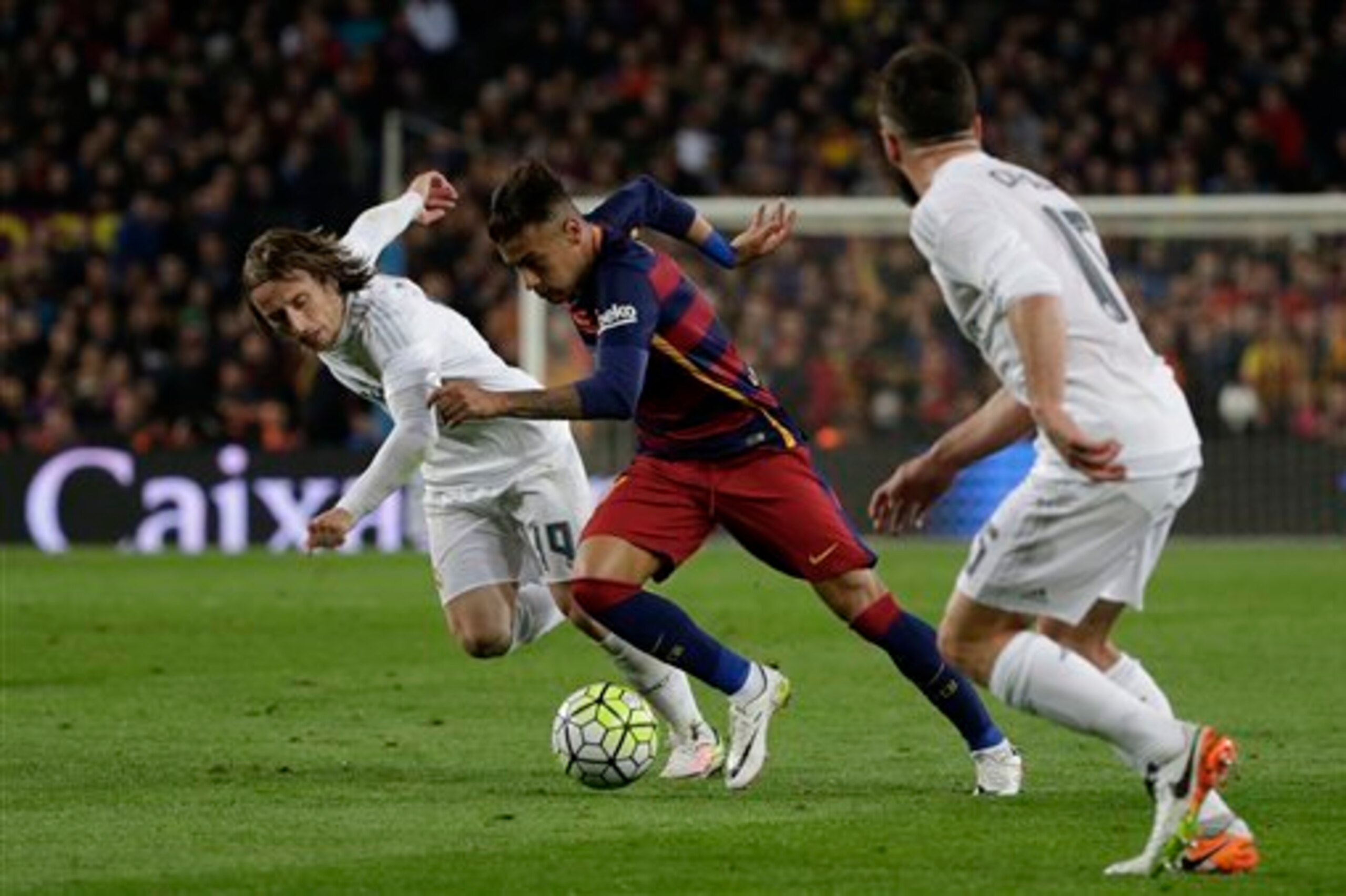
Yet in Forbes’ list of the top 20 wealthiest clubs in the world, you have to scroll down to No. 16 before you find Atletico Madrid ($436 million, bringing in $231 million last year), while Sevilla aren’t even there.
But there they are in the league table, with Atletico top and one point ahead of Sevilla in third.
These are incredibly early days, of course, and it would be a surprise if Sevilla in particular are still there come the turn of the year and then into the home straight, but their elevated positions are a reminder that success in Spain isn’t a duopoly. These are two clubs who embrace their status as the not-quite Barcas and Reals of the division, and they do it in style.
For Atletico, it has been a period of success based around their incredible character.
Not only living in the shadow of Real Madrid in a financial sense but also a geographical one, the club have risen to the point of a European superpower now.
There is no other way to describe a club who have appeared in two of the last three Champions League finals, beating pretty much every big name that has come their way in that time—bar, of course, Real Madrid, in many ways their white whale.
With manager Diego Simeone at their head, they have come to represent a force fighting for prominence in a world where money matters, although they have succumbed to that need for income by agreeing a move to a new stadium from the beginning of next season.

They are in one of the most successful periods of their history, and the key to that success seems to have been a refusal to bow to what seems to be the all-encompassing power of Barca or Real.
To Simeone, they are just football clubs to be taken on and hopefully beaten. The balance sheets might suggest otherwise, but it is possible to approach them on equal footing and get the better of them.
As for Sevilla, their success has come via a somewhat different route.
Their remarkable record in the Europa League—which they had never won until as recently as 2006 but have now lifted five times—shows they have actively embraced the chance to work on that level below the elite clubs.
It is interesting to note that in the middle of Sevilla’s great successes, it was Atletico who lifted the distinctive trophy twice—in 2010 and 2012.

Yet, to them, it was always just an extension of what they were trying to achieve, which has been to challenge for and win the top honours in Spain that had usually been reserved for one of only two clubs. They have now achieved that.
For Sevilla, whose excellent start to the campaign has included two wins and a draw in the Champions League—suggesting that qualification for the knockout stage is possible and that they won’t play in their beloved Europa League this season—it has always been something different.
They have seized the opportunity to make a mark on the European and world game by almost making this trophy their property.
Their win over Liverpool in the final in Basel, Switzerland, earlier this year made it three successive tournament victories, meaning there are several players at the club—as well as Kevin Gameiro, who swapped Sevilla for Atletico this summer—who have won the tournament in every season they’ve been a Sevilla player.
Indeed, the transfer of Gameiro—who scored 68 goals over three seasons with Sevilla—should show you that Atletico are some way ahead of Sevilla as the No. 3, but that is because they have earned it over the past few years of title challenges, a title victory and Champions League runs.
Are Sevilla at a point where they are about to get closer to them? Perhaps, although the fact that there are three superpowers for them to take on now instead of two instantly makes that a harder proposition.
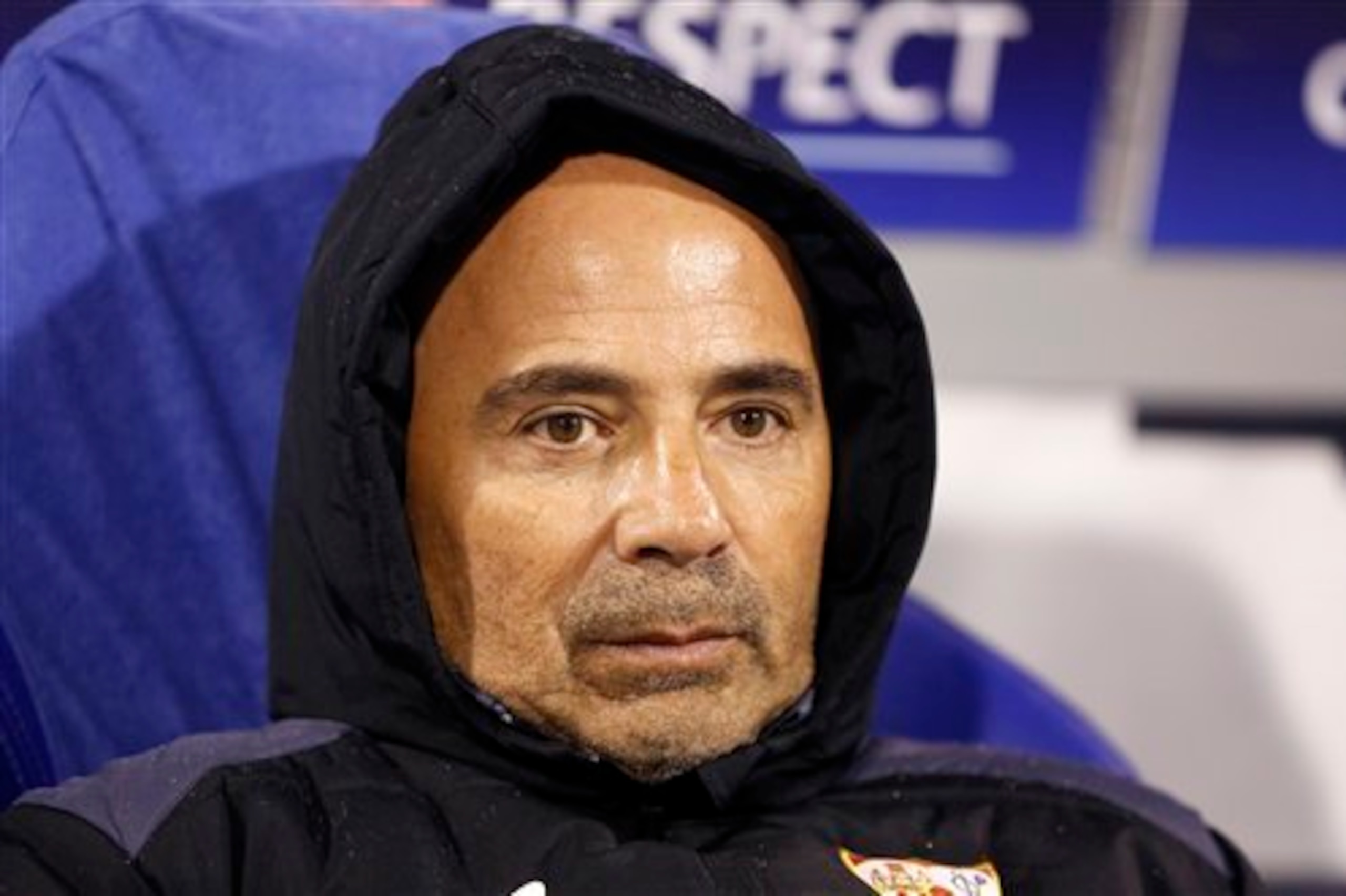
Under freshly installed manager Jorge Sampaoli, they are playing some excellent football this season, and they seem to have become a home for players who had fallen a little by the wayside elsewhere. Samir Nasri, on loan from Manchester City, is excelling, and Atletico loaned them Luciano Vietto after acquiring Gameiro.
Perhaps the Argentinian coach who excelled as manager of Chile, winning the Copa America in 2015, can ultimately become their version of Simeone. Again, the "early days" caveat has to be put in place, but they look to have more in common with the other members of the top four this season than the teams below them.

In time, they are going to have to do what Atletico have done and robustly challenge Barca and Real if they are to sustain success at the top end of the division.
Atleti went about it by almost being the polar opposite of those two teams, by being compact and more than a little cynical to frustrate them and get into their heads. Barcelona forwards Luis Suarez and Paco Alcacer have both recently spoken about how difficult it is to face them, and that is music to Simeone’s ears.
The signs are that Sampaoli will approach it differently, with a more expansive style similar to his successful Chile team.
Whether that is enough to sustain a title challenge just yet remains to be seen, although Sevilla are surely in a similar position to Atleti in the early days of Simeone. In that regard, a top-four place—finishing fourth, basically—would be a fine season for them.
Atletico are further along in their evolution, and after adapting their style this season, they are finding increasingly more people talking about a big three in Spanish football as opposed to a big two.
There may never be a big four, but although Atletico will be doing everything within their power to keep Sevilla down when they meet them at the Ramon Sanchez Pizjuan Stadium on Sunday, there has to be more than a little respect for Sevilla on their part.
Both of them are battling the big guys, and they are doing it in style.
.jpg?w=2560 "Rams Eagles Football")
.jpg?w=2560 "Falcons Saints Football")
.jpg?w=2560 "Injury-stricken Seahawks signing veteran RB")

.jpg?w=2560 "2 NFL Officials Suspended")

