Kirk Cousins Is Costing Himself and the Redskins with Early-Season Regression
Success at the quarterback position in the NFL is often rooted in what we don't see.
We don't see the long hours of preparation and film study each week. We don't see the pre-snap read that led to a key third-down completion, or at least not until the tape is rewound later. Mostly, we see the physical elements when the mental component can be even more important.
That is why what's been clearly visible from Washington Redskins quarterback Kirk Cousins through two games is so troubling.
TOP NEWS

New NFL contenders starting to emerge after Week 4
.jpg?w=2560 "Cardinals Giants Football")
NFL investigating 2 referees for separate viral exchanges
.jpg?w=2560 "Hill Injury Update Football")
Report: Chiefs Contact Hill's Agent
"He's stressing out a little bit too much," head coach Jay Gruden told CSN's Rob Carlin after his team's 27-23 Week 2 loss to the Dallas Cowboys. "I think we're putting a lot of pressure on him. I think sometimes he presses a little bit. He wants to be perfect all the time, and it's not a position where you're going to be perfect all the time. That's just point-blank."
There is no "early" in the NFL with its 16-game schedule, and that applies to both individuals and teams. The Redskins are 0-2 after beginning the year with two straight home losses. For Cousins, the hole seems even deeper, as he's planted the seeds for a swift regression.
If his current play continues, it won't be your typical spiral into a vortex of mediocrity, the same one we've witnessed from so many other quarterbacks whose shoulders can't carry the weight of sky-high expectations.
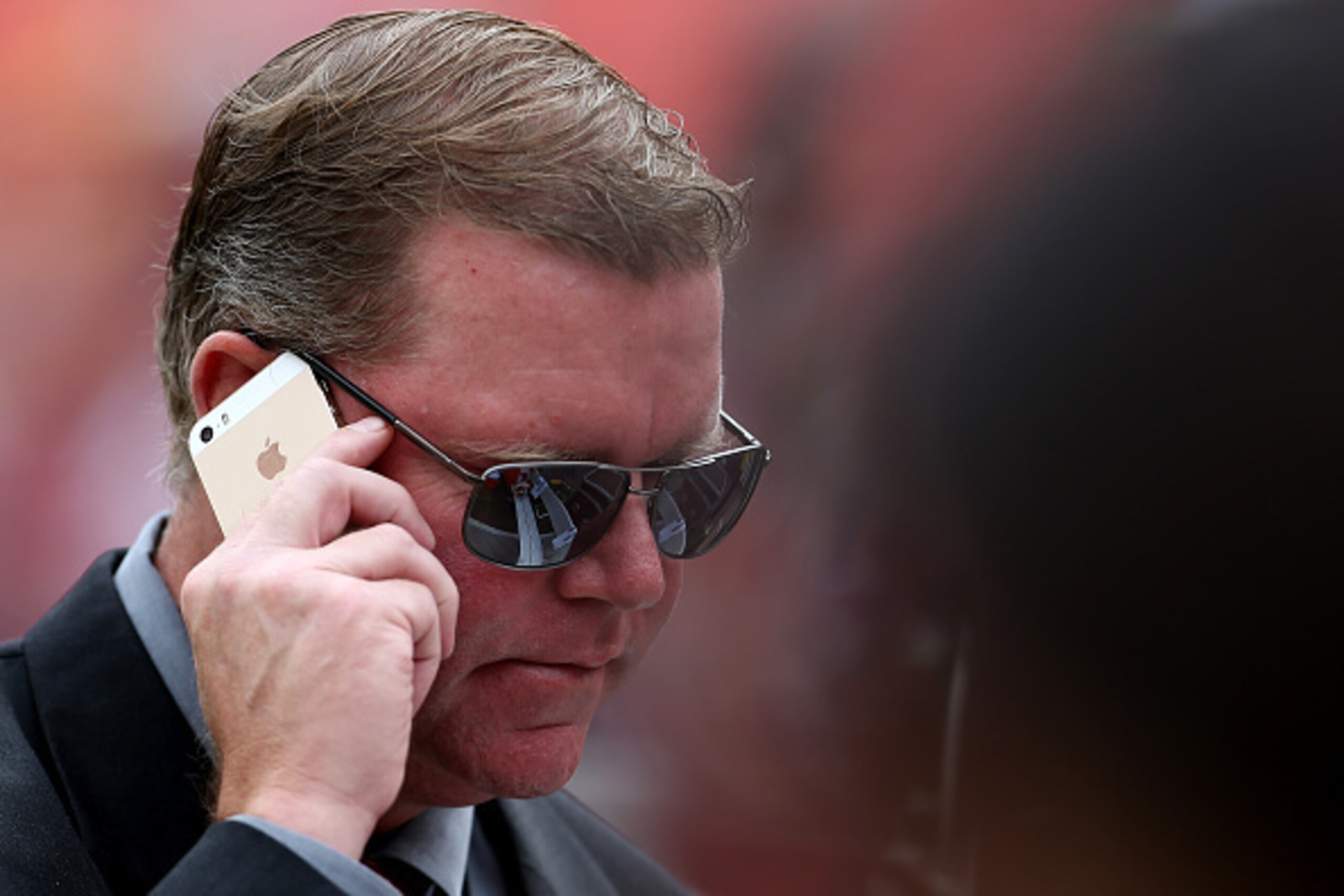
No, his plunge into the passer abyss could cost him a whole lot of coin as general manager Scot McCloughan waits to be proved wrong—and keeps waiting.
Mark Maske of the Washington Post and many others asked this question, and the answer is a slow nod and a quiet "yes."
McCloughan said the right things publicly this past offseason, but he never embraced the thought of signing Cousins to a long-term contract. It was a refreshing dose of restraint in an era when unproven quarterbacks are being given enough guaranteed cash to dress up like the GEICO money man.
Cousins signed his one-year franchise tender worth $19.95 million early in the offseason. It was only two days after the Redskins gave him the non-exclusive designation. His prompt signing was an indication that he knew both what he had done in 2015 and what he needed to do in 2016.
He had played well during his first full season as a starter. Specifically, in the second half of 2015, Cousins threw just two interceptions while logging four games with three-plus touchdowns. From Week 10 onward, he led the league in average yards per attempt (9.4), passer rating (126.1) and completion percentage (73.6) while throwing 19 touchdown passes, per Pro Football Focus.
Those were jubilant times in Washington for both Cousins and anyone who enjoys winning football games. But winning the NFC East didn't reinforce a recency bias for McCloughan.
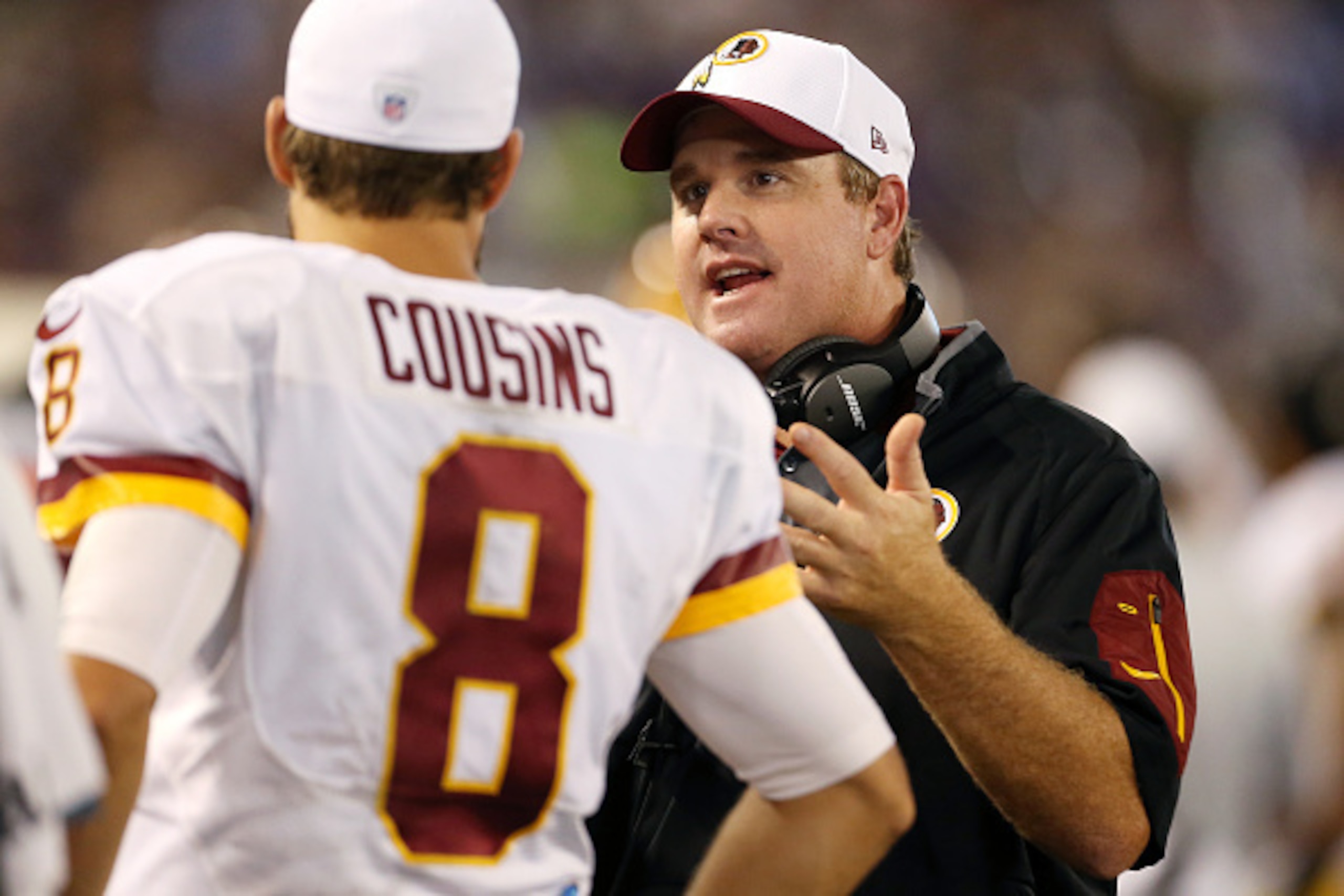
He remembered the misfiring version of Cousins who didn't exist too far in the rearview. McCloughan recalled the still-inexperienced quarterback who recorded four multiple-interception outings in the first half of 2015 and tossed nine picks overall during those eight games.
McCloughan also didn't have to go far back to see the flawed passer who needed only five starts to throw nine interceptions in 2014. Even more concerning were the few yards Cousins accumulated through the air that season, showing how inflated his per-attempt (8.4 yards) and per-game (285 yards) averages were.
Cousins finished 2014 with only 48.2 percent of his passing yardage coming through the air, per PFF, which ranked 34th out of the 39 quarterbacks who took at least 25 percent of their team's dropbacks.
He's shown signs of growth despite those reasons to be wary. Still, even after 2015, an indecisive Cousins who showed poor field vision had been around much longer than this new supposed golden boy who wants to be paid like a franchise quarterback. So before he's gifted more NFL gold, Cousins was asked to prove himself for a longer stretch in 2016 and also make sure the Redskins remain a threatening offense with plenty of weapons.
He's failed spectacularly on both fronts.
After two games, Cousins has a passer rating of 78.5 with three interceptions. Shrugging that off and claiming it's only a brief stumble would be easier if he weren't failing deep inside the red zone.
As ESPN's Ed Werder observed, the 28-year-old has been getting his offense oh so close to scoring six points, then coming away with only three. Or worse, none at all:
Cousins has been 10 yards or fewer away from a touchdown pass on eight of his 89 throws so far in 2016. Yet he still only has one touchdown to his name, and worse, two of his three interceptions have come from that distance.
Things don't get any better when we back it up 10 yards and account for the entire red zone. Cousins has attempted the second-most red-zone passes, according to NFL.com's Matt Harmon:
Again, that's a heaping helping of point-scoring opportunities. And again, he's come away with little while erasing a lot.
A quick comparison provides further perspective on Cousins' red-zone woes.
In 2015, Atlanta Falcons quarterback Matt Ryan's own red-zone struggles also resembled the Springfield Tire Fire. He finished tied for second in red-zone interceptions despite far fewer attempts than the Giants' Eli Manning. Ryan threw four picks inside the 20-yard line on 75 attempts, while Manning chucked five on 90 attempts, according to Pro Football Reference.
Cousins is already halfway to Ryan's total on only 17 heaves in that important area of the field. It comes after he didn't throw a single red-zone interception in 2015.
His completion rate in the place where point-scoring needs to happen has plummeted from 63.3 in 2015 to 29.4. Clearly there's an impulse to cast that aside as the product of a small sample size after two games. And maybe in time Cousins will de-pumpkin himself and turn back into the blossoming QB from late in 2015.
But it would be easier to ignore Cousins' turnover problems if they didn't look so familiar.
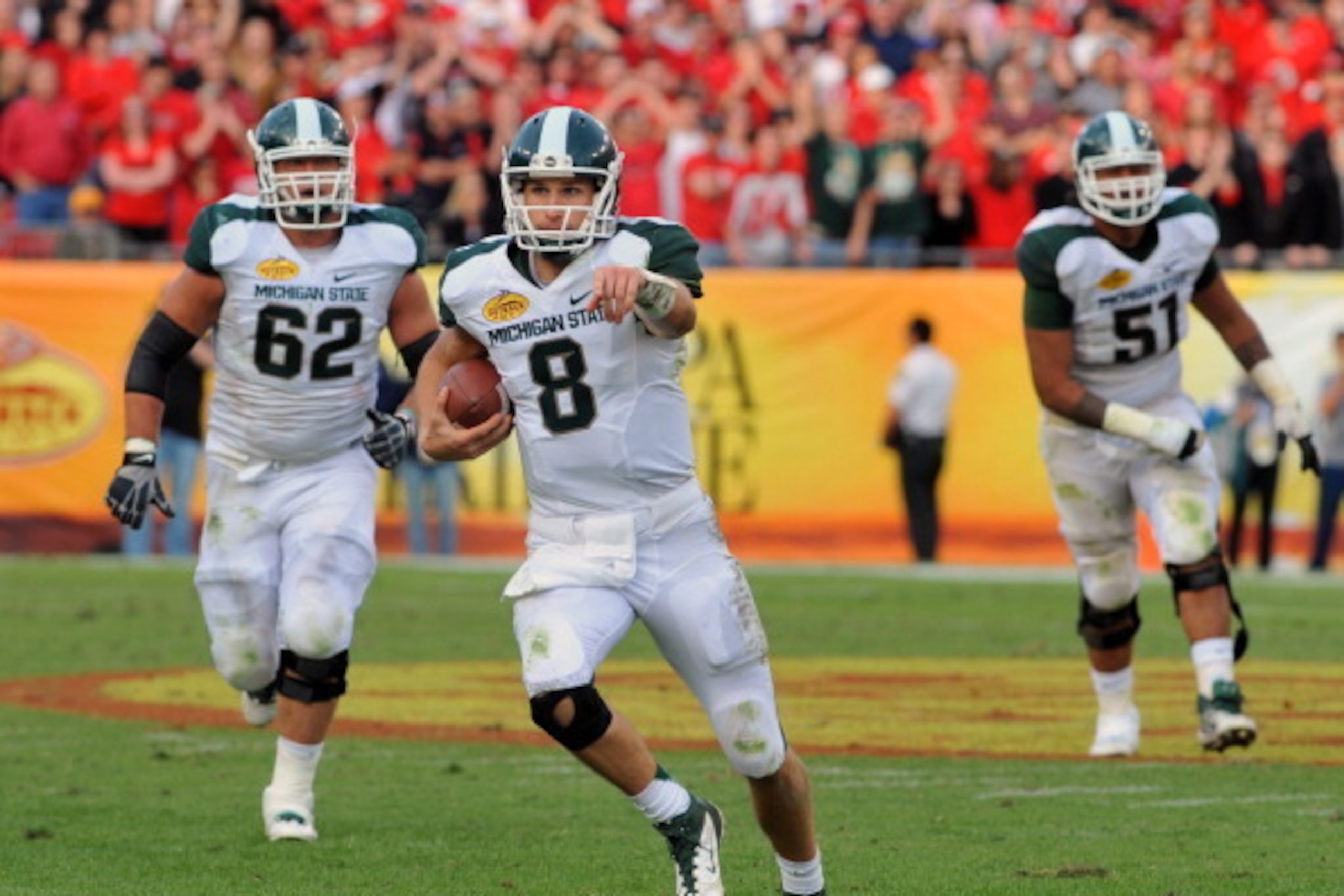
You don't have to rewind his game film far back to see a time when the former Michigan State standout made poor decisions, forced ill-advised throws and generally failed to pick up on what was right in front of him. I've watched that tape, and it should come with a parental warning.
The same explicit tag should be placed on his end-zone interception that sunk the Redskins in Week 2. At the time, Washington led by three points, and following Cousins' pick, the Cowboys marched downfield to score what stood as the game-winning touchdown.
Locking in on one receiver while blatantly telegraphing your intentions can end in tears at any area of the field. It's especially true in the red zone where everything is compact and done in a confined space.
As any even adequate defender at his position would, Cowboys safety Barry Church noticed when Cousins had eyes for only wide receiver Pierre Garcon.
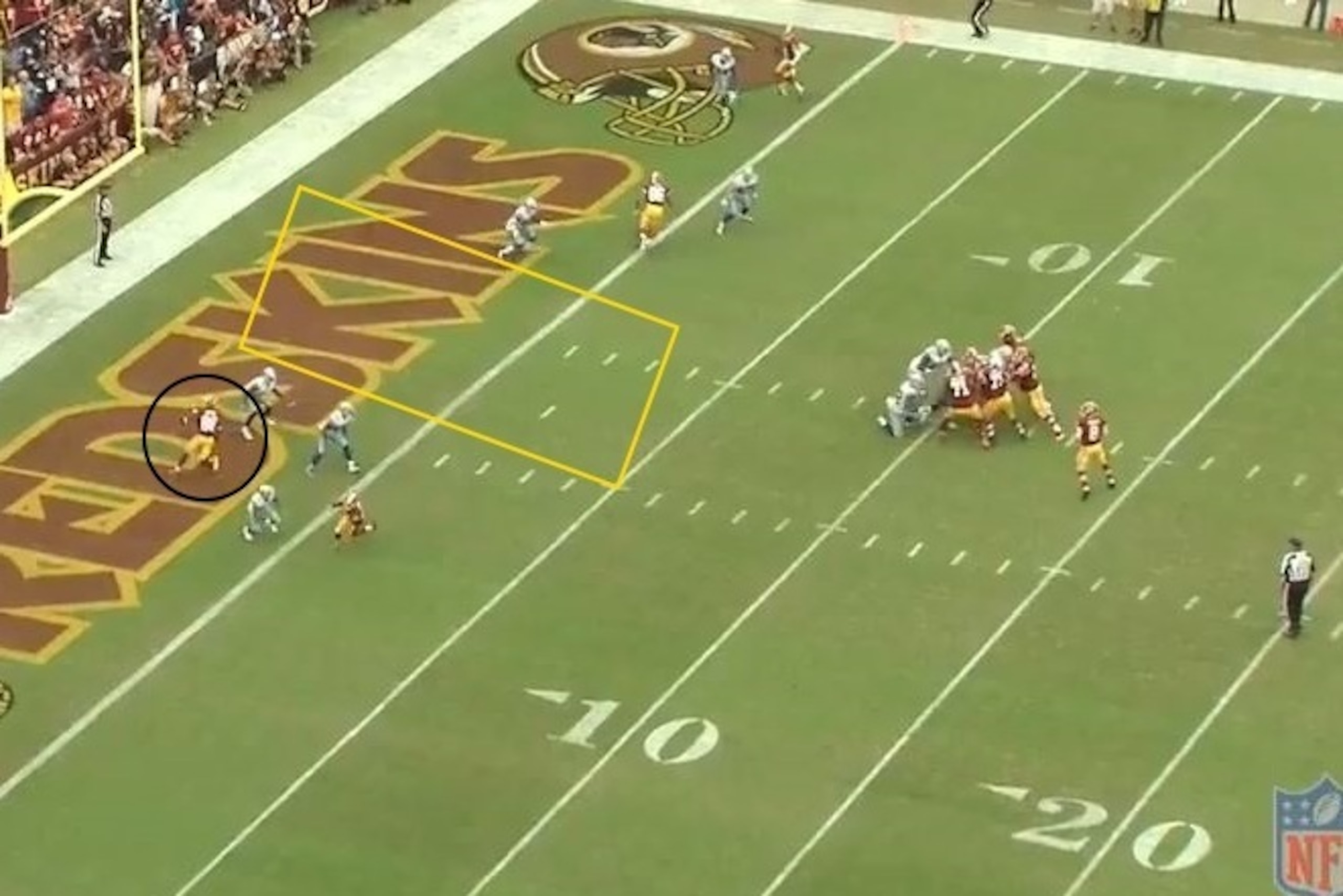
The goal from where Cousins stood was obvious. He wanted to get the ball to the black circle once it ran into the large yellow rectangle.
Time wasn't an issue, with little pocket pressure closing in on third down. So in his mind and in his eyes he could wait for Garcon to clear the current mess of coverage he found himself in. That would take only a split-second, and then the touchdown should be an easy game of catch.
The problem, of course, is Cousins didn't account for Church, who easily violated the sanctity of that yellow rectangle. He took three quick steps and then waited for Cousins' drive-ending mistake to land in his mitts.
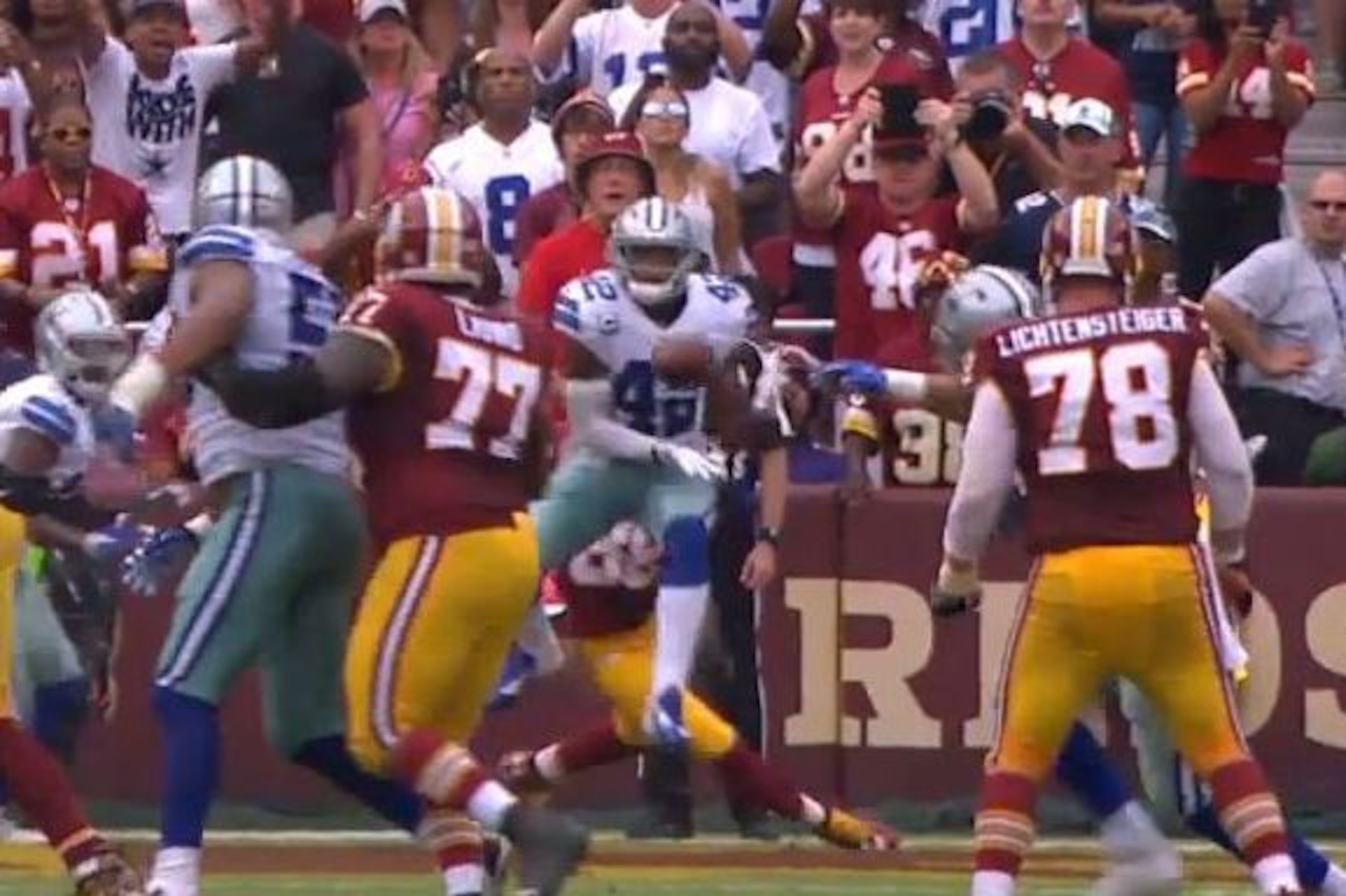
The most congested area to navigate in the red zone is the middle of the field. There's less space to work with, which means more enemy uniforms are lurking where they often wouldn't be elsewhere.
None of that means a quarterback should shy away from the middle in and around the red zone. It means you need to proceed with a heightened sense of caution. Cousins doesn't have that natural vision yet, even as he prepares to make his 29th career NFL start Sunday (including the playoffs).
The task ahead for him isn't unique. Much like any quarterback off to a stumbling start, Cousins has to make sure it's only a start.
He needs to make his misread intercepted by Church a fading memory. He needs to do some deep inner soul-searching and find the guy who excelled in the second half of 2015, albeit against three pass defenses ranked 28th or lower. And in Week 3, that process will start against an undefeated New York Giants team with a revamped defense.
Most of all, he needs to demonstrate the core, fundamental vision required to be a franchise quarterback. If that doesn't happen, he won't get paid like one, and the Redskins may do some offseason soul-searching of their own.
.jpg?w=2560 "Titans Giants Football")
.jpg?w=2560 "Dolphins Bills Football")